Side yards often present a challenge: creating privacy without constructing walls that make spaces feel cramped and confined. Strategic solutions exist that balance seclusion with openness, combining natural elements like climbing vines and ornamental grasses with thoughtful design choices. Understanding how to layer these approaches effectively—and knowing which options fit various budgets—transforms underutilized outdoor areas into comfortable, private retreats.
Living Walls and Climbing Vines for Privacy
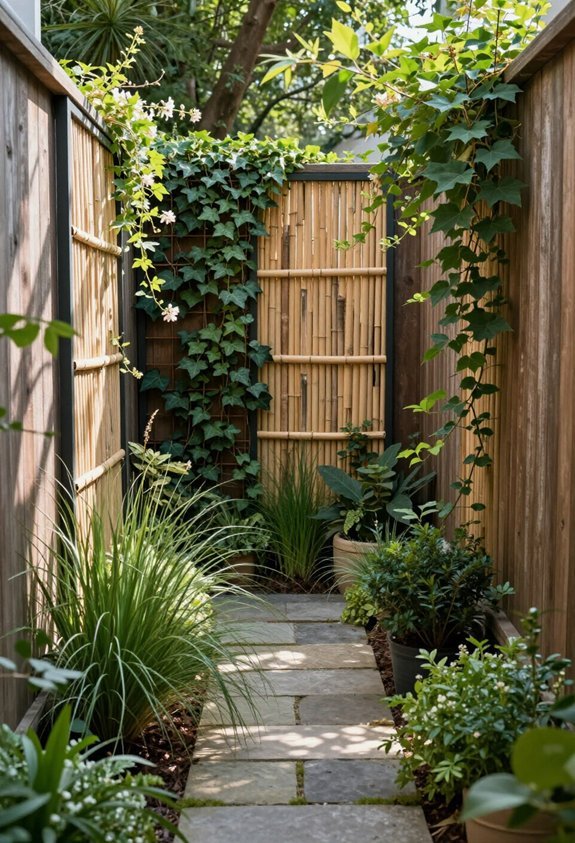
When homeowners seek natural solutions to create private spaces in their side yards, living walls and climbing vines emerge as effective options that combine functionality with aesthetic appeal. Living walls, constructed from stacked planters or modular panels, allow vegetation to grow vertically, maximizing space while establishing privacy barriers. Climbing vines such as ivy, clematis, or honeysuckle naturally wind around trellises and fences, creating dense green screens that block sightlines from neighboring properties. These plants require minimal ground space, making them ideal for narrow side yards where horizontal expansion is limited. Additionally, living walls and vines provide environmental benefits, including improved air quality and reduced temperatures. Installation involves selecting appropriate plant species based on climate conditions, providing adequate structural support, and establishing consistent watering schedules to guarantee healthy, sustained growth throughout seasons.
Also read: 24 SIDE YARD IDEAS That Make The Space Useful!
Tall Ornamental Grasses for Height and Air
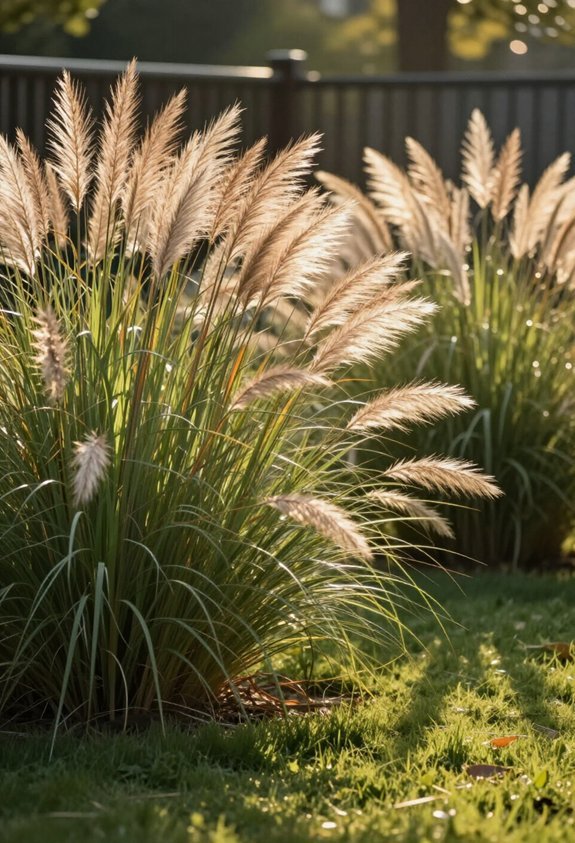
A more airy alternative to solid barriers, tall ornamental grasses offer homeowners an effective way to create privacy while maintaining visual lightness and allowing air circulation throughout the side yard. Species such as miscanthus, ravenna grass, and feather reed grass reach heights between six and twelve feet, providing substantial screening without the heavy appearance of traditional fences. These grasses create a natural, flowing aesthetic that soften property lines and blend seamlessly with landscaping designs. Additionally, ornamental grasses require minimal maintenance once established, needing only annual trimming and occasional watering during dry periods. Their root systems stabilize soil and prevent erosion, offering functional benefits beyond privacy. The gentle movement of grass blades in wind creates dynamic visual interest while allowing breezes to pass through, preventing the enclosed feeling that solid structures can produce.
Tiered Hedges and Shrubs for Depth
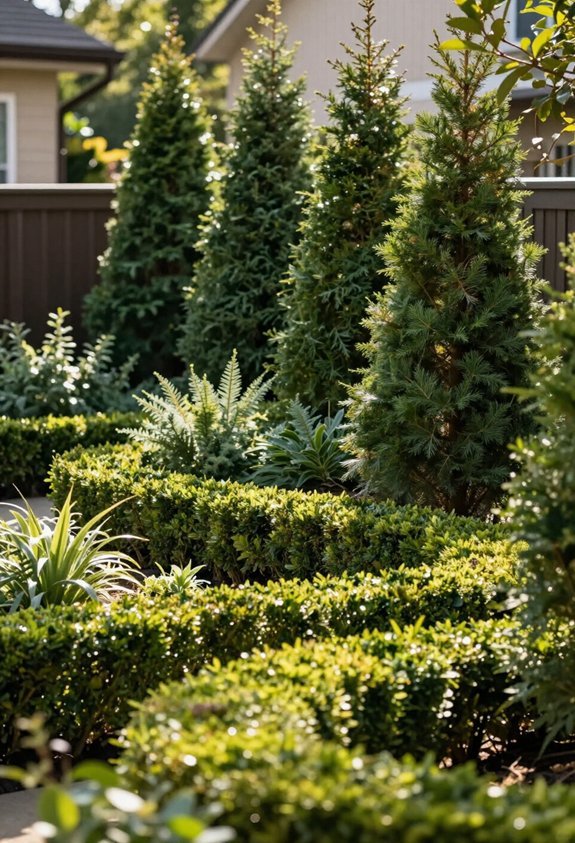
While ornamental grasses provide airiness and movement, tiered hedges and shrubs offer homeowners a more structured approach to privacy screening that builds visual depth through layered plantings at varying heights. This technique involves strategically positioning plants in ascending tiers, with shorter varieties in front and progressively taller specimens behind them. Popular choices include boxwood, privet, and holly, which tolerate pruning and maintain dense foliage year-round. The layered arrangement creates multiple sight lines that block views more effectively than a single hedge would, while the graduated height progression prevents the yard from feeling enclosed or fortress-like. This method requires regular maintenance through trimming and shaping to preserve the tiered structure and guarantee peak screening effectiveness throughout growing seasons.
Strategic Tree Placement to Block Sightlines
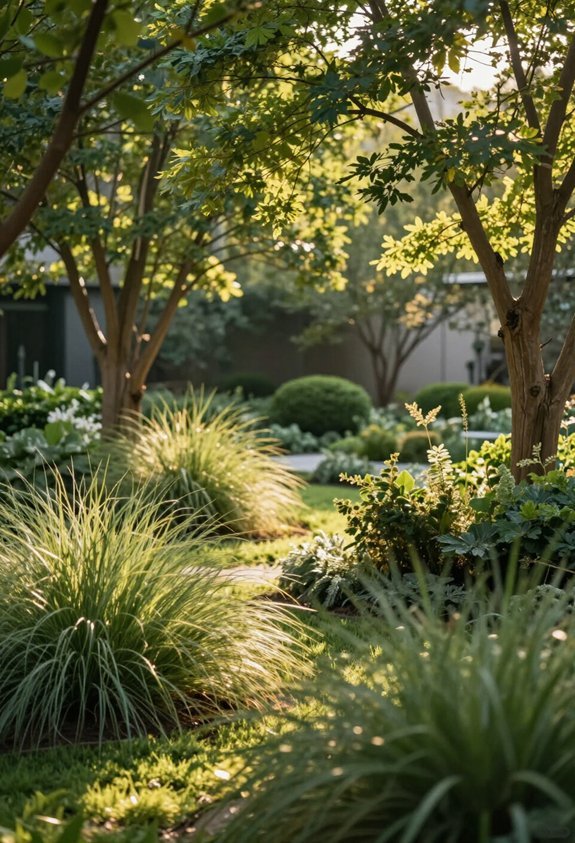
Trees serve as natural sentinels for blocking unwanted sightlines into side yards, offering a more permanent and substantial privacy solution than shrubs alone because their greater height and expansive canopies create effective visual barriers that mature over time. Strategic placement involves positioning trees where they’ll intercept direct lines of sight from neighboring properties, driveways, or streets. Selecting fast-growing varieties, such as arborvitae or green giant thuja, accelerates the screening process, while deciduous trees provide seasonal flexibility. Trees should be spaced appropriately to allow healthy growth without overcrowding, typically eight to fifteen feet apart depending on the species. This deliberate positioning transforms side yards into secluded spaces while maintaining the property’s overall aesthetic balance and allowing air circulation throughout the landscape.
Flexible Living Fences With Natural Spacing
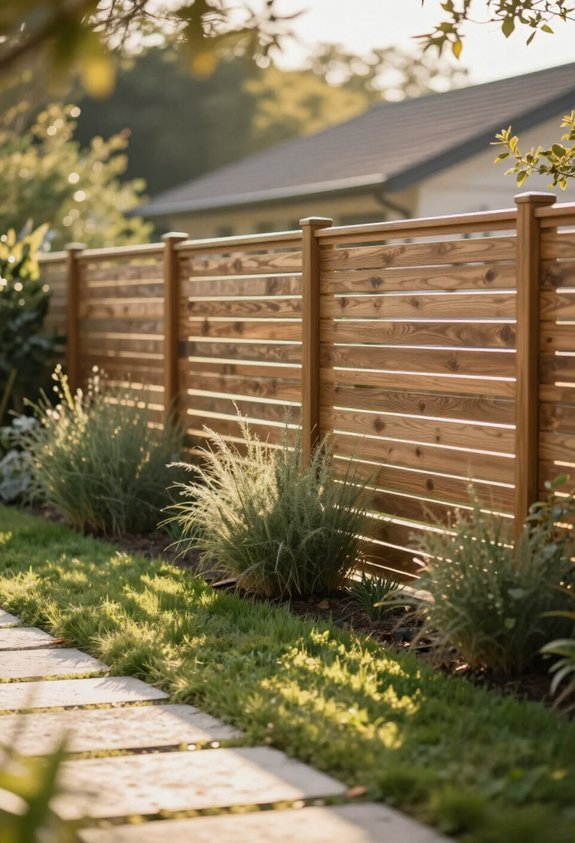
Living fences constructed from hedges and shrubs offer a more dynamic and adaptable privacy solution compared to the permanent structure of mature trees, since these plants can be pruned, shaped, and managed to fit specific height and density requirements while still providing substantial visual screening for side yards. Natural spacing between plantings allows air circulation and light penetration, preventing the enclosed feeling that solid barriers create. Homeowners can select varieties like privet, boxwood, or arborvitae, which grow predictably and respond well to maintenance. Staggered planting patterns and varied heights create visual interest while maintaining sightline obstruction. Living fences require regular trimming to maintain their intended form, but this flexibility enables adjustments as landscapes mature and privacy needs evolve over time.
Horizontal Slat Fencing for Modern Aesthetics
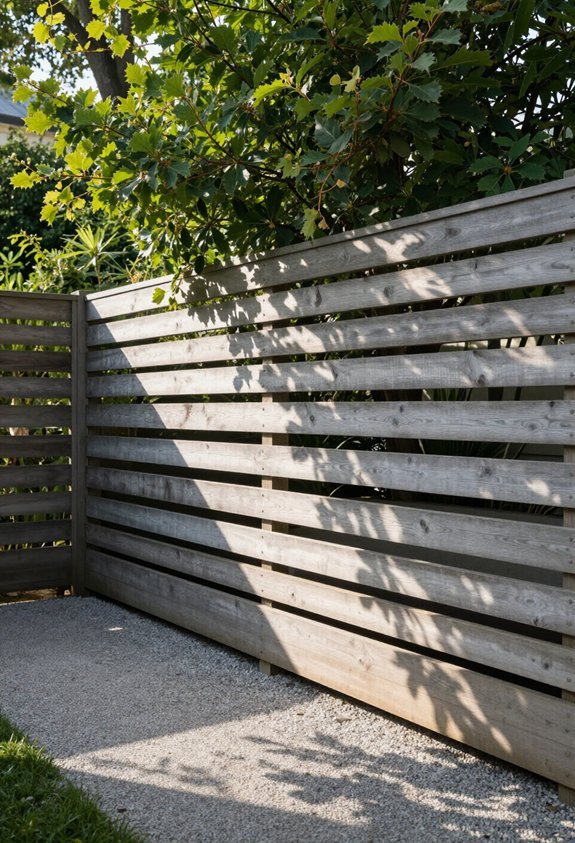
Horizontal slat fencing represents a contemporary approach to side yard privacy that emphasizes clean lines, geometric simplicity, and modern visual appeal, distinguishing itself from traditional vertical board fences through its distinctive horizontal orientation and minimalist design philosophy. This fence style creates visual continuity along property lines while maintaining an open, uncluttered appearance that prevents yards from feeling cramped or heavily enclosed. The horizontal arrangement of wooden or composite slats allows partial sight lines, enabling filtered views while blocking direct sightlines from neighboring properties. Installation involves spacing slats at consistent intervals, which creates a rhythmic pattern that enhances modern landscape designs. Materials range from pressure-treated lumber to weather-resistant composites, each offering durability and low maintenance. This fencing style complements contemporary architecture while providing practical privacy solutions suitable for compact side yards.
Modern Metal Screen Panels for Industrial Style
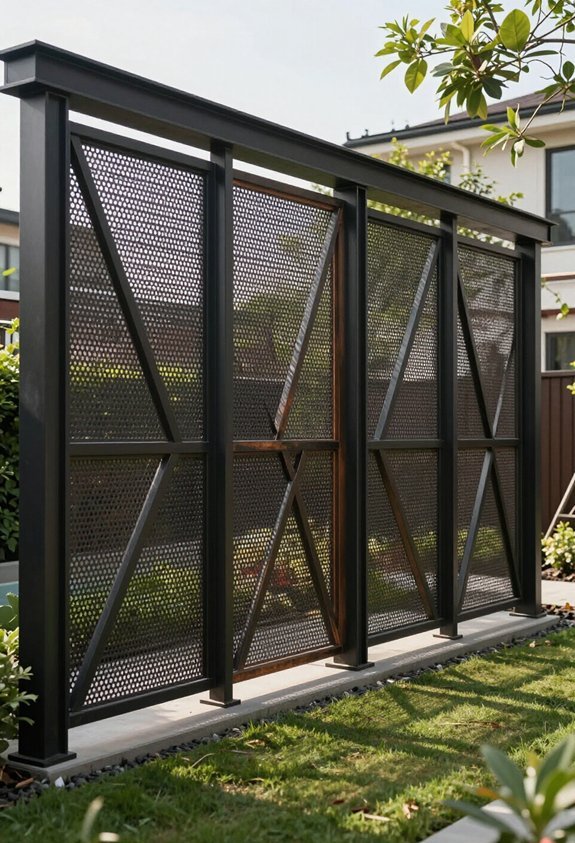
Modern metal screen panels offer an industrial-style privacy solution that combines functional screening with distinctive visual character, featuring materials such as steel, aluminum, and corten steel that create bold geometric patterns while allowing air circulation and filtered light through carefully designed cutouts and perforations. These panels work effectively as standalone structures or mounted on existing fences, providing customizable coverage based on specific privacy needs. The geometric designs range from abstract patterns to symmetrical grids, accommodating various aesthetic preferences while maintaining structural integrity. Installation typically requires professional assistance to guarantee proper mounting and stability. Metal screens resist weathering and require minimal maintenance beyond occasional cleaning, making them a durable long-term investment. Their industrial aesthetic complements contemporary landscaping while delivering practical privacy without complete visual obstruction.
Louvered Fences: Angled Privacy Without Blocking Air
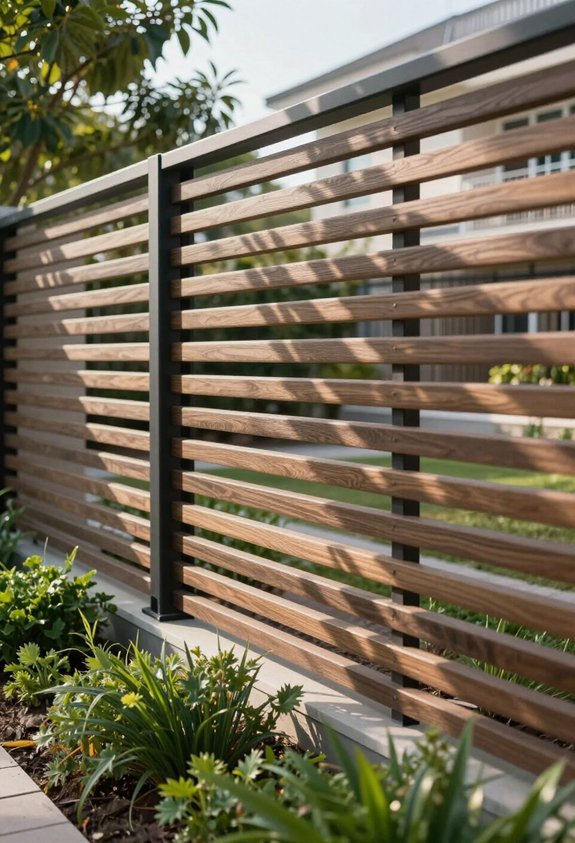
Louvered fences represent a refined privacy solution that incorporates angled slats or boards arranged in a specific pattern to obstruct sightlines while maintaining airflow and light penetration, distinguishing them from solid fence designs that completely block wind and natural illumination. The angled configuration allows homeowners to achieve privacy without creating an enclosed, claustrophobic atmosphere in side yards. These fences work by positioning slats at forty-five-degree angles, which prevents direct views into the yard while permitting breezes and sunlight to pass through the gaps. Material options include wood, aluminum, and vinyl, each offering different aesthetic qualities and durability levels. Installation requires precise measurements and proper spacing calculations to guarantee consistent angles throughout the structure. Louvered fences suit contemporary and transitional landscaping styles effectively.
Composite Fencing: Low-Maintenance Screening
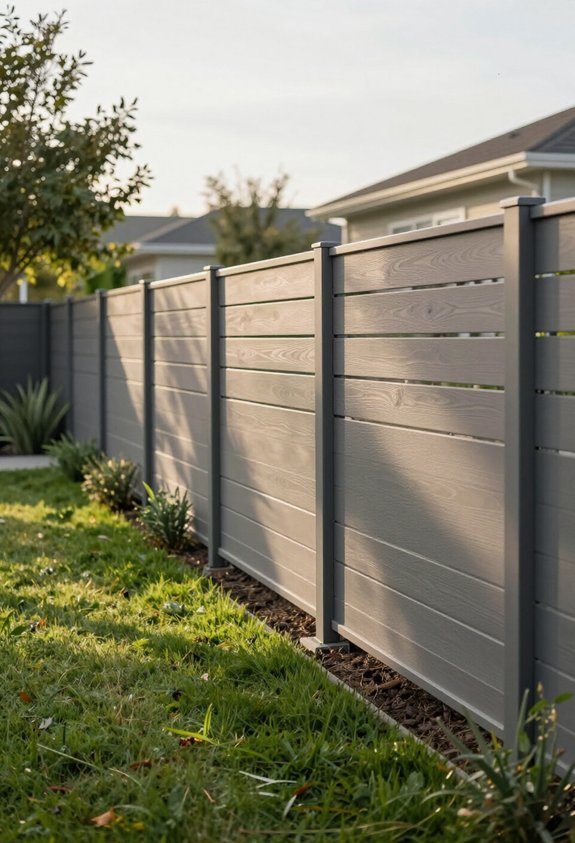
Composite fencing materials, which blend wood fibers with plastic polymers, offer homeowners an exceptionally durable privacy screening option that requires considerably less maintenance than traditional wood fences while maintaining an attractive appearance for many years. Unlike wood, composite materials resist rot, insects, and weather damage, eliminating the need for regular staining, sealing, or painting. These fences withstand harsh UV rays and moisture without warping or splintering, making them ideal for side yards exposed to varying environmental conditions. Homeowners can clean composite fencing simply with soap and water, restoring its original appearance without specialized equipment. Although composite materials cost more initially than wood, their longevity and minimal upkeep requirements provide significant long-term savings, making them a practical investment for privacy-conscious homeowners seeking durability and convenience.
Slatted Wood Privacy Screens for Warmth
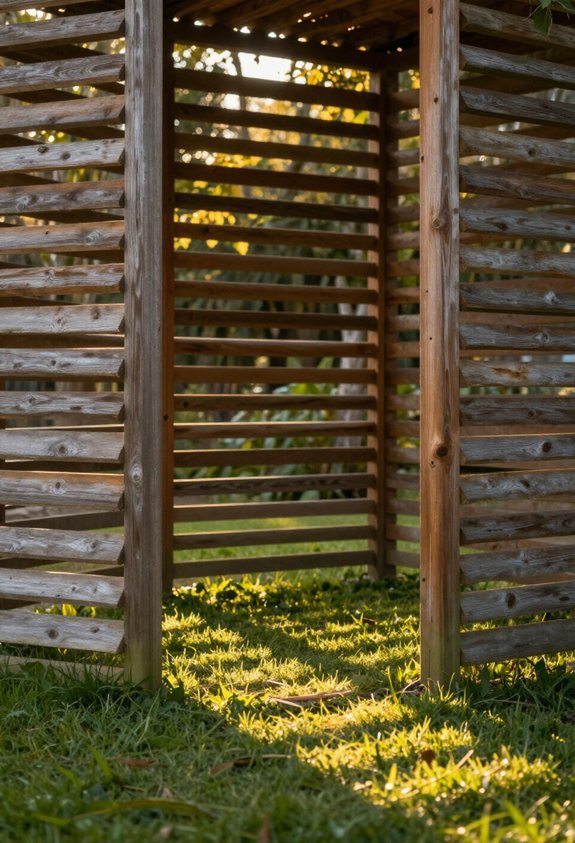
Wood slat privacy screens provide homeowners with a warm, natural aesthetic that complements most landscaping designs while effectively blocking unwanted views from neighboring properties. These screens consist of vertical or horizontal wooden slats spaced at intervals, allowing air circulation and filtered light while maintaining privacy. The spacing between slats can be adjusted based on desired opacity levels, creating flexibility in design options. Wood naturally weathers to attractive gray tones over time, though homeowners can apply stains or sealers to preserve original colors. Installation typically involves securing slats to horizontal support beams using fasteners, requiring basic carpentry skills and tools. Regular maintenance includes cleaning debris and inspecting for rot or damage. Wood screens integrate seamlessly with gardens and patios, offering a classic alternative to solid barriers while maintaining functionality and aesthetic appeal.
Stone or Brick Half-Walls for Structure
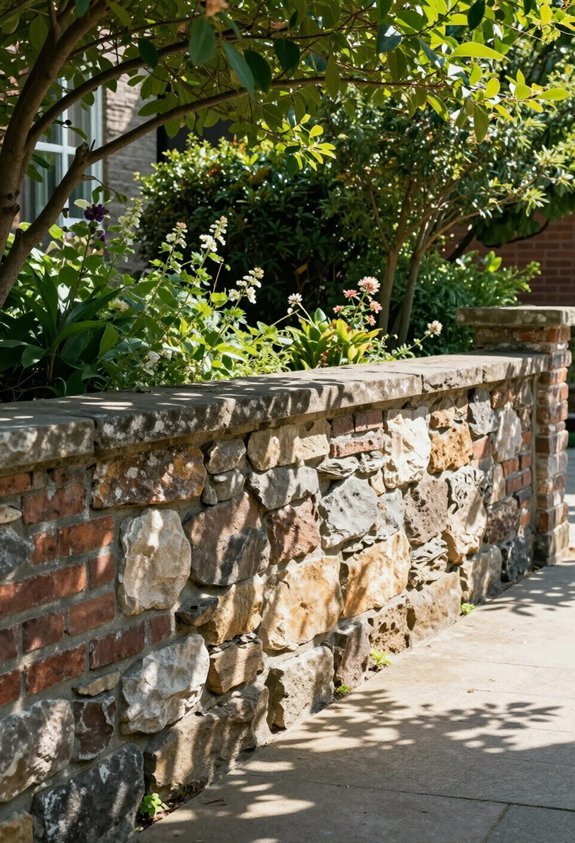
While wooden slat screens offer aesthetic warmth through their natural appearance and filtered light qualities, homeowners seeking a more permanent and structurally substantial privacy solution may consider stone or brick half-walls, which provide durability, visual weight, and architectural definition to side yard spaces. These half-walls, typically extending three to four feet in height, create effective barriers without completely obstructing views or sunlight. Stone and brick materials resist weathering, require minimal maintenance, and complement various home styles from traditional to contemporary. Half-walls can incorporate decorative patterns or varied textures, adding visual interest while serving functional purposes. Installation requires proper foundation preparation and professional construction expertise. Homeowners may combine half-walls with climbing vegetation or planters on top, creating layered privacy solutions that enhance both structural integrity and aesthetic appeal.
Lattice With Strategic Plantings for Softness
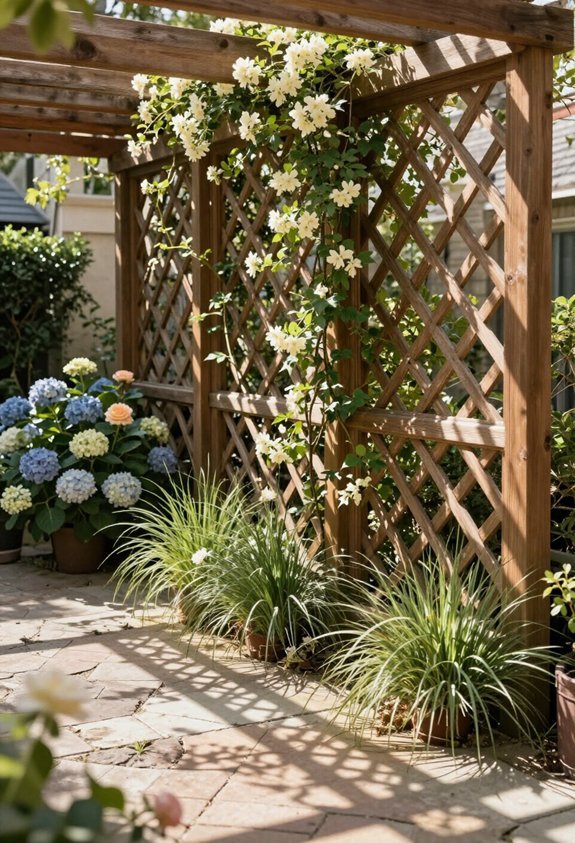
Many homeowners seeking a softer, more organic approach to side yard privacy find that lattice structures combined with strategic plantings offer an attractive middle ground between solid barriers and open spaces, as the open framework of lattice allows air circulation and partial visibility while providing a trellis system for climbing vines and flowering plants that gradually obscure sightlines and create natural privacy screens over time. Homeowners should select fast-growing vines like clematis, ivy, or jasmine to maximize coverage quickly. Spacing plantings strategically at varying heights creates layered privacy without blocking all light and views. This approach allows flexibility in adjusting privacy levels by pruning or adjusting plant growth as needed, making it an adaptable solution for side yards requiring both seclusion and visual interest throughout seasons.
Pergolas With Vines for Privacy and Shade
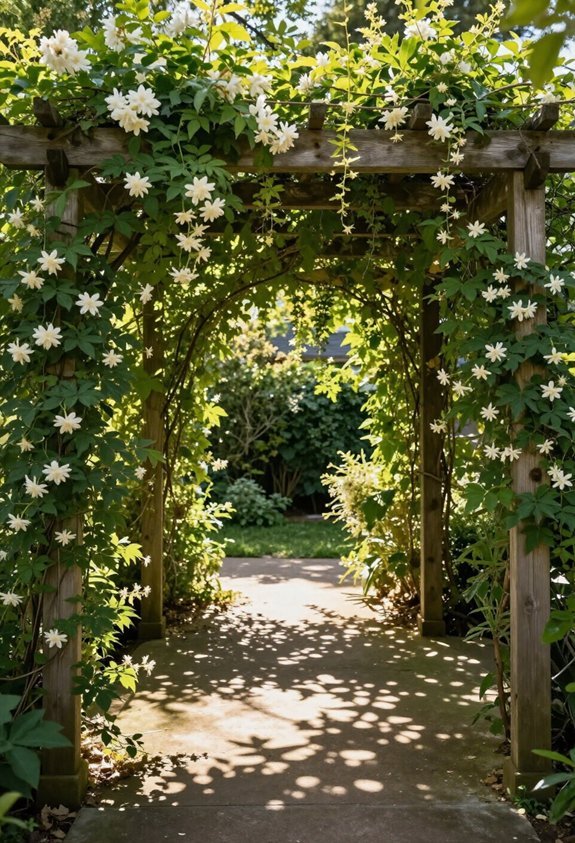
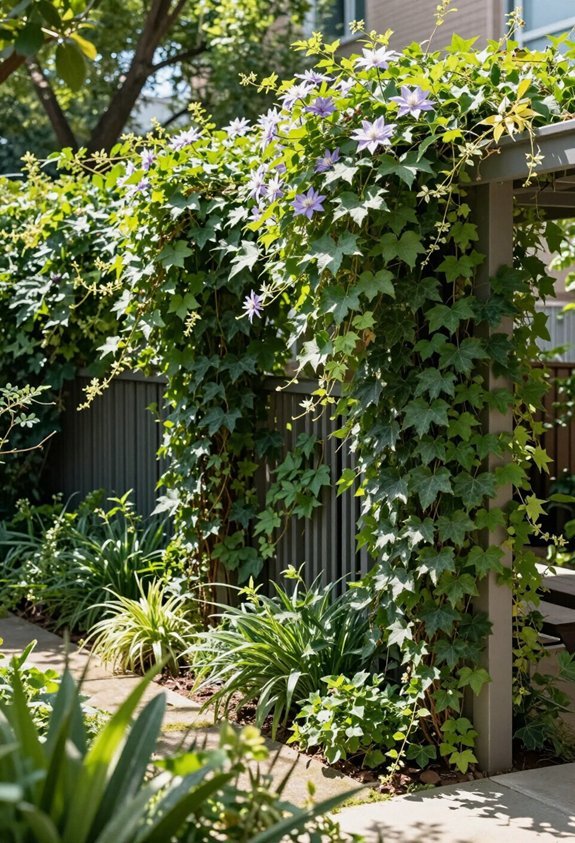
Pergolas represent an effective privacy solution that combines structural elegance with the natural benefits of climbing vegetation, as their open-roof design creates a framework that supports vigorous vines while simultaneously allowing filtered light and air movement through the yard. Fast-growing varieties like clematis, jasmine, and climbing hydrangea establish dense coverage within one to two seasons, creating a natural screen that enhances privacy without completely blocking views or airflow. The latticed overhead structure provides dappled shade during summer months while permitting winter sunlight penetration when deciduous vines lose their foliage. Homeowners can customize pergolas using various materials, including wood, metal, or vinyl, selecting options that complement existing landscape designs. This combination of structural framework and living vegetation effectively transforms side yards into private, shaded retreats.
Staggered Planters to Create Visual Breaks

Staggered planters offer a practical and visually appealing method for creating privacy screens in side yards by arranging containers of varying heights in offset patterns that interrupt sightlines and obstruct views from neighboring properties or passing pedestrians. This technique utilizes tall planters positioned in the back row, medium-sized containers in the middle section, and shorter pots in the front, creating a tiered effect that maximizes screening capability. Property owners can fill these planters with dense shrubs, ornamental grasses, or flowering plants that grow upward and outward, further enhancing the privacy barrier. The staggered arrangement also allows sunlight to filter through strategically, preventing the side yard from appearing completely enclosed. This flexible approach accommodates various yard sizes and shapes while maintaining aesthetic appeal.
Tiered Garden Beds for Layered Screening
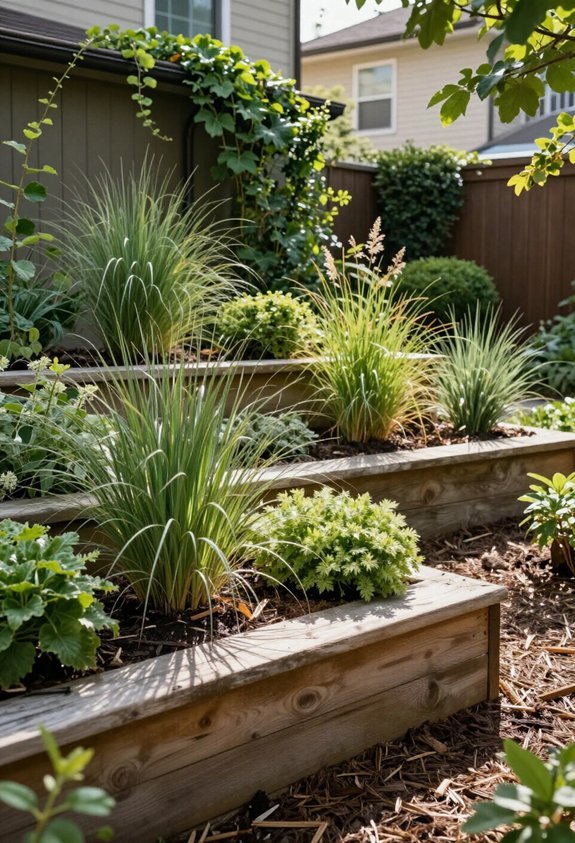
Building upon the container-based approach, tiered garden beds take privacy screening to the next level by constructing permanent, ground-level structures that create multiple layers of vegetation for enhanced obstruction and visual depth. These raised beds, arranged in ascending heights, allow taller plants to grow behind shorter ones, forming a natural barrier that blocks sightlines effectively. The tiered design maximizes planting space within limited side yards while establishing distinct zones of greenery. Gardeners can select plants with varying growth rates and mature heights to guarantee consistent coverage throughout seasons. Construction involves stacking materials like wood, stone, or composite materials to form stepped platforms. This method provides superior screening compared to single-level plantings, as each tier contributes strategically to the overall privacy effect while maintaining an organized, aesthetically pleasing appearance.
Uneven Plant Spacing for Natural-Looking Screens
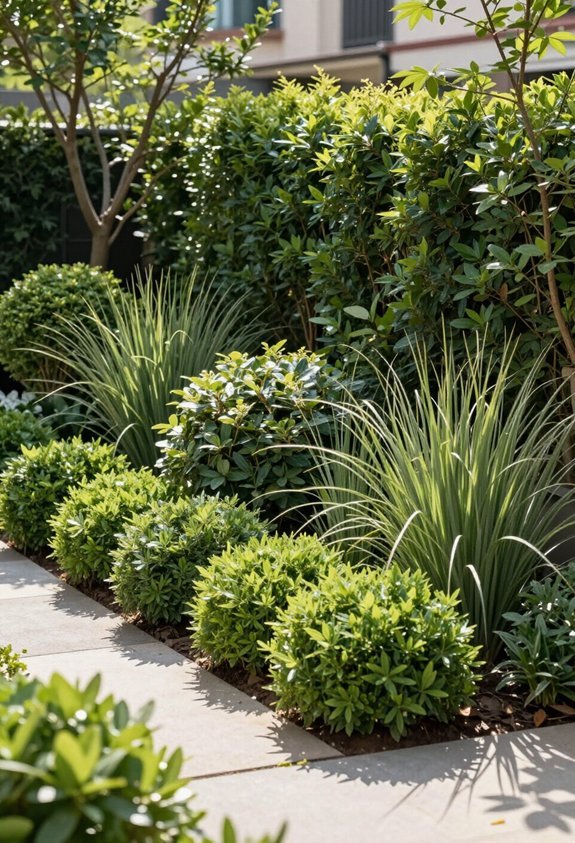
While tiered garden beds provide structured layers of vegetation, uneven plant spacing enhances the visual authenticity and effectiveness of privacy screens by mimicking the irregular patterns found in natural forests and wild landscapes. Rather than planting specimens at uniform intervals, varying the distance between plants creates a more organic appearance that blends seamlessly with surrounding environments. This technique involves strategically placing taller plants closer together in some areas while spacing shorter varieties farther apart in others, producing depth and density variations. The irregular arrangement prevents the screen from appearing artificially constructed or overly manicured, instead establishing a natural-looking barrier that effectively blocks sightlines while maintaining aesthetic appeal. Homeowners should observe native plant distributions in local woodlands to inform their spacing decisions, ensuring screens achieve both functional privacy and genuine visual harmony.
Frosted or Textured Glass Panels for Light
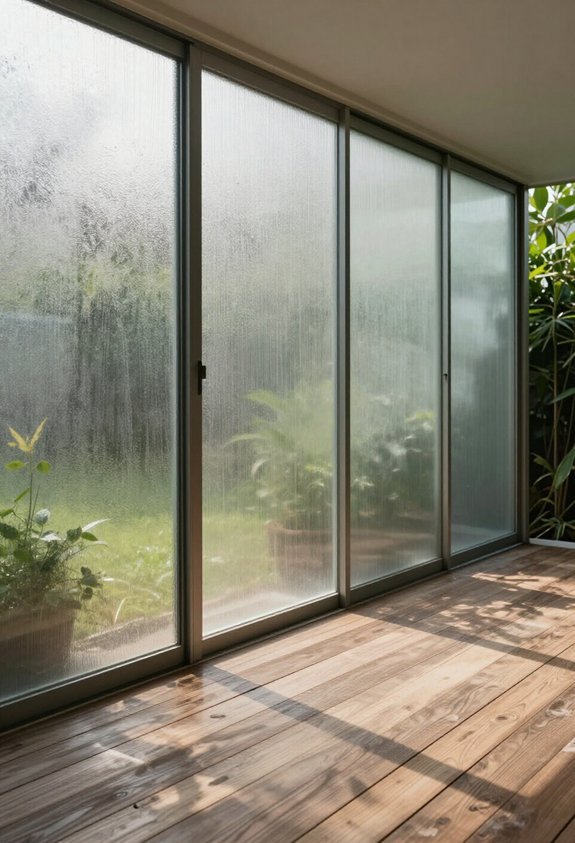
Glass panels offer homeowners a practical solution for maintaining privacy while preserving natural light in side yards, addressing the common challenge of creating enclosed spaces that do not feel dark or confined. Frosted glass obscures views while allowing sunlight to filter through, creating a balanced environment that protects privacy without sacrificing brightness. Textured glass panels provide similar benefits, with varied surface patterns that diffuse light and distort visibility from outside angles. These panels can be installed within aluminum frames or attached to existing fencing structures, offering flexible installation options. The materials are durable and weather-resistant, requiring minimal maintenance over time. Homeowners can choose from various opacity levels and pattern designs to match their aesthetic preferences while achieving ideal privacy and luminosity in their side yard spaces.
Shade Cloth and Breathable Screens for Quick Coverage
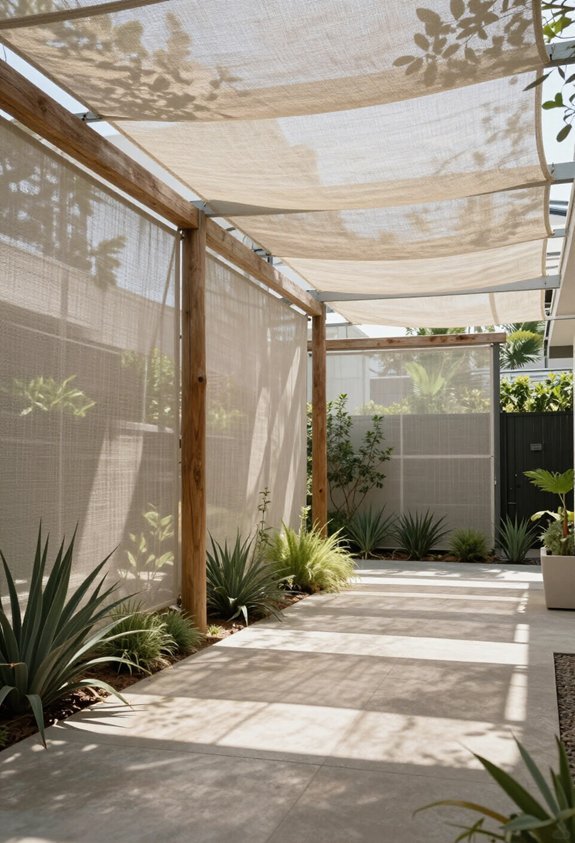
For homeowners seeking faster installation methods than permanent glass fixtures, shade cloth and breathable screens present an effective alternative that delivers immediate privacy coverage without the commitment or expense of structural modifications. These materials allow air circulation while blocking views, preventing the side yard from feeling cramped or confined. Shade cloth comes in various opacity levels, ranging from 30 to 90 percent density, enabling homeowners to select appropriate light filtration. Installation requires minimal tools, typically involving simple mounting to existing posts or frames using clips or fasteners. Breathable screens similarly offer flexibility in positioning and removal, making them ideal for temporary solutions or seasonal adjustments. Both options effectively balance privacy needs with maintained openness and ventilation.
Water Features as Privacy Accents
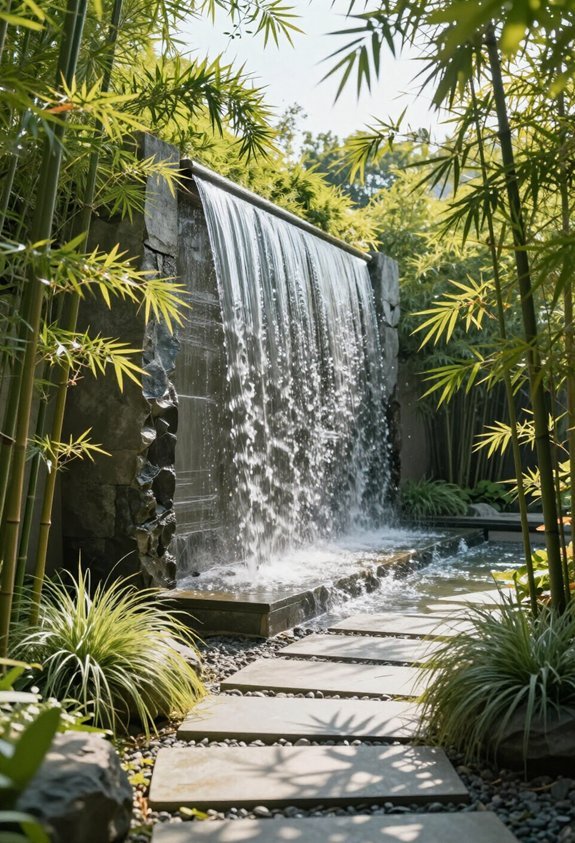
Water features offer a multisensory approach to privacy by combining visual obstruction with auditory masking, creating a natural boundary that discourages observation while enhancing the overall ambiance of a side yard. Fountains, small ponds, or cascading water installations serve dual purposes: they obstruct sightlines while producing soothing sounds that mask outdoor conversations and activities from neighboring properties. The movement of water draws attention inward, naturally directing focus away from surrounding areas. Installing water features strategically along fence lines or property borders maximizes privacy effectiveness. Additionally, water features attract wildlife such as birds and aquatic life, creating dynamic focal points that further distract from privacy concerns. Maintenance requirements vary by feature type, with fountains requiring regular cleaning and pond systems needing seasonal care to guarantee peak functionality and aesthetic appeal.
Layering Methods: The Most Effective Multi-Solution Approach
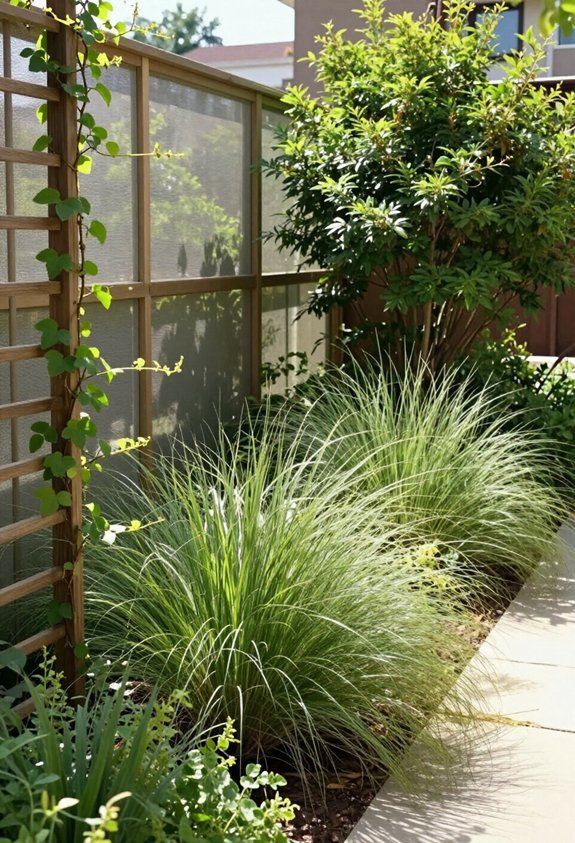
Combining multiple privacy solutions creates a stronger barrier than relying on any single method alone, as each technique reinforces the others to form a detailed privacy system around a side yard. Homeowners can begin with a sturdy fence as the foundational structure, then add climbing vines or shrubs along its base to increase visual obstruction. Installing a water feature simultaneously masks unwanted noise while adding aesthetic appeal. Strategically placed lattice panels with dense vegetation create additional screening layers without overwhelming the space. By stacking these approaches thoughtfully, property owners achieve extensive privacy that feels natural rather than fortress-like, allowing light and air circulation while effectively blocking external views from neighboring properties and passing pedestrians.
Budget-Friendly vs. Premium Options: Matching Your Investment
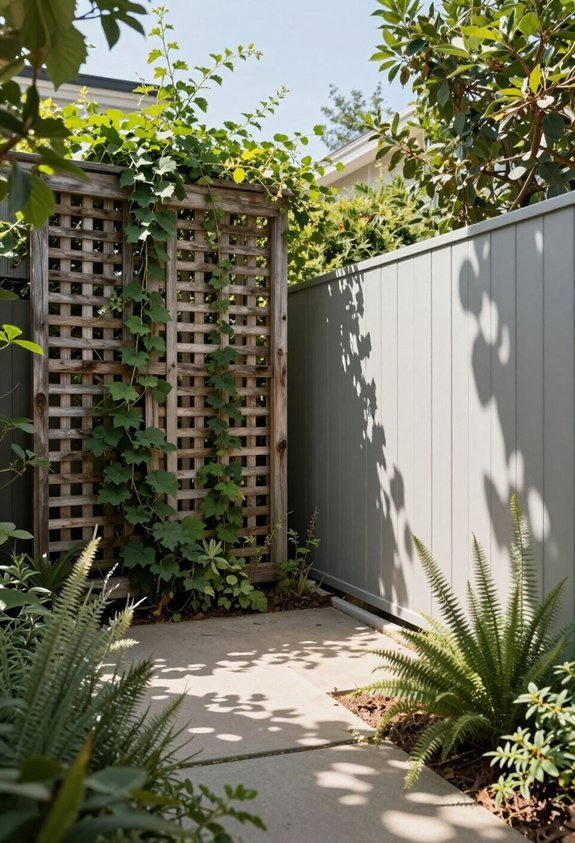
Privacy solutions for side yards exist across a wide spectrum of price points, ranging from affordable options that require minimal financial investment to premium installations that offer long-lasting durability and refined aesthetics. Budget-friendly choices include lattice panels, vinyl fencing, and dense shrub plantings, which provide effective screening at lower costs while still maintaining open-air qualities. Premium options, such as composite fencing, custom-built structures, and professional landscaping designs, deliver superior longevity and sophisticated appearances. Homeowners should evaluate their specific needs, considering factors like climate conditions, maintenance requirements, and desired longevity when selecting solutions. The most effective approach involves identifying which privacy elements justify premium investment and which areas can utilize cost-effective alternatives, creating a balanced strategy that maximizes both financial efficiency and aesthetic satisfaction.
Frequently Asked Questions
How Long Does It Typically Take for Privacy Solutions to Mature and Become Fully Effective?
Privacy solutions typically mature within one to three years, depending on the method chosen. Hedges and trees require longer establishment periods, while fences provide immediate results. Climbing plants need two to five years for full coverage and density.
What Are the Best Privacy Options for Renters Who Cannot Make Permanent Installations?
Renters benefit from temporary privacy solutions including portable bamboo screens, freestanding trellises with climbing plants, removable lattice panels, and tall planters with strategic placement. These options require no permanent modifications to the property.
How Do I Maintain Privacy Solutions During Winter When Plants Lose Their Leaves?
One can layer privacy solutions by combining evergreen plants with temporary screens or lattice panels. Installing outdoor curtains, privacy fabric on existing structures, or repositioning portable barriers guarantees year-round coverage when deciduous plants become bare.
Can Privacy Screens Withstand Extreme Weather Conditions Like High Winds or Heavy Snow?
Privacy screens vary in durability depending on material and installation. Metal and vinyl options withstand high winds and heavy snow better than fabric or wood alternatives. Proper anchoring and maintenance greatly enhance weather resistance.
What Is the Cost Difference Between DIY Installation Versus Hiring Professional Landscapers?
DIY installation typically costs 50-70% less than professional landscaping services. Homeowners save on labor expenses but invest personal time. Professional installation guarantees proper placement, longevity, and warranty coverage, justifying higher costs.
Conclusion
Creating a private side yard requires selecting appropriate solutions from multiple options, including living walls, bamboo screens, ornamental grasses, and layered approaches that combine vegetation with durable materials. Homeowners should evaluate their budget, climate, and desired aesthetic before choosing specific privacy methods. By implementing these strategies systematically, individuals can achieve effective seclusion while maintaining an open, airy atmosphere that enhances their outdoor living space.