
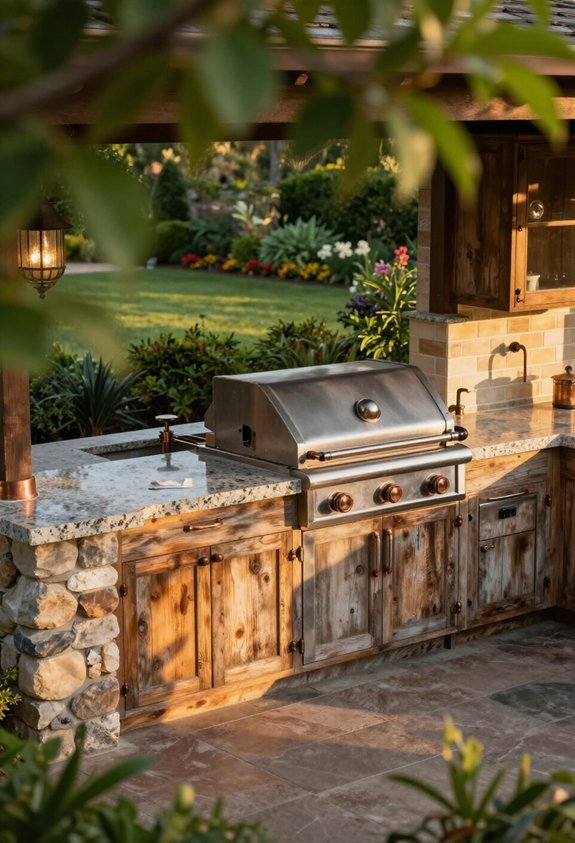
Outdoor kitchens succeed when they’re treated as seriously as interior kitchens. This means thinking about workflow, prep surfaces, storage accessibility, and how cooking activities interact with seating and entertaining zones. A well-designed backyard kitchen flows logically from food storage to prep areas to cooking stations to serving surfaces. The materials you select must withstand weather exposure without sacrificing functionality. The appliances must deliver genuine usefulness rather than novelty. These twenty concepts apply kitchen design principles to outdoor spaces, showing how to create cooking areas that perform consistently across seasons and years of regular use.
Know Your Budget and Space Before You Buy
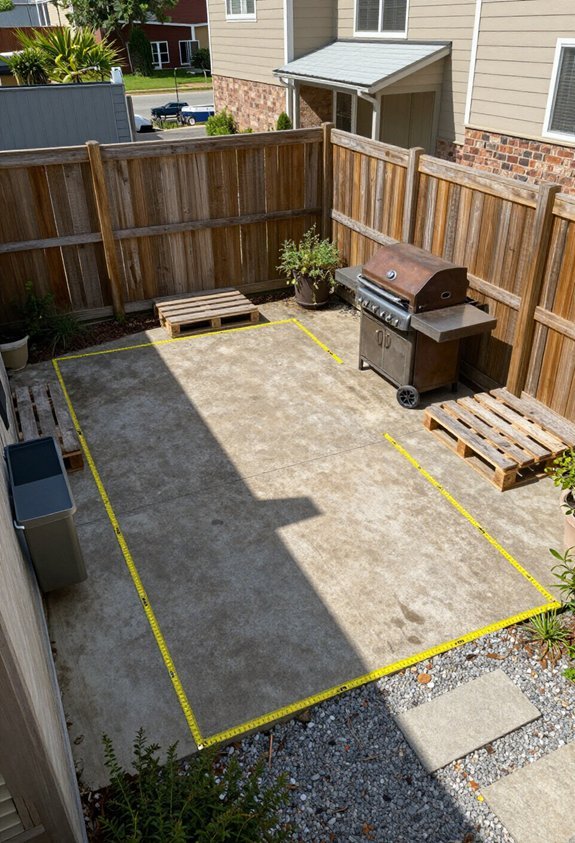
Before selecting outdoor kitchen equipment or materials, homeowners must first establish a realistic budget and accurately measure the available space, as these two factors form the foundation for all subsequent decisions in the planning process. Determining budget involves calculating expenses for appliances, countertops, cabinetry, flooring, and installation costs, ensuring funds remain for unexpected expenses. Measuring space requires documenting length, width, and height of the designated area, noting existing structures, trees, or utilities that may restrict placement options. Understanding these parameters prevents costly mistakes and enables homeowners to prioritize essential features over luxury additions. By carefully analyzing both financial constraints and physical limitations, property owners can develop a practical plan that maximizes functionality while maintaining realistic expectations for their outdoor kitchen project.
Also read: 40+ BACKYARD IDEAS You’ll Want To Copy!
Start With a Simple Grill Station
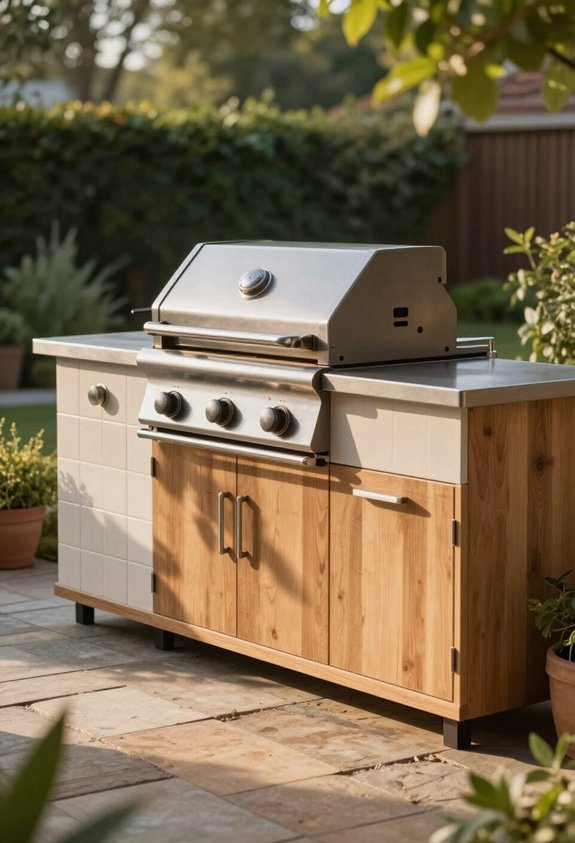
Many homeowners find that starting with a simple grill station provides an excellent foundation for building a complete outdoor kitchen, as this approach allows them to begin cooking outdoors immediately while keeping initial costs manageable and leaving room for future expansion. A basic grill station requires minimal components: a quality grill, a sturdy work surface beside it, and adequate storage for tools and supplies. Positioning the grill in a location with good ventilation and protection from wind guarantees peak cooking performance and safety. Adding a small side burner or prep table nearby increases functionality without significant expense. This foundational setup allows homeowners to experience outdoor cooking firsthand, understand their actual needs, and plan subsequent additions like refrigeration or countertop space accordingly.
Add a Prep Table for Chopping and Plating
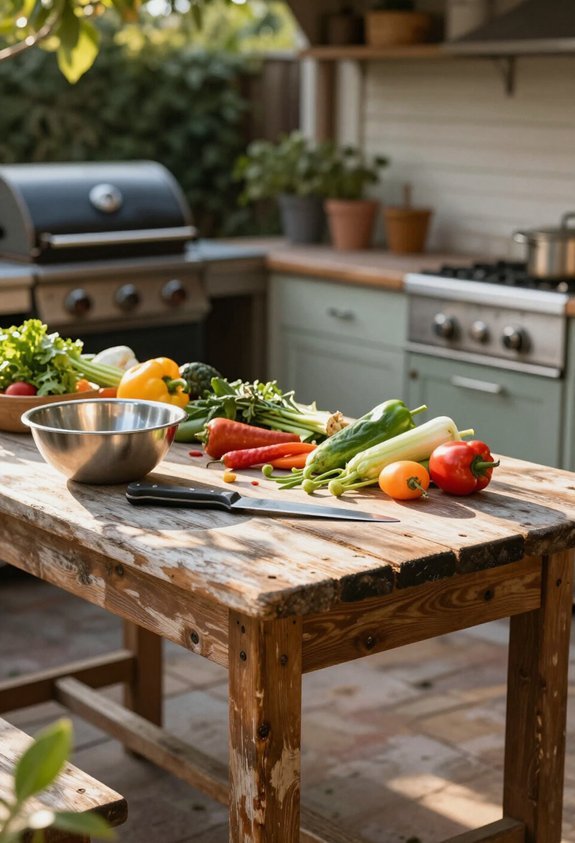
Once a grill station is operational, adding a dedicated prep table becomes the logical next step to maximize efficiency and enjoyment of outdoor cooking. A prep table provides an essential workspace where cooks can chop vegetables, slice meats, and arrange ingredients before cooking begins. The table should feature a durable, weather-resistant surface such as stainless steel or treated wood that withstands moisture and temperature changes. Positioning the prep table near the grill minimizes the distance food travels, reducing the risk of contamination and streamlining the cooking process. Including storage space beneath the table keeps utensils, cutting boards, and seasonings within arm’s reach. Adequate lighting above the prep area guarantees safe food preparation and precise cutting, making the outdoor kitchen both functional and practical for serious cooking enthusiasts.
Install an Outdoor Sink for Easy Cleanup
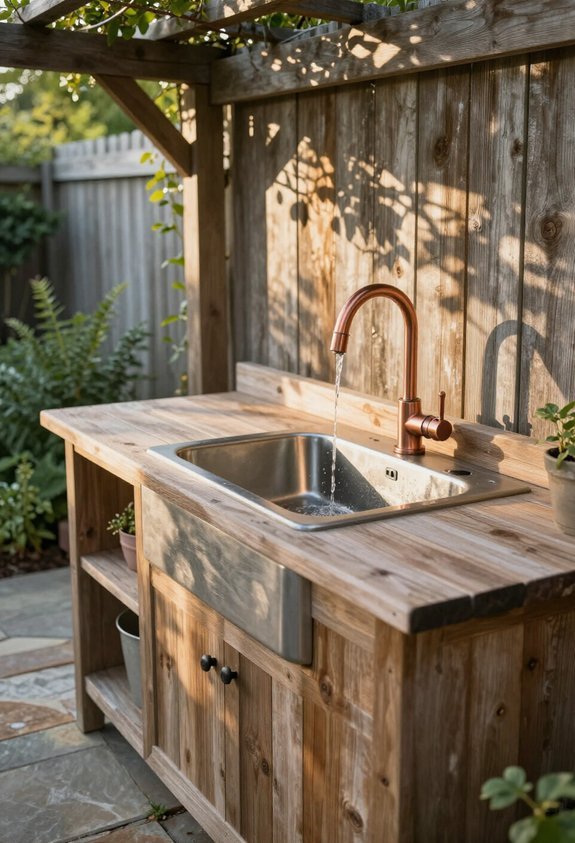
An outdoor sink transforms the backyard kitchen by providing convenient access to running water for rinsing vegetables, cleaning dishes, and washing hands without needing to run back inside the house repeatedly. Installing one requires connecting to either a garden hose or a dedicated water line, depending on the desired permanence and frequency of use. Homeowners should select a location near the prep table and grill for maximum efficiency, ensuring proper drainage that directs wastewater away from food preparation areas. A portable sink with a foot pump offers flexibility for those hesitant about permanent installation, while a wall-mounted or freestanding model with hot and cold water capabilities provides superior functionality. Proper placement and drainage systems maintain hygiene standards and streamline the outdoor cooking workflow appreciably.
Stock a Beverage Station With Ice and Storage
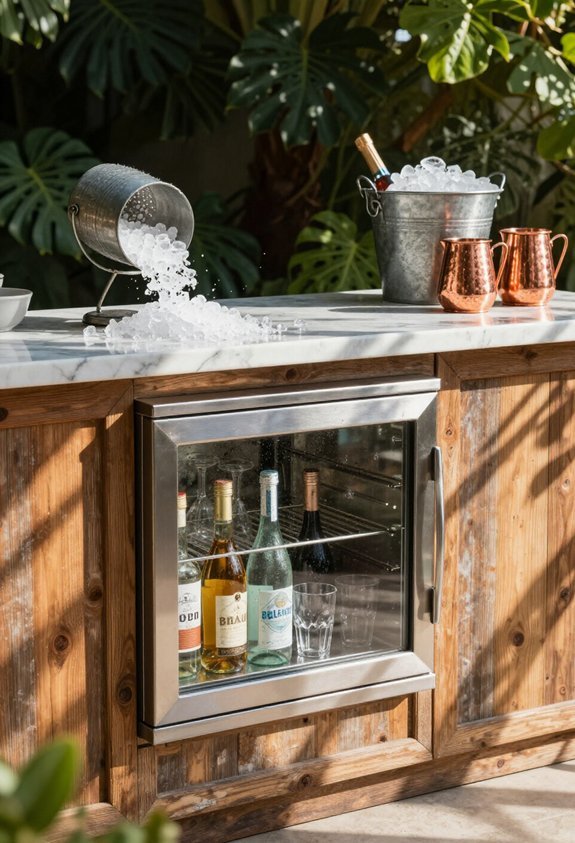
A well-stocked beverage station serves as a central hub for refreshments during outdoor gatherings, requiring careful planning to guarantee guests stay hydrated and comfortable throughout the day. Position a dedicated table in a shaded area near the outdoor kitchen, ensuring easy access without disrupting food preparation zones. Install a cooler or beverage refrigerator stocked with ice, which melts quickly in warm weather and needs frequent replenishment. Organize drinks by category—cold beverages in one section, hot options in another—and arrange cups, napkins, and garnishes within arm’s reach. Add shelving or storage baskets beneath the table for backup supplies, extra ice, and cleaning materials. Label beverage options clearly, and consider providing both alcoholic and non-alcoholic choices to accommodate all guests’ preferences and dietary needs.
Make a Pizza Oven Your Focal Point
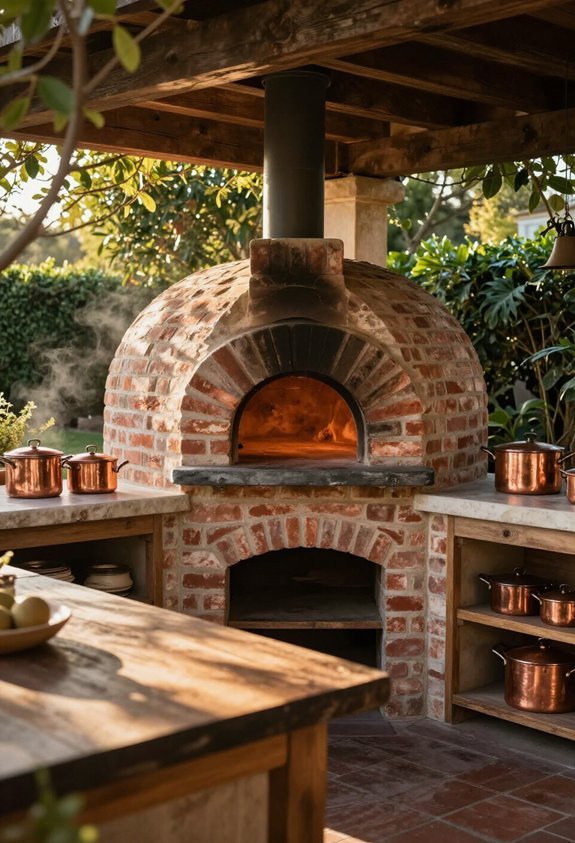
Installing a pizza oven in the backyard transforms the outdoor kitchen into an attractive gathering space that draws guests together while providing both practical cooking functionality and visual appeal. Pizza ovens serve as statement pieces that anchor outdoor entertaining areas, creating natural focal points around which seating and dining arrangements can be organized. Available in various styles, from traditional brick designs to modern stainless steel models, these ovens accommodate different aesthetic preferences and budget considerations. Beyond pizza preparation, they enable cooking of breads, roasted vegetables, and grilled meats, expanding culinary possibilities. The warmth and ambiance generated by wood-fired or gas-powered ovens encourage extended outdoor time, making them valuable investments for homeowners seeking to enhance their backyard entertaining capabilities and create memorable social experiences.
Go Modular With a Cart You Can Move
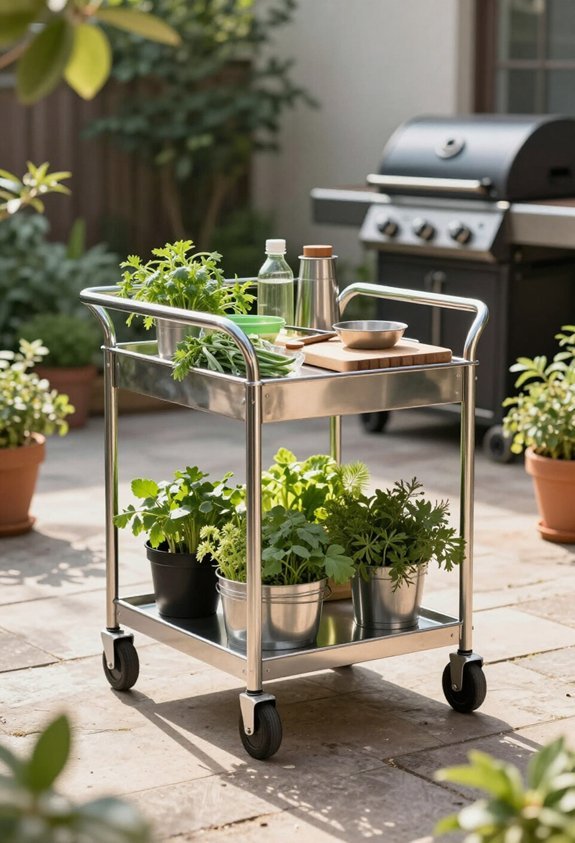
Modular cooking carts offer flexibility and convenience that traditional built-in outdoor kitchens cannot match, allowing homeowners to reconfigure their backyard spaces according to seasonal needs, entertaining preferences, and available square footage. These mobile units typically feature stainless steel construction, multiple cooking surfaces, and storage compartments designed for easy transportation between locations. Homeowners can position carts near seating areas during gatherings, move them closer to the house during winter months, or relocate them entirely when redesigning their yards. Quality carts include locking wheels for stability during cooking and durable countertops that withstand weather exposure. The modular approach eliminates expensive permanent installation while providing essential cooking functionality, making it an economical solution for those seeking outdoor kitchen capabilities without structural commitment.
Keep Food Fresh With an Outdoor Fridge
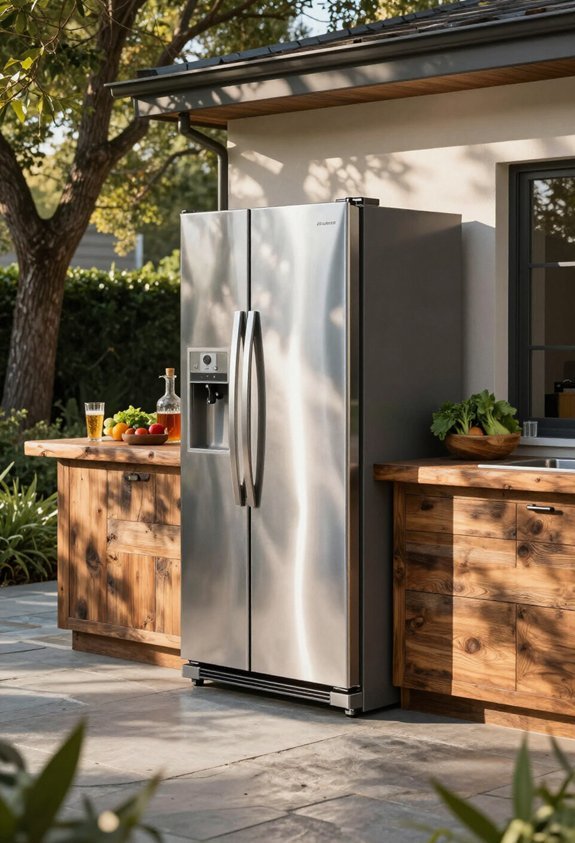
While modular carts provide flexibility in cooking location and setup, the ability to keep ingredients and prepared foods at safe temperatures requires adding refrigeration to any outdoor kitchen space. Outdoor refrigerators are specifically designed to withstand weather conditions, featuring durable stainless steel construction and enhanced insulation that maintains consistent temperatures despite heat exposure. These units come in various sizes, from compact beverage coolers to full-sized models with multiple compartments for storing meats, vegetables, and beverages. Installing an outdoor fridge near the cooking area minimizes travel time and reduces food safety risks by preventing perishable items from sitting at unsafe temperatures. Additionally, outdoor refrigerators eliminate the need for frequent trips to indoor kitchens, streamlining meal preparation and allowing cooks to work more efficiently in their backyard cooking space.
Cook Everything on a Flat-Top Griddle
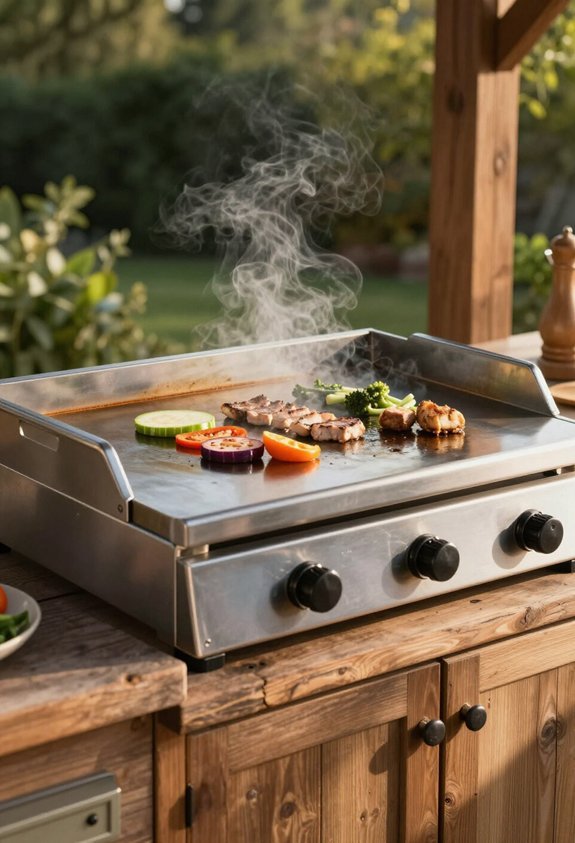
A flat-top griddle offers versatility and efficiency that traditional grill grates cannot match, making it an excellent centerpiece for any backyard kitchen setup. Unlike standard grills with separated grates, flat-top griddles feature a continuous cooking surface that distributes heat evenly across the entire area, allowing multiple foods to cook simultaneously without flavor transfer. This design eliminates gaps where smaller items might fall through, making it ideal for preparing pancakes, grilled vegetables, seafood, and delicate proteins. The flat surface also enables precise temperature control in different zones, permitting cooks to sear foods at high temperatures on one side while maintaining lower heat elsewhere. Additionally, flat-top griddles require minimal cleanup compared to traditional grills, as grease drains efficiently into collection trays positioned beneath the cooking surface.
Shade Your Kitchen From Sun and Rain
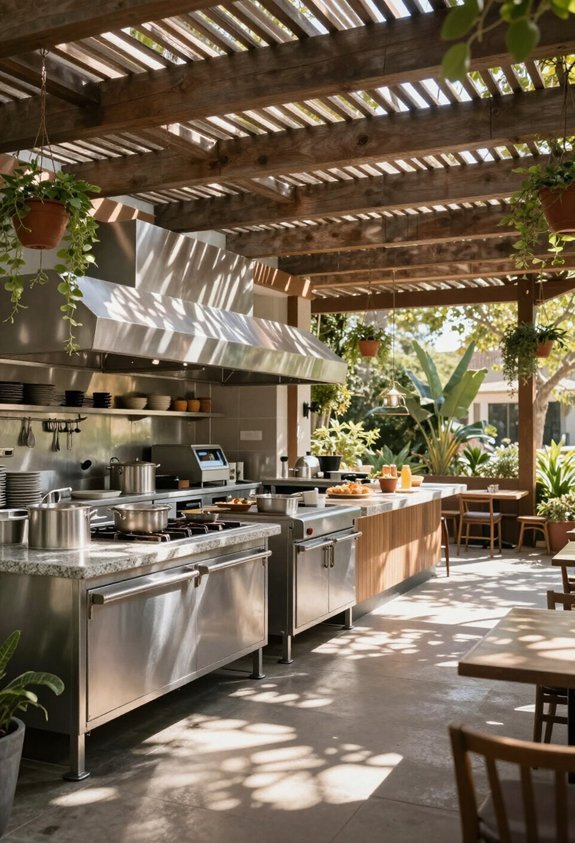
Once the cooking equipment and surface are properly established, protecting that investment from environmental elements becomes the next logical consideration for a functional backyard kitchen. Installing a permanent shade structure, such as a pergola, awning, or retractable canopy, shields the cooking area from direct sunlight and precipitation, thereby extending both the usability of the space and the lifespan of equipment. Shade structures reduce heat exposure during summer months, making the cooking environment more comfortable for the chef while protecting gas grills and griddles from rust and UV damage. Waterproof coverings prevent rain from accumulating on surfaces and equipment, minimizing maintenance requirements. The strategic placement of shade elements also creates defined boundaries for the kitchen area, establishing a dedicated workspace that remains accessible throughout various weather conditions.
Hide Tools and Supplies in Built-In Cabinets
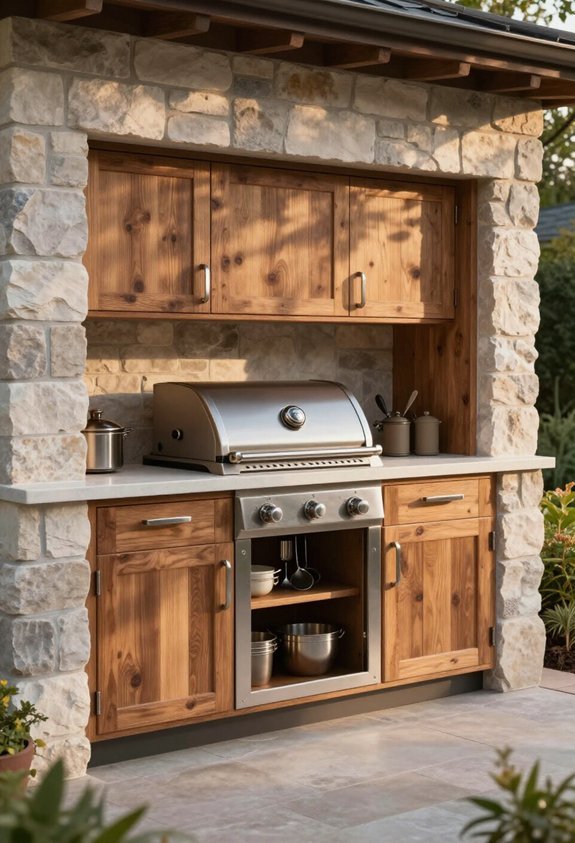
Most backyard kitchens benefit greatly from organized storage solutions that keep cooking equipment, utensils, and supplies out of sight while remaining easily accessible during meal preparation and entertaining. Built-in cabinets provide an excellent method for concealing items such as grilling tools, serving dishes, seasonings, and cleaning supplies, which would otherwise clutter the outdoor workspace. These custom installations can be constructed from weather-resistant materials like cedar or composite wood that withstand moisture and temperature fluctuations. Incorporating adjustable shelving allows homeowners to customize storage compartments according to specific item dimensions and frequency of use. Installing cabinets near the cooking and serving stations minimizes travel distance during food preparation, improving workflow efficiency. Proper organization systems, including labeled containers and drawer dividers, guarantee that necessary equipment can be quickly located when needed during outdoor entertaining occasions.
Smoke Meat Like a Pro
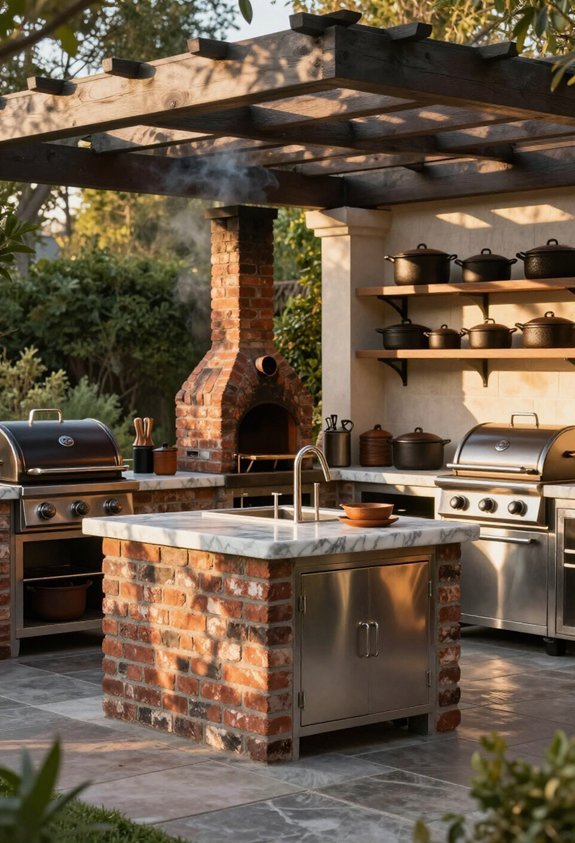
Smoking meat requires understanding several fundamental techniques and principles that transform raw cuts into tender, flavorful dishes through controlled heat and smoke exposure over extended periods. First, selecting quality meat with appropriate marbling guarantees better flavor absorption and moisture retention. Next, preparing a dry rub with salt, sugar, and spices creates a flavorful crust called bark. Maintaining consistent temperature between 225 and 275 degrees Fahrenheit is critical for even cooking without drying the meat. Using wood chips like hickory, oak, or apple provides distinct flavor profiles that complement different meats. Finally, monitoring internal temperatures with a reliable thermometer determines doneness accurately, guaranteeing safe and properly cooked results.
Divide Your Space Into Three Working Zones
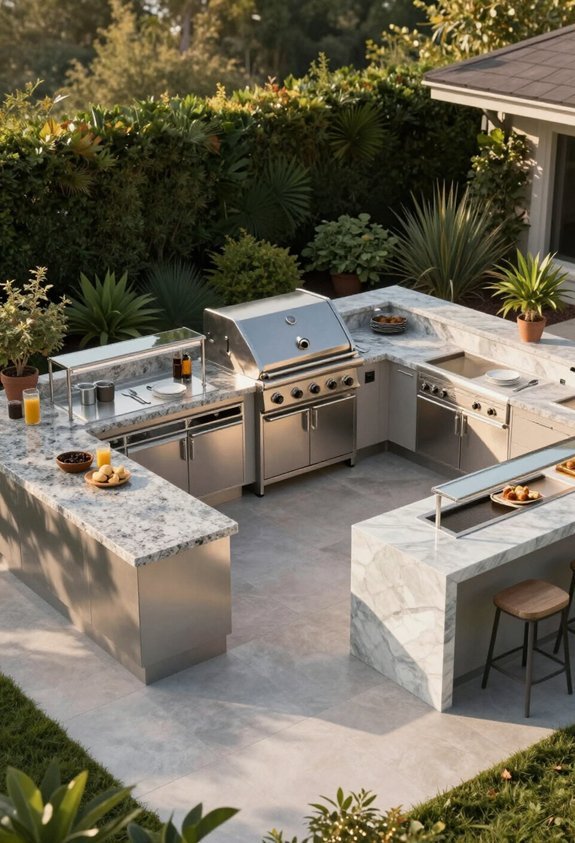
Organizing a backyard kitchen requires thoughtful planning that extends beyond mastering individual cooking techniques like smoking meat, since the physical layout determines how efficiently the cook can move between different tasks and manage multiple cooking methods simultaneously. Dividing the space into three distinct working zones creates a functional system that minimizes unnecessary movement and prevents congestion. The preparation zone should contain countertops, cutting boards, and storage for ingredients and utensils. The cooking zone houses grills, smokers, and other heat sources, positioned safely away from seating areas. The serving and cleanup zone includes tables for plating finished dishes, refrigeration for storage, and a sink or water source for washing equipment. This strategic arrangement streamlines workflow and enhances overall cooking efficiency.
Light Your Kitchen for Evening Entertaining
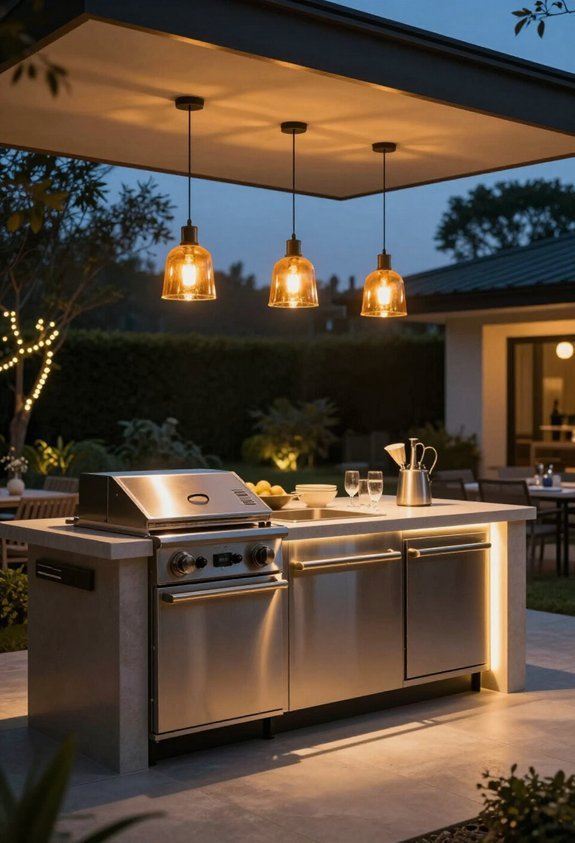
Because outdoor cooking activities often extend into the evening hours, proper lighting becomes essential for both safety and functionality in a backyard kitchen. Strategically placed overhead lights illuminate cooking surfaces and countertops, allowing homeowners to prepare food with precision while reducing accident risks. Task lighting, such as pendant lights or under-cabinet fixtures, directs illumination exactly where needed for food preparation and plating. Ambient lighting, including string lights or solar-powered lanterns, creates an inviting atmosphere for guests while providing general visibility throughout the space. Dimmers enable adjustable brightness levels, accommodating different activities and moods. LED fixtures offer energy efficiency and durability, withstanding outdoor weather conditions. Combining these lighting types guarantees a backyard kitchen remains both practical and welcoming after sunset, enhancing the entertaining experience.
Lay a Budget Foundation With Concrete Pavers
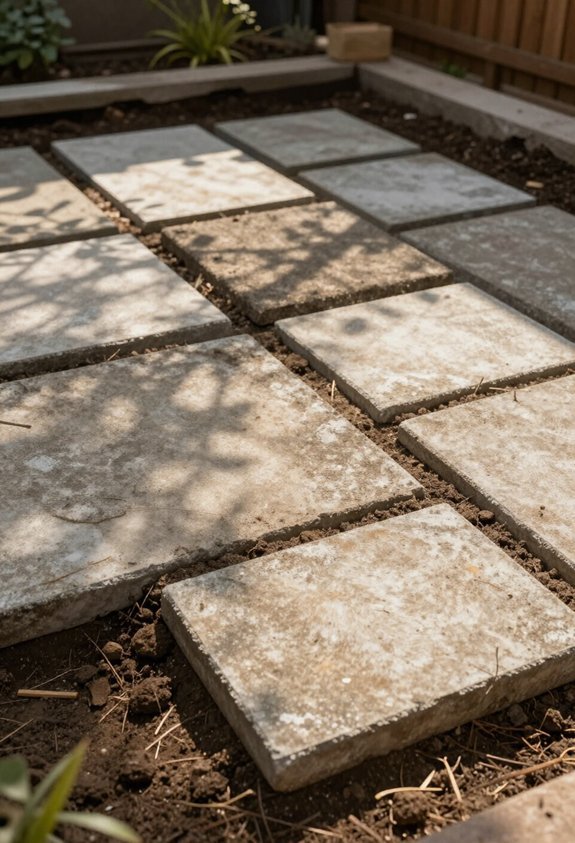
While proper lighting sets the stage for evening entertainment, the foundation of a functional backyard kitchen begins with thoughtful planning of the physical space itself, and concrete pavers offer an affordable, practical solution for creating a stable, attractive base. These interlocking stones provide excellent drainage, preventing water accumulation that could damage kitchen equipment or create safety hazards. Installers can arrange pavers in various patterns to define the cooking and dining areas, establishing clear zones for different activities. The material withstands heavy foot traffic and weather exposure, requiring minimal maintenance beyond occasional sweeping and cleaning. Concrete pavers accommodate uneven terrain through leveling adjustments, making them suitable for most yard conditions. This budget-friendly foundation allows homeowners to allocate remaining resources toward appliances and furnishings, creating a durable outdoor kitchen space without excessive expense.
Tuck Your Trash Out of Sight
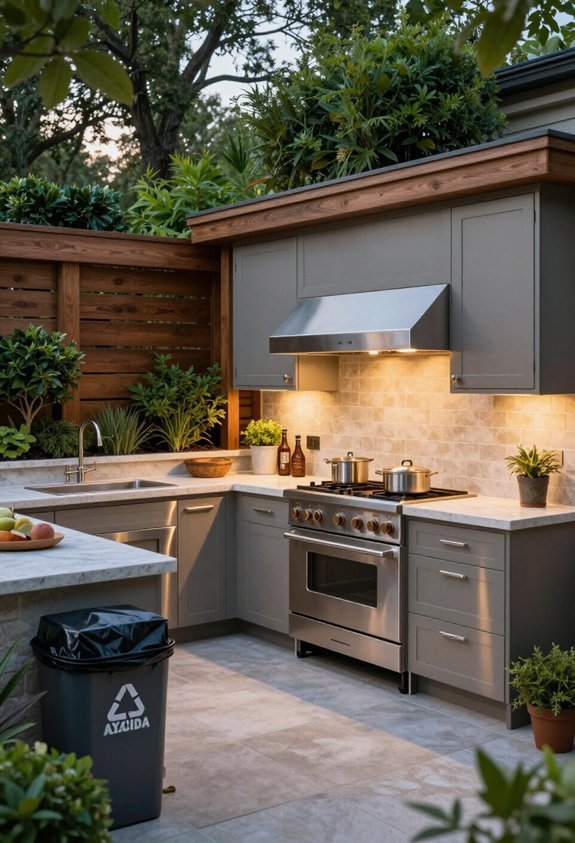
A functional backyard kitchen requires dedicated space for waste management, as trash and recycling bins left visible can detract from the aesthetic appeal and cleanliness of an outdoor entertaining area. Homeowners can construct a simple enclosure using lattice panels, wooden screens, or tall shrubs to conceal bins from view while maintaining adequate ventilation to prevent odor accumulation. Positioning the trash area near the kitchen workspace guarantees convenient access during food preparation and cleanup, minimizing unnecessary steps. A dedicated bin station with separate compartments for trash, recycling, and compost promotes organized waste sorting and environmental responsibility. Installing a hinged roof or cover protects contents from weather and wildlife. Strategic placement behind structures or along property lines keeps the functional necessity hidden from guests while maintaining the backyard’s polished appearance.
Integrate Seating Into Your Layout
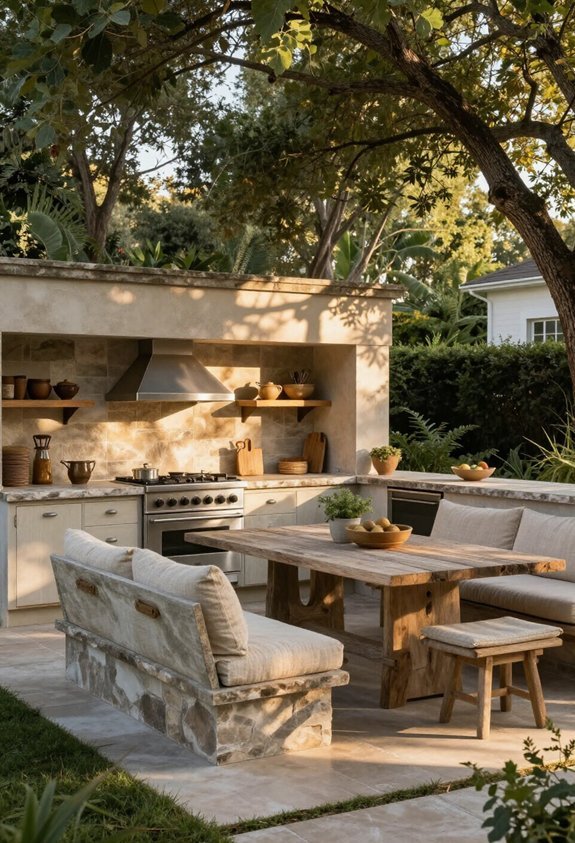
How should seating be arranged in a backyard kitchen to maximize both comfort and functionality? Strategically positioning seating areas creates natural gathering spaces while maintaining traffic flow around cooking stations and food preparation zones. Placing bar seating along countertops encourages conversation with cooks, while separate dining tables positioned at comfortable distances prevent congestion. Incorporating built-in benches along kitchen perimeters maximizes space efficiency in smaller yards, offering storage underneath cushioned seats. Designers should consider sun exposure and shade patterns when determining seating placement, ensuring comfort throughout the day. Adequate spacing between seating areas and cooking equipment prevents accidents and allows multiple people to move freely. Weather-resistant furniture and cushions protect investments while maintaining aesthetic appeal in outdoor environments.
Balance Budget and Quality in Your Choices
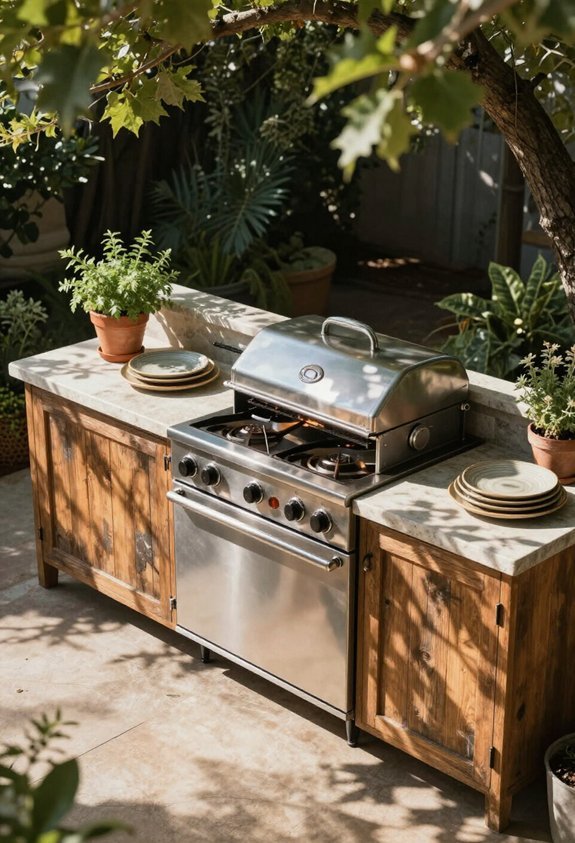
Creating a functional backyard kitchen requires making strategic decisions about where to invest money and where to prioritize durability over expense, since quality materials in high-use areas tend to offer better long-term value than cheaper alternatives that may need frequent replacement. Homeowners should allocate larger budgets toward essential components like grills, countertops, and storage that experience constant use and weather exposure. Mid-range options often provide excellent durability without premium pricing. For decorative elements or less-trafficked features, budget-friendly choices work adequately. Comparing warranties, material longevity, and maintenance requirements helps determine true cost-effectiveness. Purchasing during sales or considering slightly outdated models can reduce expenses while maintaining quality standards. This balanced approach guarantees a well-built outdoor kitchen that remains functional and attractive for years without unnecessary overspending.
Plan for Off-Season Storage and Upkeep
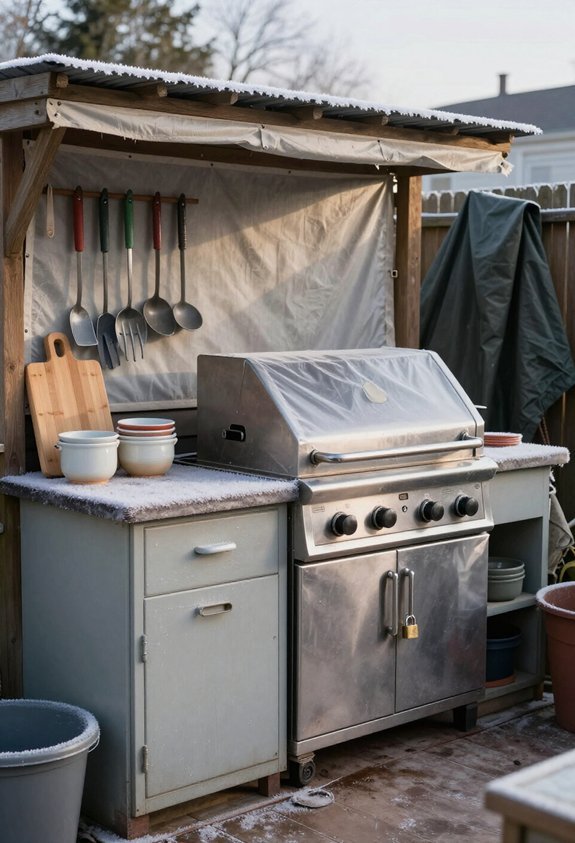
Once homeowners have invested in quality outdoor kitchen components and established a balanced budget approach, they must consider what happens when winter arrives or the outdoor cooking season ends, since proper off-season storage and maintenance directly protect that investment and extend the lifespan of expensive equipment. Covering grills, smokers, and countertops with weatherproof materials prevents rust, fading, and moisture damage. Storing removable items like utensils, cutting boards, and small appliances indoors keeps them safe from harsh weather conditions. Regular cleaning before storage removes grease and debris that could corrode surfaces over time. Creating a designated storage area, whether a shed or garage space, organizes equipment and prevents deterioration. These systematic storage practices guarantee that outdoor kitchen investments remain functional and visually appealing for many seasons to come.
Frequently Asked Questions
How Do I Prevent Insects and Pests From Contaminating Food in My Outdoor Kitchen?
One prevents outdoor kitchen pest contamination by using food covers, screens, and nets. Keeping surfaces clean, storing ingredients in sealed containers, and maintaining distance from trash areas greatly reduces insect attraction and exposure.
What Permits or Inspections Are Required Before Building a Backyard Kitchen?
Homeowners typically need building permits, electrical permits, and gas permits before constructing a backyard kitchen. Local health departments may require inspections for plumbing and food preparation areas. Requirements vary by jurisdiction and specific kitchen features.
How Can I Protect My Outdoor Kitchen Equipment During Harsh Winter Weather?
Equipment protection requires weatherproof covers, storage in sheds, or enclosed cabinets. One should drain gas lines, clean surfaces thoroughly, and apply protective coatings to metal components. Regular maintenance prevents rust and deterioration during freezing temperatures.
What’s the Best Way to Run Gas and Electrical Lines Safely Outdoors?
Gas lines require professional installation with proper permits and pressure testing. Electrical lines need underground conduit, GFCI outlets, and weatherproof boxes. Both systems demand licensed contractors to guarantee safety codes compliance.
How Do I Maintain Proper Ventilation to Prevent Smoke Buildup Near Seating Areas?
Proper ventilation requires positioning the cooking area away from seating zones, installing overhead exhaust hoods, and ensuring unobstructed airflow pathways. Strategic placement of trees or pergolas directs smoke upward and away from guests.
Conclusion
Creating a functional outdoor kitchen requires careful planning, starting with budget assessment and space evaluation before purchasing equipment. By prioritizing essential components like a grill station, prep table, sink, and storage solutions, homeowners can build a practical cooking area that serves multiple purposes. Strategic placement of seating, shade structures, and waste management systems guarantees year-round usability and entertaining capability. Balancing quality investments with practical choices while planning for maintenance establishes a sustainable, long-term outdoor culinary space.