When frost threatens your garden, you’ll want to act strategically to protect your plants from freezing damage. Understanding which plants are vulnerable, how to prepare them beforehand, and where to relocate them makes the difference between thriving greenery and frost-damaged foliage. You’re about to discover three essential techniques that gardeners use to safeguard their plants through cold snaps—each one addressing a different aspect of frost protection.
Know Which Plants Need Protection (and When)?
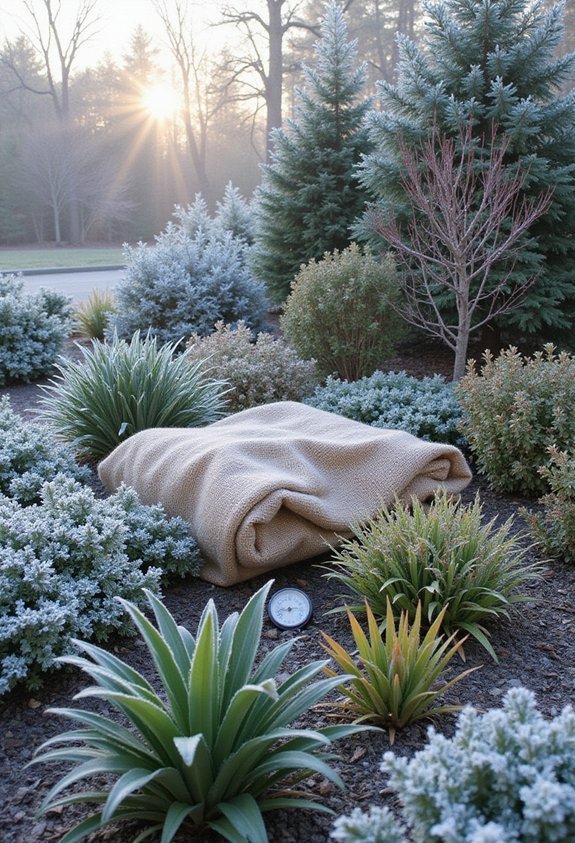
Because different plants have varying levels of cold tolerance, you’ll need to identify which ones in your garden are actually vulnerable to frost damage before you can protect them effectively. Tender plants like tomatoes, peppers, and impatiens can’t survive freezing temperatures, while hardy perennials such as coneflowers and black-eyed Susans tolerate cold naturally. Check your plant’s hardiness zone rating, which indicates the coldest temperatures it’ll endure without protection. Newly planted specimens need extra care since they haven’t established deep root systems yet. Tropical and subtropical plants require immediate attention when frost threatens. Young seedlings and container plants, which have limited soil insulation, demand priority protection. Understanding your plants’ specific cold-tolerance levels lets you focus protective efforts where they’re truly needed, saving you time and resources.
Also read: 5 Signs Your Live Christmas Tree Is Dying
Water Plants, Then Cover Them Before Frost Hits
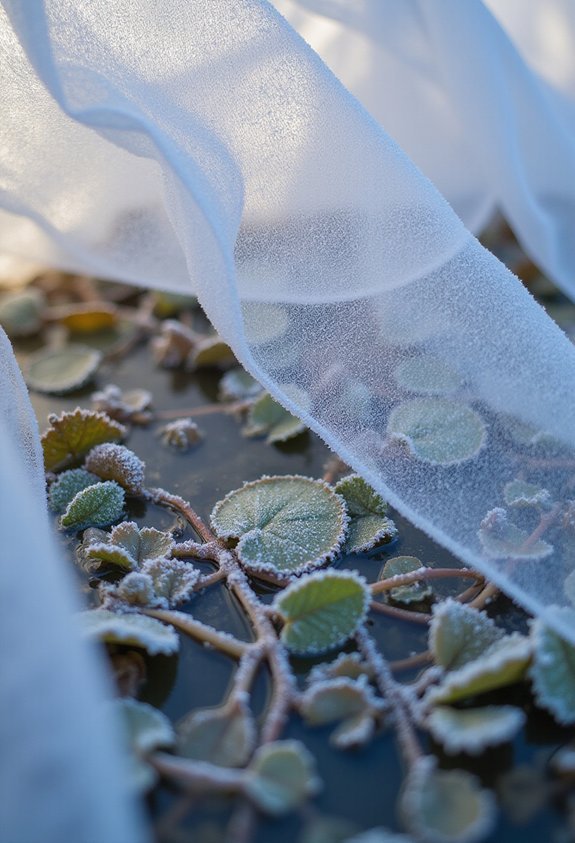
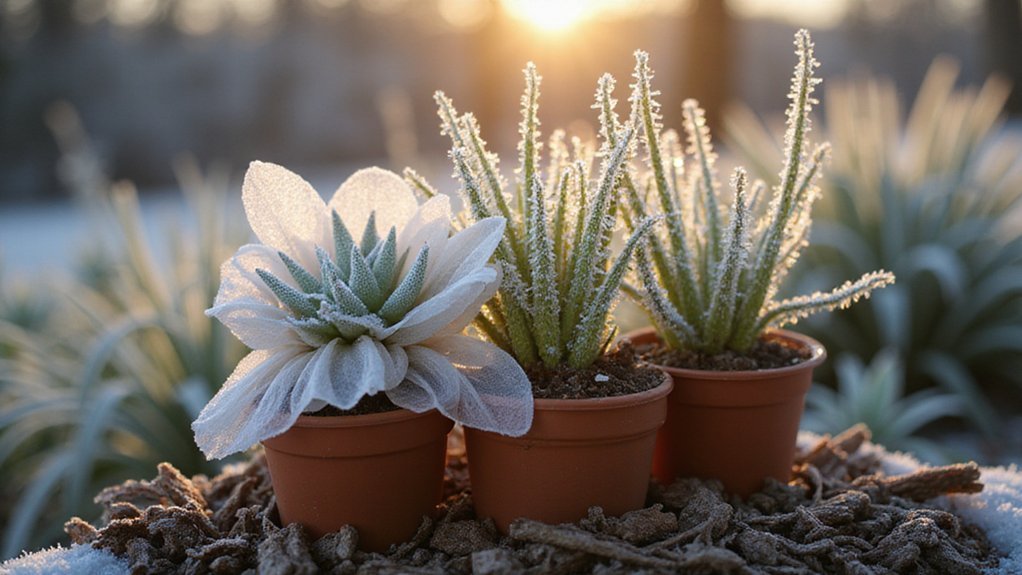
Once you’ve identified which plants in your garden need frost protection, you’ll want to prepare them properly before cold temperatures arrive, and the most effective first step involves watering your plants thoroughly and then covering them strategically. Water acts as an insulator, helping retain soil heat and protecting root systems from freezing damage. You should water your plants deeply the day before an expected frost, ensuring moisture penetrates the soil completely. After watering, cover vulnerable plants with blankets, burlap, or frost cloth, anchoring these materials securely to prevent wind from displacing them. Make sure coverings don’t touch plant leaves directly, as this can cause damage. Remove covers during daylight hours when temperatures rise above freezing to allow sunlight and air circulation.
Move Potted Plants to Frost-Safe Locations
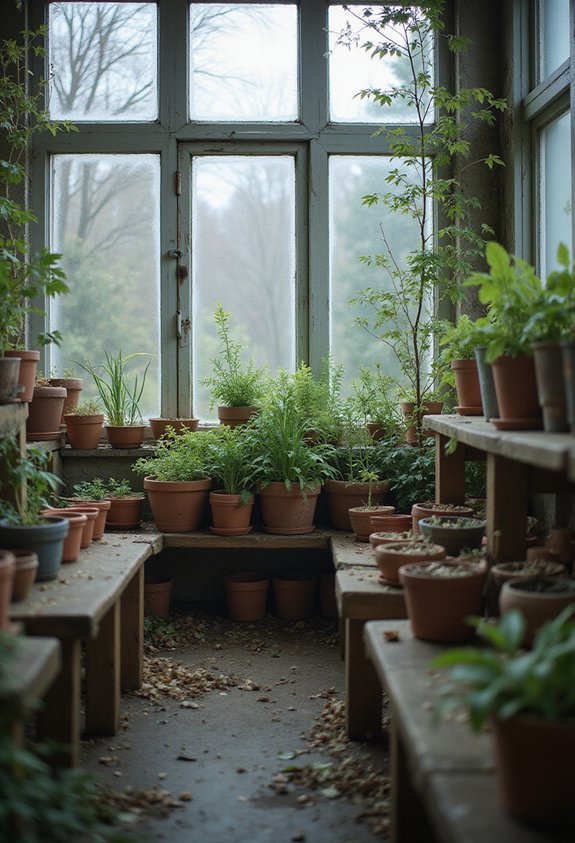
While potted plants offer flexibility that in-ground plants don’t have, you’ll need to act quickly when frost threatens because they’re more vulnerable to freezing temperatures than plants growing in soil. Move your containers to sheltered locations like garages, basements, sheds, or porches where temperatures stay above freezing. If you don’t have indoor space, position potted plants against your home’s south-facing wall, which receives maximum sunlight and retains heat. Group containers together to create a microclimate that provides additional protection. Guarantee the location you choose gets adequate light for your plants’ needs, even if it’s indirect. Check temperature conditions regularly and move plants back outside once frost danger passes and nighttime temperatures consistently remain above freezing for your region.
Conclusion
You’ve now learned the essential strategies for protecting your plants from frost damage. Studies show that properly watered plants can survive freezing temperatures up to 5 degrees colder than unwatered ones, making hydration your first line of defense. By identifying vulnerable plants, watering thoroughly, covering them strategically, and relocating potted varieties to sheltered spots, you’re taking inclusive measures that considerably increase your plants’ survival rates during winter‘s harshest conditions.