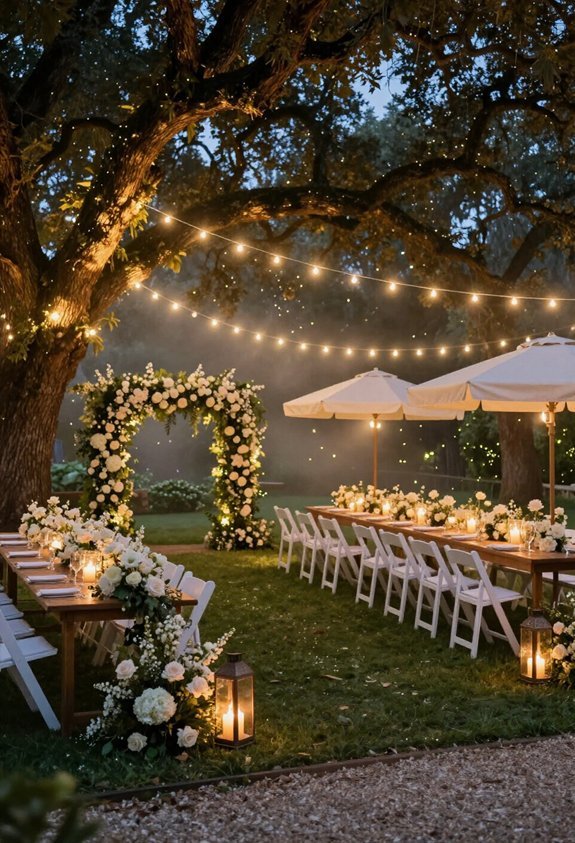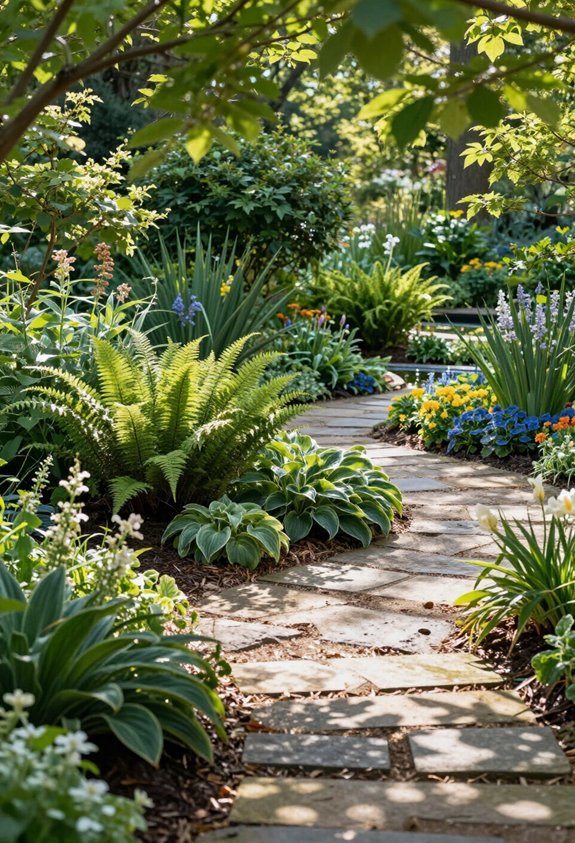
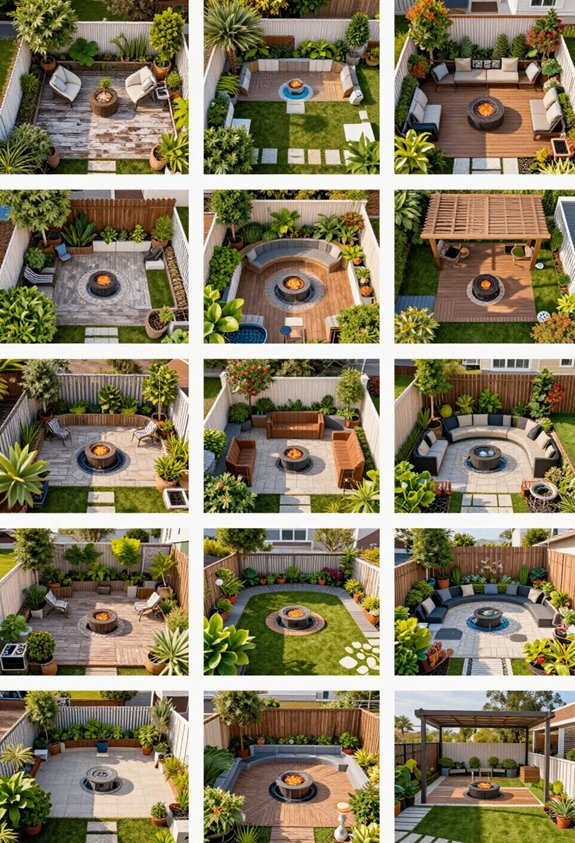
Most backyard frustrations stem from the same root problem: treating the space as decoration rather than as a functional extension of daily living. Homeowners invest in plants and pathways without considering traffic flow, add seating without thinking about sightlines, or install features that look attractive but don’t actually work for how they live. The solutions lie in reversing this approach by starting with how you’ll actually use the space, then selecting and arranging elements that support that lifestyle. These forty ideas demonstrate that method, offering both inspiration and a practical framework for making smarter choices.
Create a Cozy Fire Pit Gathering Space
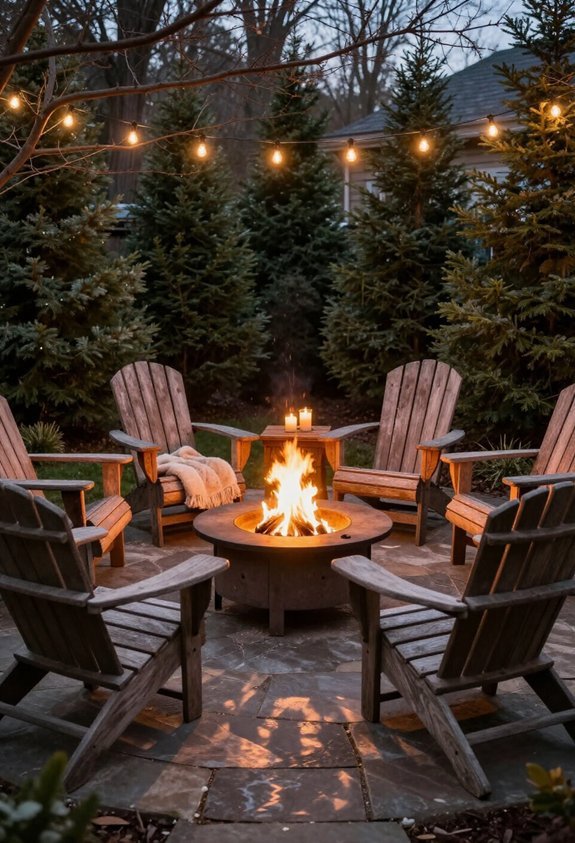
When planning to build a fire pit in the backyard, the first consideration should be selecting an appropriate location that is at least ten to fifteen feet away from the house, trees, and other flammable structures, guaranteeing safety while creating an inviting gathering area. Once the location is established, the fire pit can be constructed using fire-resistant materials such as brick, stone, or metal rings, which contain the flames effectively. Surrounding the pit with comfortable seating options like benches, chairs, or log stumps encourages people to gather and socialize. Adding landscape lighting around the perimeter enhances safety during evening hours and creates ambiance. Finally, keeping a fire extinguisher nearby and establishing clear safety rules guarantees responsible use and protects everyone enjoying this outdoor space throughout the seasons.
Set Up a Lounge Seating Nook
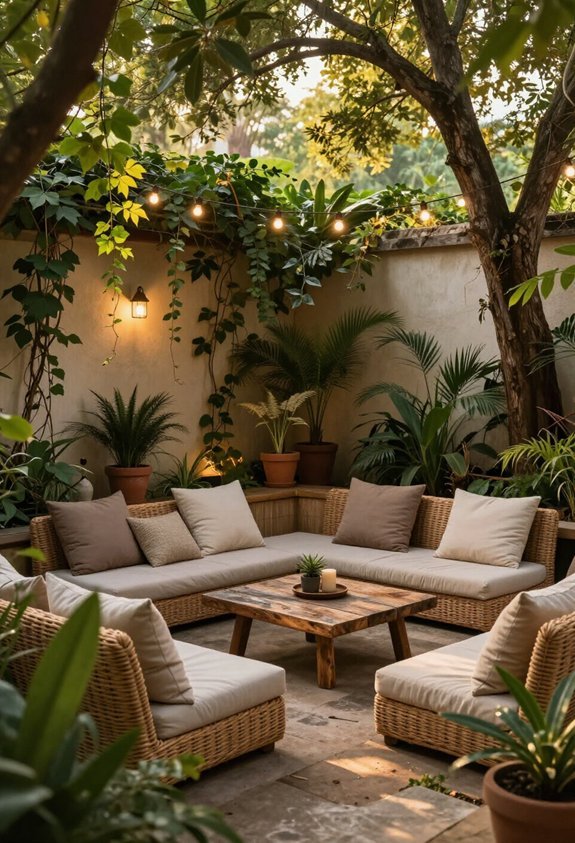
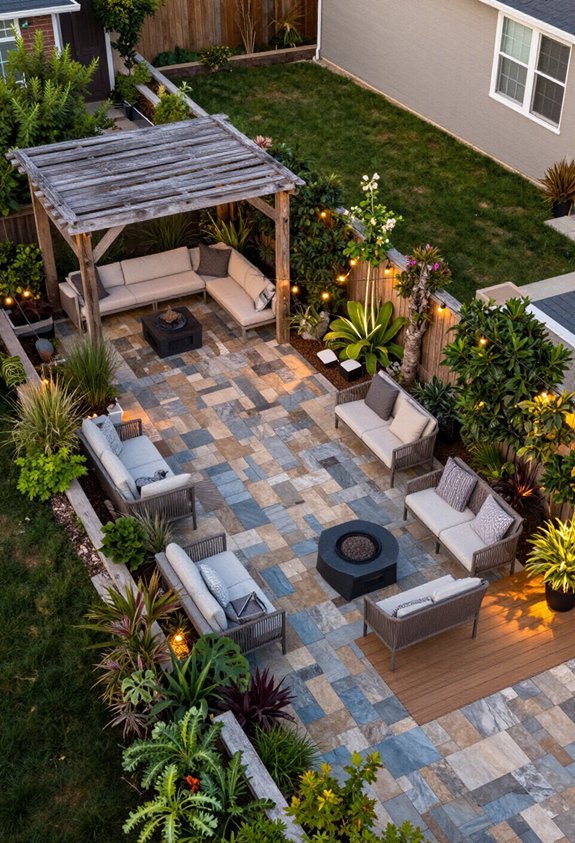
Creating a dedicated lounge seating nook transforms a backyard into a comfortable retreat where people can relax and enjoy the outdoor environment. To establish this space, homeowners should select a sheltered location that receives partial shade, protecting visitors from excessive sun exposure while maintaining visibility of the surrounding yard. Comfortable seating options, such as lounge chairs, cushioned benches, or outdoor sectionals, should be arranged to encourage conversation and relaxation. Adding weatherproof throw pillows and blankets enhances comfort during cooler evenings. A small side table provides a convenient surface for beverages and reading materials. Strategic placement of plants or a pergola creates natural privacy boundaries. Proper lighting, including string lights or solar lamps, extends the nook’s usability into evening hours, establishing an inviting atmosphere conducive to unwinding.
Install a Hammock or Hanging Daybed
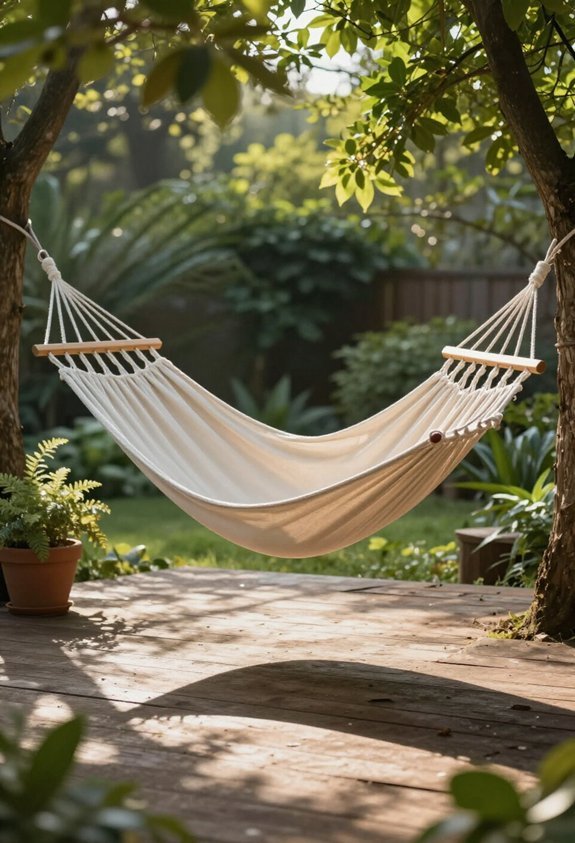
For those seeking an even more relaxing centerpiece to their backyard retreat, a hammock or hanging daybed offers a suspended sanctuary that combines comfort with minimal footprint. These installations require sturdy overhead support, such as mature trees or a dedicated frame structure, ensuring safety and stability before use. Hammocks work well for smaller spaces, while hanging daybeds accommodate multiple people and provide a platform for lounging or reading. When selecting materials, consider weather-resistant fabrics and hardware designed to withstand outdoor conditions and UV exposure. Proper installation involves securing anchor points at appropriate heights and angles, typically between six and nine feet off the ground. Regular maintenance, including checking hardware and treating fabric annually, extends the lifespan of these relaxation features considerably.
Build a Rustic Wooden Bench With Storage
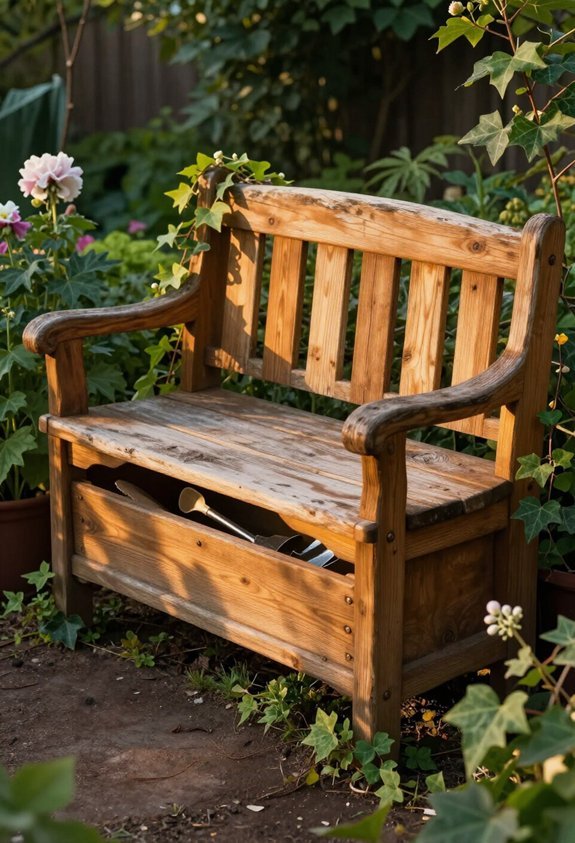
A rustic wooden bench with storage combines functional seating with hidden compartments, offering a practical solution for organizing outdoor cushions, gardening tools, or seasonal decorations while maintaining an aesthetic appeal that complements natural backyard settings. Builders can construct this project using weathered wood planks, which naturally enhance the rustic appearance, and sturdy hinges that allow the seat to lift for interior access. The bench’s simple design requires basic carpentry skills, involving cutting lumber to size, assembling the frame with wood screws, and reinforcing joints for stability. Adding a hinged lid guarantees the storage compartment remains accessible yet protected from weather exposure. Finishing with outdoor-grade stain or sealant preserves the wood’s integrity, extending the bench’s lifespan and maintaining its visual appeal throughout changing seasons.
Create a Sunken Seating Area
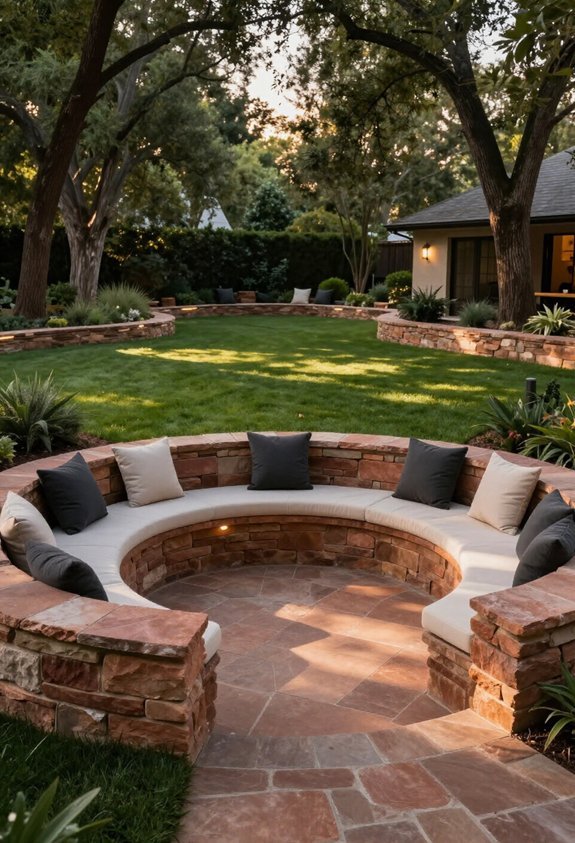
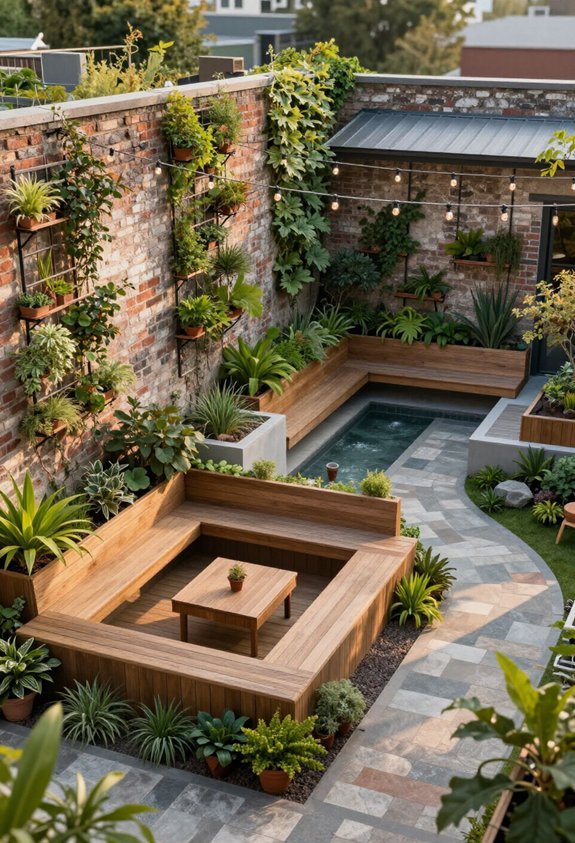
Unlike traditional ground-level seating arrangements, sunken seating areas offer a distinct advantage by positioning the gathering space below the surrounding landscape, which creates an intimate, sheltered environment that feels separate from the rest of the backyard while providing natural wind protection and enhanced privacy. To construct a sunken seating area, homeowners should first excavate a shallow depression, typically twelve to eighteen inches deep, then install retaining walls using stone or timber to prevent soil erosion and define the space’s boundaries. The excavated area should be lined with gravel or sand for proper drainage, preventing water accumulation during rainfall. Adding built-in benches along the walls maximizes seating efficiency, while incorporating a fire pit or outdoor lighting enhances functionality and ambiance, making the sunken area an inviting gathering destination.
Install a Pergola Swing or Hanging Seat
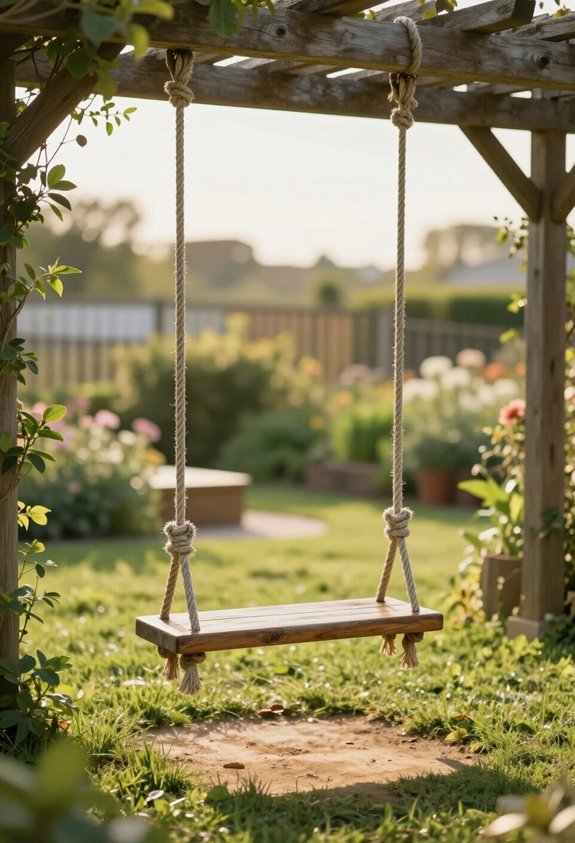
Many homeowners seek to add dynamic seating options that combine comfort with visual appeal, and installing a pergola swing or hanging seat accomplishes both goals by creating a suspended gathering space that encourages relaxation while serving as an attractive focal point in the backyard. To begin installation, homeowners should select a sturdy pergola structure capable of supporting the weight of the swing or seat and its occupants, typically requiring reinforced beams and secure mounting hardware. Choosing high-quality chains or ropes rated for outdoor use guarantees durability and safety. The seating itself can range from traditional wooden swings to modern hanging chairs, depending on aesthetic preferences and comfort requirements. Proper installation height allows adequate clearance for swinging motion while maintaining accessibility for all users, transforming the backyard into a welcoming retreat.
Build a Natural Rock Seating Wall
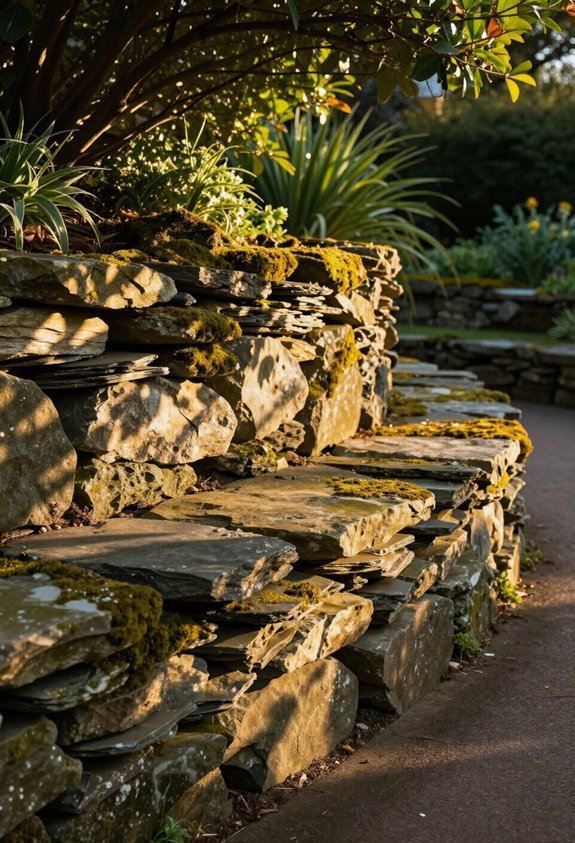
How can homeowners create both functional seating and natural landscaping appeal in one backyard project? Building a natural rock seating wall accomplishes this goal effectively. First, select a level location and mark the wall’s dimensions with string or chalk. Gather sturdy stones of varying sizes, ensuring flat surfaces for comfortable seating. Dig a shallow foundation trench to anchor the base layer securely. Stack stones carefully, applying construction adhesive between each layer for stability and durability. Stagger stones like bricks, avoiding vertical seams that weaken the structure. Build the wall to approximately 18 inches high, which provides ideal seating height. Backfill behind the wall with soil and compacted earth. Cap the top with flat stones, sanding rough edges smooth. This project combines aesthetic natural elements with practical outdoor seating solutions.
Create an Al Fresco Lounge With Outdoor Rugs
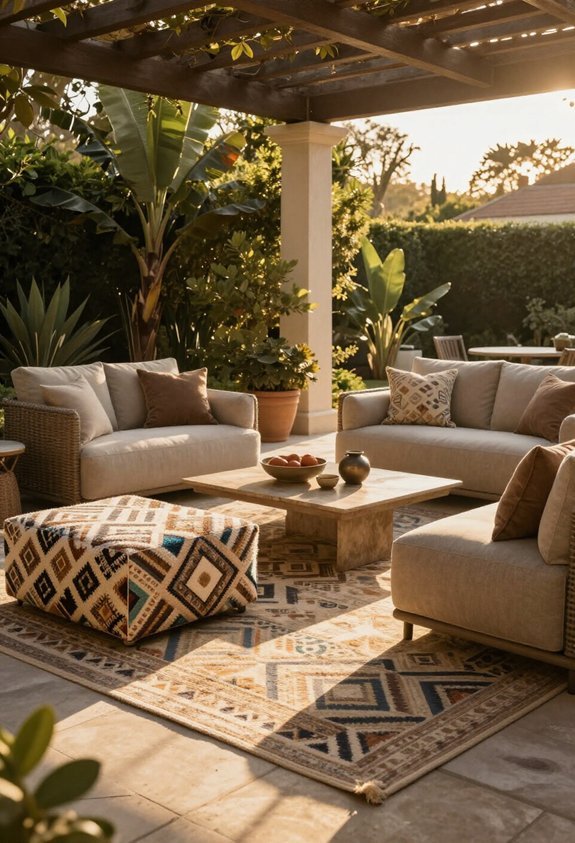
While a natural rock seating wall provides sturdy, permanent seating integrated into the landscape, homeowners can enhance their outdoor living spaces further by creating a more comfortable and stylish lounge area with outdoor rugs. Outdoor rugs define specific zones within a yard, establishing designated areas for relaxation and conversation. These rugs, made from weather-resistant materials like polypropylene, withstand moisture, sun exposure, and foot traffic while maintaining their color and texture. Placing rugs beneath furniture groupings anchors seating arrangements and adds visual interest through patterns and colors that complement landscaping. Quality outdoor rugs also improve comfort by providing cushioning underfoot, transforming bare patios into inviting retreat spaces. Proper placement and selection of durable outdoor rugs create functional lounges that encourage regular outdoor enjoyment throughout seasons.
Add a Pergola for Shade and Style
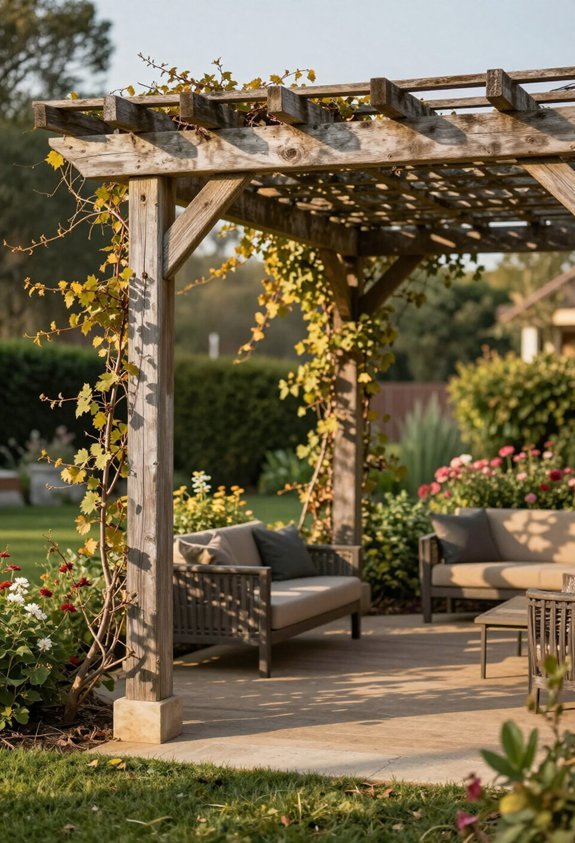
A pergola serves as both a functional and decorative structure that enhances outdoor living spaces by providing partial shade while allowing filtered sunlight to create appealing patterns on the ground below. Constructed from wooden beams or metal framework arranged in a lattice pattern, pergolas offer homeowners flexibility in design and placement throughout their yards. These structures work exceptionally well when positioned over patios, seating areas, or dining spaces, creating comfortable outdoor rooms for relaxation and entertainment. Additionally, pergolas can support climbing vines such as clematis or wisteria, which provide natural cooling while adding visual interest. The open-roof design allows air circulation, preventing the space from becoming uncomfortably warm during summer months. Whether constructed from scratch or purchased as a kit, pergolas represent a practical investment that considerably elevates backyard aesthetics and usability.
Design a Shade Structure With Climbing Vines
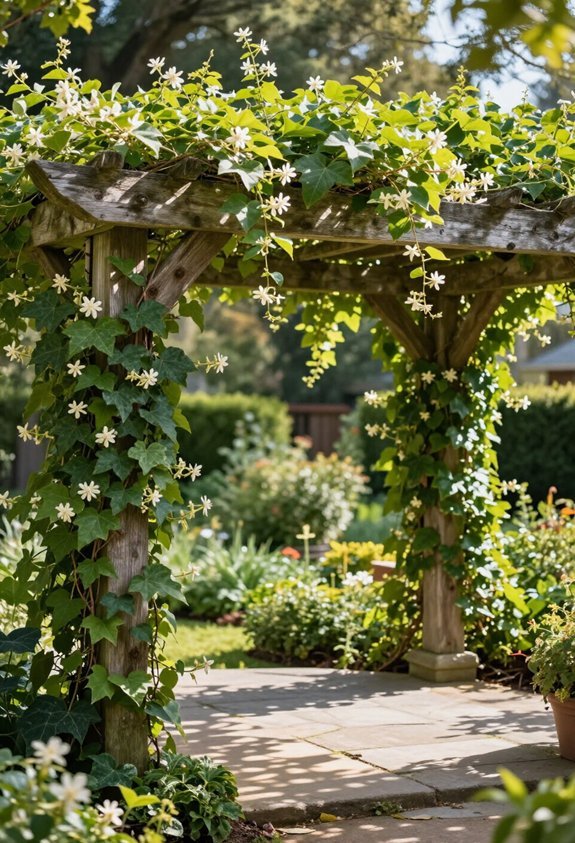
Because climbing vines can transform ordinary structures into lush, shaded retreats, homeowners should carefully plan which vine species to use and how to support them for ideal growth and coverage. Selecting the right vine depends on climate, sunlight conditions, and desired density, with options including clematis, jasmine, or ivy. Installing sturdy trellises, arbors, or pergolas provides essential framework for vines to climb and spread naturally. Proper spacing between vines allows air circulation and prevents disease development. Regular maintenance, including pruning and training shoots along support structures, guarantees even coverage and healthy foliage. Anchoring vines securely prevents wind damage and promotes stronger attachment. This layered approach creates functional shade while adding visual appeal to outdoor spaces year-round.
Install Outdoor String Lights for Ambiance
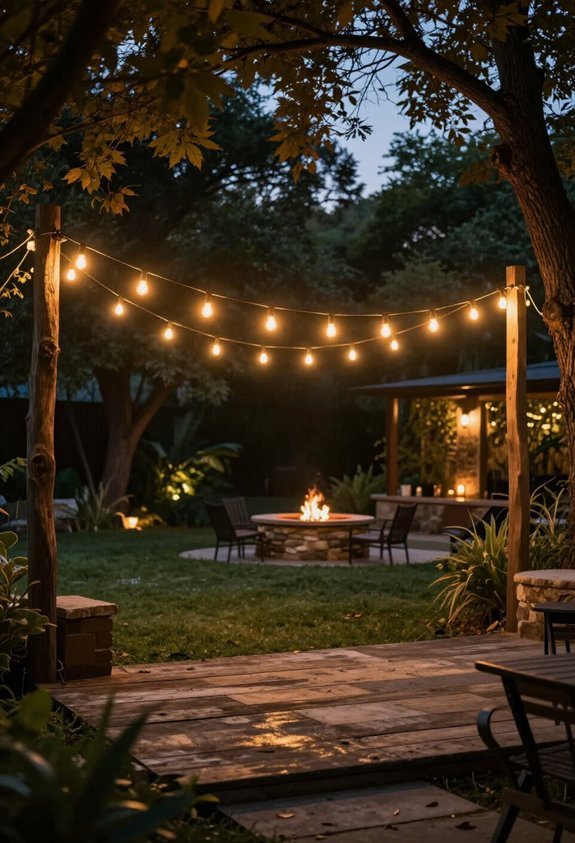
Outdoor string lights serve as an excellent complement to shade structures, offering homeowners a way to extend the usability of their backyards well into the evening hours by providing both functional illumination and decorative appeal. When installing these lights, individuals should first measure the distance between anchor points to determine the appropriate length and quantity needed. Selecting weather-resistant bulbs and durable wiring guarantees longevity and safety in outdoor conditions. Proper installation requires secure mounting hardware attached to sturdy structures like pergolas, fences, or walls, preventing sagging and damage from wind or weight. Spacing bulbs evenly along the lines creates balanced visual distribution, while choosing warm-toned lighting enhances the welcoming atmosphere. Regular maintenance, including cleaning and checking connections, keeps the installation functioning effectively throughout multiple seasons.
Add Privacy Screening With Bamboo or Lattice
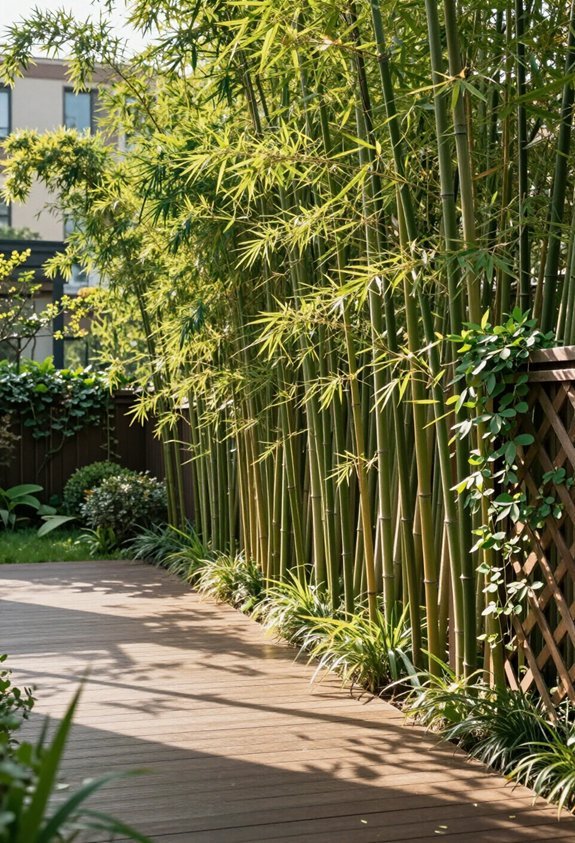
Privacy screening transforms backyards into secluded retreats by blocking unwanted views from neighbors and nearby properties, and homeowners can achieve this goal effectively through bamboo or lattice installations. Bamboo screening offers a natural, aesthetically pleasing solution that grows quickly and requires minimal maintenance once established. Lattice structures, constructed from wood or vinyl, provide flexible design options that complement various architectural styles while allowing partial visibility and airflow. Installation involves securing posts firmly into the ground at appropriate intervals, then attaching screening materials securely to prevent shifting from wind or weather. Homeowners should consider their specific privacy needs, local building codes, and maintenance preferences when selecting between these options. Both approaches greatly enhance outdoor comfort while adding visual interest and property value to residential landscapes.
Install an Outdoor Dining Area
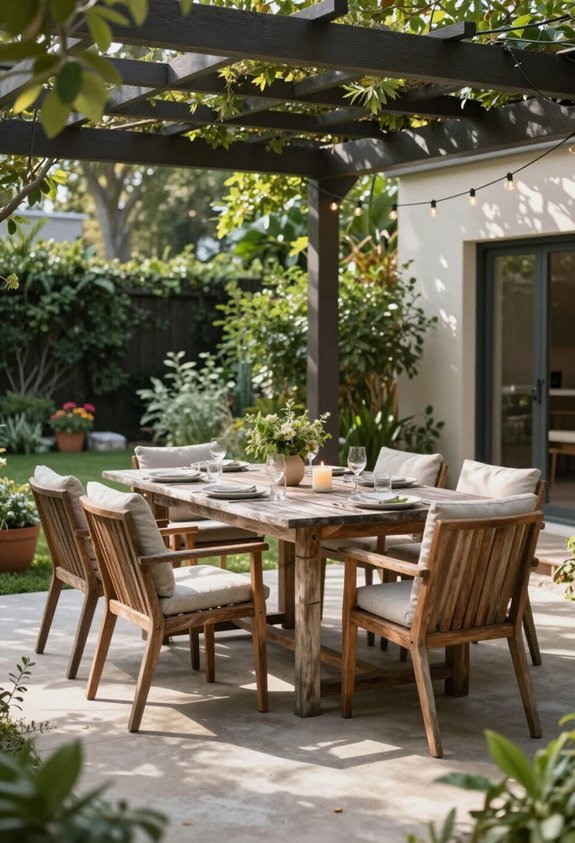
Many homeowners can transform their backyards into functional entertainment spaces by installing an outdoor dining area that accommodates family meals and social gatherings. When selecting a location, homeowners should choose a level, well-draining spot that receives adequate shade during peak afternoon hours, protecting diners from excessive heat and sun exposure. A sturdy outdoor dining table paired with weather-resistant chairs forms the foundation of this space, while a pergola or umbrella provides additional shade coverage. Installing proper lighting, such as string lights or lanterns, extends usability into evening hours and creates ambient atmosphere. Durable outdoor rugs and nearby storage for cushions and serving dishes enhance both comfort and convenience. This dedicated dining zone encourages family connection and entertaining while maximizing the backyard’s practical potential.
Add a Weatherproof Outdoor Kitchen
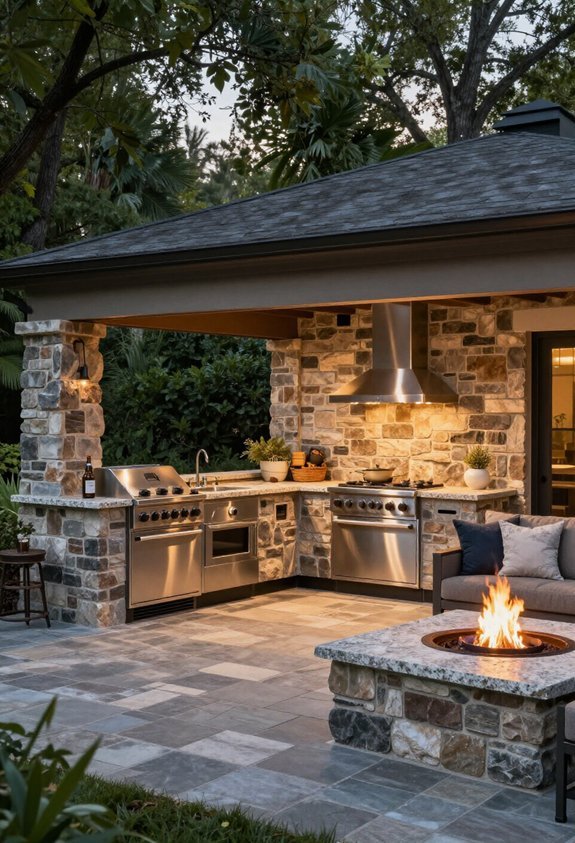
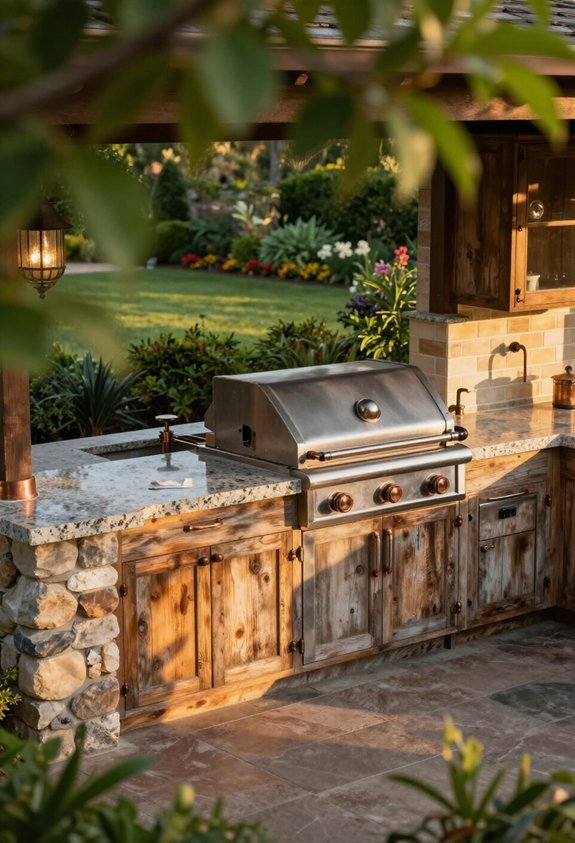
Beyond the dining area, homeowners can expand their outdoor entertainment capabilities by incorporating a weatherproof outdoor kitchen, which transforms a backyard into a complete cooking and preparation space that rivals indoor kitchens in both functionality and convenience. Essential components include a stainless steel grill, refrigeration units, and counter space constructed from durable, weather-resistant materials such as granite or concrete. Installing a protective roof or pergola shields cooking areas from rain and intense sunlight, while proper drainage systems prevent water accumulation. Sealed cabinetry and stainless steel appliances withstand moisture and temperature fluctuations without deteriorating. Gas or electric connections should be professionally installed to guarantee safety and compliance with local building codes. This investment creates year-round outdoor entertaining opportunities and markedly enhances property value and usability.
Create an Alfresco Kitchen With Grilling Station
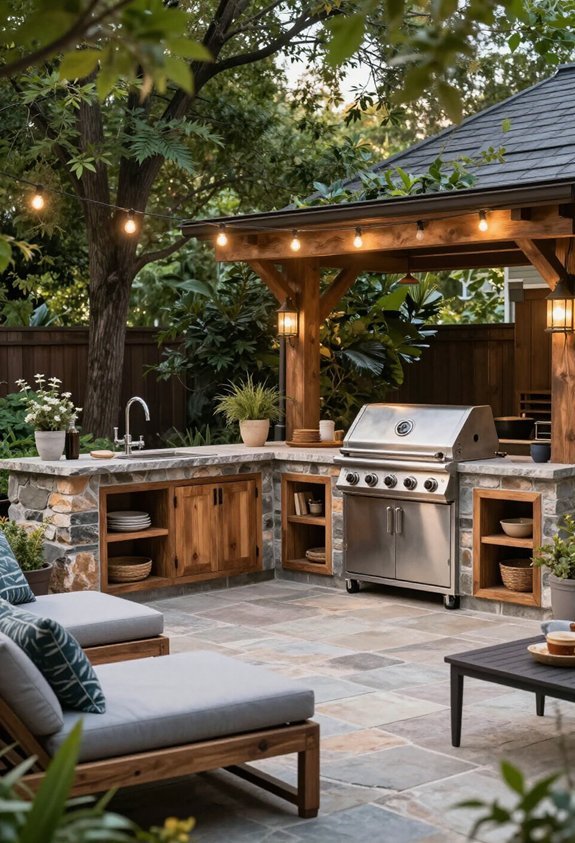
How can homeowners transform a backyard into a functional outdoor cooking space that combines the convenience of a full kitchen with the appeal of open-air dining? Creating an alfresco kitchen with a grilling station requires strategic planning and quality equipment selection. Homeowners should position the grill as the centerpiece, surrounded by prep surfaces, storage cabinets, and a sink for cleaning. Installing a refrigerator keeps ingredients accessible, while overhead shade structures protect diners from sun exposure. Gas or charcoal grills offer different cooking advantages, so selections depend on personal preference and budget. Counter space accommodates food preparation and plating, while durable, weather-resistant materials guarantee longevity. Proper drainage systems prevent water accumulation, and adequate lighting extends usability into evening hours. This all-encompassing setup transforms outdoor entertaining into a seamless, organized culinary experience.
Design a Modern Water Feature or Fountain
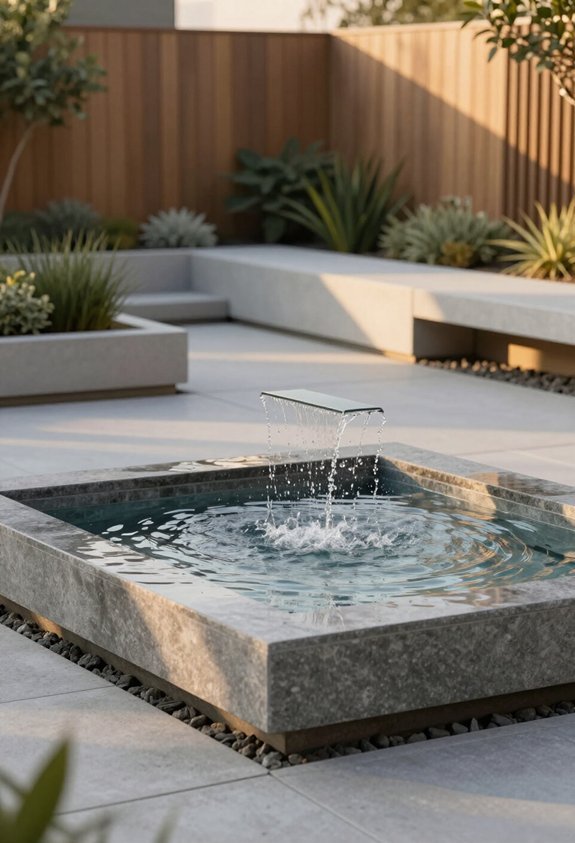
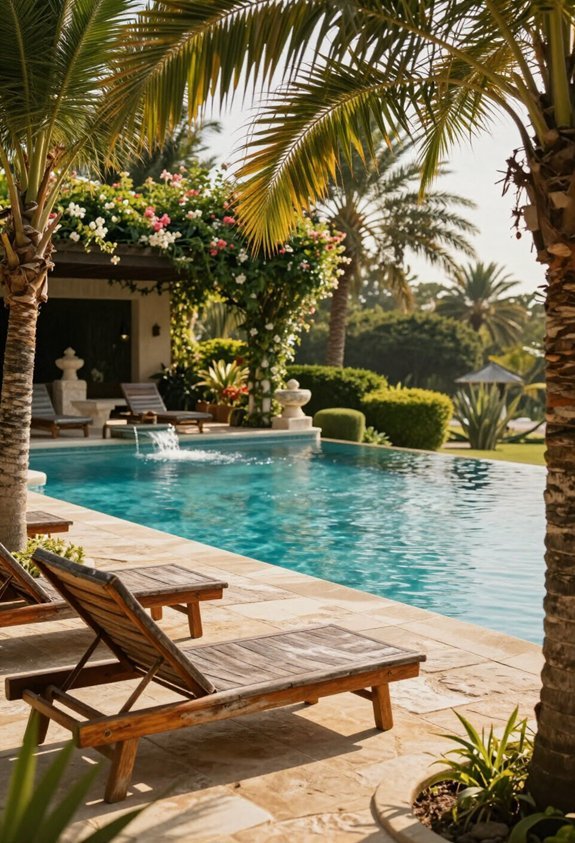
A water feature or fountain serves as both a visual focal point and a soothing sensory element that enhances any backyard landscape, transforming an ordinary outdoor space into a tranquil retreat where homeowners can relax and entertain guests. Modern water features come in various styles, including minimalist fountains with clean lines, cascading wall features, and geometric basin designs that complement contemporary architecture. When selecting a water feature, consider the backyard’s size, existing landscaping, and available space for installation. Positioning the fountain near seating areas maximizes its calming effects, while proper lighting enhances its visual impact during evening hours. Regular maintenance, including water circulation checks and algae prevention, guarantees the feature remains functional and attractive throughout the seasons.
Add a Shallow Pond or Water Basin
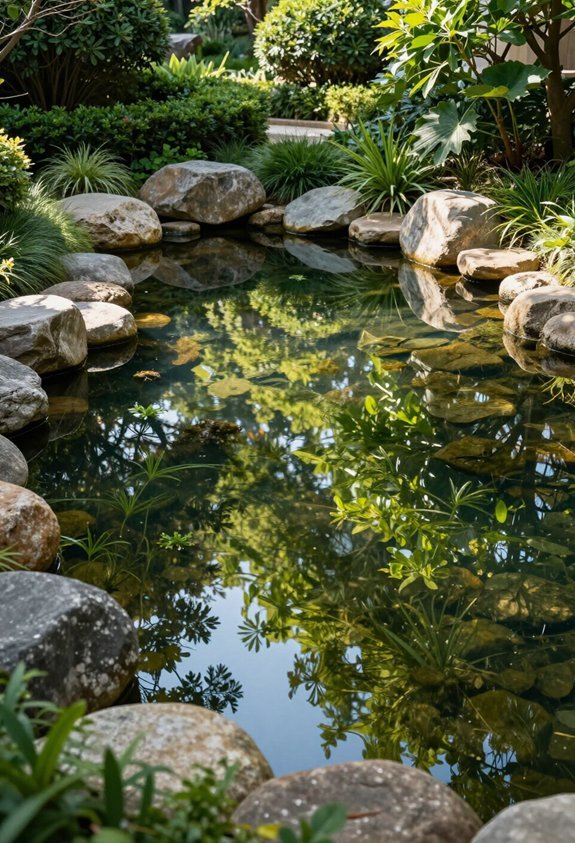
While fountains and water features provide visual interest and sound through circulating water, shallow ponds and water basins offer homeowners an opportunity to create a more naturalistic aquatic element that supports local wildlife and integrates seamlessly into landscaping designs. These water installations, typically 1-2 feet deep, attract birds, insects, and amphibians while requiring minimal maintenance compared to deeper pond systems. Homeowners can construct shallow ponds using flexible liners, preformed basins, or concrete, positioning them in partially shaded areas to reduce algae growth. Adding aquatic plants, smooth stones, and gravel around the perimeter enhances aesthetic appeal and provides wildlife habitat. Regular water level monitoring and occasional cleaning maintain the basin’s functionality, creating a self-sustaining ecosystem that transforms outdoor spaces into vibrant nature sanctuaries.
Install a Bird Bath or Feeding Station
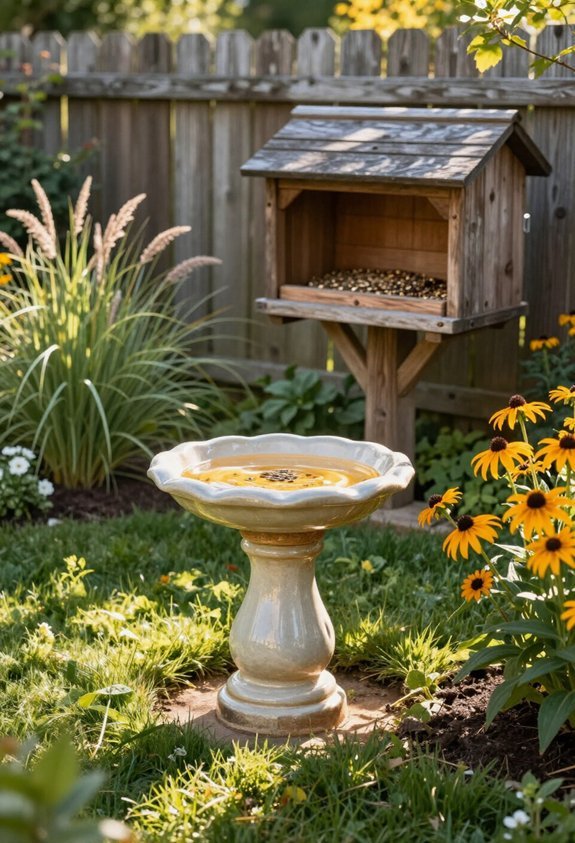
Why not complement a shallow pond or water basin by installing a bird bath or feeding station, which provides birds and other wildlife with essential resources while adding another layer of visual interest to the backyard landscape? Bird baths offer shallow water basins where birds can drink and bathe, maintaining their feather health and hygiene. Feeding stations, equipped with appropriate seed types and suet, attract diverse bird species throughout the seasons. When selecting locations, choose spots visible from windows yet somewhat protected by nearby shrubs or trees, allowing birds safe approach and escape routes. Regular cleaning and maintenance of both bird baths and feeders prevent disease spread among wildlife populations. These installations transform backyards into thriving habitats that support local ecosystems while offering homeowners excellent opportunities for wildlife observation and appreciation.
Build a Raised Garden Bed for Fresh Produce
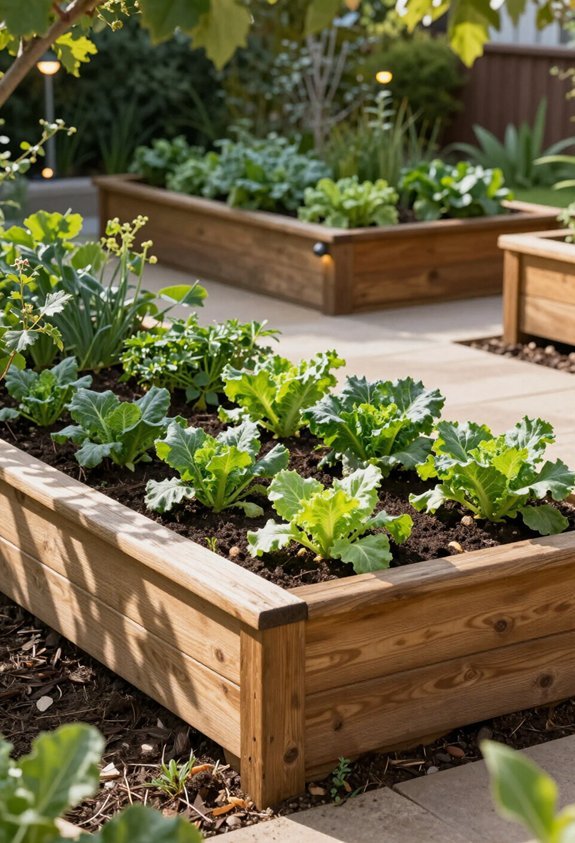
Constructing raised garden beds offers homeowners an effective method for growing fresh vegetables, herbs, and fruits in controlled environments that maximize sunlight exposure and drainage while minimizing soil compaction and pest problems. To build a raised bed, select a level location and choose materials such as untreated wood, composite lumber, or galvanized metal to create a rectangular frame, typically measuring four feet by eight feet by twelve inches deep. Fill the bed with quality soil mixture combining topsoil, compost, and peat moss to guarantee proper nutrient content. Position the bed where it receives at least six hours of direct sunlight daily. Arrange plants according to their spacing requirements, water regularly, and maintain the soil by adding compost annually for ideal growth and productivity.
Create a Designated Herb Garden
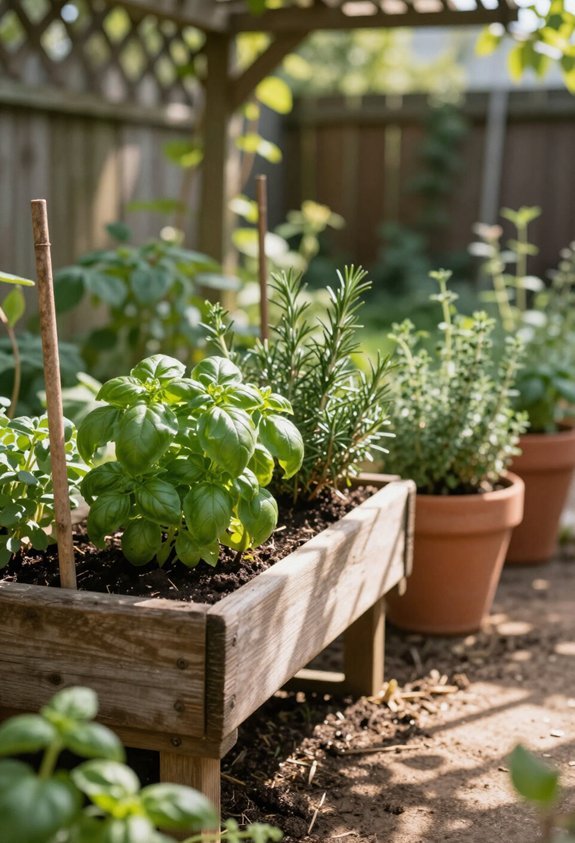
A dedicated herb garden provides homeowners with convenient access to fresh culinary and medicinal herbs while requiring minimal space and maintenance compared to larger vegetable gardens. Homeowners should select a location that receives at least six hours of direct sunlight daily, as most herbs thrive in bright conditions. The garden can be established in containers, raised beds, or directly in the ground, depending on available space and soil quality. Popular herbs like basil, rosemary, thyme, and parsley grow well together and can be harvested regularly throughout the growing season. Proper drainage is essential to prevent root rot, so soil should be amended with compost or sand if necessary. This garden design enhances both cooking experiences and home aesthetics while promoting sustainable food practices.
Build a Vegetable Trellis for Climbing Plants
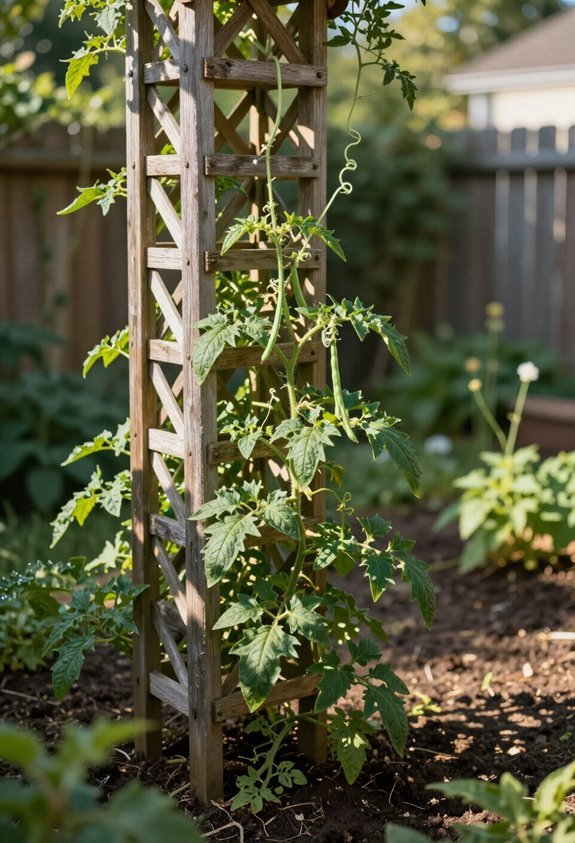
Vertical trellises offer homeowners an efficient method to maximize garden space by supporting climbing vegetables such as beans, peas, cucumbers, and tomatoes, which grow upward rather than spreading across the ground. Building a trellis requires selecting sturdy materials like wood, bamboo, or metal, then constructing a framework that provides adequate support for mature plants. Position the trellis on the north side of the garden to prevent shading other plants, and make certain it stands at least six feet tall for ideal growth. Secure climbing vegetables to the structure using soft ties or twine, guiding their growth upward as they develop. This vertical gardening technique conserves valuable ground space, improves air circulation around plants, reduces disease susceptibility, and simplifies harvesting procedures while creating visual interest in the landscape.
Build Raised Planters Along a Fence Line
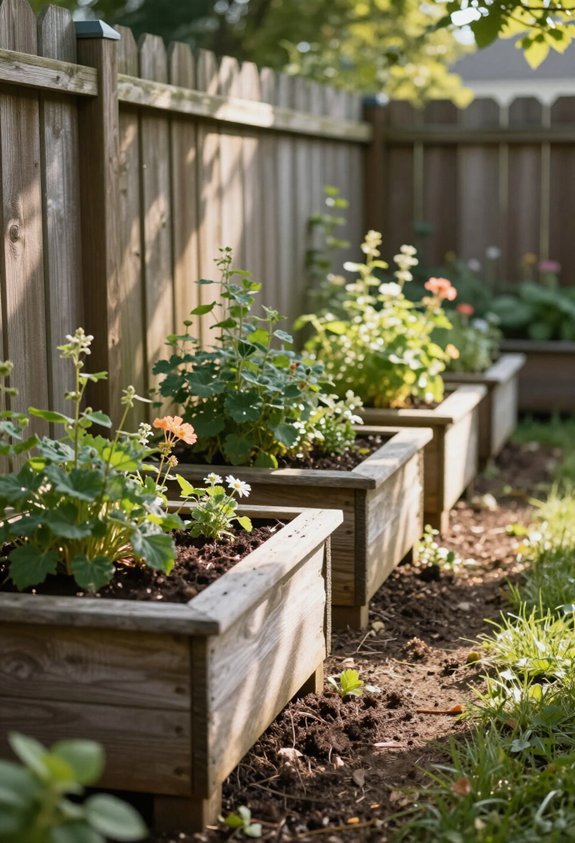
Raised planters positioned along a fence line provide homeowners with an excellent opportunity to expand their growing space while creating an organized, visually appealing garden layout that maximizes sunlight exposure and accessibility. When constructing these planters, homeowners should select durable materials like cedar or composite wood that resist decay and weathering. Building boxes approximately two feet deep allows adequate root development for most vegetables and herbs. Positioning planters against the fence creates a defined garden space while protecting plants from wind damage. Installing drip irrigation systems simplifies watering, and arranging planters in staggered heights adds visual interest. This setup enables gardeners to cultivate diverse plants in compact spaces while maintaining easy access for planting, maintenance, and harvesting activities.
Add Vertical Garden Planters to Save Space
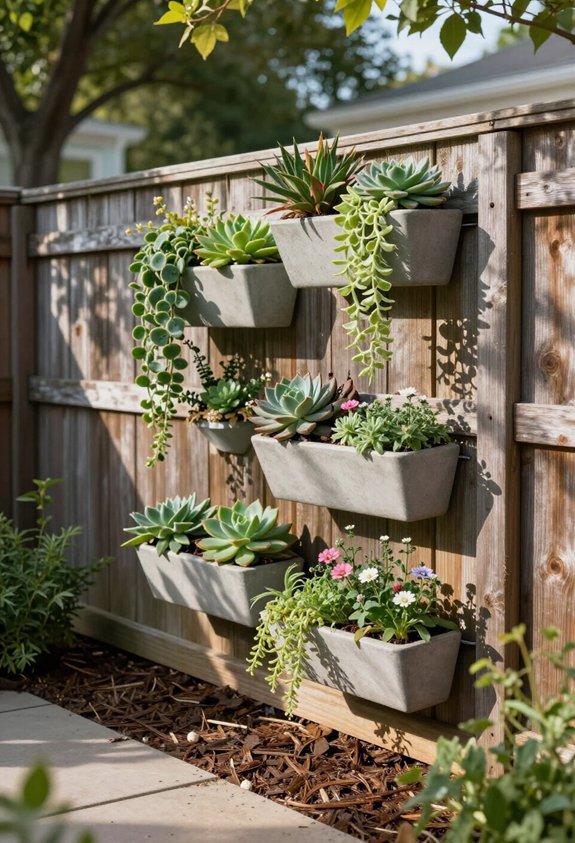
Stacking plants upward rather than outward allows homeowners to cultivate considerably more vegetation in limited yard spaces by utilizing wall surfaces, fence panels, and specially designed vertical structures that would otherwise remain unused. Wall-mounted planters, hanging baskets, and tiered shelving systems enable gardeners to organize plants efficiently while maintaining easy access for watering and maintenance. Vertical gardens work particularly well for herbs, succulents, strawberries, and trailing flowers that naturally adapt to these arrangements. Installing vertical planters requires selecting appropriate mounting hardware, ensuring proper drainage to prevent water damage, and positioning structures where plants receive adequate sunlight. This method maximizes growing capacity in small backyards, creates visual interest through layered plantings, and reduces the footprint needed for extensive gardens without sacrificing productivity or plant health.
Build Tiered Planters for a Cascading Effect
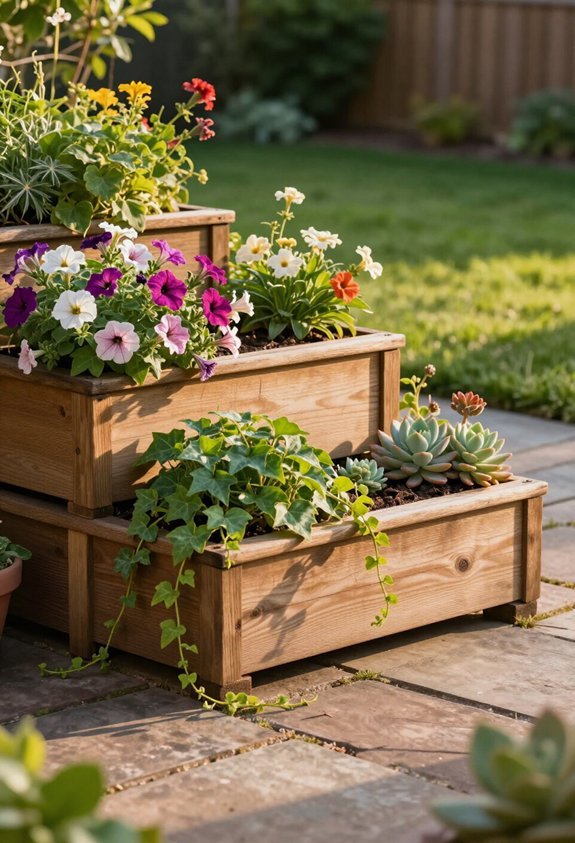
Tiered planters create a beautiful cascading effect by arranging multiple planting containers at different heights, with each level positioned slightly lower and forward from the one above it, allowing trailing plants to spill gracefully over the edges while flowers and foliage from upper tiers cascade downward in layers. This gardening technique maximizes visual interest while using minimal ground space, making it ideal for small yards. To build tiered planters, stack containers of decreasing sizes or construct a wooden framework with shelves at staggered intervals. Select trailing varieties like ivy, petunias, or sweet potato vine for upper levels, positioning them where they will naturally cascade downward. Plant upright species in lower tiers to fill gaps and create depth. Confirm each tier receives adequate drainage and sunlight appropriate for chosen plants.
Design a Colorful Container Garden Display
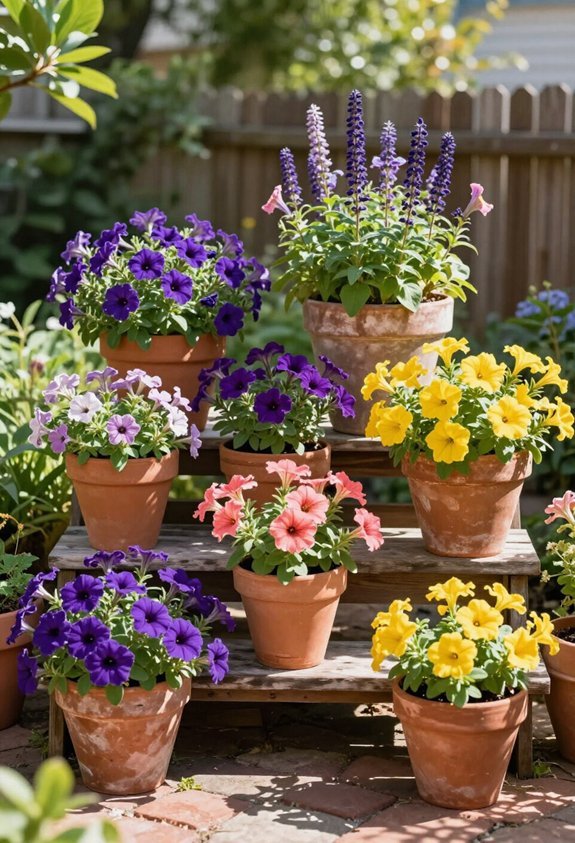
How can gardeners transform a simple outdoor space into a vibrant display of colors and textures using containers? By selecting pots of varying sizes, shapes, and materials, gardeners create visual interest and depth throughout their outdoor areas. Choosing plants with complementary colors—such as purple petunias paired with yellow marigolds or silver dusty miller with red begonias—produces striking contrasts that draw attention. Gardeners should arrange containers at different heights using plant stands, tables, or tiered surfaces to maximize visibility and create dynamic compositions. Mixing flowering plants with foliage varieties adds textural complexity, while selecting containers in coordinated colors like terra cotta, slate blue, or cream guarantees cohesion. Proper spacing allows each plant adequate light and air circulation while maintaining an organized, intentional appearance that transforms any outdoor space into a polished, colorful garden display.
Plant a Pollinator Garden to Attract Butterflies
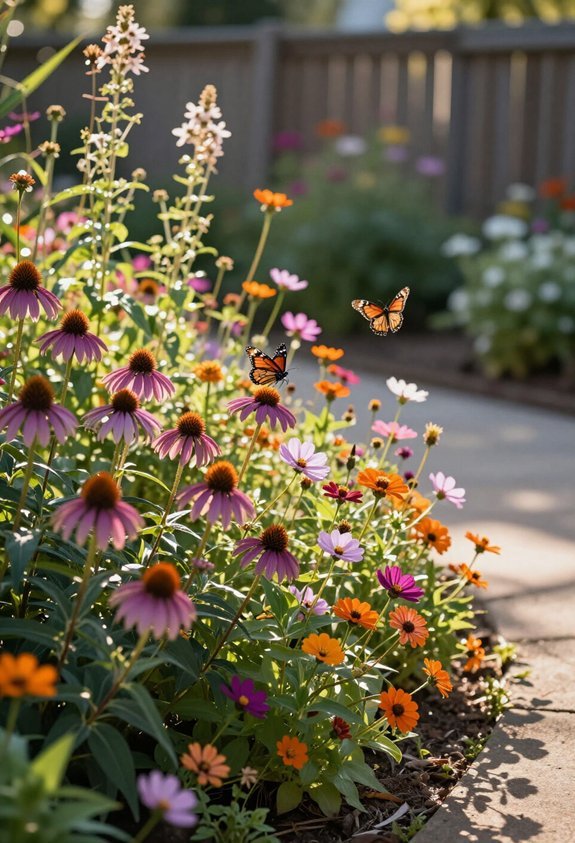
Why would gardeners want to attract butterflies and other pollinators to their outdoor spaces? Pollinators play an essential role in plant reproduction, helping flowers produce seeds and fruits that sustain ecosystems and food sources. Creating a pollinator garden benefits the environment while adding visual interest to any yard.
To establish a successful pollinator garden, gardeners should select native plants that bloom at different times throughout the growing season, ensuring continuous food sources. Plants like coneflowers, zinnias, and milkweed attract butterflies effectively. Avoiding pesticides is vital, as chemicals harm pollinators. Providing shallow water sources, such as a dish with pebbles, allows butterflies to drink safely. Incorporating host plants, which caterpillars feed on, supports the complete butterfly lifecycle. These deliberate choices create a thriving habitat that benefits pollinators and enhances backyard ecosystems.
Design a Butterfly and Bee Hotel
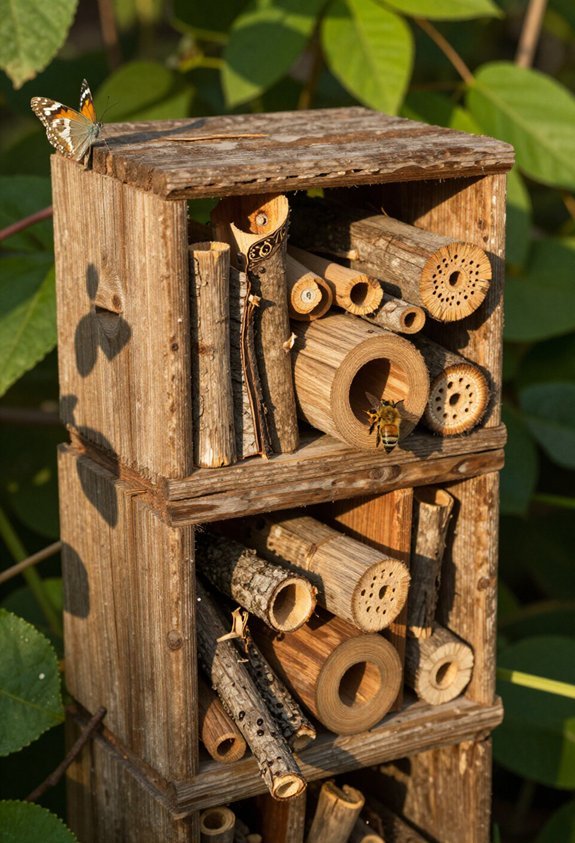
Beyond planting flowers and providing water sources, gardeners can construct specialized structures called butterfly and bee hotels that serve as shelter and nesting spaces for pollinators. These hotels consist of various compartments designed to accommodate different species. Butterfly hotels typically feature stacked wood or bark pieces that create crevices where butterflies can rest and overwinter. Bee hotels use hollow reeds, bamboo tubes, or drilled wood blocks that allow solitary bees to tunnel and lay eggs. When constructing these structures, positioning matters greatly; hotels should face south or southeast to capture morning sunlight and provide warmth. Materials should remain untreated to avoid chemical exposure. Placing hotels near flowering plants guarantees pollinators access both shelter and food sources, creating an integrated ecosystem that supports these essential garden visitors.
Design a Wildflower Meadow Section
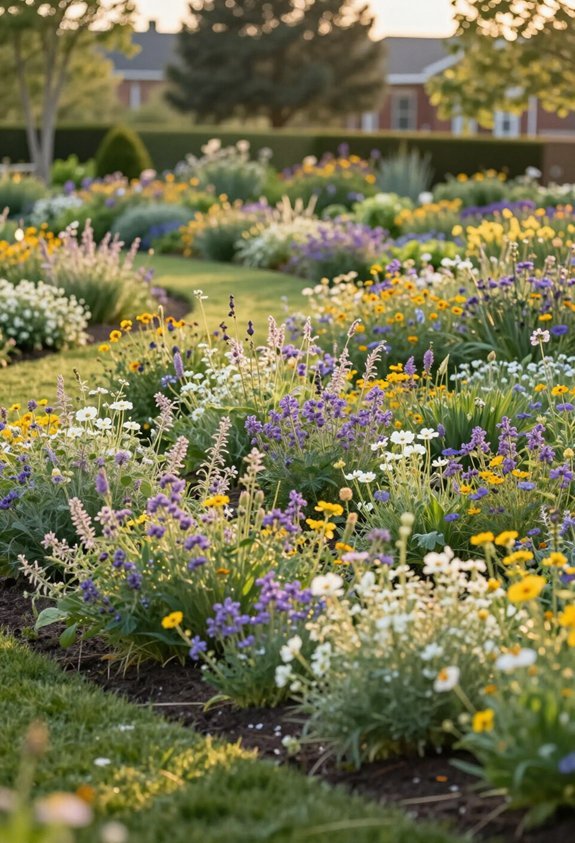
While butterfly and bee hotels provide shelter for pollinators, creating a wildflower meadow section offers an expansive food source that supports these and other beneficial garden creatures throughout the growing season. To establish a wildflower meadow, begin by selecting an area receiving at least six hours of sunlight daily, then remove existing grass and weeds by digging or applying cardboard layers. Next, prepare the soil by loosening it with a garden fork, incorporating native wildflower seeds suited to your region’s climate and soil conditions. Scatter seeds evenly across the prepared area, pressing them gently into soil for proper contact. Water regularly until plants establish themselves, then maintain the meadow by removing invasive species and allowing some plants to reseed naturally each year.
Create a Water-Wise Xeriscaping Design
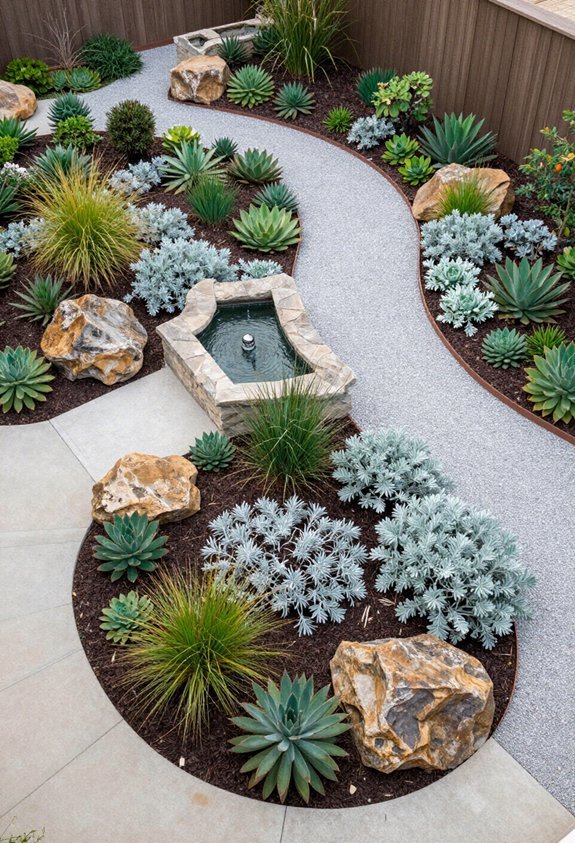
How can a backyard landscape thrive in dry climates or during periods of water scarcity? Xeriscaping provides a practical solution by utilizing drought-resistant plants, soil amendments, and strategic design principles that reduce water consumption. Homeowners should select native plants adapted to local conditions, which require minimal irrigation once established. Mulching heavily around plants conserves soil moisture and regulates temperature fluctuations. Installing drip irrigation systems delivers water directly to plant roots, minimizing waste through evaporation. Grouping plants by water needs, called hydrozoning, guarantees efficient watering schedules. Incorporating hardscape elements like gravel, rocks, and pathways reduces areas requiring water while adding visual interest. Amending soil with compost improves water retention capacity. This thorough approach creates sustainable, attractive landscapes that flourish despite limited water availability.
Add Seasonal Plant Rotation Zones
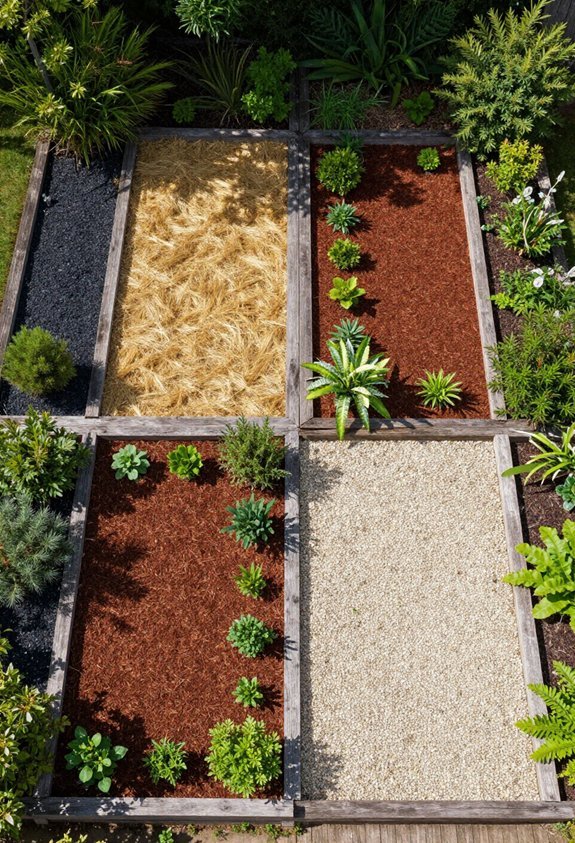
Seasonal plant rotation zones organize backyard spaces to maximize plant variety and visual interest throughout the year by designating specific areas for plants that thrive during different seasons. This approach involves mapping out garden beds where spring bulbs, summer flowering plants, fall foliage, and winter evergreens each occupy their ideal locations. Gardeners can plan rotations by evaluating sunlight patterns, soil conditions, and moisture levels in different zones, then selecting appropriate plants for each season. By rotating plantings strategically, homeowners maintain continuous color and texture while reducing pest buildup in soil. This method also allows gardeners to rest certain beds periodically, improving soil health naturally. Implementing seasonal zones requires keeping detailed records of what grows where and when, enabling refined planning for subsequent years.
Construct a DIY Deck or Patio
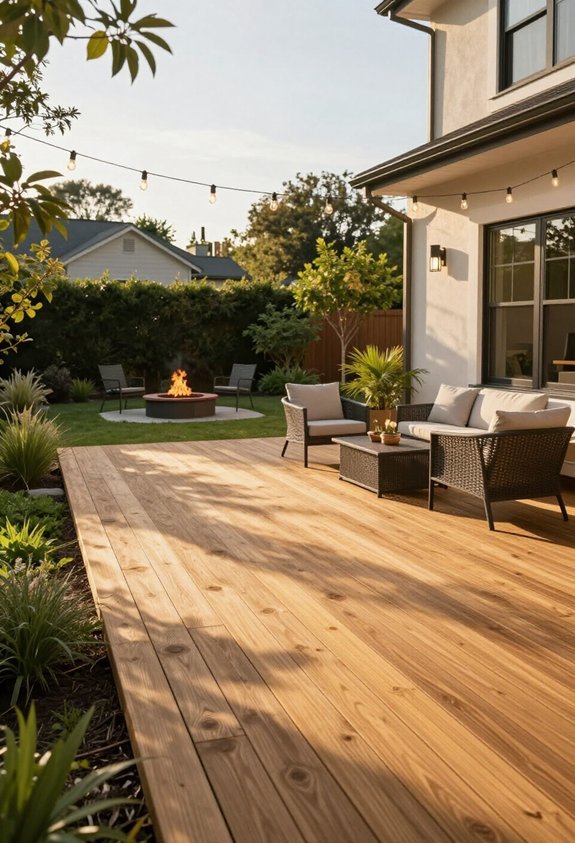
Building a deck or patio transforms a backyard into a functional outdoor living space, providing a solid foundation for entertaining, relaxing, and enjoying the landscape throughout the year. Homeowners should begin by selecting appropriate materials, such as pressure-treated wood, composite decking, or concrete pavers, based on climate, budget, and maintenance preferences. Proper planning involves measuring the desired area, checking local building codes, and obtaining necessary permits before construction commences. The foundation must be level and stable, requiring adequate support posts or a concrete base to prevent shifting or settling. Installing railings, stairs, and drainage systems guarantees safety and longevity. With careful attention to detail and methodical execution, a well-constructed deck or patio becomes an attractive outdoor extension that enhances both property value and quality of life for years to come.
Create Low-Maintenance Hardscaping With Pavers
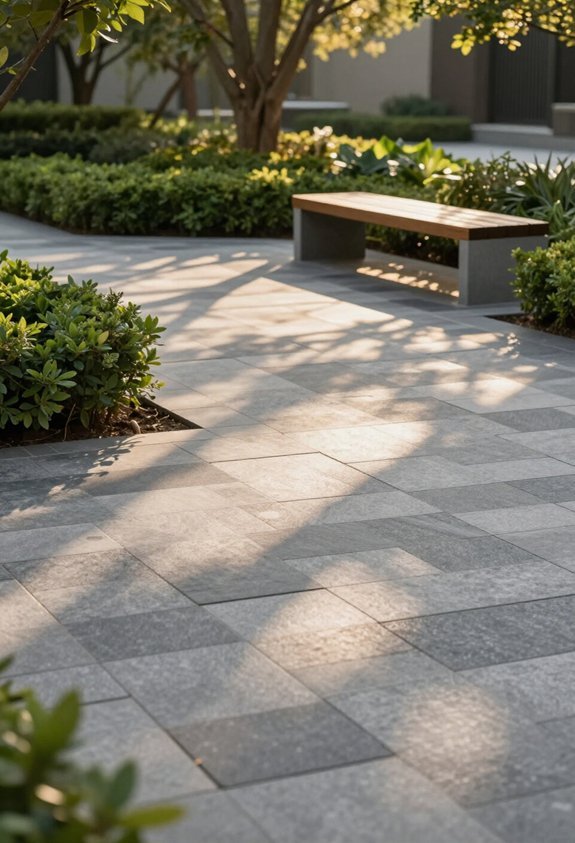
Pavers offer homeowners a versatile and practical solution for creating outdoor surfaces that require minimal upkeep while maintaining visual appeal and functionality. Unlike traditional concrete or wood decking, pavers are individual units that can be arranged in numerous patterns and designs, allowing for creative customization in any backyard space. Their modular nature makes installation straightforward, as each paver is simply laid on a prepared base of sand and gravel. When damage occurs, replacement involves removing only the affected paver rather than reconstructing an entire surface. Pavers drain water efficiently, preventing puddle accumulation and reducing maintenance concerns. Available in various materials including stone, brick, and composite options, pavers accommodate different aesthetic preferences and budgets, making them an ideal choice for low-maintenance hardscaping projects.
Create a Natural Pathway With Stepping Stones
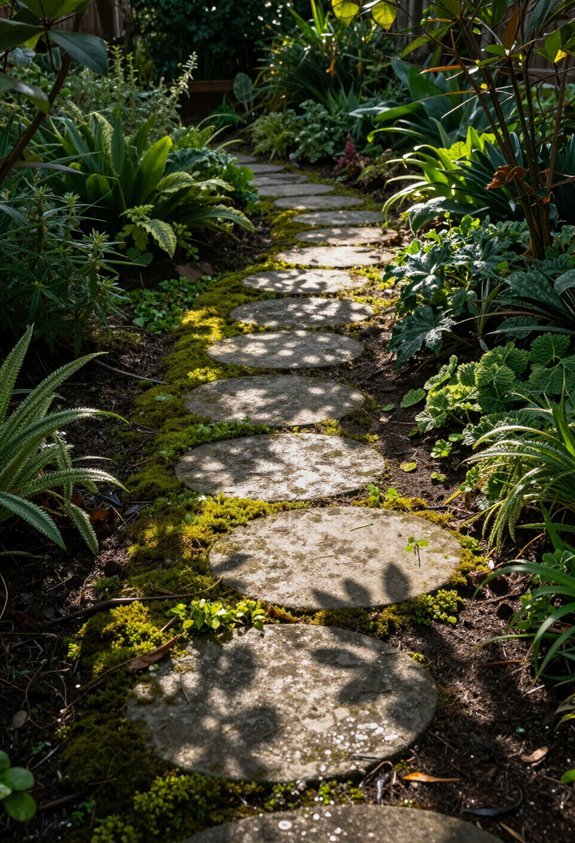
Stepping stones present homeowners with an alternative approach to pathway creation that complements hardscaping solutions like pavers by offering a more organic, naturalistic aesthetic while maintaining similar practical benefits. These individual stones, strategically spaced throughout garden beds or grassy areas, guide foot traffic while preserving the natural landscape’s appearance. Installation involves selecting appropriately sized stones, typically 12 to 18 inches in diameter, and positioning them at comfortable walking intervals of approximately 24 inches apart. Homeowners should clear vegetation, level the ground beneath each stone, and guarantee proper drainage to prevent water accumulation. Materials range from flagstone and slate to granite, each offering distinct visual characteristics. This approach requires minimal maintenance compared to traditional pathways, as stones naturally blend with surrounding vegetation while providing functional walkways.
Build a Retaining Wall for Elevation Changes
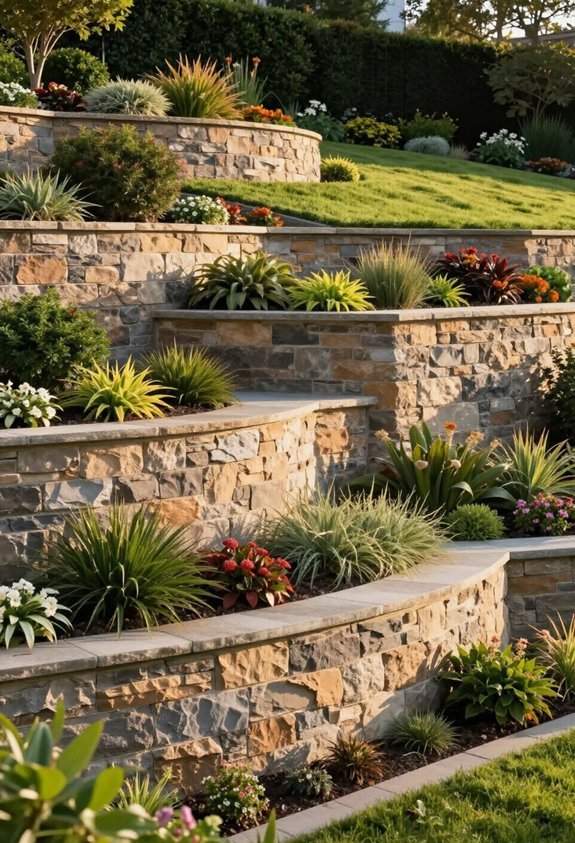
Retaining walls solve the practical problem of managing sloped terrain by creating level areas in backyards with significant elevation changes, while simultaneously adding visual interest and structural definition to outdoor spaces. These walls prevent soil erosion, stabilize slopes, and provide usable flat ground for gardens, seating areas, or patios. Common materials include concrete blocks, natural stone, timber, and brick, each offering different aesthetic qualities and durability levels. Proper construction requires adequate drainage behind the wall to prevent water accumulation, which can compromise structural integrity. The wall’s height, soil conditions, and local building codes determine necessary foundation depth and reinforcement techniques. Homeowners should consider hiring professionals for walls exceeding four feet, as improper installation risks collapse and property damage.
Add Strategic Flower Beds Around the Perimeter
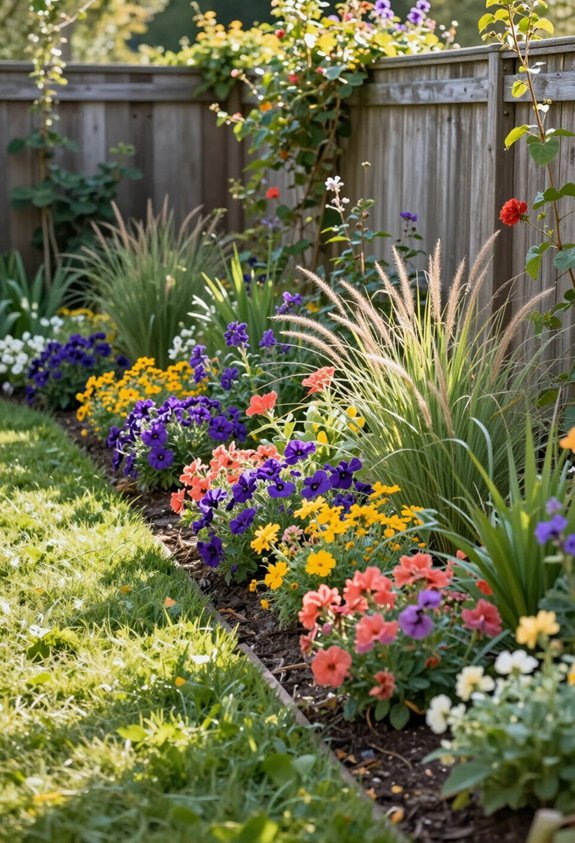
Flower beds positioned strategically around the perimeter of a backyard create natural visual boundaries while introducing color, texture, and seasonal interest to the outdoor space. When placing flower beds along fence lines, property edges, or landscaping borders, homeowners can define different zones and draw the eye toward focal points. Selecting plants with varying heights, bloom times, and growth patterns guarantees continuous visual appeal throughout the year. Perimeter beds serve practical purposes too, as they soften hard landscaping edges, prevent soil erosion, and establish clear changes between the cultivated garden and surrounding areas. By incorporating native plants suited to local climate conditions and soil types, these strategic flower beds require less maintenance while supporting local ecosystems and enhancing overall backyard aesthetics.
Create a Zen Garden With Gravel and Stones

While colorful flower beds bring vibrancy and seasonal change to backyard landscapes, a zen garden offers a contrasting approach by emphasizing simplicity, calm, and meditative qualities through carefully arranged natural elements. Creating a zen garden requires selecting a designated space, typically a flat area, and layering fine gravel or sand as the foundation. Large stones and rocks are then strategically positioned to represent mountains, islands, or focal points. Raking patterns into the gravel creates flowing lines that guide the eye and encourage contemplation. Adding complementary elements such as small plants, bamboo, or water features enhances the overall design. The minimalist aesthetic promotes relaxation and mindfulness, transforming the backyard into a personal sanctuary for peaceful reflection and tranquility.
Build a Gravel Meditation Circle
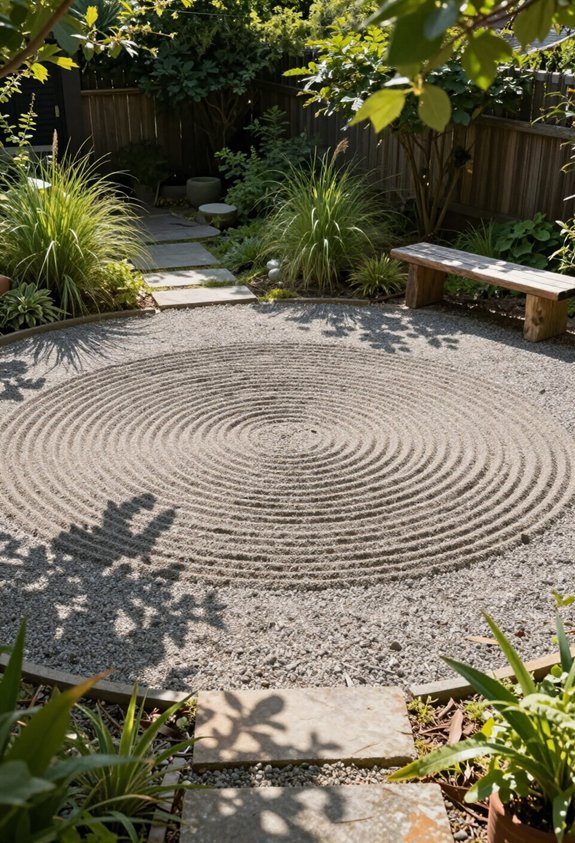
A gravel meditation circle provides a dedicated outdoor space where individuals can sit, reflect, and practice mindfulness in a structured, intentional setting that combines the calming principles of zen garden design with the focused purpose of a personal meditation area. To build one, first select a level spot in your yard and mark a circular outline using rope or chalk, typically six to ten feet in diameter. Remove grass and weeds from the marked area, then add landscape fabric to prevent weed regrowth. Layer two to three inches of fine gravel over the fabric, raking it smooth for an even surface. Place a flat stone or cushioned mat at the circle’s center for comfortable seating. Consider adding border stones around the perimeter to define the space clearly and create a distinct meditation boundary.
Add a Statement Sculpture to Anchor Your Garden
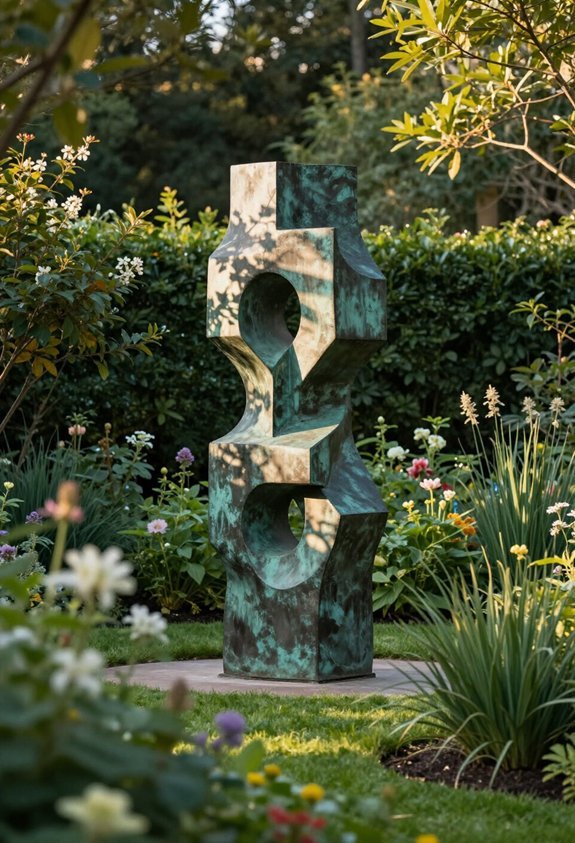
Statement sculptures serve as focal points that draw the eye and establish visual interest throughout a garden space, complementing the quiet introspection created by structured areas like meditation circles. When selecting a sculpture, gardeners should consider the overall style of their outdoor environment, choosing pieces that either harmonize with existing elements or create intentional contrast. Materials such as stone, metal, or wood each offer distinct aesthetic qualities and durability levels. Placement proves critical, as positioning the sculpture in a visible location—perhaps at a garden’s entrance or center—maximizes its impact. The sculpture’s scale should match the surrounding landscape, ensuring it neither overwhelms nor disappears within the space. Thoughtful selection and positioning transform a garden into a cohesive, visually compelling environment.
Install Uplighting to Showcase Your Best Features
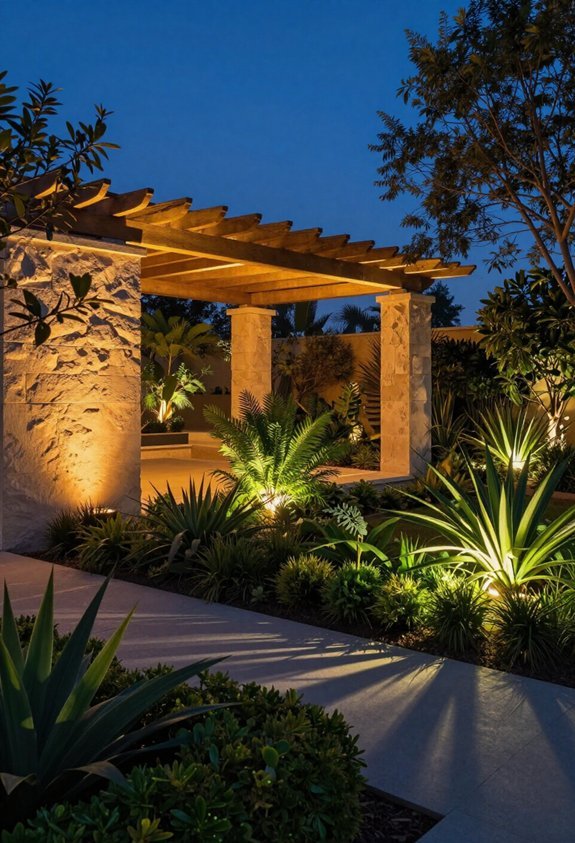
Because outdoor spaces transform dramatically after sunset, strategic lighting becomes essential for revealing a garden’s most attractive features and extending the usability of backyard areas into evening hours. Uplighting involves positioning lights below objects, directing beams upward to create dramatic shadows and highlight architectural details, plants, and sculptures. Homeowners should place uplights near tree trunks to illuminate canopies, position them beside specimen plants to showcase texture and form, and aim lights toward water features to reflect luminescence. LED uplights offer energy efficiency and longevity, while adjustable fixtures allow customization of brightness and color temperature. Installing uplighting requires burying wires safely underground and using weatherproof fixtures designed for outdoor conditions. Proper placement transforms ordinary gardens into visually compelling evening retreats.
Design a Mixed-Use Entertainment and Garden Space
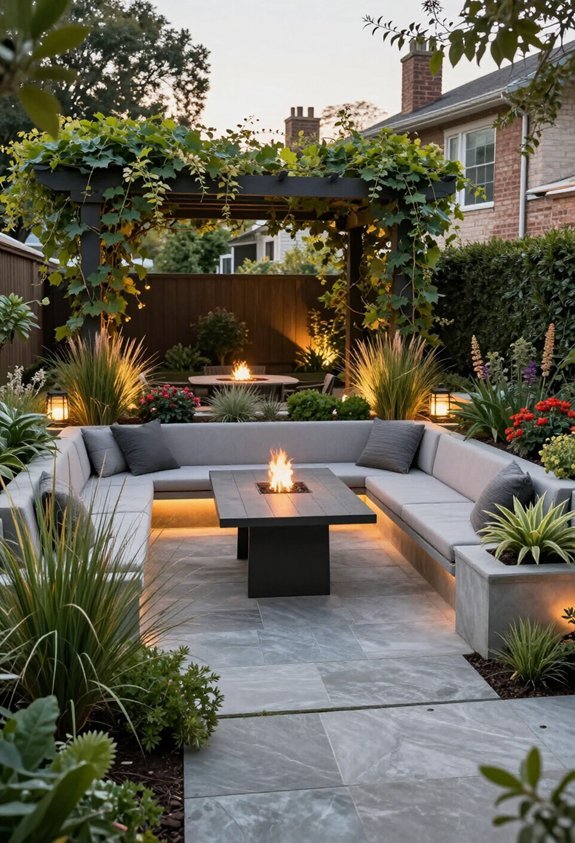
When homeowners design outdoor spaces that combine both entertainment and gardening elements, they create versatile areas that serve multiple purposes throughout the year. This approach involves strategically positioning seating areas, dining zones, and garden beds to maximize functionality and visual appeal. Homeowners should designate specific zones for cooking, relaxing, and plant cultivation, ensuring each area flows naturally into the next. Raised garden beds can frame patios, while climbing plants provide natural privacy screens around entertainment zones. Incorporating pathways between different sections allows easy movement and prevents damage to plantings. By thoughtfully arranging these components, homeowners develop cohesive outdoor environments that accommodate both social gatherings and horticultural pursuits, transforming their backyards into dynamic, functional retreats that enhance property value and lifestyle enjoyment.
Frequently Asked Questions
What Is the Best Budget for Creating a Complete Backyard Transformation?
A complete backyard transformation budget typically ranges from $5,000 to $25,000, depending on size and desired features. Homeowners should allocate funds across landscaping, hardscaping, seating areas, and lighting for ideal results.
How Do I Maintain Outdoor Furniture and Structures Throughout Different Seasons?
One should regularly clean outdoor furniture, apply protective sealants before winter, store items in covered areas during harsh weather, and inspect structures for damage seasonally. Proper maintenance extends durability and appearance year-round.
Which Backyard Ideas Work Best for Small or Limited Spaces?
Vertical gardens, container plantings, and multi-functional furniture maximize small spaces efficiently. Wall-mounted features, compact seating arrangements, and raised beds optimize limited areas while maintaining aesthetic appeal and functionality.
How Can I Ensure My Backyard Design Is Pet-Friendly and Safe?
One should secure fencing, remove toxic plants, create shaded rest areas, and use pet-safe materials. Installing soft surfaces, providing fresh water stations, and avoiding pesticides protects animals while maintaining an attractive outdoor space.
What Permits or HOA Approvals Are Needed Before Starting Backyard Projects?
Homeowners should check local building codes and zoning laws for required permits. HOA approval is necessary if applicable. Common permits include those for structures, electrical work, and pool installations. Contact the local building department for specific requirements.
Conclusion
These forty backyard ideas provide homeowners with practical, achievable methods to transform outdoor spaces into functional and attractive retreats. By combining seating areas, garden features, and lighting elements, individuals can create personalized environments that encourage relaxation and social connection. Implementing even a few of these concepts, from fire pits to meditation circles, greatly enhances both the aesthetic appeal and usability of any backyard space, making outdoor areas valuable extensions of the home.