
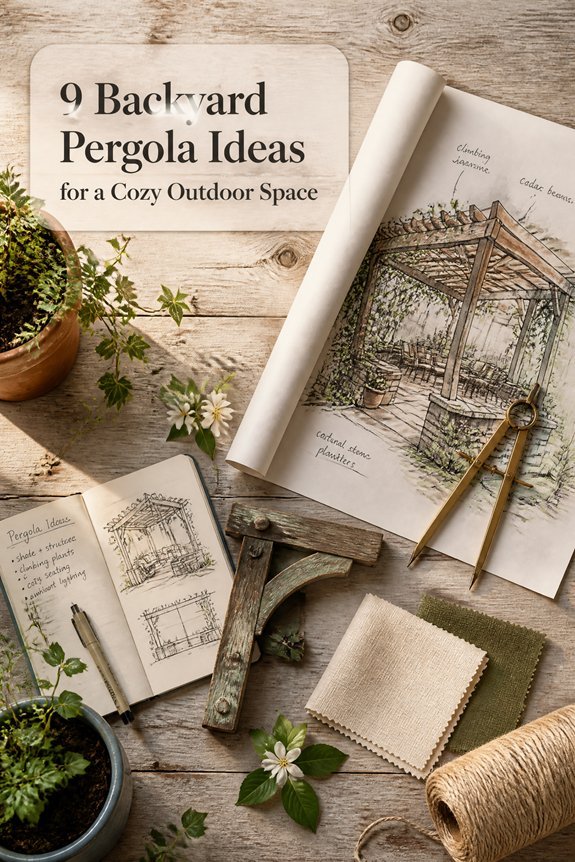
Pergolas strike that perfect balance between structure and openness, offering enough coverage to make outdoor spaces usable without blocking out the sky entirely.
They work beautifully as focal points in larger yards or as intimate enclosures for compact patios where homeowners crave a defined gathering spot.
Design possibilities range widely depending on budget and aesthetic preferences. Some gravitate toward sleek, minimalist frameworks with crisp lines and neutral tones, while others embrace rustic timber constructions that weather naturally over time.
DIY enthusiasts can source affordable kits or raw lumber to build custom solutions that fit awkward spaces or unusual dimensions.
Smart additions transform these structures from simple shade providers into true outdoor rooms. Retractable louvers let you chase or escape the sun, soft string lights extend evening use, and built-in seating around a central fire pit invites conversation well past sunset.
The nine approaches below showcase how thoughtful pergola design can turn any backyard into your favorite place to linger.
Budget-Friendly DIY Pergola Options
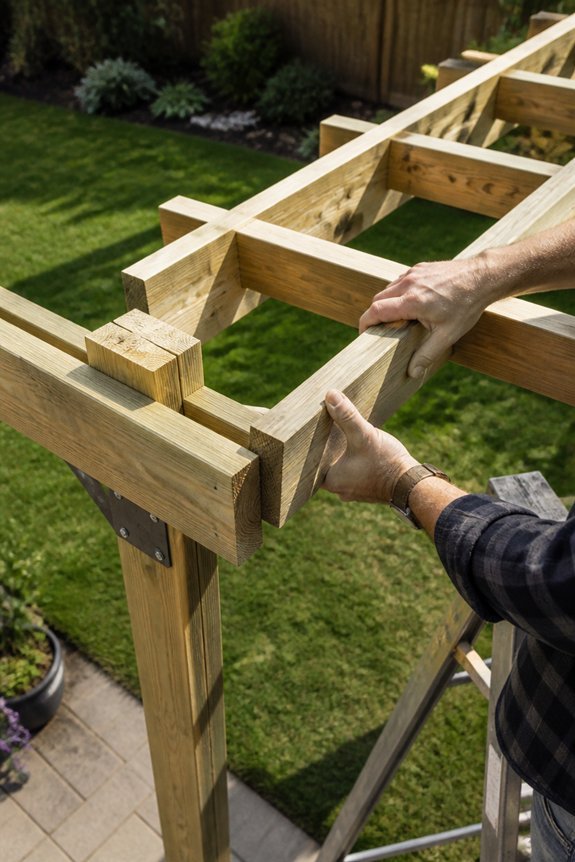
Building a pergola on a budget comes down to smart choices at every step. Start by picking materials that last without draining your wallet.
Pressure-treated lumber works beautifully and costs far less than cedar or redwood. Vinyl and metal options have become surprisingly affordable too. Salvage yards are treasure troves for reclaimed wood. Just inspect everything carefully for rot or weakness before you buy.
Pre-fabricated kits strip away the complexity. You get all the pieces cut and ready, which means less time figuring out angles and more time actually building. These kits often beat custom builds on price by a wide margin.
Keep your design simple. A clean rectangular frame goes up faster and cheaper than curved beams or fancy cutouts. Straight lines mean fewer cuts, less waste, and simpler assembly.
Check with local lumber yards before hitting the big stores. Small suppliers frequently undercut national chains and sometimes toss in free delivery. Ask about damaged or discounted stock too.
Concrete footings give you rock-solid support without fancy hardware. Mix bags yourself instead of calling a truck.
Doing the work yourself saves thousands. Focus your money on structural strength rather than decorative extras. A sturdy basic pergola beats a wobbly ornate one every time.
Also read: 8 Pergola Ideas for Decks That Add Charm
Small-Space Pergola for Compact Patios
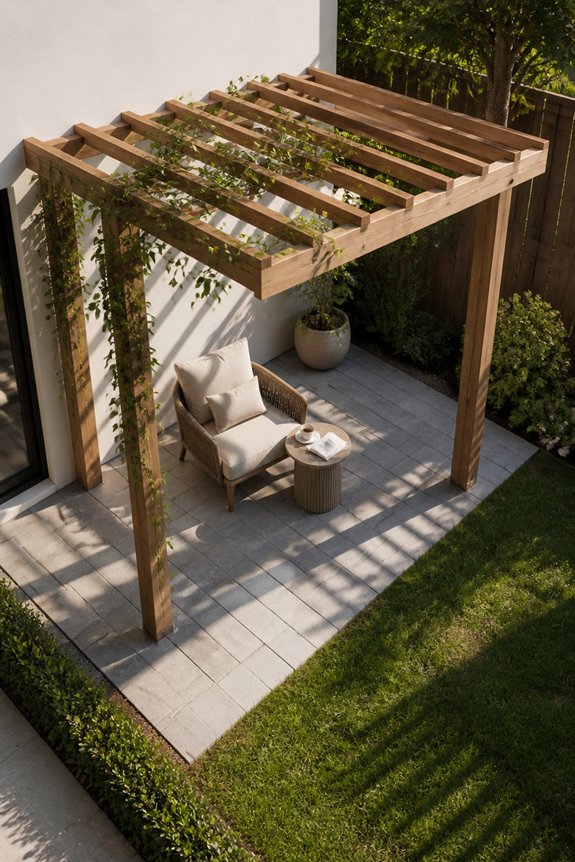
Compact patios need a lighter touch. You can’t just shrink a big-yard design and call it done.
Most small-space pergolas run 8×8 feet or 10×10 feet. That size hugs fences and property lines without eating your whole patio.
Try going vertical. It draws the eye up, not out. Vinyl or aluminum keeps things airy. Wood can feel heavy in tight quarters.
Three-sided builds and corner spots give you shade without hogging floor space. Built-in benches and slim planters squeeze function from every inch. Clematis or jasmine climbs up, not across.
Before you buy or build, grab your tape measure. Check your sightlines from inside too. You want shade, not a window blocker.
Modern Minimalist Pergola Design
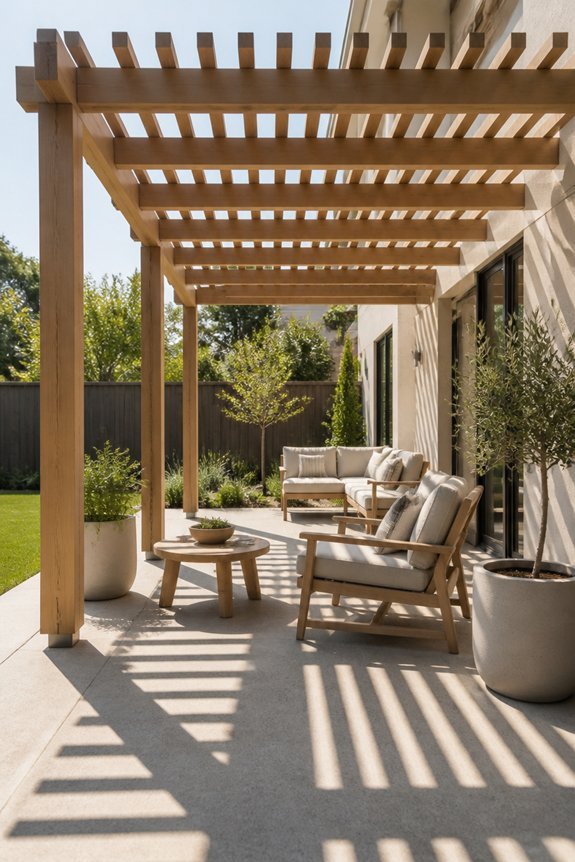
Clean lines and simple shapes form the backbone of modern minimalist pergolas. Decorative details take a back seat. Function and structure drive every decision here.
Think straight beams and crisp geometric patterns. Grays, blacks, and natural wood tones dominate the palette. Aluminum, steel, and pressure-treated lumber handle the heavy lifting. These materials demand little upkeep over time.
These pergolas shine over patios, decks, and seating areas. Shade arrives without visual chaos. Light filters through the open framework. Your sightlines stay clear and unobstructed.
Uniform spacing between slats creates that signature consistency. Standardized dimensions keep everything feeling intentional. Built-in benches, planters, and lighting can join in when they respect the clean aesthetic. Vegetation stays trimmed and tidy. Nothing disrupts the streamlined look.
Rustic Wooden Pergola With Climbing Vines
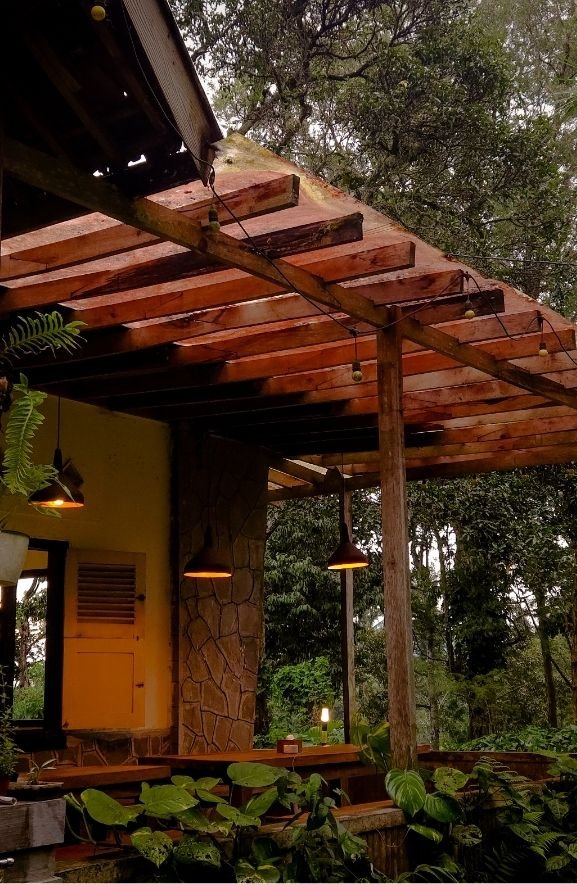
Rustic wooden pergolas take a different approach from sleek modern designs. They celebrate natural materials, worn textures, and plenty of greenery.
Cedar, redwood, or pine give you both strength and visual warmth. Let weathered wood fade to soft gray over time. No need for stains or sealants.
Climbing vines turn the structure into something alive. Clematis, wisteria, or ivy will eventually form a leafy roof overhead. You get dappled shade, cooler air, and bees or butterflies stopping by.
Set posts about eight feet apart in solid soil or concrete footings. Add beams and lattice across the top for the vines to grab onto. Trim growth now and then to keep things tidy and open.
This style fits right into cottage gardens or farmhouse yards. It gives you practical shade plus that effortless, nature-wrapped look.
Adjustable Shade Pergola for Year-Round Use
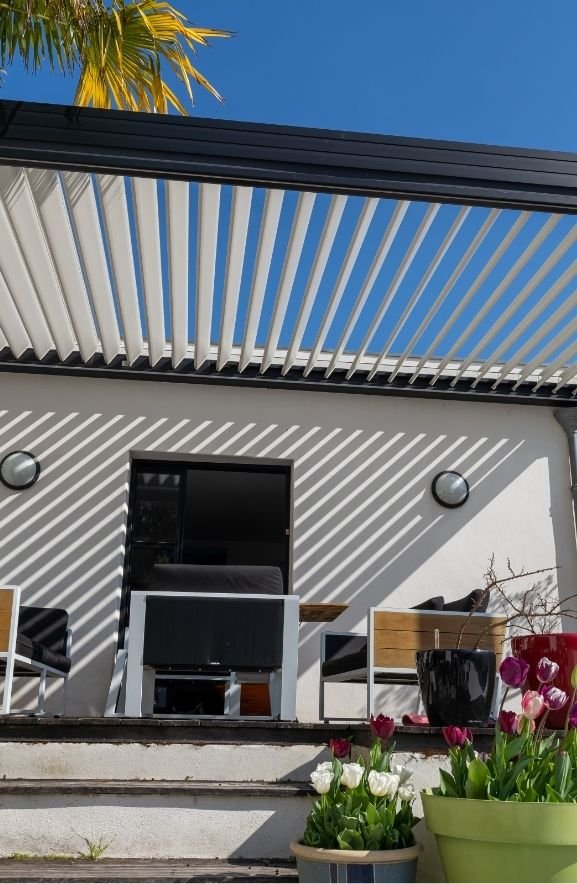
Adjustable shade pergolas give homeowners real control over outdoor comfort. Retractable louvers rotate to catch or block sunlight as seasons shift. Close them tight during summer heat. Open them wide when winter sun sits low.
Motorized systems come with remote controls for easy operation. Manual cranks work well too. Sliding panels offer another simple option.
Aluminum frames last for years with little upkeep. Polycarbonate panels handle rough weather while softening harsh light. Most installs sit right over existing patios or decks.
These structures fit busy lives. Host dinner outside. Relax with a book. The setup adapts to both. Year-round use finally feels possible.
Ambient Lighting to Extend Evening Use
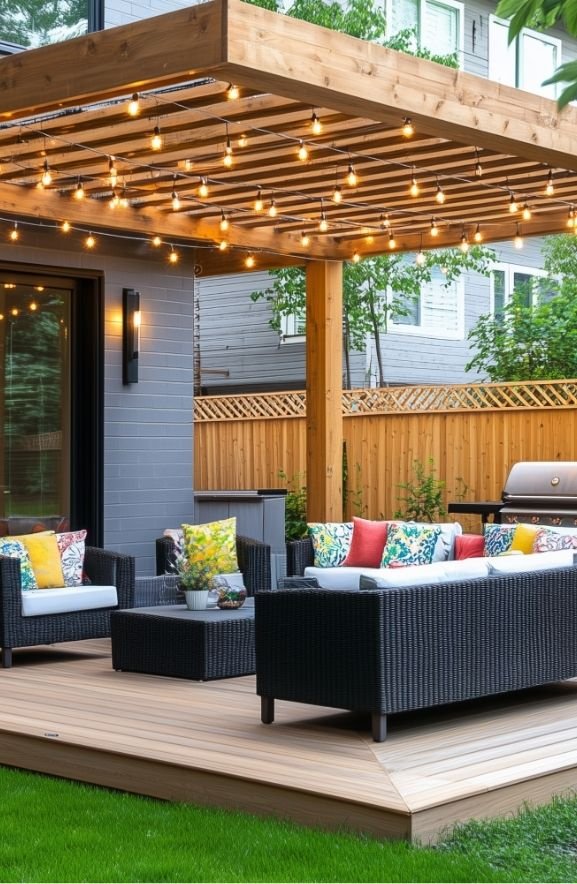
Your pergola doesn’t have to disappear after sunset. The right lighting keeps it alive and usable for hours.
String lights overhead create instant charm. Solar lanterns add portable glow wherever you need it. LED strips tucked along beams highlight structure without bulk.
Warm bulbs keep the mood relaxed, not clinical. Dimmers let you shift from dinner party to quiet reading with a simple adjustment.
Recessed beam lights cast soft, even light without awkward shadows. Pathway fixtures around the base prevent trips and guide guests naturally.
Battery power means no digging trenches for wiring. Layer your sources, overhead plus accents, and dark corners disappear.
Motion sensors add practical security without constant operation. Your outdoor space stays welcoming and protected until you call it a night.
Pergola Dining Area for Entertaining
Turn your pergola into a gathering space that actually works. Start with a solid table, six to eight feet long, and pair it with weather-resistant chairs. The lattice overhead cuts the sun just enough while keeping breezes flowing.
Anchor the space with an outdoor rug that handles moisture and defines the zone. Add built-in benches along the edges to squeeze in extra guests without clutter. Keep a deck box nearby for cushions and serving pieces so everything’s within arm’s reach when company arrives.
Leave breathing room between pieces so people can move. Most setups handle four to ten comfortably, depending on your pergola size.
Pergola Fire Pit Retreat
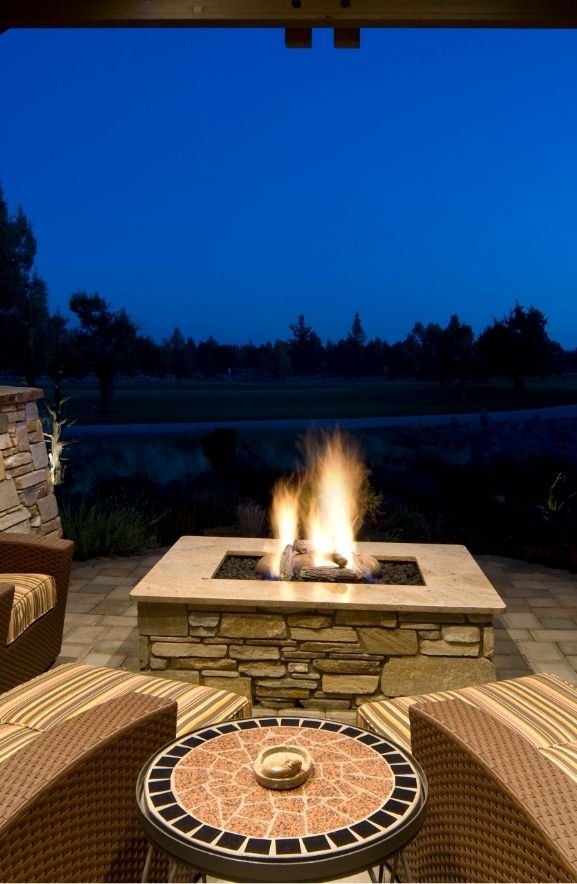
A fire pit anchors your pergola space like a warm embrace. Stone or metal designs work beautifully beneath open rafters. Position your pit where everyone can see each other and feel the heat without getting smoked out.
Circle around with chairs that can handle the weather. Built-in benches save space and create that permanent gathering feel. Leave enough room for people to move, but keep everyone close enough for conversation.
Check your clearances first. Wood beams need breathing room from flames. Gravel or fire-rated pavers underneath protect what is below. A spark screen catches those wandering embers before they become problems.
String lights along the beams when the sun goes down. Suddenly your backyard works harder for you, stretching into cooler evenings. The space becomes somewhere you actually want to be, season after season.
Cozy Reading Nook Pergola
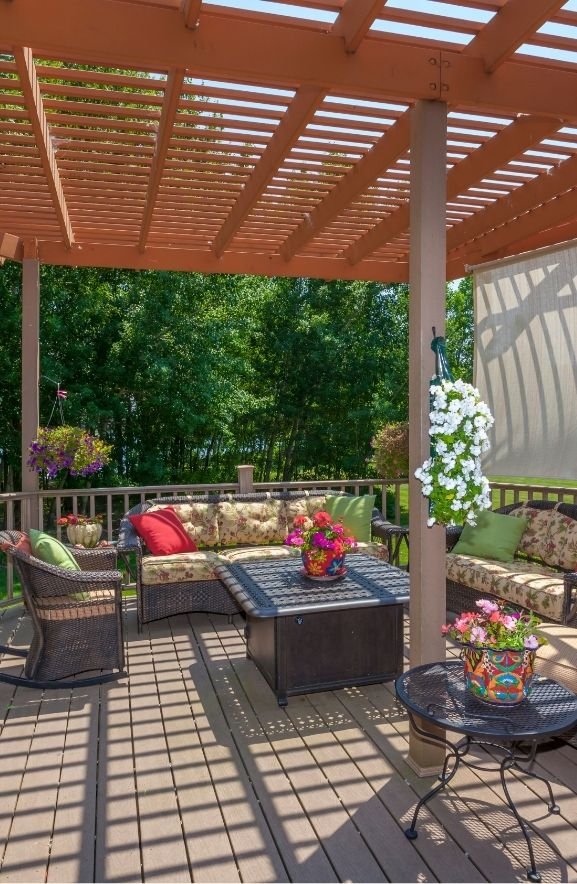
Fire pits draw crowds. Reading nooks do the opposite. They give you a quiet corner to breathe.
Build yours with a cushioned lounge or bench. Tuck it away from busy paths. Let overhead slats, shade cloth, or vines filter the light. Add side panels for privacy. String lights or solar lanterns keep pages turning after sunset. Small tables hold your tea, your novel, your reading glasses.
Cedar and composite materials handle weather well. Nestle the nook near a garden or away from noise. Stash supplies in weatherproof storage below. Suddenly that forgotten corner becomes your favorite room—just outdoors.
Frequently Asked Questions
What Permits or Zoning Requirements Do I Need Before Building a Pergola?
Permit requirements vary by location. Most jurisdictions require building permits for permanent structures exceeding specific height or square footage limits. Homeowners should contact their local building department to verify setback requirements, height restrictions, and zoning regulations before construction begins.
How Long Does a Typical Pergola Last and What Maintenance Is Required?
A pergola stands as a workhorse in outdoor spaces, typically lasting 15-20 years. Regular maintenance includes annual staining or sealing, inspecting for rot, cleaning debris, and tightening hardware to guarantee longevity and structural integrity.
Can a Pergola Withstand Heavy Snow, Wind, or Extreme Weather Conditions?
Pergolas withstand moderate weather but struggle with heavy snow and strong winds. Their open design limits protection, though sturdy construction and proper installation improve resilience. Regular maintenance and reinforcement enhance durability during extreme conditions.
What’s the Average Cost to Professionally Install a Pergola on My Property?
Studies show 73% of homeowners invest $3,000 to $12,000 for professional pergola installation. Costs vary based on size, materials, location, and local labor rates. Wood structures typically cost less than aluminum or vinyl options.
Do Pergolas Require a Foundation, and What Type of Ground Preparation Needed?
Pergolas typically require foundations to guarantee stability and longevity. Ground preparation involves leveling the area, removing vegetation, and compacting soil. Concrete footings are often installed beneath post locations for proper support and drainage.
Conclusion
Homeowners who add pergolas to their backyards increase outdoor living space value by approximately 15 percent, according to real estate data. The nine pergola designs presented, ranging from budget-friendly DIY options to modern minimalist structures, offer practical solutions for various patios. Features like adjustable louvers, ambient lighting, and integrated seating transform pergolas into functional retreats. Selecting the appropriate style depends on available space, budget, and intended use.