You step onto the patio with your morning coffee, and the neighbor’s kitchen window is right there, looking back. That small moment is why backyard privacy ideas from neighbors are worth sorting by speed, not just by looks. Some fixes work before lunch. Others take a few summers to grow in.
The 21 ideas below cover both. There are same-day fixes like outdoor curtains, a cantilever umbrella for second-story windows, and reed screening zip-tied to a chain-link fence. There are weekend projects like a lattice topper and a freestanding cedar screen set right beside the seating area. And there are living screens, including clumping bamboo, tall grasses, an arborvitae hedge and a small canopy tree.
Each idea tells you how fast it works, what to buy or plant, and how to keep things friendly with the people next door. That includes what to check before building anything along the property line.
QUICK PRIVACY CHECK
How soon do you need the privacy?
21 Ways to Get Privacy From the Neighbors
Each idea below blocks a view or a sound between you and the people next door, and each one says how fast it works. Some are same-day fixes you can buy and hang, some are weekend builds, and some are plants that grow into a permanent screen. Mix a quick fix with a slow one, and you get privacy now and later.
1. A Lattice Topper That Adds Height to the Fence You Have
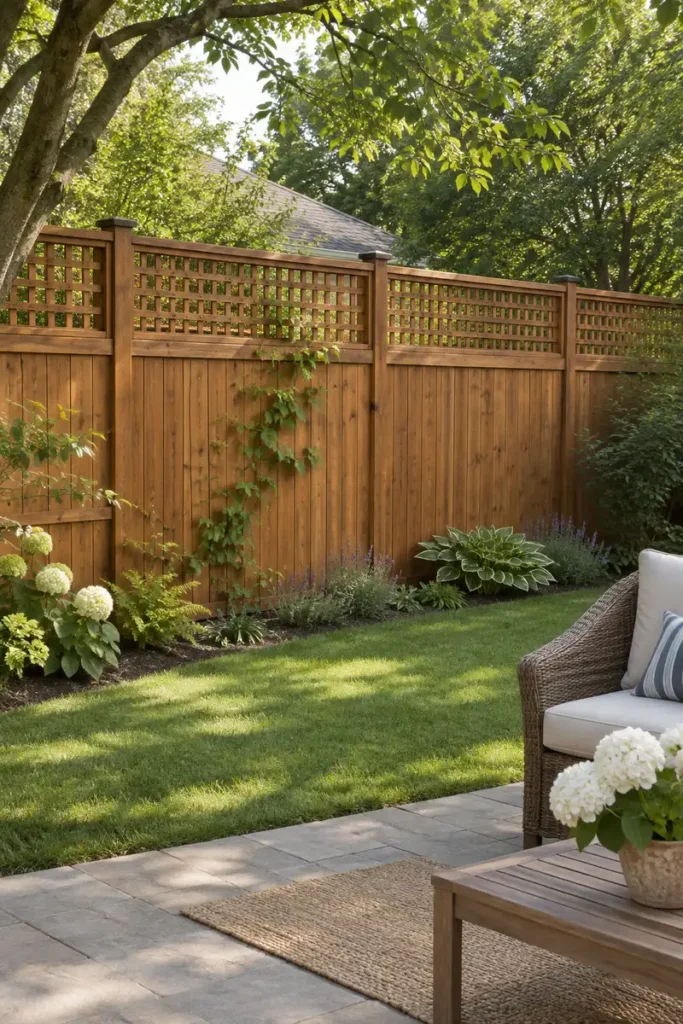
Most backyard fences stop just short of eye level, so the neighbor can still see straight in when they’re standing on their patio. A lattice topper fixes that in a weekend. Square lattice panels mounted along the top of an existing wood fence add height without making the yard feel boxed in, because the open pattern lets light and air through.
Paint or stain the lattice to match the fence so it reads as one piece, and plant a vine at the base to weave through it over time. Check your local height limits and HOA rules before adding anything. If the fence is shared, talk to your neighbor first.
2. Outdoor Curtains on the Porch or Pergola
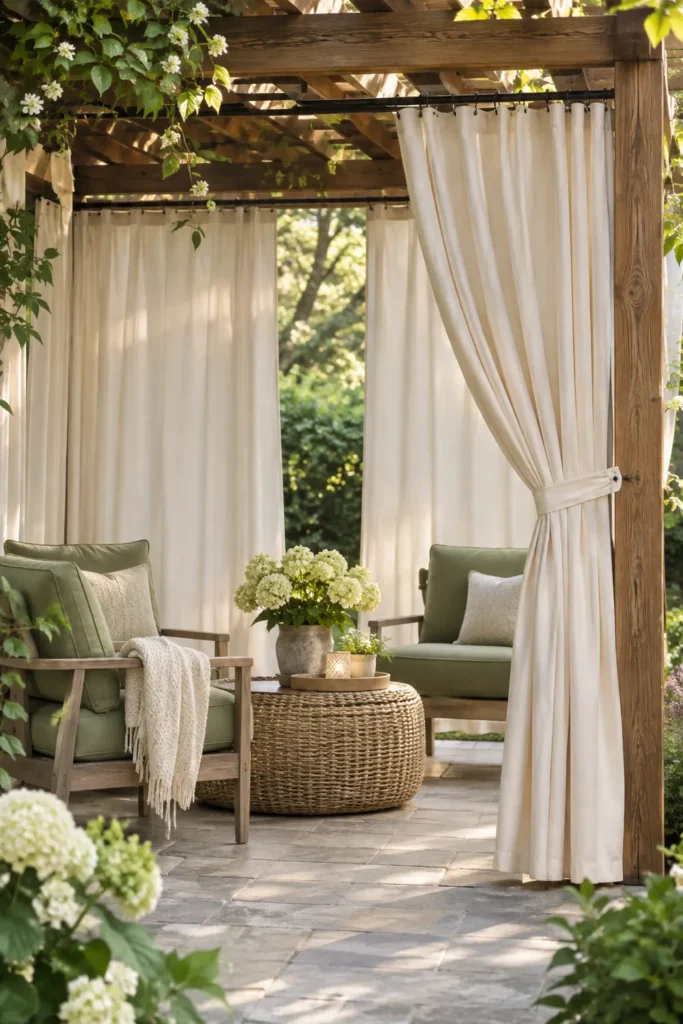
Nothing gives you privacy faster. Hang outdoor curtain panels from the beams of a pergola or the edge of a covered porch, and the seating area is screened the same afternoon. Weighted hems keep them from billowing, and tie-backs let you open the view when nobody’s next door.
Soft curtains also take the hard edge off a wood structure, so the patio feels like an outdoor room. Choose outdoor fabric, which handles rain and fades more slowly than indoor cotton.
Get the look: outdoor curtain panels, a weatherproof curtain rod or pipe, tie-backs, an existing pergola or covered porch.
For more ways to dress up an overhead structure, see these backyard gazebo ideas.
3. Screen the Seat, Not the Whole Property Line
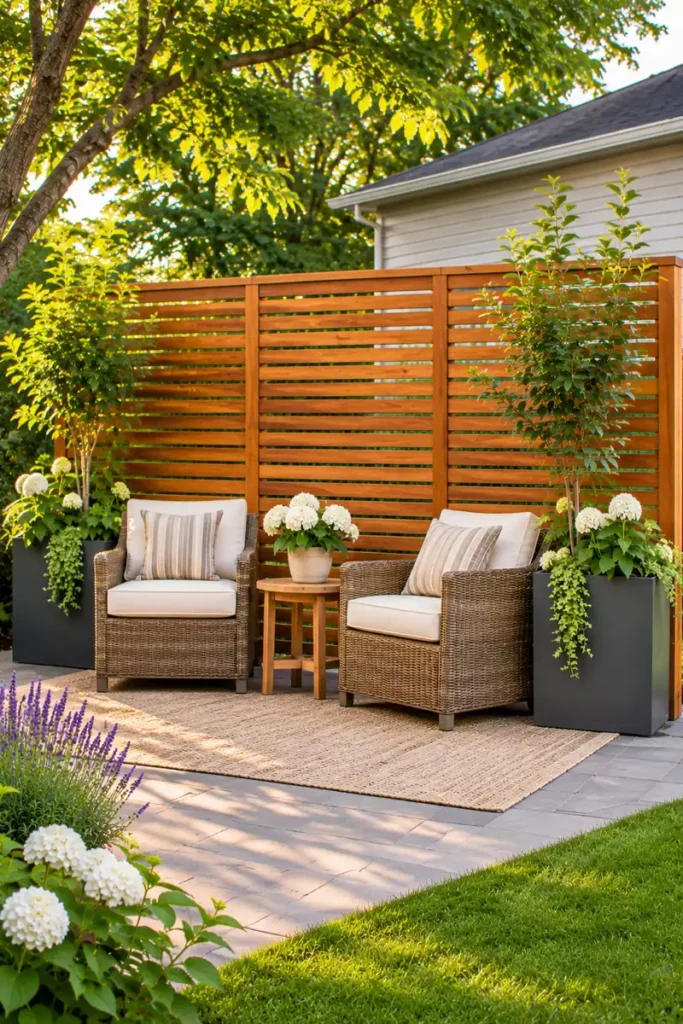
A long fence across the back of the yard costs a lot and still leaves the neighbor’s second-floor window looking down on you. A short freestanding cedar slat screen set right beside the patio chairs blocks far more of that view for far less money. The closer the screen is to where you sit, the more sky it covers.
It’s the smartest answer to how to block neighbors’ view when the view comes from above. Set the screen in heavy planters or on a weighted base so you can put it up in a weekend, with no digging. Add a second panel at an angle if one isn’t enough.
4. Clumping Bamboo in Long Planters
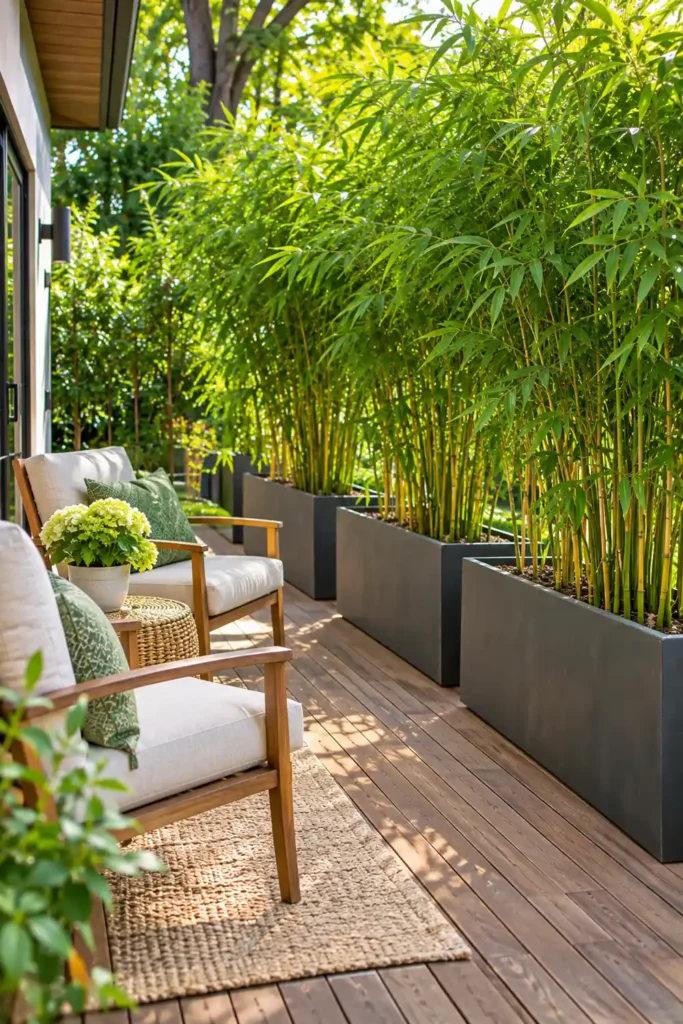
Bamboo is one of the quickest plants for a tall, leafy screen, and clumping bamboo in long planters gets you that height without the risk. The planters hold the roots in check, and a row of them along the edge of a deck or patio becomes a green wall in a season or two.
The narrow leaves rustle in the wind, which softens nearby noise as well as the view.
Planting note: Planters dry out faster than garden beds, so water often in summer heat. Pick big, sturdy containers, because bamboo roots are strong enough to crack thin pots.
It grows in a tight clump and spreads slowly.
Planting it in planters keeps it even more contained.
It sends roots far underground and can pop up in a neighbor’s yard.
Some towns restrict it, so check local rules before buying any bamboo.
5. Trellis Panels With Fast Annual and Perennial Vines
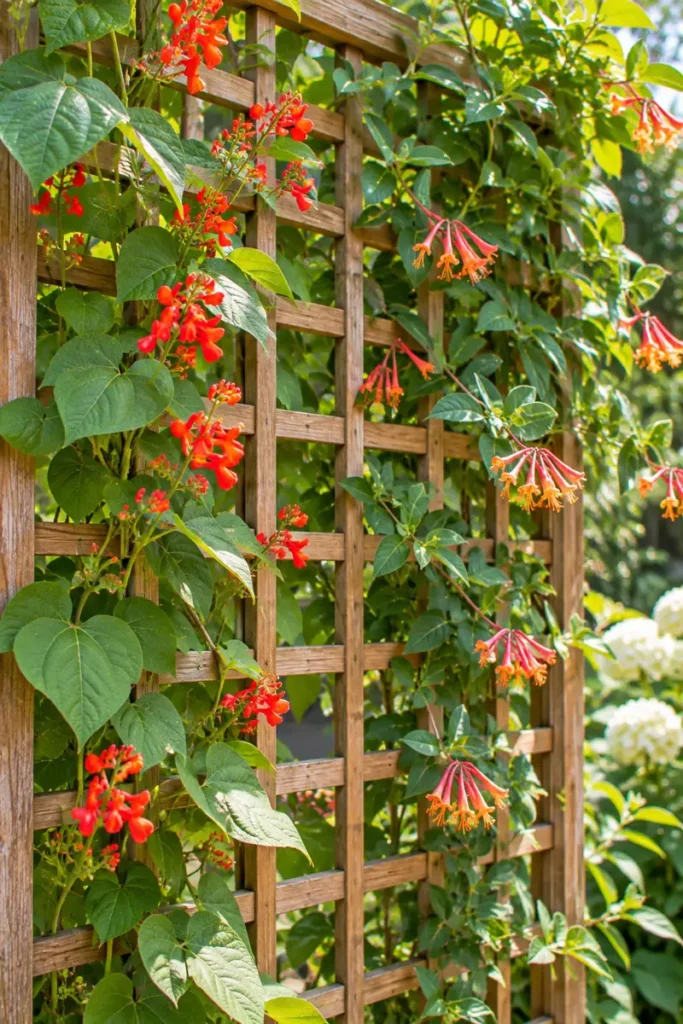
The trick to a vine screen that fills in fast is planting two kinds at once. Freestanding wooden trellis panels give the vines something to climb. Plant scarlet runner beans for quick summer cover and red flowers, and trumpet honeysuckle beside them for a screen that comes back year after year.
The beans race up the trellis in one season while the honeysuckle is still settling in. By the next summer, the honeysuckle has the height to take over. Hummingbirds visit both, which makes the screen something to watch as well as hide behind.
6. Reed Screening Zip-Tied to a Chain-Link Fence
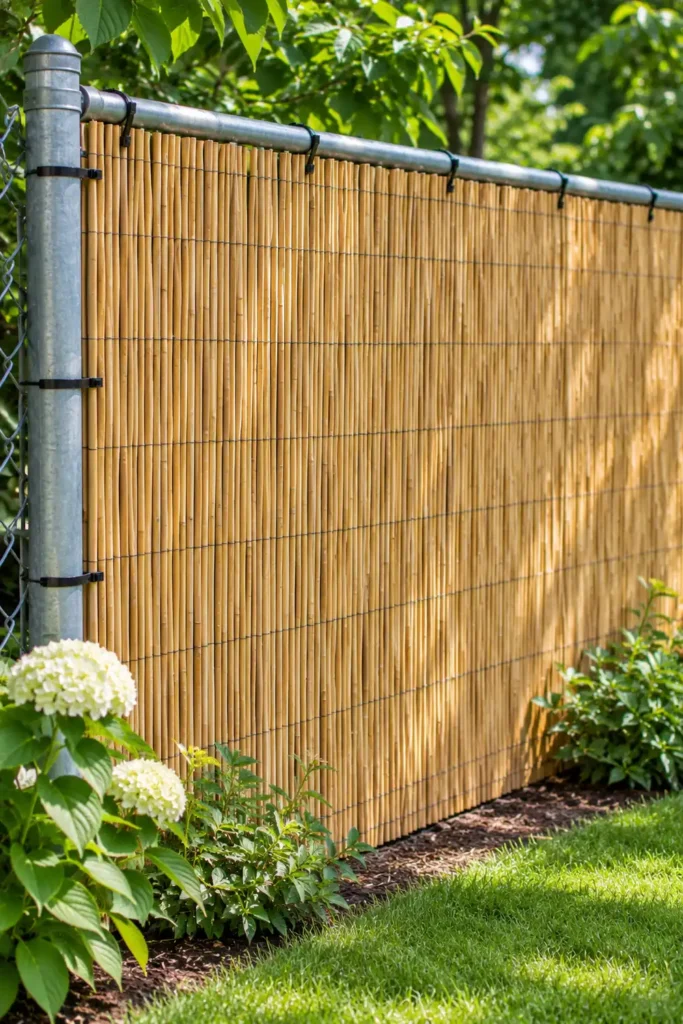
Chain link keeps dogs in and does nothing for privacy. A roll of reed or bamboo screening, unrolled along the fence and zip-tied in place, changes that in about an hour. The natural tan stalks block the view completely, and they look a lot warmer than bare metal.
It’s one of the best backyard privacy ideas on a budget, and renters can cut the ties and take it down when they move. Expect it to fade and fray after a few seasons in full sun, so it works best as a quick fix or a stopgap while plants grow.
Get the look: a roll of reed or bamboo screening, black zip ties, scissors.
7. A Staggered Arborvitae Hedge Set Back From the Line
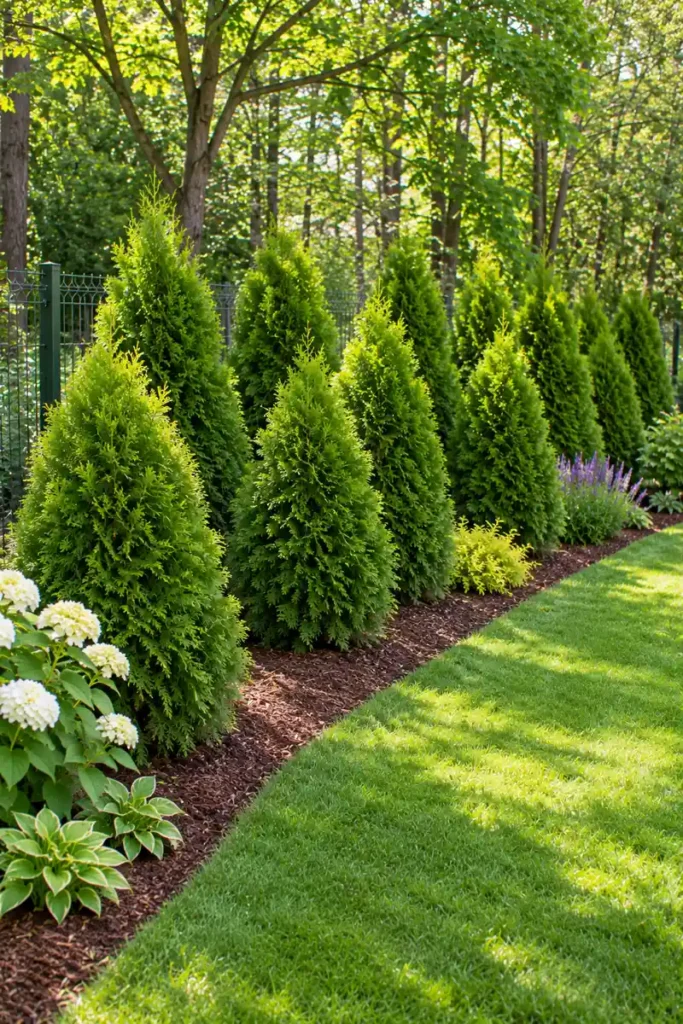
A row of arborvitae is the classic living privacy fence. It’s dense, evergreen, and green all year. Plant young trees in a staggered zigzag rather than a straight line, so each tree fills the gap between its neighbors and the hedge looks full sooner.
Set the row back from the property line, far enough that the mature trees stay on your side. Fast-growing evergreens still take several years to reach full height.
Mulch the base and water deeply through the first couple of summers, because young arborvitae can brown in drought. Plant now, and pair it with a quick screen in front while you wait.
8. A Cantilever Umbrella Against Second-Story Windows
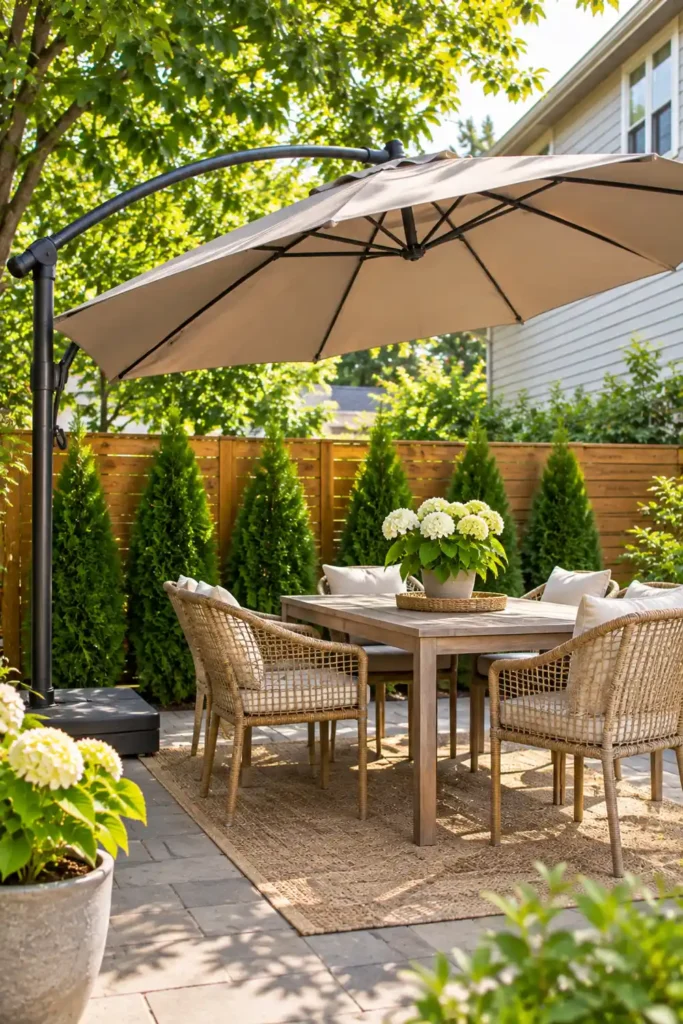
Fences and hedges do nothing when the neighbor’s view comes from an upstairs window. A cantilever umbrella does. Its arm swings out from one side and the canopy tilts, so you can angle it to block the window above while the pole stays out of the way of the table and chairs.
It’s the quickest answer for privacy from second-story neighbors, and it adds shade at the same time. Choose a heavy, weighted base, tilt the canopy toward the window you want to block, and close it whenever wind picks up. A neutral canopy color blends in with most patios.
9. Layered Shrubs, Grasses, and Perennials in Odd-Numbered Groups
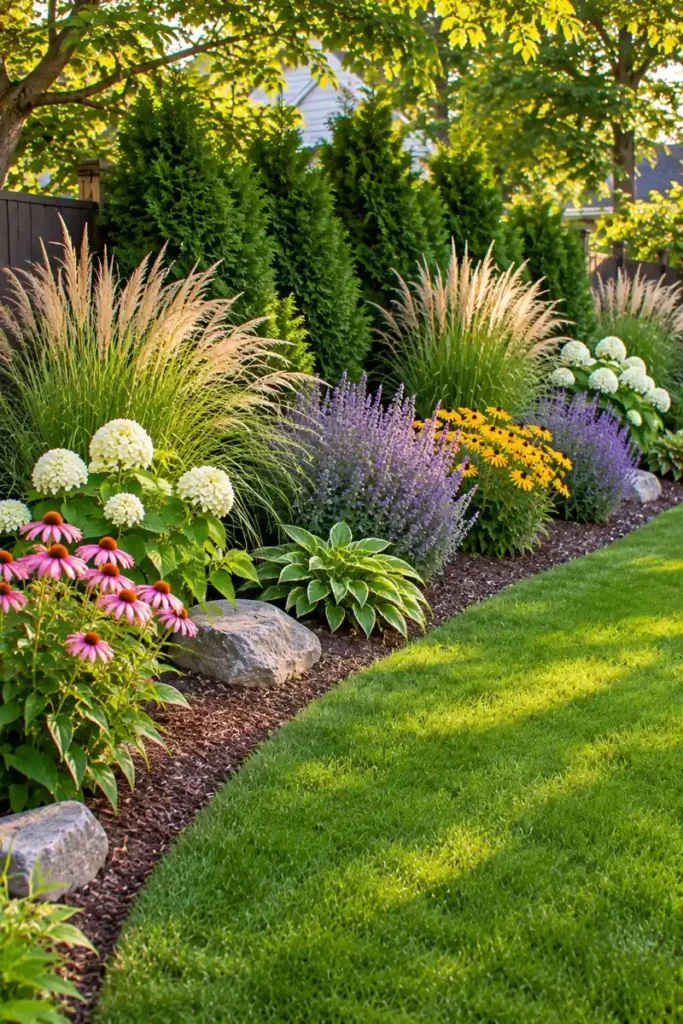
A border planted in layers gives backyard privacy without a fence, and it looks like a garden instead of a barricade. Start with a back row of evergreen shrubs, add tall ornamental grasses in the middle, and finish with flowering perennials in front. Plant each layer in groups of three or five.
The different heights block the view at several levels, and the grasses move in the breeze, which keeps the border from feeling heavy. Odd-numbered groups look natural rather than planted by a ruler.
The screen fills in over a few seasons, and it gets better every year. More planting ideas are in these backyard garden ideas.
10. Switchgrass and Feather Reed Grass in a Tall Row
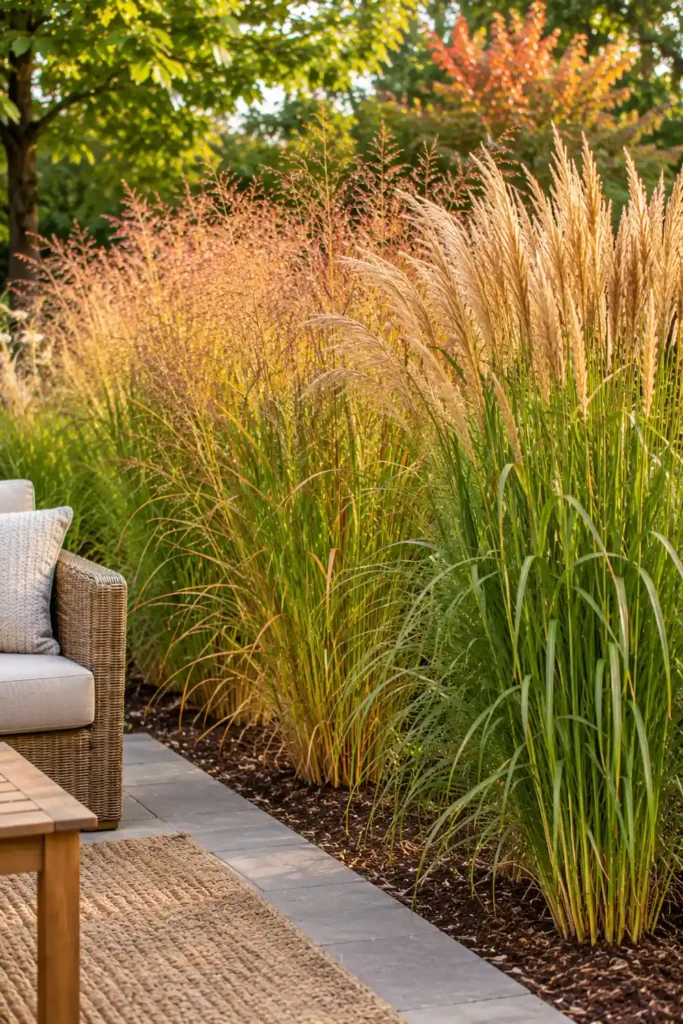
Plant shrubs in spring and you’ll wait years for privacy. Plant tall ornamental grasses and you’ll have a soft screen by midsummer. Switchgrass grows into tall, airy clumps that turn gold in fall, and feather reed grass sends up upright wheat-colored plumes early in the season.
Both are fast-growing privacy plants that rebound every year after a late-winter cut-back. Set them in a single row along the edge of the patio, close enough that the clumps touch as they fill out. The screen stays standing through most of winter, so it doesn’t vanish when the leaves fall.
Skip pampas grass and check local invasive plant lists before buying any ornamental grass.
11. Hog Wire Panels Framed in Wood and Covered in Vines
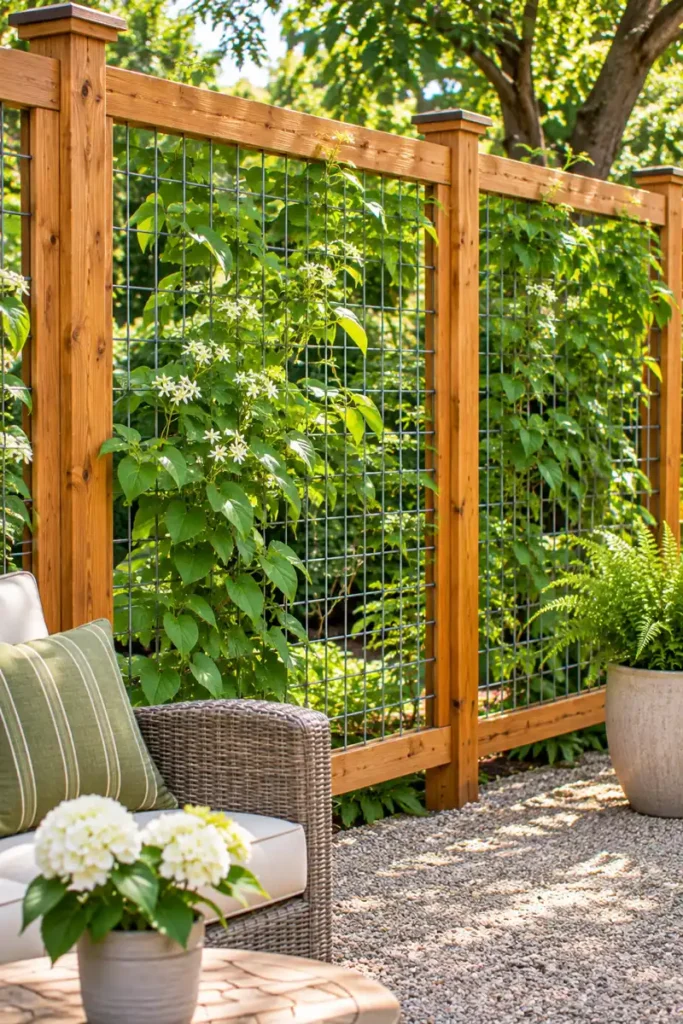
Hog wire panels framed in cedar look modern from the first day, even before anything grows on them. The open grid lets light through, so the screen never feels like a wall. Plant climbing vines at the base, and over a season or two the wire disappears under leaves.
The cedar frame warms up the metal and holds the panels steady, which matters once the vines get heavy. Set the frames on posts or bolt them to existing fence posts, and add panels one at a time as the budget allows.
Get the look: hog wire panels, cedar boards for framing, wood posts, climbing vines.
12. A Dead Hedge Woven From Pruned Branches
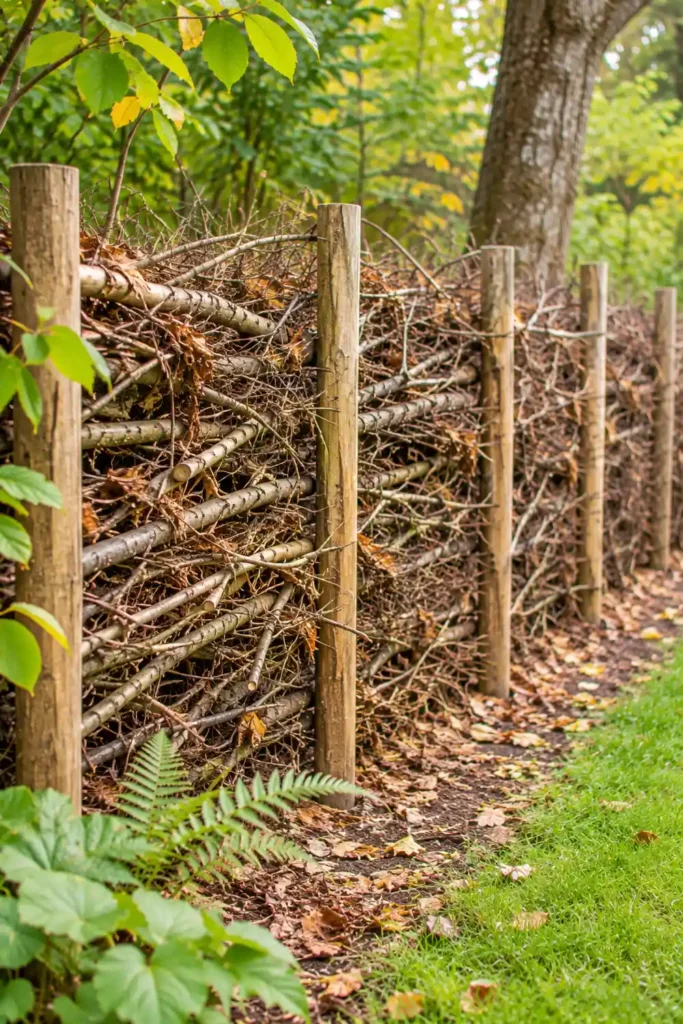
Every yard produces a pile of branches after pruning season. A dead hedge turns that pile into a free screen. Drive two parallel rows of wooden stakes into the ground, then stack pruned branches and twigs between them, packing them down as you go.
The result is a thick, rustic barrier that blocks the view and gives birds and small wildlife a place to hide. As the bottom layers break down, just add more branches to the top.
It looks wild, which suits a back corner or a woodland edge better than a manicured patio. If you have an HOA, ask before building one.
13. Rolling Cedar Planters With Built-In Trellises
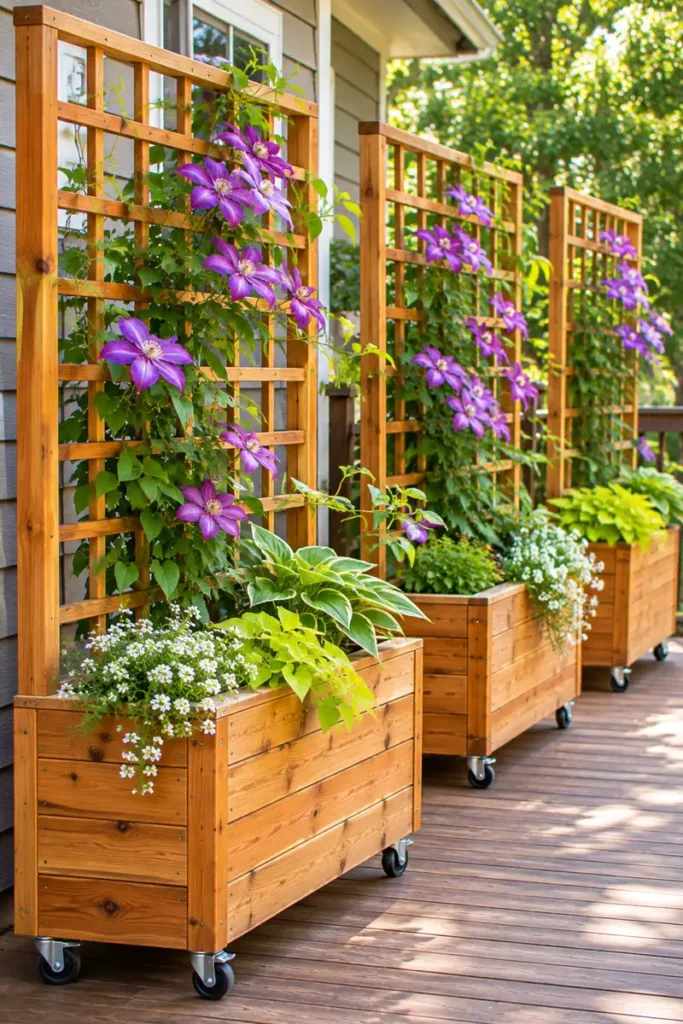
Renters can’t plant a hedge or put in posts, but they can roll in a screen. Cedar planter boxes on locking casters, each with a tall trellis built into the back, give privacy that moves wherever you need it. Fill them with clematis or climbing beans, and the trellises turn green over a season.
These are some of the most flexible privacy ideas for renters. On a deck or patio, the boxes can block the hot tub one evening and the grill corner the next.
Styling note: Lock the casters once each planter is in place, and line them up with small gaps between, so the row looks planned rather than parked.
14. Corrugated Metal Panels in a Wood Frame
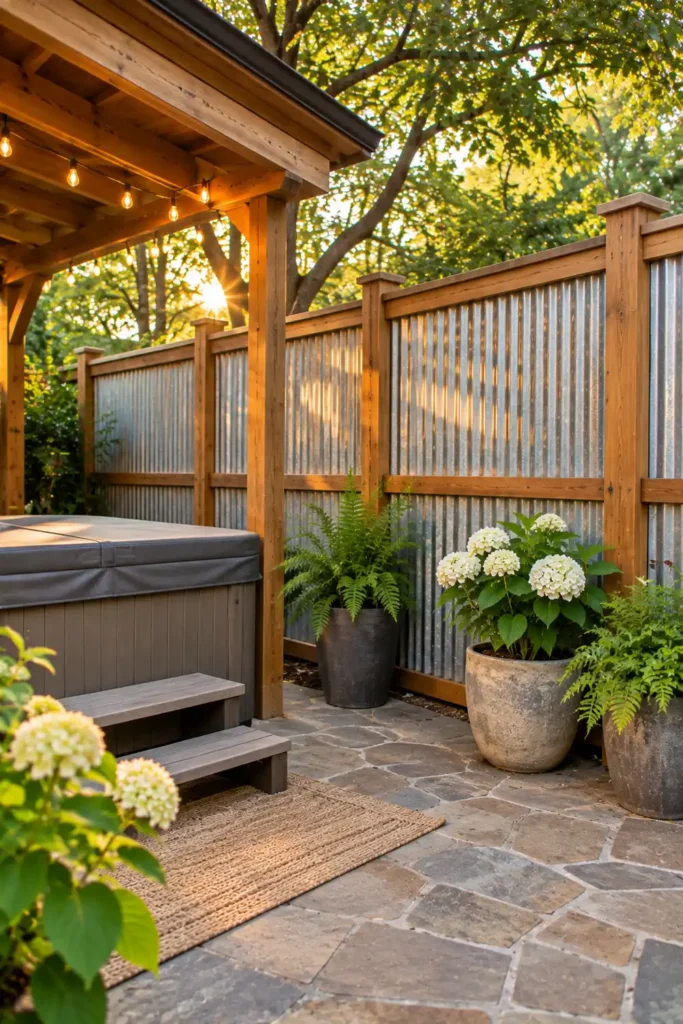
A hot tub or outdoor shower right beside the neighbor’s yard needs a screen that blocks everything, not just most of it. Corrugated metal panels screwed into a wood frame do that. The ridged metal blocks the view completely, and the wood frame keeps it looking finished rather than industrial.
Galvanized panels weather into a soft gray that suits modern and farmhouse homes alike. They’re some of the toughest privacy screen ideas around, and they take very little care. Wear gloves when cutting, because the edges are sharp, and keep the panels out of reach of kids. These hot tub ideas for the backyard show more ways to shield a soak.
15. Hanging Planters Strung From a Beam as a Green Screen
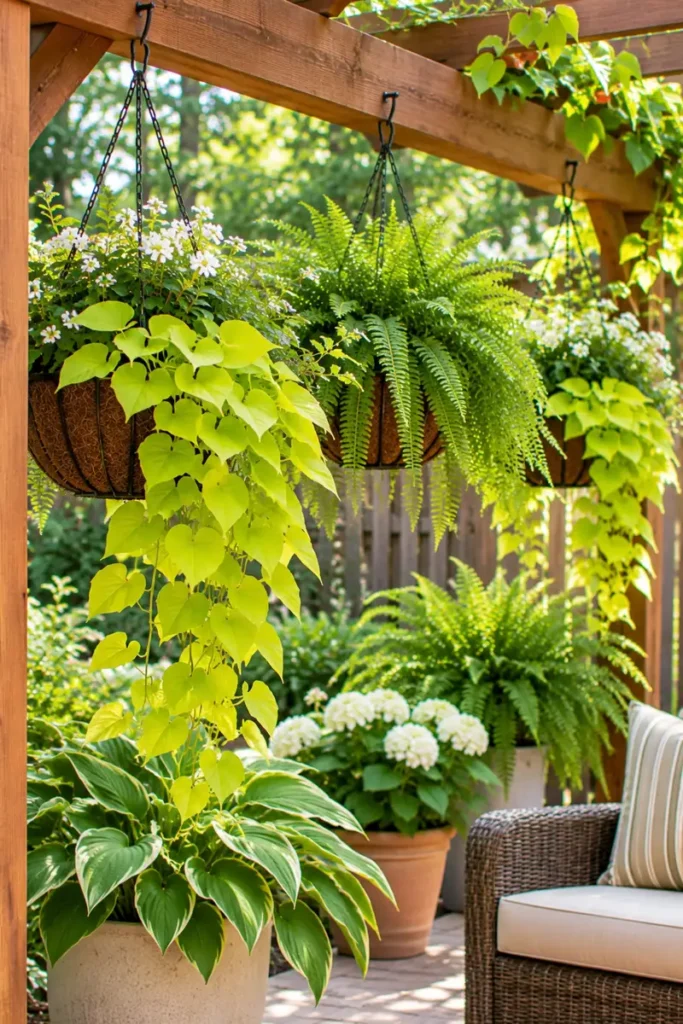
Hanging baskets of trailing plants make a screen that floats above the railing. Run a sturdy wood beam across two posts, or use the edge of an existing pergola, and hang planters at staggered heights so the gaps between them fill in.
Trailing plants like sweet potato vine and ferns spill down from the baskets and meet the plants in pots below. Together they block the view across a small patio, where there’s no room for a hedge.
Hanging baskets dry out faster than anything else in the yard. In summer heat, plan on watering them every day, or choose self-watering baskets.
16. A Small Canopy Tree Beside the Patio
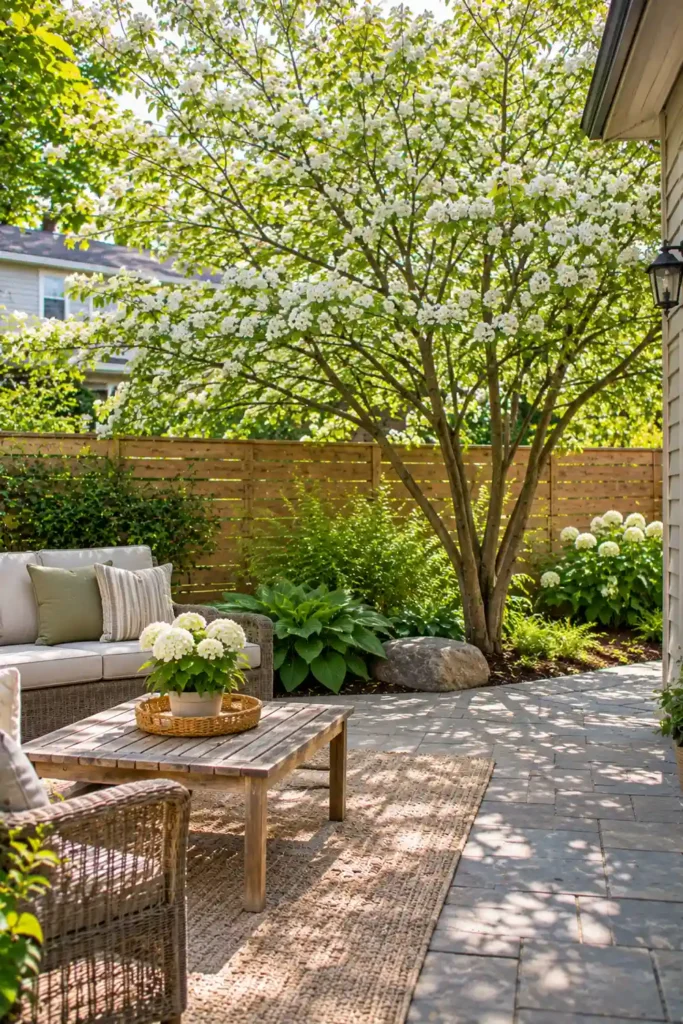
A tree doesn’t have to block the whole yard. It just has to block the window. A small canopy tree like a serviceberry or river birch, planted beside the patio, spreads its branches between your seating area and the neighbor’s upstairs view. It also gives you dappled shade on hot afternoons.
Serviceberry flowers white in spring and turns orange-red in fall. River birch has peeling, cinnamon-colored bark that looks good even in winter.
Plant it well away from the house, and check the tag for the mature spread before choosing a spot. A tree takes a few years to make a difference, so plant it this season. For layouts around the seating area, see these backyard patio ideas.
17. A Bubbling Fountain to Cover Voices
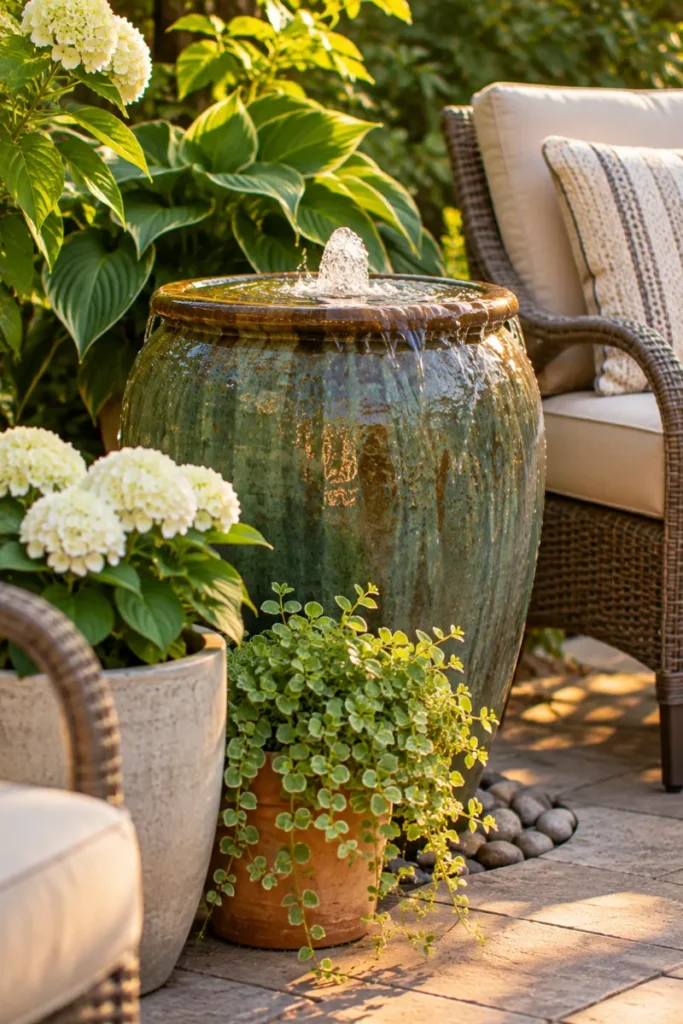
Privacy isn’t only about what the neighbors can see. It’s also what they can hear. Set a small bubbling fountain beside the seating area and the steady sound covers quiet conversation, both yours and theirs. Turn it off and everyone hears every word.
A ceramic urn fountain or a stone bowl fountain with a recirculating pump works on a patio of any size. Plug-in pumps need an outdoor-rated GFCI outlet, and adding a new outlet is a job for an electrician. No outlet nearby? A solar fountain works without wiring, though it runs only when the sun is out.
18. Fence Panels With the Finished Side Facing Out
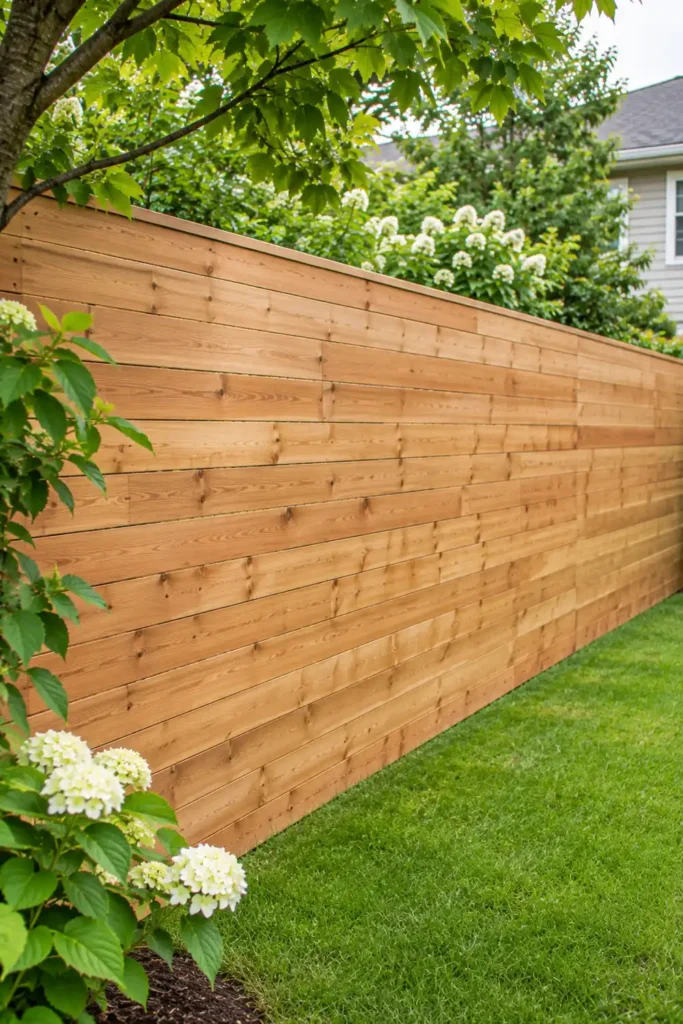
A new privacy fence is the most permanent screen on this list, and the one most likely to start a disagreement. Many towns require the finished side of the panels, without the posts and rails showing, to face the neighbor or the street. It’s also simply the polite way to build.
Talking to the neighbor before work starts often turns a possible complaint into a shared project. Some neighbors even split the cost.
Host tip: Check your property line before setting a single post, because even a few inches over can lead to a dispute.
📋 Before You Build Along the Property Line
Check your city’s height limits and permit rules, and get HOA approval in writing if you have one. Confirm where the property line sits. Call 811 a few days before digging any post holes, so buried lines get marked for free.
19. Faux Boxwood Panels on a Deck Railing
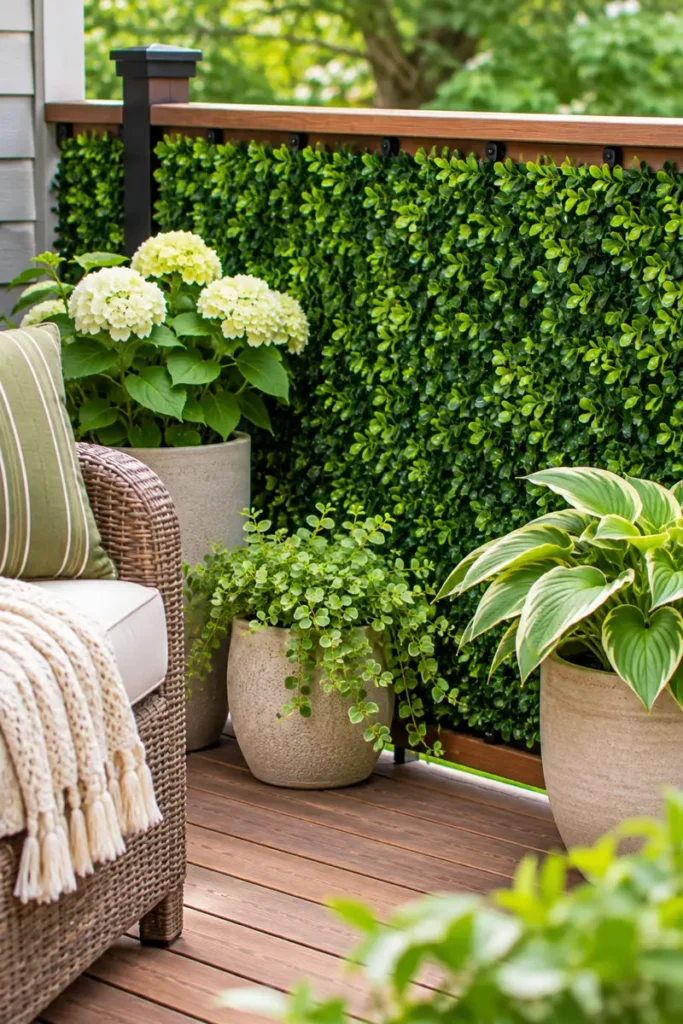
Faux boxwood panels zip-tied to a deck railing turn an open balcony into a green wall in an afternoon. The interlocking squares snap together to fit any length, and the dense leaves block the view as well as a real hedge.
They need no watering, no soil, and no sun, which makes them a good fit for a shady balcony where real plants struggle. Add a few potted plants in front, and the real leaves keep the faux panels from looking artificial.
Get the look: UV-rated faux boxwood panels, zip ties, a few potted plants.
Choose UV-rated panels, which fade more slowly in sun. More space-saving ideas are in these small backyard ideas.
20. A Row of Sunflowers for One-Summer Privacy
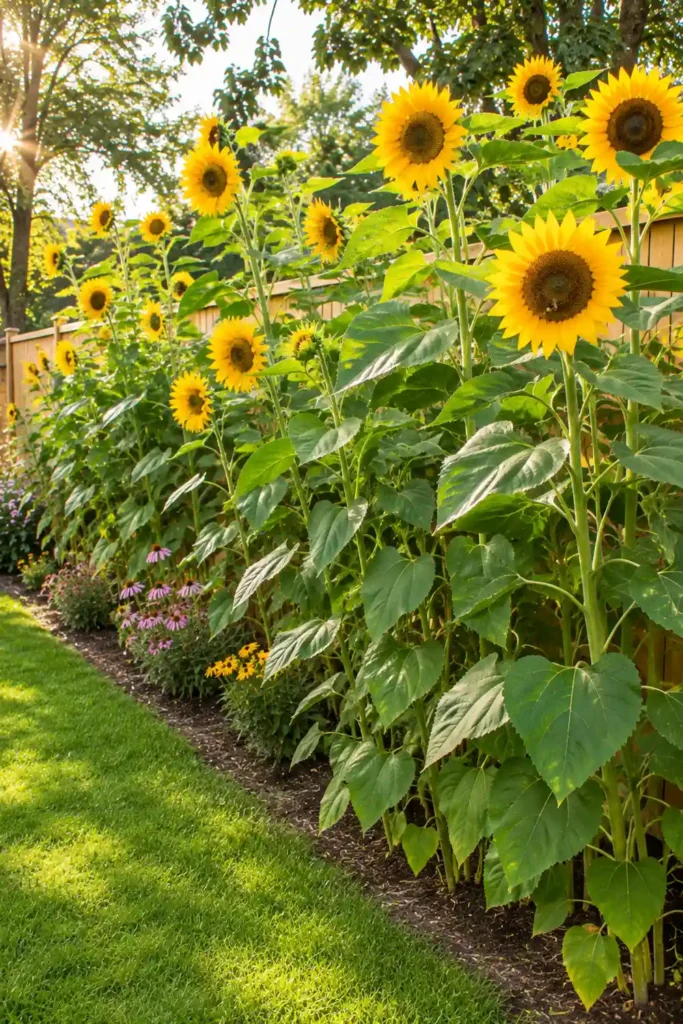
A new house, a bare yard, and a neighbor who can see everything: shrubs won’t help this summer, but sunflowers will. Sow tall sunflower seeds in a double, staggered row along a sunny bed once the danger of frost has passed. Within weeks they’re knee-high, and by midsummer they stand taller than the fence.
A packet of seed costs less than a single potted shrub, and the row brings in bees, then birds once the seed heads ripen. When fall comes, pull the stalks and plant something permanent in the same bed.
21. A Quick Screen Now With a Hedge Growing Behind It
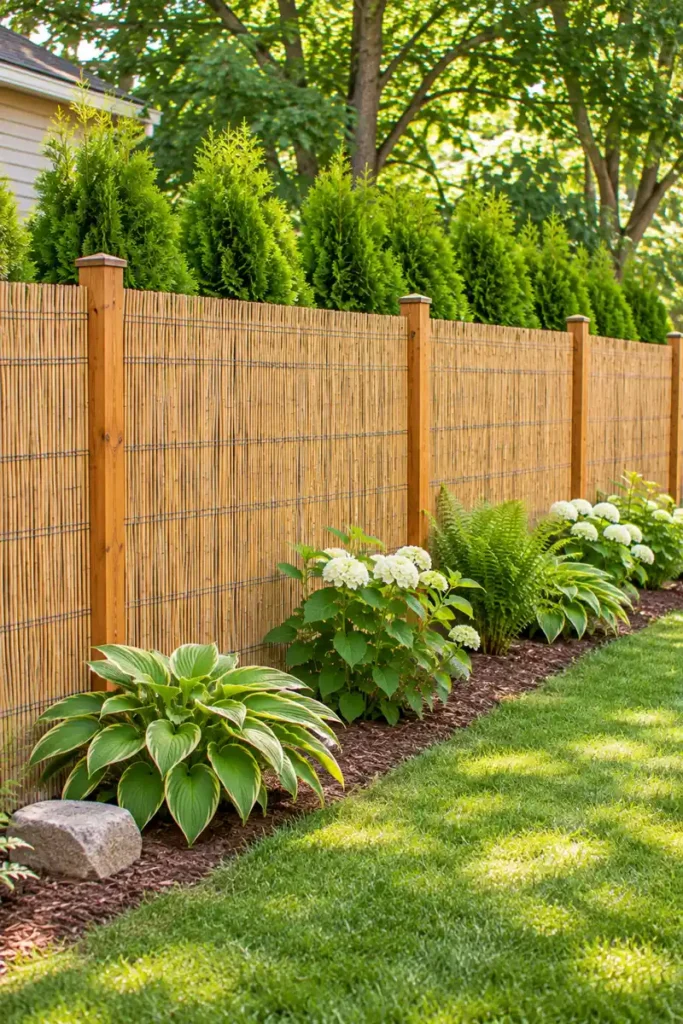
Plant a hedge alone and you’ll be watched for years. Put up a screen alone and you’ll replace it every few seasons. Do both, and you get privacy right away plus a permanent answer later.
Set a reed screen or a freestanding slat panel along the line you want to block, then plant young arborvitae or another evergreen shrub just behind it. The screen gives you cover today, and the shrubs grow up behind it without anyone staring at the bare gaps. Once the hedge fills in and reaches the top of the screen, take the screen down and let the plants do the job.
How to Block Neighbors’ View Without Wasting Money
Start where you actually sit. Stand at your patio chairs and note every window or deck that looks in, because those sightlines tell you where a screen needs to go. A short screen close to the seating blocks more than a long one at the property line, so begin there.
Next, pair a fast fix with a slow one: curtains, a reed roll or an umbrella for cover today, and vines, grasses or a hedge planted for the years ahead. Before building anything permanent, check your town’s height limits, your HOA rules and the property line, and talk to the neighbor.
Backyard Privacy FAQ
What is the fastest way to block a neighbor’s view?
Outdoor curtains, a cantilever umbrella, or reed screening zip-tied to a fence all give privacy the same day. None of them need digging or tools beyond scissors and a drill. Ideas 2, 6, and 8 are the quickest on the list.
How can I get backyard privacy without a fence?
Freestanding screens, trellises with vines, tall ornamental grasses and layered planting all block views without a fence. Placing a screen close to where you sit makes even a small one work well. Ideas 3, 9, and 10 are good places to start.
What grows fastest for privacy?
Annual vines like scarlet runner beans and tall sunflowers give cover within one season, and ornamental grasses fill out by midsummer. Evergreen hedges take several years to reach full height, so plant them early. Ideas 5, 10, and 20 grow the fastest.
How do I block a view from a second-story window?
Block it close to where you sit. A tilted cantilever umbrella, a tall screen right beside the chairs, or a small canopy tree all cover the view from above better than a fence can. Ideas 3, 8, and 16 each handle upstairs windows.
Do I need permission to put up a privacy fence?
Often, yes. Many towns limit fence height and require permits above certain heights, and HOAs may have their own rules. Many places also require the finished side to face the neighbor. Idea 18 lists what to check first.
Conclusion
Privacy rarely comes from one big project. It usually comes from a few smart ones stacked together. Start with the fix that works today, maybe curtains on the porch or a screen beside your favorite chair. Then plant something that will grow into a permanent answer. With these backyard privacy ideas from neighbors, you can feel unwatched this weekend and have a living screen in a few seasons. For more ways to make the yard feel like yours, browse these backyard ideas you’ll want to copy. Save this for the next time you feel watched while watering the tomatoes.