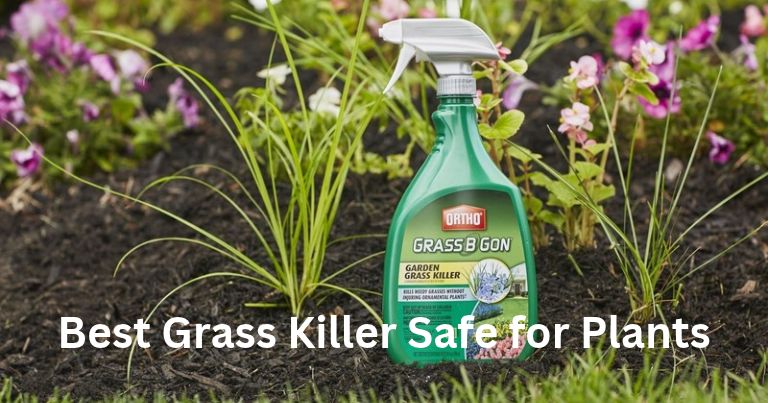
Can you kill the grass creeping through your flower bed without hurting the flowers? Yes, and the best grass killer safe for plants does it by targeting grass only, leaving most broadleaf plants alone when you follow the label.
This guide compares 10 selective grass herbicides: ready-to-use sprays, fluazifop and clethodim concentrates, and two lawn products that pull grassy weeds out of turf. We compare active ingredient, form, where each is labeled for use and container size.
It helps gardeners fighting Bermudagrass in beds, crabgrass along borders and grassy weeds in vegetable rows.
Gardenbine earns a commission from qualifying Amazon purchases made through links on this page, at no extra cost to you. Product details come from the manufacturers’ listings.
Our Top Picks
- Best for Bermudagrass in fescue Atticus Vendra II 32 oz Check on Amazon
- Best hose-end for lawns BioAdvanced Bermuda Control Check on Amazon
- Best for crabgrass in lawns BASF Drive XLR8 Check on Amazon
On this page
- Compare Grass Killers Safe for Plants by Active Ingredient, Form, Use and Size
- Detailed Reviews: Best Grass Killer Safe for Plants
- Do Not Spray Grass Killer Near the Lawn You Want to Keep
- Spray Grassy Weeds While They Are Young and Growing
- How to Choose a Grass Killer Safe for Plants
- Which Grass Killer Safe for Plants Should You Choose?
- Frequently Asked Questions
- Final Verdict
Compare Grass Killers Safe for Plants by Active Ingredient, Form, Use and Size
| # | Product | Active Ingredient | Form | Where to Use | Size | Buy |
|---|---|---|---|---|---|---|
| 1 |  Ortho Grass B Gon RTU Best ready-to-use |
Not listed | Ready to use | Ornamentals, shrubs | 24 oz | View on Amazon |
| 2 |  Monterey Grass Getter Best for beds and vegetables |
Not listed | Concentrate | Beds, vegetables | 8 oz | View on Amazon |
| 3 |  Fertilome Over The Top Best small concentrate |
Not listed | Concentrate | Vegetables, shrubs | 8 oz | View on Amazon |
| 4 |  Gordon's Ornamec 170 Best for fence lines |
Fluazifop 1.70% | Concentrate | Beds, fence lines | 32 oz | View on Amazon |
| 5 |  Syngenta Fusilade II Best pro-strength concentrate |
Fluazifop 24.5% | Concentrate | Landscapes, turf | 4 oz | View on Amazon |
| 6 |  Atticus Vendra II 32 oz Best for Bermudagrass in fescue |
Fluazifop 24.5% | Concentrate | Fescue, zoysia, beds | 32 oz | View on Amazon |
| 7 |  USA Supply Clethodim 2E Best clethodim kit |
Clethodim | Concentrate | Spot or broadcast | 1 gallon | View on Amazon |
| 8 |  Tide Clethodim 2EC Best for large plots |
Clethodim 26.4% | Concentrate | Crops, vegetables | 2.5 gallons | View on Amazon |
| 9 |  BioAdvanced Bermuda Control Best hose-end for lawns |
Two actives | Hose-end | Listed lawns | 32 oz | View on Amazon |
| 10 |  BASF Drive XLR8 Best for crabgrass in lawns |
Quinclorac | Concentrate | Lawns, turf | 64 oz | View on Amazon |
Ranked by ease of use in home beds, the labeled plant list and how clearly each listing states its active ingredient and rate.
Detailed Reviews: Best Grass Killer Safe for Plants
1. Ortho Grass B Gon Garden Grass Killer Ready-To-Use, 24 oz (Best ready-to-use)

Ortho Grass B Gon Garden Grass Killer Ready-To-Use, 24 oz
No mixing, labeled for ornamentals and shrubs
View on Amazon- 24 ozbottle
- Readyto use
- Annual and perennialgrasses
- Non-bearingtrees and vines
Best for: Gardeners who want to spot spray grass in a few flower beds without mixing anything
Why it ranks #1: It is the easiest to use on this list, which puts it ahead of the Monterey Grass Getter for small jobs, though concentrates cover far more ground.
Ortho’s Grass B Gon comes ready to use in a 24 oz bottle, so you spray it straight from the trigger. The listing says it kills annual and perennial grassy weeds without injuring ornamental plants when used as directed.
It is labeled for use in and around ornamentals, groundcovers, evergreens, shrubs, shade trees, and non-bearing tree crops and vines. Note the word non-bearing: the listing does not name vegetables or fruiting trees, so keep it out of food beds. The listing does not name the active ingredient.
Pros
- No mixing or measuring
- Labeled around shrubs, evergreens and groundcovers
- Controls annual and perennial grasses
Cons
- 24 oz covers only small areas
- Not listed for vegetables or bearing fruit trees
Skip it if you need to treat vegetable rows; the Monterey Grass Getter lists vegetables on its label.
2. Monterey Grass Getter Herbicide, 8 oz with Measuring Spoon (Best for beds and vegetables)

Monterey Grass Getter Herbicide, 8 oz with Measuring Spoon
Over-the-top spray for beds, shrubs and vegetables
View on Amazon- 8 ozconcentrate
- Measuringspoon included
- Bermudagrass, crabgrasscontrols
- Systemicaction
Best for: Gardeners with grassy weeds mixed into bedding plants, groundcovers and vegetable rows
Why it ranks #2: It names more tough grasses and more plant types than the Fertilome Over The Top, and the measuring spoon makes small batches easy.
Monterey’s Grass Getter is a systemic concentrate that controls grassy weeds in bedding plants, ornamentals, groundcovers, shrubs and vegetables. The listing names crabgrass, Bermudagrass, foxtail, goosegrass, Johnsongrass and quackgrass among the grasses it controls.
You can spray it over the top of listed ornamental plants and trees. Monterey says warm, sunny weather speeds up the kill, and it works more slowly in cool weather. For best control, mix it with a surfactant or oil concentrate and water. A measuring spoon comes in the box.
Pros
- Labeled for vegetables and bedding plants
- Names tough grasses like Bermudagrass and quackgrass
- Spray over the top of listed plants
- Measuring spoon included
Cons
- Works best with a separate surfactant
- Slower in cool weather
Skip it if you do not want to mix anything; the Ortho Grass B Gon RTU is ready to use.
3. Fertilome Over The Top Grass Killer, 8 oz Concentrate (Best small concentrate)
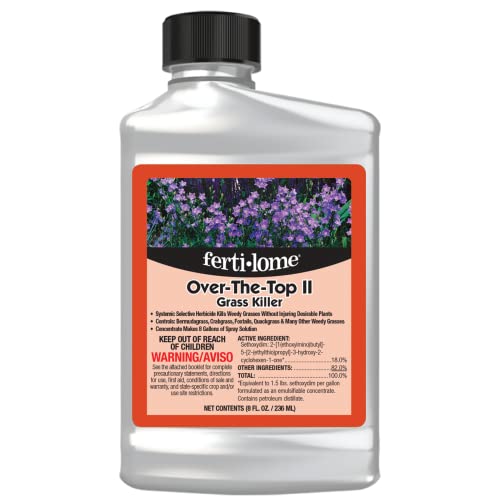
Fertilome Over The Top Grass Killer, 8 oz Concentrate
8 oz makes 8 gallons of spray
View on Amazon- 8 ozconcentrate
- 8 galspray made
- 2 daysto stop growth
- Annual and perennialgrasses
Best for: Home gardeners treating grass in vegetable gardens, shrub borders and around trees
Why it ranks #3: It makes more spray from 8 oz than the Gordon's Ornamec 170 does from 32 oz, but it lists fewer target grasses than the Monterey Grass Getter.
Fertilome’s Over The Top is a selective concentrate for annual and perennial grass weeds. One 8 oz bottle makes 8 gallons of spray, which is a lot of coverage for a home garden.
The listing says you can apply it around vegetables, gardens, trees, shrubs and ornamentals, and that weed grasses stop growing 2 days after you spray. Rates vary by area and method, so read the label before you mix. The listing does not name the active ingredient.
Pros
- 8 oz makes 8 gallons of spray
- Labeled around vegetables and ornamentals
- Grass stops growing 2 days after spraying
Cons
- Active ingredient is not named in the listing
- Short list of target grasses in the listing
Skip it if you want a no-mix bottle; get the Ortho Grass B Gon RTU.
4. PBI Gordon Ornamec 170 Grass Herbicide, 32 oz (Best for fence lines)

PBI Gordon Ornamec 170 Grass Herbicide, 32 oz
Fluazifop 1.70% for beds and fence lines
View on Amazon- 1.70%fluazifop-P-butyl
- 32 ozbottle
- 10 ozper gallon
- Fence lineslabeled site
Best for: Homeowners clearing grass along fence lines and ornamental beds
Why it ranks #4: It is easier to measure than the Syngenta Fusilade II thanks to its lower strength, but you use more product per gallon.
PBI Gordon’s Ornamec 170 uses fluazifop-P-butyl at 1.70%, a grass-only active ingredient. It is labeled in and around ornamental plants, groundcovers, shrubs, trees, landscape beds, ornamental beds and fence lines.
The mix rate is 10 oz per gallon of water, so the 32 oz bottle makes about 3.2 gallons of spray. The low strength makes measuring simple, but you go through the bottle faster than a stronger concentrate. The listing does not mention vegetables.
Pros
- Clear fluazifop content of 1.70%
- Labeled for fence lines and landscape beds
- Simple 10 oz per gallon mix
Cons
- 32 oz makes only about 3.2 gallons
- Vegetables are not listed
Skip it if you treat large areas; the Syngenta Fusilade II mixes at 0.75 oz per gallon.
5. Syngenta Fusilade II Herbicide Grass Weed Killer, 4 oz (Best pro-strength concentrate)

Syngenta Fusilade II Herbicide Grass Weed Killer, 4 oz
24.5% fluazifop, rainfast in 1 hour
View on Amazon- 24.5%fluazifop-P-butyl
- 0.75 ozper gallon
- 1 hourrainfast
- 4 ozbottle
Best for: Experienced users treating larger landscape beds or nursery areas
Why it ranks #5: It is far stronger than the Gordon's Ornamec 170, so a small bottle goes further, but it needs a separate surfactant.
Syngenta’s Fusilade II carries 24.5% fluazifop-P-butyl, a strength aimed at landscapers. It targets annual and perennial grass weeds in landscapes, nurseries and sports fields without harming ornamentals when used as directed.
You mix 0.75 oz per gallon with 0.5 oz of non-ionic surfactant, so the 4 oz bottle makes about 5 gallons. It is rainfast 1 hour after spraying, and Syngenta says yellowing shows within a week. You can spot treat or spray over the top.
Pros
- 24.5% fluazifop strength
- Rainfast in 1 hour
- Visible yellowing within a week
- Spot or over-the-top use
Cons
- Needs a non-ionic surfactant
- Small doses demand careful measuring
Skip it if you do not want to measure fractions of an ounce; get the Ortho Grass B Gon RTU.
6. Atticus Vendra II Fluazifop Herbicide, 32 oz (Best for Bermudagrass in fescue)

Atticus Vendra II Fluazifop Herbicide, 32 oz
Pulls Bermudagrass from tall fescue and zoysia
View on Amazon- 24.5%fluazifop-P-butyl
- 32 ozbottle
- 1 hourrainfast
- Fescue, zoysiaturf use
Best for: Homeowners with Bermudagrass creeping into tall fescue or zoysia lawns and nearby beds
Why it ranks #6: It matches the Syngenta Fusilade II on strength in a bottle 8 times larger, with clear directions for removing Bermudagrass from fescue and zoysia.
Atticus Vendra II has 24.5% fluazifop-P-butyl in a 32 oz bottle. Its main draw is lawn repair: it removes Bermudagrass from tall fescue and zoysiagrass without harming those turf grasses when you follow the label.
It also controls crabgrass, barnyardgrass, foxtail and quackgrass, and it is approved for over-the-top use on landscape ornamentals. It is rainfast after 1 hour. Atticus says to use the low rate on turf and warns against spraying some lawn types, so read the label before you treat any grass.
Pros
- 24.5% fluazifop in a 32 oz bottle
- Removes Bermudagrass from fescue and zoysia
- Over-the-top use on landscape ornamentals
- Rainfast in 1 hour
Cons
- Damages some lawn grasses, so the label must be checked
- Strong concentrate needs careful mixing
Skip it if you only need a few beds cleared; the Fertilome Over The Top comes in a smaller bottle.
7. USA Supply Clethodim 2E Herbicide, 1 Gallon with Gloves (Best clethodim kit)

USA Supply Clethodim 2E Herbicide, 1 Gallon with Gloves
Gallon of clethodim with gloves and a pest ID card
View on Amazon- 1 gallonconcentrate
- 0.1 to 0.2 ozper gallon spot
- 8 to 16 ozper acre
- Glovesincluded
Best for: Property owners with large grassy areas, such as fence rows and big beds, who want a clethodim option
Why it ranks #7: It gives more spray per gallon than any fluazifop pick, but the Tide Clethodim 2EC states its strength and crops more clearly.
USA Supply sells clethodim 2E, a grass-only herbicide, by the gallon. It controls annual and perennial grasses after they come up. Spot rates are just 0.1 to 0.2 oz per gallon of water, so one jug lasts a long time.
For broadcast spraying, the listing gives 8 to 16 oz per acre. The kit adds a pair of gloves and a pest ID card. The listing calls it free of harmful chemicals, which does not fit an herbicide; treat it like any pesticide, wear the gloves and follow the label.
Pros
- Very low spot rate of 0.1 to 0.2 oz per gallon
- 1 gallon covers large areas
- Gloves and pest ID card included
Cons
- Tiny spot doses are hard to measure
- Listing wording on chemicals is misleading
Skip it if you have a small yard; the Monterey Grass Getter comes in an 8 oz bottle.
8. Tide Clethodim 2EC Selective Postemergence Herbicide, 2.5 Gallons (Best for large plots)

Tide Clethodim 2EC Selective Postemergence Herbicide, 2.5 Gallons
26.4% clethodim in a 2.5 gallon jug
View on Amazon- 26.4%clethodim
- 2.0 lb/galactive
- 7 to 14 daysvisible results
- 2.5 galjug
Best for: Large vegetable plots and small farms with heavy grass pressure
Why it ranks #8: It is the biggest container here, so it suits farms more than home beds like the Ortho Grass B Gon RTU.
Tide’s Clethodim 2EC holds 2.0 lb of clethodim per gallon, or 26.4% active ingredient, in a 2.5 gallon jug. It is a selective herbicide for annual and perennial grasses.
The listing names soybeans, cotton and vegetables among the crops it suits. You spray it on actively growing grass, and Tide says yellowing and browning show in 7 to 14 days. That is slower than some picks, so be patient before you spray again. Check the label for each crop and its harvest interval.
Pros
- 26.4% clethodim stated clearly
- 2.5 gallon jug for big areas
- Listed for vegetables and field crops
Cons
- Too much product for most home gardens
- Results take 7 to 14 days
Skip it if you garden on a small lot; the Fertilome Over The Top makes 8 gallons from 8 oz.
9. BioAdvanced Bermudagrass Control for Lawns, Ready-to-Spray, 32 oz (Best hose-end for lawns)

BioAdvanced Bermudagrass Control for Lawns, Ready-to-Spray, 32 oz
Hose-end spray treats 4,000 sq ft
View on Amazon- 4,000 sq ftper bottle
- 90+listed weeds
- 2active ingredients
- Hose-endsprayer
Best for: Homeowners clearing Bermudagrass and crabgrass from listed lawn types
Why it ranks #9: It is easier to apply on a lawn than the Atticus Vendra II 32 oz, but it has no garden bed uses.
BioAdvanced built this 32 oz bottle for lawns, not beds. It hooks to your hose, so there is no mixing, and one bottle treats up to 4,000 square feet. It kills Bermudagrass to the root without harming listed lawns when used as directed.
Two weed killers in the formula control over 90 listed weeds, including clover, foxtail, Japanese stiltgrass and crabgrass. Because it also hits broadleaf weeds, keep it off flower beds and vegetable gardens. Check that your lawn type is on the label before you spray.
Pros
- Hose-end, no mixing
- Treats up to 4,000 sq ft
- Controls over 90 listed weeds
- Kills Bermudagrass to the root
Cons
- Lawn use only, not for flower beds
- Only works on listed lawn types
Skip it if the grass is in a flower bed; get the Monterey Grass Getter.
10. BASF Drive XLR8 Crabgrass Killer for Lawn and Turf, Quinclorac, 64 oz (Best for crabgrass in lawns)

BASF Drive XLR8 Crabgrass Killer for Lawn and Turf, Quinclorac, 64 oz
Quinclorac with up to 30 days of residual
View on Amazon- 64 ozconcentrate
- Up to 30 daysresidual
- Under 1 hourrainfast
- Warm and coolseason turf
Best for: Lawn owners fighting crabgrass and clover in established turf
Why it ranks #10: It lasts longer in the soil than the BioAdvanced Bermuda Control, but it needs a sprayer and full protective gear.
BASF’s Drive XLR8 uses quinclorac in a water-based concentrate to control crabgrass, foxtail, kikuyu grass, signal grass and torpedo grass. It also hits broadleaf weeds such as bindweed, clover, dandelion and black medic.
BASF lists up to 30 days of residual control and says it is rainfast in under an hour. It is labeled for warm-season and cool-season turf. The label calls for long sleeves, long pants, socks, shoes and chemical-resistant gloves, and in New York it can only be used as a spot treatment.
Pros
- Up to 30 days of residual control
- Rainfast in under an hour
- Labeled for warm and cool season turf
- 64 oz concentrate
Cons
- Lawn and turf use, not garden beds
- Full protective gear required
Skip it if your problem grass sits in beds around shrubs; get the Gordon's Ornamec 170.
Do Not Spray Grass Killer Near the Lawn You Want to Keep
A selective grass killer leaves most broadleaf plants alone, but it cannot tell crabgrass from your lawn. Bed products like the Monterey Grass Getter, Gordon's Ornamec 170 and Syngenta Fusilade II kill most grasses they touch, including turf along the edge of a bed.
Spray on a calm day with wind under 10 mph and keep a buffer of at least 12 inches from lawn edges. Use a coarse spray or a shield on the nozzle. The lawn products here, the Atticus Vendra II 32 oz, BioAdvanced Bermuda Control and BASF Drive XLR8, are labeled for certain turf types only.
Rule of thumb: if the label does not name your lawn grass, assume the product will kill it.
Spray Grassy Weeds While They Are Young and Growing
These herbicides move from leaves to roots, so they work best on grass that is actively growing. Monterey says warm, sunny weather speeds up the Monterey Grass Getter, and cool weather slows it. Drought-stressed grass also takes up less spray.
Treat grass when it is about 2 to 8 inches tall, and water the bed a day or two before if the soil is dry. Expect a wait: the Fertilome Over The Top stops grass growth in 2 days, the Syngenta Fusilade II shows yellowing within a week, and the Tide Clethodim 2EC takes 7 to 14 days.
Keep spray out of ponds, streams and storm drains, since several of these active ingredients carry label warnings for fish and aquatic life.
How to Choose a Grass Killer Safe for Plants
Check the Plant List on the Label
Selective does not mean safe for every plant. The Ortho Grass B Gon RTU lists ornamentals, shrubs and non-bearing trees, while the Monterey Grass Getter and Fertilome Over The Top also list vegetables. Pick the product whose label names the plants in your bed.
Ready to Use or Concentrate?
Ready-to-use sprays save measuring time and suit a few beds. Concentrates cover more ground: the 8 oz Fertilome Over The Top makes 8 gallons, while the Gordon's Ornamec 170 makes about 3.2 gallons from 32 oz.
Fluazifop or Clethodim?
Both kill grasses and spare most broadleaf plants. Fluazifop products include the Gordon's Ornamec 170, Syngenta Fusilade II and Atticus Vendra II 32 oz. Clethodim products include the USA Supply Clethodim 2E and Tide Clethodim 2EC. Each label lists which grasses and plants it covers, so match it to your weeds.
Garden Beds or Lawn?
Bed products kill lawn grass. If the problem is grassy weeds inside a lawn, use a product labeled for your turf, such as the BioAdvanced Bermuda Control for Bermudagrass or the BASF Drive XLR8 for crabgrass.
How Do You Protect Yourself and Nearby Plants?
Wear gloves, long sleeves and eye protection, keep children and pets out until the spray dries, and follow the label. For disease problems rather than weeds, see our guide to the best fungus killer for plants.
Which Grass Killer Safe for Plants Should You Choose?
Start with where the grass is growing and which plants surround it, then match the product below.
- If you want to spot spray a few flower beds, choose the Ortho Grass B Gon RTU, because it is ready to use in a 24 oz bottle.
- If grass is growing in beds and vegetable rows, choose the Monterey Grass Getter, because it lists vegetables and names Bermudagrass.
- If you want a small concentrate that goes far, choose the Fertilome Over The Top, because 8 oz makes 8 gallons.
- If grass runs along fence lines and shrub beds, choose the Gordon's Ornamec 170, because it is labeled for both at 10 oz per gallon.
- If you are comfortable mixing a strong concentrate, choose the Syngenta Fusilade II, because it has 24.5% fluazifop and is rainfast in 1 hour.
- If Bermudagrass is invading a fescue or zoysia lawn, choose the Atticus Vendra II 32 oz, because it is labeled to remove it from those turf types.
- If you need a clethodim gallon with gloves, choose the USA Supply Clethodim 2E, because spot rates are only 0.1 to 0.2 oz per gallon.
- If you farm or manage large vegetable plots, choose the Tide Clethodim 2EC, because it holds 26.4% clethodim in a 2.5 gallon jug.
- If you want hose-end lawn treatment, choose the BioAdvanced Bermuda Control, because one bottle covers 4,000 sq ft.
- If crabgrass keeps coming back in the lawn, choose the BASF Drive XLR8, because it lists up to 30 days of residual control.
Frequently Asked Questions
What kills grass but not flowers?
A selective grass herbicide with fluazifop or clethodim kills grasses while sparing most broadleaf flowers listed on the label. The Ortho Grass B Gon RTU is ready to use, and the Monterey Grass Getter is a concentrate that also lists vegetables. Always check that your flowers appear on the label.
Is grass killer safe to use in a vegetable garden?
Only if the label lists vegetables and gives a harvest interval. The Monterey Grass Getter, Fertilome Over The Top and Tide Clethodim 2EC list vegetables in their listings, while the Ortho Grass B Gon RTU does not. Follow the label for each crop, wear gloves and wash produce before eating.
Fluazifop vs clethodim: which is better?
Both control grassy weeds without harming most broadleaf plants. Fluazifop products like the Syngenta Fusilade II are common in landscape beds and some turf. Clethodim products like the Tide Clethodim 2EC are widely used on crops and vegetables. Pick the one whose label names your weeds and your plants.
How to get rid of Bermudagrass in flower beds?
Spray a selective grass killer on actively growing Bermudagrass and repeat as the label allows, since it regrows from runners. The Monterey Grass Getter and Atticus Vendra II 32 oz both name Bermudagrass. Cut back runners at the bed edge and add a deep border edging to slow it creeping back.
How long after spraying grass killer can you plant?
Check the label for a planting interval, since it depends on the product. Some actives break down in days, while the BASF Drive XLR8 lists up to 30 days of residual activity. When in doubt, wait the longest interval on the label before you seed grass or plant.
Is grass killer safe for pets?
Keep pets off treated areas until the spray has dried, and store products sealed and out of reach. Read the label for re-entry times and first aid steps. Call your vet or a pet poison hotline if a pet licks or drinks the product.
Final Verdict
The Ortho Grass B Gon RTU is the best grass killer safe for plants for most home beds, because it needs no mixing and is labeled for ornamentals, shrubs and evergreens. If you grow vegetables, the Monterey Grass Getter lists vegetables and names tough grasses like Bermudagrass. Before you spray, confirm that every plant in the bed appears on the product label.
Ortho Grass B Gon Garden Grass Killer Ready-To-Use, 24 oz
Ready to use with a clear ornamental plant list
View on Amazon