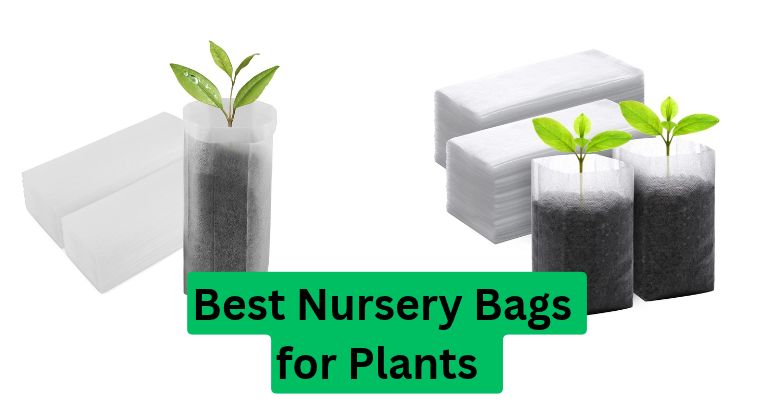
Seedlings tend to outgrow their cell trays weeks before the ground is ready for them. The best nursery bags for plants give those roots a roomy, well drained home for that in between stage, then either go into the ground with the plant or get emptied and reused.
This guide compares 10 bags across four types: small fabric seedling bags, biodegradable bags you plant whole, black plastic nursery bags with drain holes, and gallon sized fabric grow bags with handles. You will see each one’s material, filled size and pack count, so you can match a bag to seed starts, cuttings, saplings or a full patio crop.
Gardenbine earns a commission from qualifying Amazon purchases made through links on this page, at no extra cost to you. Product details come from the manufacturers’ listings.
Our Top Picks

Tall 11 inch filled height and 100 bags per pack for seed starts and cuttings.
View on Amazon
200 biodegradable bags you plant straight into the ground with the seedling.
View on Amazon
5 gallon 300G fabric pots with serger stitched handles for moving full bags.
View on Amazon- Best for Deep Rooted Plants Belit 50 Deep Fabric Bags Check on Amazon
- Best Large Plastic Nursery Bag METERXITY 50 Plastic Bags Check on Amazon
- Best for Large Tomatoes Gardzen 10 Gallon Bags Check on Amazon
On this page
- Compare Nursery Bags for Plants by Material, Filled Size and Pack Count
- Detailed Reviews: Best Nursery Bags for Plants
- Match the Nursery Bag Size to How Long the Plant Will Stay In It
- Do Not Plant Plastic Nursery Bags in the Ground
- How to Choose Nursery Bags for Plants
- Which Nursery Bag for Plants Should You Choose?
- Frequently Asked Questions
- Final Verdict
Compare Nursery Bags for Plants by Material, Filled Size and Pack Count
| # | Product | Material | Filled size | Pack count | Best stage | Buy |
|---|---|---|---|---|---|---|
| 1 |  ENPOINT 100 Fabric Bags Best Overall Nursery Bag |
Non-woven fabric | 4.7 x 11 in | 100 | Seedlings, cuttings | View on Amazon |
| 2 |  GREANER 200 Seedling Bags Best Biodegradable Bag for Transplanting |
Biodegradable fabric | 3.3 x 4.6 in | 200 | Seed starts | View on Amazon |
| 3 |  Belit 50 Deep Fabric Bags Best for Deep Rooted Plants |
Non-woven fabric | 4.7 x 11 in | 50 | Deep roots, saplings | View on Amazon |
| 4 |  CANIPHA 60 White Bags Best for Labeling Plants |
Biodegradable fabric | 9.8 x 4.1 in | 60 | Seedlings | View on Amazon |
| 5 |  Belit 100 Plastic Bags Best Reusable Plastic Bag for Saplings |
PE plastic | 3.5 x 7.6 in | 100 | Saplings | View on Amazon |
| 6 |  METERXITY 50 Plastic Bags Best Large Plastic Nursery Bag |
PE plastic | 5.9 x 9.8 in | 50 | Potting up | View on Amazon |
| 7 |  VIVOSUN 5 Gallon Bags Best Grow Bag with Handles |
300G fabric | 5 gal | 5 | Full season crops | View on Amazon |
| 8 |  AC Infinity 500G Pots Thickest Fabric Grow Bag |
500G fabric | 5.39 gal | 5 | Full season crops | View on Amazon |
| 9 |  Gardzen 10 Gallon Bags Best for Large Tomatoes |
300G fabric | 16 x 12 in | 10 | Large crops | View on Amazon |
| 10 |  FVOTNW 20 Gallon Bags Largest Grow Bag |
300G fabric | 20 gal | 2 | Shrubs, potatoes | View on Amazon |
Ranked by how well each bag fits the nursery stage, from seedling starts to finished container crops.
Detailed Reviews: Best Nursery Bags for Plants
1. ENPOINT 100pcs Nursery Bags for Plants, 7.87 x 13.77 Inches Breathable Fabric Grow Bags (Best Overall Nursery Bag)
ENPOINT 100pcs Nursery Bags for Plants, 7.87 x 13.77 Inches Breathable Fabric Grow Bags
Tall 11 inch filled height and 100 bags per pack for seed starts and cuttings.
View on Amazon- 4.7 infilled diameter
- 11 infilled height
- 7.8 x 13.7 inflat size
- 100bags per pack
Best for: Gardeners potting up dozens of seedlings or rooting cuttings who want a tall, narrow bag that packs tightly on a tray.
Why it ranks #1: It pairs the deep 11 inch filled height of the Belit deep bags with a larger 100 bag count, which gives it the top spot over the smaller GREANER bags.
ENPOINT makes these bags from thickened non-woven fabric and lists a flat size of 7.8 by 13.7 inches. Filled with soil, each one stands about 4.7 inches across and 11 inches tall. That tall shape suits tomatoes, peppers and tree seedlings that send a long taproot down before they grow wide.
The listing says water and nutrients pass through the fabric and roots can grow through the bag walls. The bags stand up on their own once filled, so you can pack them side by side on a tray. One note: the listing also calls them waterproof for use as fruit protection bags, which reads oddly next to the drainage claims, so expect them to drain like other fabric bags.
Pros
- 11 inch filled height gives long roots room
- 100 bags in one pack
- Stands upright when filled and fits tightly on a tray
- Roots can grow through the fabric walls
Cons
- 4.7 inch width is too narrow for bushy plants for more than a few weeks
- Listing does not say the fabric is biodegradable
Skip it if you want a bag that breaks down in the soil after planting; the GREANER 200 Seedling Bags is sold as biodegradable.
2. GREANER 200 PCS Nursery Bags, 5.5 x 6.3 Inch Biodegradable Non-Woven Fabric Seedling Bags (Best Biodegradable Bag for Transplanting)
GREANER 200 PCS Nursery Bags, 5.5 x 6.3 Inch Biodegradable Non-Woven Fabric Seedling Bags
200 biodegradable bags you plant straight into the ground with the seedling.
View on Amazon- 3.3 infilled diameter
- 4.6 infilled height
- 5.5 x 6.3 inflat size
- 200bags per pack
Best for: Vegetable and flower growers starting a big batch of seeds who want to skip the step of pulling seedlings out of their pots.
Why it ranks #2: It has the largest pack count and a plant the whole bag design, but its 4.6 inch filled height is far shorter than the ENPOINT 100 Fabric Bags.
GREANER lists 200 bags in this pack, each 5.5 by 6.3 inches flat and about 3.3 inches wide by 4.6 inches tall once filled. The company describes the non-woven fabric as biodegradable and says you can plant the bag directly into the garden without removing it.
Small holes in the fabric help with drainage and air flow, according to the listing. Leaving the bag on means less root disturbance at transplant time, which helps fussy seedlings such as squash and cucumbers. The small size suits starts that will move outdoors within a few weeks, not plants you plan to hold for a whole season.
Pros
- 200 bags per pack
- Sold as biodegradable, so the bag goes into the ground with the plant
- Small holes for drainage and air flow
- Less root disturbance at transplant
Cons
- 3.3 x 4.6 inch filled size fills with roots quickly
- Not meant for reuse
Skip it if your seedlings need to stay potted for more than a few weeks; the ENPOINT 100 Fabric Bags gives them far more depth.
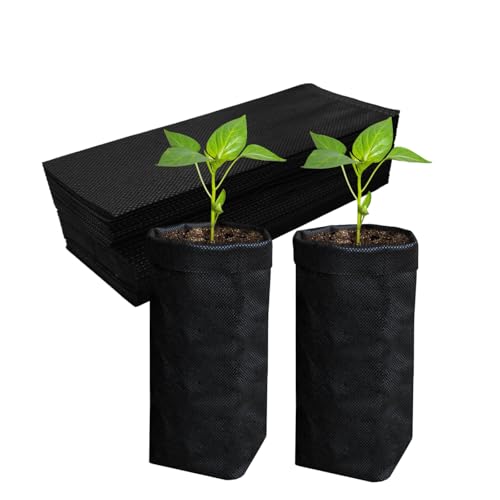
3. Belit 50 Pcs 13.5 Inch Deep Nursery Grow Bags, Non-Woven Plant Pots for Deep Rooted Plants (Best for Deep Rooted Plants)
Belit 50 Pcs 13.5 Inch Deep Nursery Grow Bags, Non-Woven Plant Pots for Deep Rooted Plants
13.5 inch tall fabric bags made for taproots and tree seedlings.
View on Amazon- 13.5 inflat height
- 4.7 infilled diameter
- 11 infilled height
- 50bags per pack
Best for: Growers starting trees, okra, carrots for transplant or other deep rooted plants that sulk in shallow pots.
Why it ranks #3: It matches the 4.7 x 11 inch filled size of the ENPOINT 100 Fabric Bags but comes with half as many bags, so it ranks just behind it.
Belit sells this pack of 50 thick non-woven bags for deep rooted plants. Each bag is 7.5 by 13.5 inches flat and ships folded. Filled with soil, the listing gives a size of 4.7 inches across and 11 inches tall, the same filled size as the ENPOINT bags.
Belit says roots can push through the fabric, which helps stop roots from tangling and rotting. The listing also says you can set the bags straight into the ground or a garden bed. That makes them handy for tree seedlings you plan to line out in a nursery row later in the year.
Pros
- 11 inch filled height for taproots
- Thick non-woven fabric
- Can go straight into the ground, per the listing
- Ships folded for easy storage
Cons
- 50 bags is half the count of similar packs
- Narrow 4.7 inch width
Skip it if you need more bags for the same size; the ENPOINT 100 Fabric Bags packs 100.
4. CANIPHA 60Pcs Nursery Grow Bags, Biodegradable Non-Woven Fabric Plant Bags, 12.2 x 3.3 Inches (Best for Labeling Plants)

CANIPHA 60Pcs Nursery Grow Bags, Biodegradable Non-Woven Fabric Plant Bags, 12.2 x 3.3 Inches
White biodegradable bags you can write plant names on.
View on Amazon- 12.2 x 3.3 inflat size
- 9.8 x 4.1 infilled size
- 60bags per pack
- Whitecolor
Best for: Gardeners raising many varieties at once who want to mark each bag by name instead of using plant tags.
Why it ranks #4: It is taller than the GREANER 200 Seedling Bags and biodegradable too, but its 60 bag count is lower, so it sits below the first three.
CANIPHA lists 60 white non-woven bags at about 12.2 by 3.3 inches, and about 9.8 by 4.1 inches once filled. The white color is the main difference here: the listing says you can write each plant name right on the bag, which saves tags when you grow ten kinds of tomato.
The company calls the fabric biodegradable and says you can place the whole bag in the soil at transplant time. It also points to good air flow and drainage so water does not sit around the roots. A light color may also run cooler in strong sun than black bags, though the listing does not claim this.
Pros
- White fabric you can write on
- Sold as biodegradable for planting whole
- Taller than most small seedling bags
Cons
- 60 bags per pack
- White fabric may show soil stains
Skip it if you need hundreds of small starts; the GREANER 200 Seedling Bags comes 200 to a pack.
5. Belit 100 Pcs Plant Nursery Bags, Plastic Seedling Pots for Fruit Tree, Flower and Saplings (3.5 x 7.6 Inch) (Best Reusable Plastic Bag for Saplings)

Belit 100 Pcs Plant Nursery Bags, Plastic Seedling Pots for Fruit Tree, Flower and Saplings (3.5 x 7.6 Inch)
Flexible PE bags with side and bottom drain holes for fruit tree starts.
View on Amazon- 3.5 indiameter
- 7.6 inheight
- 100bags per pack
- PEmaterial
Best for: Home orchardists and plant swappers who start fruit tree seedlings and move them around or give them away.
Why it ranks #5: It is the best plastic option for small saplings, while the METERXITY 50 Plastic Bags is the plastic pick for bigger plants.
These Belit bags use flexible PE plastic that the listing says will not tear easily when pulled. Each black bag measures 3.5 inches across and 7.6 inches tall, and you get 100 per pack. Small holes on the sides and bottom let extra water drain out.
Belit points to fruit trees such as guava, peach and mango and says the bags can be reused. Plastic keeps moisture in longer than fabric, so you may water less often. Roots will not air prune in plastic, so pot up before they start to circle.
Pros
- Flexible PE plastic that resists tearing
- Drain holes on the sides and bottom
- Reusable, per the listing
- 100 bags per pack
Cons
- No air pruning, so roots can circle
- Must be removed before planting
Skip it if you want to plant the bag along with the seedling; the CANIPHA 60 White Bags is biodegradable.
6. M METERXITY 50-Pack Plastic Nursery Growing Bags 9.4 x 12.2 Inch, Black (Best Large Plastic Nursery Bag)

M METERXITY 50-Pack Plastic Nursery Growing Bags 9.4 x 12.2 Inch, Black
9.8 inch soil fill height in thick PE bags for potatoes and tomatoes.
View on Amazon- 9.4 x 12.2 inflat size
- 5.9 inloading width
- 9.8 insoil fill height
- 50bags per pack
Best for: Gardeners potting up tomatoes, peppers or seed potatoes who want a wider plastic bag that lasts more than one season.
Why it ranks #6: It is wider than the Belit 100 Plastic Bags at 5.9 inches but much smaller than the gallon fabric bags below it.
M METERXITY lists these black PE bags at 9.4 inches wide and 12.2 inches tall flat. Once filled, the loading width is about 5.9 inches with a soil fill height of 9.8 inches. That extra width gives a tomato or pepper start room to bulk up before it goes into the garden.
The listing says the PE plastic is thick, hard to tear and will not fall apart when you move it. Small holes on the sides and bottom drain extra water. The bags fold flat for storage, and the company says you can use them for several seasons.
Pros
- 5.9 inch loading width suits potting up
- Thick PE that resists tearing
- Side and bottom drain holes
- Usable for several seasons
Cons
- No handles for moving full bags
- Plastic does not air prune roots
Skip it if you plan to grow the plant to harvest in the bag; the VIVOSUN 5 Gallon Bags gives you 5 gallons and handles.
7. VIVOSUN 5-Pack 5 Gallon Plant Grow Bags, 300G Thickened Nonwoven Fabric Pots with Handles (Best Grow Bag with Handles)
VIVOSUN 5-Pack 5 Gallon Plant Grow Bags, 300G Thickened Nonwoven Fabric Pots with Handles
5 gallon 300G fabric pots with serger stitched handles for moving full bags.
View on Amazon- 5 galcapacity
- 300Gfabric weight
- 5bags per pack
- BPA-freematerial
Best for: Patio and balcony growers moving nursery plants up into a container where they will finish the season.
Why it ranks #7: It is the best all round gallon bag, with lighter fabric than the AC Infinity 500G Pots but sturdier sewn handles than most 300G bags.
VIVOSUN makes these 5 gallon pots from 300G thickened nonwoven fabric that the listing describes as BPA-free and moderately permeable. The fabric does not hold extra water, so roots get air, and the bags help stop roots from circling.
The handles are the selling point. VIVOSUN says it sews them on with serger stitches rather than using strips of the same fabric, so they can carry a full bag of soil. The company says you can reuse the bags for years when you prune roots between crops.
Pros
- Handles sewn on with serger stitches
- 300G BPA-free fabric
- Helps prevent circling roots
- Reusable for several years, per the listing
Cons
- Only 5 bags per pack
- Exact dimensions are not listed
Skip it if you want thicker fabric and plant training rings; the AC Infinity 500G Pots uses 500G fabric.
8. AC Infinity Heavy-Duty 500G Fabric Pots, 5 Gallon Grow Bags 5-Pack with LST Metal Rings (Thickest Fabric Grow Bag)

AC Infinity Heavy-Duty 500G Fabric Pots, 5 Gallon Grow Bags 5-Pack with LST Metal Rings
500G fabric, nylon handles and built in rings for plant training.
View on Amazon- 500Gfabric weight
- 5.39 galtrue capacity
- 5bags per pack
- Metal ringsfor LST ties
Best for: Growers who want a heavy fabric pot that lasts many seasons and who train plants by tying stems down.
Why it ranks #8: Its 500G fabric is the heaviest in this guide, though the VIVOSUN 5 Gallon Bags covers most gardens with the same pack size.
AC Infinity rates this fabric at 500G, the thickest of any bag here, and lists a true capacity of 5.39 gallons for a bag sold as 5 gallons. The bags have nylon handles and reinforced stitching, and the listing says they are machine washable and BPA-free.
Built in metal rings along the rim let you thread twist ties through for low stress training, so you can pull stems outward without punching holes in the pot. The fabric air prunes roots and drains extra water, according to AC Infinity.
Pros
- 500G fabric, the thickest in this guide
- 5.39 gallon true capacity
- Metal rings for tie downs
- Machine washable
Cons
- Rings go unused if you do not train plants
- Only 5 bags per pack
Skip it if you need many large bags at once; the Gardzen 10 Gallon Bags comes in a 10-pack.
9. Gardzen 10-Pack 10 Gallon Grow Bags, 300G Nonwoven Fabric Pots with Heavy Duty Handles (Best for Large Tomatoes)

Gardzen 10-Pack 10 Gallon Grow Bags, 300G Nonwoven Fabric Pots with Heavy Duty Handles
Ten 16 x 12 inch fabric bags with cross stitched handles.
View on Amazon- 10 galcapacity
- 16 indiameter
- 12 inheight
- 300Gfabric weight
Best for: Vegetable gardeners moving big tomato, pepper or eggplant plants out of nursery bags into their final containers.
Why it ranks #9: It doubles the volume of the VIVOSUN 5 Gallon Bags and comes 10 to a pack, but it is more than most nursery stage plants need.
Gardzen lists each 10 gallon bag at 16 inches across and 12 inches tall, made from 300G nonwoven fabric that is BPA-free. The company names larger tomato varieties, peppers and eggplants as good fits for that size.
The handles use X shaped cross stitching to hold a full load of soil, per the listing, and the fabric air prunes roots to stop circling. The bags are washable and fold flat for storage between seasons, and you get 10 in one pack.
Pros
- 16 x 12 inch size for big crops
- 10 bags per pack
- Cross stitched handles
- Washable and foldable
Cons
- Heavy to move once filled
- Too big for most nursery stage plants
Skip it if you are still raising seedlings; the ENPOINT 100 Fabric Bags or METERXITY 50 Plastic Bags is the right size for that stage.
10. FVOTNW 2-Pack 20 Gallon Fabric Grow Bags with Handles, 300G Thickened Nonwoven (Largest Grow Bag)

FVOTNW 2-Pack 20 Gallon Fabric Grow Bags with Handles, 300G Thickened Nonwoven
20 gallon fabric bags with nylon strap handles for shrubs and potatoes.
View on Amazon- 20 galcapacity
- 300Gfabric weight
- 2bags per pack
- Nylonhandle straps
Best for: Gardeners with a young fruit shrub, a potato patch or a large tomato that needs a big container for the whole season.
Why it ranks #10: It offers the most room of any bag here, but only 2 per pack and far more soil than a nursery plant needs.
FVOTNW sells these 20 gallon bags in a pair. They use 300G thickened non-woven fabric that the listing calls BPA-free, with sturdy bottom stitching. Nylon strap handles let you lift and drag the bag, though a full 20 gallon load of soil will be heavy.
The felt like fabric drains extra water after rain and lets air reach the roots, per the listing. FVOTNW names carrots, potatoes, onions, cucumbers, strawberries and tomatoes as good crops. The bags wash and fold flat for storage.
Pros
- 20 gallon capacity
- Nylon strap handles
- Reinforced bottom stitching
- Washes and folds flat
Cons
- Only 2 bags per pack
- Very heavy when full of soil
Skip it if you want several medium bags for a patio; the Gardzen 10 Gallon Bags gives you ten 10 gallon bags.
Match the Nursery Bag Size to How Long the Plant Will Stay In It
The most common mistake is buying one size of nursery bag for every job. A seedling bag that fits a 3 week start will choke a plant you keep for 3 months.
A simple rule: if the plant goes into the ground within 4 weeks, a small bag such as the GREANER 200 Seedling Bags at 3.3 x 4.6 inches filled is enough. If it will wait 4 to 10 weeks, step up to a tall bag such as the ENPOINT 100 Fabric Bags or Belit 50 Deep Fabric Bags, both 11 inches tall when filled. If the plant will finish the season in the container, skip nursery bags and use a 5 gallon fabric pot such as the VIVOSUN 5 Gallon Bags.
Roots that hit the wall of a small bag stall the plant, and that slow start shows up later as smaller harvests. Buying two sizes costs less soil and fewer setbacks than forcing one bag to do everything.
Do Not Plant Plastic Nursery Bags in the Ground
Plastic nursery bags have to come off before planting. Only bags sold as biodegradable, like the GREANER 200 Seedling Bags and CANIPHA 60 White Bags, are meant to go into the soil with the plant.
The Belit 100 Plastic Bags and METERXITY 50 Plastic Bags are PE plastic. They hold moisture well and last for several seasons, but roots cannot grow through them. Slit the side and slide the root ball out in one piece to limit root damage.
Fabric bags sit in between. The ENPOINT 100 Fabric Bags and Belit 50 Deep Fabric Bags let roots grow through the walls, and Belit says its deep bags can go straight into the ground. If a listing does not say biodegradable, plan to cut the bag away. As a rule of thumb, tear or slit any fabric bag in at least 2 places before you plant it so roots are not boxed in.
How to Choose Nursery Bags for Plants
Material: Fabric, Biodegradable or Plastic
Fabric drains fast and air prunes roots. Plastic holds water longer and resists tearing. Biodegradable fabric, such as the GREANER 200 Seedling Bags, saves a transplant step. Choose plastic if you water less often, and fabric if your mix tends to stay soggy.
Filled Size, Not Flat Size
Listings often give the flat size first. Look for the filled size instead. In this list it runs from 3.3 x 4.6 inches on the GREANER 200 Seedling Bags up to 16 x 12 inches on the 10 gallon Gardzen bags. Tall, narrow bags suit taproots; wide bags suit bushy plants.
Pack Count
Seed starters need volume. Packs here range from 200 bags for small starts down to 2 bags for the 20 gallon FVOTNW size. Count your seedlings, add 20 percent for spares, and buy to that number.
Fabric Weight and Handles
For gallon sized bags, fabric weight tells you how long they last. Most here use 300G fabric, while the AC Infinity 500G Pots uses 500G. Sewn on handles, like those on the VIVOSUN 5 Gallon Bags, matter once a bag holds 5 gallons or more of wet soil.
If you would rather water less often in larger pots, our guide to self-watering containers for plants compares planters with built in reservoirs.
Which Nursery Bag for Plants Should You Choose?
- If you want one bag for most seed starts and cuttings, choose the ENPOINT 100 Fabric Bags, because it fills to 11 inches tall and comes 100 to a pack.
- If you want to plant the bag along with the seedling, choose the GREANER 200 Seedling Bags, because it is sold as biodegradable and comes 200 to a pack.
- If you grow trees or taproot crops, choose the Belit 50 Deep Fabric Bags, because it is 13.5 inches tall flat.
- If you grow many varieties and want to label each one, choose the CANIPHA 60 White Bags, because the white fabric takes a marker.
- If you start fruit tree saplings and want reusable bags, choose the Belit 100 Plastic Bags, because its PE plastic resists tearing.
- If you pot up tomatoes or potatoes in plastic, choose the METERXITY 50 Plastic Bags, because it has a 5.9 inch loading width.
- If you need a sturdy 5 gallon bag you can carry, choose the VIVOSUN 5 Gallon Bags, because its handles are serger stitched.
- If you want the thickest fabric and train your plants, choose the AC Infinity 500G Pots, because it uses 500G fabric with metal rings.
- If you grow large tomatoes or peppers, choose the Gardzen 10 Gallon Bags, because each bag is 16 x 12 inches.
- If you need the biggest bag for shrubs or potatoes, choose the FVOTNW 20 Gallon Bags, because it holds 20 gallons.
Frequently Asked Questions
What are nursery bags for plants used for?
Nursery bags hold young plants between the seed tray and the garden. They give roots more room than cell trays, drain well, and take up less space than rigid pots. Growers use them for seedlings, cuttings, tree saplings and potting up vegetables such as tomatoes before transplanting.
Fabric vs plastic nursery bags: which is better?
Fabric bags drain faster and air prune roots, so roots do not circle. Plastic bags such as the Belit 100 Plastic Bags hold moisture longer and resist tearing, so you water less often. Choose fabric if your soil stays wet, and plastic if your bags dry out too fast in sun or wind.
Can you plant biodegradable nursery bags directly in the ground?
Yes, if the listing says the bag is biodegradable. GREANER and CANIPHA both say their bags can go into the soil with the plant. Slitting the sides before planting still helps roots spread out faster. Plastic bags must always be removed.
What size nursery bag do I need for tomato seedlings?
For young tomato starts, a bag around 4 to 6 inches wide and 10 to 11 inches tall works well, such as the ENPOINT 100 Fabric Bags or the METERXITY 50 Plastic Bags. Tomatoes root along buried stems, so a tall bag lets you plant deep. Move them to a 5 to 10 gallon bag if they will stay in a container.
How to fill nursery bags with soil?
Open the bag fully and press out the base so it stands flat. Fill it two thirds with moist potting mix, tap it on the bench to settle, then add the plant and top up to about half an inch below the rim. Water slowly until it drains from the bottom.
Can you reuse fabric grow bags?
Most can. VIVOSUN says its bags last for years with root pruning, and AC Infinity calls its 500G pots machine washable. Empty the old soil, brush off roots, wash the bag and let it dry fully before storing so it does not grow mold.
Do black nursery bags get too hot in the sun?
Dark bags absorb more heat in full sun, and small bags dry out quickly. Group small bags close together on a tray, water them more often in hot spells, or give them afternoon shade. A white bag such as the CANIPHA 60 White Bags is another option for sunny benches.
Final Verdict
For most gardeners, the ENPOINT 100 Fabric Bags is the best nursery bag for plants because it fills to 4.7 x 11 inches and comes 100 to a pack, enough depth and volume for seed starts and cuttings. If you want to skip the transplant step, the GREANER 200 Seedling Bags is sold as biodegradable and goes into the ground with the plant. Before you buy, check the filled size on the listing, not the flat size, and match it to how many weeks the plant will stay in the bag.
ENPOINT 100pcs Nursery Bags for Plants, 7.87 x 13.77 Inches Breathable Fabric Grow Bags
Tall 11 inch filled height and 100 bags make it the most useful nursery bag for seed starts and cuttings.
View on AmazonSee the ENPOINT 100 Fabric Bags on Amazon
When your seedlings are ready to move up, see our guide to garden planters for vegetables for raised boxes, tiered planters and grow bags for the full season.