
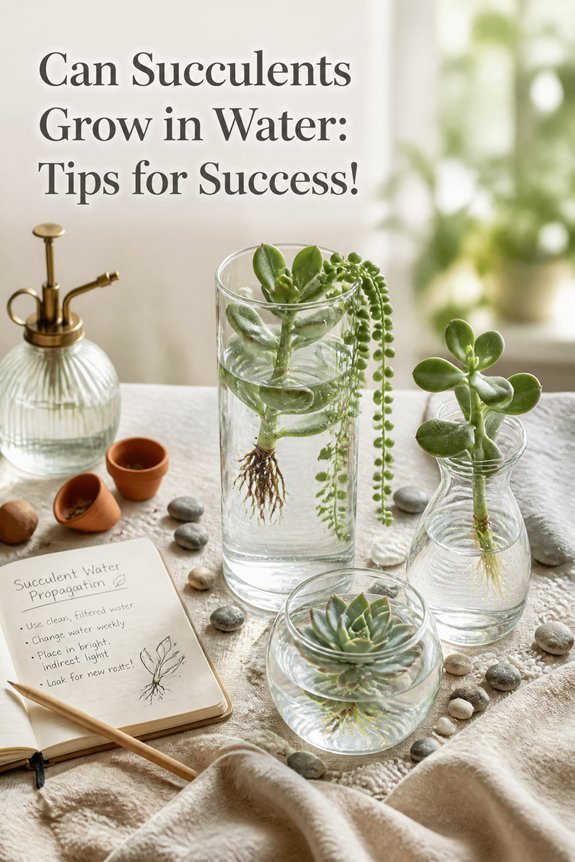
Moving succulents from soil to water might seem counterintuitive, but many varieties adapt surprisingly well. Echeveria, jade plants, and aloe vera are among the best candidates for this approach. The key lies in understanding that water propagation requires an entirely different mindset than traditional gardening.
Oxygen circulation becomes your top priority in a hydroponic setup. Stagnant water spells disaster for succulent roots, leading to mushy, rotting tissue within days. Consider using propagation vases or specialized containers that keep foliage dry while allowing roots to breathe freely.
Species selection cannot be overstated. While some succulents thrive in moisture, others simply refuse to cooperate. Research your specific plant’s tolerance before committing to this method. A quick test with leaf cuttings often reveals whether your variety will flourish or flounder.
Results ultimately depend on consistency and observation. Check water levels regularly, refresh the liquid weekly, and watch for any warning signs of distress.
With patience and proper technique, soil-free succulents can remain healthy for surprising lengths of time.
Do Succulents Really Grow in Water?
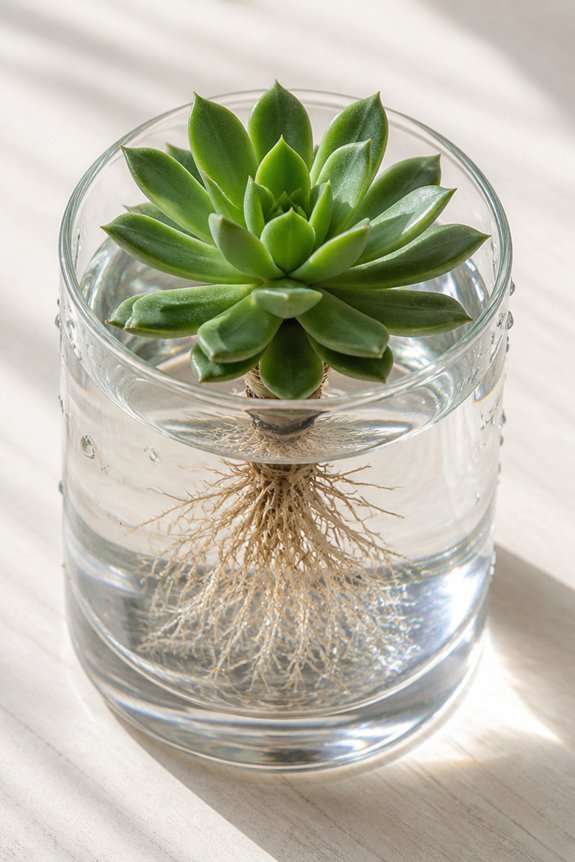
Succulents really can grow without soil. Their thick leaves store water and nutrients. This makes hydroponic setups possible.
Water growing comes with hurdles. Roots need oxygen to stay healthy. Stagnant water cuts off that air supply. Minerals also build up over time in containers without drainage.
Popular choices for water culture include echeveria, jade plants, and aloe vera. These adapt better than most to the switch.
Getting it right takes attention to detail. Start with distilled or filtered water. Tap water often contains chemicals that harm sensitive roots. Pick clear containers so you can watch root development. Position plants where they receive bright, indirect light. Supplement with hydroponic fertilizer since plain water lacks nutrients.
Soil still wins for most succulent keepers. It offers forgiveness that water culture cannot match. But with patience and observation, water-grown succulents can surprise you.
Also read: Why Is My Peace Lily Not Growing
Succulents That Thrive in Water
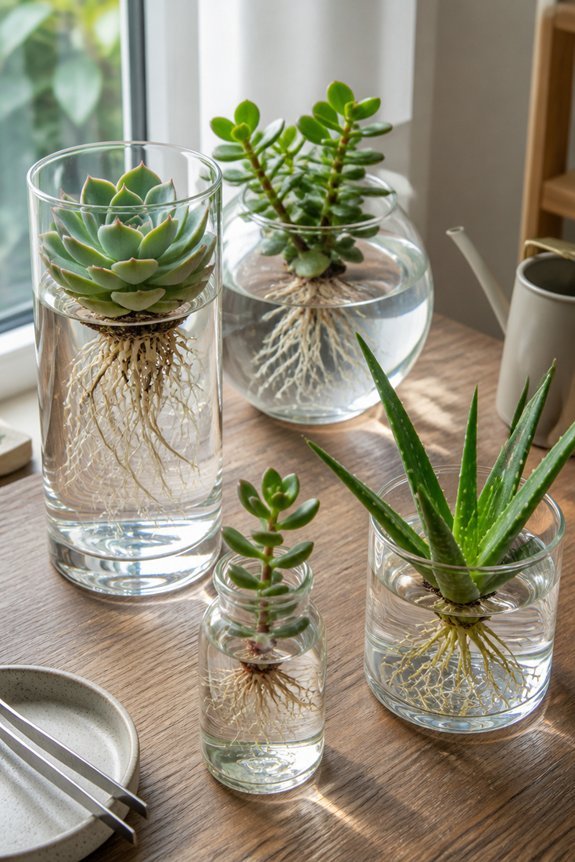
Some succulents handle water better than others. Sempervivum, or houseleeks, actually enjoys steady moisture. It won’t rot like you might expect.
Elephant bush (Portulacaria afra) grows water roots without fuss. It stays put in liquid setups. Peperomia adapts nicely too. It asks for little light and normal room temps.
Echeveria lasts in water for ages. Give it dry spells now and then for best results.
You can mix in true aquatics for company. Water sprite fills space beautifully. Ludwigia and anubias add variety without hogging nutrients.
Look for plants with shallow roots. Skip the drought lovers. Wet-adapted types dodge rot issues that plague other succulents.
Build Your Water Growing System
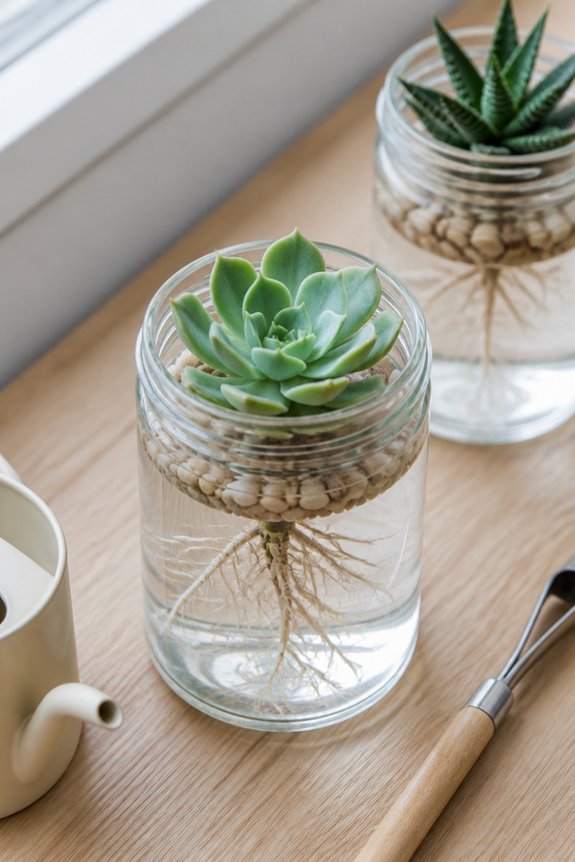
You will need just a handful of items to get started. Grab a clear jar or mason jar. This lets you watch the roots grow, which is half the fun.
For the growing medium, perlite or hydroton clay pellets work great. They hold the plant steady while letting water flow through. A simple net pot sits on top to keep your succulent above the water.
An air pump helps, but it is not required. It adds oxygen and keeps roots happy and healthy. Change the water every two to three weeks to keep things fresh.
These setups cost very little. You probably have most supplies already. Water propagation is simple, affordable, and perfect for beginners who want to try something new.
Feeding Water-Grown Succulents: Nutrients and Oxygen
Water-grown succulents need nutrients and oxygen to truly thrive. Skip either one and you’ll notice stunted growth or worse.
Start with a hydroponic fertilizer cut to half strength. This gives your plants nitrogen, phosphorus, potassium, plus those trace minerals like iron and magnesium. Feed them every two to four weeks while they’re actively growing. That’s it for food.
Now for the oxygen part. Roots need dissolved oxygen to breathe and pull in those nutrients. Still water runs out fast. Roots suffocate. Rot sets in.
An air stone hooked to a small aquarium pump keeps water gently moving. You can also swap out the water weekly. This brings fresh oxygen and washes away salt buildup. Your succulents stay happy with clean, moving water and light, regular feeding.
Why Succulents Struggle in Water: Root Rot Prevention and Recovery
Succulents come from dry places. Their roots never needed to handle wet soil for long. Keep them in water too often and trouble starts. Root rot sets in fast.
Root rot is a fungal or bacterial attack. It eats away at the root tissue. You’ll spot mushy stems and dark spots. Sometimes the soil just smells bad. That odor is your warning sign.
Prevention beats treatment every time. Swap out the water every week or two. Clean out any debris or algae you see. Pick containers with drainage holes. Keep things cool to slow bacteria down.
Caught rot early? You can still save the plant. Pull it from the water immediately. Cut off any black or soft roots with clean tools. Let those cuts dry for a few days. Then replant in fresh soil or clean water.
Bad cases rarely make it. Focus on stopping rot before it starts.
Converting Succulents From Soil to Water
Timing matters when moving a succulent from soil to water. Spring or early summer works best. Your plant is actively growing then and adapts faster to change.
Start by lifting the succulent carefully from its pot. Gently brush soil away from the roots. Rinse them under lukewarm water until they’re clean. This removes bacteria and old soil. Snip off any dark, soft, or damaged roots with clean scissors.
Let the roots dry for several hours before they touch water. This step prevents infections. Use distilled or filtered water in a container with drainage holes or a hydroponic setup. Fresh water every two weeks keeps oxygen levels up.
Watch your plant closely during the first month. Look for signs it’s settling in.
Spotting Growth and Knowing When to Adjust
The first month after conversion is your window to watch closely. Roots tell the real story. White or light tan roots mean your plant is settling in. Spot something brown or mushy? Swap out that water right away.
Leaves give you the next clue. They should keep their color and feel normal. Yellowing or see-through patches point to nutrients out of balance or too much water touching the leaves. Check that too.
Stems might feel soft at first. That is fairly common. They should toughen up again within a few weeks though. If your plant stays wilted or stops growing entirely, light and nutrients need another look.
Peek at your water quality, light duration, and container setup each week. Adjust based on what your plant is actually doing, not just because the calendar says so.
Frequently Asked Questions
How Often Should I Change the Water for Water-Grown Succulents?
Water should be changed every one to two weeks for water-grown succulents. The grower should monitor water clarity and replace it when it becomes cloudy or develops algae, ensuring ideal oxygen levels and preventing root rot effectively.
Can I Use Tap Water or Do I Need Distilled Water?
Tap water is acceptable for water-grown succulents, though distilled water is preferable. Tap water contains minerals and chemicals that may accumulate over time, potentially harming the plants. Distilled water avoids this issue entirely.
What Is the Ideal Water Temperature for Growing Succulents?
Water temperature acts as a conductor for succulent health, with ideal conditions ranging between 65-75°F. Cooler temperatures promote stronger root development, while warmer water risks root rot. Consistency matters more than perfection.
How Long Does It Take Succulents to Adapt to Water Growing?
Succulents typically require two to four weeks to adapt to water growing conditions. During this adjustment period, they develop water roots while their terrestrial roots gradually decay, allowing them to thrive in their new aquatic environment.
Can I Propagate Succulent Leaves in Water Successfully?
Like seeds floating in a gentle stream, succulent leaves propagate successfully in water. They develop roots within weeks and eventually form new plants. This method requires patience, minimal intervention, and consistently moist conditions for ideal results.
Conclusion
Water-grown succulents display visible progress through clear containers, revealing developing root systems and new leaf formation. Healthy specimens show firm stems, vibrant coloring, and steady growth patterns. Monitor water clarity, nutrient levels, and oxygenation regularly. Adjust frequency of water changes, fertilizer concentration, or air pump settings based on observed conditions. Yellowing leaves or soft stems signal necessary modifications to the growing environment.