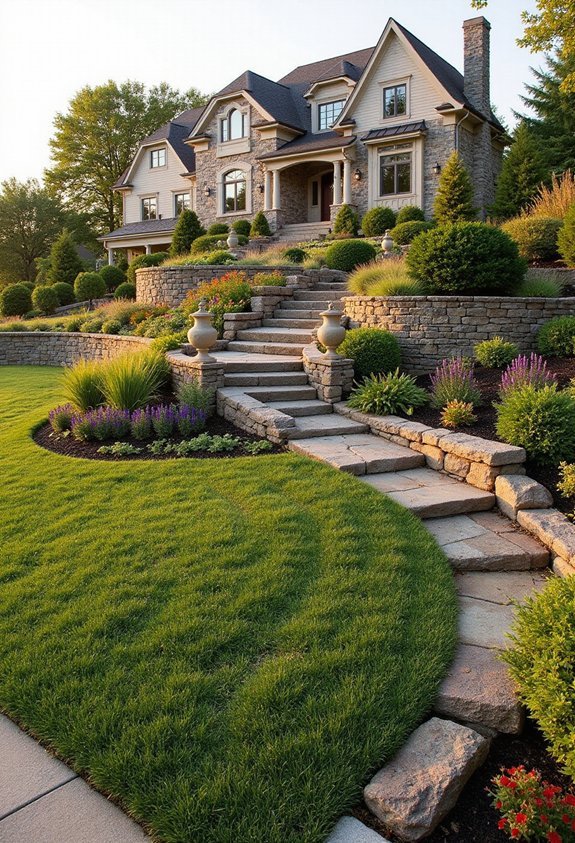
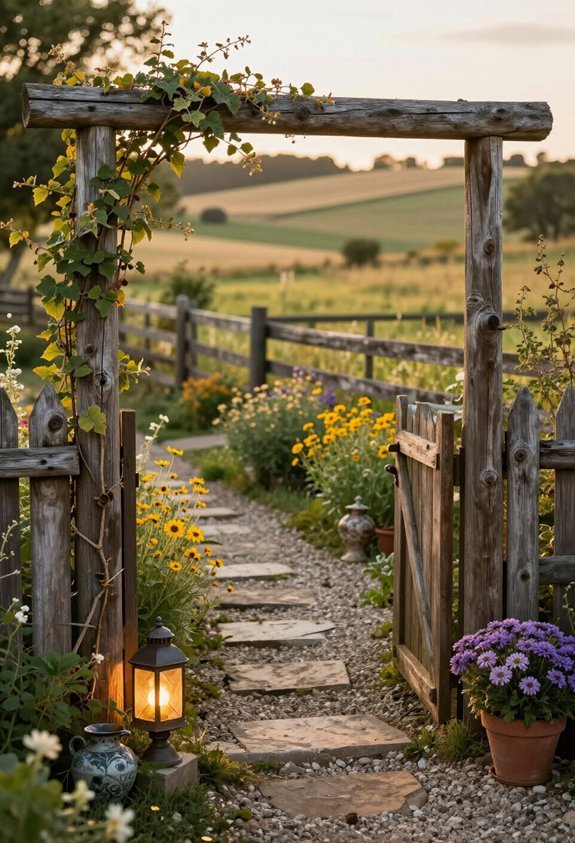
A country front yard tells a story about who you are and how you live. It radiates authenticity, purpose, and a connection to simpler ways of doing things. Unlike manicured suburban landscapes that prioritize uniformity, country yards embrace character, functionality, and the weathered beauty that comes from genuine use. They feel inviting in ways that formal designs struggle to achieve, communicating warmth through details like split-rail fencing, established plantings, and structures that have earned their place through time and service. The front yards that capture true country charm are those designed with intention, where every element serves a purpose while contributing to an overall sense of timeless hospitality. These 19 ideas demonstrate how to create country front yards that feel authentically charming while enhancing your home’s curb appeal.
Plan Your Driveway Entry With Rural Character
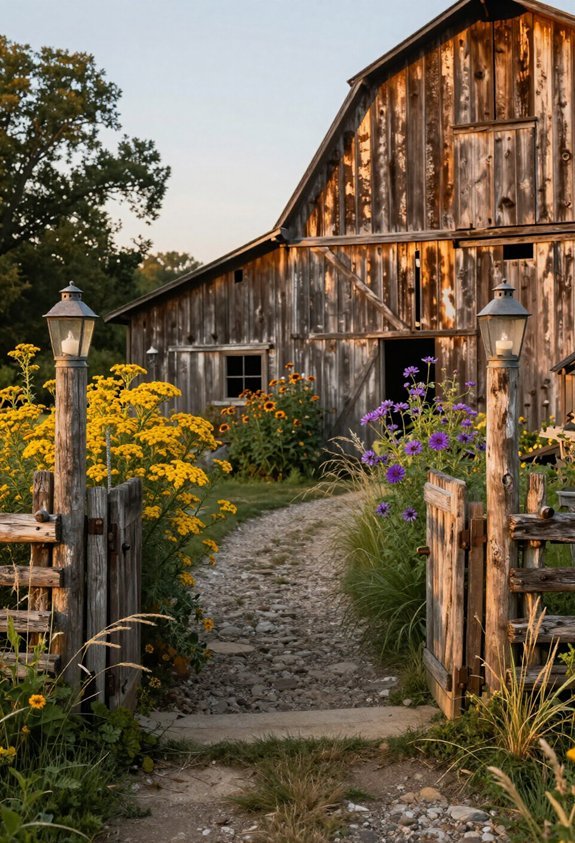
Creating an effective driveway entry that reflects rural character requires careful consideration of several design elements that work together to establish a cohesive aesthetic. Natural materials such as gravel, crushed stone, or unpaved earth provide authentic countryside appeal while maintaining functionality. Flanking the driveway with wooden fence posts, split-rail fencing, or weathered mailboxes reinforces the rural theme and defines the property boundary. Native plantings, including wildflowers and shrubs suited to the local climate, soften the driveway edges and enhance natural surroundings. Stone or wooden entry gates serve as distinctive focal points that signal arrival at a country property. Proper drainage systems guarantee longevity while preventing erosion, essential for maintaining both appearance and structural integrity. These coordinated elements transform a simple driveway into an inviting country entrance that establishes immediate rural character and visual appeal.
Also read: 23+ FRONT YARD BUSHES SHRUBS That Look Expensive!
Choose Your Perimeter: Rustic Wooden vs. Split Rail Fences
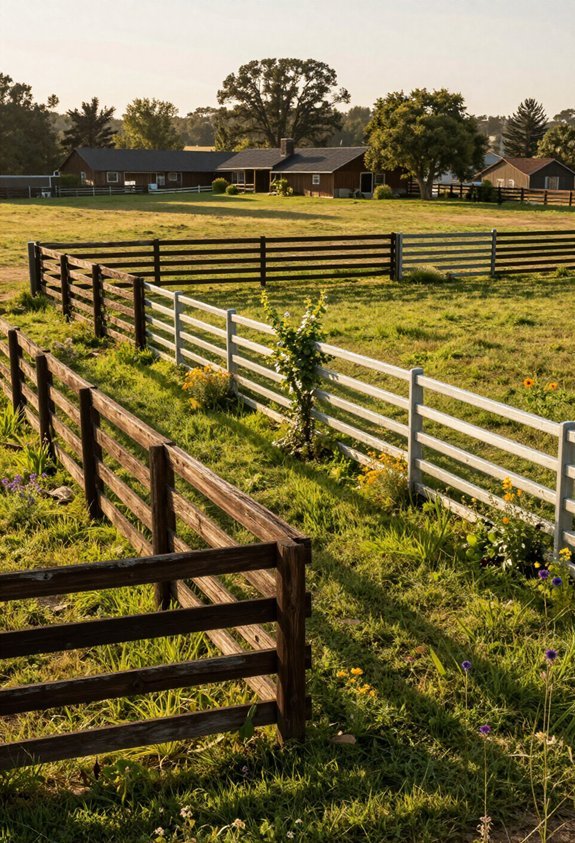
The perimeter fence serves as both a functional boundary and a defining visual element of a country property, making the choice between rustic wooden and split rail styles a significant decision that affects the overall character and maintenance requirements of the front yard. Rustic wooden fences offer solid privacy and weather protection, though they require regular staining or painting to prevent deterioration. Split rail fences, constructed from horizontal rails fitted into vertical posts, provide an open, traditional aesthetic that showcases the landscape beyond while demanding less maintenance. Split rail designs work particularly well for properties with expansive views, whereas solid wooden fences suit yards requiring privacy screening. Property owners should evaluate their specific needs regarding maintenance commitment, desired visual openness, and regional climate conditions before selecting their perimeter style.
Design Pathways: Stone, Gravel, and Hardscape Patterns
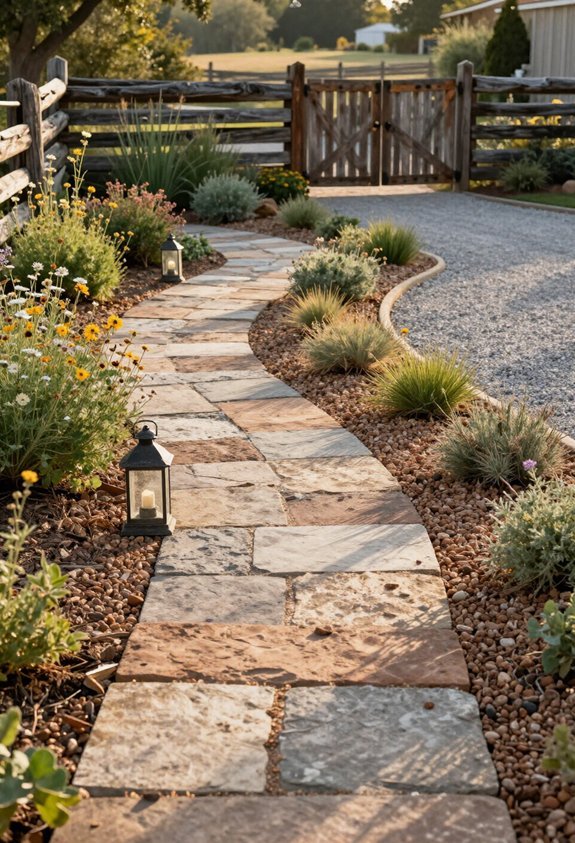
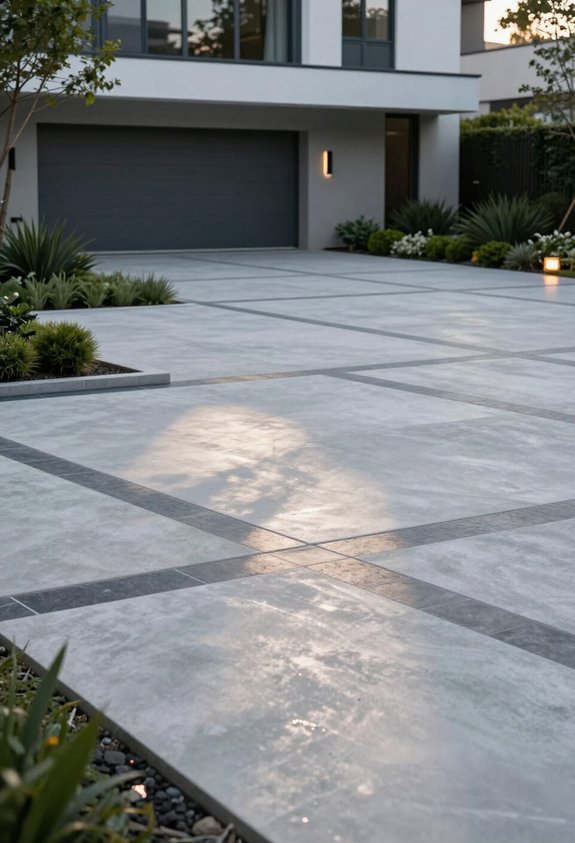
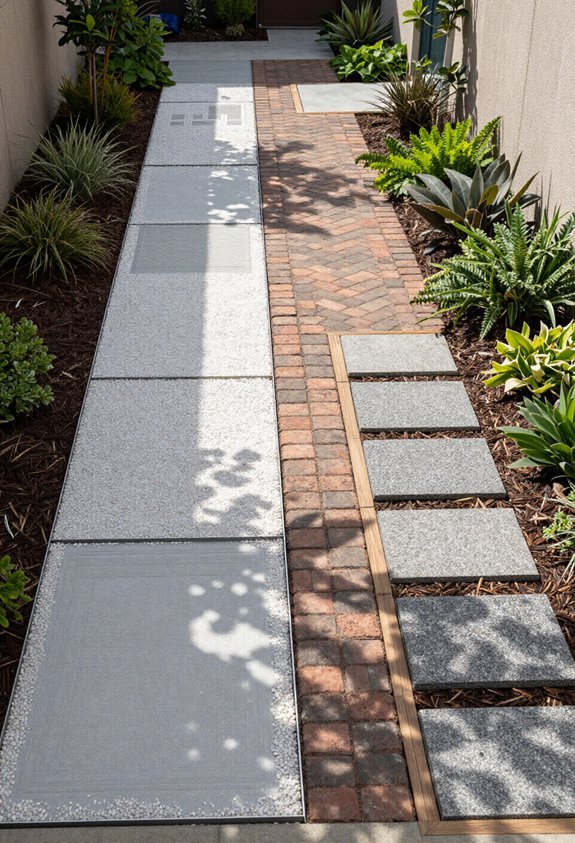
While pathways serve primarily as functional routes connecting different areas of a country front yard, they also function as essential design elements that guide visitors’ eyes through the landscape and establish the overall visual flow of the property. Stone pathways, such as flagstone or slate, create formal, durable walkways that complement traditional country aesthetics, requiring proper base preparation and occasional maintenance. Gravel paths offer a more casual, rustic appearance while remaining cost-effective and easy to install, though they need regular raking and replenishment. Hardscape patterns, including brick or permeable pavers, provide versatile options that blend functionality with visual interest, allowing homeowners to create geometric designs that enhance curb appeal and define garden spaces effectively.
Install a Country-Style Mailbox as Your Signature
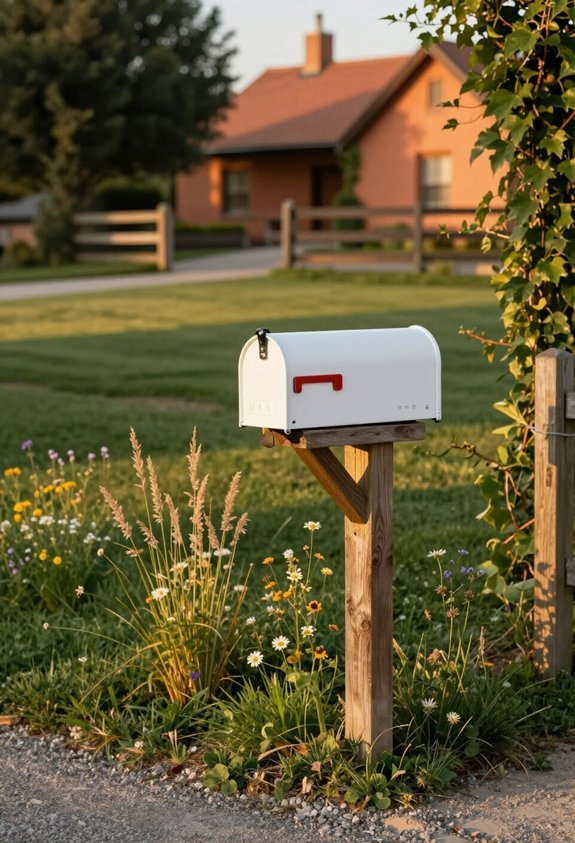
A country-style mailbox serves as one of the most visible and frequently noticed features of a front yard, functioning not only as a practical receptacle for mail delivery but also as a distinctive design element that establishes the property’s character and aesthetic direction. Homeowners should select mailboxes constructed from durable materials such as wood, metal, or composite materials that withstand weather exposure and complement existing landscape features. Traditional designs featuring curved tops, decorative hinges, and post-mounted installations create authentic rural appeal. The mailbox color should coordinate with the house’s exterior palette, trim, and pathway materials previously established. Installing the mailbox at standard height and distance from the road guarantees accessibility while maintaining design cohesion throughout the front yard’s overall composition.
Add Wrought Iron Gates to Frame Your Entry
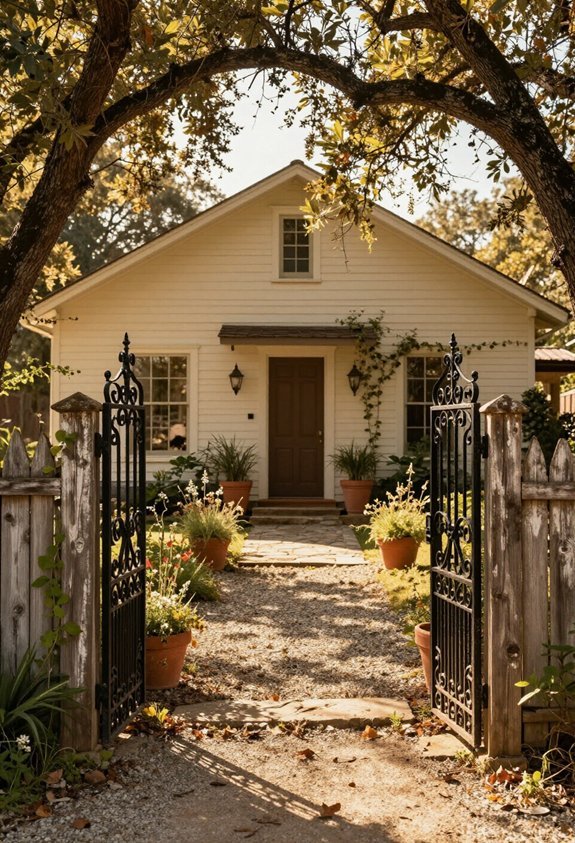
Wrought iron gates function as both practical entryway features and architectural focal points that substantially enhance the curb appeal of country-style front yards by creating a clear threshold between the property and the surrounding landscape. These gates offer homeowners numerous design options, ranging from simple picket-style patterns to elaborate scrollwork designs featuring decorative flourishes. When selecting wrought iron gates, property owners should consider the overall aesthetic of their home and landscape, ensuring the gate style complements existing architectural elements. Professional installation is recommended to guarantee proper alignment, security, and longevity. Wrought iron requires periodic maintenance, including rust prevention through painting or protective coatings, ensuring the gates maintain their structural integrity and visual appeal for years. The investment in quality wrought iron gates considerably increases property value while establishing a welcoming country entrance.
Anchor Your Yard With Flowering Trees
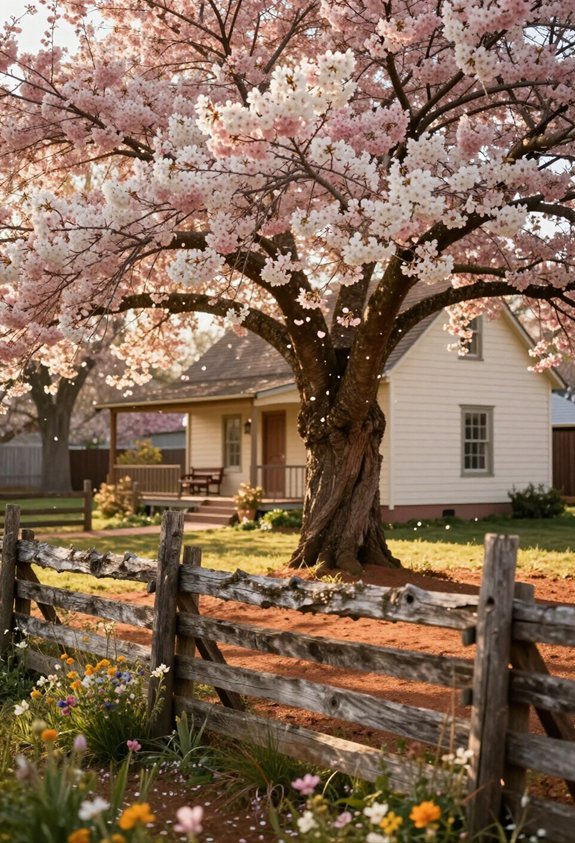
Because flowering trees serve as natural focal points and structural anchors for country-style front yards, they offer homeowners an effective way to create visual interest while establishing the foundational framework of their landscaping design. Crabapple, dogwood, and redbud trees provide excellent options, delivering seasonal blooms that enhance curb appeal throughout spring months. When selecting flowering trees, homeowners should consider mature height, spread, and specific growing conditions required for their climate zone. Proper placement near entry points or along property lines maximizes visibility and impact. These trees also provide practical benefits, including shade for summer cooling and shelter for wildlife. Strategic spacing guarantees adequate sunlight reaches all plantings, promoting healthy growth and abundant flowering for years to come.
Select Native Shrubs for Low-Maintenance Landscapes
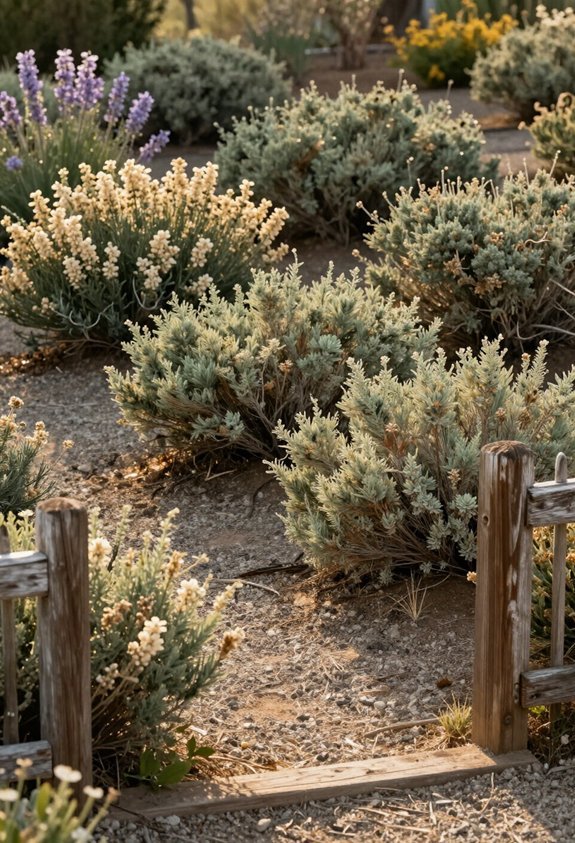
While flowering trees establish the foundational structure of country-style front yards, native shrubs provide the layered framework that fills spaces between larger plantings and creates depth throughout the landscape. Native shrubs require minimal fertilizer, pesticides, and supplemental watering because they have evolved to thrive in local soil and climate conditions. When selecting shrubs, gardeners should identify which species naturally grow in their region and research their mature sizes, bloom times, and seasonal color changes. Planting native shrubs in groupings of three or five creates visual impact while reducing maintenance demands. These plants also support local wildlife by providing food and shelter for birds and beneficial insects, establishing an ecological balance that sustains the entire front yard ecosystem.
Plant Wildflower Gardens That Bloom Year-Round
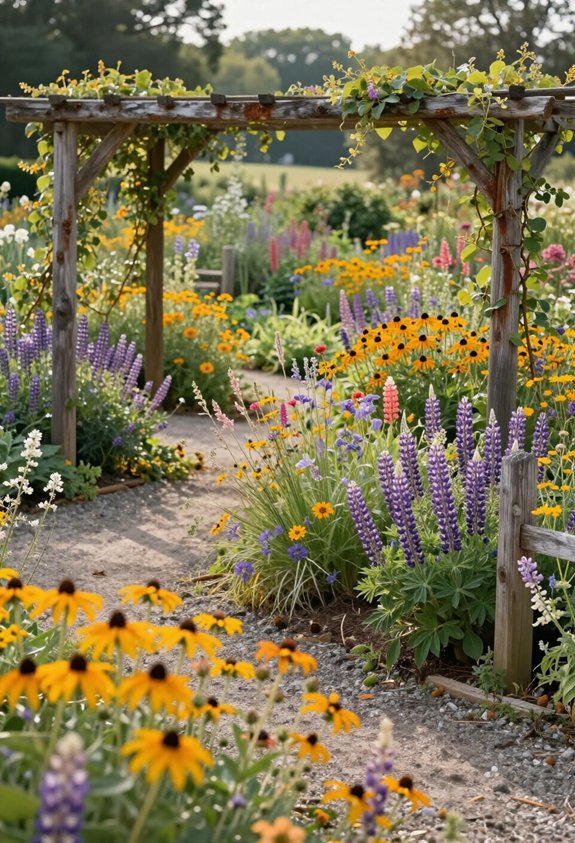
Wildflower gardens create continuous visual interest and ecological value throughout the year by incorporating plants with staggered bloom times, ensuring that flowers emerge during different seasons rather than all at once. Homeowners can achieve year-round blooms by selecting spring bulbs like crocuses and daffodils, summer bloomers such as black-eyed Susans and coneflowers, and fall-flowering asters and goldenrod. Winter interest comes from ornamental grasses and seed heads that provide texture and shelter for wildlife. Native wildflowers require minimal maintenance once established, needing only occasional watering during drought periods and light pruning to encourage bushier growth. This layered approach transforms front yards into dynamic landscapes that support pollinators while reducing gardening demands throughout all seasons.
Design Cottage Garden Beds: Plant Spacing and Color Mixing
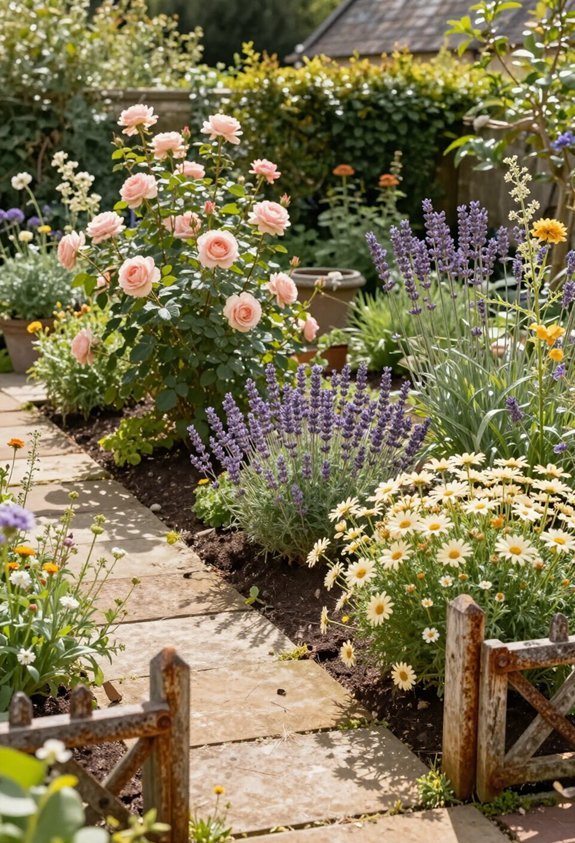
Within cottage garden beds, thoughtful plant spacing and strategic color mixing transform front yards into visually appealing landscapes that balance both aesthetic beauty and practical growing conditions. Proper spacing prevents overcrowding, allowing air circulation that reduces disease and promotes healthy growth, while also giving each plant adequate room for root development. Garden designers typically space plants according to their mature size, consulting seed packets and plant labels for specific measurements. Color mixing follows complementary principles, pairing warm tones like reds and yellows with cool shades such as purples and blues to create visual interest. Layering plants by height, positioning taller varieties behind shorter ones, guarantees all flowers receive adequate sunlight and remain visible from the front yard perspective.
Edge Your Gardens With Stone or Brick Borders
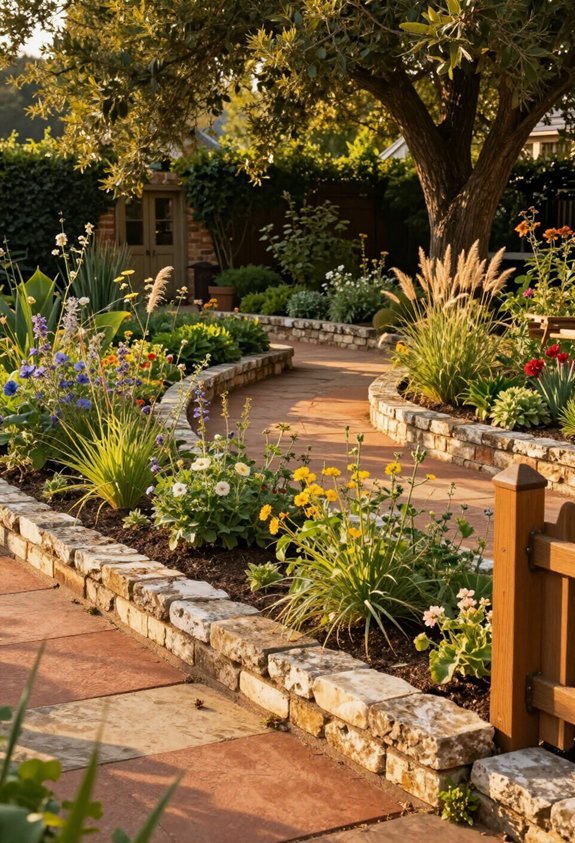
Creating clean, defined edges around cottage garden beds requires selecting appropriate border materials that serve both functional and aesthetic purposes, with stone and brick among the most popular choices for homeowners seeking durable and attractive solutions. Stone borders, including natural fieldstone or cut limestone, provide a rustic appearance while offering excellent longevity and low maintenance requirements. Brick borders, conversely, deliver a more formal, structured look that complements traditional cottage aesthetics. When installing either material, homeowners should dig a shallow trench along the garden perimeter, ensuring the border sits slightly above ground level to prevent soil erosion and maintain clear separation between garden beds and lawn areas. Both options require minimal upkeep and effectively contain mulch while creating visually appealing garden boundaries that enhance overall landscape design.
Build Raised Beds From Reclaimed Barn Wood
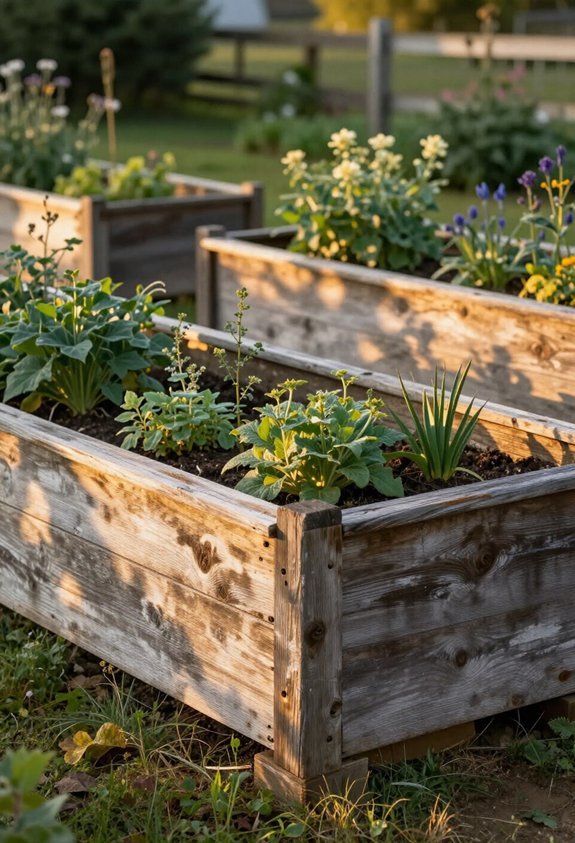
Reclaimed barn wood presents an excellent material choice for constructing raised garden beds that combine rustic charm with practical functionality, offering homeowners a sustainable way to repurpose vintage materials while creating defined planting areas. To build these beds, homeowners should source weathered wood from salvage yards or architectural reclamation companies, ensuring the wood is untreated and safe for growing vegetables or flowers. After selecting quality boards, typically four to twelve inches wide, builders cut them to desired lengths and assemble the frame using galvanized screws or brackets to prevent rust. Placing the completed bed directly on soil or landscape fabric creates proper drainage while preventing weed growth. This approach establishes distinctive garden spaces that enhance curb appeal while reflecting the distinctive character inherent in country-style landscaping.
Trellis and Vine Combinations for Vertical Interest
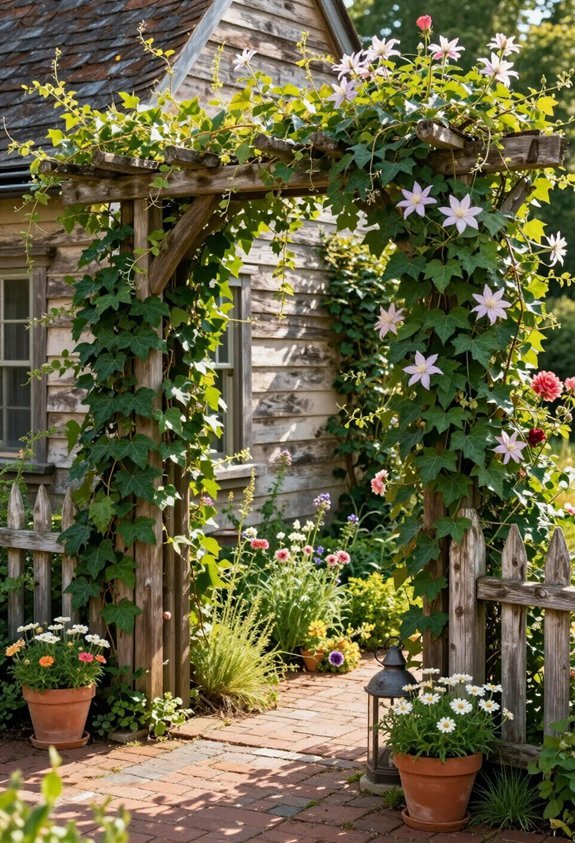
Trellises and climbing vines work together to add height and visual appeal to country front yards by transforming flat, horizontal landscapes into dynamic three-dimensional spaces that draw the eye upward and create natural focal points. Popular vine choices include clematis, honeysuckle, and climbing roses, each offering distinct colors and textures that enhance curb appeal. When selecting a trellis structure, consider materials like wood or metal that complement the home’s architectural style and withstand weather conditions. Position trellises strategically near entryways or along fence lines to frame views and establish garden boundaries. Proper installation guarantees stability for mature vines, while regular pruning maintains shape and encourages healthy growth. This combination creates an elegant, layered landscape that reflects traditional country aesthetics while maximizing limited front yard space.
Add Ornamental Grasses for Softness and Movement
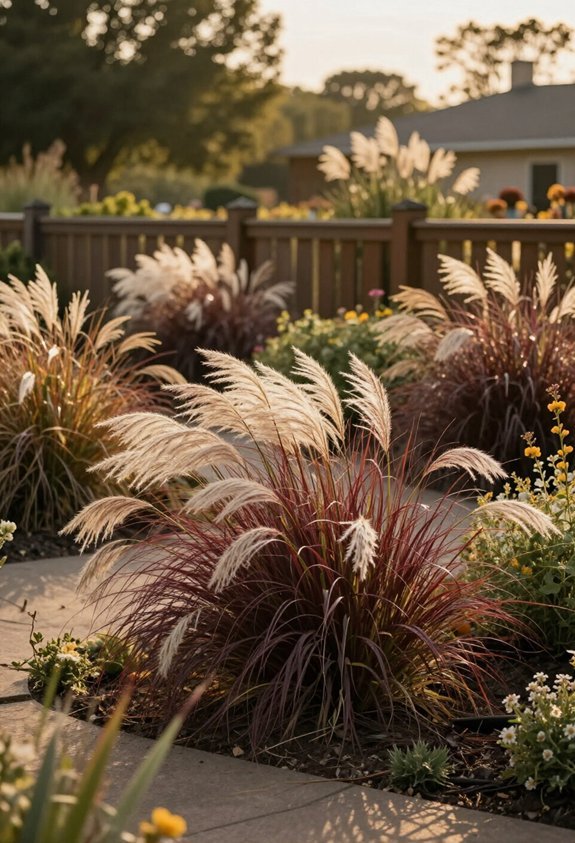
While vertical structures like trellises provide dramatic height and defined boundaries in country front yards, ornamental grasses introduce a complementary softness that balances architectural elements and creates gentle movement throughout the landscape. These grasses, including varieties such as feather reed grass, blue fescue, and miscanthus, offer visual texture and graceful swaying in the breeze. When strategically planted near hardscaping features, ornamental grasses soften rigid lines and connections between different yard zones. Their delicate foliage catches light beautifully, adding dimension to front gardens, particularly during late afternoon sun. Additionally, these plants require minimal maintenance once established, tolerate various soil conditions, and provide year-round interest even after frost turns their blades golden and bronze, extending seasonal appeal throughout fall and winter months.
Layer Your Landscape With Rustic Bench Seating
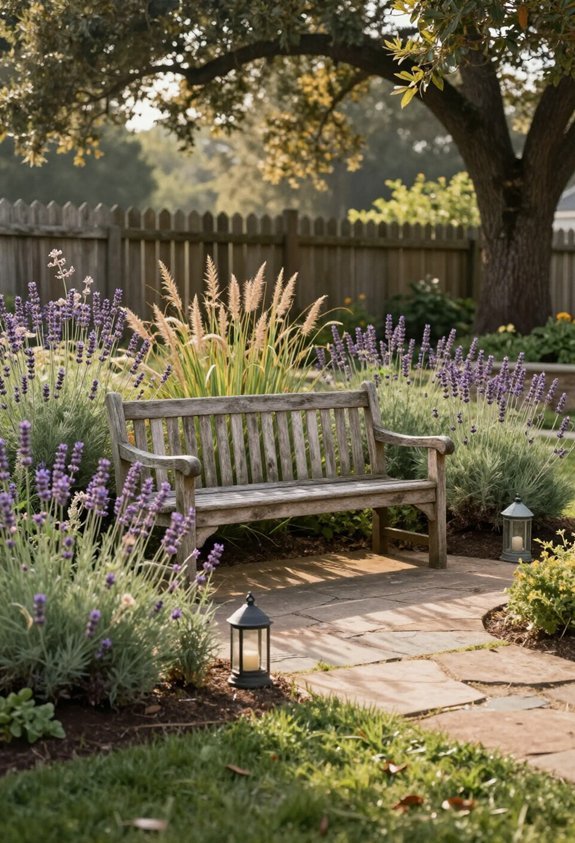
Incorporating seating into a country front yard design serves both practical and aesthetic purposes, as benches provide comfortable resting spots while simultaneously adding visual interest and breaking up expanses of lawn or planting beds. Wooden benches with weathered finishes complement rustic landscapes authentically, while wrought iron options offer durability and classic appeal. Placement matters greatly; positioning benches near ornamental grasses, flowering plants, or garden focal points creates inviting vignettes that encourage visitors to pause and enjoy the scenery. Strategic bench positioning along pathways guides foot traffic naturally through the yard. Materials should withstand outdoor conditions, requiring regular maintenance or weather-resistant treatments to preserve their appearance and functionality for years of reliable use.
Install Country Lantern Lighting for Evening Ambiance
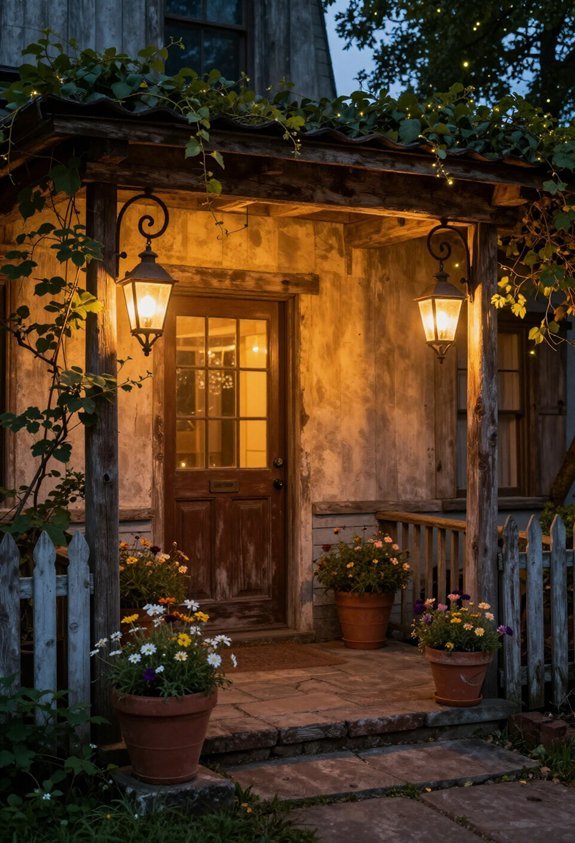
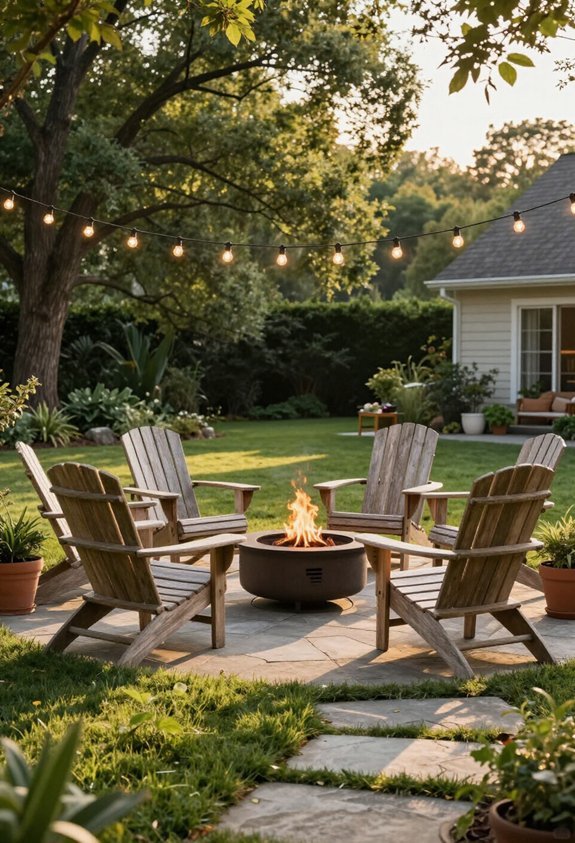
As evening descends upon a country front yard, thoughtfully placed lantern lighting transforms the outdoor space into a warm and inviting environment that extends the usability of the landscape well beyond daylight hours. Homeowners can select from various lantern styles, including traditional metal designs with glass panels or rustic wooden frames, each offering distinct aesthetic appeal. Positioning lanterns along pathways, near seating areas, and at the front entrance guarantees both safety and functionality. Solar-powered lanterns provide an energy-efficient option, while candle or LED-filled versions create authentic ambiance. Installing lanterns on shepherd’s hooks, mounting them on posts, or hanging them from pergolas maximizes visibility and visual interest. This strategic lighting approach enhances the country charm while creating a secure, welcoming atmosphere for evening enjoyment.
Use Low-Maintenance Xeriscaping for Dry Climates
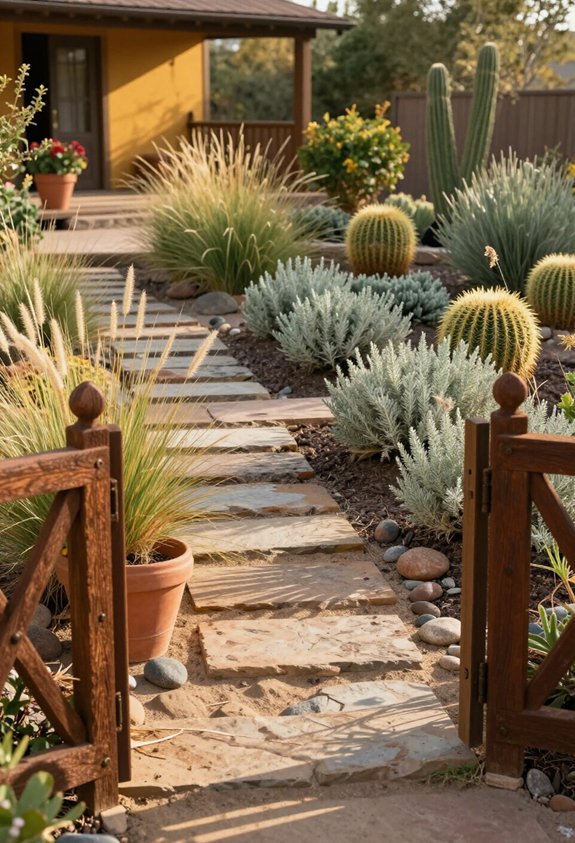
Xeriscaping offers an efficient solution for homeowners in dry climates who want to maintain attractive front yards without excessive watering or constant upkeep. This landscaping approach prioritizes drought-resistant plants, including native species, ornamental grasses, and succulents that thrive in arid conditions. Incorporating mulch, rocks, and gravel reduces soil moisture evaporation while creating visual interest and texture. Strategic placement of these elements minimizes water needs considerably. Homeowners should select plants adapted to their specific region, ensuring they survive local temperature fluctuations and precipitation patterns. Drip irrigation systems, when installed properly, deliver water directly to plant roots, preventing waste. By combining these techniques thoughtfully, property owners achieve attractive, functional front yards that require minimal maintenance, conserve precious water resources, and reduce overall landscaping expenses considerably.
Mix Classic White Picket Fences Into Your Design
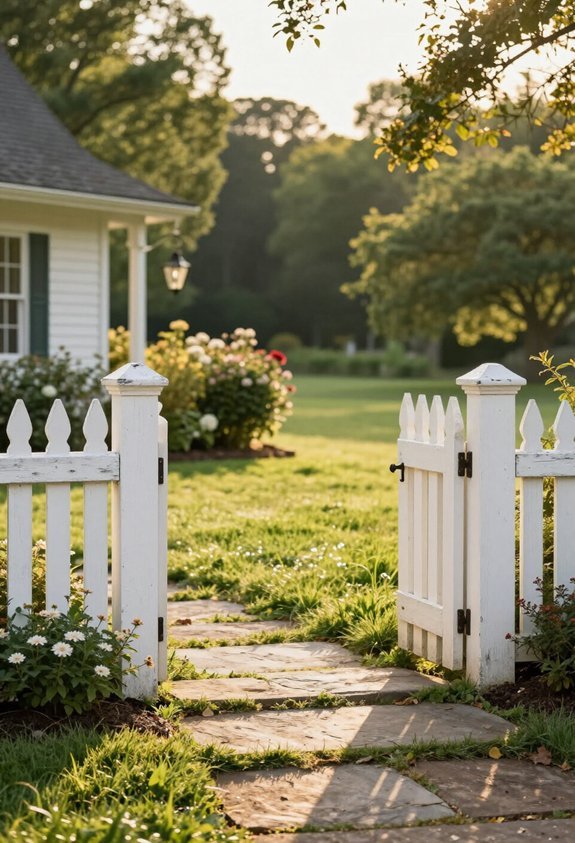
White picket fences serve as a timeless complement to front yard landscaping, offering homeowners a way to add traditional charm and defined boundaries to their properties while their xeriscaped gardens establish the visual foundation. The classic white finish creates striking contrast against drought-resistant plants, drawing the eye and enhancing curb appeal. When selecting fence materials, homeowners should choose weather-resistant wood or vinyl that requires minimal maintenance in dry climates. Proper spacing between pickets, typically three to four inches, maintains visibility while establishing clear property lines. Installing the fence at a consistent height of three to four feet balances proportion and functionality. Strategic placement along driveways or garden perimeters maximizes both aesthetic and practical benefits, creating a cohesive country aesthetic that complements xeriscaping efforts.
Bring It Together: Finishing Touches for Country Warmth
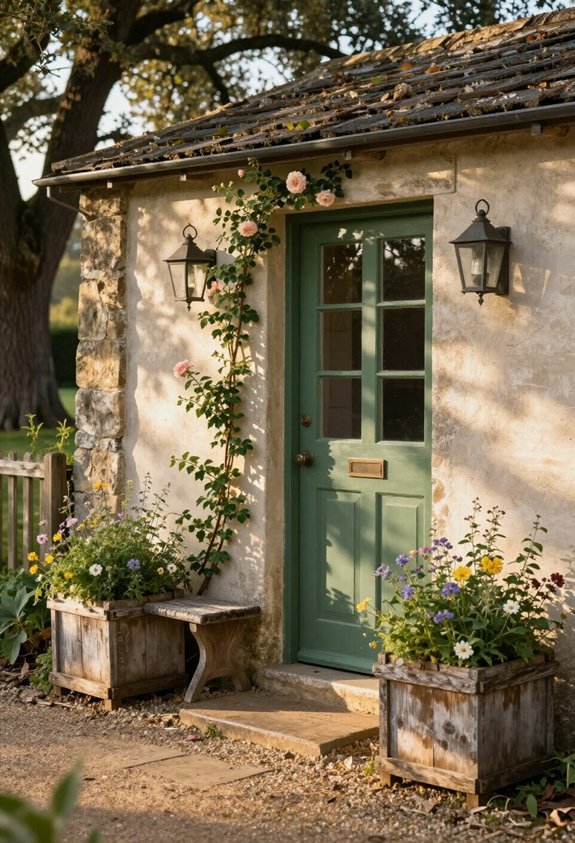
Several key elements work together to transform a country front yard from merely functional into a space that radiates authentic warmth and charm, building upon the foundation established by xeriscaping and white picket fencing. Rustic mailboxes crafted from wood or metal serve as welcoming focal points that signal hospitality to visitors. Vintage lanterns positioned along pathways create both practical illumination and nostalgic ambiance during evening hours. Weathered rocking chairs arranged on porches invite relaxation and social gathering. Stone or gravel pathways lined with native plants guide movement throughout the yard while maintaining the country aesthetic. Decorative elements such as wooden signs with family names or welcoming phrases reinforce the warm, inviting character. These finishing touches collectively establish an outdoor environment that authentically expresses traditional countryside living and genuine neighborly comfort.
Frequently Asked Questions
How Much Budget Should I Allocate for a Complete Country Front Yard Renovation?
A complete country front yard renovation typically requires $5,000 to $25,000, depending on yard size, existing landscape condition, desired features like fencing or pathways, and regional labor costs. Small projects may cost less.
What Is the Best Time of Year to Plant Wildflowers and Native Shrubs?
Spring and fall present ideal planting windows for wildflowers and native shrubs. Spring allows establishment before summer heat, while fall enables root development through cooler months. Soil moisture and mild temperatures during these seasons promote successful establishment and growth.
How Do I Maintain Rustic Wooden Fences to Prevent Rot and Weathering?
One should apply wood sealant annually, inspect for damage regularly, and guarantee proper drainage around fence posts. Pressure-treated lumber resists rot better. Regular cleaning removes debris that traps moisture and promotes decay.
Which Country Plants Thrive in Different Climate Zones and Soil Types?
Country plants thrive variably across zones. Lavender and coneflowers suit dry, well-drained soils in temperate regions. Ornamental grasses flourish in poor soil. Hydrangeas prefer acidic, moist conditions. Native species adapt best to local climate and soil combinations.
How Can I Incorporate Country Charm on a Small or Urban Front Yard?
One can incorporate country charm into compact urban spaces by installing rustic wooden signs, adding window boxes with wildflowers, placing vintage containers, and using natural stone pathways. Climbing vines on trellises enhance the aesthetic appeal effectively.
Conclusion
Creating a country front yard requires combining practical elements like driveways, fences, and pathways with decorative features such as mailboxes and signs. By selecting rustic materials, native plants, and functional garden structures, homeowners can establish a cohesive outdoor space that reflects authentic country character. These intentional design choices work together systematically to produce an inviting, functional entrance that captures the essence of rural charm while maintaining accessibility and visual appeal.