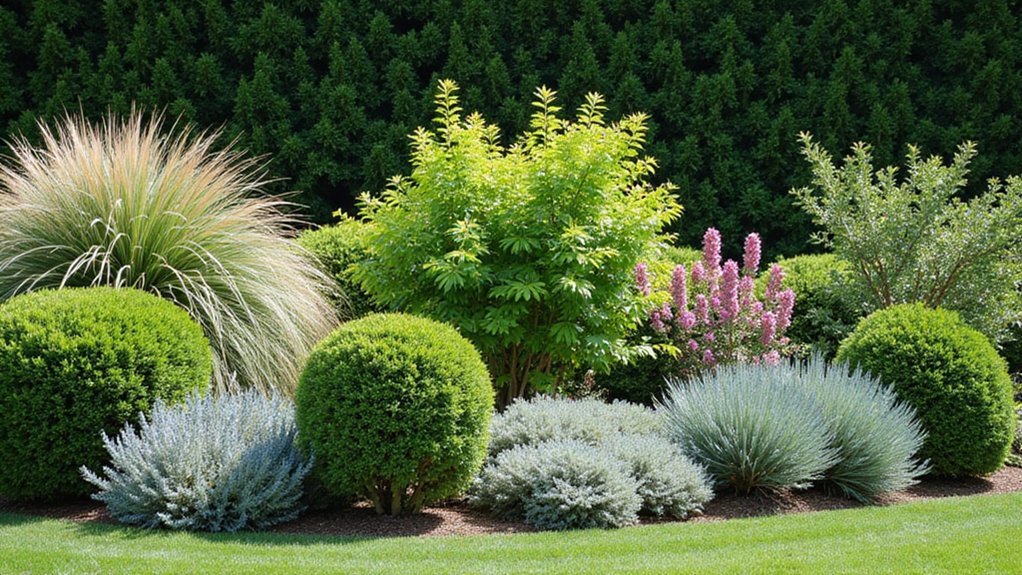
If you’re tired of deer destroying your garden, you’ll want to know which shrubs can actually withstand wildlife browsing. Certain plants, like boxwood and barberry, naturally repel deer through their texture, scent, or taste. By strategically selecting and arranging these nine shrubs, you can create a beautiful landscape that deer avoid entirely—and we’ll show you exactly how to do it.
Boxwood: Elegant Structure With Natural Deer Defense
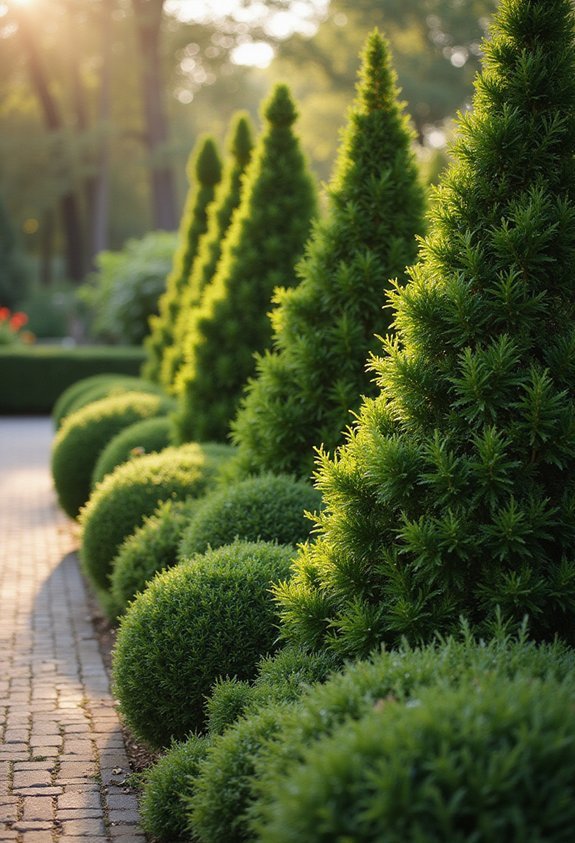
Boxwoods are evergreen shrubs that offer you a practical solution for creating attractive landscapes while naturally deterring deer from browsing through your garden. You’ll appreciate their dense, compact foliage that maintains its rich green color throughout all seasons, providing year-round visual interest in your garden beds. These shrubs grow slowly and develop into formal shapes, which you can trim into hedges, spheres, or topiaries if you desire specific designs. Deer typically avoid boxwoods because their waxy leaves contain compounds that taste unpleasant to browsing animals. You can plant boxwoods in partial shade or full sun locations, though they prefer moderate light conditions. Their adaptability to various soil types makes installation straightforward, and they require minimal maintenance once established in your landscape.
Also read: How To Grow Viburnum In The Garden And The Pot
Privet: Fast-Growing Screens Deer Avoid
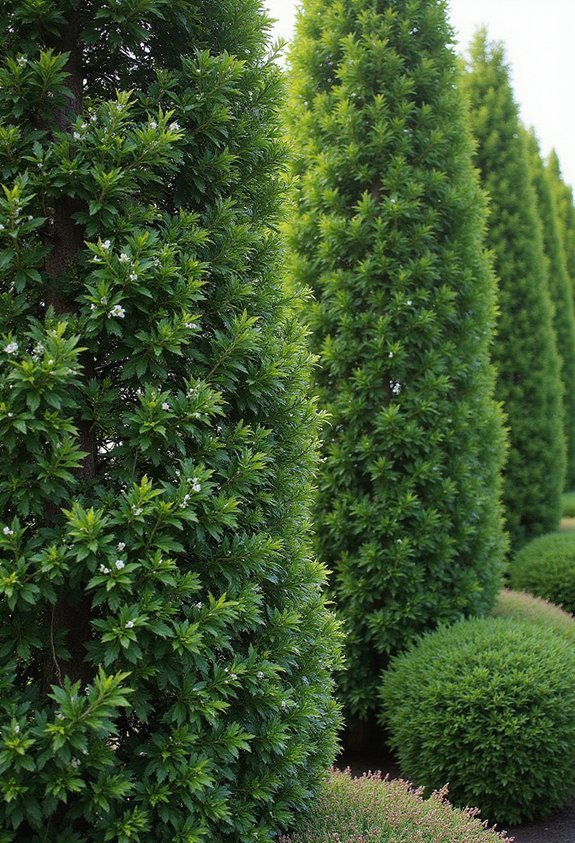
While you’re looking for shrubs that’ll grow quickly to create privacy screens and barriers in your landscape, privet plants offer you an excellent option that deer naturally avoid browsing. Privet shrubs grow rapidly, reaching maturity in just a few seasons, which makes them ideal for establishing dense hedges and property boundaries. You can prune them into various shapes and sizes to suit your specific landscaping needs. These plants thrive in full sun to partial shade and adapt well to different soil types, requiring minimal maintenance once established. Their small, glossy leaves create an attractive appearance throughout the growing season, while their fast growth rate means you’ll achieve your desired privacy screening without waiting years for results.
Barberry: Thorny Foliage Deer Won’t Browse
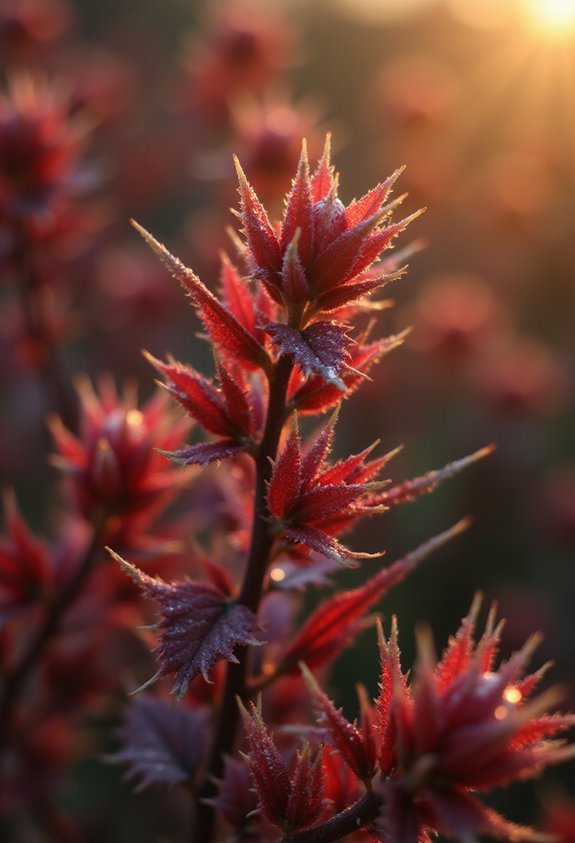
If you’re seeking a shrub that’ll protect your landscape through its natural defensive features, barberry plants offer an excellent solution with their sharp, needle-like thorns that deer instinctively avoid browsing. These versatile shrubs thrive in various soil conditions and sunlight levels, making them adaptable to different garden environments. You’ll find barberry varieties in multiple colors, including vibrant reds, yellows, and deep purples, allowing you to create visually interesting landscapes while maintaining deer protection. The thorns on barberry branches are extremely sharp and densely packed, creating an effective physical barrier that discourages deer from feeding. Additionally, barberry shrubs require minimal maintenance once established, needing only occasional pruning to maintain their desired shape and size, making them practical choices for busy gardeners.
Lilac: Fragrant Blooms That Keep Deer Away
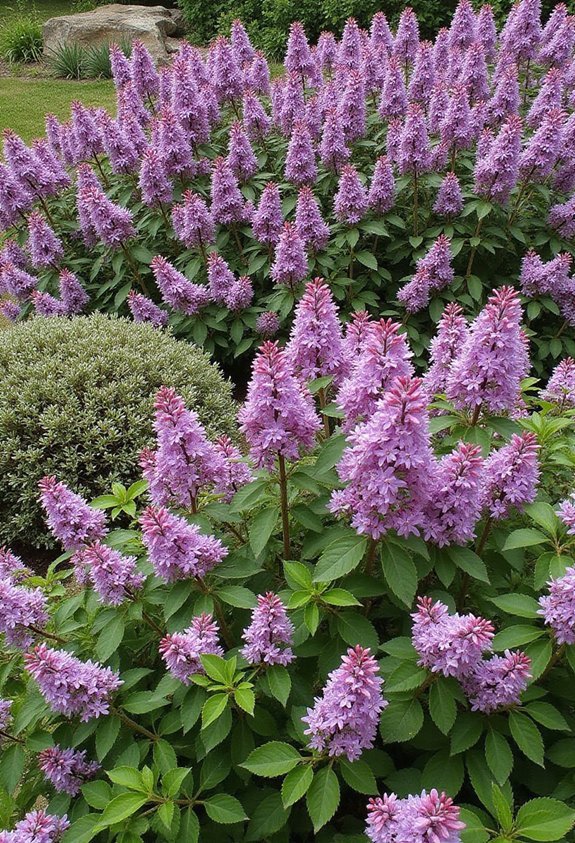
Because lilacs produce strongly scented flowers that deer find unappealing, they’re an excellent choice for gardeners who want both aesthetic appeal and natural deer protection in their landscapes. You’ll find that lilacs thrive in full sun locations with well-draining soil, making them versatile additions to various garden designs. These shrubs bloom in spring, displaying clusters of purple, pink, or white flowers that release their characteristic fragrance throughout your yard. You should plant lilacs in early spring or fall, spacing them appropriately to allow for mature growth. Regular pruning after flowering helps maintain their shape and encourages fuller blooms in subsequent seasons. With minimal maintenance requirements and reliable deer resistance, lilacs provide you with both beauty and practical garden protection.
Juniper: Hardy Evergreen With Prickly Texture
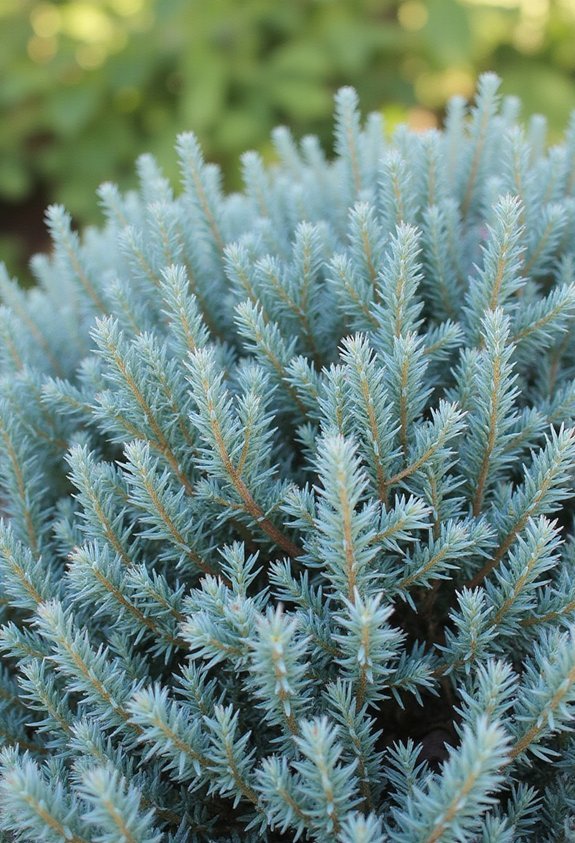
Junipers offer you another excellent option for creating a deer-resistant landscape, especially when you’re looking for year-round color and texture that extends beyond the seasonal blooms of shrubs like lilacs. These hardy evergreens thrive in various soil conditions and require minimal maintenance once established, making them practical for many gardens. Junipers’ prickly, needle-like foliage naturally deters deer from browsing, as the texture’s unpalatability discourages grazing. You’ll find numerous varieties available, ranging from low-spreading groundcovers to tall, columnar forms, allowing you to select sizes that fit your landscape design. Their dense growth habit provides excellent screening and privacy while contributing visual interest throughout all seasons with their distinctive blue-green or golden foliage colors.
Viburnum: Versatile Scent Defense
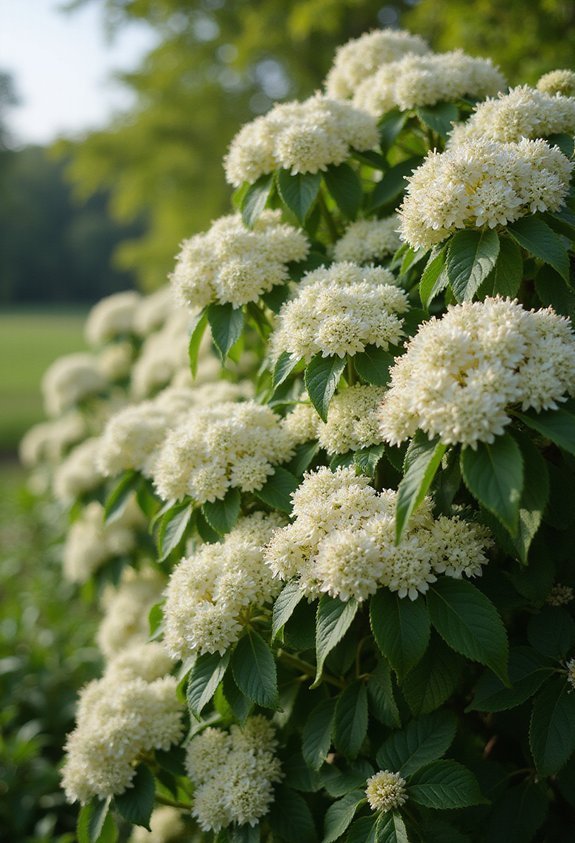
While junipers rely on their prickly texture to discourage deer browsing, viburnums take a different approach by producing aromatic compounds that make them unattractive to grazing animals. You’ll find that viburnums release strong scents through their leaves and stems, which deer naturally avoid during feeding. These shrubs offer you multiple benefits beyond deer resistance, including fragrant flowers that bloom in spring and colorful berries that attract birds. You can choose from numerous viburnum varieties suited to different climate zones and soil conditions. Their dense foliage provides excellent screening and privacy for your landscape. When you plant viburnums in well-drained soil with adequate sunlight, they thrive with minimal maintenance, making them practical additions to deer-resistant gardens that require reliable, long-term protection.
Photinia: Bold Foliage Color Deer Naturally Resist
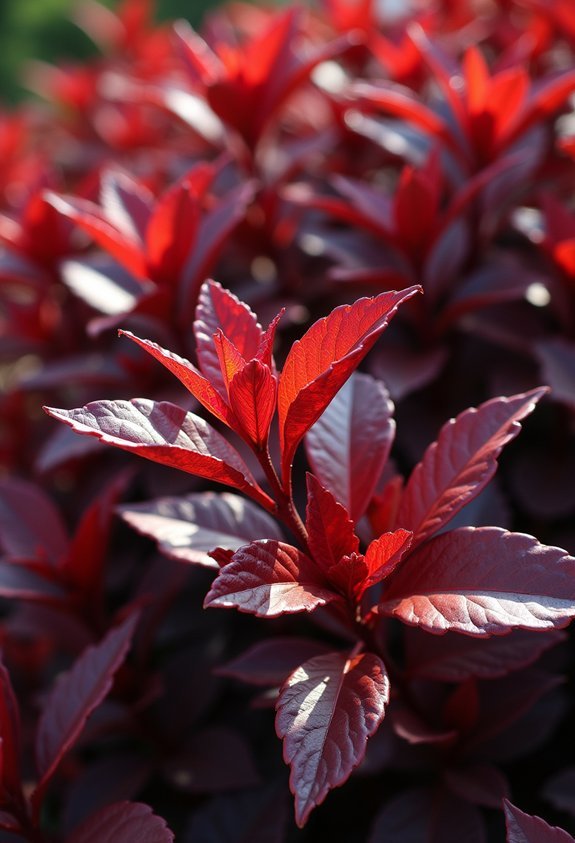
If you’re looking for a shrub that combines stunning visual appeal with reliable deer resistance, photinia offers an excellent solution through its distinctive red and bronze foliage that most deer find unattractive. You’ll appreciate how photinia’s vibrant new growth emerges in shades of deep red and burgundy before maturing to glossy green, creating year-round visual interest in your landscape. The shrub thrives in full sun to partial shade and adapts well to various soil types, making it a flexible choice for different garden conditions. You can prune photinia into formal hedges or allow it to grow naturally, and it’ll reward you with consistent performance. Its dense branching structure and bitter leaf taste combine to make deer avoid this shrub, protecting your garden investment effectively.
Russian Olive: Silvery, Tough, and Unappetizing
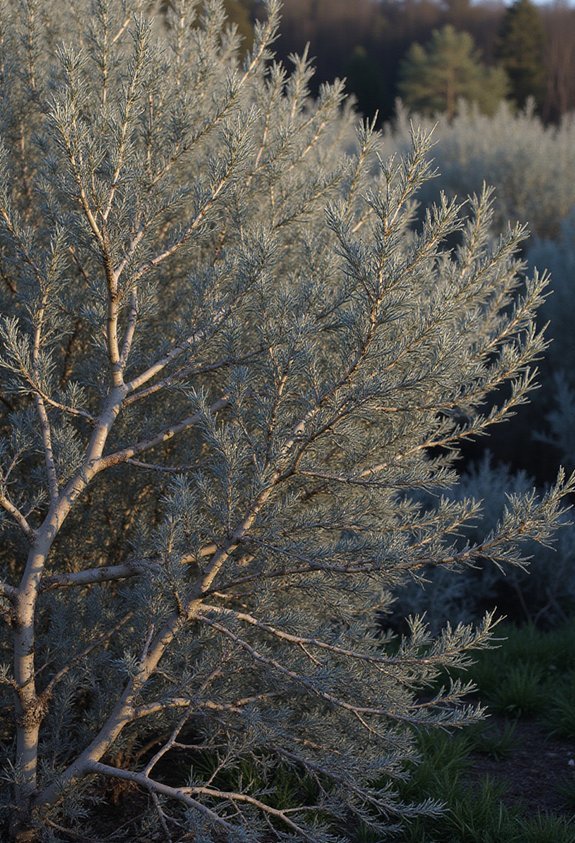
Another outstanding deer-resistant shrub you’ll want to ponder is Russian olive, which offers a completely different aesthetic appeal through its distinctive silvery-gray foliage that stands out dramatically in any landscape design. You’ll appreciate this shrub’s remarkable hardiness, as it thrives in poor soil conditions and tolerates drought exceptionally well, making it ideal for challenging garden areas. The plant’s naturally bitter taste and tough texture render it unappetizing to deer, ensuring your investment remains protected. Russian olive grows into a multi-stemmed form, reaching heights between eight and twelve feet, and produces small yellow flowers followed by olive-like fruits that attract wildlife. Additionally, you can prune this resilient shrub into various shapes, offering flexibility in your landscape planning and design possibilities.
Design a Deer-Proof Shrub Border (Placement & Spacing Tips)
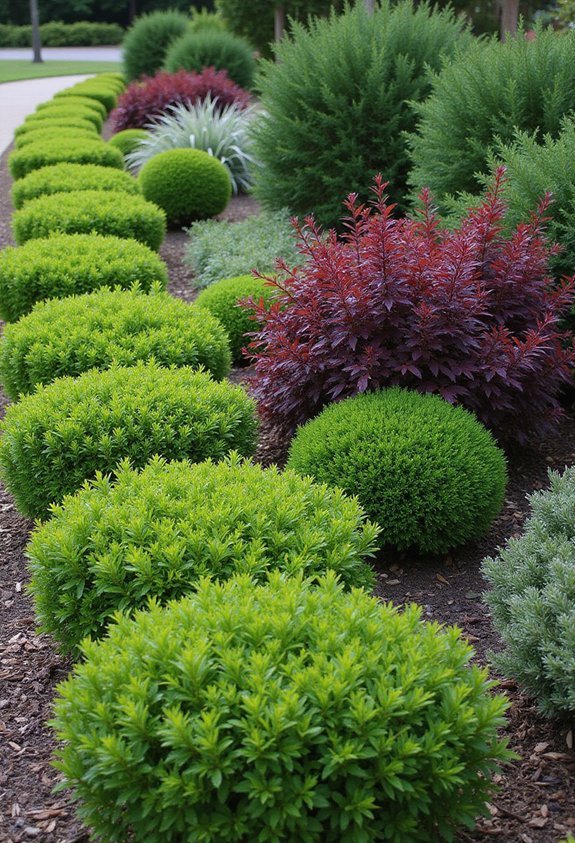
Creating an effective deer-resistant shrub border requires you to thoughtfully arrange your plants according to their mature sizes, growth habits, and visual characteristics so that you’ll achieve both protection and aesthetic appeal. Space shrubs based on their full-grown width, typically ranging from three to eight feet apart, ensuring adequate air circulation and room for development. Position taller varieties, like Russian olive or lilac, toward the back of your border to create visual depth and height graduation. Layer medium-height shrubs in the middle section, and place compact varieties toward the front for accessibility and maintenance. This tiered arrangement maximizes your border’s defensive capability while establishing a professionally designed landscape. Stagger plants rather than planting them in straight lines to create a more natural, integrated appearance that effectively deters deer movement through your garden space.
Conclusion
You’ve now discovered nine powerful shrubs that’ll transform your garden into a deer-resistant landscape, with research showing that strategically placed shrub borders can reduce deer damage by up to 80%. By combining boxwood’s elegance, barberry’s thorns, and lavender’s strong scent, you’re creating multiple defensive layers that deer naturally avoid. Your tiered arrangement won’t just protect your plants; it’ll establish a professionally designed garden that thrives despite wildlife pressure.