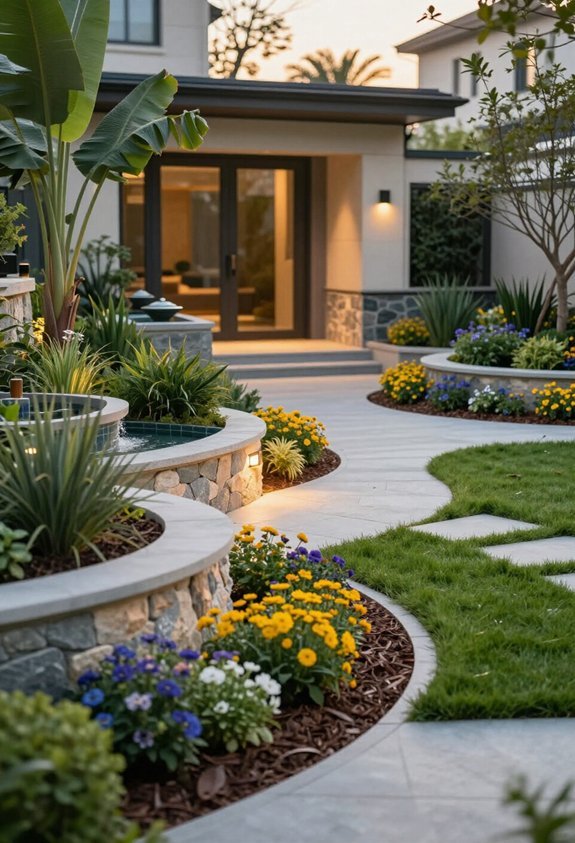
A well-designed front yard serves as the first impression of a home, combining aesthetic appeal with practical functionality. The transformation from an ordinary landscape to an inviting outdoor space requires strategic planning across multiple design elements, including pathways, plantings, lighting, and color coordination. Each component works together to create visual interest while maintaining sustainability and ease of maintenance, yet the specific techniques for achieving this balance remain unexplored.
Design a Statement Pathway for Your Front Yard Entryway
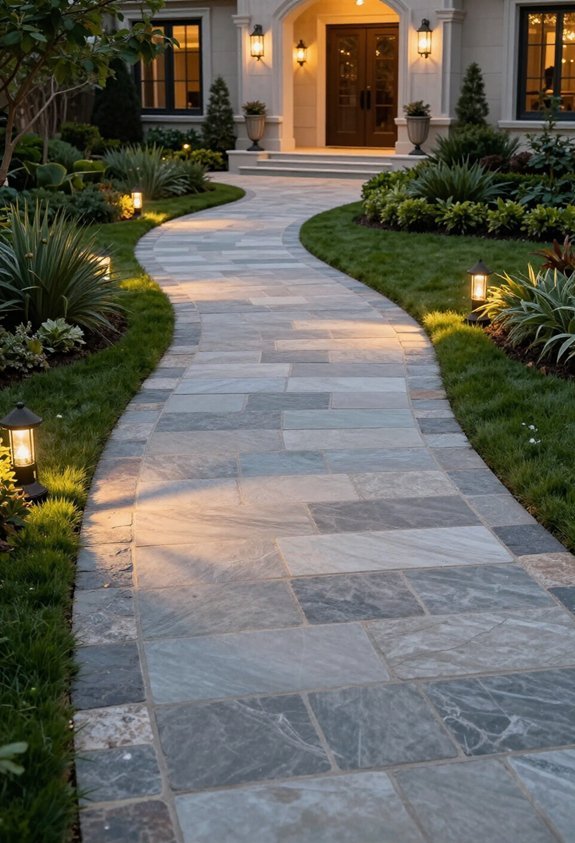
Why does the first impression of a home matter so much? A welcoming pathway serves as the primary visual element guiding visitors from the street to the entrance, establishing the overall aesthetic and functionality of the property. When designing a statement pathway, homeowners should consider materials such as natural stone, brick, or gravel, each offering distinct visual appeal and durability characteristics. The pathway’s width should accommodate two people walking side by side, typically ranging from three to four feet, ensuring comfort and accessibility. Incorporating gentle curves rather than straight lines creates visual interest and encourages exploration. Proper lighting, strategically placed along the path, enhances safety while highlighting architectural features. Adding border plants or edge definition through contrasting materials further emphasizes the pathway’s presence. These intentional design choices collectively transform an ordinary entryway into a memorable first impression.
Also read: 20 HOUSE FRONT YARD Ideas That Look Put Together!
Create a Focal Point With Flowering Beds
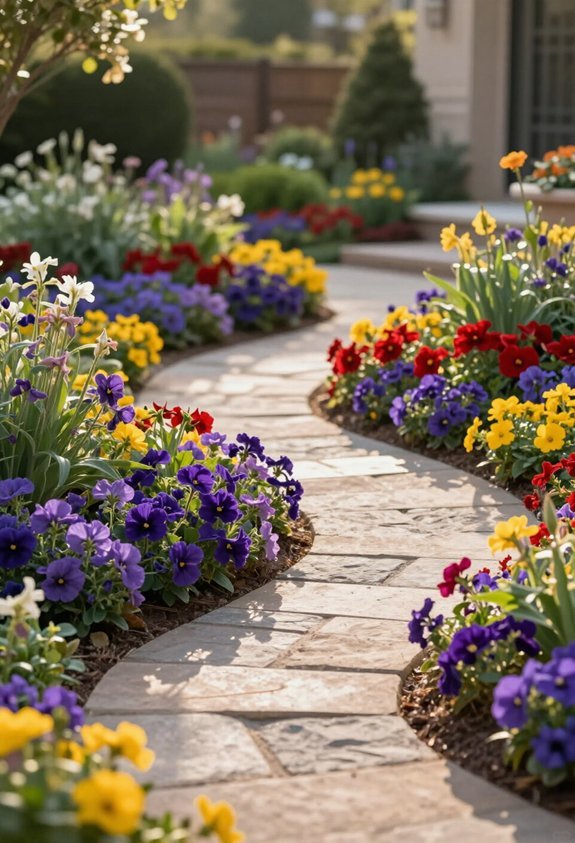
How can homeowners transform their front yard into a visually striking landscape? One effective method involves creating focal points with flowering beds positioned strategically throughout the space. Focal points draw the eye and establish visual interest, making the yard feel intentional and well-designed. Homeowners should select a prominent location near the entrance or along the driveway, then choose flowering plants that complement the home’s architectural style and color scheme. Layering plants by height creates depth, with taller varieties in back and shorter ones in front. Selecting blooms with staggered flowering times guarantees continuous color throughout seasons. Adding mulch around beds enhances visual appeal while retaining soil moisture and suppressing weeds. Properly maintained flowering beds demonstrate care and elevate the entire front yard’s aesthetic presentation considerably.
Illuminate Your Front Yard With Ambient and Uplighting
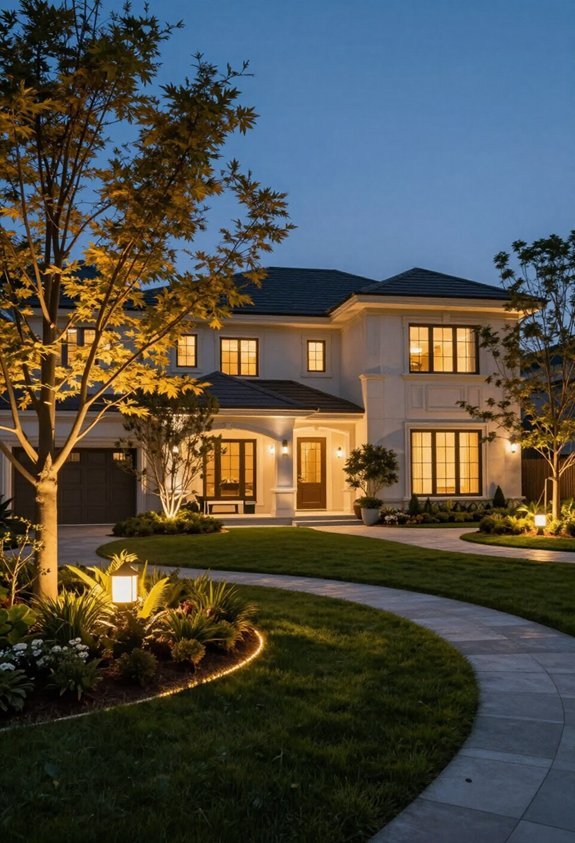
While flowering beds establish visual interest during daylight hours, strategic lighting extends the front yard’s appeal into evening hours and creates an entirely different aesthetic experience after sunset. Ambient lighting, which provides general illumination throughout the landscape, establishes a welcoming atmosphere and improves safety by revealing pathways and potential obstacles. Uplighting, a technique that positions lights below architectural features or plantings to cast light upward, dramatically highlights textures, architectural details, and plant forms, creating depth and visual drama. Together, these lighting approaches transform the front yard into a sophisticated outdoor space that remains visually engaging throughout the day and night, while simultaneously enhancing security and functionality for homeowners and visitors traversing the property after dark.
Build a Welcoming Front Porch With Seating
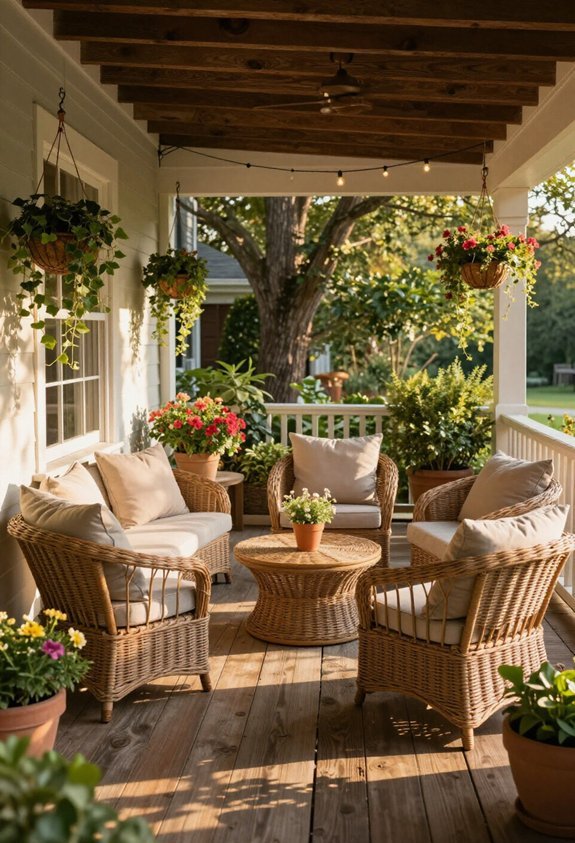
A front porch serves as the passageway zone between the street and the home’s interior, and adding thoughtfully selected seating transforms this space into an inviting gathering area that encourages visitors and residents alike to pause and enjoy the outdoors. Comfortable chairs, benches, or rockers positioned strategically on the porch create functional spots for relaxation and conversation. When selecting seating, consider weather-resistant materials such as wood, metal, or composite materials that withstand rain, sun exposure, and temperature fluctuations. Arrange furniture to face the street, promoting social interaction and neighborhood connection. Adding cushions or pillows enhances comfort while introducing color and texture to the space. Properly scaled seating guarantees the porch remains accessible while maximizing its welcoming potential for all visitors.
Choose Native Plants for Low-Maintenance Front Yards
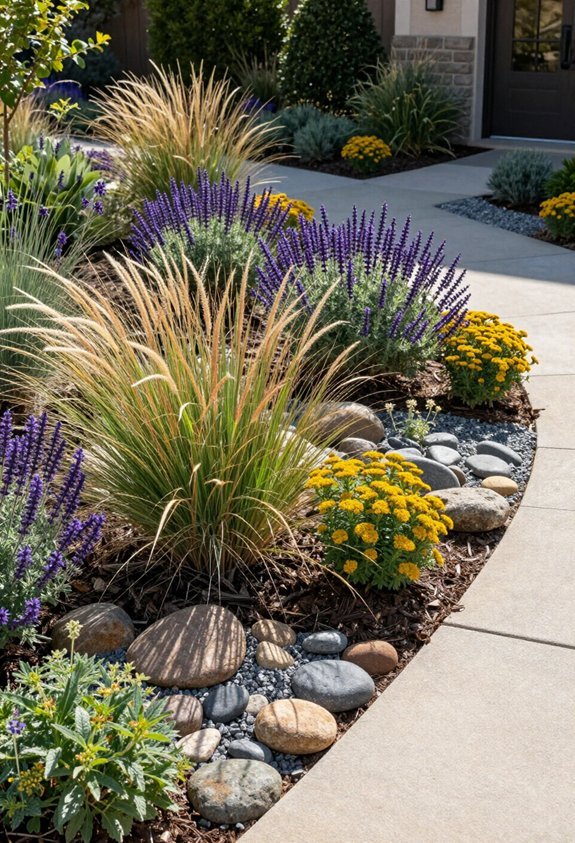
Native plants, which are species that naturally occur in a specific geographic region, consistently offer homeowners an excellent solution for creating attractive front yards that require considerably less maintenance than traditional landscaping designs. These plants have adapted to local climate conditions, soil types, and rainfall patterns over many generations, making them naturally hardy and resilient. By selecting native species for front yards, homeowners reduce the need for excessive watering, fertilizing, and pest control treatments. Native plants also support local wildlife, including pollinators like bees and butterflies, which enhances the ecosystem. In addition, these plants typically cost less than non-native alternatives and establish themselves more quickly in landscape designs, creating beautiful outdoor spaces that thrive with minimal intervention.
Add Hardscaping With Stone or Brick Accents
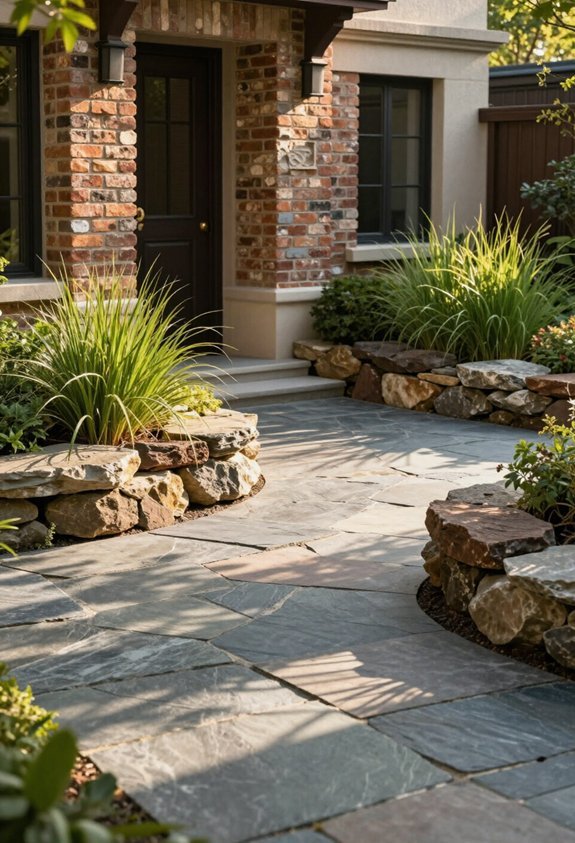
Because hardscaping elements like stone and brick provide structure and visual interest to front yards, homeowners can use these materials to complement their native plant selections and create defined outdoor spaces that require minimal upkeep. Stone pathways guide visitors through the landscape while preventing soil erosion and reducing maintenance needs. Brick borders frame garden beds, establishing clear boundaries between planted areas and lawn sections. Retaining walls constructed from stacked stone or brick add dimension to sloped properties and prevent soil displacement during heavy rainfall. Decorative gravel or crushed stone fills spaces between plants, suppresses weed growth, and decreases watering requirements. These hardscaping features also improve drainage, prevent mud accumulation near entryways, and create functional, attractive outdoor environments that age gracefully while supporting drought-resistant native plantings.
Layer Your Front Yard Plantings for Visual Depth
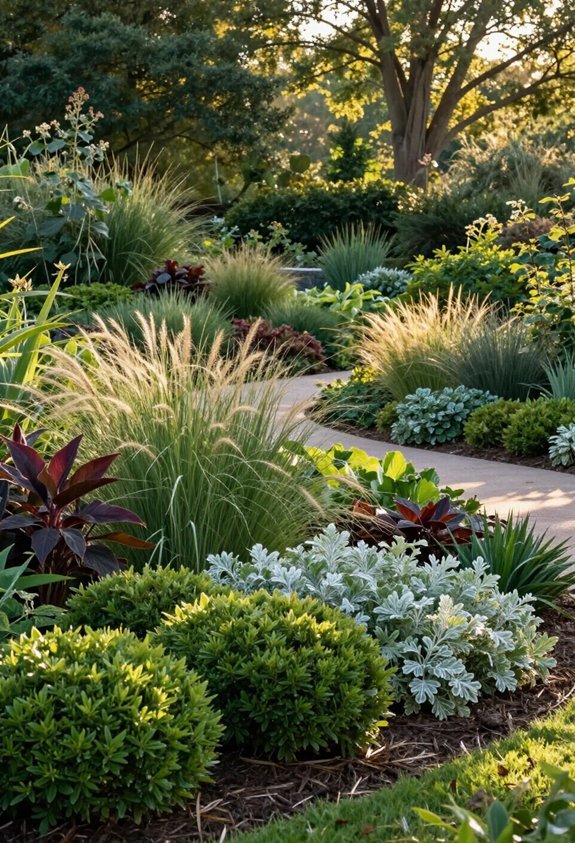
How can homeowners create visual depth and interest in their front yards that extends beyond simple, flat plantings? Layering plants of varying heights establishes a natural progression from front to back, drawing the eye deeper into the landscape. Tall shrubs or small trees should be positioned toward the rear, medium-height plants in the middle section, and shorter groundcovers or flowering plants in the foreground. This tiered arrangement prevents the yard from appearing one-dimensional. Additionally, combining different plant textures and colors enhances visual complexity, making the space more engaging. Strategic placement of plants in clusters rather than scattered individually strengthens this effect. By thoughtfully arranging plantings at multiple levels, homeowners transform their front yards into sophisticated outdoor spaces with substantial depth and appeal.
Install a Water Feature for Tranquility and Movement
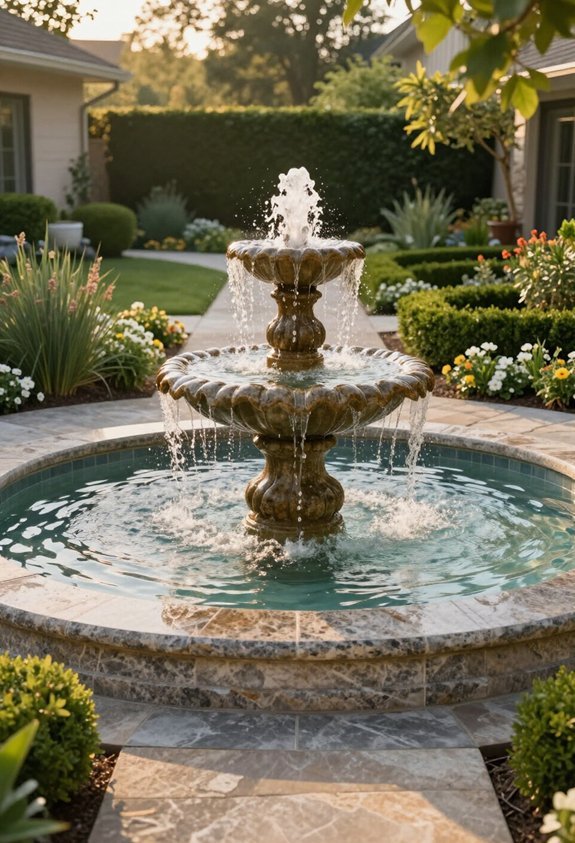
Adding a water feature to a front yard brings both visual and auditory appeal, transforming an ordinary landscape into a peaceful retreat that engages multiple senses. Homeowners can choose from various options, including fountains, birdbaths, small ponds, or bubbling rocks, each offering distinct aesthetic qualities and maintenance requirements. Fountains provide continuous movement and soothing sounds, while ponds attract wildlife and create focal points. When selecting a water feature, consider the yard’s size, sunlight exposure, and existing landscaping. Installation involves determining proper placement away from tree roots and debris, ensuring adequate drainage, and selecting appropriate electrical connections for powered features. Regular maintenance, such as cleaning and water treatment, keeps features functioning properly and prevents algae growth, ensuring long-term enjoyment and landscape enhancement.
Plant Symmetrically to Frame Your Entrance
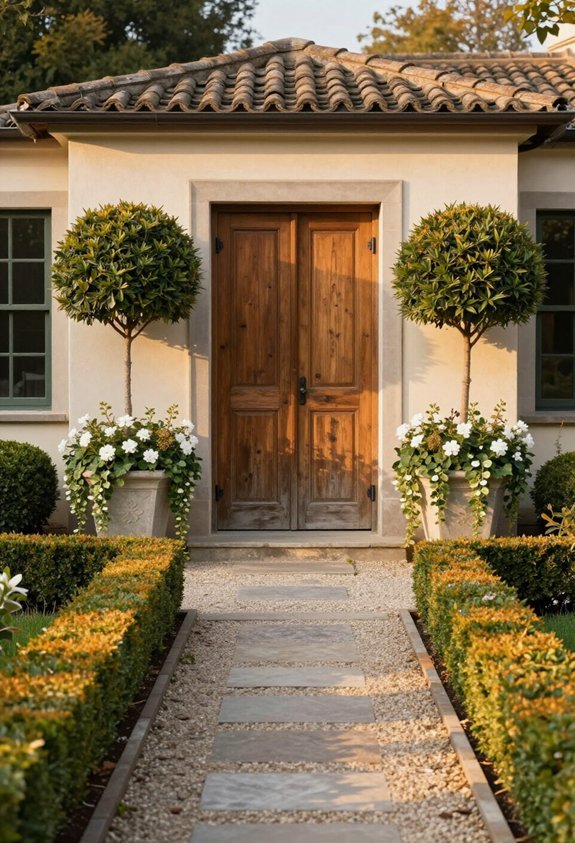
While water features create peaceful focal points within a landscape, symmetrical plantings around the front entrance establish a structured, welcoming framework that guides visitors’ eyes toward the home’s main entry. Symmetrical planting involves positioning identical plants on both sides of the doorway, creating visual balance and order. This design approach works particularly well with evergreen shrubs, ornamental grasses, or flowering plants that maintain consistent appearance throughout seasons. The height and width of selected plants should complement the entrance proportions, neither overwhelming nor underwhelming the doorway. Symmetrical arrangements require careful spacing and regular maintenance to preserve alignment. This classical design principle enhances curb appeal, creates a sense of formality and intentionality, and establishes psychological comfort for visitors approaching the home.
Select the Best Lawn Alternative for Your Climate
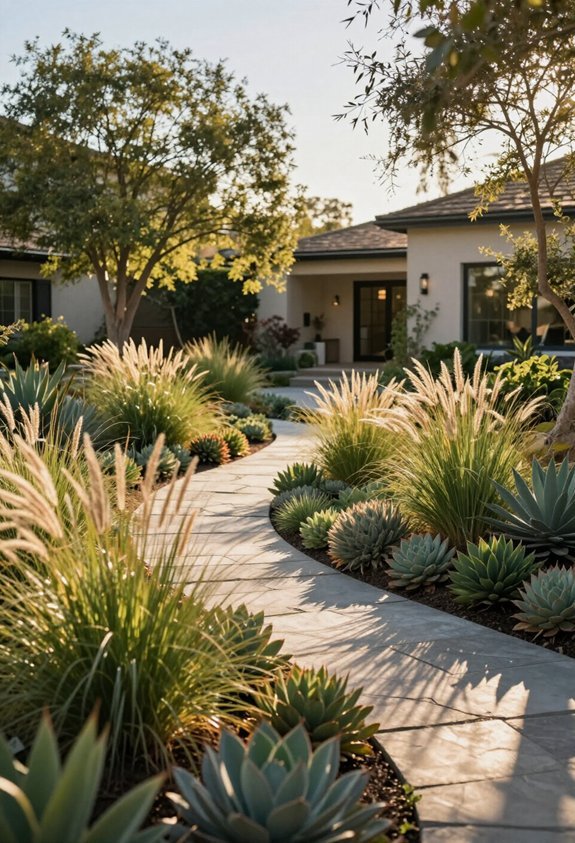
Traditional grass lawns require substantial water, regular maintenance, and specific climate conditions to thrive, making lawn alternatives an increasingly practical choice for homeowners seeking to reduce environmental impact and labor demands. Homeowners should evaluate their regional climate, soil composition, and sunlight exposure before selecting an alternative. Native groundcovers, clover, or ornamental grasses offer low-maintenance options suited to various climates and require minimal watering once established. In arid regions, xeriscaping with drought-resistant plants provides both aesthetic appeal and water conservation. For shaded areas, moss or shade-tolerant groundcovers work effectively. Hardscaping solutions, including mulch, gravel, or permeable pavers, eliminate maintenance while improving drainage. Selecting climate-appropriate alternatives guarantees long-term sustainability, reduced costs, and improved curb appeal without sacrificing environmental responsibility.
Create a Modern Minimalist Front Yard
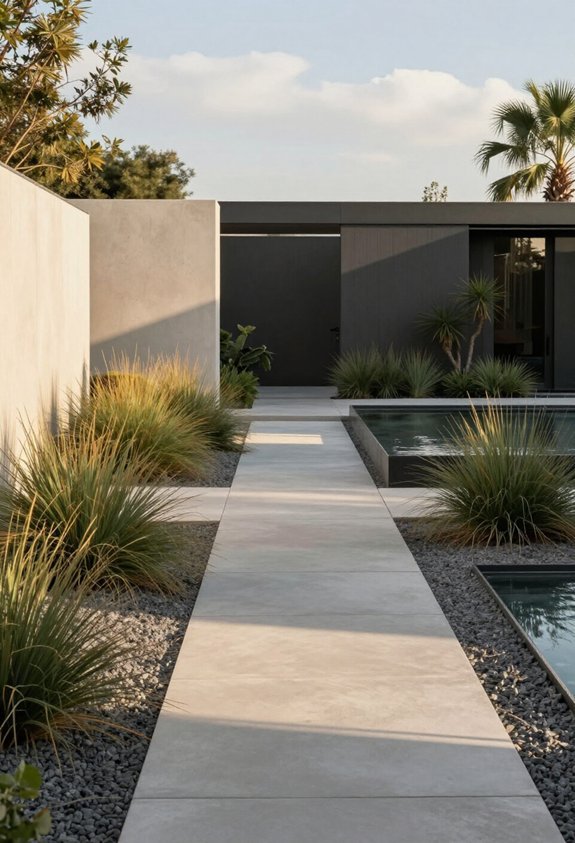
Modern minimalist design strips away unnecessary elements to create clean, uncluttered outdoor spaces that emphasize simplicity, functionality, and visual impact through thoughtful placement of key features. This approach involves selecting a limited color palette of neutrals like gray, black, and white, which provides a sophisticated foundation for the landscape. Hardscaping elements such as concrete pathways, raised planters, and geometric structures form the structural backbone, while carefully chosen plants with architectural qualities add texture without overwhelming the space. Lighting fixtures serve dual purposes by enhancing safety and creating visual interest during evening hours. Water features like simple fountains or reflecting pools introduce movement and tranquility. The key principle involves including only essential elements that contribute meaningfully to the overall design, resulting in an uncluttered, purposeful outdoor environment.
Screen Views With Fencing, Hedges, or Lattice
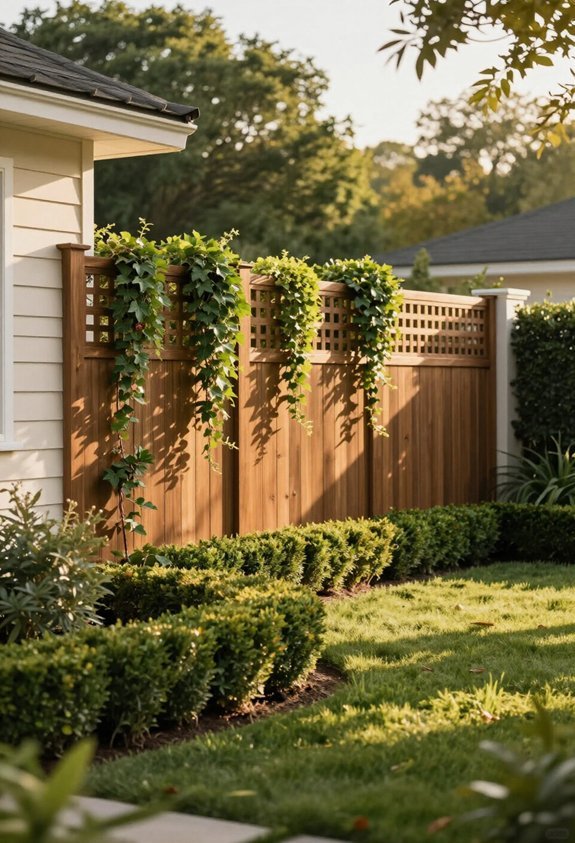
Privacy and visual control represent important considerations for any front yard, and screening elements work alongside the clean lines and purposeful design of a minimalist landscape to define boundaries and direct attention toward desirable features while concealing less attractive views. Fencing offers durable, long-lasting privacy with minimal maintenance when constructed from materials like composite or metal, which require fewer updates than wood alternatives. Hedges provide natural screening that softens hard edges while supporting local wildlife, though they demand regular trimming to maintain neat appearance. Lattice structures create semi-transparent barriers that filter views rather than block them entirely, allowing light and air circulation while establishing subtle boundaries. Selecting appropriate screening solutions depends on climate conditions, maintenance capacity, and aesthetic preferences aligned with the minimalist design framework.
Anchor Your Design Around Mature Trees
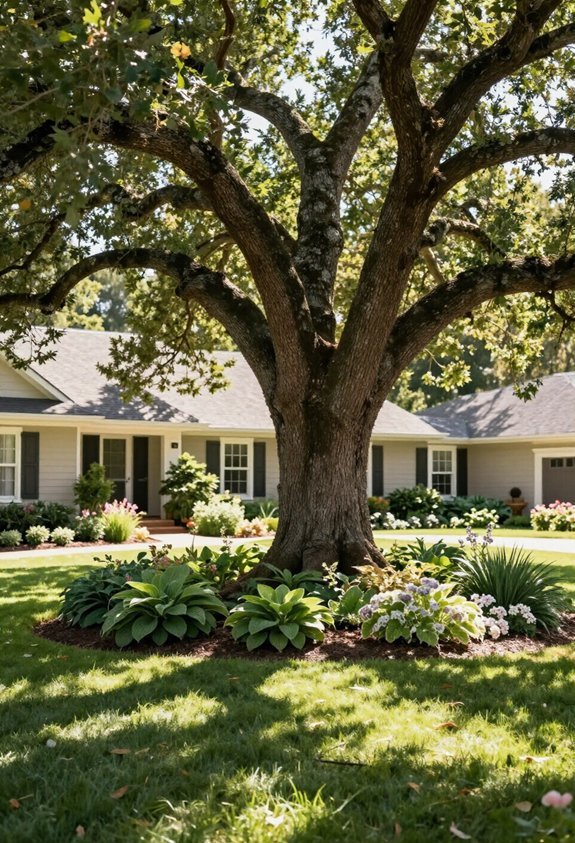
Mature trees serve as natural focal points and structural anchors for front yard designs, providing established height, canopy coverage, and visual interest that would take years to develop through newly planted landscaping. When designing around existing trees, homeowners should consider the tree’s root system, which typically extends outward as far as the branches reach, making it essential to plan hardscaping and planting accordingly. Working with mature trees rather than removing them preserves the landscape’s character while reducing installation costs and maintenance time. Strategic placement of seating areas, pathways, and complementary plantings beneath or near these trees creates cohesive outdoor spaces that feel naturally integrated. Additionally, established trees provide shade that reduces cooling costs and protects sensitive plants from intense summer sun exposure.
Mix Texture With Ornamental Grasses and Shrubs
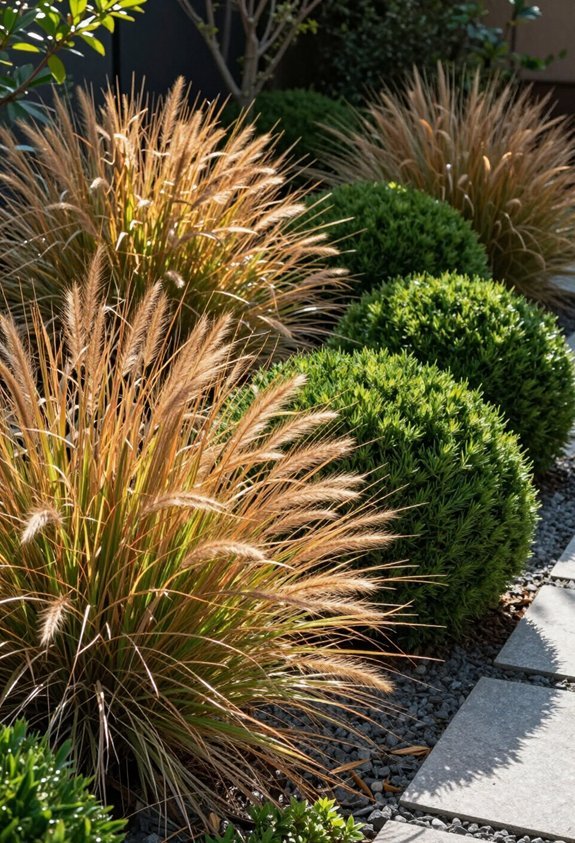
Layering ornamental grasses and shrubs throughout a front yard creates dynamic visual interest through varied heights, colors, and textures that evolve across seasons. Ornamental grasses add movement and softness, swaying gently in breezes while providing vertical structure, whereas shrubs offer solid forms and year-round substance. Selecting plants with different bloom times guarantees continuous color throughout spring, summer, and fall, preventing the landscape from appearing flat or monotonous. Combining fine-textured grasses like feather reed grass with bold-leafed shrubs such as boxwood creates striking contrasts that enhance overall design depth. Strategic placement of shorter grasses in front of taller shrubs establishes visual hierarchy while maintaining sight lines. This layering approach requires minimal maintenance once established, making it practical for homeowners seeking sustainable, attractive front yard solutions.
Build Raised Beds Into Your Front Yard Design
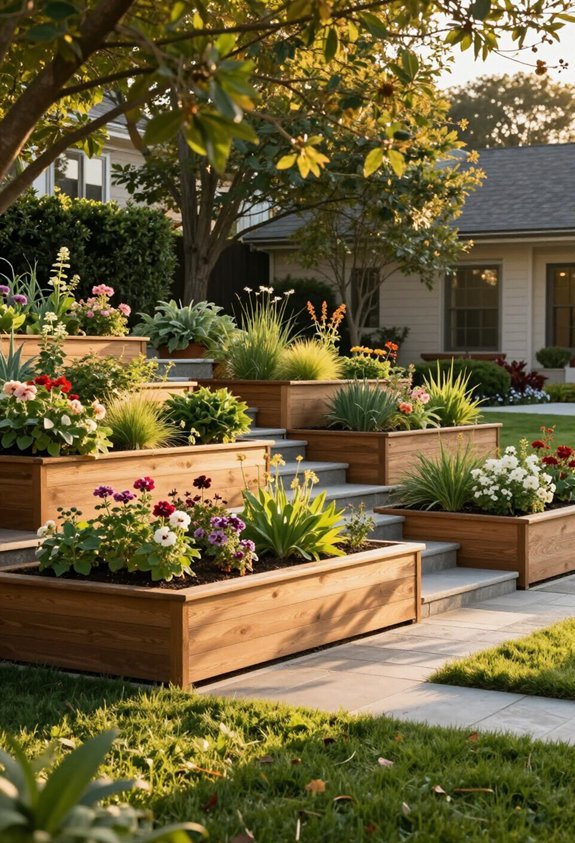
While ornamental grasses and shrubs provide a foundation of texture and movement throughout a front yard, raised beds offer homeowners an opportunity to expand their planting options and create distinct focal points that draw the eye. These elevated garden structures, typically constructed from wood, stone, or composite materials, provide several practical advantages for front yard design. Raised beds improve soil drainage and allow gardeners to control soil quality more effectively, which promotes healthier plant growth. Additionally, they define garden spaces visually, creating organized sections that enhance overall landscape structure. Homeowners can plant vegetables, flowers, or herbs in raised beds, adding functional and aesthetic variety to their front yards. Strategic placement of raised beds along pathways or near entryways maximizes their visual impact while maintaining accessibility and curb appeal.
Add Year-Round Interest to Your Front Yard Plantings
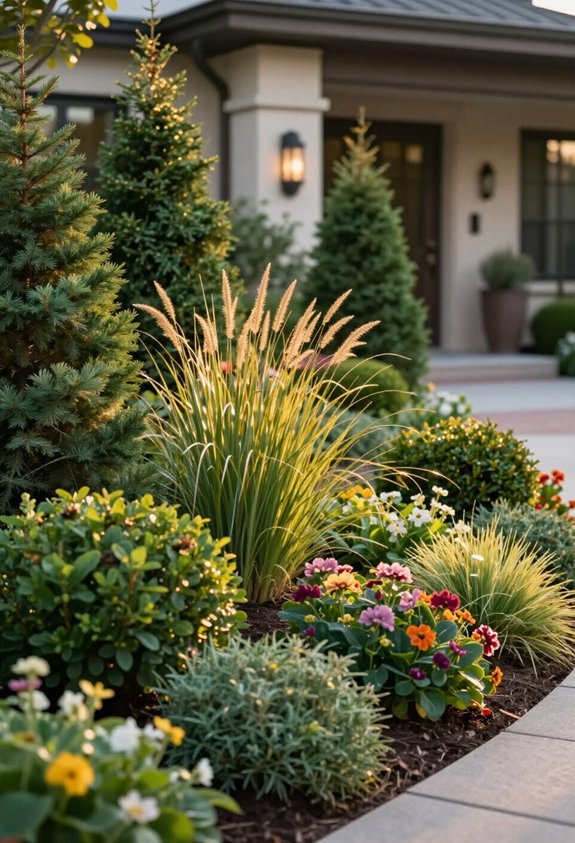
To maintain visual appeal throughout all four seasons, homeowners should select plants that offer different characteristics during spring, summer, fall, and winter months. Flowering shrubs like forsythia and lilac provide vibrant blooms in spring, while ornamental grasses and coneflowers deliver summer color and texture. Fall interest comes from plants with changing foliage, such as Japanese maples and burning bush, which display brilliant reds and oranges. For winter months, evergreen plants, colorful bark trees, and berry-producing shrubs like winterberry holly guarantee the landscape remains visually engaging. By strategically combining these plant types throughout the front yard, homeowners create a dynamic landscape that evolves beautifully across all seasons, eliminating bare or dull periods and maintaining consistent curb appeal year-round.
Line Your Front Door With Decorative Planters
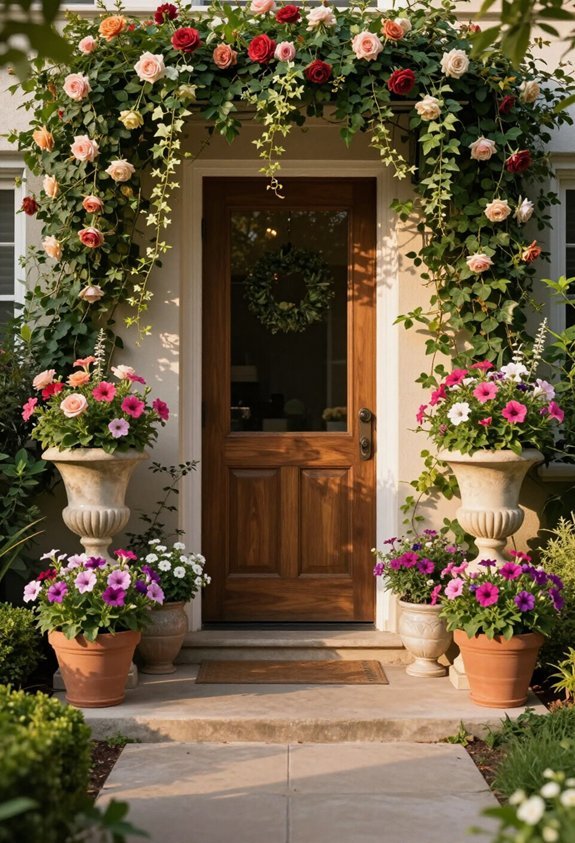
Decorative planters positioned on either side of the front door serve as a focused design element that draws attention to the home’s entrance while complementing the year-round plantings discussed previously. Selecting planters in coordinating colors, materials, or styles creates visual balance and establishes a welcoming threshold. Homeowners should choose containers that complement their home’s architectural style, whether traditional urns, modern geometric designs, or rustic terracotta vessels. Filling these planters with seasonal flowers, evergreens, or ornamental grasses maintains year-round appeal while allowing flexibility for seasonal updates. Proper drainage holes prevent water accumulation, ensuring plant health. Proportional sizing matters greatly; oversized planters overwhelm narrow entryways, while undersized containers appear insignificant. Strategic placement on both sides creates symmetry, guiding visitors’ eyes directly toward the entrance and enhancing curb appeal through intentional, organized design.
Go Low-Water With Drought-Resistant Plants
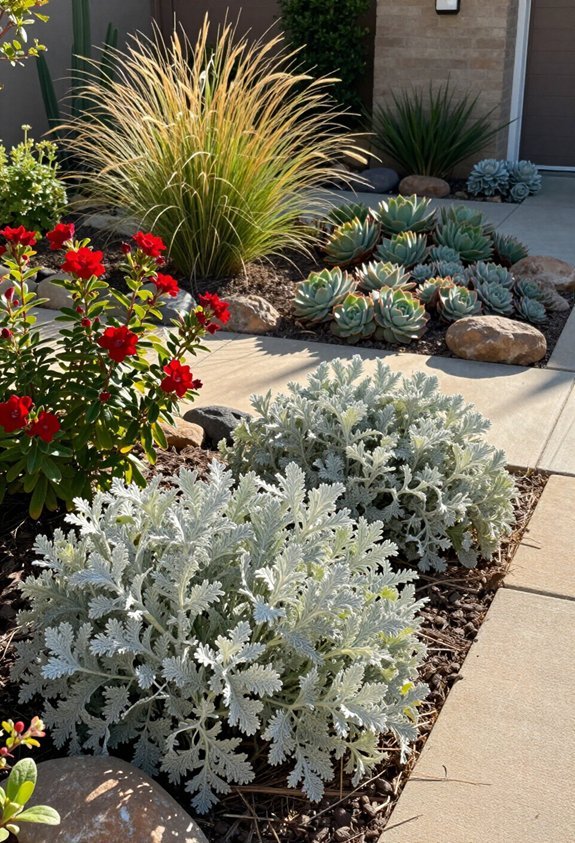
As water conservation becomes increasingly important for both environmental and economic reasons, homeowners can greatly reduce their outdoor maintenance demands by selecting drought-resistant plants for their front yards. Xeriscaping, which is landscaping designed to reduce water consumption, utilizes native plants that thrive in local climates with minimal irrigation. Suitable choices include sedums, ornamental grasses, lavender, and cacti, which store water in their leaves and roots, allowing them to survive extended dry periods. These plants require markedly less frequent watering than traditional landscapes, lowering utility bills and reducing overall yard maintenance time. Additionally, drought-resistant vegetation supports local ecosystems by providing habitat for native wildlife while decreasing environmental strain from excessive water usage, making it an environmentally responsible and economically sensible landscaping choice.
Layer Mulch and Ground Covers for a Polished Look
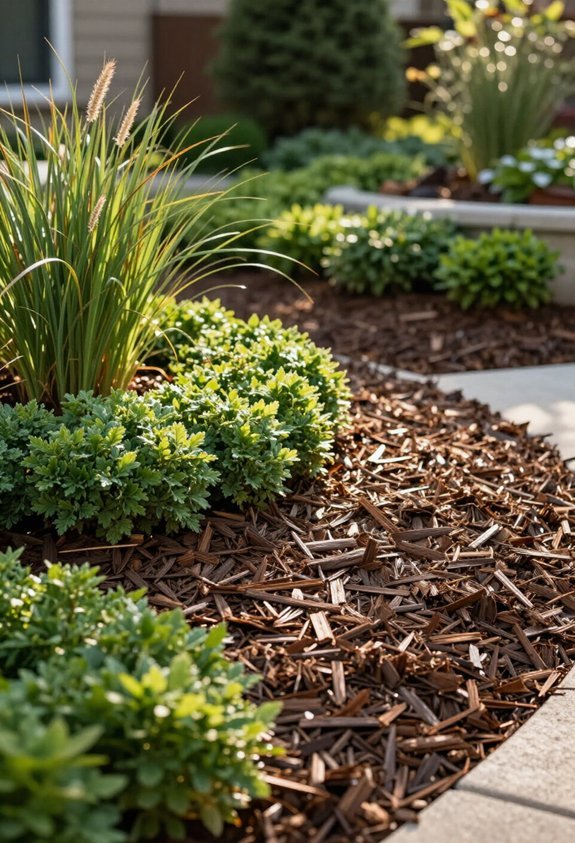
Mulch and ground covers work together to create a neat, finished appearance in front yards while providing practical benefits that improve soil health and reduce maintenance requirements. Mulch, typically made from wood chips or bark, insulates soil and retains moisture, reducing the need for frequent watering, which complements drought-resistant plants perfectly. Ground covers like creeping thyme or sedum spread across bare patches, preventing weeds from establishing themselves and adding visual texture to landscape beds. When layering these materials, apply mulch first as a base, then plant ground covers through it, allowing them to expand gradually. This combination minimizes bare soil visibility, decreases watering needs, suppresses weed growth, and creates professional-looking front yards that remain attractive with minimal ongoing effort.
Tie It Together With a Unified Color Palette

A well-designed front yard combines practical landscaping elements with visual harmony, and selecting a unified color palette serves as the foundation for achieving this balance. Choosing two or three main colors creates cohesion throughout the landscape, whether through plants, mulch, stone, and hardscaping features. Homeowners should consider the existing architecture’s colors and select complementary hues that enhance rather than clash with their home’s exterior. Incorporating foliage in varying shades, such as deep greens paired with silver-gray plants, provides visual depth while maintaining consistency. Adding accent colors through flowers or decorative elements should be restrained, using these touches strategically to draw attention to focal points. This methodical approach to color selection guarantees that all landscaping components work together harmoniously, creating a professional and intentional appearance throughout the front yard.
Frequently Asked Questions
How Much Does a Professional Front Yard Landscaping Renovation Typically Cost?
Professional front yard landscaping renovations typically range from $3,000 to $15,000, depending on project scope, regional location, and design complexity. Small updates cost less, while extensive overhauls with hardscaping and irrigation systems command higher prices.
What Is the Best Time of Year to Plant Trees and Shrubs?
The ideal planting season for trees and shrubs typically occurs in spring or fall. Spring allows plants to establish roots before summer heat, while fall provides cooler temperatures for root development before winter dormancy.
How Often Should I Water My Front Yard Plants During Summer Months?
During summer months, one should water front yard plants deeply two to three times weekly, adjusting frequency based on soil moisture, plant type, and local rainfall. Early morning watering proves most effective for reducing evaporation and fungal issues.
Can I Install a Front Yard Landscape Design Myself or Hire Professionals?
Homeowners can install landscape designs themselves if they possess adequate skills and time, though hiring professionals guarantees expertise, proper execution, and often superior long-term results through experience and specialized equipment.
How Do I Prevent Weeds From Growing in My Front Yard Beds?
Homeowners can prevent weeds by applying mulch layers two to three inches deep, installing landscape fabric beneath beds, regularly pulling emerging weeds, and using pre-emergent herbicides seasonally for long-term suppression.
Conclusion
Creating a stunning front yard requires thoughtful planning across multiple design elements, including pathways, flowering beds, lighting, and plant selection. By implementing native plants, drought-resistant vegetation, and decorative planters while maintaining a cohesive color palette, homeowners can achieve an attractive outdoor space that requires minimal maintenance. These systematic design choices work together to establish visual harmony, sustainability, and lasting curb appeal that enhances any property.