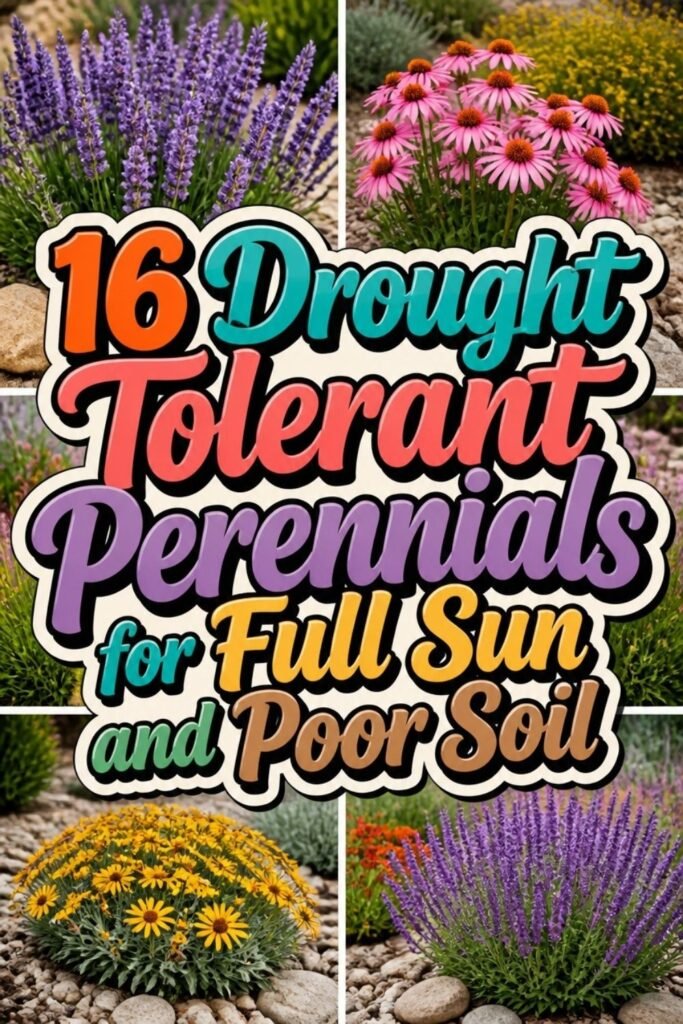
Gardening in challenging conditions doesn’t have to mean constant struggle. Dry climates and poor soil test even experienced growers, yet the right plant choices transform these limitations into low-maintenance landscapes. Drought-tolerant perennials prove that resilience and beauty can coexist without demanding endless attention.
Sedum and Sempervivum lead the pack for sun-baked spots with thin, rocky soil. These succulents store water in their fleshy leaves, shrugging off weeks without rain. Coreopsis joins them as a reliable bloomer that establishes deep roots quickly, needing only occasional deep watering during its first season.
For broader color palettes, Black-Eyed Susan delivers cheerful golden blooms through the hottest months. Yarrow contributes feathery foliage and flat-topped flower clusters that attract beneficial insects. Lavender rounds out the selection with silvery foliage and fragrant purple spikes, preferring the very conditions that weaken less adapted plants.
Success with these perennials depends on matching each variety to its preferred microclimate. Grouping plants with similar water needs prevents over-irrigation of established specimens.
With thoughtful placement, even the most demanding garden spaces become self-sustaining displays of texture and color.
Sedums: Fleshy Foliage That Thrives Without Water
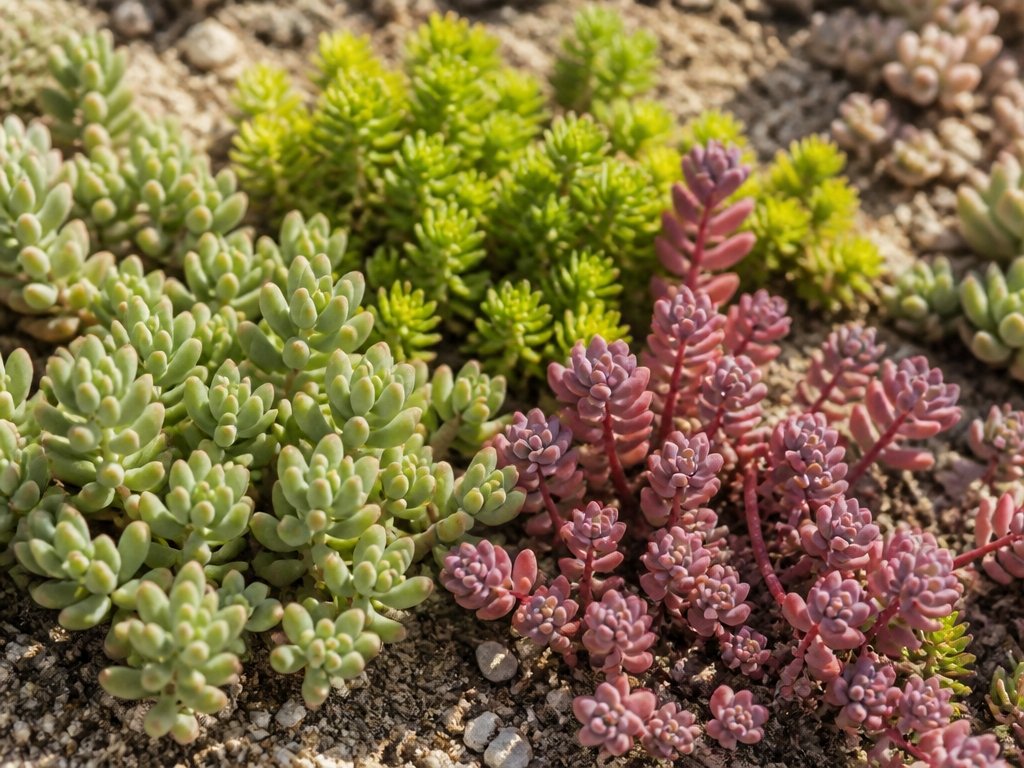
Sedums represent a practical choice for gardeners seeking drought-resistant perennials. These succulents store water in their fleshy leaves, requiring minimal irrigation once established.
Common varieties include Sedum spurium, Sedum acre, and Sedum telephium. They thrive in full sun and poor soil conditions. Sedums produce small flowers in summer months and spread gradually across garden beds, making them efficient ground covers for low-maintenance landscapes.
Sempervivum: Geometric Rosettes That Spread Across Bare Ground
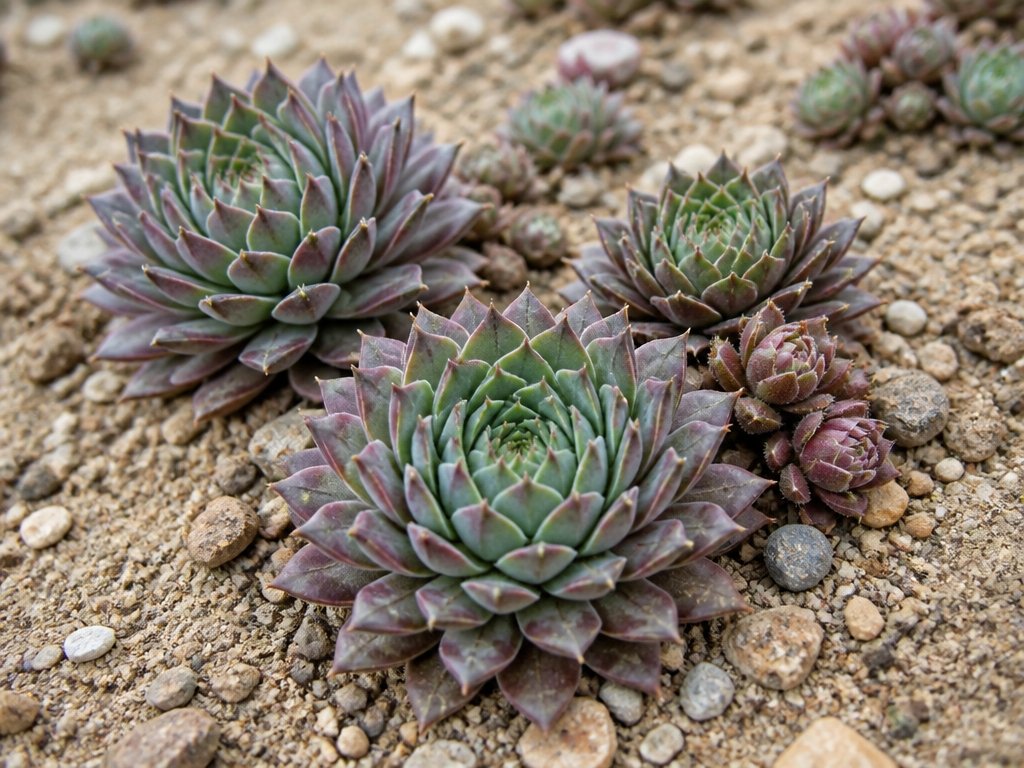
Many gardeners choose sempervivum, also called houseleeks, for their distinctive rosette shapes and exceptional drought tolerance. These plants spread across bare ground through offshoots, requiring minimal water and maintenance.
Varieties like Arachnoideum and Tectorum thrive in poor soil and full sun. Their geometric patterns and low-growing habit make them suitable for rock gardens, containers, and ground cover applications.
Dianthus: Spiced Blooms Built for Tough Conditions
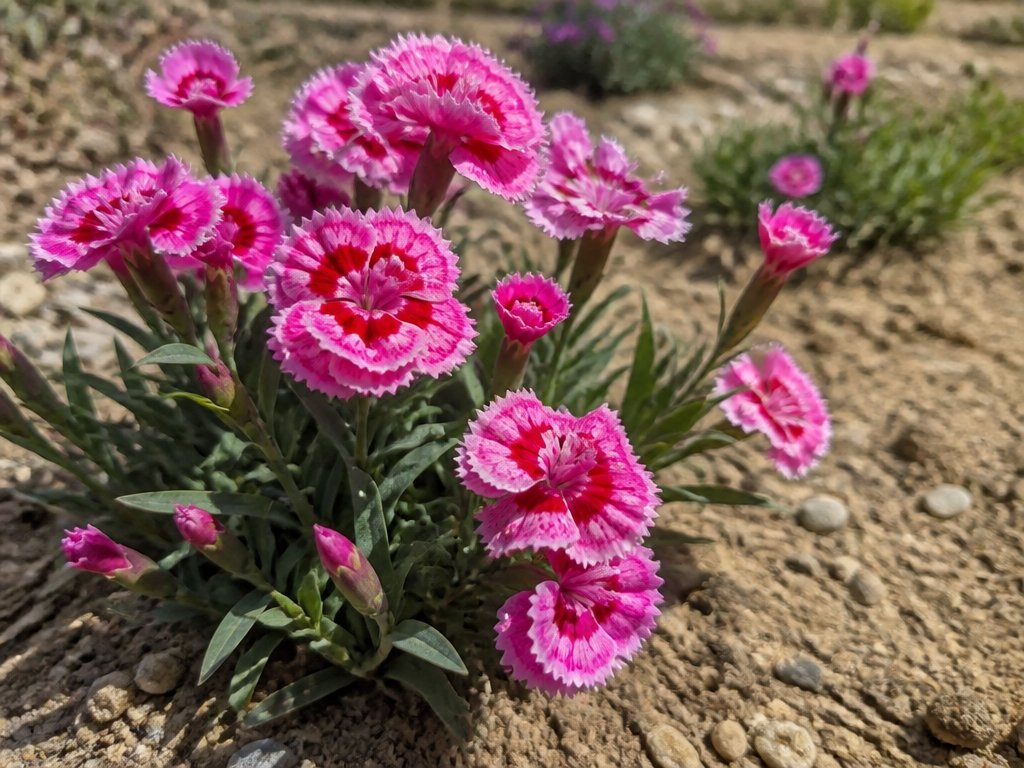
While sempervivum spreads horizontally across ground, dianthus offers upright growth and fragrant flowers that tolerate drought and poor soil conditions. The plant produces pink, red, and white blooms with spiced fragrance. Dianthus reaches heights of six to eighteen inches, depending on variety.
Popular types include Dianthus deltoides and Dianthus armeria, both thriving in full sun with minimal water and fertilizer.
Coreopsis: Cheerful Blooms All Season Long
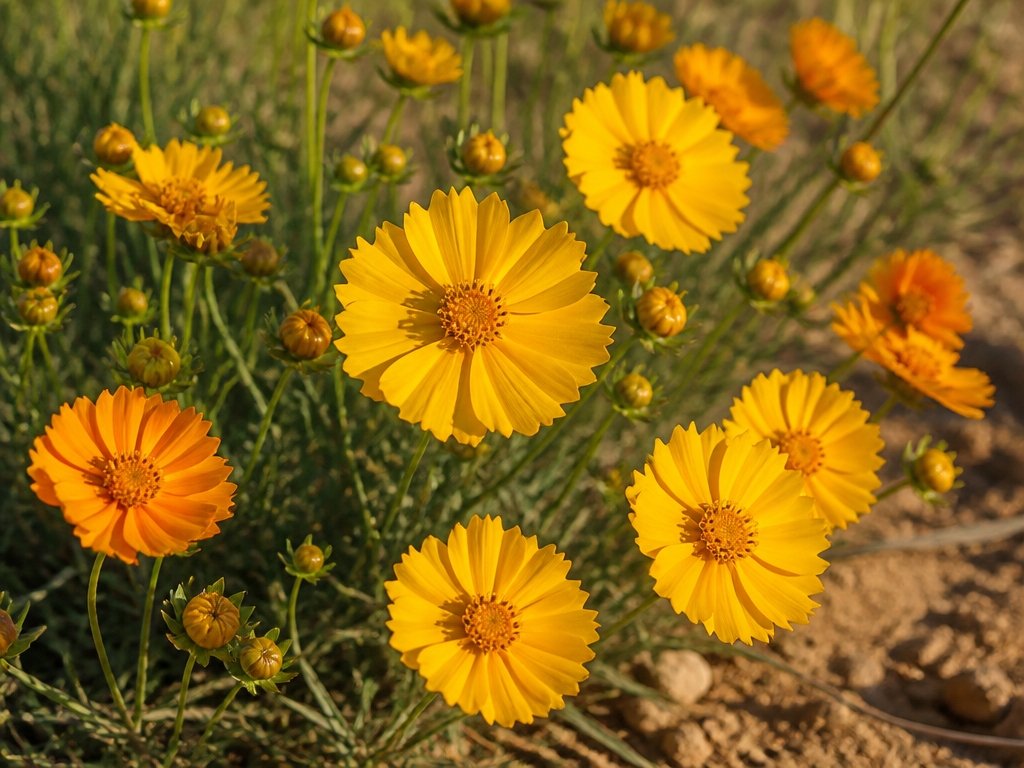
Coreopsis plants deliver continuous flowers from late spring through fall, making them reliable choices for drought-tolerant gardens. These perennials require minimal water once established and thrive in full sun with poor soil conditions.
Varieties like ‘Moonbeam’ and ‘Zagreb’ produce small, daisy-like blooms in yellow and red tones. Deadheading spent flowers encourages extended blooming throughout the season.
Catmint: Purple Spikes and Effortless Growth
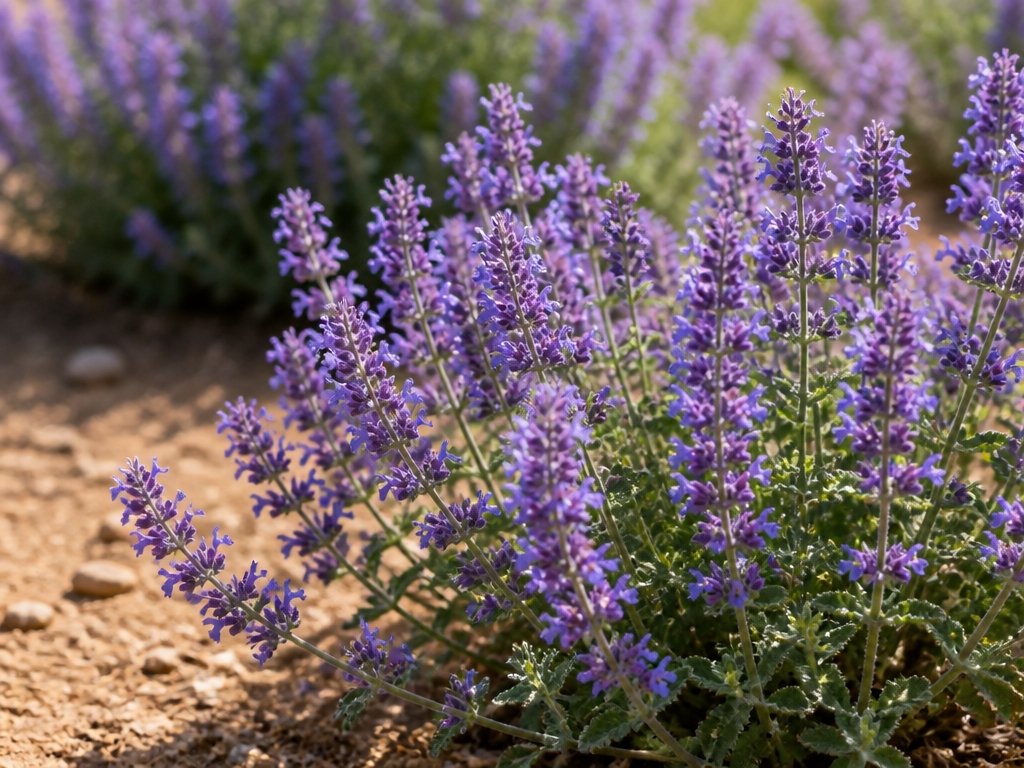
Catmint offers another reliable option for drought-tolerant gardens, combining attractive purple flowers with minimal maintenance requirements. This perennial thrives in full sun and poor soil conditions.
Catmint produces spikes of lavender-blue blooms throughout summer, attracts pollinators, and requires little water once established. Plants tolerate heat, rocky terrain, and neglect. Nepeta varieties grow two to three feet tall, spread readily, and need occasional deadheading to encourage continued flowering.
Blanket Flower: Drought-Tolerant Color on Lean Soil
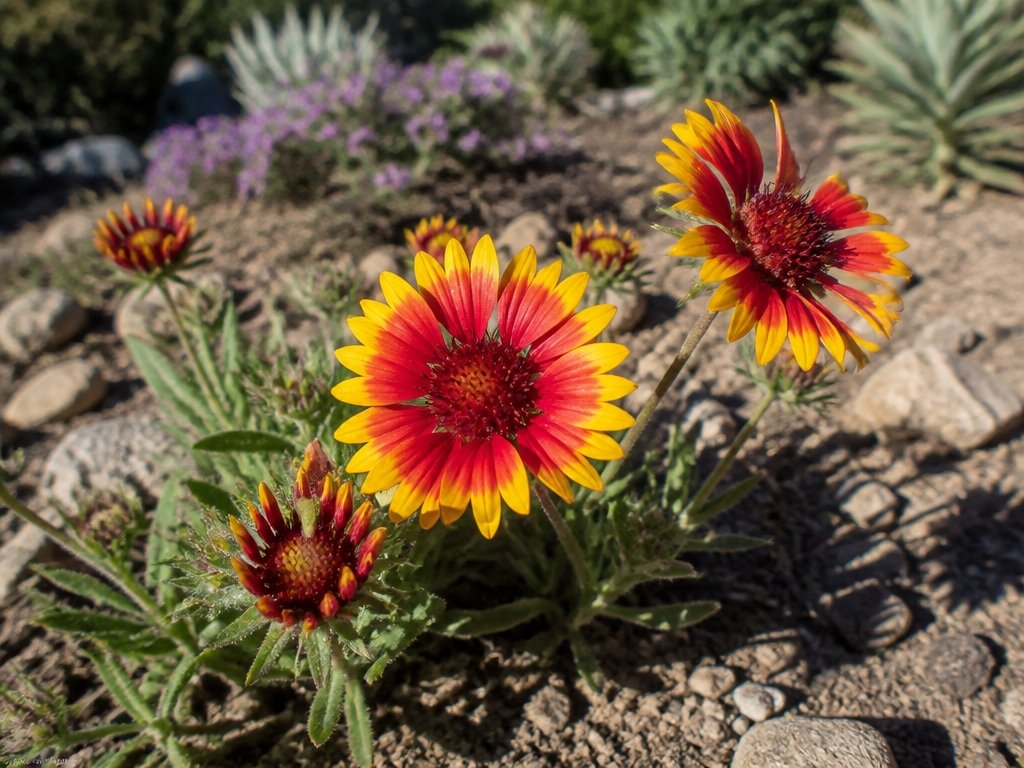
For gardeners seeking vibrant blooms in poor soil conditions, blanket flower delivers reliable performance with minimal water and maintenance. This perennial produces red and yellow flowers from summer through fall. Blanket flower tolerates sandy, rocky, and nutrient-poor soils effectively.
The plant reaches two feet tall, requires full sun, and spreads steadily across garden spaces without demanding fertilizer or supplemental watering.
Black-Eyed Susan: Bright Gold Flowers in Full Sun
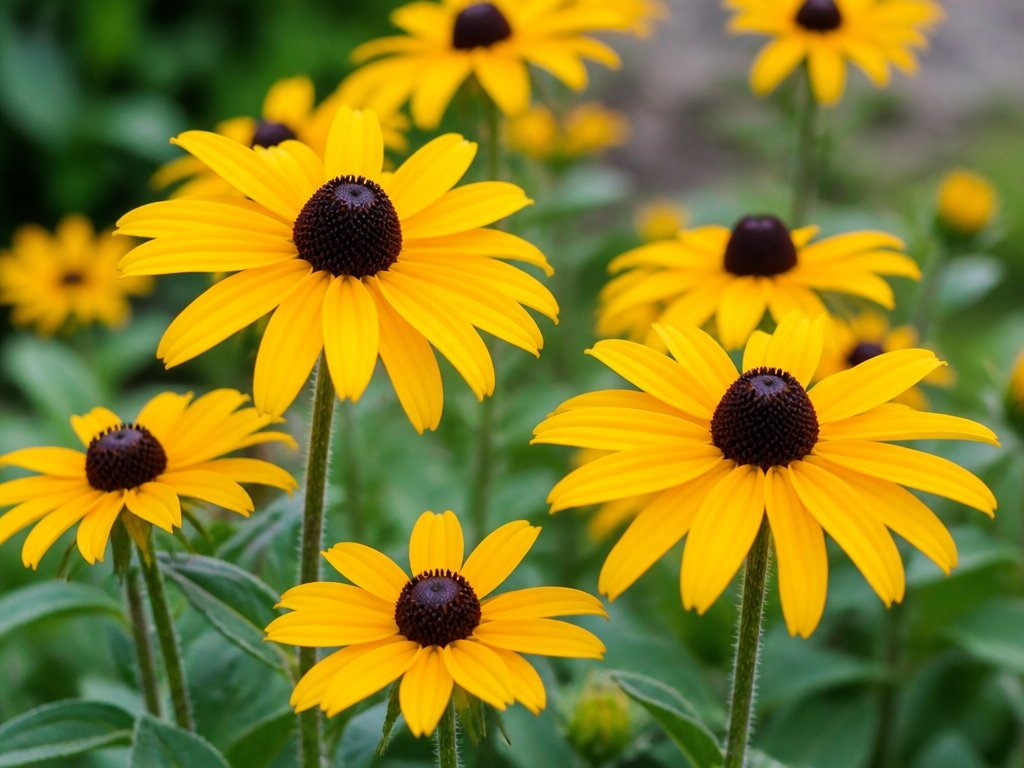
Black-eyed Susan shares the drought tolerance of blanket flower, yet delivers bright golden-yellow petals with dark brown centers that distinguish it in garden spaces. This perennial thrives in full sun and poor soil conditions, requiring minimal water once established.
Rudbeckia, the botanical name, blooms from summer through fall, attracting pollinators while needing little maintenance or fertilizer. Like other native plant front yards, it also supports local wildlife while staying low maintenance. In a desert-friendly color palette, its warm blooms can add a striking accent to an arid landscape.
Yarrow: Flat Clusters That Handle Heat and Neglect
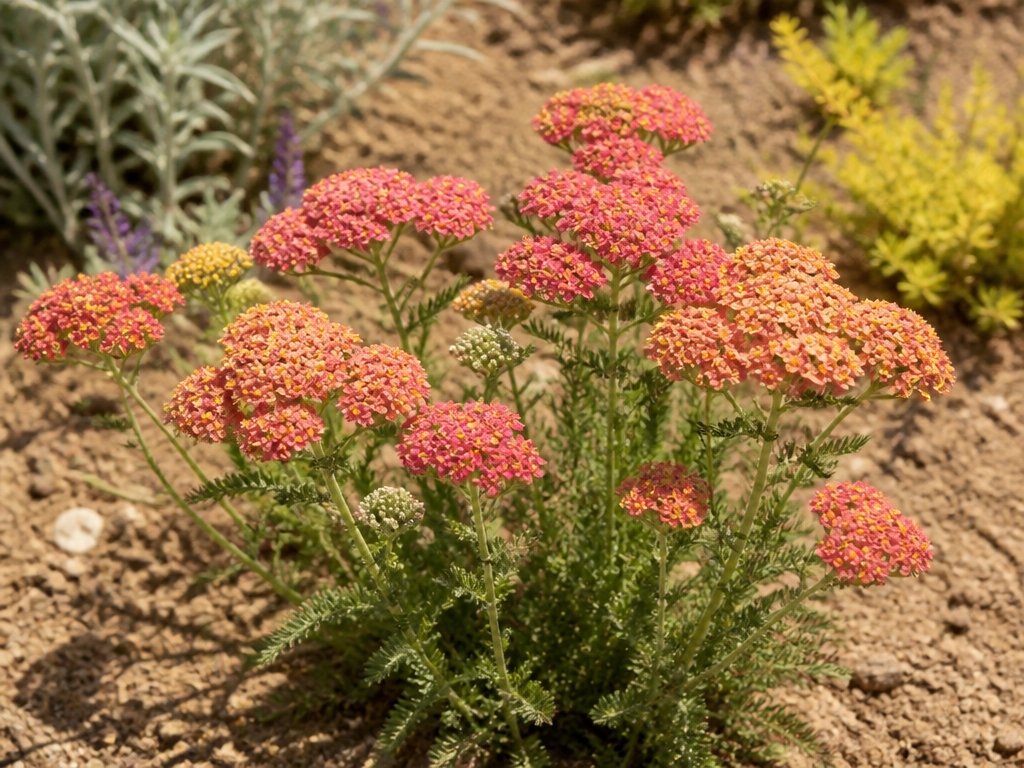
Yarrow stands as another exceptional drought-tolerant perennial, offering flat flower clusters that withstand intense heat and extended periods without water. The plant produces blooms in yellow, pink, and red varieties.
Yarrow requires minimal maintenance once established, tolerates poor soil conditions, and attracts pollinators. It reaches heights between one and three feet, depending on the cultivar selected.
Phlox: Fragrant, Drought-Tolerant Blooms
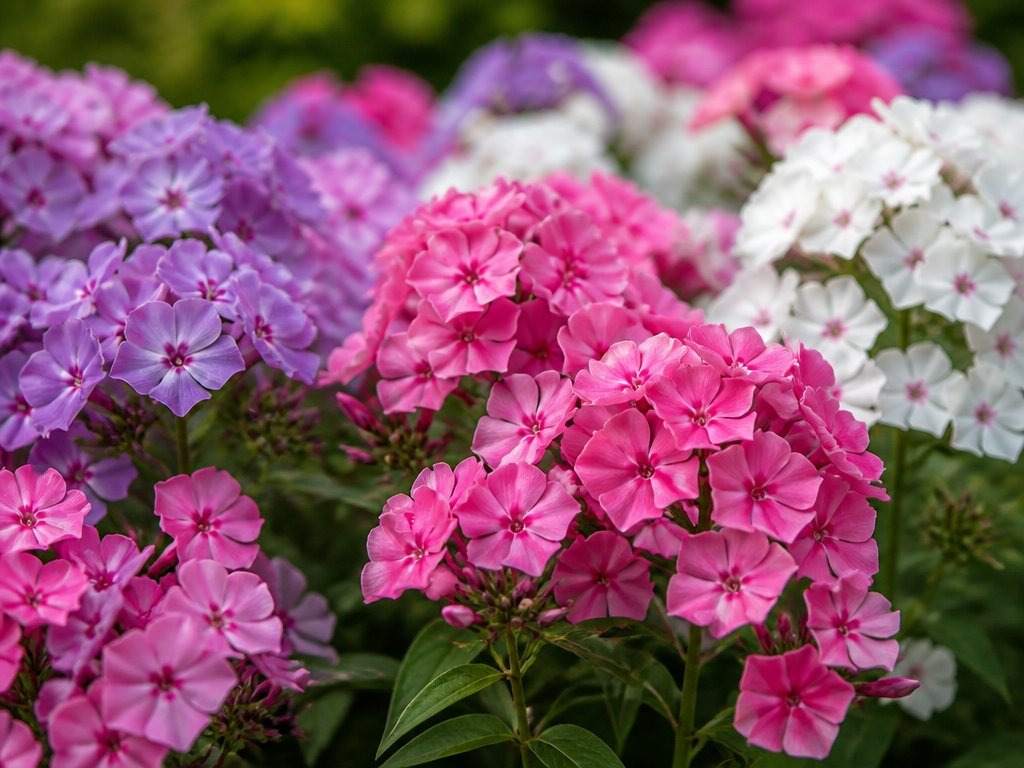
Phlox delivers both fragrance and drought tolerance, making it a practical addition to water-conscious gardens alongside heat-resistant plants like yarrow.
Varieties including creeping phlox and garden phlox thrive in full sun with minimal watering once established. Their clustered flowers bloom in pink, purple, white, and red shades. Phlox requires well-draining soil and tolerates poor conditions effectively.
Russian Sage: Airy Texture and Extended Flowering
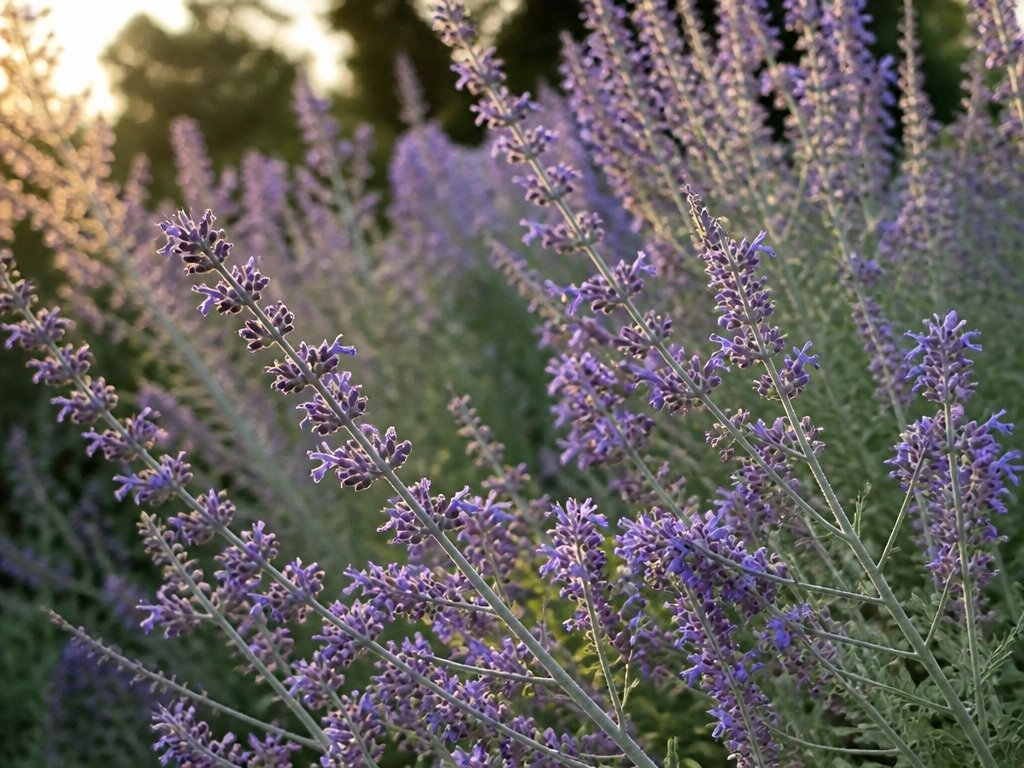
Because Russian sage produces delicate, fine-textured foliage and prolongs blooming periods well into autumn, it serves as a valuable addition to drought-resistant gardens. The plant reaches three to four feet tall, displaying lavender-blue flowers from summer through fall.
Russian sage tolerates poor soil and full sun conditions effectively, requiring minimal water once established and minimal maintenance throughout its growing season.
Lavender: Fragrance and Performance in Dry Conditions
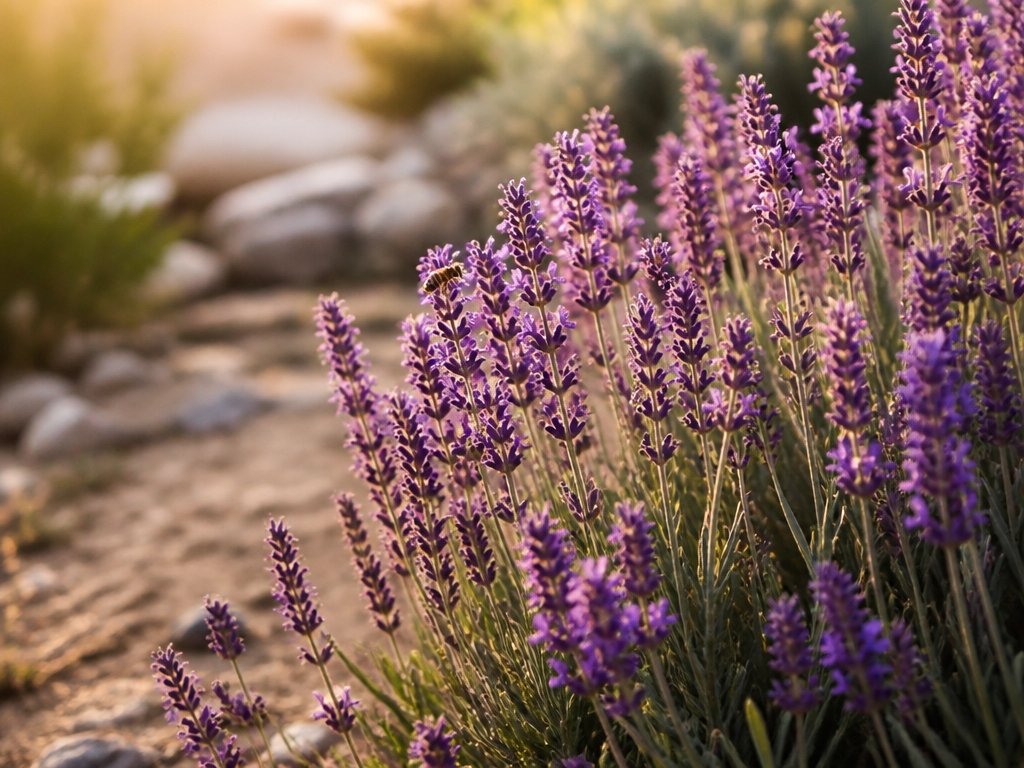
Lavender stands as one of the most reliable drought-tolerant perennials, offering both fragrance and visual appeal to water-wise gardens. English lavender and Spanish lavender varieties thrive in full sun, well-draining soil, and minimal water once established.
The plants produce purple, pink, or white flower spikes from summer through fall. Deadheading spent blooms extends flowering duration and maintains compact growth habits. For best results, plant them in well-draining soil to help prevent root rot and support healthy growth.
Salvia: Spiky Blooms That Attract Pollinators
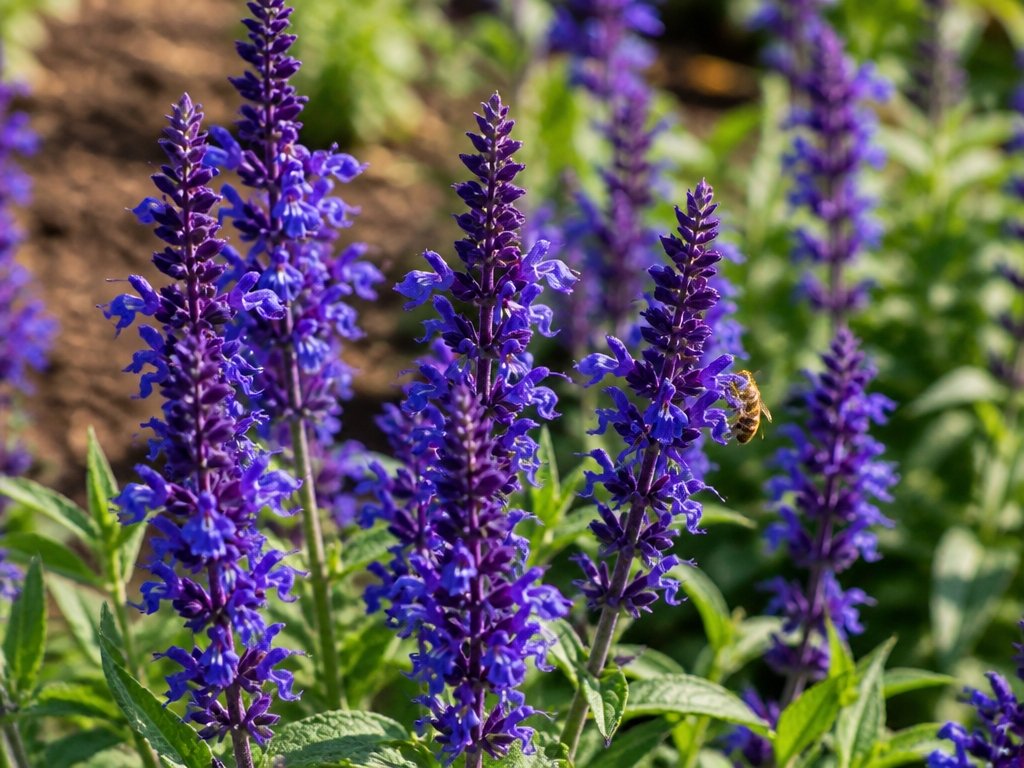
While lavender provides fragrance and visual structure in dry gardens, salvia offers another drought-tolerant option with distinctive spiky flower formations and strong pollinator appeal. Salvia species, including Russian sage and meadow sage, thrive in poor soil with minimal water. Their tubular flowers attract bees, butterflies, and hummingbirds.
Most salvias require full sun and well-draining soil for peak performance in arid conditions.
Gaura: Delicate Spires and Minimal Water Needs
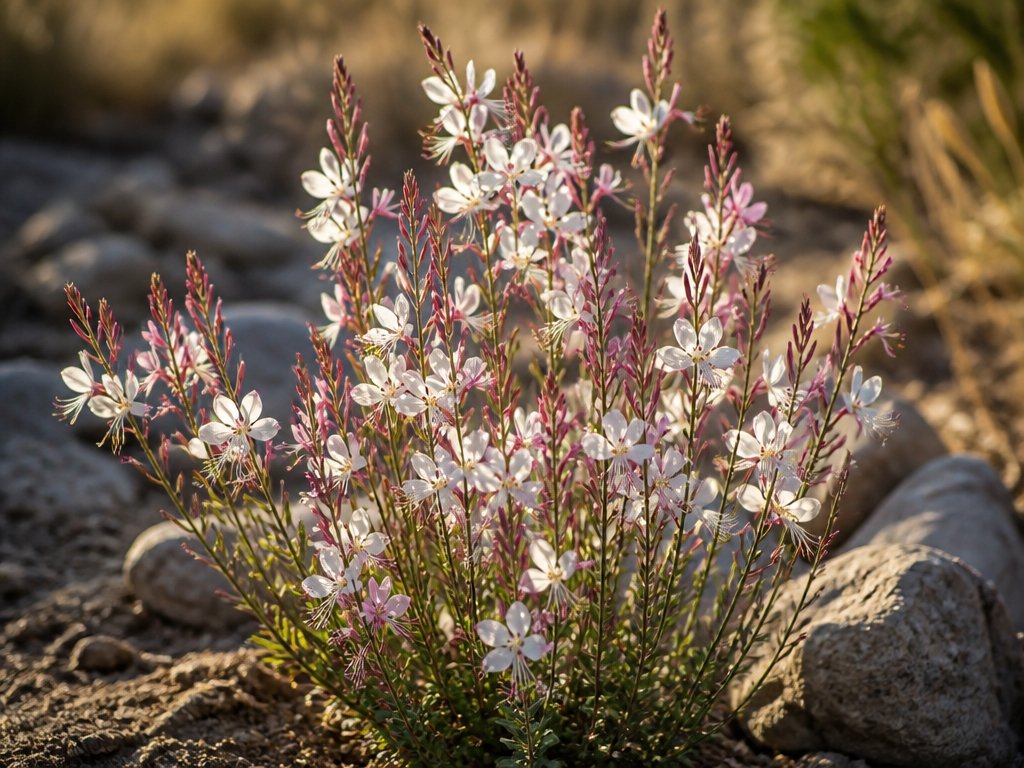
As another excellent choice for drought-tolerant gardens, gaura produces tall, airy flower spikes that sway gracefully in the breeze. The plant requires minimal water once established, thriving in full sun and poor soil conditions. Gaura blooms throughout summer, displaying pink or white flowers.
It spreads via self-seeding, needs little maintenance, and tolerates heat well, making it practical for water-conscious gardeners.
Achillea: Feathery Beauty That Blooms for Months
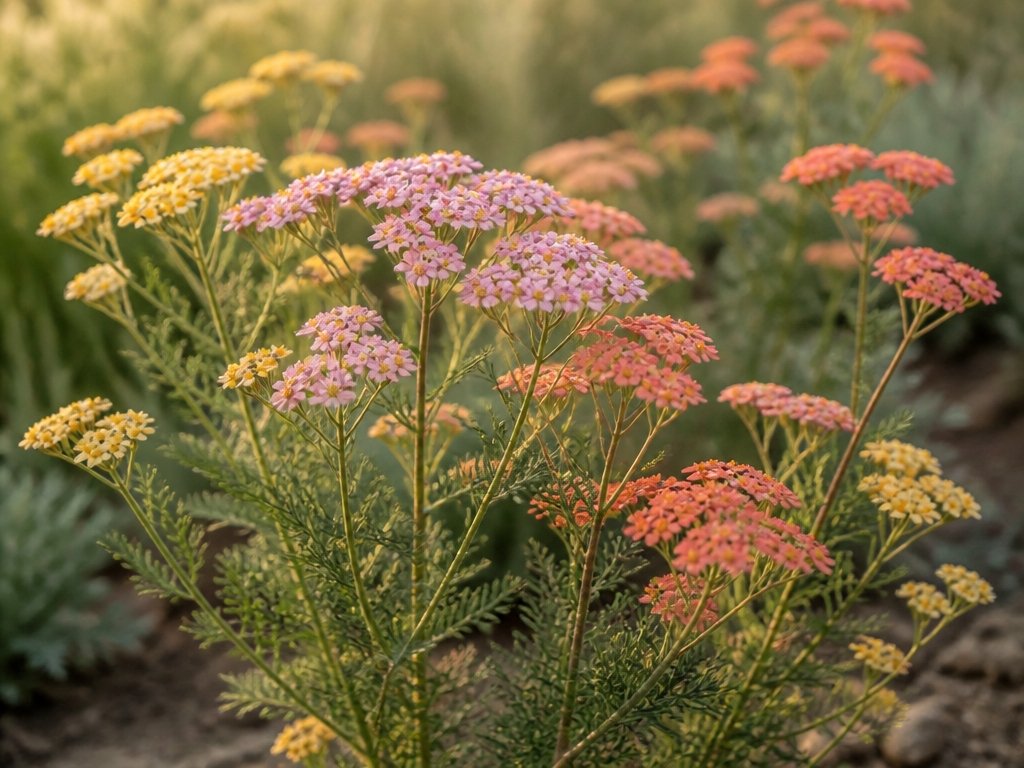
Achillea, commonly known as yarrow, stands out among drought-tolerant perennials for its finely textured foliage and extended flowering period. This plant produces flat-topped flower clusters in red, yellow, pink, and white varieties.
Achillea thrives in full sun and poor soil conditions, requiring minimal water once established. Blooms appear from early summer through fall, providing reliable color for months without demanding maintenance or fertilization.
Ornamental Grasses: Year-Round Texture and Movement
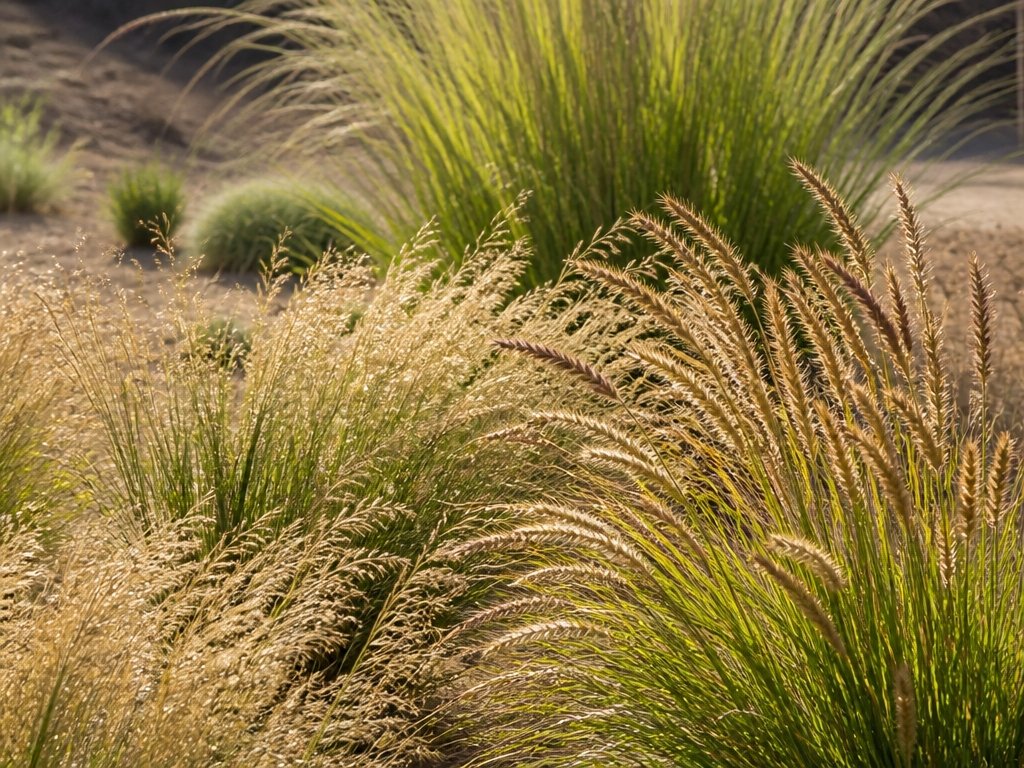
Ornamental grasses consistently deliver visual interest throughout all seasons, offering texture and movement that many perennials cannot match. Varieties like blue fescue, feather reed grass, and fountain grass thrive in poor soil with minimal water. Their fine foliage creates flowing forms, while dried seed heads provide winter structure.
These grasses require little maintenance once established.
Sedum Autumn Joy: Structural Beauty Through Fall
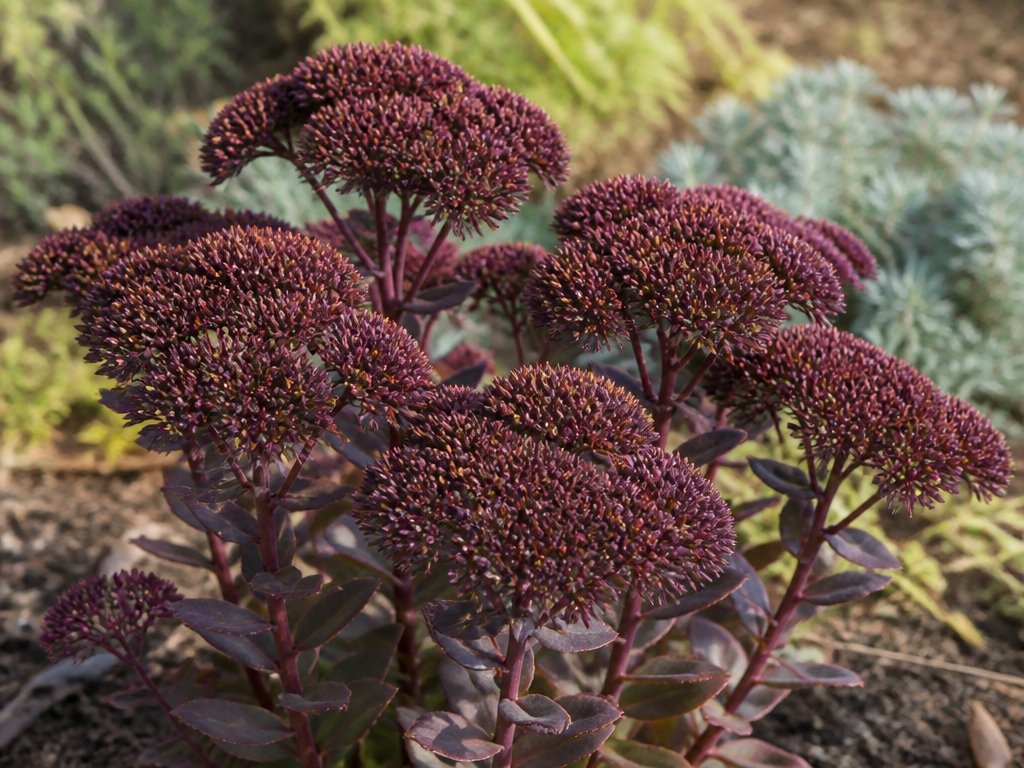
While ornamental grasses provide movement and texture, sedums offer something equally valuable: persistent structure that extends well into winter.
Sedum Autumn Joy produces pink flowers that shift to deep red, then bronze, maintaining visual interest through frost. The sturdy stems remain upright when dried, creating architectural elements in the landscape. This cultivar tolerates poor soil and full sun conditions exceptionally well, requiring minimal maintenance throughout seasons.
Frequently Asked Questions
How Often Should I Water Drought Tolerant Perennials During Their First Year After Planting?
During their first year, newly planted drought-tolerant perennials require regular watering to establish strong root systems. They should be watered deeply once or twice weekly, depending on rainfall and soil conditions, until they become fully established.
What Soil Amendments Improve Drainage in Heavy Clay Soils for These Plants?
When it comes to breaking ground with clay improvement, organic matter proves essential. Gardeners should incorporate coarse sand, compost, and perlite into clay soils. These amendments increase porosity, enhance water drainage, and create ideal growing conditions for plants requiring excellent soil structure.
When Is the Best Time to Plant Drought Tolerant Perennials in My Region?
The ideal planting time for drought-tolerant perennials typically occurs in spring or early fall. These seasons provide adequate moisture and moderate temperatures, allowing plants to establish strong root systems before facing summer heat or winter cold stress.
How Do I Prevent These Plants From Becoming Overcrowded or Invasive Over Time?
One should regularly divide established perennials every few years to control their expansion. Deadheading spent flowers prevents unwanted self-seeding. Installing physical barriers like root dividers around vigorous species effectively contains their growth boundaries.
Which Drought Tolerant Perennials Work Best for Containers and Raised Beds?
Container gardeners could wait a million years for better options than sedums, sempervivums, and lavender. These drought-tolerant perennials thrive in confined spaces, requiring minimal soil depth and water. Their compact growth habits prevent overcrowding concerns previously discussed, making them ideal for raised beds.
Conclusion
Drought-tolerant perennials function as botanical anchors in arid landscapes, their deep roots symbolizing resilience and self-sufficiency. These plants—Sedum, Sempervivum, Coreopsis, and others—represent sustainable gardening through their minimal demands. Their persistent blooms and structural forms create visual interest while conserving water resources. Gardeners selecting these species invest in long-term landscape stability, establishing gardens that endure environmental stress without intensive intervention or resources.