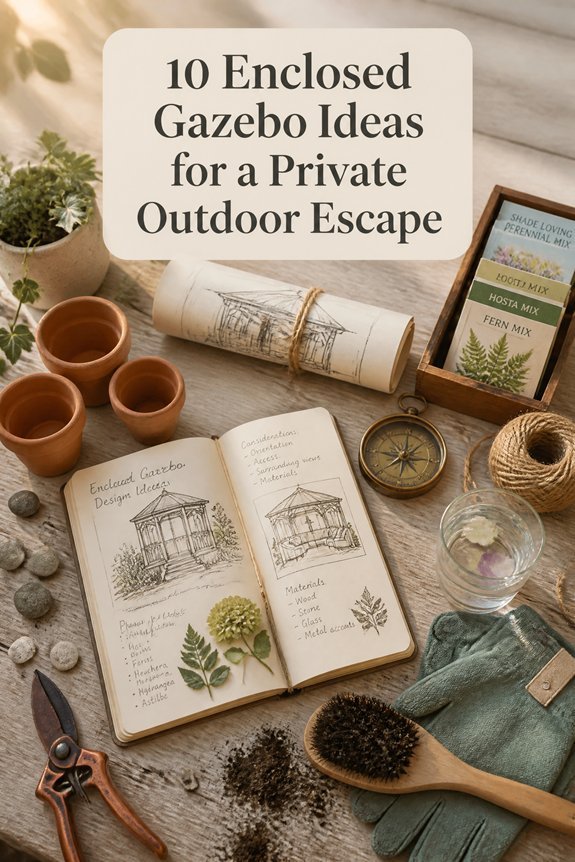
Outdoor gazebos have become essential for homeowners seeking peaceful backyard escapes. These structures blend practicality with comfort, offering shelter from both insects and harsh weather.
Whether you need a quiet reading nook or an entertainment space, there’s a design to match your lifestyle.
Screened enclosures remain popular for keeping mosquitoes and flies at bay during summer evenings. Polycarbonate roofing blocks harmful UV rays while letting natural light filter through.
For those wanting unobstructed garden views, all-glass walls create a seamless connection between indoor and outdoor spaces.
Flexibility matters when privacy needs change throughout the day. Retractable curtains or sliding panels let you control exactly how exposed you feel to neighbors.
Some homeowners opt for four-season rooms with integrated heating systems, extending their usable space well into winter months. Each approach balances specific priorities against available budgets.
Classic Screened Gazebo for Year-Round Bug Protection
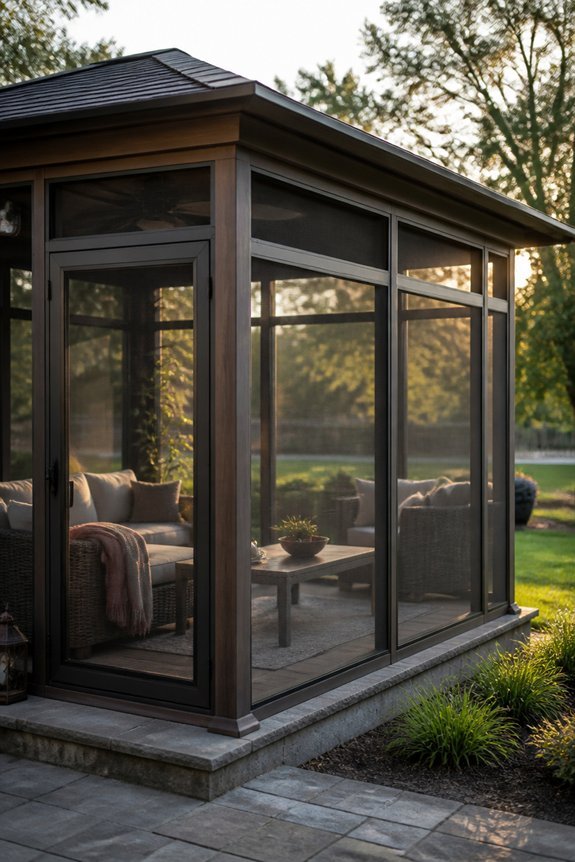
Bugs can ruin a perfectly good evening outside. That’s where screened gazebos come in handy. You get fresh air flowing through, but mosquitoes and flies stay out.
These gazebos usually start around 10 by 12 feet. That’s plenty of room for a dining set or some comfy chairs. The mesh is tough stuff, fiberglass or aluminum, so it holds up against weather and wear. Steel or aluminum frames keep everything sturdy.
You can install these permanently on concrete or use removable anchors for flexibility. Some models even let you roll up the panels when you don’t need them. Just plan on cleaning the screens now and then, and replacing the mesh when it gets worn.
They work great through spring, summer, and early fall. Basically any time bugs are out in full force, you’ve got solid protection.
Also read: 12 Octagon Gazebo Ideas That Look Classic and Elegant
Polycarbonate Roof Gazebo With Natural Light and Weather Protection
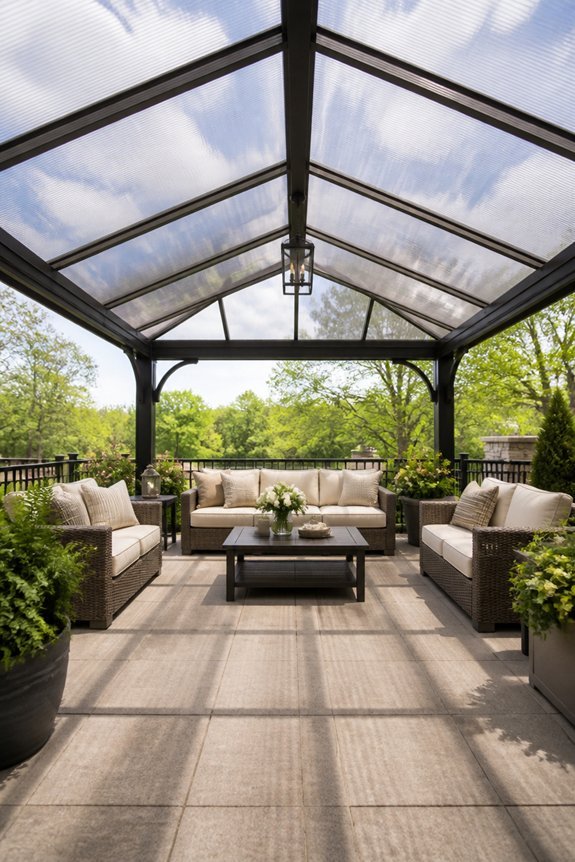
Screened gazebos keep bugs out, but they have their trade-offs. You lose some of your view, and they won’t protect you from rain or blistering sun.
Polycarbonate roof gazebos solve these problems nicely. The panels let sunlight pour in while blocking harmful UV rays and keeping you dry during storms.
Materials like Lexan or Makrolon handle impacts well. Hail and falling branches bounce right off instead of shattering the roof.
You’ll need solid framing for these structures. Aluminum or steel supports do the heavy lifting and keep everything stable over time.
Cleanup stays simple. A quick wash with mild soap and water keeps the panels clear and scratch-free.
These gazebos work beautifully over patios, gardens, and decks. You get weather protection without feeling closed in from above.
Consider tinted panels if you want more privacy. Retractable sections help you control airflow on sticky days. Panel thickness ranges from 4mm to 10mm, so match your choice to your local climate.
All-Glass Gazebo for Panoramic Backyard Views
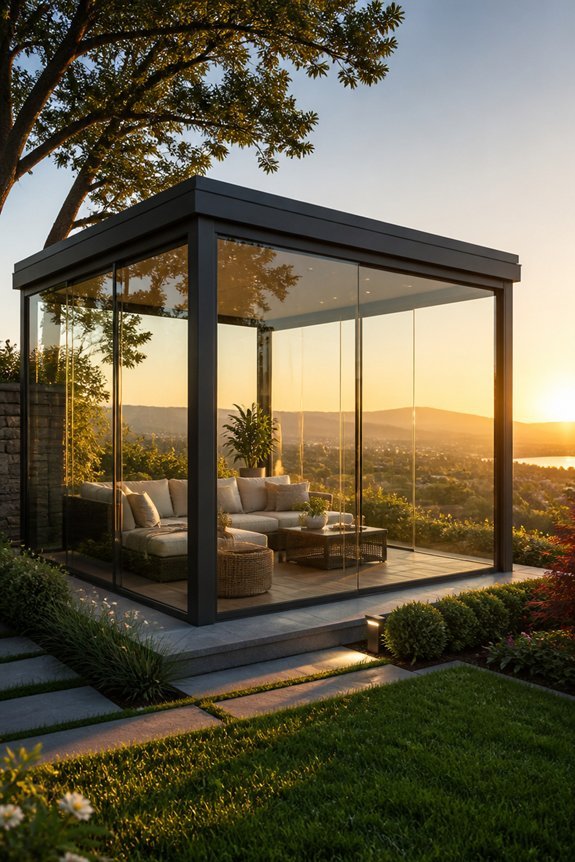
An all-glass gazebo gives you the best of both worlds. You get shelter from the elements without losing your view. The transparent walls and roof open up your entire yard, so nothing blocks your sightline.
Most designs use tempered or laminated glass for safety. Natural light pours in during the day, which means less need for electric lighting. You can also choose frosted or tinted panels if privacy becomes a priority.
Before installing one, check your foundation needs and local wind codes. Good ventilation matters too. Upkeep is simple: just clean the glass regularly to keep everything crystal clear. This style works especially well if your property overlooks gardens, hills, or water.
Retractable Curtain Shelter for Privacy and Sun Control
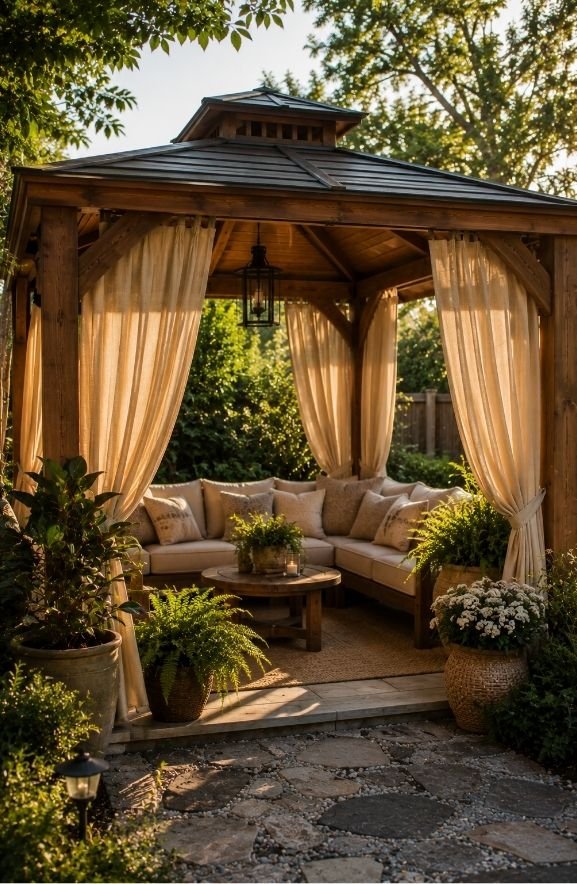
Retractable curtain systems give you flexible control over sunlight, heat, and privacy in your gazebo. You can adjust weather-resistant fabric panels along tracks throughout the day.
Motorized or manual options make operation simple. Materials like Sunbrella block UV rays and stand up to the elements. Install tracks along the gazebo perimeter or specific sections you want to cover.
Close panels during hot afternoons to cut cooling costs. Open them for gentle morning light. You can also block views from neighbors when needed.
Keep systems running smoothly with occasional cleaning and track lubrication. These curtains pair well with other enclosure types for extra comfort and control.
Four-Season Room With Heating and Insulation
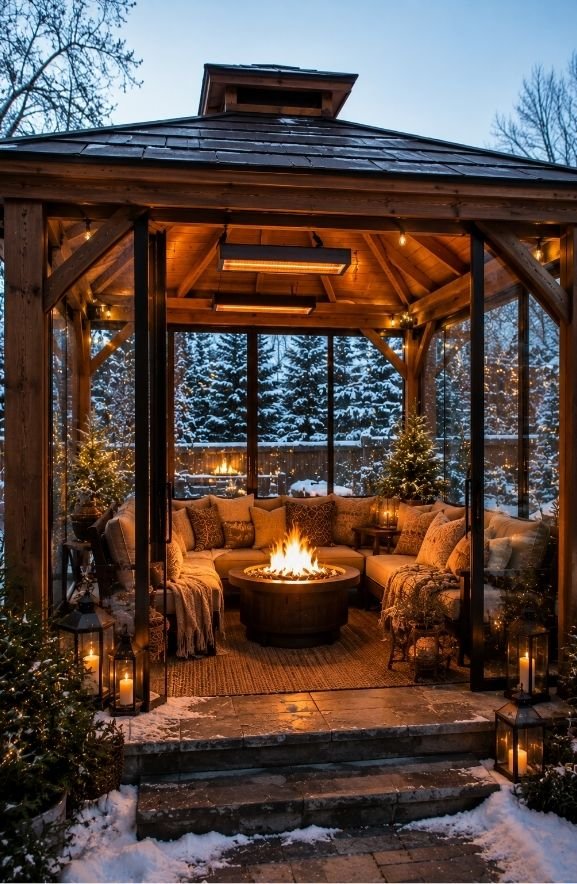
A four-season room turns your gazebo into true living space you can enjoy any month of the year. You’ll need insulation, reliable heat, and walls that can stand up to the elements.
Fiberglass insulation or foam panels work well for keeping winter warmth inside. Radiant floor heating keeps your toes cozy, or you might prefer a mini-split system or portable heaters when temperatures drop.
Windows make a real difference here. Double-pane or triple-pane glass stops drafts and prevents that annoying condensation buildup. Pair those with sealed doors and good weatherstripping to create a tight envelope against outside air.
Inside, drywall or vinyl panels give you durability plus a clean look you’ll appreciate daily. Don’t forget ventilation though. You need airflow to manage moisture and keep air quality fresh throughout your seasons of use.
Electrical service must handle lighting, heating loads, and convenient outlets where you actually need them. Check your foundation too. Moisture creeping up from below creates headaches you’d rather avoid.
Year-round entertaining becomes possible. Picture morning coffee watching snowfall, or a summer evening with fans running. Hobby space, home office, guest overflow—you gain real flexibility.
Pull permits before starting. Bring in pros to assess your existing structure. That gazebo frame may need reinforcement once you add walls, insulation, and mechanical systems. The weight adds up faster than you’d expect.
Open-Roof Screened Structure With Living Wall Design
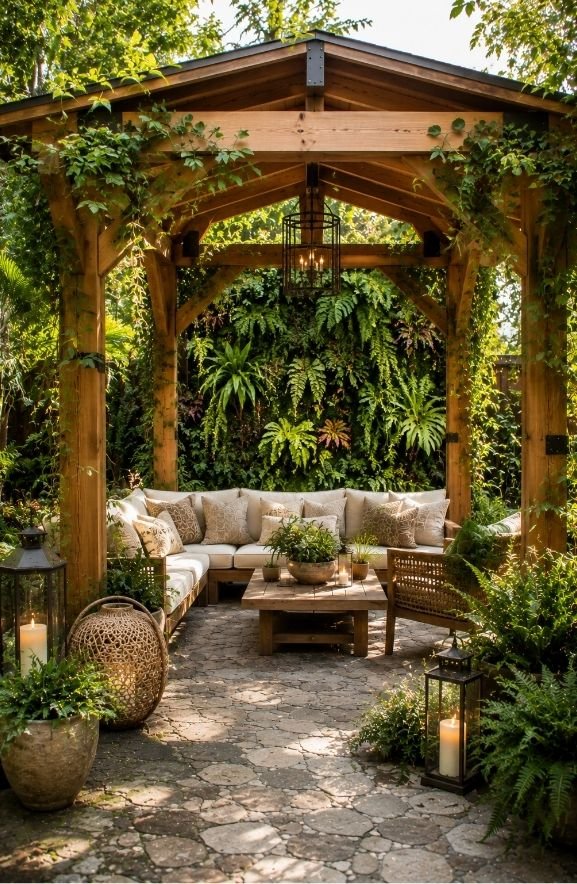
Open-roof screened structures give you shade and bug protection without blocking sunlight or fresh air. It’s a simple twist on the classic gazebo.
Living walls bring these structures to life. Climbing plants like clematis, ivy, or jasmine cover the sides. They cool the space naturally through evapotranspiration. You only need twelve to eighteen inches of soil depth. A drip irrigation system keeps everything thriving with minimal effort.
The plants do more than look beautiful. They cut heat penetration and soften harsh sunlight. Pollinators and birds show up too, giving your backyard a little ecosystem boost.
Upkeep is straightforward. Prune regularly, fertilize seasonally, and watch for pests. The open roof lets rain through and keeps air moving, so moisture never builds up.
This design works best in warm climates where staying cool matters more than blocking weather. It’s also easier on your budget than building a fully enclosed four-season room.
Compact Screened Shelter for Small Backyards
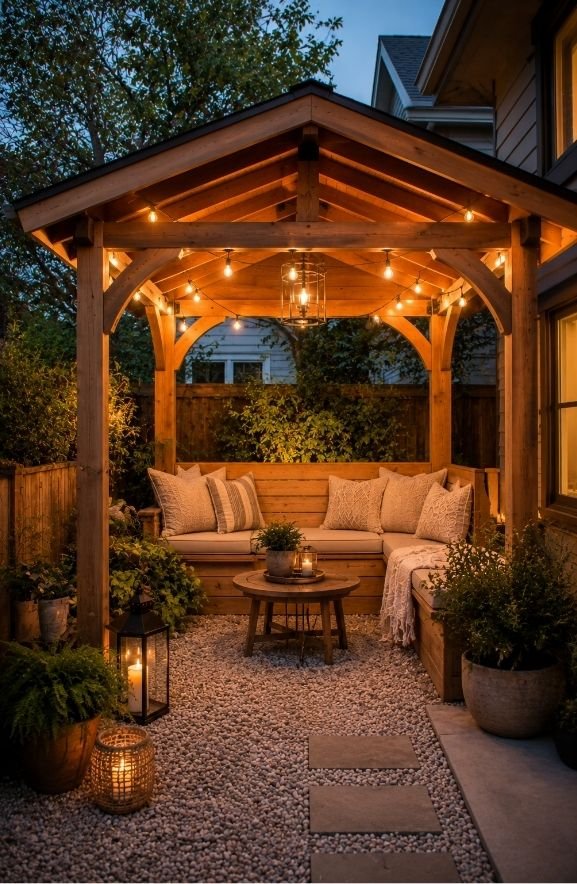
A compact screened shelter makes the most of tight outdoor spaces. You won’t sacrifice your whole yard to get functional coverage. Most options run 8×8 feet up to 10×12 feet. That size fits nicely in smaller properties while still giving you room to relax.
Corner setups work smart by using your existing fence lines. You’ll spend less on materials this way. Narrow yards benefit from rectangular shapes tucked along property edges. Aluminum frames paired with mesh screening keep things light. Installation stays simple, and upkeep stays manageable.
Look for removable panels when seasons change. Built-in benches save space along the walls. Gravel or concrete floors handle drainage well. Ground-level anchors keep everything steady when wind hits. You get protection from bugs and sun without giving up the rest of your yard.
Premium Gazebo With Power and Water Access
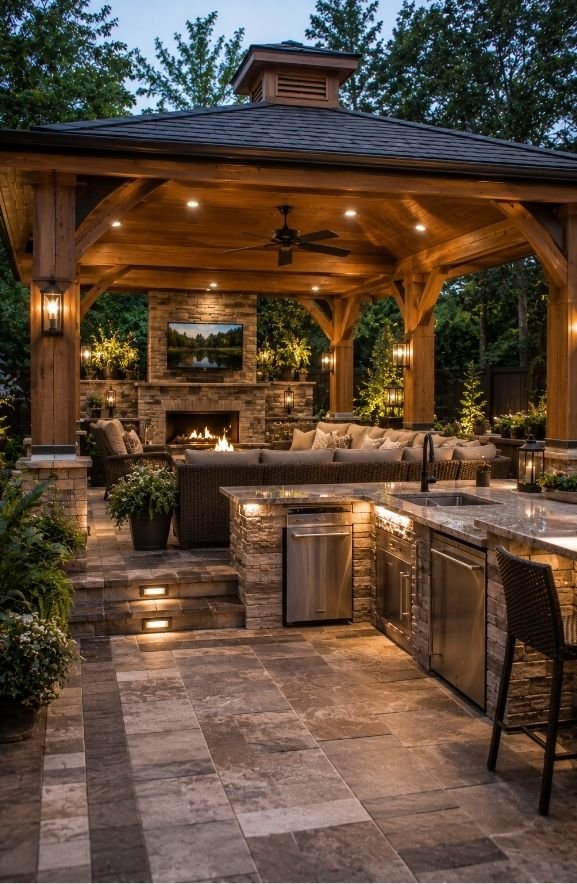
Adding power and water turns your gazebo into a true outdoor room. You’ll have lights, music, and cold drinks ready whenever guests arrive.
This setup runs deeper than convenience. A mini fridge keeps refreshments nearby. Charging stations keep everyone’s phones powered. Fans or heaters extend your season by months. Water lines support sinks, wet bars, or simple garden irrigation.
Getting it done right means calling professionals. Electricians handle the wiring and safety breakers. Plumbers manage supply lines and drainage. Everything travels through underground conduit to survive the elements. Local permits seal the deal legally.
Your final bill depends on how far the gazebo sits from your house and how complex your wish list grows. Most homeowners spend between $2,000 and $5,000 for outlets plus a water line.
DIY Screened Kit Under $2,000
Want outdoor protection without breaking the bank? A screened kit might be your answer. Prefab options run from $1,200 to $2,000 and skip the pricey electrical and plumbing work entirely.
Most kits come with aluminum frames, screen panels, and roof materials. You just need to handle assembly and a solid foundation. Popular picks include 10-by-10-foot models from Gazelle and Coleman. Plan for one to three days of work with basic tools. You’ll also need a level concrete pad or deck ready to go.
The screen material keeps bugs out and blocks harmful UV rays while letting fresh air through. Vinyl or aluminum frames stand up to weather with almost no upkeep. If a panel tears, replacements run $50 to $150. That’s a fraction of what custom builds cost, and you still get a functional outdoor space.
Hot Tub Retreat With Ventilation and Weatherproofing
A hot tub gazebo needs smart moisture control. Steam rises fast, so place exhaust fans or louvered vents up high. They pull damp air out before it settles into wood.
Waterproof everything you can. Seal the seams, treat the framing, and pick panels that shrug off moisture. Vinyl and polycarbonate work well here.
Slope the roof so rain and meltwater run off quickly. Pooling water finds every weak spot.
For flooring, choose something grippy and water-safe. Composite decking or sealed concrete both hold up nicely.
The structure itself carries serious load. Water weighs tons. Add snow and humidity stress, and your supports face real pressure. Build accordingly.
Drainage around the base matters just as much. Water that collects underneath causes settling and rot over time.
A dehumidifier helps during heavy use periods. It backs up your vents when steam production peaks.
Check seals regularly. Look for mold in corners and crevices. Make sure every system still does its job.
Frequently Asked Questions
What Permits or Zoning Regulations Do I Need Before Building an Enclosed Gazebo?
Building permits and zoning regulations vary by location. One should contact local building departments to verify setback requirements, square footage limits, foundation specifications, and whether the structure requires a foundation permit or permanent structure classification before construction begins.
How Much Does It Typically Cost to Build a Professional Enclosed Gazebo Structure?
Professional enclosed gazebo structures typically cost between $3,000 and $15,000, varying by size, materials, and complexity. Basic DIY versions run cheaper; custom designs with premium finishes command higher prices.
What Maintenance Schedule Should I Follow for Different Gazebo Materials and Components?
Maintenance schedules vary by material: wood requires annual staining and sealant reapplication; vinyl needs quarterly cleaning; metal components demand semi-annual rust inspections; roofing materials need biannual debris removal and inspection for damage or deterioration.
Can I Install an Enclosed Gazebo on a Rental Property or Apartment Patio?
Installing an enclosed gazebo on a rental property requires landlord approval, as it constitutes a structural addition. Most leases prohibit permanent installations. Portable or removable options may be permissible with written consent.
How Do I Choose the Best Gazebo Style for My Specific Climate and Weather Conditions?
Research shows 73% of gazebo failures result from improper weatherproofing. One should evaluate local wind speeds, rainfall patterns, and temperature extremes. Polycarbonate panels suit harsh climates, while aluminum frames resist corrosion in humid regions.
Conclusion
An enclosed gazebo functions like a bridge between indoor comfort and outdoor space. One homeowner reported using their screened structure 300 more days annually than an open patio. Whether selecting polycarbonate roofing, retractable curtains, or glass panels, the right design creates a usable retreat year-round. Investment in proper ventilation, weatherproofing, and furnishings transforms a backyard feature into practical living space for families.