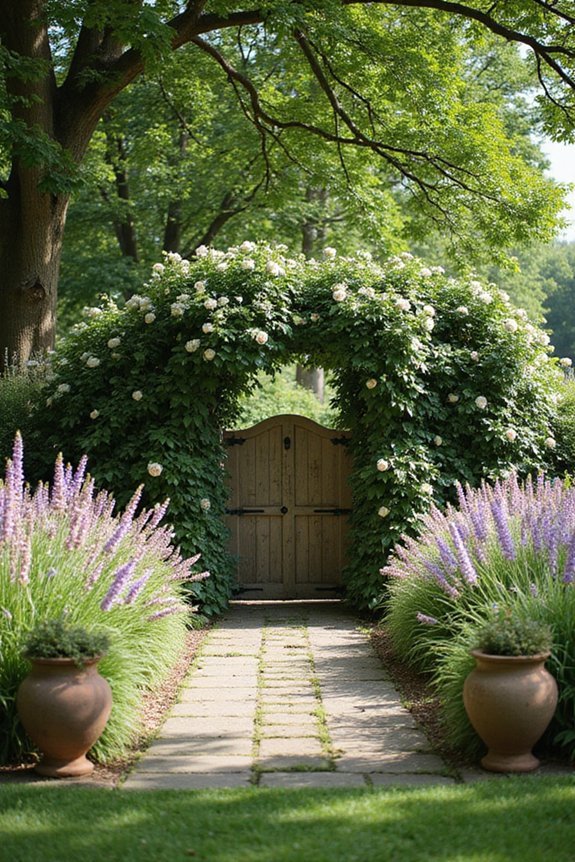
You can transform your front yard into a charming English cottage garden by incorporating classic elements like rose borders, stone pathways, and wrought iron details. These essential features—combined with strategic plantings of lavender, delphiniums, and foxgloves—establish the romantic foundation that defines this timeless style. Whether you’re working with a generous budget or seeking cost-effective solutions, understanding how to layer these components effectively will determine your garden’s ultimate success and appeal.
Classic English Cottage Garden With Rose Borders
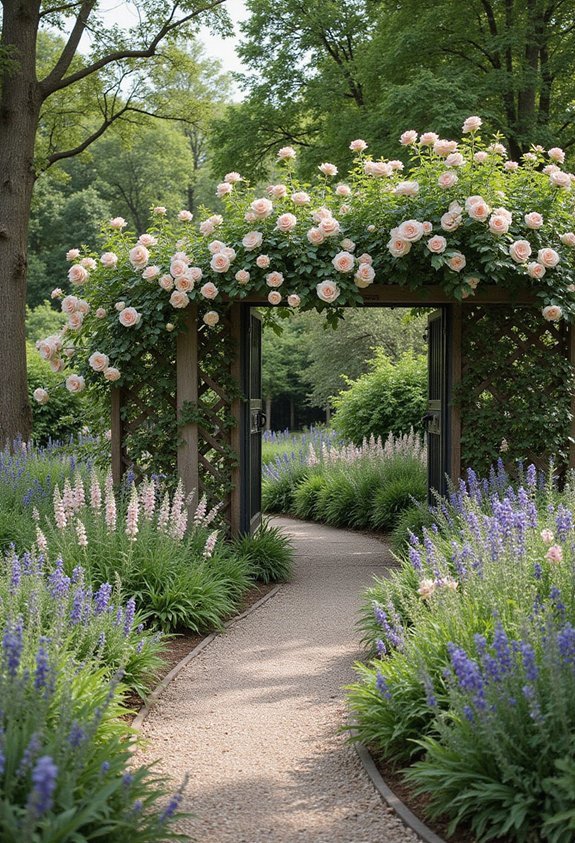
When you’re planning a classic English cottage garden with rose borders, you’ll want to understand that this timeless garden style combines densely planted flower beds with roses as the main focal point, creating a romantic and abundant appearance that’s both structured and seemingly effortless. You should select rose varieties that thrive in your climate, positioning them along garden edges or pathways for maximum visual impact. Plant complementary flowers like lavender, delphiniums, and foxgloves around your roses to create layered depth and texture. You’ll need to maintain consistent watering, deadheading spent blooms, and pruning to encourage healthy growth. Regular soil enrichment with compost guarantees your plants receive adequate nutrients, while proper spacing prevents overcrowding and improves air circulation, reducing disease risk and promoting the lush, full appearance characteristic of authentic English cottage gardens.
Also read: 23 FRONT YARD PRIVACY Ideas Without Looking Closed In!
Stone Pathways That Welcome Visitors
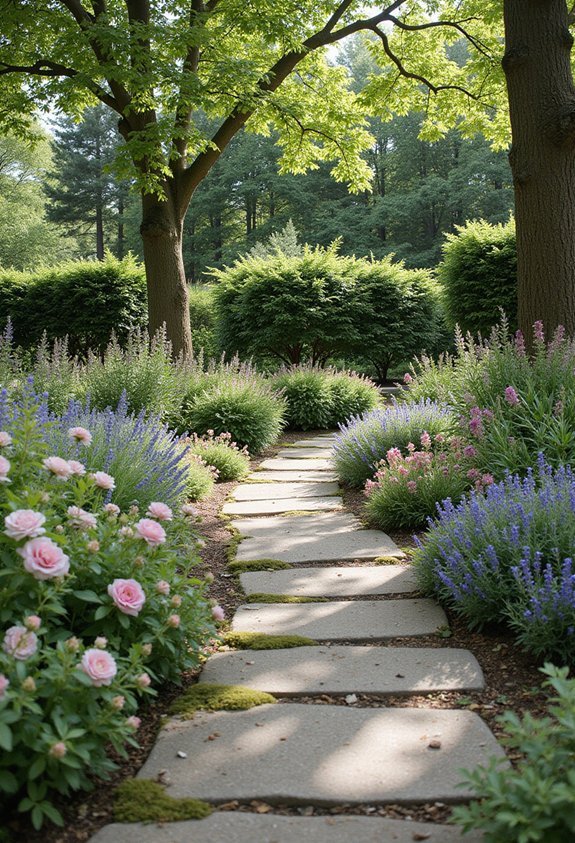
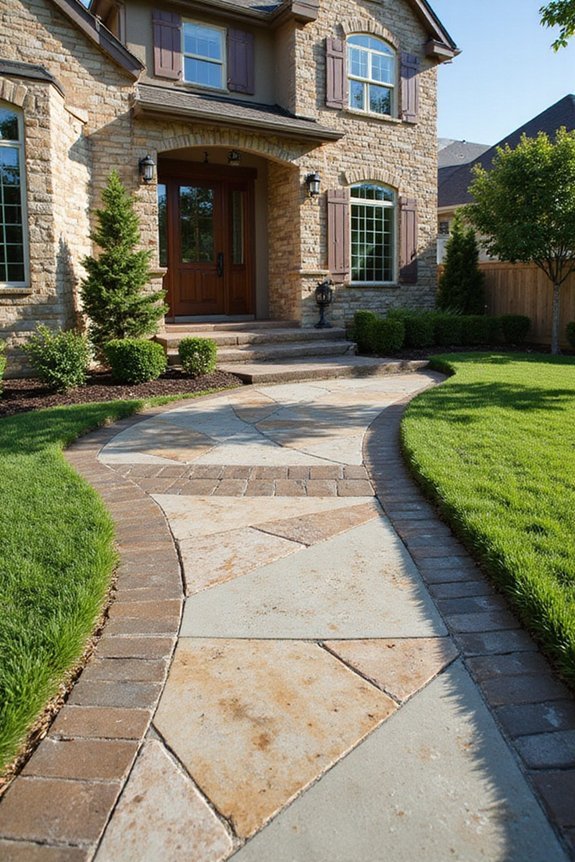
Stone pathways serve as the structural framework that guides visitors through your English garden front yard, connecting the cottage garden’s densely planted rose borders and complementary flowers into a cohesive, navigable space. You’ll want to choose materials like natural stone, gravel, or brick that complement your garden’s aesthetic while providing stable footing. Arrange your pathways to meander gently through planting beds, creating visual interest and encouraging exploration. Consider width carefully—wider paths accommodate two visitors walking side-by-side, while narrower ones feel more intimate. Position stepping stones to lead visitors naturally toward focal points like benches or flower clusters. Proper drainage prevents water pooling, maintaining pathway safety and longevity. Well-designed stone pathways transform your front yard into an inviting, functional garden space.
Wrought Iron Gates and Fencing Details
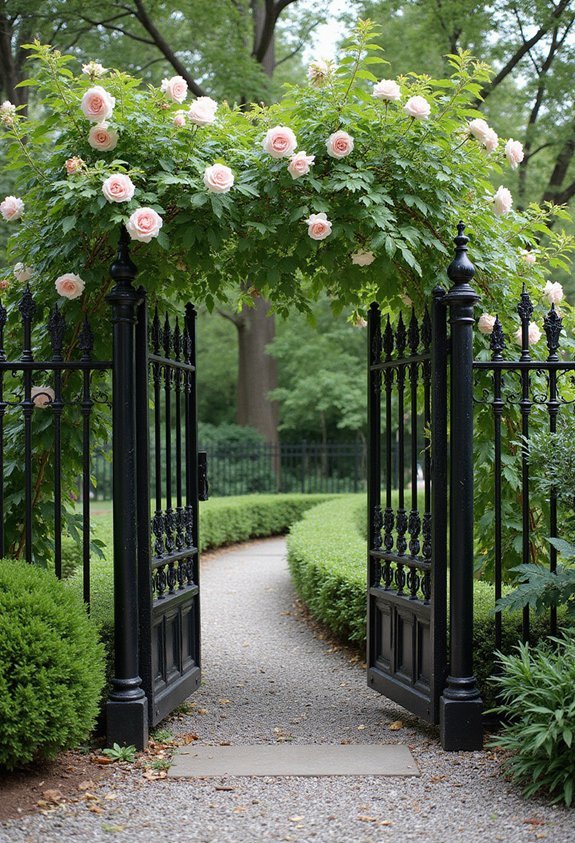
Wrought iron gates and fencing bring together both function and elegance, creating a distinctive boundary that frames your English garden front yard while establishing security and curb appeal. You’ll find that traditional designs featuring scrollwork, finials, and ornamental details complement classic garden aesthetics perfectly. When you’re selecting your gate style, consider matching it with your home’s architectural period for visual harmony. You should maintain wrought iron regularly by applying protective coatings to prevent rust and deterioration. Installing your fencing at appropriate heights—typically between three and four feet—balances privacy with sightlines. You can enhance your gate’s appeal by flanking it with climbing ivy, flowering vines, or potted specimens. Proper installation by professionals guarantees structural integrity and longevity, making your investment worthwhile for decades.
Brick Walls and Stone Borders
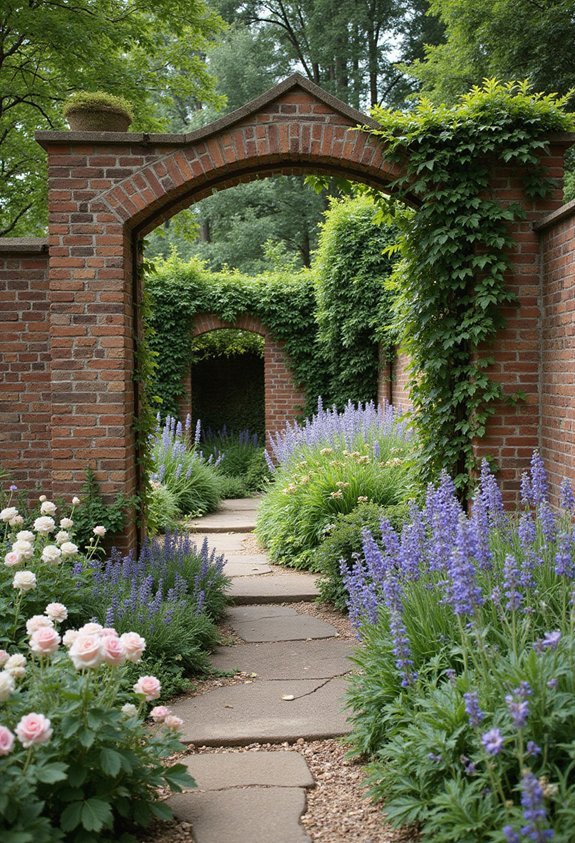
Solid boundaries like brick walls and stone borders offer you a more permanent and substantial framing option than fencing alone, providing both visual weight and practical durability to your English garden front yard. You’ll find that brick walls create defined edges while establishing a classic aesthetic that complements traditional garden designs. Stone borders, meanwhile, serve as practical _shifts_ between garden beds and pathways, preventing soil erosion and containing plantings effectively. You can arrange stones in various patterns—stacked, mortared, or loose-laid—depending on your desired formality level. Both materials weather beautifully over time, developing character that enhances your garden’s charm. When you’re selecting materials, consider local stone varieties and brick colors that harmonize with your home’s existing architecture, ensuring a cohesive, polished appearance throughout your front yard landscape.
Rose-Covered Archways and Pergolas
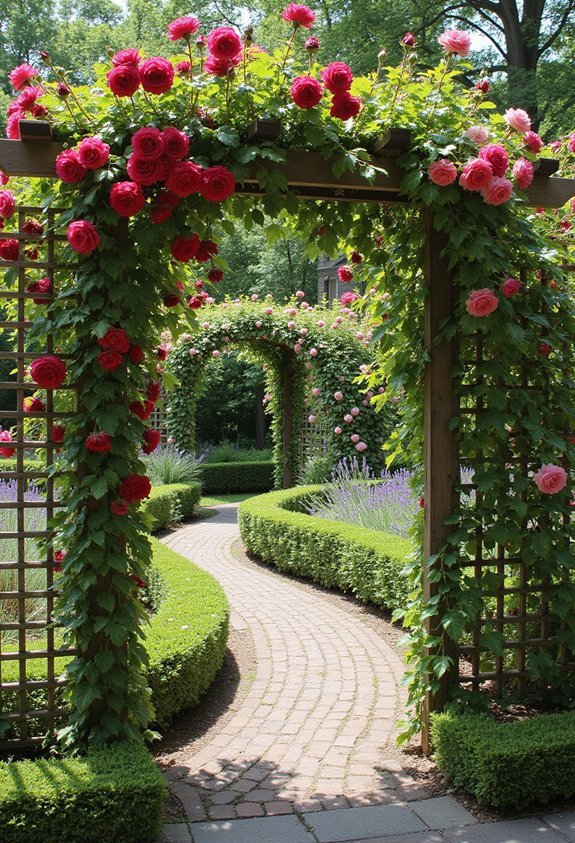
While brick walls and stone borders provide the foundational structure for your English garden front yard, archways and pergolas offer you vertical elements that add height, dimension, and romantic appeal to your landscape design. You can train climbing roses, clematis, or honeysuckle vines across these structures, creating natural canopies that frame your entryway beautifully. When selecting roses for covering archways, choose varieties that climb vigorously, such as climbing hybrid teas or rambling roses. You’ll want to install sturdy supports and tie vines regularly to guide their growth patterns. Proper pruning maintains shape and encourages flowering throughout the growing season. These architectural features not only enhance visual interest but also provide gentle shade, soften hard lines, and establish inviting pathways leading visitors through your front garden space.
Hedge Rows and Boxwood Patterns for Structure
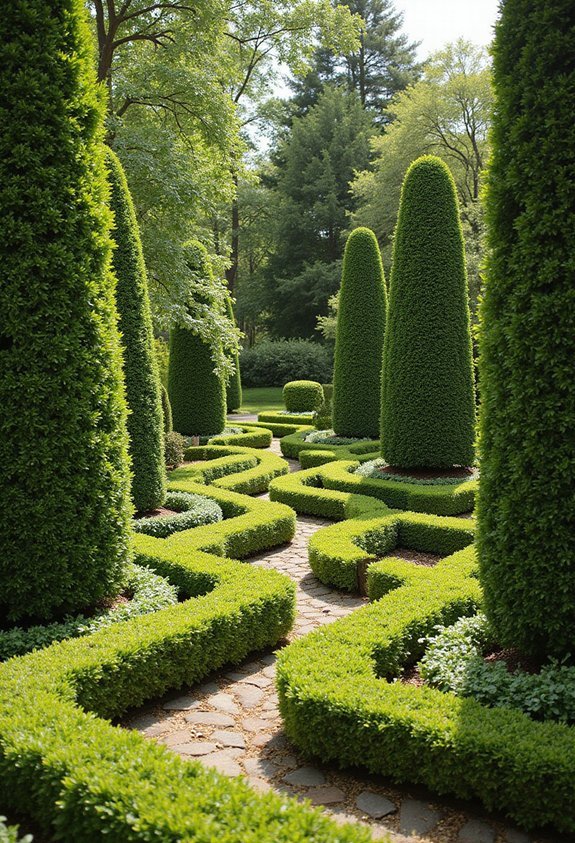
After you’ve established your archways and pergolas, hedgerows and boxwood patterns offer you another layer of structural definition that’ll shape the overall organization and visual flow of your English garden front yard. You’ll want to plant hedgerows in straight lines or curved formations to create garden rooms and define pathways throughout your landscape. Boxwood, being slow-growing and incredibly versatile, allows you to craft geometric patterns like parterres or simple borders that frame flower beds and walkways. These evergreen elements maintain their structure year-round, providing consistent visual boundaries. Position taller hedges strategically to guide visitors through your garden, while shorter boxwood patterns can outline planting areas and create depth. This combination establishes clear sightlines and enhances the formal sophistication characteristic of traditional English garden design.
Formal English Garden Topiary Styles
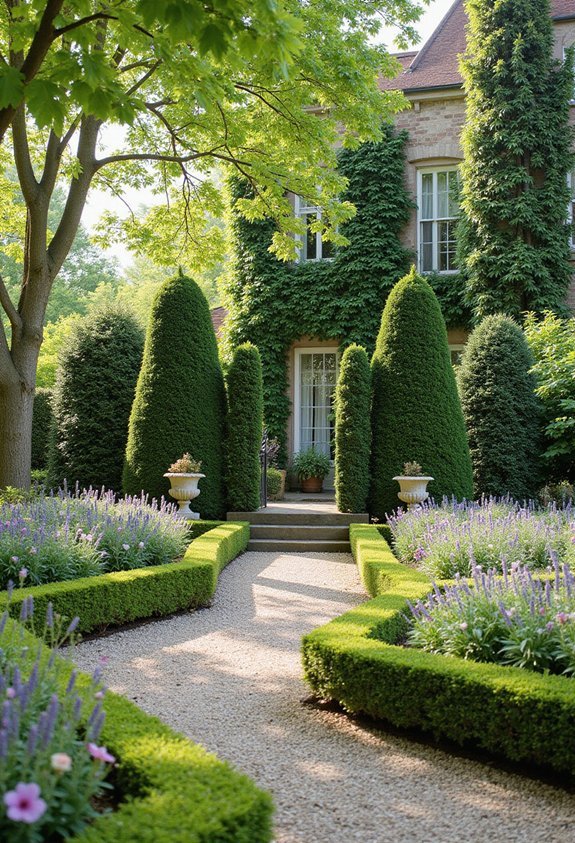
Once you’ve established your hedgerows and boxwood patterns, topiary becomes the next opportunity to elevate your garden’s formal aesthetic through carefully sculpted living plants. You’ll want to select slow-growing evergreens like boxwood, yew, or privet, which hold their shapes beautifully and require minimal maintenance. Classic formal shapes include cones, spheres, pyramids, and cylinders, arranged symmetrically throughout your front yard. You should prune your topiaries during late spring and early summer, removing new growth to maintain clean lines and defined forms. Strategic placement along pathways, near entrances, or flanking gates creates visual balance and sophistication. You’ll achieve the most impressive results by working with established plants, allowing several years for full development. This methodical approach transforms your English garden into an elegantly structured outdoor space.
Climbing Vines on Cottage Facades
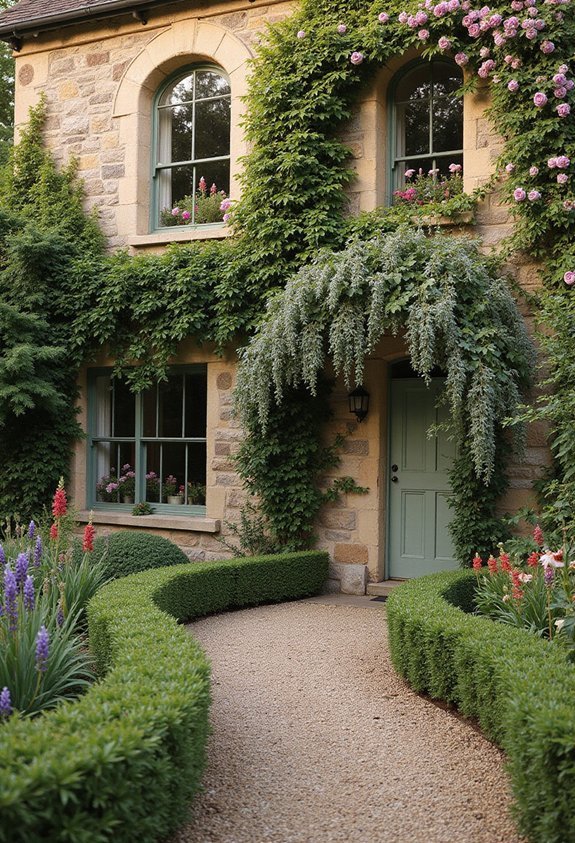
Climbing vines add a romantic and naturalistic charm to your cottage’s exterior walls, creating a living softness that complements the formal structure you’ve established through topiary and hedgerows. You’ll want to select vines suited to your climate, such as ivy, clematis, or climbing roses, each offering distinct visual appeal and growth patterns. Install sturdy trellises or wire supports before planting to guide vine growth effectively. Water regularly during establishment, typically the first growing season, ensuring consistent moisture without waterlogging roots. Prune your vines annually to maintain shape and prevent damage to mortar or siding. Position vines strategically around doorways and windows to frame architectural features while maintaining access to entrances. This living framework transforms your front yard into an authentically charming English cottage garden.
Gravel Drives With Planted Edges
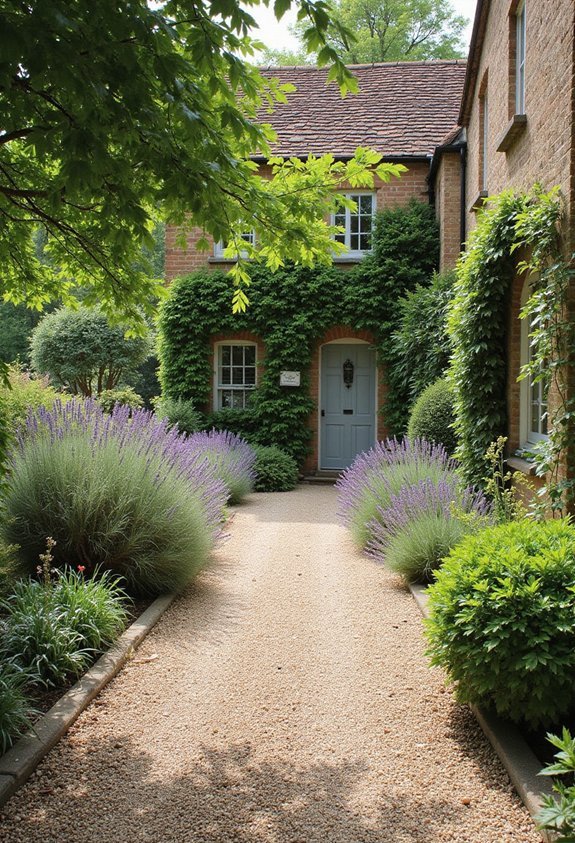
While climbing vines soften your cottage’s vertical surfaces, a well-designed gravel drive creates the practical foundation that connects your front yard’s various elements together. You’ll want to edge your gravel drive with plants that define the pathway while preventing stones from scattering into garden beds. Consider low-growing perennials like catmint or lavender along the borders, as they’ll tolerate foot traffic and add visual interest. You should install landscape edging materials, such as steel or stone strips, beneath the soil line to establish clear boundaries between the drive and planted areas. This approach keeps your gravel contained, reduces maintenance demands, and creates a polished appearance. Regular raking maintains the drive’s neat surface, while established plantings gradually frame and soften the hardscape’s utilitarian lines.
Perennial Beds for Year-Round Color
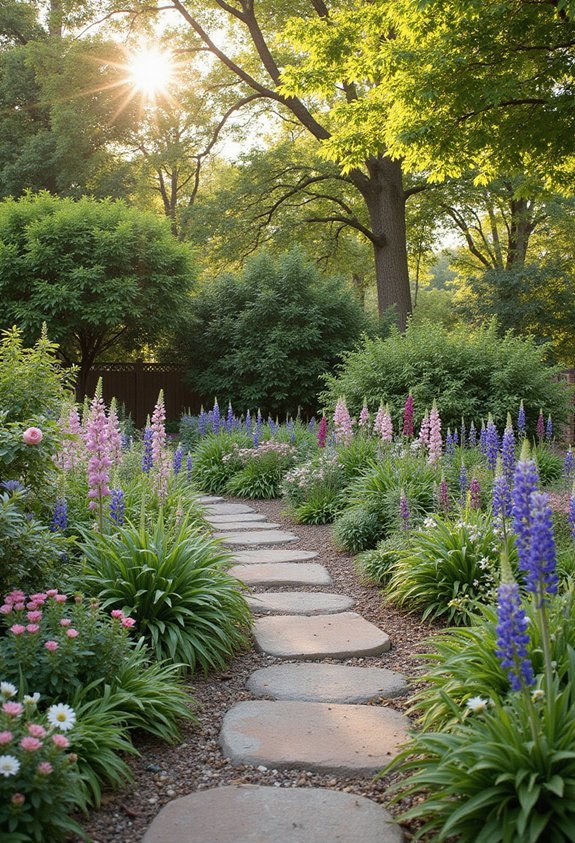
How can you guarantee that your English garden front yard maintains vibrant color and visual interest throughout all four seasons? You’ll achieve this by strategically planting perennial beds filled with flowers that bloom at different times. Select spring bloomers like tulips and daffodils, summer performers such as coneflowers and daylilies, fall favorites including asters and sedum, and winter interest plants like ornamental grasses and hellebores. Arrange these perennials in layers, placing taller varieties toward the back and shorter ones in front. This tiered approach secures nothing blocks your view of blooming plants. Space them properly so they won’t compete for nutrients and sunlight. By combining these long-lived plants strategically, you’ll create continuous seasonal color that keeps your front yard visually engaging year-round.
Mixed Borders With Depth and Texture
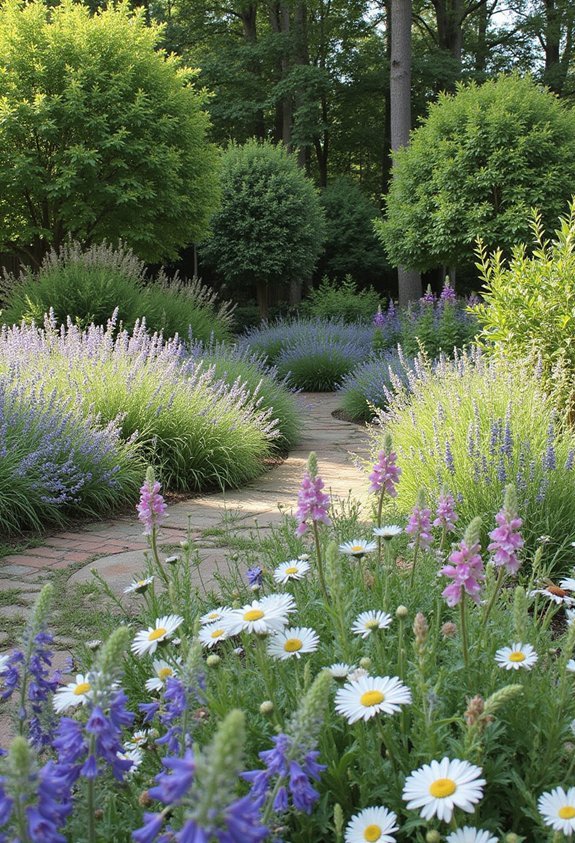
Beyond selecting plants that bloom in different seasons, you’ll want to layer your perennial beds with varied plant heights, textures, and foliage types to create a more sophisticated and visually dynamic garden space. Position tall plants like delphiniums or ornamental grasses toward the back, mid-height specimens like coreopsis in the middle, and shorter plants like creeping thyme in front. This arrangement guarantees every plant receives adequate sunlight while remaining visible from the street. Incorporate different leaf textures—feathery, broad, spiky, and fuzzy—to add visual interest throughout the year. Combine fine-textured plants with bold foliage to create striking contrasts. This strategic layering technique maximizes your garden’s visual appeal and creates depth that transforms your front yard into an inviting, professionally designed landscape.
Low-Growing Wildflower Meadows
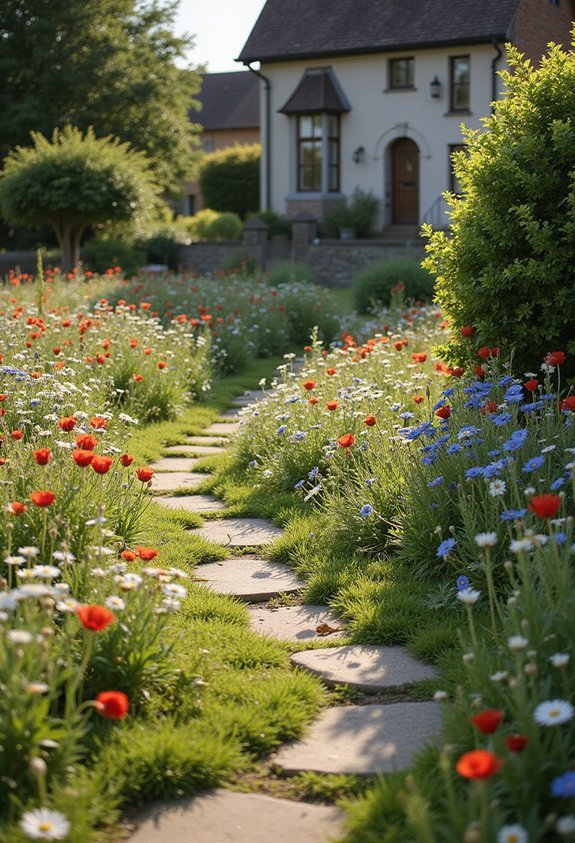
If you’re looking for a naturalistic alternative to traditional perennial beds, low-growing wildflower meadows offer you a stunning way to fill your front yard with color and movement while requiring minimal maintenance. You’ll create a vibrant ecosystem by sowing native wildflower seeds directly into prepared soil during autumn or early spring, allowing them to naturalize and spread organically. These meadows attract pollinators like bees and butterflies while producing seasonal blooms throughout the year. You should choose species suited to your climate and soil conditions, ensuring they’ll thrive without excessive watering or fertilizing. Once established, you’ll only need to mow the meadow once yearly after flowering ends, reducing your overall yard work greatly while promoting biodiversity in your landscape.
English Garden Color Schemes That Coordinate
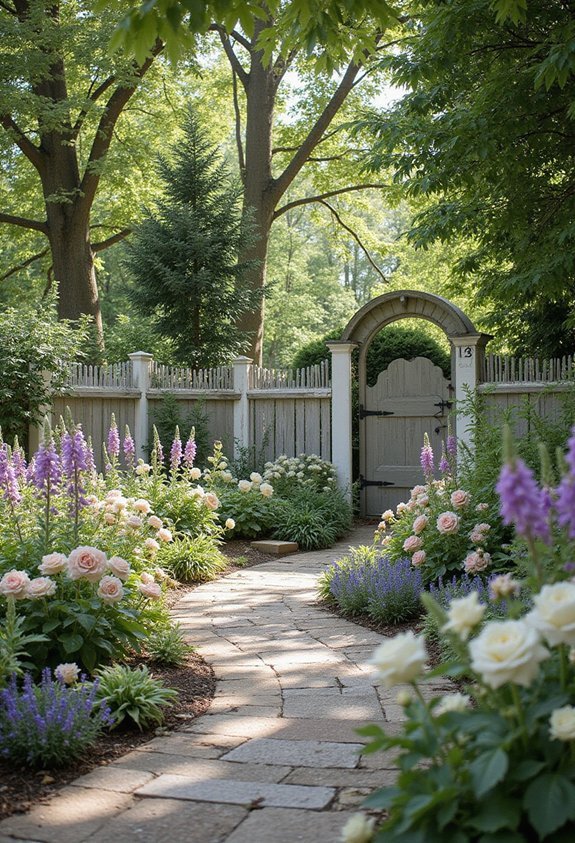
While wildflower meadows provide natural, organic beauty through their self-sown displays, you’ll want to establish a more intentional color scheme for other areas of your English garden front yard to create visual harmony and guide the eye through your landscape design. Consider using a complementary palette of soft pastels, jewel tones, or warm earth tones that work together cohesively. You should group plants with similar color families in clusters rather than scattering them randomly, which helps create focal points and prevents visual confusion. Plan your color combinations by considering bloom times, so you’ll maintain interest throughout seasons. Include foliage plants with silver, gold, or burgundy leaves to add depth and extend visual appeal beyond flowering periods. This strategic approach guarantees your front yard maintains consistent aesthetic appeal while directing attention to your garden’s most striking features.
Victorian-Style Planters and Urns
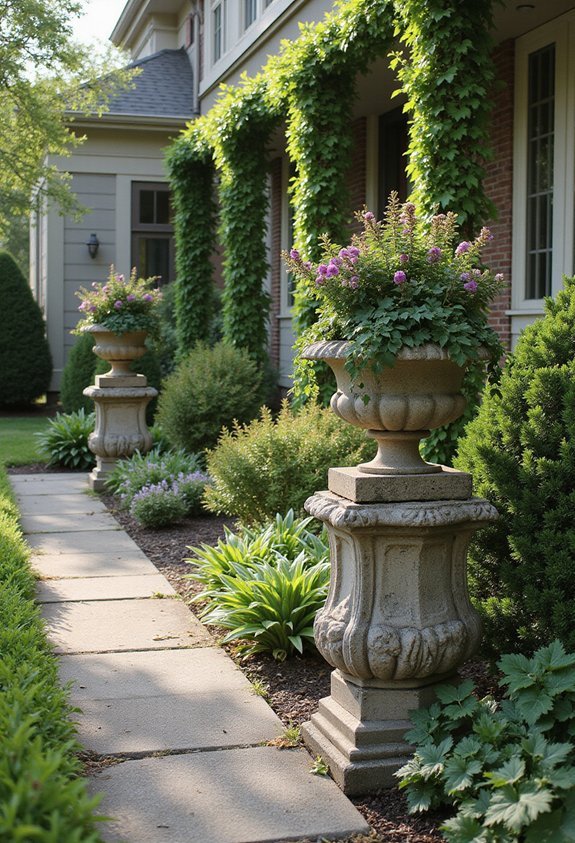
Ornamental containers serve as both functional vessels for plants and decorative architectural elements that’ll enhance your English garden front yard’s overall aesthetic appeal. Victorian-style planters and urns feature distinctive characteristics, including ornate detailing, pedestal bases, and classical proportions that evoke historical elegance. You’ll find these containers crafted from materials like cast stone, terracotta, or resin, each offering durability and authentic appearance. When selecting planters for your front yard, consider their scale relative to your entryway and surrounding landscape features. Position urns strategically at garden entrances, along pathways, or flanking doorways to create visual interest and draw visitors’ eyes toward focal points. Filling these containers with seasonal flowers, trailing ivy, or evergreen plantings guarantees year-round appeal while maintaining the refined character your English garden demands.
Lawn Edges and Crisp Garden Boundaries
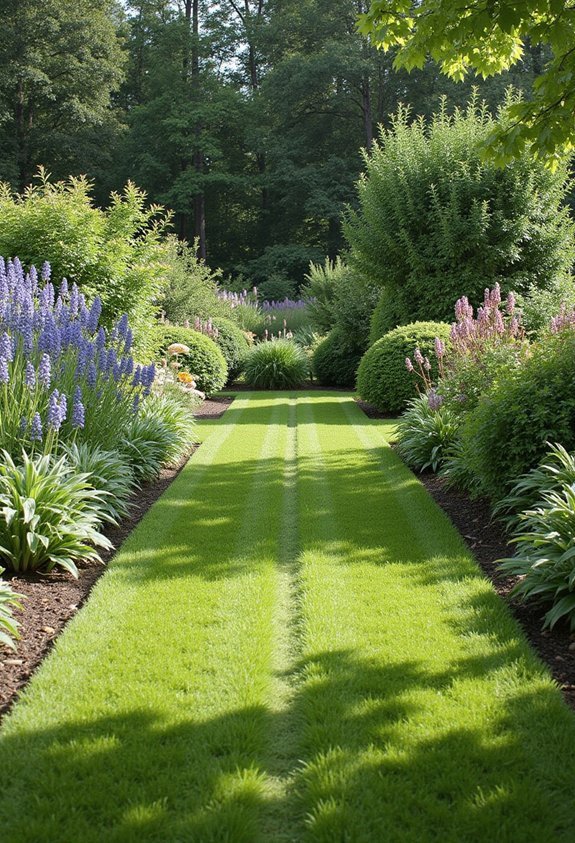
The distinction between your lawn and garden beds creates the polished, intentional appearance that defines an English garden’s character, so you’ll want to establish clean, well-defined edges throughout your front yard. You can achieve crisp boundaries by installing metal or stone edging along garden bed perimeters, which prevents grass from creeping into planting areas and maintains separation between different landscape zones. Regular maintenance of these edges—trimming grass and removing debris—keeps them sharp and visually distinct. Consider using brick or stone pathways to further delineate spaces, as these hardscape elements guide visitors’ eyes while reinforcing the garden’s structured design. Well-maintained edges demonstrate intentional landscaping choices, elevating your front yard’s overall appearance and establishing the refined aesthetic characteristic of traditional English gardens.
Garden Benches in Strategic Spots
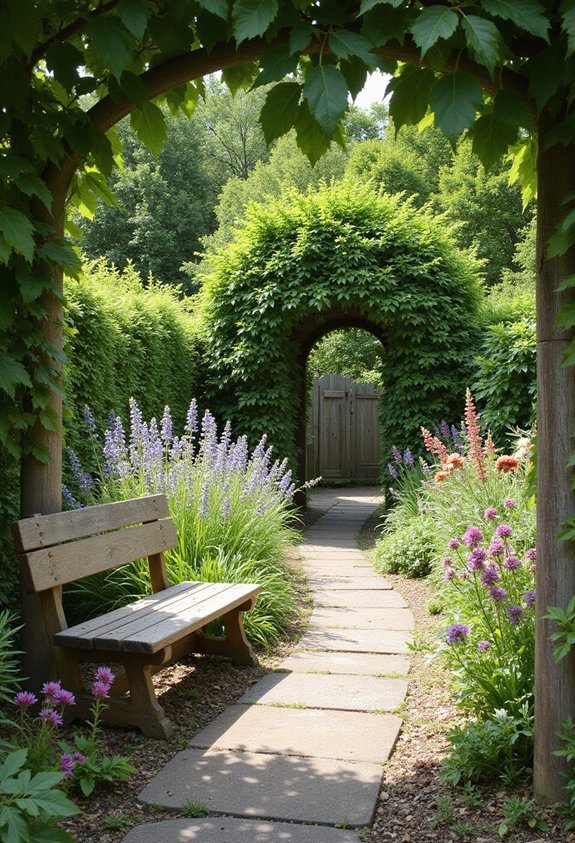
By placing benches in carefully chosen locations throughout your front yard, you’ll create natural gathering points that enhance both the functionality and visual appeal of your English garden. Position benches along pathways where visitors naturally pause to appreciate flower beds, or place them beneath shade trees to provide comfortable resting spots during warm months. You’ll want to orient benches toward focal points like flowering shrubs, water features, or garden sculptures, directing attention to your garden’s best elements. Consider sight lines from your home’s windows and entrances when selecting bench locations, ensuring they’re visible and accessible. Strategic placement encourages visitors to slow down, explore different areas, and fully experience your garden’s design. Benches also serve practical purposes by defining circulation routes and creating defined spaces within your landscape design.
Cottage Garden Lighting for Evening Appeal
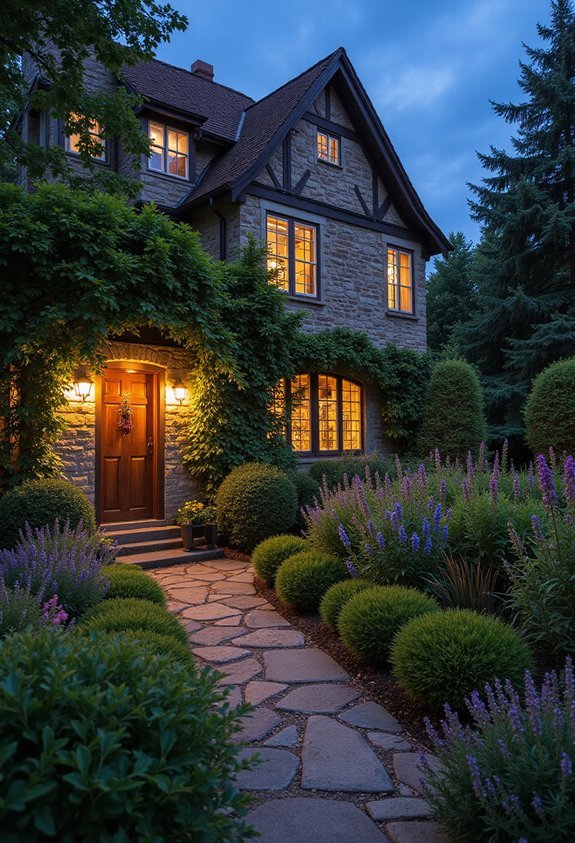
As darkness falls over your English garden, strategic lighting transforms your front yard into an enchanting outdoor space that’s both beautiful and functional after sunset. You’ll want to install soft, warm-toned lights along garden pathways so visitors can navigate safely while enjoying the landscape’s subtle contours and textures. Consider placing uplighting beneath trees and shrubs to create dramatic shadows and highlight architectural features of your cottage-style garden. Solar-powered stake lights offer practical, energy-efficient solutions that require minimal installation effort. You should position lights at varying heights throughout your garden beds, which creates depth and visual interest when darkness arrives. Lantern-style fixtures mounted on posts or hung from branches add authentic cottage charm while providing adequate illumination for evening enjoyment and security.
Water Features and Small Ponds
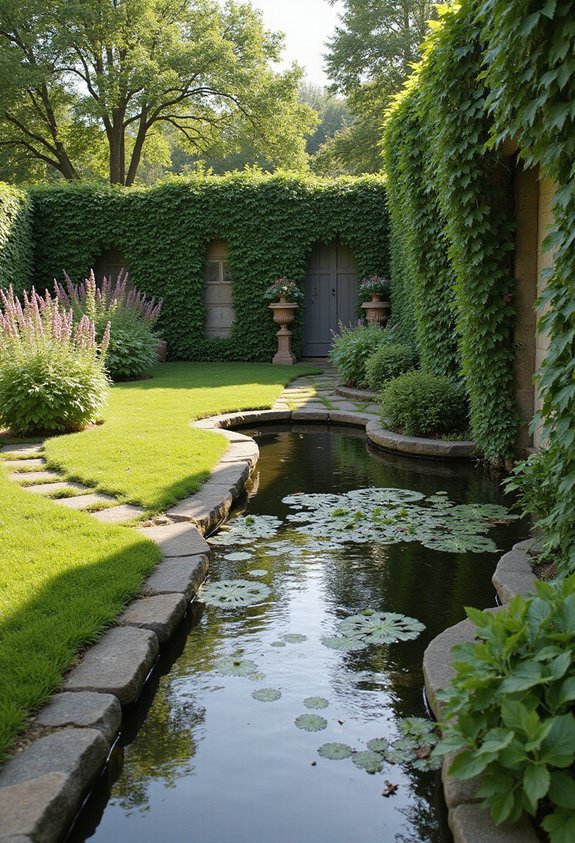
Water features and small ponds add another dimension of visual appeal to your English garden front yard, complementing the nighttime ambiance you’ve created with strategic lighting. You can incorporate a simple birdbath, which attracts wildlife and serves as a focal point during daylight hours. Small ponds, whether traditional or modern designs, create reflective surfaces that enhance your garden’s overall aesthetic. You’ll want to position water features where they’re visible from your home and street-facing areas. Consider installing a small recirculating fountain, which provides soothing water sounds and requires minimal maintenance. You should guarantee proper drainage and placement away from tree roots that might damage pond liners. These features work together with your existing landscape elements, creating a cohesive, sophisticated English garden environment.
Front Gate Cottage Garden Plantings
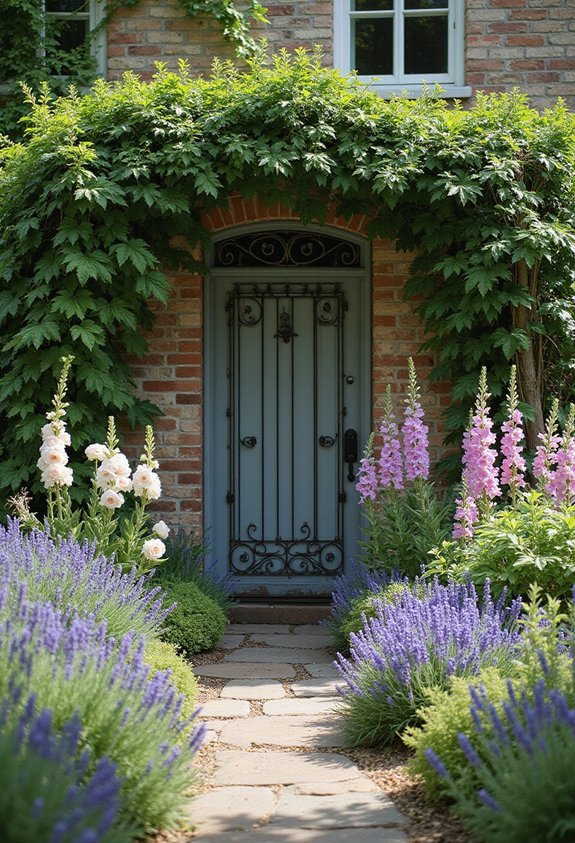
Your front gate area sets the tone for your entire English garden, so you’ll want to fill this space with carefully selected cottage garden plantings that create an inviting, romantic entrance. Choose climbing roses, clematis, or honeysuckle to frame your gate with lush greenery and fragrant blooms. Plant foxgloves, delphiniums, and hollyhocks in layered heights behind the gate to establish visual depth and interest. Include traditional cottage favorites like lavender, peonies, and sweet peas for their distinctive scents and visual appeal. Position lower-growing plants such as primrose and violas near the gate’s base to soften hard edges. Space your plantings appropriately to allow for mature growth, ensuring that your cottage garden entrance remains balanced, accessible, and visually cohesive throughout the growing seasons.
Budget-Friendly English Garden Makeovers
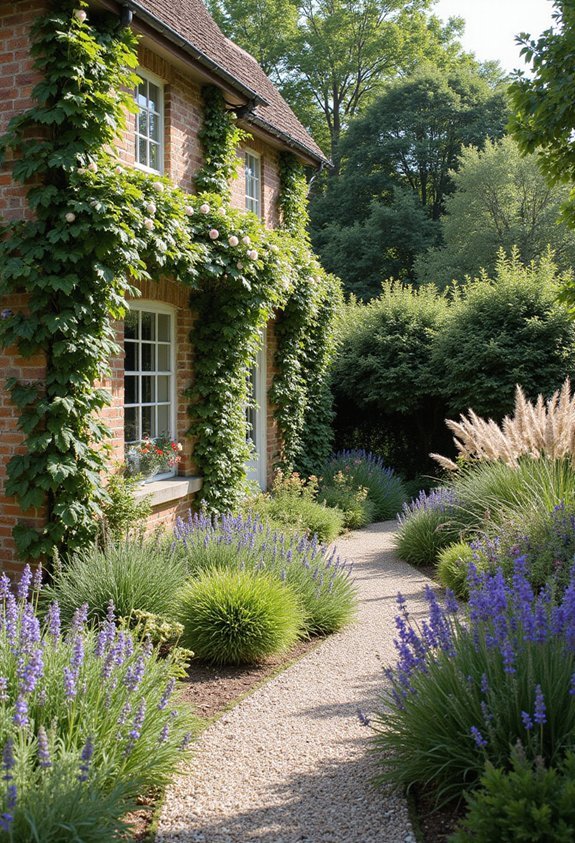
Creating an authentic English garden doesn’t require you to spend thousands of dollars, since you can achieve the same romantic, cottage-style aesthetic through strategic planning and resourceful techniques that prioritize value without compromising visual appeal. You can propagate perennials from seeds or divisions rather than purchasing mature plants, which drastically reduces costs while expanding your planting options. Sourcing materials locally, such as reclaimed brick for pathways or stone from salvage yards, adds character while staying budget-conscious. Focusing on hardy, self-seeding plants like foxgloves, delphiniums, and lavender minimizes maintenance expenses and creates natural fullness. Incorporating free or low-cost elements, including mulch from tree trimming services and composted kitchen scraps for soil enrichment, establishes a sustainable foundation. This methodical approach lets you design a charming English garden while maintaining financial responsibility.
Seasonal Care for English Garden Borders
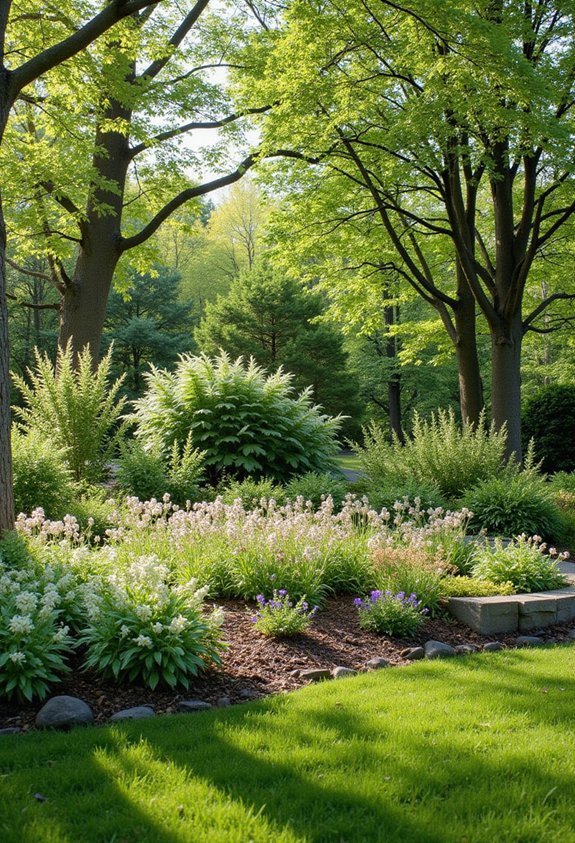
Because English garden borders contain a diverse mix of perennials, annuals, and shrubs that thrive during different times of the year, you’ll need to adjust your maintenance routine seasonally to keep plants healthy and promote continuous blooms. In spring, you’ll deadhead winter-damaged growth and apply mulch around plants. Summer requires consistent watering and regular deadheading to encourage new flowers. During fall, you’ll cut back perennials, divide overcrowded plants, and plant spring-blooming bulbs for next year’s display. Winter maintenance involves protecting tender plants with additional mulch or frost cloth, clearing fallen leaves, and planning next season’s layout. By following these seasonal tasks methodically, you’ll maintain your English garden borders in ideal condition year-round, ensuring vibrant color and healthy plant development throughout every season.
Conclusion
Your English garden front yard becomes a living tapestry, where each element—like threads in fabric—interweaves to create cohesion. You’ll discover that roses, stone pathways, and wrought iron work together as chapters in a story, each contributing essential meaning to the whole composition. By understanding how these components function interdependently, you’re constructing not merely a garden, but a structured narrative of beauty that rewards careful observation and intentional maintenance.