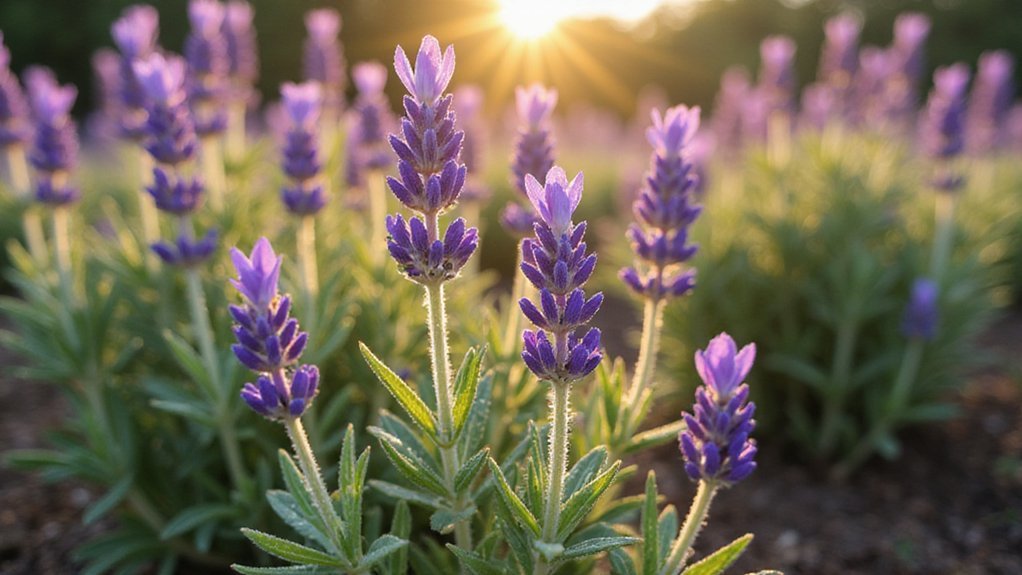
English lavender requires specific care conditions to thrive in your garden. You’ll need to understand soil composition, sunlight requirements, and watering schedules—each playing a vital/fundamental/imperative role in your plant’s success. Getting these fundamentals right prevents common problems like root rot and pest infestations. By mastering these essential techniques, you’re setting the foundation for healthy, vibrant plants that’ll bloom consistently throughout the season, but there’s more to discover about winterization.
Create the Perfect Soil Foundation for English Lavender
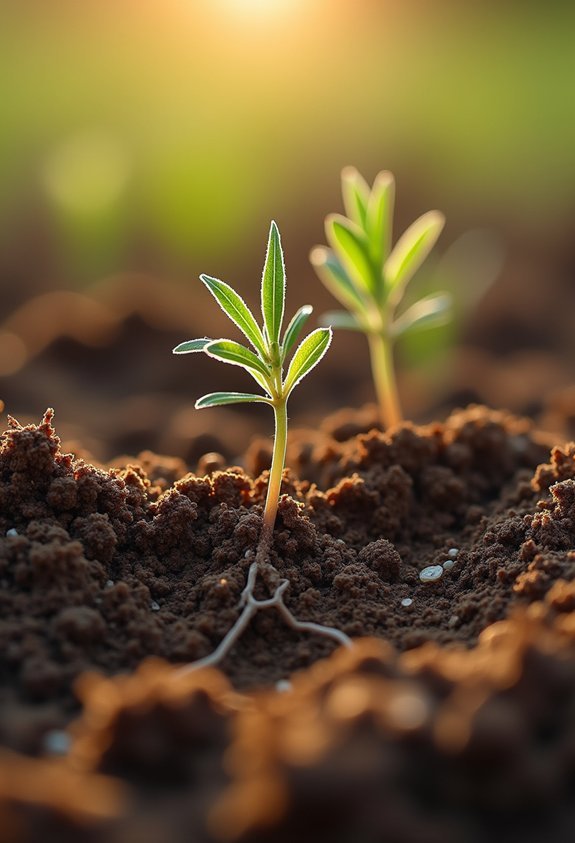
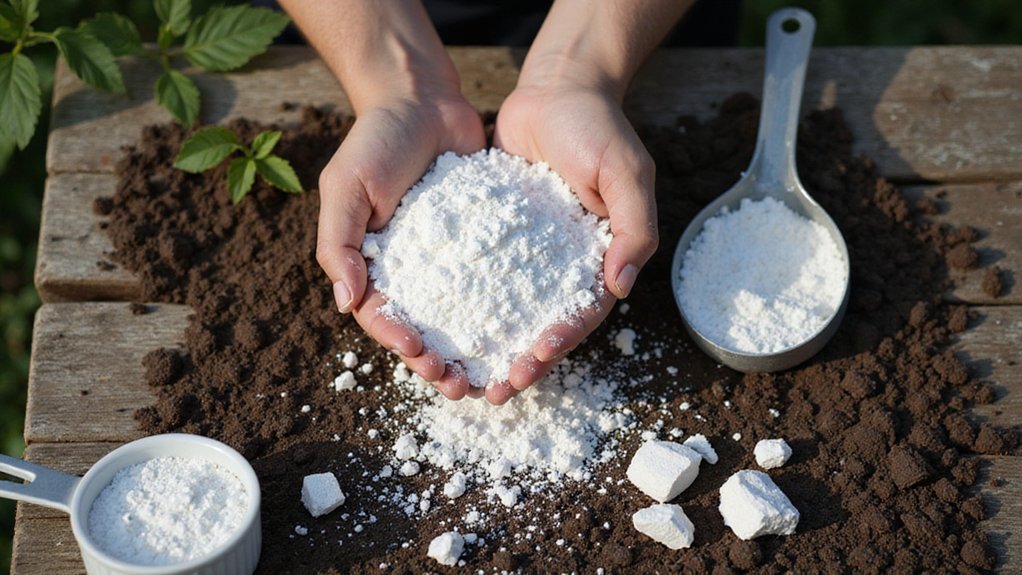
Because English lavender thrives in specific soil conditions, you’ll need to understand what makes an ideal growing environment for this plant. You should create soil that’s well-draining, sandy, and slightly alkaline, with a pH between 6.5 and 7.5. English lavender doesn’t tolerate wet feet, so you’ll want to avoid heavy clay soils that retain moisture and cause root rot. You can improve your soil by mixing in coarse sand, perlite, or gravel to facilitate drainage. You shouldn’t add excessive compost or organic matter, since these materials hold water. Before planting, you’ll test your soil’s pH and adjust it accordingly using lime if your soil’s too acidic. Proper soil preparation guarantees your lavender plants’ll establish strong roots and thrive for years.
Provide Full Sun: Lavender’s Essential Growing Conditions
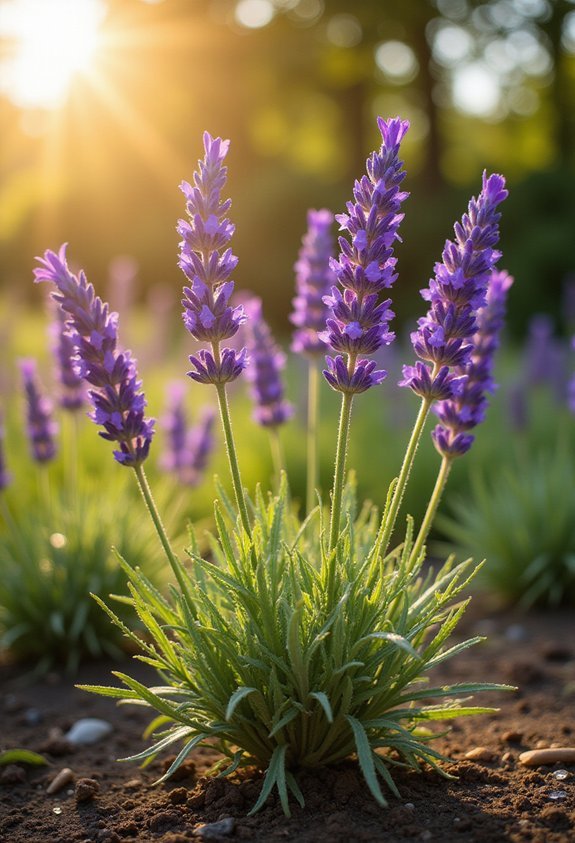
Once you’ve established the right soil foundation, you’ll need to focus on light conditions, which are equally important for your English lavender‘s success. English lavender thrives in full sun, requiring at least six to eight hours of direct sunlight daily. You’ll want to position your plants in a location that receives unobstructed sunlight throughout the day, as insufficient light leads to weak growth and reduced flowering. When you plant your lavender, choose a south-facing or west-facing spot in your garden. Avoid placing your plants in shaded areas beneath trees or buildings, which’ll inhibit their development. Adequate sunlight strengthens your lavender’s stems, intensifies fragrance production, and promotes vibrant purple blooms. If you’re gardening in regions with extremely hot summers, you can provide afternoon shade, though morning sun remains essential for ideal plant performance.
Master Watering Techniques to Prevent Root Rot
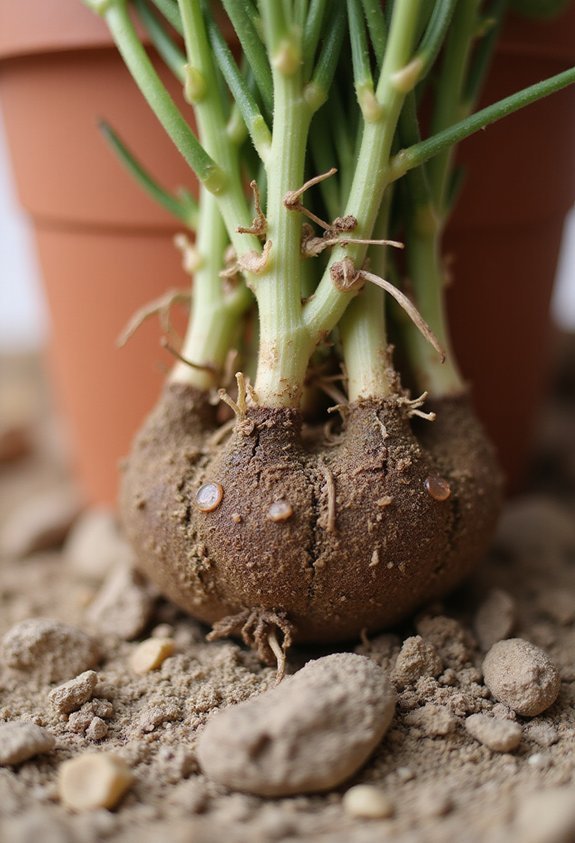
Proper watering is critical for keeping your English lavender healthy, as this Mediterranean plant’s greatest enemy is excessive moisture around its roots. You’ll want to water deeply but infrequently, allowing the soil to dry out completely between waterings. During the growing season, water once weekly if there’s no rainfall, but reduce frequency considerably in winter months when the plant’s water needs drop substantially. Always water at the base of the plant rather than overhead, which prevents fungal diseases and keeps foliage dry. Well-draining soil is essential, so amend heavy clay with sand or gravel before planting. Container-grown lavender requires more frequent watering than ground plants, yet you must still guarantee excess water drains freely from drainage holes to prevent root rot.
Deadhead Spent Flowers for Continuous Blooms
To keep your English lavender producing fresh blooms throughout the growing season, you’ll need to remove the flowers once they’ve faded and dried. Deadheading, which is the process of cutting off spent flower heads, encourages your plants to generate new blooms instead of directing energy toward seed production. You should deadhead regularly, ideally every two to three weeks during peak flowering periods. Use sharp pruning shears to cut the flower stems just below the spent blooms, removing about one-third of the stem’s length. This technique not only promotes continuous flowering but also maintains your plant’s neat appearance and prevents it from becoming overgrown and straggly. Consistent deadheading throughout summer guarantees prolonged color and extended enjoyment of your lavender’s beautiful purple, pink, or white flowers.
Spot and Stop Root Rot, Spider Mites, and Fungal Problems
While deadheading keeps your lavender looking vibrant and flowering prolifically, you’ll also need to watch for common pests and diseases that can damage or kill your plants if left unchecked. Root rot occurs when soil stays too wet, causing roots to decay and the plant to wilt despite adequate water. Spider mites create fine webbing on stems and leaves, draining plant nutrients. Fungal problems like powdery mildew appear as white coating on foliage. To prevent these issues, guarantee your lavender has well-draining soil and sufficient air circulation. Inspect plants regularly for early signs of trouble. Remove affected leaves immediately, and treat infestations with appropriate organic or chemical solutions. Proper spacing between plants and avoiding overhead watering substantially reduce disease risk.
Winterize English Lavender: Frost Protection and Cold Hardiness
Because English lavender varieties are generally hardy in USDA zones 5 through 9, they’ll survive most winters without special protection, but you’ll still want to take strategic steps to safeguard your plants so they emerge healthy when spring arrives. Start by improving drainage around your lavender plants before winter arrives, since excess moisture combined with freezing temperatures causes root rot. Apply a light mulch layer, about two inches thick, around the base of your plants to insulate the soil and regulate temperature fluctuations. Avoid heavy mulching, which can trap moisture and encourage fungal growth. Additionally, refrain from pruning your lavender in fall, as this stimulates tender new growth that frost’ll damage easily. Instead, wait until early spring to prune when new growth appears and freezing temperatures have passed.
Conclusion
You’ve now gained the knowledge necessary for nurturing your English lavender successfully. By building better soil, bathing blooms in bright sunlight, and carefully controlling water consumption, you’ll cultivate a consistently colorful collection of flowers. Your dedication to deadheading, disease detection, and diligent winter care will decisively determine your lavender’s longevity and lush appearance throughout the seasons.