Most homeowners don’t realize that a fenced front yard doesn’t have to feel like a fortress. You can maintain that welcoming, spacious appearance while securing your property by choosing the right materials and design strategies. Horizontal slats, lattice patterns, and mixed materials create visual transparency without sacrificing functionality. Discover how these techniques transform your curb appeal and keep sightlines clear.
How to Choose an Open-Feeling Front Yard Fence
What makes a front yard fence feel open rather than closed off? You’ll want to choose materials that allow visibility through the fence, such as horizontal slats with spacing between them, metal pickets, or wire mesh designs. These options create transparency while still defining your property boundaries. You should also consider the fence’s height; shorter fences around three to four feet won’t block sightlines from the street, making your yard feel less confined. Lighter colors like white, cream, or natural wood tones reflect light and appear less heavy than darker shades. Additionally, you’ll benefit from incorporating decorative elements like lattice panels or open geometric patterns, which break up solid surfaces and invite light to pass through, creating an airy, welcoming appearance for your front yard.
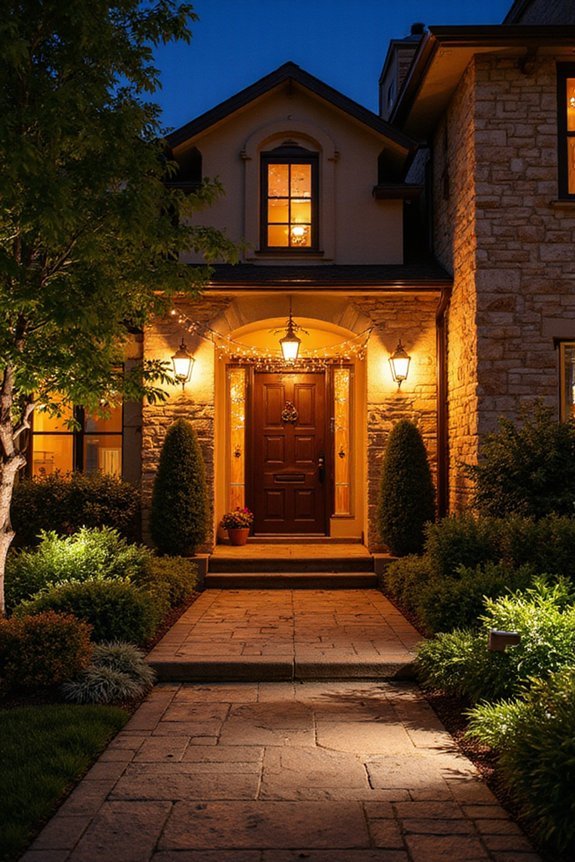
Also read: 22 FRONT YARD LIGHTING Ideas That Make Nights Pretty!
Open Lattice Fencing for Visual Depth
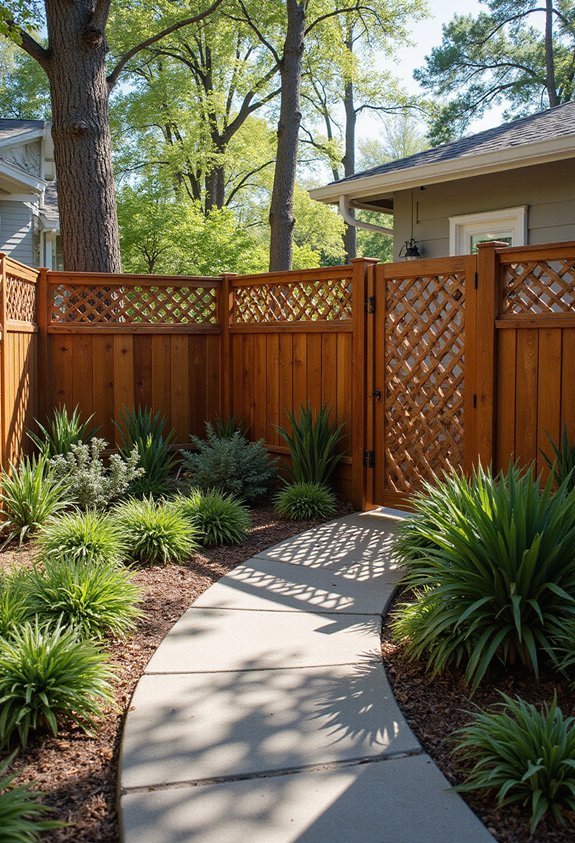
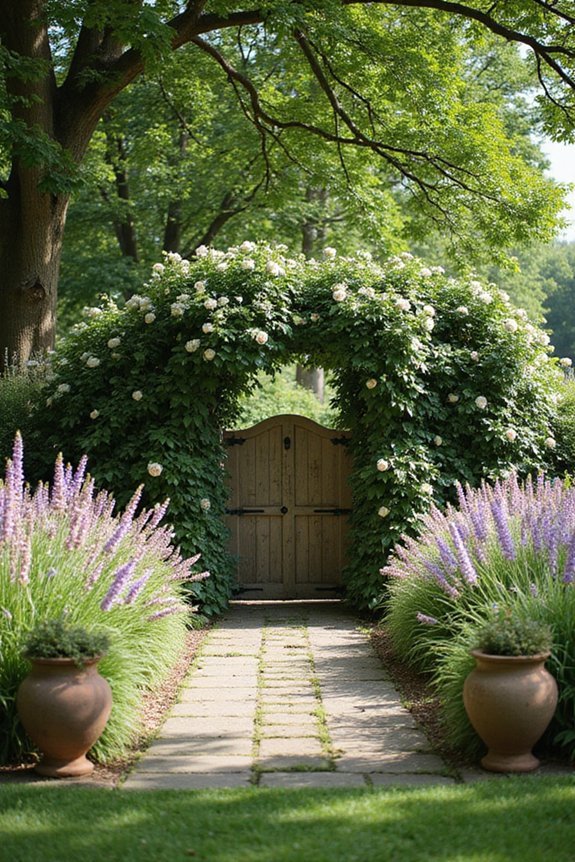
Among the decorative elements mentioned for creating an open-feeling fence, lattice panels stand out as one of the most effective choices for adding visual depth to your front yard. When you install diagonal or diamond-pattern lattice, you’re creating layers that allow light to filter through while maintaining privacy. The interwoven wood strips create visual interest, breaking up the solid appearance that makes fences feel confining. You can enhance this effect by positioning climbing vines or flowering plants along the lattice, which adds texture and softens the structure’s appearance. The spaces between the lattice strips let you see through partially, preventing the yard from feeling completely enclosed. This combination of structure and openness gives your property a balanced, welcoming aesthetic.
Horizontal Slat Fences That Feel Modern and Airy
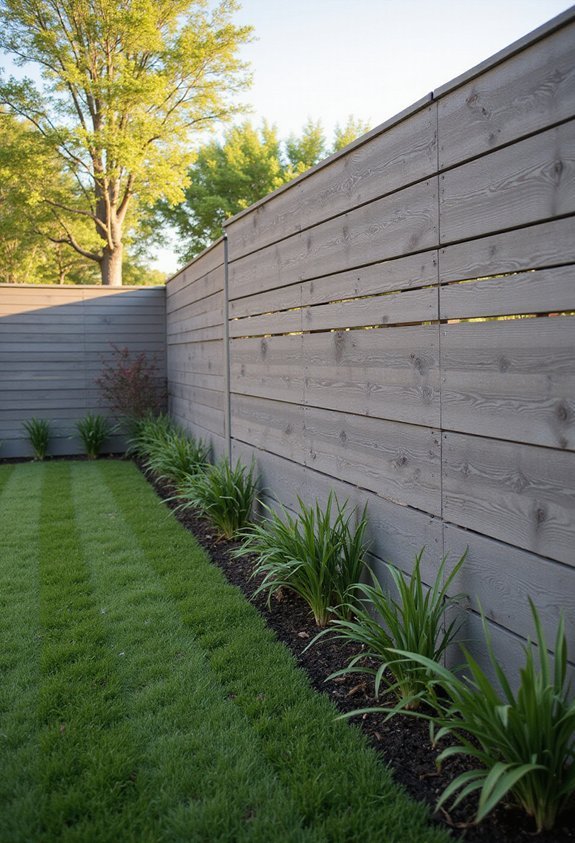
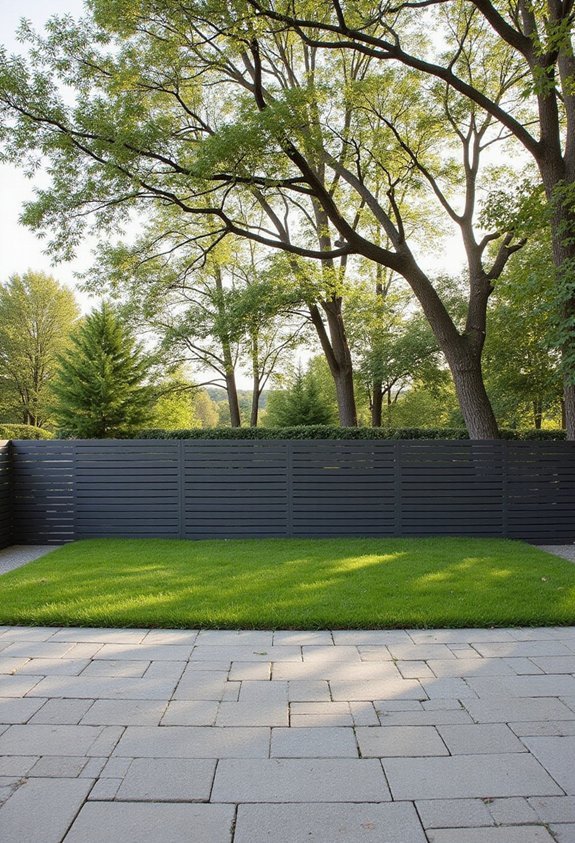
If you’re looking to create a contemporary appearance while keeping your front yard from feeling boxed in, horizontal slat fencing offers an excellent solution that combines modern design with openness. These fences feature boards running parallel to the ground, creating clean lines that feel less imposing than traditional vertical designs. The spacing between slats allows visibility and light to pass through, maintaining visual connection with your surroundings while establishing a defined boundary. You can customize the gap width between boards to control privacy levels, choosing tighter spacing for more seclusion or wider gaps for maximum airiness. Materials like cedar, composite, or metal provide durability and weathering resistance. This style complements contemporary architecture exceptionally well and requires straightforward installation when planning your fencing project.
Mixed-Material Designs That Break Up Visual Weight
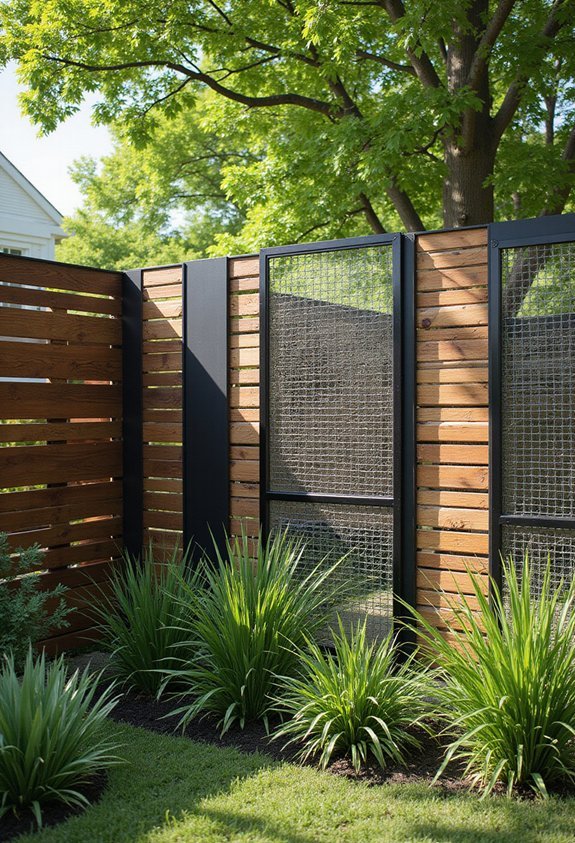
Combining different fencing materials in a single design creates visual interest while reducing the heavy appearance that can come from using just one material across your entire front yard. You can pair wood sections with metal frames, stone pillars with vinyl panels, or brick posts with horizontal slats, creating a balanced aesthetic that doesn’t feel overwhelming. This approach breaks up the monotony while maintaining structural integrity and durability. When selecting materials, consider how each complements your home’s architecture and existing landscaping. The contrast between textures, colors, and finishes draws the eye across your yard rather than concentrating it on one solid mass. Strategic material placement, such as alternating heavy and light sections, distributes visual weight evenly, making your fenced yard appear more open and welcoming.
Low-Profile Front Fences That Don’t Block Sightlines
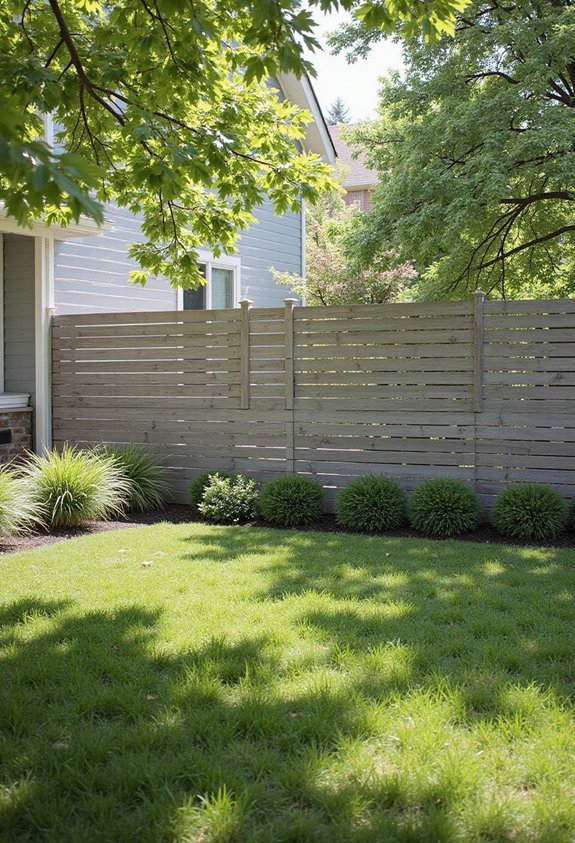
While mixed materials help distribute visual weight across your yard, keeping your fence low and open offers another effective strategy for maintaining sight lines and preserving your home’s connection to the street. Low-profile fences, typically measuring between two and three feet tall, don’t obstruct views from the street or neighboring properties, which makes your front yard feel more spacious and welcoming. You can achieve this aesthetic by choosing picket designs with wider spacing, horizontal slat patterns that create visual transparency, or decorative metal panels with open lattice work. These designs establish clear property boundaries while allowing passersby to see your landscaping and home’s architecture. Low fences also improve street visibility for safety purposes, making your property more accessible and integrated with your neighborhood’s overall appearance.
Ornamental Metal Fencing for Elegance Without Bulk
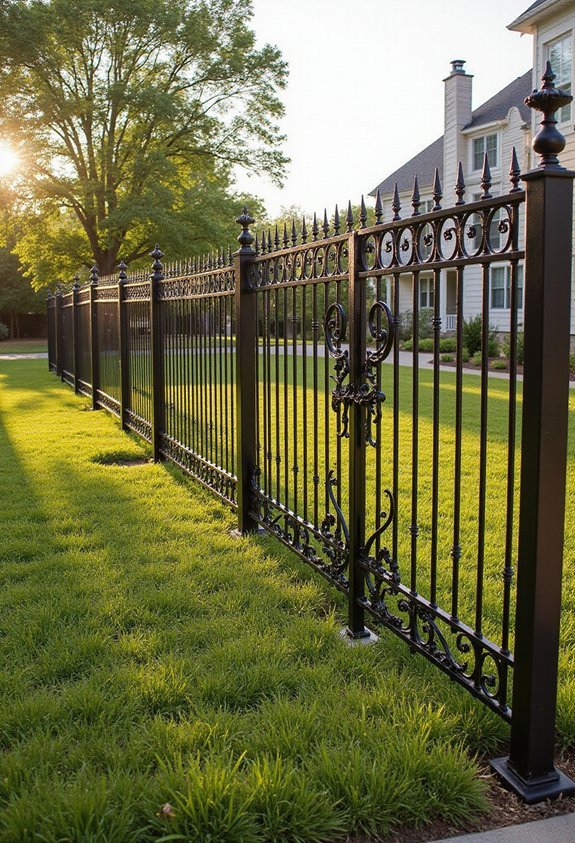
Ornamental metal fences—typically constructed from wrought iron, aluminum, or steel—offer you an excellent way to define your front yard’s boundaries while maintaining the visual openness that low-profile designs provide. These fences feature decorative patterns and scrollwork that create visual interest without blocking sightlines, allowing you to see through the design elements. Wrought iron provides classic elegance and durability, though it requires regular maintenance to prevent rust. Aluminum offers a lightweight, rust-resistant alternative that’s easier to maintain and more affordable. Steel delivers strength and longevity with modern aesthetic options. You’ll find that ornamental metal fencing complements various architectural styles, from traditional to contemporary homes, while the open framework design facilitates your yard not feeling enclosed or cramped.
Composite Fencing in Light Colors to Maintain Brightness
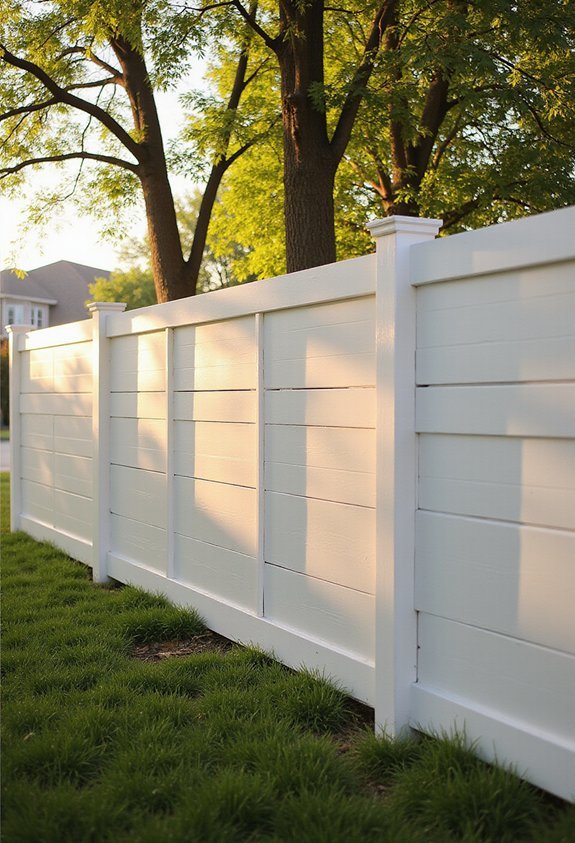
If you’re looking for a fencing material that won’t darken your front yard or require constant upkeep, composite fencing in light colors offers a practical solution that combines durability with aesthetic appeal. Composite materials blend wood fibers with plastic polymers, creating a product that resists fading, rotting, and insect damage better than traditional wood. Light-colored composites, such as cream, tan, or whitewashed options, reflect sunlight rather than absorbing it, which keeps your yard feeling open and bright. These fences don’t need painting or staining, reducing maintenance considerably. They’re also environmentally friendly since they often incorporate recycled materials. While composite fencing costs more initially than wood, its longevity and minimal upkeep make it economical over time, providing you with a clean, modern appearance that enhances your home’s curb appeal.
Wide-Spaced Picket Fences for Classic Openness
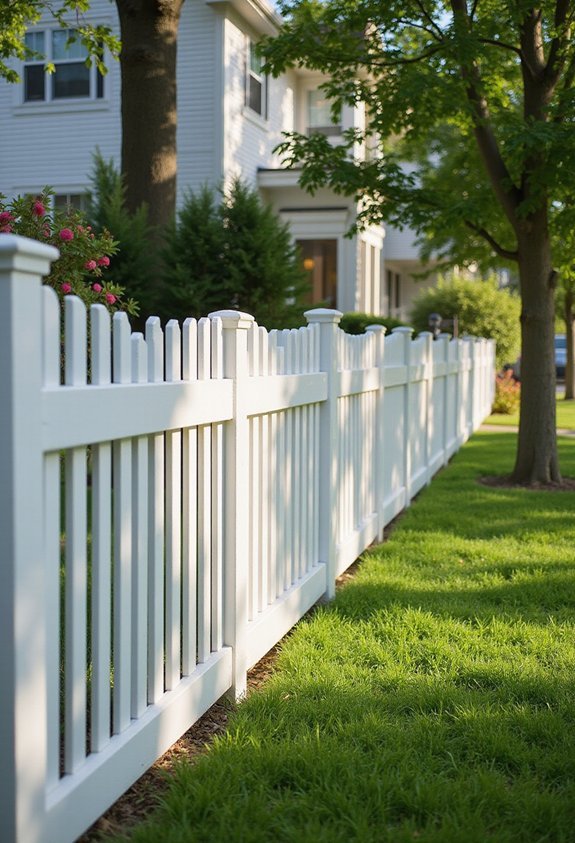
Because you want your front yard to feel inviting and uncluttered, a wide-spaced picket fence delivers that classic aesthetic while maintaining excellent visibility from the street. The spacing between pickets—typically three to four inches—allows you to see through the fence while still establishing a clear property boundary. You’ll find that this design works particularly well with traditional home styles, creating a timeless appearance that’s been popular for generations. When you’re selecting materials, you can choose from wood, vinyl, or composite options that’ll suit your climate and maintenance preferences. The open design means you won’t cast heavy shadows across your yard, allowing sunlight to reach your landscaping throughout the day. This fence style also encourages air circulation, preventing moisture buildup that could damage your yard’s vegetation or create maintenance issues.
Gabion Boxes With Plantings for Layered Texture
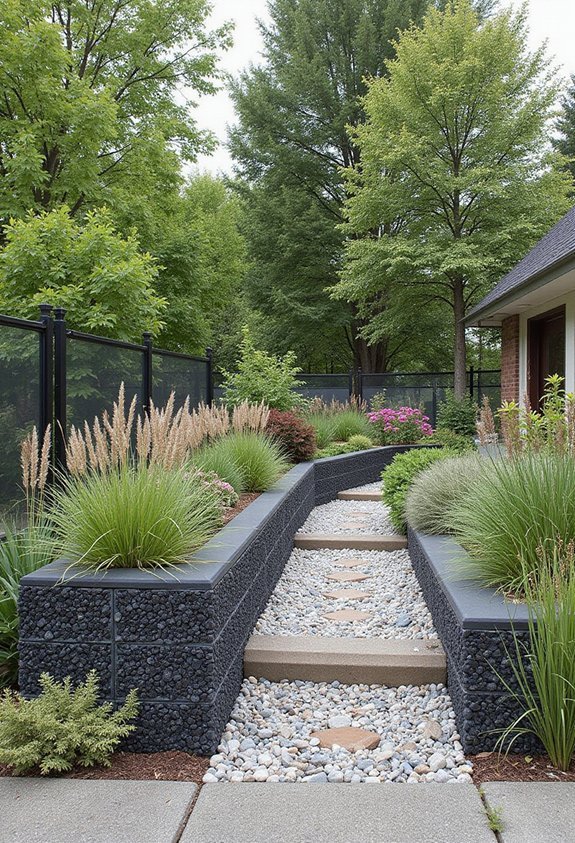
For a front yard fence that combines industrial style with natural beauty, gabion boxes offer you a modern alternative that’ll transform your property’s appearance while serving practical purposes. These wire mesh containers filled with stone create distinctive visual interest while allowing visibility through the gaps, maintaining that open feeling you’re seeking. You can enhance gabion boxes by planting climbing vines, ornamental grasses, or flowering plants around and between them, adding organic texture to the structured metal framework. This layered approach creates depth and softens the industrial aesthetic, blending hardscape with landscape elements effectively. The stone fill provides excellent drainage for plantings, while the open construction allows light penetration throughout your front yard, ensuring that your fenced space doesn’t feel confined or heavy.
Glass and Metal Panels for Contemporary Transparency
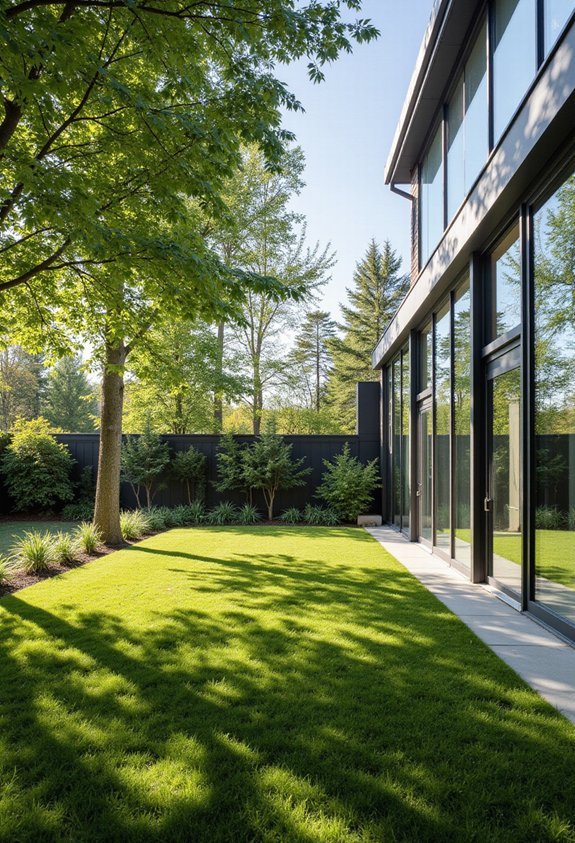
When you’re looking for a modern fencing option that maintains sightlines while adding structure to your front yard, glass and metal panels deliver a sophisticated solution that works particularly well in contemporary and minimalist landscapes. You’ll appreciate how these materials create visual boundaries without blocking your view of the street or neighboring properties, which keeps your space feeling open and airy. The metal framework provides durability and security, while transparent or frosted glass panels allow light penetration and reduce the enclosed feeling traditional fences create. You can customize the glass opacity levels to balance privacy with openness, and the metal frames come in various finishes like black, steel, or powder-coated colors. This combination requires minimal maintenance and offers exceptional longevity, making it a practical investment for modern homeowners seeking contemporary aesthetic appeal.
Slatted Screens: Privacy Without Blocking the View
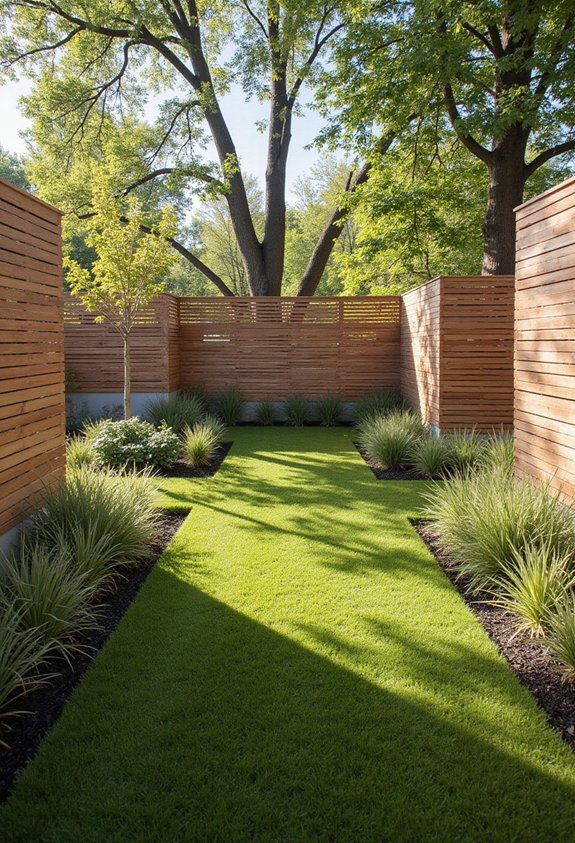
If you’re drawn to the openness of glass and metal panels but need more privacy for your front yard, slatted screens offer a practical middle ground that combines both concealment and visibility. These screens feature horizontal or vertical wooden or metal slats spaced strategically to block direct sightlines while allowing air circulation and partial light penetration. You’ll find that slatted designs work particularly well when you want to obscure ground-level views without creating a solid, fortress-like appearance. The gaps between slats enable you to maintain visual connection with your landscape while preventing passersby from seeing directly into your yard. Installation involves mounting the screen framework securely to posts or existing fencing structures, ensuring stability against wind and weather conditions throughout the seasons.
Living Hedges: Open Fences That Grow
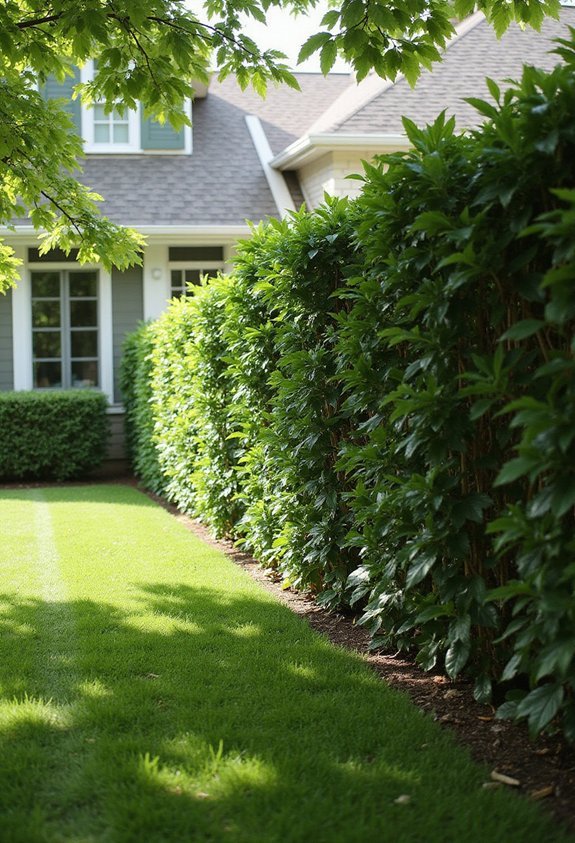
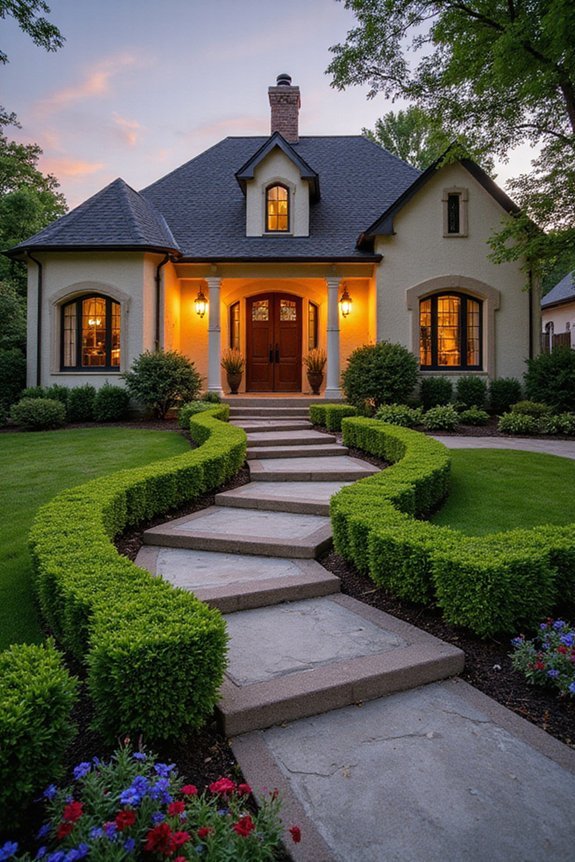
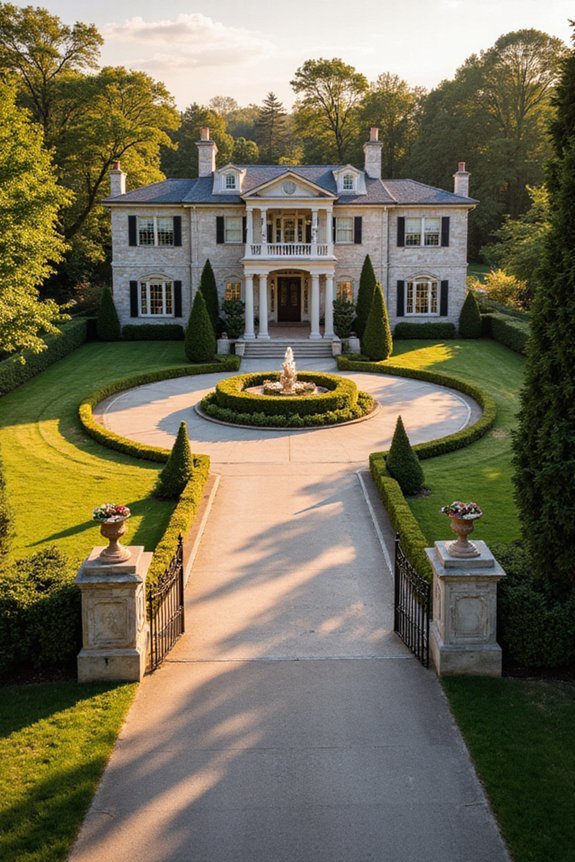
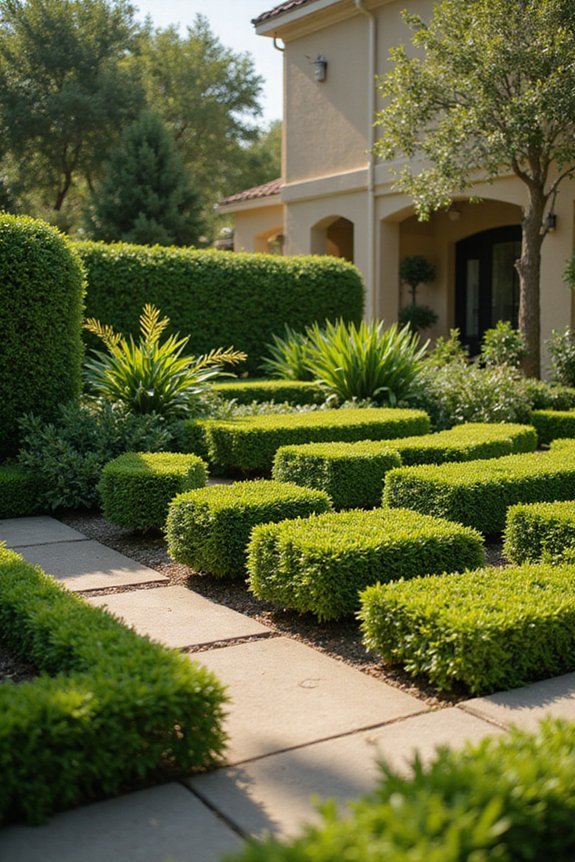
Rather than installing static fencing materials, you can cultivate a living hedge that serves as a natural boundary while establishing a welcoming appearance for your front yard. Living hedges offer flexibility in height and density, allowing you to customize your privacy level by selecting specific plant varieties and managing their growth patterns. You’ll want to choose shrubs suited to your climate zone, such as boxwood, privet, or holly, which grow densely and maintain their shape with regular trimming. Plant your hedge in a straight line along your property boundary, spacing plants according to their mature width to guarantee full coverage. Water consistently during establishment, typically for the first year, then maintain your hedge through seasonal pruning to achieve your desired appearance and structural integrity.
Asymmetrical Fence Heights to Create Visual Interest
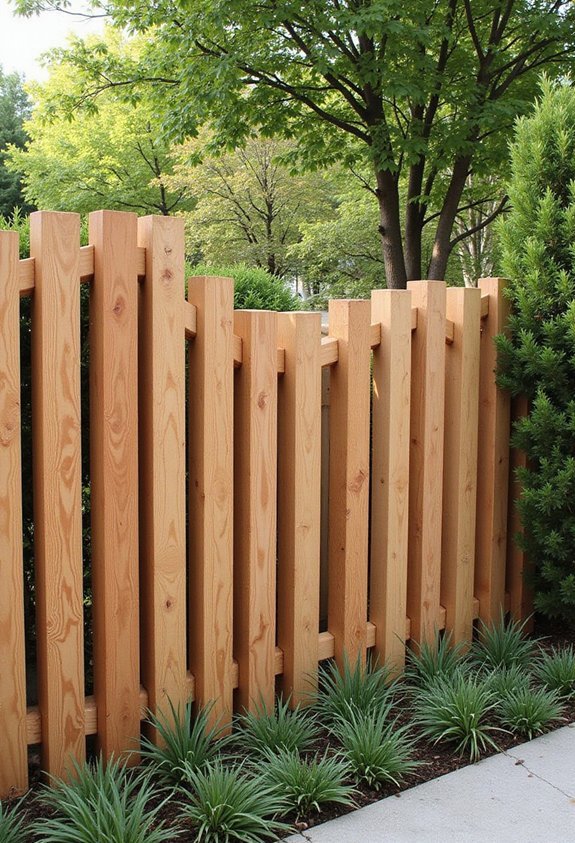
Why settle for a uniform fence line when you can use varying heights to make your front yard more visually engaging and dynamic? Asymmetrical fence designs break up monotonous landscapes by combining different heights strategically throughout your property. You might install taller sections, around six feet, in certain areas for privacy screening, while shorter sections, perhaps three to four feet, create openness elsewhere. This approach naturally draws the eye across your yard, establishing focal points and visual rhythm. When you vary heights, you’re fundamentally creating layers that add depth and sophistication to your front entrance. Consider your home’s architecture and landscaping when determining placement, ensuring shifts between heights feel intentional rather than random or haphazard. This technique successfully balances privacy with an open, welcoming aesthetic.
Black Metal Fencing to Recede Into the Background
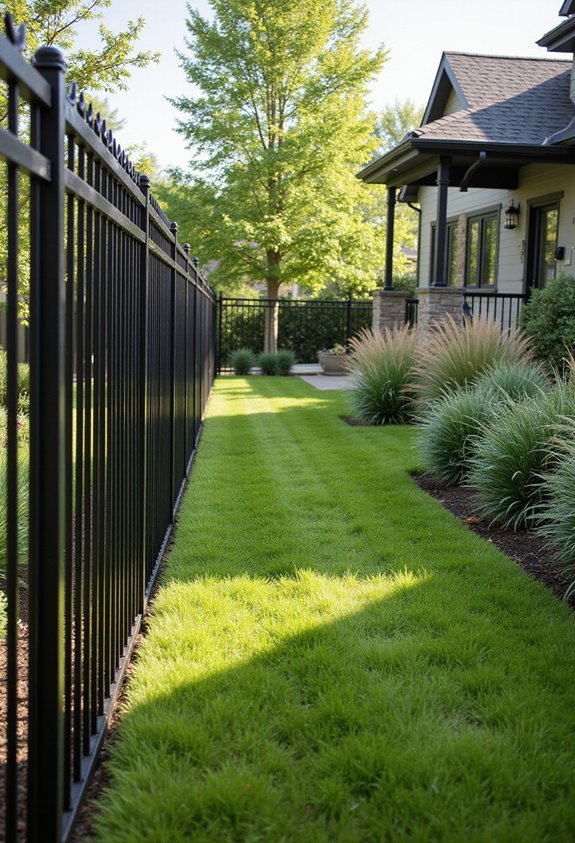
While asymmetrical heights create visual interest through deliberate variation, black metal fencing operates on an entirely different principle by allowing other design elements in your yard to take center stage. Black metal fences recede visually into the background because they don’t compete for attention with your landscaping, plants, or home architecture. The dark color absorbs light rather than reflecting it, making the fence less visually prominent from a distance. This approach works particularly well if you’ve invested in colorful gardens, decorative plants, or striking architectural features you want to highlight. You’re fundamentally using the fence as a functional boundary that doesn’t distract from your yard’s focal points. This strategy creates an open, uncluttered aesthetic while still providing security and definition to your front yard space.
Shadowbox Fencing: The Alternating Gap Trick
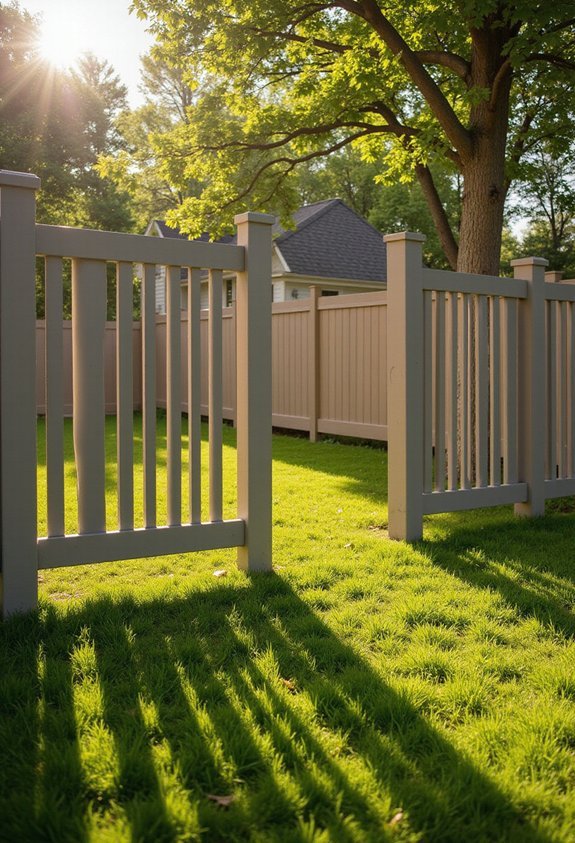
If you’re looking for a fencing style that offers both visual appeal and practical function, shadowbox fencing delivers on both fronts through its distinctive alternating board design. This technique involves positioning boards on alternating sides of the fence rails, creating a woven appearance that allows light and air to pass through while maintaining privacy from most angles. You’ll find that shadowbox fencing provides several advantages: it reduces wind resistance compared to solid fencing, permits visibility from certain vantage points, and creates an elegant aesthetic that complements various architectural styles. The alternating gap pattern also prevents the monotonous appearance of traditional solid fencing, making your front yard feel more open and visually interesting despite the barrier’s presence.
Raised Planter Beds as Functional Boundaries
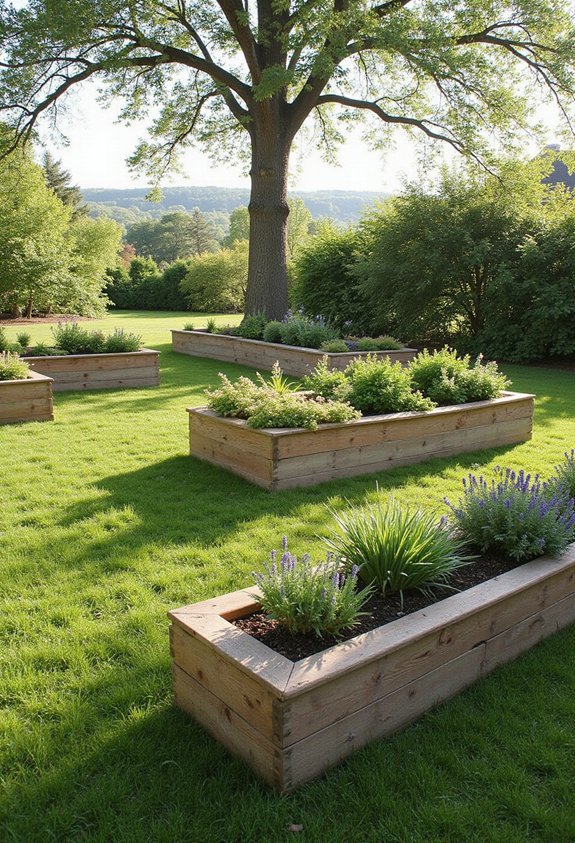
Several creative homeowners’ve discovered that raised planter beds can serve as attractive front yard boundaries that combine landscaping with practical fencing functions. You’ll find that these beds create natural property lines while allowing visibility across your landscape, maintaining that open feeling you’re seeking. When you install raised beds along your property edge, you’re establishing a clear demarcation without the solid barrier of traditional fencing. You can fill them with flowering plants, shrubs, or vegetables, adding both beauty and purpose to your boundary. The beds themselves become structural elements that subtly define your space, guide foot traffic, and enhance curb appeal simultaneously. This approach works particularly well when you stagger multiple beds at varying heights, creating visual interest while reinforcing your property’s perimeter effectively.
Front Yard Gabion Boxes: Texture Without Bulk
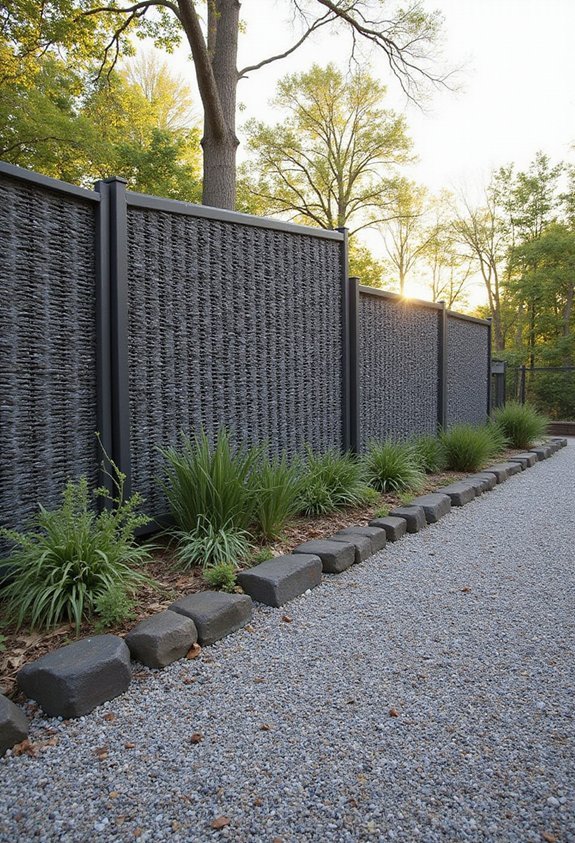
As you’re looking for fencing alternatives that don’t create heavy, imposing barriers, gabion boxes offer an excellent solution that combines visual interest with practical boundary definition. These wire-mesh containers filled with stones, gravel, or decorative materials create a permeable fence line that maintains sight lines while establishing clear property boundaries. You’ll appreciate how gabion boxes weigh less than traditional masonry walls yet provide structural stability and durability. The gaps between filling materials allow water drainage and airflow, preventing moisture accumulation around your landscaping. You can customize the aesthetic by selecting different stone colors, sizes, or mixed materials to complement your home’s exterior. Installation requires minimal tools and expertise, making gabion boxes an accessible DIY option for homeowners seeking modern, understated boundary solutions that preserve your yard’s open feeling while defining space effectively.
Segmented Fencing: Alternating Solid and Open Sections
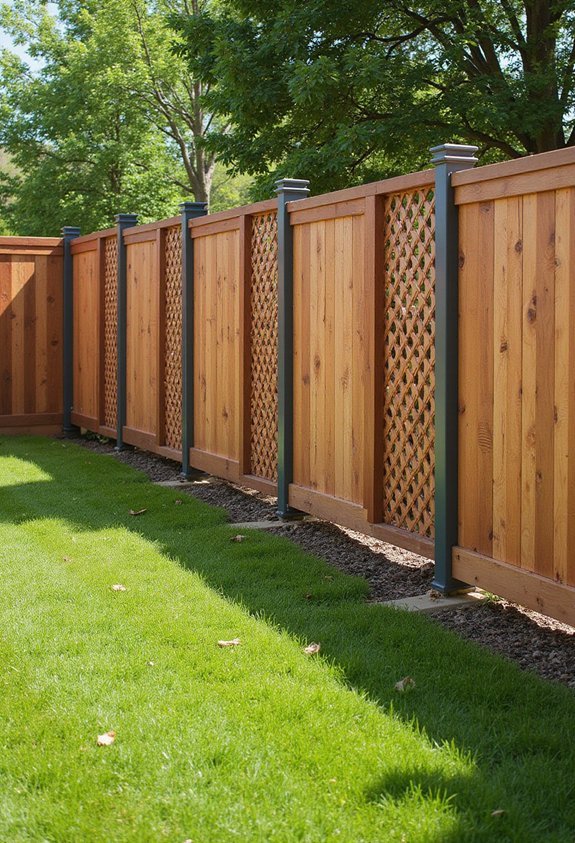
When you’re planning a front yard fence that balances privacy with openness, segmented fencing provides a practical design strategy by alternating between solid panels and open sections throughout your fence line. This approach lets you control visibility where you need it most while maintaining sightlines in other areas. You might install solid wooden panels near your entrance for privacy, then switch to lattice or metal grating sections along the sides. This variation creates visual interest and prevents your yard from feeling completely enclosed. You’ll benefit from improved airflow and natural light penetration compared to full solid fencing. Segmented designs also reduce material costs since you’re using fewer solid panels overall. This flexible fencing method adapts well to different yard layouts and personal privacy requirements.
Conclusion
You’ve got a toolkit full of options to fence your front yard without making it feel like a fortress. By mixing materials, spacing slats, and choosing low-profile designs, you’ll create boundaries that don’t block views or light. Whether you’re drawn to lattice patterns, horizontal lines, or segmented sections, you can establish a welcoming entrance that’s both secure and open, transforming your outdoor space into an inviting extension of your home.