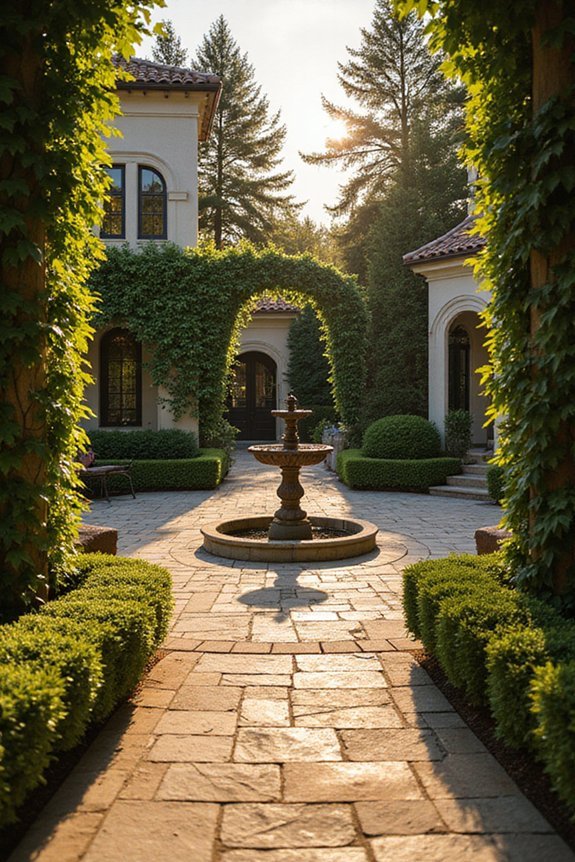
Your front yard holds tremendous potential to become an inviting outdoor space that reflects your personal style and enhances your home’s curb appeal. From cottage gardens with winding paths to Mediterranean courtyards featuring central fountains, courtyard designs offer versatile solutions for various climates and preferences. Whether you’re working with limited space or a sprawling landscape, specific design strategies can transform your entrance into a charming retreat. Discover which style aligns with your vision and climate.
Cottage Garden Courtyard With Winding Paths
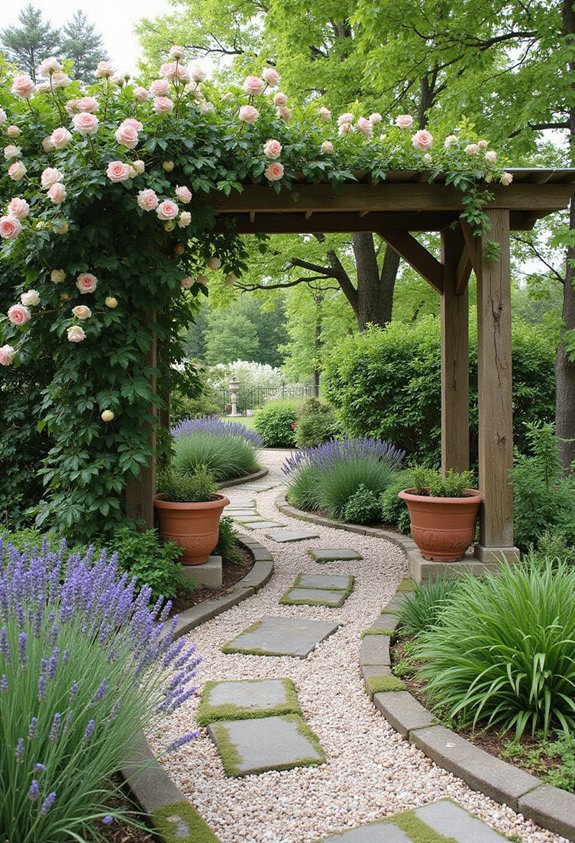
A cottage garden courtyard with winding paths creates a charming outdoor space that combines functionality with natural beauty, and you can achieve this design by carefully planning the layout, selecting appropriate plants, and constructing pathways that guide visitors through the garden in an intentional way. You’ll want to map out your courtyard dimensions first, then decide where curved or straight paths should go based on your yard’s natural features. Select low-maintenance plants like lavender, roses, and perennials that’ll thrive in your climate zone. For pathways, you can use gravel, stepping stones, or mulch, which’ll define different sections while encouraging exploration. These winding routes naturally create focal points and garden rooms, making your front yard feel larger and more inviting to anyone who visits.
Also read: 24 SIMPLE FRONT YARD Ideas That Look So Clean!
English Country Garden Courtyard
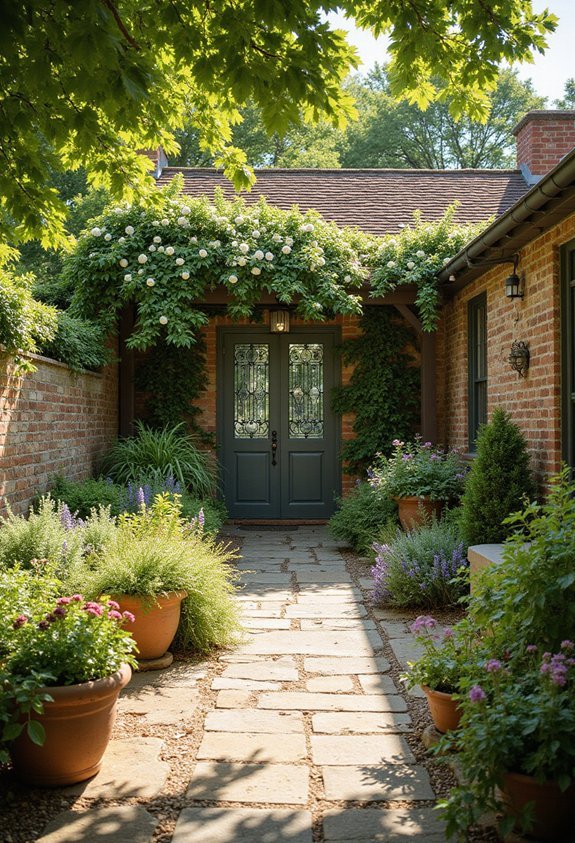
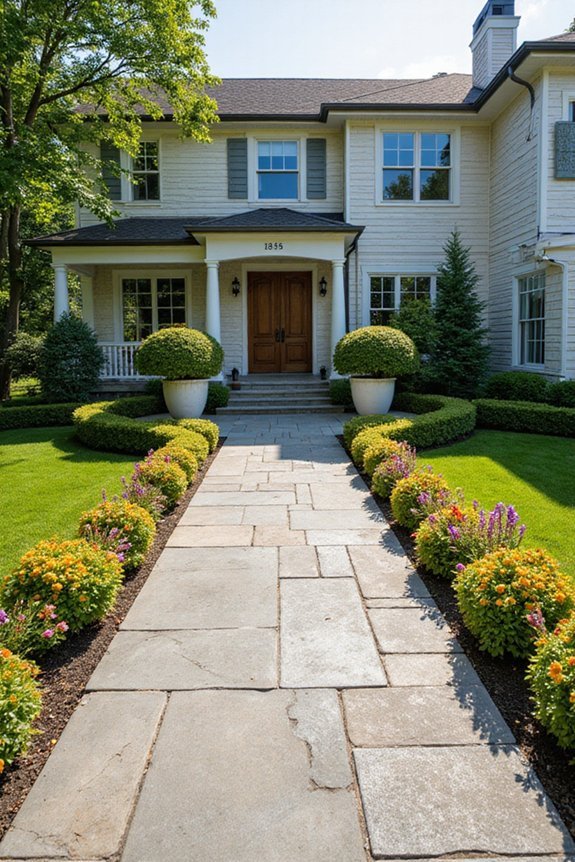
English country garden courtyards build upon the winding path concept you’ve explored, but they’re distinguished by their formal structure, traditional plant selections, and symmetrical design elements that reflect centuries of European gardening heritage. You’ll want to incorporate classic features like manicured hedges, stone borders, and central focal points such as fountains or statuary. Plant roses, lavender, and boxwood in organized patterns that create visual balance throughout your space. Stone or gravel pathways should form geometric shapes, guiding visitors through distinct garden rooms. You can add benches positioned symmetrically to encourage rest and contemplation. Traditional materials like slate, brick, and wrought iron fencing enhance authenticity. This design approach transforms your front courtyard into an elegant, timeless retreat that combines structure with natural beauty, creating an inviting entrance.
Bohemian Courtyard With Eclectic Textures
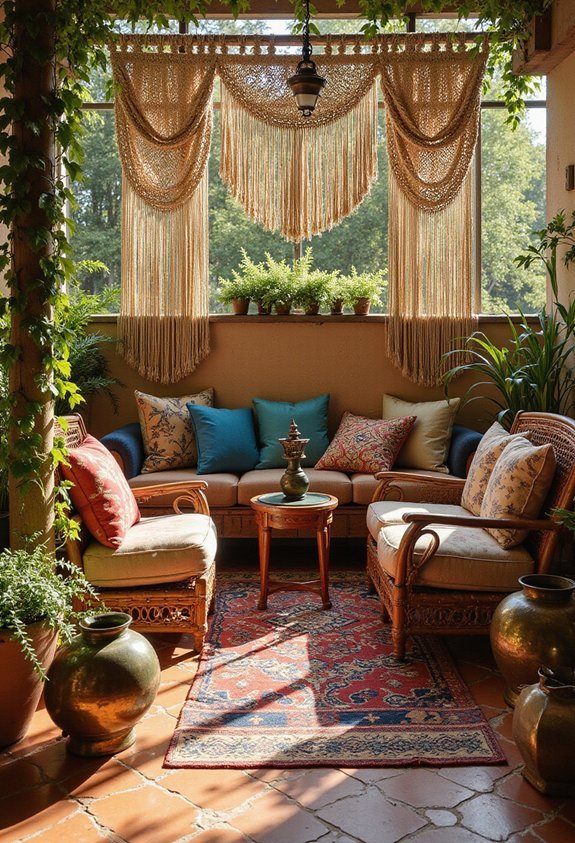
While English country gardens emphasize formal symmetry and structured elegance, bohemian courtyards embrace a deliberately unconventional approach that celebrates individual expression, layered textures, and artistic freedom. You’ll create visual interest by combining mismatched materials like weathered wood, colorful tiles, and natural stone throughout your space. You can incorporate vintage furniture, handmade pottery, and plants in various container styles to establish depth and personality. You should layer different flooring textures, including gravel pathways, wooden decking, and patterned pavers, allowing each element to contribute distinct character. You’ll benefit from adding tapestries, macramé, and string lights to enhance the relaxed aesthetic. By thoughtfully mixing cultural influences, artistic pieces, and natural elements, you’re constructing a uniquely personalized outdoor sanctuary that reflects your individual style and creative vision.
Mediterranean Courtyard With Fountain and Arches
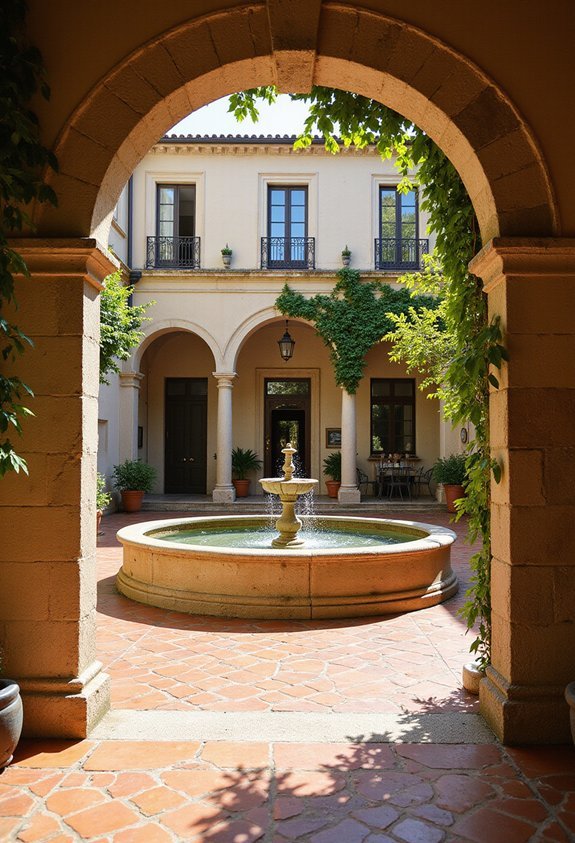
Mediterranean courtyards offer you a distinctly different aesthetic from the bohemian approach, emphasizing timeless elegance, symmetry, and classical architectural elements rather than eclectic mixing and artistic spontaneity. You’ll create a sophisticated outdoor space by incorporating arched doorways and walkways, which form the architectural backbone of this design style. A central fountain serves as your focal point, providing both visual interest and soothing water sounds that enhance the peaceful atmosphere. You can add symmetrical plantings of olive trees, cypress, and lavender around the fountain to reinforce the balanced, orderly feel. Stone or terracotta tiles pave your courtyard floor in geometric patterns, while whitewashed walls reflect sunlight and create cool, shaded areas. This approach transforms your front yard into an elegant Mediterranean retreat that exudes classical refinement.
Tuscan-Inspired Patio With Terracotta Accents
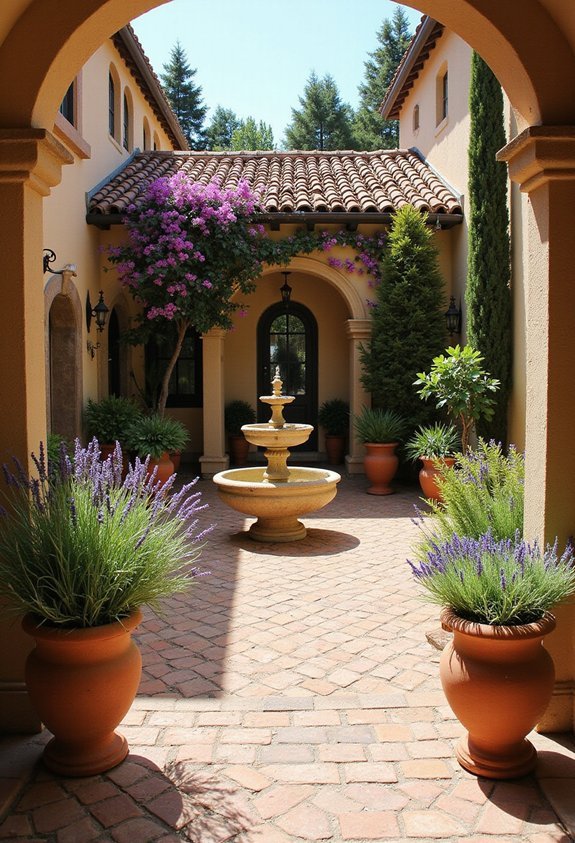
As you move from the symmetrical elegance of Mediterranean design, you’ll find that Tuscan style offers a warmer, more rustic interpretation that emphasizes natural materials and earthy tones rather than formal precision. You can achieve this aesthetic by incorporating terracotta tiles, clay pots, and warm-colored pavers throughout your front patio. Consider adding terracotta planters in varying sizes to display olive trees, cypress plants, and fragrant herbs like rosemary and lavender, which thrive in sunny locations. You’ll want to use natural stone walls or fencing to frame your space, and you can enhance the authentic feel by installing a rustic wooden pergola or arbor. These elements combine to create an inviting, approachable courtyard that reflects the casual beauty of the Italian countryside.
Spanish Colonial Design With Colorful Tiles
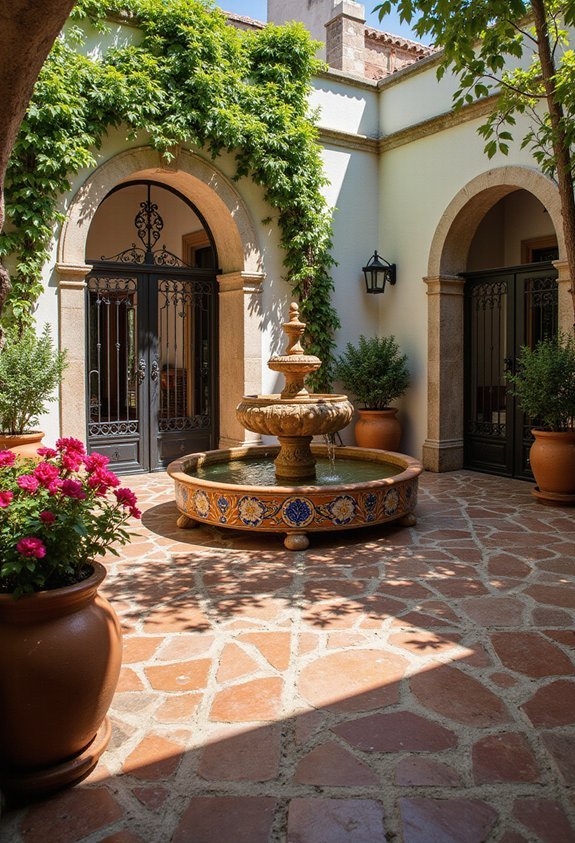
Vibrant tilework—a defining characteristic of Spanish Colonial architecture—transforms your front courtyard into a bold, visually striking space that celebrates color and intricate patterns in ways that the warmer tones of Tuscan design simply don’t attempt. You’ll incorporate hand-painted ceramic tiles featuring geometric designs, floral motifs, and traditional patterns that reflect centuries of Spanish and Moorish influences. These tiles work effectively on pathways, fountain surrounds, and decorative borders throughout your courtyard. To implement this style successfully, you’ll select a cohesive color palette—typically deep blues, terra cottas, yellows, and greens—that complements your home’s architecture. You can source authentic reproductions or original tiles from specialized suppliers. Pairing these vibrant elements with wrought-iron fixtures, stone columns, and lush vegetation creates an authentic Spanish Colonial atmosphere.
Modern Minimalist Design With Native Plants
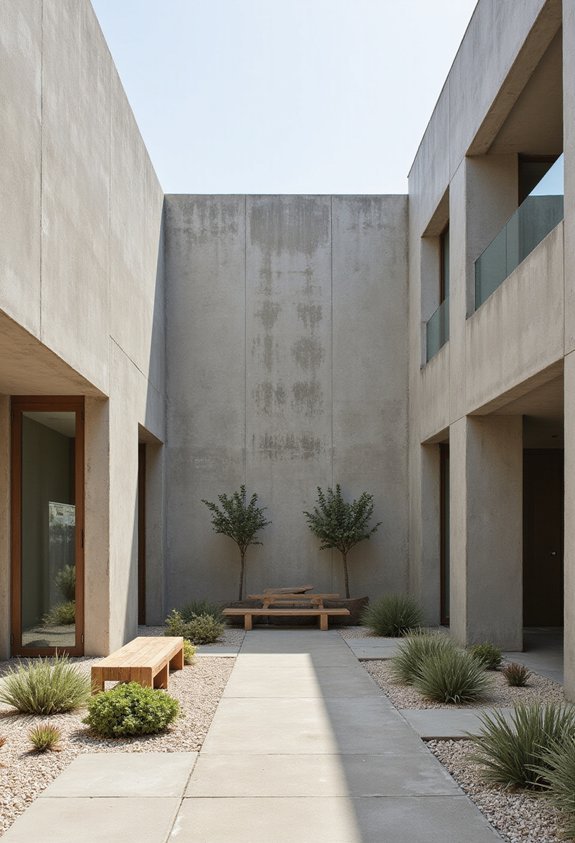
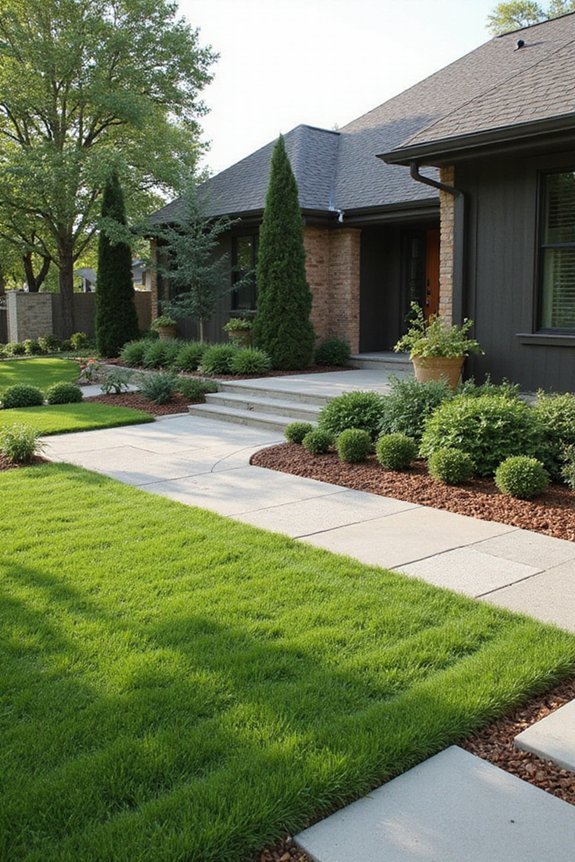
When you’re ready to shift away from the ornate patterns and vibrant colors of Spanish Colonial style, modern minimalist design offers a cleaner aesthetic that emphasizes simplicity, open space, and the natural beauty of plants native to your region. You’ll create a courtyard that feels spacious and uncluttered by selecting only essential elements like gravel pathways, simple stone borders, and strategically placed native vegetation. Your plants’ll require less water and maintenance since they’re adapted to your local climate. You can incorporate native shrubs, grasses, and wildflowers that provide texture and seasonal interest without overwhelming the design. This approach creates a peaceful outdoor space that celebrates your region’s natural landscape while maintaining the contemporary, refined look you’re seeking.
Contemporary Courtyard With Geometric Pavers
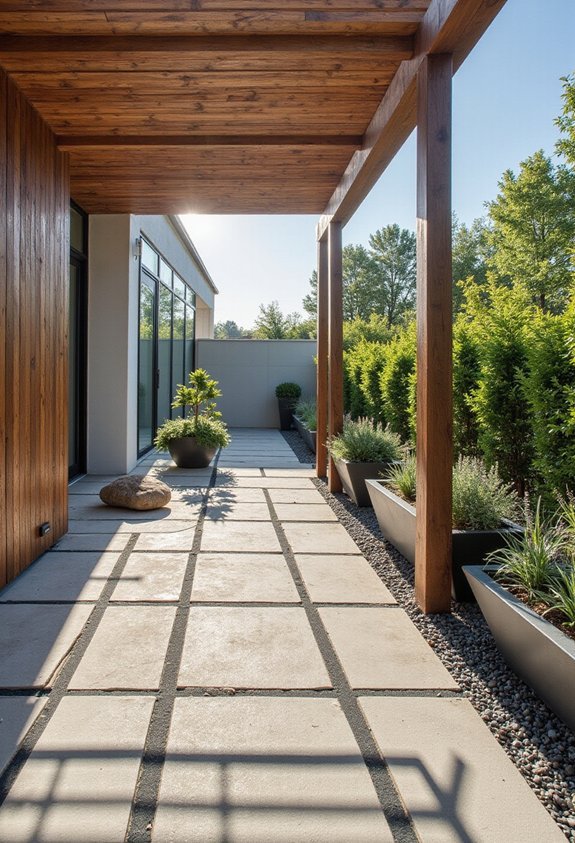
Three key elements—bold geometric patterns, clean lines, and precisely arranged pavers—define the contemporary courtyard aesthetic that’ll transform your front yard into a modern outdoor space. You’ll start by selecting your paver shapes, whether you’re choosing squares, rectangles, or hexagons, and arranging them in strategic patterns like herringbone, chevron, or sunburst designs. These arrangements create visual interest while maintaining the minimalist philosophy. Next, you’ll establish clear sight lines by limiting your color palette to two or three complementary shades, ensuring your design feels intentional rather than chaotic. Finally, you’ll incorporate subtle edging materials like metal strips or concrete borders to define different zones within your courtyard, creating distinct functional areas for seating, walking, or plantings that enhance both aesthetics and usability.
Industrial Courtyard With Raw Metal and Stone
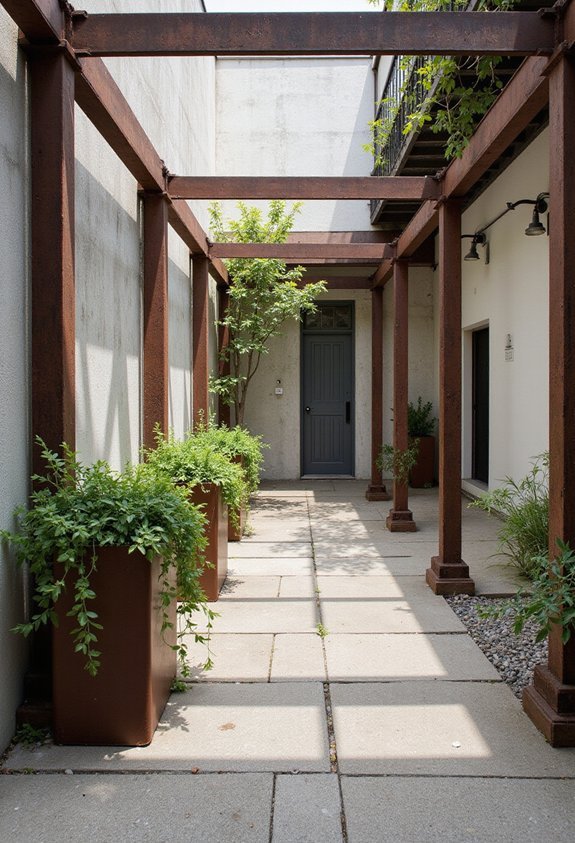
If you’re drawn to bold, unfinished aesthetics, an industrial courtyard‘ll give your front yard an edgy, sophisticated character that celebrates raw materials and honest construction. You’ll want to incorporate exposed metal elements like steel beams, iron railings, and metal screens that create visual interest while maintaining structural integrity. Pair these with natural stone surfaces, including slate, granite, or concrete pavers, which provide durable, low-maintenance flooring that weathers beautifully over time. Consider adding metal planters, vintage industrial lighting fixtures, and weathered wood accents to enhance the authentic aesthetic. This design approach works particularly well in urban settings, where it complements modern architecture and creates functional spaces that require minimal upkeep while delivering maximum visual impact and enduring style.
Japanese Zen Garden for Serene Entryways
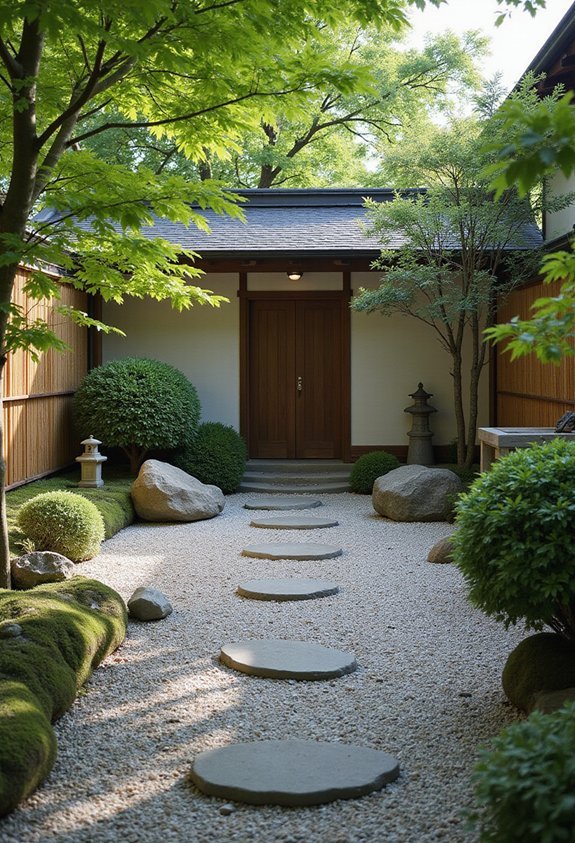
As you seek to transform your front yard into a peaceful retreat, a Japanese zen garden offers a contemplative alternative that emphasizes balance, simplicity, and natural harmony through carefully arranged elements. You’ll want to incorporate essential components like gravel or sand, which you’ll rake into patterns representing water ripples, along with strategically placed rocks that symbolize mountains or islands. Include carefully pruned plants, such as bamboo or moss, to create visual interest while maintaining minimalist aesthetics. You should add a stone lantern or small water feature to enhance the meditative quality. Pathways made from stepping stones guide visitors through the space thoughtfully. The result’s a serene entryway that encourages contemplation and provides a calming passage between the outside world and your home’s interior.
Transitional Design Merging Classic and Modern
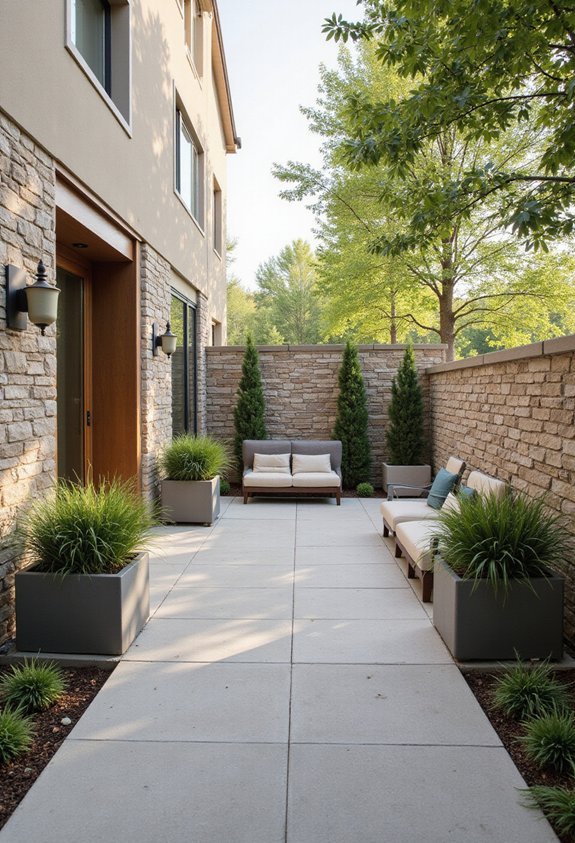
While zen gardens prioritize minimalist simplicity and Eastern philosophy, shifting courtyard designs offer you a different approach by blending traditional architectural elements with contemporary aesthetics to create spaces that feel both timeless and current. You can incorporate classic materials like stone pathways and brick walls alongside modern features such as sleek metal railings and minimalist plantings. This fusion strategy allows you to honor architectural heritage while embracing current design trends. Consider pairing ornamental fountain designs with clean-lined seating areas, or combine traditional hedging with contemporary lighting fixtures. The key involves selecting complementary elements that don’t compete visually, ensuring your courtyard achieves balanced harmony. By thoughtfully merging these contrasting styles, you develop an entryway that appeals to diverse aesthetic preferences while maintaining functional, cohesive appeal throughout the space.
Tropical Courtyard With Lush Layered Planting
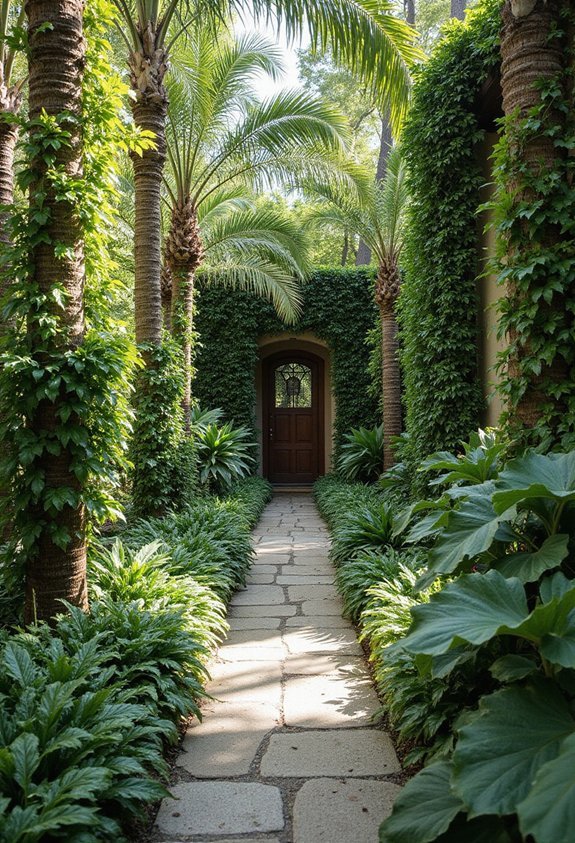
Vibrant abundance defines tropical courtyards, where you’ll create depth and visual interest by arranging plants in multiple layers that mimic natural rainforest ecosystems. You’ll position tall trees as your canopy layer, establishing the framework for your design while providing essential shade and structure. Beneath these, you’ll integrate medium-height shrubs and ornamental plants that fill the understory, creating passage zones between towering specimens and ground-level features. Finally, you’ll incorporate low-growing groundcovers, ferns, and flowering plants at soil level, which adds texture and completes your layered composition. This strategic arrangement guarantees that every vertical space within your courtyard remains visually engaging while promoting healthy plant growth through appropriate light distribution and microclimates that accommodate diverse tropical species.
Desert Landscape Courtyard for Arid Climates
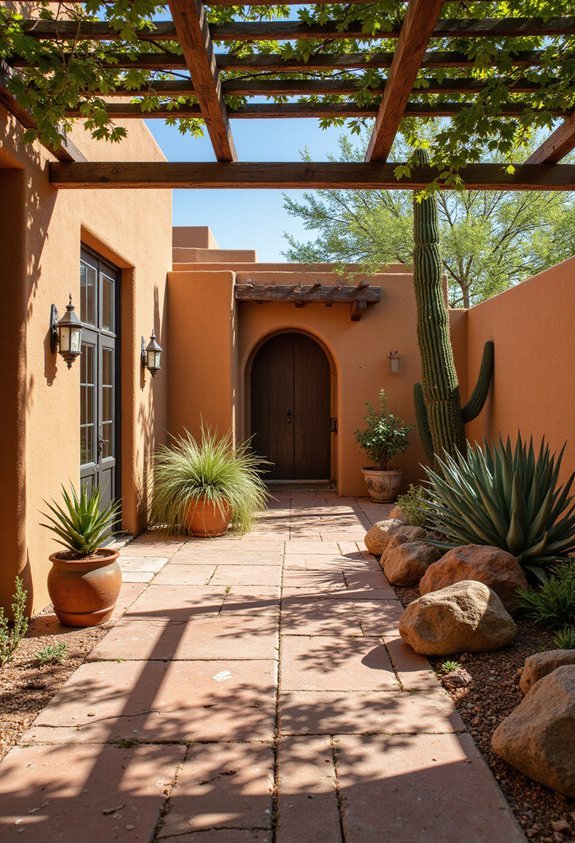
When you’re designing a courtyard in an arid climate, you’ll need to shift your approach entirely from tropical abundance to strategic water conservation and heat management, selecting drought-tolerant plants that thrive in harsh, dry conditions while minimizing your irrigation requirements. Incorporate native species like desert shrubs, cacti, and succulents that naturally adapt to low rainfall and intense sun exposure. Use gravel, mulch, or decomposed granite as ground cover to retain soil moisture and reduce evaporation. Install hardscaping elements such as stone pathways, rock features, and shade structures to create visual interest while protecting your courtyard from excessive heat. Position plants strategically to provide shade and wind breaks, reducing cooling demands and protecting tender species from harsh desert conditions.
Coastal Courtyard With Beach House Appeal
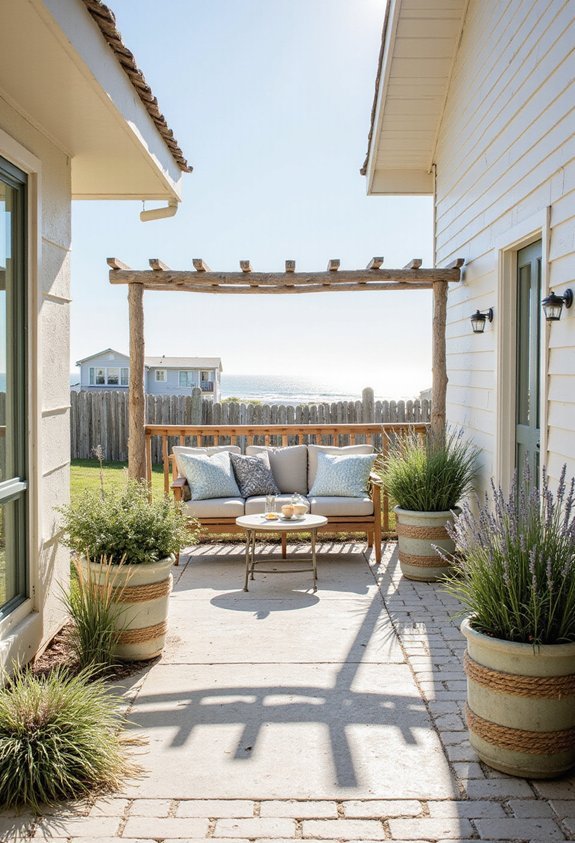
Moving from the dry desert environment to a coastal setting requires you to embrace moisture, salt spray, and the dynamic elements that ocean air brings to your outdoor space. You’ll want to select salt-tolerant plants like beach roses, ornamental grasses, and native coastal shrubs that withstand harsh conditions. Incorporate natural materials such as weathered wood, driftwood, and light-colored stones that reflect the beach aesthetic while providing durability against salt corrosion. Install proper drainage systems to manage moisture accumulation and prevent plant root damage. Consider adding a focal point like a fire pit, water feature, or seating area positioned to capture ocean views. Use neutral color palettes featuring whites, grays, and sandy tones that harmonize with coastal surroundings and create a cohesive, inviting atmosphere.
Farmhouse Courtyard With Rustic Charm
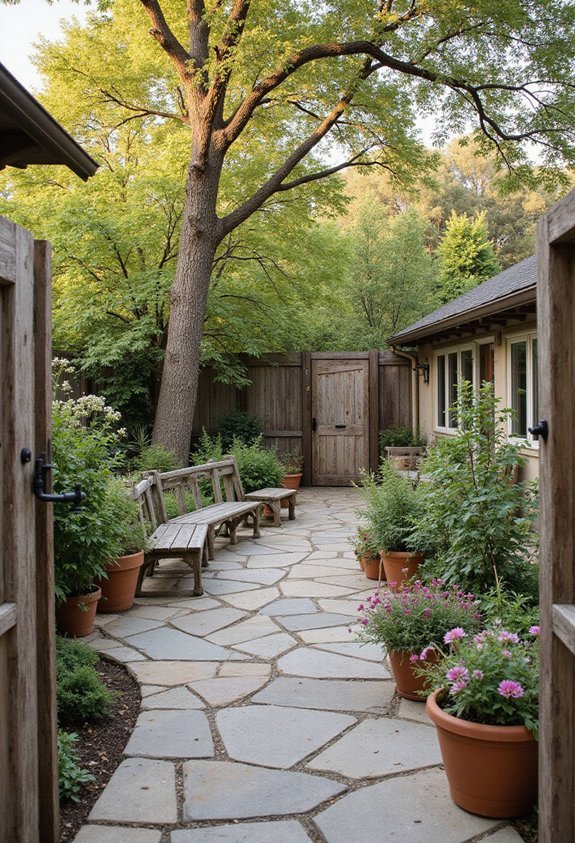
A farmhouse courtyard captures the warmth and authenticity of rural living by incorporating weathered materials, vintage elements, and practical design features that evoke a sense of tradition and timelessness. You’ll want to use reclaimed wood, stone pathways, and wrought iron accents that reflect countryside aesthetics. Consider adding functional elements like wooden benches, vintage farm tools as décor, and rustic planters filled with herbs and wildflowers. Gravel or packed earth surfaces work well for these spaces, requiring minimal maintenance while maintaining authenticity. You should incorporate weathered fencing, perhaps made from barn wood, to define the courtyard boundaries. Lighting from vintage lanterns or simple fixtures enhances the nostalgic atmosphere during evening hours. This design approach creates an inviting outdoor space that honors agricultural heritage while providing practical functionality for your home.
Small-Space Courtyard for Tight Footprints
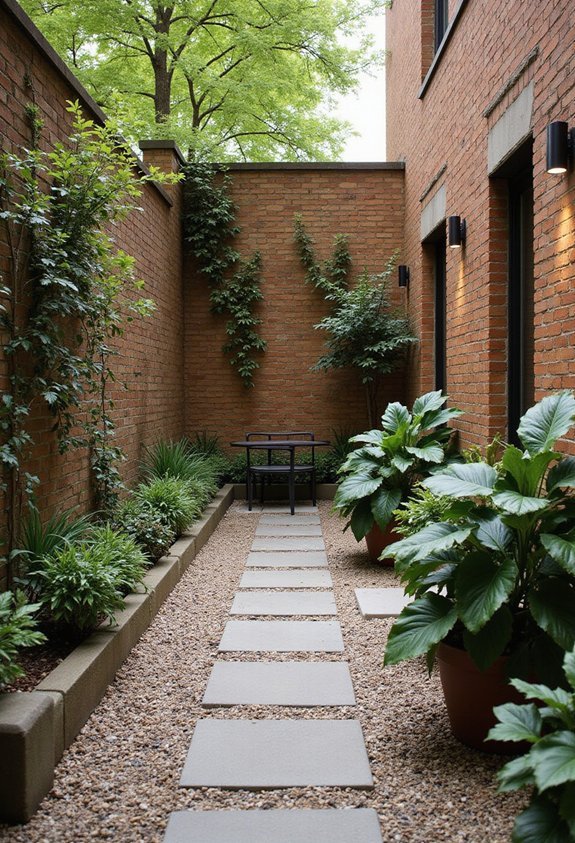
If you’re working with limited square footage, you’ll need to maximize every inch of your front courtyard by selecting compact furniture, vertical gardening solutions, and strategic layout choices that create the illusion of spaciousness. Consider using narrow benches, folding chairs, or built-in seating that doubles as storage to minimize clutter. Install wall-mounted planters, trellises, and hanging baskets to draw the eye upward and add greenery without consuming floor space. Choose a cohesive color palette with light tones to visually expand the area, and arrange pathways to guide movement efficiently through the space. Incorporate a small focal point, such as a fountain or decorative mirror, strategically positioned to enhance depth perception and make your tight footprint feel intentionally designed and welcoming.
Conclusion
You’ve now discovered that your front yard courtyard is like a blank canvas waiting for your personal artistic touch, offering countless design possibilities from cottage gardens to desert landscapes. By selecting a style that matches your climate, space, and preferences, you can create an outdoor area that enhances your home’s character while providing a functional gathering space. Your courtyard transformation starts with choosing the right design elements today.