Your front yard’s fencing serves as the first impression of your home’s overall design, and upgrading it with high-end materials and styles can dramatically transform your property’s curb appeal. Whether you’re drawn to modern aesthetics or classic elegance, understanding how to select and implement premium fencing options requires knowledge of specific design principles, material durability, and architectural compatibility. This guide walks you through proven strategies to achieve that polished, luxury appearance—but the key to success lies in knowing which combinations work best.
How to Spot High-End Fencing (Aesthetic Framework)
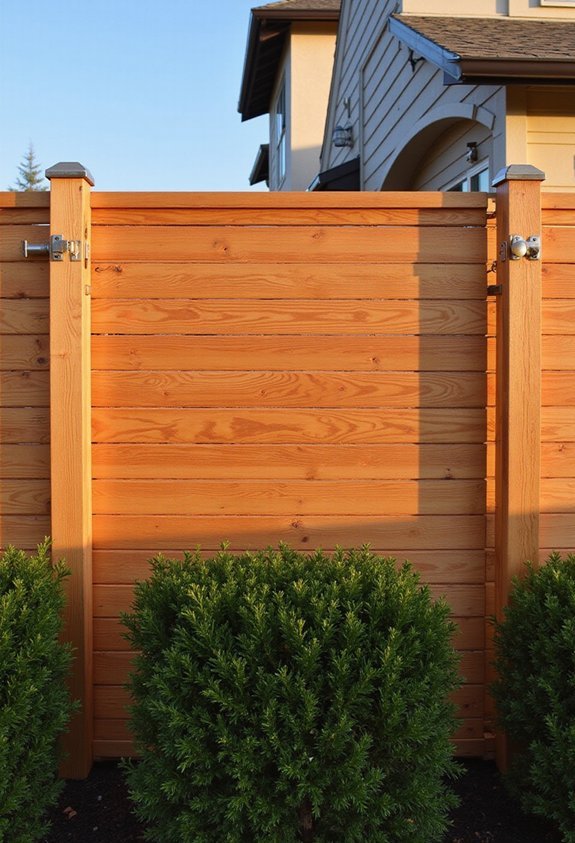
When you’re evaluating a fence’s quality and appearance, you’ll want to examine several key visual elements that distinguish premium fencing from standard options, including the material’s finish, the precision of its construction, and the overall design coherence. High-end fencing displays smooth, even surfaces without splinters, warping, or discoloration that’d indicate poor craftsmanship. The posts align perfectly vertical, and the horizontal rails sit completely level, demonstrating meticulous installation. Premium materials like composite wood, vinyl, or wrought iron show consistent coloring and texture throughout. You’ll notice clean joints where pieces connect, with no gaps or misalignment visible. The fence’s design complements your home’s architectural style, creating visual harmony rather than clashing with existing structures. These details collectively signal investment-quality fencing that’ll maintain its appearance long-term.
Also read: 20 HOUSE FRONT YARD Ideas That Look Put Together!
Modern Horizontal Slat Fencing
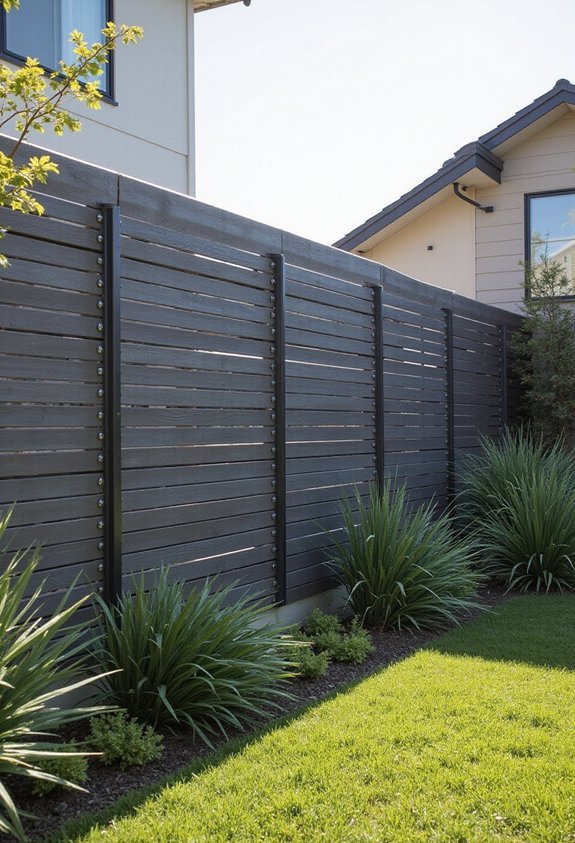
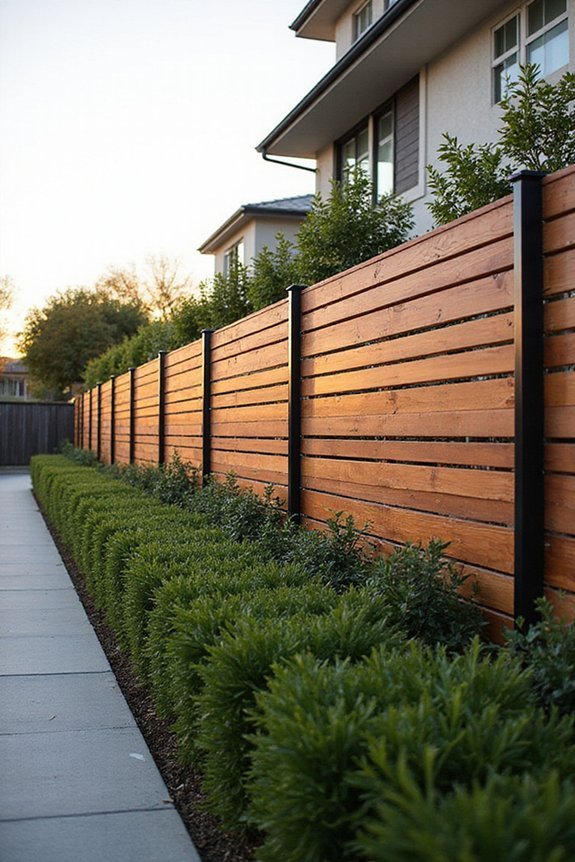
Why’ve horizontal slat fences become such a popular choice for modern homes? These fences feature thin, evenly-spaced boards running horizontally across vertical posts, creating a sleek, contemporary aesthetic that appeals to homeowners seeking sophistication. The horizontal orientation creates clean lines that emphasize width, making yards appear larger and more expansive. You’ll notice they work exceptionally well with minimalist landscaping, allowing sightlines through the fence while maintaining privacy through strategic spacing. The design accommodates various materials including wood, composite, and metal, offering durability options suited to different climates and budgets. Installation requires precise alignment and consistent spacing between slats, ensuring the polished appearance that distinguishes high-end fencing from basic alternatives. Their popularity stems from combining visual elegance with practical functionality, delivering substantial curb appeal improvements.
Classic Wrought Iron Fencing
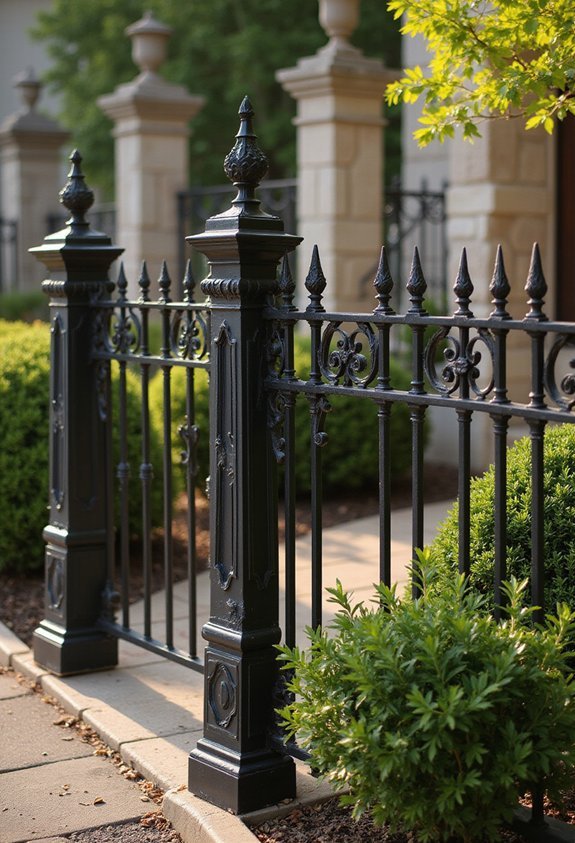
While modern horizontal slat fencing emphasizes clean lines and contemporary simplicity, classic wrought iron fencing takes a distinctly different approach by showcasing ornamental craftsmanship and timeless elegance that’s been valued for centuries. You’ll find that wrought iron fences feature intricate scrollwork, decorative spears, and detailed patterns that add sophistication to your front yard. These fences require regular maintenance, including painting and rust prevention, to preserve their appearance and structural integrity. You can customize wrought iron designs with various finishes and colors, though black and bronze remain popular choices. While this fencing style costs more upfront than alternative options, it’s incredibly durable and creates an an elevated aesthetic that increases your home’s curb appeal and property value.
Wood and Metal Hybrid Fencing
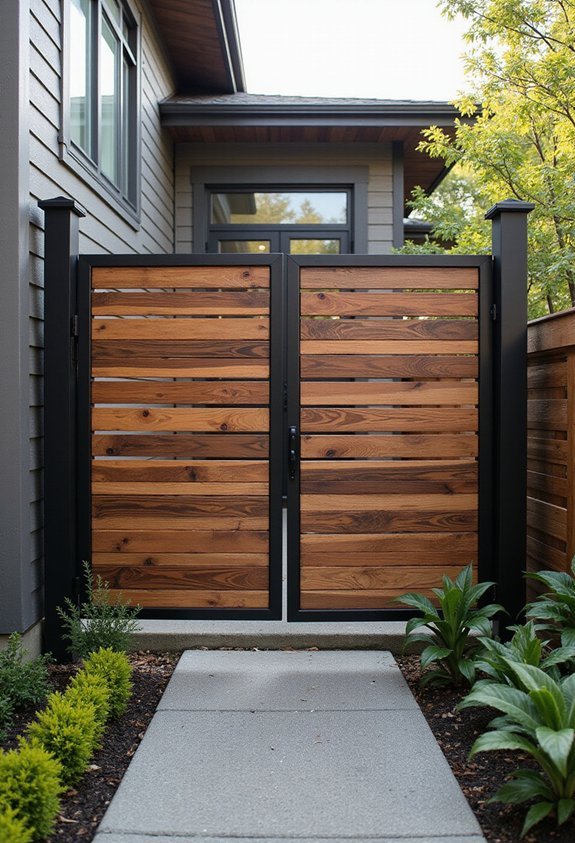
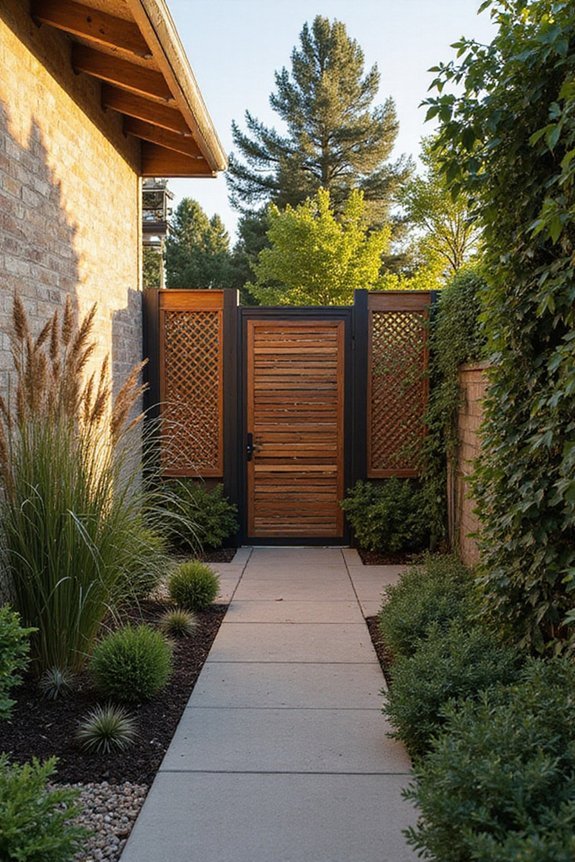
Combining wood and metal materials into a single fence design offers you a practical solution that blends the warmth and natural aesthetic of wood with the durability and structural strength of metal components. You’ll find that metal posts and frames provide excellent support while wooden panels create visual appeal and privacy. This hybrid approach allows you to customize your fence’s appearance by selecting different wood types, stains, and metal finishes that complement your home’s exterior. Metal elements resist rust and decay when properly treated, extending your fence’s lifespan considerably. You can choose various configurations, such as metal frames with horizontal wood slats or vertical wooden boards supported by metal bracing. This combination style offers you flexibility in design while requiring moderate maintenance for both materials to guarantee longevity and aesthetic appeal.
Sleek Black Metal Panels
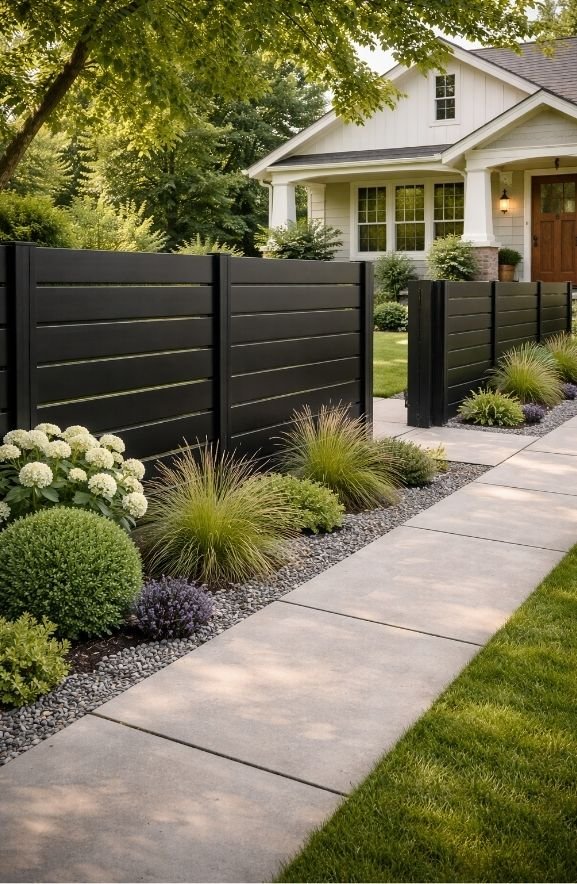
If you’re looking for a more contemporary and minimalist approach to front yard fencing, sleek black metal panels offer you a striking alternative that moves away from the hybrid designs discussed earlier. These panels create clean lines and modern aesthetics that complement contemporary home architecture effectively. You’ll find that black metal fencing requires regular maintenance to prevent rust and corrosion, particularly in humid or coastal climates where salt air accelerates deterioration. The material’s durability makes it an excellent long-term investment for homeowners who prioritize both style and longevity. You can customize panel heights, spacing, and decorative elements to match your property’s specific needs. Black metal fencing also provides security benefits while maintaining visibility through your front yard, allowing you to showcase landscaping features while establishing clear property boundaries.
Stacked Stone Fencing
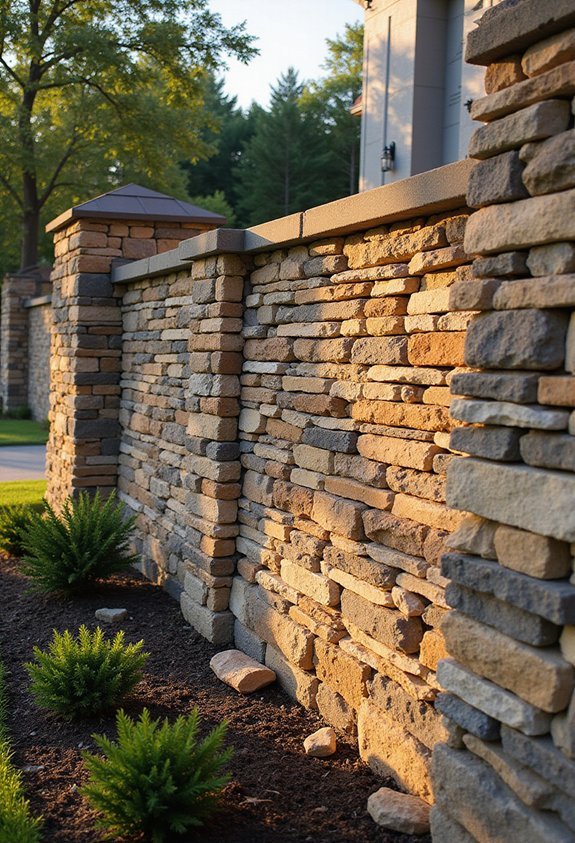
As you move from the modern appeal of black metal panels, stacked stone fencing offers a natural, rustic aesthetic that brings warmth and texture to your front yard while providing substantial durability and visual interest. You’ll find that stacked stone creates an upscale appearance that complements various architectural styles, from traditional to contemporary homes. The construction involves layering stones of varying sizes without mortar, allowing water drainage and natural settling. You can select from limestone, granite, fieldstone, or slate depending on your regional availability and desired color palette. Installation requires careful planning and precise placement, so you should consider hiring experienced professionals. Once completed, your stacked stone fence demands minimal maintenance, resisting weather damage and deterioration effectively while enhancing your property’s curb appeal and value tremendously.
Board-on-Board Vertical Fencing
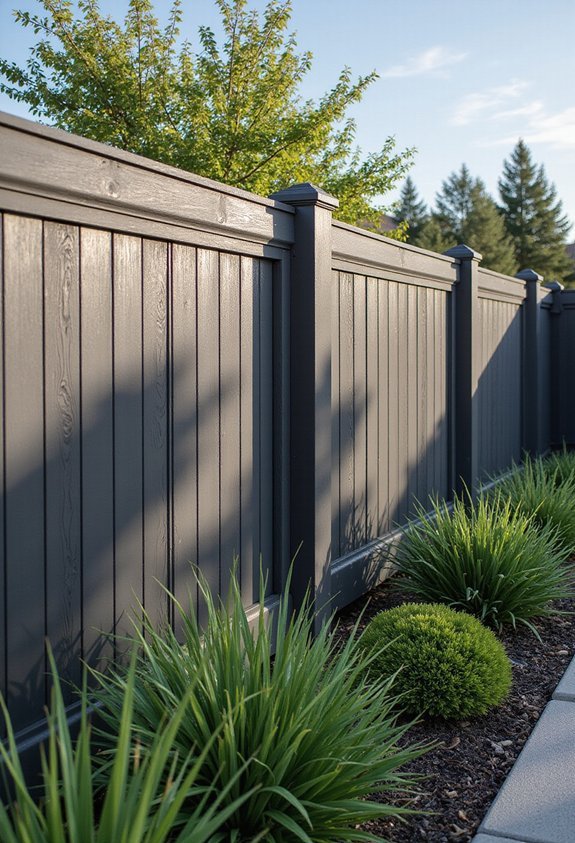
While stacked stone fencing delivers a natural, rustic charm, board-on-board vertical fencing offers a sleek, modern alternative that you’ll appreciate for its clean lines and contemporary appeal. This style features wooden planks arranged vertically, with each board overlapping its neighbor, creating a solid, unified appearance without visible gaps.
You’ll benefit from board-on-board fencing because it provides excellent privacy while maintaining a sophisticated aesthetic. The overlapping design allows slight flexibility during weather changes, reducing warping and extending the fence’s lifespan. Installation requires precise measurement and alignment to guarantee consistent overlap spacing and vertical orientation throughout the entire fence line. You can customize this fencing with various wood types, stains, and finishes to complement your home’s exterior design. Regular maintenance, including staining and sealing, will keep your fence looking high-end for years.
Ornamental Aluminum Fencing
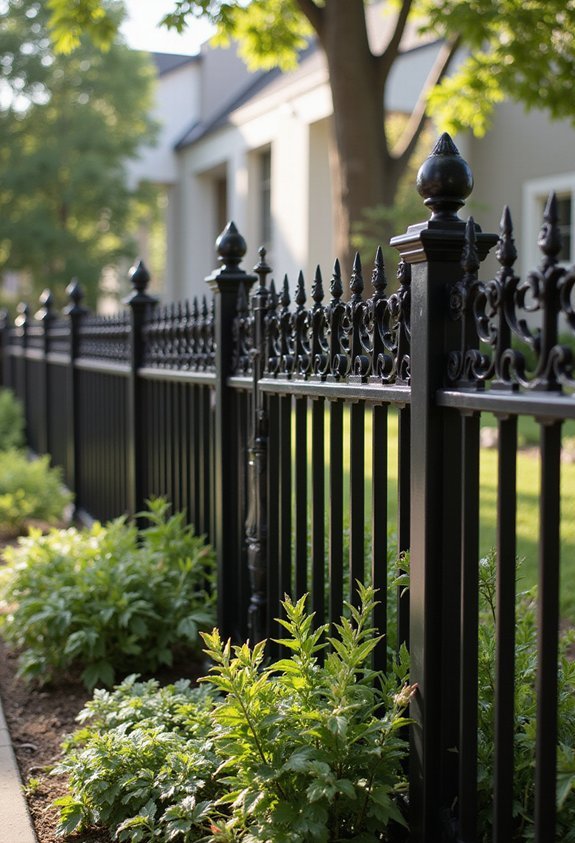
Unlike the natural warmth of wood or the rustic appeal of stone, ornamental aluminum fencing delivers a modern, refined look that’ll enhance your front yard’s curb appeal while offering practical advantages you won’t find in other materials. You’ll appreciate aluminum’s lightweight construction, which makes installation faster and more cost-effective than heavier alternatives. The material won’t rust, rot, or warp, meaning you’ll spend minimal time on maintenance, requiring only occasional cleaning with soap and water. You can choose from various decorative styles, including Victorian scrollwork, contemporary designs, and traditional picket patterns that complement any home architecture. Additionally, aluminum fencing resists weather damage, UV rays, and insects, ensuring your investment maintains its pristine appearance for years without refinishing or repainting.
Minimalist Horizontal Wood Slats
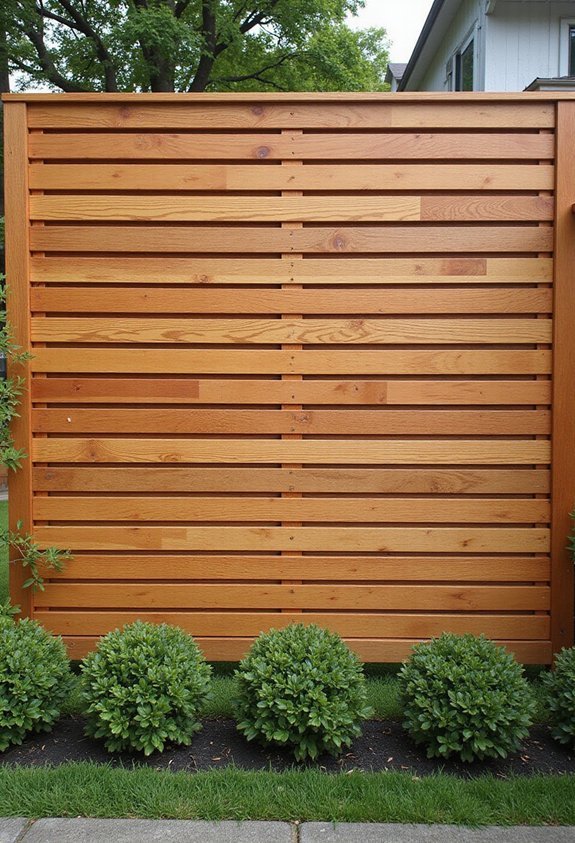
If you’re seeking a contemporary aesthetic that combines clean lines with natural materials, horizontal wood slats offer a sleek fencing solution that’s gained popularity in modern landscape design. You’ll appreciate how this style emphasizes minimalism, creating visual interest through spacing between boards rather than ornamental details. The horizontal orientation makes your yard appear wider, enhancing the sense of space. You can select from various wood types—cedar, redwood, or composite materials—each offering different durability levels and maintenance requirements. Installing them requires precise spacing and alignment to achieve that polished, high-end appearance. You’ll need quality hardware and proper post installation to guarantee longevity. The natural wood tones complement contemporary homes beautifully, making this fencing choice both functional and aesthetically sophisticated.
Gabion Box Fencing
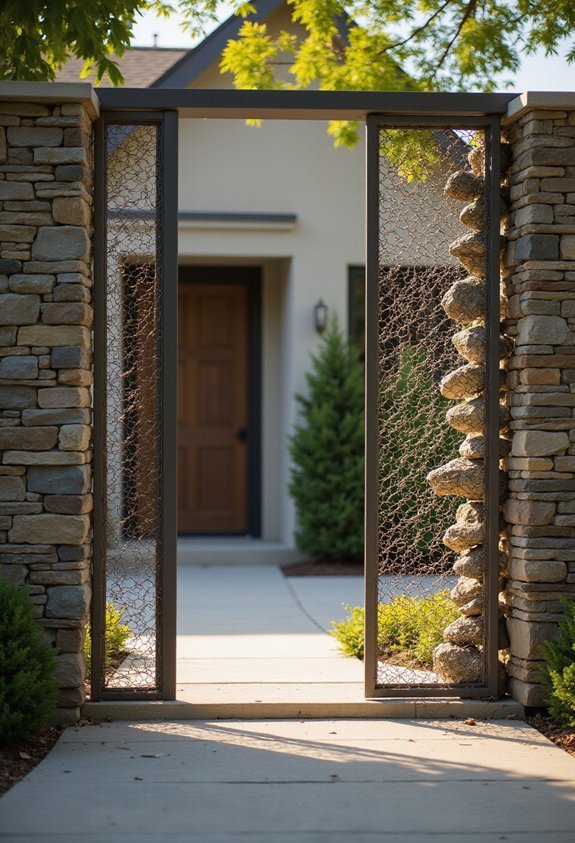
For a fencing option that combines industrial aesthetics with practical functionality, gabion boxes offer you a distinctive alternative that’s increasingly prevalent in modern landscape design. These wire mesh containers, filled with stones or gravel, create a contemporary look that complements both residential and commercial properties. You’ll appreciate how gabion fencing provides excellent drainage, eliminating water pooling issues that plague traditional fences. The construction process involves stacking rectangular wire baskets and filling them with your choice of materials, allowing customization in color and texture. Installation requires minimal expertise, making it an accessible project for homeowners. Additionally, gabion boxes deliver durability, withstanding harsh weather conditions while maintaining their structural integrity. The visual appeal combines raw industrial charm with natural stone elements, creating an upscale appearance that elevates your property’s curb appeal tremendously.
Modern White Picket Fencing
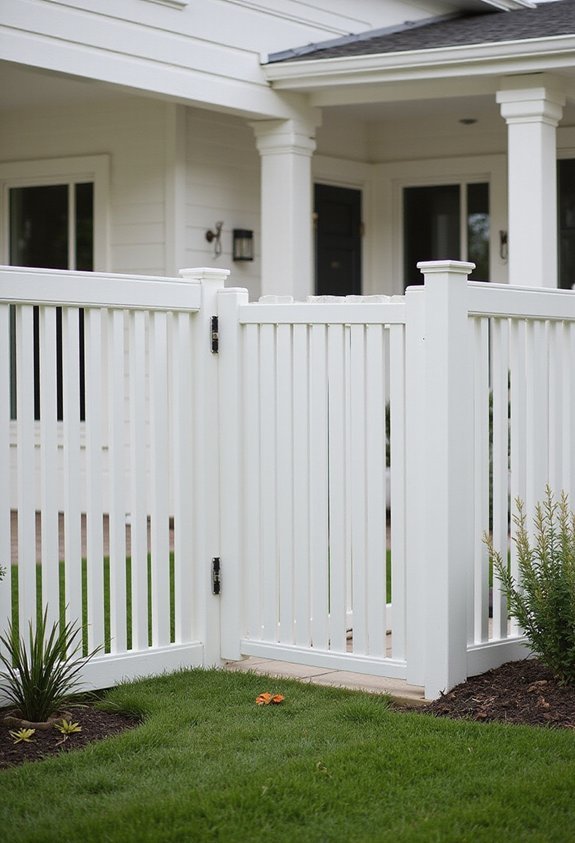
While gabion boxes offer industrial appeal through raw materials and contemporary design, modern white picket fencing takes a different approach by blending timeless elegance with updated construction techniques and materials. You’ll find that contemporary white picket designs feature cleaner lines, wider spacing between pickets, and premium materials like vinyl or composite wood that resist weathering and rot. These fences require minimal maintenance since you won’t need frequent repainting or staining like traditional wooden versions. The modern aesthetic works exceptionally well for creating curb appeal, as the crisp white color complements most architectural styles while maintaining visibility into your property. You can customize heights, spacing patterns, and decorative post caps to match your home’s specific design preferences, making this option both versatile and sophisticated for upscale front yard appearances.
Brick Posts With Metal Panels
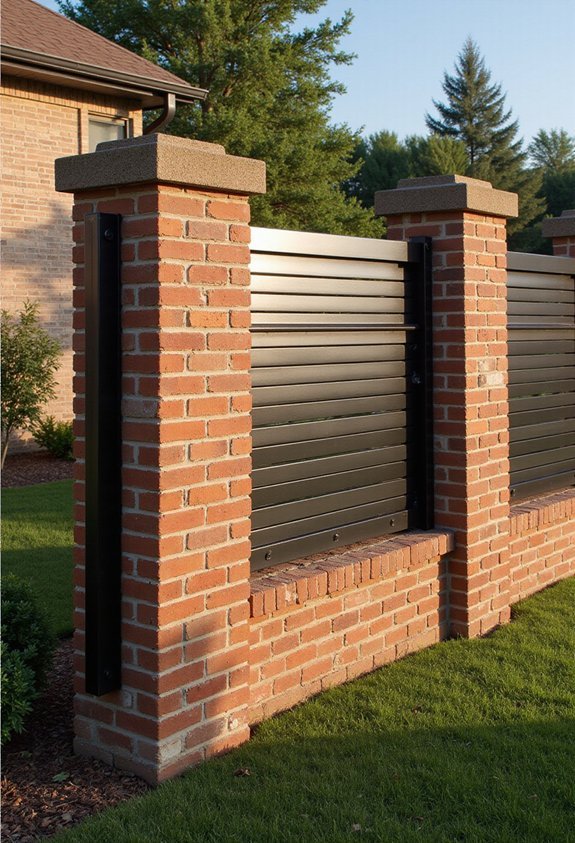
As you shift from the clean lines of modern white picket fencing, brick posts with metal panels offer you a striking industrial-contemporary hybrid that combines masonry durability with sleek metalwork. You’ll anchor vertical brick columns at regular intervals, creating a solid structural foundation that resists weather and time. Between these posts, you’ll install metal panels—typically aluminum or steel—that provide a modern aesthetic while maintaining visibility and airflow. The brick establishes weight and permanence, while the metal introduces contemporary lines and minimalist appeal. You can customize panel designs, choosing from solid sheets, geometric patterns, or slatted configurations. This combination requires professional installation to guarantee proper alignment and structural integrity, but the result delivers a sophisticated, upscale appearance that distinguishes your property while maximizing both functionality and curb appeal through complementary materials.
Charcoal Gray Composite Fencing
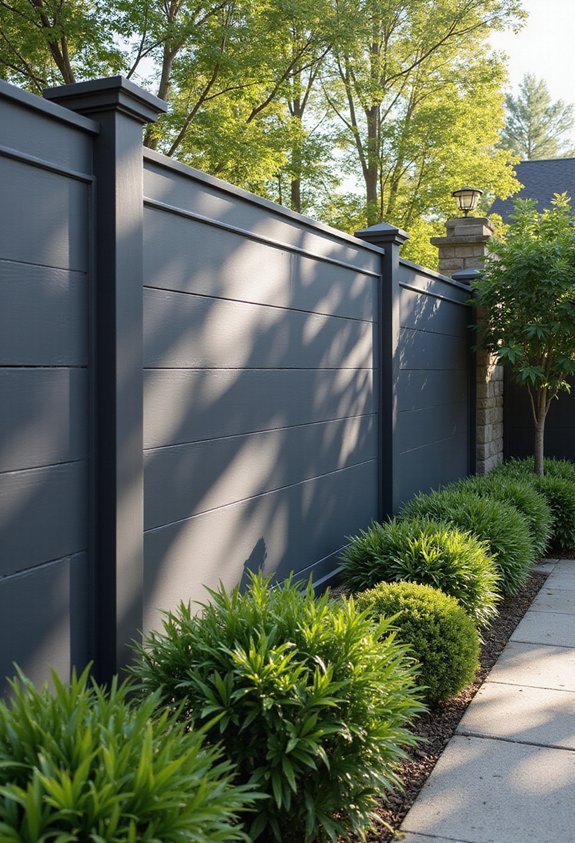
Charcoal gray composite fencing offers you a modern alternative that sidesteps the maintenance demands of traditional wood or the industrial look of brick and metal combinations. This material combines wood fibers with plastic polymers, creating panels that resist fading, warping, and rot without requiring staining or sealing. You’ll appreciate how composite fencing withstands harsh weather conditions, including intense sunlight and moisture exposure. The charcoal gray color provides a sophisticated, contemporary aesthetic that complements various home styles while hiding dirt and minor imperfections effectively. Installation involves securing panels between sturdy posts using standard hardware, making the process straightforward for professionals. Though composite fencing carries higher initial costs than wood alternatives, you’ll recover expenses through reduced maintenance requirements over time.
Industrial Steel Pipe Fencing
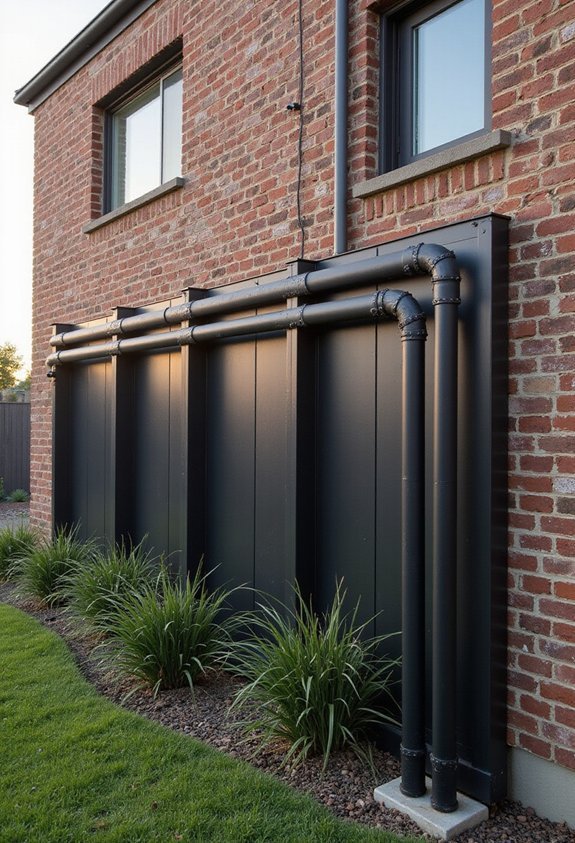
Industrial steel pipe fencing represents a bold, contemporary choice that combines durability with striking visual appeal for homeowners seeking a modern aesthetic. You’ll find that this fencing style works exceptionally well for industrial, minimalist, or transitional home designs. The open framework design allows you to maintain sightlines while creating a defined property boundary, making it ideal for corner lots or properties with attractive views you’d rather not obstruct. Steel pipes require regular maintenance, including rust prevention treatments and occasional repainting, to preserve their appearance and structural integrity. You can customize the spacing between pipes, pipe diameter, and finish color to match your home’s architectural style. Installation demands professional expertise, as proper welding and foundation work are essential for stability and longevity.
Corrugated Metal With Rust Finish
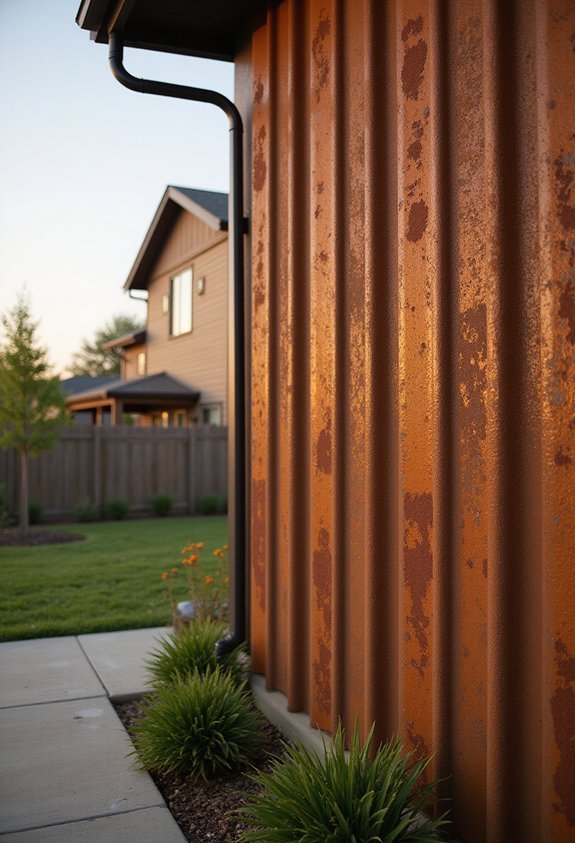
While corrugated metal fencing delivers a distinctive aesthetic that’s gained popularity in modern and rustic design schemes, you’ll appreciate how this material combines functionality with visual character through its naturally weathered appearance. The rust finish develops organically as the metal oxidizes, creating unique patterns that won’t look identical on every panel, which means your fence becomes a one-of-a-kind installation. You can accelerate this weathering process using specialized treatments, or simply allow time to develop the patina naturally over months. The corrugated waves provide structural strength while reducing material weight, making installation more manageable. You’ll find this option works exceptionally well when paired with wooden posts or steel frames, enhancing your property’s contemporary or industrial aesthetic while maintaining excellent durability and weather resistance.
Glass Panel Fencing
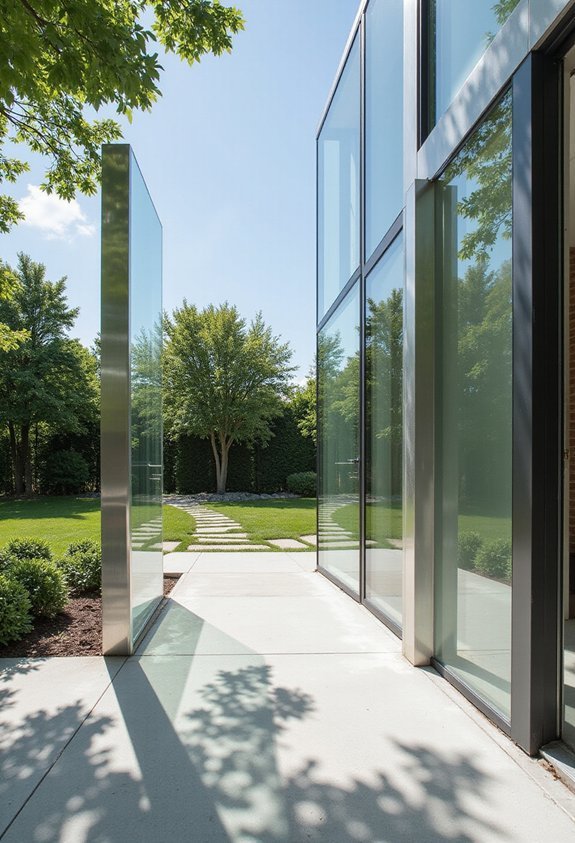
How can you create a fence that maintains your property’s openness while still providing a clear boundary between spaces? Glass panel fencing offers you an excellent solution by combining transparency with defined borders. You’ll install tempered glass panels within aluminum or steel frames, which creates a sleek, modern aesthetic that doesn’t obstruct views of your landscape or neighborhood. This fencing style works particularly well for contemporary homes and properties where you want to showcase manicured gardens or scenic backdrops. The glass panels require regular cleaning to maintain clarity, and you’ll appreciate how they allow natural light to flow throughout your yard. Additionally, glass fencing provides safety benefits because you can easily monitor activity on both sides, making it ideal for homes with children or pets.
Living Hedge Fencing
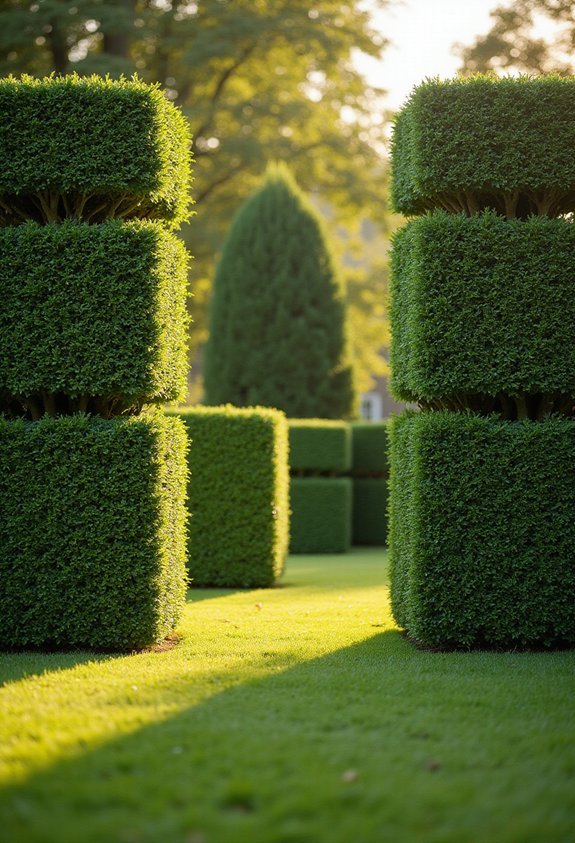
Why should you consider planting living hedges when you’re looking for a natural fencing solution that’ll transform your front yard into a green, thriving boundary? Living hedges offer you numerous advantages over traditional fencing materials, including environmental benefits and aesthetic appeal that enhances your property’s overall appearance. You’ll find that hedges provide privacy, noise reduction, and wildlife habitat simultaneously, making them a multifunctional choice for your landscape. When selecting hedge plants, you should consider your climate zone, soil conditions, and desired height to guarantee successful growth. Popular options include boxwood, privet, and holly varieties that you can maintain through regular trimming. You’ll need to invest time in seasonal pruning and watering during establishment, but the resulting natural barrier creates an elegant, sophisticated boundary that’ll elevate your front yard’s visual impact considerably.
Vertical Garden Fencing
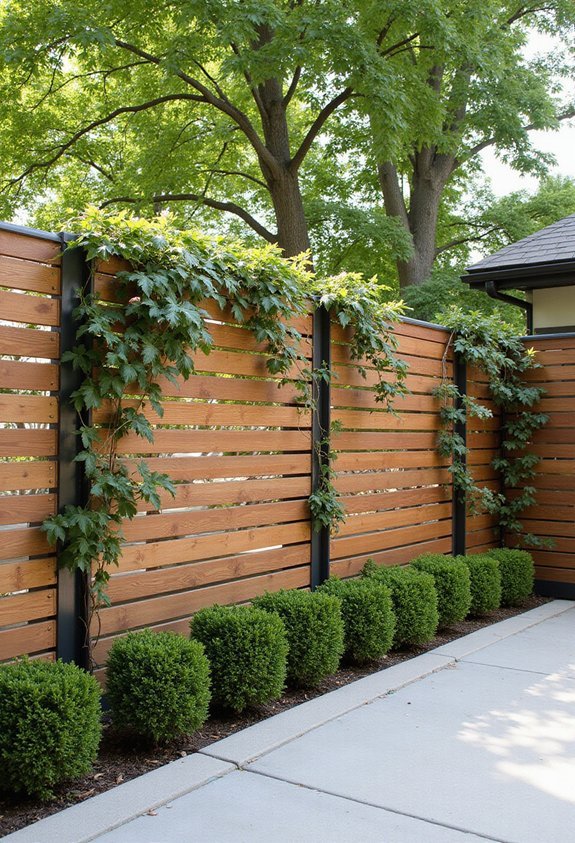
If you’re looking to build up instead of out, vertical garden fencing offers you a compact solution that combines privacy with fresh greenery by utilizing wall space and climbing plants rather than traditional horizontal layouts. You’ll install a sturdy framework, typically made from wood or metal, that supports climbing vines like ivy, clematis, or jasmine. These plants grow upward along trellises or lattice panels, creating natural screening that maximizes your yard’s usable space. You can incorporate planters at different heights to grow herbs, flowers, or vegetables, turning your fence into a productive garden feature. This approach works exceptionally well for small properties where square footage is limited, and it requires regular maintenance including watering, pruning, and structural inspections to guarantee safety and longevity.
Two-Tone Fencing Designs
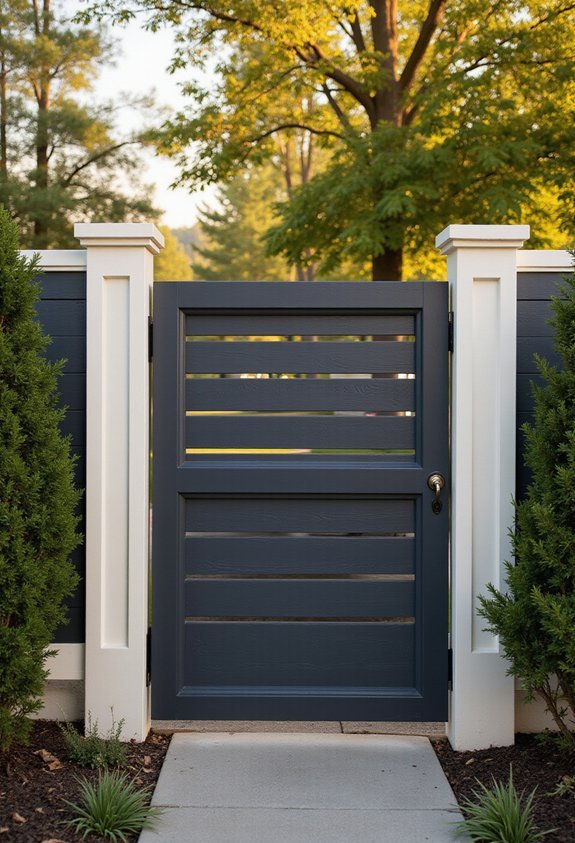
When you’re seeking a way to add visual interest and modern appeal to your front yard, two-tone fencing designs offer a sophisticated alternative to single-color installations by combining two complementary colors or materials on the same fence structure. You can achieve this effect by painting alternating panels in contrasting colors, such as charcoal gray and crisp white, which creates a striking geometric pattern that enhances your home’s contemporary aesthetic. Alternatively, you might combine different materials like wood and metal, placing horizontal metal bands across wooden vertical slats for added texture and dimension. Two-tone designs also allow you to coordinate your fence with your home’s existing architectural features, ensuring visual cohesion throughout your property while establishing clear boundaries that define your front yard’s perimeter effectively.
Maintenance and Longevity by Material
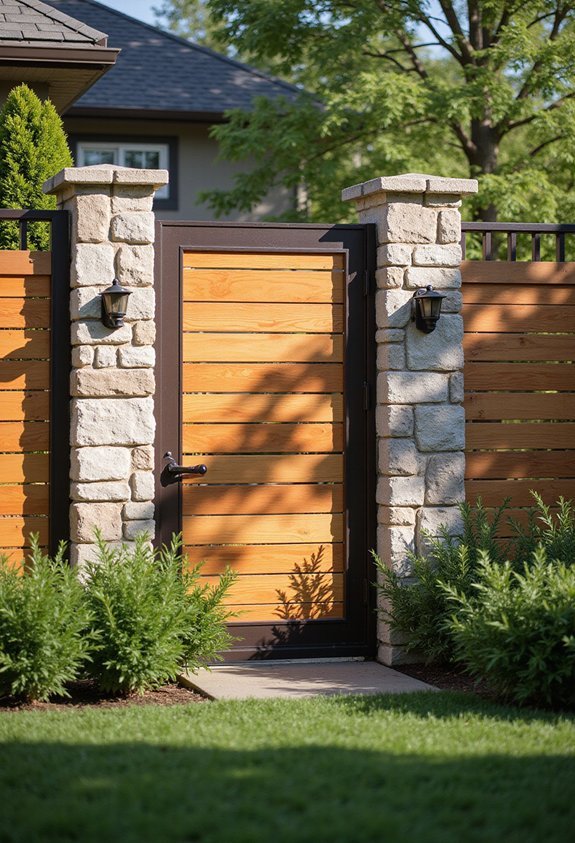
Different fencing materials require varying levels of upkeep, so understanding each one’s maintenance needs and lifespan will help you make an informed decision that aligns with your time and budget. Wood fences demand regular staining or sealing every two to three years, lasting fifteen to twenty years with proper care. Vinyl requires minimal maintenance, needing only occasional cleaning, and can last twenty-five to thirty years. Aluminum fences resist rust and need minimal upkeep, enduring thirty years or more. Composite materials combine wood fibers with plastic, offering durability without frequent maintenance, typically lasting twenty to thirty years. Chain-link fences need occasional cleaning and minor repairs, lasting fifteen to twenty years. Consider your willingness to invest time in maintenance when selecting your fencing material.
Conclusion
You’ve explored refined fencing options that gracefully frame your property’s entrance, from contemporary horizontal slats to timeless wrought iron designs. Your selection of durable materials—vinyl, aluminum, or composite—ensures your investment ages gracefully while maintaining its polished appearance. By thoughtfully combining aesthetics with practical longevity considerations, you’re cultivating an outdoor space that whispers sophistication and endures through seasons, ultimately transforming your front yard into a distinguished reflection of your home’s character.