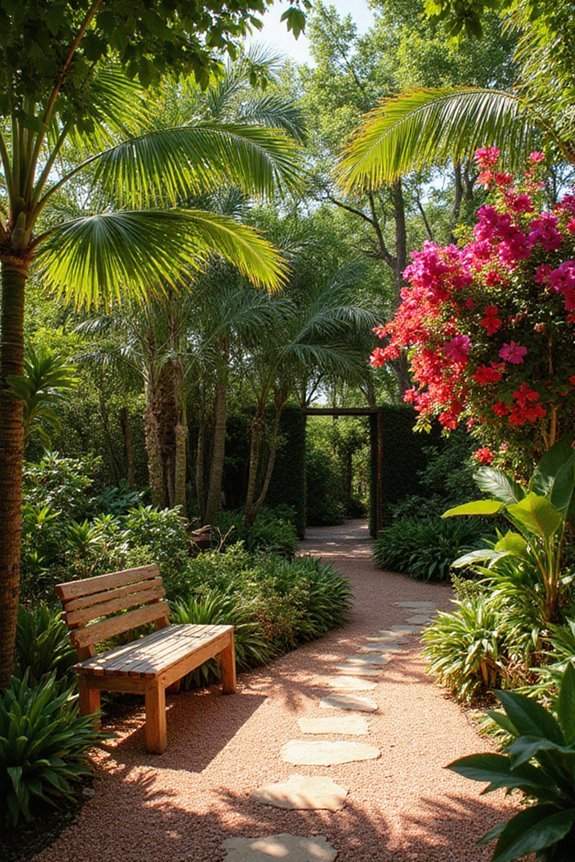
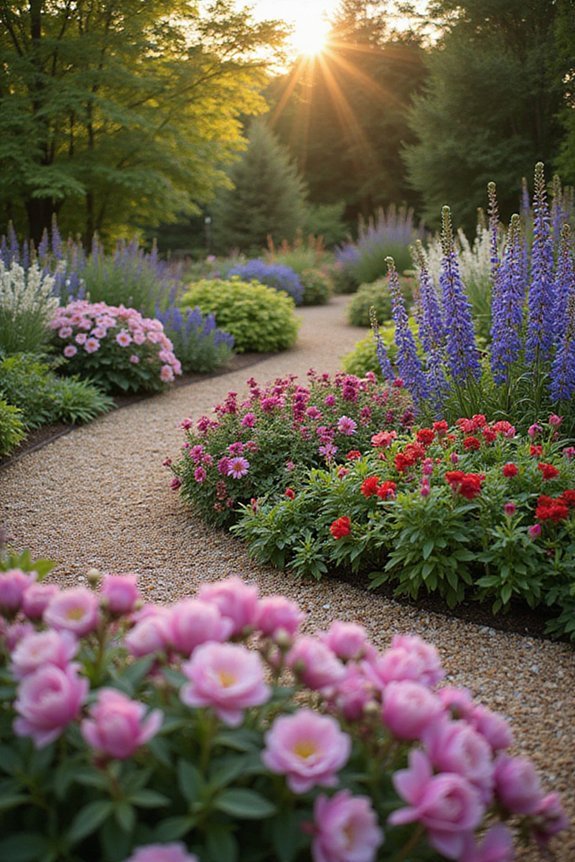
You can markedly enhance your home’s curb appeal by selecting the right flower garden style for your space, but choosing among cottage designs, modern landscapes, shade gardens, and pollinator-friendly layouts requires understanding what each approach offers. Whether you’re managing a busy schedule or seeking year-round visual interest, different garden plans address specific challenges—from low-maintenance native plants to ornamental Japanese designs. The key to a stunning front yard lies in matching your chosen garden style to your climate and property conditions, which we’ll explore further.
Cottage Gardens With Perennials and Vines
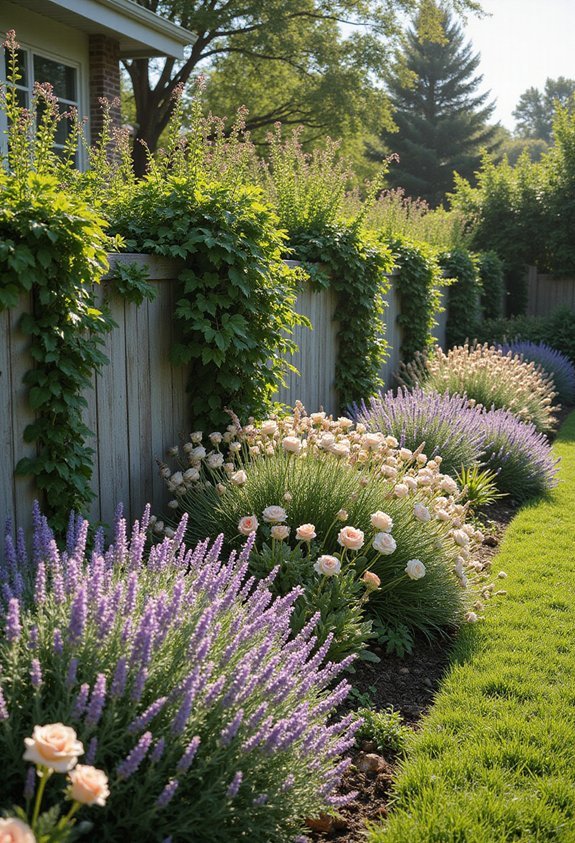
Have you considered transforming your front yard into a cottage garden that’ll provide color and interest year about? You’ll want to select perennials like coneflowers, black-eyed Susans, and daylilies, which return yearly and require minimal maintenance. These plants establish strong root systems, guaranteeing your watering needs over time. Next, incorporate climbing vines such as clematis or honeysuckle on trellises or arbors, creating vertical interest and adding dimension to your landscape. Arrange perennials in clusters of three or five plants, spacing them according to mature size to prevent overcrowding. Layer your plants by height, placing taller varieties toward the back and shorter ones forward. This tiered approach safeguards every plant receives adequate sunlight and air circulation, promoting healthy growth and vibrant blooms throughout the growing season.
Also read: 22 LANDSCAPE WITH ROCKS FRONT YARD Ideas That Look Designed!
Modern Front Yard Gardens With Bold Focal Flowers
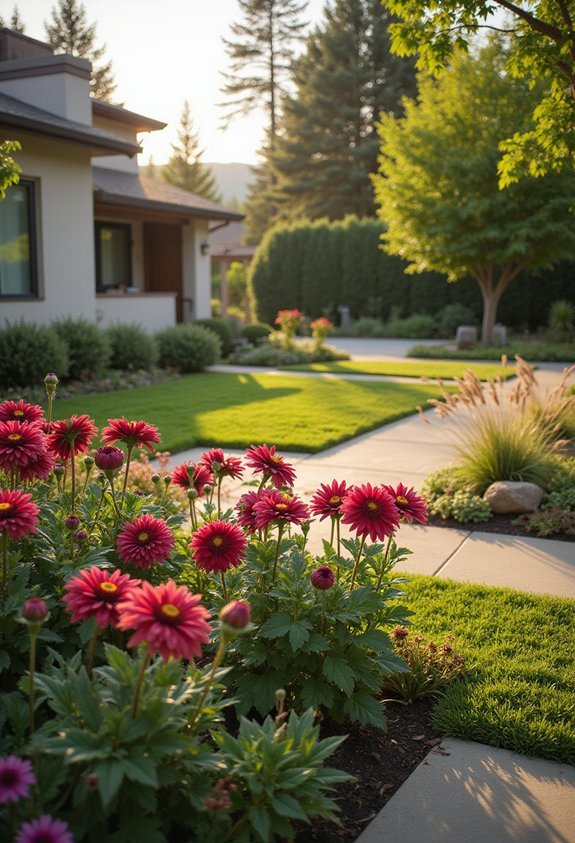
If you’re looking to create a contemporary front yard garden, you’ll want to shift your design approach by selecting one or two statement flowers that’ll dominate your landscape and draw the eye immediately. Bold focal flowers like dahlias, ornamental grasses, or large-scale hydrangeas create visual impact through their size, color, and structural presence. You’ll arrange these specimens strategically in your front beds, positioning them where they’re visible from the street and your home’s entrance. Complement your focal flowers with lower-growing plants that won’t compete for attention, allowing your statement blooms to command focus. This minimalist approach reduces visual clutter while maximizing dramatic effect, creating a sophisticated, modern aesthetic that reflects contemporary landscape design principles and establishes clear visual hierarchy throughout your garden space.
Low-Maintenance Native Plant Gardens for Busy Homeowners
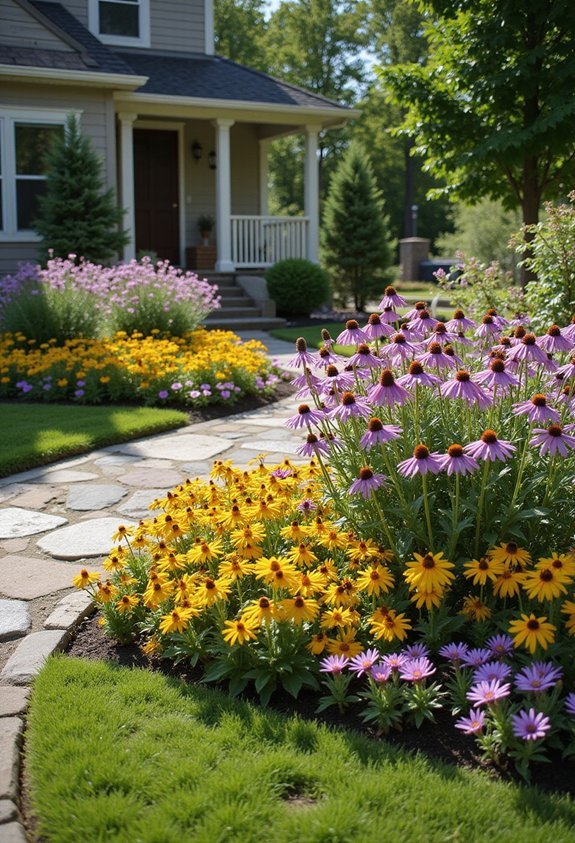
Native plants offer you an excellent solution for creating a beautiful front yard garden without spending excessive time on maintenance and care. These plants thrive in your local climate and soil conditions, which means they’ll need less watering, fertilizing, and pruning than non-native species. You’ll save money on water bills and gardening supplies while reducing your overall workload throughout the seasons.
When you select native plants for your front yard, you’re choosing species that naturally resist local pests and diseases, eliminating the necessity for chemical treatments. Research which plants grow best in your specific region, then arrange them according to their sun and moisture requirements. This strategic planning guarantees your garden stays healthy and attractive with minimal effort, allowing you to enjoy your outdoor space without constant upkeep.
Front Yard Shade Gardens: Hostas and Ferns for Dark Entryways
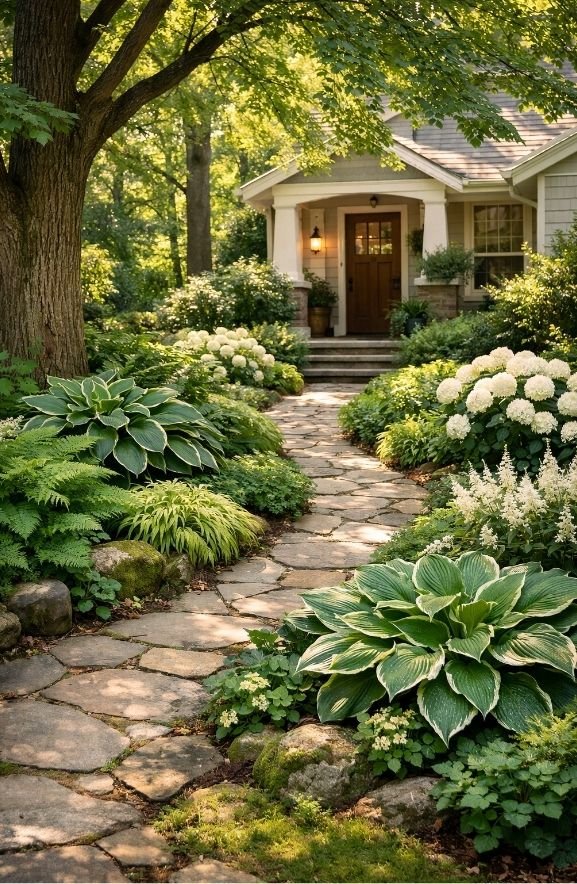
Many front yards don’t receive full sunlight throughout the day, especially those shaded by large trees, neighboring buildings, or dense shrubs, which means you’ll need to select plants that thrive in low-light conditions rather than forcing sun-loving species into inadequate environments. Hostas and ferns are excellent choices for these darker areas because they’ve evolved to grow beneath forest canopies where sunlight is limited. Hostas offer attractive foliage in various colors and patterns, ranging from solid green to variegated designs, while ferns provide delicate, feathery textures that add visual interest to your entryway. Both plants prefer moist, well-draining soil enriched with organic matter, and they require minimal maintenance once established. Plant them in groups for maximum impact, spacing them according to their mature sizes to guarantee proper air circulation and growth.
Pollinator-Friendly Flower Gardens: Butterflies and Bees Boost Curb Appeal
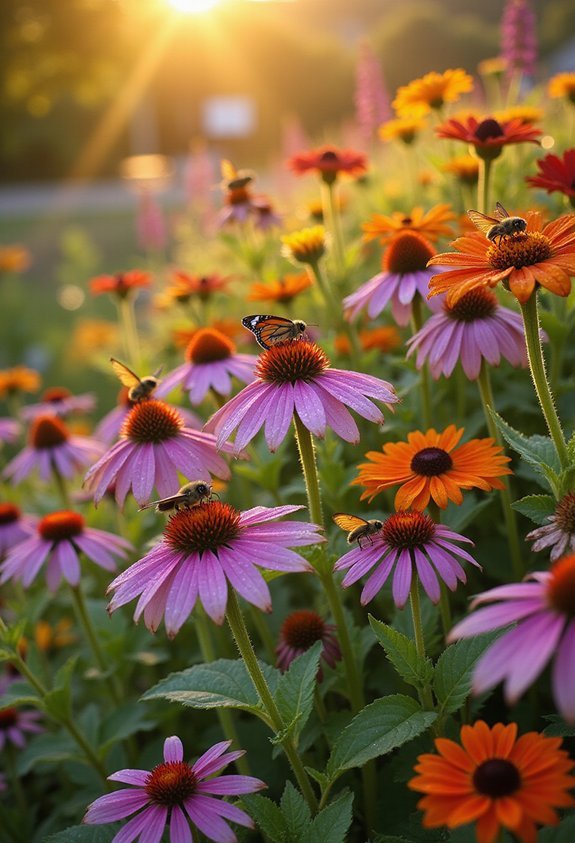
Creating a front yard garden that attracts butterflies and bees doesn’t just enhance the visual appeal of your home’s entrance—it also supports vital pollinators that keep ecosystems healthy and productive. You’ll want to select native flowering plants like coneflowers, black-eyed Susans, and zinnias, which provide nectar and pollen these insects need. Plant flowers in clusters of the same species, making it easier for pollinators to find food sources. Include blooms that flower at different times throughout the season, ensuring continuous food availability from spring through fall. Avoid using pesticides, which can harm beneficial insects. Add a shallow water source like a birdbath or small dish with pebbles, allowing butterflies and bees to drink safely. These simple steps create a thriving pollinator habitat while boosting your curb appeal.
Front Yard Xeriscaping: Drought-Tolerant Succulents and Grasses
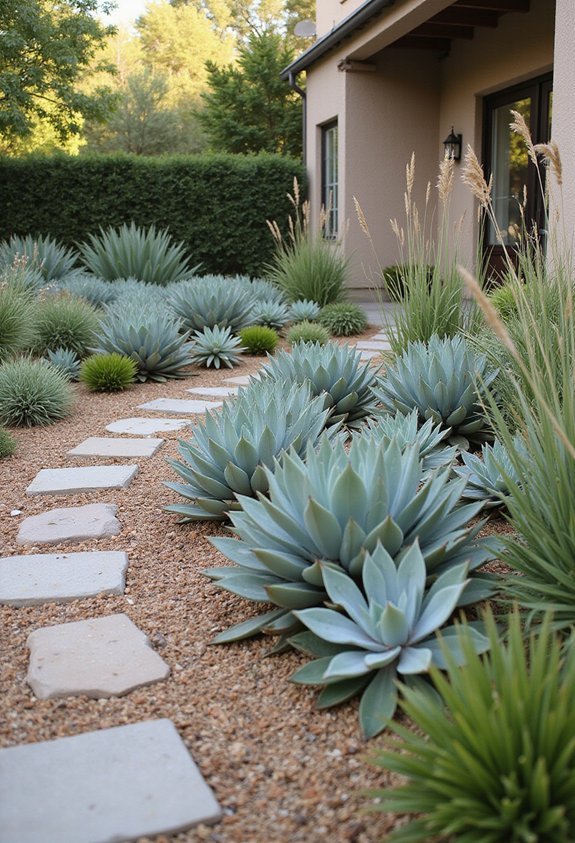
If you’re looking to reduce your water usage while maintaining an attractive front yard, xeriscaping offers a practical solution by incorporating plants that thrive in dry conditions and require minimal irrigation. Succulents like sedums and echeverias store water in their leaves, making them ideal for arid climates, while ornamental grasses such as blue fescue and feather reed grass add texture and movement with minimal upkeep. You’ll arrange these plants in groupings based on their water needs, creating visually appealing layers and heights. Incorporate mulch or gravel between plantings to retain soil moisture and reduce evaporation. This approach drastically lowers your water bills while eliminating frequent watering schedules, allowing your front yard to flourish naturally throughout dry seasons.
Spring Color Explosion With Tulips, Daffodils, and Hyacinths
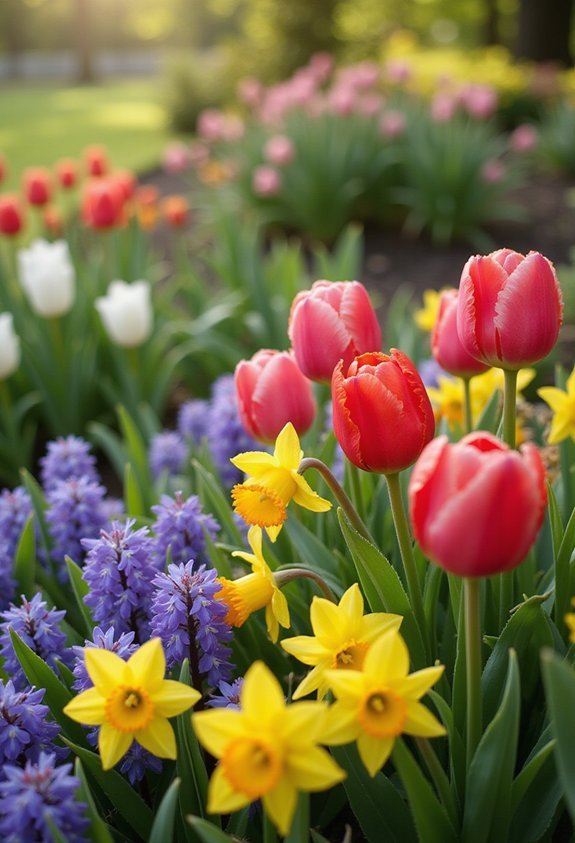
While xeriscaping creates year-round visual interest with minimal water demands, you can add spectacular bursts of color to your front yard during spring by planting bulbs like tulips, daffodils, and hyacinths, which emerge reliably each season after you’ve provided them with proper dormancy conditions during winter months. Plant these bulbs in fall, positioning them in well-draining soil at depths specified on their packaging, typically four to eight inches underground. Space them six to twelve inches apart to allow room for growth and prevent overcrowding. You’ll want to choose sunny locations, as these spring bloomers require adequate light for ideal flower development. Water them thoroughly after planting, then let winter’s cold temperatures trigger their natural blooming cycle, resulting in vibrant displays that transform your landscape.
Summer Front Yard Gardens: Zinnias and Coneflowers
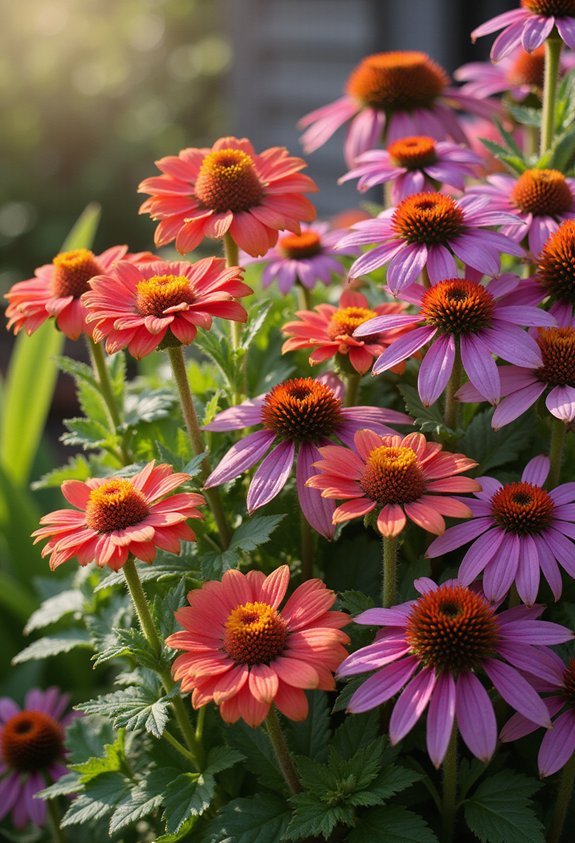
As spring’s bulbs fade and temperatures climb, you’ll want to shift your focus toward heat-loving annuals and perennials that thrive during the hot months and provide continuous color from early summer through fall. Zinnias and coneflowers are excellent choices for your summer front yard garden because they’re drought-tolerant, low-maintenance, and attract pollinators like butterflies and bees. Plant zinnias in full sun with well-draining soil, spacing them 12 to 18 inches apart, and deadhead spent flowers regularly to encourage more blooms. Coneflowers, which are native perennials, require similar conditions and need minimal watering once established. Both plants handle heat exceptionally well, making them ideal for hot summer months. By combining these two species, you’ll create a vibrant, resilient garden that delivers stunning color all season long.
Fall Designs: Extend Color With Chrysanthemums and Foliage
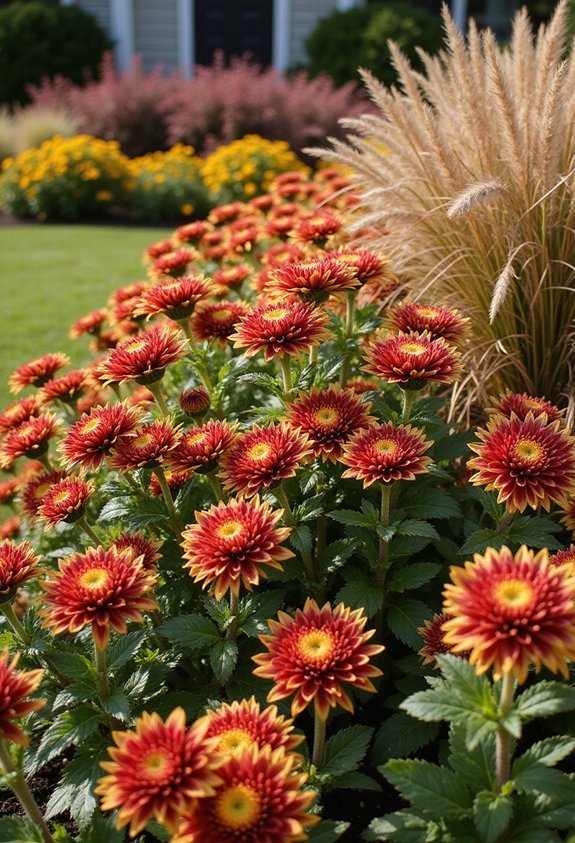
When summer’s heat begins to fade and you’re ready to refresh your front yard garden, chrysanthemums and ornamental foliage plants‘ll provide the color and visual interest you need to keep your landscape looking vibrant through autumn. Choose chrysanthemums in deep burgundies, golden yellows, and rich oranges to create focal points throughout your beds. Combine them with ornamental grasses, which’ll add texture and movement as fall winds pick up. Incorporate foliage plants like coleus, dusty miller, and Japanese maple for layered depth and contrasting leaf shapes. Plant taller varieties in the back and shorter ones toward the front to guarantee every plant receives adequate sunlight. Water regularly during establishment, and deadhead spent blooms to encourage continuous flowering through the season.
Winter Gardens: Using Evergreens and Ornamental Grasses for Year-Round Interest
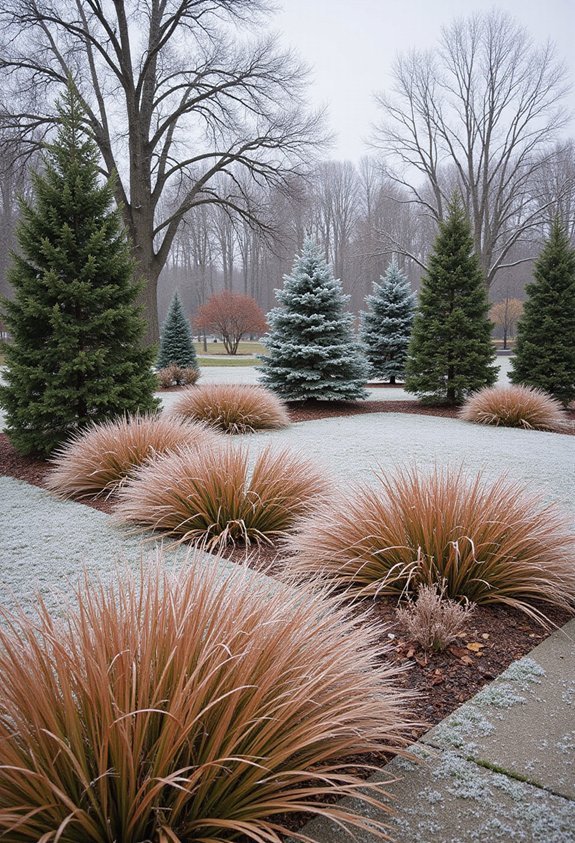
Your front yard doesn’t have to look bare and colorless once winter arrives, because evergreens and ornamental grasses‘ll maintain structure, color, and visual interest throughout the coldest months when most plants’ve gone dormant. Evergreens like boxwoods, junipers, and hollies provide consistent green foliage and architectural form that anchors your garden design. Ornamental grasses, such as feather reed grass and purple fountain grass, develop warm tan and bronze hues when temperatures drop, creating striking visual contrast against evergreen backdrops. These hardy plants require minimal maintenance during winter, demand no supplemental watering once established, and withstand harsh weather conditions effectively. By strategically combining evergreens with ornamental grasses, you’ll establish a dynamic winter landscape that sustains year-round curb appeal while reducing seasonal garden work.
Compact Gardens: Maximum Color in Minimal Space
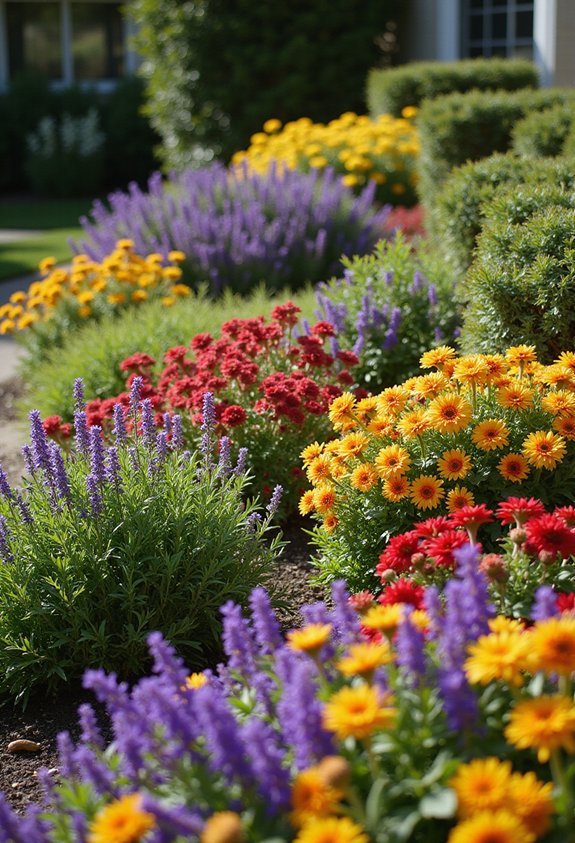
Even if you’ve got limited space in your front yard, you don’t have to sacrifice the vibrant colors and visual interest that’ll make your home stand out, because thoughtful plant selection and strategic arrangement can transform small areas into flourishing flower gardens that rival larger landscapes. Choose compact perennials and dwarf varieties that naturally stay small, such as creeping phlox, sedums, and miniature roses, which provide maximum color without overwhelming tight spaces. Layer plants by height, positioning taller specimens in back and shorter ones forward, creating depth and dimension within confined areas. Use vertical gardening techniques like trellises or wall-mounted planters to expand your planting space upward, allowing you to showcase more flowers without consuming precious ground space.
Hybrid Gardens: Cottage Charm Meets Modern Design
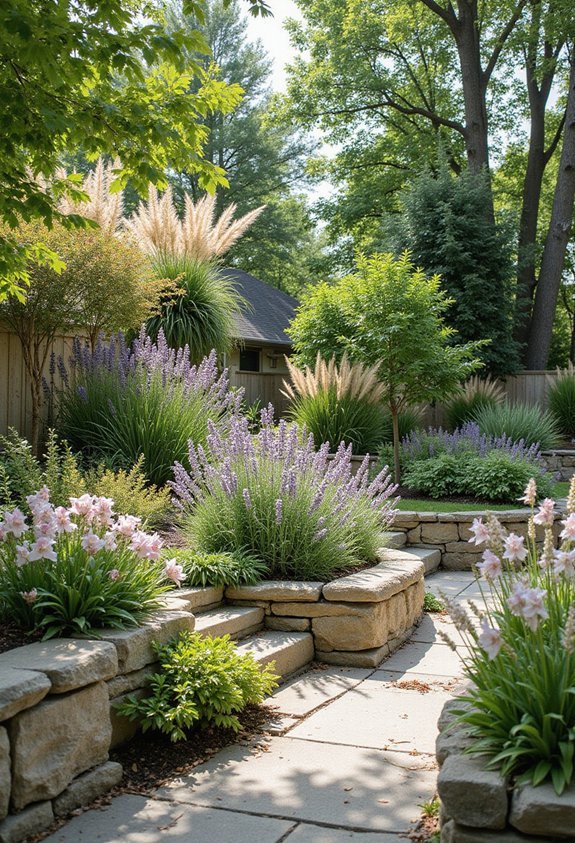
Blending the romantic, informal aesthetic of cottage gardens with clean lines and contemporary design principles creates a hybrid style that balances nostalgic plant collections with modern landscape structure, giving you the best of both gardening traditions. You’ll arrange traditional flowers like roses and lavender within geometric beds, creating visual order while maintaining cottage charm. Incorporate hardscaping elements such as concrete pathways or metal edging to define planting areas clearly. You can use mixed perennials and annuals in coordinated color schemes rather than random cottage plantings. This approach lets you enjoy abundance and variety without sacrificing organization. Modern mulch materials and efficient irrigation systems support your plantings while keeping maintenance manageable and sustainable for long-term success.
Raised Bed Gardens: Better Drainage and Control
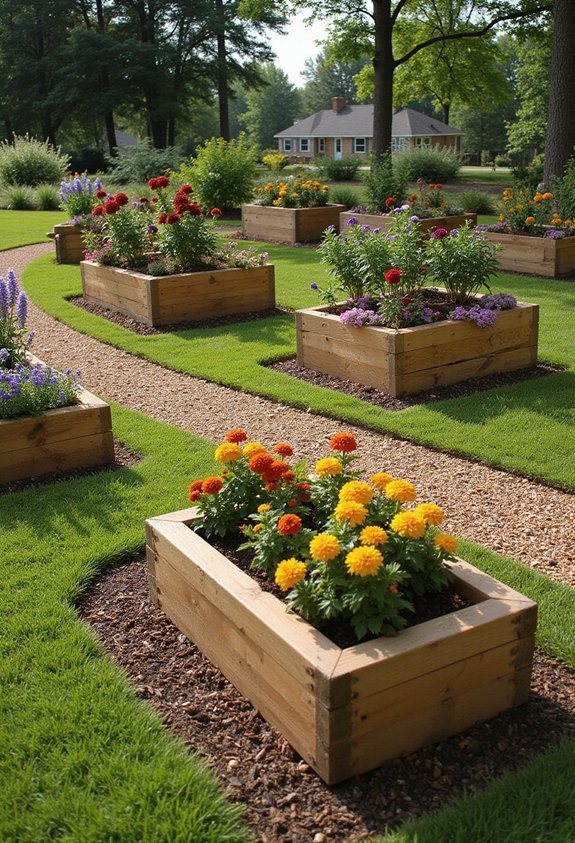
When you’re looking for a front yard garden that’ll give you superior control over soil quality and drainage, raised beds offer a practical solution that outperforms traditional in-ground planting. You’ll construct rectangular boxes filled with custom soil mixtures tailored to your flowers’ specific needs, eliminating poor native soil conditions. The elevated structure guarantees excess water drains away quickly, preventing root rot and fungal diseases that plague waterlogged gardens. You’ll also experience easier maintenance since you’re working at a comfortable height, reducing strain on your back and knees during weeding and planting. Additionally, raised beds warm up faster in spring, extending your growing season and allowing you to plant earlier. The defined boundaries create organized, visually appealing garden spaces that enhance your front yard’s overall landscape design while maximizing plant health and productivity.
Container Gardens: Portable Color That Works Anywhere
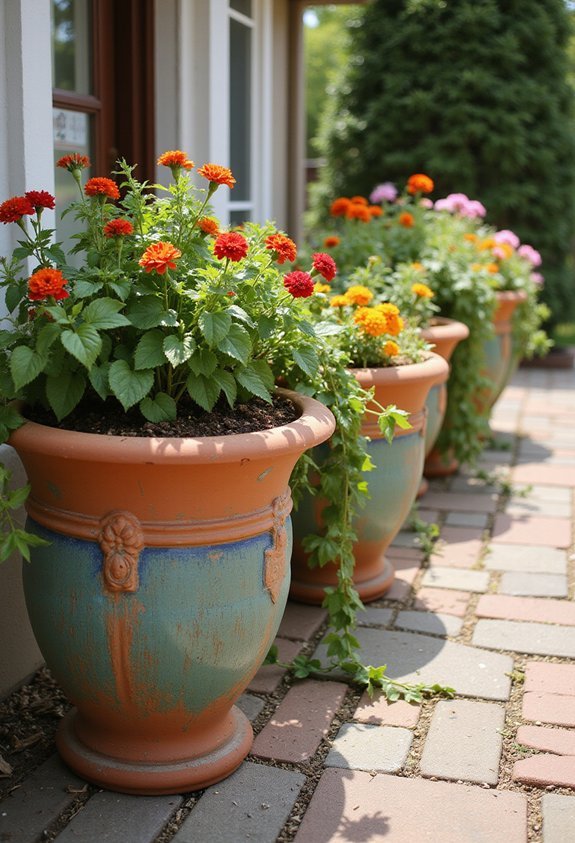
If you’d prefer even more flexibility than raised beds provide, container gardens deliver portable flower displays that you can position anywhere in your front yard to suit your design preferences and lighting conditions. You’ll gain complete control over soil quality, drainage, and plant spacing by selecting appropriately sized pots with drainage holes, which prevents waterlogging and root rot. Container gardens work exceptionally well on patios, porches, and entryways where traditional planting isn’t feasible. You can easily rearrange containers throughout the season, rotating plants to optimize sunlight exposure and create fresh visual arrangements. Using quality potting soil rather than garden soil guarantees proper nutrient balance and moisture retention, promoting healthier flowering plants that deliver vibrant color exactly where you want it.
Curved Beds: Creating Flow and Landscape Depth
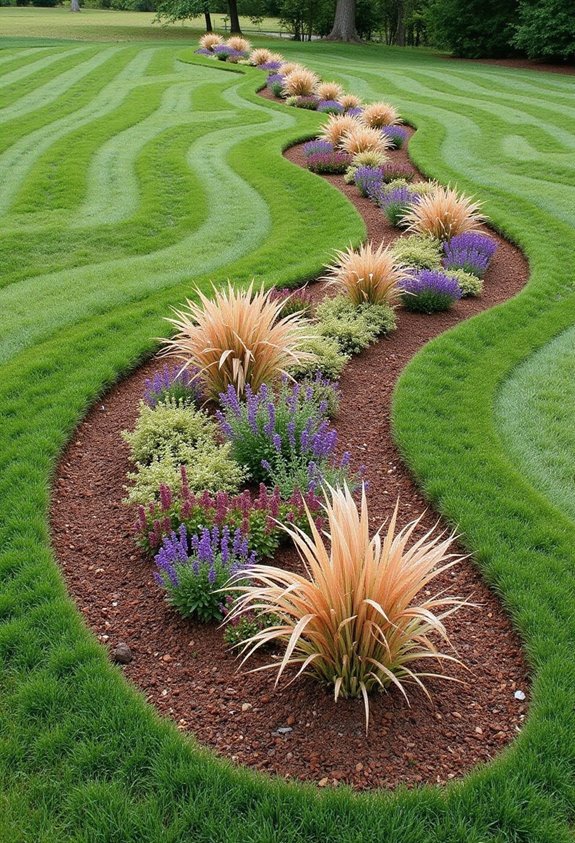
While straight lines offer simplicity, curved flower beds‘ll give your front yard a more sophisticated and visually interesting appearance by guiding the viewer’s eye naturally through your landscape design. Curved beds create flowing pathways that make your yard feel larger and more dynamic. You can establish curves by mapping them with a garden hose before digging, allowing you to adjust the shape until you’re satisfied. Plant taller flowers on the inner curves and shorter varieties on outer edges to enhance depth perception. Curved beds also reduce sharp corners where weeds accumulate and make maintenance easier. This design technique works particularly well around trees, driveways, and walkways, seamlessly integrating different yard elements while establishing visual continuity throughout your front landscape.
Formal Symmetrical Gardens: Creating Mirror-Image Designs
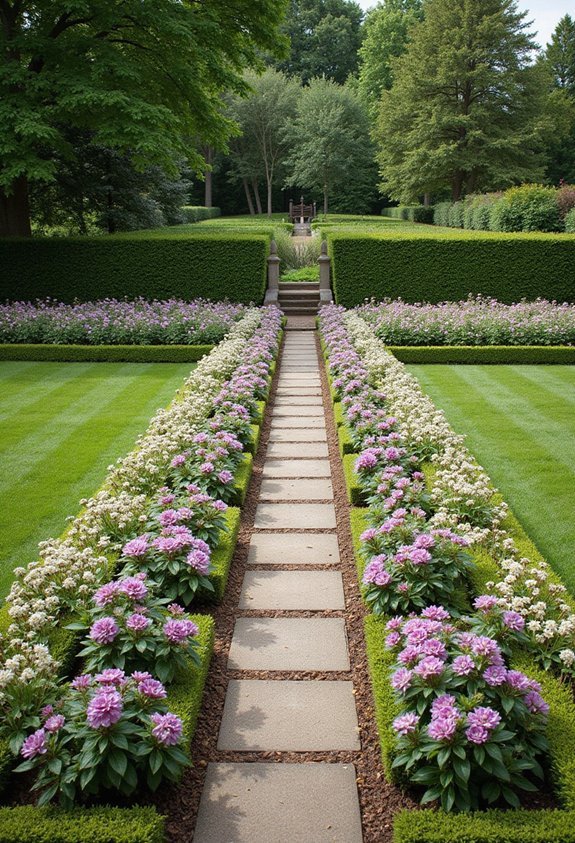
Formal symmetrical gardens offer a contrasting design philosophy to curved beds, utilizing balanced, mirrored layouts that create a sense of order, elegance, and purposeful structure in your front yard. You’ll establish a central axis—typically a pathway or feature—then mirror plantings on both sides to achieve visual harmony. This approach works particularly well for traditional or classical home styles, where you can plant identical flowers, shrubs, or ornamental grasses on opposing sides of your entryway. You’ll create a focal point at the center, perhaps a fountain, statue, or flowering tree, drawing viewers’ eyes inward. When you’re designing formal gardens, you’ll maintain precise spacing, consistent plant heights, and uniform color schemes across both sides to reinforce the mirror-image effect and maximize the sophisticated appearance your landscape conveys.
Budget-Friendly Cottage Gardens: Beautiful Plants That Won’t Break the Bank
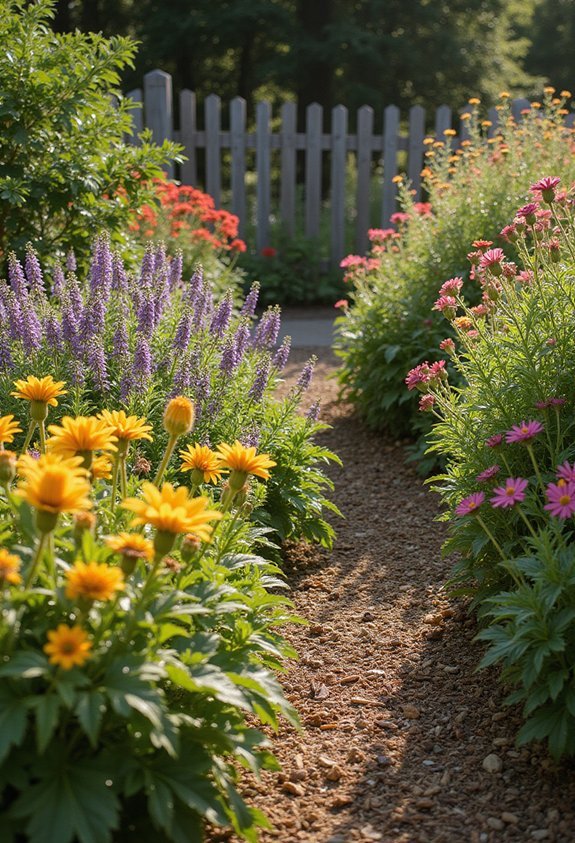
Since you’re looking to create a charming, colorful front yard without spending a fortune, cottage gardens offer you an ideal solution that combines affordability with natural beauty and informal appeal. You’ll want to select hardy perennials like coneflowers, black-eyed Susans, and daylilies, which return year after year without replanting costs. Self-seeding annuals such as cosmos and marigolds reduce your expenses further by reproducing naturally throughout your garden space. You can propagate plants through division, splitting mature specimens into multiple plantings at no additional cost. Shopping at local plant sales, nursery clearance sections, and trading with neighboring gardeners stretches your budget considerably. Mulching with free materials like grass clippings and shredded leaves improves soil quality while eliminating expensive commercial options. These strategies enable you to develop a thriving, picturesque cottage garden economically.
Native Wildflower Gardens: Beautiful, Low-Maintenance, Pollinator-Approved
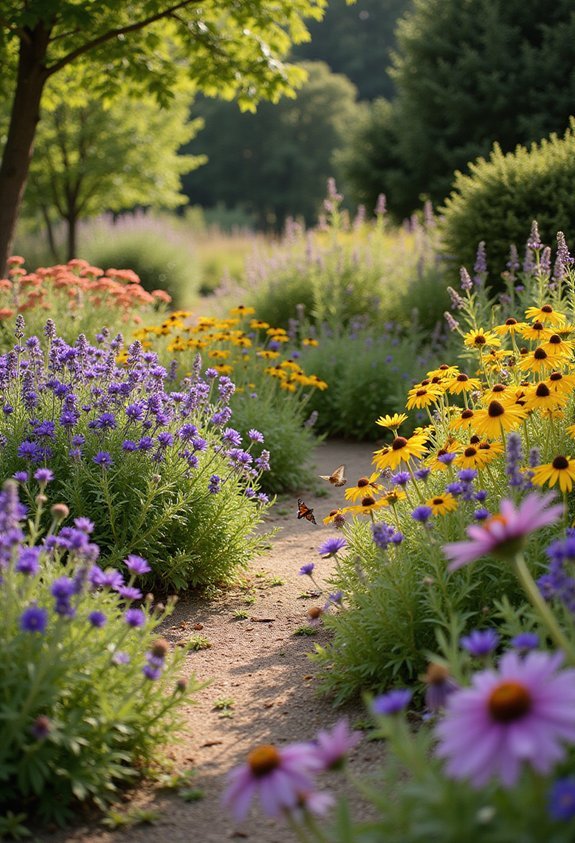
Building on the budget-friendly principles of cottage gardening, native wildflower gardens take affordability and ease of care to another level by working with plants that naturally thrive in your specific region and climate. You’ll find that native wildflowers require minimal watering, fertilizing, and pest management since they’re adapted to local conditions. These gardens attract pollinators like bees, butterflies, and hummingbirds, which support your entire ecosystem while creating visual interest throughout seasons. Research which wildflowers grow naturally in your area through local extension offices or native plant societies. You can start from seeds, which cost markedly less than transplants, and scatter them directly into prepared soil during appropriate planting seasons. This approach eliminates maintenance struggles while providing genuine ecological benefits.
Fragrant Flower Gardens: Roses, Lavender, and Gardenias
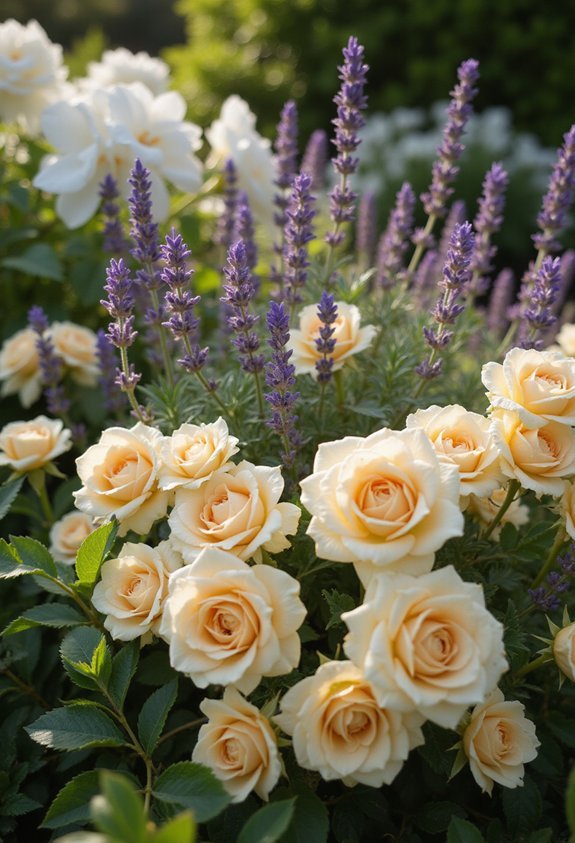
While native wildflower gardens offer ecological benefits with minimal upkeep, fragrant flower gardens provide a different kind of reward by engaging your senses through powerful, pleasing scents that can transform your front yard into an aromatic retreat. Roses, lavender, and gardenias are three excellent choices for creating a fragrant landscape. Roses offer diverse varieties, colors, and intensities of fragrance, requiring full sunlight and well-draining soil. Lavender produces aromatic purple flowers and thrives in dry conditions with minimal water. Gardenias deliver rich, sweet scents and prefer acidic soil with partial shade. You’ll want to plant these flowers strategically throughout your front yard, positioning them near walkways and entryways where you can fully experience their fragrances daily.
Monochromatic Color Schemes for Sophisticated Curb Appeal
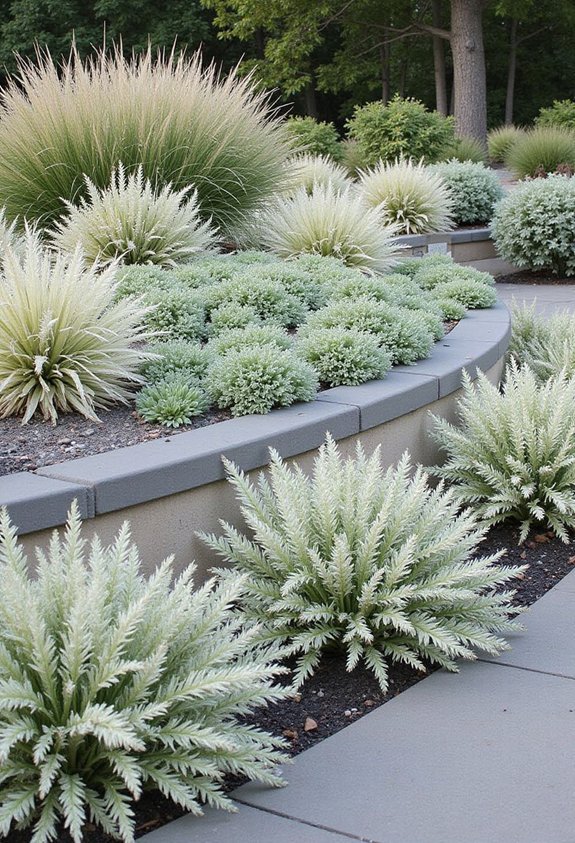
If you’re looking to create a polished, unified appearance in your front yard, a monochromatic color scheme—which uses different shades, tints, and tones of a single color—can deliver impressive results with remarkable sophistication. You’ll achieve visual harmony by selecting flowers in varying intensities of one base color, such as purple, pink, or blue. This approach eliminates color competition, allowing your garden’s structure and texture to become the focal point. Consider pairing deep lavender with light lilac and pale mauve petunias, or combine crimson roses with blush-pink peonies and coral-toned zinnias. The graduated color progression creates depth and dimension without overwhelming viewers. This refined technique elevates your home’s curb appeal through intentional design, demonstrating that restraint and cohesion produce elegant, memorable landscapes that impress passersby.
Mixed-Color Cottage Beds for Maximum Visual Impact
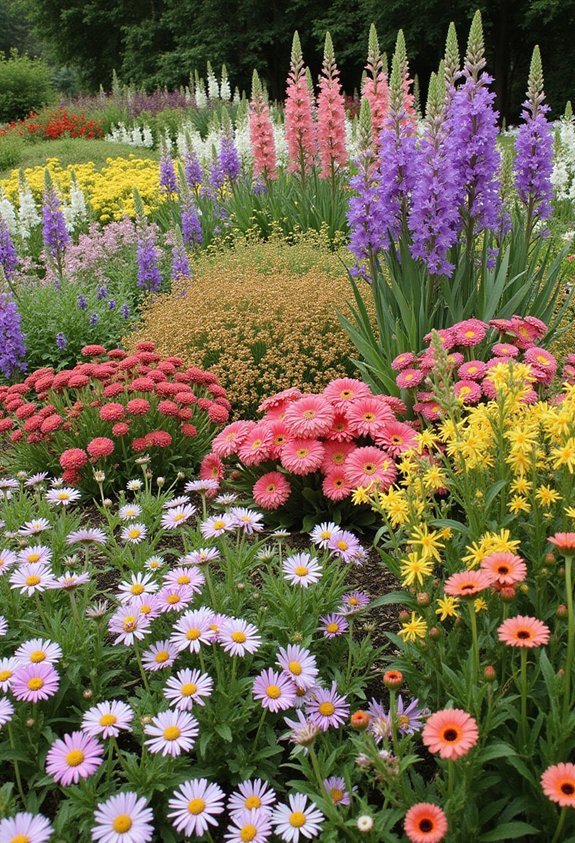
Where monochromatic gardens rely on unity through a single color palette, cottage-style beds embrace the opposite philosophy by combining multiple colors, patterns, and plant varieties in purposefully dense arrangements that create visual excitement and dynamic energy throughout your front yard. You’ll layer flowering plants of varying heights, bloom times, and hues to achieve a charming, abundant appearance that captures attention from the street. Plant tall flowers like delphiniums in the back, medium-height zinnias in the middle, and low-growing alyssum in the front, ensuring every layer’s visible. You’re creating depth and complexity by mixing complementary colors—purples with yellows, blues with oranges—that intensify each other’s vibrancy. This approach transforms your front yard into an engaging, multisensory display that celebrates botanical diversity and natural abundance.
Japanese Garden Designs: Ornamental Plants and Minimalist Layouts
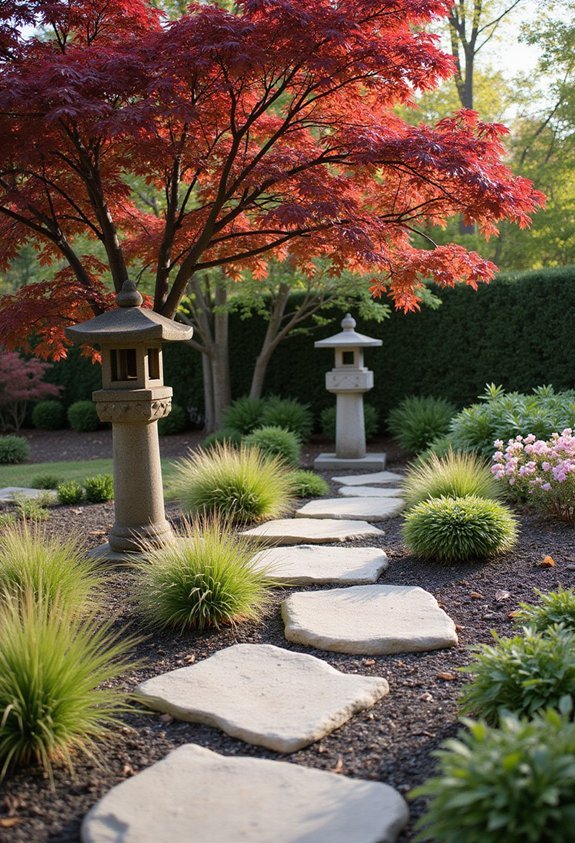
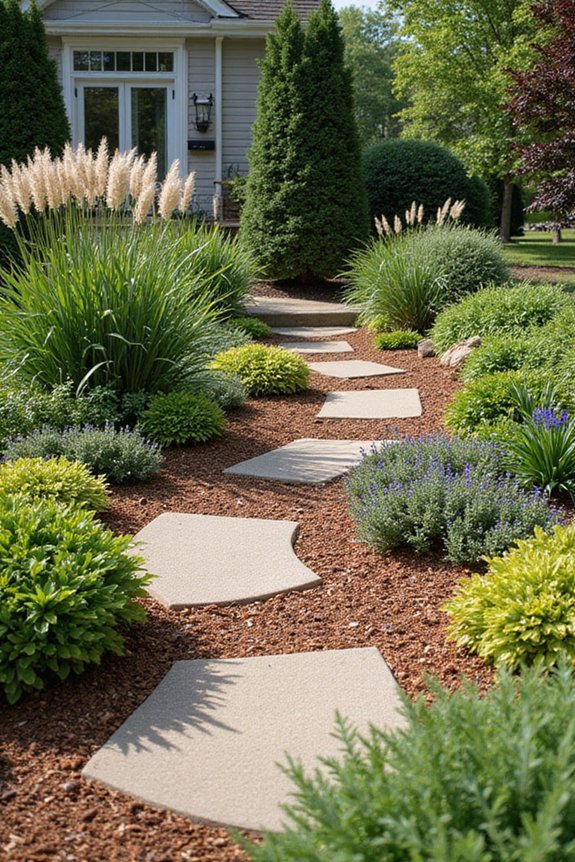
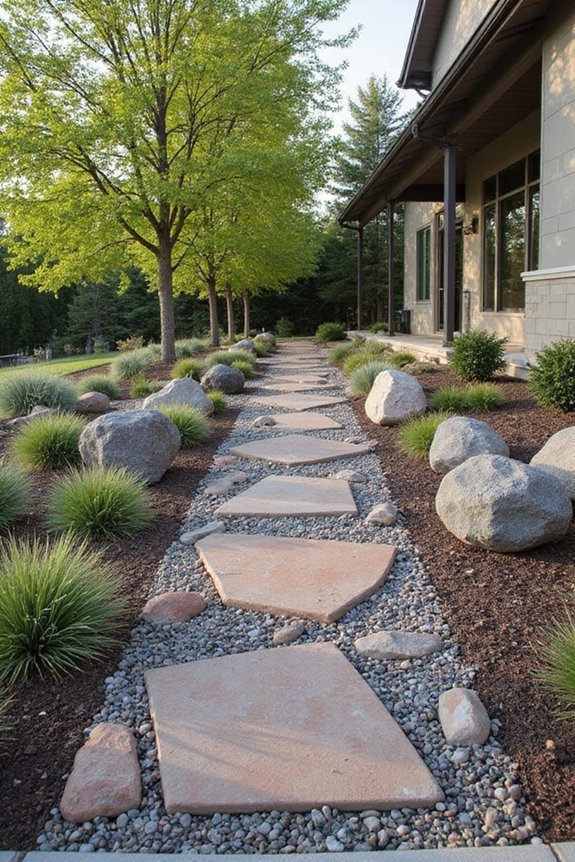
Japanese garden designs offer a fundamentally different approach to front yard landscaping, one that prioritizes restraint, balance, and the careful selection of ornamental plants arranged within minimalist layouts. You’ll create visual harmony by choosing plants like Japanese maples, bamboo, and ornamental grasses that complement natural stone elements and water features. Your design should emphasize negative space, allowing each plant to breathe and contribute meaningfully to the overall composition. You can incorporate stepping stones, gravel pathways, and small rock arrangements to guide visitors through the garden intentionally. This style demands thoughtful plant placement rather than abundance, focusing on quality over quantity. You’ll achieve a serene atmosphere by limiting your color palette and maintaining clean lines, creating a tranquil front yard that reflects nature’s balanced elegance.
Mediterranean Gardens: Heat-Loving Plants
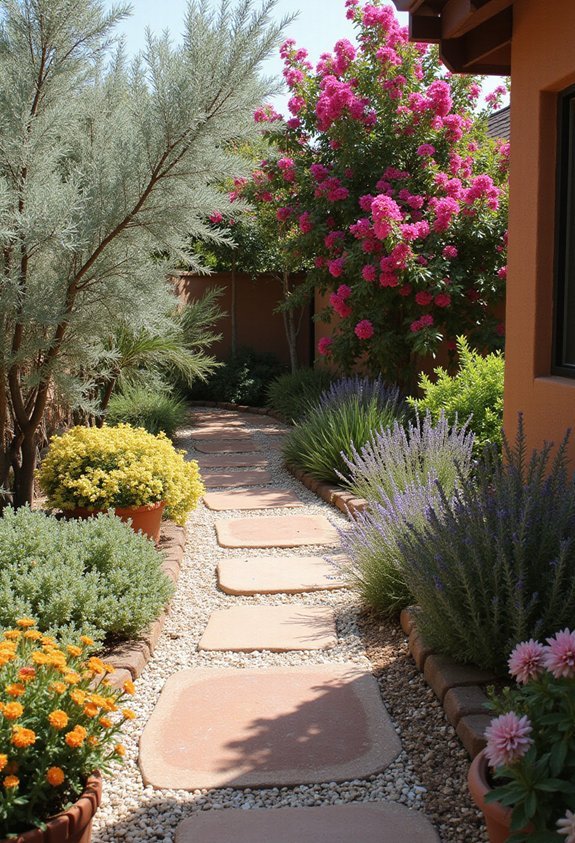
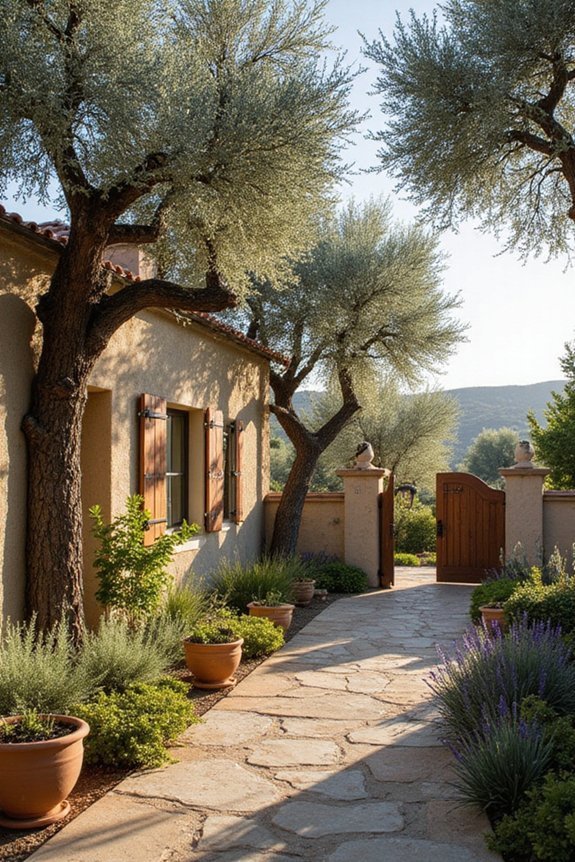
Mediterranean gardens take a distinctly different approach from Japanese designs by embracing warmth, abundant sunlight, and drought-resistant plants that thrive in hot, dry climates rather than seeking restraint and minimalism. You’ll want to select heat-loving plants like lavender, rosemary, and santolina, which require minimal watering once established and tolerate intense sun exposure. Incorporate ornamental grasses, cistus, and salvias to create texture and movement throughout your front yard. These plants naturally conserve water through specialized leaf structures and deep root systems, making them ideal for Mediterranean-style gardens. You should arrange your plants in drifts and clusters, allowing space between specimens for air circulation. Using gravel mulch instead of organic materials reflects heat and reduces moisture loss, supporting your garden’s drought-resistant nature while maintaining visual appeal.
Native Wildflower Meadows for Low-Mow Front Yards
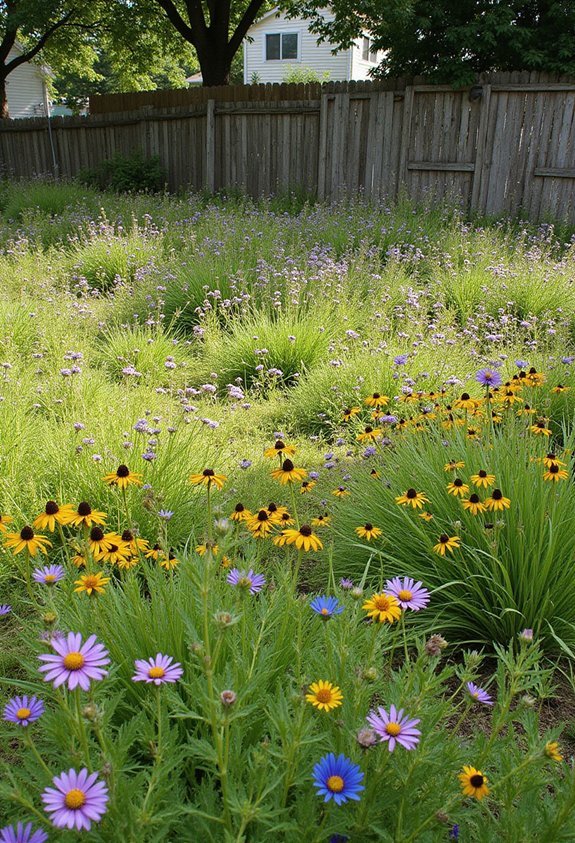
If you’re looking for a front yard that requires considerably less mowing and maintenance than traditional grass lawns, native wildflower meadows offer an excellent alternative that’ll transform your landscape into a vibrant ecosystem. You’ll plant seeds of flowers, grasses, and wildflowers that naturally thrive in your region, eliminating the need for constant cutting and chemical treatments. These meadows support local pollinators like bees and butterflies while reducing water consumption profoundly. To establish your meadow, you’ll prepare the soil by removing existing grass, scatter native seeds in fall or spring, and water regularly until plants establish themselves. Once established, you’ll mow only once yearly in late fall, allowing flowers to bloom and reseed naturally throughout growing seasons.
Conclusion
Your front yard garden is like a living book, where each plant represents a chapter in your home’s story, and you’re the author deciding which characters belong in your narrative. By selecting cottage perennials, native plants, or shade lovers that match your climate and lifestyle, you’re building layers of beauty that’ll flourish year-round. You’ve now got the blueprint to transform your entryway into a thriving ecosystem that reflects your personal style.