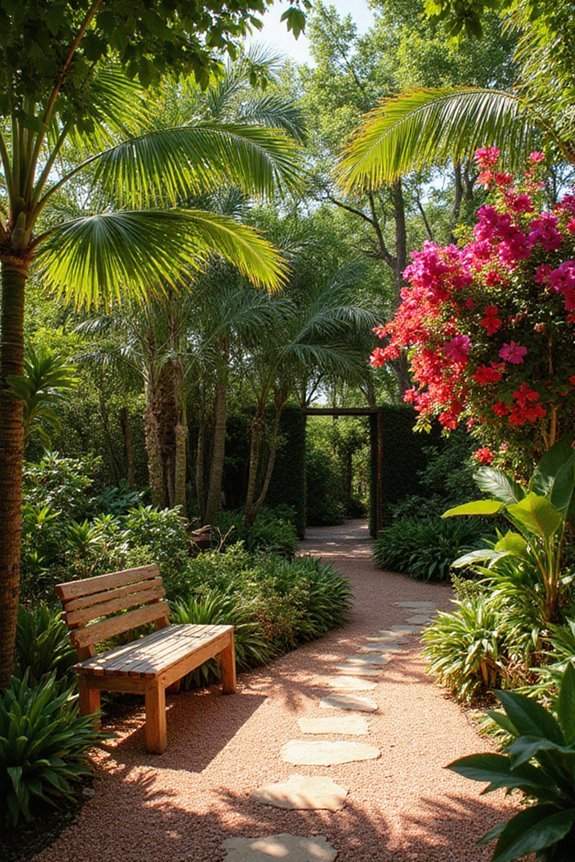
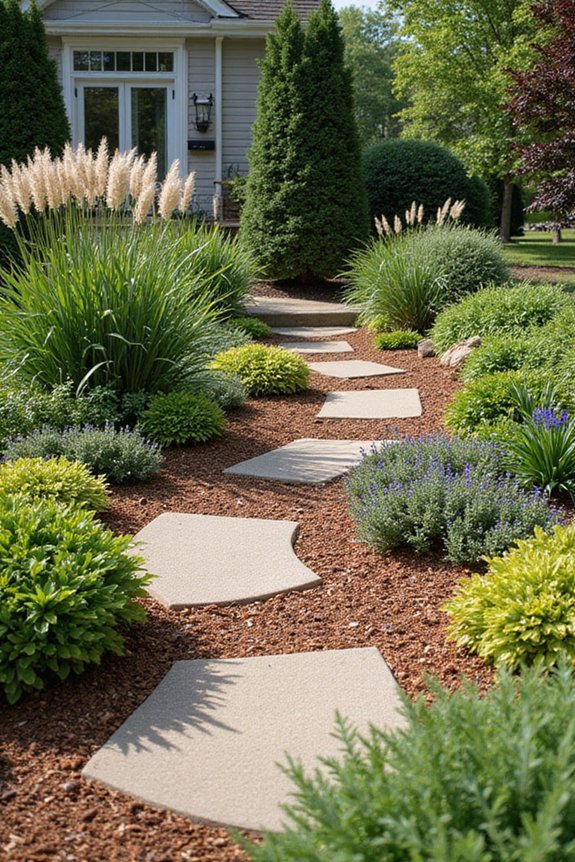
When you’re designing your front yard garden beds, you’ll discover that layering plants by height, color, and bloom time creates visual depth and keeps your landscape looking intentional and polished. The difference between an ordinary yard and one that commands attention often comes down to careful planning: choosing the right plants, defining clean edges, and arranging them strategically. But what specific techniques actually transform a basic garden bed into something truly impressive?
Classic Cottage Garden Bed With Layered Perennials
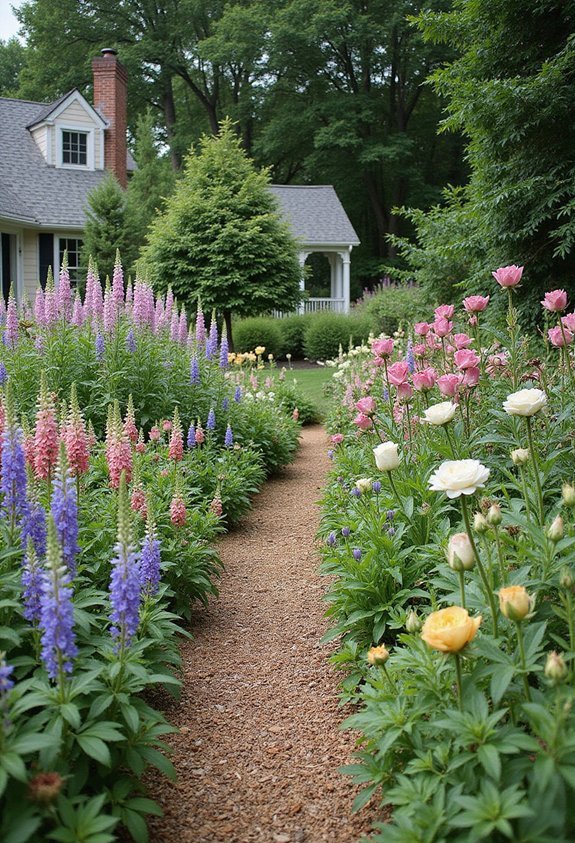
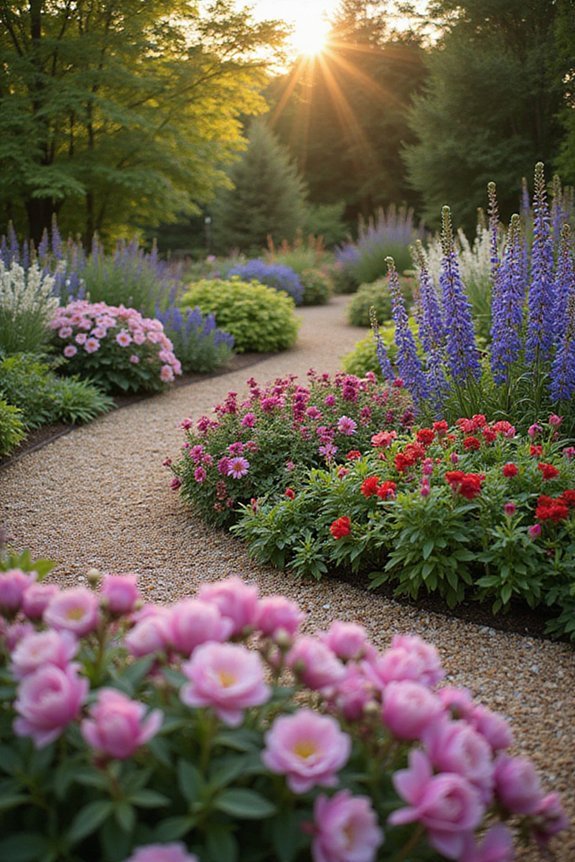
A traditional cottage garden bed‘s charm comes from its carefully arranged layers of perennial plants, which you’ll organize by height and bloom time to create visual interest throughout the growing season. Start by planting tall varieties like delphiniums or hollyhocks in the back row, positioning them where they won’t shade shorter plants. Next, place medium-height perennials such as coreopsis or salvia in the middle section. Finally, position low-growing plants like creeping thyme or candytuft along the front edge. You should select varieties that bloom at different times, ensuring your garden remains colorful from spring through fall. This strategic layering technique maximizes your garden bed’s visual appeal while allowing each plant adequate sunlight and air circulation for healthy growth.
Also read: 22 LANDSCAPE WITH ROCKS FRONT YARD Ideas That Look Designed!
Modern Minimalist Design With Ornamental Grasses
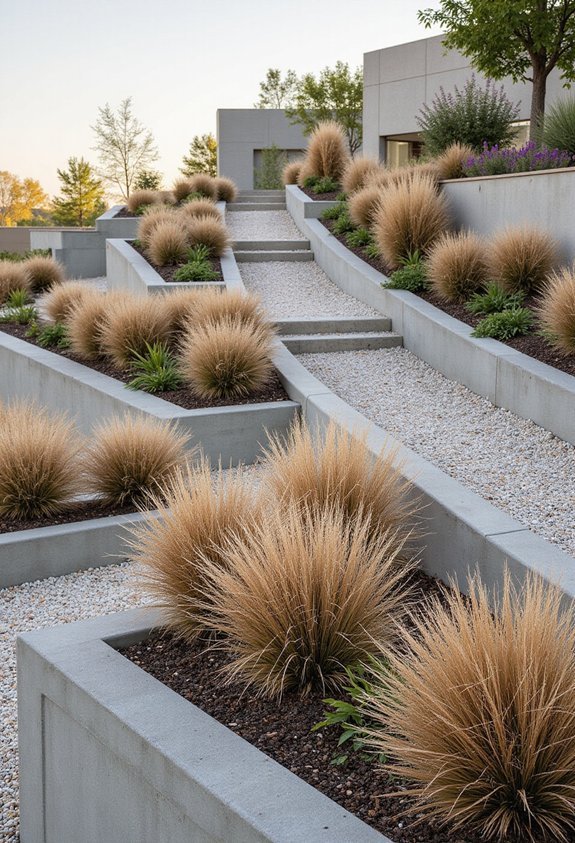
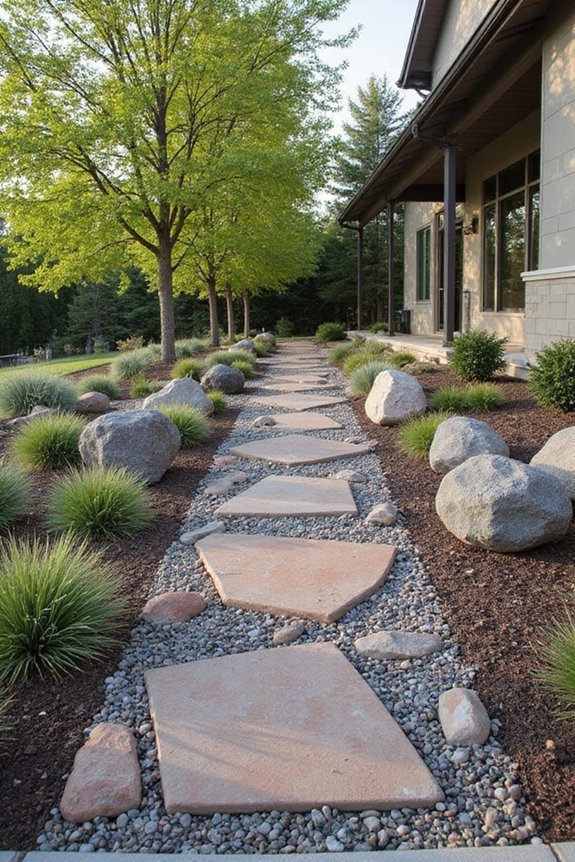
Unlike the layered complexity of traditional cottage gardens, modern minimalist design emphasizes clean lines, open spaces, and carefully selected plants that you’ll arrange to create a sophisticated, uncluttered appearance in your front yard bed. Ornamental grasses serve as ideal focal points because they’re low-maintenance and provide visual interest through their natural movement and texture. You’ll want to choose grasses like feather reed grass or blue fescue, which offer height variation without overwhelming your space. Plant them in geometric patterns or clusters, leaving plenty of negative space between groupings. Combine these grasses with a limited color palette of one or two accent plants, such as black mondo grass or silver-leafed sedums. This restrained approach creates a contemporary aesthetic that’s both elegant and functional for your front yard design.
Tiered Planting for Maximum Visual Depth
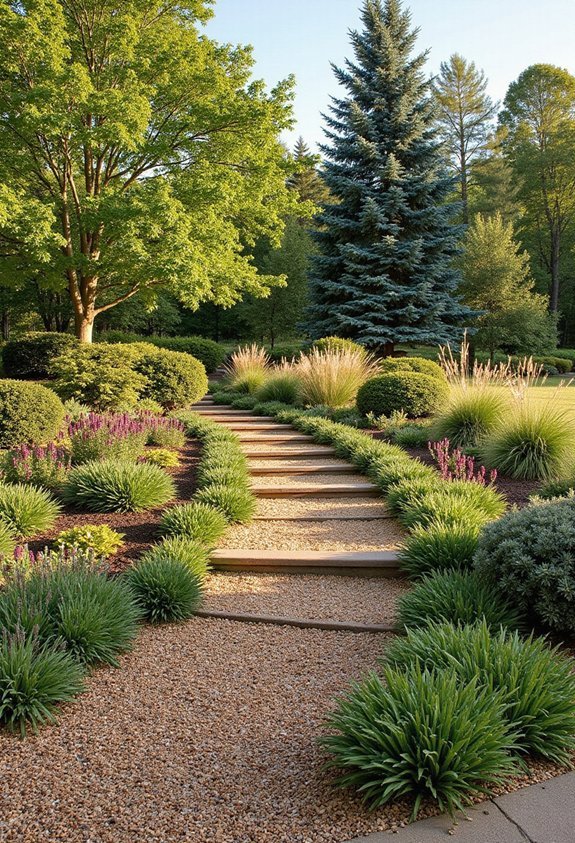
Creating layers in your front yard garden bed’ll give your space a three-dimensional quality that draws the eye inward and makes the planting area feel fuller and more dynamic. You’ll arrange plants by height, placing taller specimens in the back, medium-sized plants in the middle, and shorter varieties in the front, ensuring each plant remains visible. This tiered approach prevents overcrowding while maximizing your available space efficiently. Consider using raised beds or slight elevation changes to enhance the layering effect naturally. Plant densely within each tier to create visual cohesion, but leave adequate spacing for mature growth. This strategic arrangement creates visual depth, adds complexity to your landscape design, and establishes a polished, intentional appearance that transforms your front yard into an organized, sophisticated garden display.
Clean Bed Edges: The Foundation of Polished Design
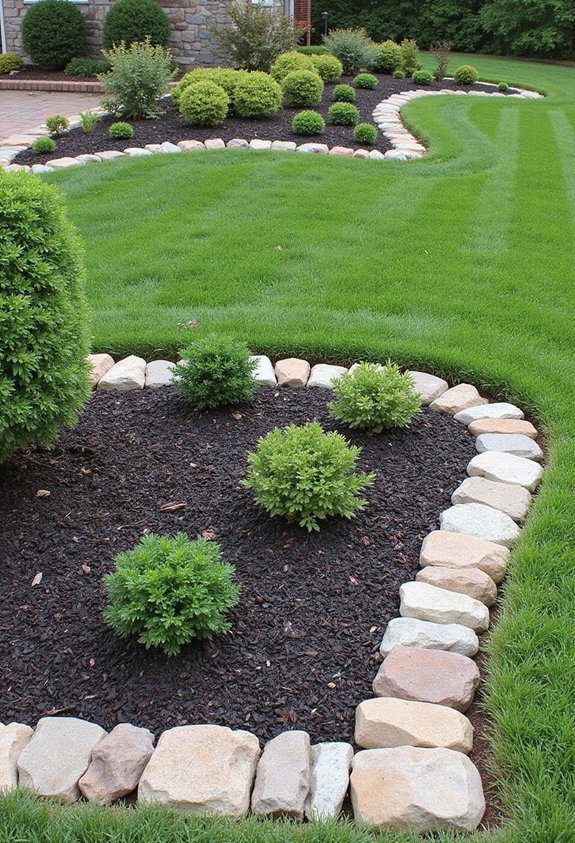
Well-defined edges separate your garden bed from the surrounding lawn and hardscape, and they’re what’ll complete the polished look you’ve built through tiered planting arrangements. You can achieve clean edges using several methods: metal or plastic edging installed flush with your soil creates sharp, defined lines that won’t blur over time, while natural stone borders provide both structure and aesthetic appeal. For budget-friendly options, you can dig a shallow trench between your bed and lawn, which requires regular maintenance to prevent grass encroachment. Whatever method you choose, maintain your edges consistently by trimming back vegetation that overhangs the border and removing debris that collects along the line. Crisp, well-maintained edges instantly elevate your garden’s appearance, making your entire front yard look intentionally designed and professionally finished.
Color-Coordinated Beds for Cohesive Curb Appeal
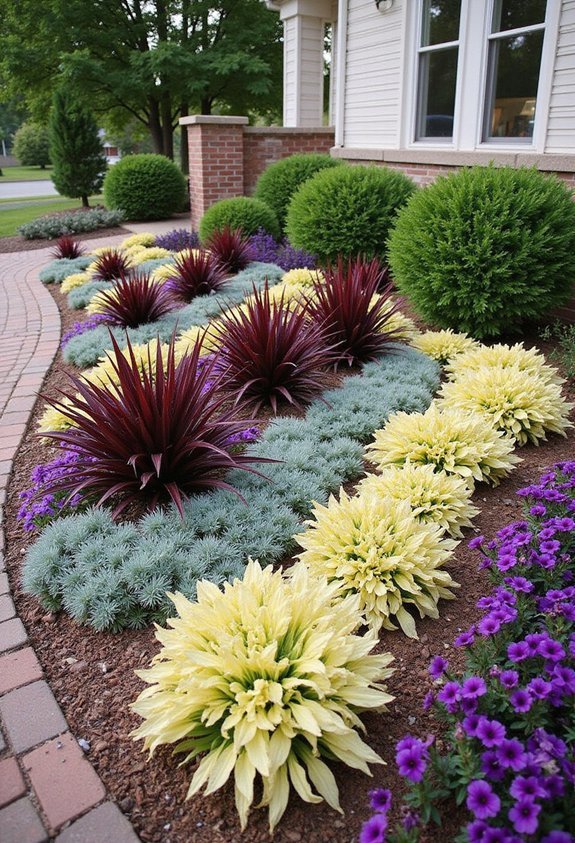
While crisp edges provide the visual framework for your garden bed, it’s the strategic use of color that’ll tie your entire front yard together into a unified, attractive display. Choose a color scheme before planting by selecting two or three colors that complement your home’s exterior, considering both cool tones like blues and purples, and warm tones like oranges and yellows. Distribute these colors evenly throughout your beds rather than clustering them, which creates visual balance and prevents one area from appearing overcrowded. Group plants with similar colors together in small clusters, allowing each hue to have enough space to make an impact. This deliberate color placement transforms your front yard into a cohesive landscape that enhances your home’s overall aesthetic appeal.
Low-Maintenance Shrub Beds With Focal Point Plants
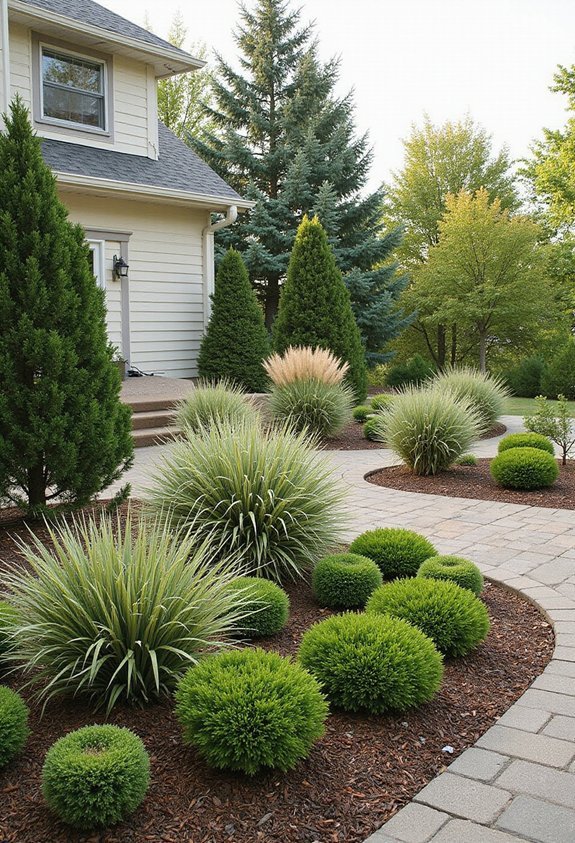
To establish a front yard garden bed that requires minimal upkeep while still commanding visual attention, you’ll want to build your design around sturdy shrubs paired with strategically positioned focal point plants. Choose evergreen shrubs like boxwood or dwarf Alberta spruce as your foundation, since they maintain their shape year-round without extensive pruning. Position a taller focal point plant, such as a Japanese maple or ornamental grass, in the center or back of the bed to draw the eye upward. Layer smaller shrubs around this anchor plant, creating depth and visual interest. This arrangement minimizes maintenance by reducing watering needs and eliminating constant shaping, while the focal point guarantees your bed remains visually striking throughout every season.
How to Layer Textures Without Looking Cluttered
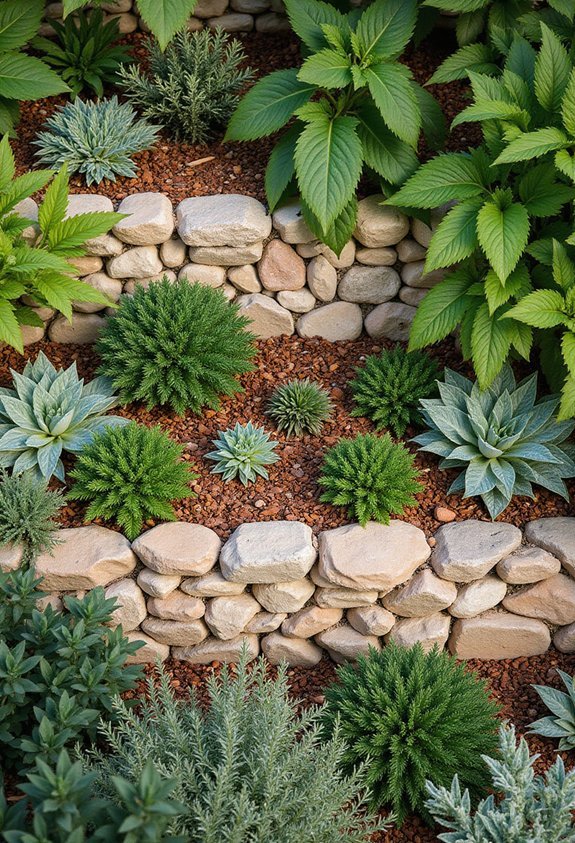
After you’ve established your focal point plants and foundational shrubs, you’ll need to carefully introduce different textures throughout your bed so the design feels intentional rather than chaotic. Start by identifying three primary textures: fine, medium, and bold. Fine textures include delicate foliage like ferns or ornamental grasses that create visual lightness. Medium textures offer balanced visual weight through typical leaf sizes found in most shrubs. Bold textures feature large leaves or architectural forms that command attention. Arrange these textures in repeating patterns, alternating between them rather than clustering similar ones together. This rhythmic approach prevents your bed from appearing random. Space plants adequately so each texture remains distinct and visible, allowing air circulation and reducing visual competition among neighboring plants.
Seasonal Blooming Sequence for Year-Round Interest
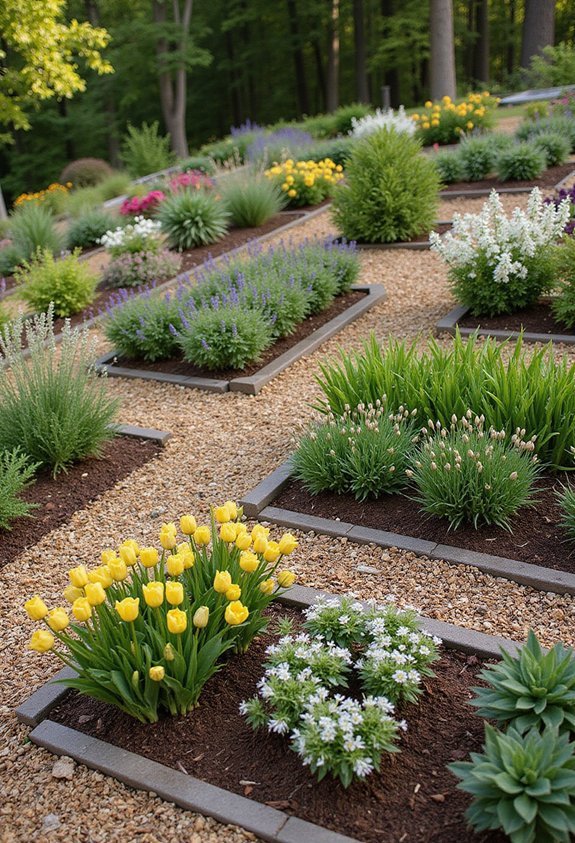
Once you’ve arranged your textures strategically, you’ll want to plan your plant selections so that something’s always flowering throughout the year, which transforms your front yard garden from a seasonal display into a consistently engaging landscape. Start by identifying plants that bloom during different seasons: spring bulbs like tulips and daffodils, summer perennials such as coneflowers and black-eyed Susans, fall asters and mums, and winter-blooming hellebores or ornamental grasses. Map out where you’ll position each plant based on bloom timing, ensuring no bare gaps exist between seasons. Stagger plantings so earlier bloomers fade just as later ones emerge, creating seamless visual shifts. This strategic sequencing maintains continuous color and texture throughout all twelve months, keeping your front yard garden beds visually interesting and well-designed year-round.
Shape Your Beds: Curves vs. Geometric Angles
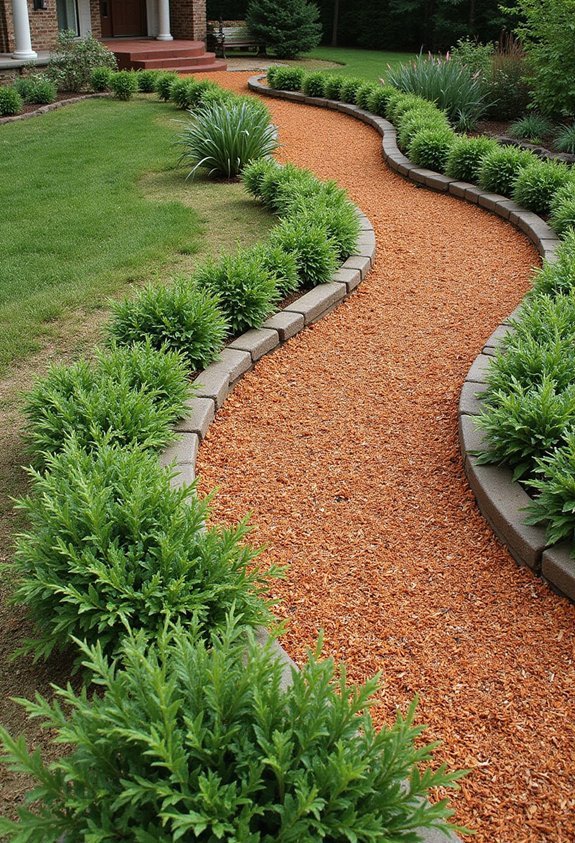
While you’ve established your plant selections and bloom sequences, the physical outline of your garden beds plays an equally important role in defining your front yard’s overall appearance and visual appeal. Curved beds create a softer, more organic aesthetic that encourages the eye to flow naturally through your landscape, making smaller yards appear larger. Conversely, geometric angles—such as rectangles, squares, or triangles—establish a formal, structured appearance that emphasizes organization and intentional design. Your choice depends on your home’s architectural style: curved beds complement traditional or cottage-style homes, while angular beds suit modern or contemporary residences. Consider your yard’s existing lines, walkways, and hardscaping when deciding. Both approaches work effectively; select the shape that harmonizes with your property’s character and your personal landscaping vision.
Native Plant Beds Adapted to Your Climate
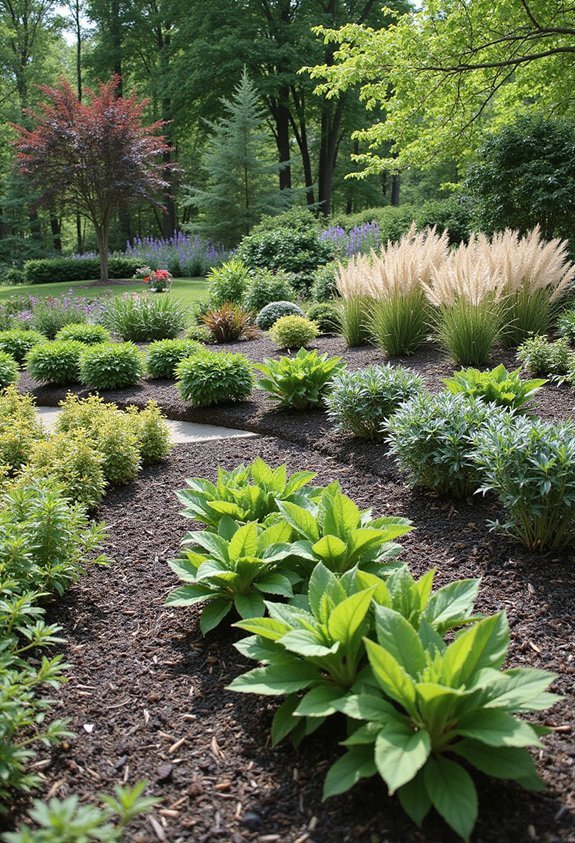
Since your front yard garden beds will thrive best when they’re filled with plants naturally suited to your region’s specific climate conditions, selecting native plants should become a foundational part of your landscaping strategy. Native plants require less water, fertilizer, and maintenance because they’ve adapted to your local environment over thousands of years. You’ll want to research which plants naturally grow in your area by checking with your local nursery, extension office, or native plant society. These resources provide lists of species that’ll flourish in your specific hardiness zone and soil type. By choosing native plants, you’re creating beds that’ll need minimal intervention while supporting local wildlife and reducing your overall landscaping expenses tremendously.
Small-Space Solutions for Compact Front Yards
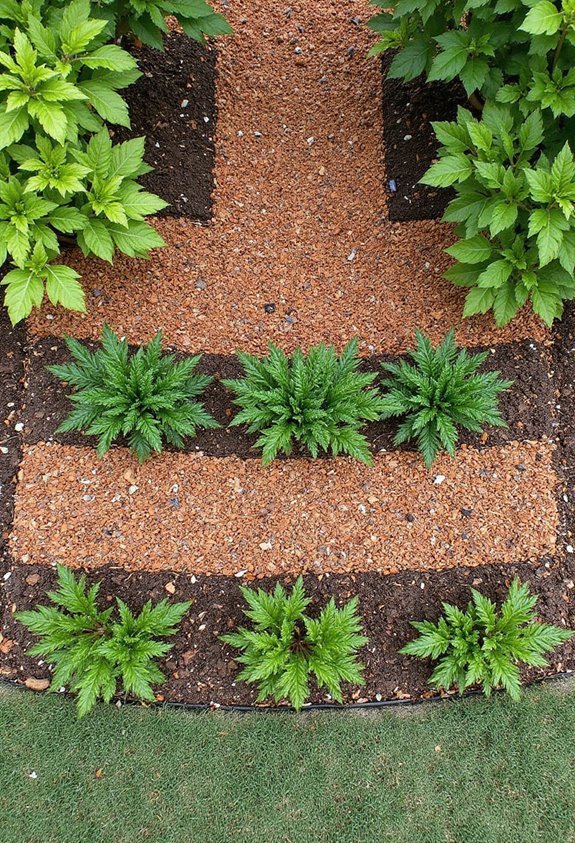
How can you create an attractive, functional garden bed when you’re working with limited square footage? You’ll want to maximize your space by choosing vertical growing options, such as trellises and wall-mounted planters, which draw the eye upward while saving ground space. Select compact plant varieties that don’t sprawl excessively, and arrange them in tiered layers so shorter plants sit in front and taller ones behind. This depth creates visual interest without requiring more room. You can also use narrow, raised beds along your walkway or foundation, which define your space efficiently. Incorporate multi-purpose elements like stepping stones that double as design features. By layering plants strategically and thinking vertically, you’ll transform your compact front yard into an organized, visually appealing garden that feels intentional and well-designed.
Mulch, Stone, and Hardscaping: Creating Polished Bed Boundaries
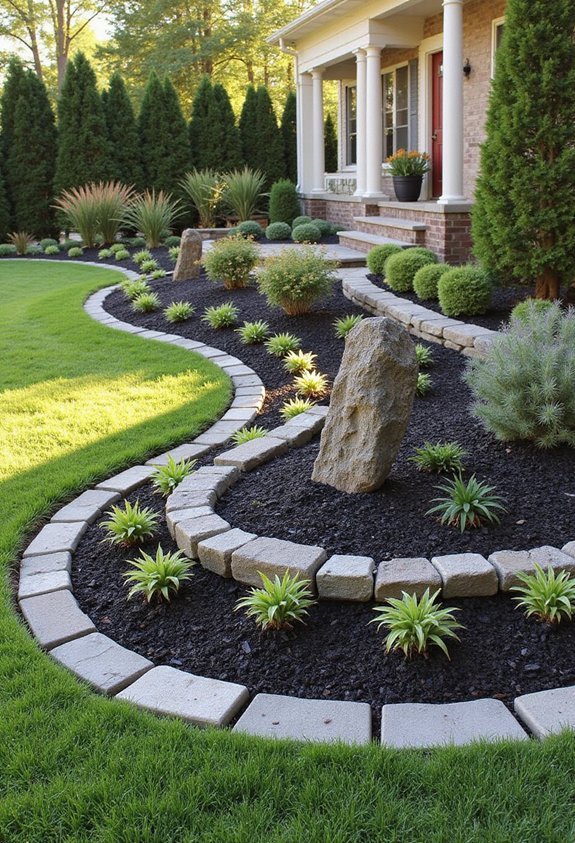
Once you’ve arranged your plants in layers, you’ll need to define and finish your garden beds with materials that’ll both protect your plants and enhance your yard’s overall appearance. Mulch serves as your foundation, providing insulation, moisture retention, and weed suppression while creating a neat appearance. You can choose from organic options like wood chips or bark, which break down over time and enrich soil. Stone and gravel offer permanent solutions that require minimal maintenance and provide excellent drainage for moisture-sensitive plants. For crisp, defined edges, consider installing hardscaping elements such as metal borders, plastic edging, or natural stone pavers, which prevent soil erosion and create clean lines between your beds and lawn, establishing the polished, intentional look your front yard deserves.
Plant Tall in Back, Short in Front: Here’s Why It Works
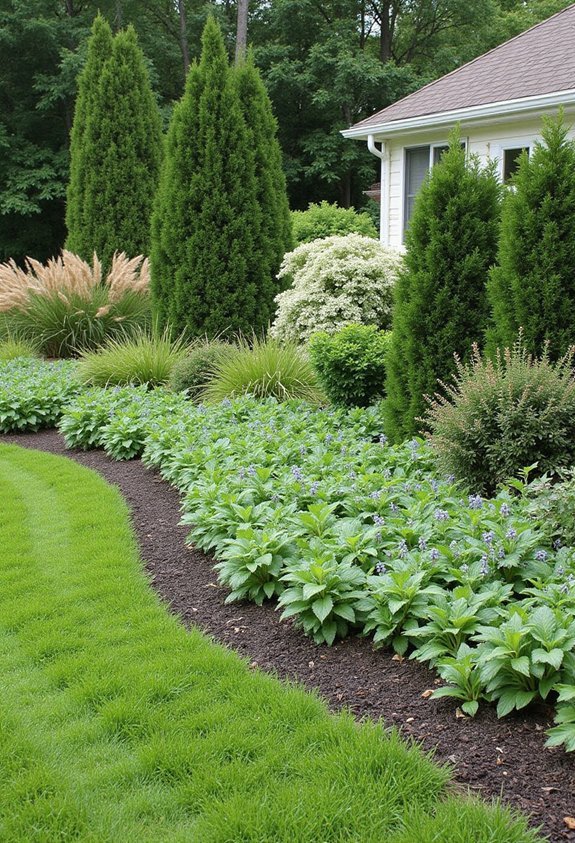
When you’re arranging plants in your front yard beds, positioning them by height creates what designers call a “tiered” or “layered” effect that’ll transform how your garden looks from the street. Tall plants positioned in the back serve as a natural backdrop, drawing the eye upward and making your entire yard feel more spacious and intentional. Shorter plants in front prevent taller ones from blocking your sightlines and create visual depth, allowing observers to see multiple plant layers simultaneously. This arrangement guarantees that every plant receives adequate sunlight without being overshadowed by neighbors. Additionally, the tiered approach simplifies maintenance because you’ll access front plants easily without maneuvering around taller specimens. This strategic positioning establishes a professional, well-designed appearance while maximizing both aesthetic appeal and practical garden functionality.
Drought-Tolerant Beds Requiring Minimal Watering
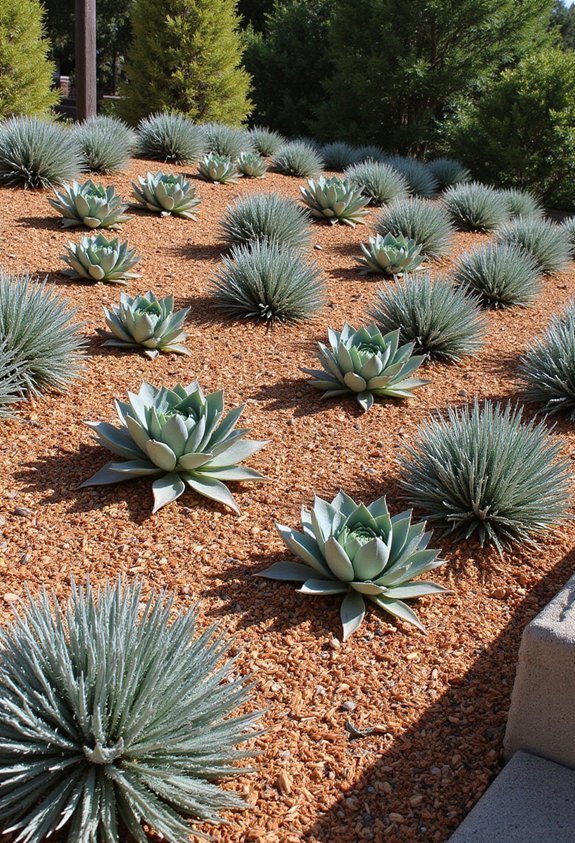
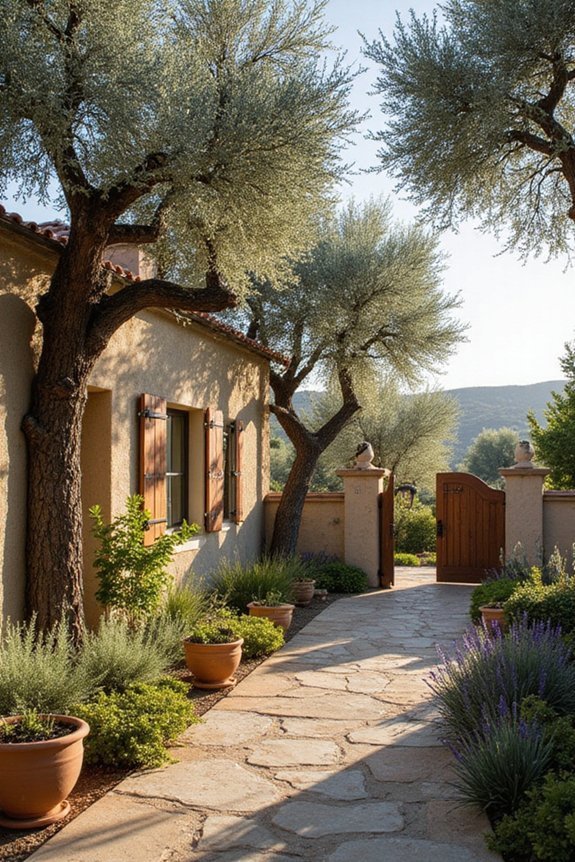
If you’re looking to reduce your watering schedule and create a more sustainable front yard garden, drought-tolerant plants are your best solution because they’ve adapted to thrive in dry conditions with minimal moisture. These plants store water in their leaves, stems, or roots, allowing them to survive extended periods without supplemental watering. Consider incorporating succulents like sedums and echeveria, ornamental grasses such as blue fescue, and shrubs like Russian sage into your garden beds. Once established, these plants require watering only during extreme heat or prolonged dry spells. You’ll save time, reduce water bills, and create a visually interesting landscape with varied textures and colors that naturally complement layered garden designs.
Incorporating Evergreens for Winter Structure
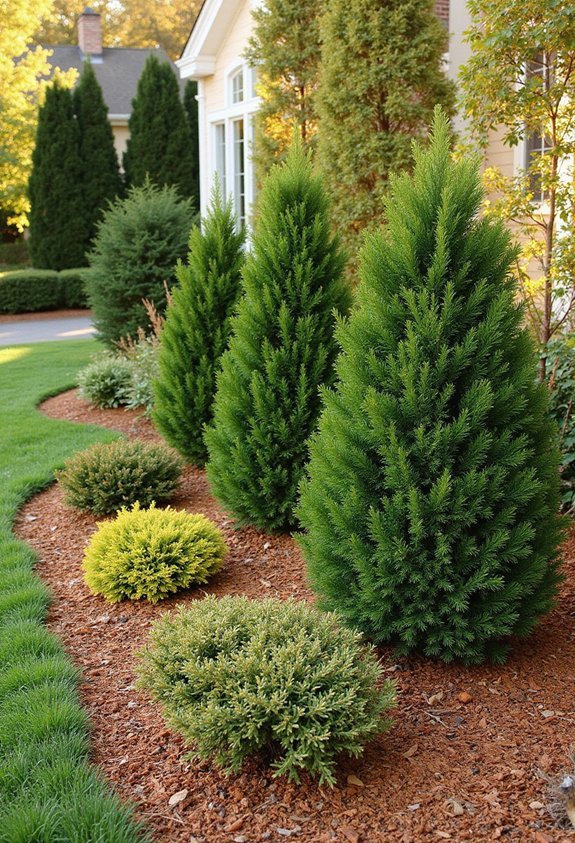
Many gardeners overlook the importance of evergreens in front yard beds, yet these plants provide essential visual interest and structural support during the dormant winter months when deciduous plants lose their foliage. You’ll want to select evergreens that complement your climate zone, ensuring they’ll thrive year-round without excessive maintenance. Consider incorporating boxwoods, junipers, or dwarf conifers, which offer varying heights, textures, and colors that create layered depth in your landscape. You should position taller evergreens toward the back of beds and shorter varieties in front, establishing a tiered effect that maintains visual appeal. By strategically placing evergreens throughout your front yard beds, you’ll achieve a polished, finished appearance regardless of the season, transforming your landscape into a structured, attractive space.
Accent Plants That Demand Attention
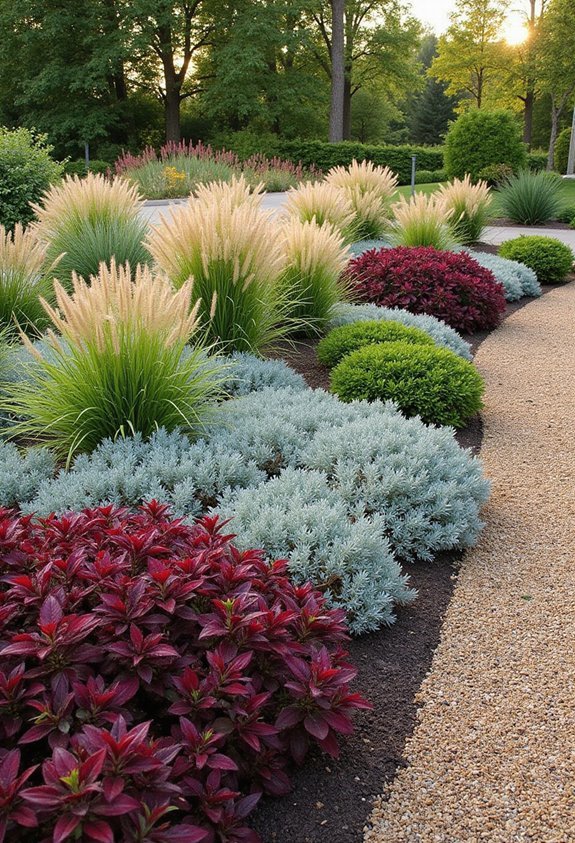
While evergreens establish the backbone of your front yard beds, accent plants are what’ll draw visitors’ eyes directly to specific focal points throughout your landscape. You’ll want to select plants with striking features—bold foliage colors, unusual textures, or vibrant blooms—that stand out against your evergreen backdrop. Consider incorporating ornamental grasses, flowering shrubs, or plants with variegated leaves that create visual contrast and interest. Position these accent plants strategically at entryways, corners, or along pathways where they’ll command attention naturally. The key is choosing varieties that complement your evergreens while offering distinct seasonal characteristics, ensuring your front beds maintain visual appeal year-round. This layered approach prevents your landscape from appearing flat or monotonous, creating depth and sophistication throughout your outdoor space.
Creating High-Impact Beds on a Shoestring Budget
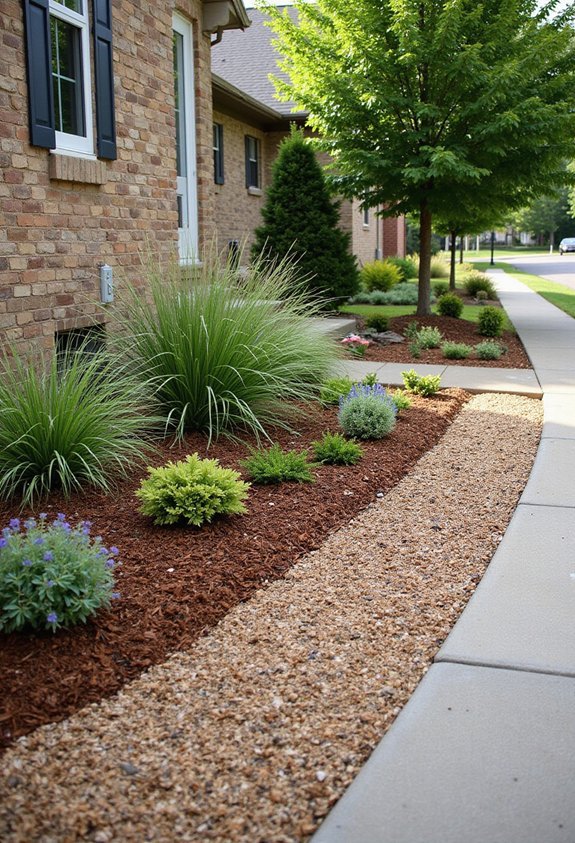
How can you design a visually striking front yard without spending a fortune on plants and materials? Start by propagating plants from cuttings or seeds, which costs considerably less than purchasing mature specimens. Divide existing perennials in your yard to create multiple plants for free, then strategically arrange them in clusters to maximize visual impact. Use affordable mulch or wood chips to define bed edges and create depth, which also suppresses weeds and retains moisture. Incorporate found objects like rocks, recycled pavers, or salvaged wood as edging or focal points. Focus on texture and foliage variation rather than expensive flowering plants, selecting hardy, low-maintenance species that’ll thrive in your climate. This approach creates professional-looking beds without depleting your budget.
Ground Covers and Underplanting Strategies
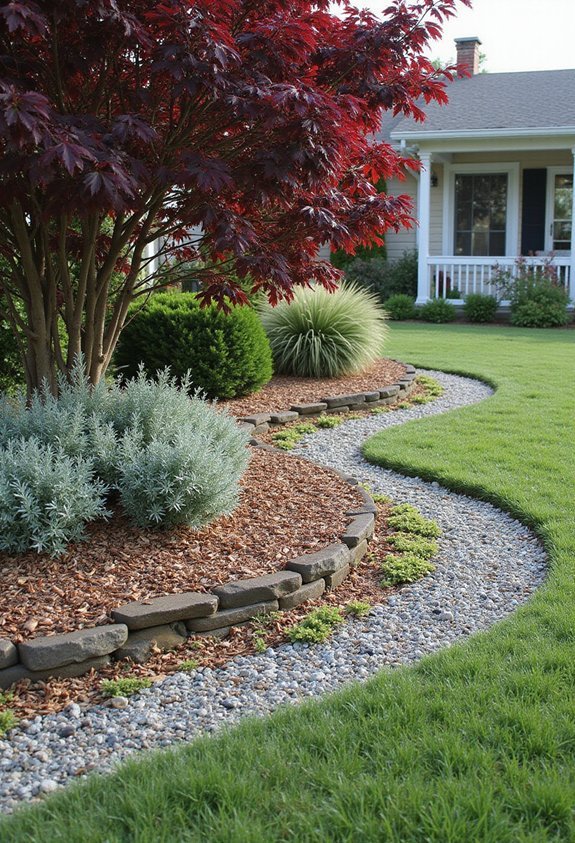
Once you’ve established your foundational plants and defined your bed structure with budget-friendly materials, you’ll want to fill in the spaces beneath and around them with strategic ground covers and underplanting that’ll enhance your design while reducing maintenance demands. Low-growing plants like creeping thyme, sedums, and ornamental grasses work exceptionally well for this purpose, creating visual density while suppressing weeds naturally. Position these underplanting selections to cascade over bed edges and weave between taller specimens, establishing layered depth that makes your garden appear fuller and more intentional. Choose ground covers suited to your climate and light conditions to guarantee they’ll thrive with minimal intervention, ultimately decreasing watering needs and eliminating tedious weeding throughout your growing season.
Lighting Placement to Enhance Layered Beds
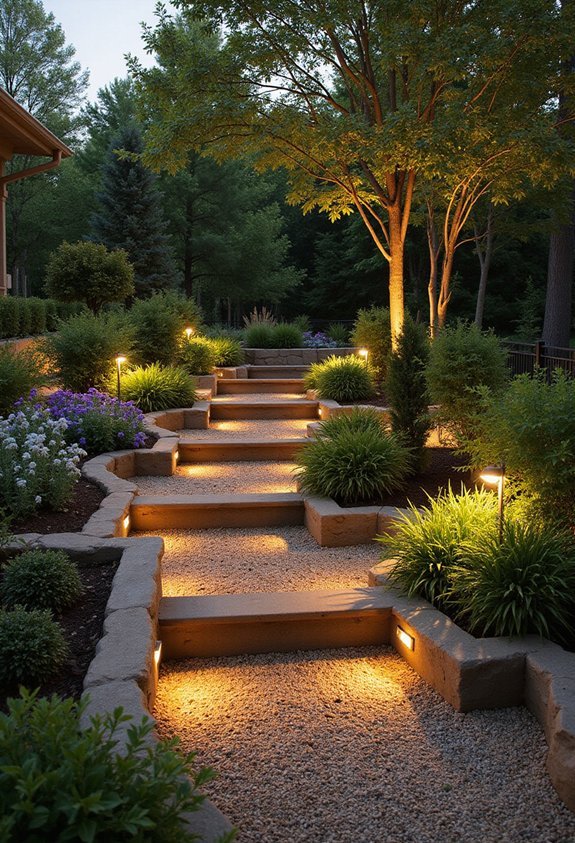
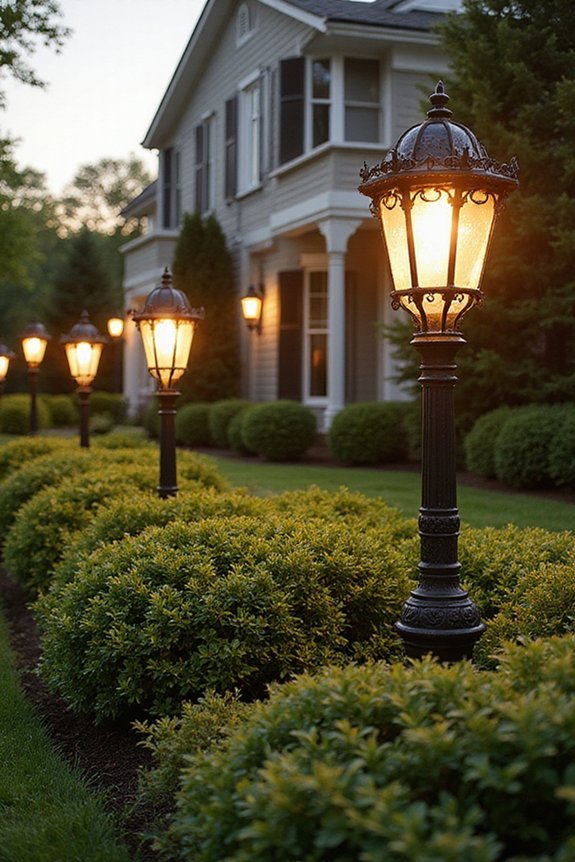
Strategic lighting transforms your front yard garden beds from daytime focal points into dramatic evening displays that highlight the layered depth you’ve created through your ground covers and underplanting. Position uplights beneath taller plants to cast shadows upward, creating dimension and texture visibility. Place path lights along garden edges to define bed boundaries while illuminating lower-layer plantings. Install spotlights at forty-five-degree angles toward focal point plants, emphasizing their shapes and architectural qualities. Use warm-toned LED bulbs to enhance foliage colors naturally. Space lights eighteen to twenty-four inches apart for even coverage without creating harsh shadows. Avoid over-lighting by selecting fewer, strategically-placed fixtures rather than numerous bright ones. This approach reveals your layering structure while maintaining visual balance throughout evening hours.
Year-Round Maintenance Tasks That Keep Beds Neat and Thriving
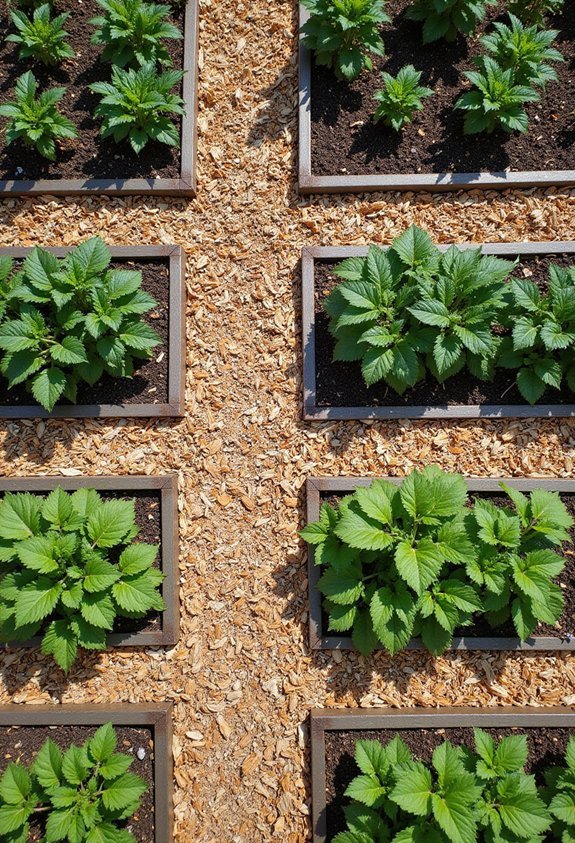
What keeps your layered garden beds looking polished and healthy throughout every season? Consistent maintenance tasks guarantee your beds remain neat and thriving year-round. In spring, you’ll remove winter debris, refresh mulch layers, and divide overcrowded perennials. During summer, you’ll deadhead spent flowers regularly, water deeply during dry periods, and pull emerging weeds before they establish. Fall requires cutting back dead foliage, adding fresh compost between layers, and planting spring bulbs strategically. Winter maintenance involves protecting delicate plants with additional mulch and planning next season’s layout. Monthly inspections help you catch pest problems early, assess soil moisture levels, and maintain clean bed edges. By following this systematic approach to seasonal care, you’ll maintain the polished appearance and vigor of your layered front yard beds.
Conclusion
You’ve now got the blueprint to transform your front yard into a polished landscape that’s the real deal. By layering perennials, defining edges, and coordinating colors strategically, you’ll create visual depth that catches every eye. Maintain your beds consistently throughout the year, and you’ll watch your garden evolve into a cohesive outdoor space that reflects careful planning and intentional design choices worth showcasing.