Your front yard serves as the gateway to your home’s personality, revealing who you are before anyone steps through your door. You’ll discover that landscape design isn’t just about plants and pathways; it’s about creating spaces that reflect your lifestyle and values. From minimalist modern designs to tropical escapes, each style offers distinct advantages. But which approach will transform your outdoor space most effectively? The answer depends on understanding how different designs work and what suits your specific situation.
Modern Minimalist Gardens With Clean Lines
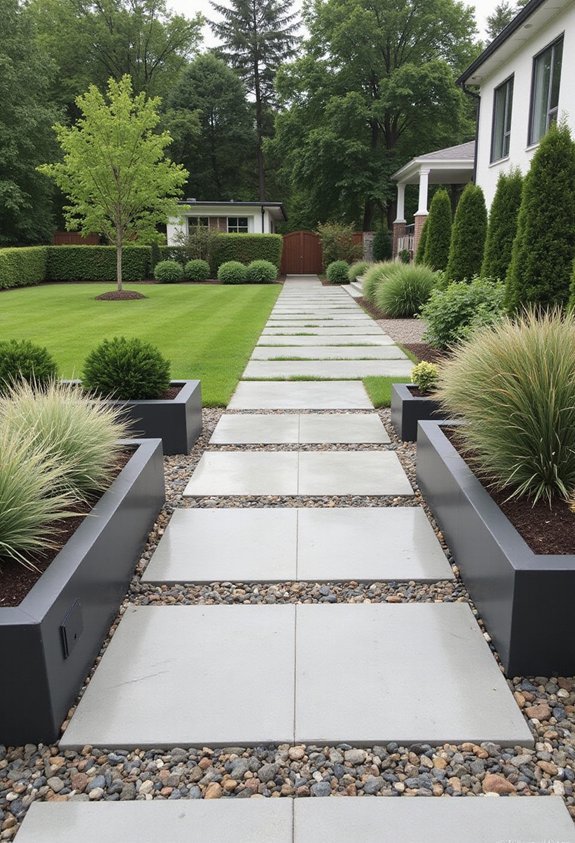
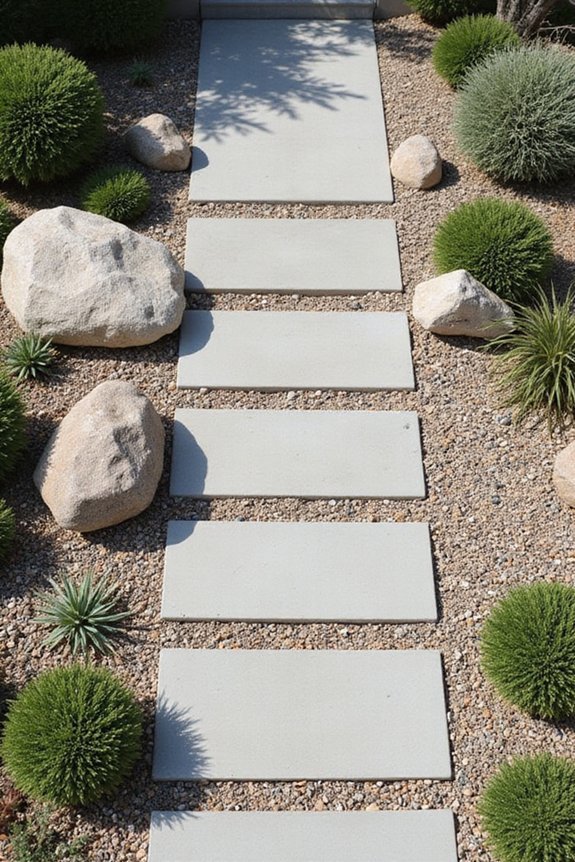
When you’re planning a front yard landscape, a modern minimalist garden offers you a straightforward approach that emphasizes simplicity and purposeful design elements. You’ll create visual impact by using geometric shapes, such as rectangles and squares, in your planting beds and hardscaping features. Choose a limited color palette of neutrals, greens, and one accent color to maintain cohesion throughout your yard. You should incorporate clean lines with straight edges in pathways, borders, and structures, which guide the viewer’s eye deliberately through the space. Select plants with architectural qualities, like ornamental grasses and sculptural shrubs, that complement your design’s geometric nature. You’ll reduce maintenance by limiting plant variety and utilizing gravel or concrete surfaces strategically. This approach creates a sophisticated, uncluttered outdoor environment that feels intentional and balanced.
Also read: 19 MEDITERRANEAN FRONT YARD Details That Feel Like Vacation!
Cottage Garden Charm for Romantic Appeal
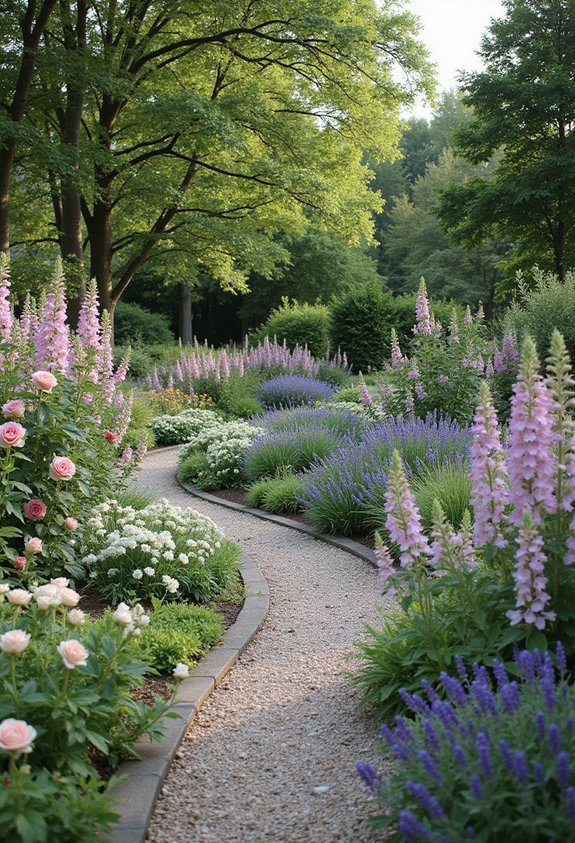
In sharp contrast to the structured simplicity of modern minimalist gardens, cottage gardens embrace an overflowing, naturalistic style that evokes nostalgia and warmth through abundant plantings and layered textures. You’ll want to combine flowering shrubs, perennials, and climbing vines to create depth and visual interest throughout your front yard. Mix plants of varying heights, allowing taller specimens to anchor the design while shorter varieties fill gaps below. Incorporate classic cottage elements like picket fences, stone pathways, and vintage decorative pieces to enhance the romantic atmosphere. Choose soft color palettes featuring pastels and whites, though you can introduce deeper hues for contrast. Don’t overthink plant placement; allow natural clustering and overlapping to develop organically, creating that charming, lived-in appearance that defines authentic cottage garden design.
Go Mediterranean: Stone, Succulents, and Sun-Soaked Beauty
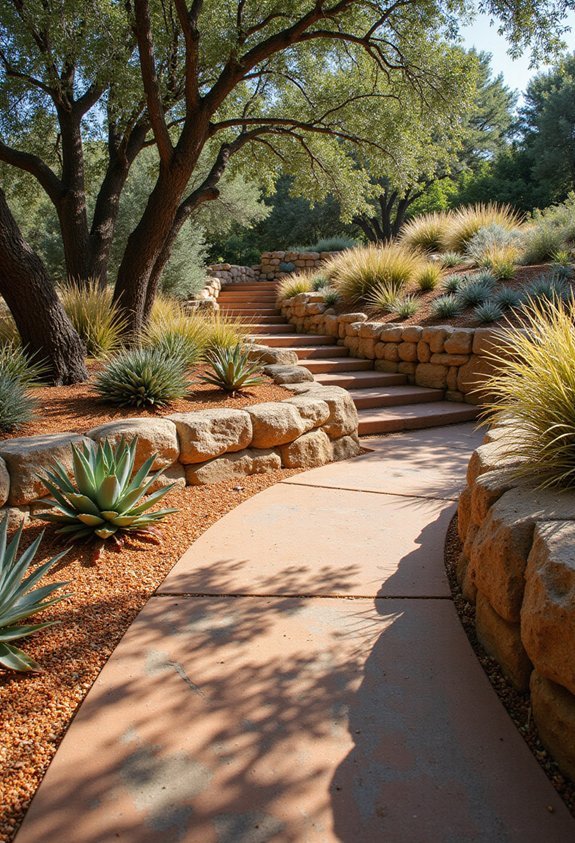
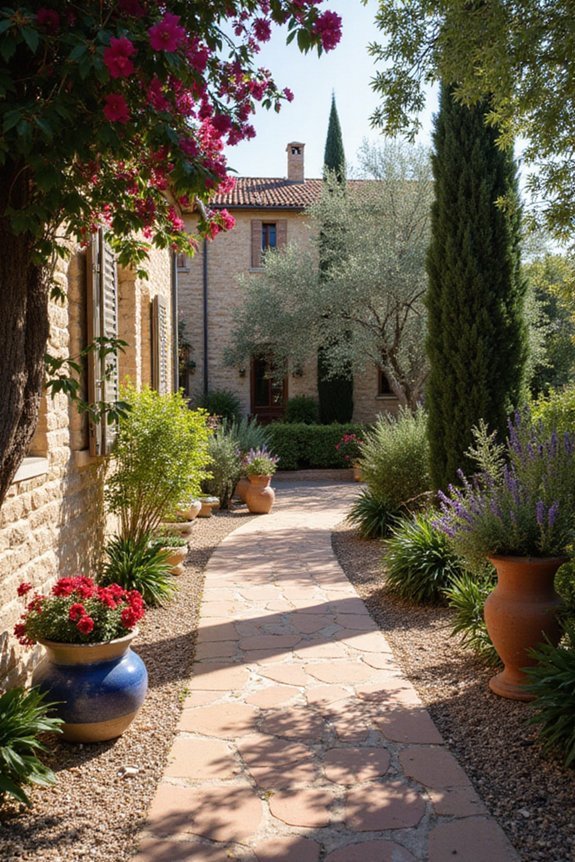
Because you’re drawn to warm climates and drought-resistant landscapes, a Mediterranean-style front yard offers you an elegant design approach that combines hardscaping with low-maintenance plants adapted to hot, dry conditions. You’ll incorporate natural stone pathways, gravel beds, and terracotta accents that reflect the sun’s warmth while reducing water consumption. Succulents like agave, lavender, and rosemary thrive in these settings, requiring minimal irrigation and maintenance. Stone features such as retaining walls, decorative rocks, and gravel mulch create visual interest while improving drainage. You arrange these elements strategically to establish focal points and guide foot traffic through your landscape. This design style transforms your front yard into a sophisticated, sustainable outdoor space that handles heat efficiently while delivering timeless Mediterranean aesthetic appeal.
Japanese Zen Gardens for Peaceful Sophistication
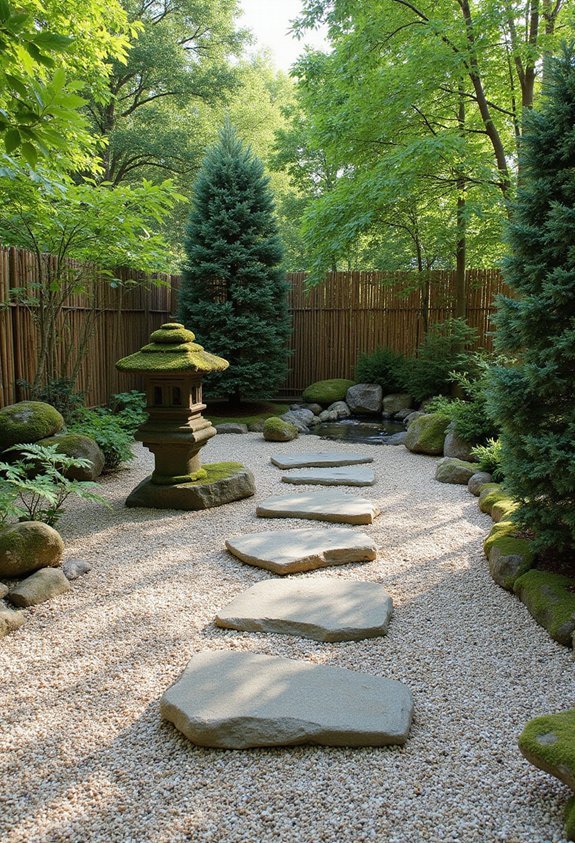
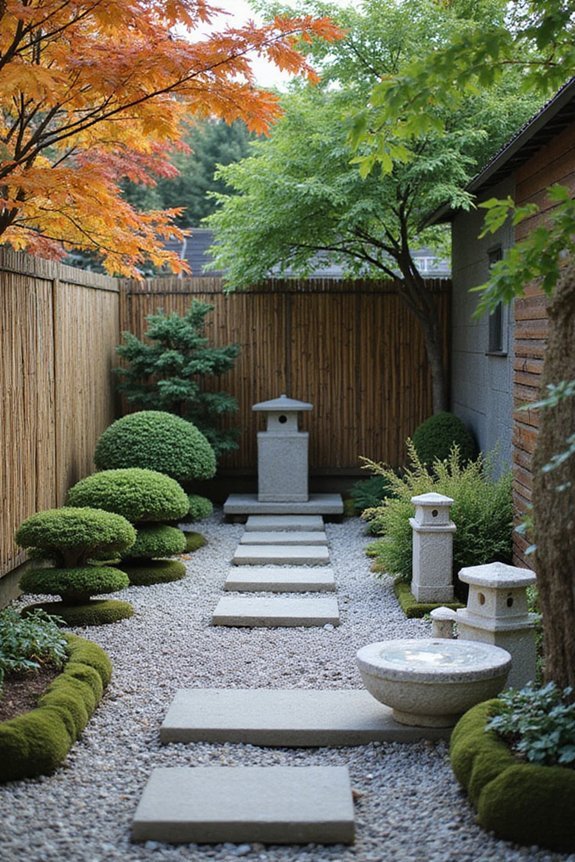
A Japanese Zen garden creates a serene front yard by emphasizing simplicity, balance, and natural harmony through carefully arranged elements like raked gravel, strategically placed stones, minimalist plantings, and water features that work together to establish a calming atmosphere. You’ll want to select a limited color palette of grays, greens, and earth tones to maintain visual restraint. Incorporate smooth river rocks, moss-covered boulders, and pruned shrubs that you’ll arrange asymmetrically rather than symmetrically. Include a small water feature such as a bamboo fountain or shallow pond that you can position as a focal point. You should rake the gravel in gentle patterns, which encourages contemplation. This design approach doesn’t require extensive maintenance, making it practical for homeowners seeking peaceful outdoor spaces.
Tropical Front Yards With Bold Plants and Colors
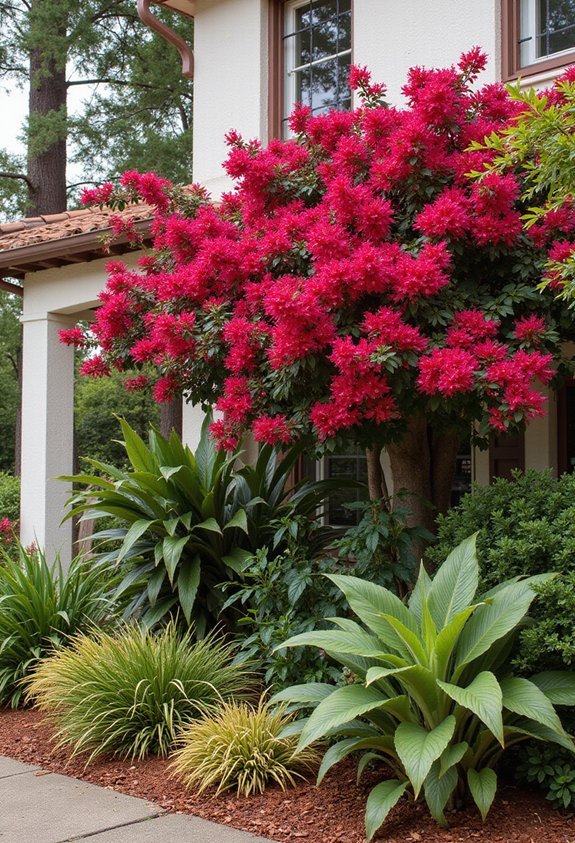
While Japanese Zen gardens rely on restraint and calm neutrality, tropical front yards embrace vibrant energy through lush vegetation, bright colors, and dynamic plant combinations that transform your outdoor space into a living paradise. You can incorporate bold flowering plants like hibiscus, bougainvillea, and bird of paradise, which offer striking reds, oranges, and purples that immediately draw attention. Layer your plantings by positioning tall palms and banana plants in the background, medium-sized shrubs in the middle, and colorful groundcover in front, creating depth and visual interest. You’ll want to add mulch in contrasting colors to enhance the tropical feel further. This approach produces an energetic landscape that feels exotic and inviting while requiring thoughtful plant selection and strategic placement.
Xeriscape Design for Low-Water Curb Appeal
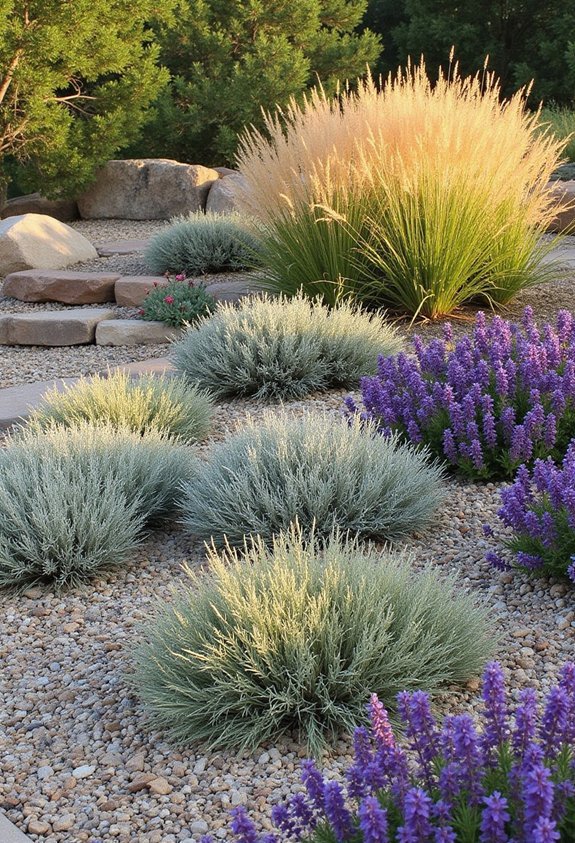
How can you create an attractive front yard without constantly watering your plants or running up your water bill? Xeriscape design offers a practical solution by using drought-tolerant plants that thrive in dry conditions. You’ll select native plants, ornamental grasses, and succulents that require minimal irrigation once established. Strategic placement of hardscape elements like gravel, mulch, and stone pathways reduces water needs while adding visual interest. Grouping plants by water requirements guarantees efficient irrigation systems, and installing drip lines delivers water directly to roots, minimizing waste. Incorporating rocks, sand, and decorative pebbles creates texture and reduces soil moisture loss through evaporation. This approach combines environmental responsibility with stunning curb appeal, delivering a sustainable landscape that maintains its beauty throughout seasons while substantially lowering maintenance demands and expenses.
Cottage Core Wildflower Meadows
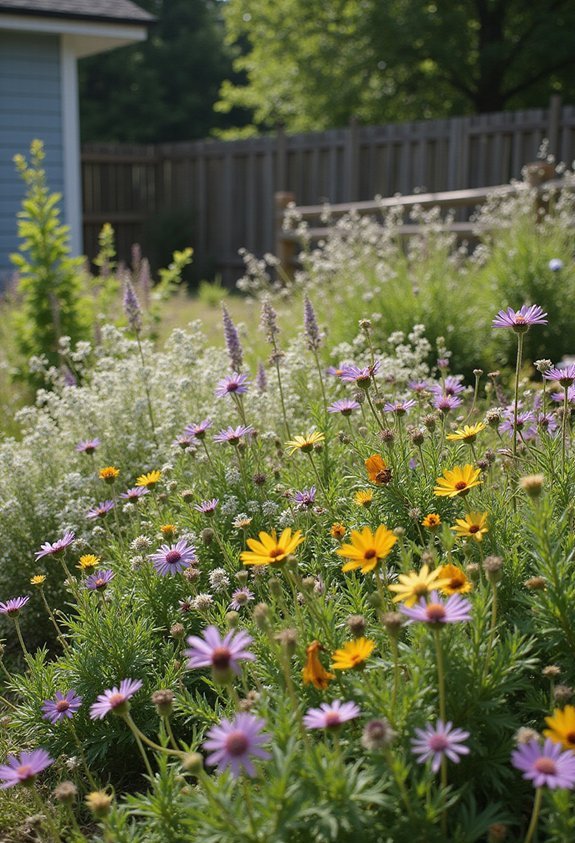
If you’re drawn to a more romantic and naturalistic aesthetic than the structured efficiency of xeriscaping, a cottage core wildflower meadow offers you an enchanting alternative that celebrates abundance rather than restraint. You’ll cultivate native wildflowers that thrive in your region, creating layers of color and texture throughout seasons. Start by preparing your soil, removing invasive plants and weeds that compete with your wildflowers. Scatter seeds directly onto loosened earth in fall or spring, depending on your climate zone. You’ll water regularly until flowers establish themselves, then drastically reduce irrigation as they mature. This approach requires minimal fertilizer and pesticides, allowing natural pollinator populations to flourish. The result transforms your front yard into a dynamic ecosystem that evolves naturally while demanding considerably less maintenance than traditional lawns.
Contemporary Mixed Borders: Combining Plants for Depth and Contrast
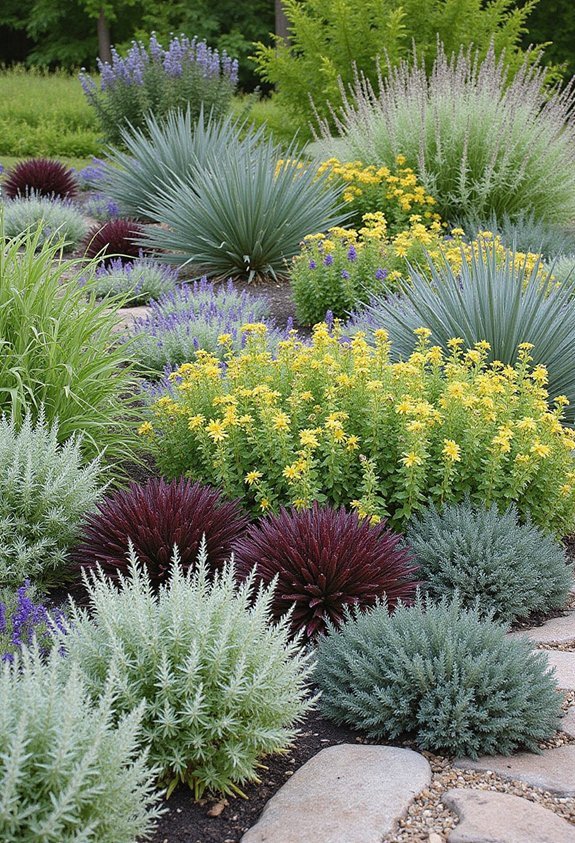
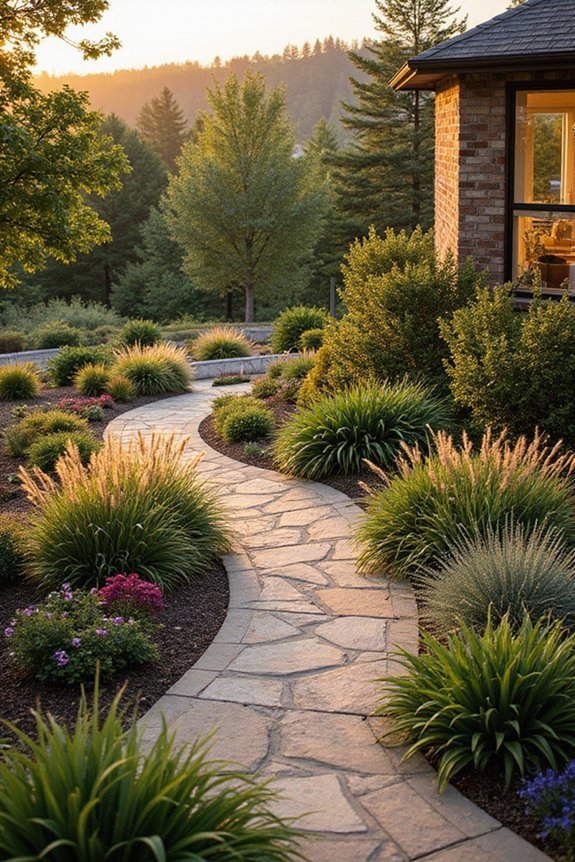
Contemporary mixed borders represent a modern approach to front yard landscaping that strategically combines plants of varying heights, textures, and bloom times to create visual interest and depth throughout the year. You’ll arrange tall plants like ornamental grasses and shrubs in the background, medium-height perennials in the middle layer, and low-growing groundcovers in the front. This tiered structure guarantees you can see all plants clearly while maximizing your space. You’ll also pair plants with contrasting textures—combining feathery foliage with broad leaves, for example—to enhance visual appeal. By selecting species that bloom at different seasons, you’ll maintain color and interest from spring through fall. This deliberate layering technique creates dynamic, sophisticated landscapes that look polished and professionally designed.
Hardscape Features: Stone Paths, Walls, and Sculptural Elements
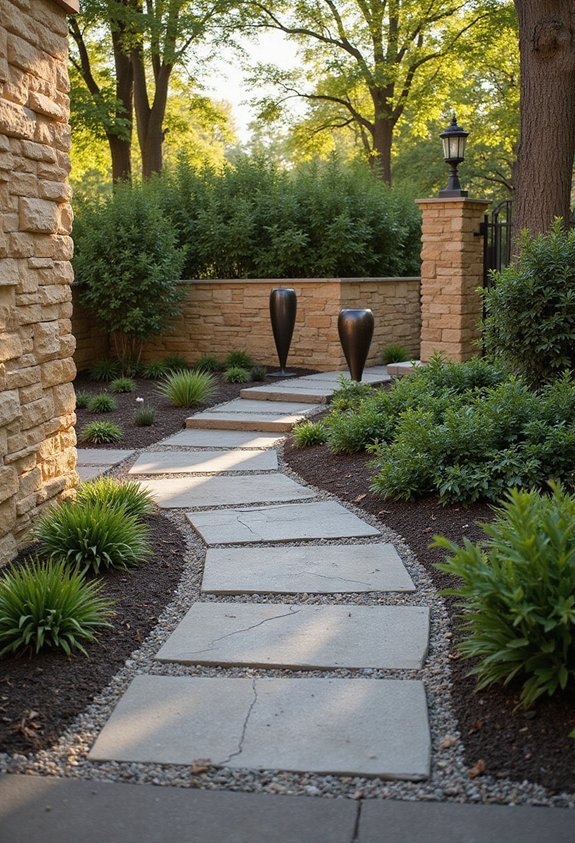
While layered plantings create the organic foundation of your front yard, hardscape elements—the non-living structural components like stone, concrete, and metal—provide the framework that anchors your design and guides how people move through and experience your landscape. Stone paths establish clear walkways, directing visitors toward your entrance while defining garden zones. Retaining walls and edging create structure, contain soil, and add visual dimension through varying heights and materials. Sculptural elements—such as fountains, statuary, or decorative boulders—serve as focal points that draw the eye and establish personality. When you select hardscape materials that complement your home’s architecture and regional stone types, you’ll create cohesion. These durable features require minimal maintenance while providing year-round visual interest and functional organization.
Statement Entryways: Tall Shrubs and Structured Plants
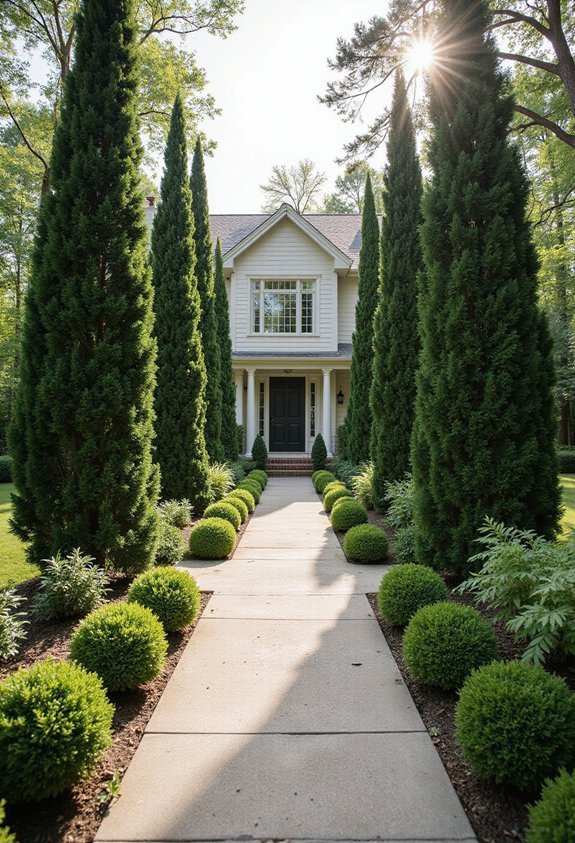
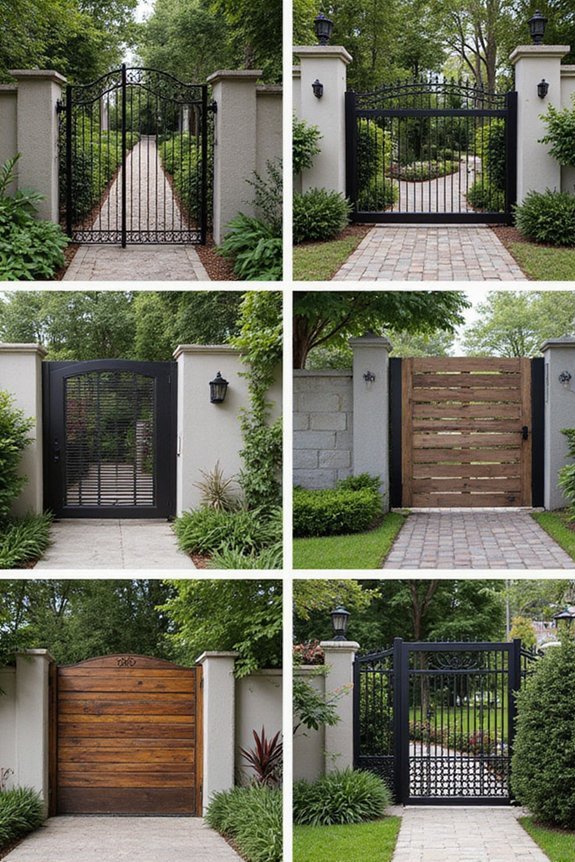
Your front entrance serves as the first impression of your home, and tall shrubs with structured growth patterns can frame this critical space with architectural elegance. You’ll want to select plants like columnar junipers, boxwoods, or pyramidal evergreens that naturally grow upright and maintain defined shapes. These structured plants create visual boundaries that guide visitors toward your door while establishing a sense of order and sophistication. You can enhance this effect by spacing plants symmetrically on either side of your entryway, which provides balance and intentional design. Regular pruning keeps these shrubs in their desired form, preventing overgrowth that might obscure your entrance. This strategic placement of tall, structured plants transforms your front entry into a commanding focal point that immediately conveys thoughtful landscaping and architectural intent.
Gravel Gardens and Pathways for Modern Impact
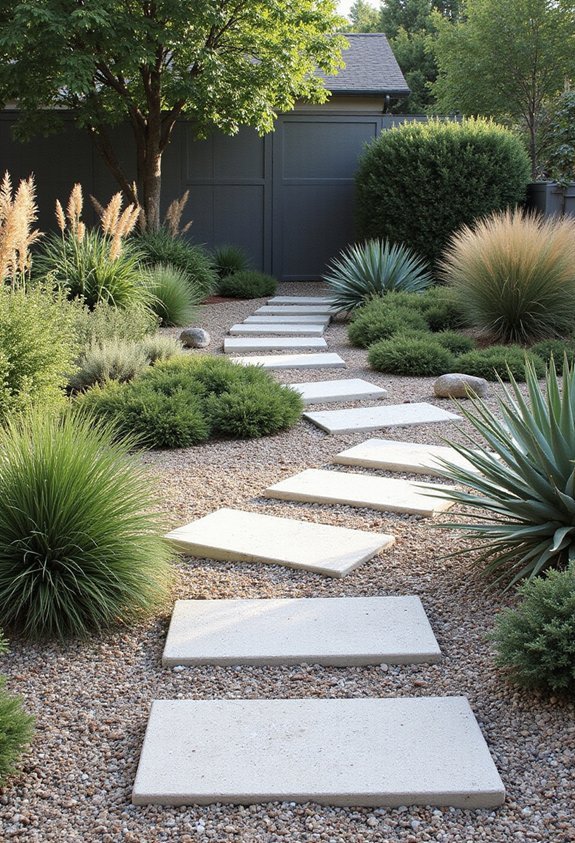
Three key elements—gravel, clean lines, and strategic spacing—work together to create a contemporary landscape that’s both functional and visually striking. You’ll want to select quality gravel in neutral tones like gray or tan, which complements modern architecture while requiring minimal maintenance. Establish pathways using gravel bordered by metal or concrete edging that creates sharp, geometric boundaries defining your landscape zones. Space plants deliberately throughout your gravel beds rather than clustering them densely, allowing negative space to enhance the design’s visual impact. This approach reduces watering needs and prevents overcrowding while maintaining a sophisticated aesthetic. You can arrange ground covers or ornamental grasses strategically to soften edges and add texture, balancing the gravel’s austere quality with organic elements that prevent your front yard from appearing sterile or uninviting.
Flowering Tree Specimens as Living Sculptures
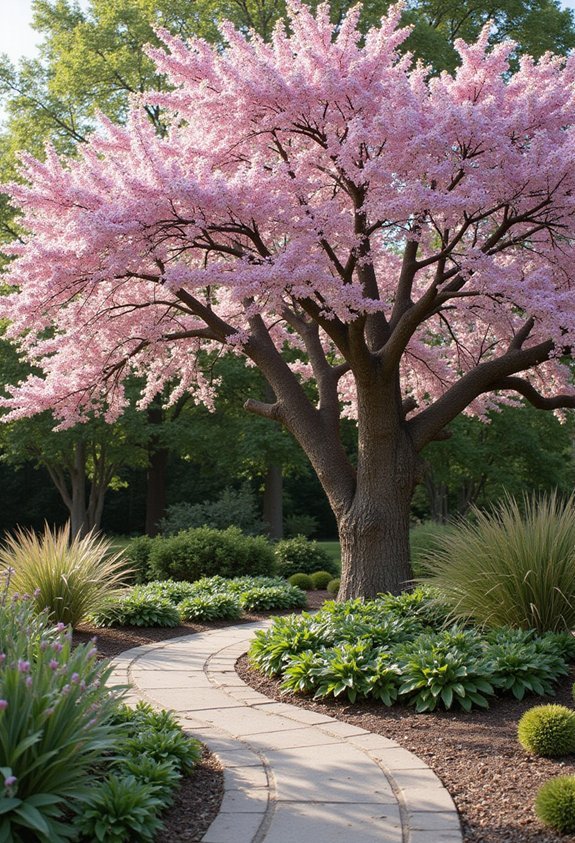
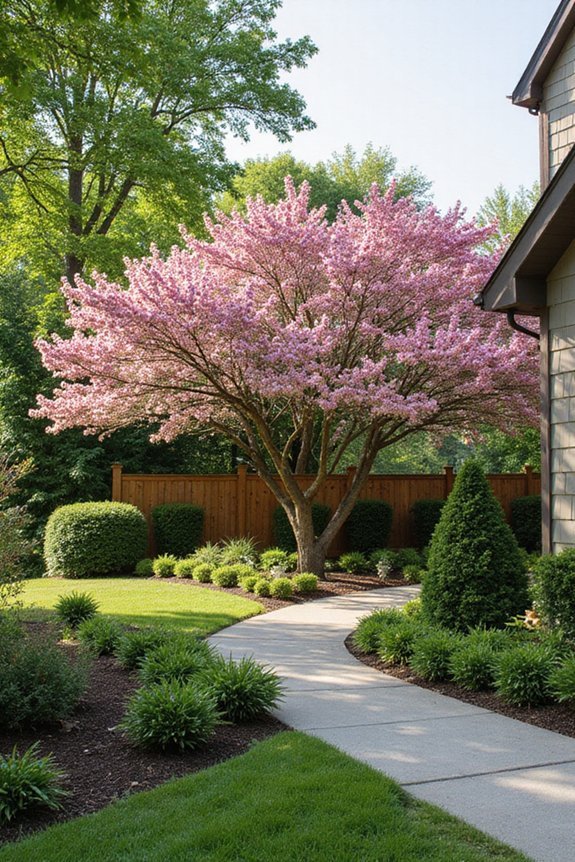
Because flowering trees combine structural form with seasonal beauty, they’re excellent focal points that’ll transform your front yard into a curated outdoor gallery. You’ll want to select specimens that match your climate and soil conditions, ensuring long-term health and consistent performance. Consider trees like cherry, crabapple, or dogwood, which offer striking blooms and year-round visual interest through varied bark textures and branching patterns. Position your flowering tree where it receives adequate sunlight, typically six to eight hours daily, to maximize blooming potential. Space trees appropriately to allow for mature growth without crowding, and incorporate mulch around the base to retain moisture and regulate soil temperature. Prune strategically during dormant seasons to enhance form and encourage fuller flowering displays that’ll captivate your landscape throughout the seasons.
Ground Covers and Native Plants for Easy Maintenance
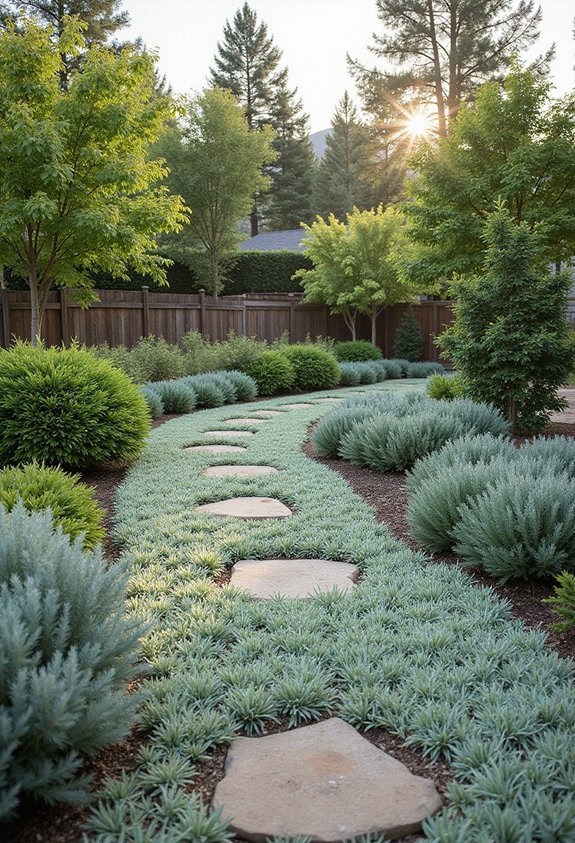
Ground covers and native plants work together to create landscapes that don’t require constant upkeep, since they’re already adapted to your region’s climate, rainfall patterns, and soil conditions. You’ll find that native species need less watering, fertilizing, and pest management than non-native plants, which saves you time and money. Ground covers like creeping juniper, sedums, and native grasses spread across bare soil, suppressing weeds naturally while adding visual texture and color. Native plants such as coneflowers, black-eyed Susans, and serviceberry shrubs thrive in local environments without special care. By combining these elements strategically throughout your front yard, you’re establishing a sustainable landscape that looks attractive year-round while reducing your maintenance responsibilities considerably.
Raised Beds and Planter Boxes for Urban Spaces
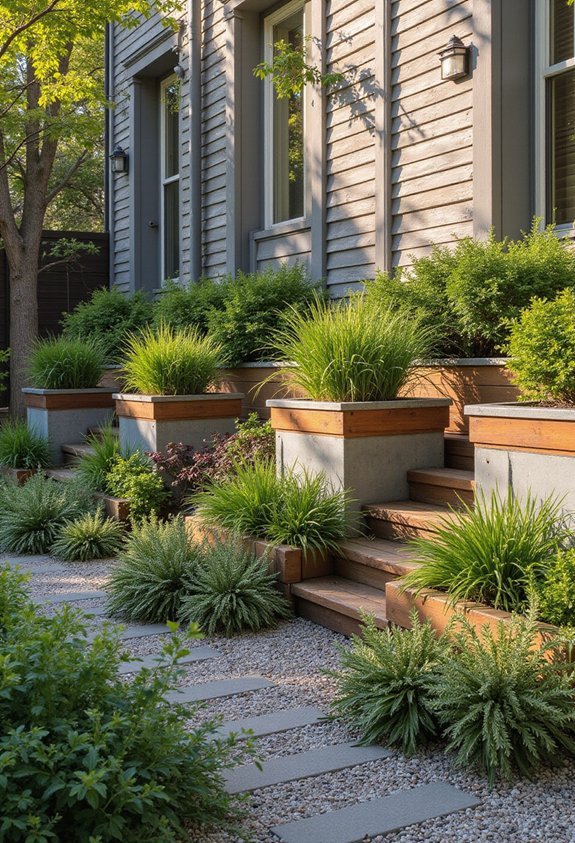
For homeowners with limited yard space or poor soil conditions, raised beds and planter boxes offer a practical solution that builds on the low-maintenance principles you’ve learned by giving you complete control over your growing environment. You’ll select quality soil, decide what plants thrive best, and avoid dealing with compacted or contaminated ground. These structures work exceptionally well in urban settings where traditional gardening isn’t feasible. You can arrange them on patios, driveways, or small yards, creating organized planting areas that maximize your available space. Raised beds also warm up faster in spring, extending your growing season considerably. Materials like cedar, composite wood, or metal containers suit different aesthetic preferences while providing durability. By incorporating raised beds into your front yard design, you’re establishing dedicated growing zones that enhance curb appeal while maintaining the accessibility and ease you’ve prioritized throughout your landscaping approach.
Water Features and Fountains for Soothing Drama
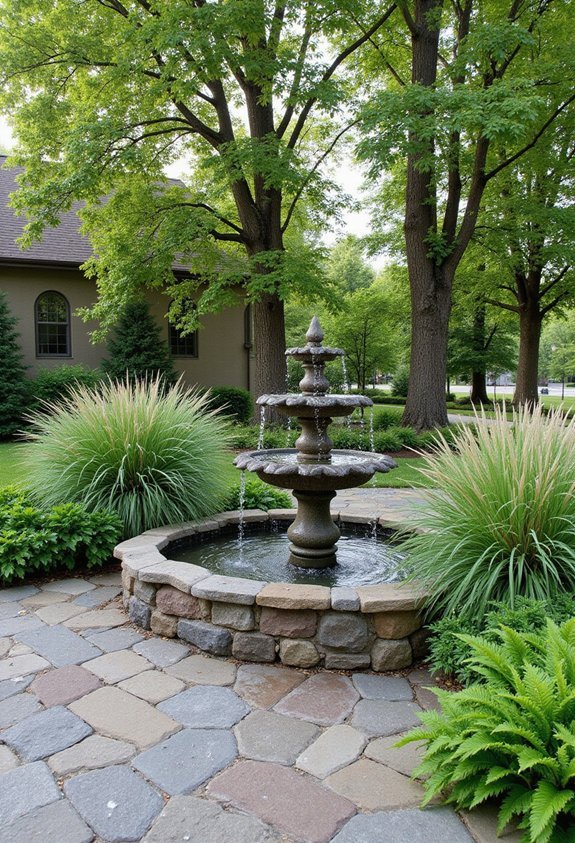
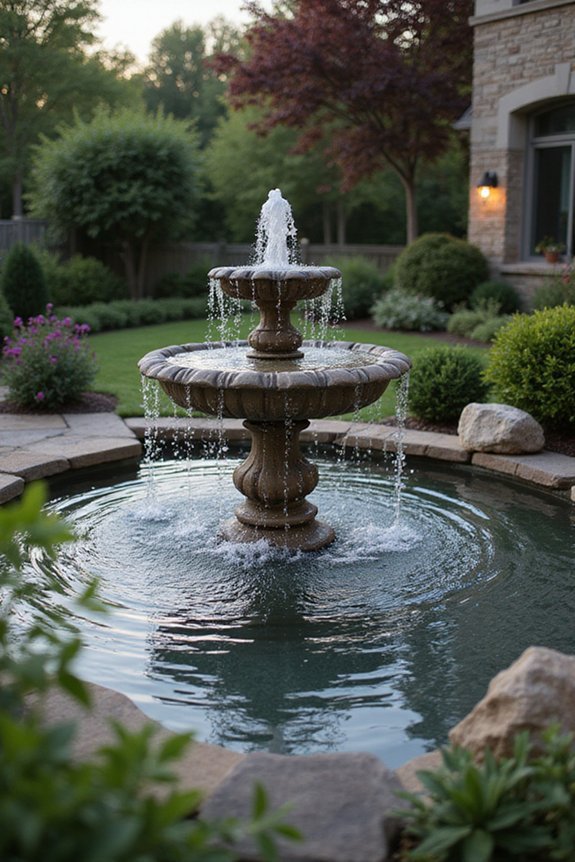
When you’re looking to add visual interest and calming sensory experiences to your front yard, water features and fountains provide an excellent way to transform an ordinary landscape into a dynamic outdoor space that engages both sight and sound. You can choose from birdbaths, small pond installations, or recirculating fountains that don’t require extensive plumbing. These elements attract wildlife, including birds and beneficial insects, which enhances your landscape’s ecosystem. Position your water feature as a focal point near your entrance or within garden beds for maximum impact. You’ll want to ponder maintenance requirements, water circulation systems, and weatherproofing materials suitable for your climate. Fountains create soothing ambient noise that masks street sounds, establishing a peaceful outdoor retreat that increases your property’s overall appeal.
Illuminate Your Design: Accent Lighting for Nighttime Drama
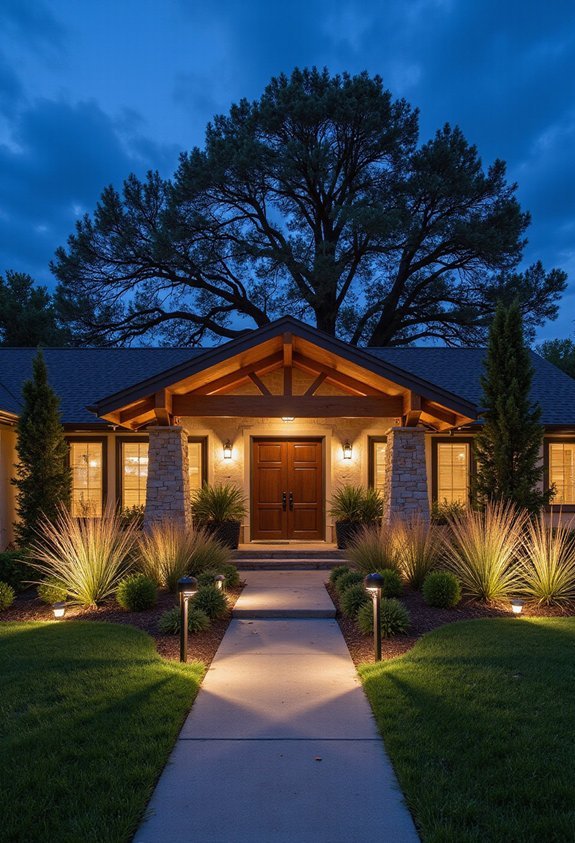
Have you considered how strategic lighting can completely transform your front yard’s appearance after sunset? Accent lighting highlights specific landscape features, creating dramatic visual effects that enhance your home’s nighttime curb appeal. You’ll want to position lights near trees, shrubs, and architectural elements to draw attention to your design’s best qualities. Uplighting beneath trees casts shadows that add depth, while spotlights can emphasize fountains or garden sculptures. Consider using warm-toned LED lights for an inviting atmosphere that complements your overall landscape theme. Install lights along pathways for both safety and aesthetic purposes, guiding visitors while showcasing your yard’s layout. Layer different lighting types—ambient, task, and accent—to create dimension and visual interest throughout your front yard after dark.
Edible Front Yards With Herbs and Vegetables
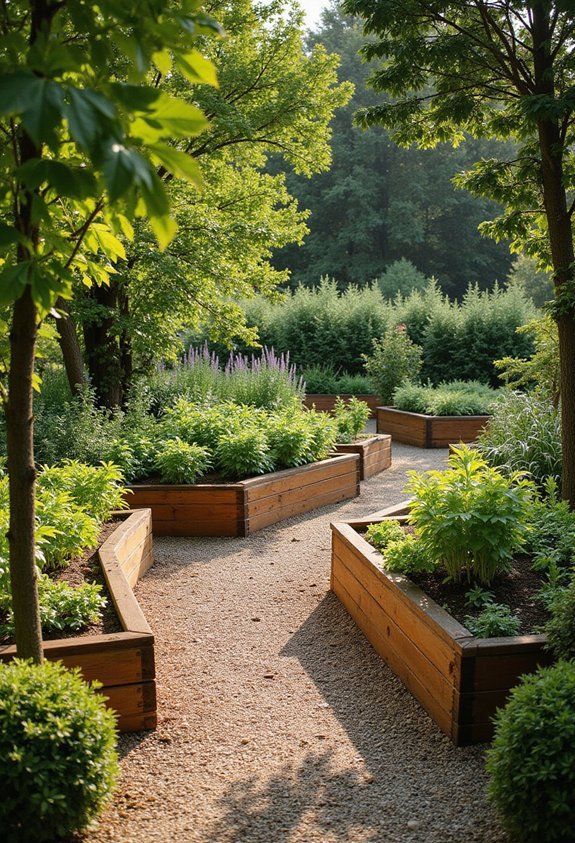
Beyond traditional ornamental landscaping, you can transform your front yard into a productive garden that supplies fresh herbs and vegetables while maintaining attractive curb appeal. Start by selecting sun-loving plants like tomatoes, lettuce, and basil that thrive in visible locations receiving six to eight hours of daily sunlight. Arrange vegetables in raised beds or containers positioned strategically throughout your landscape, ensuring they’re accessible for regular watering and harvesting. Incorporate herbs like rosemary, thyme, and oregano along garden borders where they’ll serve dual purposes as both functional ingredients and decorative elements. Choose compact varieties suited to front-yard conditions, and use quality soil enriched with compost to promote healthy growth. This approach creates a practical, visually appealing space that yields fresh produce while enhancing your home’s overall landscape design.
Pollinator Gardens to Support Bees and Butterflies
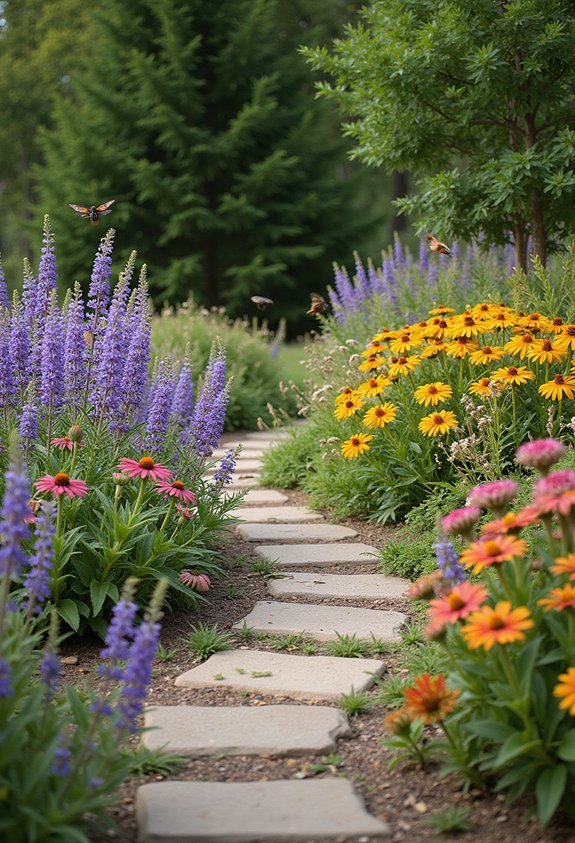
If you’re looking to create a landscape that’s both beautiful and beneficial to local ecosystems, a pollinator garden is an excellent choice for your front yard. You’ll attract bees, butterflies, and other beneficial insects by planting native flowers that bloom at different times throughout the growing season. Choose plants like coneflowers, black-eyed Susans, zinnias, and milkweed, which provide essential nectar and pollen sources. You should avoid pesticides entirely, as they harm pollinators and disrupt the ecosystem you’re building. Incorporate shallow water sources, such as small dishes filled with pebbles and water, where insects can safely drink. Group similar plants together in clusters to make it easier for pollinators to locate food efficiently. This approach transforms your front yard into a thriving habitat.
Seasonal Color Schemes for Year-Round Interest
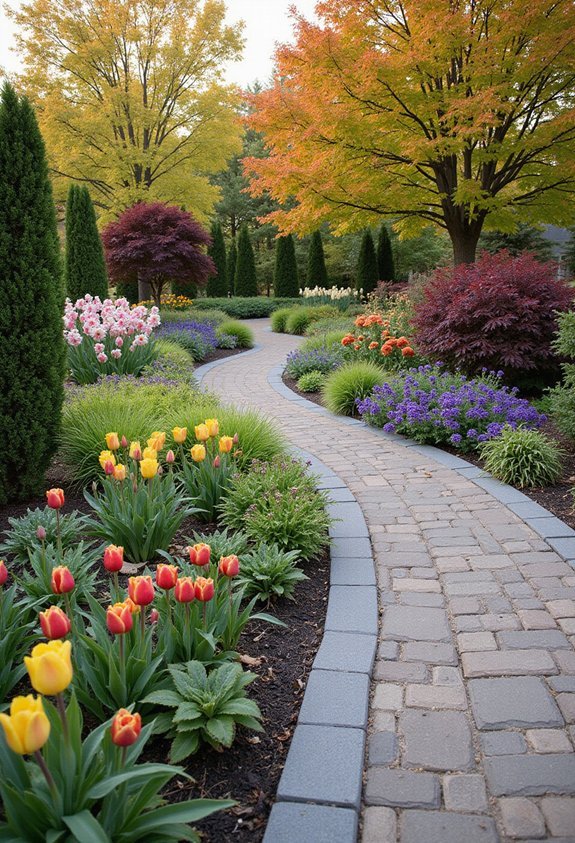
While a pollinator garden provides ecological benefits throughout the year, you can layer visual interest into your front yard by strategically selecting plants that showcase different colors across each season, ensuring your landscape remains vibrant and engaging even during months when pollinators aren’t as active. Spring bloomers like tulips and daffodils deliver bright yellows and reds, while summer flowering plants such as coneflowers and zinnias provide sustained color through heat. Fall foliage from Japanese maples and burning bushes creates warm oranges and deep purples, and winter interest comes from evergreens, ornamental grasses, and berry-producing shrubs. By planning your plant selections thoughtfully around seasonal peak times, you’ll establish a front yard that maintains consistent visual appeal and demonstrates horticultural sophistication throughout all twelve months.
Budget-Friendly Designs That Deliver Maximum Impact
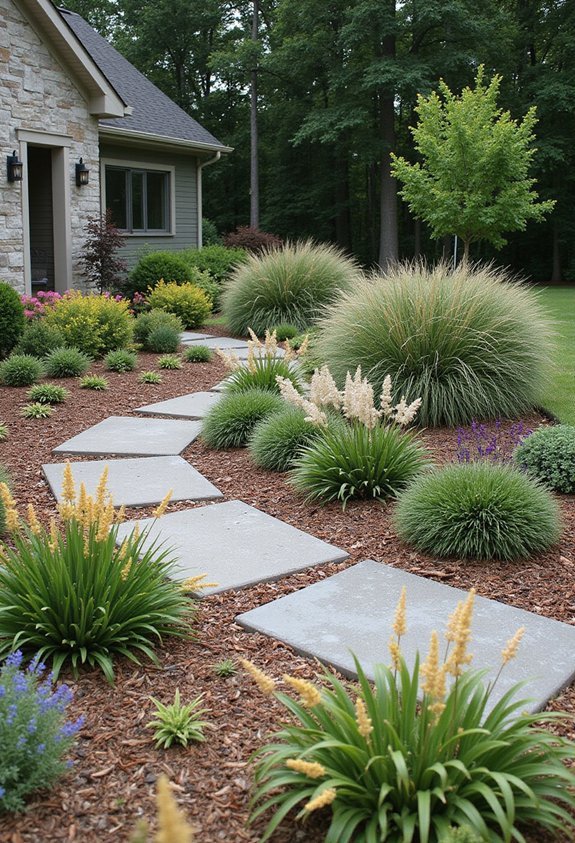
Creating an attractive front yard doesn’t require spending thousands of dollars on elaborate installations, as you can achieve stunning results by focusing your budget on high-impact elements that’ll transform your landscape without breaking the bank. Start by investing in quality mulch and soil amendments, which enhance plant health and appearance affordably. Select a limited color palette of hardy, low-maintenance plants that’ll establish quickly and require minimal care, reducing long-term expenses. Add strategic focal points like a painted front door, decorative pathway, or simple water feature to draw attention and create visual interest. Group plantings in odd numbers and vary heights to maximize visual impact. Finally, prioritize edging and clean lines, which define spaces professionally while remaining cost-effective investments in your landscape’s overall presentation.
Match Your Design to Your Home’s Architecture
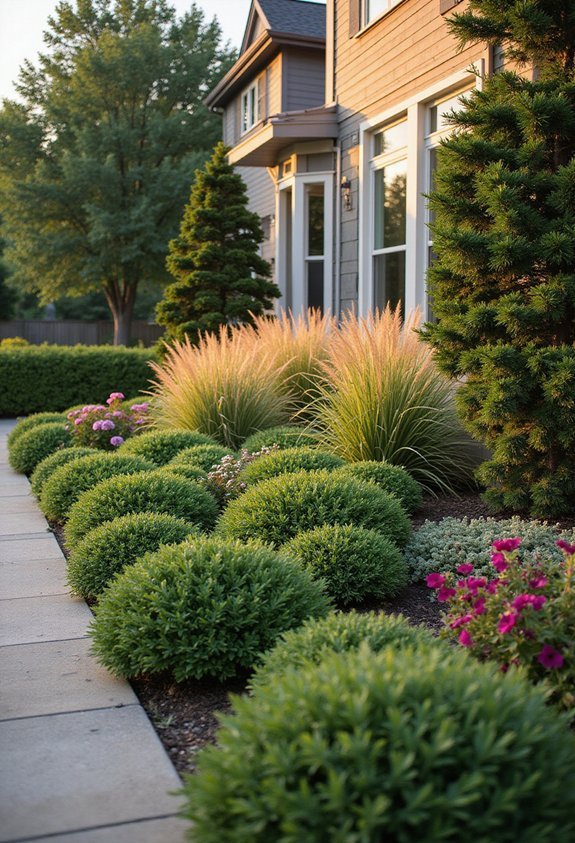
Your home’s architectural style should serve as the foundation for all your landscaping decisions, because plants, pathways, and decorative elements that complement your house’s design will create a cohesive, polished appearance that enhances your property’s overall curb appeal. If you’ve got a modern home, you’ll want clean lines, geometric shapes, and contemporary plants like ornamental grasses or architectural shrubs. For traditional or colonial-style houses, consider formal hedges, classic perennials, and symmetrical planting arrangements. Cottage-style homes pair beautifully with abundant flowering plants, winding pathways, and relaxed layouts. Mediterranean architecture calls for drought-resistant plants, terracotta accents, and stone features. Matching your landscape to your home’s style creates visual harmony, guarantees your front yard doesn’t clash with your residence, and ultimately increases your property’s value and attractiveness.
Conclusion
You’ve got 21 design approaches to transform your front yard into an eye-catching outdoor space that reflects your personal style and home’s character. Whether you’re choosing a modern minimalist garden with clean lines or a cottage garden bursting with color, you’ll find a strategy that fits your budget and vision. A homeowner who switched from plain grass to a pollinator garden watched butterflies return within weeks, instantly boosting curb appeal while helping local ecosystems thrive.