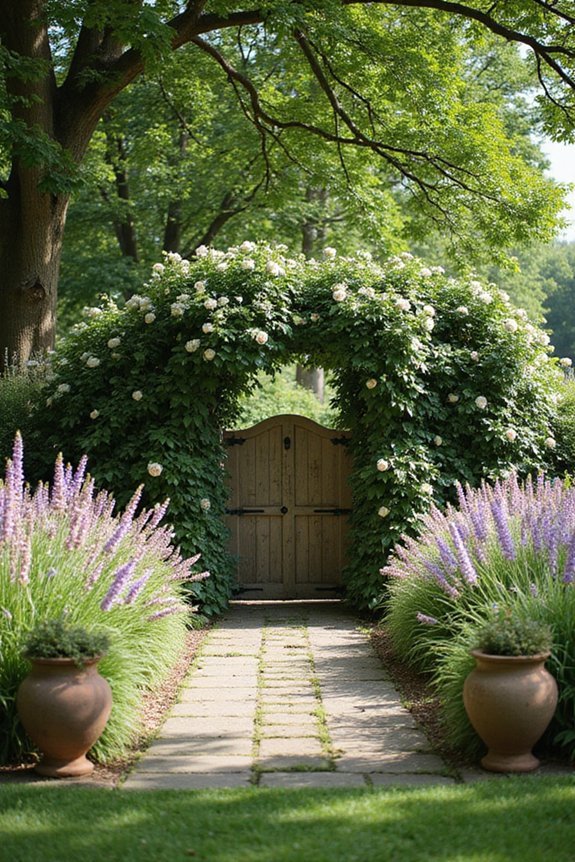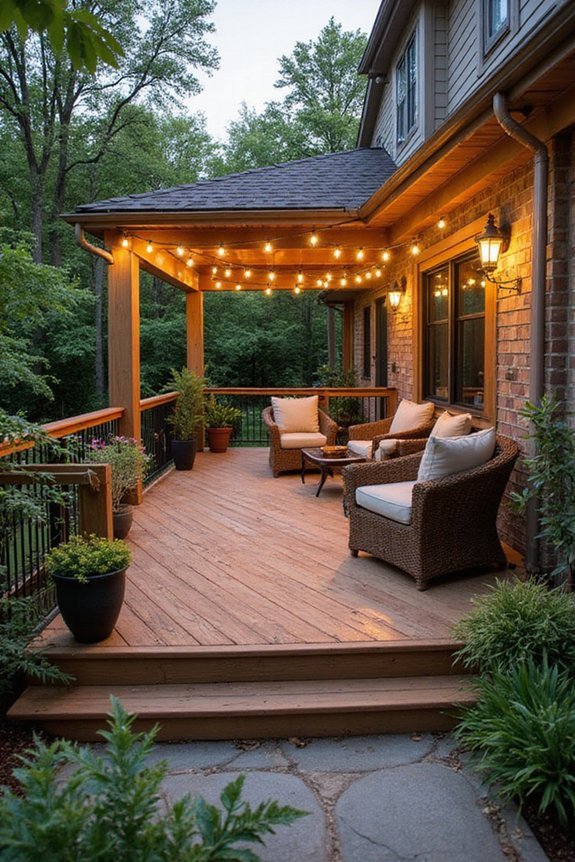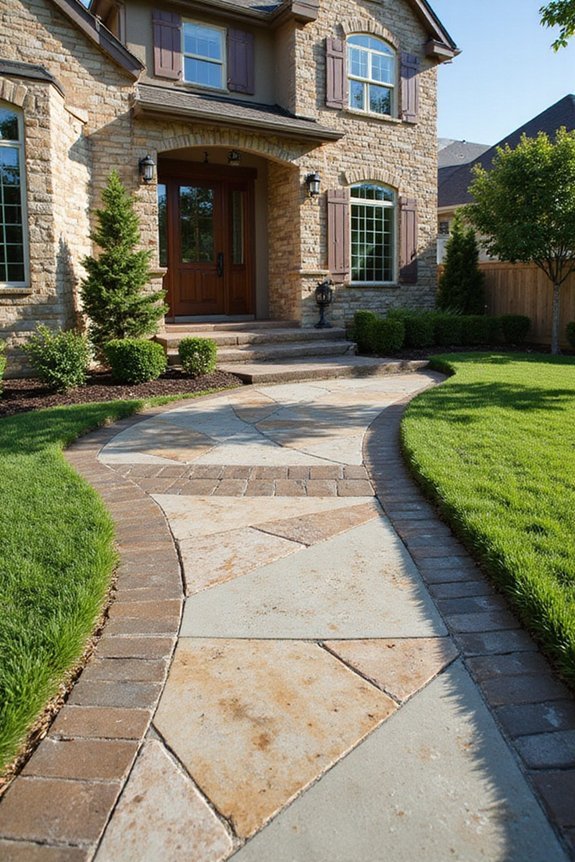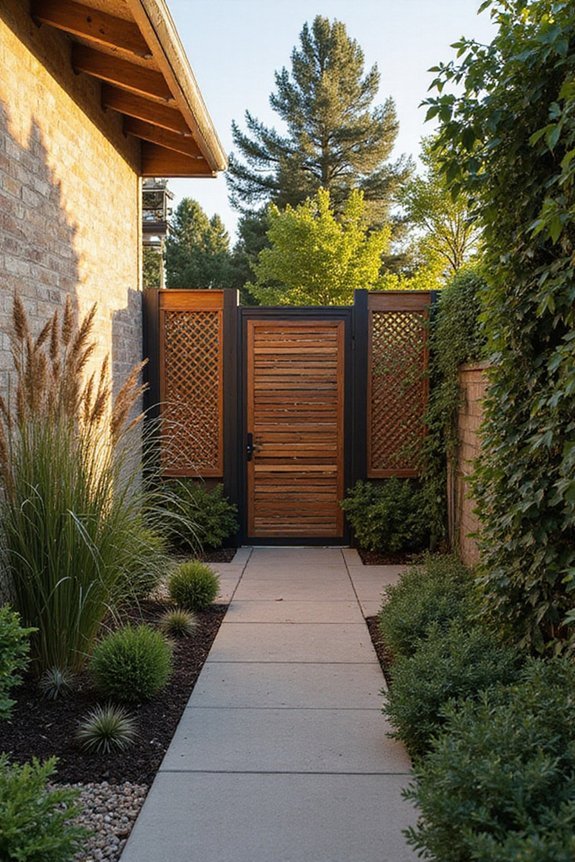
Your front yard becomes a canvas at nightfall, transforming ordinary darkness into an opportunity for elegance and function. You can strategically layer different lighting techniques—from pathway guides to architectural accents—to create depth, safety, and visual interest around your home’s exterior. Each lighting method serves a specific purpose, but when combined thoughtfully, they work together to produce something remarkable. Discover how simple adjustments in placement and technique can completely reshape your property’s nighttime appearance, but first understand the foundational principles that make this transformation possible.
Pathway Lights: Guide Guests With Elegant Ground Lighting
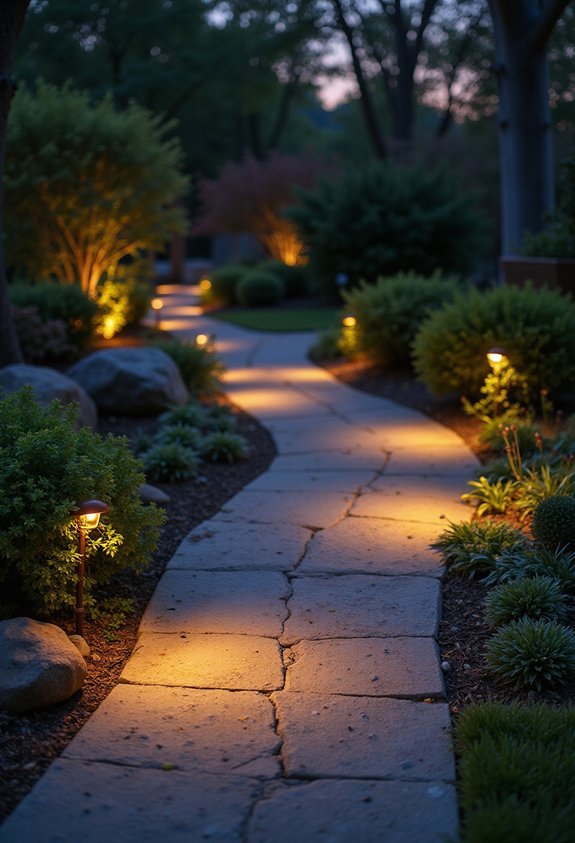
Pathway lights are essential fixtures that’ll transform your front yard by creating a safe, visually appealing route from the street to your home’s entrance, and they’re available in numerous styles that suit different landscaping designs. You can choose from solar-powered options, which require no wiring or electricity, or traditional low-voltage lights that offer consistent brightness. When installing pathway lights, space them approximately three to four feet apart along walkways to guarantee adequate illumination and guide visitors safely. Position lights at ground level, angling them slightly to avoid harsh shadows on faces. Consider the color temperature you prefer—warm white creates a welcoming atmosphere, while cool white provides practical visibility. Select weather-resistant materials like stainless steel or durable plastic to withstand seasonal changes and maintain long-term functionality throughout the year.
Also read: 23 FRONT YARD PRIVACY Ideas Without Looking Closed In!
Uplighting Trees and Shrubs: Create Dramatic Shadows and Depth
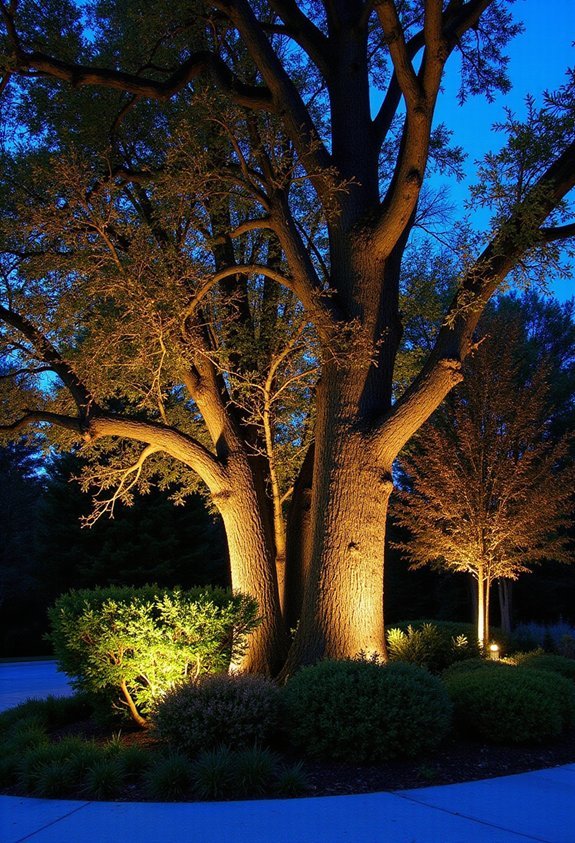
While ground-level pathway lights guide your visitors safely along walkways, uplighting trees and shrubs creates a completely different effect by drawing attention upward and adding layers of visual interest to your front yard’s nighttime appearance. You’ll position uplights at the base of trees or shrubs, angling them upward to illuminate the canopy and foliage from below. This technique casts dramatic shadows against your house or fence, creating depth and dimension that transforms your landscape. You can use spotlights or accent lights with adjustable angles to control exactly which areas you want to highlight. Choose warm-colored bulbs to enhance natural textures, and experiment with different positions to discover which angles produce the most striking effects for your specific plants and architectural features.
Wall Sconces: Frame Your Entryway With Mounted Fixtures
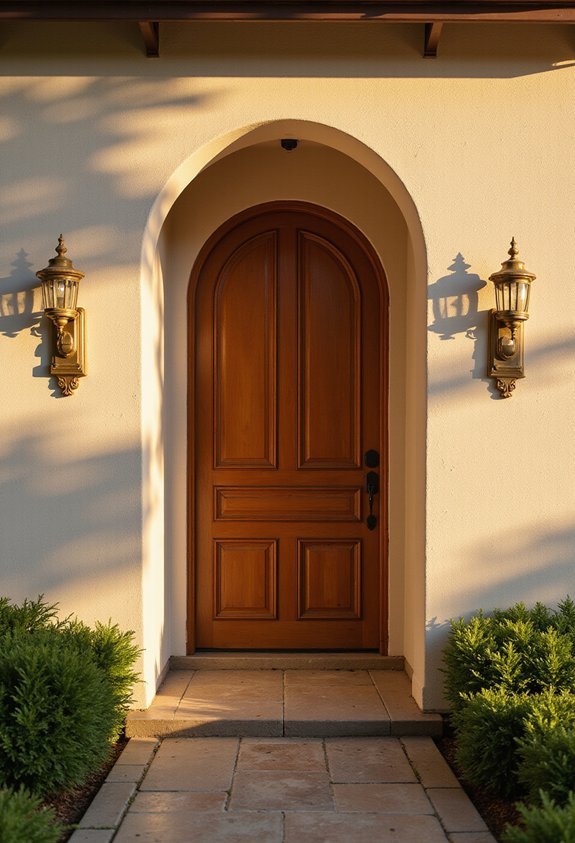
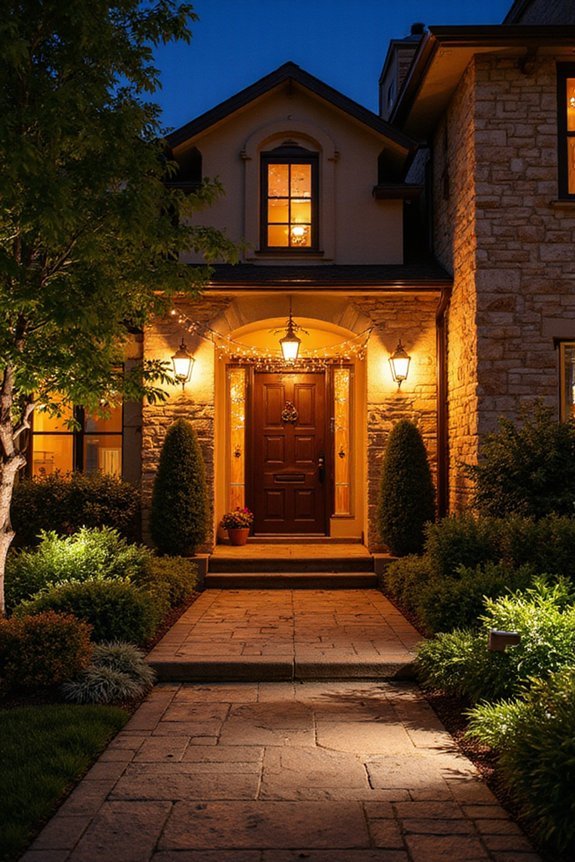
Wall sconces mounted directly on either side of your front door create a welcoming and functional lighting feature that frames your entryway while providing essential illumination for nighttime arrivals. You’ll want to select fixtures that complement your home’s architectural style, whether that’s modern, traditional, or intermediary. Position the sconces at eye level, typically around 60 to 66 inches from the ground, ensuring they’re evenly spaced on both sides of your door. Choose warm-toned bulbs between 2700K and 3000K to establish an inviting atmosphere. Consider fixtures with downward-facing designs that direct light toward pathways and reduce glare. You can opt for traditional glass panels, metal frames, or contemporary designs depending on your preference, making wall sconces a versatile choice for any entryway.
Pendant Lights: Hang Statement Fixtures From Porch Ceilings
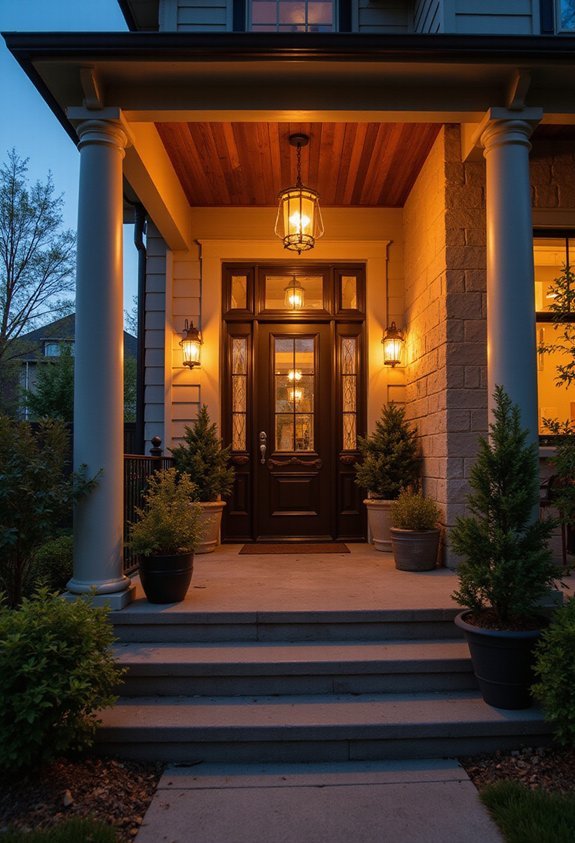
For a more dramatic lighting option that goes beyond simple wall-mounted fixtures, pendant lights hung from your porch ceiling offer both visual impact and practical illumination for your front entry area. These hanging fixtures work particularly well when you’ve got a covered porch or overhang that can support them securely. You’ll want to space multiple pendants evenly across your ceiling, typically positioning them about four to six feet apart for balanced lighting coverage. Choose pendant styles that complement your home’s architectural design, whether that’s modern, traditional, or intermediary. Make sure you select fixtures rated for outdoor use so they’ll withstand weather exposure. Install them at an appropriate height, usually seven to eight feet above ground level, ensuring they don’t obstruct sightlines while providing adequate downward illumination.
Post Cap Lights: Crown Fence Posts and Pillars With Glow
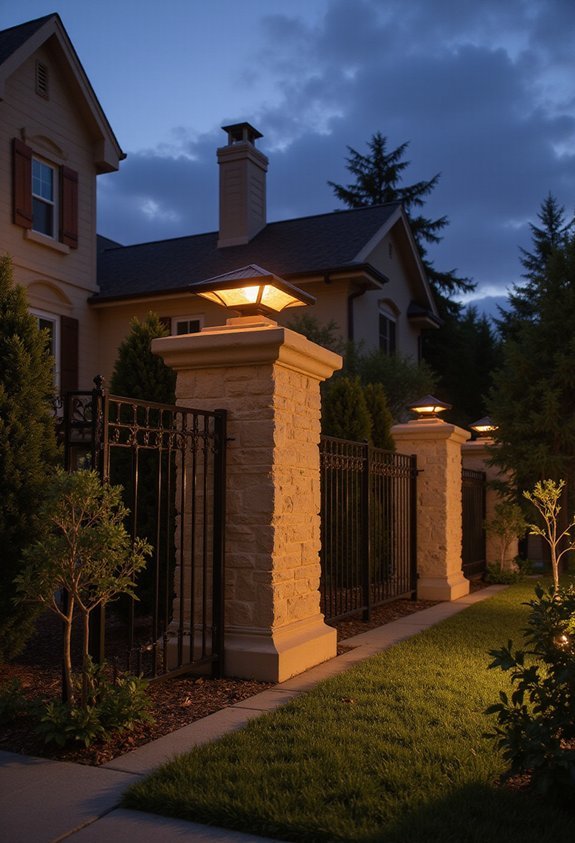
Have you considered how post cap lights can transform the vertical elements of your property into glowing focal points? Post cap lights are fixtures that mount directly onto fence posts, pillars, and columns, creating elegant illumination while defining your property’s boundaries. You’ll install these lights by securing them to the top of your posts, where they cast light downward and outward, highlighting architectural features and pathways. Solar-powered options require no wiring, making installation straightforward and cost-effective. LED post cap lights provide bright, energy-efficient illumination that lasts for years. These fixtures come in various styles, from traditional to modern designs, allowing you to match your home’s aesthetic. By strategically placing post cap lights along your fence line or driveway entrance, you’ll enhance curb appeal while improving nighttime visibility and security around your property.
Deck and Step Lights: Illuminate Transitions and Prevent Trips
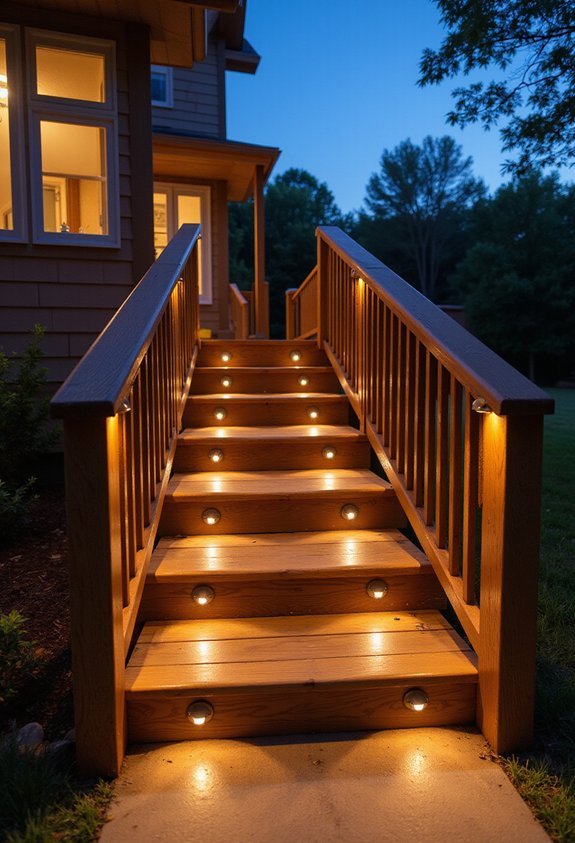
Step lights and deck lighting fixtures work together to brighten the shifts between different levels of your outdoor spaces, making it safer to navigate your property after dark. You’ll want to install these lights along stair edges, deck perimeters, and pathway intersections where elevation changes occur. LED step lights are particularly effective because they’re energy-efficient and provide consistent illumination without excessive brightness that causes glare. When positioning these fixtures, you should place them at consistent intervals, typically 3 to 4 feet apart, ensuring even light distribution across the entire walking surface. Underground deck lights or recessed options blend seamlessly into your landscape while preventing trips and falls. Consider lighting both horizontal and vertical surfaces for maximum visibility and safety during nighttime use.
Bollard Lights: Define Pathways and Garden Edges
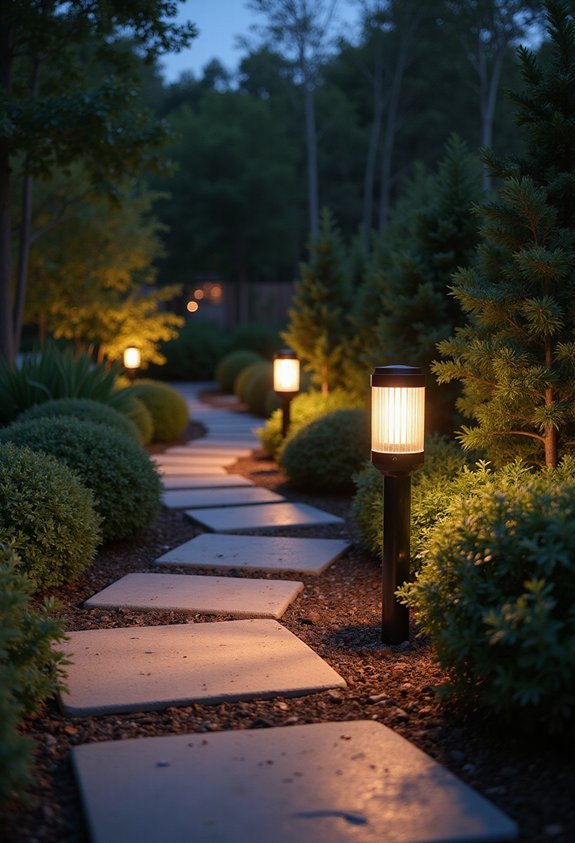
While step lights illuminate elevation changes, bollard lights serve a different but equally important purpose by creating clear visual boundaries along your pathways and garden edges. These short, sturdy fixtures—typically ranging from one to four feet tall—mark walkways with precision, guiding you safely through your yard during nighttime hours. You’ll install bollards in strategic locations: along driveways, beside garden beds, and around landscape features that require definition. The lights work by casting a downward glow that illuminates the ground directly beneath them, preventing trips while establishing visual separation between different yard areas. When you space bollards approximately three to six feet apart, you create a cohesive lighting pattern that’s both functional and visually organized, transforming your front yard into a clearly defined, safely navigable outdoor space.
Lantern-Style Fixtures: Blend Traditional Charm With Modern Tech
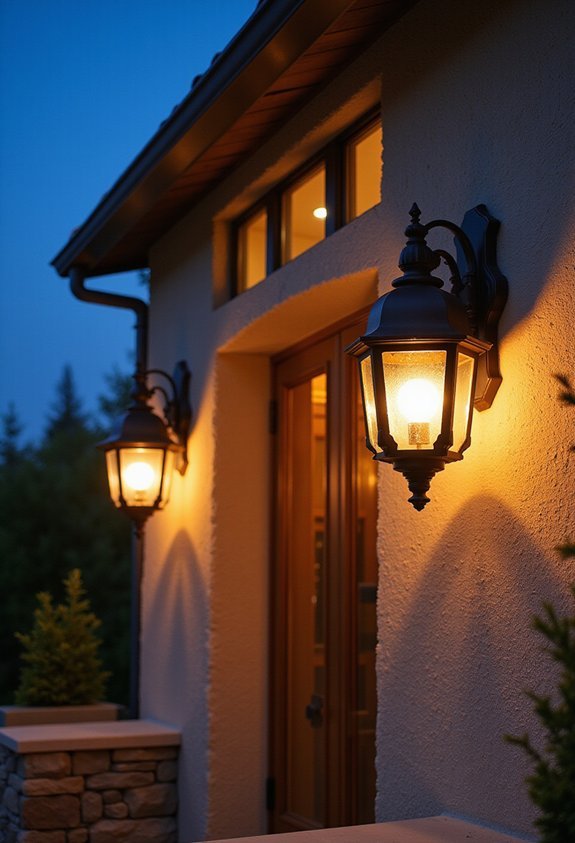
If you’re looking to add an elegant touch to your front yard while maintaining modern functionality, lantern-style fixtures offer the perfect combination of classic aesthetics and contemporary lighting technology. These fixtures feature traditional designs with ornamental frames, yet they incorporate LED bulbs and smart controls that enhance energy efficiency and convenience. You can install lantern lights along your entryway, porch, or fence line to create a welcoming atmosphere. Many models include adjustable brightness settings, allowing you to customize your yard’s ambiance for different occasions. You’ll also find options with motion sensors and timer functions, which provide security benefits while reducing unnecessary energy consumption. Lantern-style fixtures work particularly well with various architectural styles, making them a versatile choice for any home aesthetic.
Spotlights: Highlight Your Home’s Best Architectural Features
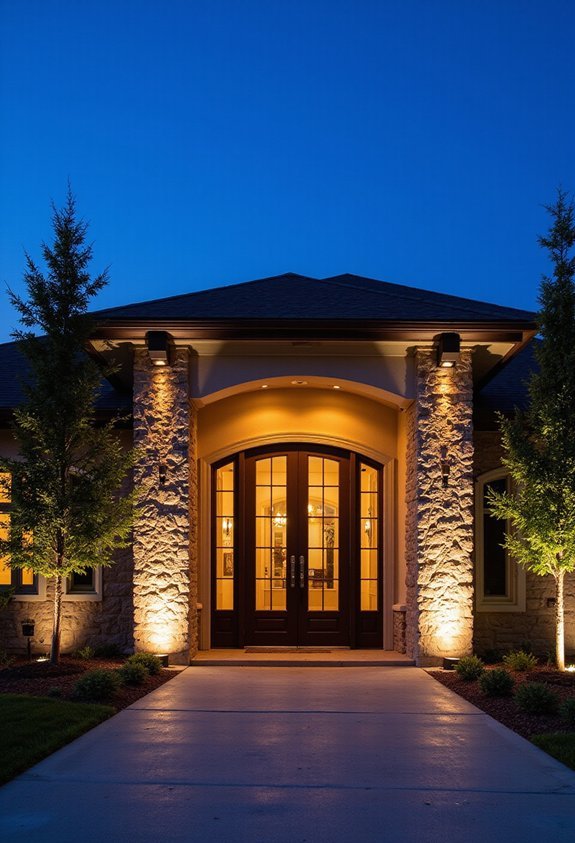
Because spotlights direct light onto specific areas, they’re excellent tools for showcasing your home’s most attractive architectural elements, such as stone chimneys, decorative shutters, textured siding, or unique roof lines. You’ll want to position spotlights at ground level, angling them upward to create dramatic shadows and depth that highlight details you’d otherwise miss during nighttime hours. Consider using warm-colored bulbs, which enhance natural materials like brick and stone while creating an inviting atmosphere. You can install spotlights in flower beds or along pathways to keep them inconspicuous during daytime viewing. LED spotlights work particularly well because they’re energy-efficient and produce minimal heat, allowing you to run them throughout the evening without worrying about excessive electricity costs or safety concerns.
Recessed Soffit Lights: Wash Your Home’s Upper Facade
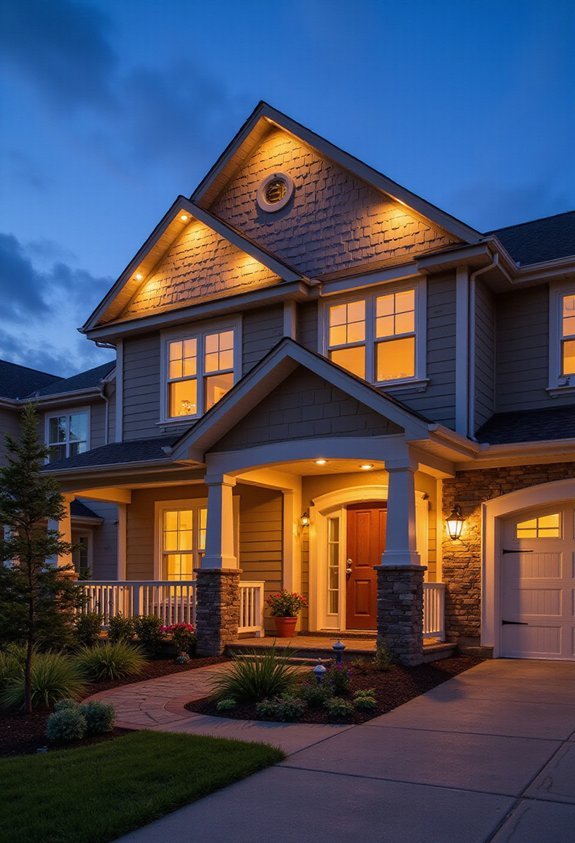
Recessed soffit lights—fixtures that you’ll install directly into your home’s eaves or overhang—create an even, continuous glow that illuminates your entire upper facade with what designers call a “wash” effect. This lighting technique works exceptionally well because it distributes light uniformly across your roofline and upper walls, eliminating dark spots and shadows. You’ll find that recessed soffit lights enhance your home’s architectural details while providing practical illumination for your front entrance and driveway. Installation requires careful positioning along your soffit to guarantee consistent spacing and balanced light distribution. You should choose fixtures with appropriate wattage and color temperature to complement your home’s exterior style. These lights transform your home’s nighttime appearance by creating a polished, professionally lit aesthetic that increases curb appeal and security.
Grazing Lights: Showcase Texture on Stone and Brick
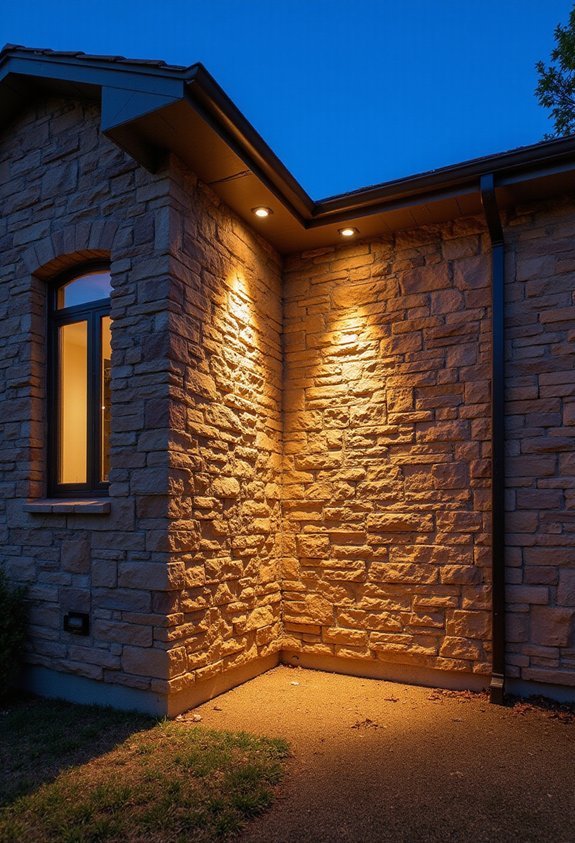
While recessed soffit lights create broad, even illumination across your home’s upper facade, grazing lights work through an entirely different method—they’re positioned close to surfaces like stone or brick walls and cast light at a low angle, which emphasizes the texture and depth of your exterior materials. You’ll install these fixtures at ground level or on the lower portions of your walls, directing beams upward along the surface. This technique reveals the natural contours, irregularities, and dimensional qualities that flat lighting misses entirely. The angled light catches every crevice, ridge, and variation in your stonework or brickwork, creating dramatic shadows that enhance visual interest. You’ll achieve a sophisticated, architectural appearance that highlights your home’s structural character and craftsmanship throughout the evening hours.
In-Ground Well Lights: Silhouette Plants From Below
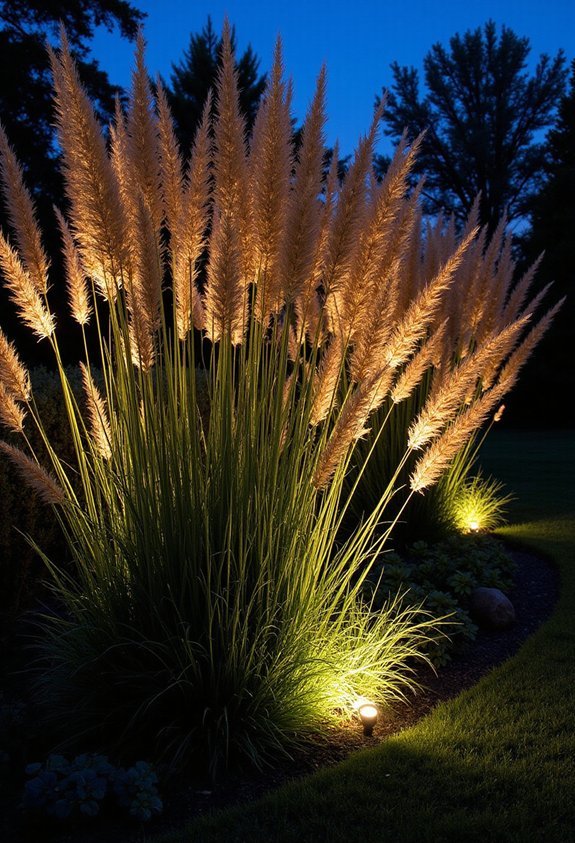
In-ground well lights offer you a completely different approach to front yard illumination than the grazing techniques that highlight your home’s architectural surfaces. These fixtures, installed flush with the ground, aim upward to create dramatic silhouettes of plants, shrubs, and trees against the night sky. You’ll position them strategically around landscaping features, allowing light to pass through foliage and cast striking shadows on walls or fences behind them. This technique works particularly well with plants that have distinctive shapes or delicate leaf patterns. The uplighting effect produces depth and dimension in your yard while emphasizing the natural beauty of your vegetation. Well lights consume less energy than many alternatives, making them an efficient choice for thorough landscape design that transforms your front yard’s nighttime appearance.
String Lights: Drape Festive Warmth Across Your Front Space
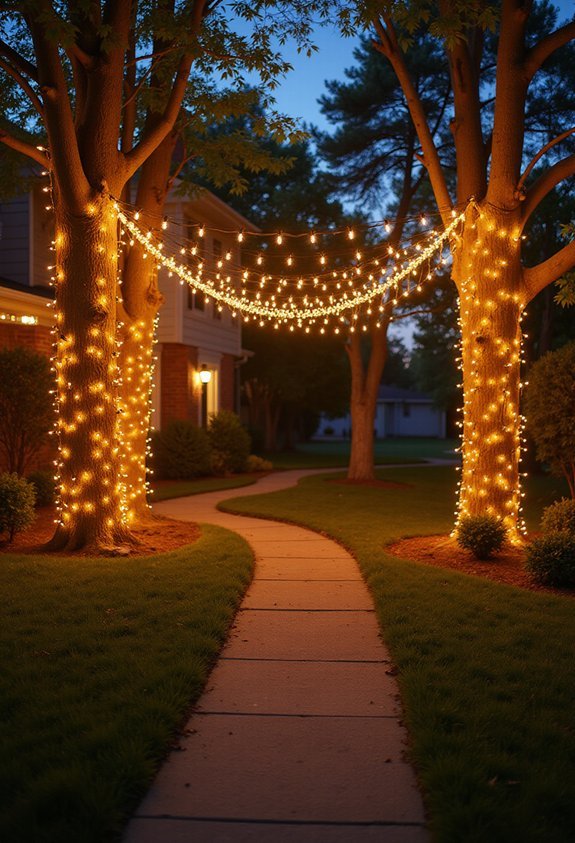
Because string lights create an instantly inviting atmosphere, they’ve become one of the most popular choices for adding warmth and festive charm to front yards. You can drape these lights across your porch, along fence lines, or between trees to establish a cohesive lighting design. When selecting string lights, you’ll want to consider whether you prefer warm white bulbs for a cozy feel or multicolored options for festive occasions. Guarantee you’re using outdoor-rated lights and weatherproof extension cords to maintain safety during rain or moisture exposure. You should plan your layout carefully, measuring distances and identifying secure attachment points before installation. Position lights at consistent heights for visual balance, and space bulbs evenly to create uniform illumination throughout your front yard space.
Neon and Accent Lighting: Make Bold Contemporary Statements
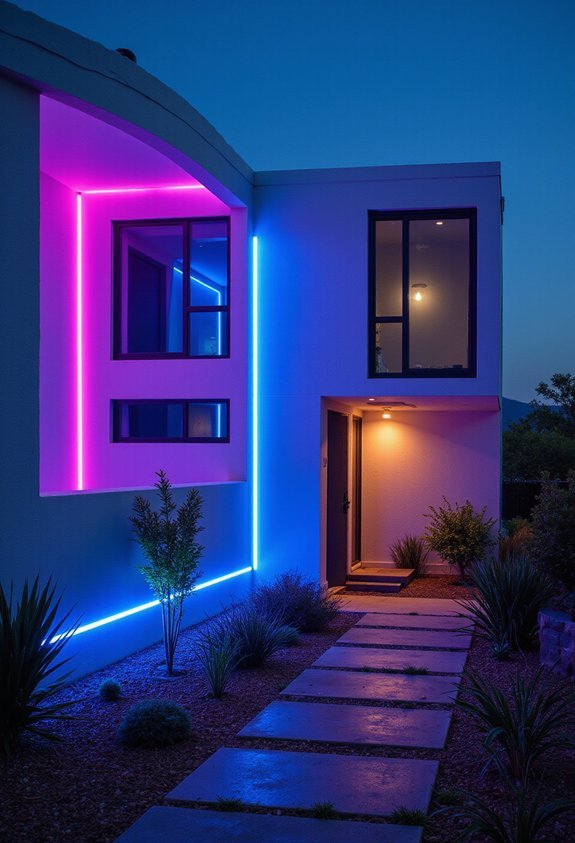
If you’re looking to step up from traditional string lights, neon and accent lighting options can transform your front yard into a modern, eye-catching display that reflects your personal style and architectural features. Neon lights produce vibrant colors—pink, blue, green, and purple—creating dramatic visual effects that capture attention. You can install neon signs spelling out words or shapes along your entryway or fence line. Accent lighting, using LED spotlights and uplighting, highlights specific landscape elements like trees, shrubs, and architectural details. These focused beams create depth and dimension, enhancing your home’s best features. Both options consume less energy than traditional bulbs and last considerably longer. When installing either type, guarantee proper electrical connections and weatherproof fixtures to withstand outdoor conditions and maintain safety throughout the year.
Color-Changing Lights: Shift Your Mood and Seasonal Aesthetic
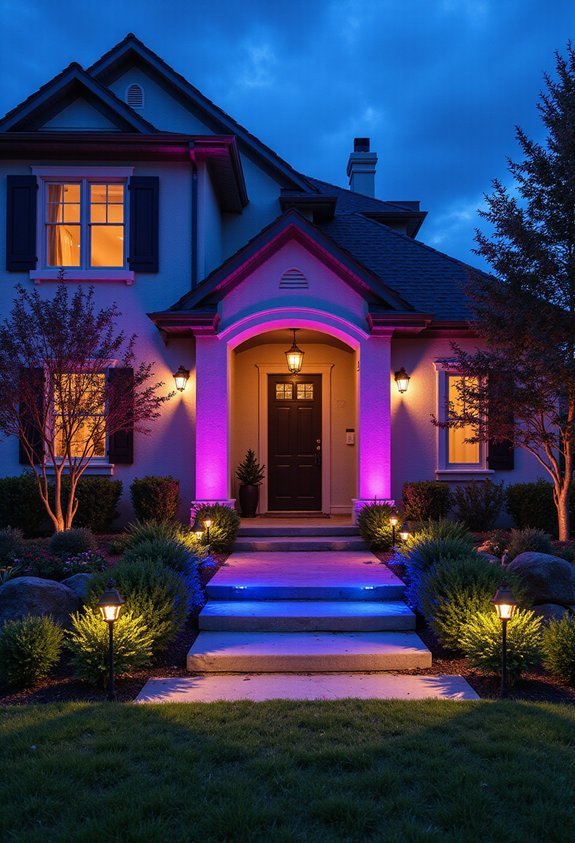
While traditional fixed-color lighting serves a functional purpose, color-changing lights offer you the flexibility to transform your front yard’s appearance based on your mood, season, or special occasions. You can install smart LED fixtures that shift between multiple colors, allowing you to switch from warm white for winter holidays to cool blue for summer evenings. These lights work through remote controls or smartphone apps, giving you complete control over brightness and hue combinations. Color-changing technology lets you create themed displays for holidays like Halloween or Christmas without replacing fixtures. Additionally, you’re able to adjust lighting to complement your home’s architectural features, landscaping, or exterior paint color. This adaptability makes color-changing lights a practical investment for homeowners seeking dynamic, personalized outdoor aesthetics.
Solar-Powered Lights: Energy-Efficient and Budget-Friendly Illumination
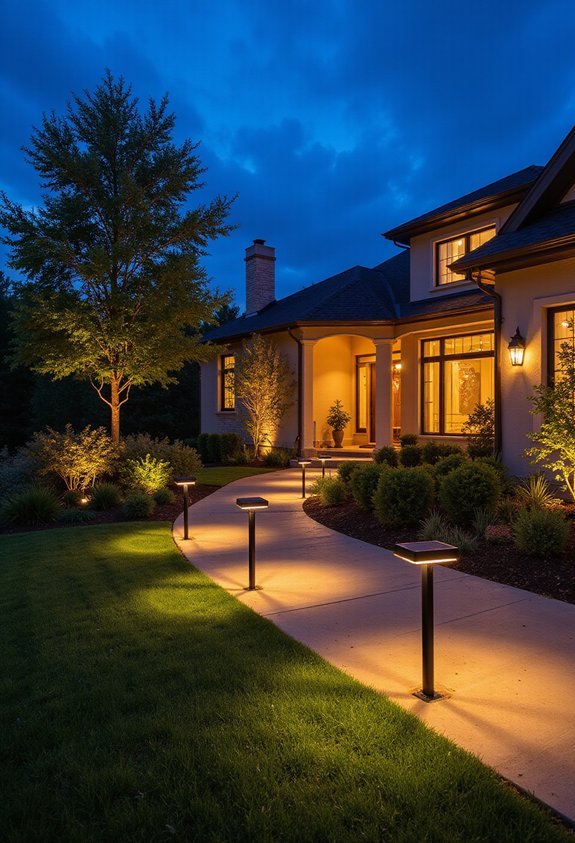
Beyond the customizable appeal of color-changing fixtures, you’ll find that solar-powered lights represent a fundamentally different approach to front yard illumination, one that prioritizes long-term savings and environmental responsibility. These lights harness sunlight during the day, storing energy in built-in batteries that automatically activate illumination when darkness falls, requiring zero electricity from your home’s grid. You’ll appreciate the minimal installation demands, since no wiring or electrical work is necessary, making them ideal for renters and homeowners alike. Solar lights eliminate monthly energy costs entirely, reducing your utility bills while decreasing your carbon footprint. Available in various styles—pathway lights, spotlights, and decorative stake lights—they’re practical solutions for sustainable front yard aesthetics that maintain consistent brightness throughout the night.
Motion-Sensor Lights: Security and Energy Savings in One
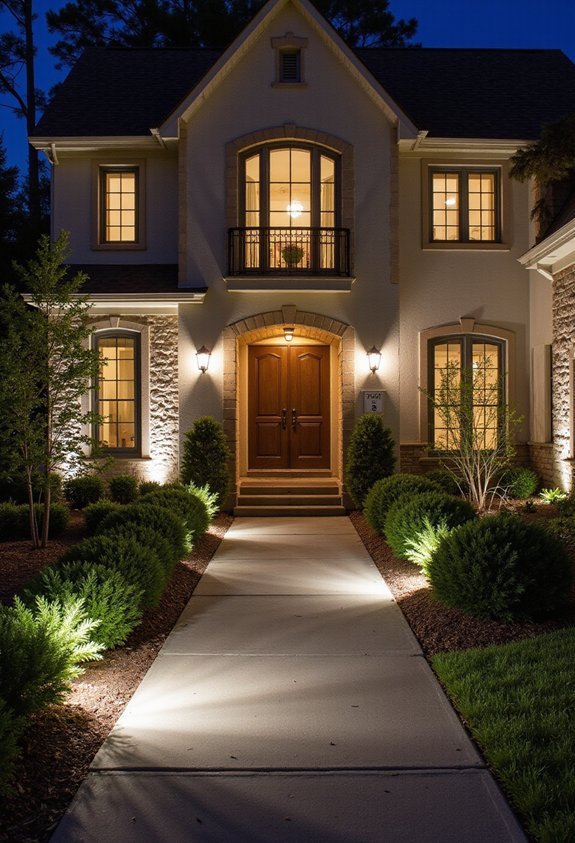
Motion-sensor lights operate on a straightforward principle: they detect movement in your front yard and automatically activate illumination when someone approaches, then turn off after a set period of inactivity. This automatic functionality provides you with several significant advantages for your home. First, you’ll enjoy enhanced security because intruders typically avoid well-lit properties, and the sudden illumination startles unwanted visitors. Second, you’ll achieve substantial energy savings since the lights don’t remain on continuously throughout the night. You’re only consuming electricity when motion triggers activation, which reduces your utility bills considerably. Additionally, motion-sensor lights eliminate the inconvenience of manually switching lights on and off, offering you convenient hands-free operation. Installing these fixtures near entryways, driveways, and pathways maximizes their protective benefits while maintaining cost efficiency.
Smart LED Systems: Phone-Controlled Lighting for Total Command
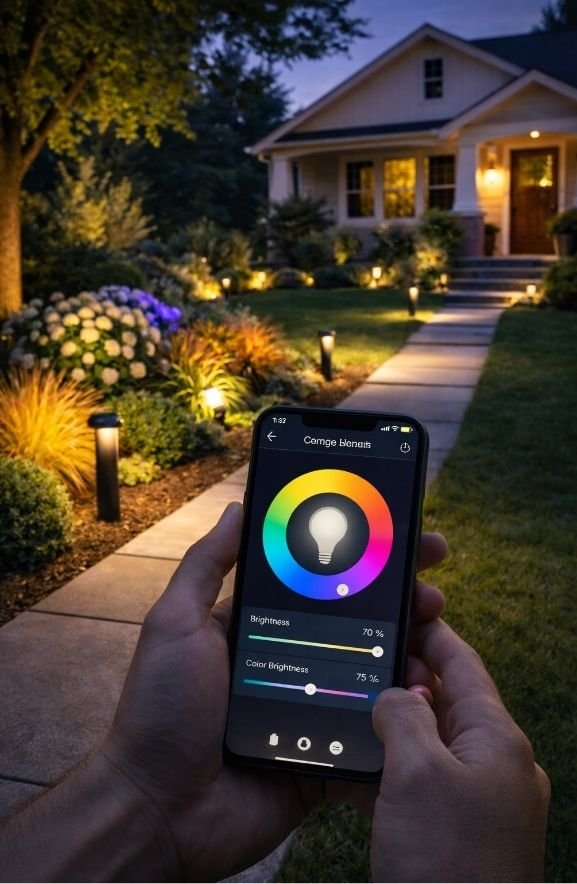
Because technology continues to evolve at a rapid pace, smart LED lighting systems now offer you unprecedented control over your front yard illumination through your smartphone or tablet, allowing you to adjust brightness levels, change colors, set schedules, and even create custom lighting scenes from anywhere you happen to be. These systems connect to your home’s Wi-Fi network, enabling real-time management of your outdoor lights without physical switches. You can program your lights to turn on at sunset and off at dawn automatically, enhancing security by making your home appear occupied when you’re away. Integration with voice assistants allows hands-free control, while energy monitoring features help you track consumption and reduce electricity costs effectively.
Moonlighting Techniques: Mimic Natural Light Through Trees
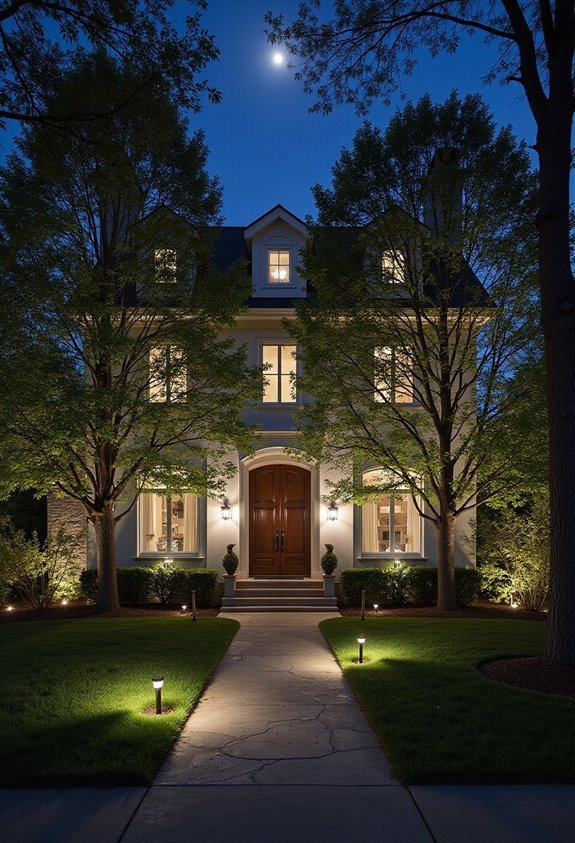
Uplighting through trees creates a naturally sophisticated effect that mimics moonlight filtering through branches, and you can achieve this by positioning light fixtures at ground level aimed upward into the canopy so that shadows from leaves and branches cast patterns across your yard and home’s exterior. You’ll want to select warm-colored bulbs, typically between 2700 and 3000 Kelvin, which replicate natural moonlight’s softer appearance. Place fixtures strategically around tree bases, spacing them to guarantee even illumination without creating harsh hotspots. Use low-wattage LED lights to maintain the subtle, ambient quality you’re seeking. This technique works particularly well with mature trees that have substantial branch structure, as they’ll cast more dynamic shadow patterns throughout your landscape.
Silhouette Lighting: Frame Plants Against Your Home’s Backdrop
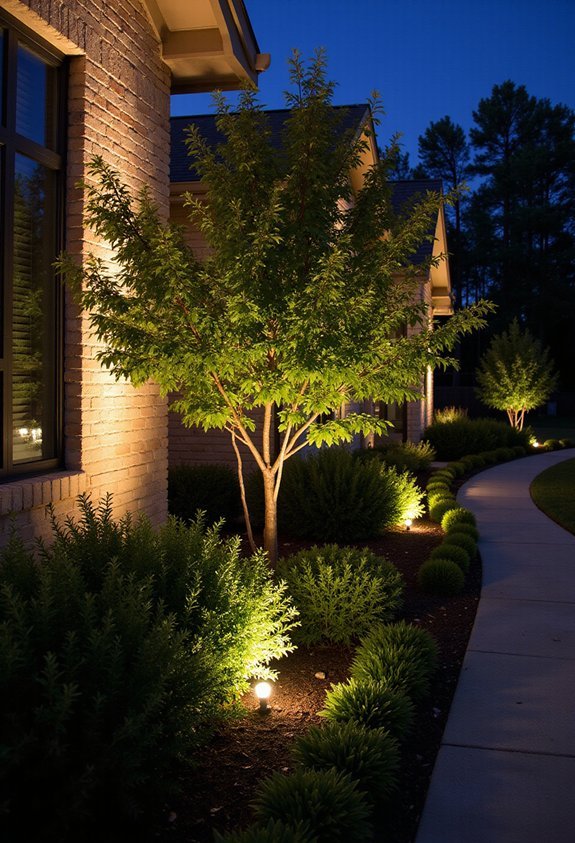
While uplighting creates ambient effects through tree canopies, silhouette lighting works by positioning bright light sources behind plants and shrubs so they appear as dark shapes outlined against your home’s illuminated exterior walls. You’ll achieve this dramatic effect by placing spotlights or uplights at ground level behind your landscaping, directing the beam toward your home’s facade. The contrast between the darkened plants and the bright background creates striking visual definition. Position your lights strategically to highlight interesting plant shapes, ensuring the light source remains hidden from direct view. This technique works particularly well with ornamental grasses, sculptural shrubs, and trees with distinctive branch patterns. Your yard gains architectural depth and sophisticated visual interest through this layered lighting approach.
Layering Techniques: Combine Multiple Light Types for Maximum Impact
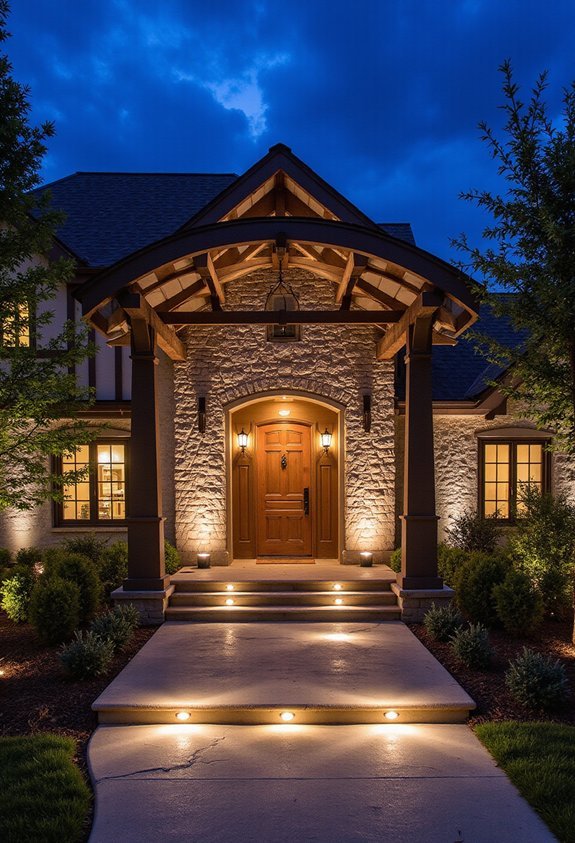
To create a truly dynamic front yard, you’ll want to combine different lighting techniques rather than relying on just one method, since each type of light serves a distinct purpose and contributes its own visual quality to your outdoor space. Start by layering ambient lighting, which provides general illumination, with accent lighting that highlights specific features like plants or architectural details. Then add task lighting near entryways and walkways for safety and functionality. This three-tier approach creates depth and visual interest while ensuring your yard remains both beautiful and practical. By strategically positioning uplights, spotlights, and path lights together, you’ll achieve a sophisticated outdoor environment that’s inviting during evening hours.
LED Strip Lights: Add Modern Ambiance Along Architectural Lines
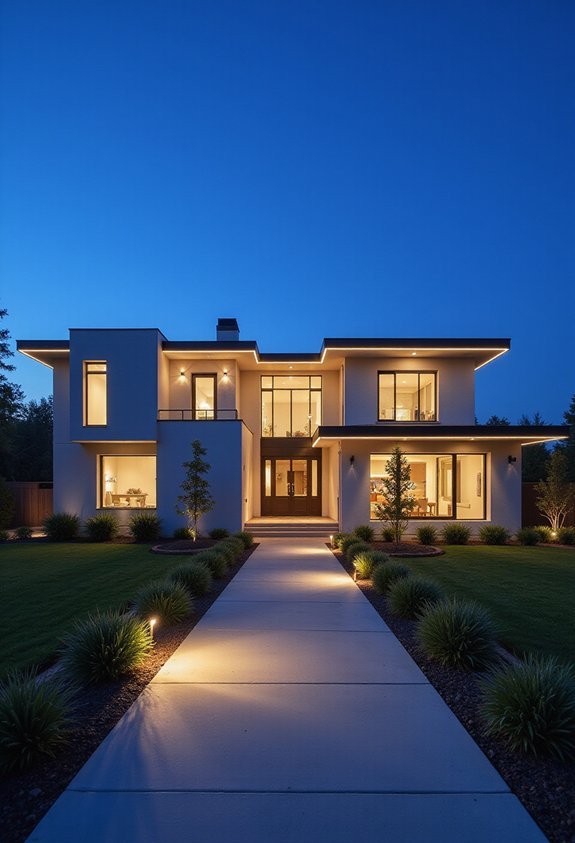
Because LED strip lights conform to virtually any surface and produce a sleek, contemporary aesthetic, they’ve become one of the most versatile lighting solutions for modern front yards, offering you the ability to highlight the unique architectural features of your home in ways that traditional fixtures simply can’t match. You can install these flexible strips along rooflines, around door frames, beneath eaves, and along foundation edges to create defined visual boundaries. The continuous light they emit eliminates shadows while emphasizing structural details, making your home’s design pop during nighttime hours. You’ll also benefit from their energy efficiency and longevity compared to conventional bulbs. When planning placement, consider which architectural elements deserve emphasis, then trace the LED strips along those lines for maximum visual impact and professional results.
Conclusion
You’re transforming your front yard into a nighttime masterpiece by layering different lighting techniques, much like an artist builds a painting with multiple colors and textures. When you combine pathway lights with uplighting and wall sconces, you’re creating depth and visual interest that guides visitors while highlighting your home’s unique features. This strategic approach doesn’t just illuminate your yard; it establishes an inviting atmosphere that makes your property memorable after sunset.