You want your front yard to feel private without appearing isolated from your neighborhood. Creating this balance requires thoughtful decisions about which screening elements work best for your space and lifestyle. From natural options like tall hedges and strategically placed trees to modern solutions such as slatted fences and decorative screens, you have numerous approaches available. Understanding how to combine these methods effectively will transform your outdoor space into a welcoming yet secluded retreat.
Tall Hedges for Natural Screening
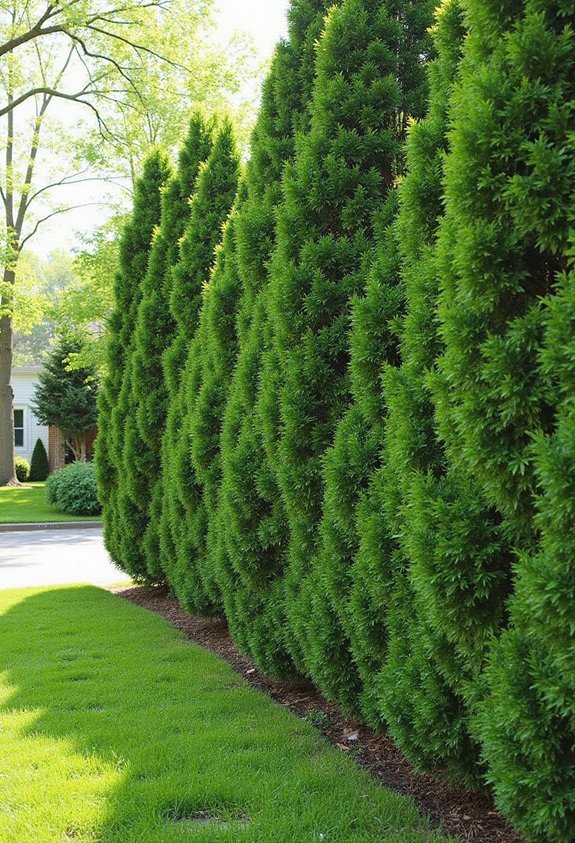
Because you’re looking for a privacy solution that blends seamlessly into your landscape, tall hedges offer an excellent natural alternative to fences and walls. You’ll want to select hedge varieties that grow densely and reach heights between six and eight feet, such as green giant arborvitae, Leyland cypress, or privet. These plants create a living screen that matures within three to five years, depending on your climate and care. You should plant hedges in staggered rows, spacing them according to their mature width, which guarantees ideal density and coverage. Regular trimming maintains their shape and encourages fuller growth. You’ll need to water consistently during establishment, applying mulch around the base to retain moisture and suppress weeds. This natural screening option provides year-round privacy while enhancing your yard’s aesthetic appeal.
Also read: 20 HOUSE FRONT YARD Ideas That Look Put Together!
Modern Slatted Fences for Filtered Privacy

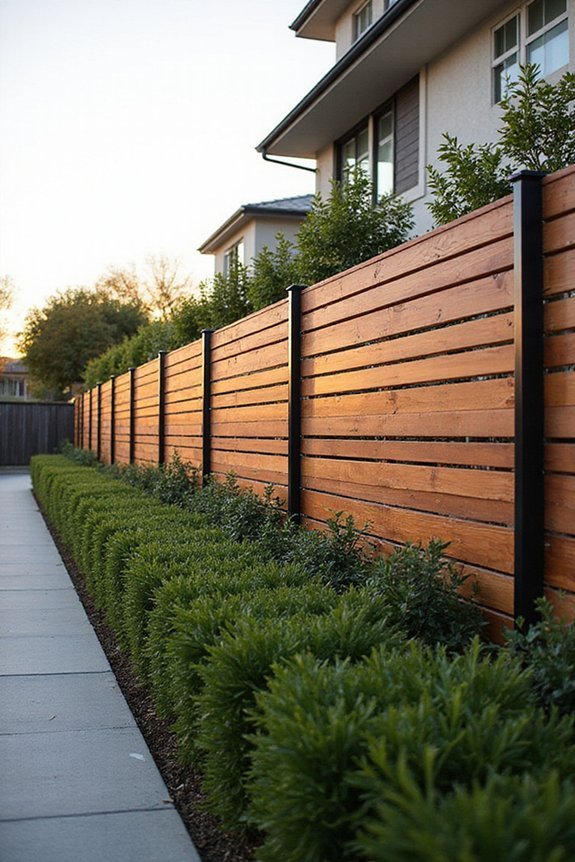
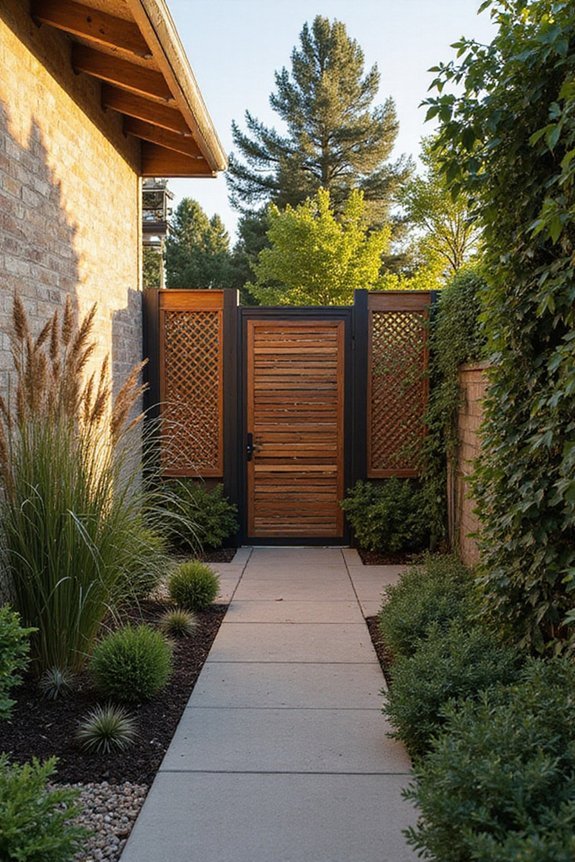
While natural hedges provide excellent year-round coverage and aesthetic value, modern slatted fences offer you a different approach to front yard privacy that combines contemporary design with practical functionality. These fences feature evenly spaced horizontal or vertical slats that create filtered privacy, allowing you to see out while limiting views into your property. You’ll appreciate how slatted designs reduce wind resistance compared to solid fencing, making them more durable in windy climates. The gaps between slats permit light and air circulation, preventing your front yard from feeling enclosed or dark. You can customize spacing, materials like wood or composite, and finishes to match your home’s style. Installation typically requires professional help, but once completed, slatted fences need minimal maintenance while providing lasting aesthetic appeal and functional privacy screening.
Living Walls for Green Privacy
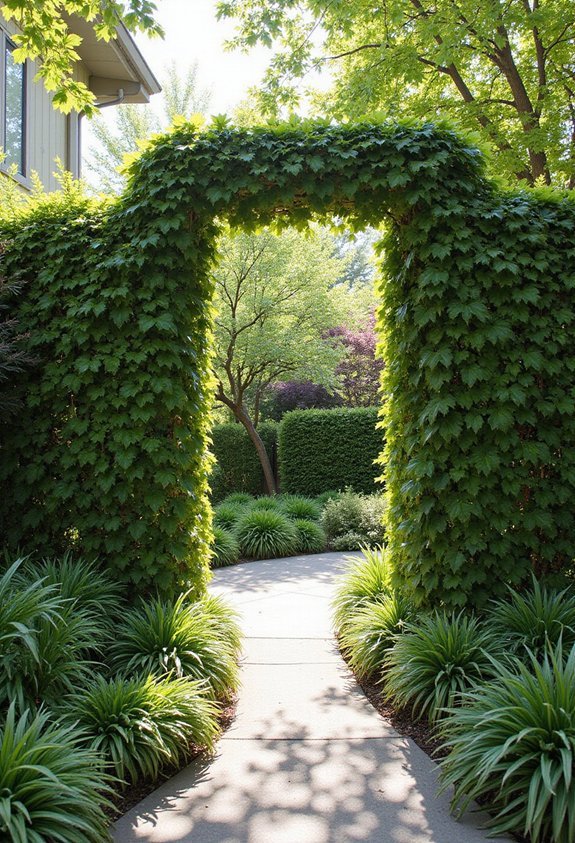
If you’re looking for a privacy solution that combines natural beauty with air-purifying benefits, living walls—also called green walls or vertical gardens—offer you an innovative alternative to traditional fencing options. You can create these installations using climbing plants like ivy, clematis, or jasmine trained on trellises and frames attached to existing structures or freestanding supports. Living walls provide year-round screening while enhancing your front yard’s aesthetic appeal and improving air quality. You’ll need to ponder, reflect on, or examine your climate zone, select appropriate plant varieties, and establish proper irrigation systems for consistent moisture. Regular maintenance includes pruning, fertilizing, and monitoring plant health. These green structures effectively block sightlines, reduce noise pollution, and create welcoming outdoor spaces that feel open yet private.
Trees for Front Yard Privacy: Strategic Placement
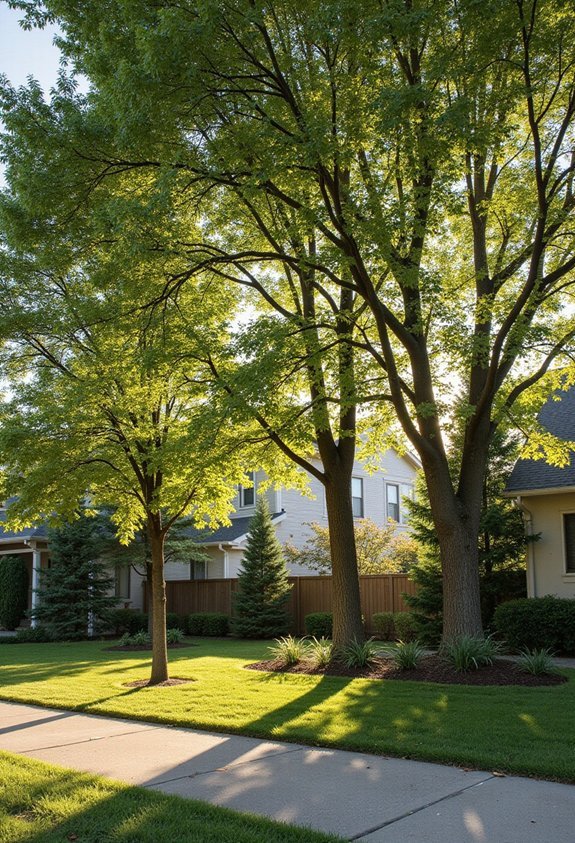
Among the most effective and long-lasting privacy solutions you can implement in your front yard, trees offer natural screening that grows stronger with time while providing environmental benefits like oxygen production, carbon dioxide reduction, and wildlife habitat. You’ll want to select fast-growing species suited to your climate, such as evergreens that maintain foliage year-round. Position taller trees along your property line’s back edge, allowing them space to reach full height without crowding your home. Plant medium-height trees in staggered rows to create layered density, which blocks sightlines more effectively than single-row placement. Consider your tree’s mature width, ensuring adequate spacing for healthy root systems and air circulation. This strategic arrangement creates progressively stronger privacy as your trees develop.
Bamboo Privacy Screens for Texture and Style
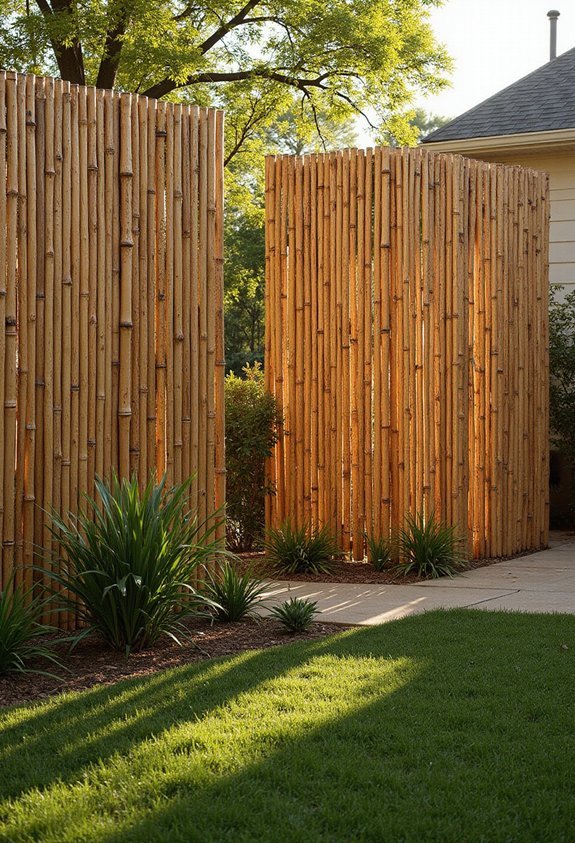
Bamboo plants offer you a modern alternative to traditional trees, providing fast-growing privacy barriers that create distinctive visual texture while adding contemporary style to your front yard landscape. You’ll appreciate how bamboo establishes dense foliage quickly, often reaching full height within two to three years, making it an efficient privacy solution. When selecting bamboo varieties, you should choose clumping species rather than running types, as clumping bamboo won’t spread aggressively across your property. You can arrange bamboo in staggered rows to maximize screening effectiveness while maintaining an aesthetically pleasing appearance. Bamboo’s slender culms and feathery leaves create a sophisticated, natural aesthetic that complements modern and traditional home designs alike. You can also combine bamboo with other plantings to enhance texture variation and visual interest throughout your front yard.
Tiered Plantings for Layered Depth
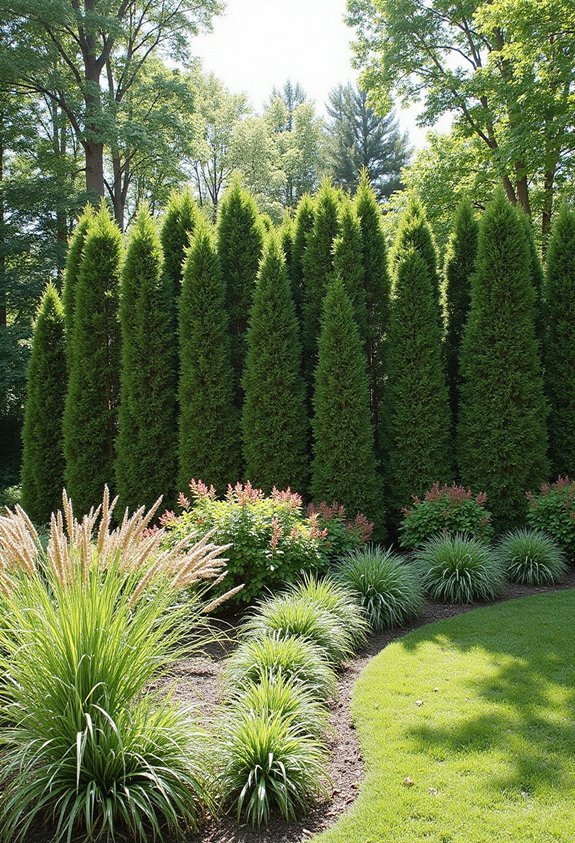
Creating multiple layers of vegetation at different heights will give your front yard privacy screen considerably more effectiveness and visual appeal than a single row of plants alone. You’ll want to arrange plants strategically, placing taller species like ornamental trees or shrubs in the back, medium-height plants in the middle, and shorter groundcover or low shrubs toward the front. This tiered approach blocks sight lines more completely because observers can’t easily see over or between plants to view your property. You should space each layer about three to four feet apart to allow adequate room for growth and maintenance access. The layered design also creates visual depth, making your landscape appear larger while maintaining the privacy you’re seeking for your front entrance.
Lattice Privacy Screens With Climbing Vines
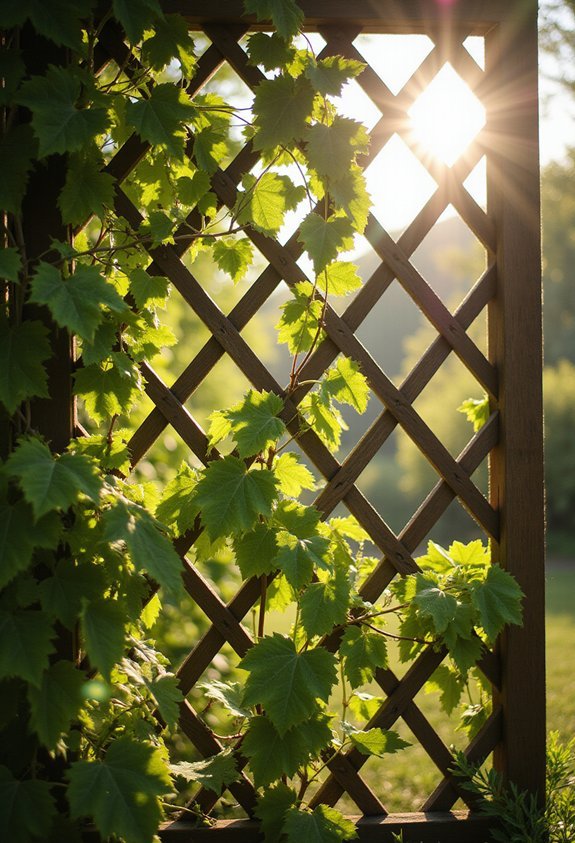
If you’re looking for a flexible and attractive privacy solution, lattice panels paired with climbing vines offer an excellent alternative to solid fences or dense plant barriers. You’ll install wooden or vinyl lattice frames along your front yard’s perimeter, creating a framework that supports climbing plants like clematis, jasmine, or ivy. As these vines grow and intertwine through the lattice openings, they’ll gradually obscure views from the street while allowing air circulation and filtered light. The layered effect gives your yard depth and visual interest without appearing fortress-like. You can customize the density by controlling vine growth, trimming back sections as needed. This combination provides privacy that develops naturally over time, transforming your front entrance into an attractive, living screen.
Decorative Metal Screens for Contemporary Style
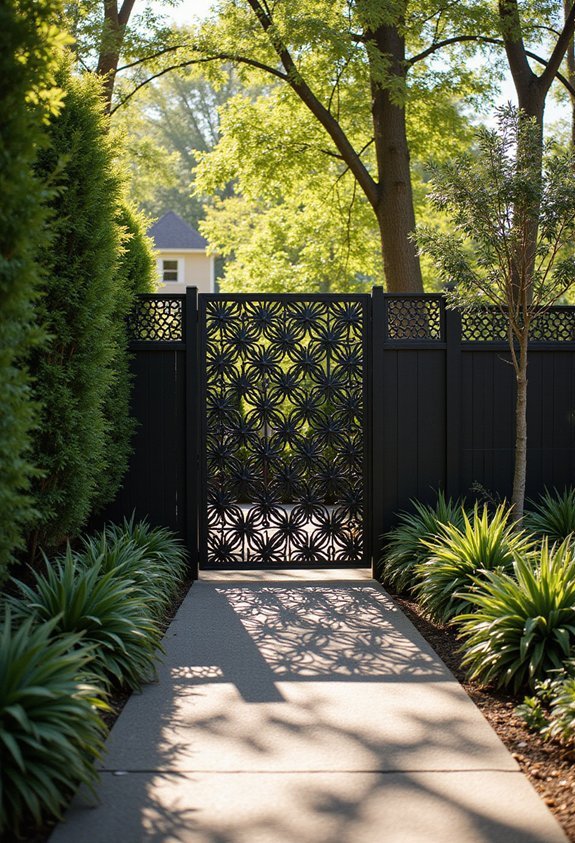
While climbing vines offer a natural, organic approach to front yard privacy, decorative metal screens provide a sleek, modern alternative that’ll give your home a polished, contemporary appearance. You can choose from various designs, including geometric patterns, horizontal slats, or intricate lattice work crafted from aluminum or steel. These screens are durable, requiring minimal maintenance compared to living plants. You’ll appreciate their versatility, as they work well alongside modern architecture, minimalist landscaping, or industrial design elements. Installation involves securing the screens to posts or existing structures using brackets and fasteners. Metal screens effectively block sightlines while allowing air circulation and light penetration. You can paint them in neutral tones or bold colors matching your home’s exterior. This solution creates a contemporary privacy barrier without appearing overly enclosed or fortress-like.
Frosted Glass Barriers for Light and Privacy
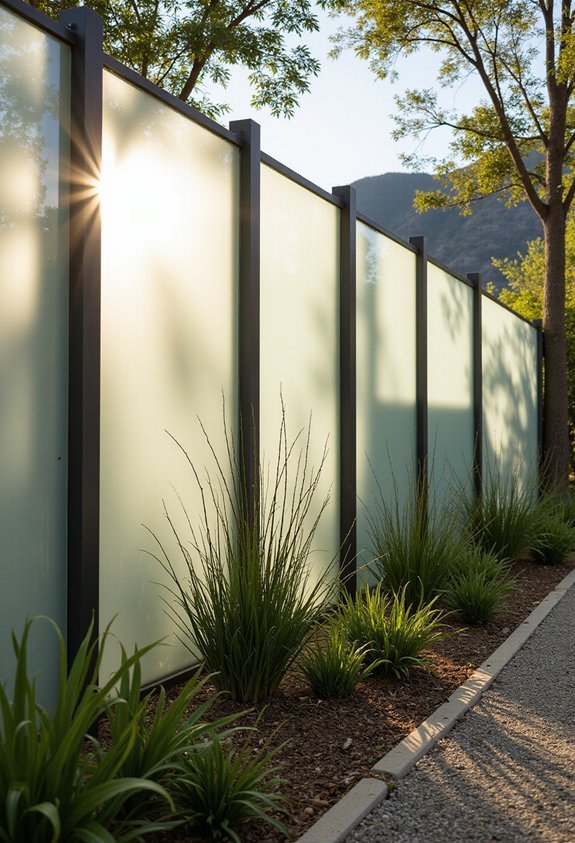
You’ll find that frosted glass barriers offer a sophisticated solution that combines privacy with the practical benefit of allowing natural light into your front yard space. These barriers work by obscuring the view while maintaining visibility of light and shadows, creating a balanced environment that doesn’t feel isolated. You can install frosted glass panels along your property line, fence line, or as standalone screens to achieve your desired privacy level. The frosted finish comes in various densities, allowing you to customize how much transparency you want. You’ll appreciate that frosted glass requires minimal maintenance, resists weather damage, and provides a modern aesthetic that complements contemporary home designs. Additionally, these barriers reduce noise pollution while enhancing curb appeal through their clean, elegant appearance.
Stone and Brick Pillars for Open-Air Screening
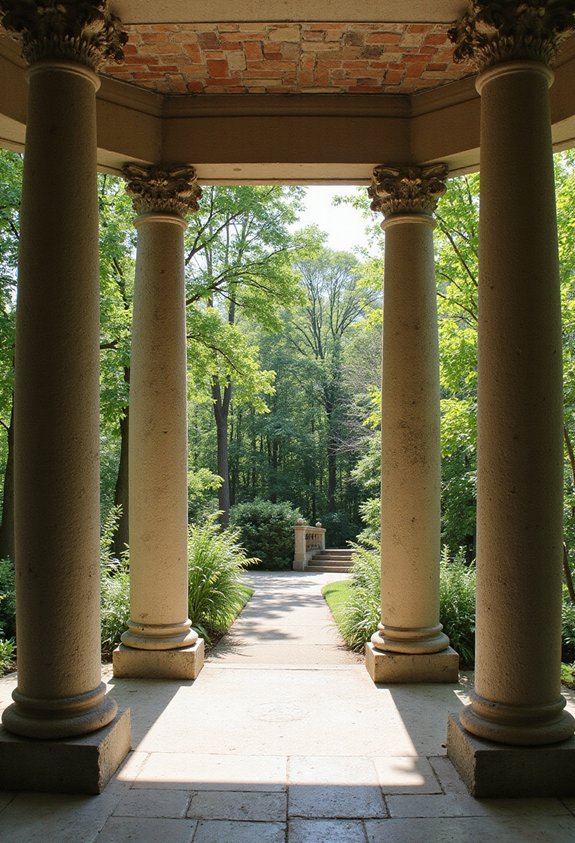
Stone and brick pillars offer a more traditional and structurally substantial approach to front yard privacy that doesn’t rely on solid barriers or light-filtering materials. You can strategically position these pillars along your property line, spacing them at intervals that create visual breaks without completely blocking sightlines. When you combine pillars with climbing vines or decorative panels between them, you’ll achieve layered privacy while maintaining an open aesthetic. Stone and brick materials withstand weather conditions effectively, requiring minimal maintenance over years of use. You’ll appreciate their durability and timeless appearance that complements various architectural styles. These pillars also serve functional purposes, supporting fence sections or trellises. By selecting appropriate spacing and heights, you can customize your privacy level while preserving your yard’s openness and visual appeal.
Raised Planting Beds to Carve Out Your Zone
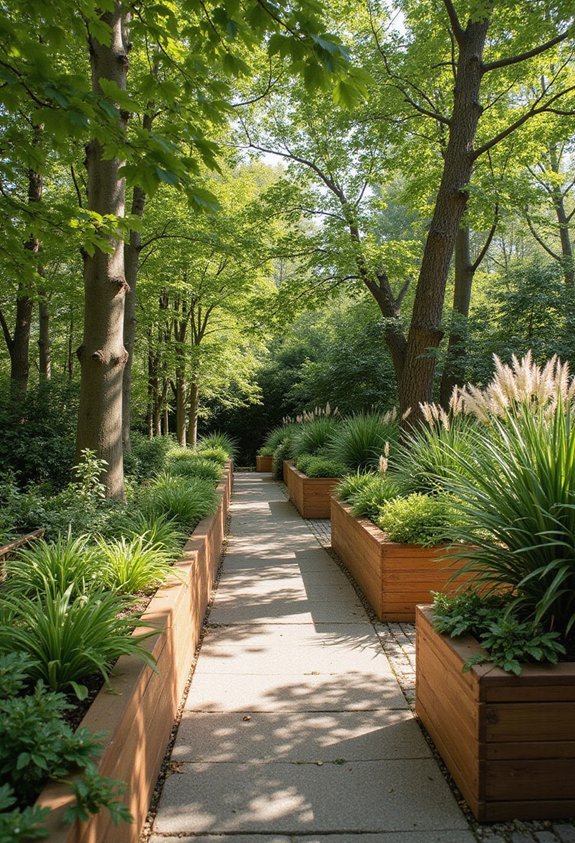
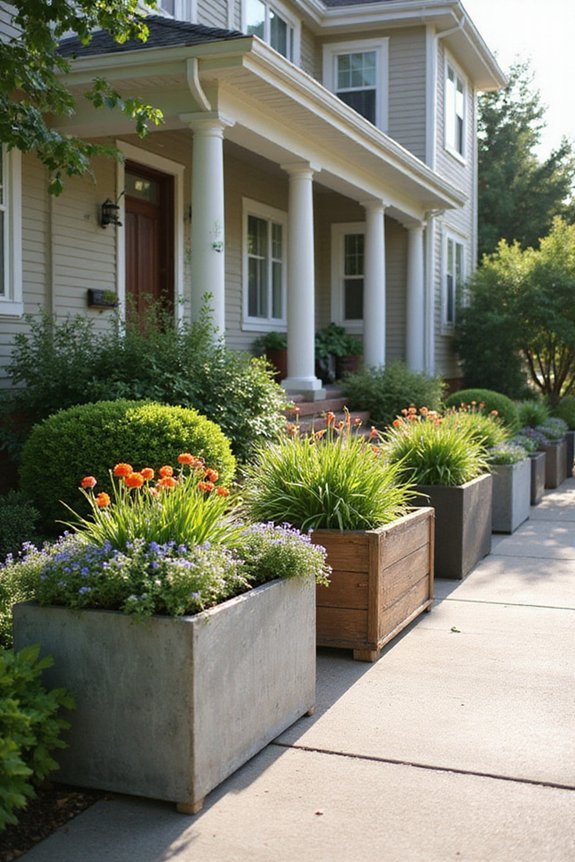
When strategically placed throughout your front yard, raised planting beds function as both decorative landscape features and effective privacy barriers that define distinct zones without requiring permanent structures. You can arrange these beds in linear patterns along your property line, creating a natural boundary that separates your space from the street or neighboring properties. By filling them with tall plants, ornamental grasses, or flowering shrubs, you’ll establish visual separation while maintaining an open, welcoming aesthetic. The elevated design offers practical advantages: improved drainage, easier maintenance, and better soil quality for plant growth. You’ll find that layering beds at varying heights amplifies the screening effect, allowing you to customize your privacy level according to specific areas within your front yard.
Horizontal Slat Screens for Minimalist Privacy
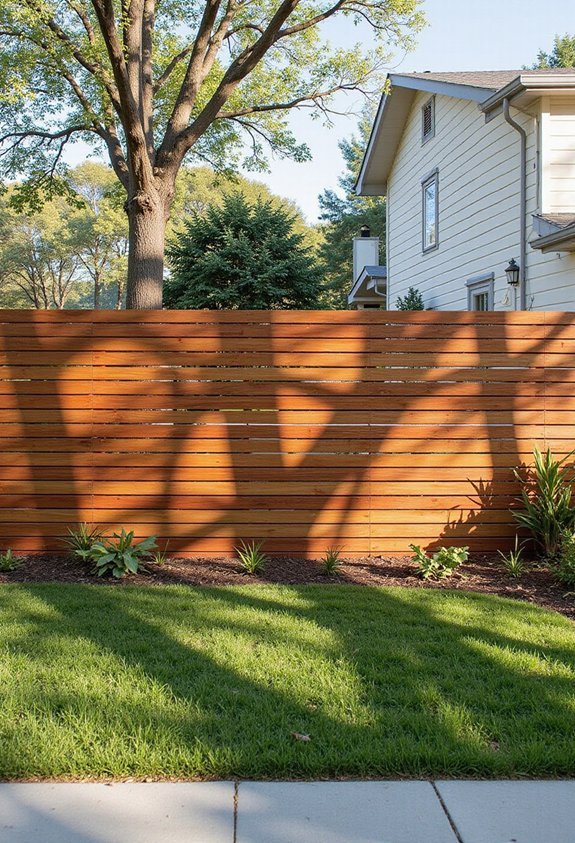
Modern horizontal slat screens offer a sleek alternative to traditional plant-based barriers, combining contemporary design with effective privacy screening in a compact footprint. You’ll find that these screens create visual separation without blocking airflow or natural light, maintaining an open feel while protecting your space from street views. Installation involves securing wooden or metal slats horizontally between vertical posts, spacing them strategically to control sightlines while allowing breezes to pass through. You can customize the gap width between slats to adjust your privacy level, with tighter spacing offering more concealment and wider gaps providing a more transparent appearance. These screens work excellently alongside your raised beds, creating defined zones that feel intentional rather than fortress-like, enhancing your front yard’s aesthetic appeal while delivering practical privacy solutions.
Natural Fiber Privacy Panels
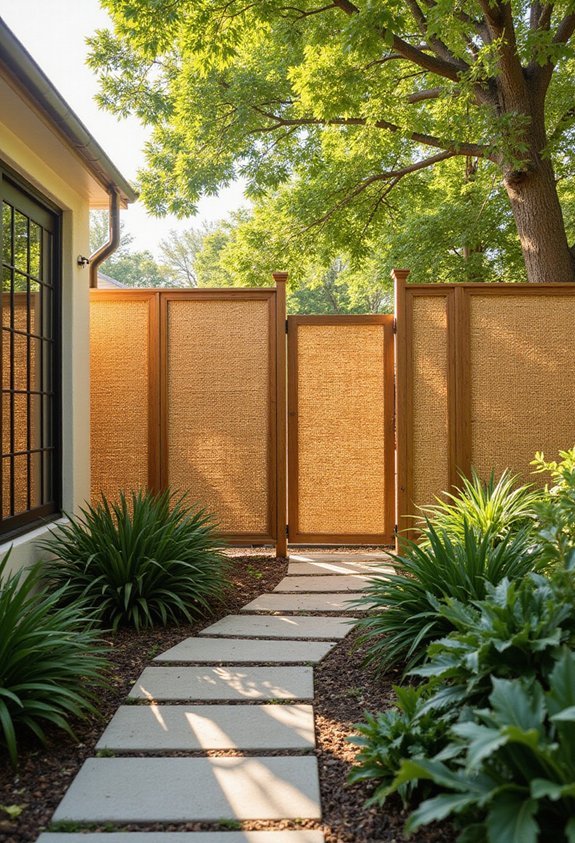
While horizontal slat screens offer a modern aesthetic, natural fiber privacy panels provide an eco-friendly alternative that blends seamlessly with outdoor landscapes and creates warm, organic visual barriers. You can choose from materials like bamboo, rattan, or woven jute that’ll withstand weather conditions while maintaining their natural appearance. These panels work particularly well when you’re positioning them along property lines or near seating areas, as they soften sight lines without creating an enclosed feeling. Installation involves securing the panels to sturdy frames using weather-resistant fasteners, ensuring they’ll remain stable during wind and rain. You’ll appreciate how natural fibers allow air circulation while blocking views, preventing that claustrophobic sensation that solid fences create. Maintenance requires occasional cleaning and potential resealing to extend their lifespan.
Water Features as Privacy Focal Points
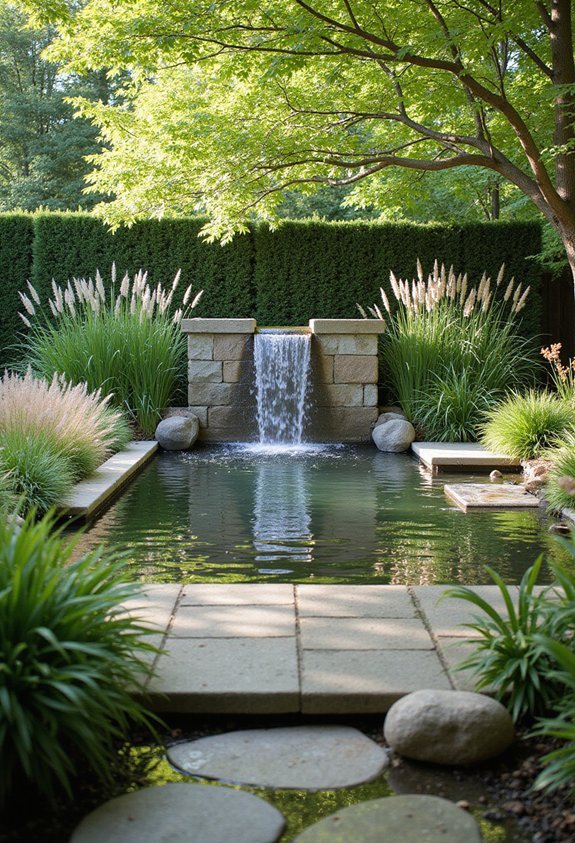
Beyond traditional barriers, water features like fountains, ponds, and small streams offer a dual-purpose solution that screens your front yard while creating an appealing focal point that draws visitors’ attention away from your property’s edges. You can strategically position these elements along your yard’s perimeter to obscure sightlines effectively. A cascading fountain near your entrance redirects focus inward, while a small pond with surrounding landscaping creates natural screening without appearing fortress-like. You’ll benefit from the soothing sounds water produces, which mask neighborhood noise and enhance privacy psychologically. Adding aquatic plants, rocks, and decorative elements around your water feature increases its visual impact. This approach transforms your front yard into an inviting retreat that maintains privacy while establishing an attractive centerpiece your guests will appreciate.
Hardscape Borders That Mark Your Space Without Walling You In
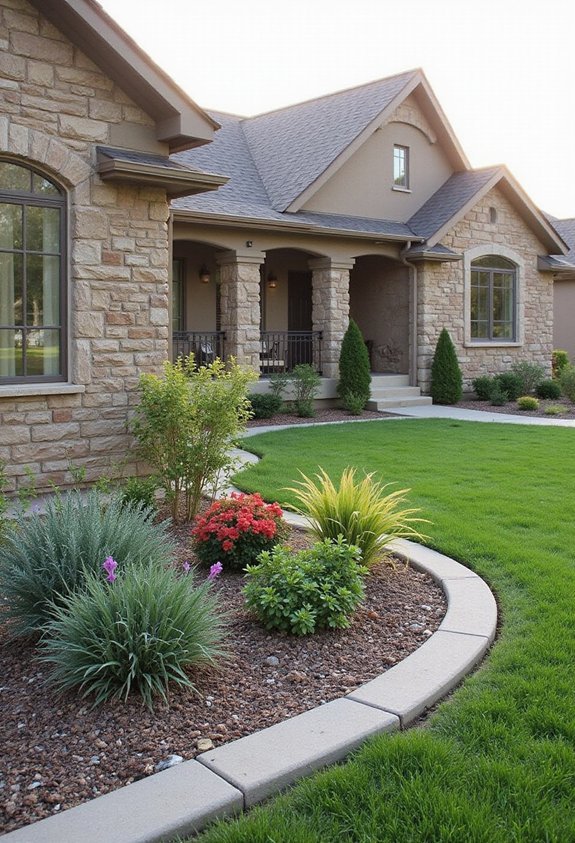
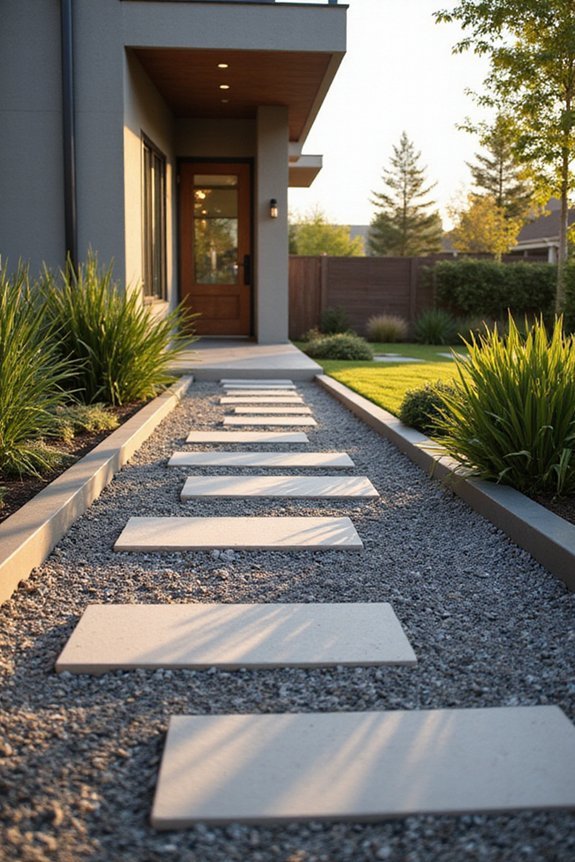
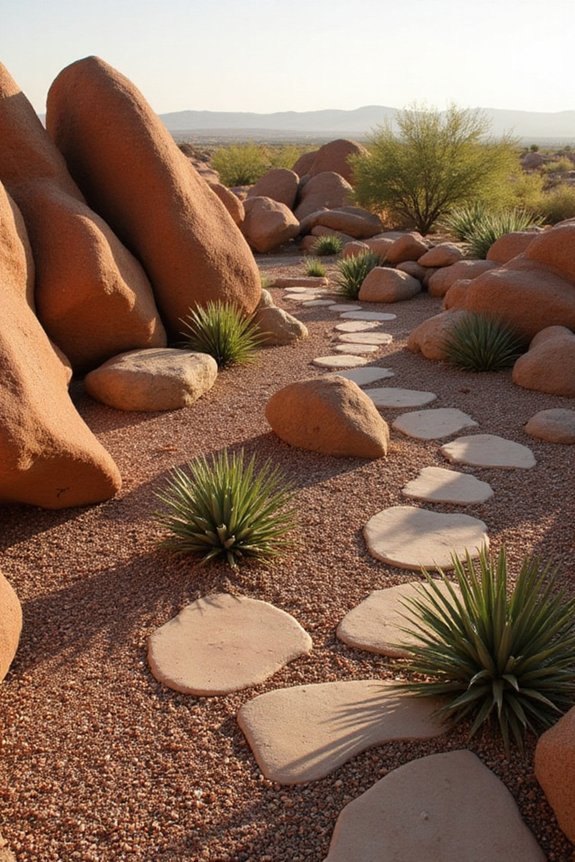
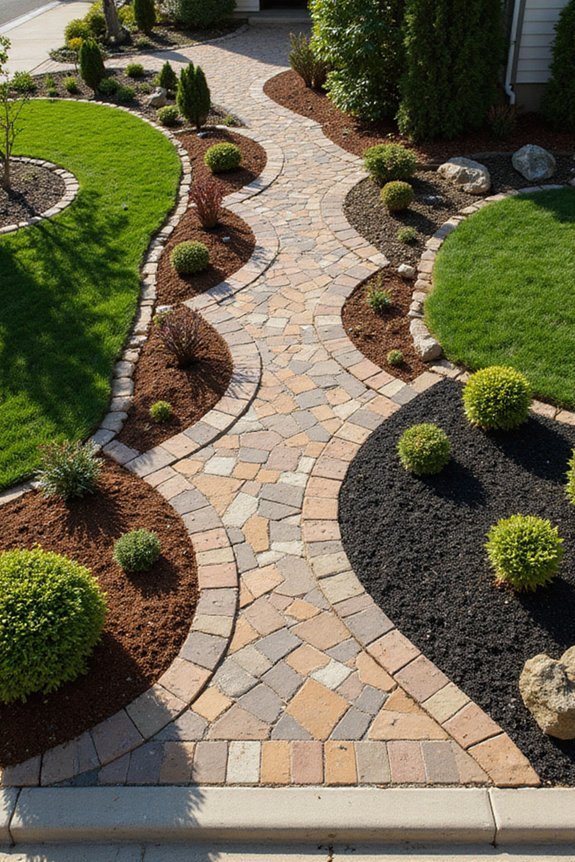
If you’re looking for a way to define your property’s boundaries while keeping your front yard open and inviting, hardscape borders offer an effective alternative to solid fences or dense hedges. You can install stone edging, pavers, or gravel pathways that create clear visual separation between your space and the street without blocking sightlines. These materials work well because they’re durable, low-maintenance, and customizable to match your home’s aesthetic. Consider raised garden beds with metal or stone borders, which add dimension while establishing boundaries. Decorative retaining walls, typically two to three feet high, provide subtle delineation without creating an enclosed feeling. By combining different hardscape elements strategically throughout your front yard, you’ll achieve privacy through definition rather than obstruction.
Espalier Trees for Elegant, Narrow Coverage
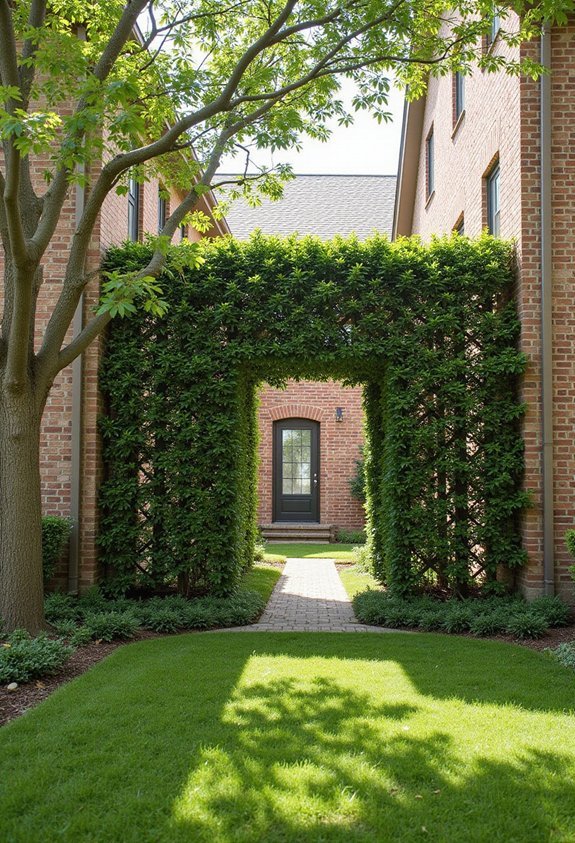
Those seeking a sophisticated way to create privacy without sacrificing front yard space can turn to espalier trees, a gardening technique where you train trees to grow flat against a framework in decorative patterns. You’ll attach branches to horizontal wires or wooden frames, guiding their growth into geometric shapes like fans or grids. This method works best with malleable species such as fruit trees, boxwoods, or hollies that respond well to pruning and training. You’ll need patience and consistent maintenance, performing regular pruning during growing seasons to maintain your desired shape. Espalier trees provide an elegant screening solution that requires minimal ground space while establishing a distinctive, refined appearance for your front yard landscape.
Pergolas With Climbing Plants for Filtered Privacy
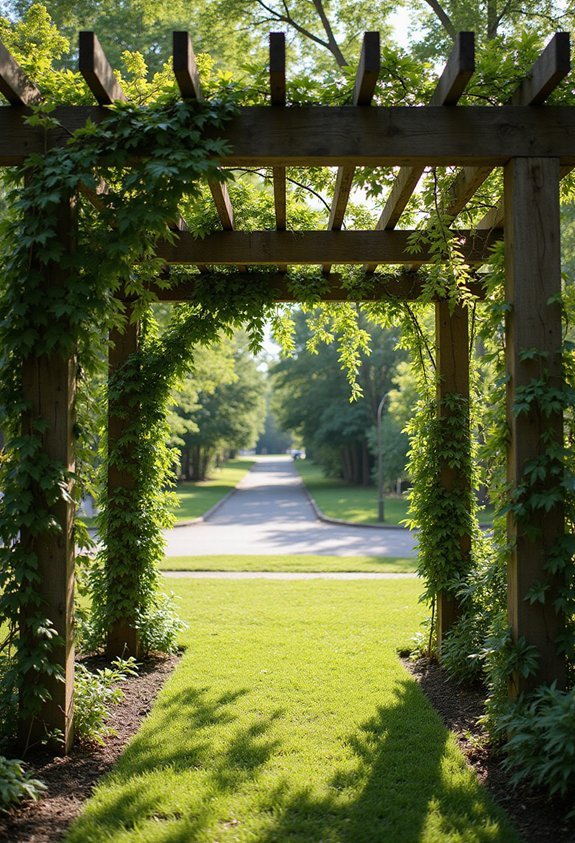
While espalier trees offer a space-efficient solution for creating privacy through vertical training, pergolas present a different approach that combines structural architecture with living vegetation to achieve both screening and aesthetic appeal. You can install a pergola along your front property line, then train climbing plants like clematis, jasmine, or climbing roses to grow across its latticed top and sides. As these plants mature, they’ll create a natural filter that obscures views into your yard while still allowing light and air circulation to pass through. You’ll find that this method provides privacy without the dense, fortress-like appearance of solid fences, maintaining an open, welcoming feel to your landscape while effectively screening unwanted sightlines from the street.
Staggered Fence Heights for Softer Transitions

Rather than installing a uniform fence that rises to the same height across your entire front property line, you can create a more visually appealing and naturally integrated privacy solution by varying your fence heights in a strategic, graduated pattern. You’ll start with shorter sections near your property’s edges, then gradually increase the height toward the center or focal points where you need maximum screening. This staggered approach softens the visual impact, preventing your yard from appearing fortress-like or unwelcoming. You can shift heights in increments of six to twelve inches, ensuring smooth progression that guides the eye naturally across your landscape. Additionally, varying fence heights allows vegetation and architectural elements to blend seamlessly, creating depth while maintaining the open, inviting character of your front yard.
Native Hedgerows for Mixed-Plant Privacy
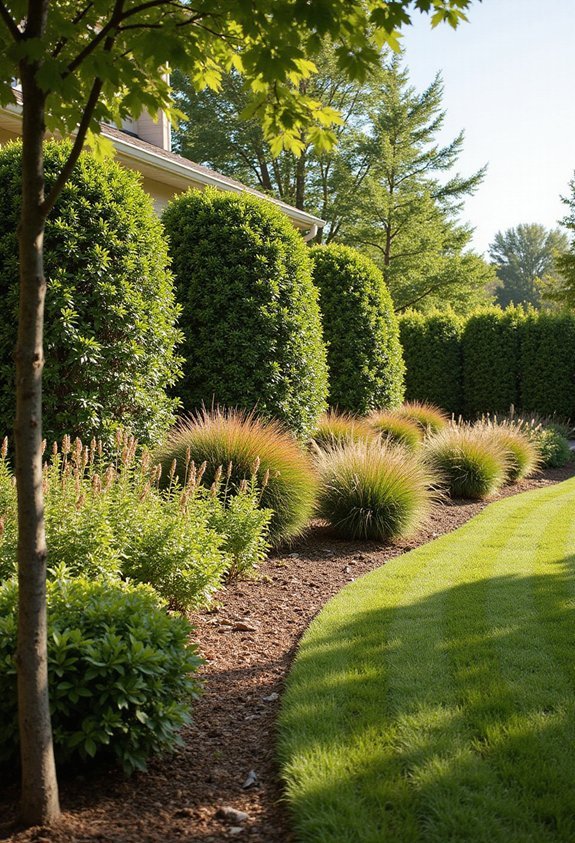
Many homeowners find that combining multiple native plant species creates a more effective and visually interesting privacy barrier than relying on a single fence or plant type. You’ll want to select plants that grow at different heights and have varying leaf densities, which allows you to build layered screening that blocks views from multiple angles. Native hedgerows work particularly well because they’re adapted to your local climate, require less maintenance, and support local wildlife. You should research which native shrubs and small trees thrive in your region, considering their mature heights, growth rates, and seasonal appearance. By strategically spacing these plants and allowing them to grow naturally, you’re creating a dense, attractive privacy solution that enhances your landscape’s ecological value while effectively screening your front yard from street view.
Decorative Screens to Separate Your Porch From the Street
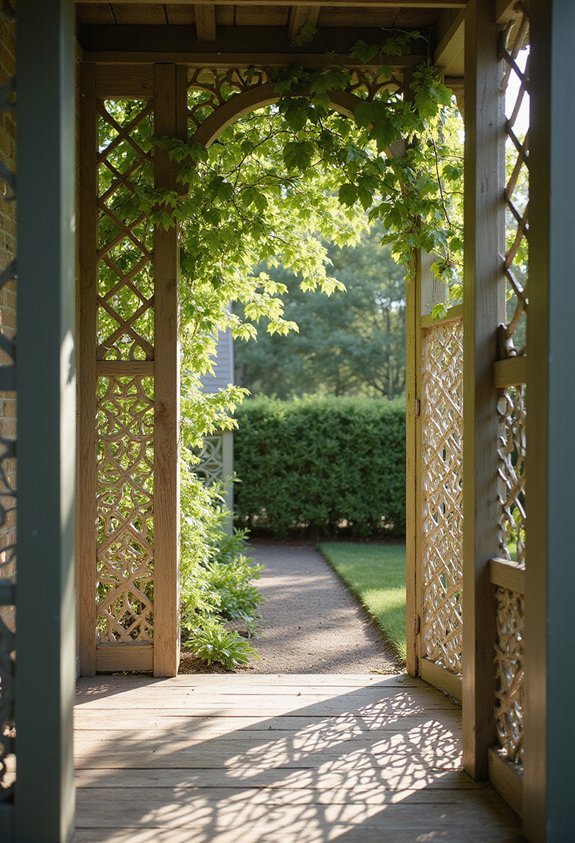
If you’re looking to establish privacy without committing to permanent structures like fences or hedgerows, decorative screens offer a flexible alternative that you can customize to match your home’s aesthetic while effectively blocking sightlines from the street. You’ll find screens available in various materials, including wood, metal, and composite options, each providing different levels of opacity and durability. Wooden screens deliver a classic appearance and blend naturally with landscaping, while metal designs offer modern appeal and require minimal maintenance. You can position screens strategically along your porch perimeter to shield seating areas from pedestrian view. Additionally, you can pair screens with climbing plants or planters to enhance visual interest and integrate them seamlessly into your outdoor space without creating an enclosed, fortress-like appearance.
Sunken or Raised Patios for Natural Buffers
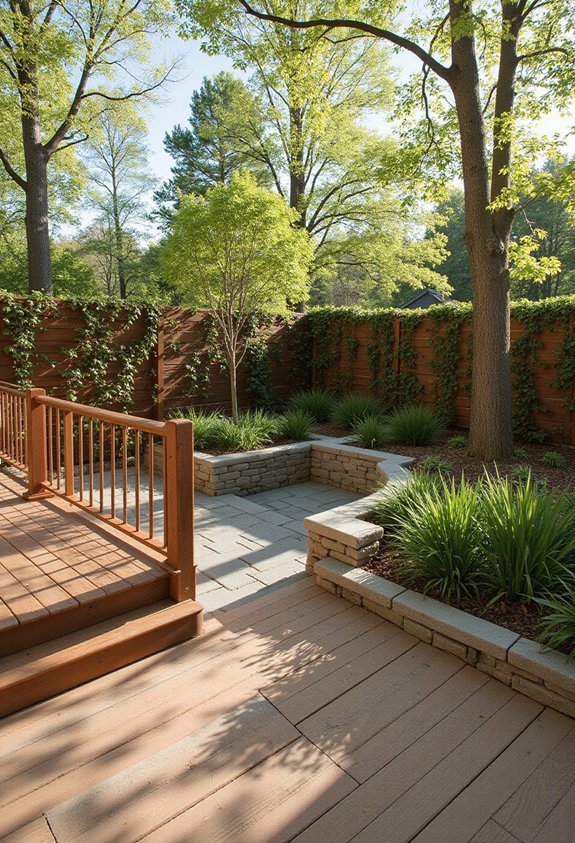
While decorative screens provide flexible styling options for your front yard, changing the actual ground level of your outdoor spaces offers a more permanent and visually striking way to create privacy barriers. Sunken patios, which sit below street level, naturally block sightlines from passersby, while raised patios elevate your seating area above ground level for similar privacy benefits. Both options create distinct separation between your home and the street without requiring additional structures. Sunken designs work best on sloped properties where excavation’s feasible, whereas raised patios suit flatter terrain. You’ll want to ponder drainage, soil stability, and local building codes before construction. These elevation changes also improve your yard’s visual interest and can increase property value while providing the privacy screening you’re seeking.
Seating Alcoves Behind Plantings
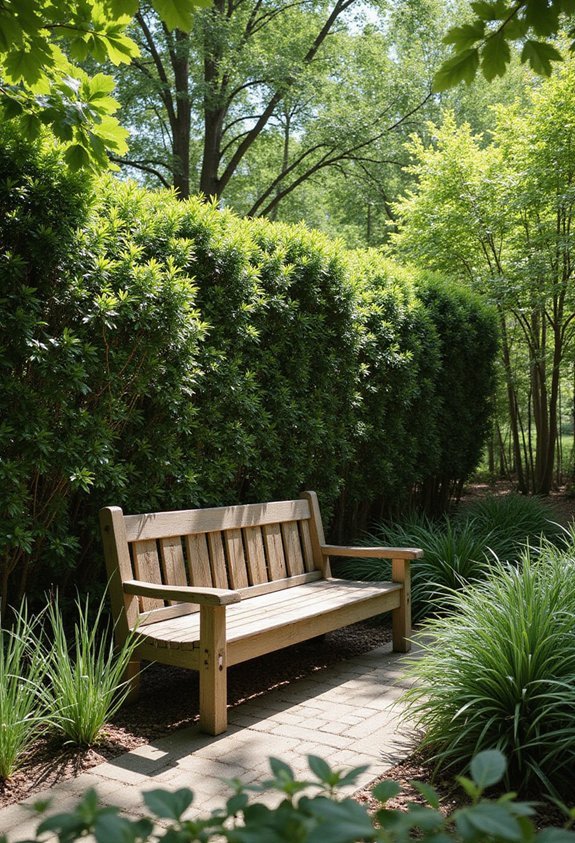
Creating a private seating area within your front yard doesn’t require you to build structures like patios or install screens—you can achieve similar privacy by strategically positioning plants to form natural alcoves where you can sit comfortably away from street view. You’ll want to arrange tall shrubs, ornamental grasses, or evergreen plants in a curved or L-shaped pattern around your seating spot, ensuring they’re dense enough to block sightlines from the road and sidewalk. Position your bench, chair, or small seating group within this planted enclosure, allowing you to relax without feeling exposed. This approach maintains your yard’s open appearance while creating an intimate retreat, and it requires minimal construction effort compared to formal privacy structures.
Layered Privacy: Combining Plants, Screens, and Hardscape
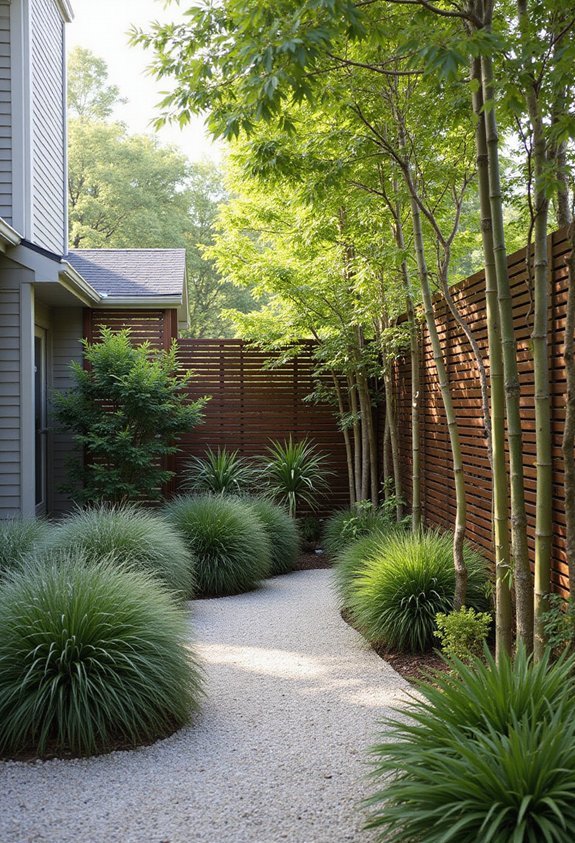
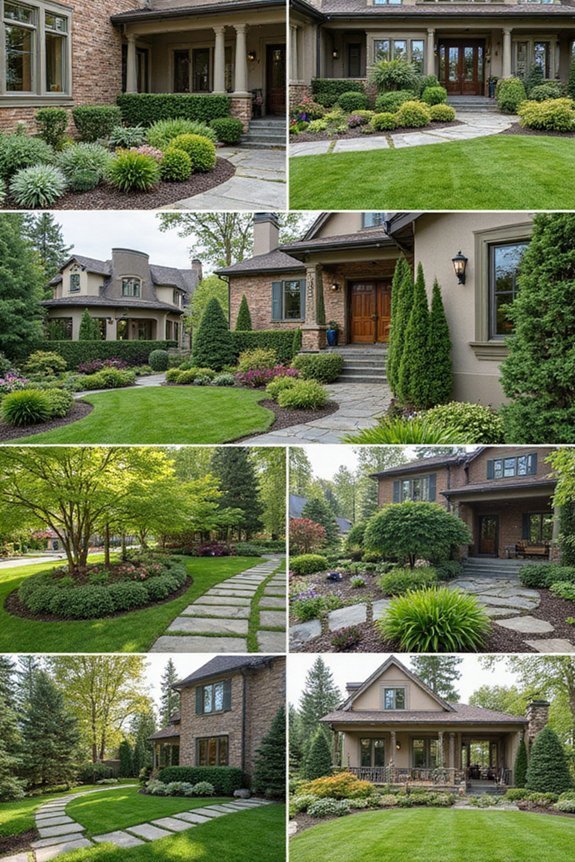
You can build up your front yard’s privacy by layering multiple elements together—plants, screens, and hardscape materials—which work in combination to block views more effectively than any single method alone. Start with a sturdy fence or wall as your foundation, then plant shrubs and trees in front of it to soften the appearance while adding depth. Add a decorative screen or lattice panel alongside climbing vines for extra coverage and visual interest. Position hardscape features like raised planters or stone walls to create additional barriers at different heights. This layered approach achieves privacy without making your yard feel enclosed, as you’re strategically positioning elements to redirect sightlines while maintaining an open, welcoming aesthetic that doesn’t create a fortress-like appearance.
Conclusion
You’ve now discovered how to create your sanctuary without building walls that isolate you from the world. By layering hedges, screens, and strategic plantings, you’re constructing invisible boundaries that whisper rather than shout. Your front yard becomes a personal refuge where you control who sees in, yet light filters through and air flows freely. You’re not hiding; you’re simply drawing the curtain on your own private story, inviting only those you choose while remaining connected to your neighborhood.