While many homeowners neglect their front yards, strategic pathway design can dramatically transform your home’s entrance. You’ll discover that choosing the right materials—from classic brick to modern concrete—requires understanding how each option performs in your climate and complements your home’s style. The difference between an ordinary walkway and a stunning entryway lies in thoughtful material selection, proper edging, and layered plantings. Learn which pathway solutions work best for your specific situation.
How to Choose a Front Yard Pathway Material
When you’re building a front yard pathway, you’ll want to weigh several important factors before settling on your final material choice, since the pathway you select will affect your home’s appearance, your maintenance responsibilities, and your long-term expenses. Consider your climate’s weather patterns, as materials like concrete handle freeze-thaw cycles differently than natural stone or gravel. Think about foot traffic volume and how often you’ll need repairs or upkeep. Budget matters too—initial costs vary widely, with asphalt being economical while pavers cost more upfront but last longer. Evaluate drainage needs since poor water management causes damage. You’ll also want to match your home’s architectural style, ensuring the pathway complements your property’s overall aesthetic. Finally, assess your willingness to perform regular maintenance tasks like sealing, weeding, or replacing damaged sections before making your selection.
Also read: 23 FRONT YARD PRIVACY Ideas Without Looking Closed In!
Classic Brick Pathways: Timeless Edge Definition
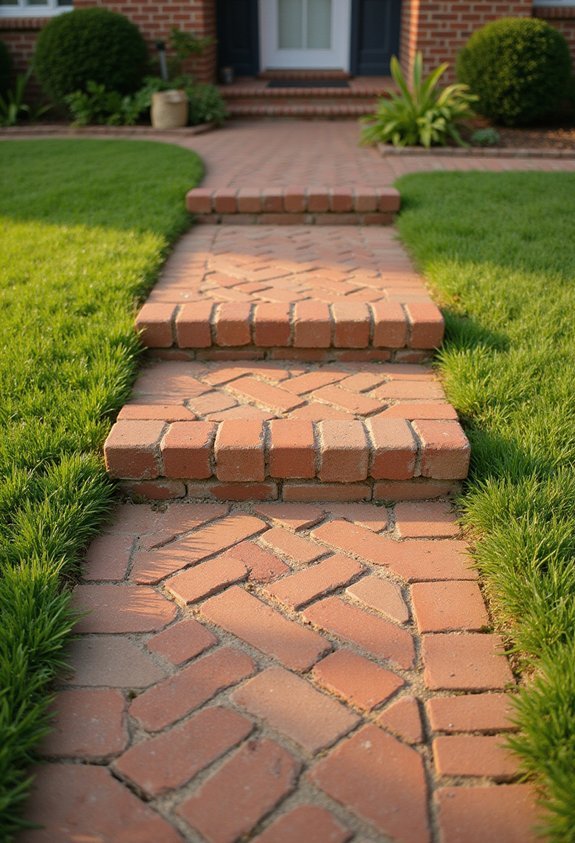
Because brick’s warm color, consistent texture, and structured appearance have made it a popular choice for centuries, it’s one of the most reliable materials you can select for defining your front yard’s edges and creating a welcoming entrance. You’ll appreciate how bricks create clean lines that separate your pathway from garden beds and landscaping areas. They’re durable enough to withstand foot traffic and weather conditions while maintaining their appearance for decades. You can arrange bricks in various patterns, including herringbone, running bond, or basket weave, which adds visual interest to your pathway. Installation requires proper base preparation with gravel and sand to guarantee stability and prevent shifting. Regular maintenance involves occasional sweeping and cleaning to preserve the brick’s natural beauty and prevent moss growth in shaded areas.
Modern Concrete Steps for Minimalist Homes
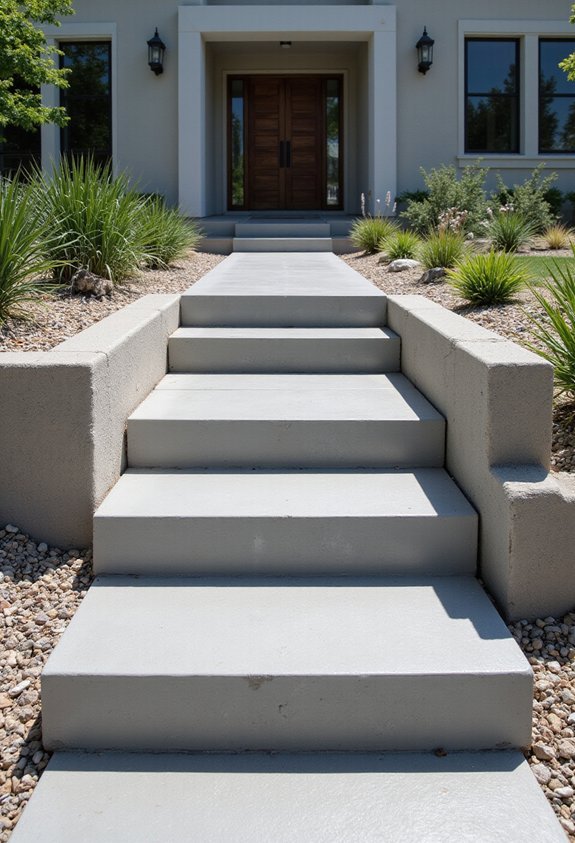
If you’re designing a front yard that emphasizes clean lines and simplicity, modern concrete steps offer the perfect solution for your minimalist aesthetic. You’ll want to choose smooth, unadorned concrete finishes that complement your home’s contemporary style, avoiding decorative patterns or textures that distract from the minimalist design. Consider pouring steps in neutral tones like gray, charcoal, or white, which create visual harmony with modern architecture. You can enhance functionality by incorporating subtle LED lighting along the step edges, providing both safety and understated elegance. For durability, you’ll benefit from applying a quality concrete sealer that protects against weathering and staining while maintaining the pristine appearance you’re seeking. These steps require minimal maintenance, making them ideal for homeowners who prioritize clean aesthetics and practical design solutions.
Natural Stone Pathways That Improve With Age
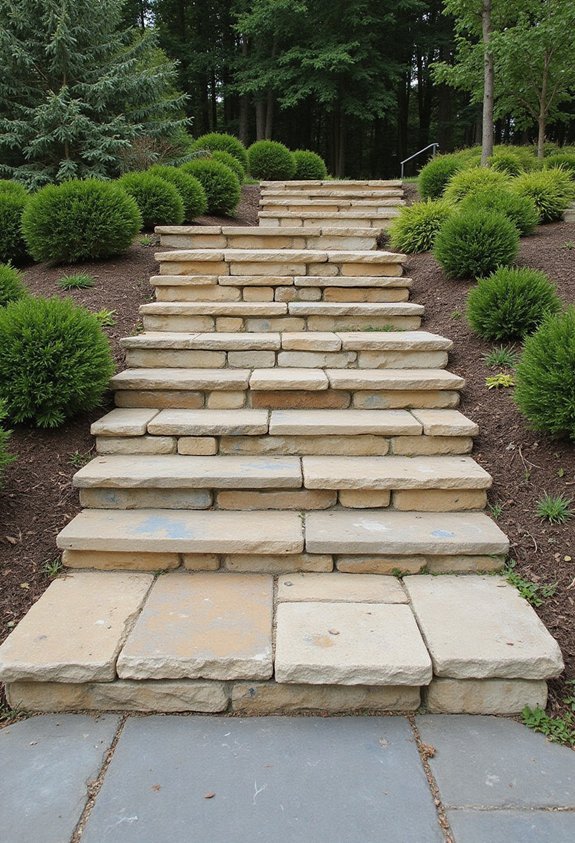
Unlike concrete that can crack and fade over time, natural stone pathways develop character and beauty as the years pass, making them a worthwhile investment for your front yard design. You’ll notice that natural stones like slate, granite, and limestone actually improve aesthetically through weathering, developing rich patinas and deeper color variations. These materials withstand freeze-thaw cycles better than concrete because they’re inherently porous and allow water drainage. You can maintain your stone pathways by sweeping regularly and occasionally pressure-washing to remove debris. Sealing your stones every few years protects them while preserving their natural appearance. Since natural stone pathways don’t require constant repairs or replacement like concrete does, you’ll save money long-term while enjoying increasingly beautiful landscaping that genuinely enhances your home’s curb appeal.
Curved Pathways That Guide the Eye
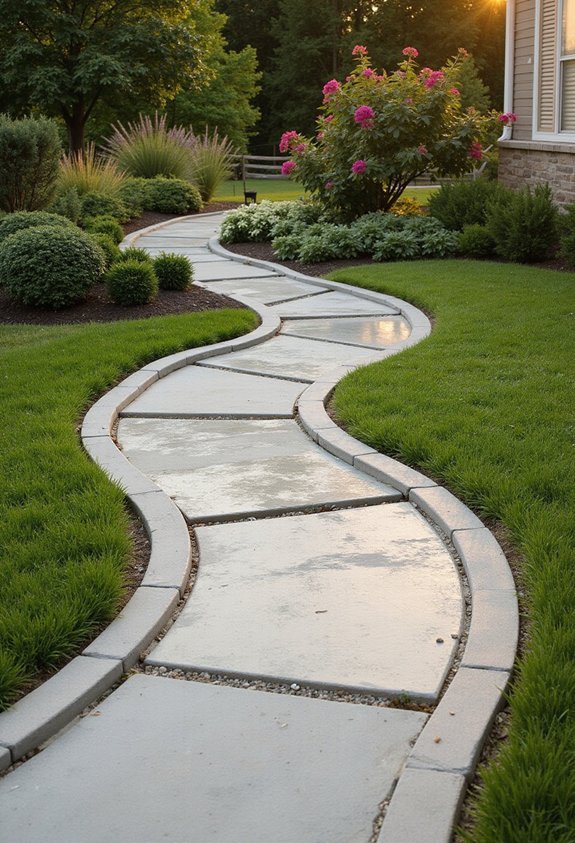
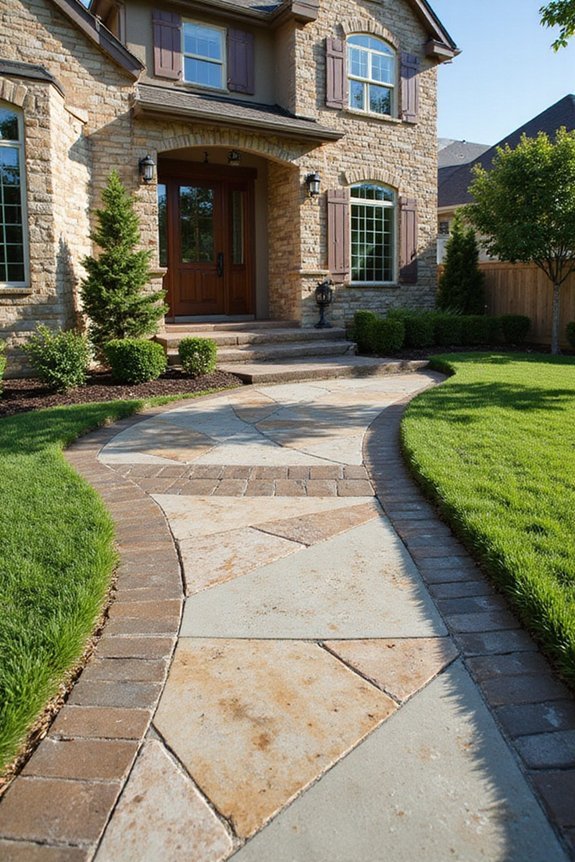
Have you noticed how straight pathways can make a front yard feel rigid and uninviting, while curved pathways create a sense of movement and discovery that draws visitors naturally toward your entrance? Curved pathways accomplish this by guiding your eye along a gentle, winding route that reveals different areas of your landscape progressively. When you design curved pathways, you’re strategically controlling how people experience your yard’s features, allowing them to appreciate plantings, lighting, and architectural elements at ideal viewing angles. The curves also make your front yard appear larger than it actually is because visitors can’t see the entire path at once. You’ll want to maintain smooth, gradual bends rather than sharp angles, ensuring comfortable walking while enhancing visual appeal and creating an inviting atmosphere.
Grand Staircase Designs for Welcoming Entrances
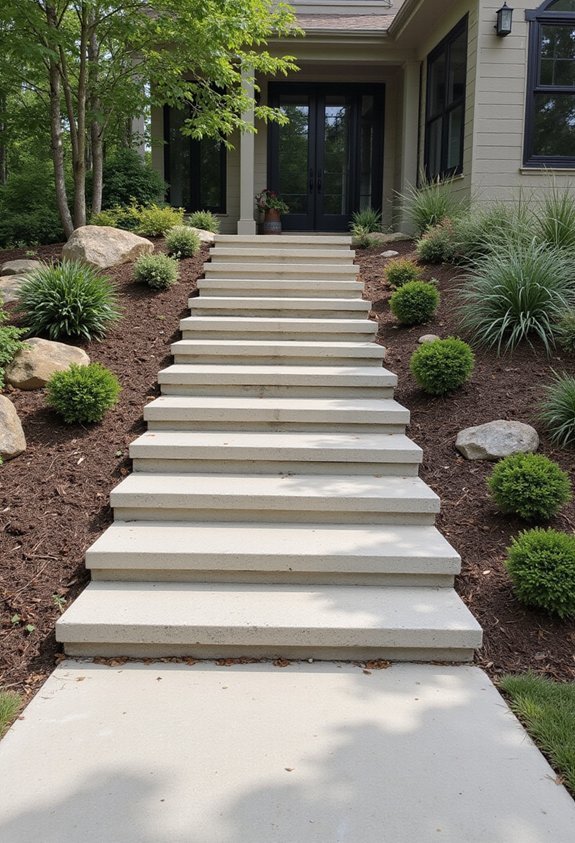
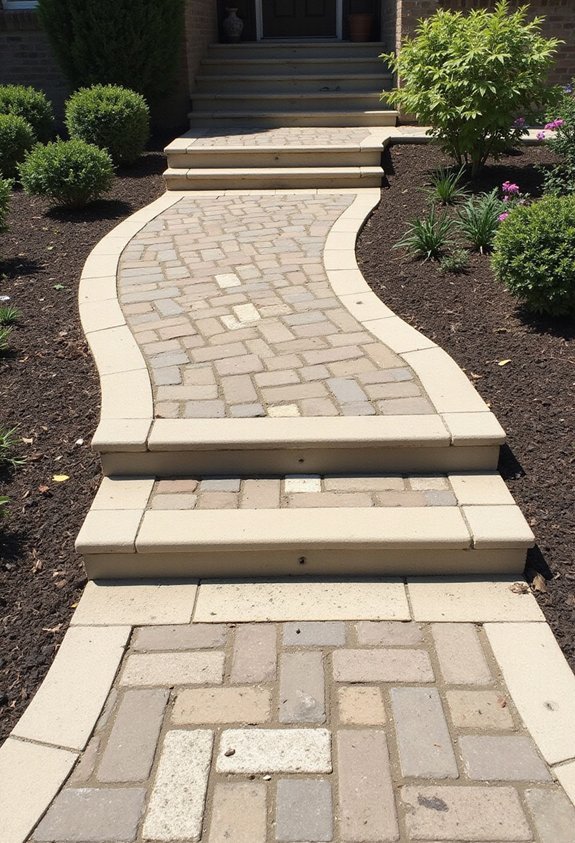
While curved pathways guide visitors through your landscape with gentle movement, grand staircase designs serve as bold architectural statements that command attention and establish a formal welcome at your front entrance. You can create impressive staircases by choosing materials like stone, brick, or composite decking that complement your home’s exterior. Consider incorporating wide, shallow steps that encourage leisurely ascents while maintaining safety standards. You’ll want to add sturdy railings on both sides for accessibility and protection. Strategic lighting along the staircase enhances visibility and creates an elegant nighttime effect. Flanking your stairs with symmetrical planters, shrubs, or decorative urns amplifies the formal aesthetic. You should guarantee proper drainage beneath steps to prevent water accumulation and deterioration. These grand designs transform your entrance into a distinguished focal point that reflects your home’s architectural character.
Permeable Pavers: Beauty That Drains
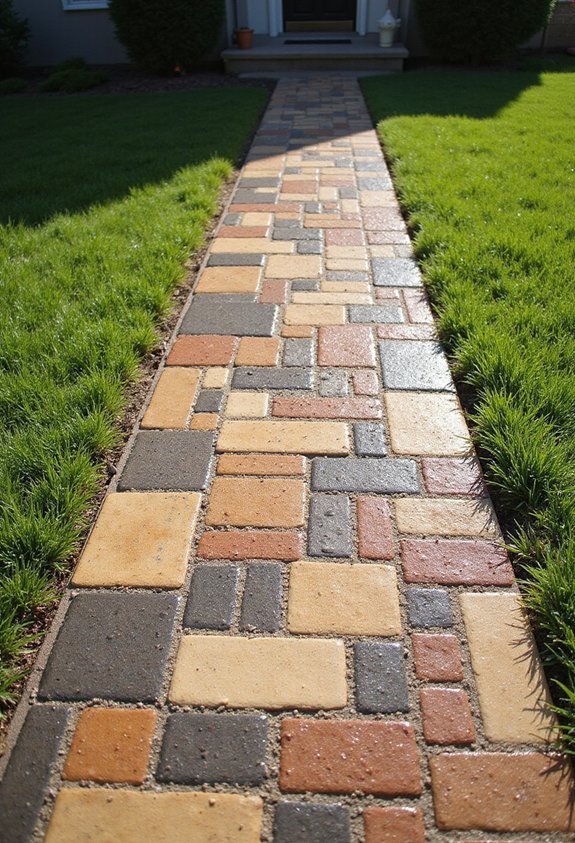
Many homeowners don’t realize that traditional solid pavers can trap water on your front yard pathways, creating puddles, algae growth, and potential damage to your home’s foundation over time. Permeable pavers offer a practical solution by allowing water to drain through small gaps in the material, directing moisture safely into the ground below. You’ll find these pavers come in various attractive styles, including permeable concrete, recycled plastic, or porous stone, so you don’t sacrifice aesthetics for functionality. Installation involves creating a proper base layer of gravel or sand that supports drainage, ensuring water flows efficiently beneath your pathways. This system reduces flooding risks, minimizes maintenance needs, and promotes healthier landscaping while enhancing your front yard’s appearance and protecting your property’s structural integrity.
Rustic Gravel Paths With Defined Borders
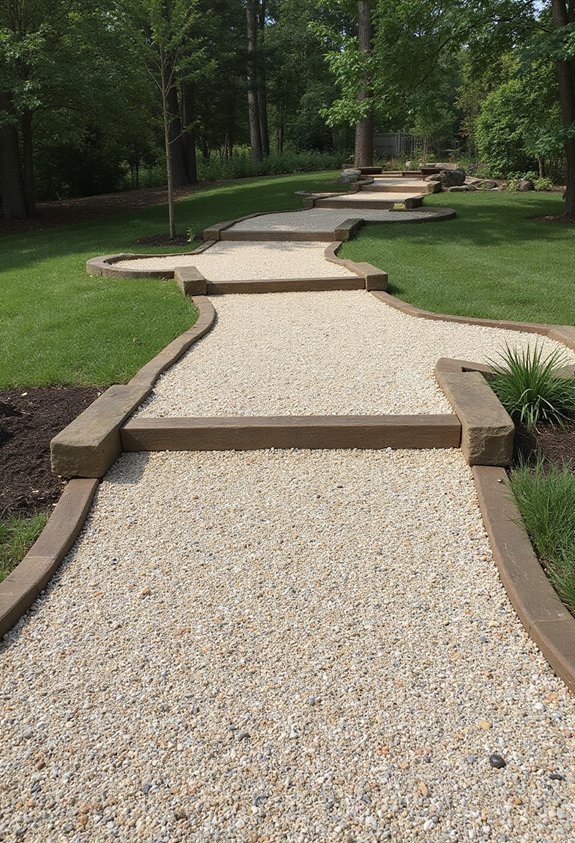
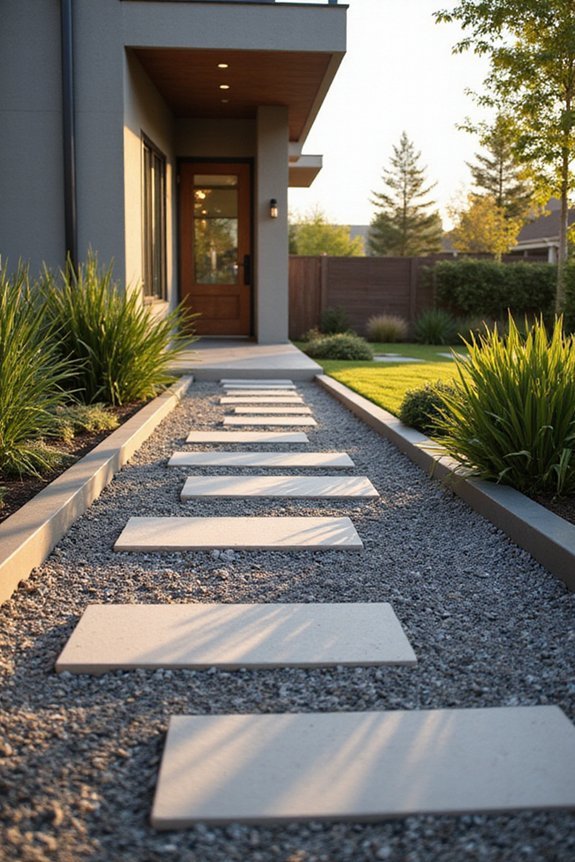
If you’re looking for a more affordable and charming alternative to permeable pavers, rustic gravel paths deliver that classic countryside appeal while remaining budget-friendly and easy to install. You’ll want to define your path’s edges using materials like timber, metal edging, or stone borders, which prevent gravel from spreading into your landscape beds. Start by clearing your pathway area of grass and weeds, then lay landscape fabric to suppress growth beneath the gravel. Add your gravel layer, typically two to three inches deep, choosing from pea gravel, crushed stone, or decorative options that complement your home’s exterior. Defined borders not only enhance your pathway’s appearance but also make maintenance simpler, allowing you to easily rake and refresh the gravel surface seasonally while maintaining clean, distinct lines throughout your front yard design.
Flagstone Pathways With Elegant Spacing
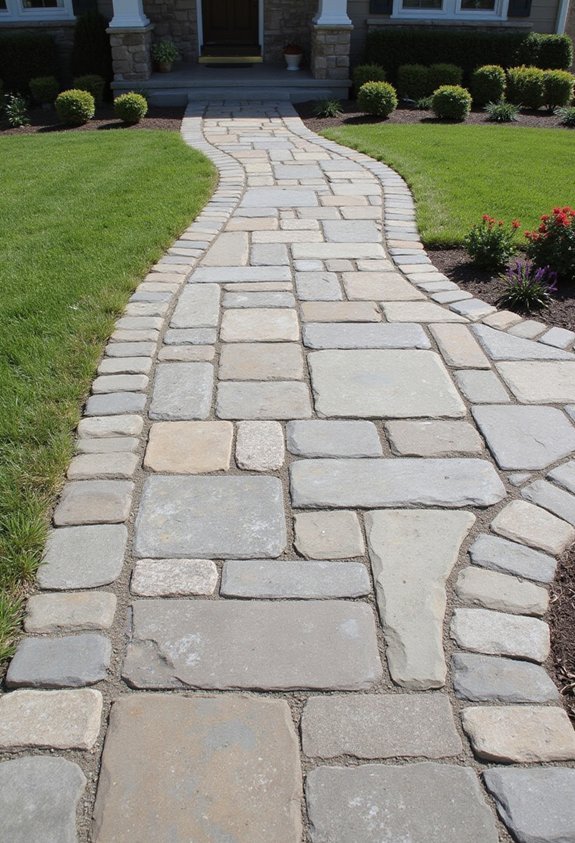
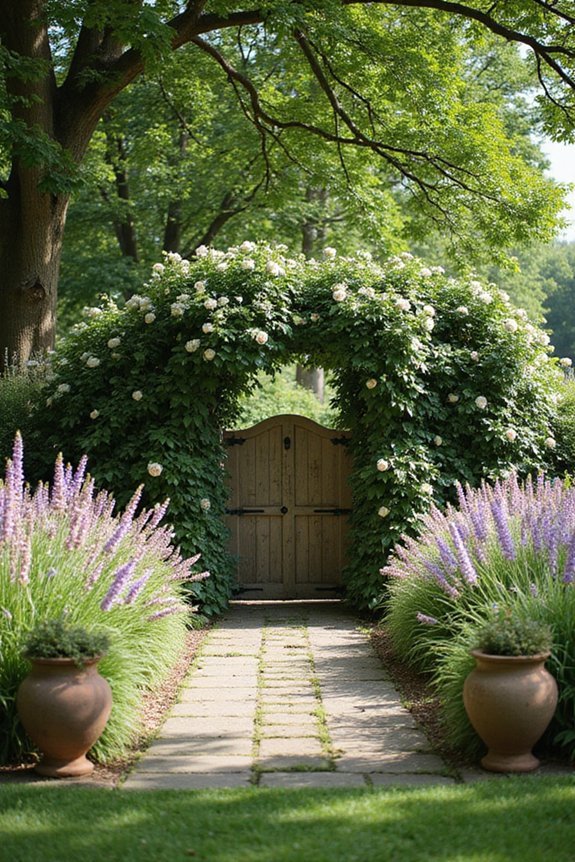
Flagstone pathways offer a timeless, sophisticated look that’ll transform your front yard into an inviting entryway, and you can achieve this elegant aesthetic by carefully spacing individual stones to create visual interest and practical functionality. When you’re installing flagstone, you’ll want to maintain consistent gaps between each stone, typically one to two inches wide, which prevents tripping hazards while allowing space for joint material like sand or grout. You should arrange your stones in a running bond or ashlar pattern, alternating their sizes and orientations to establish visual rhythm and balance throughout your pathway. As you lay each flagstone, you’ll guarantee they’re level and stable, using a rubber mallet to gently set them firmly into your prepared base. This methodical approach creates a durable, attractive pathway that’ll serve your home for decades.
Layered Planting Around Steps for Visual Flow
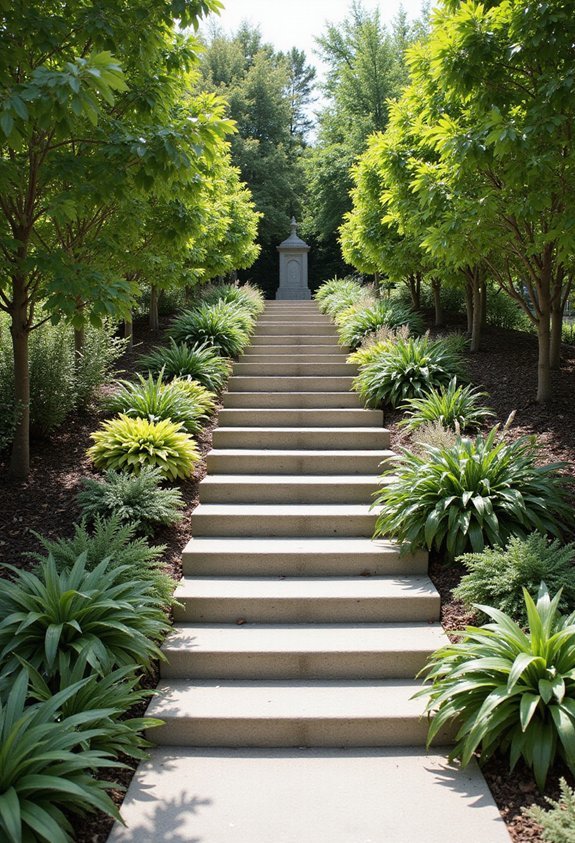
To create visual flow around your front yard steps, you’ll want to arrange plants in layers based on their heights and growth patterns, which guides the viewer’s eye naturally from one area to another while softening the hard edges of your pathway and steps. Place tall shrubs and ornamental grasses in the back layer, medium-height plants in the middle section, and low-growing groundcovers or flowering plants in the front. This tiered arrangement creates depth and prevents your landscape from looking flat. You’ll also want to examine bloom times and foliage colors so that interest extends throughout the seasons. Strategic placement of layered plantings makes your front entrance feel intentional and professionally designed.
Stamped Concrete for Custom Patterns and Texture
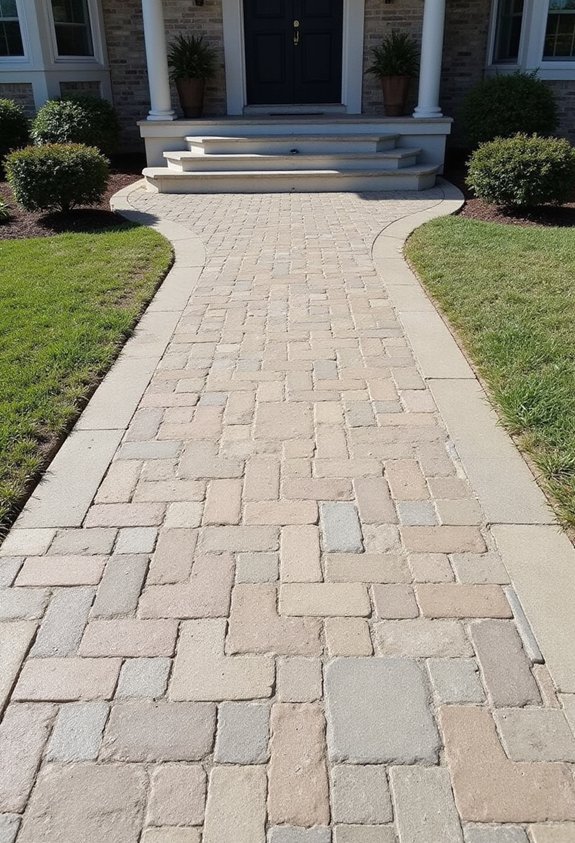
When you’re looking for a durable and customizable material for your front yard steps and pathways, stamped concrete offers you impressive design possibilities that go far beyond plain gray slabs. You can choose from various patterns—like brick, stone, or tile designs—that’ll enhance your home’s curb appeal while maintaining structural integrity. The stamping process involves pressing molds into fresh concrete to create textured surfaces that mimic expensive materials at a fraction of the cost. You’ll appreciate the low maintenance requirements, as stamped concrete resists weathering better than many alternatives. Additionally, you can select custom colors that complement your landscape design. The textured surface also provides better traction, making your steps safer during wet conditions, which is essential for family safety and accessibility.
Pathway Lighting for Nighttime Drama
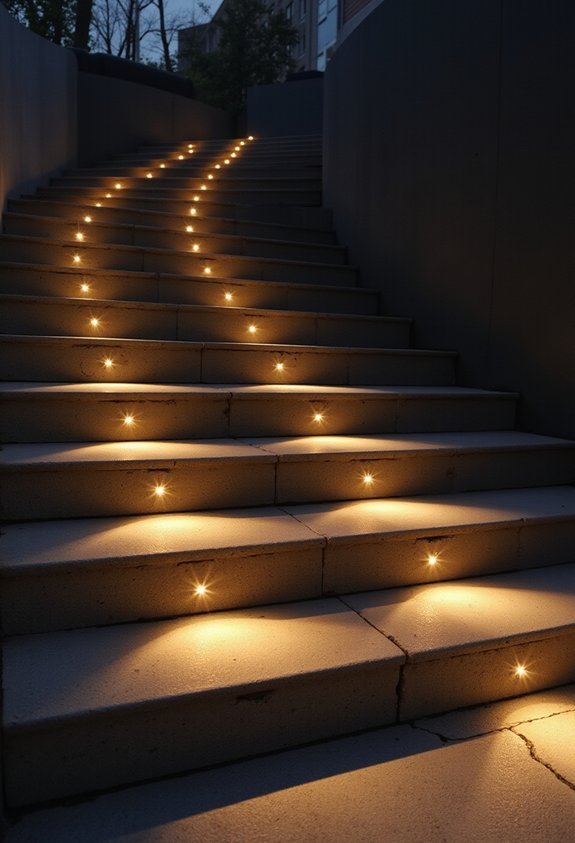
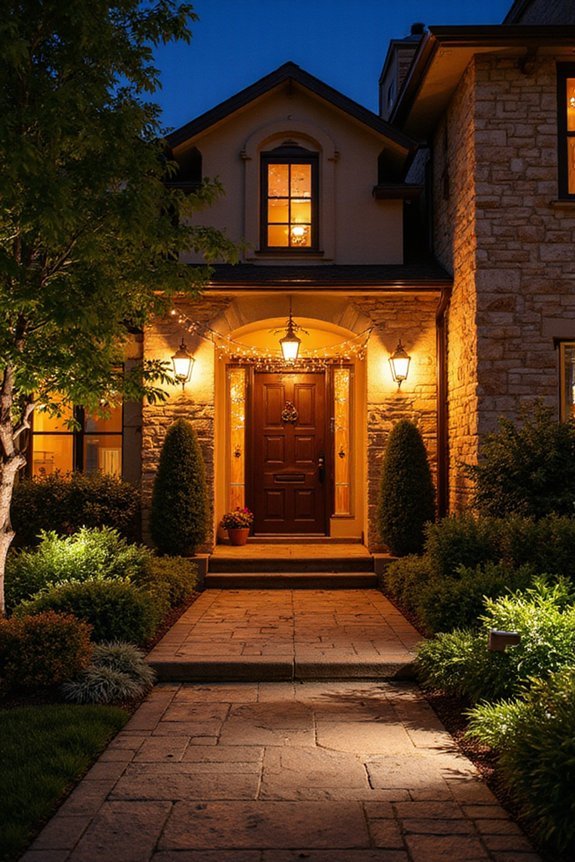
How can you transform your front yard after sunset into an inviting and safe outdoor space? Strategic pathway lighting accomplishes this by illuminating your steps and walkways while creating visual interest. You’ll want to install low-voltage LED lights along both sides of your pathway, spacing them approximately three feet apart for even coverage. Consider uplighting techniques, which direct light upward to highlight plants and architectural features bordering your steps. Solar-powered options provide cost-effective solutions that require minimal wiring. Position lights at ground level to avoid glare and shadows that could create tripping hazards. Warm-toned bulbs enhance ambiance compared to harsh white lighting. This layered approach to illumination not only guides visitors safely but also emphasizes the clean lines and texture you’ve achieved through your stamped concrete design.
Combining Materials for Contrast and Interest
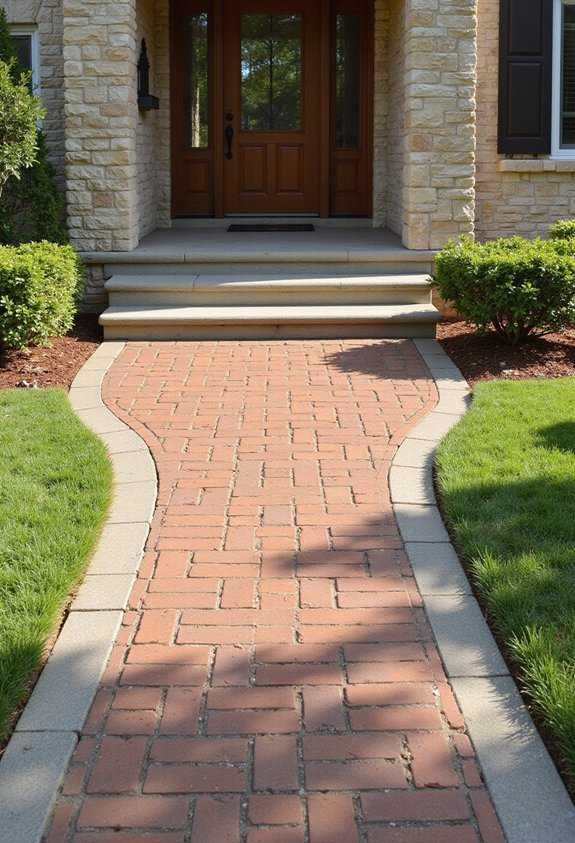
By mixing different materials in your front yard pathway design, you’ll create visual depth and architectural interest that elevates your home’s curb appeal. Consider combining stone pavers with gravel borders, which provides texture contrast while defining pathway edges clearly. You can also pair natural wood edging with concrete or brick sections, creating warm and cool tones that guide visitors’ eyes along your route. Alternating materials strategically breaks up monotony and prevents your pathway from appearing flat or unfinished. When selecting complementary materials, guarantee they’re durable and weather-resistant for long-lasting performance. Balance heavy materials like slate with lighter options such as pea gravel, establishing visual harmony throughout your design. This thoughtful combination approach transforms ordinary pathways into sophisticated landscape features that reflect your home’s character.
Making Narrow Pathways Feel Spacious
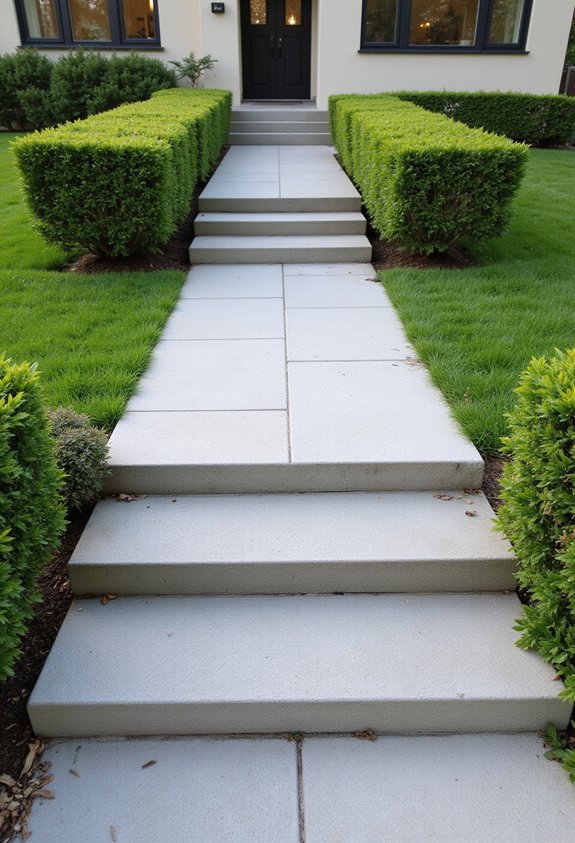
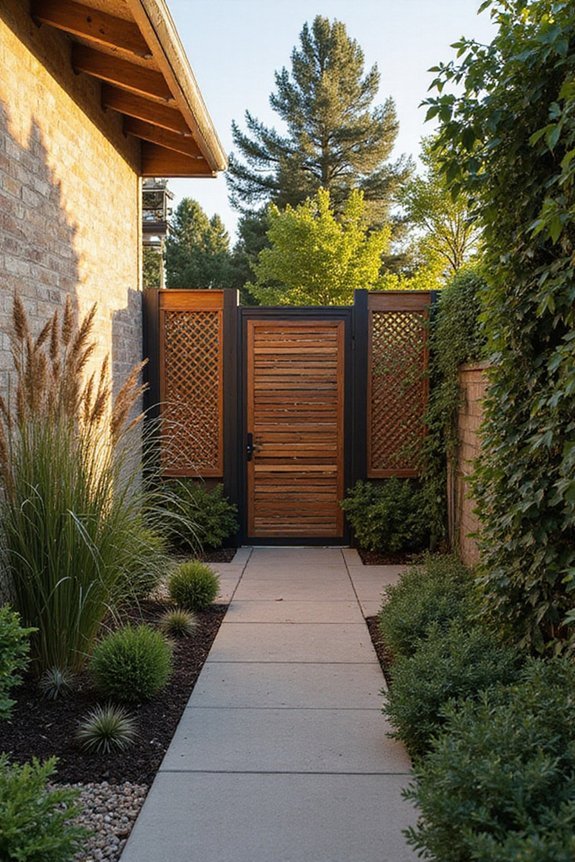
You can open up confined front yard pathways through strategic design choices that create the illusion of width and flow. Install lighting along the pathway edges to draw the eye outward, making the space feel broader than it actually is. Use lighter-colored materials like pale stone or concrete, which reflect light and visually expand the area. Incorporate curved lines rather than straight edges, as curves naturally guide movement and create perceived depth. Plant low-growing vegetation on either side, keeping sight lines clear and unobstructed. Avoid cluttering the pathway with decorative elements, allowing visual space to breathe. Strategic placement of vertical features such as slim planters or tall grasses on the perimeter, rather than the pathway center, preserves openness while adding visual interest and dimension.
Slate Stepping Stones: Natural Pathway Sophistication
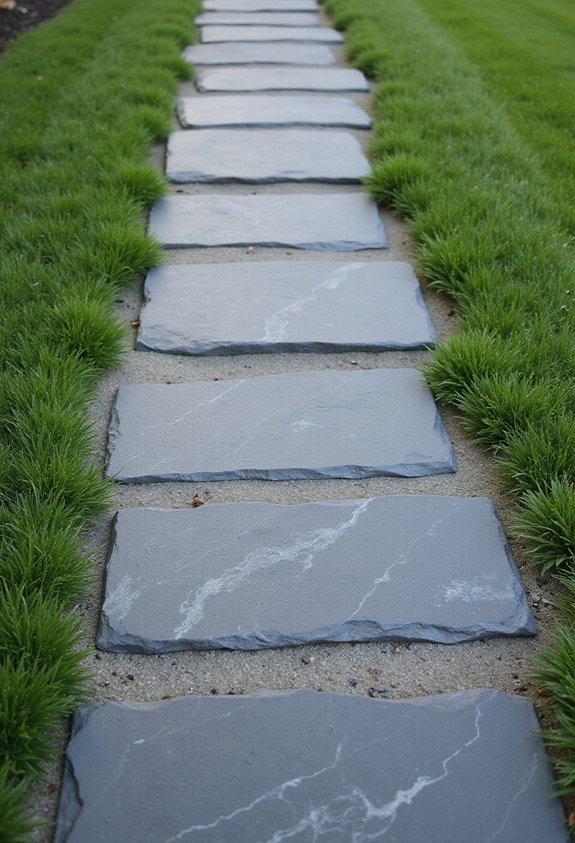
When you’re looking to create a front yard pathway that combines natural beauty with lasting durability, slate stepping stones offer an excellent solution that’ll elevate your home’s exterior aesthetic. Slate’s naturally textured surface provides reliable traction, preventing slips even when wet conditions occur. You’ll appreciate how these stones resist weathering, maintaining their appearance through multiple seasons without significant deterioration. Installation involves spacing stones evenly across your yard, allowing approximately one to two feet between each piece for comfortable stepping. The irregular edges of slate create visual interest while blending seamlessly with landscaping elements. You can arrange them in straight lines for formal designs or staggered patterns for casual appeal. Proper base preparation with sand or gravel guarantees stable, long-lasting placement that won’t shift over time.
Sloped Transitions That Blend Into Your Design
Most front yards aren’t perfectly flat, which means your pathway’ll need to handle elevation changes gracefully while maintaining both safety and visual appeal. Rather than creating abrupt steps, you can install sloped adjustments that guide foot traffic smoothly between different levels, reducing tripping hazards while enhancing your landscape’s natural flow. These gradual inclines work particularly well when you incorporate them alongside stone or concrete materials, allowing you to blend functional design seamlessly into your overall aesthetic. By calculating proper slope ratios—typically one inch of rise for every twelve inches of run—you’ll guarantee accessibility for all visitors. Sloped adjustments also prevent water pooling and erosion, directing drainage effectively throughout your front yard design while maintaining the sophisticated appearance you’re seeking.
Geometric Tile Patterns for Contemporary Homes
Because contemporary home designs emphasize clean lines and minimalist aesthetics, geometric tile patterns offer an excellent way to create visual interest in your front yard pathway while maintaining that modern sensibility. You can select from various geometric options, including hexagons, triangles, and interlocking squares, which you’ll arrange in repeating patterns that guide visitors toward your entrance. These tile patterns work particularly well when you choose neutral colors like gray, white, or black, though you can incorporate one accent color for subtle contrast. You’ll want to guarantee proper installation by laying tiles on a level, well-prepared base, which prevents shifting and cracking. Geometric patterns also serve a practical purpose: they’re easy to clean and maintain while delivering that sophisticated, contemporary appearance you’re seeking for your home’s exterior.
Mulch and Bark Pathways With Clean Edging
If you’re drawn to natural materials that blend seamlessly with landscaping, mulch and bark pathways offer you an affordable and visually appealing alternative to hardscaping options. You’ll want to establish clean edges using metal or plastic edging strips that prevent mulch from spreading into surrounding garden beds, which maintains your pathway’s defined appearance and reduces maintenance demands. Install a landscape fabric barrier beneath your mulch layer to suppress weeds and extend the life of your material, which saves you time and money over several seasons. You should apply mulch or bark chips at a depth of two to three inches for ideal coverage and functionality. Regular replenishment becomes necessary as decomposition occurs naturally, typically requiring fresh material annually to maintain both appearance and structural integrity of your pathways.
Handling Multiple Yard Levels Smoothly
Yards with sloping terrain or multiple elevation changes present unique challenges that you’ll need to address thoughtfully when designing front yard pathways. To handle these shifts smoothly, you’ll want to incorporate gentle ramps or graduated steps that connect different levels without creating abrupt, unsafe drops. Install retaining walls alongside pathways to stabilize soil and define separate yard sections effectively. Consider using wider steps with shallow treads, which reduce tripping hazards and accommodate various mobility needs. Guarantee proper drainage around level shifts to prevent water pooling and erosion problems. Adding handrails on steeper sections provides essential safety and support. By strategically planning how pathways navigate elevation changes, you’ll create functional, visually cohesive outdoor spaces that integrate naturally with your home’s architectural features.
Budget-Friendly Pathway Updates That Deliver Impact
Many homeowners assume that upgrading front yard pathways requires substantial financial investment, yet you can dramatically transform your outdoor space through strategic, cost-effective improvements that don’t compromise quality or aesthetic appeal. You’ll find that affordable materials like recycled pavers, mulch, or gravel create polished pathways at minimal expense. Consider invigorating existing concrete with pressure washing and sealant application, which restores appearance without replacement costs. You can also install edging using reclaimed wood or metal strips to define pathways clearly and professionally. Planting budget-friendly ground covers or low-maintenance shrubs along your walkway adds visual interest and structure. These practical updates enhance curb appeal greatly while maintaining your financial constraints, proving that impactful pathway improvements don’t necessarily demand expensive materials or extensive professional services to achieve professional-looking results.
Conclusion
You’ve learned that 73% of homeowners report increased curb appeal after upgrading their front yard pathways, which demonstrates the substantial impact these projects deliver. By selecting materials that match your home’s style—whether classic brick, modern concrete, or natural stone—you’ll create a functional entrance that guides visitors while protecting your landscape. Your pathway choice directly influences both your property’s visual appeal and its long-term durability.