If you’re tired of mowing, watering, and maintaining a traditional grass lawn, you’ve got practical alternatives that’ll transform your front yard. From clover lawns and moss gardens to native wildflowers and ornamental grasses, these options require far less maintenance while supporting local ecosystems. Each solution offers distinct advantages depending on your climate, soil conditions, and aesthetic preferences. But which option works best for your specific situation?
Clover Lawns: Hardy Ground Cover That Thrives in Poor Soil
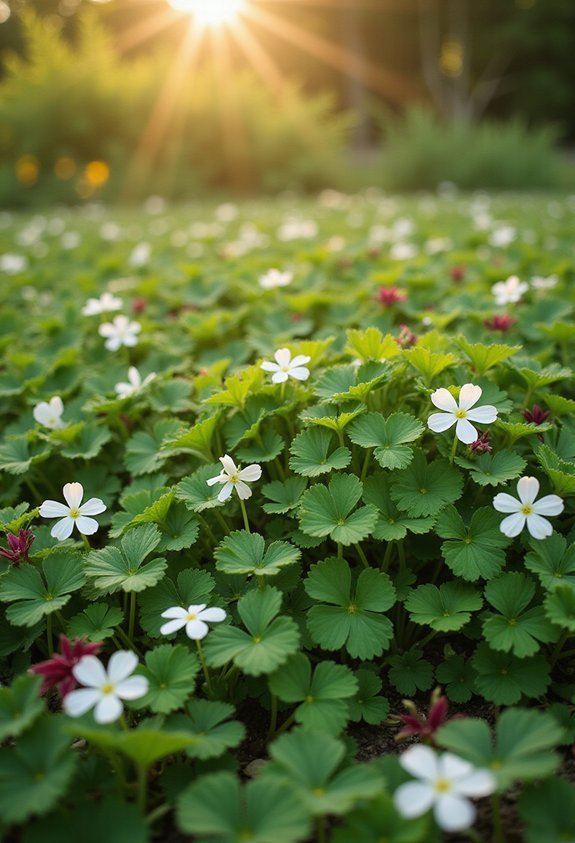
If you’re looking for a grass alternative that’ll actually flourish where traditional grass struggles, clover lawns are worth considering because they’re naturally hardy, require less maintenance, and can transform poor soil into a thriving landscape. Clover establishes itself quickly in compacted or nutrient-deficient soil where grass won’t grow, making it ideal for challenging front yards. You’ll notice that clover fixes nitrogen in the soil naturally, which means you’re gradually improving your yard’s fertility without adding fertilizers. The dense growth pattern prevents weeds from taking over, reducing your weeding responsibilities substantially. Clover tolerates shade and drought better than most grass varieties, so you’ll water less frequently. This ground cover stays green longer into fall and spring, giving you year-round color with minimal effort and expense.
Moss Gardens: Soft, Shade-Tolerant Alternatives
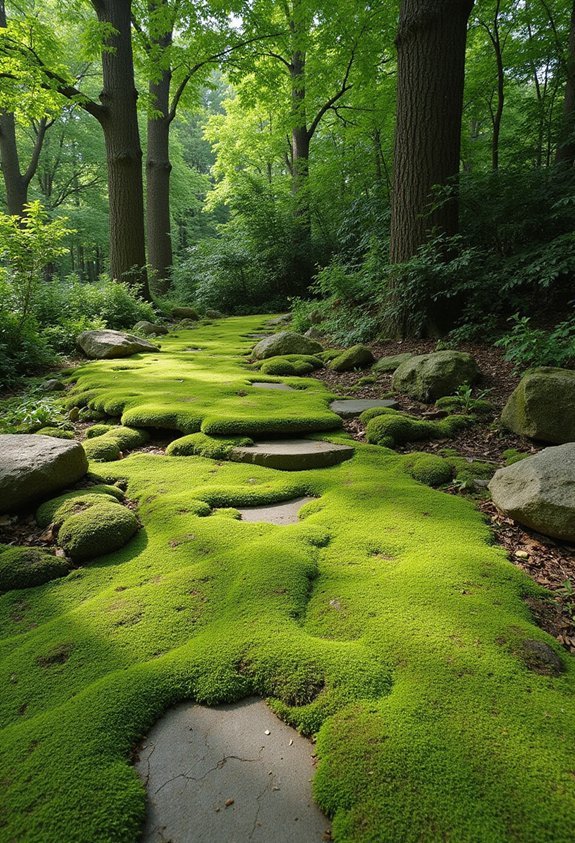
Since traditional grass struggles in shaded areas where sunlight doesn’t reach consistently, moss gardens offer you a practical solution that’ll transform those dark, damp corners of your front yard into lush green spaces. Moss thrives in moisture-rich environments with minimal sunlight, making it ideal for spots beneath trees or alongside shaded structures. You can establish moss gardens by loosening soil, adding peat moss or acidic amendments, and introducing moss spores or fragments. Keep the area consistently moist during establishment, which typically takes several weeks. Once established, moss requires minimal maintenance—no mowing, fertilizing, or intensive watering. You’ll appreciate its soft texture underfoot and its ability to prevent erosion on sloped areas, creating visually appealing green coverage where conventional lawns simply won’t flourish.
Creeping Thyme: Fragrant Groundcover for Sunny Spaces
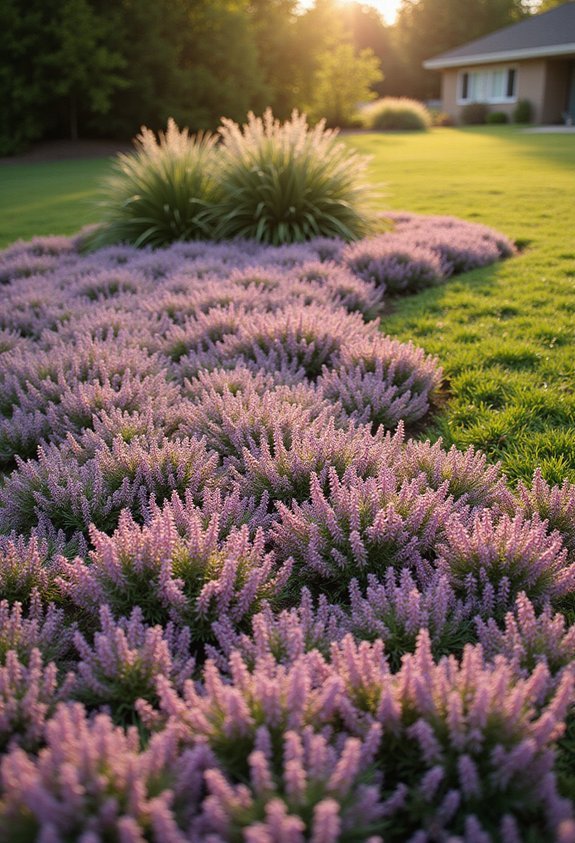
While moss gardens excel in shaded regions, creeping thyme offers you an excellent alternative for front yard areas that receive plenty of direct sunlight throughout the day. This low-growing perennial plant produces tiny, fragrant leaves and delicate flowers in purple, pink, or white, creating visual appeal while releasing pleasant aromas when walked upon. Creeping thyme requires minimal maintenance once established, needing infrequent watering and tolerating poor soil conditions that would challenge traditional grass. You’ll find that this groundcover spreads gradually across bare patches, eventually forming a dense mat that suppresses weeds naturally. Plant thyme in spring or fall, spacing plants six inches apart, and allow adequate air circulation to prevent moisture-related diseases. The result is a sustainable, attractive landscape requiring considerably less effort than conventional lawn care.
Ornamental Grasses Without Mowing: Texture and Movement
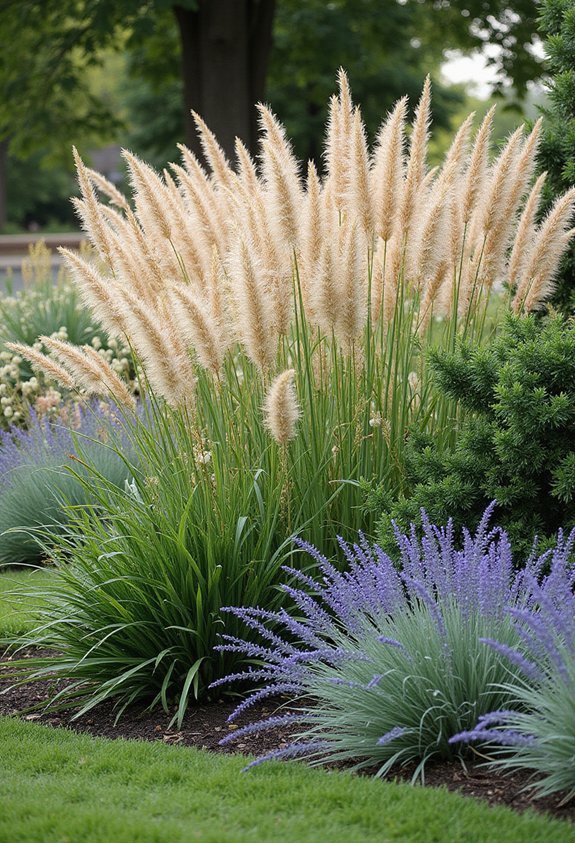
Beyond the fragrant groundcovers that thrive in sunny spots, ornamental grasses offer you another compelling option for creating visual interest in your front yard without requiring regular mowing. These grasses provide year-round texture and movement, swaying gracefully in the breeze and creating dynamic visual effects. Popular varieties like fountain grass, blue fescue, and feather reed grass establish themselves quickly and demand minimal maintenance once established. You’ll appreciate their ability to tolerate drought conditions, reducing your watering needs considerably. Their tall, architectural forms add depth to garden beds, while their seed heads provide autumn and winter interest. Most ornamental grasses require only annual cutting back in early spring, making them substantially less demanding than traditional lawn grass maintenance while delivering impressive aesthetic appeal.
Native Wildflower Meadows: Supporting Pollinators and Local Ecosystems
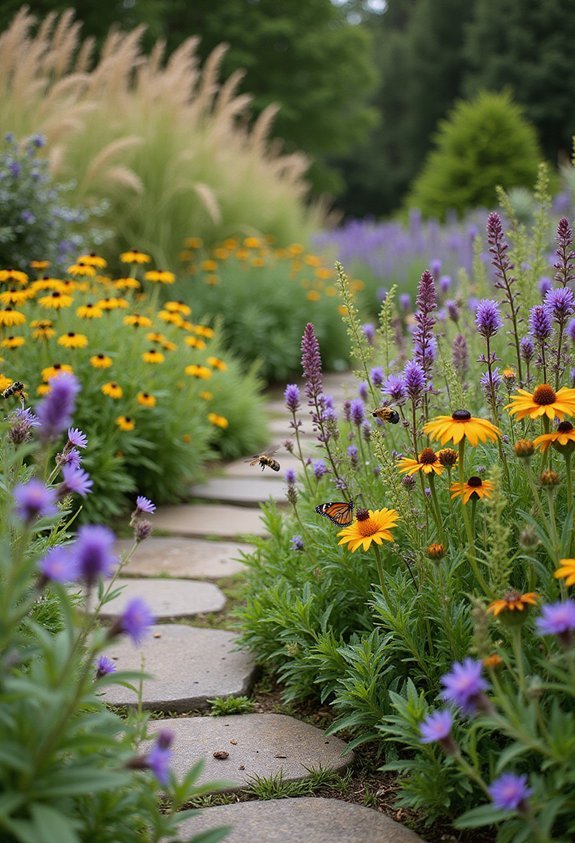
If you’re looking for a front yard approach that actively supports local wildlife while eliminating lawn maintenance entirely, native wildflower meadows offer an excellent solution that transforms your yard into a thriving ecosystem. You’ll create habitat for bees, butterflies, and other pollinators by planting species naturally suited to your region’s climate and soil conditions. Native wildflowers require minimal watering once established, reducing your resource consumption greatly. You’ll mow just once annually in late fall, allowing flowers to self-seed for next season. This approach supports local food chains, as native plants provide nectar and pollen that non-native species can’t match. Your meadow’ll attract diverse wildlife while requiring substantially less effort than traditional lawns, making it both environmentally beneficial and practically advantageous.
Sedums and Succulents: Drought-Resistant Beauty Year-Round
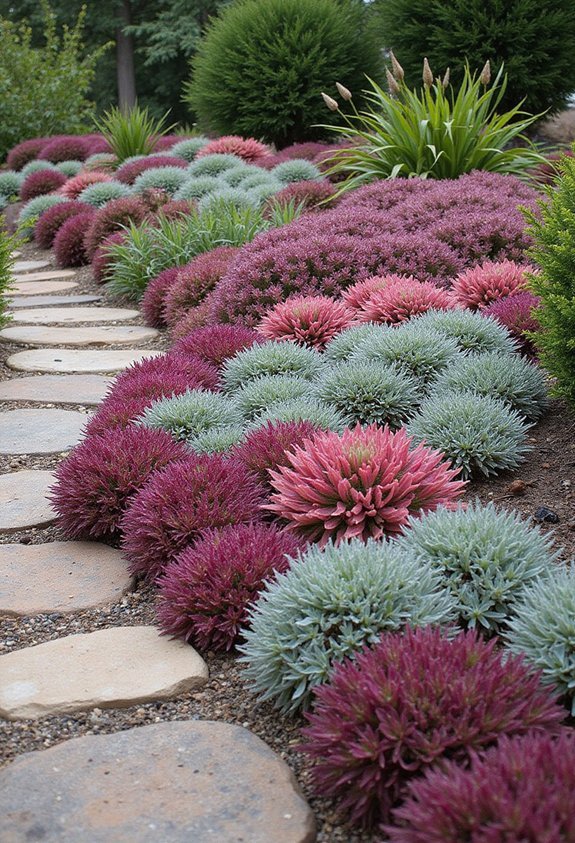
Sedums and succulents represent a fundamentally different approach to front yard landscaping, one that prioritizes water conservation and year-round visual interest without the demanding maintenance schedules of traditional lawns. You’ll find these plants thrive in poor soil conditions where most grass struggles, requiring minimal watering once established. Their thick, fleshy leaves store water efficiently, making them ideal for drought-prone regions. You can choose from diverse varieties that display brilliant colors throughout seasons, from deep purples and reds to soft greens and blues. Sedums spread naturally across garden beds, creating attractive ground covers that suppress weeds effectively. Their low growth habit means you won’t need regular mowing, saving you time and effort while reducing your environmental footprint.
Artificial Turf: Realistic Green Without Water or Upkeep
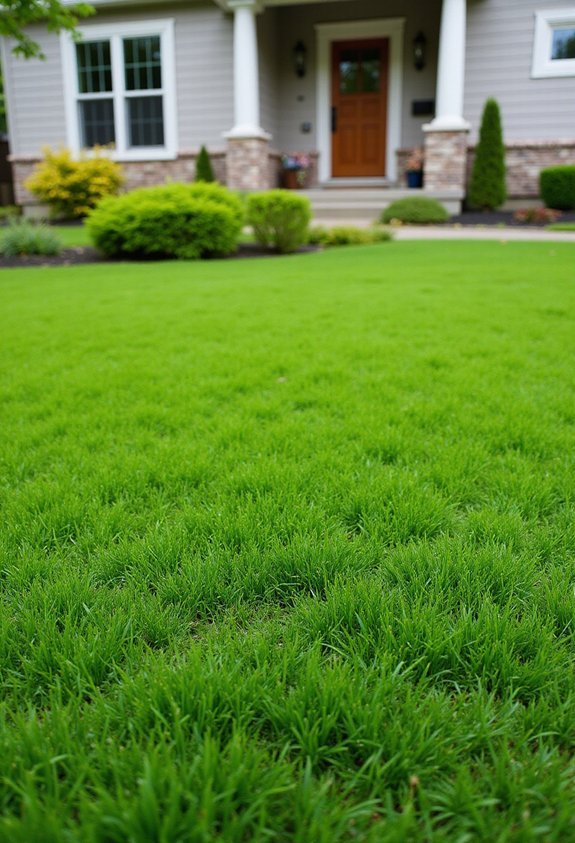
Modern artificial turf has evolved dramatically over the past decade, transforming from obviously plastic-looking lawn into a sophisticated landscaping solution that closely mimics natural grass in both appearance and texture. You’ll find that today’s synthetic options feature realistic color variations, natural-looking blade shapes, and authentic drainage systems that prevent water pooling. Installation involves preparing your soil base, adding a foundation layer, and securing the turf with adhesive and infill materials like rubber or sand. Once installed, you’re eliminating watering needs entirely, reducing maintenance to occasional brushing and debris removal. Your artificial lawn won’t require mowing, fertilizing, or pest management, making it ideal for busy homeowners or arid climates where water conservation matters. The investment upfront pays dividends through decades of consistent, maintenance-free greenery.
Hardscaping With Pavers and Stone: Creating Visual Interest
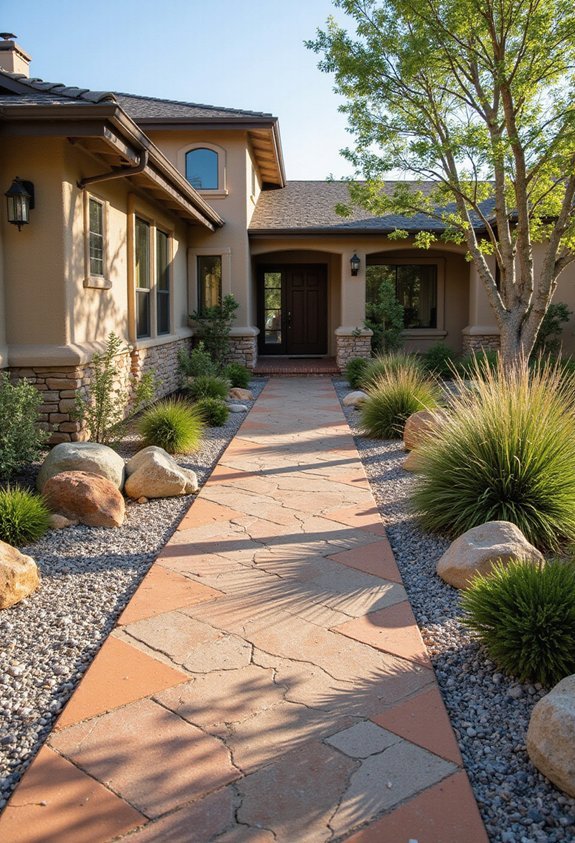
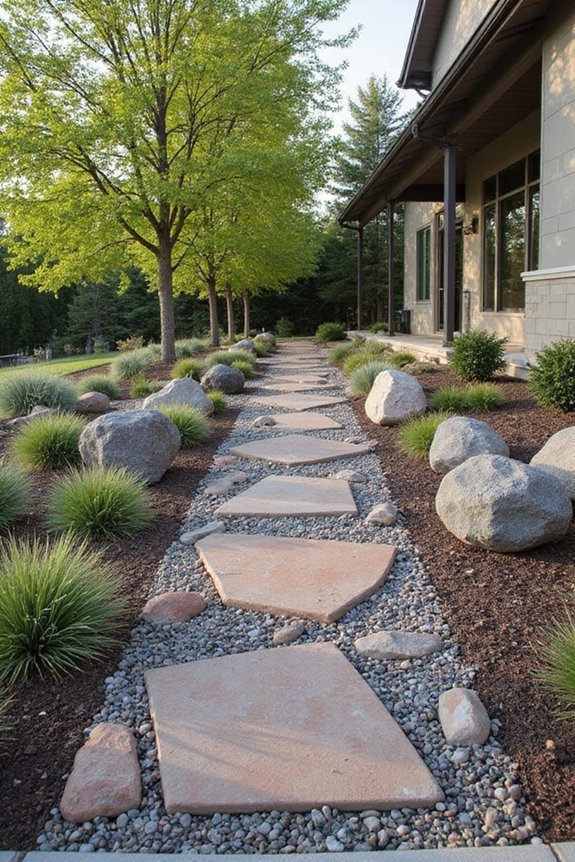
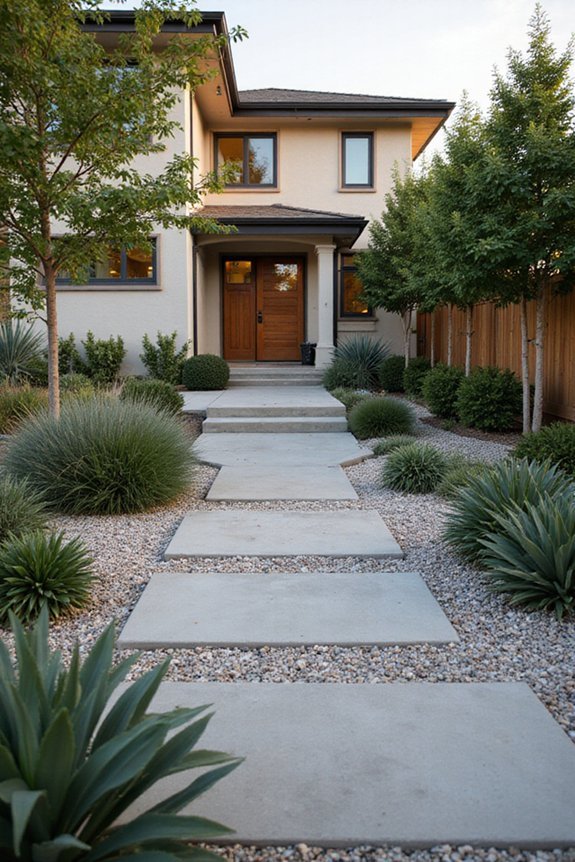
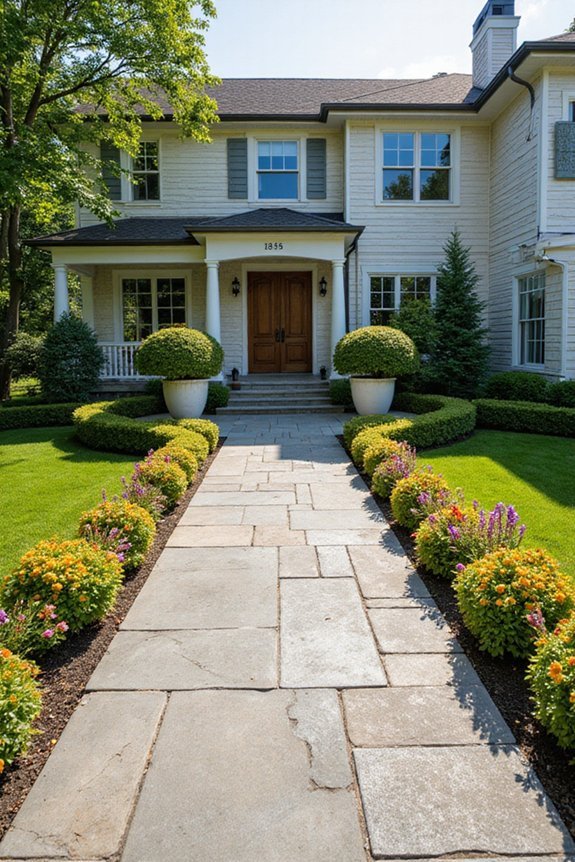
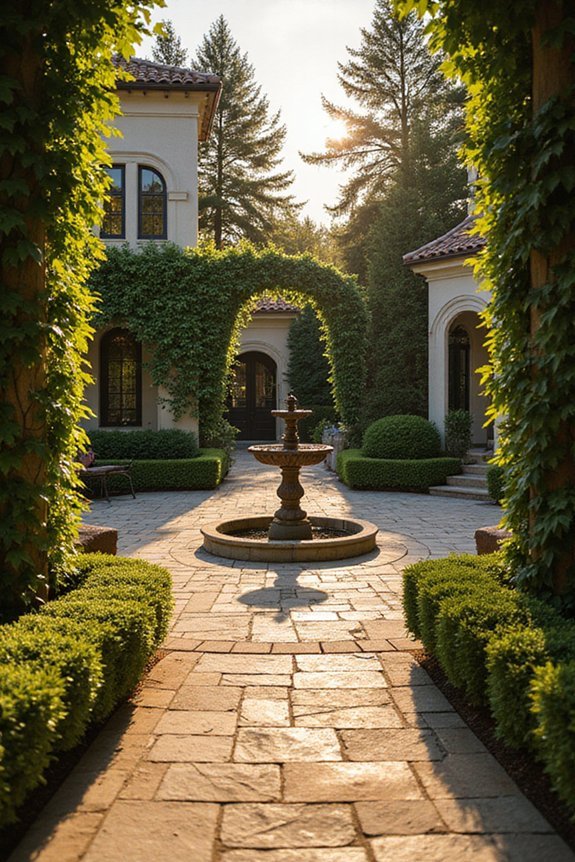
While artificial turf offers a low-maintenance green solution, hardscaping materials like pavers and stone provide you with a completely different approach to transforming your front yard into an attractive, functional outdoor space. You can arrange pavers in geometric patterns, creating pathways that guide visitors through your landscape while adding visual depth and dimension. Stone materials like slate, flagstone, or granite offer natural textures and colors that complement your home’s architecture. By combining different stone sizes and patterns, you’ll establish focal points and define specific areas within your front yard. Hardscaping requires minimal maintenance compared to traditional grass, and it won’t demand watering or mowing, making it an excellent long-term investment for your property’s curb appeal and overall functionality.
Mulch Beds With Shade Plants: Low-Water Planting Zones
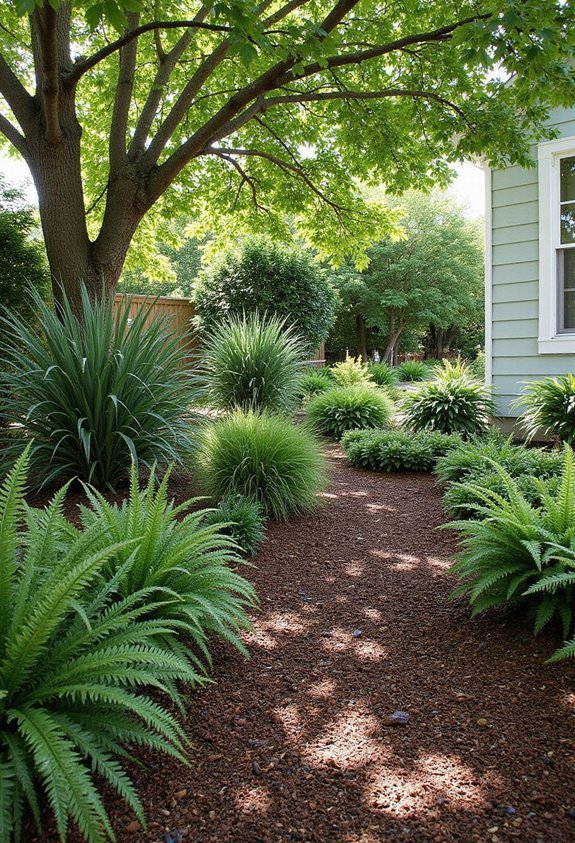
If you’re looking to soften the hardscape elements in your front yard while reducing your water consumption, mulch beds filled with shade-tolerant plants offer you an effective solution that balances aesthetics with practicality. You’ll create designated planting zones beneath trees or along north-facing walls where sunlight is limited, and these areas naturally require less watering than sun-exposed landscapes. When you install mulch beds, you’re establishing moisture-retentive environments that suppress weeds while regulating soil temperature. Select shade plants like hostas, ferns, and coral bells that thrive in low-light conditions and demand minimal maintenance. You’ll notice improved water conservation as mulch reduces evaporation considerably, making your front yard both environmentally responsible and visually appealing with layered textures and varied foliage colors.
Buffalo Grass: A Native Option for Drier Climates
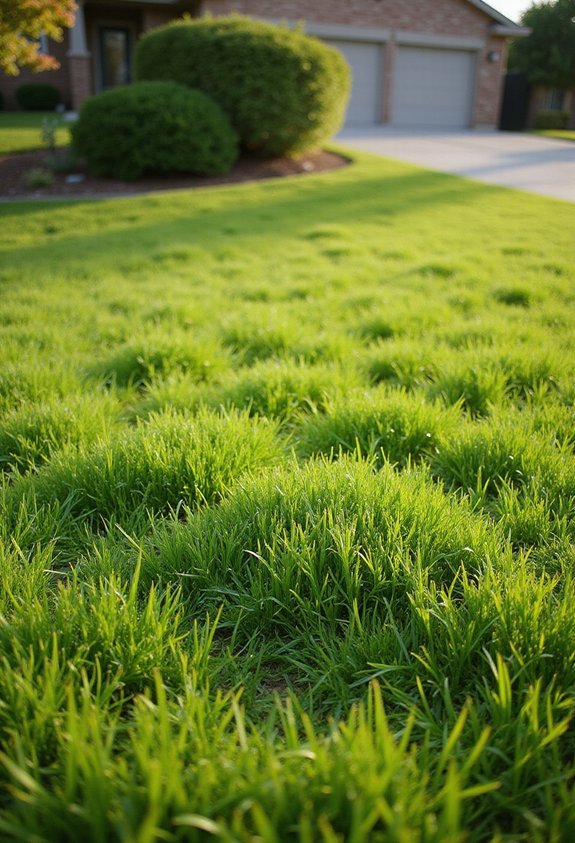
Native to the Great Plains, buffalo grass offers you a remarkably resilient alternative to traditional lawn varieties, especially if you’re working with limited water resources and challenging soil conditions. This hardy grass thrives in hot, dry climates where conventional lawns struggle, requiring minimal watering once established. Buffalo grass develops deep root systems that access moisture far below the soil surface, making it ideal for drought-prone regions. You’ll appreciate its low maintenance requirements, as it doesn’t demand frequent mowing or fertilizing. The grass grows slowly and spreads through rhizomes, creating a dense, attractive ground cover that naturally suppresses weeds. Its ability to tolerate poor soil quality and extreme temperatures makes buffalo grass an excellent choice for sustainable front yard landscaping in arid environments.
Dichondra: A Fine-Textured Tropical Alternative
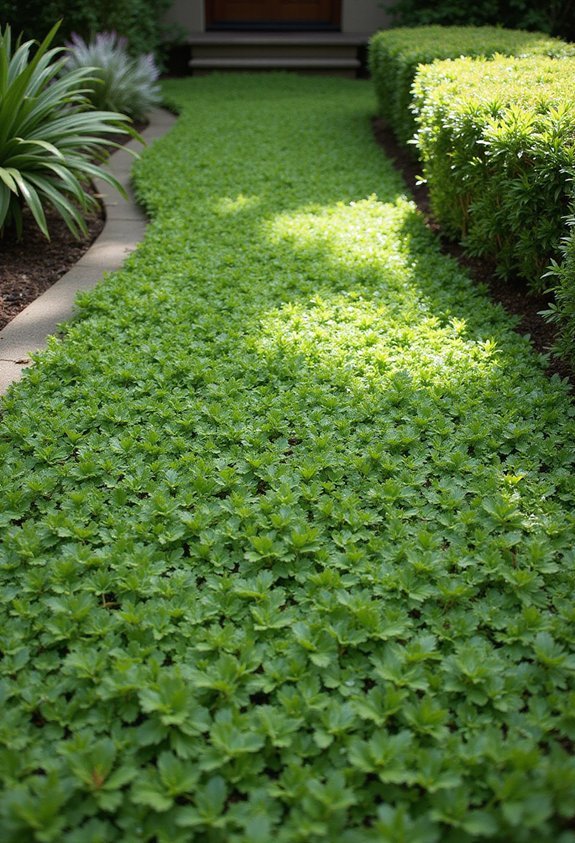
For homeowners in warm, humid climates who want something distinctly different from the drought-tolerant grasses suited to arid regions, dichondra presents an attractive option that’ll transform your front yard into a lush, carpet-like landscape. This tropical ground cover features delicate, coin-shaped leaves that create a soft, fine texture underfoot, making it visually appealing and comfortable for barefoot walking. You’ll find that dichondra thrives in partial shade to full sun, though it prefers afternoon shade in intensely hot regions. The plant spreads quickly to fill spaces, requiring minimal maintenance once established. You’ll need to water regularly during dry periods and mow occasionally to maintain a neat appearance. Dichondra won’t tolerate freezing temperatures, making it ideal specifically for USDA zones 9 through 11.
Microclover: The Low-Growing Nitrogen-Fixing Option
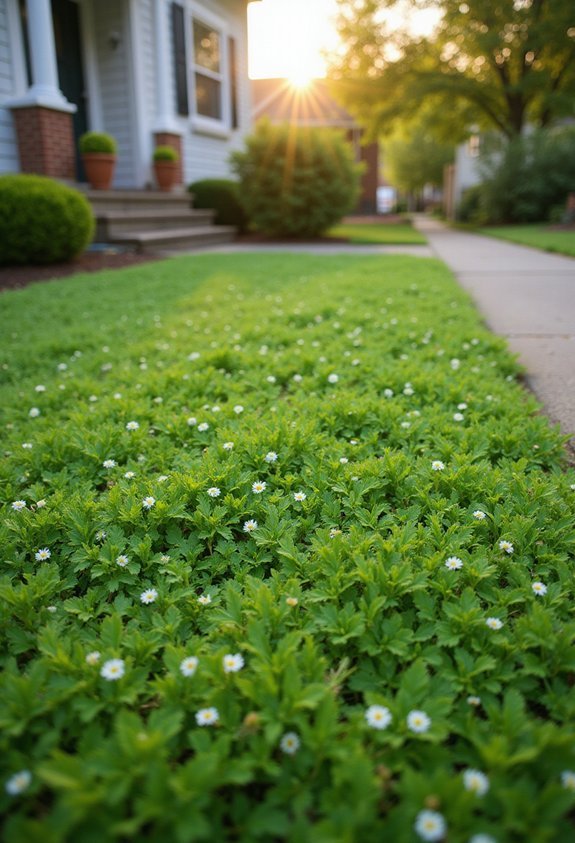
While dichondra thrives in warm tropical climates, microclover offers a practical alternative that’ll work across many different regions and brings unique benefits to your yard. This low-growing plant typically reaches only 2 to 4 inches tall, making it an excellent choice for front yards where you want minimal maintenance. Microclover’s most impressive feature is its nitrogen-fixing ability, meaning it naturally converts atmospheric nitrogen into soil nutrients, reducing your need for chemical fertilizers. You’ll appreciate how it spreads gradually to fill bare patches, creating a dense, attractive ground cover. The plant tolerates foot traffic reasonably well and requires infrequent mowing compared to traditional grass. Its drought tolerance and ability to thrive in poor soil conditions make microclover particularly valuable for homeowners seeking sustainable, cost-effective front yard solutions.
Creeping Jenny: Bright Foliage for Partial Shade
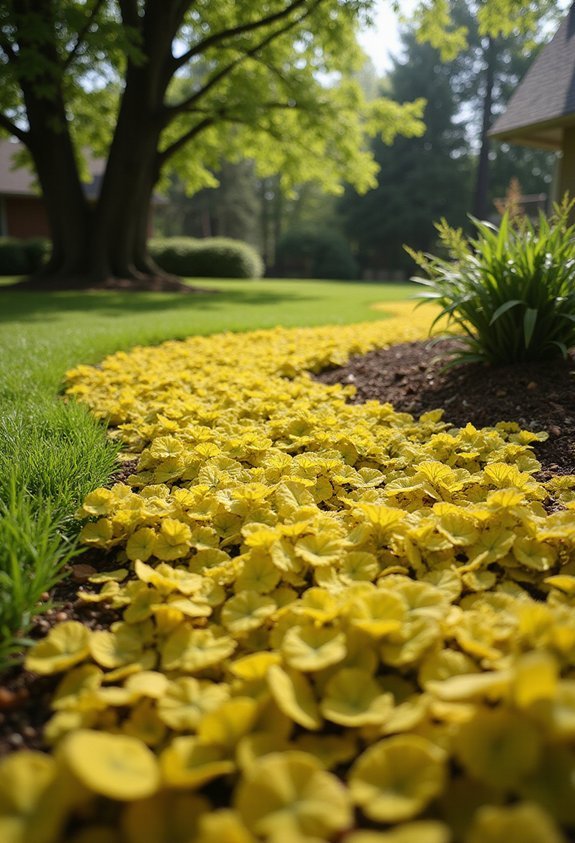
If your front yard’s shaded areas need a vibrant ground cover that’ll brighten up those dimmer spaces, creeping Jenny delivers exactly what you’re looking for. This trailing plant features bright yellow-green foliage that creates visual interest even in partial shade conditions. You’ll appreciate how creeping Jenny spreads across the ground, forming a dense mat that suppresses weeds and requires minimal maintenance once established. The plant thrives in moist soil and tolerates temperatures well across most regions. When planting, space specimens 12 inches apart to allow room for expansion. Water regularly during the first growing season to establish strong roots. Creeping Jenny also works effectively in containers and hanging baskets, offering flexibility in your landscaping design. Its low-growing nature means you’ll rarely need to trim it back.
Decorative Gravel and River Rock: Minimalist Elegance
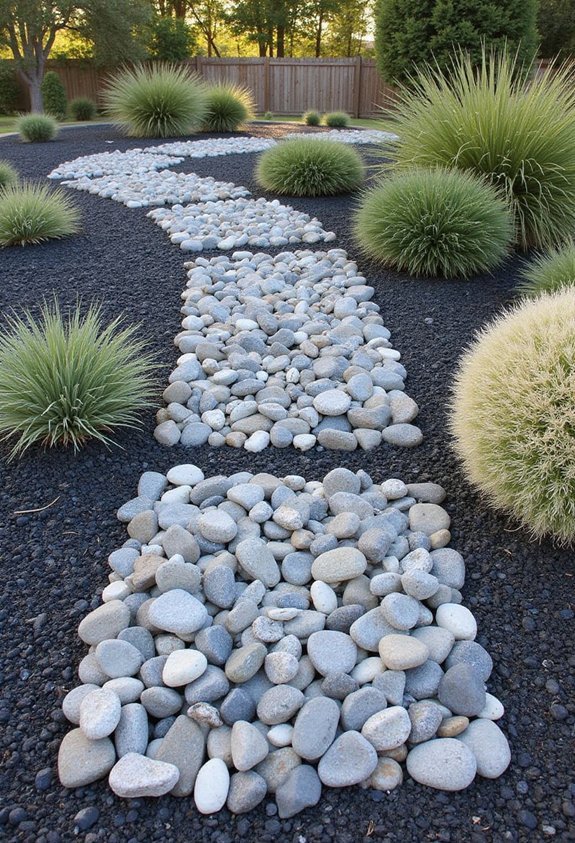
When you’re seeking a low-maintenance alternative that doesn’t require watering, mowing, or regular upkeep, decorative gravel and river rock offer an excellent solution for transforming your front yard into a clean, modern landscape. You can select from various sizes, colors, and textures to create visual interest while maintaining a minimalist aesthetic. River rocks provide smooth, polished surfaces that catch sunlight beautifully, whereas pea gravel offers comfortable walking surfaces. You’ll want to install landscape fabric underneath to prevent weeds from growing through, which drastically reduces maintenance demands. These materials drain efficiently during rainstorms, eliminating water pooling issues. You can arrange rocks strategically around existing plants or structures to enhance your yard’s architectural features. This approach creates an instantly sophisticated appearance while remaining budget-friendly and environmentally responsible.
Ground Covers You Can Walk On: Durability for Active Yards
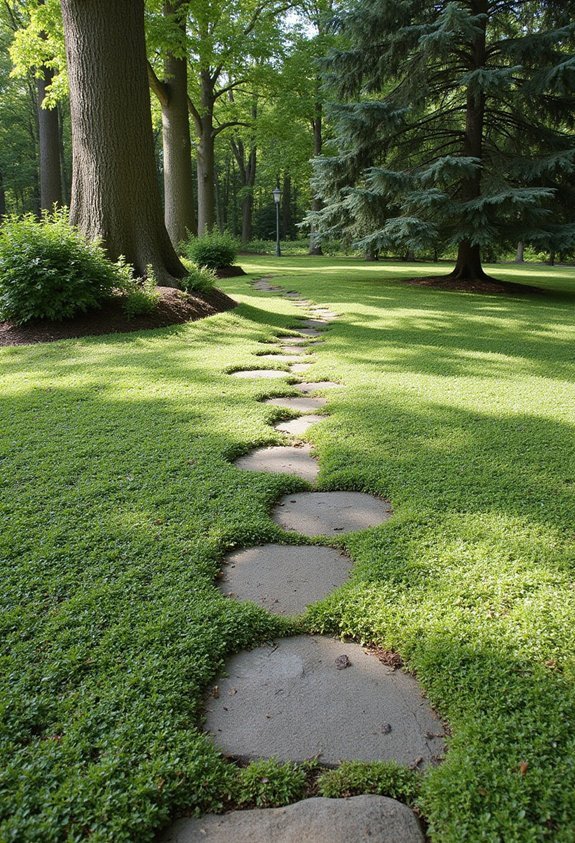
For homeowners with children, pets, or frequent foot traffic who need something more functional than decorative rock, walkable ground covers provide a practical alternative that combines durability with natural appeal. Clover, creeping thyme, and moss varieties can withstand regular foot traffic while requiring less maintenance than traditional grass. These options establish deep root systems that prevent erosion and compact soil, making them ideal for high-traffic pathways. Clover’s nitrogen-fixing properties naturally enrich your soil, reducing fertilizer needs. Creeping thyme offers aromatic benefits alongside its durability, while moss thrives in shaded areas where grass struggles. When installing walkable ground covers, prepare soil properly and space plants according to species requirements. With proper establishment, these alternatives deliver a functional, resilient yard surface suited for active families.
Perennial Flower Beds: Year-Round Color in Defined Zones
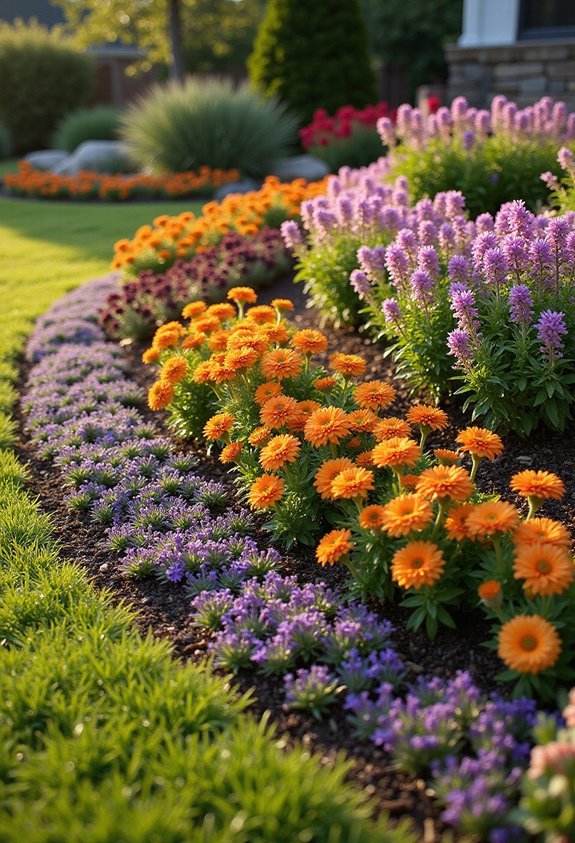
While ground covers serve as functional lawn replacements, perennial flower beds offer a more visually dynamic approach to transforming your front yard into a vibrant landscape. You’ll create defined zones by designating specific areas for flower plantings, which gives your yard structure and visual interest. Perennials return year after year, eliminating the need for replanting annually, and they’ll provide consistent color throughout multiple seasons. You can strategically arrange plants by height, bloom time, and color to guarantee continuous flowering from spring through fall. This layered approach creates depth and prevents bare spots in your landscape design. By selecting varieties suited to your climate and sunlight conditions, you’re establishing a sustainable, low-maintenance front yard that delivers reliable aesthetic appeal without requiring grass.
Woodland Gardens: Shade-Loving Plants and Natural Aesthetics
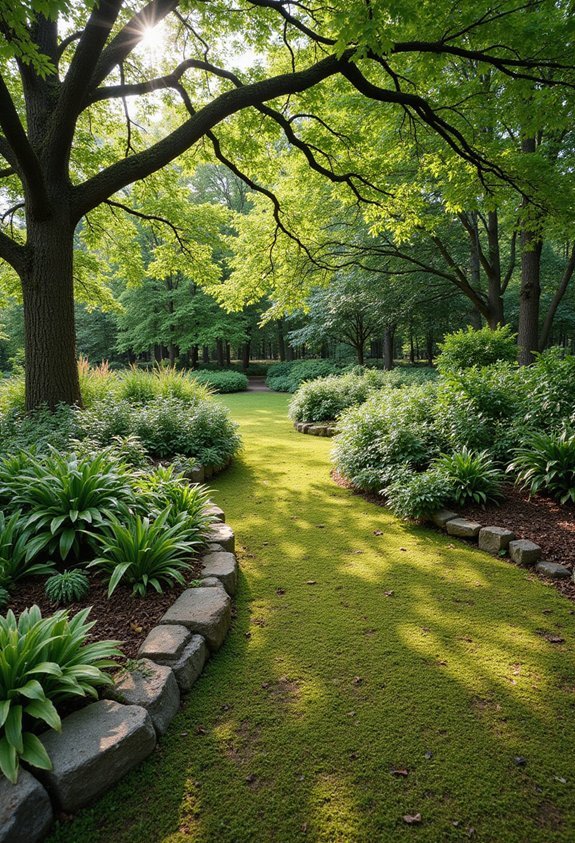
If your front yard’s shaded areas have made you hesitant to create an attractive landscape, you’ll find that woodland gardens offer an excellent solution by transforming those dim spaces into lush, naturalistic retreats that thrive without direct sunlight. You can incorporate shade-loving plants like hostas, ferns, and astilbe, which flourish in low-light conditions and provide varied textures and colors throughout the seasons. Adding layers of mulch mimics the forest floor, creating a natural aesthetic while suppressing weeds and retaining moisture. Consider including woodland perennials such as bleeding heart and hellebores for additional visual interest. You’ll also want to introduce shade-tolerant groundcovers that spread gradually, filling gaps between larger plants. This approach transforms previously unusable shaded areas into beautiful, functional spaces that require minimal maintenance.
Drought-Resistant Ground Covers for Dry Climates
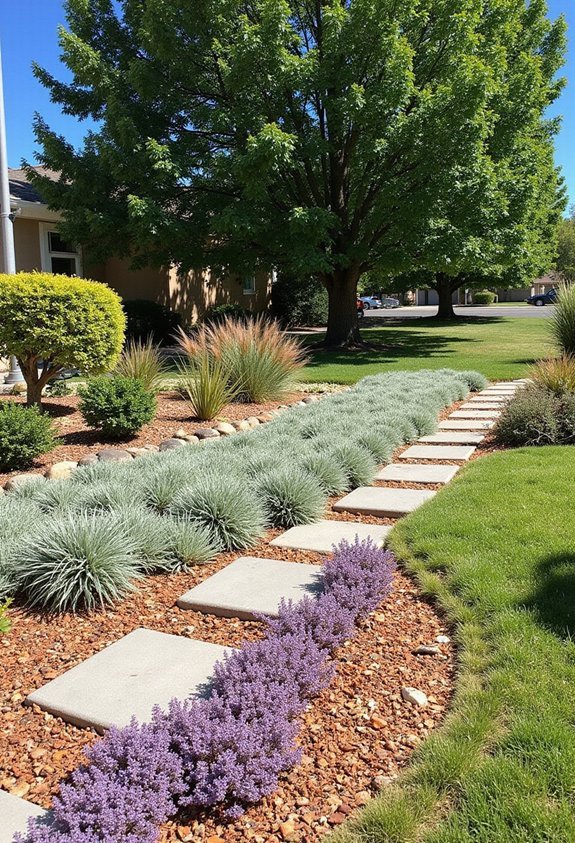
Shaded woodland gardens work beautifully in regions with adequate moisture, but if you’re living in a dry climate where water conservation matters, drought-resistant ground covers offer a practical alternative that’ll transform your front yard without requiring constant irrigation or maintenance. Sedums, creeping thyme, and native grasses thrive in arid conditions while providing attractive ground coverage that suppresses weeds and reduces water usage considerably. These hardy plants develop deep root systems that access moisture efficiently, making them ideal for areas receiving minimal rainfall. You’ll find that selecting native species suited to your specific climate zone guarantees better establishment and survival rates. Additionally, incorporating mulch and strategic spacing between plants maximizes water retention in soil. This combination creates a low-maintenance landscape that’s both environmentally responsible and visually appealing.
Green Walls and Vertical Gardens for Compact Front Yards
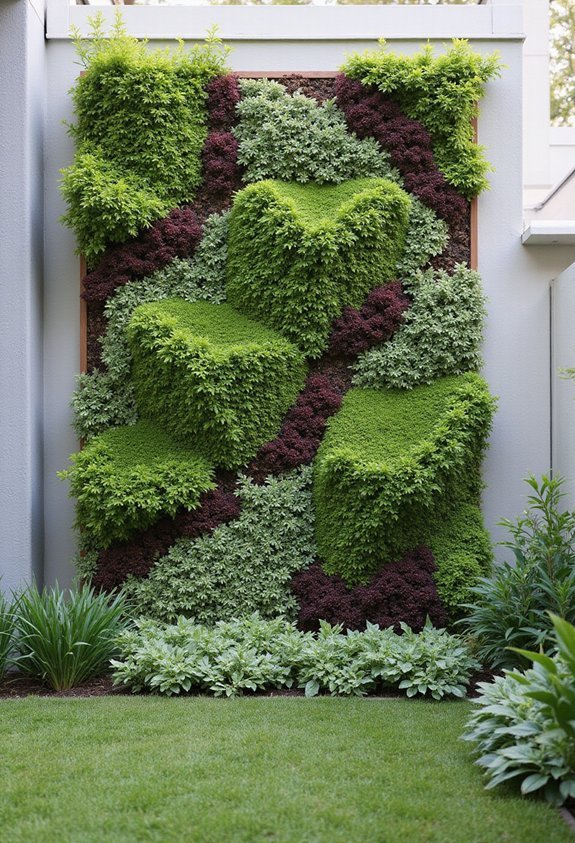
When you’re working with limited ground space in your front yard, green walls and vertical gardens offer an innovative solution that’ll maximize your planting area while creating a striking visual feature. You can attach planters directly to your exterior walls, fence lines, or install a trellis system to support climbing plants like ivy, clematis, or jasmine. This vertical approach requires less square footage than traditional gardens while providing excellent insulation and air quality improvement for your home. You’ll need to guarantee proper drainage, adequate sunlight based on your plant selections, and consistent watering since vertical gardens dry out faster than ground-level plantings. Consider using lightweight soil mixes and selecting shallow-rooted plants to reduce structural strain on your walls or support systems.
Native Plant Front Yards: Supporting Pollinators Instead of Lawns
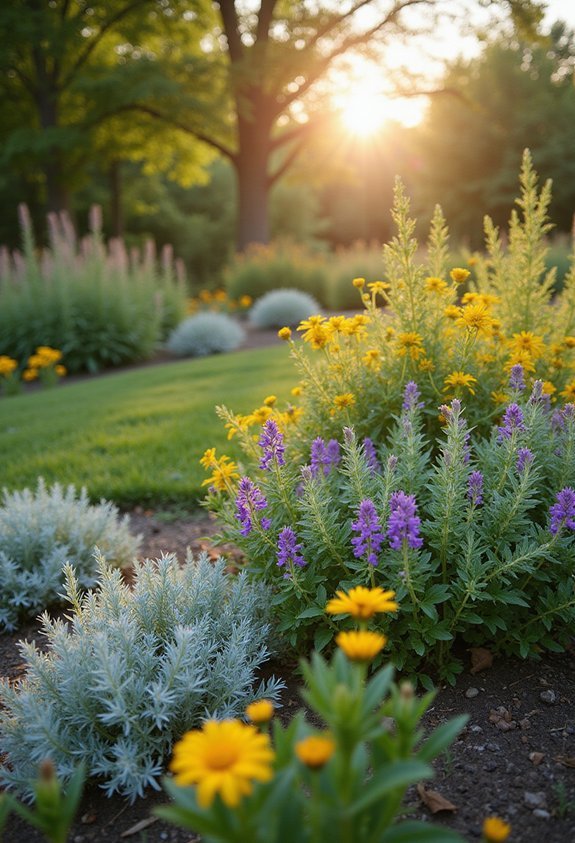
By replacing your traditional lawn with native plants, you’ll create a thriving ecosystem that supports bees, butterflies, and other essential pollinators while eliminating the need for regular mowing and chemical treatments. Native plants are specifically adapted to your local climate and soil conditions, requiring minimal water, fertilizer, and maintenance once established. When you select plants native to your region, you’re providing natural food sources and habitats that pollinators depend on for survival. These plants produce flowers, seeds, and nectar throughout different seasons, ensuring consistent nourishment for local wildlife. Additionally, native plant gardens reduce stormwater runoff, prevent soil erosion, and improve air quality. By choosing this sustainable approach, you’re transforming your front yard into a functional landscape that benefits the environment while reducing your workload considerably.
Stepping Stone Paths: Functional Design Through Gravel and Hardscape
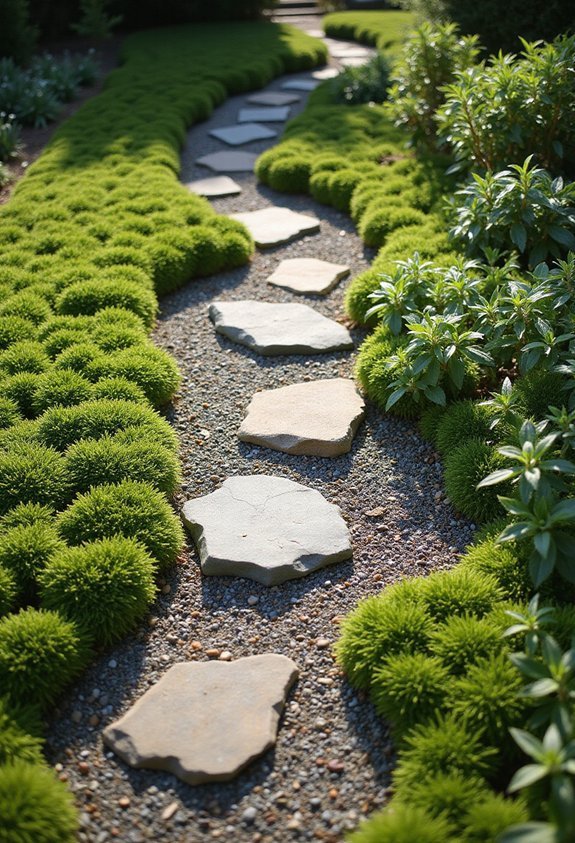
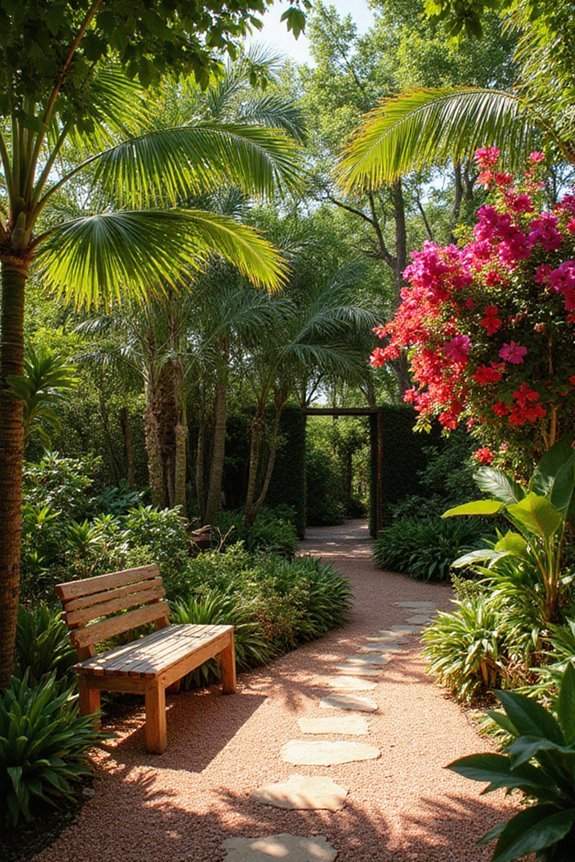
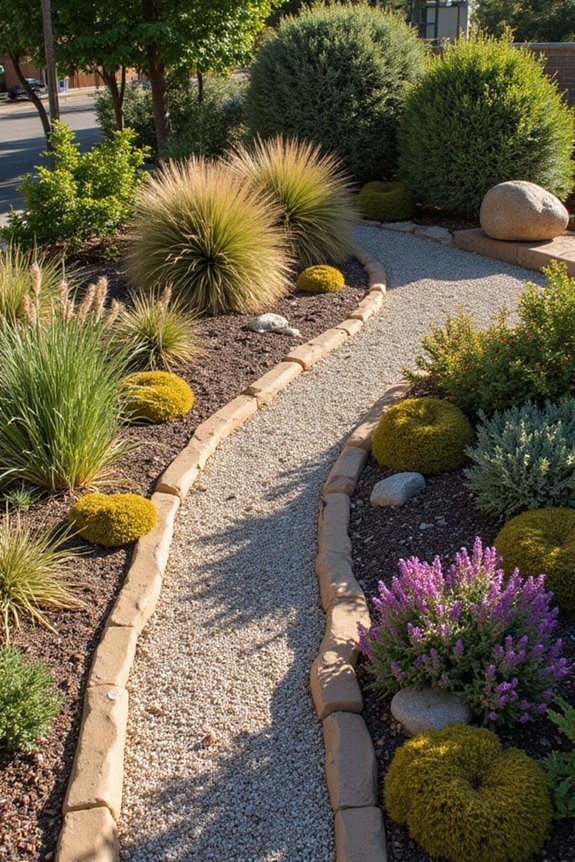
While native plants create the visual appeal and ecological benefits of your front yard, you’ll also want to reflect on how people and pets will move through the space, which is where stepping stone paths and hardscaping elements come into play. You can design functional pathways using flat stones, pavers, or gravel that guide visitors naturally through your landscape without compacting soil or damaging plants. Gravel paths work especially well between native plantings, offering drainage benefits while creating clear walkways. Stepping stones provide stable footing and prevent wear patterns on your yard. Hardscape elements like stone borders also define planting areas and create structure, making your front yard both beautiful and practical for daily use.
Creating Contrast With Multi-Layer Ground Cover Blends
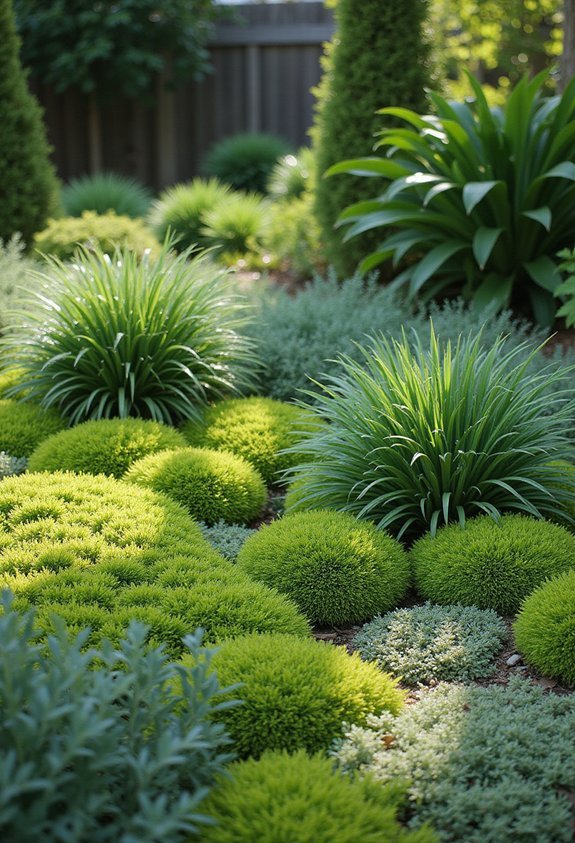
To add visual interest and texture to your grass-free front yard, you’ll want to combine different types of ground covers at varying heights and densities. Consider pairing creeping plants like creeping thyme or sedum with taller options such as ornamental grasses or shrubs, which creates natural layering that catches the eye. You might also blend soft textures with structured elements—perhaps combining feathery ferns alongside smooth river rocks or hardscaping materials. This multi-layered approach prevents your landscape from appearing flat or monotonous, while each plant selection serves a practical purpose in soil coverage and erosion control. By thoughtfully arranging these contrasting ground covers, you’ll establish depth and dimension throughout your front yard, transforming it into a visually dynamic space that remains functional and low-maintenance.
Also read: 17 FRONT YARD FIRE PIT Ideas That Feel Cozy!
Eco-Friendly Grass Seed Blends: Tough Mixes That Need Less Care
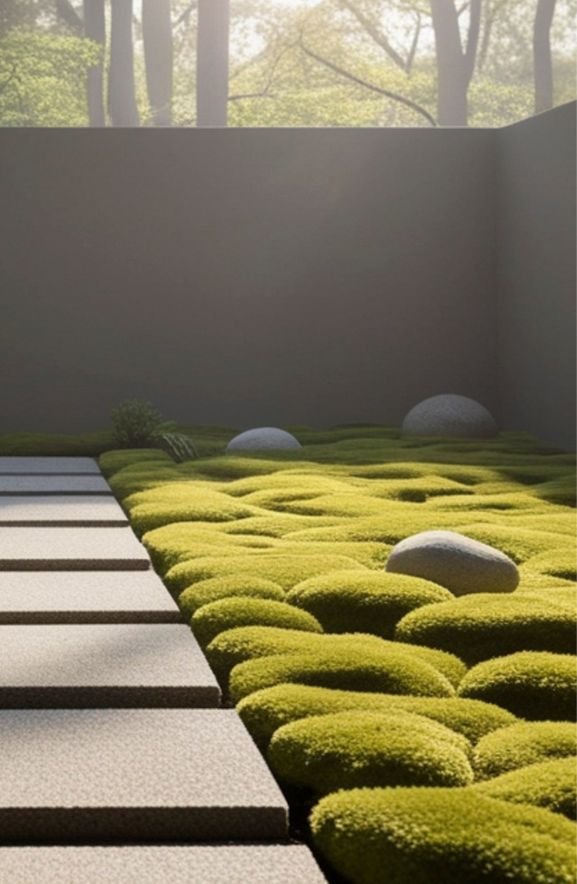
If you’re committed to reducing your environmental footprint while maintaining some grass in your front yard, eco-friendly grass seed blends offer a practical solution that requires markedly less water, fertilizer, and maintenance than traditional lawn varieties. These specially formulated mixes combine native grass species that naturally thrive in your local climate, making them more drought-resistant and disease-resistant. You’ll find they’re engineered to establish quickly with deeper root systems that access moisture more efficiently. When you select blends labeled as “low-maintenance” or “drought-tolerant,” you’re choosing seeds that’ve been proven to perform well in your specific region. This approach lets you preserve some traditional lawn aesthetic while substantially reducing your environmental impact and ongoing yard work responsibilities.
Conclusion
You’ve discovered that transforming your front yard doesn’t require maintaining traditional grass, much like how gardens once flourished without modern lawns. By selecting clover, moss, creeping thyme, or native wildflowers suited to your climate, you’ll create a landscape that thrives with minimal effort while supporting local ecosystems. These alternatives reduce watering, eliminate mowing, and suppress weeds naturally, offering you a sustainable, beautiful yard that works with nature rather than against it.