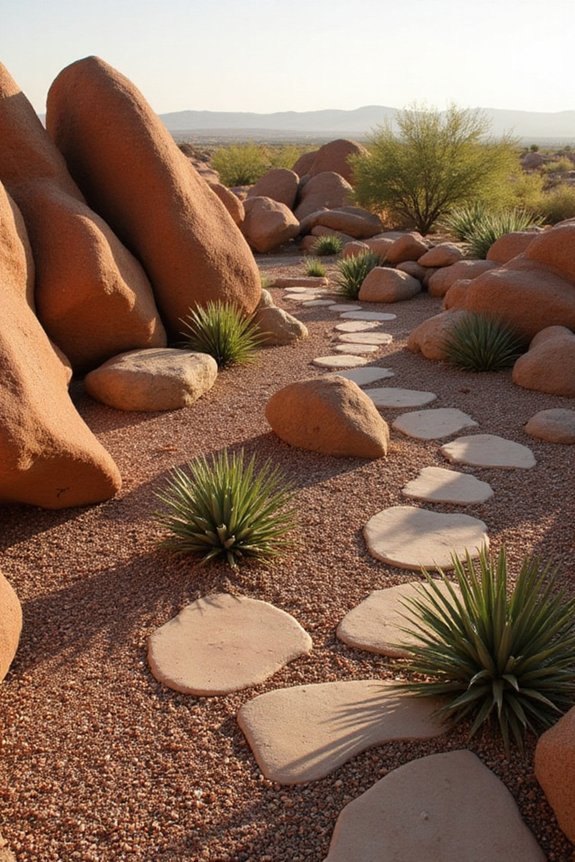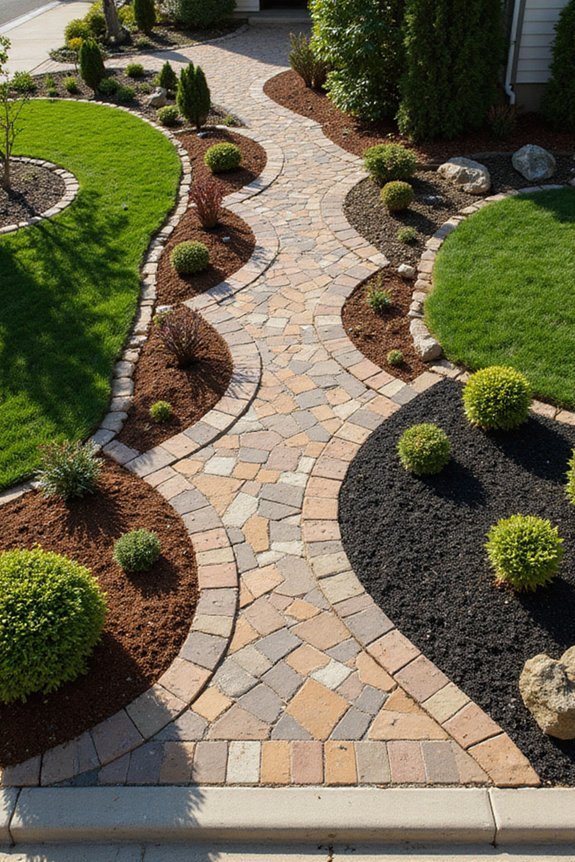
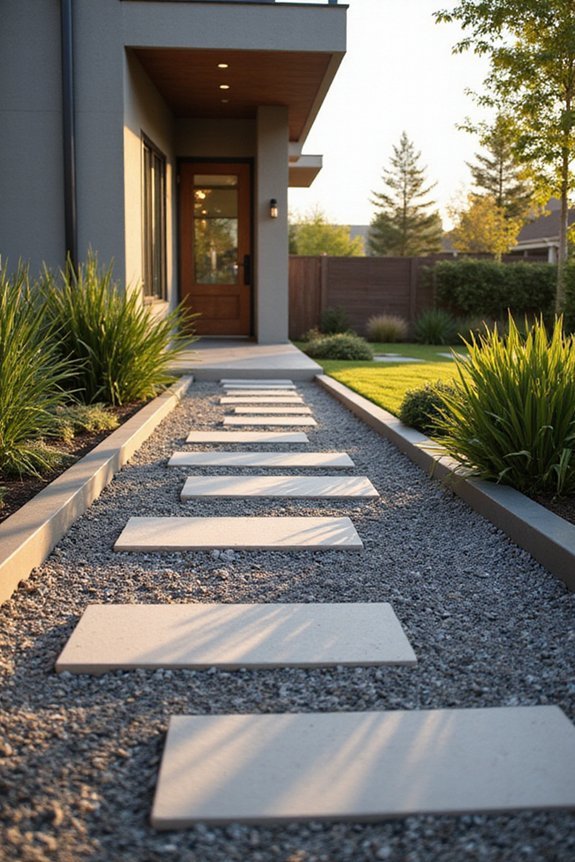
You can transform your front yard into a clean, modern space using gravel as your foundation material. By selecting the right gravel type, adding geometric hardscaping elements, and incorporating strategic plant placement, you’ll create a low-maintenance landscape that enhances your home’s curb appeal. Different aesthetic approaches—from minimalist designs to Mediterranean-inspired layouts—offer distinct possibilities for your property. Discover how specific design choices and maintenance strategies can elevate your outdoor space.
Choose Your Gravel Front Yard Style
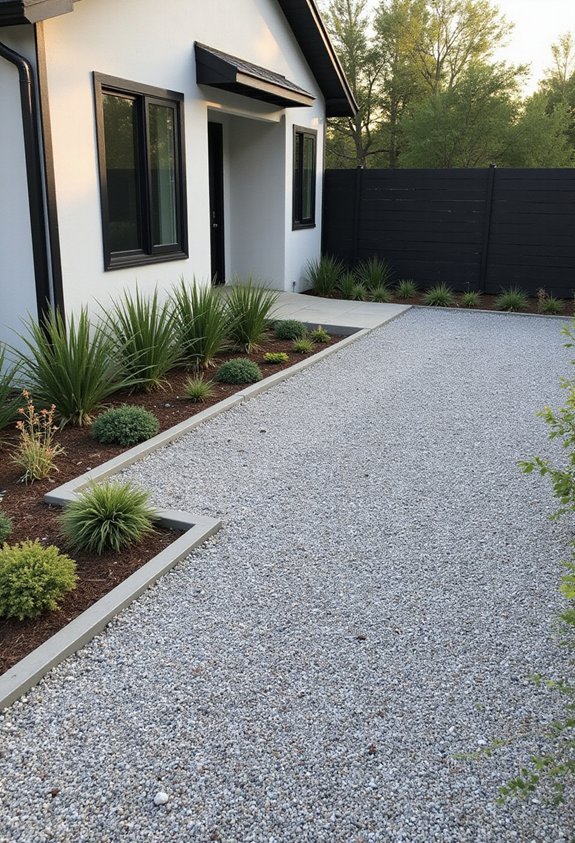
Several distinct gravel styles exist, and you’ll want to identify which one aligns with your home’s architecture, your climate, and your personal preferences before you begin your project. Crushed granite offers durability and aesthetic appeal, making it ideal for modern homes, while pea gravel provides a softer appearance suitable for traditional landscapes. Decomposed granite compacts firmly, reducing maintenance needs, whereas marble chips create an elegant, luxurious look for upscale properties. Consider your region’s weather patterns when selecting materials; some gravels perform better in wet climates, while others suit arid environments. You’ll also want to evaluate maintenance requirements, as different styles demand varying levels of upkeep. Additionally, assess your budget constraints, as material costs fluctuate based on type and availability in your area.
Also read: 20 HOUSE FRONT YARD Ideas That Look Put Together!
Minimalist Gravel With Modern Hardscaping
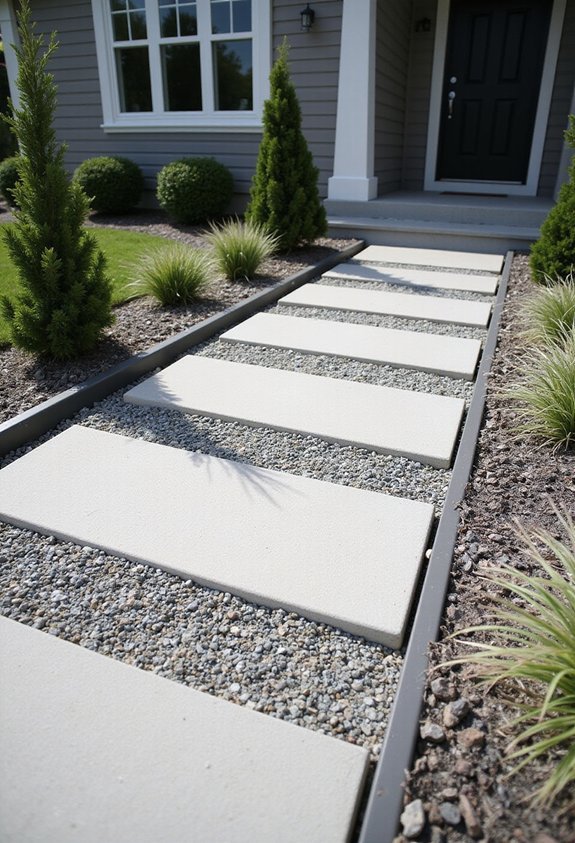
If you’re drawn to clean lines and uncluttered spaces, combining minimalist gravel with modern hardscaping elements can transform your front yard into a sophisticated outdoor area that reflects contemporary design principles. You’ll want to select neutral-colored gravel, such as gray or tan, which provides a calm backdrop that doesn’t compete with other landscape features. Incorporate geometric hardscaping materials like concrete pavers, steel edging, or composite decking to create defined pathways and borders. These structured elements establish visual organization while maintaining simplicity. You should strategically place a few architectural plants or sculptural pieces to avoid overcrowding the space. This approach creates balance between open areas and focal points, resulting in a contemporary aesthetic that’s both functional and visually compelling.
Japanese Zen Garden Aesthetic
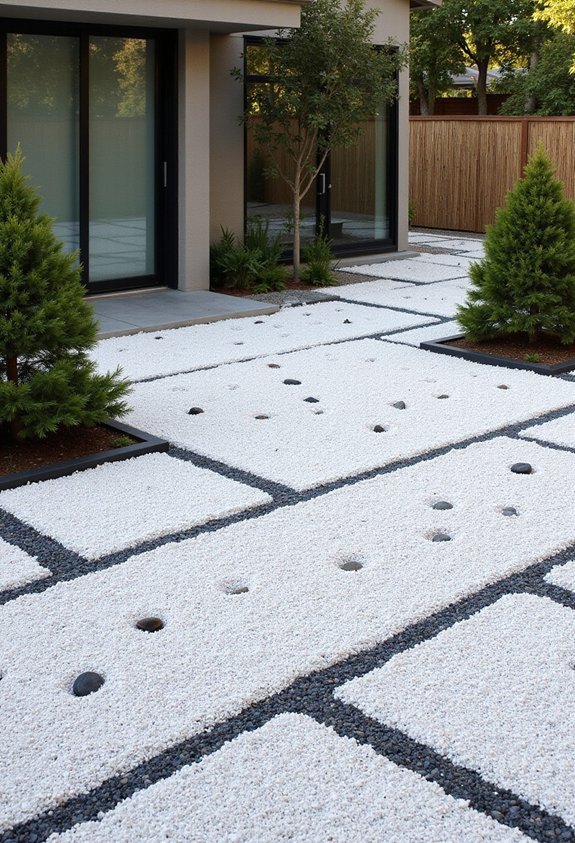
Creating a Japanese zen garden in your front yard requires you to embrace principles of balance, simplicity, and natural harmony that’ve been refined over centuries of design tradition. You’ll arrange gravel in carefully raked patterns that create visual movement and represent water flowing across your landscape. Incorporate strategically placed rocks of varying sizes to symbolize mountains and islands, positioning them asymmetrically for authentic aesthetic appeal. Add minimalist plant selections like bamboo, moss, or ornamental grasses that complement rather than overwhelm the space. Include a simple water feature, such as a small fountain or basin, to introduce subtle sound and movement. You can enhance the design by installing a narrow stone or gravel pathway that guides visitors through the garden, encouraging mindful contemplation and creating intentional visual focal points throughout your front yard composition.
Mediterranean-Inspired Gravel Landscape
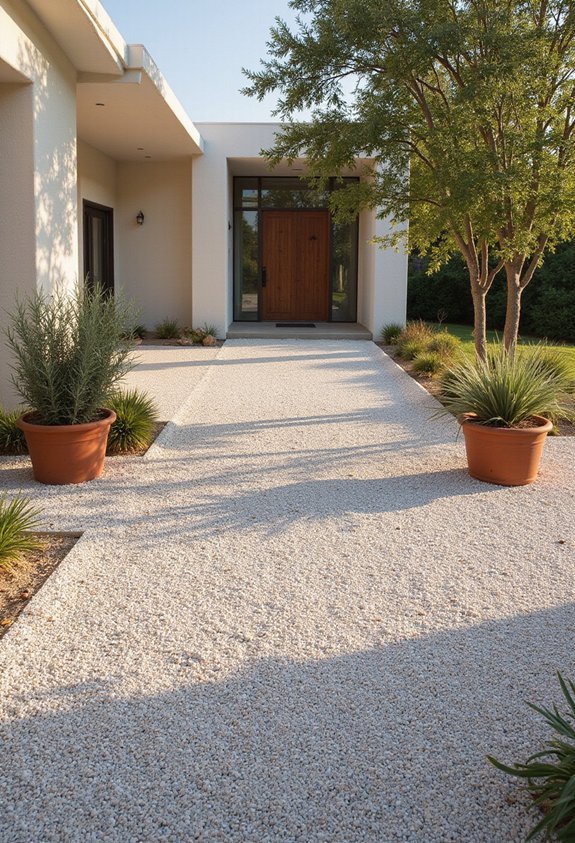
How can you transform your front yard into a sun-drenched landscape that evokes the warm, inviting aesthetic of Southern Europe? You’ll want to use warm-colored gravel, such as terracotta, cream, or golden tones, which create the authentic Mediterranean feel. Incorporate drought-resistant plants like lavender, rosemary, and olive trees throughout your design, spacing them strategically to avoid overcrowding. Install stone pathways or borders using natural materials to define walking areas and add structure. Consider adding decorative elements such as terracotta pots, a small fountain, or rustic wooden accents to enhance the European charm. Choose gravel sizes between one-quarter and one-half inch for ideal aesthetic appeal and functionality. This approach delivers a low-maintenance, visually striking front yard that captures the essence of Mediterranean landscapes.
Coastal Modern Gravel Aesthetic
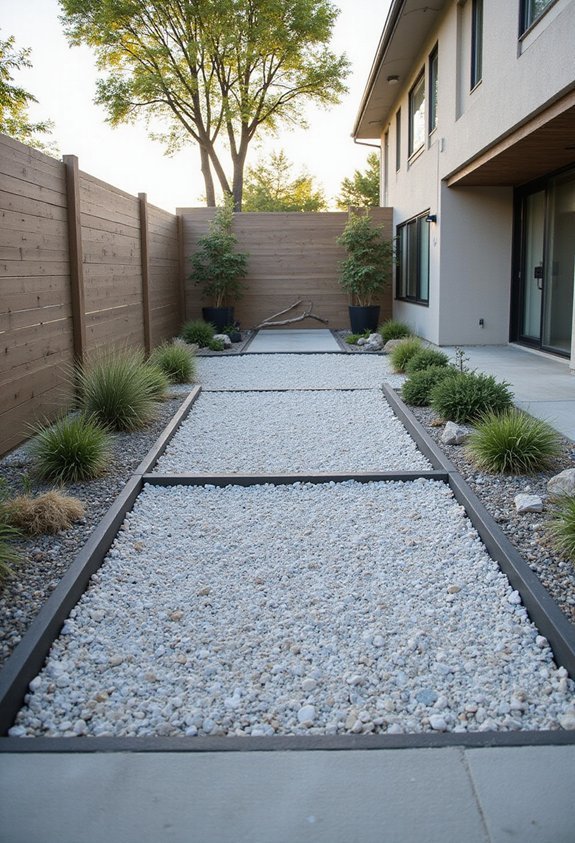
To achieve a coastal modern aesthetic in your front yard, you’ll want to blend clean lines with natural materials that reflect the relaxed sophistication of seaside design. Start by selecting light-colored gravel, such as crushed shells or pale gray stones, which evoke the beach environment while maintaining visual cleanliness. Incorporate minimalist plantings like ornamental grasses, succulents, and low-growing shrubs that withstand salt spray and sandy conditions. Add geometric hardscape elements, including rectangular pavers or concrete pathways, to emphasize the modern component of your design. Install sleek metal edging or composite materials to define planting beds sharply. Consider weathered driftwood accents or large boulders as focal points, creating visual interest while preserving the uncluttered aesthetic. This approach produces a sophisticated outdoor space that captures coastal tranquility with contemporary refinement.
Industrial Gravel Look for Modern Homes
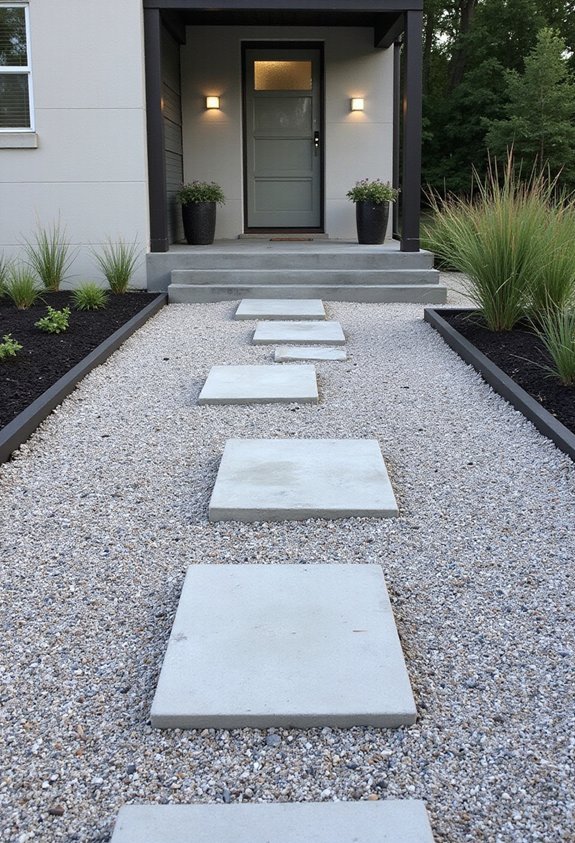
If you’re drawn to sleek, contemporary design rather than the softer coastal aesthetic, an industrial gravel approach offers raw materials and bold lines that’ll complement modern architecture perfectly. You’ll want to use larger, angular gravel stones in charcoal or black tones, which create striking visual contrast against your home’s exterior. Pair these materials with metal edging, concrete pathways, and minimalist landscaping to enhance the aesthetic. Steel or aluminum borders contain the gravel while establishing clean geometric patterns. You can incorporate decorative rocks, sparse plantings, and strategic lighting to add dimension without cluttering the space. This approach requires regular raking to maintain crisp lines and a polished appearance, making it ideal for homeowners who appreciate low-maintenance yet intentional yard design.
Monochromatic Dark Gravel Design
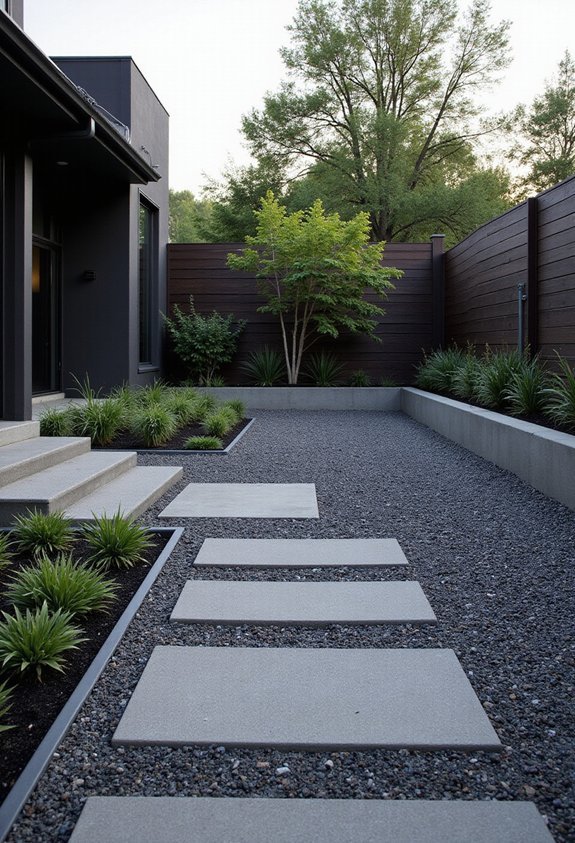
A palette of deep charcoal, black, and dark gray gravels creates a sophisticated, unified look that’s both striking and versatile for modern landscapes. You’ll achieve visual cohesion by selecting stones in similar dark tones, which establishes a clean, contemporary aesthetic that complements minimalist architectural styles. When you layer different sizes of dark gravel, you create texture and depth without introducing competing colors. You can enhance this monochromatic scheme by incorporating dark mulch or black landscaping fabric underneath, which prevents weeds while intensifying the overall darkness. You might also add metal edging in charcoal or black tones to define planting beds and pathways, reinforcing the unified design. This approach requires minimal maintenance, as dark gravels don’t show dust or debris as noticeably as lighter materials do.
Bold Colored Gravel Statement

Bold colored gravels—think vibrant reds, warm oranges, sunny yellows, or cool blues—can completely transform your front yard by creating an eye-catching focal point that contrasts sharply with your home’s exterior and surrounding landscape. You’ll want to select colors that complement your home’s architectural style and existing plants rather than clash with them. Consider using bold gravel in designated areas, such as around flower beds, pathways, or near your entrance, rather than covering your entire yard. This strategic placement maximizes visual impact while maintaining balance and preventing an overwhelming appearance. You can layer colored gravel over landscape fabric to reduce weeds and stabilize the material. Combining multiple gravel colors creates dimension and visual interest, allowing you to express your personal style while maintaining a modern, intentional aesthetic.
Selecting Gravel Colors, Sizes, and Textures

When you’re planning your gravel front yard, choosing the right combination of colors, sizes, and textures will determine how your landscape looks and functions over time. You’ll want to ponder neutral tones like gray, tan, and beige for versatile designs, or darker shades such as black and charcoal for bold contrast. Gravel sizes range from fine pea gravel, which’s comfortable underfoot, to larger crushed stone that provides stability. Texture variations—smooth, angular, or decorative—affect both aesthetics and drainage performance. You should match your selections to your home’s architectural style and existing landscaping. Mixing different sizes creates visual interest while improving water drainage through your yard. Test samples in your space during different lighting conditions before committing to larger quantities.
Crushed Stone Pathways for Flow
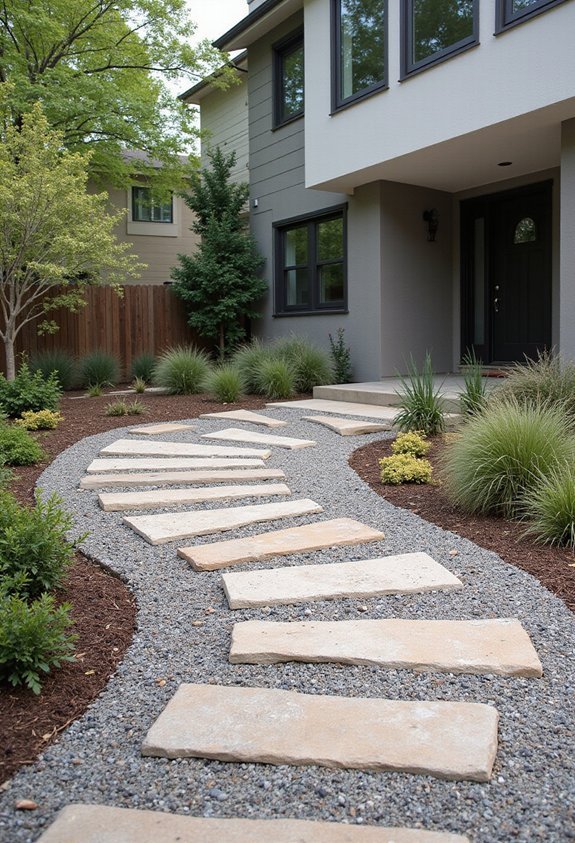
Once you’ve selected your gravel materials, you’ll want to create intentional pathways that guide visitors through your front yard while improving water drainage and defining your landscape’s layout. You can establish these pathways by laying down crushed stone in strategic lines leading from your driveway to your front door and around garden beds. Use edging materials like metal strips or wood to contain the gravel and prevent it from spreading into surrounding areas. Make your pathways wide enough—typically two to three feet—so people can walk comfortably without stepping onto planted zones. Consider slightly sloping pathways away from your house to direct water flow properly. This thoughtful approach creates visual organization, protects your landscaping, and enhances your yard’s overall functionality and appearance.
Combining Gravel Sizes for Visual Contrast
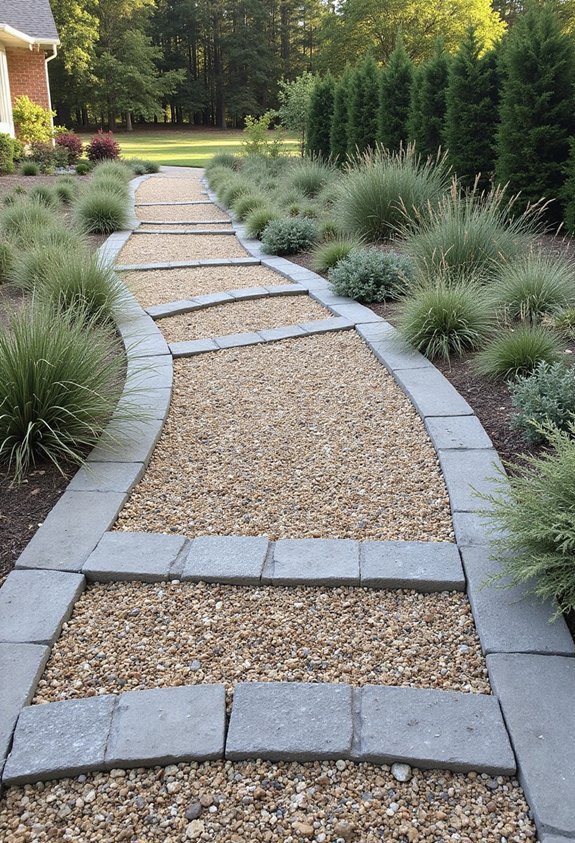
After you’ve mapped out your pathways and established their structure, you can enhance your front yard’s visual appeal by layering different gravel sizes together to create depth and interest. Start by placing larger stones, like river rocks or pea gravel, as your base layer to establish stability and drainage. Next, add medium-sized crushed stone over the foundation, which’ll provide a solid middle layer that prevents smaller pieces from sinking. Finally, top everything with fine gravel or decorative stone in contrasting colors to create visual definition and texture. This three-tier approach won’t only look professionally designed but also serve practical purposes, ensuring proper water drainage while minimizing gravel displacement. The size variation creates natural boundaries between different yard zones without requiring additional edging materials.
Layering Gravel for Depth and Dimension
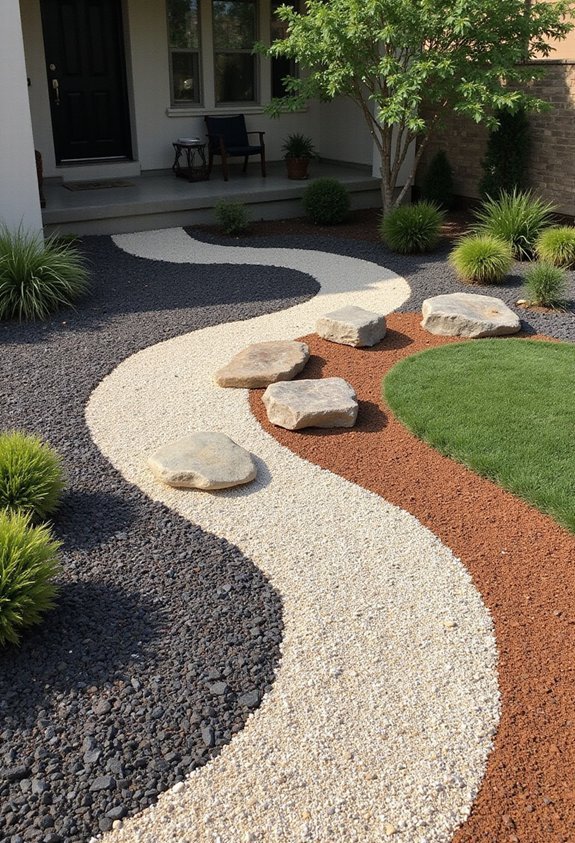
Three distinct layers form the foundation of a visually compelling gravel front yard that’ll showcase professional design principles while upholding structural integrity. Your base layer should consist of larger rocks or crushed stone, which provides drainage and stability for the layers above. The middle layer, typically composed of medium-sized gravel, creates a buffer zone that prevents smaller stones from sinking into the base. Your top layer features finer gravel or decorative stone, which delivers the finished aesthetic your design requires. This three-tier system creates visual depth because each layer’s varying sizes and colors interact to produce dimension and interest. The layering technique also serves practical purposes, as it guarantees proper water drainage, prevents weed growth, and maintains long-term durability throughout your front yard landscape.
River Rock and Pea Gravel Blends
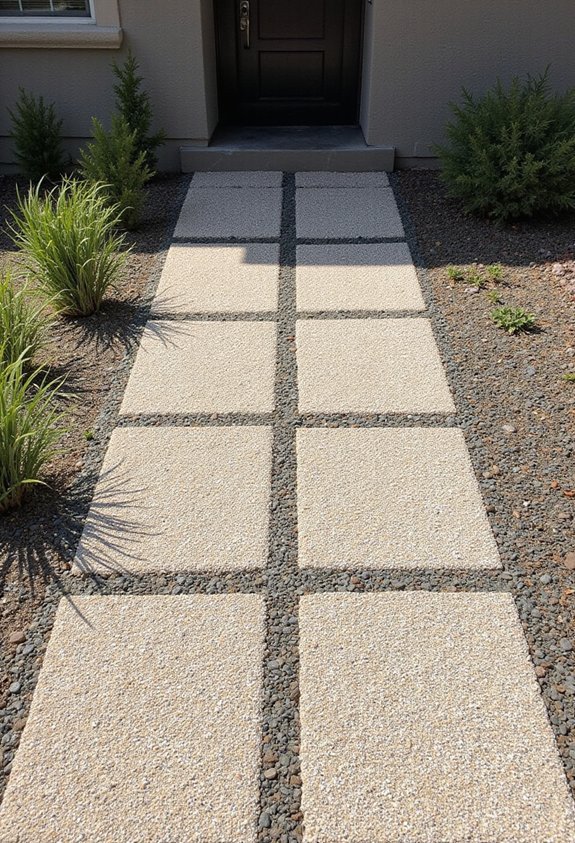
While you’ve established a solid structural foundation with your three-layer system, selecting the right materials for your top visible layer determines whether your front yard achieves the polished look you’re aiming for. River rock and pea gravel blends offer an excellent combination that maximizes both aesthetics and functionality. River rocks, which are larger and rounder, provide visual interest and create a high-end appearance, while pea gravel fills gaps between them, improving drainage and preventing weeds from emerging. You’ll want to use approximately seventy percent pea gravel and thirty percent river rock for ideal balance. This proportion guarantees sufficient coverage while maintaining walkability. The blend’s texture creates depth, making your yard appear more sophisticated and intentionally designed rather than sparse or incomplete.
Geometric Gravel Patterns and Designs
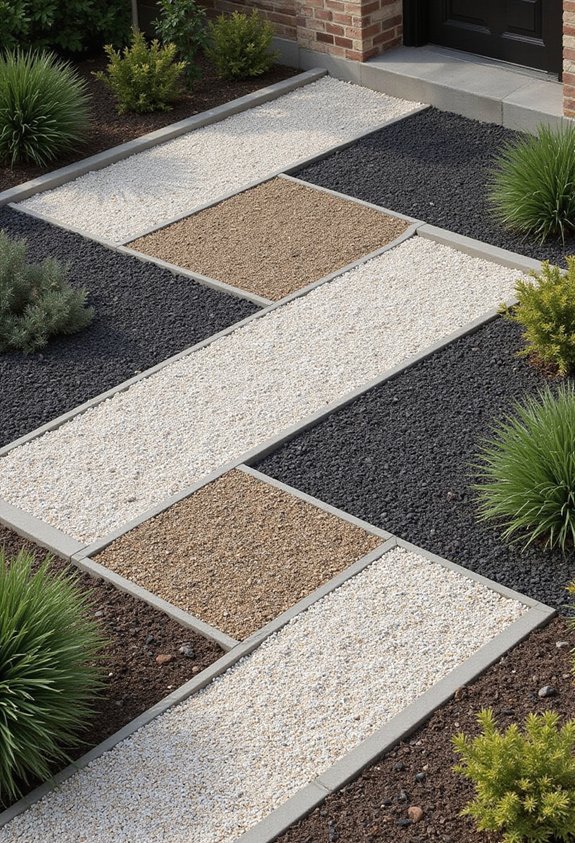
Once you’ve settled on your river rock and pea gravel blend, you can elevate your front yard’s visual appeal by arranging these materials into geometric patterns and designs that showcase intentional landscaping. You’ll create visual interest by laying out gravel in squares, diamonds, or chevron patterns that guide visitors’ eyes through your yard. Use metal or plastic edging to define each section sharply, preventing materials from shifting and blurring your design. Consider alternating between light and dark gravel varieties to enhance contrast within your patterns. Circular designs around trees or focal points add sophistication, while straight lines emphasize modern aesthetics. These geometric arrangements transform your front yard into a structured, polished landscape that demonstrates careful planning and attention to detail, ultimately creating a cohesive outdoor environment.
Defining Spaces: Gravel With Plant Edging
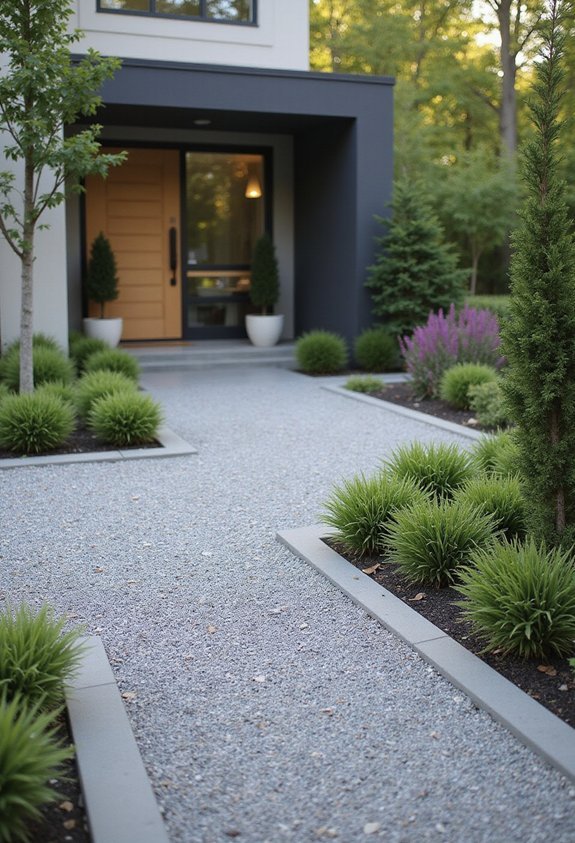
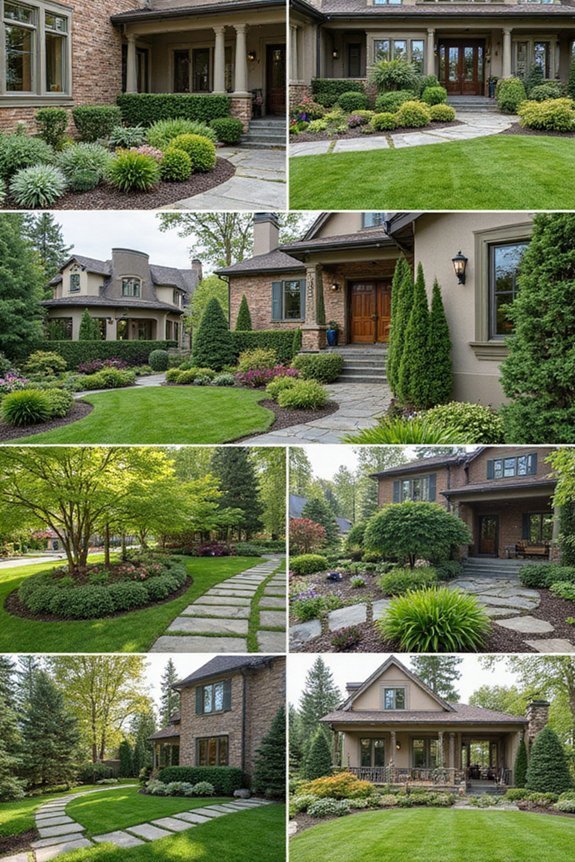
If you’re looking to soften the hard lines created by geometric gravel patterns, incorporating living plant borders offers an effective way to define spaces while adding natural texture and color to your front yard. You can accomplish this by planting low-growing shrubs, ornamental grasses, or flowering perennials along the edges of your gravel sections. These plantings create natural boundaries that separate different areas, such as walkways, planting beds, or seating zones, without requiring rigid hardscaping materials. Choose plants that complement your climate and require minimal maintenance, ensuring they’ll thrive alongside gravel landscapes. The combination of structured gravel with organic plant edging produces a balanced, visually appealing design that’s both practical and aesthetically refined.
Gravel Beds With Native Plant Landscaping
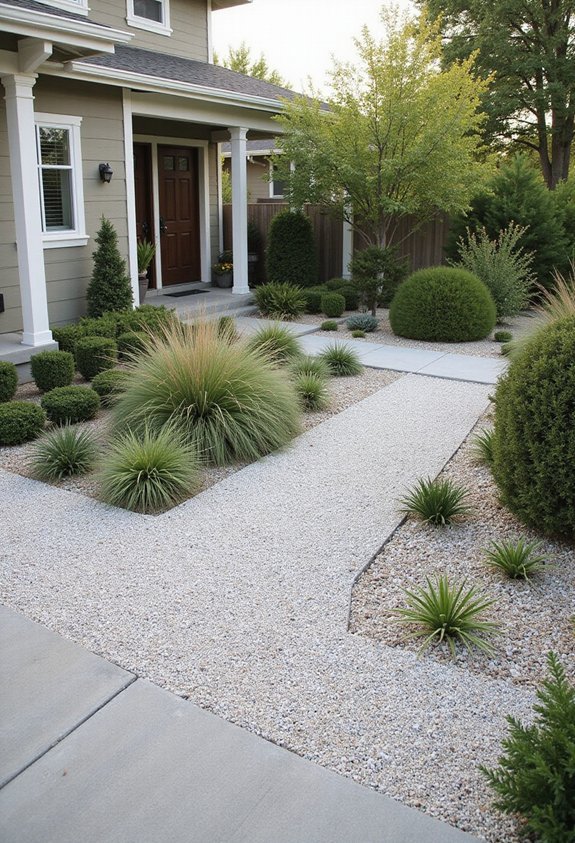
Native plants offer an excellent foundation for creating sustainable, low-maintenance gravel beds that’ll thrive in your front yard’s specific climate and soil conditions. By selecting native species adapted to your region, you’ll reduce watering needs and eliminate excessive fertilizer applications. Start by researching which plants naturally flourish in your area, then arrange them strategically throughout your gravel beds to create visual interest and depth. Combine tall plants in the back with shorter varieties in front, ensuring proper spacing for mature growth. Native plants require minimal intervention once established, making them ideal companions for gravel landscaping. Their root systems stabilize the gravel while preventing erosion, and they attract local wildlife, enhancing your yard’s ecosystem. This approach creates an environmentally responsible front yard that looks polished while demanding considerably less maintenance than traditional flower beds.
Modern Minimalism: Gravel With Steel Edging
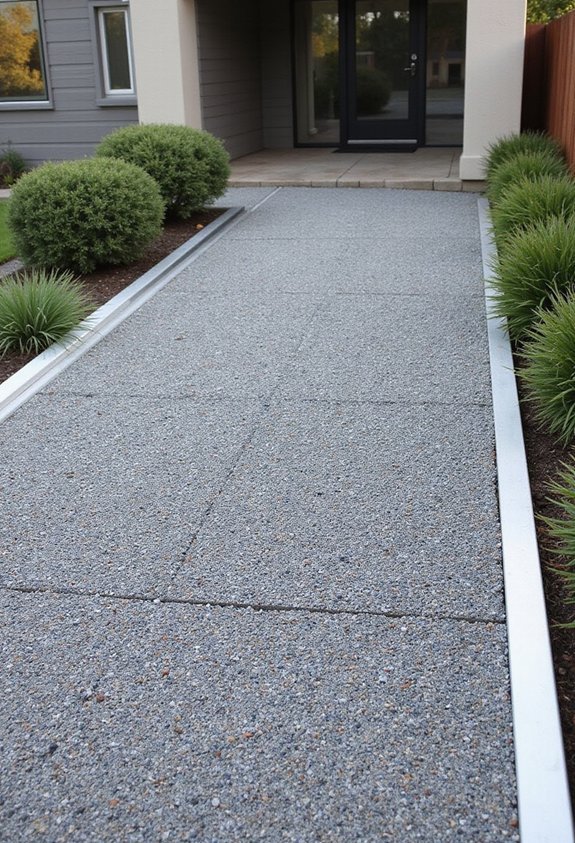
As you’re looking to create a contemporary front yard aesthetic, steel edging paired with gravel offers a clean, sophisticated approach that’s both functional and visually striking. Steel borders define garden beds and pathways with sharp, geometric lines that complement modern home architecture. You’ll install the edging by driving it into the ground along your desired perimeter, creating a permanent boundary that prevents gravel from spreading into lawn areas. The metal won’t rot or degrade like wood alternatives, requiring minimal maintenance over time. You can choose from various steel finishes, including weathered or powder-coated options, to match your home’s exterior. This combination produces an uncluttered appearance while keeping your landscaping organized and your front yard looking intentionally designed and professionally maintained.
Decorative Borders and Edging for Gravel Yards

Beyond the modern steel options you’ve already explored, you’ll find numerous decorative borders and edging materials that can enhance your gravel yard’s appearance while serving the practical purpose of containing loose stones. Natural stone edging, such as slate or granite, creates a sophisticated look that complements both traditional and contemporary landscapes. Composite materials offer durability and low maintenance, resisting rot and decay over time. Brick edging provides warmth and classic appeal, while recycled plastic borders deliver eco-friendly solutions that won’t splinter or deteriorate. Metal edging, including aluminum and copper options, adds visual interest through reflective surfaces. Concrete pavers allow customization through various colors and textures. When selecting your edging material, consider your yard’s overall design aesthetic, budget constraints, and maintenance requirements to guarantee your choice aligns with your long-term landscaping goals.
Gravel Paired With Modern Fencing
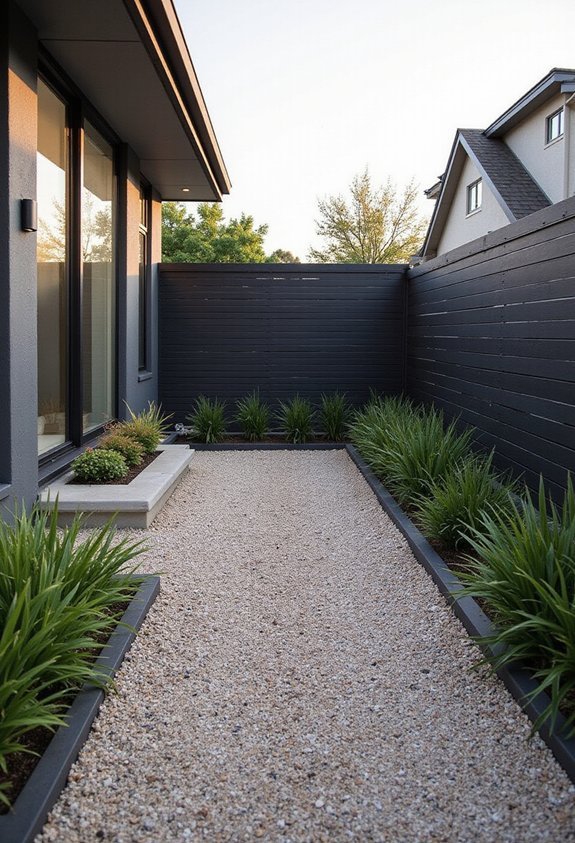
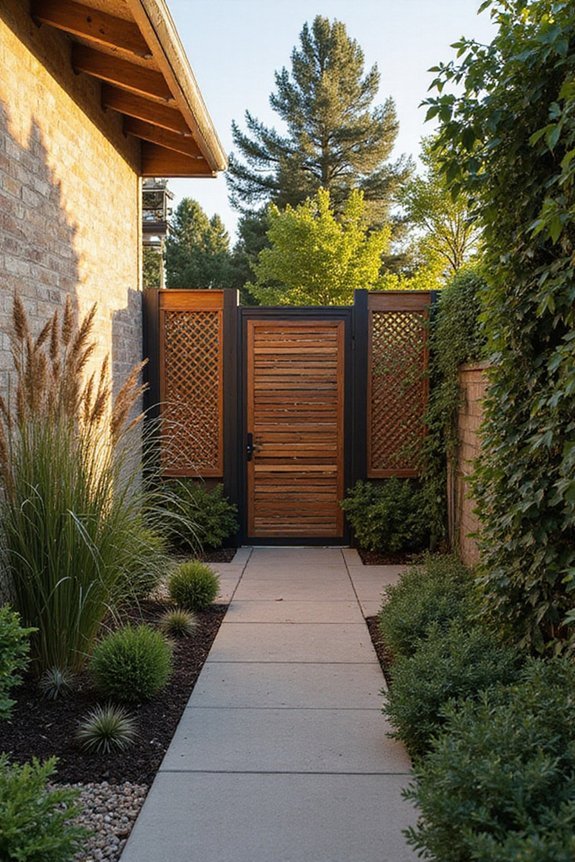
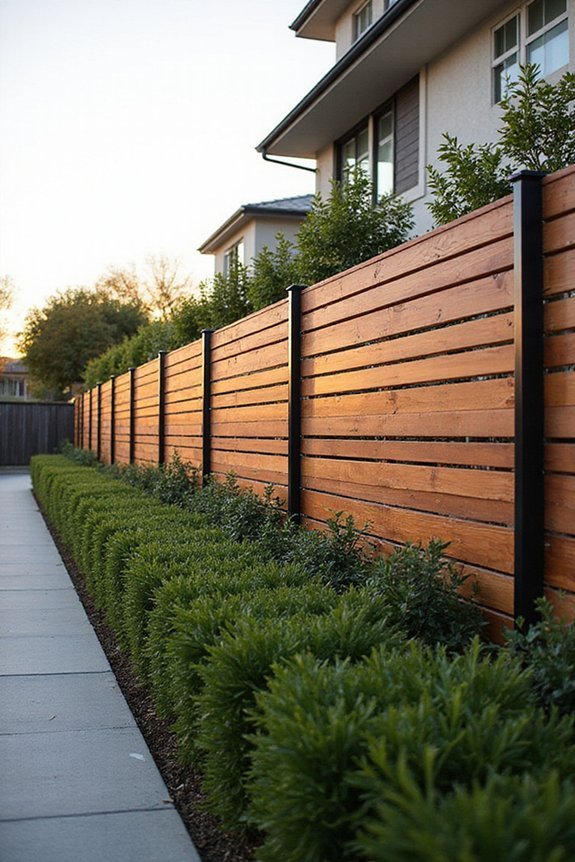
When you’re designing a front yard that combines gravel with contemporary fencing, you’ll want to verify that both elements work together visually and functionally to create a cohesive outdoor space. Modern fencing styles, such as horizontal slat designs or metal panels, complement gravel beautifully because they share clean lines and minimalist aesthetics. You should choose fencing materials that contrast with your gravel color, creating visual interest and definition. Consider installing the fence slightly elevated above the gravel level to prevent debris accumulation and maintain clear sight lines. Pairing neutral-toned gravel with darker fence finishes establishes sophistication and balance. Ensure proper drainage slopes away from the fence to protect its foundation and longevity, while selecting gravel sizes that won’t shift against the fence perimeter during maintenance or weather events.
Low-Maintenance Foundation Gravel Beds
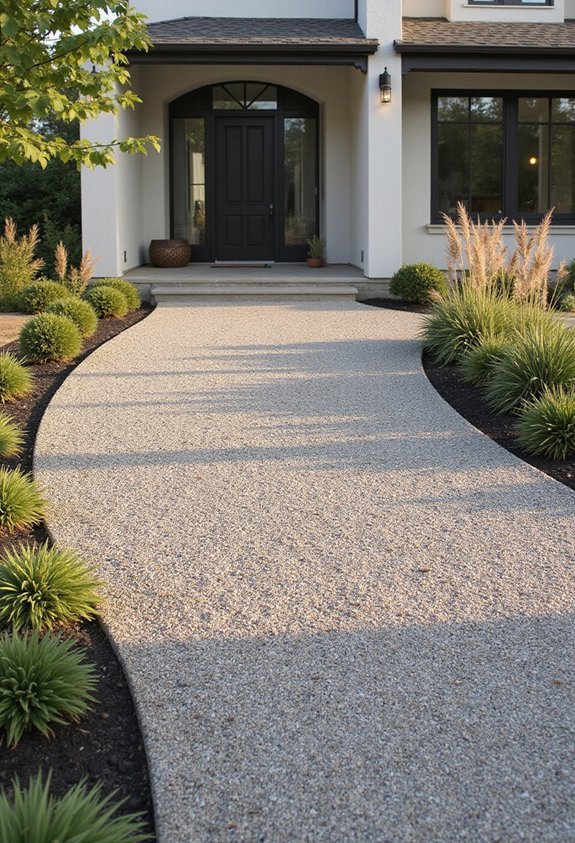
Foundation gravel beds offer you a practical solution for landscaping around your home’s perimeter while requiring considerably less upkeep than traditional planting areas. You’ll find that gravel eliminates the need for frequent watering, weeding, and soil amendments that consume time and money throughout the year. By installing a landscape fabric beneath the gravel layer, you’ll prevent weeds from emerging while allowing water drainage, which protects your foundation from moisture accumulation. The gravel serves as an attractive border that defines your home’s base, creating clean lines between your structure and lawn. You can select from various sizes and colors to complement your home’s aesthetic while maintaining functionality. This low-maintenance approach provides you with a durable, cost-effective landscaping solution that enhances your front yard’s appearance for years.
Year-Round Gravel Maintenance
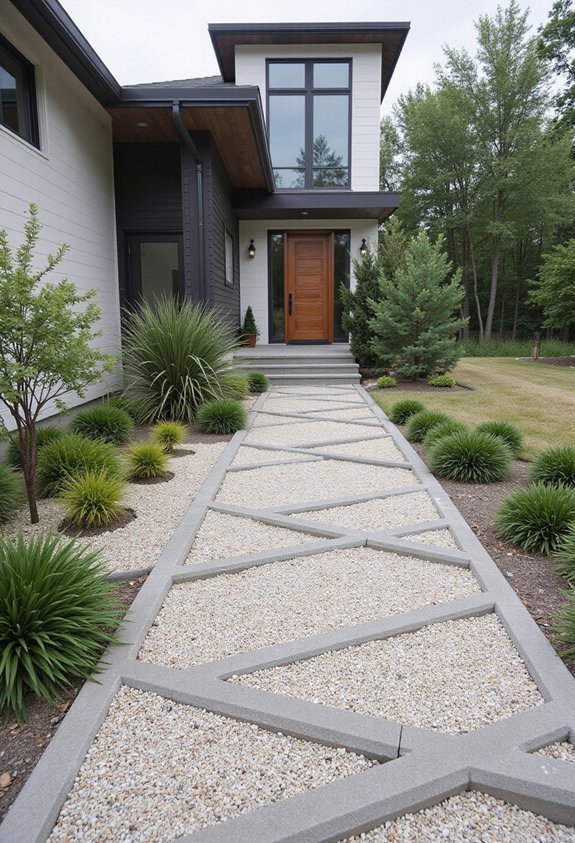
Maintaining your gravel front yard throughout all four seasons requires consistent attention to keep it looking attractive and functioning properly, though the specific tasks you’ll need to complete will vary depending on the time of year and your local climate. Spring demands raking to remove winter debris and redistributing settled gravel evenly across your beds. Summer requires occasional watering to control dust and weeding to prevent unwanted plant growth. Fall necessitates clearing fallen leaves and branches that’ll accumulate on your gravel surface. Winter calls for monitoring drainage to prevent ice buildup and adding fresh gravel where erosion’s occurred. You’ll also want to inspect edging regularly, ensuring borders remain intact and gravel stays contained within designated areas throughout the year.
Conclusion
You’ve now explored diverse gravel front yard designs, each offering distinct aesthetic possibilities and practical benefits that align with your home’s architectural style. By selecting appropriate gravel materials, incorporating hardscaping elements, and establishing consistent maintenance routines, you’ll create a durable outdoor space that functions like a well-oiled machine—operating efficiently while maintaining visual appeal year-round. Your investment in thoughtful design choices pays dividends through reduced upkeep and enhanced curb appeal.