A hanging planter can solve two problems at once: it gives succulents the light and breathing room they need while freeing up shelves, counters, and floor space. The best hanging succulent planter ideas work especially well in apartments, compact rooms, balconies, and small patios where every surface already has a job.
Trailing plants such as burro’s tail and string of pearls naturally suit suspended pots, while compact rosette succulents work well in wall planters, shallow bowls, and vertical frames. Materials matter too. Terracotta keeps the look earthy, ceramic feels cleaner indoors, and lightweight baskets or metal planters make more sense where weight is a concern.
The real trick is placement. A planter can look great in an empty corner and still struggle if the light is poor, so treat the plant first and the display second. These ideas make use of windows, walls, ceiling space, and balcony edges without turning a small room into a plant obstacle course.
Choose Light, Drainage, and Weight First
Before choosing the hanger, check where the succulent will actually get useful light and how you will water it. A planter with drainage needs somewhere for excess water to go, and every hook or bracket must safely support the pot once the soil is wet. In small spaces, it also helps to keep trailing stems out of walkways, curtains, cabinet doors, and frequently used windows.
1. Hang Burro’s Tail in a Terracotta Pot
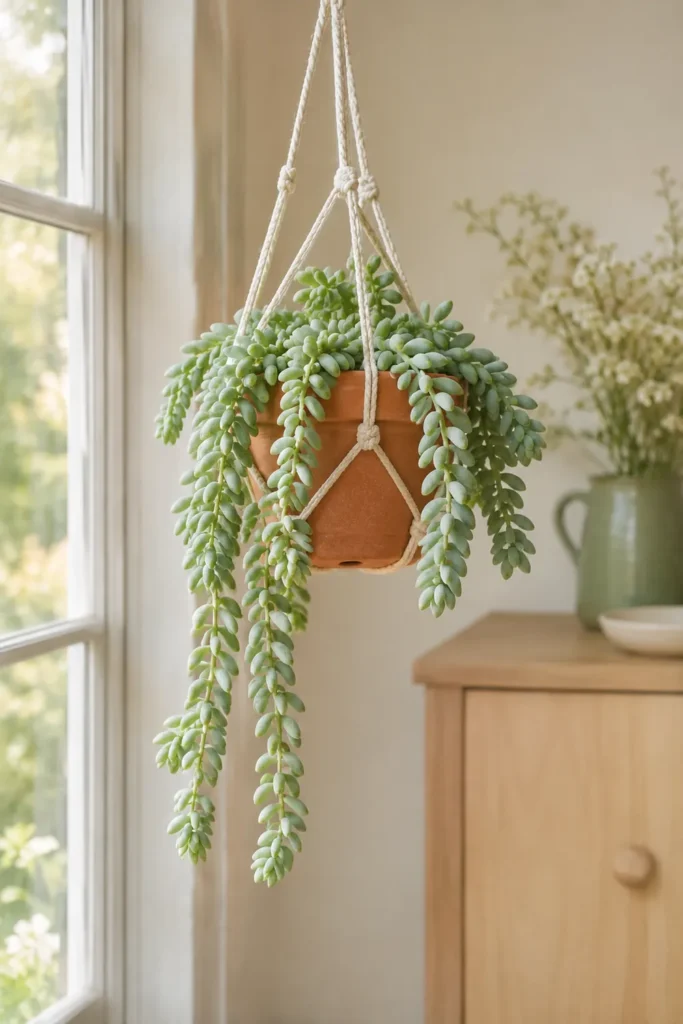
Burro’s tail earns its place in a hanging planter because the long succulent stems naturally spill below the rim instead of fighting for space on a shelf. Use a simple terracotta pot with a drainage hole and suspend it in a sturdy cotton or jute hanger where the stems have room to fall freely.
The warm clay gives the blue-green foliage a softer backdrop, while the porous pot keeps the whole display visually light rather than bulky. Position the planter where it receives the bright light the plant needs without hanging directly in a walkway.
Care Tip: Watering is much easier when you can lift the pot down rather than stretching over furniture. A removable hanger makes that small routine far less annoying.
2. Use a Macramé Hanger Beside a Bright Window
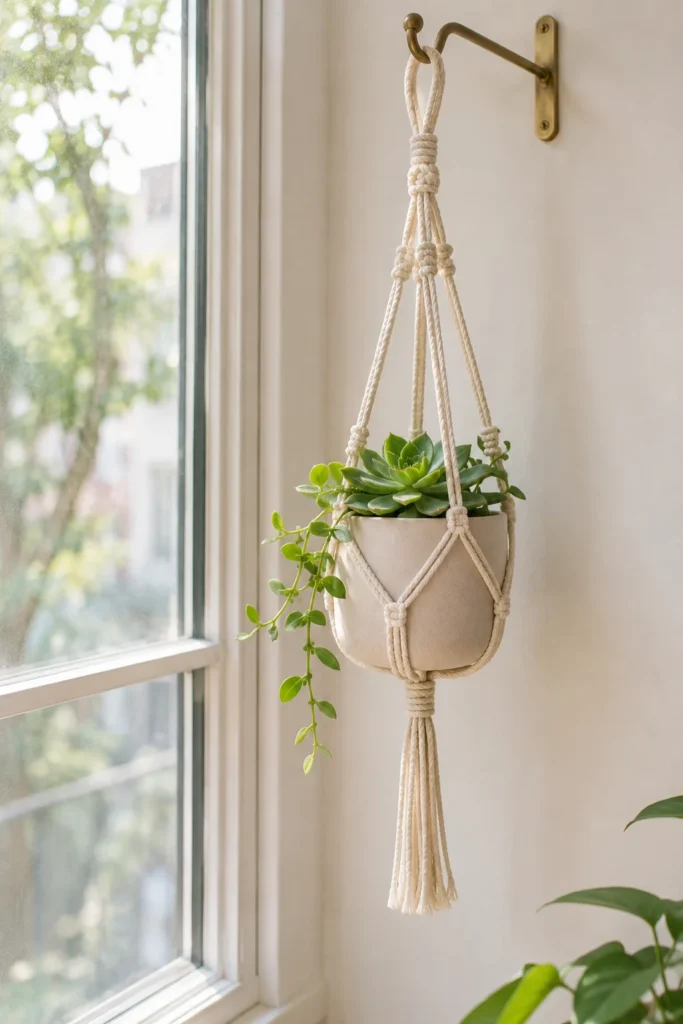
A macramé hanger is especially useful when the windowsill is already full or too narrow for another pot. Suspend a compact ceramic planter beside the window instead, using a succulent with a neat rosette or lightly trailing form that will not overwhelm the space.
The woven cotton cord adds texture without taking up much visual room, while the window placement keeps the plant close to stronger natural light. Choose a pot with drainage and make sure the hanger supports its weight once the soil is wet.
Keep the planter slightly to one side of the glass rather than directly in front of the view. That gives you the vertical greenery without making a small room feel closed in.
3. Let String of Pearls Spill From a Shallow Bowl
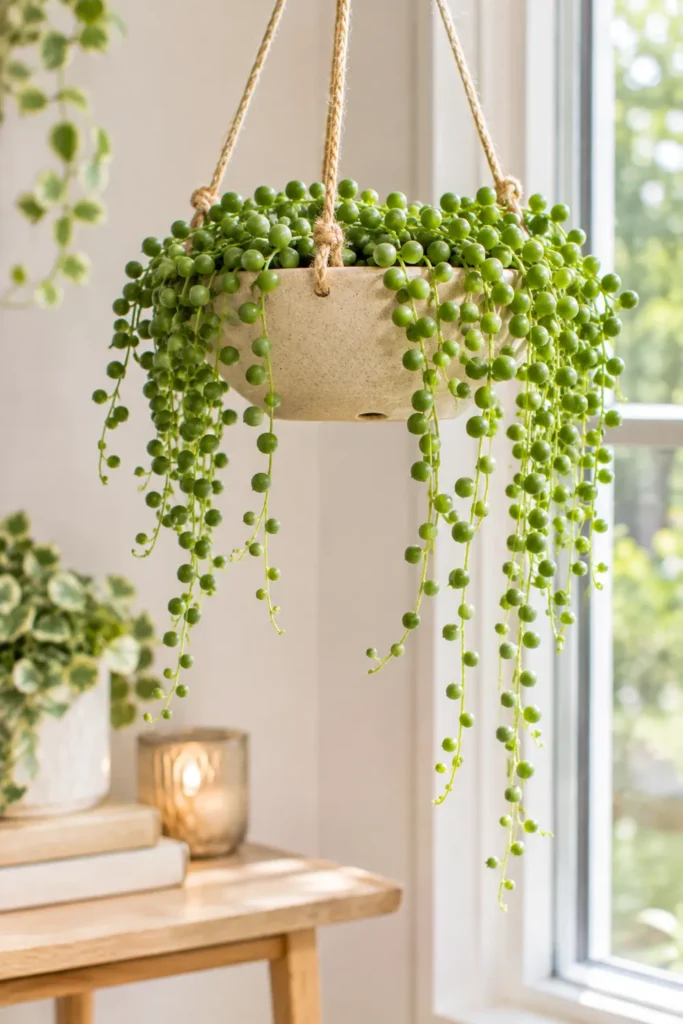
String of pearls looks especially good in a shallow hanging bowl because the narrow container lets the trailing stems become the main feature. Use a broad ceramic or stoneware bowl with drainage, then let the bead-like stems cascade around the edge instead of forcing them into a tall pot.
The shallow shape keeps the planter visually compact, while the long green strands create movement below it. That combination works well above a side table, near a bright window, or in a quiet corner where the stems will not be brushed constantly.
Leave enough open space around the planter so the trailing growth can hang naturally. Crowding it between shelves defeats the whole point.
4. Stack Three Mini Succulent Pots Vertically
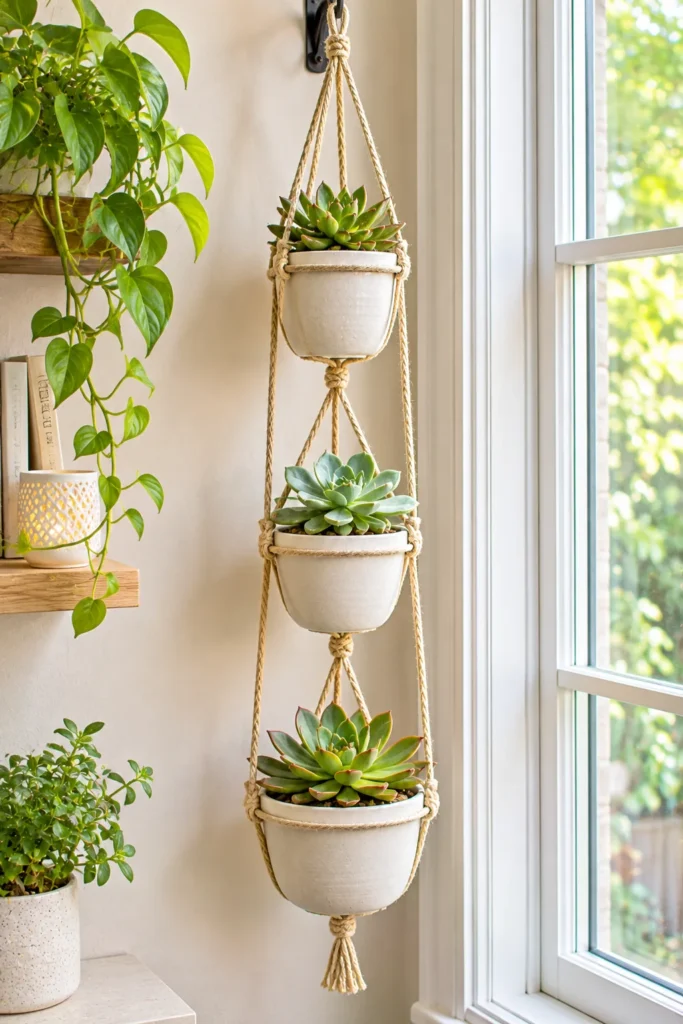
Three small succulent pots suspended in one vertical line can hold more plants without claiming three separate shelves. Use matching mini ceramic pots secured in a rope or cord system, spacing them far enough apart that each rosette remains visible.
The repeated pots create order, while the different succulent shapes keep the display from looking too uniform. This works particularly well beside a window, against a narrow wall, or in a small apartment corner where horizontal space is limited.
Keep the heaviest pot at the bottom and use a properly rated mounting point for the full wet weight of the arrangement. Small pots are light individually, but three together add up quickly.
5. Mount a Half-Moon Succulent Planter on the Wall
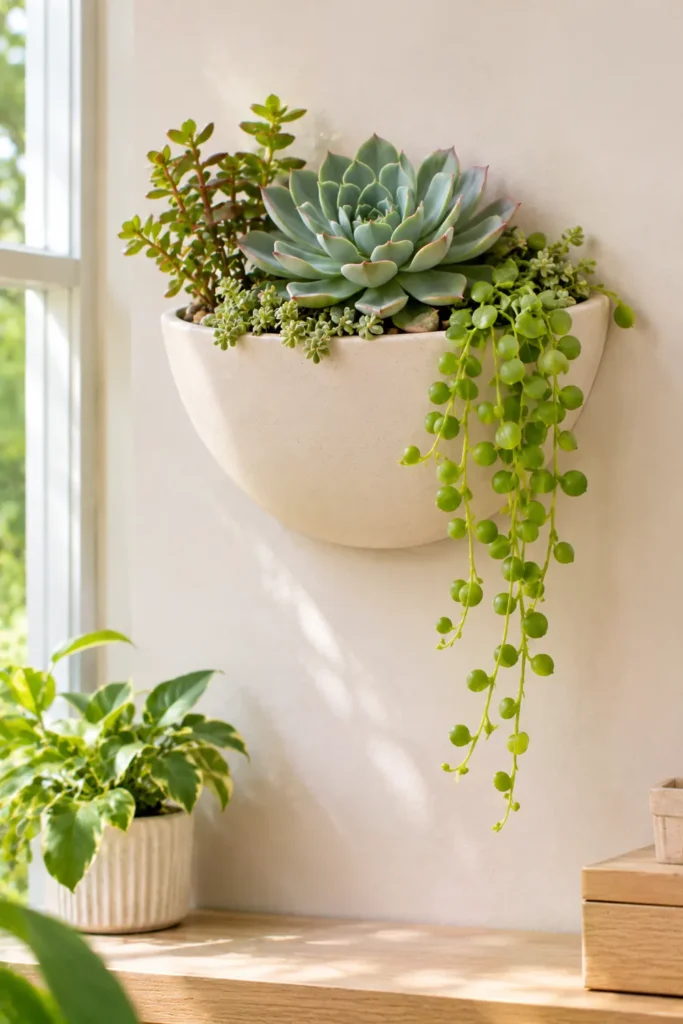
A half-moon wall planter is a smart choice when floor space is tight and a ceiling hanger would get in the way. Use a shallow ceramic or metal planter mounted securely to the wall, then fill it with one compact echeveria and a small amount of low trailing growth.
The curved planter gives the display a sculptural shape without projecting too far into the room. That makes it especially useful in narrow hallways, small bedrooms, or beside a desk where a traditional hanging pot would feel bulky.
Keep the planting restrained so the wall planter stays balanced. One strong rosette with a little trailing foliage usually looks better than packing the container with too many varieties.
6. Fill a Coco-Lined Basket With Trailing Sedum
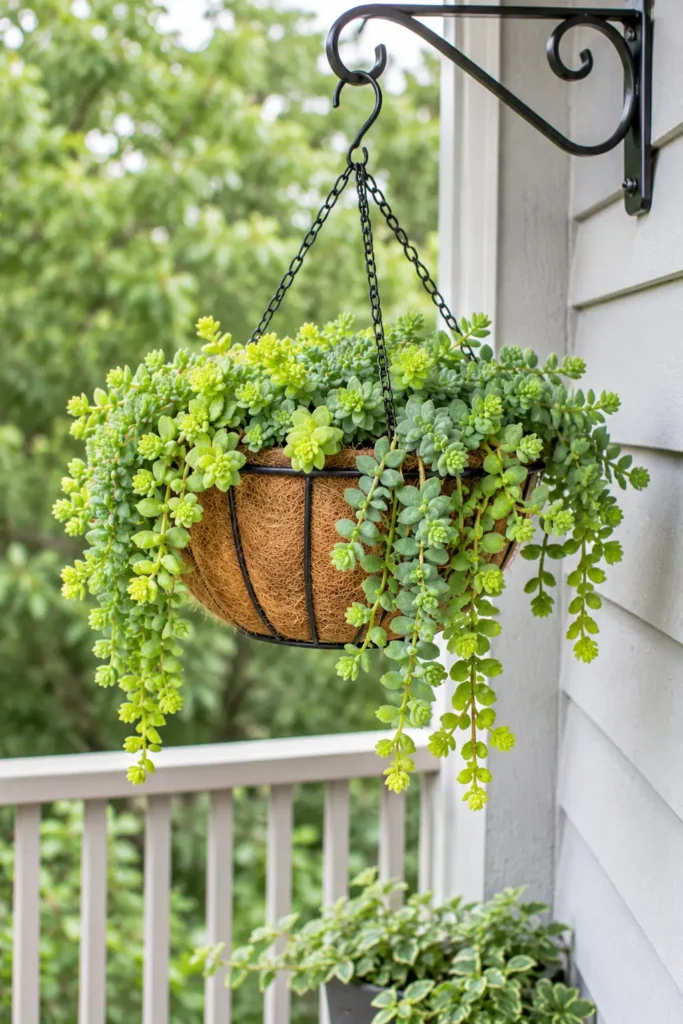
A wire hanging basket lined with coco fiber creates a lighter outdoor look than a heavy ceramic pot. Fill it with succulent potting mix, then use trailing sedum around the outer edge so the stems spill naturally over the basket.
The coir liner softens the metal frame, while the sedum gives the basket movement without becoming too dense. This works well on a small balcony or patio where you want greenery overhead but still need the floor clear.
Make sure the basket drains freely and hangs where excess water will not drip onto seating below. A lightweight setup is useful, but the mounting point still needs to support the full weight once the mix is wet.
7. Suspend a Small Wooden Shelf With Two Pots
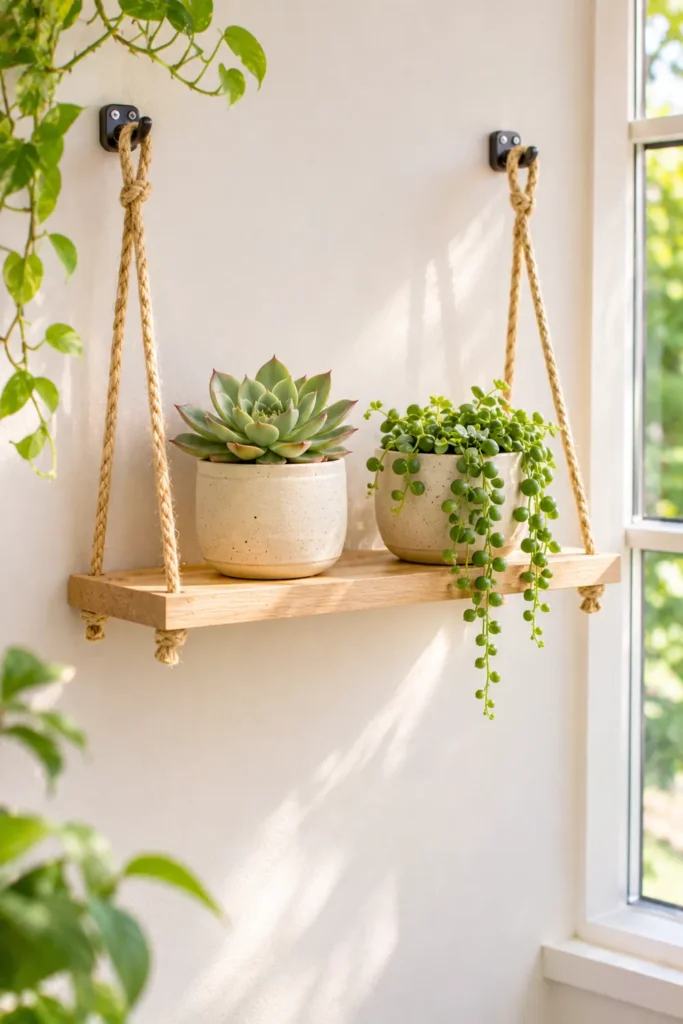
A narrow hanging shelf can turn two ordinary succulent pots into one vertical display. Suspend a small wooden board with sturdy rope, then place two compact pots on top with enough space between them to keep the arrangement from feeling crowded.
The shelf gives you flexibility because the pots can be moved, watered, or replaced without rebuilding the entire display. It also works with planters you already own, which makes it a useful option for renters or anyone who does not want specialty hanging containers.
Choose low, stable pots and keep the shelf level. Taller planters may look dramatic, but they are less forgiving on a suspended surface.
8. Hang Matching Ceramic Pots in a Window Corner
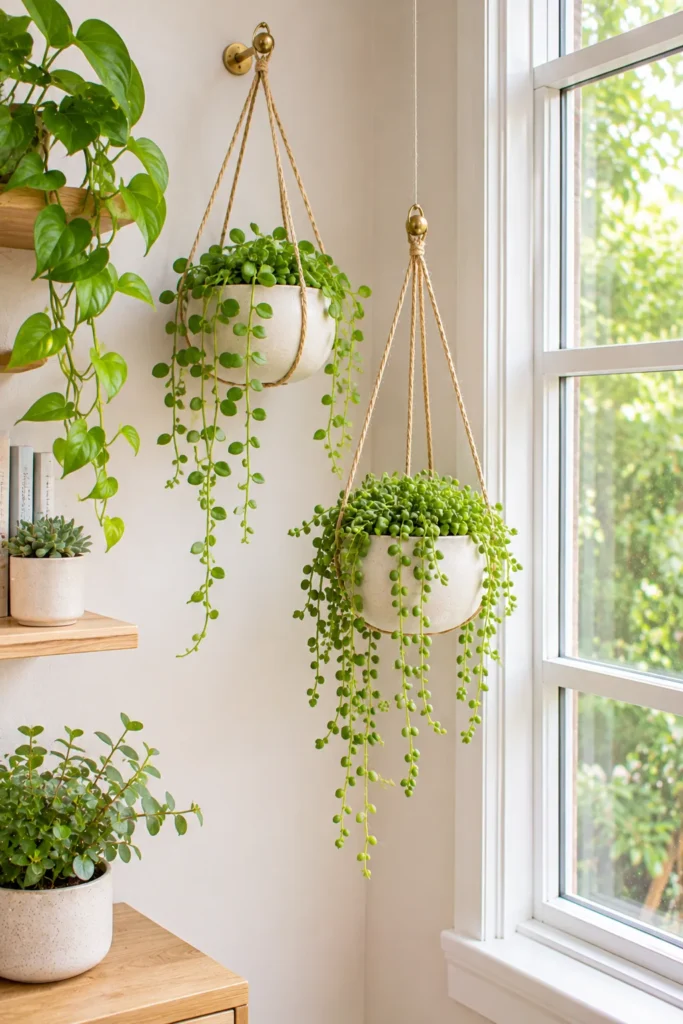
An empty window corner can hold more greenery than it seems if you use height instead of surface space. Hang two matching ceramic pots at slightly different levels, using trailing succulents so the stems fall into the open space between the window and wall.
The repeated pots keep the corner looking organized, while the staggered heights stop the arrangement from feeling stiff. A pale ceramic finish works especially well because it reflects window light and keeps the display visually light in a small room.
Leave enough clearance around the glass for curtains, blinds, and window handles. The best small-space display still needs to work with the room around it.
9. Build a Living Succulent Frame for a Bare Wall
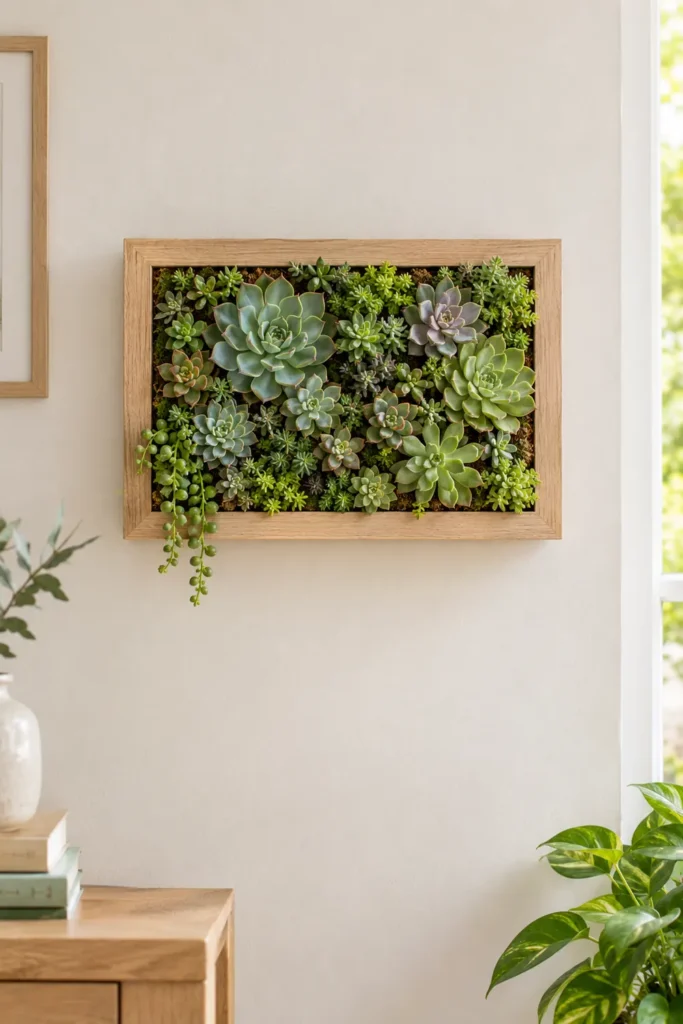
A shallow succulent frame can turn an empty wall into planting space without using a shelf, table, or floor stand. Use a simple wood frame with a shallow planting cavity, then arrange compact rosette succulents tightly enough to create a full composition without burying their crowns.
The flat profile makes this especially useful in a small room because the planting stays close to the wall. Different rosette sizes add depth, while repeated green and blue-green tones keep the frame from looking overly busy.
Mount the finished piece securely and plan for watering before you hang it. A removable or easy-access frame is much easier to live with than one that drips down the wall every time it needs moisture.
10. Mix Rosette and Trailing Succulents in One Basket
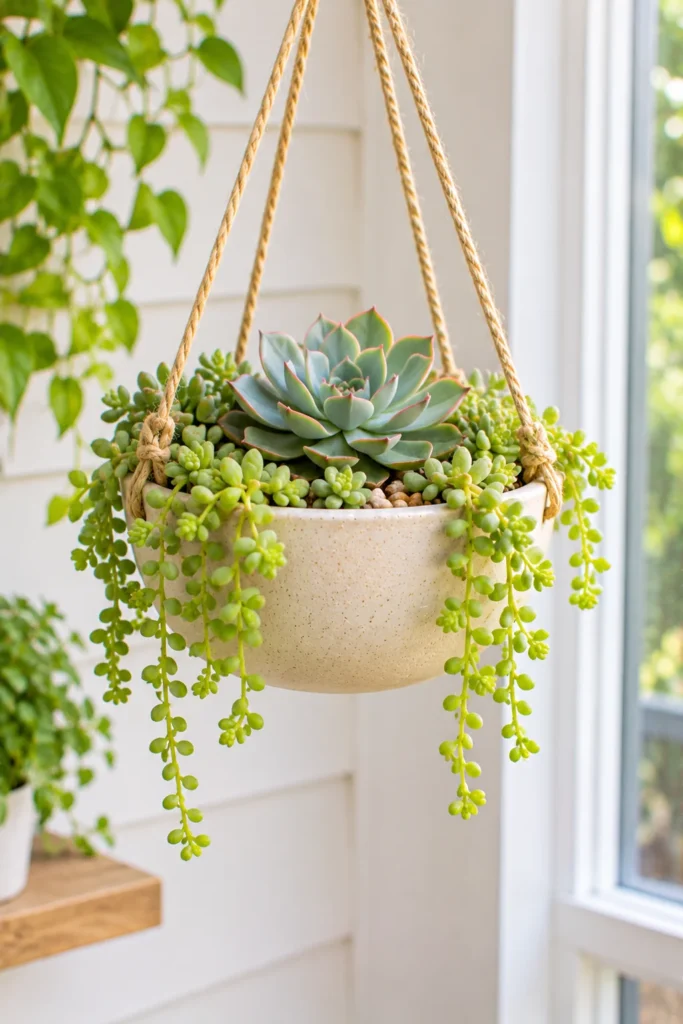
A mixed hanging basket works best when one plant provides structure and another handles the spill. Place a compact echeveria near the center, then add trailing sedum around the rim so the stems soften the edge without hiding the rosette.
The upright center gives the arrangement a clear focal point, while the trailing growth adds movement below it. That contrast makes one basket feel fuller, which is useful when you do not have room for several separate planters.
Stick with a limited palette of foliage shapes and colors. Too many succulent types can make a small hanging basket look crowded rather than layered.
11. Use a Slim Metal Planter on a Balcony Wall
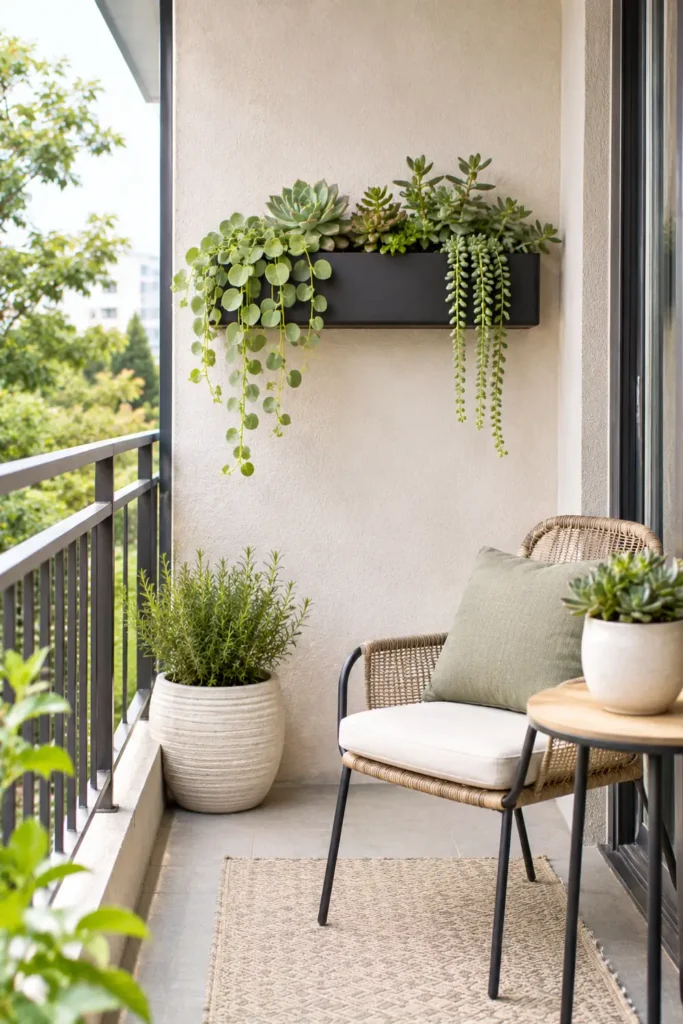
A narrow wall-mounted metal planter can add greenery to a compact balcony while leaving the floor open for a chair, table, or clear walking path. Choose a slim rectangular container and fill it with one or two trailing succulents that can fall over the front edge.
The planter stays visually close to the wall, so it takes up less usable space than a wide hanging basket. A dark or muted metal finish also gives the foliage a strong backdrop without competing with the rest of the balcony.
Make sure the container has drainage and is mounted securely for its wet weight. Position it where dripping water will not fall onto neighbors, seating, or the balcony below.
12. Turn a Succulent Wreath Into Living Wall Decor
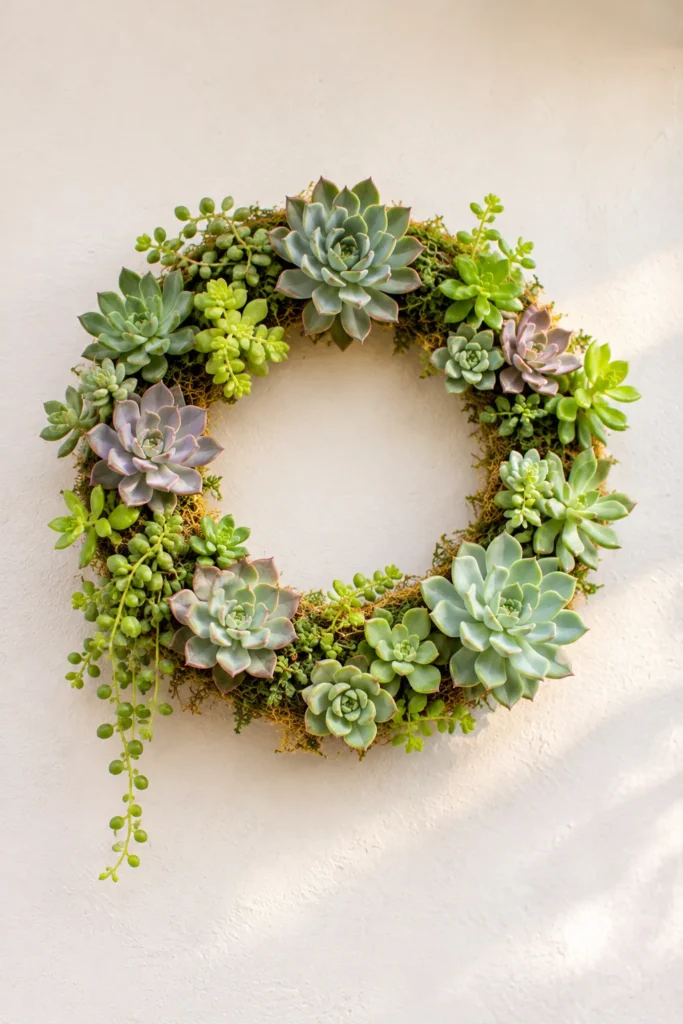
A compact succulent wreath gives you a completely different hanging shape from a standard pot. Build the ring with small rosette succulents and low-growing pieces arranged around a moss-filled wreath base, leaving enough variation in size to keep the circle from looking flat.
Because the planting spreads across the wall rather than hanging far into the room, it works well on a balcony wall, sheltered patio, or bright indoor spot with enough light. The round form also creates a focal point without needing several containers.
Keep the wreath relatively small in a tight space. A modest ring surrounded by some blank wall usually has more impact than an oversized piece packed into the corner.
13. Hang One Sculptural Planter Instead of Several
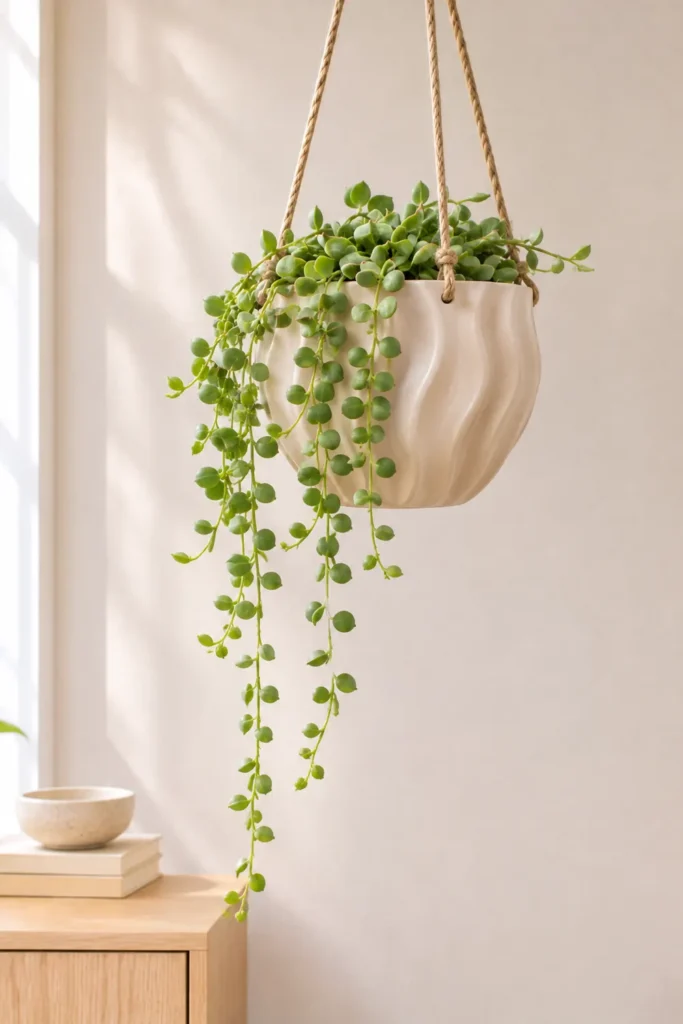
A small room does not always need a cluster of hanging plants. One sculptural ceramic planter with a single trailing succulent can make a stronger focal point while keeping the space calmer.
Choose a matte planter with a simple rounded or tapered shape, then let the plant provide the movement. A string succulent or another gently trailing variety works well because the stems soften the hard outline of the pot without adding visual clutter.
Give the planter some empty wall or window space around it. That negative space helps the shape stand out and makes the display feel deliberate rather than squeezed into the only available corner.
14. Add a Tiny Hanging Planter Above a Kitchen Window
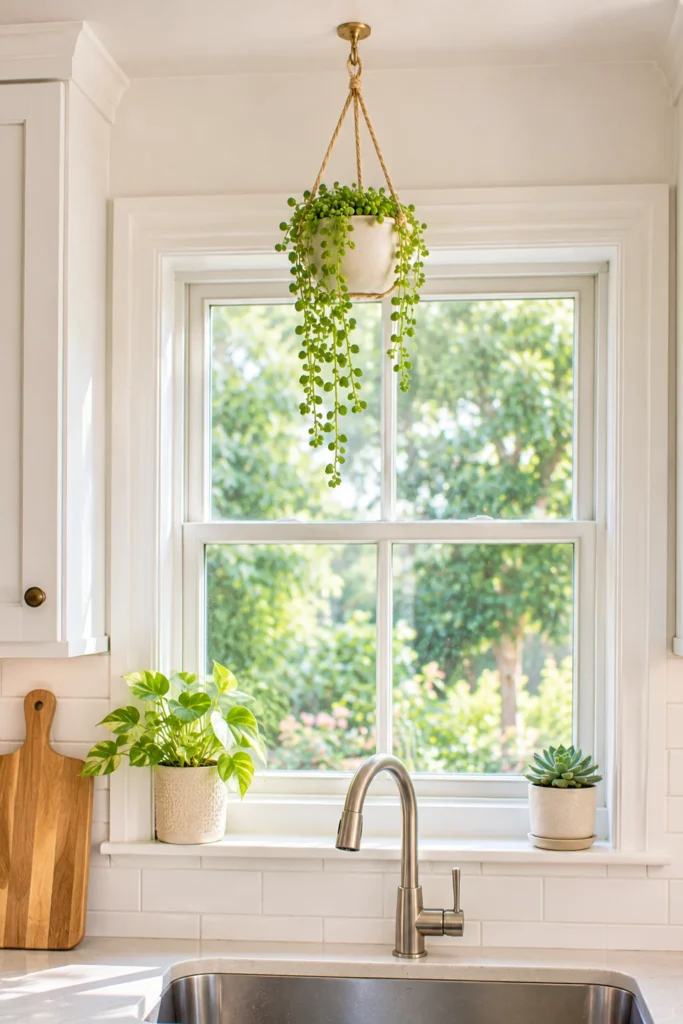
The narrow strip above a kitchen window is easy to ignore, but it can hold a small lightweight succulent planter without stealing counter or sill space. Use a compact ceramic or metal pot with a short trailing succulent and keep the hanger simple.
The higher placement draws the eye upward, while the small scale keeps the planter from crowding cabinets or blocking the glass. It works best when the plant still receives enough natural light from the window rather than hanging deep under an overhang.
Keep the trailing stems short enough that they stay clear of blinds, handles, and anything used around the window. Practical clearance matters more than squeezing in extra length.
15. Create a Balcony Trio at Different Heights
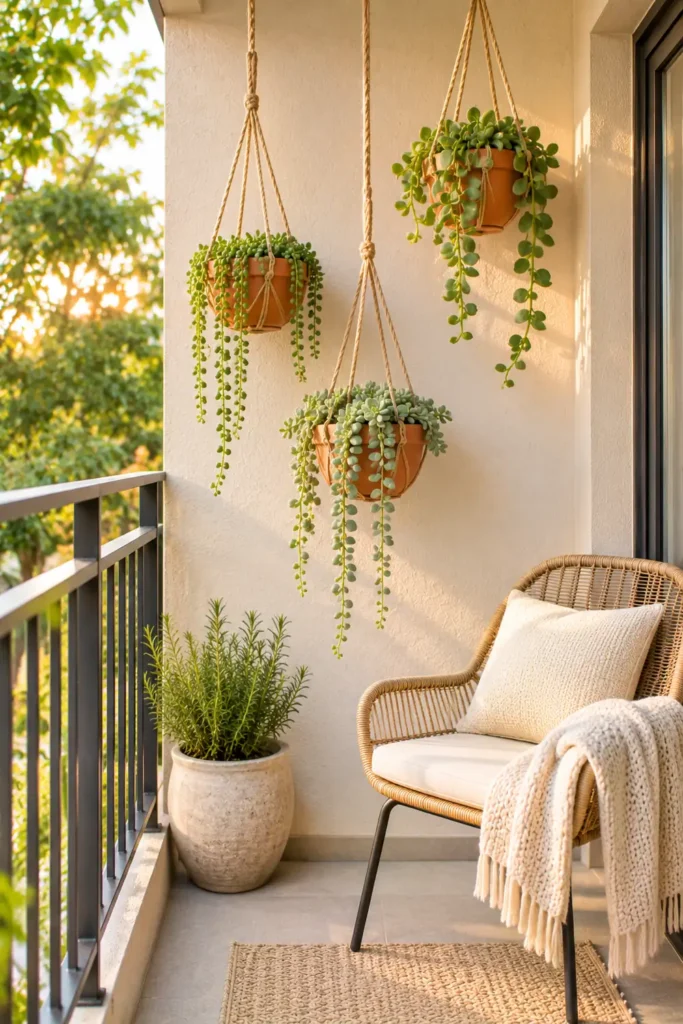
Three lightweight hanging planters can make a small balcony feel much greener without taking up the floor. Stagger them at different heights near one wall or corner, using trailing succulents in each pot so the foliage falls through separate layers rather than bunching together.
The height changes create depth, while repeating the same pot material keeps the trio connected. Terracotta, matte ceramic, or lightweight metal can all work, as long as the mounting setup safely supports the full wet weight.
Leave enough distance between the lowest planter and any seating or walkway. The goal is to build upward, not create another obstacle in an already tight balcony.
A Simple Formula for Small-Space Hanging Succulents
The easy hanging planter formula
The display does not need to be complicated. One well-placed trailing plant can do more for a small room than five tiny pots fighting for attention.
Hanging Succulent Planter FAQ
What succulents work best in hanging planters?
Trailing succulents are especially useful because their stems naturally fall below the container. Burro’s tail, string of pearls, string of bananas, and trailing sedum are common choices. Compact rosette succulents can also work well in mixed baskets, wall planters, and shallow hanging bowls.
Can succulents grow in hanging baskets?
Yes. Hanging baskets can work well when they provide drainage, suitable potting mix, and enough light for the plants being used. Ideas 6 and 10 show two different approaches, one using a coco-lined basket and another combining rosette and trailing forms.
Where should I hang succulents indoors?
A bright window area is usually more useful than a dark decorative corner. Hanging beside the glass rather than directly across it can give the plant light while keeping the view open. Ideas 2, 3, and 8 use window space without taking over the sill.
How do I water hanging succulents without making a mess?
Use a planter with controlled drainage and make sure you can reach it easily. Removable pots and hangers are especially practical because you can take the planter down for watering. Avoid placing a draining pot directly above furniture, electronics, or flooring that should stay dry.
How can I hang succulents in a very small apartment?
Use wall-mounted planters, window corners, narrow vertical arrangements, or one strong hanging focal point instead of filling every available surface. Ideas 5, 9, and 13 are especially useful when floor space and headroom are limited.
Conclusion
Small rooms do not need fewer plants, but they do need smarter placement. These hanging succulent planter ideas use windows, walls, corners, and vertical space so succulents can become part of the room without taking over the surfaces you use every day.
Start with the light, then choose a planter that fits the available space and the way the plant naturally grows. A trailing burro’s tail may need open space below, while a compact echeveria can sit close to a wall.
Save these ideas before you choose your next planter or rearrange a small balcony.