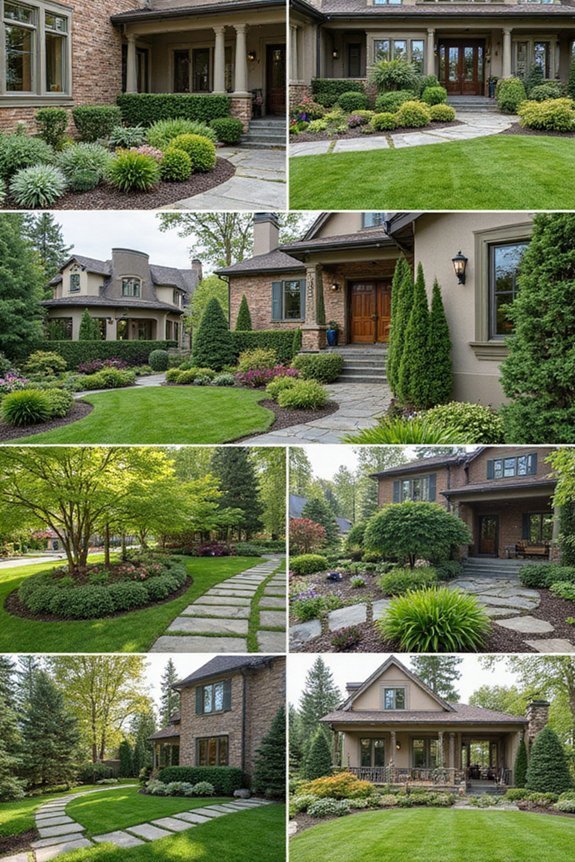
Just as a book’s cover determines whether someone opens it, your front yard creates the lasting first impression of your home. You can transform this pivotal outdoor space into a polished, welcoming area by mastering several key design principles. From establishing your style to layering plants strategically, discover the specific techniques that will elevate your curb appeal and make your home stand out—but where do you actually start?
Define Your Front Yard’s Design Style First
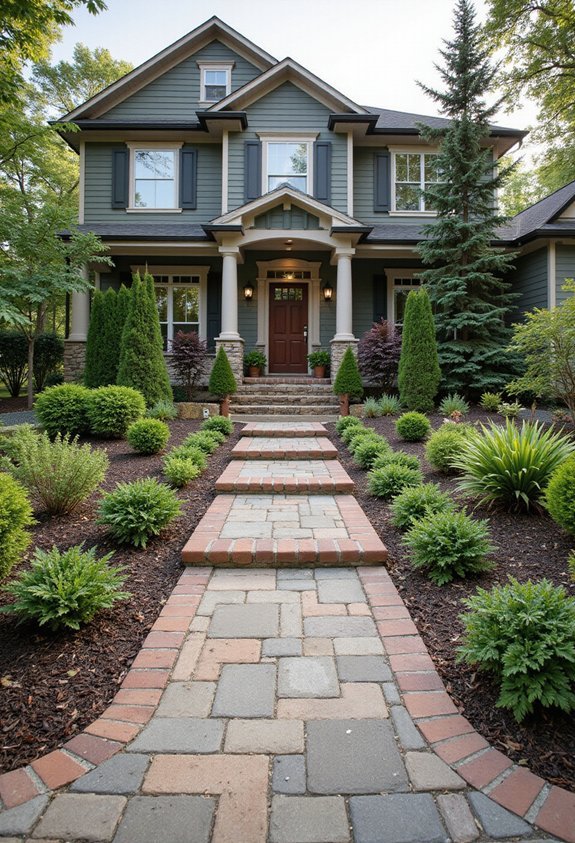
Before you start planting flowers or installing pathways, you’ll want to establish a clear design style for your front yard, because this decision will guide every choice you make moving forward. Consider what style resonates with you: modern, traditional, cottage, minimalist, or rustic. Each style has distinct characteristics that’ll influence your plant selections, hardscape materials, and overall layout.
Research images of yards that appeal to you, then identify common elements like color palettes, plant types, and architectural features. Your home’s existing style should factor into your decision, ensuring your front yard complements rather than clashes with your house’s design. Once you’ve settled on a style, you’ll find it considerably easier to make cohesive decisions about landscaping features, creating a unified, intentional appearance that enhances your home’s curb appeal and overall aesthetic value.
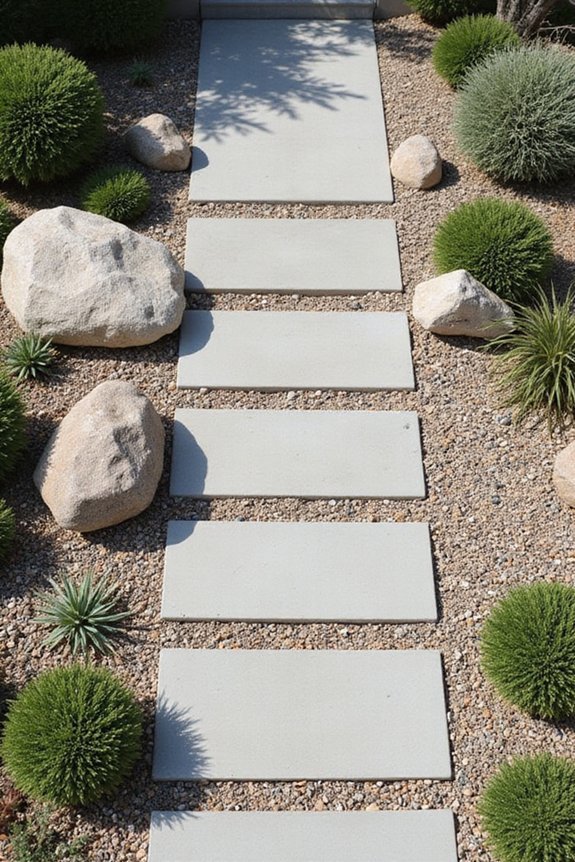
Also read: 21 HARDSCAPE FRONT YARD Layouts With Clean Lines!
Create a Focal Point Near Your Entry
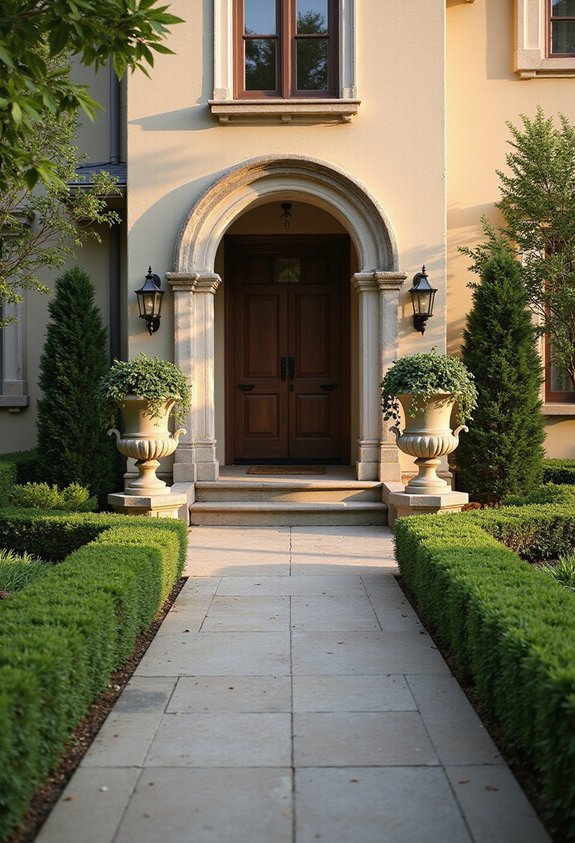
Once you’ve established your front yard’s design style, you’ll want to create a focal point near your entry that draws visitors’ eyes and anchors your home’s overall appearance. You can accomplish this through several strategic choices: install an eye-catching front door in a bold color, position a statement planter with vibrant flowers, or add decorative lighting fixtures that highlight your entryway. Consider incorporating architectural elements like a pergola or arbor that frames your entrance, or arrange landscaping features such as ornamental grasses and shrubs in intentional patterns. Your focal point should complement your chosen design style while being visible from the street, creating an immediate visual anchor that makes your home feel intentional and well-designed. This strategic placement transforms your entry into a compelling introduction to your property.
Choose a Front Yard Color Palette (and Stick to It)
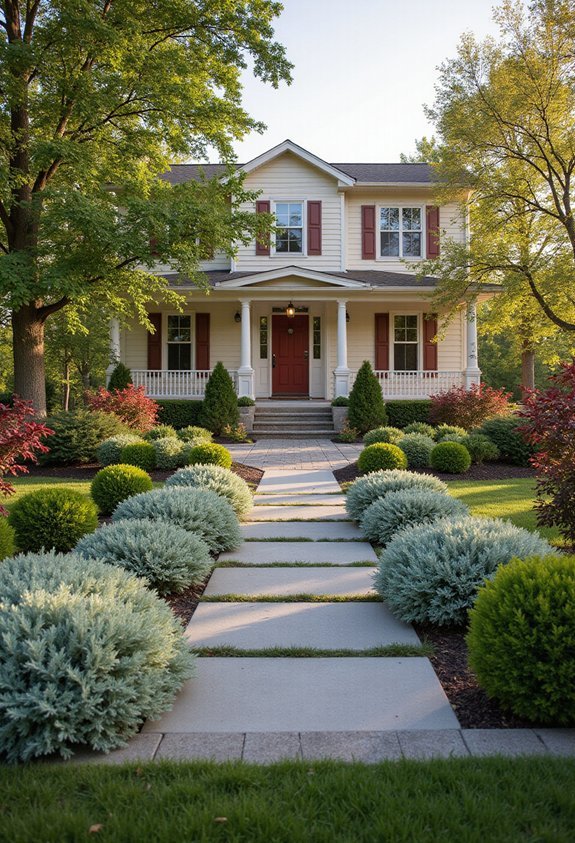
Just as your focal point draws attention to your entry, a cohesive color palette ties your entire front yard together and creates a unified, polished appearance that feels intentional rather than scattered. You’ll want to select two to three main colors that complement your home’s exterior, including its siding, roof, and trim. Consider using neutrals like gray, black, or white as your foundation, then add accent colors through plants, mulch, and decorative elements. Once you’ve established your palette, apply it consistently across flower beds, landscaping features, and hardscaping materials. This consistent approach prevents your yard from looking chaotic and guarantees each element works harmoniously with the others, ultimately enhancing your home’s curb appeal and visual cohesion.
Layer Plants From Foreground to Background
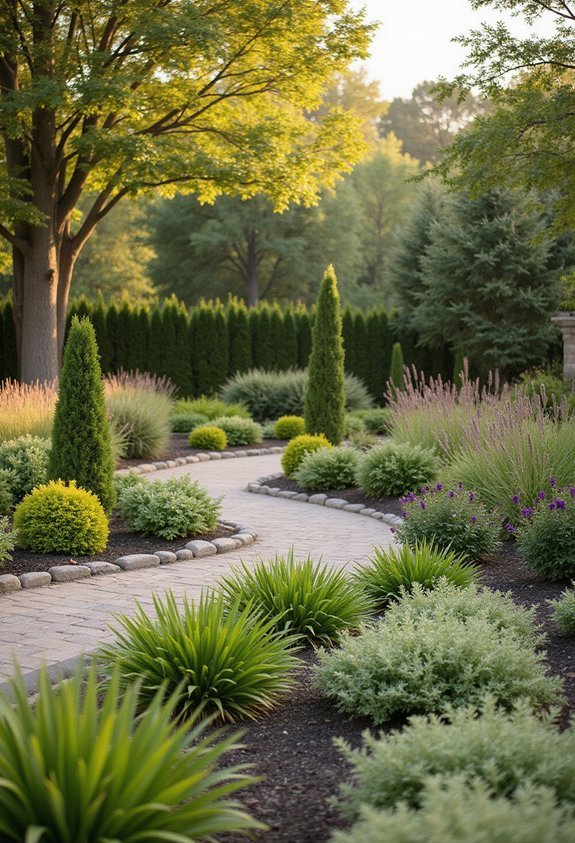
To create depth and visual interest in your front yard, you’ll want to arrange your plants strategically in layers that move from the front of your property toward the back. Start with shorter plants, like groundcover or low-growing shrubs, positioned near your walkway or foundation, as these draw visitors’ eyes forward. In the middle layer, place medium-height plants and flowering shrubs that provide color and texture without blocking sightlines. Finally, position taller trees and plants toward the back to create a natural backdrop and frame your home. This layering technique prevents your yard from appearing flat, establishes dimension, and guides the viewer’s gaze through your landscape in an intentional, organized manner that enhances overall curb appeal and creates visual balance throughout your property.
Select Evergreens for Year-Round Appeal
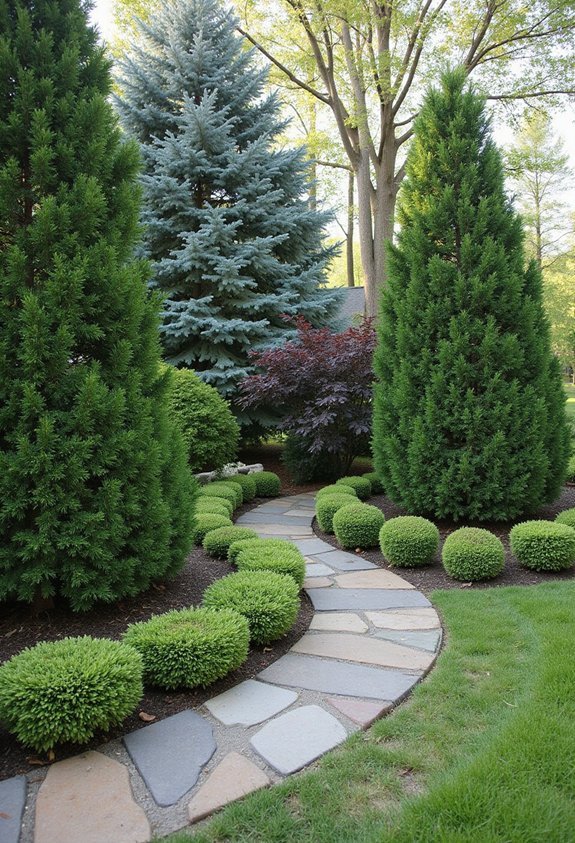
While deciduous plants lose their leaves in fall and winter, evergreens maintain their foliage throughout all four seasons, making them an excellent choice for creating consistent visual interest in your front yard landscape. You’ll find evergreens in various forms, including shrubs, trees, and ground covers, allowing you to select options that fit your space and design vision. Consider incorporating boxwoods, junipers, or dwarf conifers for structured shapes and textures that complement your home’s architecture. These plants require minimal maintenance once established, needing only occasional pruning to maintain their desired form. By strategically placing evergreens throughout your front yard, you’ll establish a strong foundation that remains attractive regardless of the season, providing reliable color and structure year-round.
Add Texture With Mixed Greenery and Grasses
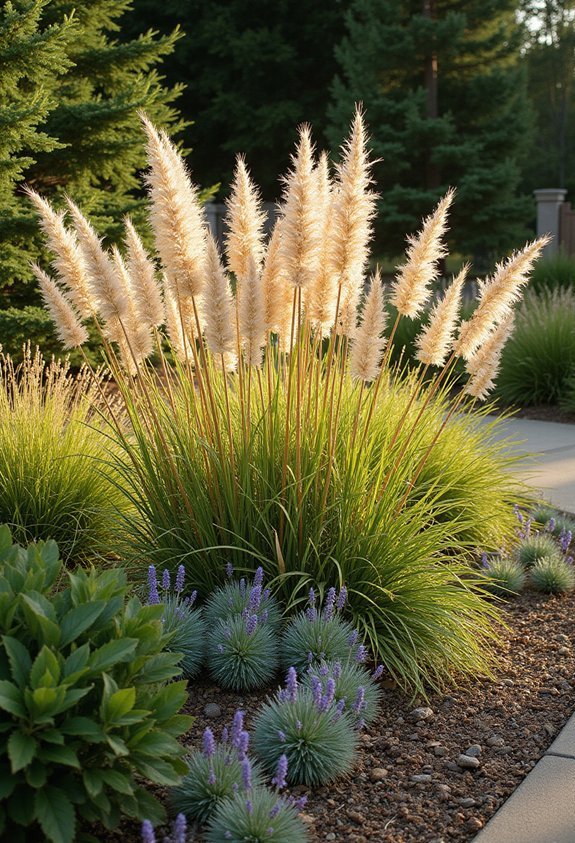
Beyond the solid structure that evergreens provide, you’ll want to introduce a variety of textures and movement into your front yard by combining different types of greenery and ornamental grasses. Mix plants with varying leaf shapes, sizes, and colors to create visual interest and depth. Ornamental grasses like fountain grass or feather reed grass add graceful, flowing movement that catches the eye and responds to wind. Combine these with broad-leafed plants, fine-textured foliage, and spiky specimens to establish contrast. This layering technique prevents your landscaping from appearing flat or monotonous. When you strategically place these elements throughout your front yard, you’ll develop a sophisticated, dynamic landscape that maintains visual appeal from multiple angles and throughout different seasons.
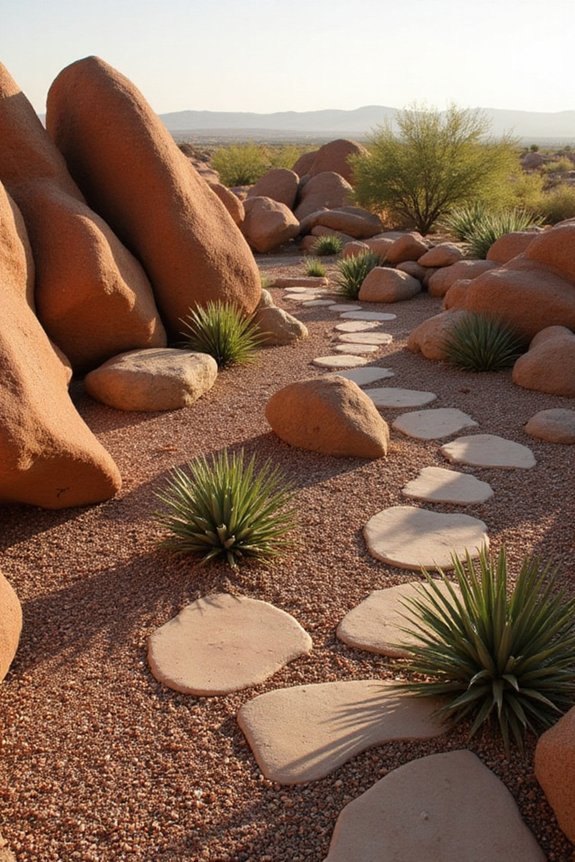
Incorporate Native Plants (Low-Maintenance Front Yards)
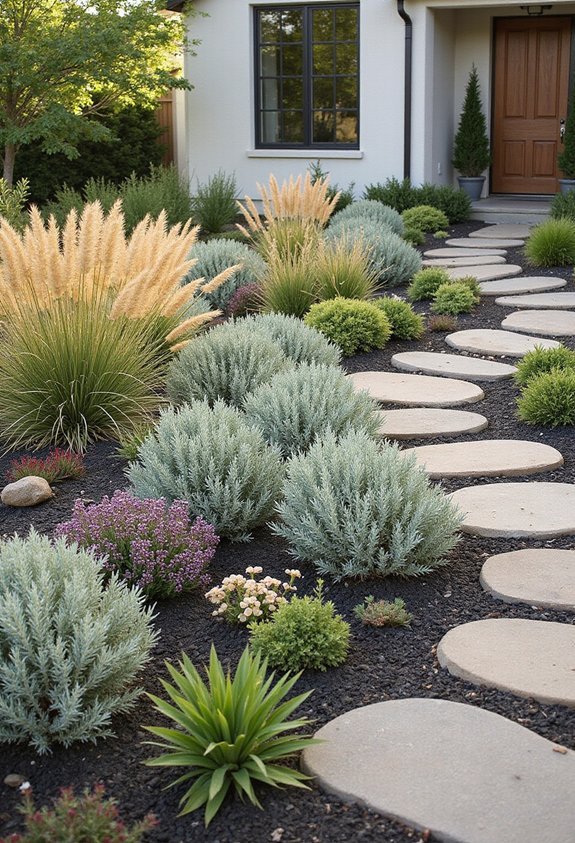
Native plants—species that naturally grow in your region without human intervention—offer a practical solution for creating a low-maintenance front yard that thrives with minimal effort. These plants have adapted to your local climate, soil conditions, and rainfall patterns over centuries, which means they’ll flourish without constant watering, fertilizing, or pest management. You’ll spend considerably less time maintaining your landscape while supporting local ecosystems and wildlife. To incorporate native plants effectively, research which species thrive in your specific zone, then group plants with similar water and sunlight needs together. This strategic placement guarantees each plant receives ideal conditions naturally. Native plants also reduce your water bills and eliminate the need for chemical treatments, making your front yard both environmentally responsible and economically sensible.
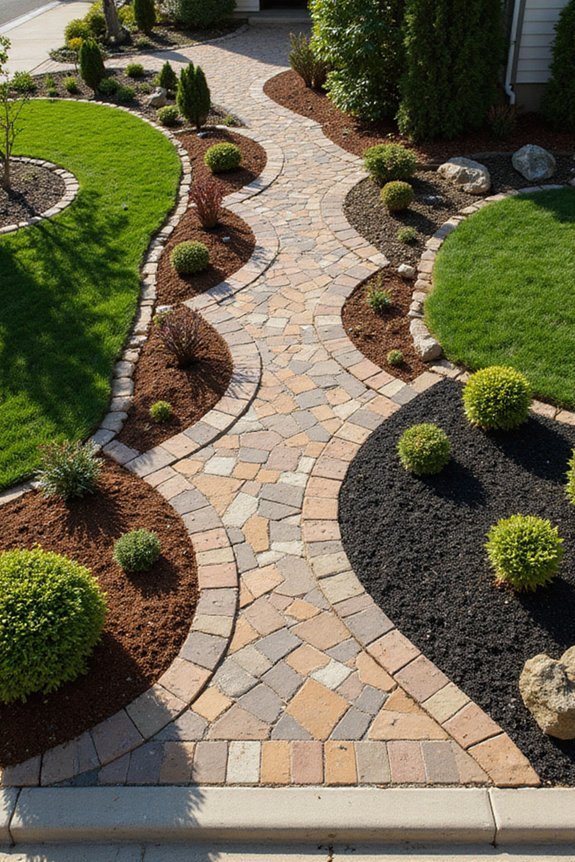
Design a Curved Walkway to Guide the Eye
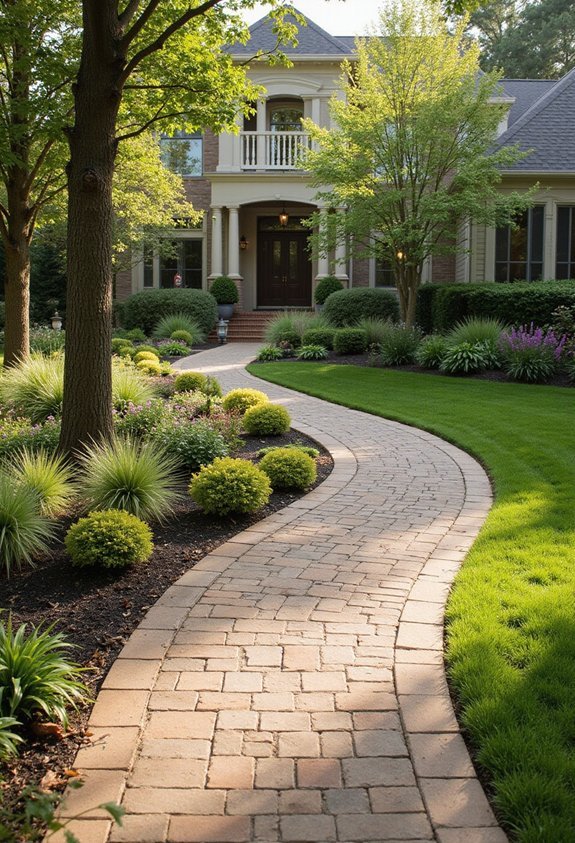
A curved walkway‘ll draw visitors’ eyes through your front yard in a natural, engaging way that straight paths simply can’t achieve. When you design a curved path, you’re creating visual interest that makes your landscape feel intentional and thoughtfully planned. Start by sketching your walkway’s curve on paper, ensuring it flows smoothly from your driveway or street to your front door without sharp angles that look awkward. Choose materials like brick, stone, or pavers that complement your home’s exterior, and consider the walkway’s width—typically three to four feet works well for most homes. Plant native plants along the curved edges to soften the lines and guide visitors naturally forward. This strategic design technique transforms your front yard into a more sophisticated, welcoming space that showcases your home’s best features while improving functionality.
Install Hardscape Edging to Define Planting Beds
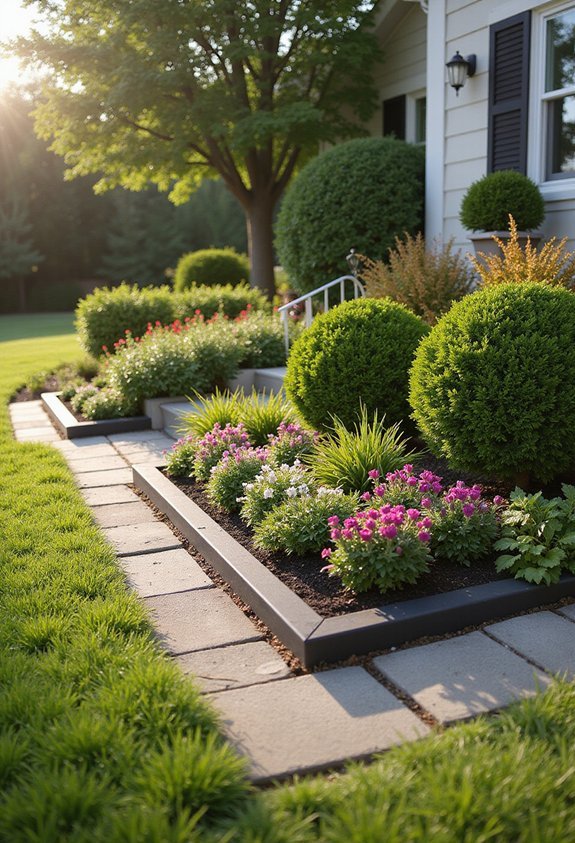
When you’re creating distinct planting areas in your front yard, hardscape edging‘ll establish clear boundaries that separate your flower beds from lawn space while adding visual structure to your landscape. You can choose from metal, plastic, stone, or wood edging materials, each offering different aesthetic qualities and durability levels. Install the edging by digging a shallow trench along your bed’s perimeter, then securing the material firmly into place so it remains level and stable. This prevents soil from spilling onto your lawn and grass from creeping into your beds, reducing maintenance requirements considerably. Properly installed hardscape edging also creates a polished, intentional appearance that elevates your yard’s overall presentation and makes mowing easier along defined borders.
Use Mulch to Finish and Protect Your Plants
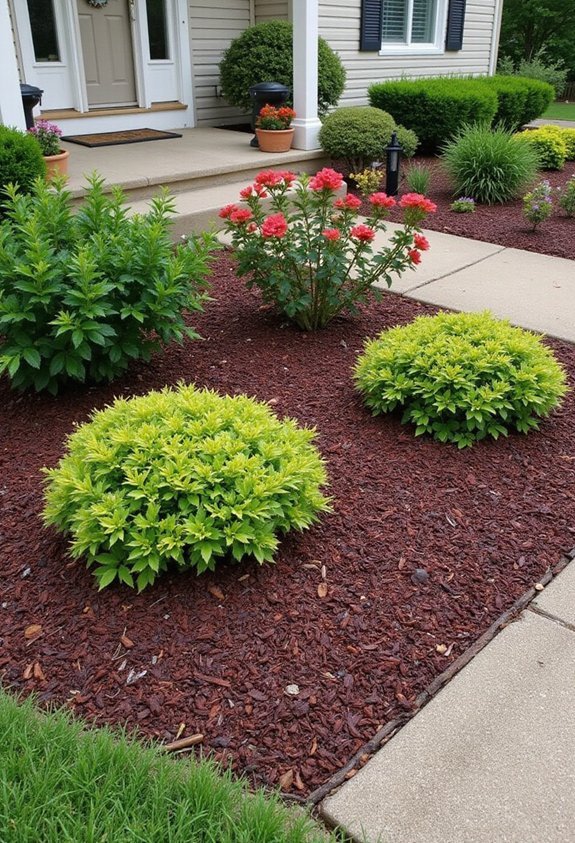
After you’ve installed your hardscape edging and prepared your planting beds, applying mulch is the next essential step that’ll protect your plants while giving your landscape a finished, polished look. Mulch serves multiple purposes: it retains soil moisture, regulates temperature around plant roots, and suppresses weeds that’d otherwise compete for nutrients. You’ll want to apply a two to three-inch layer of mulch around your plants, keeping it a few inches away from tree trunks and plant stems to prevent rot. Choose organic mulch like wood chips or shredded bark, which breaks down over time and improves soil quality. As mulch decomposes, you’ll need to replenish it annually to maintain its protective benefits and keep your landscape looking neat and well-maintained.
Frame Your Home With Strategic Foundation Plantings
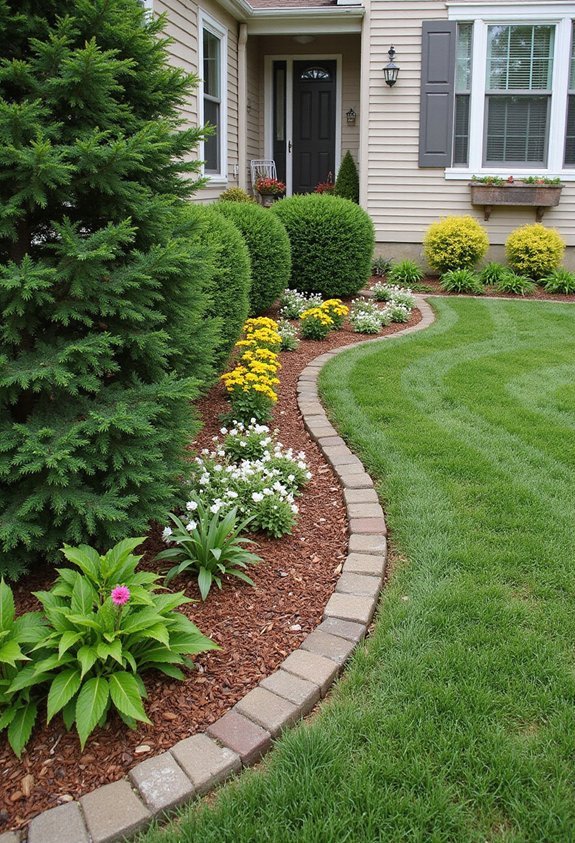
Now that you’ve applied mulch to protect your plants and create that finished appearance, you’ll want to focus on how those plants work together to frame and enhance your home’s exterior. Strategic foundation plantings involve selecting shrubs and flowers that complement your home’s architectural style and color scheme while creating visual balance around your entryway and walls. You’ll want to place taller plants at corners and along the foundation’s edges to draw the eye upward, while shorter plants fill in gaps near the base. Choose evergreens for year-round structure and add flowering plants for seasonal color and interest. This layered approach creates depth and dimension, making your home appear intentional and well-maintained while establishing clear boundaries between your landscaping and house structure.
Install Landscape Lighting for Instant Sophistication
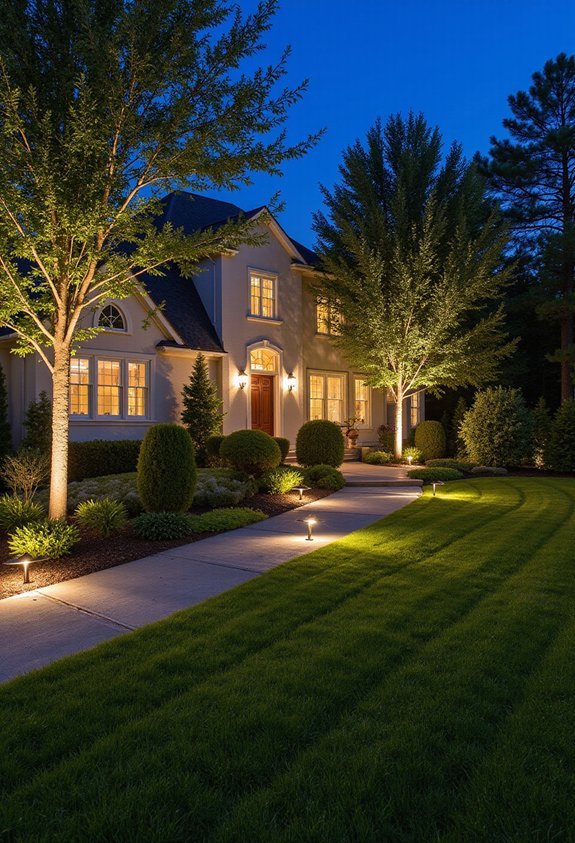
Once you’ve established your foundation plantings, landscape lighting becomes the next powerful tool for transforming your front yard’s appearance, especially during evening hours. Strategic light placement highlights your home’s architectural features, creates depth, and draws attention to specific plants or pathways. You’ll want to install uplighting at the base of trees to create dramatic shadows, while downlighting from above softens features and improves safety. Consider pathway lighting along walkways and driveways, which guides visitors while enhancing curb appeal. LED fixtures are energy-efficient and long-lasting, making them ideal for outdoor use. Position lights at varying angles and distances to avoid overly bright spots, and use warm-toned bulbs for an inviting atmosphere that complements your landscaping design.
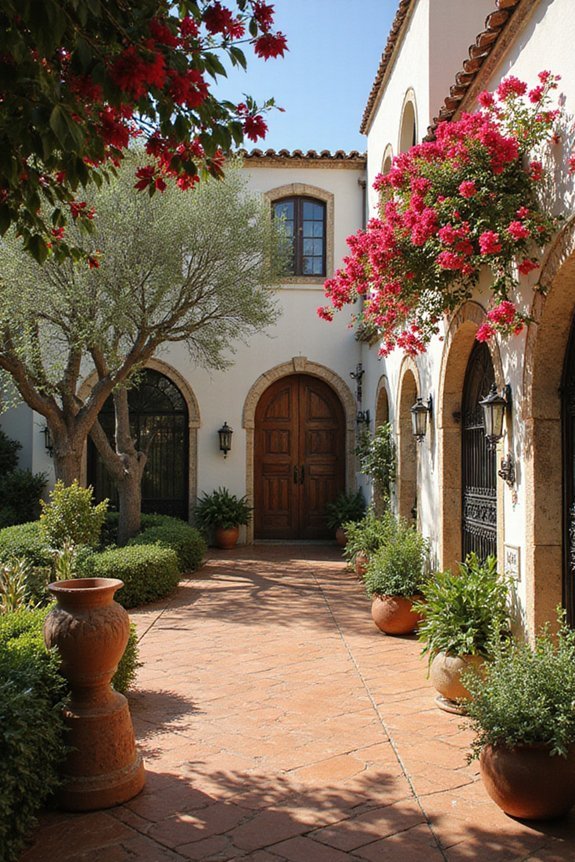
Install Planters on Either Side of the Door
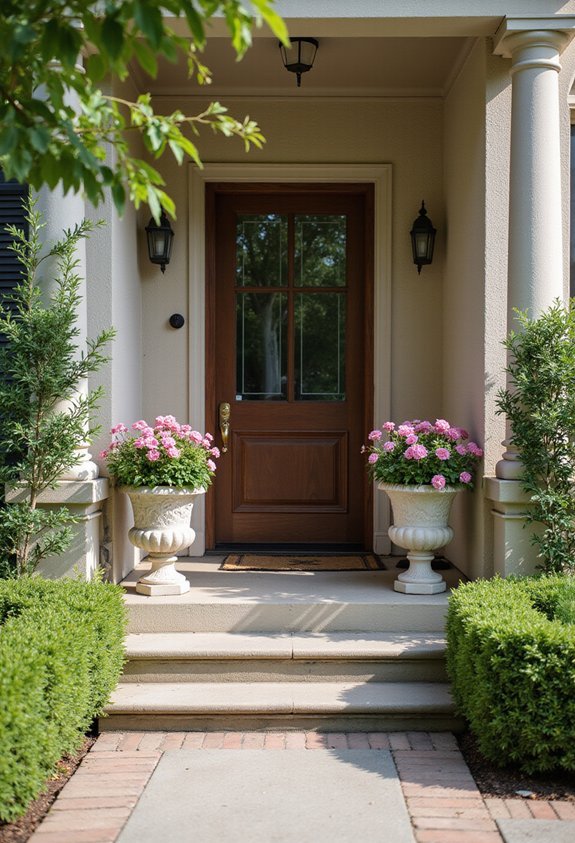
While landscape lighting draws the eye upward and outward across your yard during evening hours, strategically placed planters flanking your front door create an immediate focal point that welcomes visitors during both day and night. You’ll want to select matching containers in complementary colors that coordinate with your home’s exterior, ensuring visual balance and cohesion. Choose plants that thrive in your climate zone and suit your door’s light exposure, whether that’s full sun or partial shade. Seasonal plantings allow you to refresh your entrance throughout the year, maintaining interest and appeal. Proper sizing matters greatly; select planters proportional to your door’s scale, avoiding anything too small or oversized. This purposeful arrangement demonstrates intentionality and elevates your home’s curb appeal substantially.
Create a Statement Entry Door
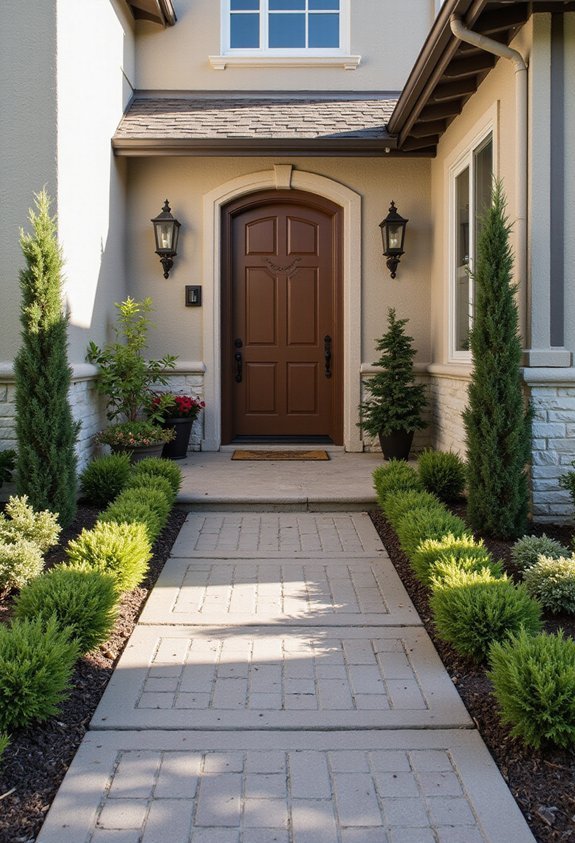
Your front entry door serves as the centerpiece of your home’s exterior, making it one of the most impactful design elements you can modify to boost curb appeal. You’ll want to ponder painting your door a bold, contrasting color that complements your home’s siding and trim, such as deep navy, rich burgundy, or classic black. Additionally, you can upgrade your door’s hardware by installing modern handles, knockers, or kick plates that reflect your personal style. If you’re ready for a larger investment, you might replace your entire door with a new design featuring glass panels, decorative frosting, or architectural details that showcase your home’s character and create an inviting entrance that welcomes visitors immediately.
Paint or Refresh Your House Numbers and Hardware
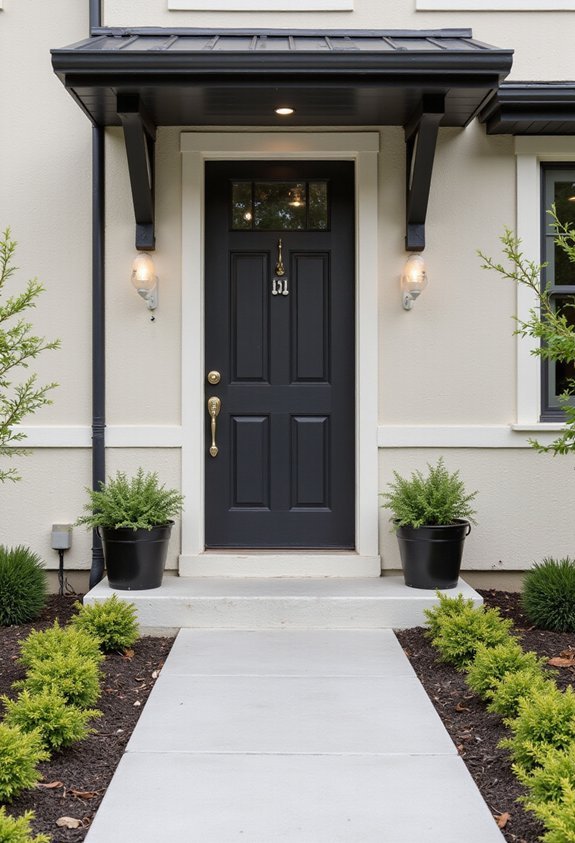
Beyond your eye-catching entry door, the smaller details like house numbers and hardware deserve attention because they work together to create a cohesive and polished front yard appearance. You should evaluate your current house numbers, mailbox hardware, and door handles for signs of wear, fading, or outdated finishes. Consider painting these elements in colors that complement your door and exterior palette, ensuring they’re visible and legible from the street. Modern finishes like matte black, brushed nickel, or oil-rubbed bronze work well with most home styles. If painting isn’t suitable, you can replace worn hardware entirely with new pieces that match your chosen aesthetic. Fresh, well-maintained numbers and hardware elevate your home’s curb appeal substantially, demonstrating attention to detail that makes your entire front yard appear intentionally designed and professionally maintained.
Upgrade Your Mailbox as a Design Detail
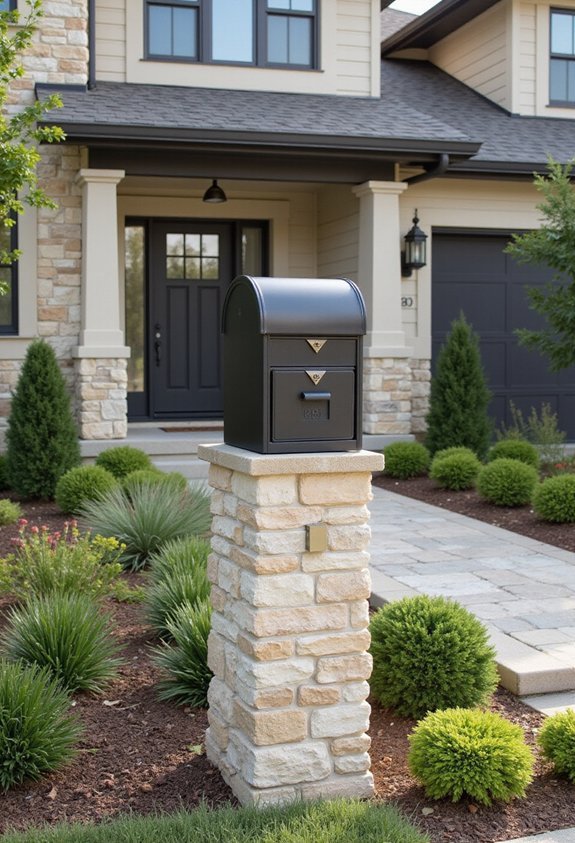
How often do you actually notice your mailbox when you’re driving up to your home? Your mailbox serves as a functional necessity, but it’s also an opportunity to enhance your curb appeal. You can replace an outdated mailbox with a modern design that complements your home’s architectural style and color scheme. Consider upgrading to a mailbox featuring clean lines, quality materials like metal or wood, or contemporary finishes that coordinate with your exterior palette. You might also add decorative post wrapping, install decorative brackets, or choose a mailbox with integrated lighting features. These upgrades transform an overlooked element into a polished focal point that contributes to your home’s overall aesthetic presentation and demonstrates attention to design details throughout your property.
Build a Simple Front Porch or Stoop
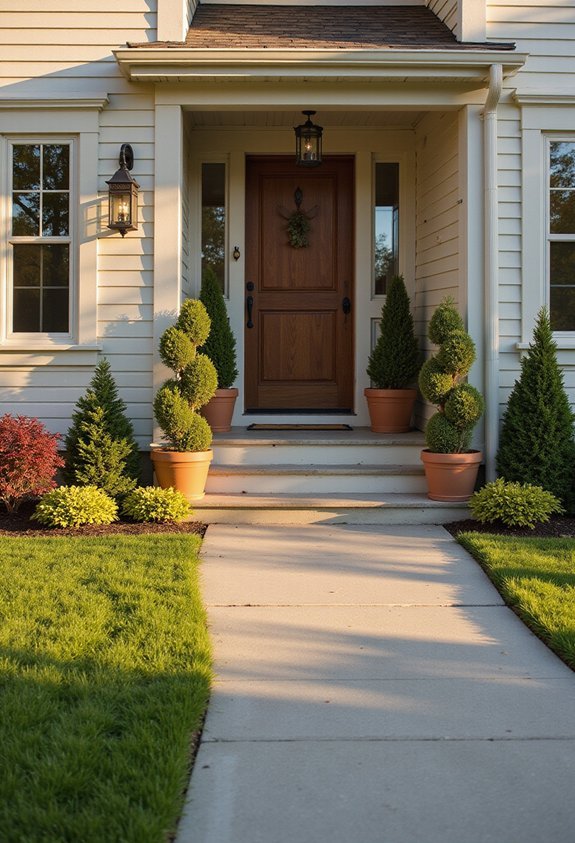
A front porch or stoop serves as the welcoming threshold between your home’s exterior and its interior, and it’s one of the most practical improvements you can make to your front yard design. You’ll want to ponder the size and style that matches your home’s architecture, whether you’re building a small concrete stoop or a larger covered porch. Start by ensuring a solid foundation with proper drainage to prevent water damage and erosion. Add steps with appropriate height and depth for safe, comfortable access. Include adequate lighting fixtures so visitors can navigate safely during evening hours. Choose durable materials like wood, concrete, or composite decking that’ll withstand weather conditions. Finally, incorporate railings or handrails where necessary for safety, creating both functionality and visual appeal.
Install a Ground-Level Border to Contain Plantings
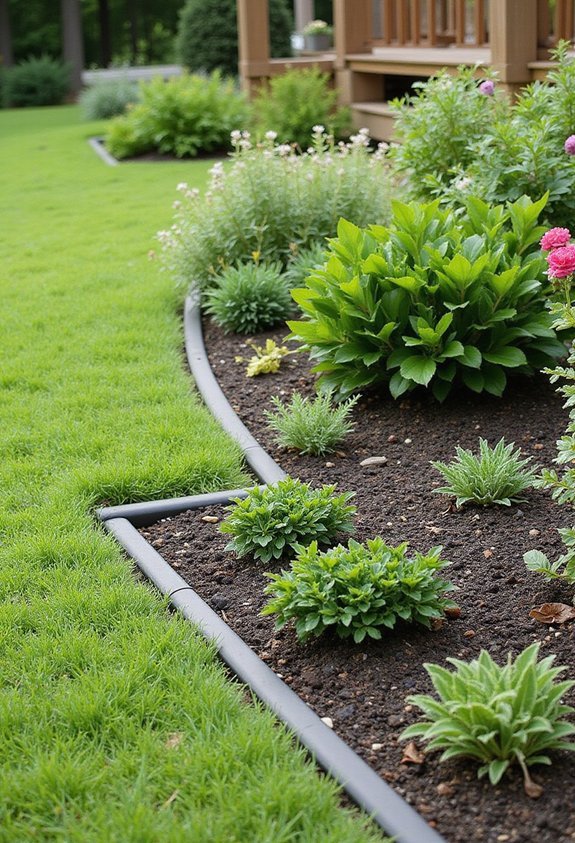
Once you’ve established your front porch or stoop, you’ll want to create defined planting areas that organize your landscaping and prevent soil from spilling onto walkways and driveways. Install edging materials like plastic, metal, or stone borders along your garden beds to create clean lines and maintain separation between plantings and hardscaping. These borders serve practical purposes by containing mulch, soil, and plants within designated zones, making maintenance easier and your yard appear intentional and well-organized. Choose edging that complements your home’s architectural style, whether you prefer modern metal strips or traditional stone. Proper borders also prevent grass from creeping into flower beds and reduce the time you’ll spend weeding and trimming edges, ultimately creating a polished, professional appearance.
Invest in Quality Lawn Care or Alternatives
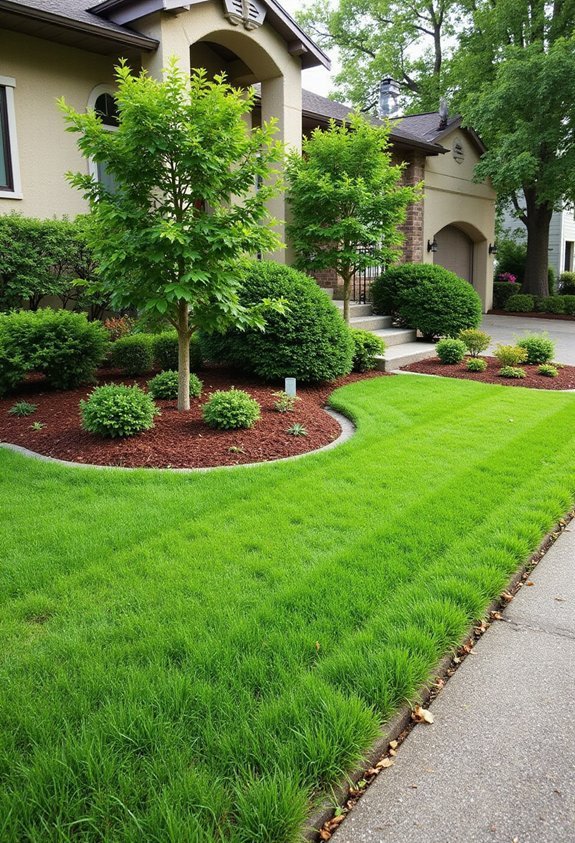
With your garden beds now neatly defined and contained, you’ll want to focus on the largest and most visible part of your front yard—the lawn itself. You can invest in professional lawn care services that’ll handle mowing, fertilizing, and weed control throughout the season, keeping your grass healthy and uniform. Alternatively, you might choose low-maintenance ground covers like clover or ornamental grasses that require less upkeep than traditional lawns. If you’re maintaining the lawn yourself, establish a consistent mowing schedule, apply appropriate fertilizers based on soil testing, and water deeply but infrequently to guarantee strong root development. Whatever option you select, prioritize consistency and proper maintenance techniques to safeguard your lawn complements the polished appearance you’ve created with your bordered garden beds.
Add Seasonal Color Without Overcrowding Beds
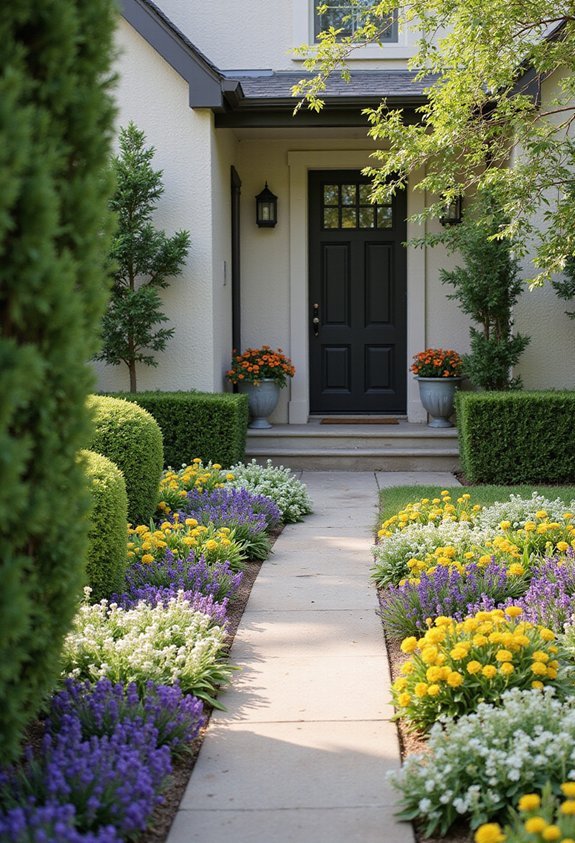
Your front yard’s garden beds shouldn’t become overcrowded with plants just because you want to introduce seasonal color throughout the year. Instead, you’ll want to strategically rotate seasonal flowers and plants to maintain visual interest without overwhelming your landscape. Start by selecting a few key areas where you’ll place seasonal displays, then swap out plants as seasons change. This approach keeps your beds looking fresh and intentional rather than chaotic. You can use containers filled with seasonal blooms—such as spring tulips, summer annuals, fall mums, and winter evergreens—which you’ll position throughout your beds. This method allows you to change your front yard’s appearance without permanently filling every inch of soil, ensuring your landscape remains organized, visually balanced, and beautifully maintained year-round.
Conclusion
You’ve now discovered the essential strategies that’ll transform your front yard into a cohesive, visually striking space. By establishing your design style, creating focal points, selecting complementary colors, and layering plants strategically, you’re building the foundation for lasting curb appeal. The final step requires you to commit to maintenance through lawn care and seasonal updates, which guarantees your carefully crafted design remains polished and inviting year-round, ultimately reflecting your home’s true potential.