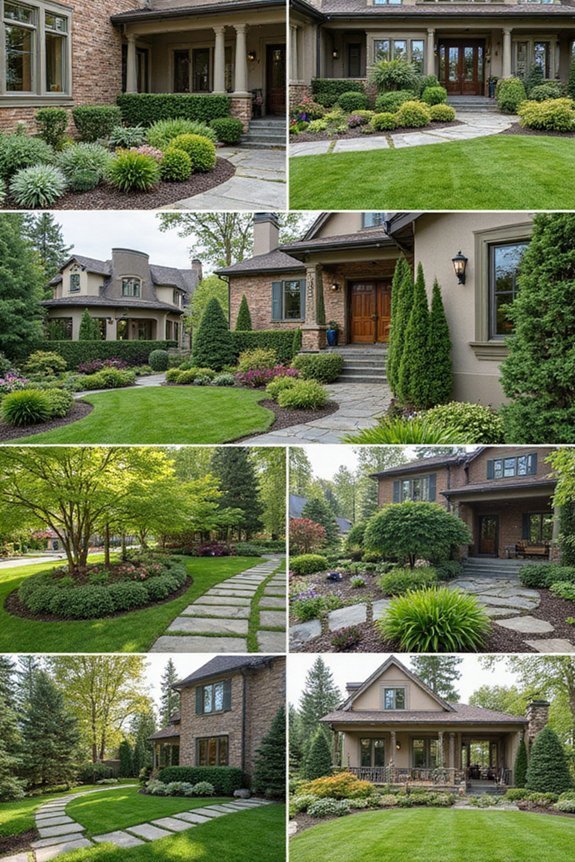
When you’re ready to transform your front yard into an attractive, functional outdoor space, you’ll need a methodical approach that combines careful planning with practical execution. You’ll start by evaluating your current conditions—sunlight, soil quality, and terrain—then move through design choices, budget considerations, and plant selection. However, the real challenge lies in understanding how these initial steps connect to long-term success, which requires exploring the systematic framework that ties everything together.
Start: Survey What You’re Working With
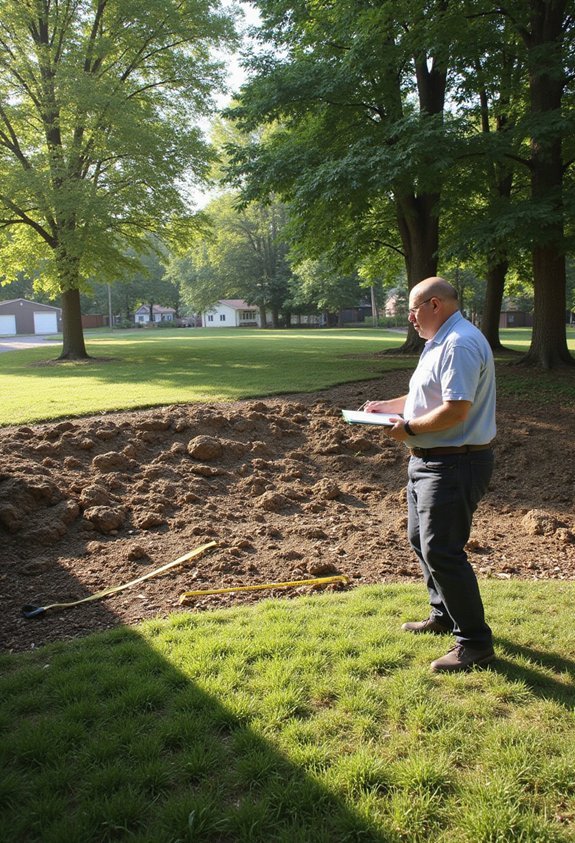
Before you can plan your front yard landscaping project, you’ve got to understand what you’re actually working with, which means taking a thorough look at your property’s existing conditions and characteristics. Walk around your yard and observe the sunlight patterns throughout the day, noting which areas receive full sun, partial shade, or complete shade. Check your soil type by digging a small hole and examining its texture, color, and drainage capabilities. Identify any existing trees, shrubs, or structures that’ll remain, and assess your yard’s slope and elevation changes. Document the climate zone you’re in, local rainfall amounts, and typical temperature ranges. Measure your front yard’s dimensions and note any utilities like water lines or electrical conduits. This detailed survey provides the foundation for all your landscaping decisions.
Also read: 21 HARDSCAPE FRONT YARD Layouts With Clean Lines!
Find Your Design Style
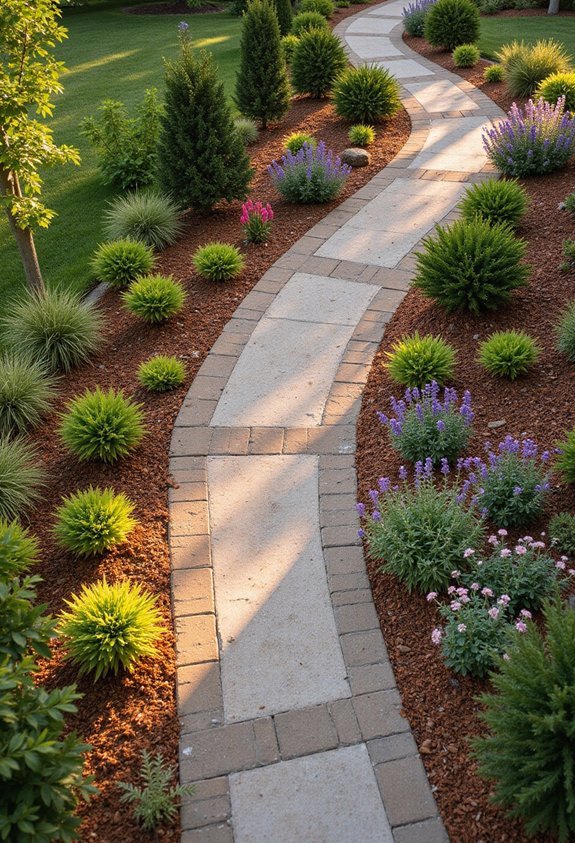
With your yard’s existing conditions documented, you’re now ready to explore the design styles that’ll best suit your home’s character and your personal preferences. Consider researching popular landscaping styles like modern, traditional, cottage, Mediterranean, or naturalistic designs, as each offers distinct plant selections and layout approaches. Look at photographs of landscapes you admire, noting which elements appeal to you—whether that’s symmetrical arrangements, curved pathways, water features, or specific color palettes. Think about how your chosen style’ll complement your home’s architectural style and existing hardscape. Visit local gardens or neighborhoods with similar homes to gather inspiration. Create a digital mood board or sketch folder containing images that resonate with your vision, helping you identify common themes and preferences that’ll guide your landscaping decisions moving forward.
Set a Realistic Budget
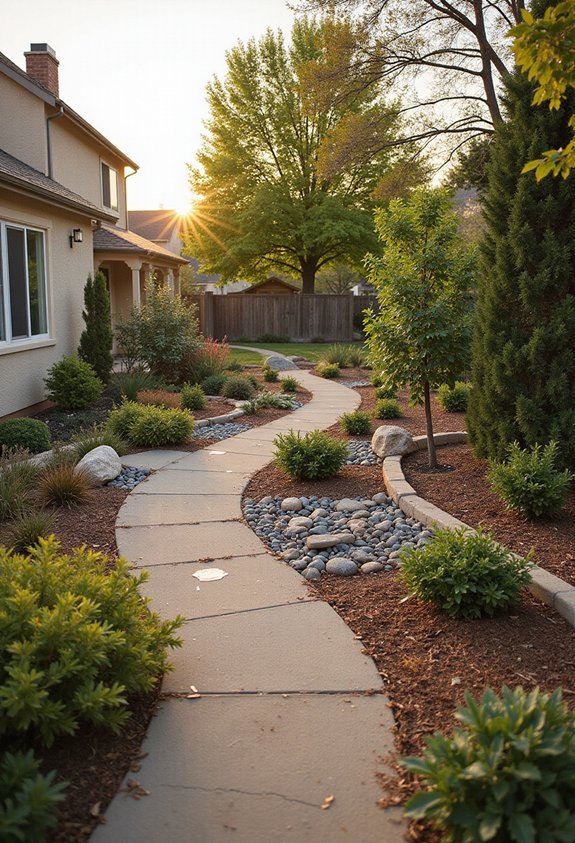
Once you’ve identified the design style that matches your vision, you’ll need to establish a practical budget that reflects both your financial situation and the scope of your landscaping project. Start by researching typical costs for materials like plants, mulch, soil, and hardscaping elements such as pavers or stone. Get quotes from local landscapers to understand labor expenses in your area. Consider which elements matter most to you—whether that’s trees, flower beds, pathways, or irrigation systems—and prioritize accordingly. Remember that you don’t need to complete everything simultaneously; you can phase your project over multiple seasons. Factor in ongoing maintenance costs for watering, weeding, and seasonal care. A realistic budget guarantees you’ll make informed decisions without overspending.
Choose Plants That Thrive in Your Climate
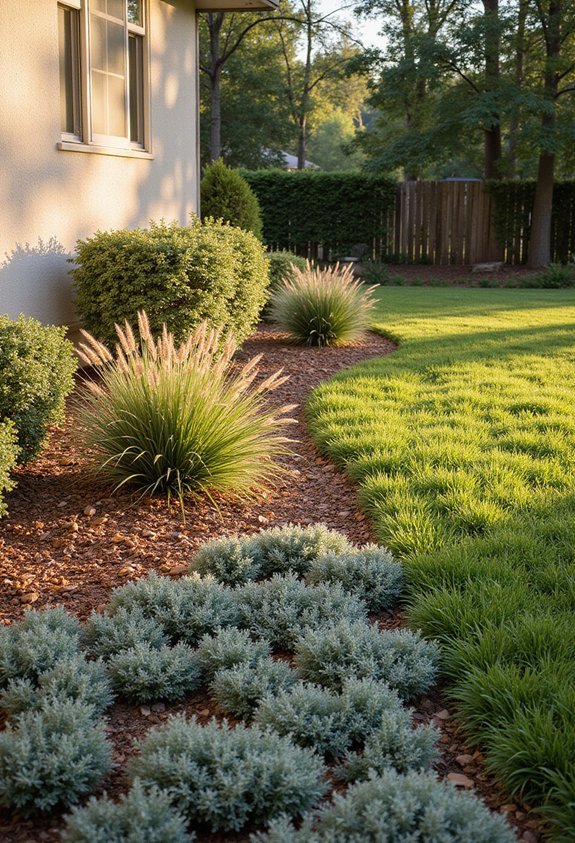
Selecting plants that’ll naturally flourish in your region’s climate conditions is one of the most important decisions you’ll make during your landscaping project, since plants that aren’t suited to your area’s temperature, rainfall, and sunlight patterns will struggle to survive and’ll require excessive maintenance or replacement. Research your USDA hardiness zone, which indicates which plants can withstand your local winter temperatures, then identify your region’s moisture levels and average annual rainfall. Visit local nurseries to ask about native plants, which’ve adapted to thrive in your specific environment without additional fertilizers or constant watering. Check how much sunlight your front yard receives throughout the day, whether full sun, partial shade, or full shade, then select plants matching those conditions. This approach guarantees healthier plants and reduces ongoing care demands.
Pick the Right Hardscaping Materials
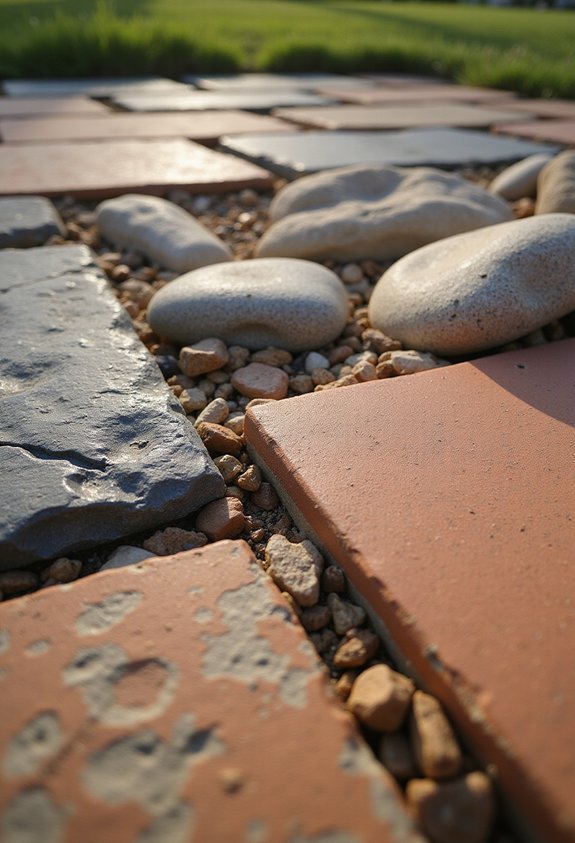
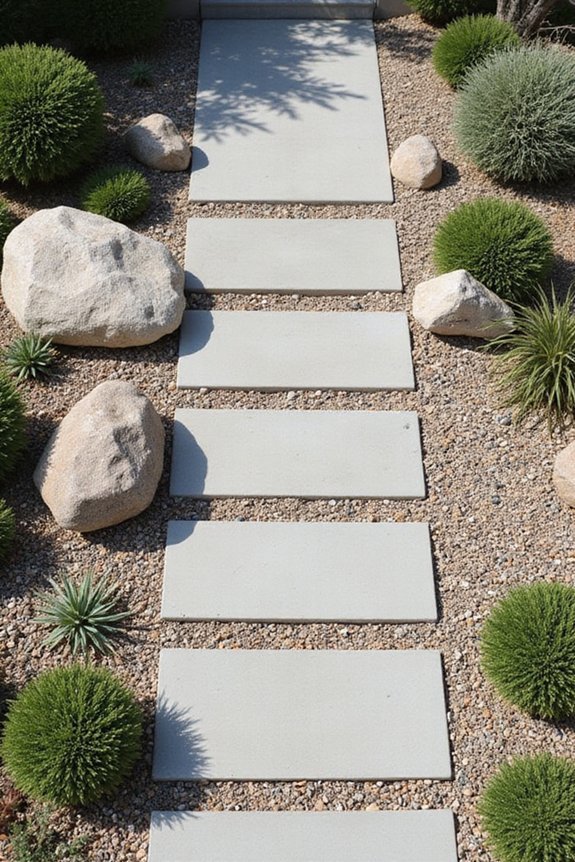
After you’ve selected your plants, you’ll need to choose the hardscaping materials that’ll form the structural foundation of your front yard’s design, including pathways, patios, driveways, and edging that complement both your home’s architecture and the plants you’ve chosen. Consider using concrete, pavers, gravel, or natural stone based on your budget and maintenance preferences. Concrete offers durability and affordability, while pavers provide visual appeal through various patterns and colors. Gravel creates an informal look but requires regular raking, whereas natural stone delivers elegance and longevity. Guarantee your hardscaping materials coordinate with your home’s exterior colors and style, creating visual harmony throughout your landscape. Additionally, select materials that withstand your climate’s weather conditions and can handle foot traffic effectively without deteriorating quickly.
Sketch Your Layout and Focal Points
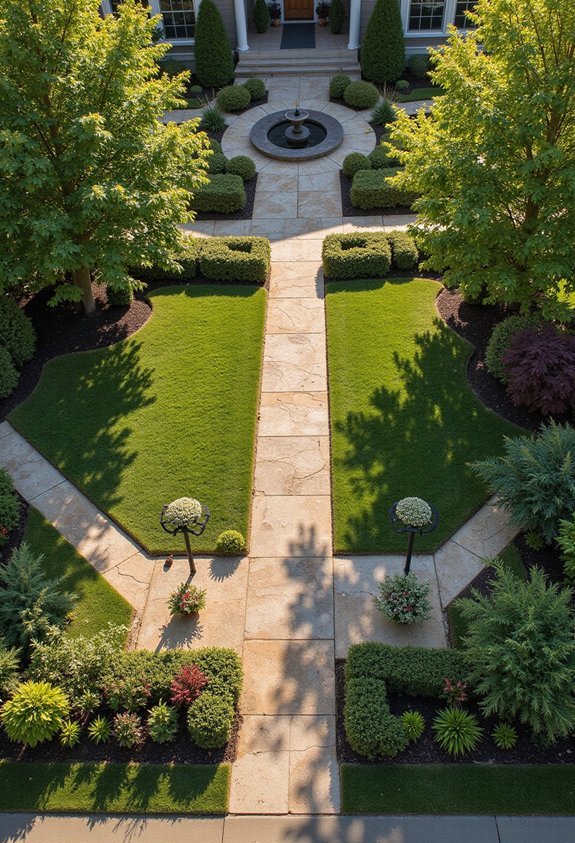
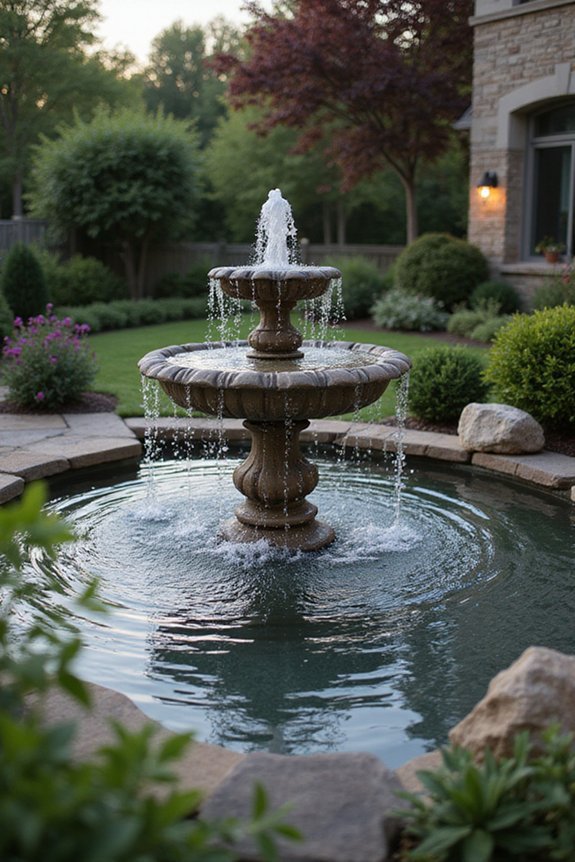
Before you start digging or placing materials, you’ll want to sketch out your front yard layout on paper to visualize how all your elements—plants, hardscaping, and focal points—will work together in the space. Draw your yard to scale, marking existing features like trees, walkways, and your home’s entrance, then position new elements strategically. A focal point draws the eye and anchors your design, whether it’s a water feature, large plant, decorative stone, or garden bed. Place your focal point where visitors naturally look when approaching your home, typically near the entrance or along a major sight line. Consider balance and proportion, ensuring your focal point doesn’t overwhelm the space. This sketch becomes your blueprint, guiding material purchases and installation placement.
Build Depth: Layer Trees, Shrubs, and Ground Cover
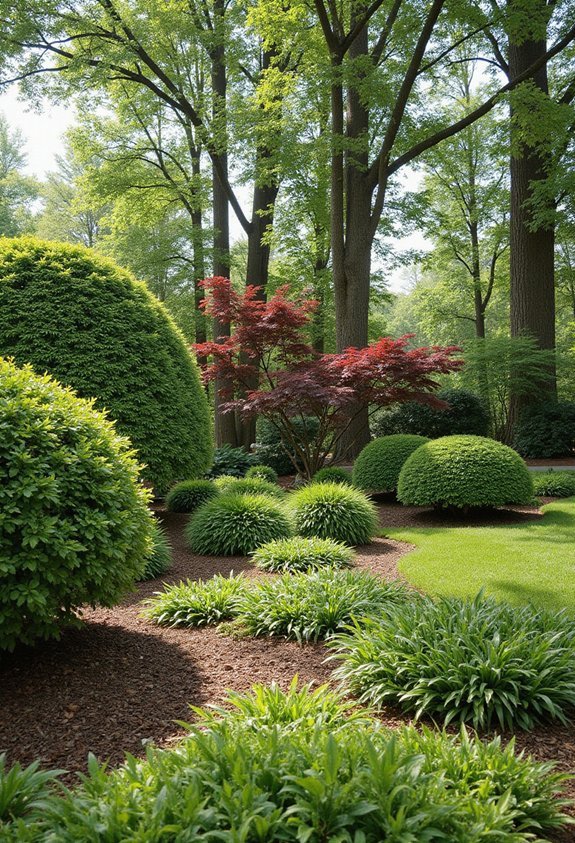
To create visual interest and dimension in your front yard, you’ll want to arrange plants in layers based on their height and spread, starting with tall trees in the back or center, mid-sized shrubs in the middle zone, and low-growing ground covers in the front. This layering technique makes your landscape appear fuller and more established while preventing a flat, one-dimensional appearance. Tall trees provide shade and a natural backdrop, shrubs offer structure and seasonal color, and ground covers fill empty spaces while reducing maintenance needs. When you select plants for each layer, consider their mature sizes, growth rates, and spacing requirements so they won’t overcrowd one another. This strategic arrangement creates depth that draws the eye through your entire front yard.
Add Color With Seasonal Flowers and Accents
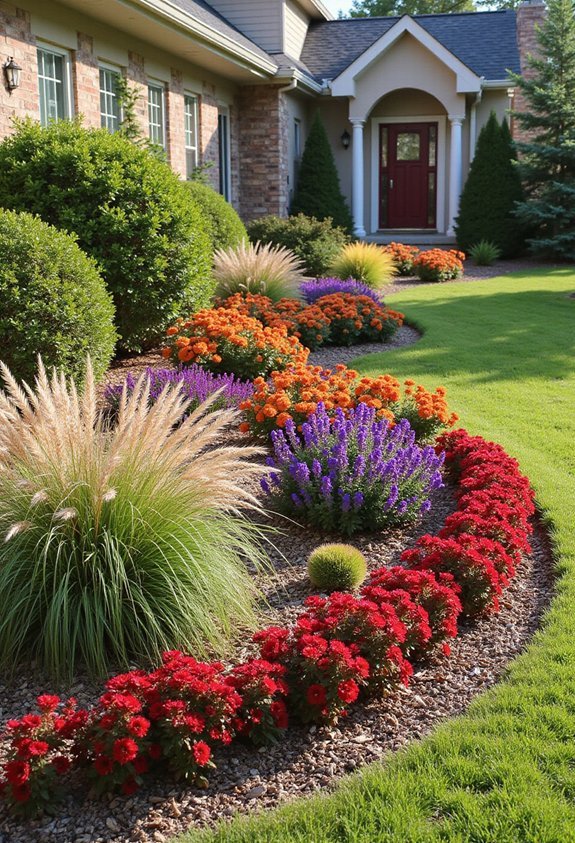
While your layered trees and shrubs create the framework of your landscape, seasonal flowers and colorful accents bring vibrancy and visual excitement that’ll transform your front yard throughout the year. You’ll want to select flowers that bloom during different seasons, ensuring your yard maintains color from spring through fall. Plant spring bulbs like tulips and daffodils in autumn, add summer annuals such as marigolds and petunias in late spring, and incorporate fall mums and ornamental grasses as temperatures drop. Consider your climate zone when choosing plants, and position flowers in clustered groups of three or five for visual impact. Don’t forget decorative accents like colorful mulch, painted rocks, or garden ornaments that’ll enhance your design and complement your flowering plants year-round.
Design Your Front Yard Entryway and Walkway
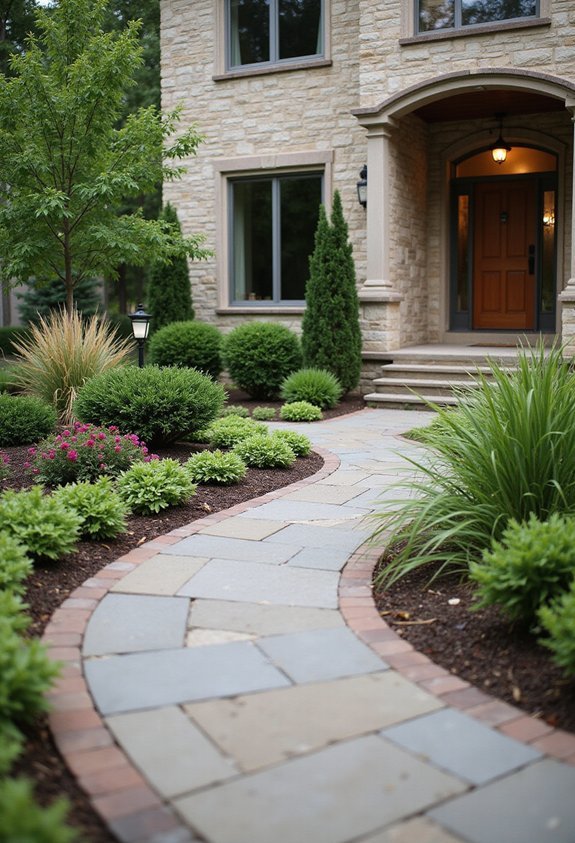
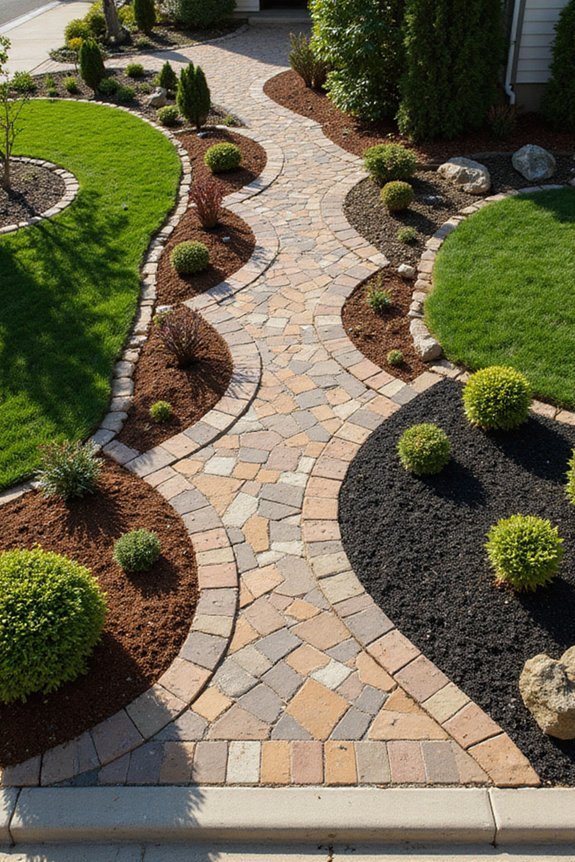
Your front yard’s entryway and walkway serve as the first impression visitors get of your home, so they’ll need thoughtful planning to create an inviting and functional passage from the street to your front door. You should choose materials that complement your home’s architectural style, whether that’s brick pavers, concrete, stepping stones, or gravel. Make sure your walkway is wide enough for two people to walk side by side comfortably, typically between three and four feet wide. You’ll want to add proper lighting along the path so visitors can navigate safely during evening hours. Consider incorporating edging with plants or low borders to define the walkway’s boundaries clearly. You should also guarantee adequate drainage to prevent water pooling during rainy seasons.
Decide: Symmetrical or Asymmetrical Design
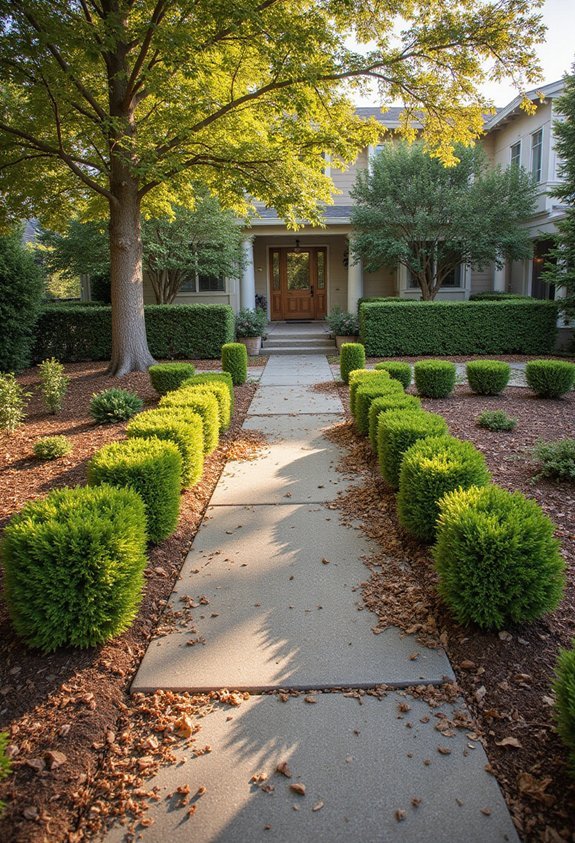
How do you want your front yard to feel—formal and balanced, or natural and dynamic? This decision shapes your entire landscape design. Symmetrical designs feature matching elements on both sides of a center line, creating formal, organized spaces that feel structured and intentional. You’d place identical plants, trees, and hardscaping features equally, establishing visual harmony and balance. Asymmetrical designs use different elements of similar visual weight, arranged unevenly to create movement and visual interest. This approach feels more relaxed and organic, mimicking natural landscapes. Consider your home’s architecture, neighborhood style, and personal preferences when choosing. Formal homes suit symmetrical layouts, while contemporary or cottage-style homes often benefit from asymmetrical arrangements. Your walkway design should complement whichever approach you select, ensuring cohesive visual flow throughout your entryway.
Install Drainage and Irrigation Systems

Before you plant anything in your front yard, you’ll need to install proper drainage and irrigation systems so your landscape can thrive. First, assess your yard’s natural water flow by observing where water collects during rain, then add French drains or grading to redirect excess moisture away from your home’s foundation. Next, install an irrigation system suited to your climate and plant types, whether that’s drip lines for garden beds, sprinklers for grass, or soaker hoses for shrubs. Consider installing a timer on your system to automate watering schedules, ensuring consistent moisture without waste. Proper drainage prevents root rot and flooding, while efficient irrigation promotes healthy plant growth and reduces your water bills greatly.
Go Low-Maintenance: Choose Smart Ground Covers
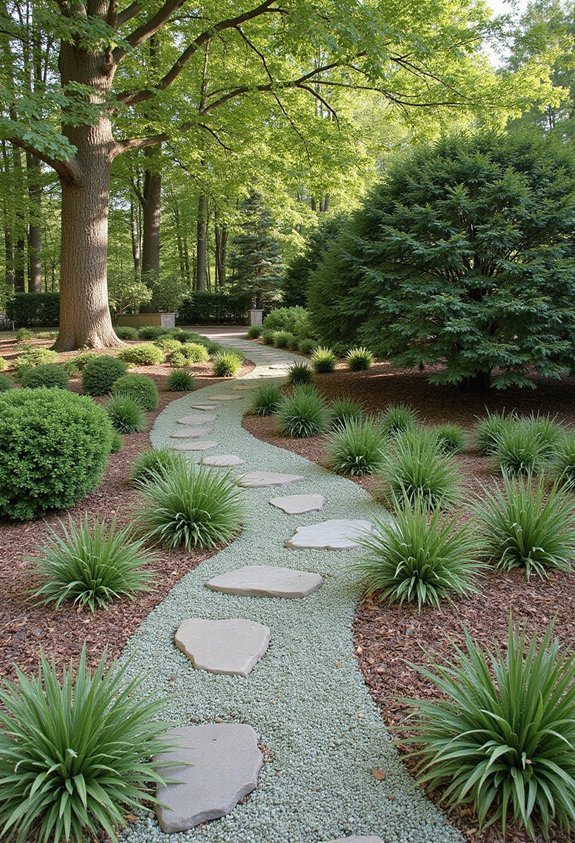
Many homeowners overlook ground covers as a practical way to reduce the time and effort you’ll spend maintaining your front yard, but these low-growing plants offer significant advantages that’ll make your landscaping easier and more cost-effective. Ground covers like creeping juniper, sedum, and ornamental grasses spread across bare soil, suppressing weeds naturally while requiring minimal watering once established. You’ll appreciate how they reduce mowing needs and prevent erosion on sloped areas. When selecting ground covers, consider your climate zone, sun exposure, and soil type to guarantee healthy growth. Space plants according to their mature width so they’ll fill gaps within one to two growing seasons. This strategic choice transforms high-maintenance lawn areas into attractive, self-sustaining landscape features.
Light Your Front Yard for Safety and Curb Appeal
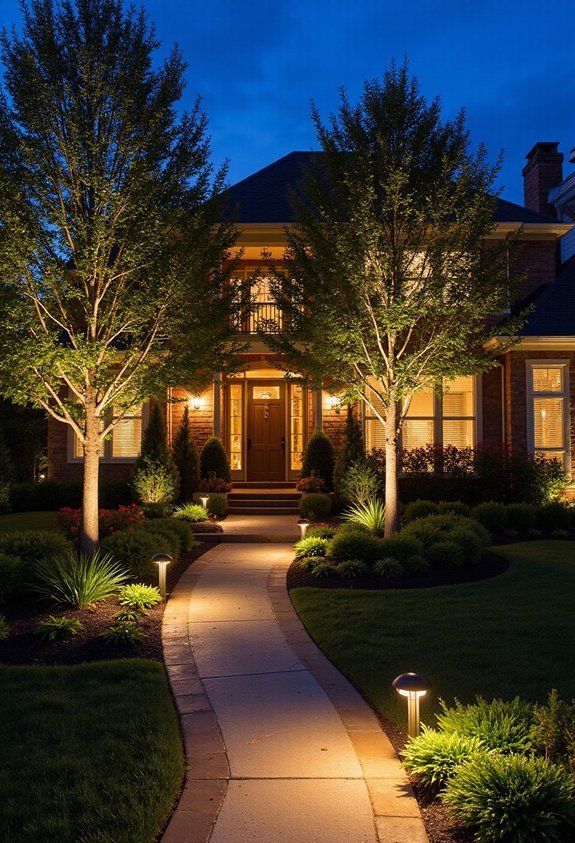
Strategic outdoor lighting’ll transform your front yard into a safer, more inviting space while enhancing your home’s nighttime appearance. Install pathway lights along walkways and driveways to guide visitors safely and create visual interest. Position uplighting near trees and architectural features to highlight your landscape’s best elements. Consider motion-sensor lights near entrances for both security and convenience, as they deter potential intruders while illuminating dark areas when needed. Use warm-toned LED lights, which consume less energy than traditional bulbs and create a welcoming atmosphere. Space lights strategically to avoid harsh shadows, and guarantee fixtures don’t blind approaching visitors. Layer different lighting types—ambient, task, and accent—to achieve balanced illumination. Proper lighting increases curb appeal dramatically while making your property safer for nighttime visitors and residents.
Create Your Season-by-Season Maintenance Plan
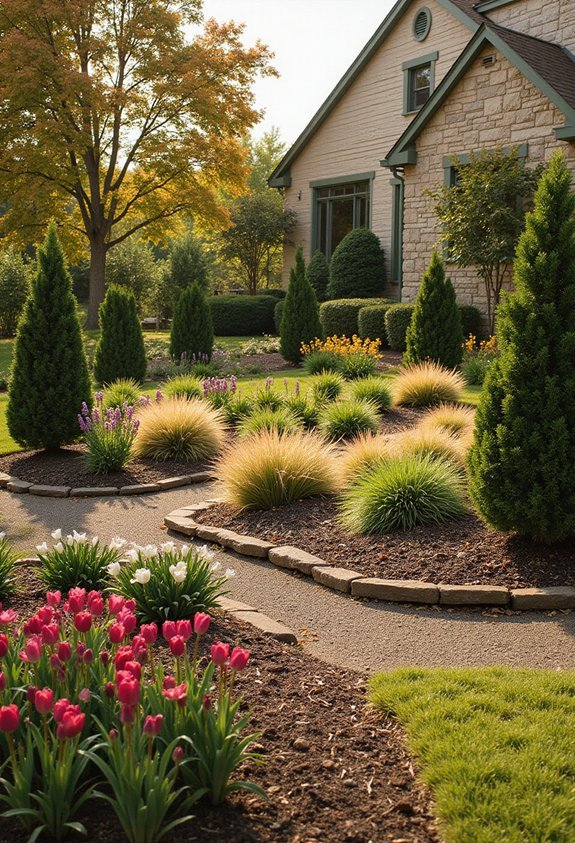
Once you’ve established your outdoor lighting to showcase your landscape’s features, you’ll want to create an exhaustive maintenance schedule that keeps your front yard looking polished throughout the year. Spring requires pruning dead branches, mulching flower beds, and planting seasonal flowers. Summer demands regular watering, mowing, and deadheading to encourage blooms. Fall involves raking leaves, cutting back perennials, and preparing plants for winter dormancy. Winter calls for protecting sensitive plants, clearing gutters, and monitoring for ice damage. Document specific tasks with dates and frequencies for each season, then set phone reminders to stay on course. This systematic approach prevents neglect, maintains consistent curb appeal, and safeguards your landscaping investment by addressing seasonal needs promptly and thoroughly.
Execute Your Plan in Phases to Stay on Budget
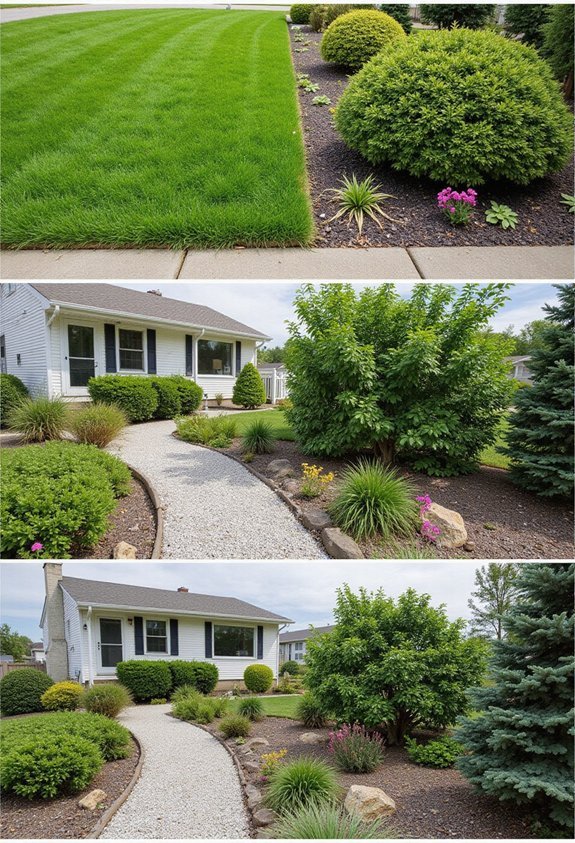
Rather than tackling your entire landscaping project at once, you’ll want to break it down into smaller, manageable phases that spread costs over time and prevent financial strain. Start by identifying which elements matter most to your front yard’s curb appeal, then prioritize them based on your budget and timeline. During phase one, you might focus on foundational work like soil preparation and hardscape installation, which create the framework for future plantings. Phase two allows you to add shrubs and trees, while phase three lets you incorporate finishing touches like mulch, flowers, and decorative elements. This methodical approach guarantees you’re not overwhelmed financially, permits you to adjust plans based on results, and gives you time to evaluate each completed section before moving forward.
Conclusion
You’ve now navigated the landscaping journey from initial assessment through seasonal maintenance, building your front yard like an architect constructing a masterpiece. By systematically working through these steps—surveying conditions, establishing your style, budgeting wisely, selecting appropriate plants, and executing phases strategically—you’ll transform your outdoor space into a cohesive landscape. Your front yard will become a reflection of thoughtful planning, where every element serves both aesthetic and functional purposes, creating an inviting entrance that enhances your home’s overall appeal.