
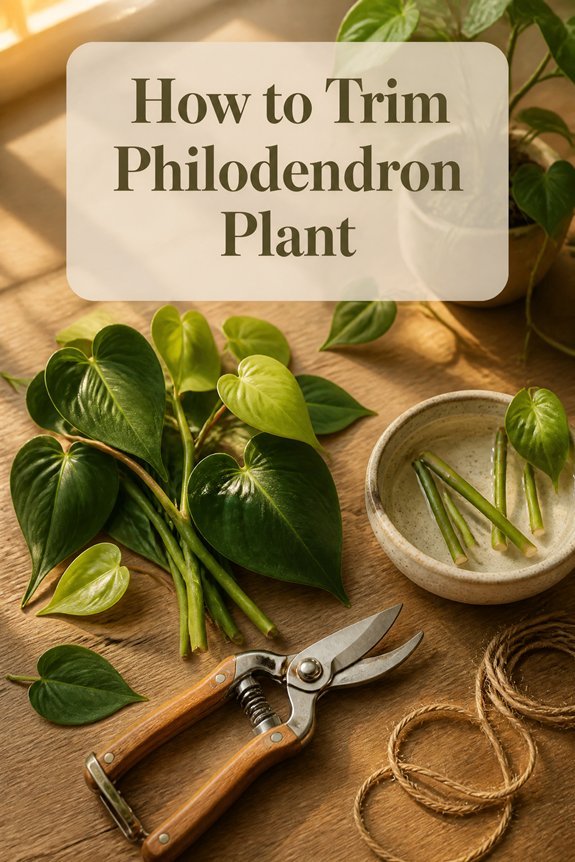
Trimming a philodendron isn’t complicated, but doing it right makes all the difference. A pair of clean, sharp bypass pruners handles most cuts nicely, while loppers tackle any thicker stems. Disinfecting tools beforehand prevents unwanted infections from spreading.
The timing matters just as much as the technique. Spring and early summer bring active growth, which helps wounds heal quickly and encourages fresh branching. Steer clear of pruning during fall or winter when the plant’s energy naturally slows down.
Making proper cuts takes a little attention. Angle each snip about 45 degrees just above a healthy node—this hides the wound and directs new growth outward.
Regular removal of yellowing leaves and stretched-out, leggy stems keeps the plant looking full rather than sparse.
Even with good intentions, some missteps cause setbacks. Cutting too close to the main stem damages tissue, while leaving long stubs invites disease.
Over-pruning shocks the plant and stalls recovery. Gentle, selective trimming beats aggressive reshaping every time.
Gather the Right Tools and Materials
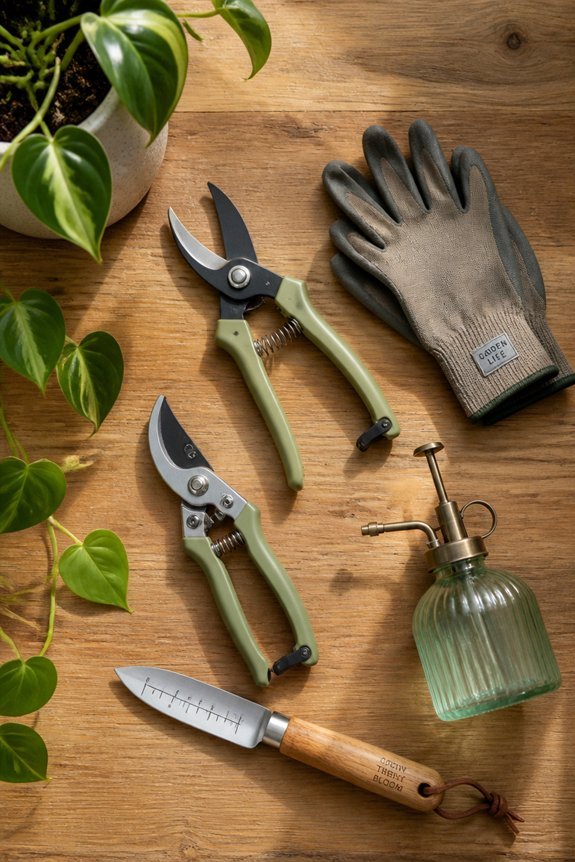
Sharp pruning shears are your best friend here. They make clean cuts through stems and branches without crushing the plant tissue.
Bypass pruners work great for smaller growth. Grab loppers when you need to tackle thicker, woodier sections.
Keep a clean cloth or paper towels nearby. You’ll use these to wipe away sap and debris between cuts.
Disinfectant matters more than you might think. A quick wipe with rubbing alcohol stops diseases from jumping between plants or cut sites.
A small container comes in handy for your trimmings. You can toss them later or set aside healthy cuttings for propagation.
Protective gear keeps the job comfortable. Safety glasses shield your eyes from falling debris. Gardening gloves aren’t mandatory, but they help with grip and keep irritating sap off your skin.
Spread newspaper or a tarp underneath before you start. Cleanup becomes so much easier when leaves and stems land somewhere contained.
Also read: How to Take Care of a Spider Plant in the Winter
When to Trim Your Philodendron (and How Often)
Spring and summer are your windows for pruning. These are the months when your philodendron is actively growing. It bounces back faster during this time.
How often should you trim? That depends. Fast growers might need monthly attention. Slower ones do fine with quarterly check-ins. Watch your plant and let it guide you.
Dead or yellow leaves can go anytime. Spot one? Snip it off. Don’t wait for the right season.
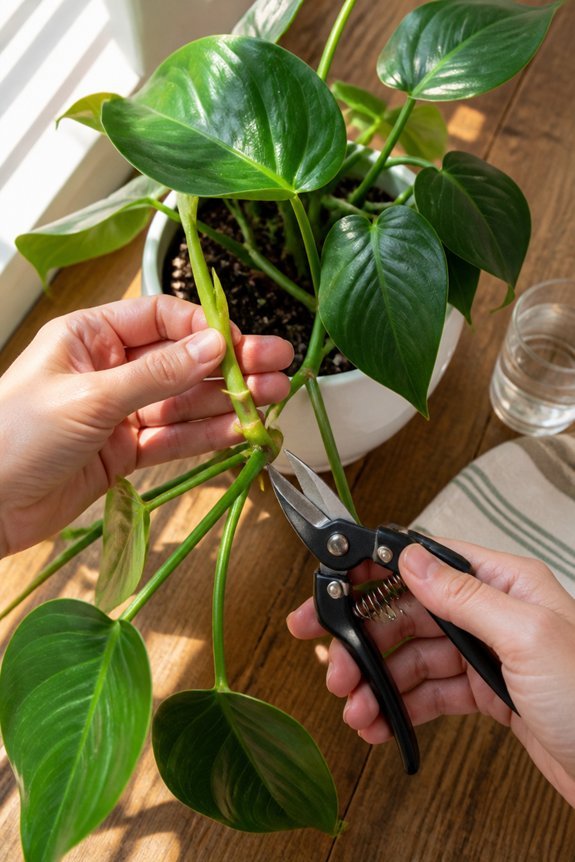
Leggy stems need attention too. Cut just above a leaf node. Those small bumps on the stem? That’s where new branches emerge. Your plant will reward you with fuller, bushier growth.
Established plants are low maintenance. One heavy pruning per year usually does it. Younger plants need even less. Keep an eye on growth patterns and adjust as needed. Never remove more than a third of the foliage in one go. Your philodendron will thank you for the gentle approach.
The Basic Trimming Technique
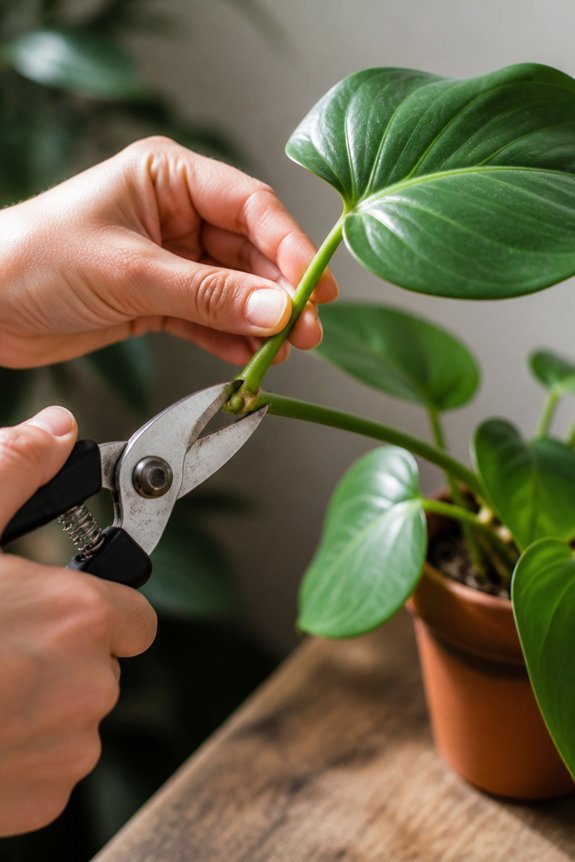
Sharp tools make all the difference. Grab pruning shears or scissors that are both clean and sharp. This protects your plant from unnecessary tissue damage.
Cut at a 45-degree angle just above a node or leaf bud. This positioning encourages healthy new growth and keeps disease out. The angle also lets water slide right off instead of pooling on the cut.
Philodendrons love cuts near their nodes. Those small bumps where leaves meet stems? That’s your sweet spot. Skip the sections between nodes. They won’t give you the growth you’re looking for. Precise cuts in the right places mean new stems and foliage without the wait.
Trim Dead and Diseased Leaves
Your philodendron will thank you for staying on top of dead and diseased leaves. These problem spots pull energy from healthy growth and give diseases a place to spread.
Check your plant weekly for yellow, brown, or spotted foliage. Soft leaves and unusual markings are clear signs something is off. Overwatering and poor drainage are usually to blame. Fungal infections can strike too.
Grab clean, sharp scissors when you spot trouble. Cut damaged leaves right at the base where the petiole meets the branch. Toss the debris in your trash bin. Skip the compost pile if disease is present. You do not want those pathogens hanging around.
Clean up matters more than you might think. Wash your hands after trimming. Wipe your tools with rubbing alcohol. This simple step keeps nearby plants safe from hitchhiking problems.
Stay consistent with this routine. Your philodendron stays healthier and looks better for it.
Trim Leggy Stems to Encourage Bushier Growth
Philodendrons sometimes grow long, sparse stems with big gaps between leaves. This is called legginess, and it usually happens when your plant isn’t getting enough light. The stems stretch out searching for brightness.
Trimming these leggy stems helps your plant fill out. New growth will sprout from the nodes below your cut. Nodes are those small bumps on the stem where leaves pop out.
Cut just above a node at a 45-degree angle. Use clean pruning shears to avoid spreading disease. Remove any stems that stick out past the main shape of your plant, especially ones longer than twelve inches without leaves. Pair regular trimming with better light, and your philodendron will stay compact and full.
What to Expect After Trimming
Your philodendron is about to enter a busy phase. New growth will pop up along the cut stems within about two weeks. Those little bumps are leaf nodes, and they’re a great sign that your plant is bouncing back.
Water consistently and keep the light bright but indirect. Skip the fertilizer for now—your plant needs to settle before you push new growth. You might notice things slow down for a bit. That’s normal. The plant is redirecting its energy inward. Give it 2-3 weeks without any more cuts. By month two, you’ll see a fuller, bushier shape taking hold.
Common Trimming Mistakes to Avoid
Cutting too close to the main stem is a trap many fall into. You damage protective tissue and invite disease right where it hurts most.
Removing huge chunks of foliage at once shocks your philodendron. Photosynthesis drops, and recovery slows to a crawl.
Dull tools crush instead of slice. Those ragged tears become open doors for bacteria and fungi.
Winter trimming stalls healing when your plant has almost no energy to spare. The cuts just sit there, vulnerable for weeks.
Over-pruning the top leaves your plant leggy and awkward. Fixing that imbalance takes months of careful growth.
Skipping sterilization between plants spreads trouble quickly. One infected cut becomes many.
And snipping healthy growth without a clear reason throws away resources your plant needs. Shape suffers, and so does overall health.
Frequently Asked Questions
Can I Propagate Philodendron Cuttings From Trimmed Stems?
Yes, philodendron cuttings from trimmed stems can be propagated successfully. The cuttings should contain at least one node and be placed in water or moist soil. Roots typically develop within two to three weeks.
Is It Safe to Trim Philodendron Plants During Winter Months?
Trimming philodendrons during winter is generally safe but not preferable. The plant’s slower growth rate during cold months means it recovers more slowly from pruning. Spring remains the best trimming season for healthier regrowth.
How Do I Dispose of Diseased Philodendron Trimmings Properly?
Diseased philodendron trimmings pose a million threats to other plants if composted. One should seal them in a plastic bag and dispose with regular trash, never placing infected material in compost bins or garden waste.
Will Trimming My Philodendron Affect Its Blooming Ability?
Trimming philodendrons actually encourages bushier growth and can promote better flowering. Removing dead or weak stems redirects energy to healthier growth points, potentially improving bloom production over time.
Can I Use the Same Tools on Multiple Philodendrons Without Cleaning?
Using the same tools on multiple philodendrons without cleaning spreads disease and pests between plants. One should sterilize pruning equipment between each plant using rubbing alcohol or a bleach solution to prevent contamination.
Conclusion
Trimming philodendrons requires patience, as results take weeks to appear. Some gardeners hesitate, fearing they will harm the plant. However, regular pruning actually strengthens philodendrons, promoting denser foliage and healthier growth. By removing dead material and cutting above nodes, gardeners redirect energy toward new shoots. Consistent trimming prevents overgrowth, maintains plant shape, and encourages long-term vigor. The investment in proper pruning technique pays dividends through improved plant performance.