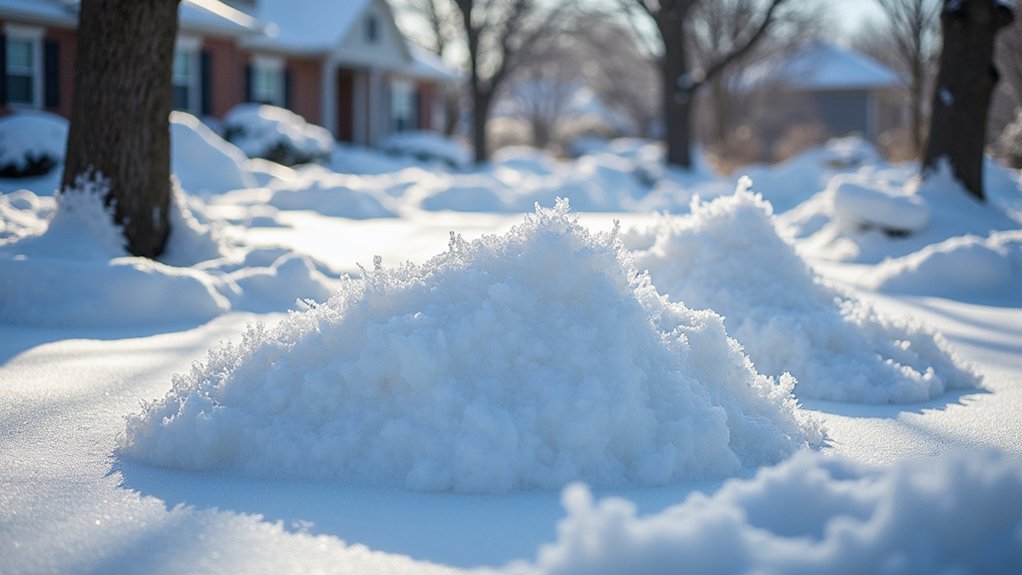
Studies show that snow piles left on lawns can reduce grass survival rates by up to 40% through winter damage. When you leave snow accumulating in one spot, you’re creating an oxygen-starved environment where your grass suffocates and fungal diseases like snow mold thrive. But here’s what you need to know: not all snow removal methods work equally, and some can actually cause more harm than good. The key lies in understanding exactly when and how you should clear those piles.
How Snow Piles Suffocate and Kill Winter Grass
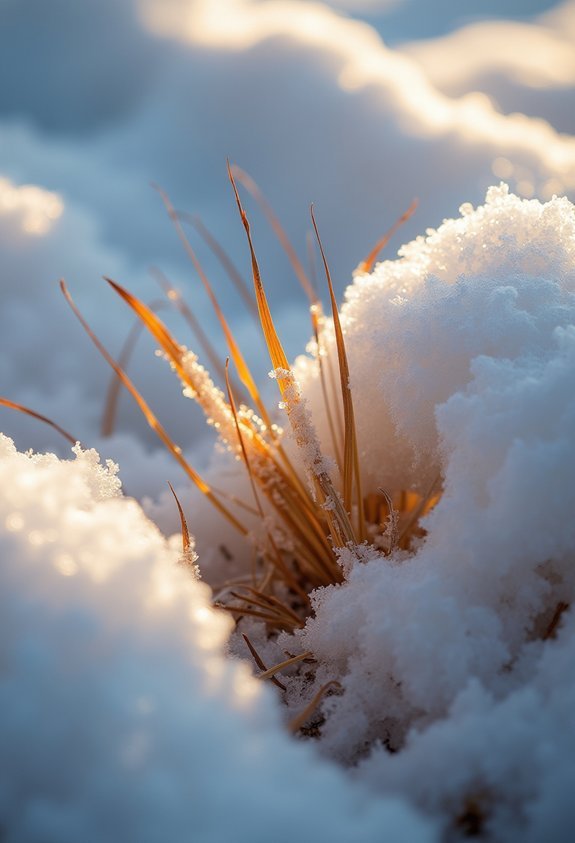
Why does grass underneath large snow piles often turn brown and die rather than thrive through the cold season? When you pile snow on your lawn, you’re creating an oxygen-deprived environment that damages grass beneath the surface. The compressed snow blocks sunlight, preventing photosynthesis, which is essential for plant survival. Additionally, the weight of accumulated snow restricts air circulation around the grass blades, trapping moisture and promoting fungal diseases like snow mold. As temperatures fluctuate, melting and refreezing cycles weaken grass tissues further. The prolonged darkness combined with excessive moisture creates ideal conditions for harmful fungi to develop and spread. By spring, you’ll likely discover dead patches where snow piles sat, requiring reseeding or sodding to restore your lawn’s appearance and health.
Also read: Should You Cover Your Garden Beds for Winter?
Spring Drainage Problems Created by Snow Accumulation
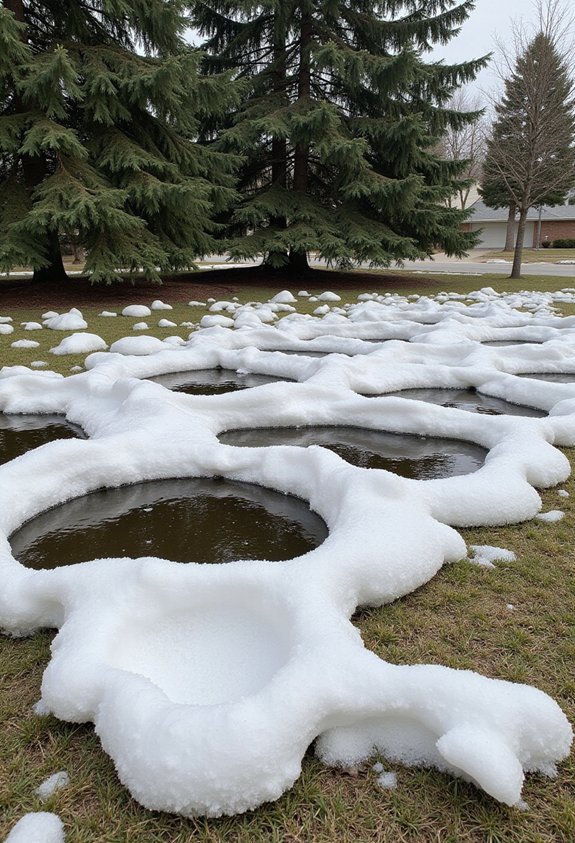
As snow piles melt during spring’s warming temperatures, they create significant drainage challenges that can damage your lawn and landscape in several ways. When large snow accumulations melt rapidly, the water overwhelms your soil’s ability to absorb it, causing pooling and flooding in low-lying areas. This excess water suffocates roots, promotes fungal diseases, and erodes topsoil that you’ve worked to build. Additionally, the concentrated water flow from melting piles can carve channels through your yard, creating ruts and bare patches. If you’ve positioned snow piles near your home’s foundation or garden beds, the water runoff can seep into basements or damage plant roots. By dispersing snow piles strategically across your lawn before winter ends, you’ll allow more even melting and better water distribution throughout your property.
Ice Damage and Lawn Compaction From Snow Weight
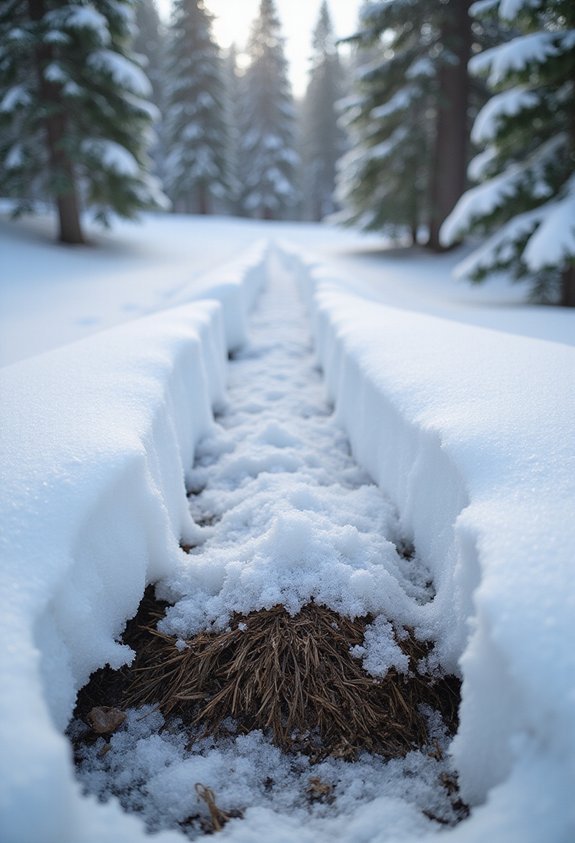
Beyond the drainage problems that melting snow creates, the sheer weight of accumulated snow and ice poses direct physical damage to your lawn that you shouldn’t overlook. Heavy snow piles compress your grass and soil underneath, which restricts water absorption and oxygen flow to grass roots during spring thaw. This compaction can kill sections of your lawn, leaving bare patches that take months to recover. Additionally, ice layers forming within snow piles create additional pressure, and when these ice sheets finally melt, they can expose dead, matted grass. The repeated freeze-thaw cycles further damage soil structure, making it harder for new grass to establish itself. You’ll want to manage snow accumulation strategically to prevent these destructive effects on your lawn’s health.
When It’s Safe to Leave Snow on Your Lawn
While snow piles create serious risks for your lawn’s health, there are specific situations where leaving snow in place won’t cause significant damage, and in some cases, it can actually provide benefits. You can safely leave snow on your lawn during winter months when temperatures remain consistently cold, preventing the snow from melting and refreezing into damaging ice layers. Additionally, if you’ve got dormant grass that’s already stopped growing, snow acts as an insulating blanket, protecting plant roots from extreme cold and frost damage. You should also consider leaving snow piles undisturbed if they’re positioned on already-damaged areas or pathways rather than healthy turf sections. However, monitor spring conditions closely, since warming temperatures will require prompt removal to prevent suffocation and disease development.
How to Remove Snow Without Killing Your Grass
Removing snow piles safely requires understanding the timing and techniques that’ll safeguard your grass from damage rather than harm it further. You should wait until the snow begins melting naturally before attempting removal, as this prevents compacting frozen soil and damaging dormant grass beneath. When you’re ready to clear snow, use a plastic shovel instead of metal, which can scrape and cut grass blades. Push snow gently rather than throwing it forcefully, directing piles toward areas that won’t suffocate healthy lawn sections. Avoid removing snow during freeze-thaw cycles when grass is most vulnerable. If you must use a snow blower, adjust it to ride above the ground surface, keeping blades elevated. These careful methods safeguard your lawn’s quick recovery once spring arrives.
Where to Pile Snow on Your Property
Strategic placement of snow piles is just as important as the removal method you choose, since you’ll want to keep those accumulated snow banks away from areas where they can damage your lawn, harm your landscaping, or create drainage problems when they melt. You should designate a spot on your property that’s level and away from garden beds, shrubs, and trees that could suffer damage from the weight or debris. Consider placing snow piles near driveways or along property lines where melting water can drain safely. Avoid piling snow against your home’s foundation, as excessive moisture during thaw can cause structural damage. Choose areas with good sunlight exposure to encourage faster melting, reducing the time snow occupies valuable yard space.
How to Repair Your Lawn After Winter Snow Damage
Once the snow’s melted and spring arrives, you’ll likely notice that your lawn has suffered some damage from the harsh winter conditions, including bare patches, compacted soil, matted-down grass, and areas where snow mold or ice damage has killed vegetation. To repair your lawn effectively, you’ll need to rake away dead grass and debris, which’ll help new growth emerge. Aerate your soil by creating small holes throughout your lawn, allowing water and nutrients to penetrate deeper. Overseed bare patches with appropriate grass varieties for your region, then keep these areas moist until seedlings establish themselves. Consider applying a balanced fertilizer to encourage healthy growth. If damage’s extensive, you might need professional help to restore your lawn completely.
Conclusion
You’ll want to remove snow piles from your lawn promptly to prevent suffocation, fungal diseases, and erosion damage that weakens your grass throughout winter and spring. By clearing accumulated snow strategically and allowing even melting, you’re protecting your lawn’s health and avoiding costly repairs later. Proper snow management now means you’ll enjoy a vibrant, resilient lawn when warmer weather arrives.