You can transform your front yard into a Mediterranean escape by incorporating specific design elements that work together to create an authentic atmosphere. From warm earth-toned walls and arched entryways to strategically placed water features and drought-tolerant plantings, each detail serves a purpose in establishing that sun-soaked European charm. Understanding how these components interact will help you achieve a cohesive design that captures the essence of a Mediterranean retreat—but which elements should you prioritize first?
Tuscan Color Palette and Warm Earth Tones
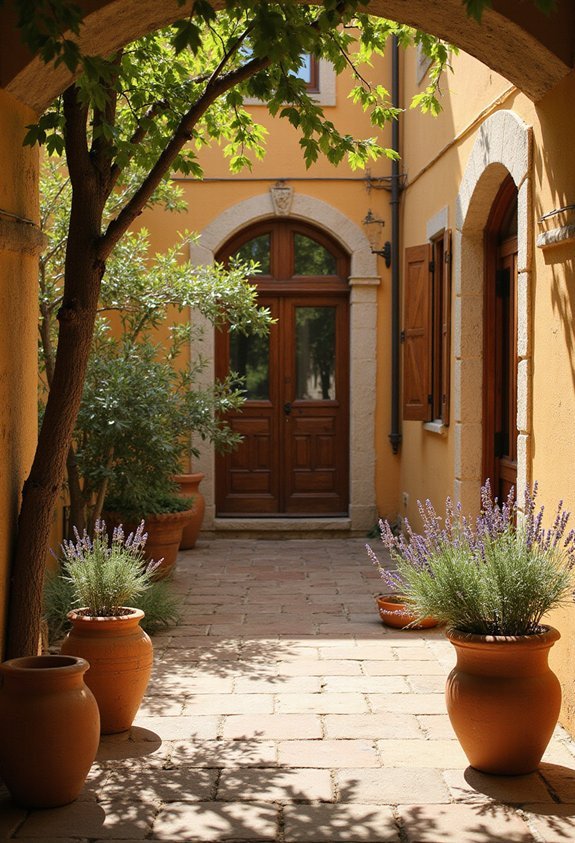
When you’re designing a Mediterranean front yard, the colors you choose set the entire mood for your outdoor space, and warm earth tones inspired by the Tuscan region of Italy provide an ideal foundation for achieving this classic aesthetic. You’ll want to incorporate terracotta, ochre, and sandy beige throughout your landscape design, using these hues on exterior walls, decorative pots, and hardscaping elements. These colors reflect the natural pigments found in Italian soil and Mediterranean clay, creating visual harmony with the environment. You can layer these tones by combining lighter cream shades with deeper burnt sienna accents, allowing depth and dimension to emerge naturally. This approach guarantees your front yard develops an authentic, cohesive appearance that evokes the warmth and character of Mediterranean architecture.
Also read: 22 FRONT YARD CHRISTMAS LIGHTS That Look Expensive!
Whitewashed Walls and Stucco Finishes
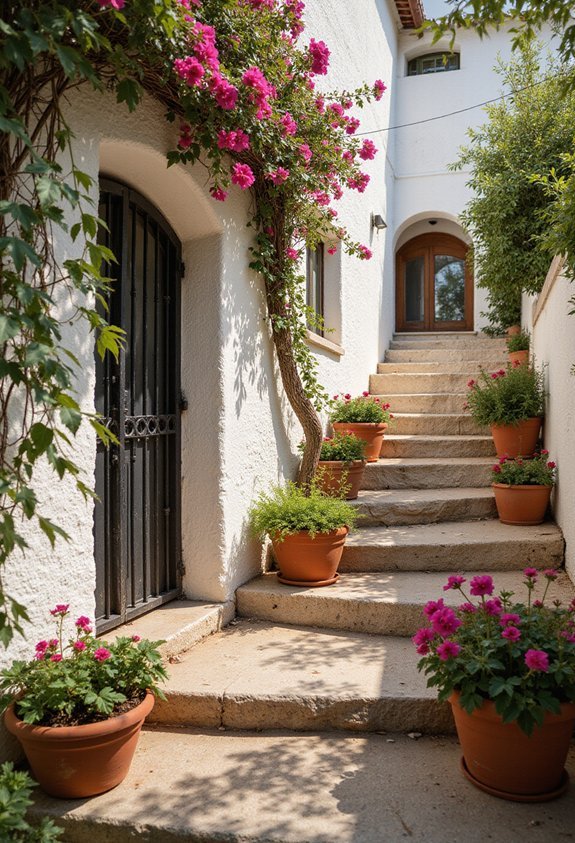
While warm earth tones create the foundational color scheme for your Mediterranean front yard, whitewashed walls and stucco finishes provide the bright, weathered surfaces that you’ll see throughout authentic Mediterranean homes and villages. You can achieve this look by applying lime-based paint or whitewash to your exterior walls, which creates that characteristic chalky, sun-bleached appearance. Stucco finishes work perfectly for this aesthetic because they’re textured, durable, and naturally suited to Mediterranean climates. You’ll want to apply multiple thin coats rather than one thick coat to develop authentic depth and character. The weathered quality you’re after comes from allowing the finish to age naturally, showing slight color variations and subtle wear patterns that reflect genuine Mediterranean architecture.
Arched Entryways and Doorways
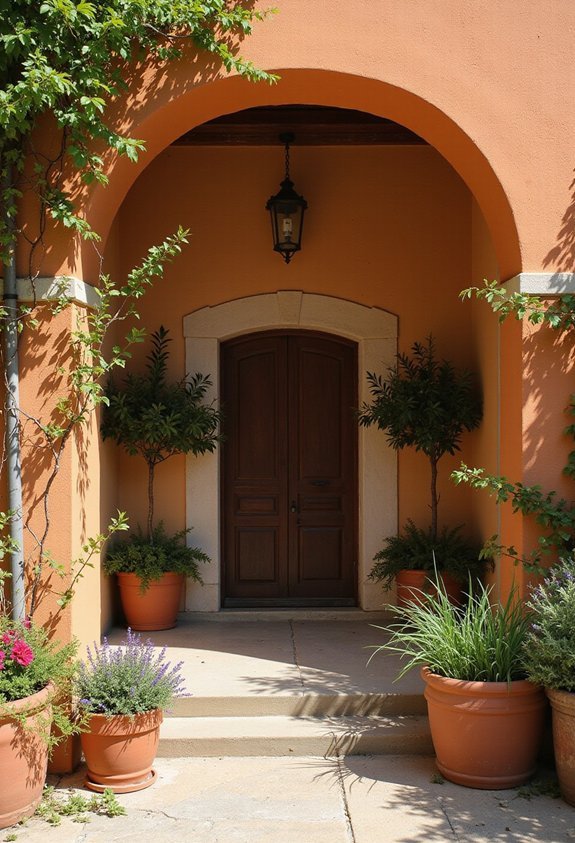
Arches are one of the most recognizable features of Mediterranean architecture, and they’ll instantly transform your front yard’s entrance into an authentic focal point. You can incorporate arched doorways by installing curved frameworks above your entryway, which creates visual interest and draws attention to your home’s entrance. Consider using stone or stucco materials to frame these arches, guaranteeing they complement your existing whitewashed walls. The curve of an arch naturally guides visitors’ eyes upward, establishing a welcoming gateway that reflects Mediterranean design principles. You’ll want to match the arch style to your region’s architectural heritage, whether you choose Romanesque, Moorish, or classical designs. Installing arched entryways requires careful planning and skilled craftsmanship to safeguard structural integrity while maintaining aesthetic appeal throughout your front yard landscape.
Rustic Wooden Shutters
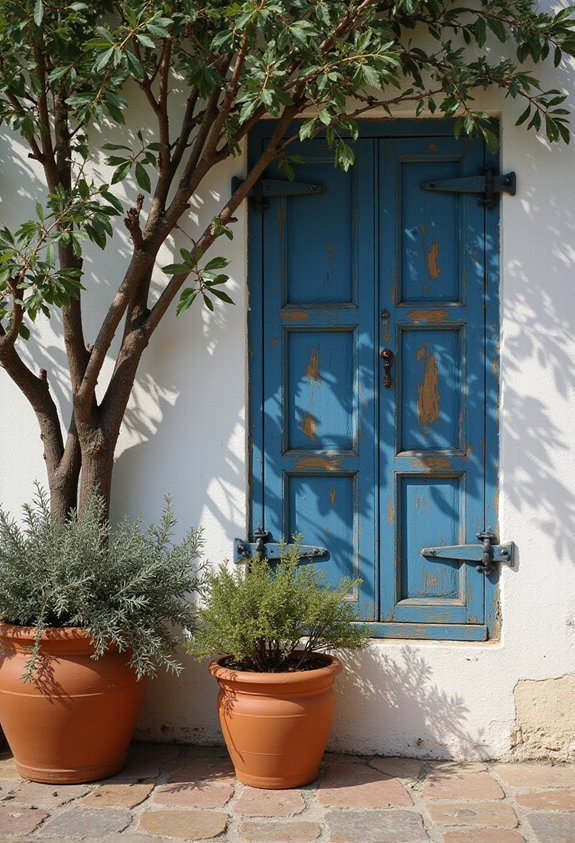
How can you add authentic Mediterranean charm to your front yard while also improving its functionality? Rustic wooden shutters accomplish both goals simultaneously. These weathered shutters, typically crafted from wood like cedar or pine, frame your windows with genuine Old World character. You’ll want to select shutters with traditional designs featuring louvered slats or solid panels that complement your home’s architectural style. Install them alongside windows to create visual depth and authentic Mediterranean aesthetics. Beyond decoration, these shutters provide practical sun control and weather protection for your windows. The aged, distressed finishes—achieved through natural weathering or intentional treatment—enhance that vacation-home feeling. Choose earthy colors like terracotta, sage green, or faded blue to strengthen the Mediterranean vibe. Quality wooden shutters become focal points that transform your entryway into a convincing European-inspired retreat.
Iron Gates and Fencing Details
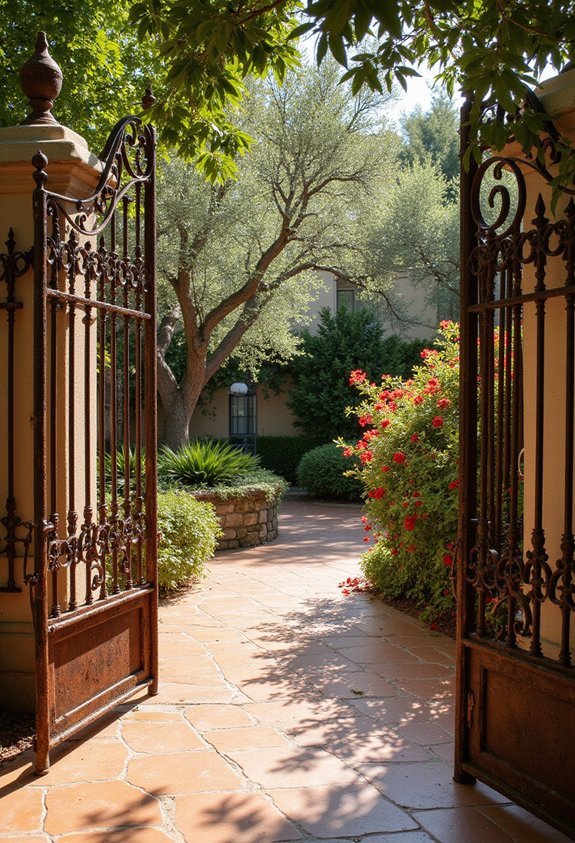
To complete your Mediterranean front yard’s authentic appeal, you’ll want to incorporate iron gates and fencing that work alongside those rustic shutters you’ve already installed. Iron fencing provides both security and aesthetic value, featuring ornamental designs that reflect Mediterranean architecture. You’ll find scrollwork patterns, geometric details, and curved elements that enhance your property’s visual interest. When selecting iron gates, consider the height and width proportional to your entrance, ensuring they’re functional while maintaining visual balance. Black or dark bronze finishes work best for traditional Mediterranean styles, creating contrast against lighter-colored facades and landscaping. Install your iron elements securely with proper hinges and latches, checking that gates swing freely without obstruction. This combination of materials creates an inviting, sophisticated entrance that transports visitors directly to Mediterranean coastal regions.
Stone or Gravel Driveways
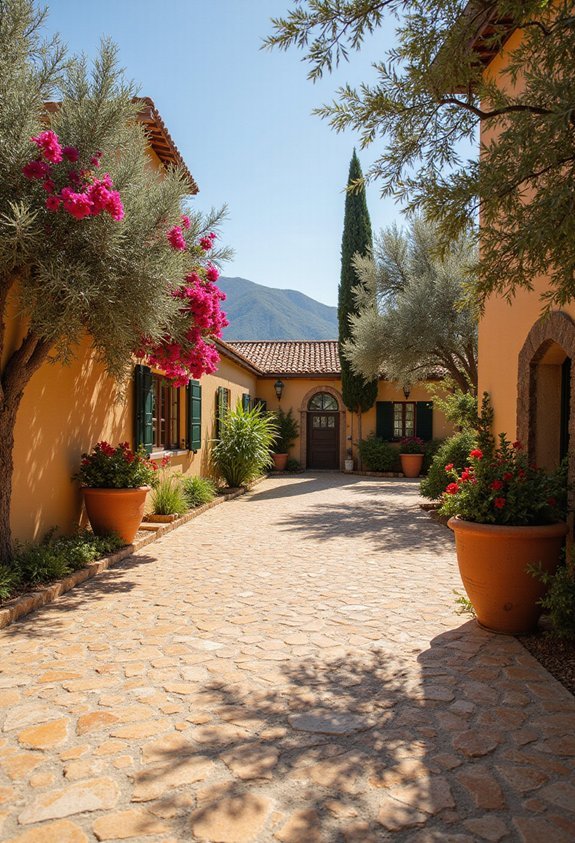
Because your Mediterranean front yard’s visual appeal extends right up to your home’s entrance, the driveway you choose plays an indispensable role in completing the overall design aesthetic. Stone or gravel driveways work exceptionally well for Mediterranean spaces, as they complement the rustic, earthy character of this style. You’ll want to select materials like crushed limestone, pea gravel, or terracotta-colored stones that echo the warm, natural tones found throughout Mediterranean regions. These materials allow water drainage, preventing pooling issues during heavy rains. You should arrange stones in patterns or maintain gravel in neat, raked beds for a polished appearance. Regular maintenance keeps your driveway looking intentional and well-designed, reinforcing the vacation-like atmosphere you’re creating in your front yard.
Weathered Stone Pathways
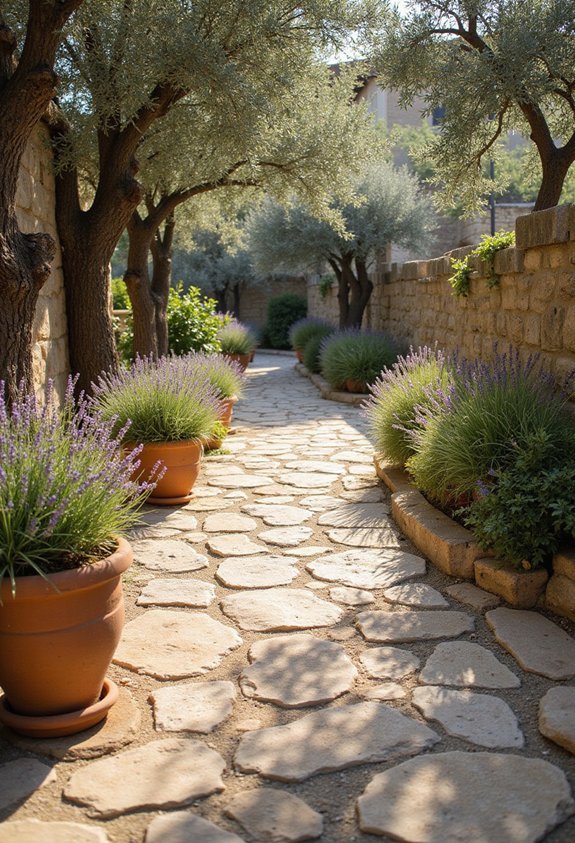
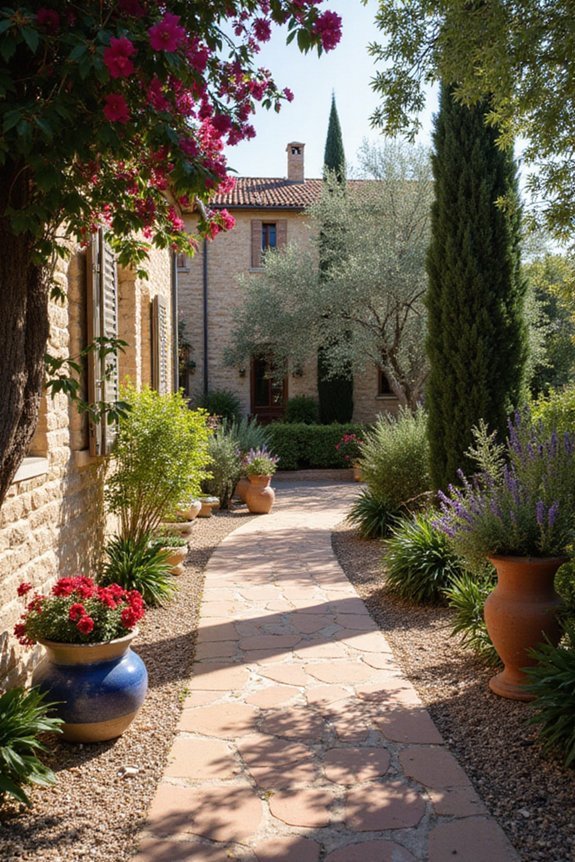
While driveways establish the primary approach to your Mediterranean front yard, weathered stone pathways create intimate walkways that guide visitors through your landscape and connect different areas of your outdoor space. You’ll find that natural stone materials like limestone, travertine, or slate develop beautiful patinas over time, enhancing their visual appeal. These pathways should follow curved or meandering routes rather than straight lines, which adds organic character to your design. When installing pathways, you’ll want to guarantee proper drainage by laying materials on a compacted base with adequate slope. Consider spacing stones slightly apart to allow vegetation or gravel to fill gaps, creating a rustic aesthetic. You can enhance these pathways further by flanking them with Mediterranean plants like lavender or rosemary, establishing cohesion throughout your front yard design.
Gravel Ground Cover for Low Water Use
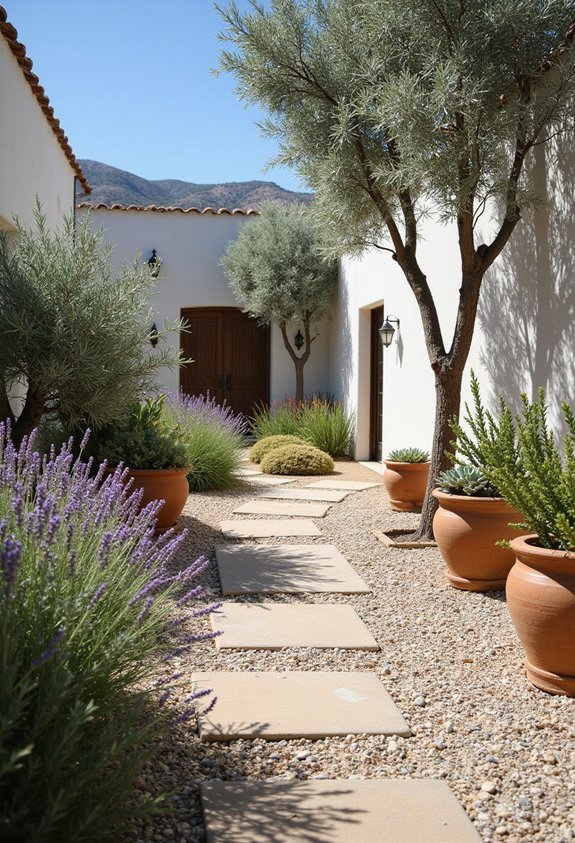
As you’re planning your Mediterranean front yard’s landscape, gravel serves as an excellent alternative to traditional lawn grass because it requires minimal watering, needs no mowing, and fits perfectly with the region’s natural aesthetic. You’ll find that gravel comes in various sizes and colors, allowing you to choose materials that complement your home’s exterior and surrounding plants. When you install gravel ground cover, you’re creating excellent drainage that prevents water pooling and root rot, which proves especially important in Mediterranean climates. You should spread gravel approximately two to three inches deep across your designated areas, ensuring you use landscape fabric underneath to suppress weeds and maintain cleaner maintenance long-term. This practical approach reduces your water bills considerably while creating an authentic Mediterranean appearance throughout your front yard space.
Fountain or Water Feature Elements
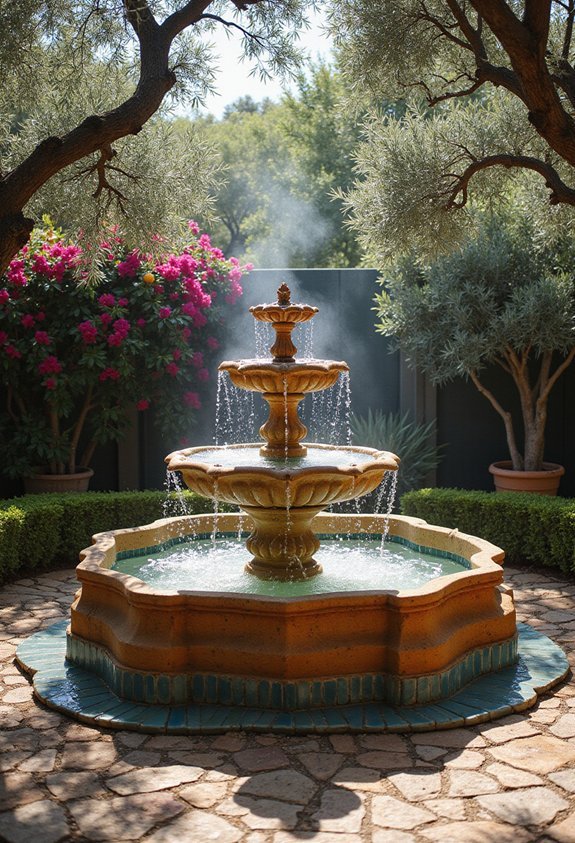
Water features like fountains, birdbaths, and small pools create focal points in your Mediterranean front yard while adding visual interest and the soothing sound of moving water to your landscape design. You’ll want to position your water feature in a central location where it’s visible from your home and street-facing areas. Consider installing a tiered fountain made from stone or terracotta, which complements Mediterranean aesthetics while requiring minimal maintenance. Small recirculating pools with aquatic plants provide both visual appeal and cooling effects during hot months. You should guarantee proper drainage around water features to prevent standing water and potential damage to nearby plants. Adding lighting around your fountain creates ambiance during evening hours, transforming your front yard into a serene retreat that captures that coveted vacation atmosphere.
Hand-Painted Tiles as Accent Details
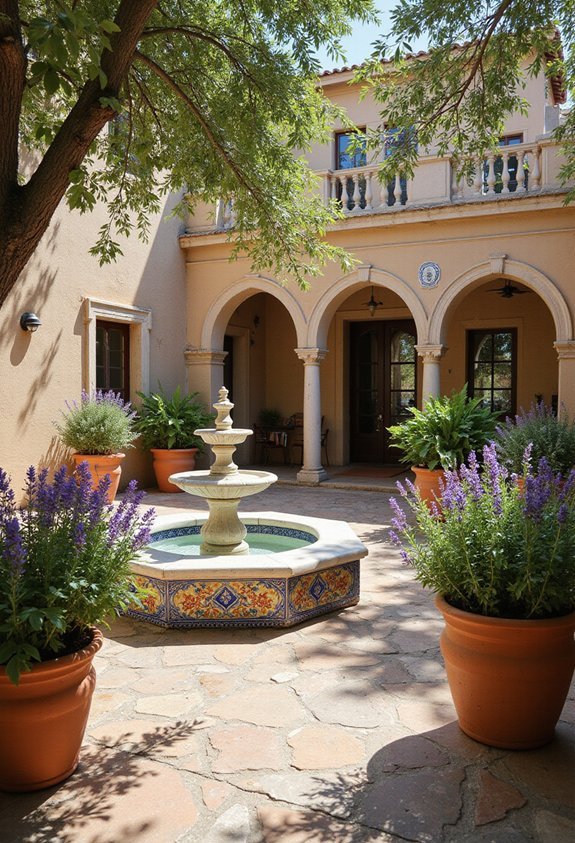
Hand-painted tiles bring authentic Mediterranean character to your front yard through their vibrant colors, intricate patterns, and artisanal quality that you’ll find difficult to replicate with mass-produced alternatives. You can incorporate these tiles as decorative accents around garden beds, along walkway borders, or framing your entryway, where they’ll immediately catch visitors’ eyes. The tiles typically feature traditional motifs like geometric designs, botanical imagery, or ornamental flourishes inspired by Spanish, Portuguese, and Italian craftsmanship. When selecting tiles, you’ll want to choose weather-resistant ceramic options that withstand outdoor elements without fading or cracking. Installation requires proper surface preparation and outdoor-grade adhesive, ensuring your tiles remain secure through seasonal changes. These hand-painted details transform ordinary spaces into vacation-inspired landscapes reflecting Mediterranean aesthetic authenticity.
Olive Trees as Focal Point Plants
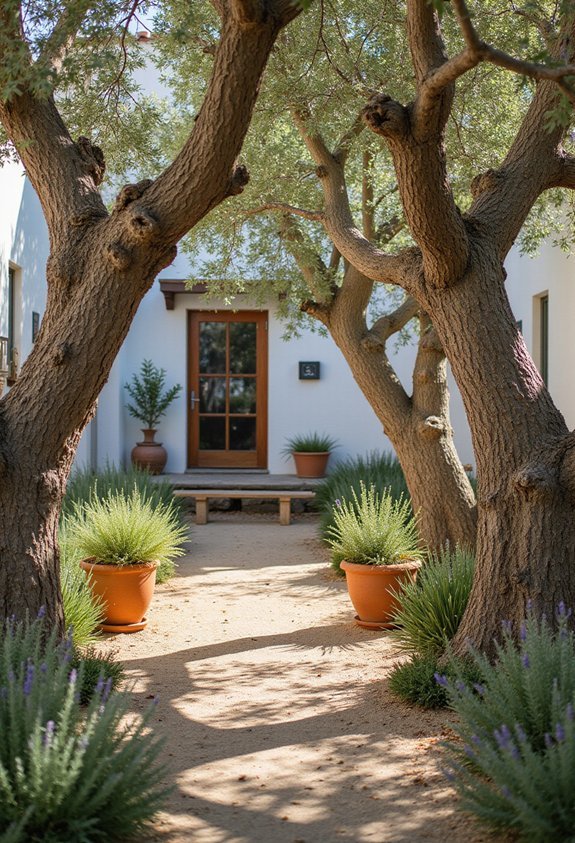
While hand-painted tiles create decorative accents throughout your Mediterranean front yard, olive trees serve as the living centerpieces that anchor your entire landscape design. You’ll want to select mature specimens that’ve already developed gnarled, sculptural trunks, which add instant character and authenticity to your space. Position your olive trees strategically in prominent locations where they’ll command attention, such as near your entryway or as a focal point in your central planting bed. These hardy plants thrive in full sunlight and well-draining soil, requiring minimal maintenance once established. Their silvery-green foliage creates beautiful contrast against stone walls and darker architectural elements, while their natural growth patterns provide organic screening and shade. Olive trees transform your front yard into an authentic Mediterranean retreat that feels transported directly from a coastal European villa.
Lavender-Lined Pathways
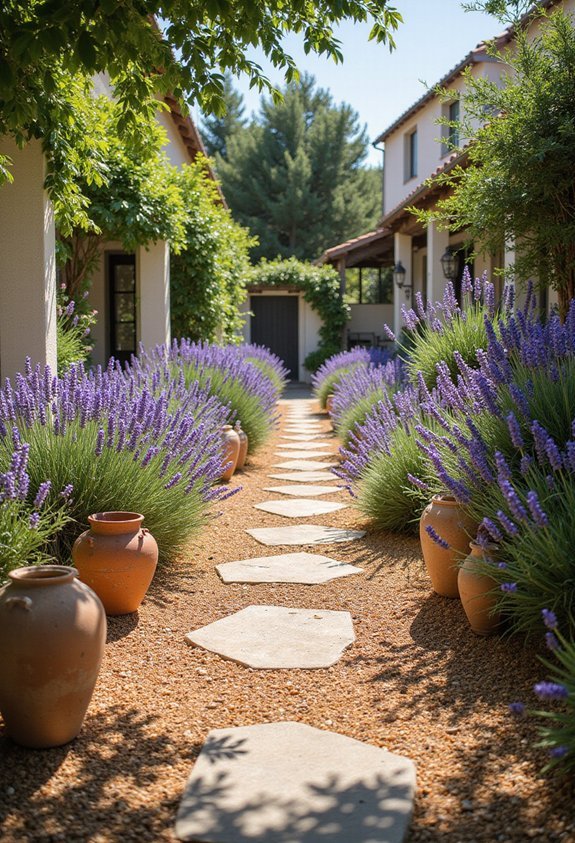
As you shift from your olive tree focal points toward the edges of your front yard, lavender plants offer an excellent choice for defining pathways and creating fragrant borders that’ll guide visitors through your Mediterranean landscape. You’ll find that lavender thrives in well-draining soil and full sunlight, making it ideal for front yard conditions. Plant lavender in linear arrangements along walkways, spacing them approximately eighteen to twenty-four inches apart to create a cohesive, flowing line. The purple blooms and aromatic foliage’ll establish clear boundaries while requiring minimal maintenance once established. You can deadhead spent flowers to encourage continued blooming throughout the growing season, ensuring your pathways remain visually appealing and fragrant all summer long.
Potted Lemon and Citrus Trees
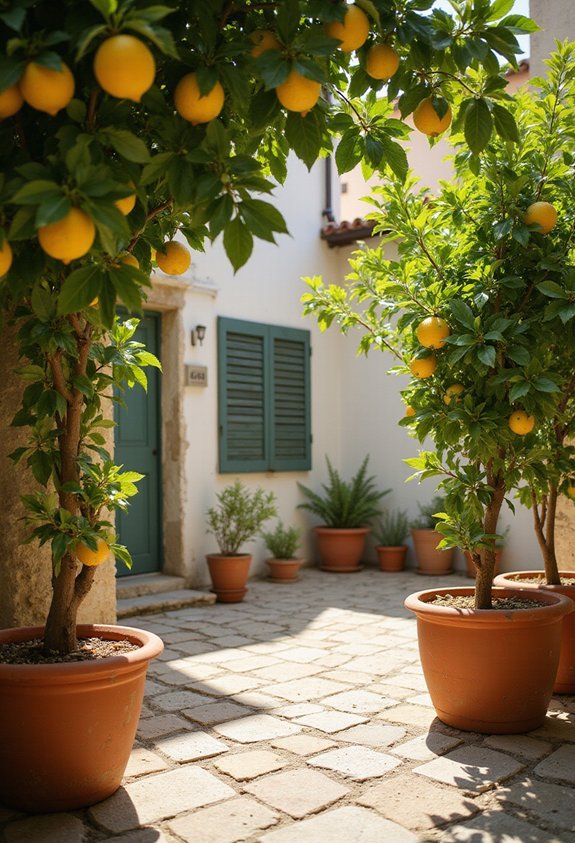
Moving beyond your ground-level lavender borders, potted citrus trees’ll add vertical dimension and functional beauty to your Mediterranean front yard while providing fresh fruit harvests. You’ll want to select large terracotta or ceramic containers with drainage holes, which’ll prevent root rot and maintain healthy growth. Position your lemon, lime, and orange trees in areas receiving six to eight hours of direct sunlight daily, since citrus plants require intense light for ideal fruit production. Water thoroughly when soil surfaces feel dry, adjusting frequency based on seasonal temperatures and rainfall. Feed your trees with citrus-specific fertilizers during growing seasons to support flowering and fruiting cycles. This arrangement creates an attractive focal point while delivering practical harvests you’ll enjoy year-round.
Culinary Herb Gardens in Terracotta Pots
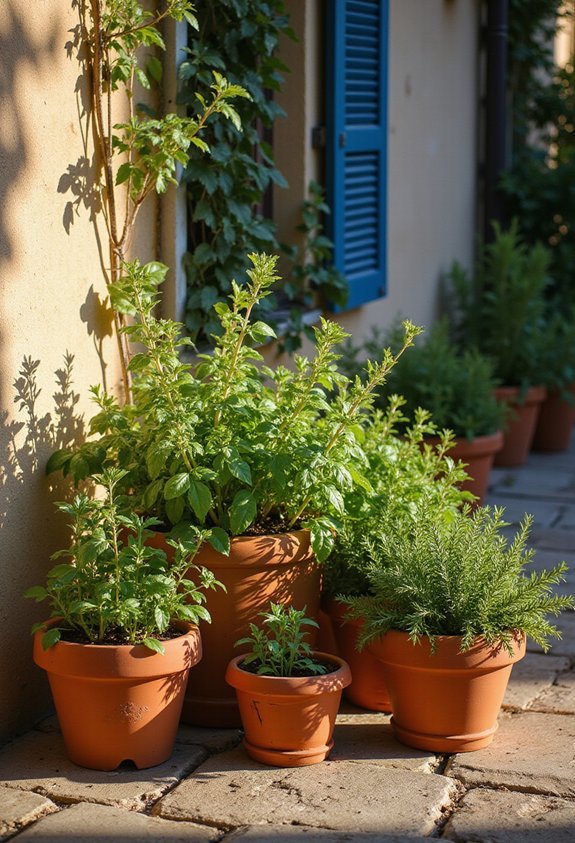
Since you’ve established focal points with your citrus trees, you’ll want to create a functional culinary herb garden using terracotta pots positioned throughout your Mediterranean front yard. Select herbs like basil, oregano, thyme, and rosemary, which thrive in warm, sunny conditions and require minimal maintenance. Arrange your terracotta containers in clusters near your entrance or along pathways, ensuring they receive at least six hours of direct sunlight daily. Terracotta’s porous nature allows proper drainage and air circulation, preventing root rot and promoting healthy growth. Space pots eighteen inches apart to allow adequate airflow between plants. Water your herbs when the soil’s top inch feels dry, typically every two to three days during warm months. This approach combines practicality with authentic Mediterranean aesthetics.
Terracotta Planters With Cascading Greenery
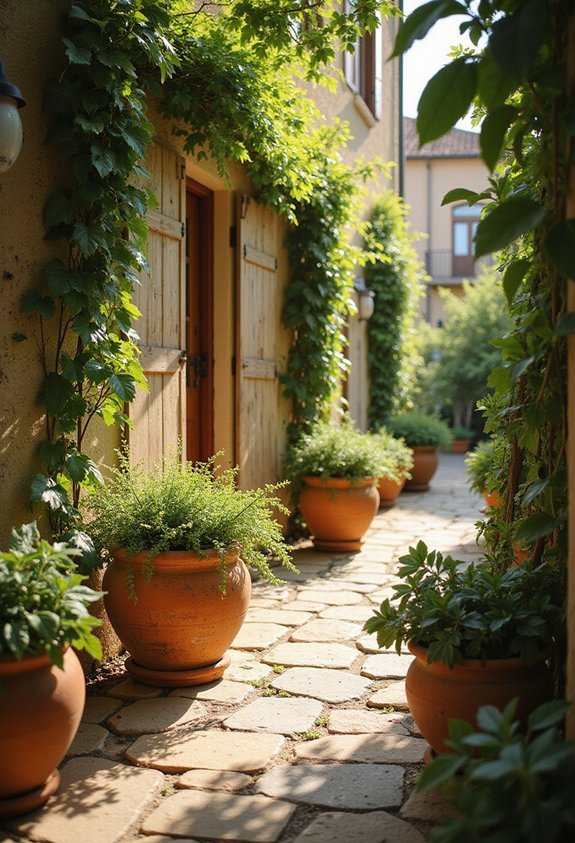
Trailing plants like ivy, jasmine, and creeping fig’ll transform your terracotta planters into living focal points that soften hard edges and create visual interest throughout your Mediterranean front yard. These cascading varieties naturally drape over pot edges, establishing elegant shifts between structures and landscape elements. You’ll achieve ideal growth by selecting planters positioned where your chosen plants receive adequate sunlight, typically six to eight hours daily. Water regularly during growing seasons, ensuring soil remains consistently moist but not waterlogged, as terracotta’s porous nature allows faster evaporation. Apply mulch around the base to retain moisture and moderate soil temperature. Prune trailing stems periodically to maintain desired shapes and encourage fuller growth patterns, creating abundant greenery that enhances your Mediterranean aesthetic while requiring minimal maintenance efforts.
Climbing Vines and Ivy Coverage
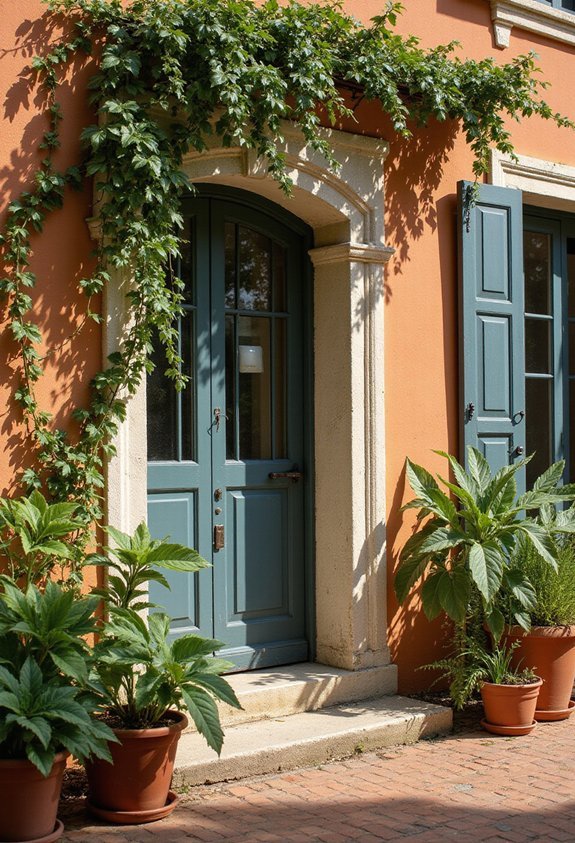
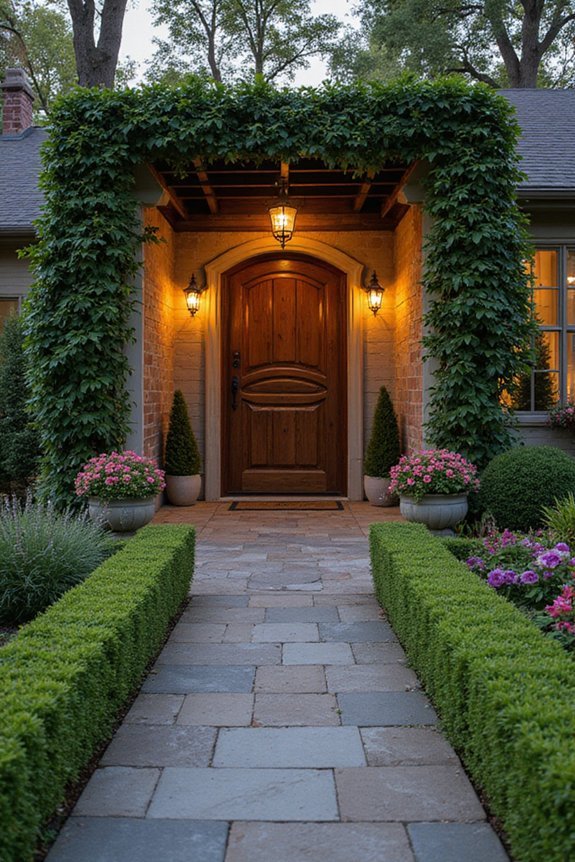
While cascading plants in containers provide localized greenery, climbing vines and ivy offer you a more expansive solution for transforming your Mediterranean front yard’s vertical surfaces and structures. You can train ivy varieties like Hedera helix to cover garden walls, creating dense, textured backdrops that enhance your home’s Mediterranean character. Climbing vines such as clematis and bougainvillea provide vibrant flowers while scaling trellises, arbors, and fence lines throughout your yard. You’ll want to install sturdy support structures before planting, ensuring vines have adequate framework for growth and attachment. Regular pruning maintains shape and prevents overgrowth that could damage building materials. These vertical plantings create natural shade, reduce wall temperature, and establish layered visual interest that transforms your front yard into an authentic Mediterranean retreat.
Drought-Tolerant Plants That Fit the Mediterranean Look
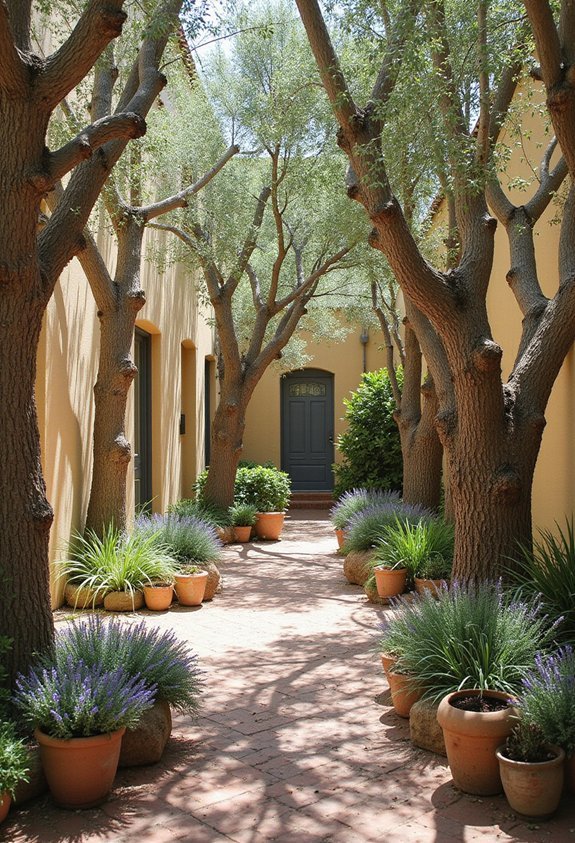
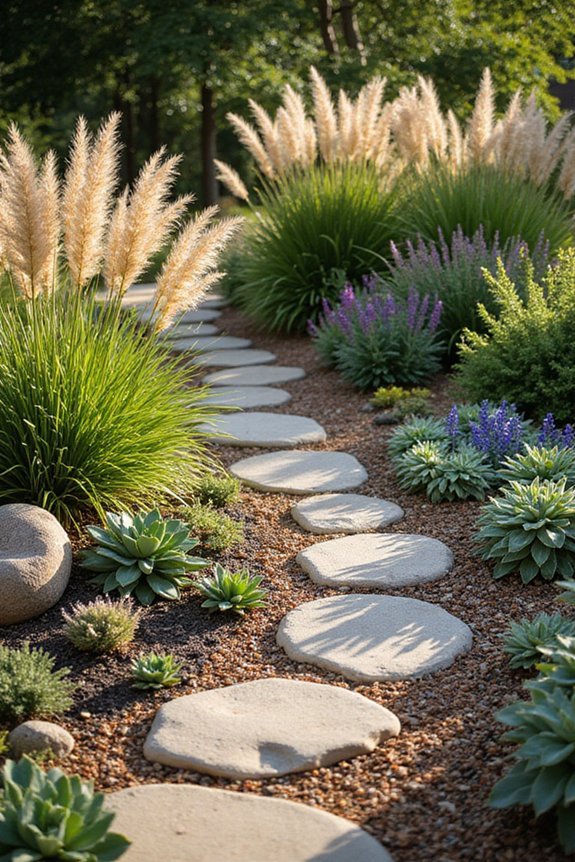
To bring out the authentic character of a Mediterranean front yard while conserving water, you’ll want to focus on plants that thrive in hot, dry conditions and naturally reflect the region’s distinctive aesthetic. Consider incorporating lavender, rosemary, and sage, which display silvery-green foliage and fragrant blooms that capture the Mediterranean essence. Ornamental grasses like feather reed grass add textural variety and movement without demanding excessive water. Succulents such as agave and stonecrop provide architectural interest with minimal irrigation needs. Olive trees and cypress varieties establish classic Mediterranean silhouettes that define the landscape’s character. These plants’ ability to withstand drought conditions means you’ll reduce watering schedules considerably while maintaining the region’s authentic visual appeal throughout your front yard design.
Lantern Lighting for Evening Ambiance
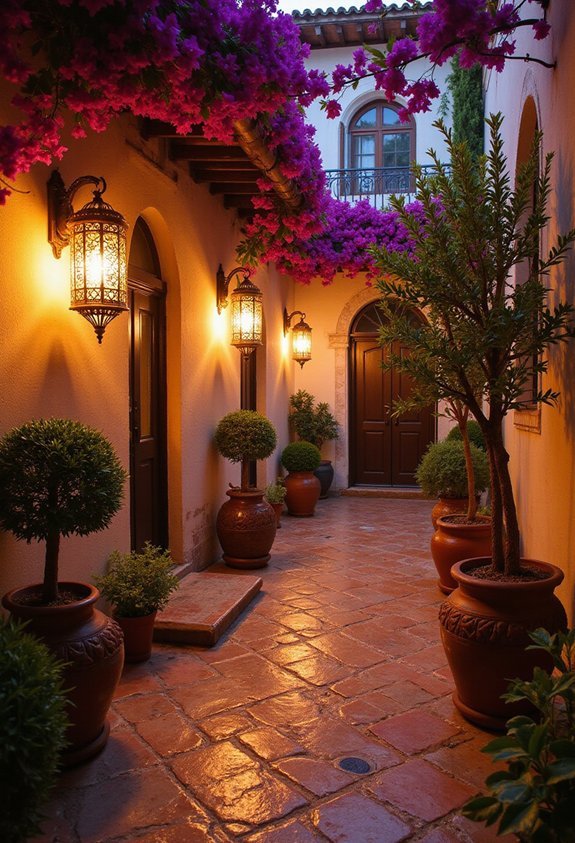
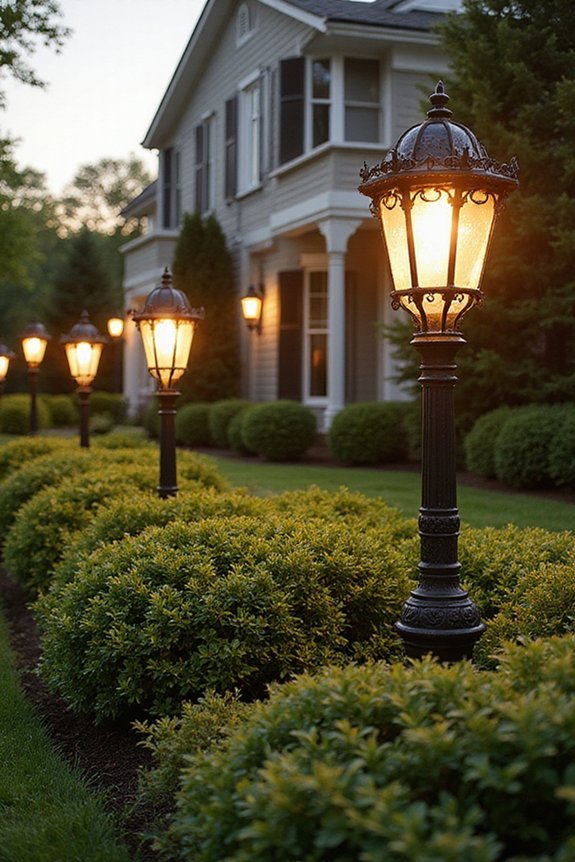
How can you extend the visual appeal of your Mediterranean front yard beyond daylight hours? Lantern lighting strategically placed throughout your landscape creates an inviting evening atmosphere that enhances the Mediterranean aesthetic. You’ll want to position lanterns along pathways, near entrances, and among your drought-tolerant plantings to guide visitors while highlighting architectural features. Choose lanterns with warm-toned bulbs that cast a soft, golden glow, mimicking the ambiance of Mediterranean coastal towns. Wrought iron or Moroccan-style lanterns complement the regional design while providing functional illumination. Install lanterns at varying heights to create visual interest and depth across your front yard. Consider solar-powered options for energy efficiency and easy installation, eliminating the need for extensive wiring or electrical work.
Rustic Stone Benches and Seating Alcoves
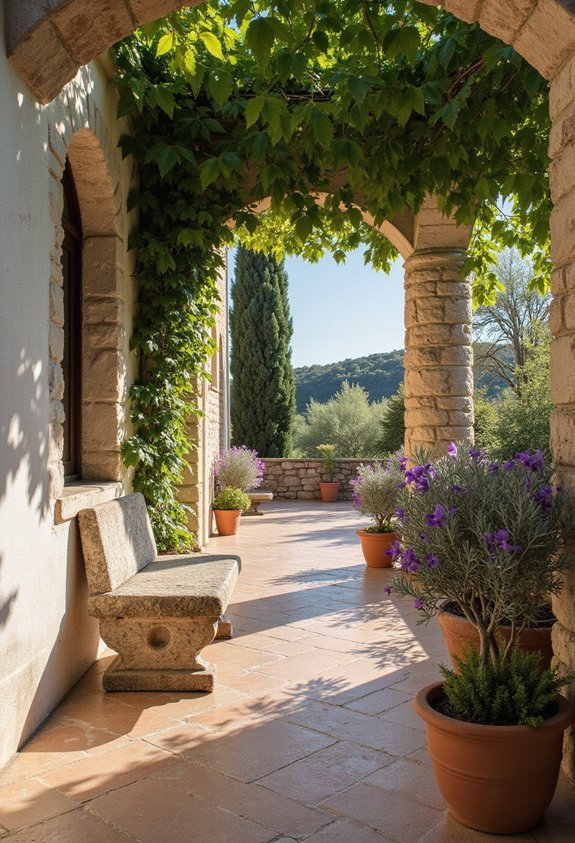
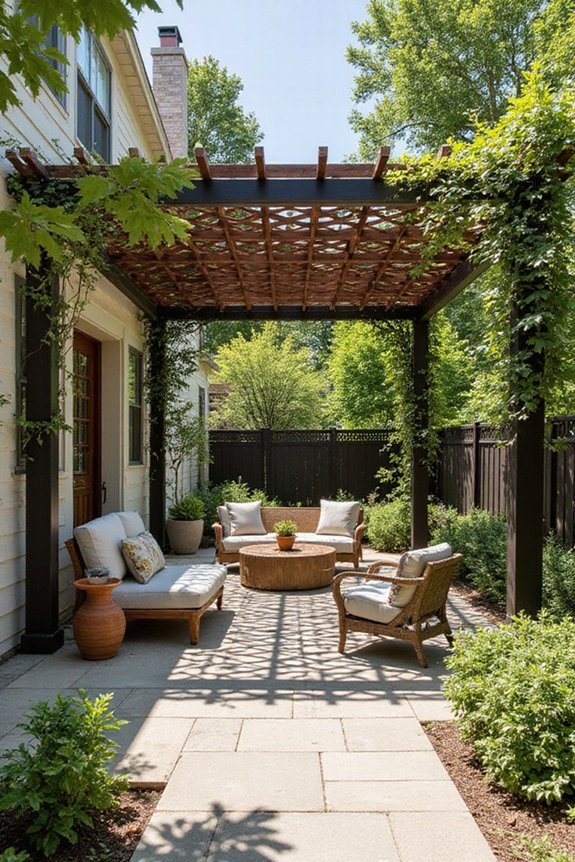
By incorporating rustic stone benches and intimate seating alcoves into your Mediterranean front yard, you’ll create functional gathering spaces that invite relaxation and conversation while maintaining the authentic regional character of your landscape. Position your benches strategically along pathways or beneath shade structures, where they’ll encourage visitors to pause and enjoy the surroundings. Select natural stone materials like limestone or slate, which weather beautifully and develop character over time. Design alcoves by creating recessed areas within garden walls or beneath pergolas, where curved benches nestle comfortably against supporting structures. These designated spaces serve multiple purposes: they provide practical seating for outdoor activities, enhance visual interest through varied elevations, and establish focal points throughout your yard. Stone’s durability guarantees your seating areas will withstand Mediterranean sun and occasional rainfall while maintaining their rustic charm.
Conclusion
You’ve now got all the tools you need to transform your front yard into a Mediterranean paradise, so don’t put all your eggs in one basket by focusing on just one element—instead, you’ll want to combine multiple details like warm earth tones, arched doorways, drought-tolerant plants, rustic shutters, and atmospheric lantern lighting. When you layer these components thoughtfully throughout your space, you’ll create an authentic Mediterranean retreat that transports you and your visitors to a sun-soaked European escape.