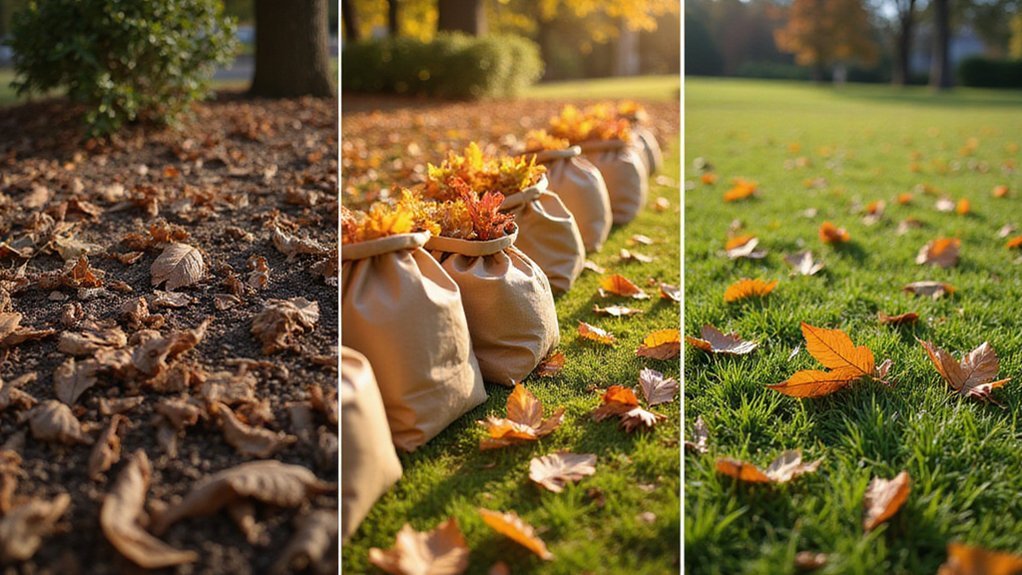
Leaves blanket your lawn each fall, but what you do with them matters more than you might think. You’ll face three main options—mulching, bagging, or leaving them—and the right choice depends on your specific situation. Your property size, lawn health, leaf volume, available time, and local rules all play a role in determining which approach works best for you. Understanding how each method affects your soil and lawn will help you make the most informed decision.
Which Method Fits Your Yard? 5 Deciding Factors
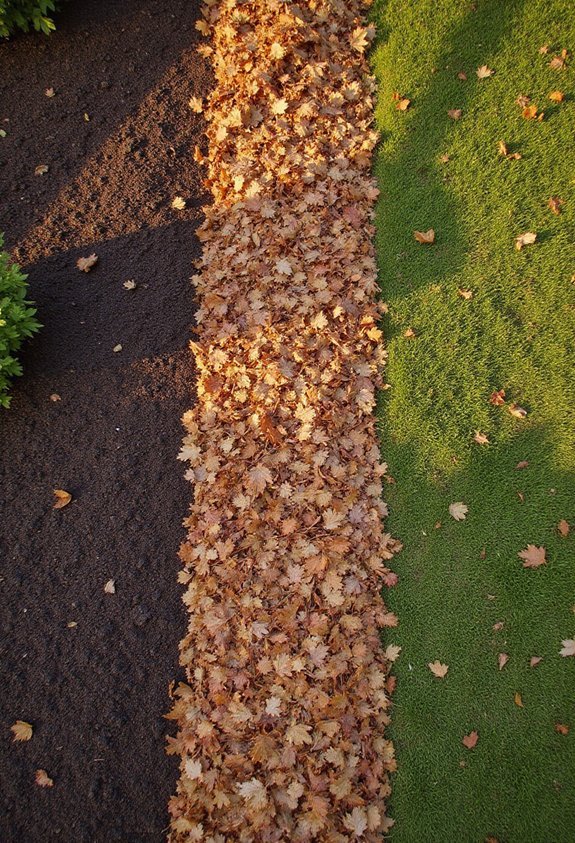
How do you know which leaf management method will work best for your specific situation? Consider these five deciding factors: First, evaluate your yard’s size, since larger properties may benefit from mulching or leaving leaves, while smaller yards work well with bagging. Second, assess your lawn’s health and thickness, as thicker lawns tolerate leaf coverage better than sparse grass. Third, examine your tree count and leaf volume, determining whether you’re managing moderate or excessive debris. Fourth, consider your available time and equipment, since different methods require varying effort and tools. Fifth, review local regulations, as some communities restrict burning or require specific disposal methods. By analyzing these factors carefully, you’ll determine which approach best suits your yard’s unique needs and your personal circumstances.
Also read: Best Feng Shui Front Door Plants for Positive Energy
Mulching Leaves: Benefits and Best Practices
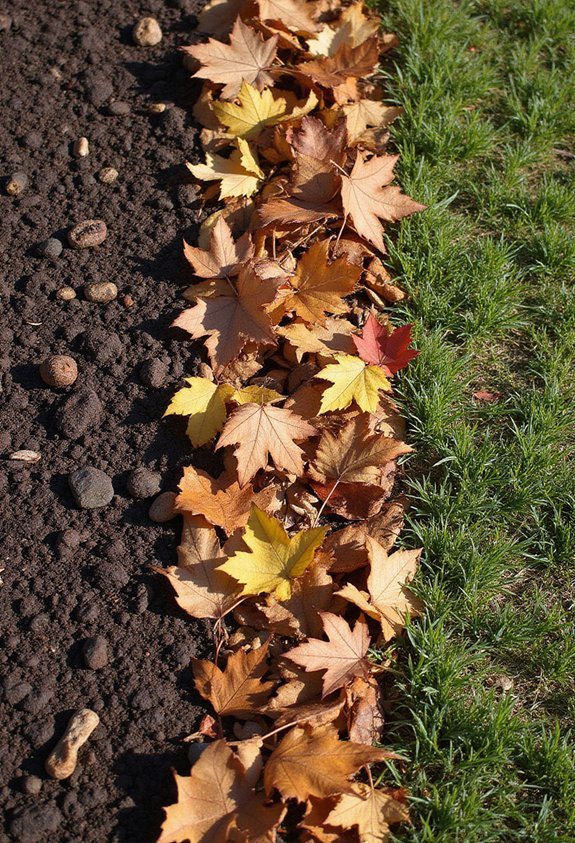
Why should you consider mulching leaves instead of removing them from your yard? Mulching leaves creates a nutrient-rich ground cover that improves your soil’s quality over time. When you mulch leaves, you’re returning valuable organic matter back to your lawn, which helps retain moisture and suppresses weeds naturally. This process also reduces the time you’d spend bagging and hauling leaves away. To mulch effectively, you’ll need a mulching mower, which has special blades designed to cut leaves into smaller pieces. Run your mower over leaves when they’re dry, making multiple passes if necessary to achieve fine pieces. Space your passes about one week apart during fall to prevent smothering your grass, ensuring your lawn stays healthy while benefiting from nature’s free fertilizer.
Bagging Leaves: When and Why It Makes Sense
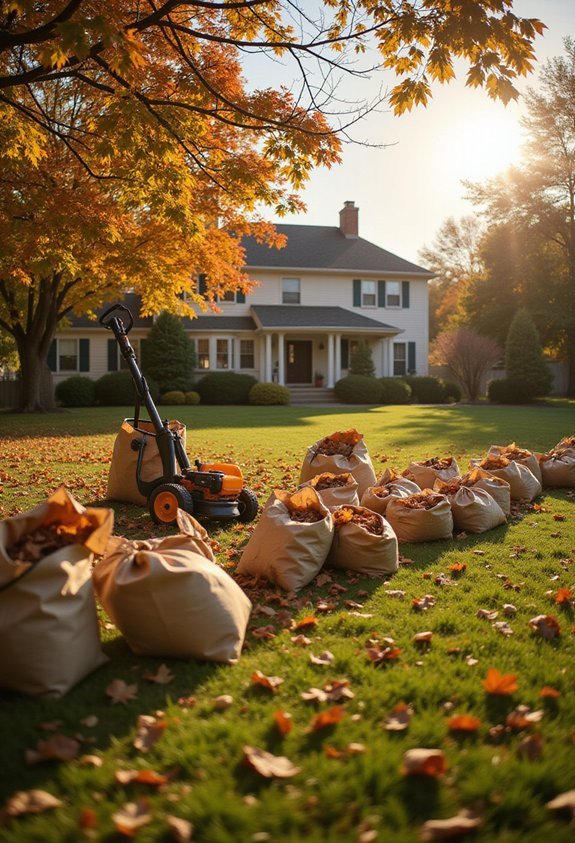
While mulching leaves works well for many homeowners, there’s a time and place where bagging leaves becomes the better choice for your yard and neighborhood. You should bag leaves when they’re diseased or infested with pests, preventing problems from spreading to healthy plants. Bagging also makes sense if you’ve got matted leaves that won’t decompose quickly or if local ordinances require it. Additionally, you’ll want to bag leaves in areas where thick layers could smother grass or create safety hazards on walkways. If your municipality offers leaf collection services, bagging provides a convenient way to participate in community cleanup programs. Bagging requires more effort than mulching, but it’s worth the investment when addressing specific yard conditions or following neighborhood regulations.
Leaving Leaves: What Actually Happens to Your Lawn
If you’ve ever wondered what happens when you simply leave fallen leaves on your lawn instead of mulching or bagging them, you’re considering a practice that can deliver surprisingly beneficial results for your yard’s health and the environment. When you leave leaves on your grass, they decompose naturally over time, breaking down into organic matter that enriches your soil with essential nutrients like nitrogen, phosphorus, and potassium. This natural decomposition process improves soil structure and increases water retention, which helps your lawn stay healthier during dry periods. Additionally, the decomposing leaves create habitat for beneficial organisms like earthworms and microorganisms that further enhance soil quality. However, you’ll want to guarantee leaves don’t form a thick mat that suffocates your grass beneath.
Where Mulching, Bagging, and Leaving All Go Wrong
Each of these three lawn care methods comes with distinct disadvantages that can harm your grass, waste your time, or create environmental problems. Mulching can clog your mower if you’re not careful, and it won’t work well when leaves are wet or excessively thick. Bagging requires significant effort and storage space, plus it removes valuable nutrients from your lawn that decompose naturally. Leaving leaves unmanaged can smother your grass underneath, blocking sunlight and promoting disease when leaves accumulate too heavily. Additionally, leaving excessive leaves can harbor pests and create an unkempt appearance. Each method demands specific conditions and timing to avoid these pitfalls, making lawn maintenance more complicated than simply choosing one approach without considering your yard’s unique characteristics and current leaf volume.
Your Leaf Plan: A Timeline and Equipment Checklist
Now that you understand the limitations of each method, you’ll want to create a structured plan that matches your specific situation, timeline, and available resources. Start by evaluating your yard size and leaf volume in early fall, then decide which method suits your needs best. For mulching, you’ll need a quality mower with mulching capability and several passes through your yard. For bagging, gather heavy-duty bags, a rake, and a disposal location beforehand. If you’re leaving leaves, prepare garden beds by ensuring they’re properly prepared to receive them. Schedule your leaf management during dry weather when leaves crumble easily and won’t clump. Check your local regulations about leaf disposal to avoid violations. Finally, maintain your equipment before the season starts so everything functions properly throughout fall.
Conclusion
You might worry that leaving leaves creates an unsightly mess, but when you spread them evenly across your lawn instead of piling them in thick mats, they decompose naturally and invisibly into your soil. By choosing mulching for dense leaf coverage, bagging for diseased foliage, or leaving thin layers intact, you’ll create a customized approach that improves your lawn’s health while fitting your yard’s specific needs and your available time.