If you’ve ever dreamed of growing an endless supply of fresh vegetables indoors without soil, hydroponics offers you exactly that possibility. You’ll discover that certain plants, from crisp lettuce to vibrant peppers, thrive remarkably well in water-based growing systems, delivering faster growth cycles and healthier yields than traditional gardening methods. The advantages extend beyond speed—you’ll eliminate soil-borne diseases, reduce pest problems, and enjoy year-round harvests, but which specific plants will deliver your best results?
Lettuce and Leafy Greens: The Easiest Hydroponic Starter
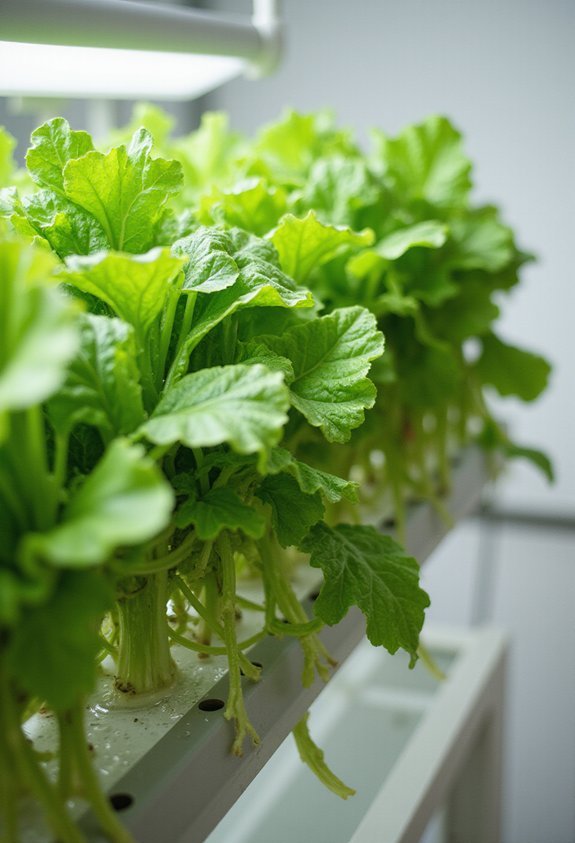
Because lettuce and leafy greens don’t require deep root systems or complex nutrient schedules, they’re excellent choices for your first hydroponic garden, and you’ll find that growing them hydroponically offers several advantages over traditional soil gardening. You’ll notice faster growth rates, typically reaching harvest in just three to four weeks, compared to six weeks in soil. These plants need minimal maintenance, requiring only consistent water temperature between sixty and seventy degrees Fahrenheit and basic nutrient solutions. You can grow multiple varieties simultaneously in compact spaces, making hydroponic systems ideal for small areas. Additionally, you’ll eliminate soil-borne diseases and pest problems that commonly affect traditional gardens, resulting in healthier, cleaner produce that’s ready for immediate consumption without extensive washing.
Also read: 11 Best Companion Plants for Potatoes
Spinach and Kale: Nutrient-Dense Crops With Fast Turnaround
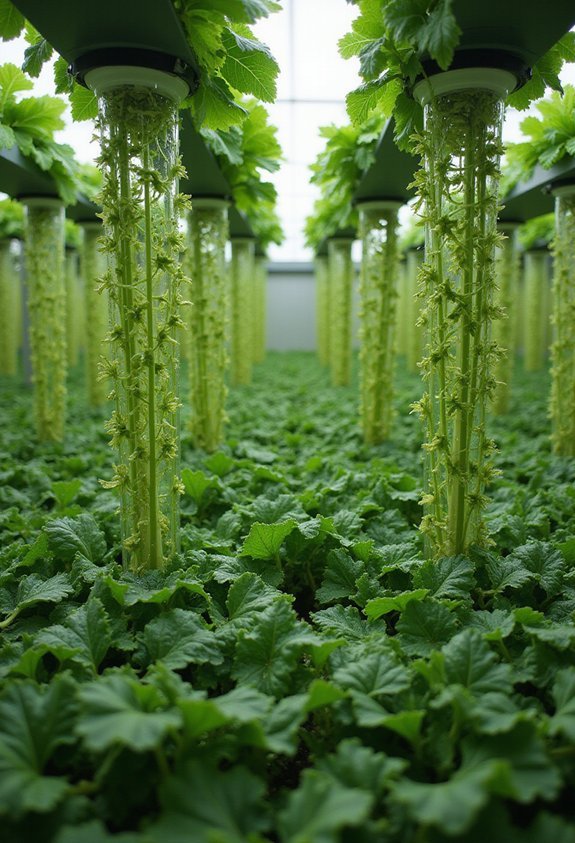
Spinach and kale represent excellent next-step crops for your hydroponic garden, offering you nutrient density that far exceeds lettuce while maintaining similarly quick growth cycles that’ll have you harvesting in just four to five weeks. Both crops thrive in hydroponic systems because they’re tolerant of varying pH levels and don’t require intense light conditions. You’ll want to maintain water temperatures between 65 and 75 degrees Fahrenheit for ideal growth. Spinach prefers slightly cooler conditions, while kale adapts well to moderate temperatures. These greens demand consistent nutrient solutions rich in nitrogen, which supports their leafy development. You can harvest outer leaves continuously, encouraging new growth from the center, extending your yield considerably throughout the growing season.
Radishes: Quick Wins for Impatient Growers
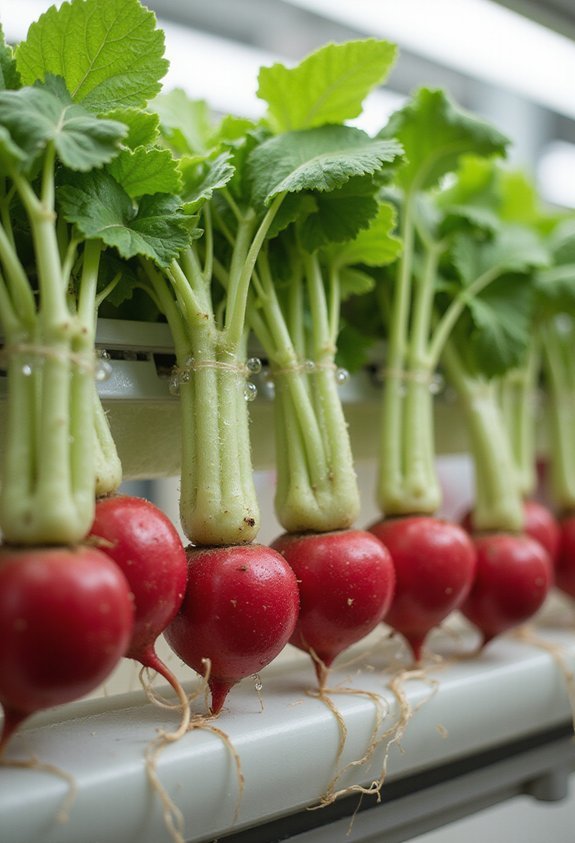
If you’re looking for your fastest hydroponic harvest yet, radishes are the crop you’ll want to grow, delivering mature roots in as little as three to four weeks and making them ideal for growers who don’t want to wait long between plantings. You’ll find that radishes thrive in hydroponic systems because they require minimal nutrients and tolerate various water conditions well. Plant seeds directly into your growing medium, maintaining a water temperature between 65 and 75 degrees Fahrenheit for preferred growth. Space seedlings about two inches apart to allow adequate root development. Monitor your pH levels, keeping them between 6.0 and 7.0. Harvest radishes when they reach approximately one inch in diameter, ensuring you’ve got space for successive plantings.
Herbs: Year-Round Fresh Flavors
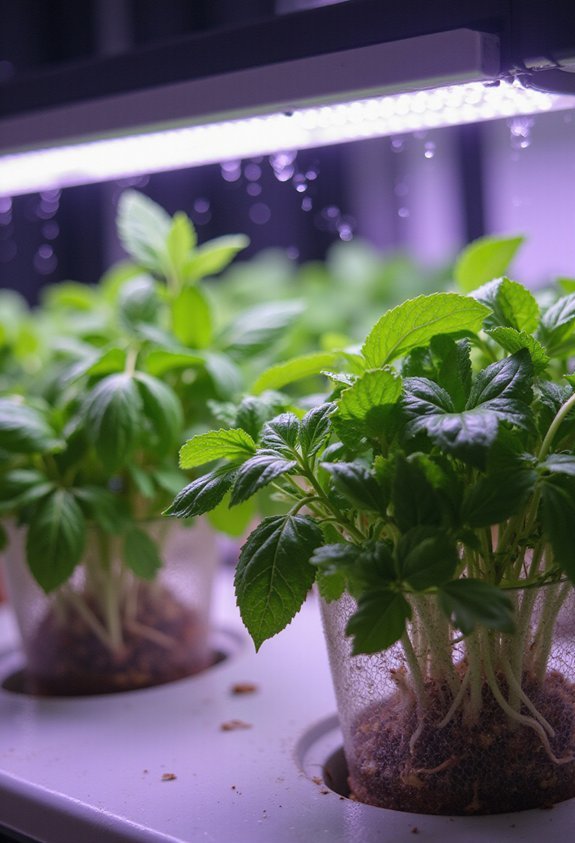
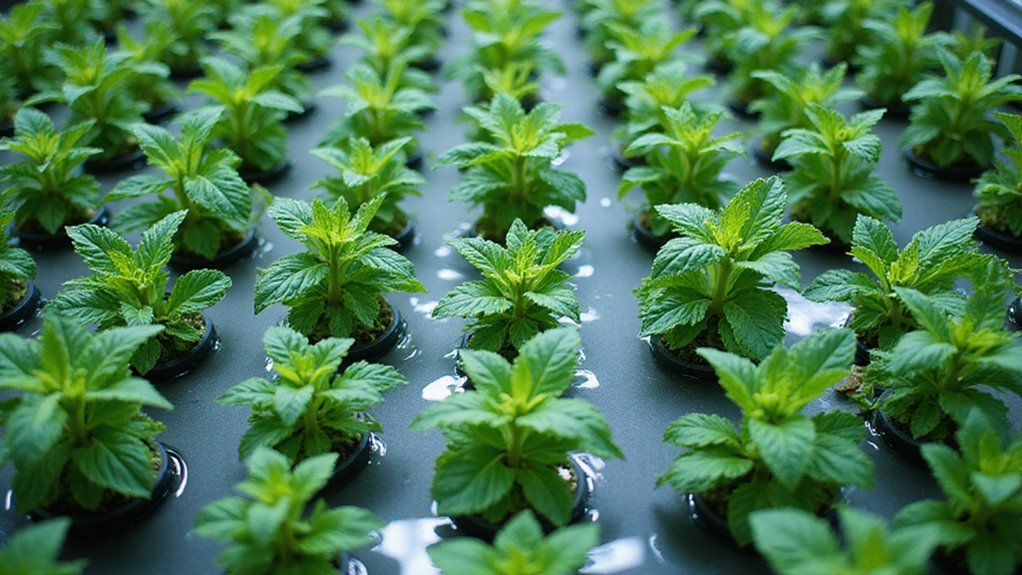
While radishes offer speed, herbs deliver something equally valuable: the ability to harvest fresh flavors throughout the entire year without relying on seasonal availability or outdoor growing conditions. You’ll find that basil, mint, parsley, and cilantro thrive exceptionally well in hydroponic systems because they don’t require deep root systems. These herbs benefit from consistent water delivery and stable growing environments that hydroponics provide. You can position grow lights above your herb garden to extend daylight hours, promoting continuous growth and productivity. Since you’re harvesting regularly, you’ll encourage bushier plants that produce more leaves over time. The controlled temperature and humidity in hydroponic setups prevent many common herb diseases, reducing your maintenance efforts substantially. You’ll enjoy restaurant-quality fresh herbs on your kitchen counter year-round, eliminating expensive grocery store purchases and ensuring ideal flavor intensity.
Basil: Aromatic Herbs With Endless Harvests
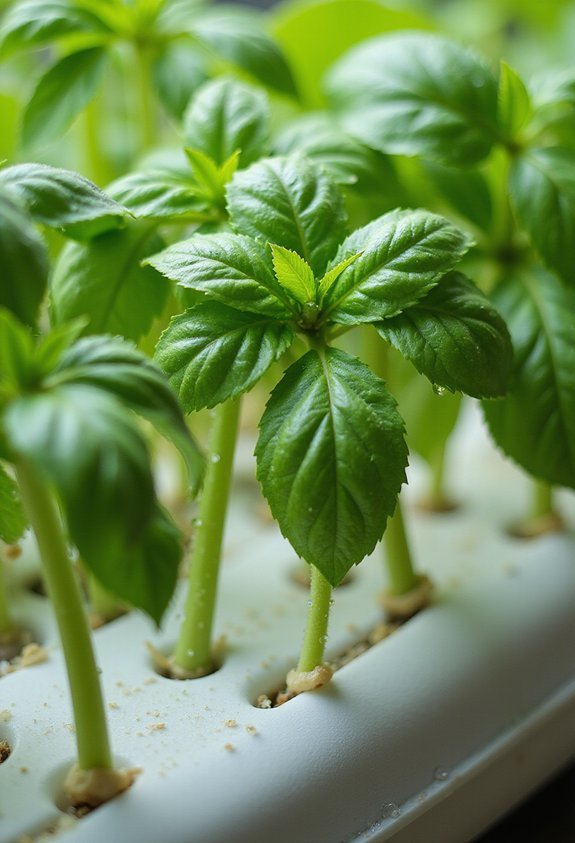
Basil stands out among hydroponic herbs because it’s particularly responsive to the controlled growing conditions you can create in an indoor system, producing abundant harvests of flavorful leaves that you’d typically only find during warm outdoor growing seasons. You’ll benefit from basil’s fast growth rate, which allows you to harvest leaves continuously throughout the year, and its preference for warm water temperatures between 65-75°F makes it ideal for hydroponic setups. Regular pruning of the top leaves encourages bushier growth and prevents flowering, which extends your harvest period considerably. Since basil thrives in nutrient-rich water with adequate light exposure of 12-16 hours daily, you can achieve multiple harvests from a single plant, making it an economical and practical choice for year-round culinary use.
Tomatoes: High-Yield Favorites for Indoor Growers
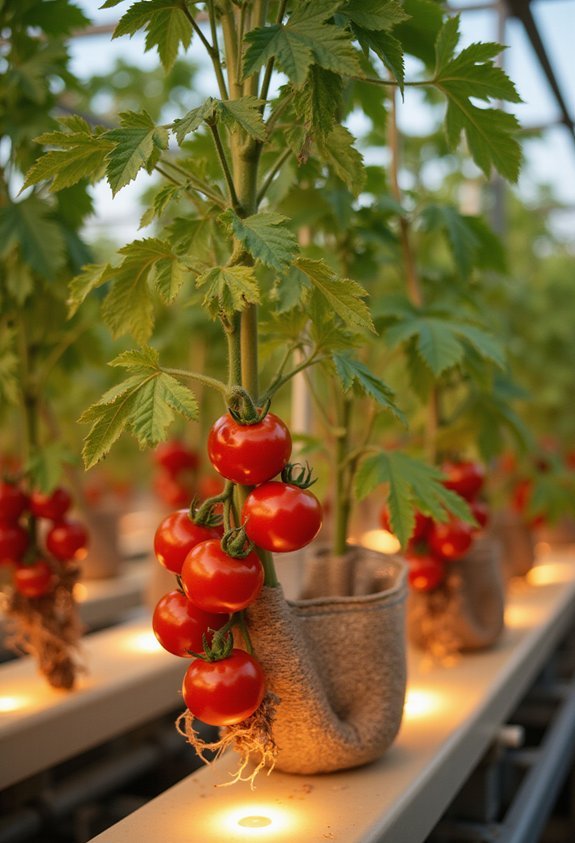
Because they’re naturally productive plants that thrive under controlled hydroponic conditions, tomatoes’ve become one of the most popular choices for indoor growers seeking consistent, high-volume yields throughout the year. When you grow tomatoes hydroponically, you’ll provide them with nutrient-rich water directly to their roots, eliminating soil-borne diseases and reducing water waste considerably. You should select determinate or indeterminate varieties based on your space constraints, as indeterminate types grow continuously and require more vertical room. Maintain water temperatures between 65-75°F, guarantee adequate lighting with 14-16 hours daily, and monitor pH levels between 5.5-6.5 for ideal nutrient absorption. You’ll need to support heavy fruiting branches with stakes or trellises, prune regularly to enhance airflow, and pollinate flowers manually or with gentle vibrations since indoor environments lack natural pollinators.
Peppers: Growing Prolific Yields Hydroponically
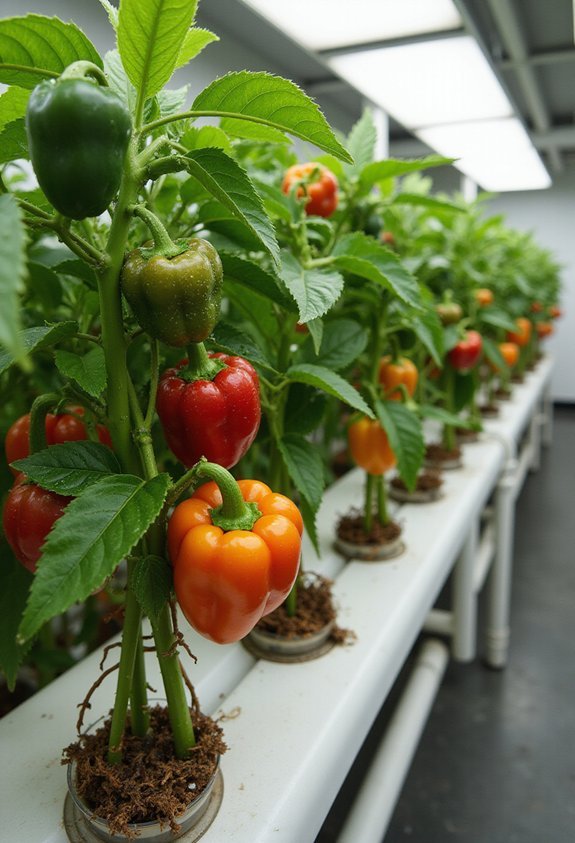
Much like tomatoes, peppers thrive in hydroponic systems and’ll reward you with abundant harvests when you provide the right growing conditions, making them an excellent choice for indoor gardeners who want consistent production year-round. You’ll need to maintain warm temperatures between 70-85°F, as peppers require substantial heat for optimal growth and fruit development. Provide 14-16 hours of bright light daily using LED grow lights positioned 12-18 inches above your plants. Keep your nutrient solution pH balanced between 5.5-6.5, and monitor electrical conductivity levels closely to guarantee proper nutrient uptake. Bell peppers, hot peppers, and specialty varieties all perform exceptionally well in hydroponic setups, yielding mature fruit within 60-90 days. Water circulation and consistent environmental conditions create the ideal foundation for prolific pepper production throughout your growing season.
Cucumbers: Vigorous Growers for Vertical Systems
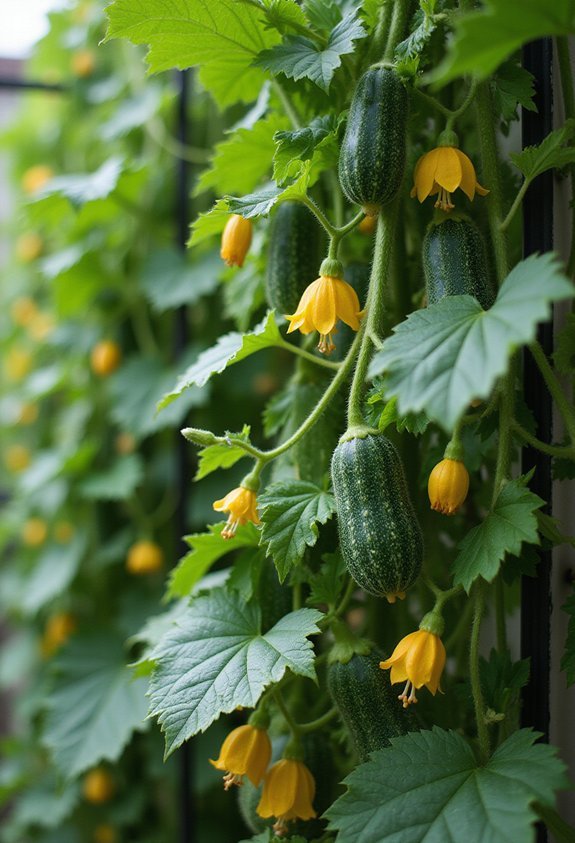
Cucumbers represent an excellent choice for hydroponic gardeners because they’re fast-growing vining plants that’ll thrive when you train them vertically, maximizing your growing space while producing continuous harvests throughout the season. You’ll need to provide sturdy trellises or strings for support as the plants develop, directing their growth upward to improve air circulation and reduce disease risk. Maintain water temperature between 65-75°F and guarantee adequate lighting with 14-16 hours daily. Feed your cucumbers with balanced hydroponic nutrients, adjusting nitrogen levels as they mature. Monitor humidity levels carefully, keeping them around 50-70% to prevent powdery mildew. You can expect harvesting to begin within 50-70 days, with consistent yields continuing for several months when you maintain proper growing conditions.
Strawberries: Hydroponically Grown Sweet Harvests
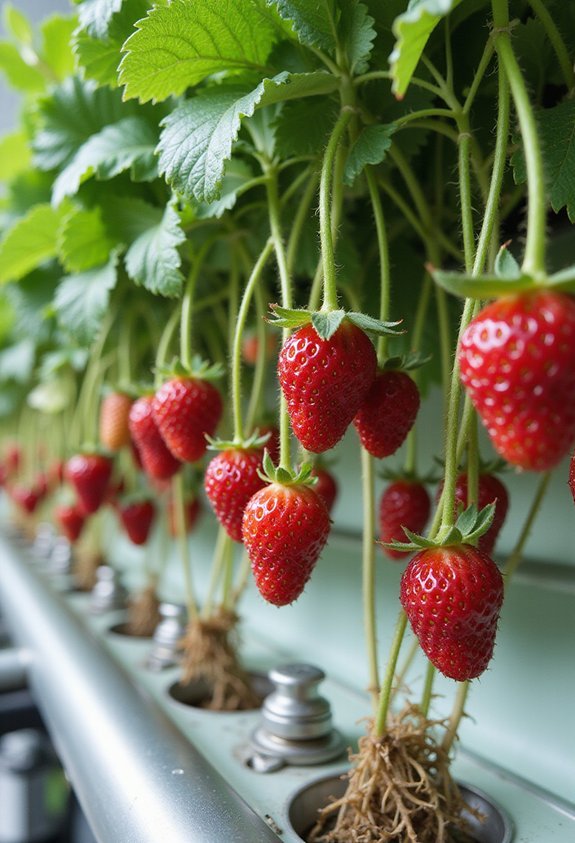
Strawberries offer a rewarding hydroponic growing experience that’ll produce sweet, flavorful fruit year-round when you provide the right conditions, making them an ideal choice for gardeners seeking high-quality harvests in compact spaces. You’ll want to maintain water temperatures between 65-75°F and guarantee your plants receive 12-16 hours of daily light exposure. Nutrient film technique (NFT) systems work particularly well for strawberries, allowing roots to absorb nutrients while maintaining proper oxygen levels. You should monitor pH levels between 5.5-6.8 for ideal nutrient uptake. Space plants adequately to prevent fungal diseases, and change your nutrient solution every three weeks. With consistent care and attention to these parameters, you’ll harvest abundant, pesticide-free strawberries continuously throughout the growing season.
Green Beans: Fast-Growing Crops for Beginner Growers
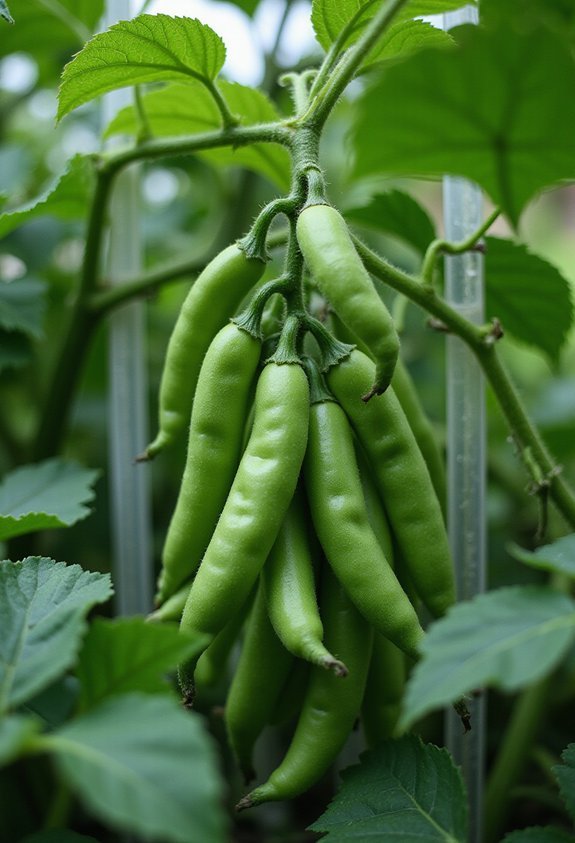
Green beans represent an excellent choice for hydroponic gardeners who’re just starting out, since they’ll grow quickly, produce abundant harvests, and require relatively straightforward care compared to other vegetable crops. You’ll notice that green beans thrive in nutrient film technique (NFT) systems or deep water culture setups, where they receive consistent moisture and nutrients. These plants prefer temperatures between 70-80 degrees Fahrenheit and need adequate lighting, whether from natural sunlight or grow lights positioned 6-12 inches above the foliage. You should monitor your nutrient solution’s pH level, keeping it between 6.0-6.8 for ideal nutrient absorption. Within 50-60 days, you’ll harvest mature pods by pinching them from the vine, encouraging continued production throughout the growing season.
Conclusion
You’ve now accessed the secrets to growing a thriving hydroponic garden that’ll flourish like a well-oiled machine, providing you with crisp lettuce, fragrant basil, vibrant peppers, and juicy strawberries year-round. By selecting the right plants from this list and maintaining stable water conditions, you’ll transform your growing space into a productive sanctuary where soil-borne diseases can’t take root, and fresh harvests flow continuously from your system.