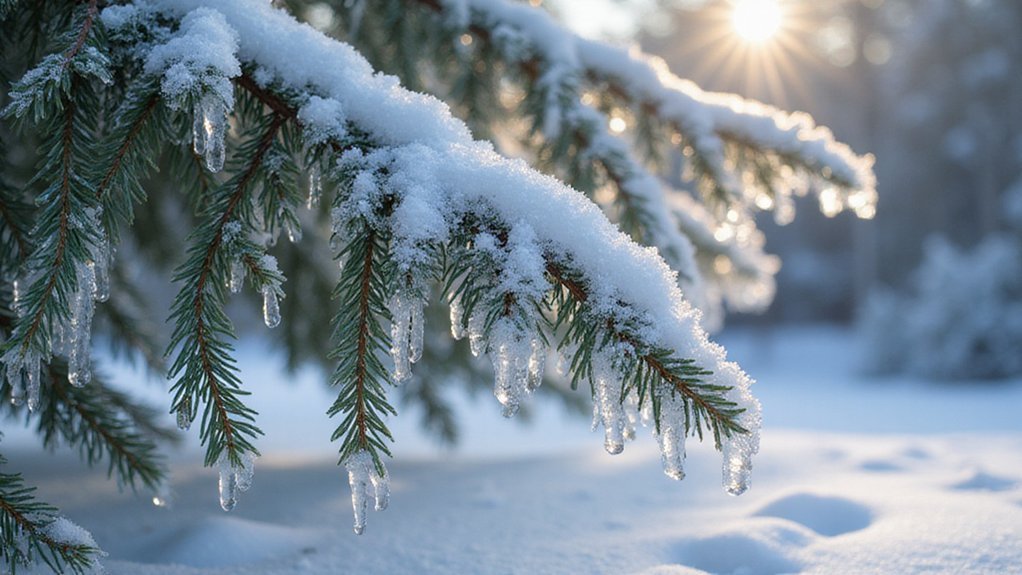
When ice storms coat your trees and shrubs, you’re faced with a critical decision that will determine whether your plants survive the season intact. Breaking ice off branches might seem like the obvious solution to prevent damage, but this approach often causes more harm than protection. Understanding when to act and when to wait requires knowledge of your specific plants, the thickness of the ice, and the actual danger posed to your property—factors that we’ll examine to help you make the right choice.
Ice-Vulnerable Trees and Shrubs: Know Your Risk
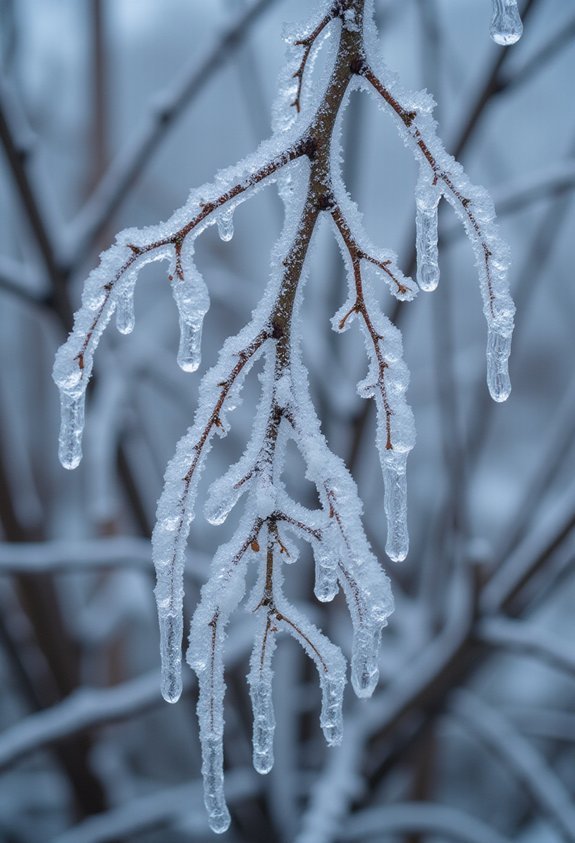
When ice accumulates on trees and shrubs during winter storms, certain species face greater danger than others because their branch structure, wood density, and growth patterns make them more susceptible to breaking under the weight of ice. You’ll find that evergreens like arborvitae, boxwood, and yew are particularly vulnerable because their dense foliage traps ice more effectively than deciduous trees. Weak-wooded trees such as willows, poplars, and birches break easily under ice weight. Young trees with thin branches and shallow root systems also struggle during ice storms. Additionally, trees that grow in upright, columnar shapes experience more stress than those with spreading, horizontal branch angles. Before winter arrives, you should identify these high-risk species on your property so you can monitor them closely during freezing rain events.
Also read: Best Feng Shui Front Door Plants for Positive Energy
When Ice Damage Becomes Dangerous: Signs to Act
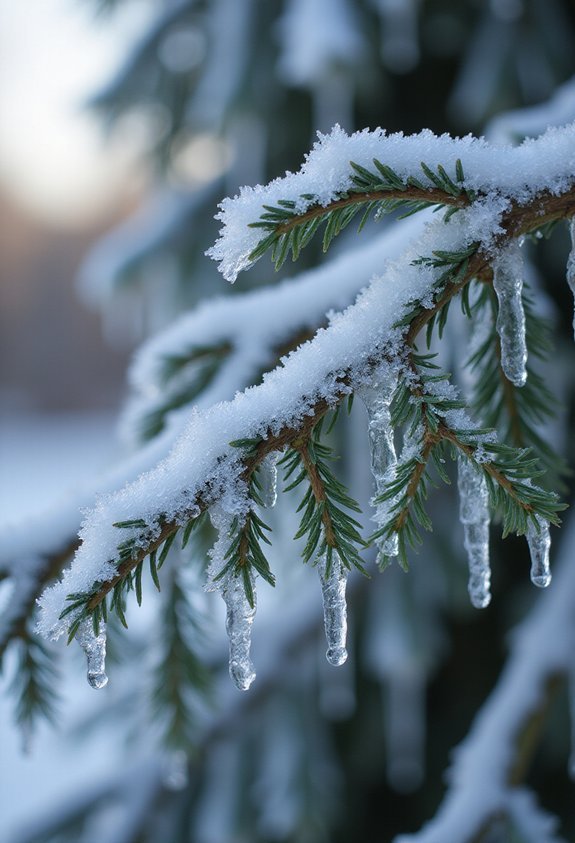
Once ice builds up on your trees and shrubs, you’ll need to watch for specific warning signs that indicate damage is becoming hazardous and requires immediate action. You should monitor branches for drooping or sagging, which signals they’re bearing excessive weight and may snap soon. Listen for cracking sounds during thawing periods, as these indicate structural failure within the wood. Look for branches that’ve already split or partially broken, hanging at odd angles, since these pose immediate falling hazards. You’ll also want to check for branches touching power lines, which create electrical dangers requiring professional utility company intervention. Additionally, observe trees leaning abnormally or showing root stress, as these suggest instability. When you notice any of these warning signs, it’s time to take protective action immediately rather than waiting for conditions to worsen.
Safe Removal Techniques: Step-by-Step Method
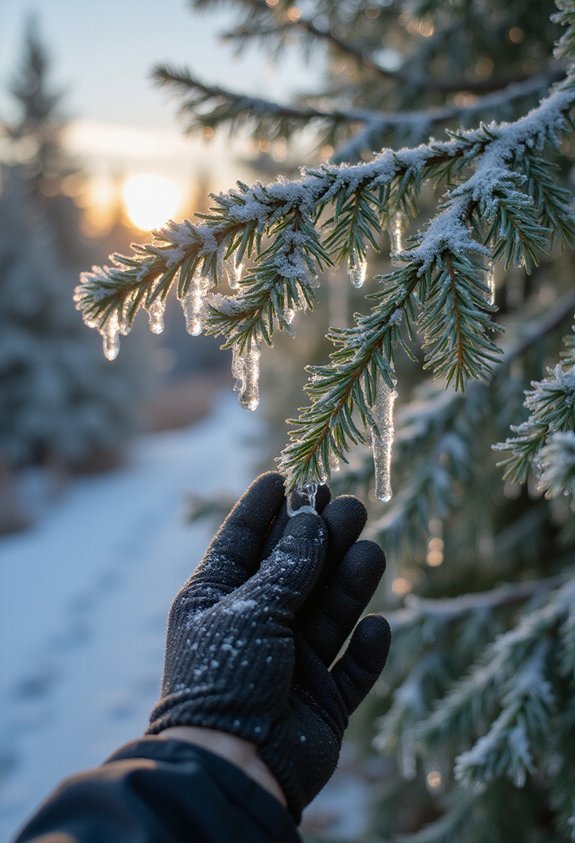
How do you safely remove ice from trees and shrubs without causing further damage? First, allow ice to melt naturally whenever possible, as this prevents branch breakage from physical removal. If you must act immediately, use a gentle approach by applying warm water slowly to affected areas, which melts ice gradually without shocking the plant. Never strike branches with tools or your hands, since this causes splitting and permanent damage. Instead, support heavy branches from below with wooden props or stakes, redistributing weight safely. Work from bottom to top, removing only loose ice that falls freely. Wear protective gloves and eyewear because falling ice chunks are hazardous. Always prioritize your safety and the plant’s long-term health over quick removal.
When to Let Ice Melt Naturally: Do-Nothing Scenarios
The best approach to ice damage on trees and shrubs often involves doing nothing at all, especially when you’re dealing with light to moderate ice accumulation that hasn’t caused branches to bend dangerously toward the ground. You should allow ice to melt naturally when temperatures are rising and conditions aren’t worsening, since forced removal can cause more damage than the ice itself. If branches aren’t breaking or drooping severely, patience is your best strategy. Monitor the situation during warmer days, and you’ll typically see significant melting occur naturally. This passive approach prevents unnecessary injury to your plants, allowing them to recover without human intervention interfering with their structural integrity and long-term health.
Helping Trees Recover After Ice Storms
After an ice storm passes and you’ve allowed the ice to melt naturally or carefully removed dangerous branches, your trees and shrubs will need focused attention to heal properly and regain their strength. Start by inspecting for broken limbs and remove any that’re hanging or partially detached, since these won’t recover and can fall unexpectedly. Prune damaged areas cleanly using sharp tools, cutting just outside the branch collar without leaving stubs that invite disease. Avoid wound dressing unless your local extension office recommends it. Water your plants thoroughly during dry periods following the storm, as ice damage increases their water needs substantially. Apply mulch around the base to insulate roots and retain moisture, then monitor growth throughout the following season for signs of additional damage or disease development.
Winter Prep: Preventive Strategies for Next Season
Since ice storms can cause significant damage to trees and shrubs, you’ll want to take preventive steps now to strengthen your plants before winter arrives. Start by pruning dead or diseased branches during late fall, which removes weak limbs that’ll snap under ice weight. You should also thin out dense branch growth to allow better air circulation and reduce ice accumulation on your trees and shrubs. Apply a thick layer of mulch around the base of young trees, which insulates roots and promotes stronger growth. Consider installing support cables on valuable trees with multiple trunks or heavy branches, providing extra stability during winter storms. Finally, water your plants thoroughly in early winter before the ground freezes, ensuring they’re well-hydrated and better equipped to withstand harsh weather conditions.
Conclusion
You’ve learned that protecting your trees during ice storms requires restraint and observation, much like a gardener waiting for the right moment to prune rather than acting rashly. You’ll want to monitor conditions carefully, support branches when necessary, and allow natural melting whenever possible. You should only intervene forcefully if ice threatens power lines or safety. By understanding when to act and when to wait, you’ll preserve your landscape’s long-term health and structure.