When you leave Christmas tree lights on throughout the night, you’re creating potential hazards that deserve your attention. The heat generated by traditional light strands can ignite nearby materials, while older lights lack modern safety features to prevent electrical failures. You’ll want to understand which light types pose fewer risks, how to set them up properly, and whether the financial cost justifies the practice—all factors that determine whether your festive display remains truly safe.
Fire Risks of Leaving Christmas Lights On All Night
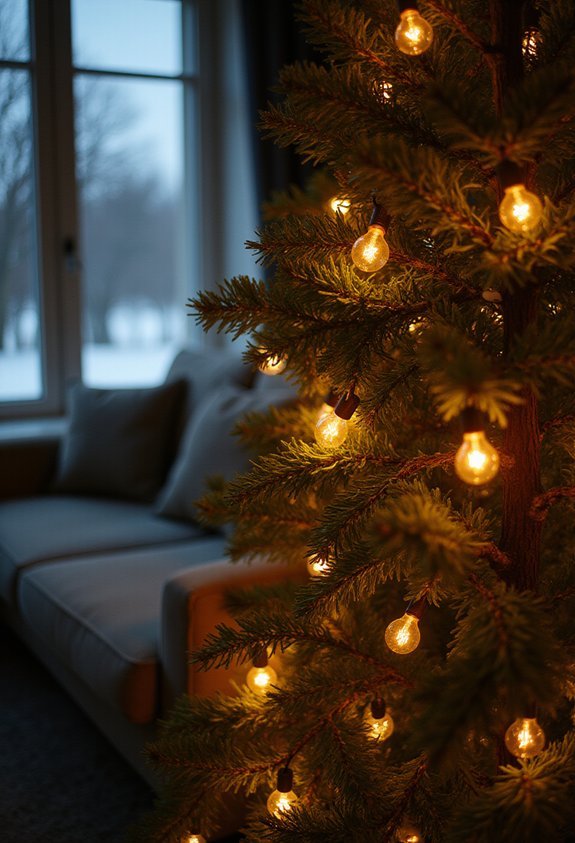
Because Christmas lights generate heat while they’re operating, leaving them on continuously throughout the night creates a genuine fire hazard that you shouldn’t overlook. When lights stay on for extended periods, they can overheat, especially if they’re old, damaged, or covered by decorations, tree branches, or dust. This excessive heat may ignite nearby flammable materials like dried pine needles, ornaments, or decorative fabrics. Additionally, you risk electrical problems when lights run constantly without breaks, potentially causing short circuits or wire damage that sparks fires. Older light strands lack modern safety features that newer models include, making them particularly dangerous. You’ll considerably reduce fire risk by turning off your lights before bed, unplugging them when you’re away, and regularly inspecting cords for wear or damage.
Also read: 10 Things To Declutter Before Putting Up Your Christmas Tree
Which Light Type Is Safest for Overnight Use?
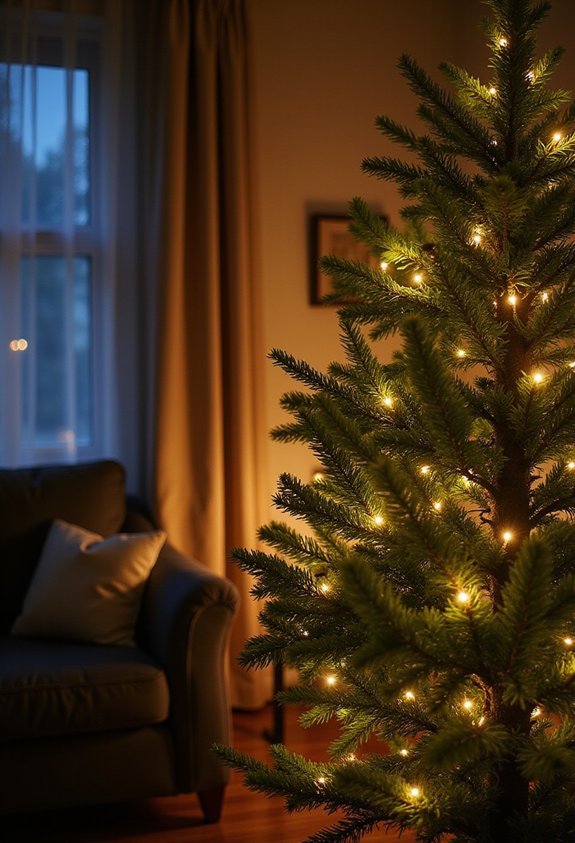
Now that you understand the fire dangers associated with leaving lights on continuously, you’ll want to know which types of Christmas lights offer the greatest safety if you do decide to keep them illuminated during nighttime hours. LED lights are your safest choice because they produce minimal heat, run cooler than incandescent bulbs, and consume less electricity, reducing overheating risks drastically. Additionally, LED lights last longer and are more durable, making them reliable for extended use. If you prefer traditional incandescent lights, guarantee they’re in excellent condition with no frayed wires or broken sockets. Battery-operated lights also work well for overnight displays since they can’t overheat electrical outlets. Whatever type you choose, verify that your lights bear UL certification, confirming they’ve met strict safety standards for continuous operation.
Setup Tips for Each Light Type: Cords, Outlets, and Timers
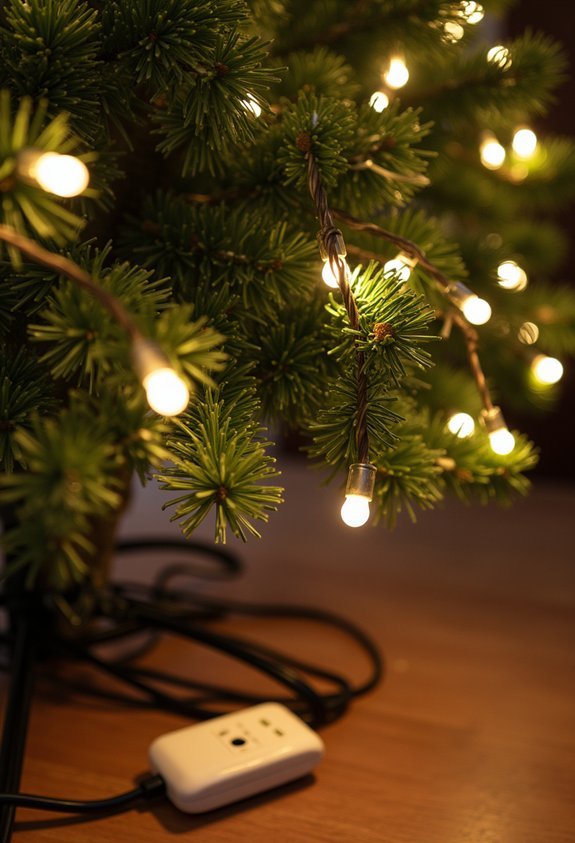
Regardless of which light type you’ve selected, you’ll need to establish a proper setup foundation that prioritizes both safety and functionality. Position your outlet away from water sources and high-traffic areas where cords might get stepped on or damaged. Use a power strip with built-in surge protection to safeguard your lights and other connected devices from electrical damage. For overnight use, install a timer that automatically shuts off your lights during sleeping hours, reducing fire risk and energy consumption. Keep cords untangled and secured along tree branches using non-metallic clips, preventing stress on connections. Check that your extension cord’s amperage rating matches your light string’s requirements, ensuring safe operation throughout the season.
What It Costs to Leave Christmas Lights On 24/7
While it’s tempting to keep your Christmas tree lights glowing around the clock for maximum festive ambiance, you’ll want to understand the financial impact of this decision before committing to 24/7 operation. Most standard Christmas light strings consume between 40 to 80 watts, costing roughly $0.05 to $0.10 per day when run continuously, depending on your local electricity rates. Running lights for an entire month translates to approximately $1.50 to $3.00 in electricity expenses. LED lights drastically reduce costs, using 80 percent less energy than traditional incandescent bulbs. If you’re operating multiple strands simultaneously, expenses multiply accordingly. Calculating your specific costs requires knowing your local electricity rate per kilowatt-hour, which you’ll find on your utility bill. This straightforward calculation helps you make financially informed decisions about your festive display.
When to Use a Timer Instead of Leaving Lights On All Night
After understanding the daily and monthly costs of running your Christmas lights continuously, you’ll find that using a timer offers a practical solution to reduce electricity expenses while still maintaining your festive display. You should install a timer if you want your lights on during evening hours but off when you’re sleeping or away from home. Most timers allow you to set specific on-and-off times, typically turning lights on around dusk and off by midnight or later. This approach cuts your energy consumption markedly compared to leaving lights on constantly. Digital timers are affordable, easy to program, and compatible with most light strings. By using a timer strategically, you’ll enjoy your Christmas decorations while lowering your utility bills extensively throughout the holiday season.
Conclusion
You’ll protect your home by choosing LED lights, securing cords safely away from flammable materials, and installing a timer for automatic shutoff during sleeping hours. These practical steps eliminate fire hazards, reduce electricity costs, and provide peace of mind throughout the season. Isn’t your family’s safety worth the minimal effort required to implement these straightforward precautions? Taking action now prevents dangerous situations before they occur.