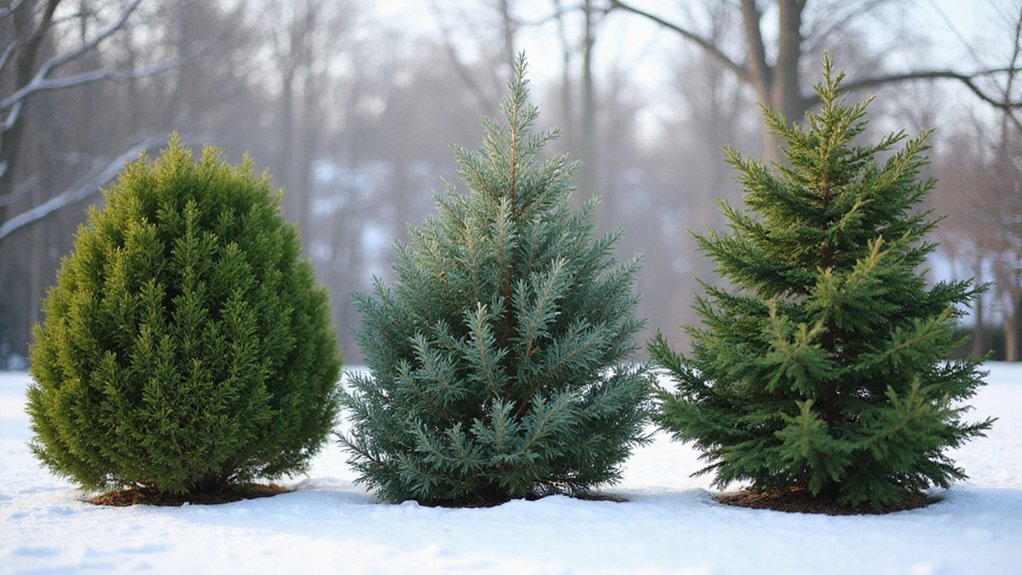
Just as a skilled gardener knows when to harvest crops at their peak, you’ll find December offers an ideal window for pruning three essential shrubs. Boxwoods, privets, and hollies each respond distinctly to winter pruning, yet understanding their specific needs can transform your landscape’s health and appearance. Each shrub demands a different approach, and discovering which techniques work best for each one will determine your spring results.
Boxwood: Prune Now to Thicken Growth by Spring
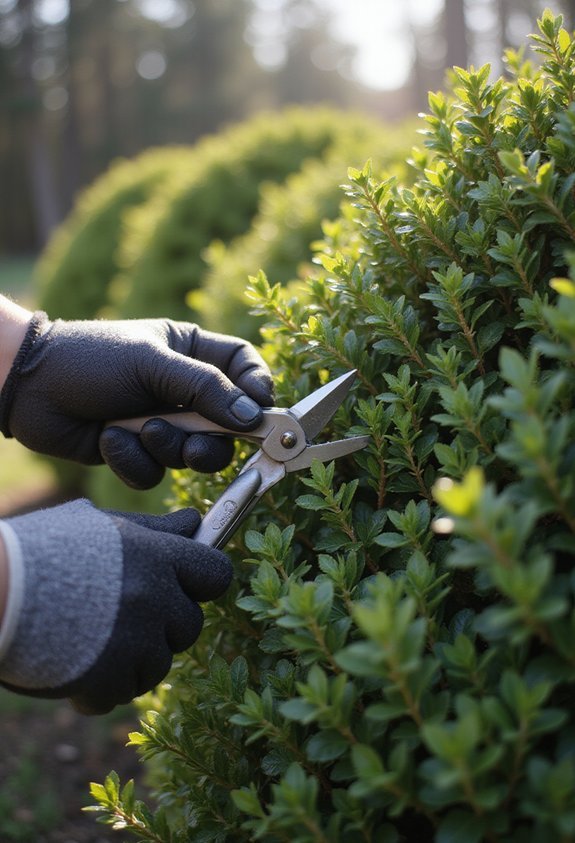
Because boxwoods respond exceptionally well to winter pruning, December’s the ideal time to shape these evergreen shrubs and guarantee denser foliage development over the coming months. You’ll want to remove any dead or damaged branches first, cutting them back to healthy wood. Next, trim back the outer growth by about one-third, which stimulates new shoots to emerge from interior nodes. Make cuts just above leaf clusters, angling slightly away from the bud to prevent water damage. You should work gradually around the plant, stepping back frequently to assess the overall shape and confirm balanced proportions. Since boxwoods grow slowly, this December pruning won’t harm them and’ll actually promote the thick, compact appearance you’re seeking for spring.
Privet: Cut Back Hard to Stop Spring Overgrowth
Unlike boxwoods that grow at a measured pace, privets’ll shoot up rapidly once spring arrives, and December’s the perfect time to cut them back hard and prevent that aggressive growth from taking over your landscape. You should prune your privet shrubs to about half their current height, removing thick branches at the base to encourage bushier development. Make clean cuts just above leaf nodes, using sharp pruning shears to avoid damaging the remaining stems. This severe pruning might look drastic, but privets respond exceptionally well to hard cutting and’ll produce dense, compact foliage throughout spring and summer. By taking action now during winter dormancy, you’re fundamentally resetting your privet’s growth pattern, ensuring a manageable, well-shaped shrub rather than an overgrown, leggy specimen that’s difficult to control later in the season.
Holly: Remove Dead Wood and Expose Natural Form
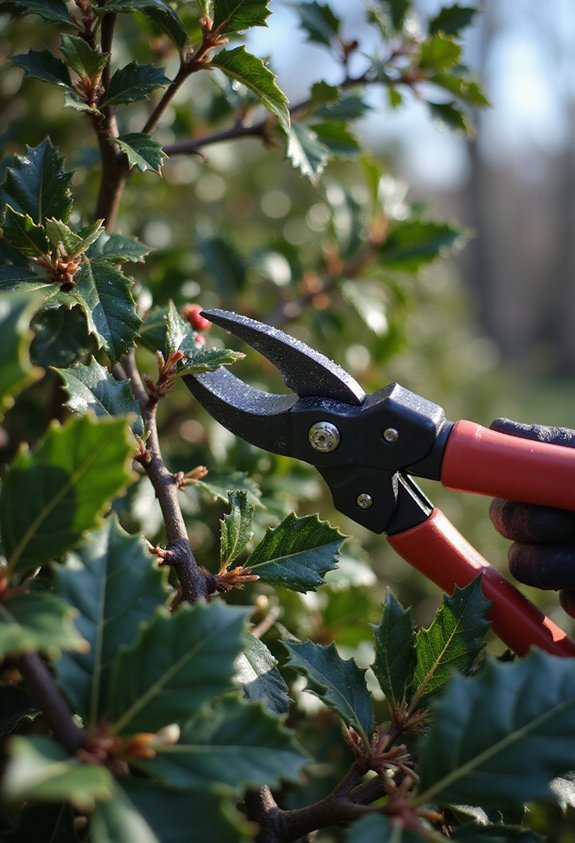
While hollies don’t require the aggressive cutting that privets demand, December pruning still offers you a valuable opportunity to remove dead wood and reveal the shrub’s naturally attractive form underneath. Start by carefully examining your holly shrub, identifying any branches that appear brown, brittle, or leafless. Use sharp pruning shears to cut these dead sections back to healthy green wood, making cuts just above a leaf node or branch junction. This removal opens up the shrub’s interior, allowing better air circulation and light penetration. As you prune, you’ll gradually expose the holly’s elegant natural shape, which often features an attractive pyramidal or columnar structure. Work methodically around the entire shrub, stepping back frequently to assess your progress and maintain balanced proportions throughout the plant.
Conclusion
You’ll find that December pruning transforms your landscape by encouraging boxwoods to develop fuller growth, preventing privets from becoming unruly come spring, and allowing hollies to showcase their natural elegance. By understanding each shrub’s specific needs—stimulating density in boxwoods, controlling aggressive growth in privets, and removing dead wood from hollies—you’re setting up your plants for success. These winter techniques establish healthier, more attractive shrubs throughout the year.