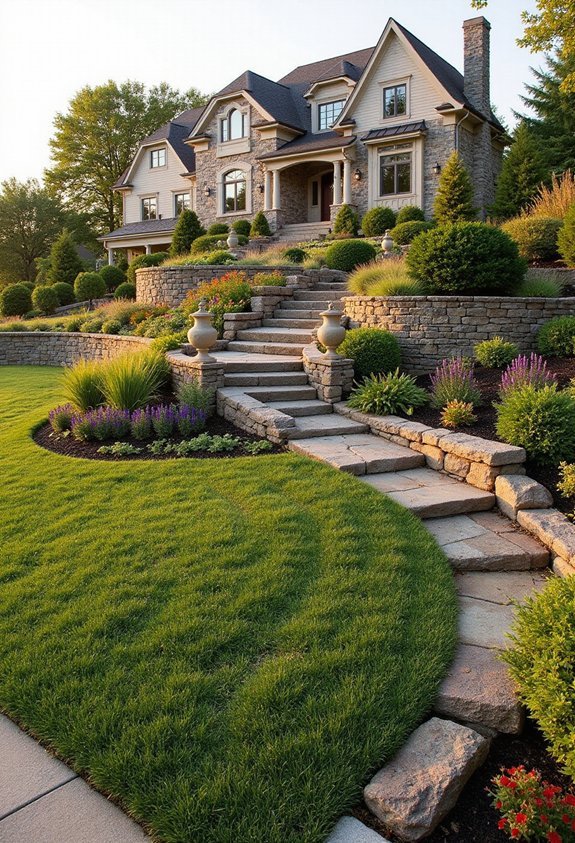
You’re staring at a sloped front yard that challenges both your creativity and your budget. This steep terrain presents unique obstacles, from erosion control to safe navigation, but it also offers remarkable opportunities for dramatic landscaping transformations. Understanding the essential techniques for managing water flow, creating stable planting areas, and designing accessible pathways will determine whether your slope becomes a stunning architectural feature or remains a problematic eyesore that diminishes your home’s curb appeal and functionality.
Install Retaining Walls For Sloped Yard Structure
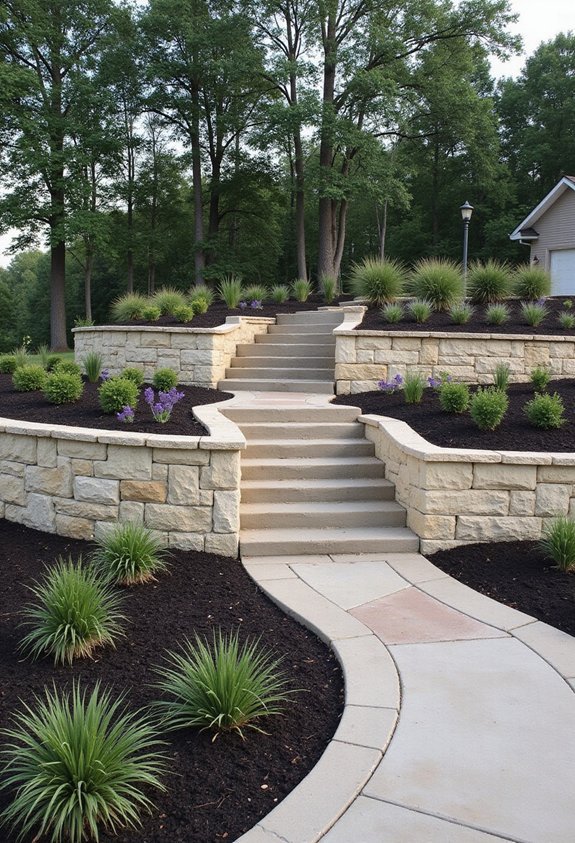
When you’re dealing with a sloped front yard, retaining walls serve as the backbone of your landscape transformation by creating level terraces and preventing soil erosion. You’ll need to determine the proper height and materials based on your slope’s grade and local building codes. Stone, concrete blocks, or timber work well for most residential applications. Start by excavating the lowest level first, then install proper drainage behind each wall using gravel and perforated pipes. Build each tier with a slight backward lean for stability, and compact the soil thoroughly between levels to guarantee long-term structural integrity.
Also read: 23+ FRONT YARD BUSHES SHRUBS That Look Expensive!
Plan Proper Drainage For Sloped Front Yards
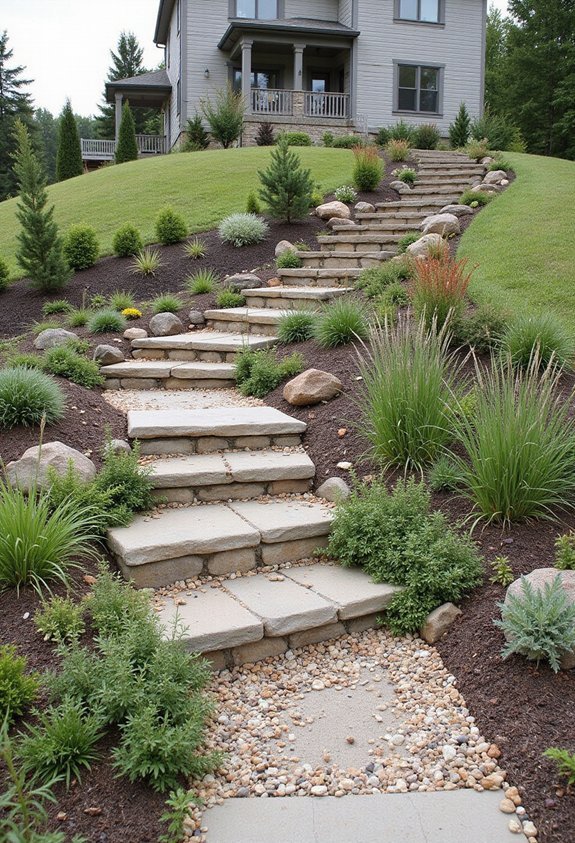
Although retaining walls provide essential structural support for your sloped yard, effective drainage systems prevent water damage that can undermine your entire landscape investment. You’ll need to install French drains along the base of retaining walls to channel water away from foundations and prevent pooling. Consider adding catch basins at natural collection points where water naturally gathers during storms. You should also create swales, which are shallow ditches that direct runoff toward designated drainage areas. Don’t forget to install proper grading that slopes away from your house, ensuring water flows toward street drainage systems.
Create Terraced Sloped Gardens In Sections
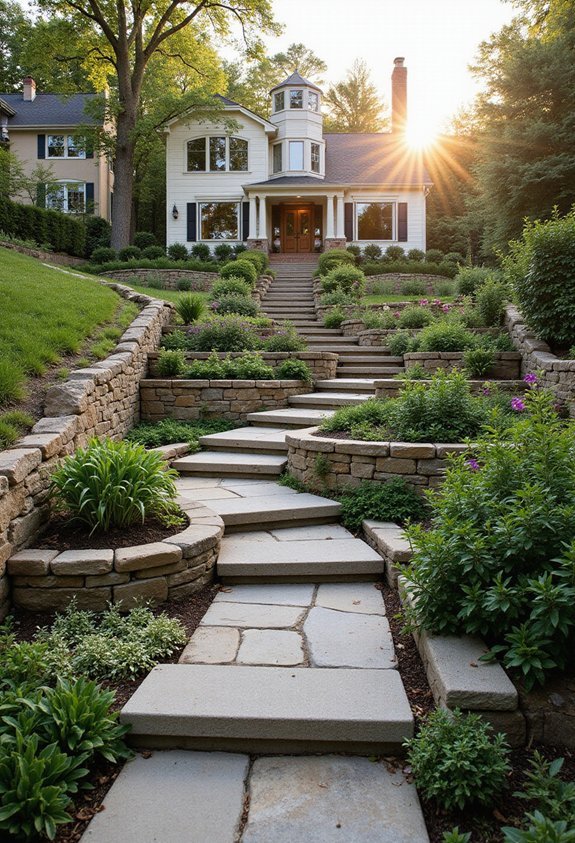
Once you’ve established proper drainage for your sloped front yard, you can begin creating terraced sections that transform your challenging landscape into manageable planting areas. Start by measuring the slope’s vertical rise and horizontal run to determine how many terraces you’ll need, spacing them approximately three to four feet apart vertically. Build retaining walls using materials like stone, concrete blocks, or treated timber to hold each level in place. Fill each terrace with quality soil, creating flat planting surfaces that prevent erosion and runoff. This systematic approach allows you to plant different garden zones at comfortable working heights.
Build Safe Pathways Up Sloped Front Yards
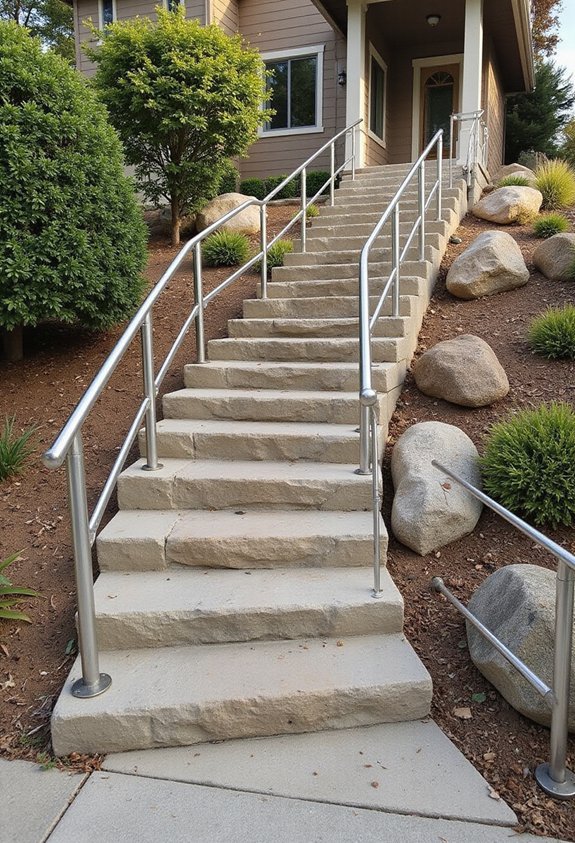
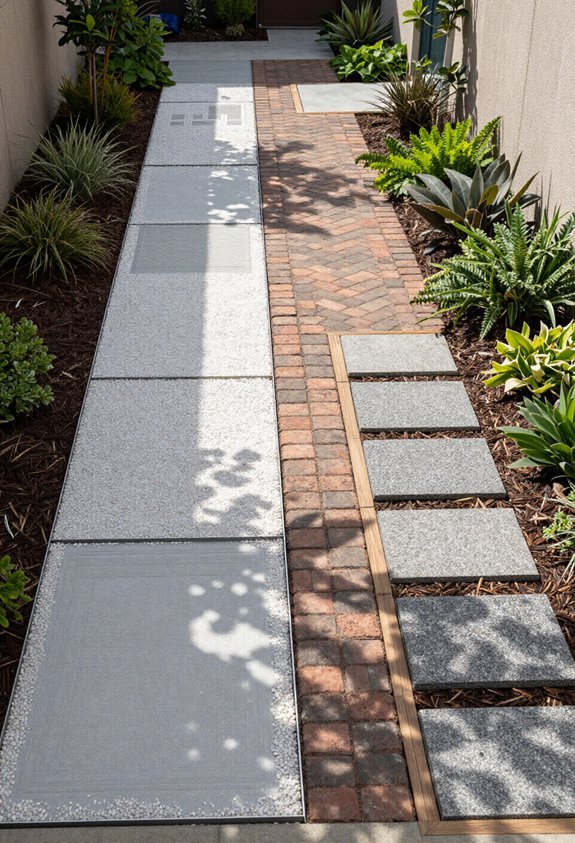
After you’ve created your terraced sections, building safe pathways becomes essential for traversing your sloped front yard without risking slips or falls. Install stone steps or concrete pavers with non-slip surfaces, ensuring each step maintains consistent height and depth for comfortable walking. Add sturdy handrails along steeper sections, securing them deeply into the ground or connecting them to retaining walls. Consider switchback patterns for gentler gradients, which reduce strain while climbing. Pack gravel beneath each stepping stone to prevent shifting, and install low-voltage lighting along pathway edges to illuminate safe passage during evening hours, enhancing both functionality and visual appeal.
Design Rock Gardens For Steep Sloped Areas
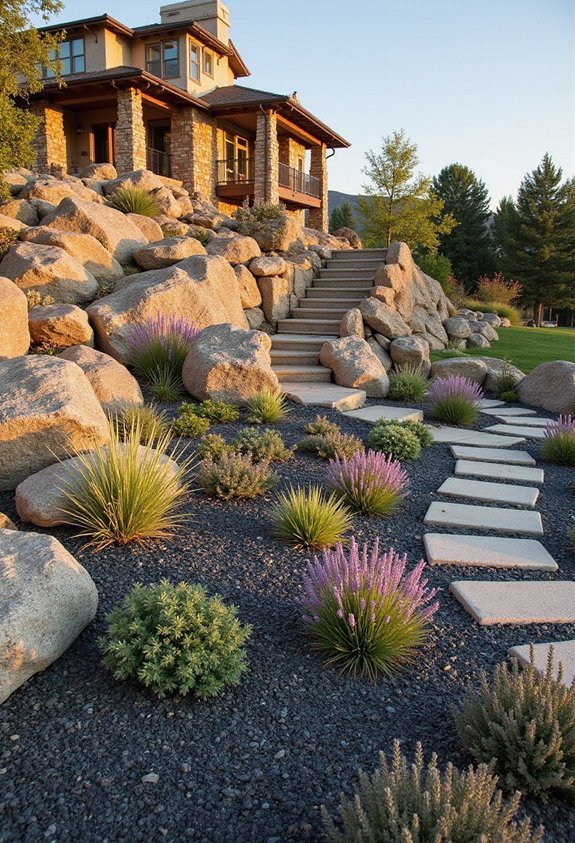
When steep slopes make traditional gardening challenging, rock gardens provide an excellent solution that combines natural beauty with practical erosion control. You’ll want to start by selecting appropriately sized stones, using larger boulders as anchors and smaller rocks to fill gaps between them. Plant drought-tolerant perennials like sedums, ornamental grasses, and native wildflowers in soil pockets between rocks, as these plants require minimal maintenance once established. Create natural-looking groupings by arranging rocks in odd numbers, and guarantee proper drainage by incorporating gravel beneath stone placements to prevent water accumulation that could destabilize your carefully constructed garden design.
Plant Cascading Gardens On Sloped Terrain
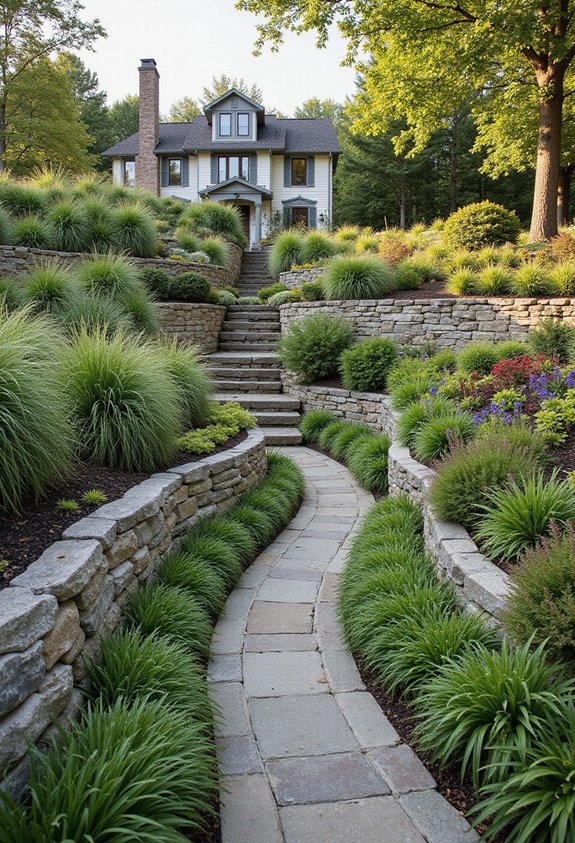
Rock gardens work exceptionally well for steep terrain, but cascading gardens offer another dynamic approach that creates flowing visual movement down your sloped yard while providing practical benefits like erosion control and water management. You’ll plant flowers and groundcovers in terraced levels, allowing colors and textures to spill naturally from one section to the next. Choose plants with different bloom times to maintain seasonal interest, incorporating trailing varieties like creeping phlox, ajuga, and sedum that spread horizontally across slopes. Install these cascading elements in staggered patterns, creating natural pathways for rainwater while establishing beautiful, flowing shifts throughout your landscape.
Choose Slope-Stabilizing Plants With Deep Roots
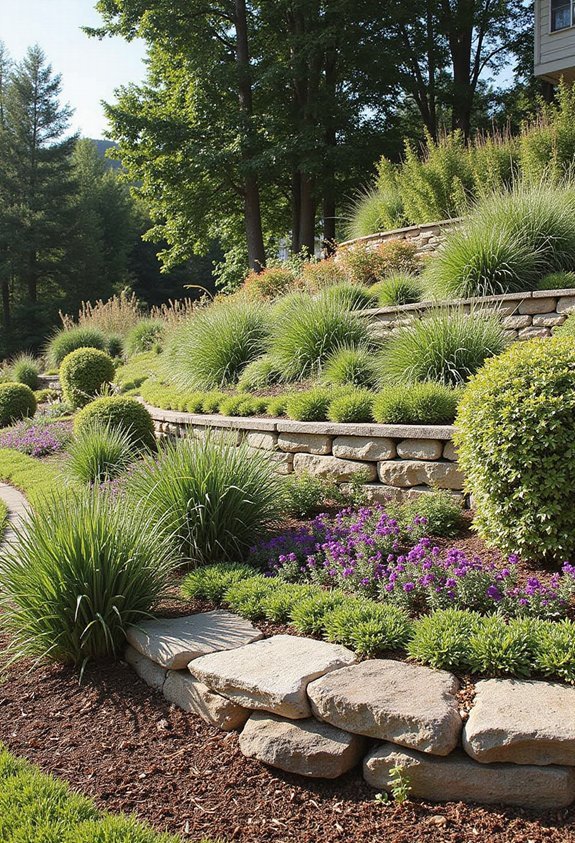
While cascading gardens create beautiful visual flow, selecting plants with extensive root systems becomes your most effective strategy for preventing soil erosion and maintaining slope stability over time. Deep-rooted perennials like purple coneflower, black-eyed Susan, and native grasses establish strong underground networks that anchor soil particles effectively. Shrubs such as forsythia, spirea, and juniper develop both taproot and lateral root systems, creating thorough soil stabilization. You’ll want to plant these stabilizing species first, spacing them according to their mature size, then fill remaining areas with shallow-rooted decorative plants for visual appeal and complete ground coverage.
Cover Sloped Areas With Erosion-Preventing Groundcover
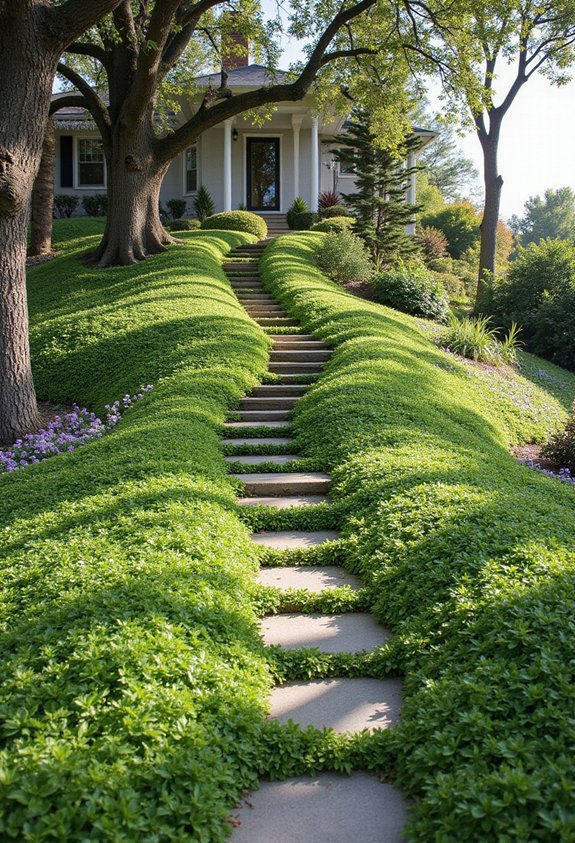
After establishing your deep-rooted anchor plants, you’ll need to create a continuous carpet of low-growing groundcover that spreads quickly across bare soil areas and forms a protective barrier against surface water runoff. Select dense, spreading varieties like creeping phlox, pachysandra, or ajuga that naturally fill gaps between larger plants. Plant groundcover in staggered rows, spacing them closer together than typical recommendations to accelerate coverage. Water thoroughly after planting, then apply a thin layer of mulch around each plant to retain moisture while they establish. This living carpet will bind soil particles and considerably reduce erosion.
Add Natural Stone Steps To Sloped Walkways
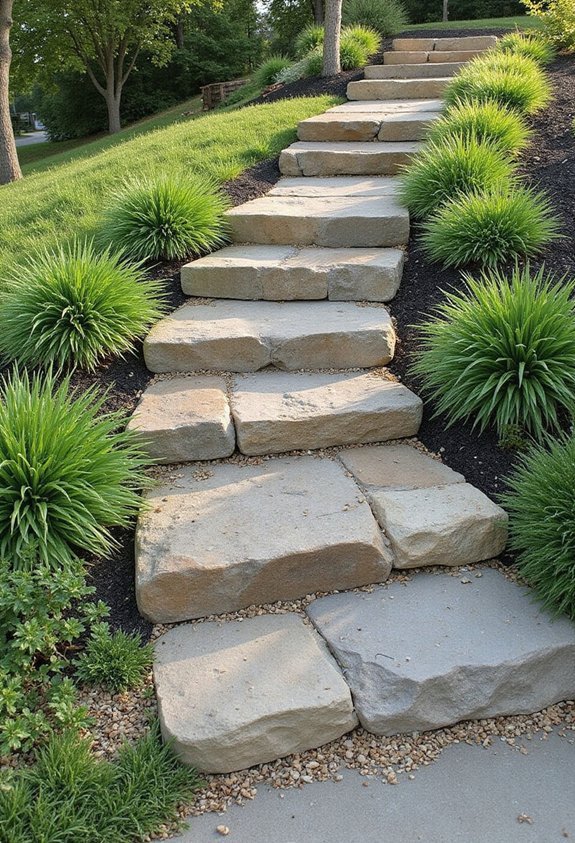
Building up your sloped walkway with natural stone steps creates a safe, attractive path that guides visitors through your transformed landscape while preventing further soil erosion along high-traffic areas. You’ll need to measure the slope’s rise and run to determine proper step dimensions, ensuring each tread is at least twelve inches deep and rises no more than seven inches. Dig into the slope to create level platforms for each stone, then compact the soil and add a gravel base for stability. Choose flat, thick stones that won’t shift under weight, and secure them with landscape adhesive.
Create Raised Beds On Sloped Front Yards
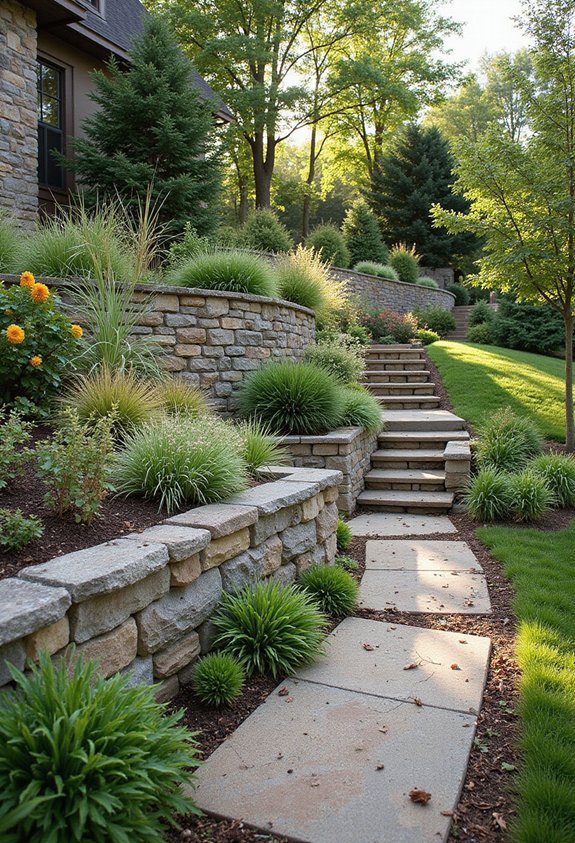
Since sloped front yards often struggle with water runoff and soil erosion, creating raised beds transforms these challenging areas into productive planting zones that retain moisture and nutrients while adding visual appeal to your landscape. You’ll need to construct terraced raised beds using materials like timber, stone, or concrete blocks to create level planting surfaces. Build each bed approximately eighteen to twenty-four inches high, ensuring proper drainage by adding gravel at the bottom before filling with quality soil. Plant deep-rooted perennials and shrubs that’ll stabilize the soil while creating attractive focal points throughout your sloped terrain.
Install Water Features In Sloped Landscapes
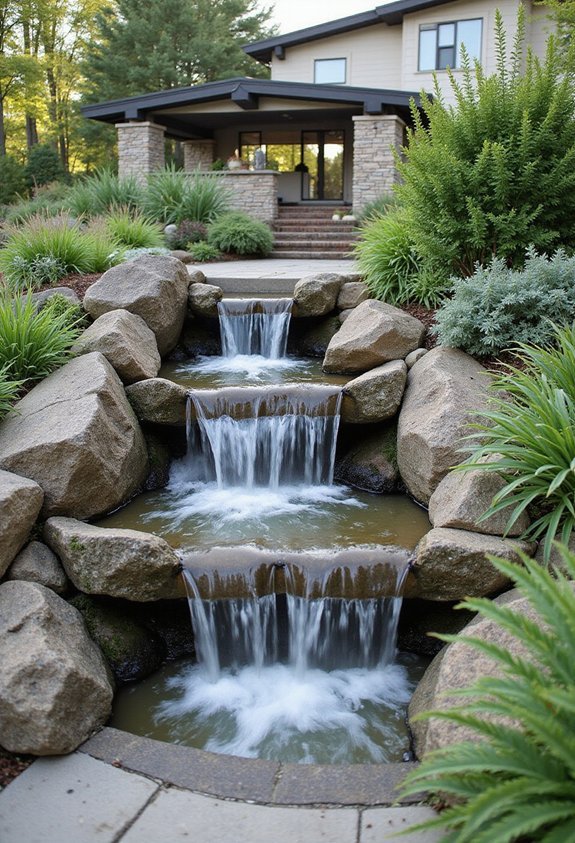
While raised beds solve drainage problems on slopes, incorporating water features takes advantage of your yard’s natural downward flow to create stunning focal points that work with gravity rather than against it. You’ll want to position fountains, waterfalls, or stream beds at the slope’s highest point, allowing water to cascade naturally downward through your landscape. Install catch basins or small ponds at lower elevations to collect and recirculate the water back to the source. Choose recirculating pumps that can handle the vertical distance, and consider adding stone or gravel channels to guide water flow and prevent erosion.
Design Switchback Paths For Steep Sloped Yards
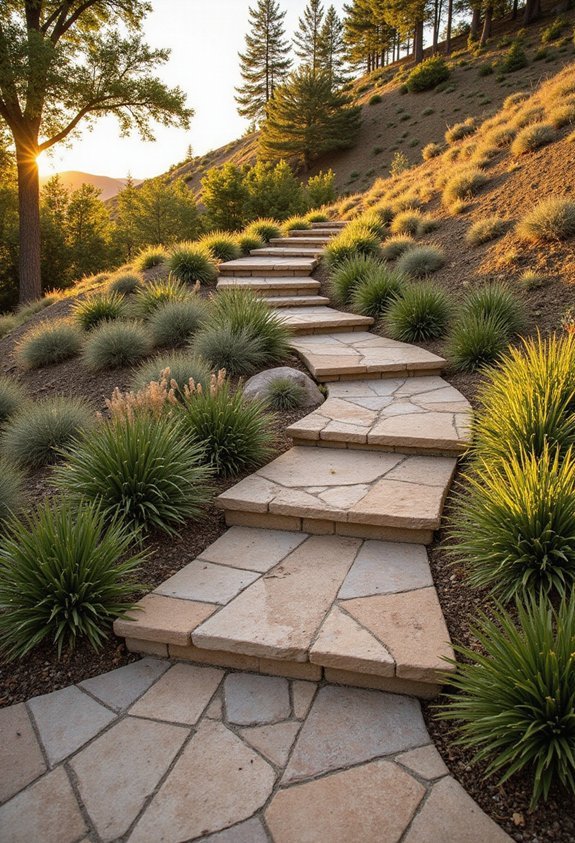
How can you safely navigate steep slopes while adding visual appeal to your front yard? Switchback paths create zigzag routes that reduce grade steepness, making navigation easier and safer. You’ll design these paths by creating S-shaped curves that change direction every eight to twelve feet, depending on your slope’s angle. Install retaining walls or planted borders along each switchback turn to prevent erosion and define the pathway clearly. Use materials like flagstone, concrete pavers, or gravel that provide good traction on inclines. Strategic placement of handrails on the steepest sections guarantees additional safety while maintaining your landscape’s aesthetic appeal.
Place Statement Trees On Sloped Front Yards
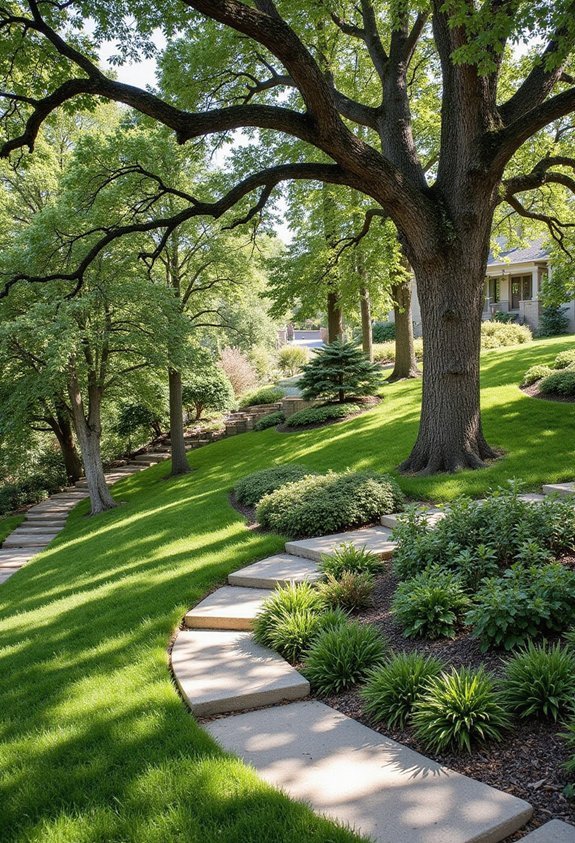
Although steep slopes present unique challenges for landscaping, statement trees can transform these difficult areas into stunning focal points that anchor your front yard’s design. You’ll want to select trees with strong root systems that prevent soil erosion while creating visual interest at different elevations. Plant larger specimen trees at the slope’s base to establish a foundation, then position smaller ornamental varieties higher up to create layered depth. Choose native species that thrive in your climate and require minimal maintenance once established. Strategic placement of these trees will naturally break up the slope’s monotony while adding year-round structure.
Use Mulch And Gravel On Sloped Surfaces
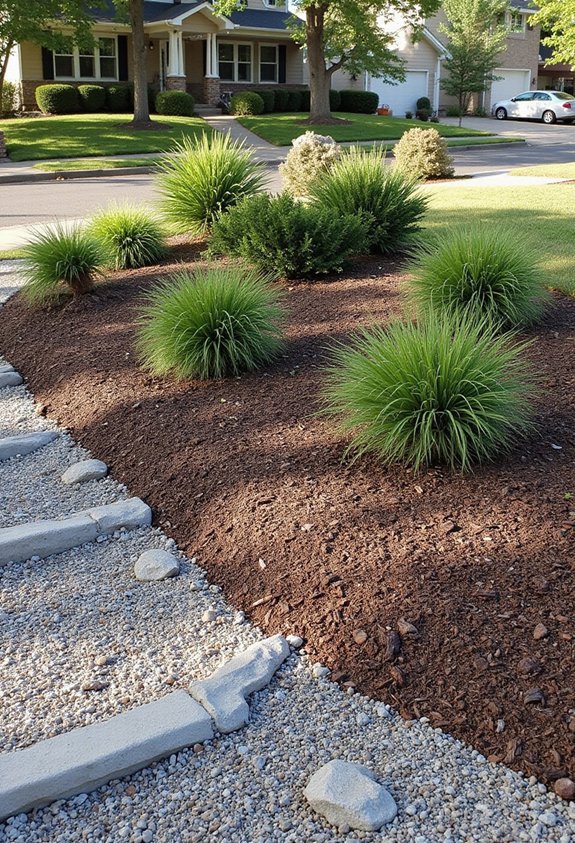
After establishing your trees as vertical anchors on the slope, you’ll need to address the soil surface itself with protective ground coverings that prevent erosion while enhancing your landscape’s appearance. Organic mulch works effectively on gentler slopes, creating moisture retention while gradually decomposing to enrich soil quality. Apply mulch in three-inch layers, ensuring pieces are large enough to resist washing away during heavy rainfall. For steeper inclines, gravel provides superior stability and drainage control. Choose decorative stone that complements your home’s exterior colors, creating defined pathways and planting zones that direct water flow away from vulnerable areas.
Light Your Sloped Front Yard Features
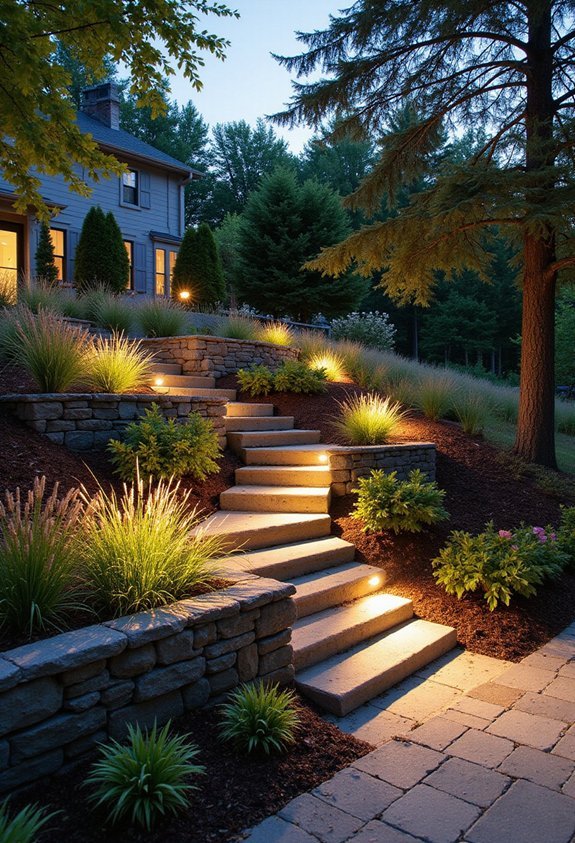
Since your sloped front yard presents unique elevation changes and varied depths, strategic lighting placement will showcase your landscaping investments while providing essential safety illumination for traversing inclined pathways and steps. Install low-voltage LED path lights along walkways to guide visitors safely up or down your slope. Position uplights at the base of trees, retaining walls, or decorative plants to create dramatic shadow effects that emphasize your yard’s natural contours. Consider step lights embedded directly into retaining walls or stair risers for maximum safety. Solar-powered spotlights can highlight focal points without requiring extensive electrical work.
Maintain Sloped Yard Plants Through Seasons
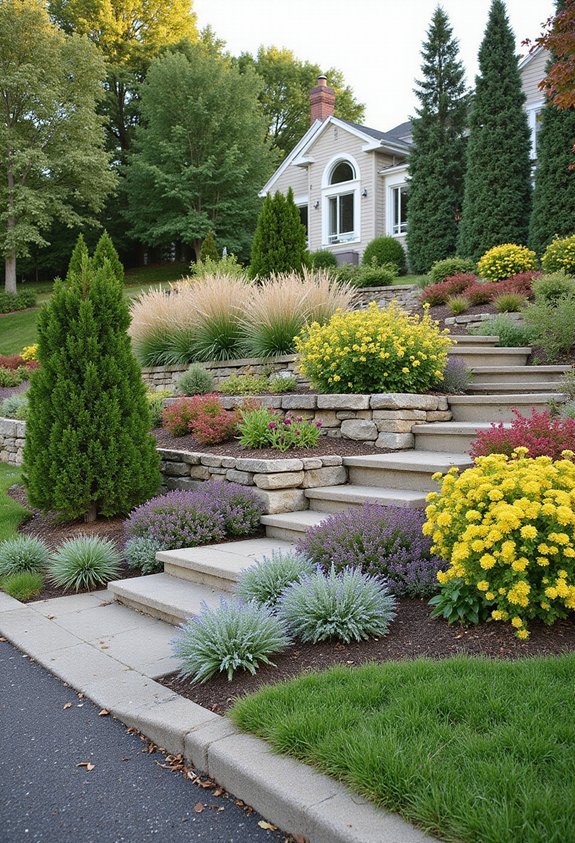
While your sloped front yard requires specific planting strategies during installation, maintaining these plants throughout the changing seasons demands consistent attention to prevent erosion, manage water flow, and guarantee healthy growth patterns. You’ll need to adjust watering schedules based on rainfall and temperature changes, ensuring deeper irrigation reaches root systems on inclined surfaces. Prune overgrown vegetation regularly to maintain structural integrity and prevent weight-related soil displacement. Apply seasonal mulch applications to retain moisture and suppress weeds, while monitoring drainage patterns for potential washout areas that require immediate reinforcement with additional plantings or erosion control materials.
Solve Common Sloped Front Yard Problems
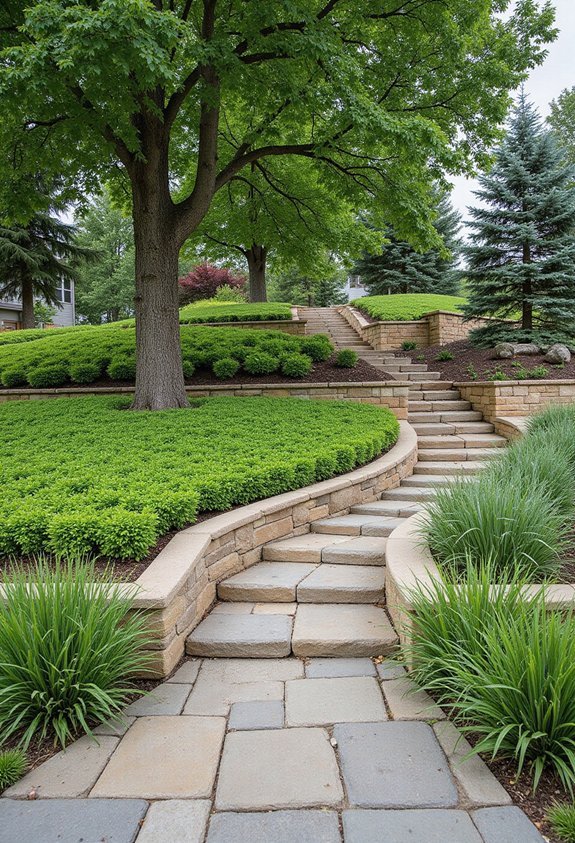
Erosion patterns, uneven water distribution, and unstable plant growth represent the most frequent challenges you’ll encounter when managing a sloped front yard landscape. These problems typically develop gradually over time, starting with small wash-out areas during heavy rainfall that expand into larger gullies if left unaddressed, while simultaneously creating bare patches where your carefully selected plants struggle to establish strong root systems. You can prevent further damage by installing French drains to redirect water flow, adding terraced retaining walls to create level planting areas, and selecting deep-rooted ground cover plants that anchor soil effectively during storm conditions.
Budget For Your Sloped Front Yard Makeover
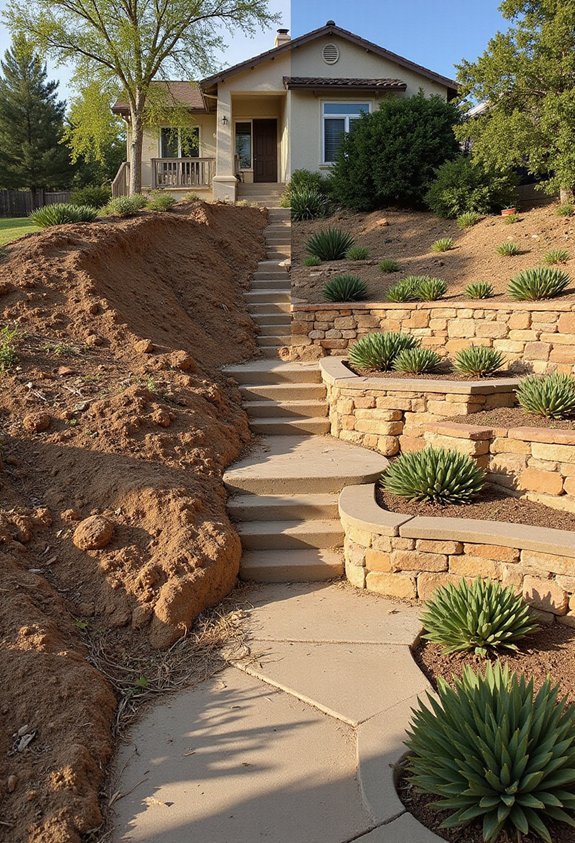
Planning your sloped front yard transformation requires establishing a realistic budget that accounts for both immediate construction costs and long-term maintenance expenses. Most homeowners spend between $3,000 and $15,000 on sloped yard renovations, though your final investment will depend on factors like the degree of slope, total square footage, and the complexity of drainage solutions you’ll need to implement. You’ll want to allocate approximately 40% of your budget for grading and drainage work, 35% for hardscaping materials like retaining walls or steps, and 25% for plants, soil amendments, and installation labor costs throughout the project.
Conclusion
You’ll transform your sloped front yard into an attractive, functional entrance by implementing these strategic design solutions. Install retaining walls and drainage systems first, then create terraced gardens and safe pathways. Add rock gardens and proper lighting to enhance both beauty and safety. Regular maintenance and proper budgeting guarantee long-term success. You’ll solve erosion problems while creating valuable outdoor space that increases your home’s curb appeal and overall property value.