Your small front yard doesn’t have to feel cramped or uninviting when you apply the right design strategies. You can maximize every square foot through careful planning that incorporates curved walkways, raised garden beds, and strategic plant placement. These techniques work together to create visual depth while maintaining functionality in compact spaces. By combining structural elements like decorative fencing with natural features such as rock gardens and mulch pathways, you’ll discover how to transform limited outdoor space into something remarkable.
Install Curved Walkways To Create Visual Flow
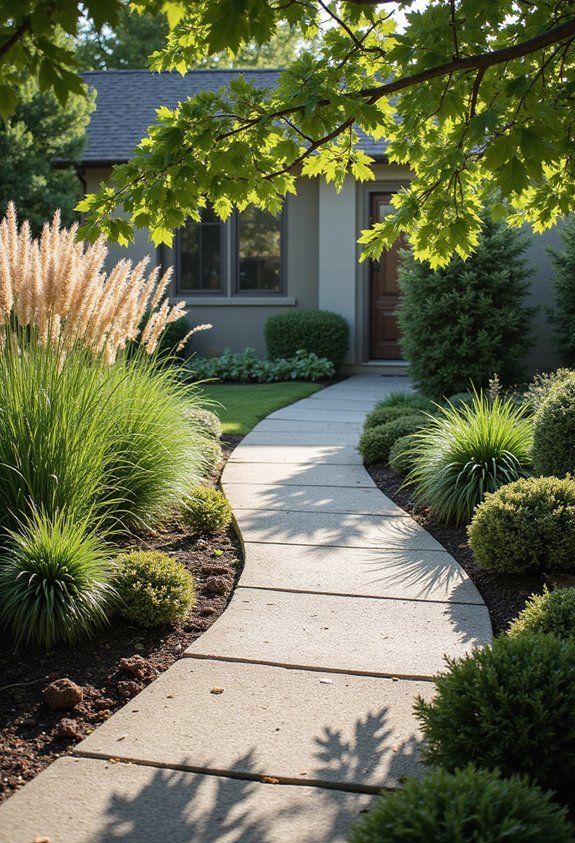
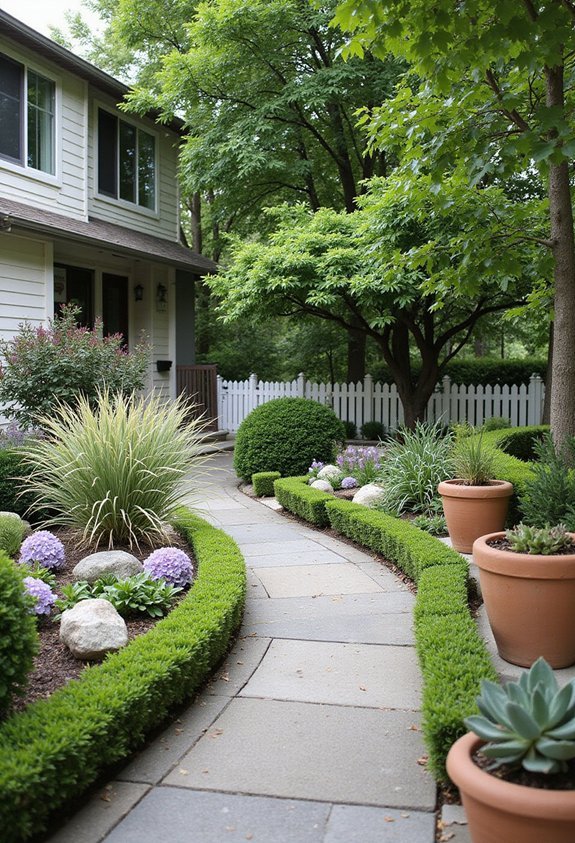
When you design a curved walkway for your small front yard, you’ll create a natural sense of movement that draws the eye through your outdoor space more effectively than straight pathways. Curved paths make your yard appear larger by preventing visitors from seeing the entire length at once, which creates visual intrigue and depth. You can construct these walkways using flagstone, brick pavers, or concrete stepping stones arranged in gentle S-curves or arcs. Install borders with low-growing plants or decorative edging materials to define the pathway’s shape and enhance the flowing design throughout your compact landscape.
Also read: 22+ FRONT YARD MAKEOVER Ideas With Big Results!
Build Raised Garden Beds For Better Plant Organization
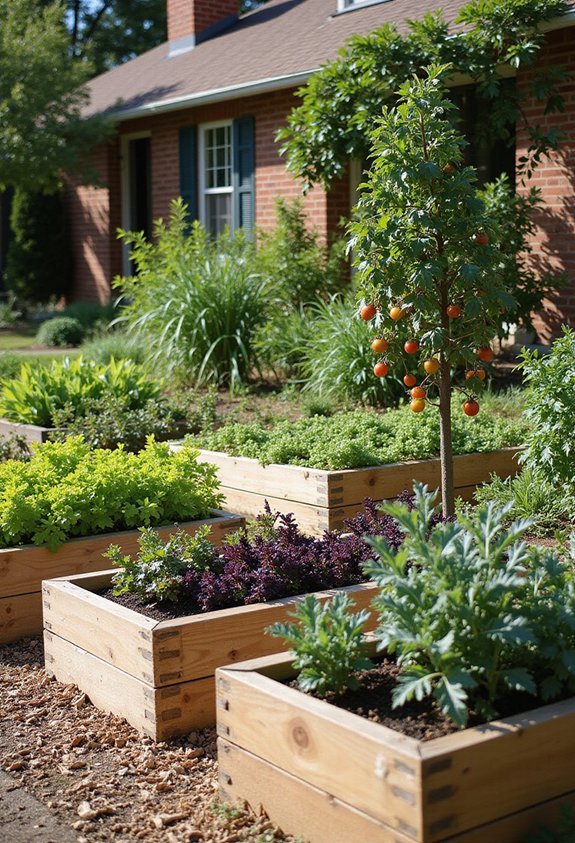
Although small front yards present space limitations, raised garden beds provide an efficient solution that maximizes your planting area while creating distinct zones for different types of vegetation. You’ll gain better soil drainage, easier maintenance access, and improved plant organization by constructing beds between 6 to 12 inches high. Choose materials like cedar boards, concrete blocks, or composite lumber that complement your home’s exterior design. Design rectangular or square beds that fit your yard’s proportions, leaving 18-inch walkways between sections for comfortable navigation. This approach transforms cramped spaces into organized, visually appealing gardens with clearly defined planting areas.
Design Low-Maintenance Rock Gardens For Dry Areas
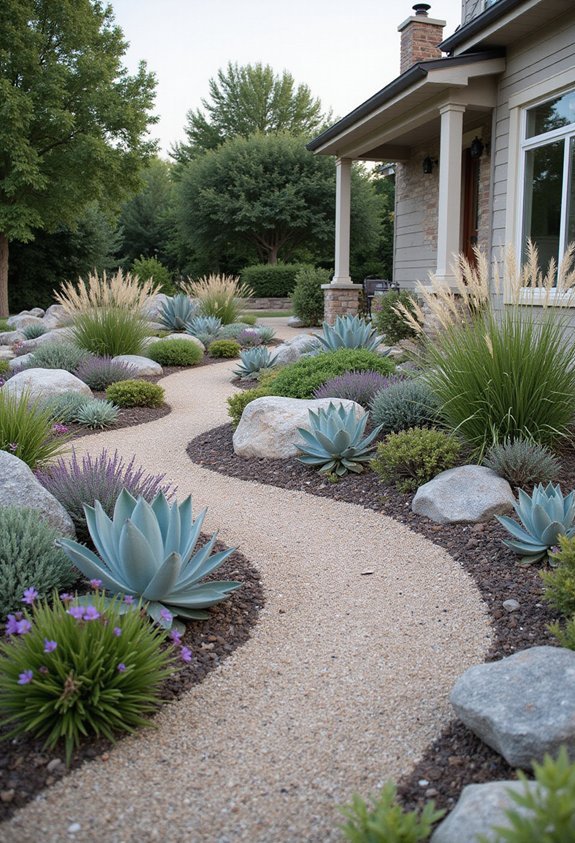
Since drought-resistant landscaping has become increasingly popular among homeowners seeking sustainable gardening solutions, rock gardens offer an ideal approach for transforming challenging dry areas of your small front yard into attractive, low-maintenance features. You’ll want to select rocks of varying sizes, from large boulders to smaller decorative stones, creating visual depth and natural-looking arrangements. Choose drought-tolerant plants like succulents, ornamental grasses, and native perennials that thrive in well-draining soil conditions. Layer different textures by combining smooth river rocks with rough granite pieces, then add strategic plantings between rock formations to establish a balanced, cohesive design that requires minimal watering.
Add Decorative Fencing To Define Small Spaces
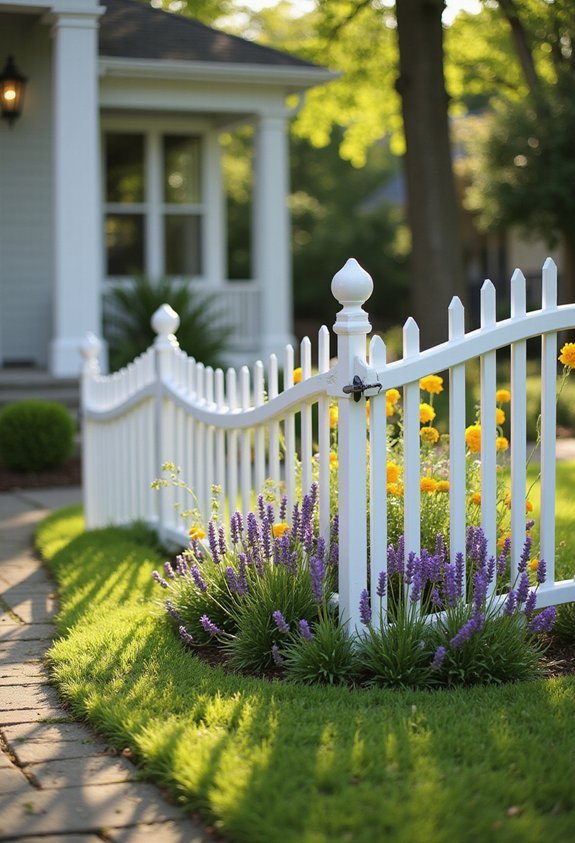
The strategic placement of decorative fencing transforms your small front yard by creating distinct zones that maximize both visual appeal and functional organization. You’ll establish clear boundaries between planting areas, walkways, and seating spaces without overwhelming the limited square footage. Choose low-profile materials like wrought iron, bamboo, or horizontal wood slats that complement your home’s architecture while maintaining sight lines. Install partial sections rather than complete perimeters to avoid creating a cramped feeling, focusing on key junctures between different landscape elements. This approach defines spaces effectively while preserving the open, welcoming atmosphere essential for successful small yard design.
Create Mulch Pathways For Clean Finished Looks
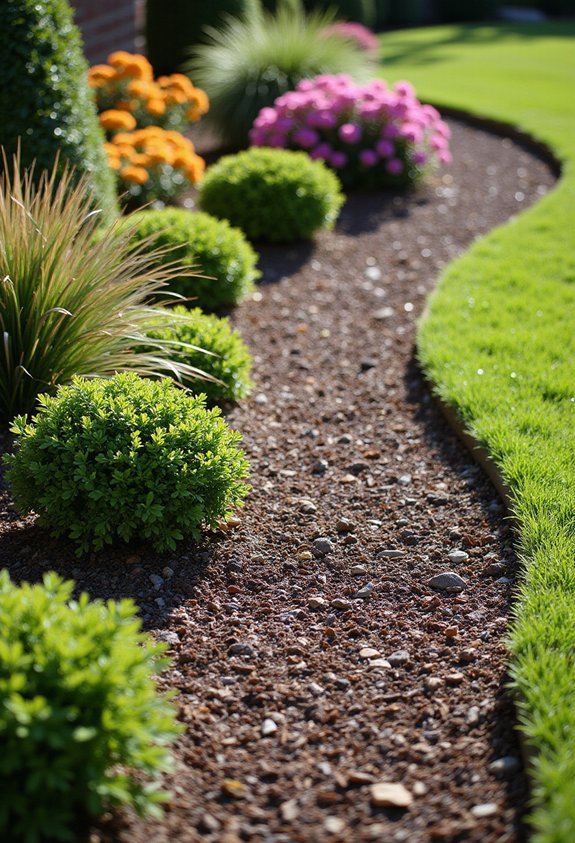
Well-defined pathways using mulch materials create professional-looking navigation routes through your small front yard while establishing clear connections between different landscape zones you’ve already organized with decorative fencing. You’ll want to select organic mulches like shredded bark, wood chips, or pine needles that complement your existing plantings and maintain consistent colors throughout the design. Install landscape edging along pathway borders to prevent mulch migration into adjacent flower beds, then apply a three-inch layer of your chosen material. Regular maintenance involves raking smooth surfaces and adding fresh mulch annually to preserve the clean, finished appearance you’re seeking.
Use Decorative Stones For Water-Wise Landscaping
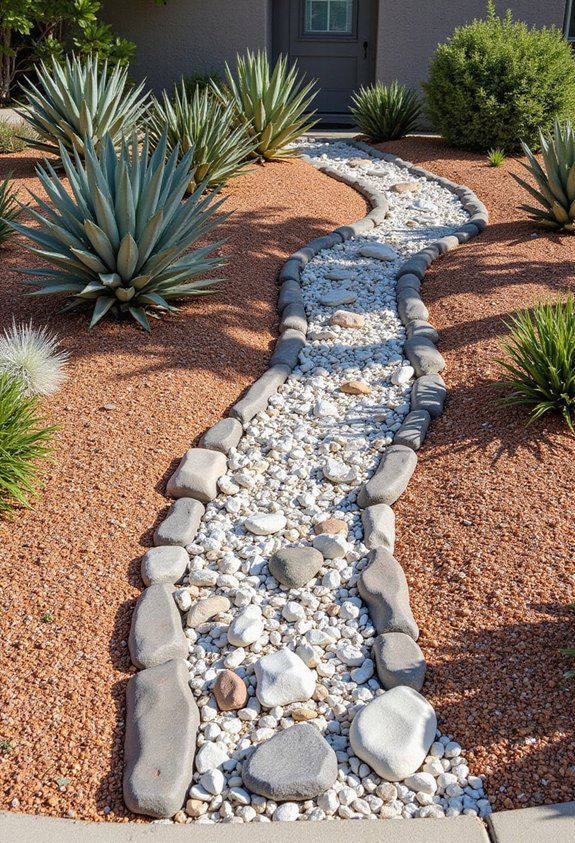
Decorative stones transform your small front yard into a drought-resistant landscape that requires minimal watering while delivering maximum visual impact through carefully selected materials and strategic placement techniques. You’ll save water by replacing thirsty grass with river rocks, crushed granite, or decorative gravel that creates attractive ground cover. Choose stones in complementary colors that match your home’s exterior, then arrange them around drought-tolerant plants like succulents and ornamental grasses. Create defined borders using larger accent stones, and install landscape fabric underneath to prevent weeds while allowing proper drainage for your water-wise garden design.
Create Stunning Small Front Yard Vertical Gardens
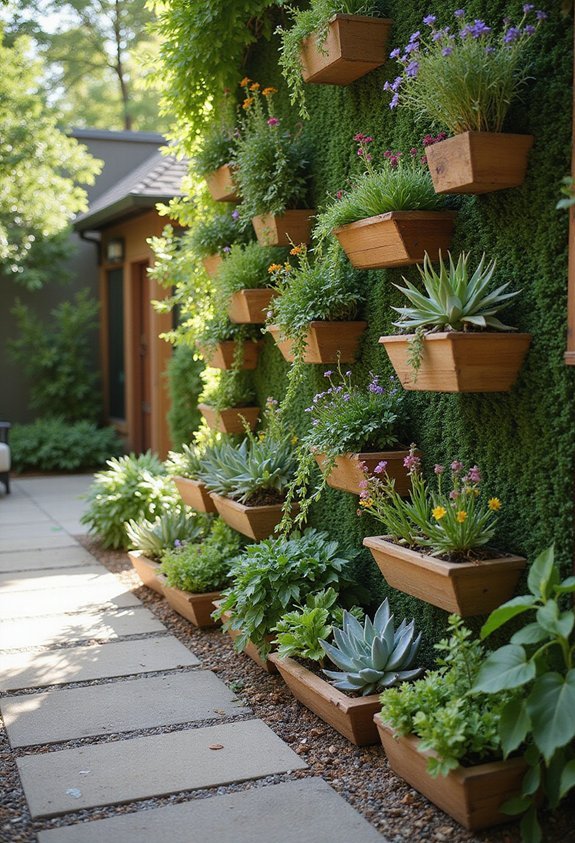
When you’re working with limited horizontal space, vertical gardens maximize your planting area by transforming walls, fences, and upright structures into lush growing surfaces that add depth and visual interest to your compact front yard. Install wall-mounted planter boxes, hanging containers, or trellis systems that support climbing plants like ivy, clematis, or morning glories. You can create living walls using modular planting systems that stack vertically, incorporating herbs, succulents, or flowering annuals. Position your vertical garden to receive appropriate sunlight for your chosen plants, and guarantee proper drainage to prevent water damage to underlying structures.
Install Window Boxes For Year-Round Color
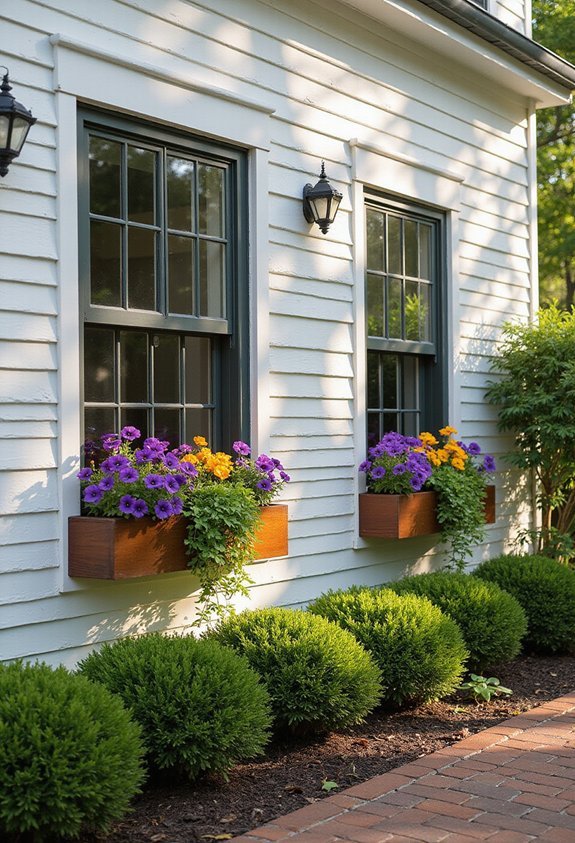
Window boxes transform your small front yard by bringing vibrant colors directly to your home’s facade, creating an immediate visual impact that enhances curb appeal throughout all seasons. You’ll need to select boxes that complement your home’s architectural style, ensuring proper drainage holes exist to prevent water damage. Mount them securely beneath windows using sturdy brackets rated for the expected weight when soil becomes saturated. Choose plants strategically by combining evergreens for winter structure with seasonal flowers that bloom at different times, maintaining continuous color. Consider incorporating trailing varieties like ivy or petunias to add cascading visual interest and maximize your limited space.
Use Climbing Vines On Trellises For Height
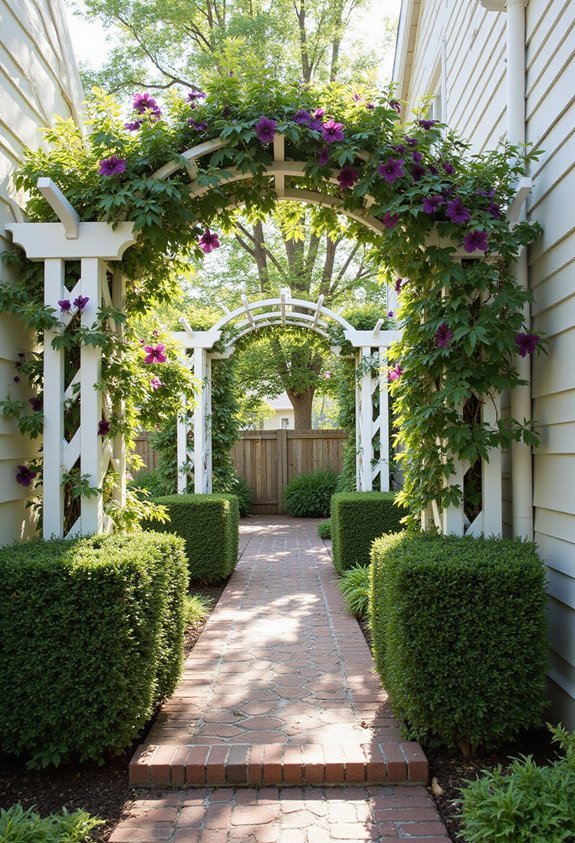
Climbing vines on trellises create dramatic vertical interest in your small front yard while maximizing growing space without expanding your garden’s footprint. You’ll need sturdy wooden or metal trellises positioned against walls, fences, or as freestanding structures near walkways. Select fast-growing vines like clematis, morning glories, or climbing roses that match your climate zone and sunlight conditions. Install trellises at least six inches from walls to allow proper air circulation and prevent moisture damage. Train young vines by gently weaving stems through trellis openings, securing with soft ties until they establish natural climbing patterns and reach maturity.
Build Tiered Planters To Maximize Growing Space
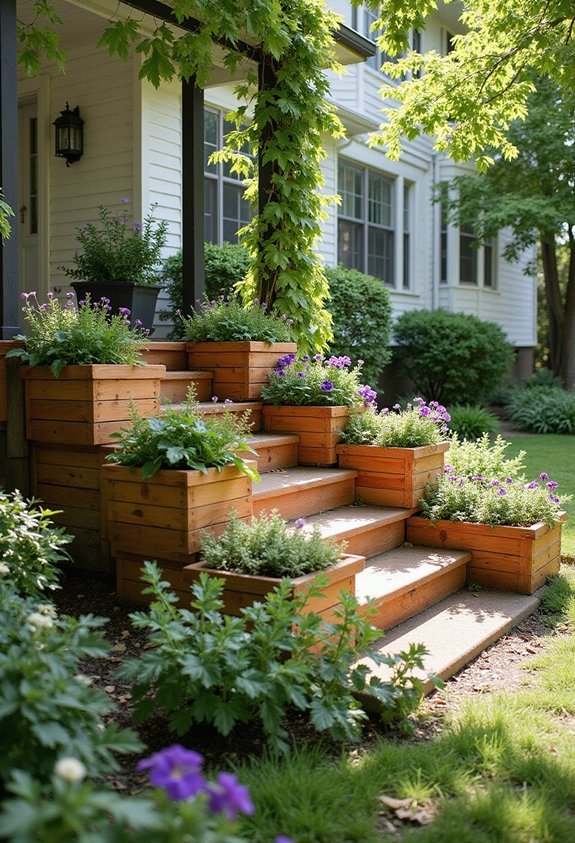
Since small front yards often lack adequate ground space for traditional gardens, tiered planters offer an efficient solution that creates multiple growing levels within a compact footprint. You’ll maximize your planting area by constructing stepped planters using materials like cedar boards, concrete blocks, or retaining wall stones. Position taller plants on upper tiers and shorter varieties below to guarantee proper sunlight distribution. Install drainage holes in each level to prevent waterlogging, and use quality potting soil for ideal root development. This vertical approach allows you to grow herbs, flowers, and small vegetables while maintaining visual appeal and accessibility.
Mount Living Walls On Blank Exterior Surfaces
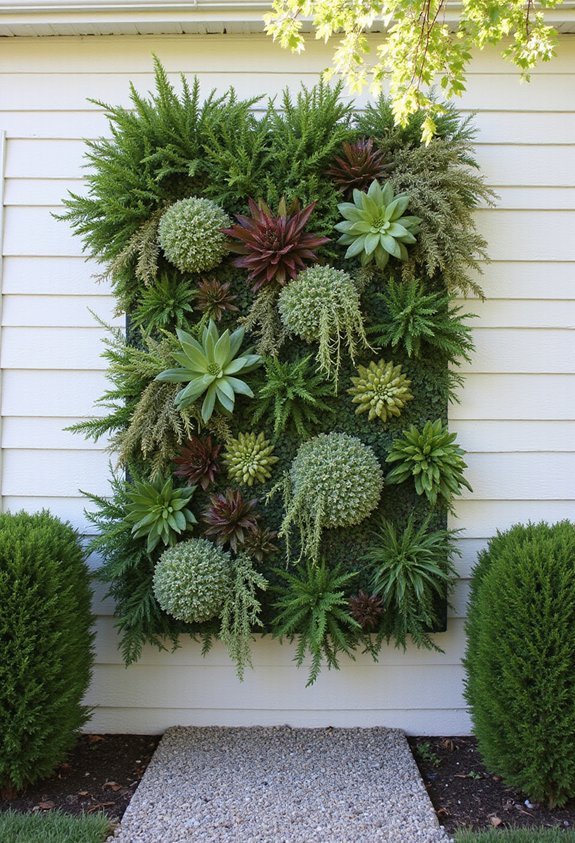
While blank exterior walls present untapped opportunities for vertical gardening, living walls transform these spaces into vibrant growing surfaces that dramatically increase your planting capacity. You’ll need to install a sturdy mounting system that can support the weight of soil, plants, and water. Modular pocket planters work well for beginners, while experienced gardeners can construct custom frames with irrigation systems. Choose plants based on your wall’s sun exposure, selecting drought-tolerant varieties for sunny spots and shade plants for northern exposures. You’ll create stunning visual impact while maximizing your limited ground space through strategic vertical growing techniques.
Design Charming Small Front Yard Container Displays
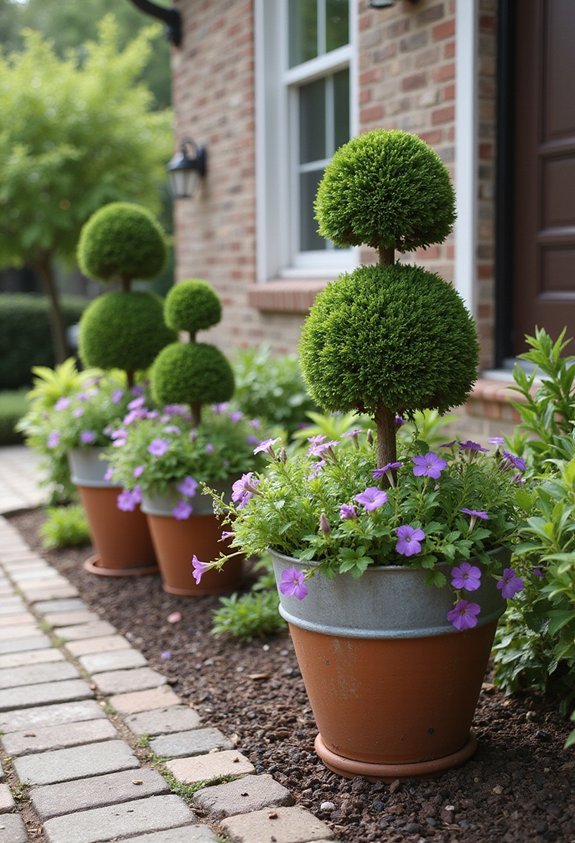
Container gardening offers you tremendous flexibility for creating eye-catching displays that can be easily rearranged, replaced, or relocated as seasons change and your design preferences evolve. You’ll want to select containers of varying heights, textures, and materials to establish visual interest throughout your compact space. Position taller planters near entryways or corners, then arrange medium-sized pots in clusters of three or five for balanced composition. Fill containers with seasonal blooms, evergreen shrubs, or ornamental grasses that complement your home’s architectural style. Remember to choose plants with similar water and sunlight requirements when grouping containers together for ideal maintenance efficiency.
Create Welcoming Entries With Clustered Pots
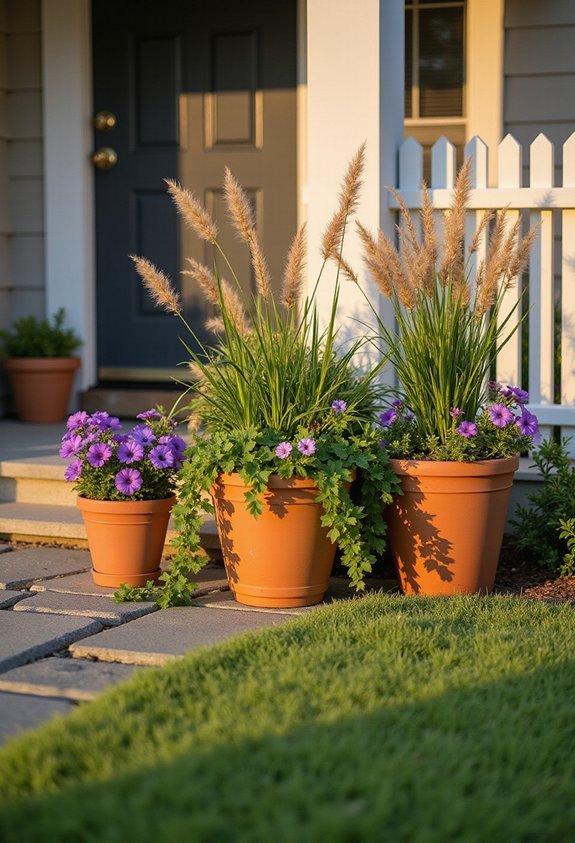
Clustered pot arrangements transform your front entrance into an inviting focal point that draws visitors toward your door while establishing a sense of abundance and thoughtful design. Position three to five containers of varying heights near your entrance, creating visual depth through strategic placement. Use the largest pot as your anchor piece, then arrange smaller containers around it in triangular formations. Select plants with complementary colors and textures, mixing upright specimens with trailing varieties for dimension. Place taller pots toward the back and shorter ones in front, ensuring each container remains visible and contributes to the overall welcoming atmosphere.
Use Seasonal Container Swaps For Year-Round Interest
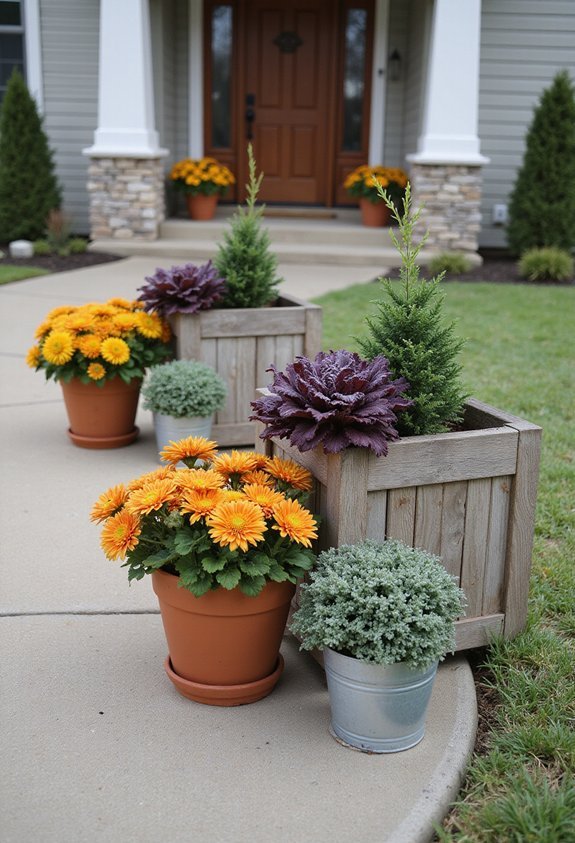
Since your front yard containers serve as prominent design elements throughout the year, rotating seasonal plantings guarantees continuous visual appeal while maximizing your gardening investment. Plan four distinct seasonal displays by selecting plants that thrive in each period’s specific conditions. Spring containers should feature cool-weather annuals like pansies, primrose, and flowering kale alongside early bulbs. Summer arrangements work best with heat-tolerant plants such as petunias, marigolds, and coleus. Fall displays benefit from chrysanthemums, ornamental peppers, and decorative gourds. Winter containers need hardy evergreens, red-twig dogwood branches, and weather-resistant berries to maintain structure and color during dormant months.
Plant Miniature Herb Gardens In Decorative Pots
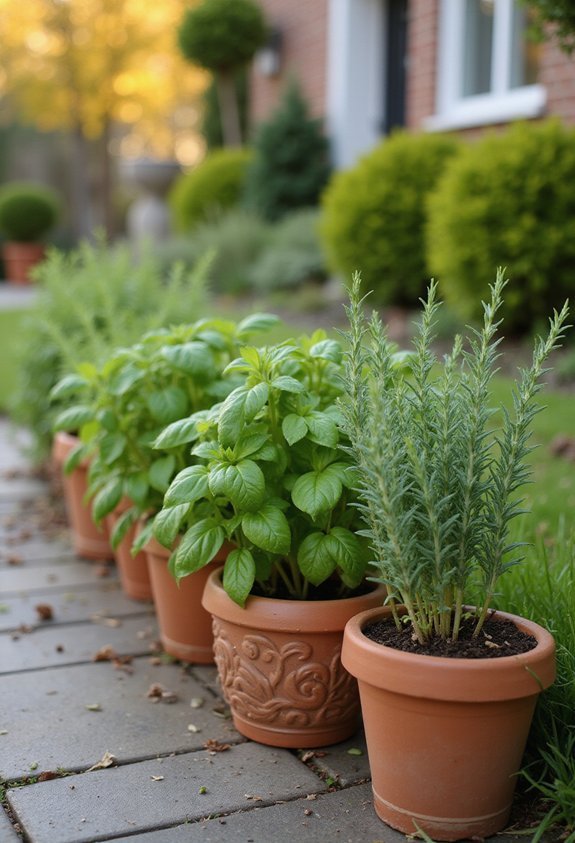
While traditional herb gardens require significant ground space, decorative pots allow you to create functional miniature herb collections that enhance your front yard’s visual appeal and provide fresh ingredients for your kitchen. Choose containers that complement your home’s architectural style, ensuring they’re at least eight inches deep for proper root development. Group basil, rosemary, thyme, and oregano in separate pots, positioning sun-loving herbs in bright areas and shade-tolerant varieties like parsley near covered spaces. Arrange pots in clusters of odd numbers, varying heights and textures to create visual interest while maintaining easy access for harvesting and maintenance.
Design Succulent Container Gardens For Low Maintenance
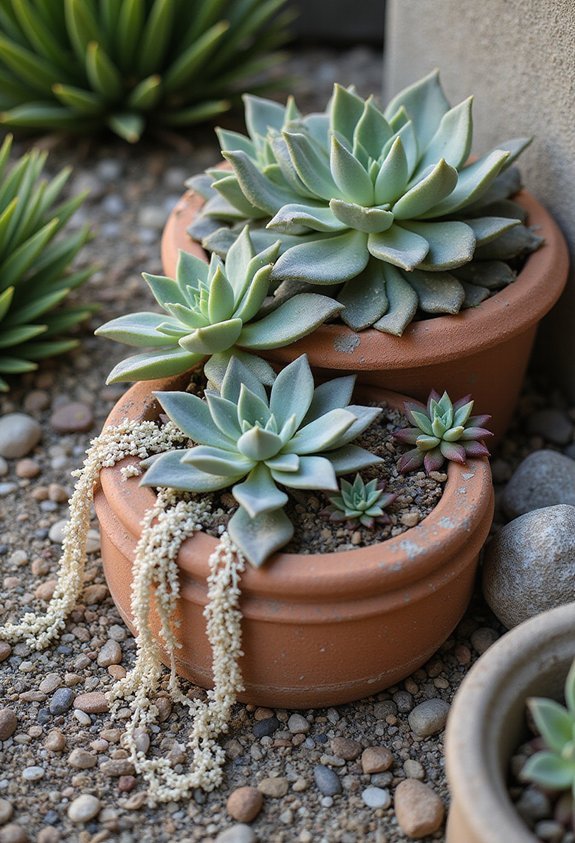
Succulent container gardens offer the perfect solution for homeowners seeking attractive front yard displays that require minimal watering and upkeep throughout the year. You’ll want to select drought-tolerant varieties like echeveria, sedum, and jade plants that thrive in well-draining soil mixtures. Choose containers with proper drainage holes to prevent root rot, and arrange different textures, colors, and heights to create visual interest. Place your succulent containers in areas that receive morning sunlight but avoid harsh afternoon rays. Water deeply but infrequently, allowing soil to dry completely between watering sessions to maintain healthy plant growth.
Choose Dwarf Trees That Won’t Overwhelm Small Spaces
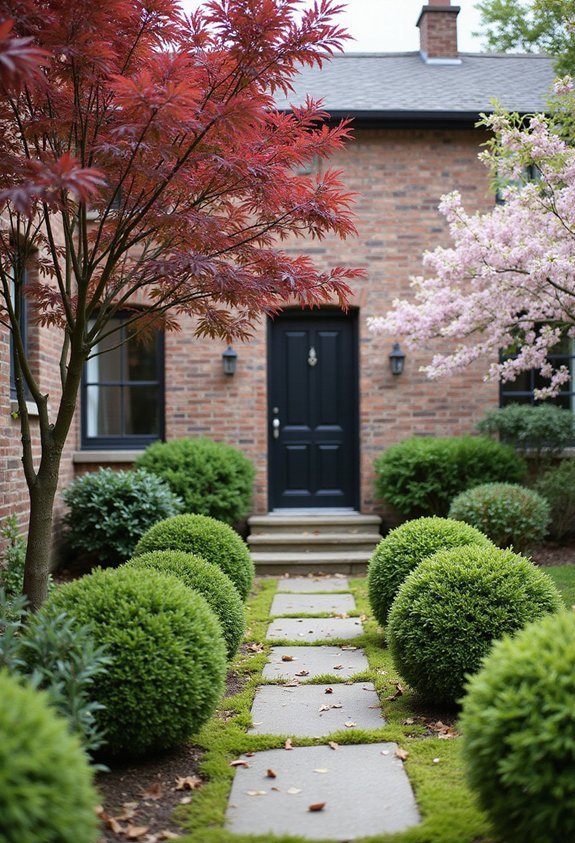
Moving beyond container gardening, dwarf trees provide an excellent way to add vertical structure and seasonal interest to compact front yards without creating overwhelming shade or maintenance challenges. You’ll want to select varieties that mature between six and twelve feet tall, ensuring they won’t outgrow your space or block windows. Japanese maples offer stunning fall colors, while dwarf fruit trees like apple or cherry provide blossoms and edible harvests. Ornamental varieties such as dwarf magnolias or flowering dogwoods deliver spectacular spring displays. Position these trees strategically to frame your entrance, create focal points, and maintain proper proportions within your limited landscape area.
Plant Native Species For Easy Care And Local Appeal
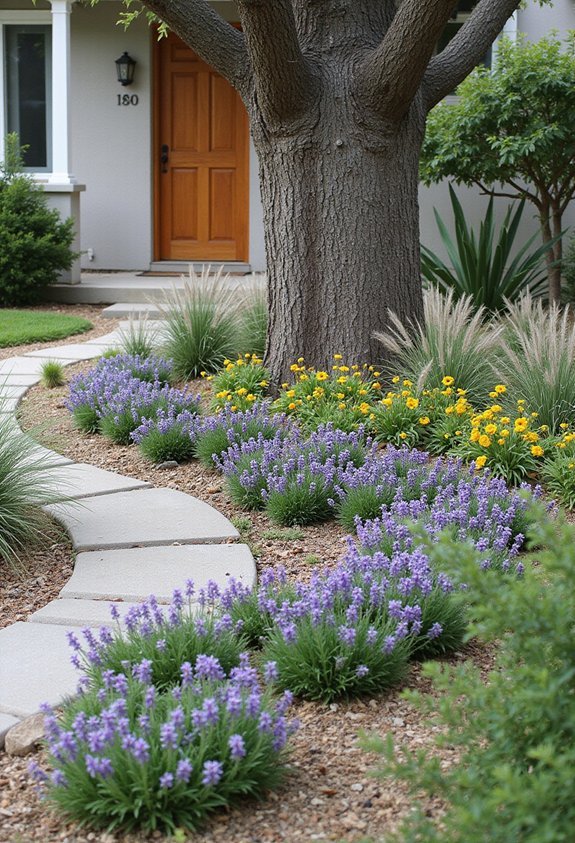
Since native plants have evolved alongside your region’s climate, soil conditions, and local wildlife, they’ll naturally require less water, fertilizer, and pest control than exotic species while supporting beneficial insects and birds. You’ll find that native wildflowers, grasses, and shrubs establish robust root systems that prevent soil erosion and reduce maintenance demands. Contact your local extension office or native plant society to identify species that thrive in your specific area, considering factors like sun exposure, drainage patterns, and mature plant size. Native plants also create authentic regional character that connects your small front yard to the surrounding natural landscape.
Use Ornamental Grasses For Texture And Movement
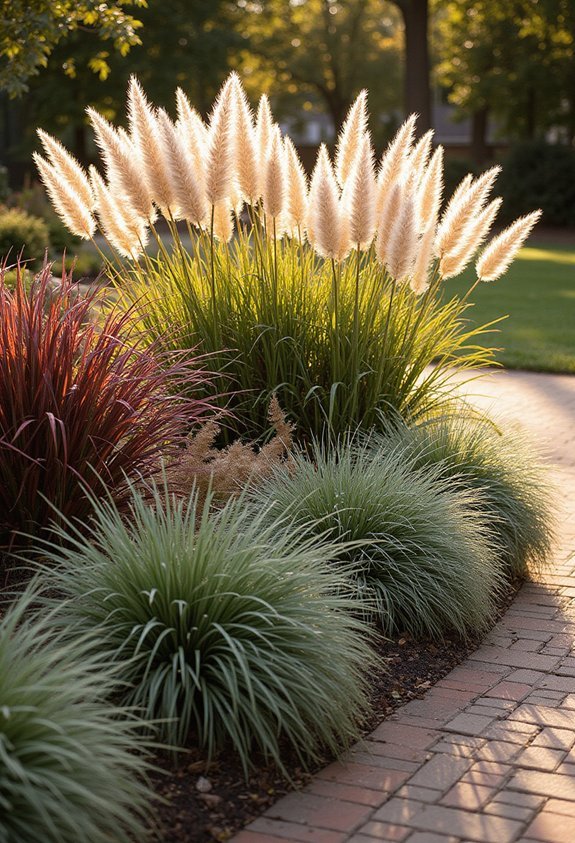
Ornamental grasses bring dynamic visual interest to small front yards through their natural swaying motion, varied textures, and seasonal color changes that create year-round appeal without demanding extensive maintenance. You’ll find feather reed grass works well for narrow spaces, reaching four feet tall while staying compact at the base. Fountain grass creates soft, cascading effects that soften hard landscape edges around walkways and borders. Japanese forest grass thrives in partial shade areas where other plants struggle, offering golden foliage that brightens darker corners. These grasses require minimal watering once established and provide winter structure when other plants have died back completely.
Create Symmetrical Plantings For Formal Balance
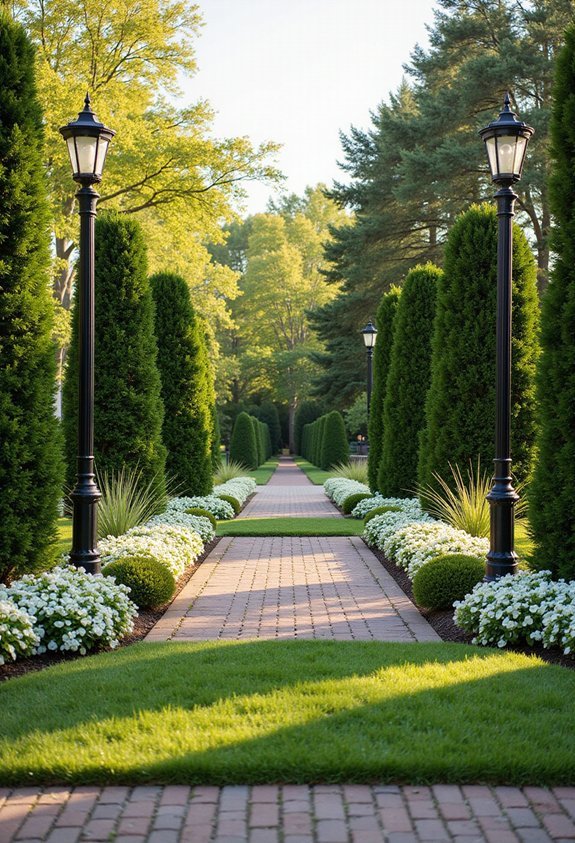
Symmetrical plantings establish a polished, structured appearance that transforms chaotic front yard layouts into orderly compositions where matching plants mirror each other across a central axis like your front door or walkway. You’ll create visual balance by placing identical shrubs, flowers, or small trees on opposite sides of your entrance. Choose evergreen boxwoods for year-round structure, or select seasonal blooms that maintain consistent height and spread. Space plantings equally from your central point, ensuring each side mirrors the other exactly. This formal approach works particularly well in traditional architectural styles, creating an inviting, well-maintained first impression.
Design Layered Plant Beds With Varying Heights
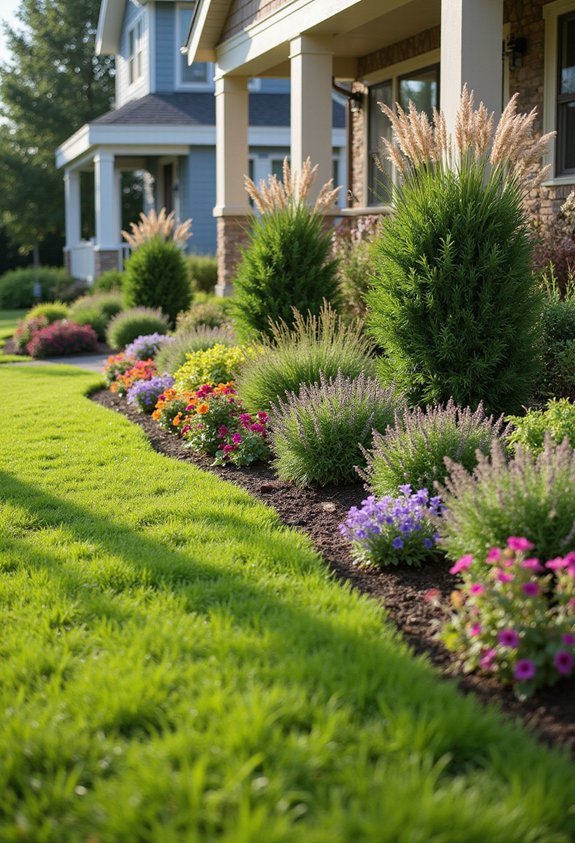
While symmetrical designs create formal elegance, layered plant beds with varying heights add depth and visual interest that transforms flat, one-dimensional landscapes into dynamic outdoor spaces. You’ll achieve this effect by positioning tall plants like ornamental grasses or small shrubs in the back, medium-height perennials in the middle, and low-growing ground covers or annuals in front. This tiered arrangement creates natural sight lines that draw attention through your garden, making small spaces appear larger. You can enhance the layers by incorporating plants with different textures, leaf shapes, and seasonal colors to maintain year-round appeal.
Add Colorful Annuals For Seasonal Impact

Because annuals complete their entire life cycle in one growing season, they offer you the perfect opportunity to experiment with bold colors and dramatic seasonal displays that can be refreshed each year. You can plant vibrant petunias, marigolds, and impatiens in spring for summer-long blooms, then replace them with chrysanthemums and pansies for fall color. Choose annuals that complement your existing perennial plants and shrubs, creating cohesive color schemes throughout the seasons. Plant them in clusters rather than single specimens to maximize visual impact, and select varieties with different bloom times to guarantee continuous color from spring through frost.
Plant Evergreen Shrubs For Year-Round Privacy
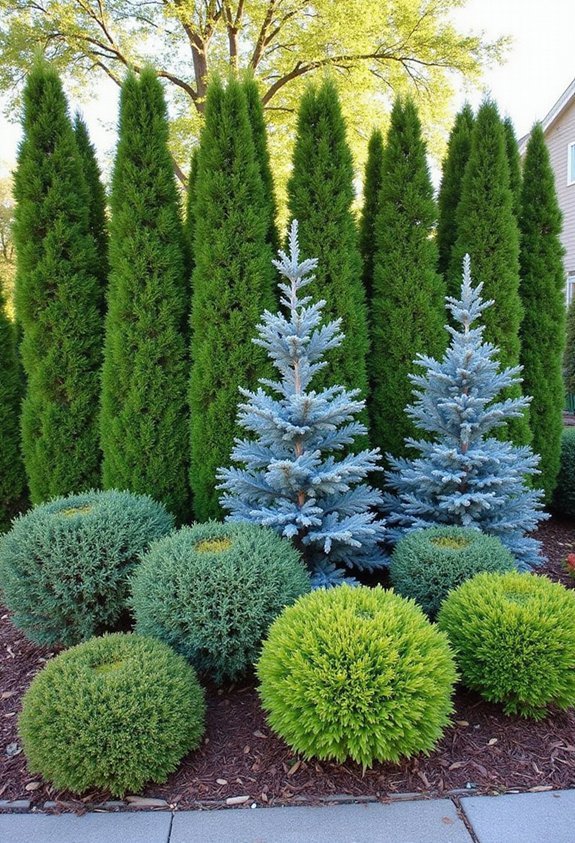
Evergreen shrubs create natural barriers that maintain their screening power throughout all four seasons, unlike deciduous plants that lose their leaves and privacy benefits during winter months. You’ll want to select compact varieties like boxwood, yew, or dwarf conifers that won’t outgrow your small space over time. Plant these shrubs in strategic locations along property lines, walkways, or near windows where you need consistent privacy from neighbors or street traffic. Space them according to their mature width, typically three to four feet apart, and they’ll eventually form a dense, continuous hedge that blocks unwanted views effectively.
Install Solar Path Lights For Nighttime Curb Appeal
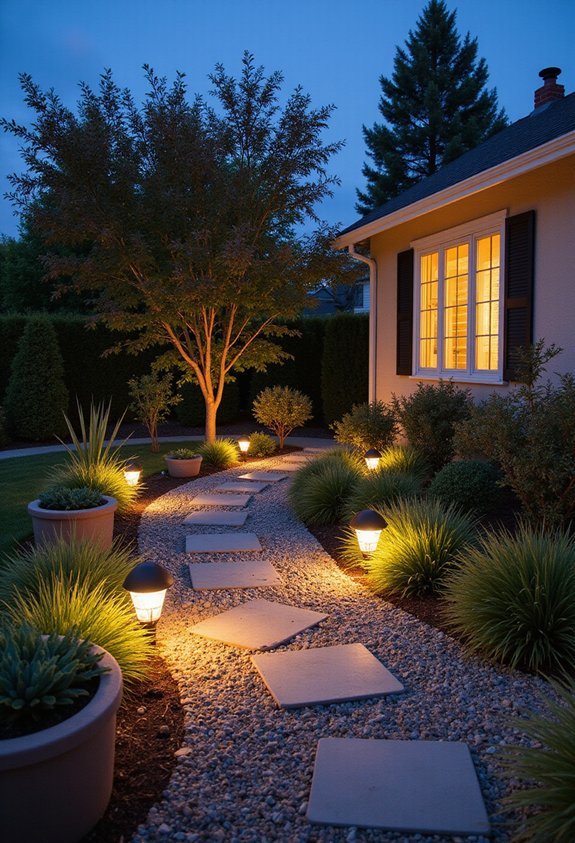
Solar path lights transform your small front yard into an inviting, well-lit space that showcases your landscaping efforts long after sunset, while requiring zero electrical work or ongoing energy costs. You’ll want to space these lights every six to eight feet along walkways, driveways, and garden borders to create consistent illumination without overwhelming your compact space. Choose LED solar lights with at least eight hours of battery life and weather-resistant construction for durability. Install them by pushing the stakes directly into soft soil, or use mounting brackets for harder surfaces like concrete or stone pathways.
Add Small Water Features As Eye-Catching Focal Points
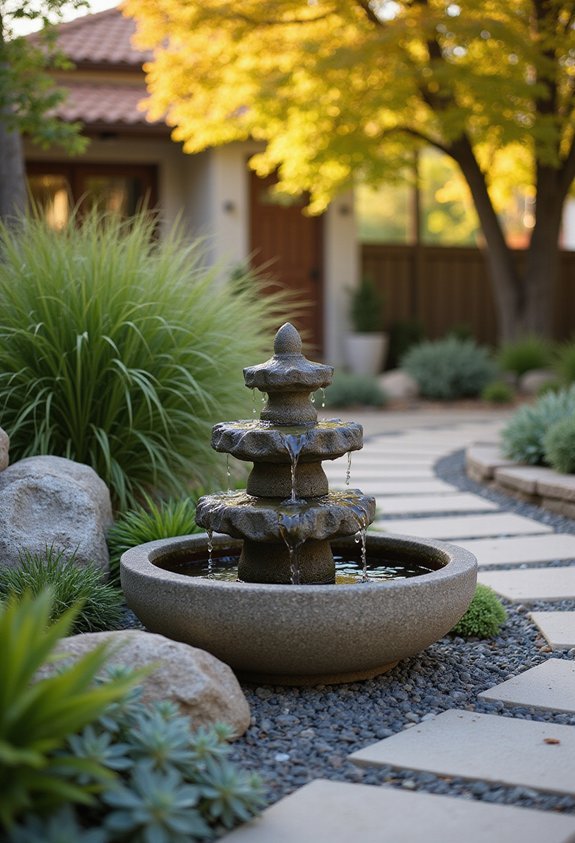
Three key types of small water features can instantly elevate your front yard’s visual appeal while creating a soothing focal point that draws attention away from space limitations. You’ll find that tabletop fountains work perfectly for compact areas, requiring minimal installation while providing continuous water movement and sound. Wall-mounted water features maximize vertical space by attaching directly to exterior walls, fences, or garden structures without consuming ground area. Small pond installations, though requiring more planning, offer the most dramatic impact by incorporating aquatic plants and creating natural wildlife habitats that transform your front yard into a tranquil, welcoming entrance.
Use Solar Stakes For Affordable Garden Lighting
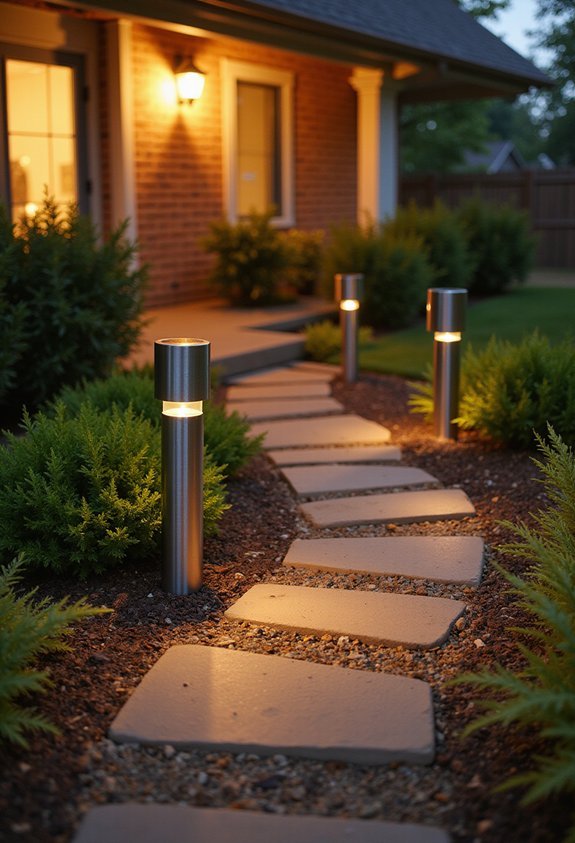
Illuminating your small front yard doesn’t require expensive electrical work or complicated wiring when you choose stake-mounted lighting powered by renewable energy. Solar stakes charge during daylight hours through built-in photovoltaic panels, automatically activating at dusk to provide consistent illumination throughout the night. You can position these portable fixtures along walkways, around flower beds, or near entrance areas without digging trenches or hiring electricians. The weather-resistant designs withstand rain, snow, and temperature fluctuations while requiring minimal maintenance beyond occasional cleaning of solar panels to guarantee ideal charging capability and peak brightness production.
Set Up Drip Irrigation To Save Water And Time
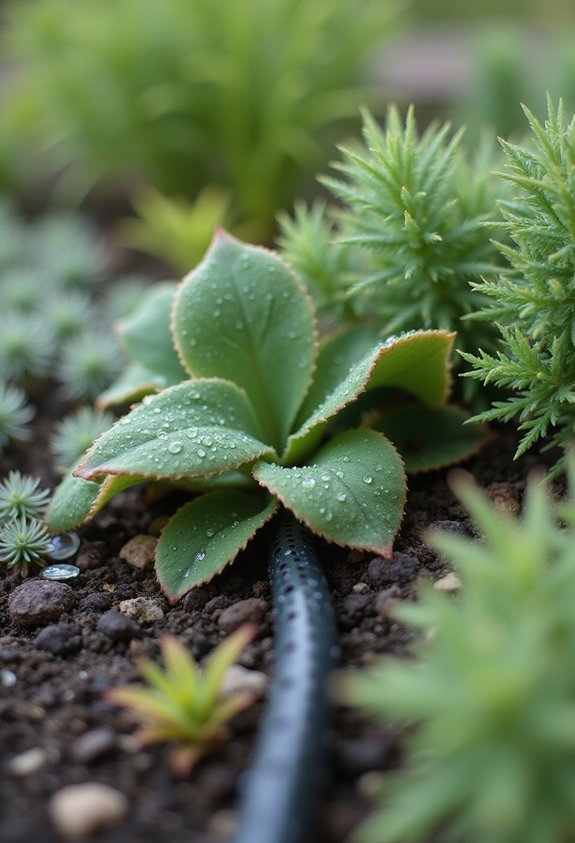
When you install a drip irrigation system in your small front yard, you’ll deliver water directly to plant roots through a network of tubes, emitters, and connectors that eliminate the waste associated with traditional sprinkler systems. You can purchase starter kits from hardware stores that include everything you need for basic installation. Start by connecting the main supply line to your outdoor faucet, then run distribution tubing along planted areas. Insert drip emitters near each plant’s base, ensuring water flows at one to four gallons per hour. You’ll reduce water usage by thirty to fifty percent while maintaining consistent soil moisture.
Create Colorful Borders Along Front Walkways
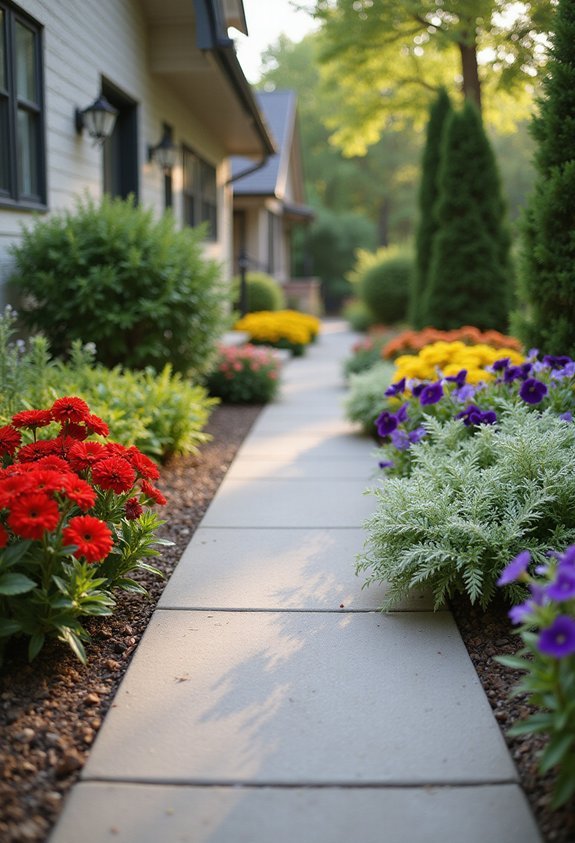
Now that you’ve established an efficient watering system for your small front yard, you can focus on designing eye-catching plant borders that’ll frame your walkway with vibrant colors throughout the growing season. Select compact perennials like purple salvia, yellow marigolds, and pink begonias that won’t overwhelm narrow spaces beside your path. Plant taller varieties toward the back and shorter ones in front to create visual depth, spacing them according to their mature width requirements. Choose plants with staggered bloom times to maintain continuous color from spring through fall, ensuring your walkway remains welcoming and attractive to visitors year-round.
Add Small Benches For Functional Front Yard Seating
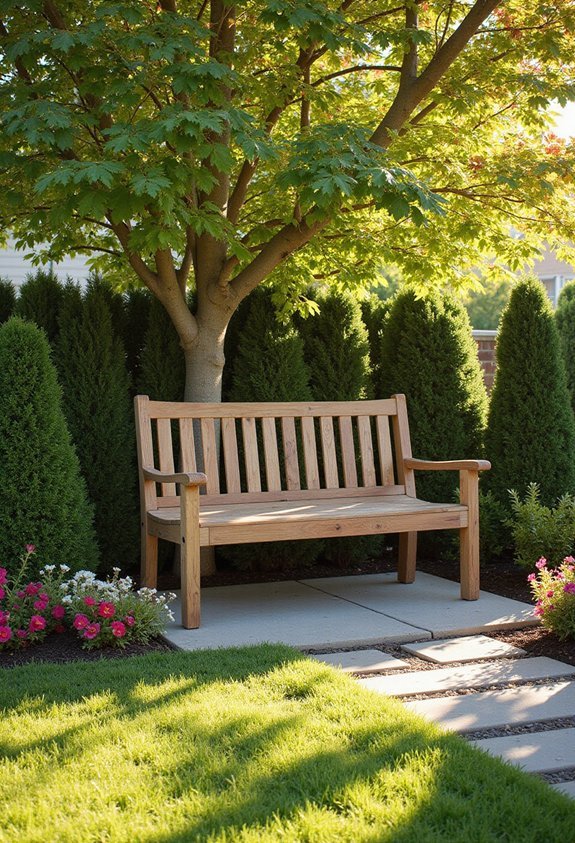
A strategically placed bench transforms your small front yard from a mere visual display into a functional outdoor space where you can enjoy morning coffee, greet neighbors, or simply observe the garden you’ve worked hard to create. Choose compact benches that won’t overwhelm your limited space, such as two-seater models or corner designs that fit snugly against walls or fences. Position your bench near plantings or water features to create a peaceful focal point, and consider materials like weather-resistant wood, metal, or stone that complement your home’s architectural style while requiring minimal maintenance throughout changing seasons.
Build Front Porch Seating Areas In Tiny Spaces
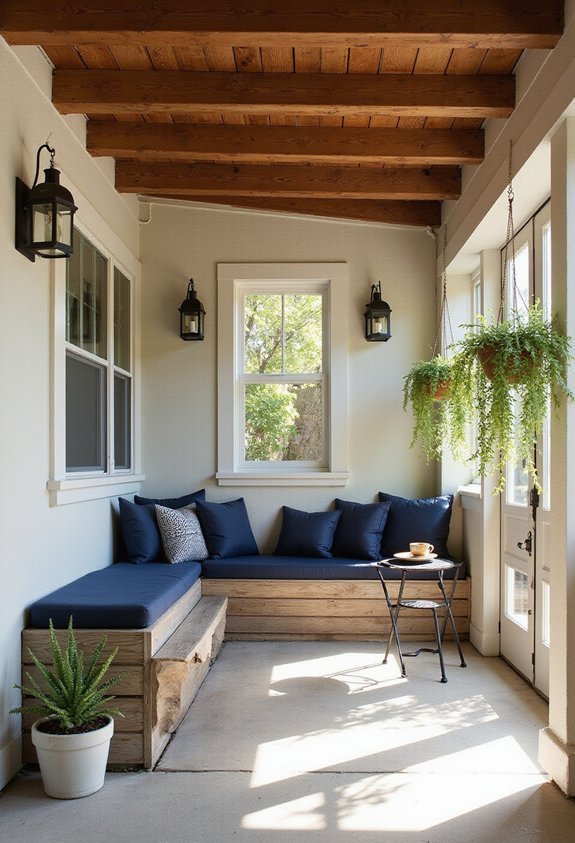
Building out your front porch seating area requires careful planning to maximize every square foot while creating a comfortable space that welcomes both residents and guests. You’ll want to measure your porch dimensions first, then select furniture that fits proportionally without overwhelming the area. Built-in benches along porch railings provide seating without consuming floor space, while corner seating arrangements maximize capacity in L-shaped porches. Consider adding storage underneath bench seating to hold cushions, gardening supplies, or seasonal decorations. You can also install wall-mounted fold-down seats that disappear when not needed, preserving walkway space while providing flexible seating options.
Conclusion
You’ve discovered numerous practical solutions for maximizing your small front yard’s potential through strategic design choices. By implementing curved walkways, raised beds, and rock gardens, you’ll create organized outdoor spaces that require minimal maintenance. These design elements, combined with proper irrigation systems and decorative fencing, will transform your compact yard into a functional landscape. Start with one or two projects, then gradually add features to build your ideal front yard retreat.