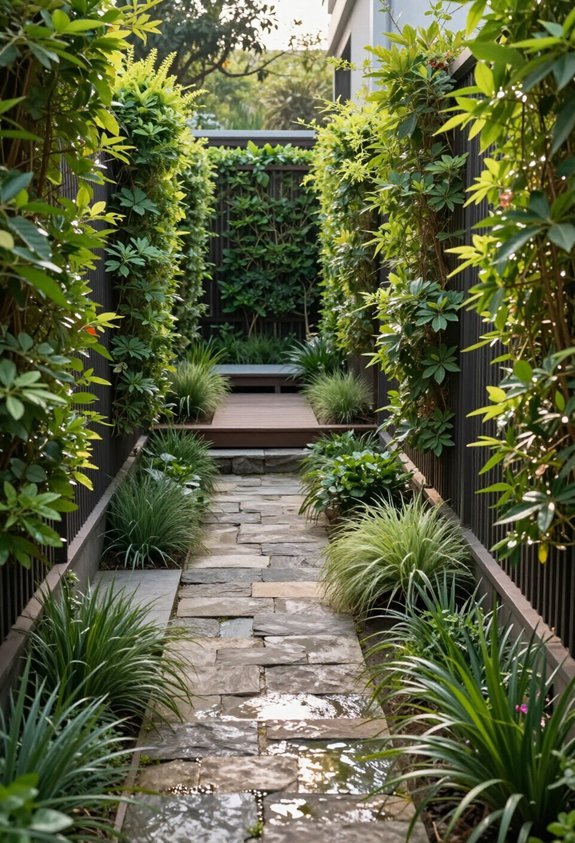
Small side yards often present a challenge for homeowners seeking to maximize outdoor space. Strategic design choices, including the use of light colors, vertical gardening solutions, and carefully positioned mirrors, can transform a confined area into an inviting retreat. Understanding how to implement these techniques requires knowledge of spatial design principles and material selection that will be explored further.
Use Light Colors to Open Up the Area
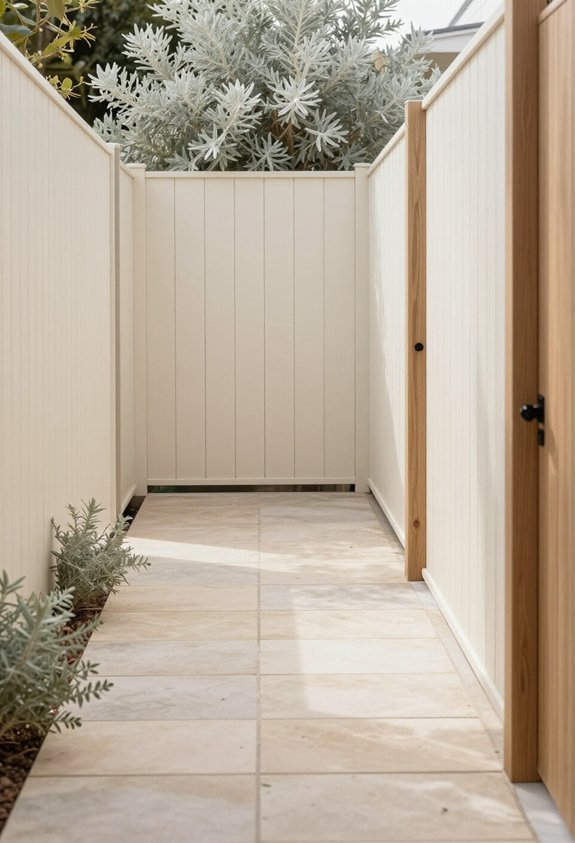
One effective strategy for making a small side yard appear larger and more inviting involves the deliberate selection of light colors throughout the space, as lighter hues reflect sunlight and create an illusion of expanded dimensions. Homeowners should consider painting fences, walls, and structures in whites, soft creams, or pale grays, which bounce light around the area and reduce visual heaviness. Light-colored hardscaping materials, such as pavers or gravel in beige or light tan shades, further enhance this effect by brightening the ground plane. Additionally, selecting plants with silvery or variegated foliage complements the overall light palette while adding visual interest. This strategic color application, combined with minimal dark accents, transforms cramped side yards into spaces that feel airier, more open, and genuinely more spacious than their actual square footage.
Also read: 24 SIDE YARD IDEAS That Make The Space Useful!
Add Mirrors to Create Depth and Reflection
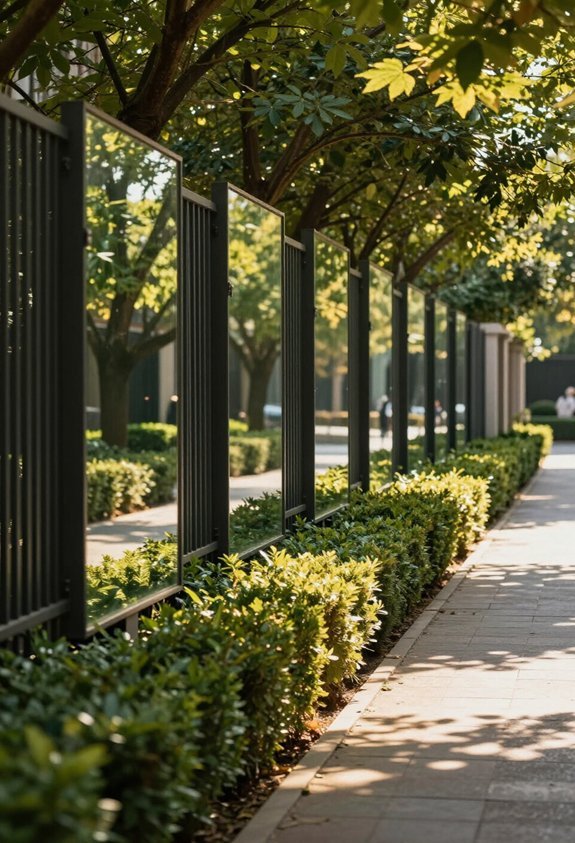
Beyond the visual expansion that light colors provide, mirrors offer another powerful tool for enhancing the perceived size of a small side yard by reflecting light and creating the illusion of additional space extending beyond the yard’s actual boundaries. Strategically placing mirrors on fences or walls amplifies natural daylight throughout the area, brightening shadowed corners while simultaneously doubling the visual landscape. When positioned to reflect greenery, pathways, or architectural features, mirrors trick the eye into perceiving depth where none physically exists. Selecting weather-resistant mirror panels designed for outdoor use guarantees durability against moisture and temperature fluctuations. Angling mirrors toward light sources maximizes their reflective potential, while avoiding direct sunlight placement prevents glare. This optical technique transforms compact yards into seemingly expansive retreats without requiring structural modifications or additional square footage.
Choose One Focal Point, Not Multiple Features
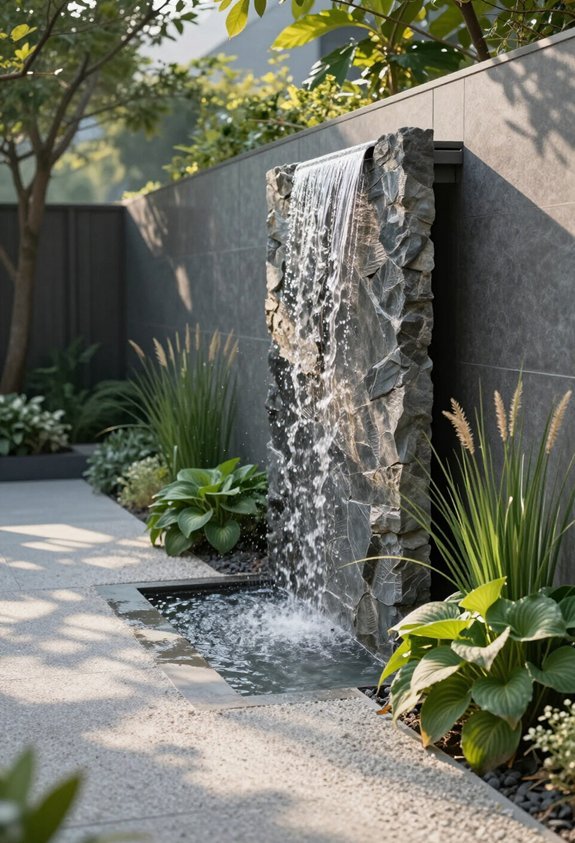
Cramped outdoor spaces demand careful curation of design elements, which means selecting a single focal point rather than scattering attention across numerous features that compete for visual dominance and ultimately overwhelm the limited area. A focal point serves as an anchor, drawing the eye and creating visual organization in a small side yard. This could be a water feature, sculpture, seating area, or planted container, depending on personal preferences and available space. By concentrating design efforts on one standout element, homeowners establish clarity and prevent the yard from feeling chaotic. The remaining space becomes a supporting backdrop, allowing the chosen focal point to shine without competition. This strategic approach makes even the tiniest side yards feel intentional and well-designed.
Use Tall, Thin Plants Instead of Bushy Shrubs
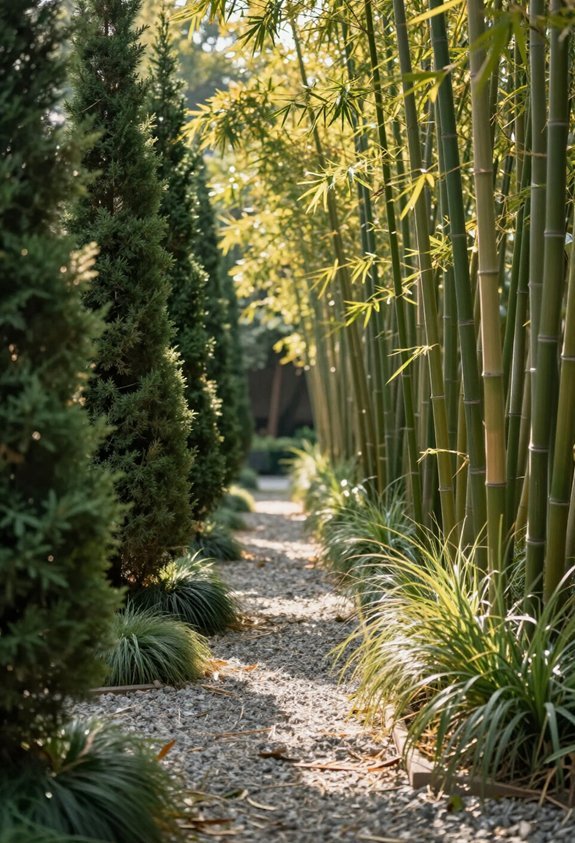
Strategic plant selection plays an essential role in maximizing the visual impact of small side yards, and choosing tall, thin plants instead of bushy shrubs offers a practical solution for creating the illusion of greater space without sacrificing greenery. Columnar plants, such as Italian cypress, sky pencil holly, or ornamental grasses, draw the eye upward, emphasizing vertical space rather than horizontal width. These vertical elements make narrow yards feel taller and more open, whereas wide, dense shrubs consume valuable ground space and create visual barriers. Tall, thin plants maintain sightlines throughout the yard, allowing viewers to see through to background areas, which enhances the sense of depth and openness. This strategic approach enables homeowners to incorporate vegetation while preserving the spatial qualities necessary for compact outdoor areas.
Install Narrow Pathways for Better Flow
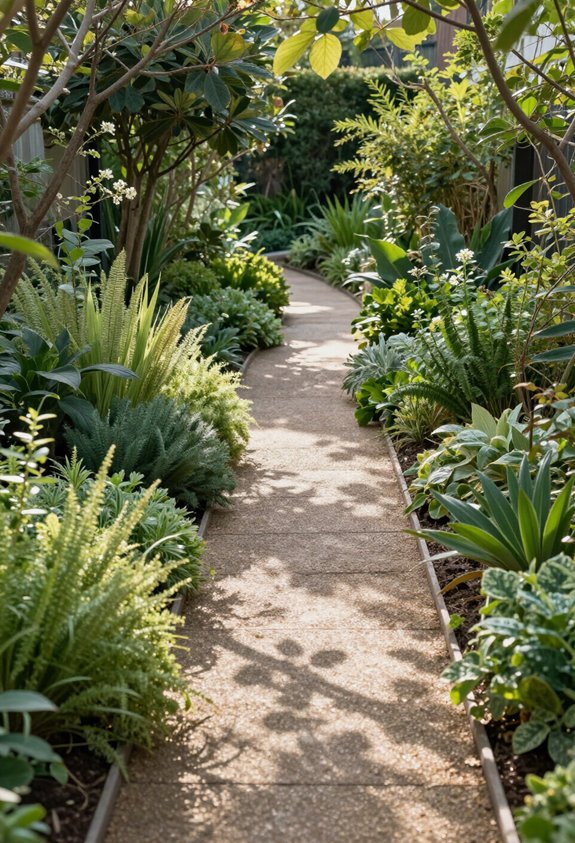
Creating narrow pathways through a small side yard noticeably improves how people move through the space, making the area feel more functional and intentionally designed rather than cramped or awkward. Pathways that measure between two and three feet wide accommodate single-file movement while preserving planting areas on either side, maximizing the yard’s usable capacity. Materials like gravel, stepping stones, or pavers create clear visual boundaries that organize the space effectively. These pathways should connect purposeful destinations, such as from the front entrance to a back patio or seating area, establishing logical traffic patterns. Well-planned narrow pathways reduce wasted space, eliminate confusion about where to walk, and make even modest side yards feel organized, accessible, and deliberately planned rather than leftover or forgotten.
Add a Narrow Gravel or Paver Path
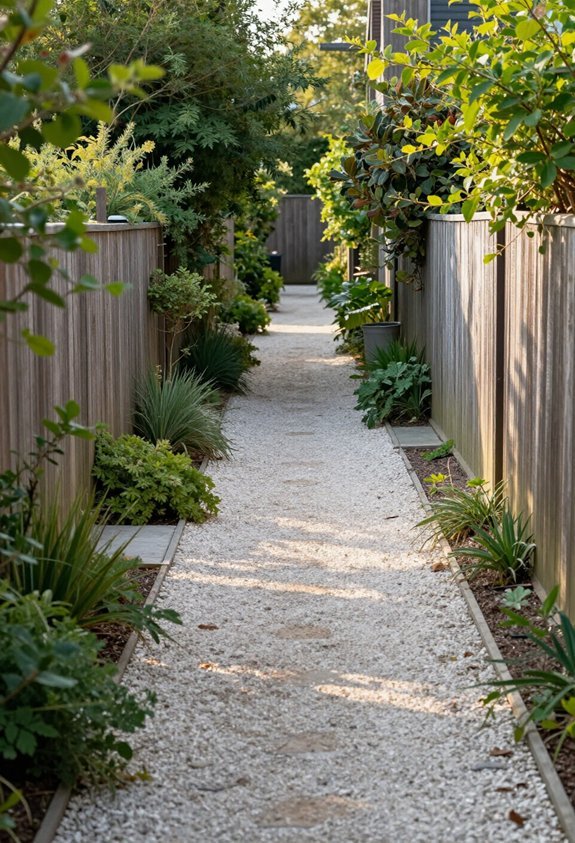
Among the most practical ways to implement the pathway concept in a small side yard is selecting the right surface material, as gravel and pavers each offer distinct advantages depending on budget, maintenance preferences, and aesthetic goals. Gravel paths cost notably less than pavers and allow water drainage, making them environmentally sound choices, though they require periodic raking and replenishment. Pavers, conversely, provide durability and permanence, creating a polished appearance that complements modern or traditional landscapes, but demand higher initial investment and installation labor. When choosing between these options, homeowners should consider their financial constraints, willingness to perform maintenance tasks, and desired visual impact. A narrow pathway, typically two to three feet wide, maximizes usable space while maintaining clear navigation through the yard, ultimately enhancing both functionality and perceived spaciousness.
Use Hardscaping to Guide Movement
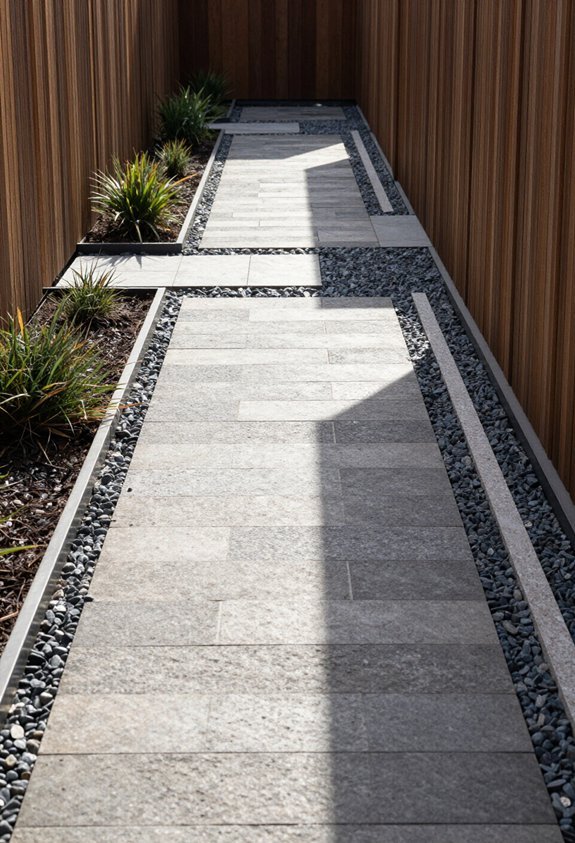
Hardscaping elements such as borders, edging, and defined zones serve as visual guides that direct foot traffic through a small side yard, establishing a clear hierarchy of movement and making the space feel intentional rather than cluttered. Strategic placement of pavers, stone borders, or raised beds creates natural pathways that encourage visitors to move through the yard in a purposeful manner. These hardscape features also prevent people from walking across planted areas, protecting vegetation while maintaining organized flow. By delineating separate zones—such as a seating area, garden section, or utility space—homeowners maximize functionality within limited square footage. This approach transforms a narrow side yard into a well-organized connecting space that feels deliberate and efficiently planned rather than cramped or awkward.
Paint the Ground to Define Zones
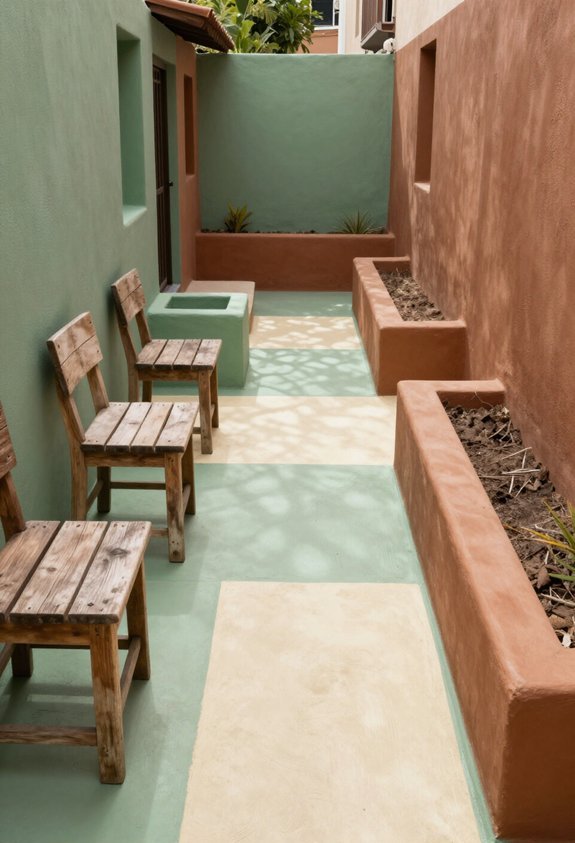
While hardscaping elements like pavers and borders establish physical pathways through a side yard, paint offers a complementary method for visually organizing the space and reinforcing those zones through color. Painting concrete or wooden surfaces in distinct hues creates visual boundaries that separate functional areas without requiring additional materials or construction. For example, painting a seating area one color and a walkway another immediately communicates their different purposes to viewers. Lighter paint colors expand the perception of cramped spaces, while darker tones add depth and sophistication. Weather-resistant exterior paint guarantees longevity and maintains visual appeal through seasons. This technique proves particularly effective in small yards where physical barriers might feel intrusive, allowing homeowners to define multiple zones efficiently while maintaining an open, uncluttered appearance.
Add Vertical Gardens to Maximize Growing Space
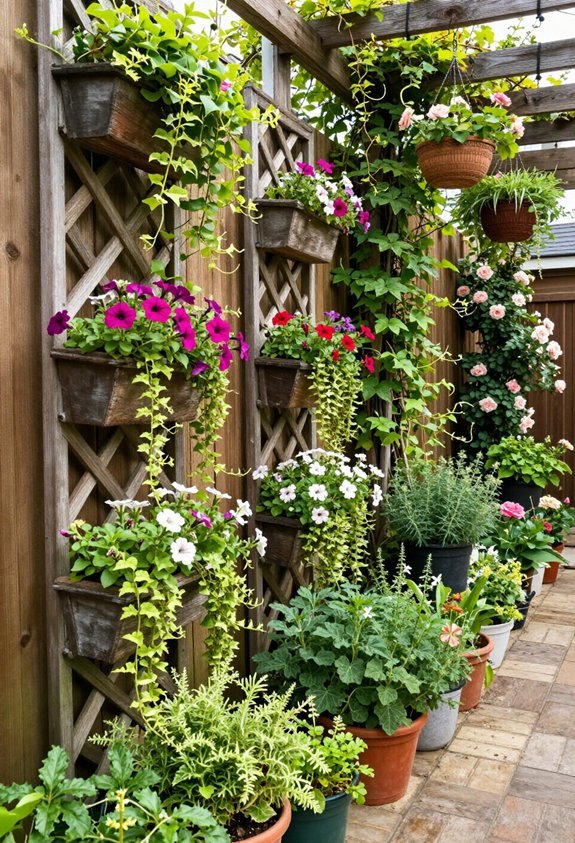
Vertical gardens transform small side yards by directing plant growth upward along walls, fences, and specially designed structures rather than consuming valuable ground space. This approach maximizes the growing area available in tight spaces by utilizing vertical surfaces that would otherwise remain unused. Homeowners can install wall-mounted planters, trellises, or living wall systems that accommodate herbs, vegetables, flowers, and trailing plants. These vertical installations improve air circulation around plants, reduce pest problems, and make maintenance easier since gardeners can access plants at comfortable heights. Additionally, vertical gardens create visual interest and soften hardscape elements, making the narrow side yard feel more dynamic and productive while maintaining walkways and open areas essential for movement and functionality.
Install Wall-Mounted Planters for Greenery
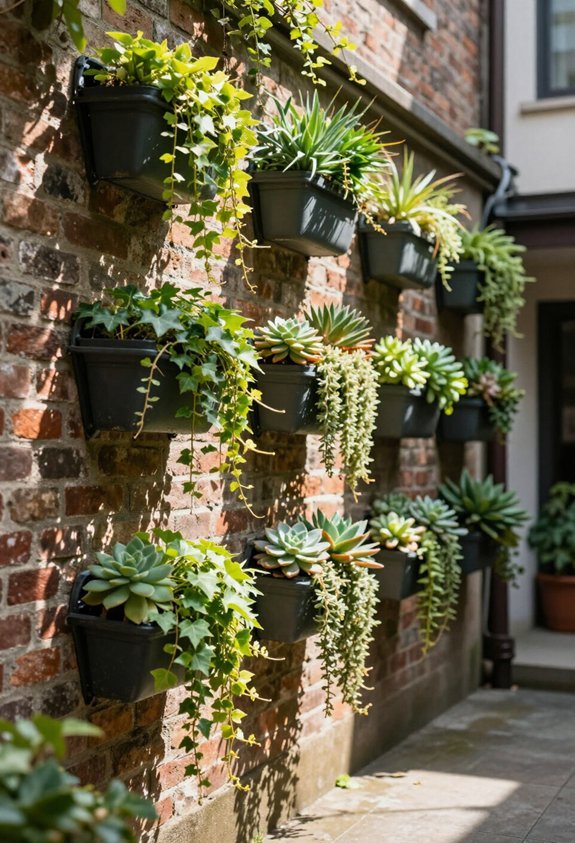
Wall-mounted planters offer homeowners a practical solution for introducing greenery to side yards without requiring floor space, as they attach directly to existing walls, fences, or posts to create instant planting surfaces that maximize vertical real estate. These fixtures come in various materials, including ceramic, metal, and plastic, allowing customization to match existing landscape aesthetics. Installation involves selecting appropriate mounting hardware rated for the planter’s weight when filled with soil and plants, then securing it firmly to prevent shifting or damage. Wall-mounted planters work effectively for trailing plants, herbs, succulents, and ornamental varieties that thrive in container conditions. Regular watering and drainage considerations are essential, as water retention differs considerably from ground-level gardening, requiring monitoring to guarantee ideal plant health and growth.
Add Overhead Shade With a Slim Trellis
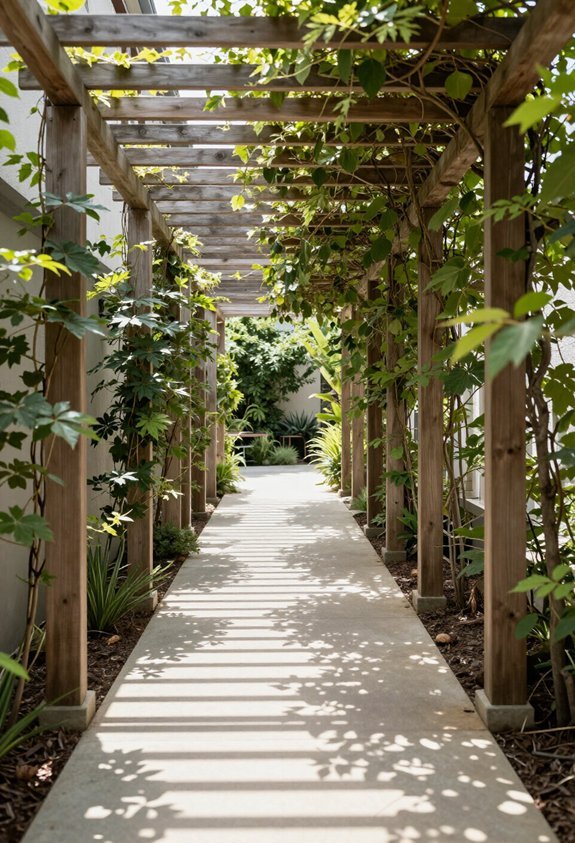
A slim trellis positioned overhead transforms a small side yard by providing dappled shade while consuming minimal ground space, making it an ideal solution for homeowners seeking to maximize both comfort and usable area in tight quarters. This structure allows filtered sunlight to pass through while blocking direct heat, creating a comfortable outdoor environment during warmer months. Homeowners can select materials such as wood, metal, or composite options based on their budget and aesthetic preferences. Installing a trellis overhead also provides an excellent framework for climbing vines and plants, which enhance the shade while adding visual interest. The lightweight design guarantees structural stability without overwhelming the narrow space, and the open framework maintains an airy feel that prevents the yard from feeling cramped or enclosed.
Add a Decorative Screen or Lattice Panel
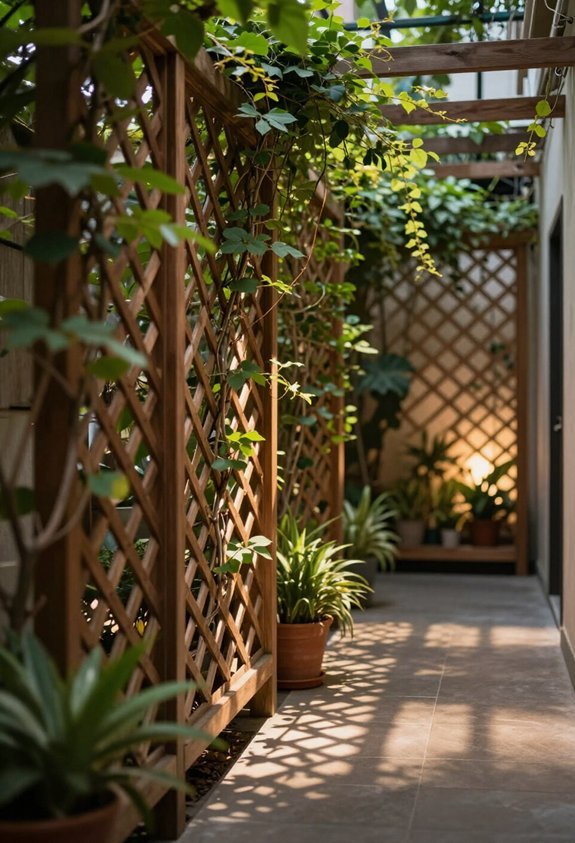
While overhead structures like trellises provide shade from above, decorative screens and lattice panels offer homeowners another effective way to enhance small side yards by creating privacy barriers, defining spaces, and adding visual appeal without consuming valuable ground area. These vertical elements can be installed along fences, walls, or as standalone structures to separate the side yard from neighboring properties or adjacent areas within the landscape. Lattice panels, constructed from criss-crossing wooden strips, allow partial visibility while filtering views and light, creating an aesthetic focal point. Decorative screens in various styles, materials, and patterns provide customizable options that complement existing architecture and landscaping design. By strategically positioning these elements, homeowners maximize functionality while maintaining the perception of spaciousness in compact outdoor environments.
Build a Raised Planter Along One Side
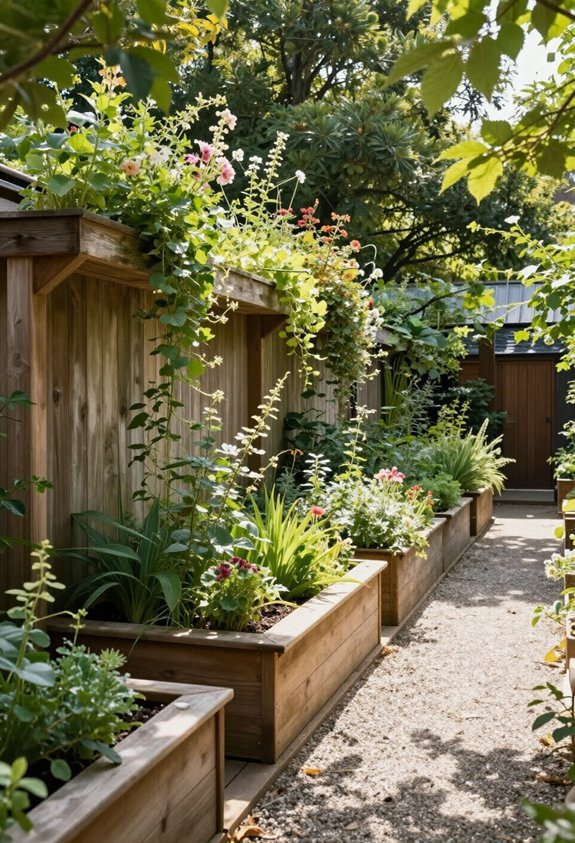
Raised planters positioned along one side of a small yard provide an effective solution for adding greenery, color, and structure to compact outdoor spaces while keeping soil and plants contained within defined boundaries. These structures can be constructed from wood, composite materials, or metal, depending on budget and aesthetic preferences. By building planters along a single side rather than distributing them throughout the yard, homeowners maximize open space while creating a linear focal point that draws the eye along the property. Raised planters offer additional benefits, including improved drainage, easier maintenance and harvesting, and reduced strain on the back when gardening. The elevated design also deters certain pests and allows better control over soil quality, making it an efficient choice for growing vegetables, herbs, or ornamental plants in limited areas.
Choose Low-Maintenance Ground Covers
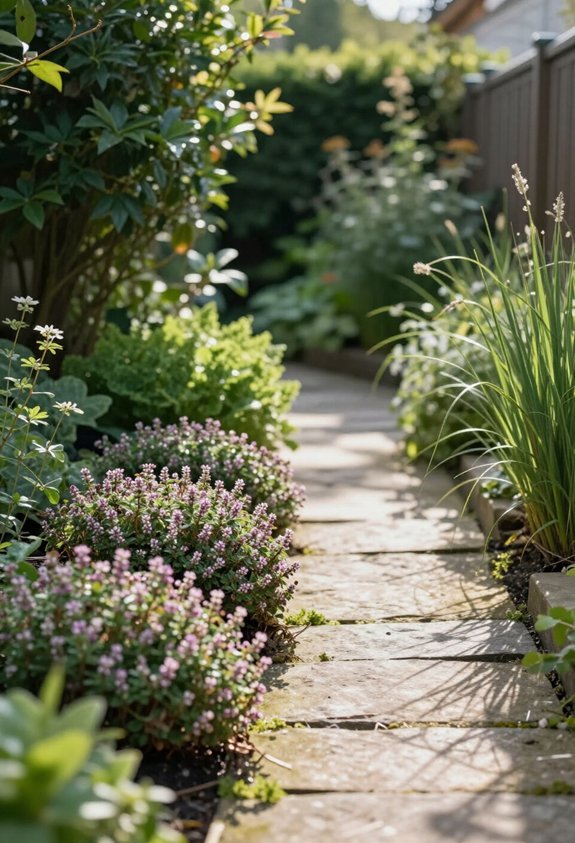
Since small side yards often present challenges with limited space and sunlight, ground covers offer an excellent alternative to traditional lawn grass by providing visual interest and requiring considerably less maintenance than turf. Popular options include creeping thyme, which tolerates foot traffic and produces fragrant flowers, and sedums, which thrive in dry conditions with minimal watering. Ajuga provides dense coverage and spreads quickly, while mondo grass works well in shaded areas. When selecting ground covers, homeowners should consider their local climate, sunlight availability, and soil conditions. Installing ground covers involves preparing the soil, spacing plants appropriately according to species guidelines, and applying mulch to suppress weeds during establishment. Once established, these plants require occasional weeding and seasonal trimming, remarkably reducing yard maintenance demands compared to traditional lawns.
Work Around Shade and Utility Constraints
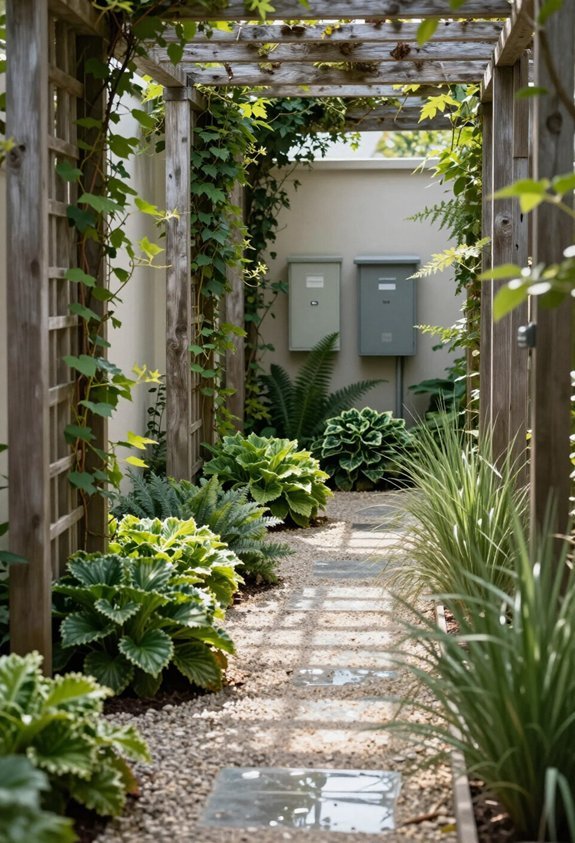
How can homeowners maximize their side yard potential when faced with persistent shade or underground utility lines? Shade-tolerant plants like hostas, ferns, and Japanese maples thrive in low-light conditions and create visual interest without requiring direct sunlight. Before planting, homeowners should contact their local utility company to locate underground lines, which prevents costly damage and guarantees safety. Installing raised beds or containers offers flexibility, allowing gardeners to position plantings away from utility areas while maintaining design control. Hardscape features such as gravel pathways, stone pavers, or wooden decking work effectively in shaded zones and can visually expand the space. Strategic placement of these elements around constraints creates functional, attractive side yards that feel larger while respecting necessary utility access and working within environmental limitations.
Paint the Fence a Bright or Neutral Shade
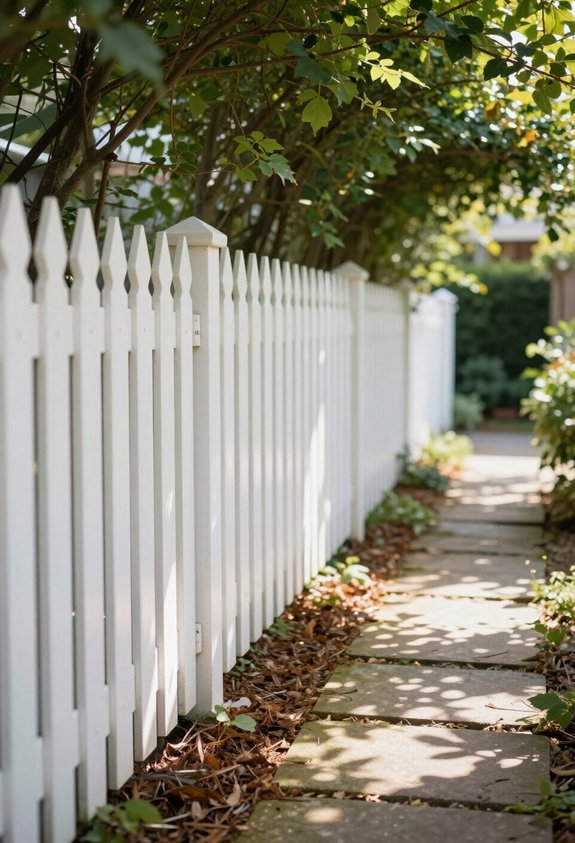
Once the hardscape elements and plantings are positioned to work around shade and utility constraints, homeowners can shift their attention to the vertical surfaces that define the side yard’s character and visual impact. Painting the fence represents a straightforward yet highly effective strategy for transforming the space. Bright colors, such as white or pale yellow, reflect light and create an illusion of expanded square footage, making cramped areas feel noticeably more open. Alternatively, neutral tones like soft gray or warm beige provide sophisticated backdrops that complement various landscaping styles while maintaining visual calm. The fence’s fresh appearance anchors the entire side yard design, establishing cohesion between hardscape and plantings while maximizing the perception of depth and spaciousness throughout the narrow corridor.
Paint the Adjoining House Wall a Soft Color
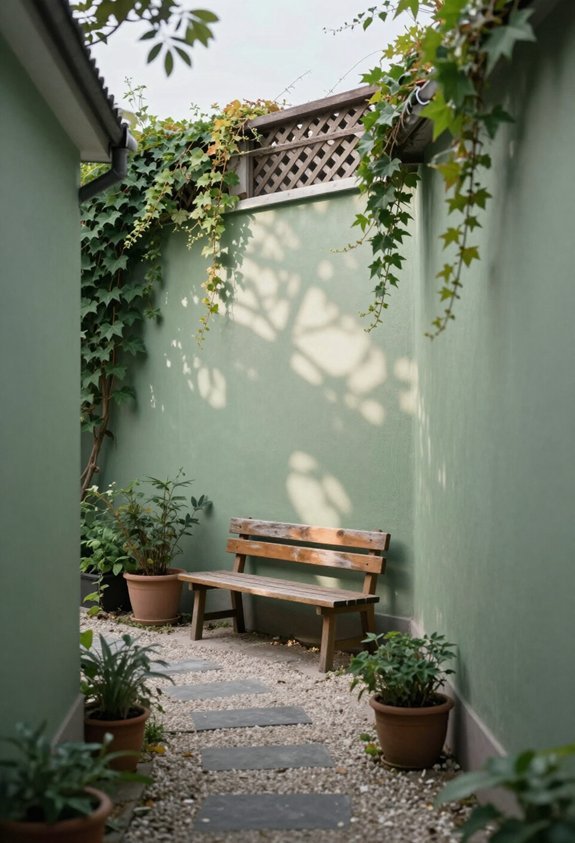
While the fence establishes the side yard’s lateral boundaries, the adjoining house wall functions as the second major vertical surface that significantly influences the space’s overall appearance and perceived dimensions. Painting this wall in soft colors, such as pale gray, soft beige, or light taupe, creates visual spaciousness by reflecting natural light throughout the narrow area. These neutral tones recede visually, making the side yard feel less enclosed and more expansive than darker shades would. Soft colors also coordinate seamlessly with various landscaping and hardscaping choices, providing flexibility in design decisions. When combined with the fence color selected previously, a cohesive, harmonious environment emerges that maximizes the sense of openness within small side yard spaces.
Install String Lights for Evening Ambiance
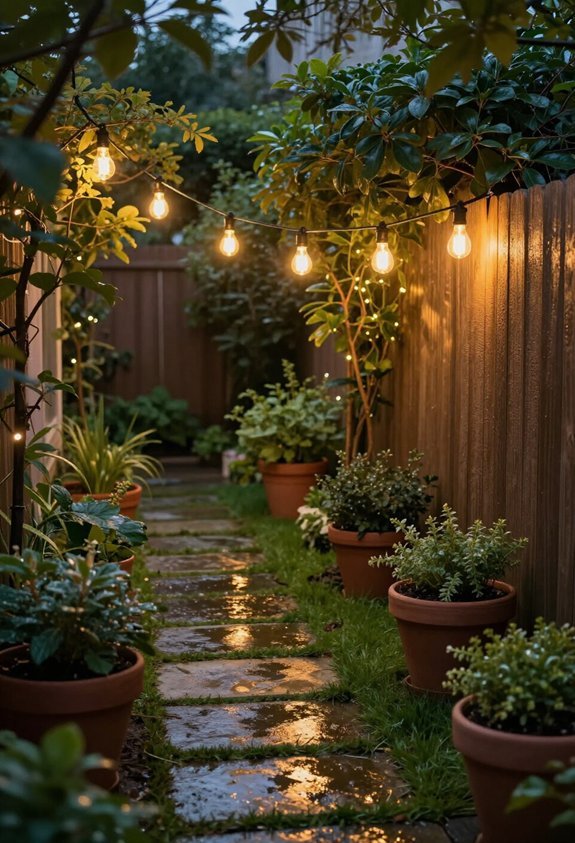
String lights offer an effective solution for extending the usability of side yards into evening hours, transforming these narrow spaces into functional and visually appealing outdoor areas after sunset. Installing overhead string lights between the house and fence creates a canopy effect that brightens the space while adding visual interest. Property owners should choose warm white bulbs, which provide a welcoming atmosphere compared to harsh white alternatives. Before installation, measure the distance between anchor points to determine the appropriate light length, ensuring proper spacing between bulbs for even illumination. Durable outdoor-rated lights withstand weather conditions and require minimal maintenance when properly secured. This simple addition enhances the yard’s ambiance, making evening gatherings more enjoyable while maximizing the functional purpose of otherwise underutilized side yard space.
Install Subtle Uplighting Along the Fence
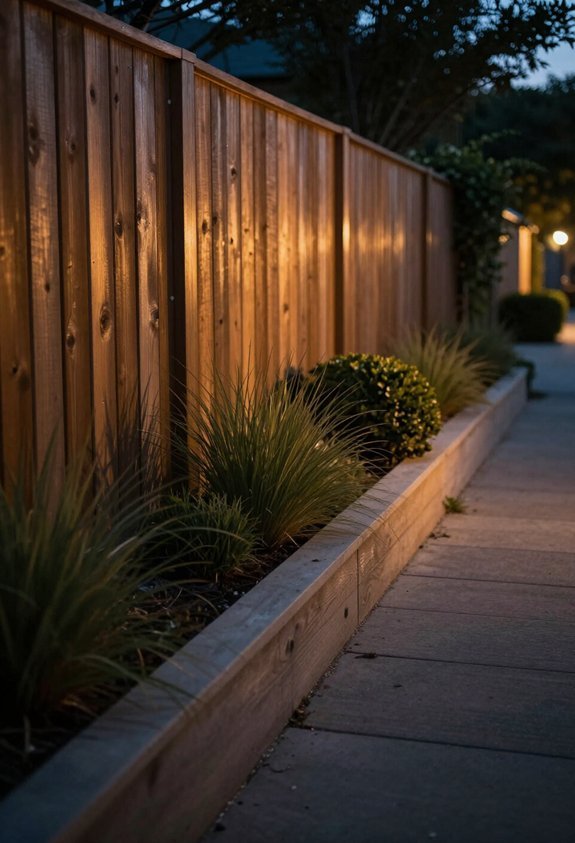
Uplighting fixtures positioned along the fence create a sophisticated visual effect that transforms the side yard’s vertical elements into focal points of the landscape design. These lights, installed at ground level and angled upward, illuminate the fence from below, which makes the space appear taller and more expansive than it actually is. Homeowners should select low-voltage LED uplights, which consume minimal energy while producing warm, inviting light. Placing fixtures approximately three to four feet apart guarantees even illumination without creating harsh shadows or bright spots. The uplighting technique works particularly well when paired with climbing vines or decorative plants along the fence, as the light accentuates their textures and forms. This layering of lighting elements creates depth and visual interest in compact side yards.
Install a Compact Water Feature for Visual Interest
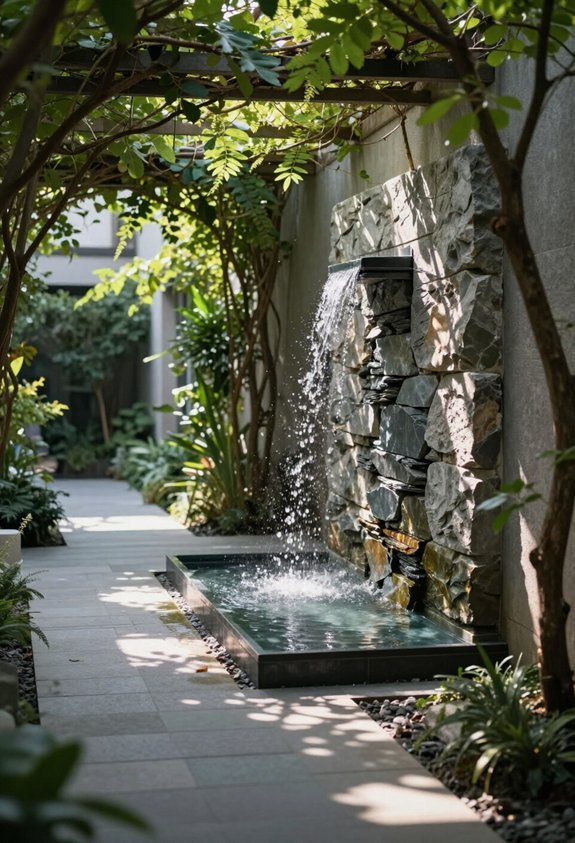
A compact water feature serves as a focal point that draws the eye and adds sensory appeal to a limited side yard space, transforming an otherwise overlooked area into an engaging outdoor environment. Small fountains, bird baths, or recirculating water features occupy minimal floor space while creating visual depth and movement through flowing water. These installations produce soothing sounds that mask neighborhood noise and contribute to a more peaceful atmosphere. When selecting a water feature, homeowners should consider placement against a wall or fence to maximize visibility from main viewing angles, guarantee proper drainage to prevent water pooling, and select designs that complement existing landscaping and architectural elements. Strategic lighting paired with water features enhances their evening appeal and extends their visual impact throughout daylight hours.
Create a Narrow Seating Nook
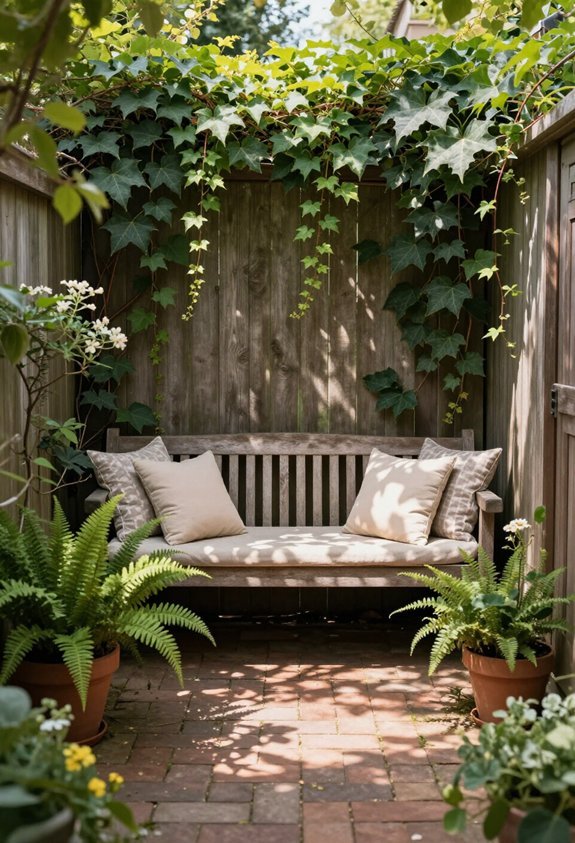
Creating a narrow seating nook transforms an underutilized side yard into a functional retreat by strategically positioning comfortable seating in a compact configuration that encourages relaxation and social connection. A bench paired with cushions or two chairs facing each other maximizes limited space while providing practical seating options. Installing a small bistro table allows occupants to enjoy beverages or meals comfortably. Adding overhead structures, such as a narrow pergola or shade cloth, protects the area from sun exposure and creates an inviting atmosphere. Incorporating potted plants and ambient lighting, like solar-powered lanterns or string lights, enhances the nook’s appeal without consuming valuable floor space. This purposeful arrangement transforms an otherwise neglected yard section into a personalized outdoor sanctuary.
Choose Multi-Functional Furniture
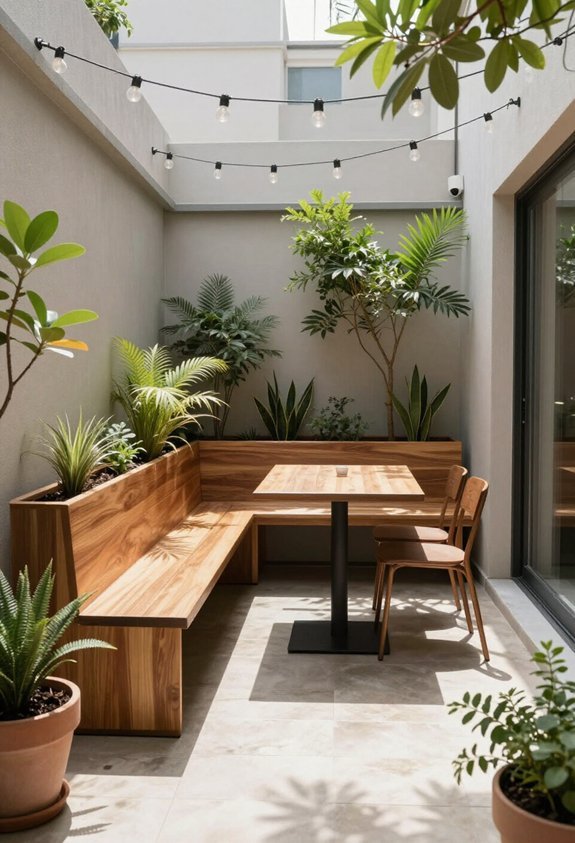
Multi-functional furniture serves as an essential strategy for maximizing the utility and visual appeal of compact side yards, where every square inch must work efficiently to support multiple purposes and activities. Storage benches provide seating while concealing gardening tools, cushions, and seasonal items within their compartments, eliminating the need for separate storage structures. Folding tables and chairs can be easily stored when not in use, freeing valuable space for movement and relaxation. Raised planters with built-in seating combine gardening opportunities with comfortable resting spots, serving dual purposes simultaneously. Ottoman-style pieces offer footrests, extra seating, and hidden storage in one compact unit. By selecting furniture designed for multiple functions, homeowners effectively reduce clutter, enhance accessibility, and create more flexible, adaptable outdoor environments suited to various activities and changing seasonal needs.
Frequently Asked Questions
What’s the Best Budget for Transforming a Small Side Yard Into a Larger-Feeling Space?
A modest budget of $500–$2,000 effectively transforms small side yards. Strategic choices include vertical gardens, mirrors, light-colored pavers, and minimal furniture. These elements create depth and openness without requiring extensive renovation expenses.
How Often Should I Maintain Vertical Gardens and Wall-Mounted Planters in Tight Spaces?
Vertical gardens and wall-mounted planters require weekly watering checks, bi-weekly pruning, and monthly fertilizing in tight spaces. Frequency increases during hot seasons, while winter maintenance decreases considerably depending on plant types selected.
Can I Combine Multiple Design Techniques Without Making My Side Yard Feel Cluttered?
Yes, multiple design techniques work well together when one remains dominant. Homeowners should prioritize a single focal point—vertical gardens, lighting, or hardscaping—then layer complementary elements minimally to maintain visual cohesion.
What Are the Best Plants for Small Side Yards With Limited Sunlight Exposure?
Shade-tolerant plants like hostas, ferns, and astilbe thrive in limited sunlight. Heuchera and brunnera offer colorful foliage. Ivy and creeping jenny work as ground covers. These species maximize visual interest while requiring minimal direct light exposure.
How Do I Choose Between Hardscaping and Plants for a Narrow Side Yard Layout?
One should evaluate foot traffic patterns, maintenance preferences, and desired visual impact. Hardscaping offers durability and low maintenance, while plants provide natural beauty and softness. Combining both elements typically maximizes narrow spaces effectively.
Conclusion
By combining light colors, strategic mirrors, and vertical gardening, homeowners can effectively transform cramped side yards into inviting retreats. Selecting a single focal point, incorporating narrow pathways, and choosing multi-functional furniture maximizes limited space while maintaining visual interest. Uplighting, water features, and tall plants draw the eye upward, creating the illusion of expansiveness. These design techniques work together systematically, allowing compact outdoor areas to feel considerably larger and more functional than their actual dimensions suggest.