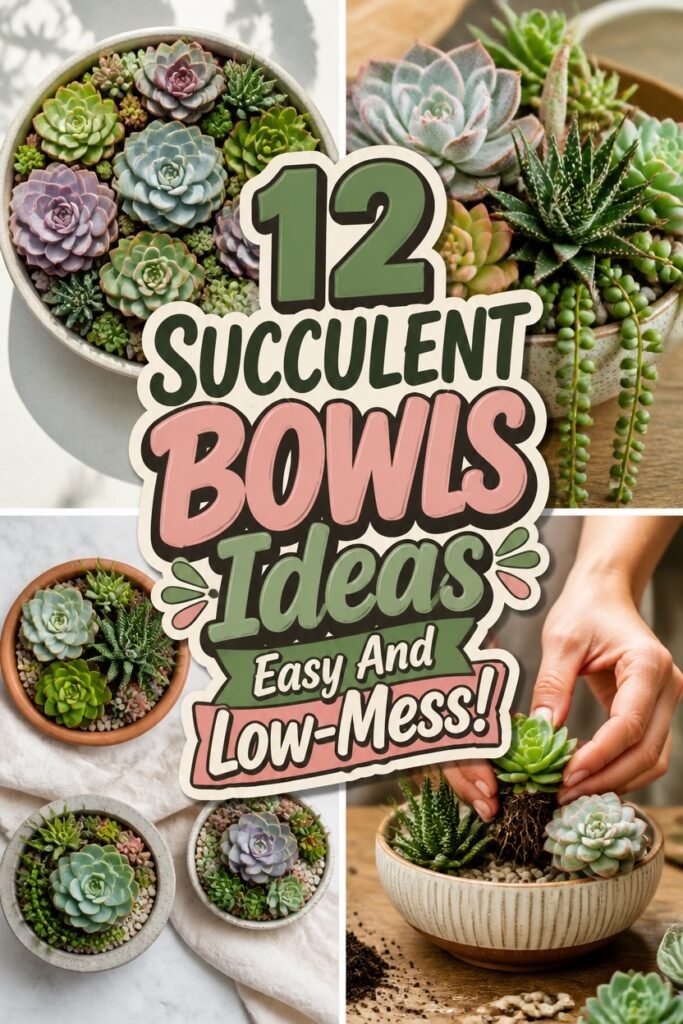
Succulent bowls are the easiest way to bring a little green into your space without the stress of constant care. They look polished, take up minimal room, and forgive you when life gets busy.
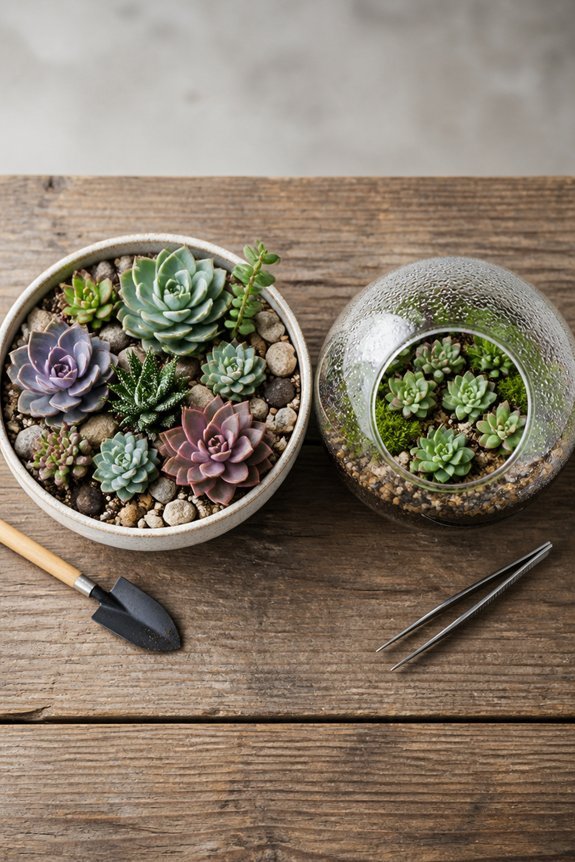
You can play with so many setups. Think open, shallow dishes for sun-loving echeveria and jade. Or go with closed containers if you want to hold a bit more moisture. A layer of sand, some smooth stones, or a piece of driftwood adds texture without adding work.
Light matters, but not as much as you’d expect. Most arrangements handle bright windows and softer corners with equal ease.
Ahead, you’ll find twelve ideas ranging from desert-inspired gardens to quiet, single-tone displays. Each one balances looks with livability.
Choose Your Setup: Open or Closed Bowl
The Container Question
Look at your windowsill. That cramped little pot holding three jumbled succulents? It’s begging for an upgrade. A proper bowl transforms these scattered plants into something intentional, almost sculptural.
Choose open or closed. This decision shapes everything that follows.
Also read: 16 SUCCULENT GARDEN DESIGN Ideas That Feel Modern!
Open Bowls: Breathing Room
Terracotta saucers left over from other projects work beautifully here. Set one on your coffee table and you’ll notice how the clay edges warm in afternoon light. The soil dries visibly between waterings, shrinking back from the rim like clockwork.
Desert dwellers thrive in these conditions. Aloe vera fans out without complaint. Sedum spills over edges, rooting wherever it touches warm ceramic. Morning mist evaporates before noon.
Closed Bowls: A Little World
Glass cake domes and forgotten apothecary jars find second lives here. Lift the lid and humidity rises to meet you, carrying the green scent of moss and living things. Condensation beads along curved walls after watering, then clears as the system balances itself.
Tropical succulents appreciate this gentler approach. Jade plants grow plump and glossy. Echeveria maintains that impossible waxy bloom. Just temper your watering can, these containers forgive nothing.
Getting the Details Right
Two inches of depth minimum. Anything less and roots circle restlessly, stunting growth above ground.
Drainage holes matter even under glass. A discreet layer of pebbles buys insurance against wet feet.
Match material to your habits. Forgetful waterers suit porous terracotta. Heavy hands do better with glass, where moisture levels stay visible and honest.
Low-Light Living Room Succulent Display
Finding the Right Shade-Loving Varieties
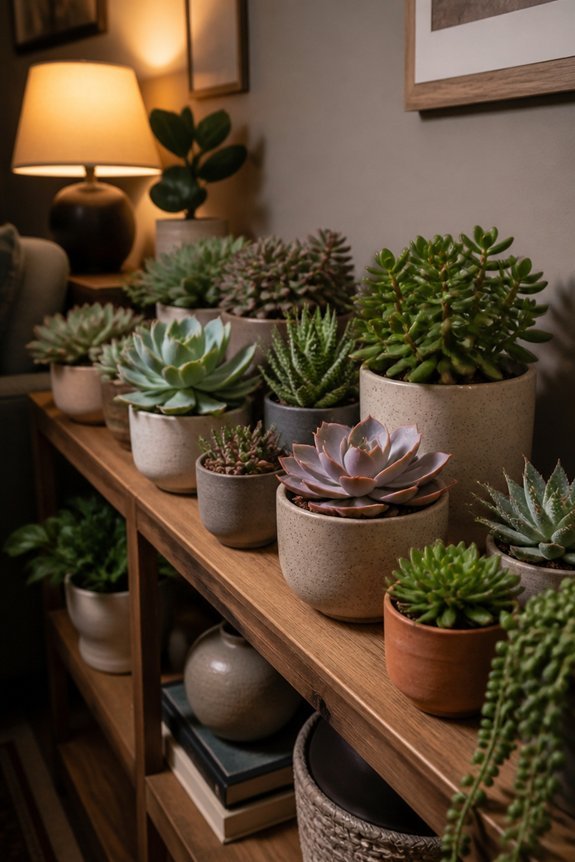
Glance around your living room around noon. If the light feels soft and filtered rather than harsh and direct, you’re working with the kind of conditions Haworthia, jade plants, and aloe vera actually prefer. These three handle moderate indoor light without the dramatic stretching or pale coloring that sun-hungry succulents suffer.
Lower light means slower evaporation, so your watering calendar stretches out naturally. Where a windowsill echeveria might need weekly attention, these shadier characters prefer to dry out completely between drinks.
Choosing Containers That Work
That ceramic bowl you love but never knew what to do with? Drill a few drainage holes in the base and you’ve got a perfect home. Terracotta works beautifully too, its porous walls helping soil breathe in stuffy corners where air circulation runs thin.
Skip the glass terrarium temptation. Without drainage, even the most shade-tolerant succulent rots quietly in dim conditions.
Placement and Daily Care
North-facing windows cast that gentle, consistent glow these plants crave. East-facing spots work equally well, catching soft morning light before the afternoon heat builds. Position your arrangement slightly back from the glass if the window gets any direct beams.
Water when the soil feels dusty dry, usually every two to three weeks depending on your heating system. Growth stays modest year-round, which means less pruning and a tidier silhouette without effort.
Simple Maintenance Habits
Give the pot a quarter turn each time you water. This small rotation prevents lopsided stretching as plants reach toward their light source, keeping your arrangement balanced and full from every angle.
Budget-Friendly Succulent Bowl From Cuttings
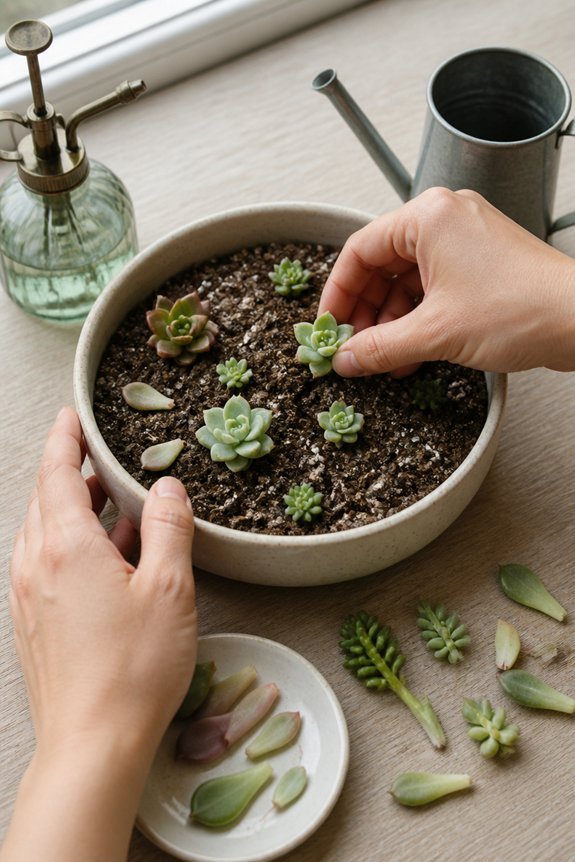
The morning light hits your windowsill just right, and suddenly that empty ceramic bowl is begging for something green. Instead of another trip to the garden center, look closer at the succulents you already have.
Leaf cuttings root in days, not months. A single echeveria produces dozens of baby plants from fallen leaves alone. Jade cuttings? Stick them in soil and walk away. Sedum practically propagates itself if you breathe on it wrong.
Grab a shallow dish from the kitchen. Mix potting soil with gritty sand or perlite until it feels like crumbly chocolate cake. Tuck cuttings in gently, spacing them like scattered confetti rather than soldiers in formation. Bright, indirect light works best. Think of that sweet spot where your cat naps mid-afternoon.
Three weeks later, tiny roots anchor into place. Pink tips emerge. The bowl transforms from sparse to lush without a receipt in sight.
Your neighbor’s overflowing burro’s tail? Ask for a stem. That leggy aeonium at the office? It wants trimming anyway. Most succulent lovers keep spare cuttings in jars, happy to share.
Style the finished bowl with a few river stones tucked between plants. Maybe a cachepot in matte white or weathered terracotta. The contrast of chunky leaves against smooth ceramic reads intentional, not improvised.
Cost breakdown: container (likely free), soil ($5), patience (zero dollars). Compare that to $40 for a single mature echeveria. The math feels good.
Classic Desert Garden in a Shallow Bowl
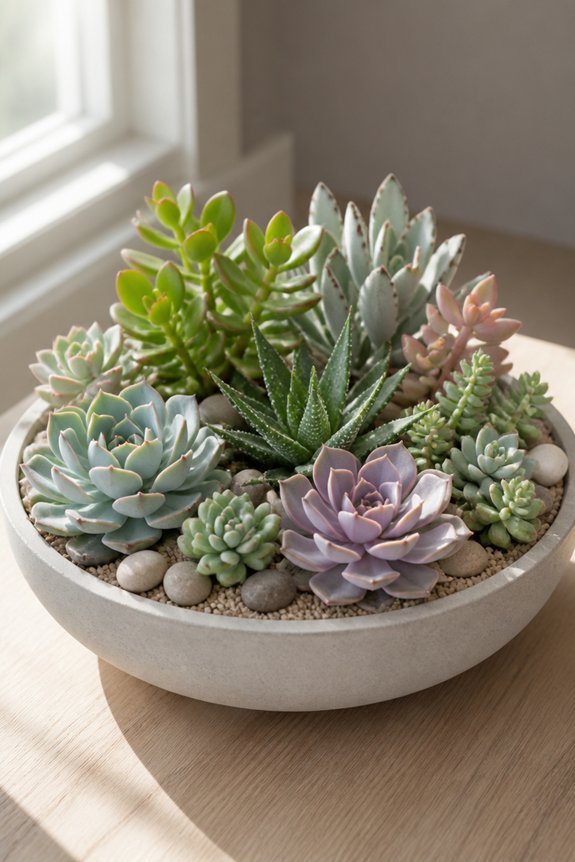
A shallow bowl filled with varied succulents and sandy soil mimics the arid landscape where these plants naturally grow. This arrangement works well for displaying multiple species together, since shallow containers accommodate spreading rosettes and compact growth patterns.
Suitable plants include echeveria, sempervivum, and jade varieties, which tolerate crowded conditions. Sandy, well-draining soil prevents water accumulation that causes root rot. Gravel or pebbles added to the soil surface reflect heat and improve drainage further.
The shallow depth requires careful watering, typically every two to three weeks during growing seasons. Placement in bright, indirect light guarantees healthy coloration without sunburn. Desert-themed bowls benefit from occasional rotation, allowing even light exposure on all sides. This setup requires minimal maintenance once established, making it practical for various indoor settings.
Monochromatic Green Succulent Arrangement
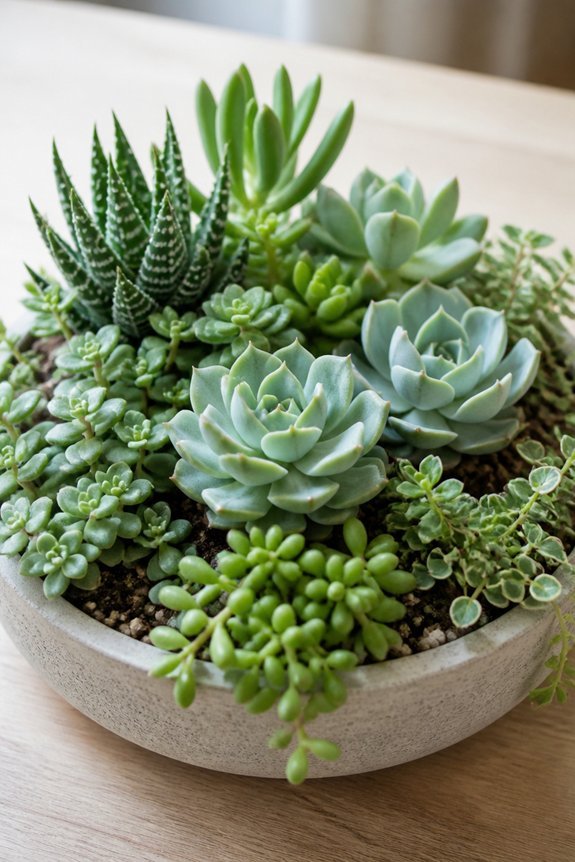
Notice how a cluster of echeverias catches the morning light, their rosettes stacking like tiny green towers. That’s the quiet magic of working with one color. You’re not chasing blooms or waiting for seasonal shifts. The drama lives in the architecture instead.
A shallow ceramic bowl in soft gray or weathered terracotta sets the stage without stealing focus. Let the plants do the talking.
Choosing Your Players
Jade plants bring sturdy, upright energy. Sedums spill and crawl. Tuck a trailing string of pearls near the edge and suddenly you’ve got movement. Layer heights intentionally. Place something architectural in the center, then soften the rim with lower, spreading shapes.
Pale jade echeverias read almost silver under certain light. Deep forest aeoniums hold their color like velvet. The range within green is wider than you’d expect.
The Care Payoff
Here’s the practical bonus: plants that look good together often want the same things. Similar watering schedules, similar light appetites. No juggling thirsty ferns beside drought-loving cacti. simplifies your routine noticeably.
Rotate the bowl every few weeks so growth stays even. A quick quarter turn with your coffee cup in hand.
Where It Belongs
This arrangement settles beautifully into spaces that crave calm. A bedroom windowsill. A desk corner that needs life without clutter. The restrained palette reads as intentional, curated.
Less visual noise means your eye actually rests. Sometimes that’s exactly what a room needs.
Colorful Mixed Succulents With Contrasting Textures
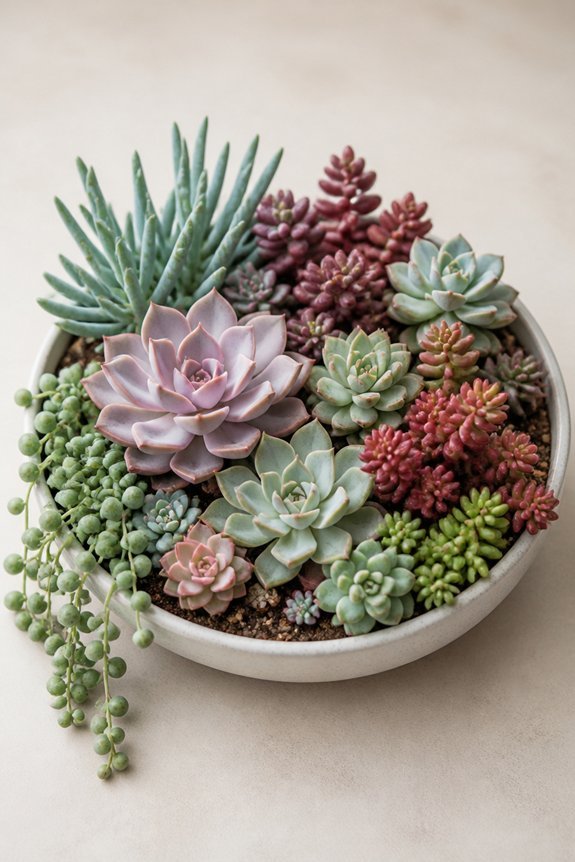
You can almost feel the difference before you see it. A bowl of mixed succulents catches the eye not because everything matches, but because nothing quite does. Deep purple aeoniums sit next to silvery-blue echeveria, while something bright green peeks from behind. The colors talk to each other without competing.
Start with three distinct hues. Maybe a burgundy jade plant, chalky gray-blue pachyphytum, and lime-green string of pearls. Leave breathing room between them so each color stays crisp. Pack them too tight and you’ll get visual mud.
Texture works the same way. Run your finger along a smooth haworthia leaf, then shift to the warty bumps of a titanopsis or the fuzzy velvet of a panda plant. That contrast invites touch even when you’re just looking.
Pair flat rosettes against upright spikes. A low, spreading graptoveria grounds things nicely beside vertical fingers of baby toes or a slim columnar cereus. The shapes create their own little skyline.
These bowls thrive on neglect. A sunny windowsill or patio corner works equally well. Water deeply, then forget them for two weeks. The plants stay sharp, the colors stay true, and you get all the credit for something that mostly takes care of itself.
Trailing Succulents Cascading Over Bowl Edges
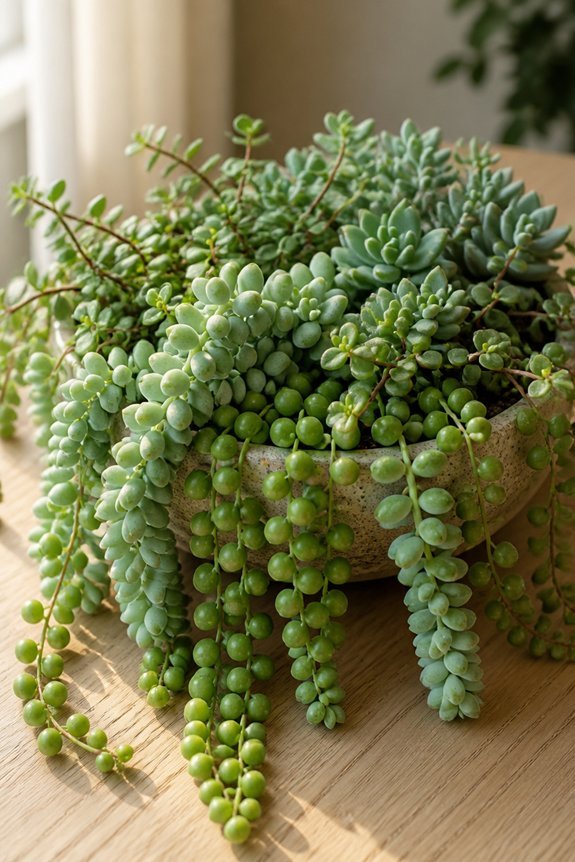
Trailing succulents transform a bowl’s visual impact by softening edges and creating movement downward. String of pearls, burro’s tail, and jade pothos produce elegant cascades that drape over container sides. These varieties grow horizontally rather than upward, filling empty space around the bowl’s perimeter.
Place trailing types at the bowl’s rim, allowing stems to hang freely without obstruction. Position them on a shelf or mantel where gravity can do its work. Combine with upright varieties like echeveria or jade plants for height contrast. The draping effect adds visual depth to shallow bowls.
Bright, indirect light keeps these plants happy. Water less frequently since trailing varieties often occupy outer areas where soil dries slower. This arrangement style works for small desk bowls and larger decorative containers alike. Try clustering three bowls at varying heights for a layered display.
Fairy Garden With Tiny Succulents and Accessories
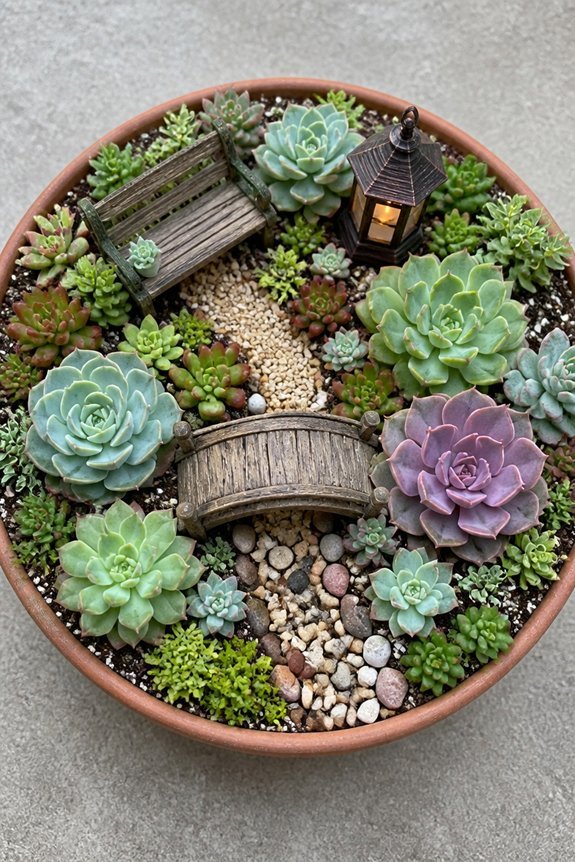
Choosing Plants That Stay Small
Close your eyes and picture a tiny garden tucked inside a teacup. That’s the magic miniature succulents bring to tight spaces.
Sempervivum forms perfect geometric rosettes no bigger than a quarter. Echeveria adds soft, rounded color in pale blues and pinks. Jade plants grow slowly enough to stay charming for years. These varieties keep their composure in shallow bowls where trailing plants would simply escape.
Accessorizing Without Clutter
A miniature wooden bench invites the eye to rest. A tiny ceramic rabbit peeks from behind a stone. These small moments make viewers lean in closer.
Scatter polished river rocks along pathways. Tuck cushion moss between plantings for that lived-in, slightly wild look. One or two well-placed pieces outperform a crowded scene every time.
Container and Care Basics
Shallow bowls need drainage holes. Non-negotiable.
Root rot arrives fast in small spaces with soggy soil. Choose gritty cactus mix and water only when the pot feels light. Morning sun from an east window keeps colors vibrant without scorching delicate leaves. Check soil moisture with your finger weekly. Tiny containers dry out faster than you’d expect, and just as quickly can drown from overattention.
Succulent Bowl With Decorative Stones and Sand
Choose the Right Materials
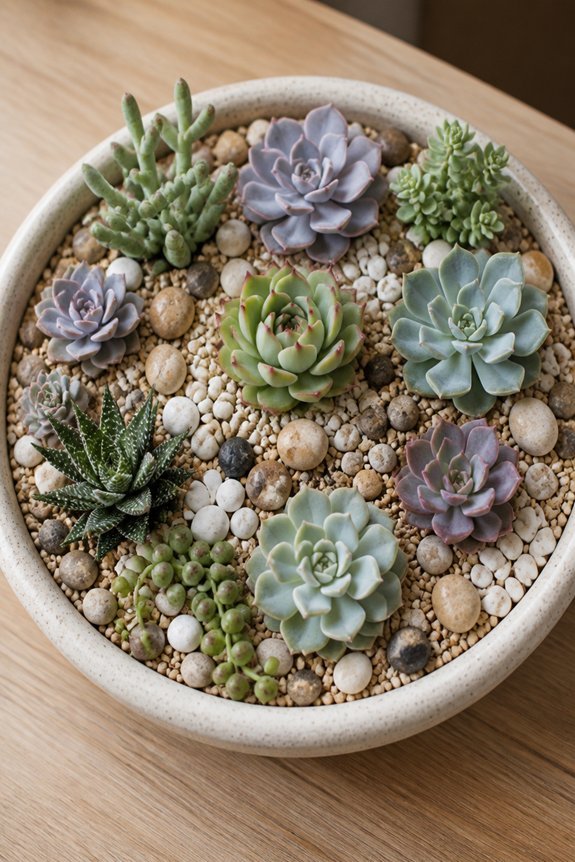
There’s something satisfying about running your fingers through coarse sand before spreading it around your echeveria. Pea gravel, river rocks, and coarse sand each do double duty here. They look good sitting on top of soil while quietly wicking moisture away from delicate roots. No puddles means no rot. Simple as that.
Play with Scale and Texture
Trailing sedum looks best when anchored against something solid. Nestle a few palm-sized rocks at the base and let gravity do its thing. Fill the leftover pockets with marble-sized pebbles. The contrast between rough stone and smooth leaves keeps your eye moving through the arrangement.
Pick a Color Story
Desert bowls come alive with layers of tan and brown sand, almost like a miniature version of those painted canyon walls. Tuck in some smoothed river stones you might have collected yourself. Alpine setups take a cooler turn. Gray slate chips and bright white quartz feel like a mountain afternoon. The trick is building in layers: substrate first, then stone, then that final sand sweep.
Keep It Looking Fresh
Sand settles. Stones wander. Every few weeks, loosen any compacted top layer with a small rake or even a fork. Replace rocks that have rolled out of place. Five minutes of fussing keeps the whole thing looking intentional rather than forgotten.
Minimalist Single-Variety Succulent Display
Curated Simplicity
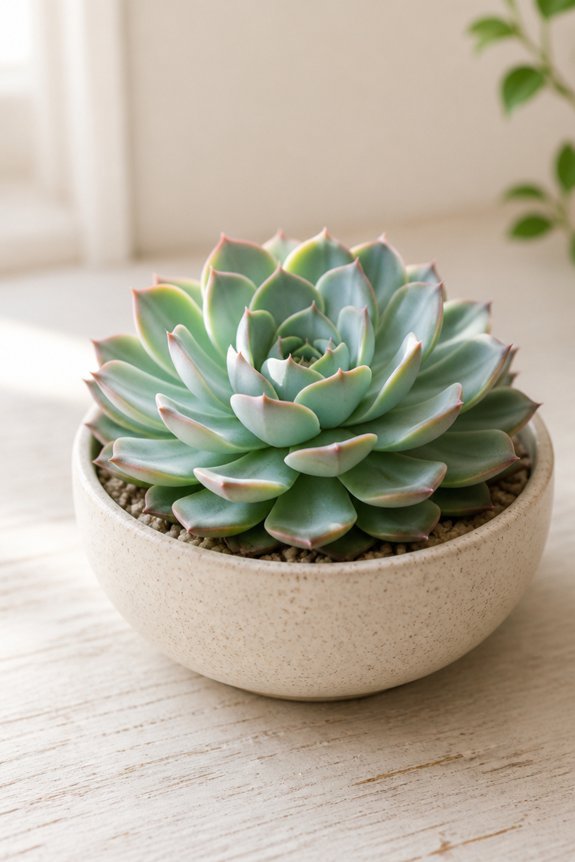
Notice how a single variety reads as intentional rather than sparse. One glance and the eye settles immediately. No competing textures or heights fighting for attention. Just repetition doing the heavy lifting.
Jade plants work beautifully here. So do tight clusters of echeveria or the rosette march of sempervivum. Pick one, commit to it, and let the shape speak.
Effortless Rhythm
Same light. Same water. Same gritty mix. Suddenly your weekend checklist shrinks to a single glance and a occasional sprinkle. No guessing which corner likes drama and which prefers neglect.
Horizontal spreaders like sedum monetum or burro’s tail reward patience with soft, overflowing edges. The bowl becomes a frame. The plant becomes the entire composition.
Beginner-Friendly by Design
One species eliminates the compatibility puzzle. No wondering if your thirstiest guest will drown your desert dweller. No rotating bowls like restaurant tables to satisfy competing needs.
Start with a shallow terra cotta dish or a salvaged ceramic bowl with drainage. Group odd numbers if the scale feels spare. Three, five, seven. The pattern does the styling for you.
Flowering Succulents That Bloom Year-Round
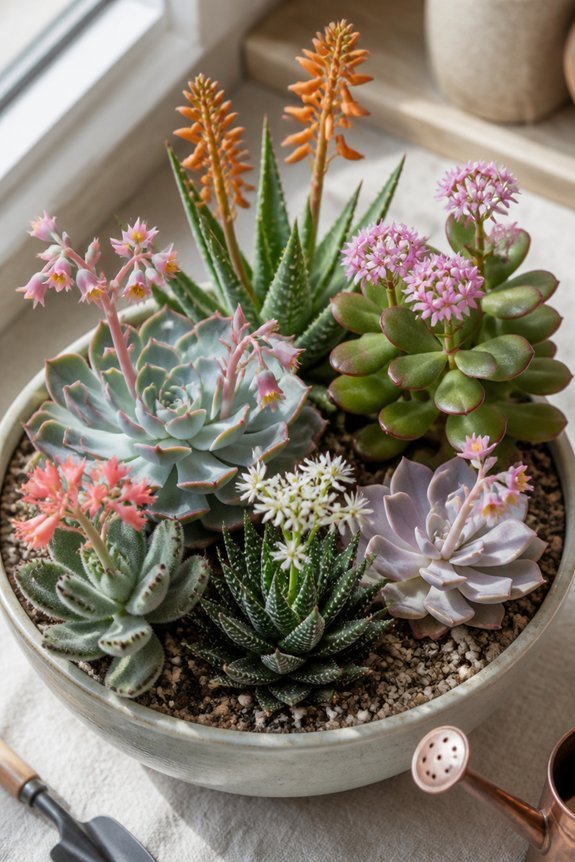
Color arrives predictably when the right succulents fill a bowl. Certain varieties produce blooms throughout multiple seasons, offering consistent visual interest without special care routines.
Echeveria
A windowsill lined with these rosettes catches the morning light beautifully. Come spring, thin stalks shoot up from silver-green centers, carrying clusters of pink and orange bells that sway at the slightest touch.
Tuck them into shallow ceramic dishes where the flowers can cascade over the edge. One happy plant often sends out two or three bloom spikes at once, turning a simple arrangement into something worth stopping for.
Aloe Vera
That familiar spiky silhouette does more than soothe skin burns. January through March, mature plants surprise you with torch-like stems of yellow tubular flowers, each one curved like a tiny banana.
Place a pot near your kitchen window where the winter sun hits strongest. The contrast of cool grey mornings against those warm yellow blooms never gets old.
Sempervivum
Hen-and-chicks spread low and wide, perfect for filling gaps between stepping stones or trailing from weathered troughs. Their star-shaped flowers climb on stems that look almost too delicate for such tough plants.
Pink, red, or yellow, the colors vary by variety. Pick a mix and let them naturalize in an old hypertufa planter. The blooms appear during active growing periods, then retreat until called again.
Jade Plant
There is something quietly celebratory about a jade plant in flower. Those small white or pink starbursts emerge on older, well-established plants, usually when days are short and the air turns crisp.
A friend once mentioned that her grandmother’s jade bloomed every Christmas without fail. The secret was benign neglect, bright light, and the occasional cold night near a drafty window.
Kalanchoe Blossfeldiana
Grocery stores stock these by the dozen for good reason. Dense heads of tiny red, pink, orange, or yellow flowers persist for weeks, asking almost nothing in return.
Treat it like any other succulent between bloom cycles. When flowers fade, snip the spent stems and wait. With enough light, it will cycle back around, often just when you have forgotten to expect it.
Keeping the Show Going
Standard succulent rules apply. Well-draining mix, light that leans toward bright, and water only when the soil has fully dried. Blooming stays reliable when plants sense the shift of seasons, a proper rest period followed by increasing warmth and light.
Rotate pots occasionally so growth stays balanced. Group blooming varieties together for maximum impact, or scatter them through your collection so something is always catching your eye.
Add Texture With Driftwood and Stones
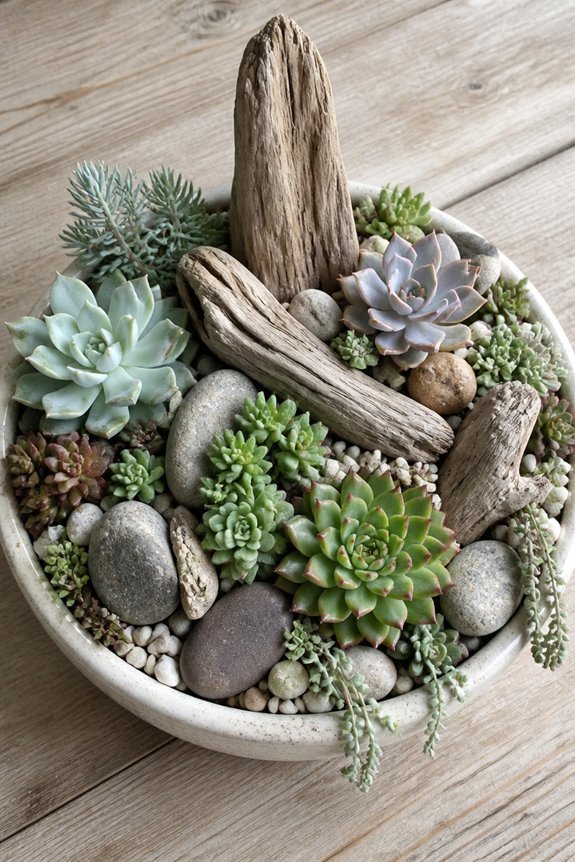
Look closely at a finished bowl arrangement and you’ll notice something interesting. After the echeveria rosettes and trailing sedums finish their bloom cycle, the composition still holds your eye. That’s when weathered driftwood and smooth river stones take center stage.
Grayed driftwood introduces irregular, organic lines that play against rounded succulent silhouettes. Nestle a piece near a clustered aeonium and suddenly the planting gains architectural backbone without feeling forced.
Stones serve quietly behind the scenes. Shake out a layer of fine gravel over the soil surface and water drains faster during humid weeks. Tuck larger rocks between root zones to keep delicate stems from compressing against soggy earth.
Consider height variation when placing materials. A fist-sized stone elevates a small pachyphytum. Fine pebbles define a winding path across the soil. Vertically set driftwood draws the eye upward, anchoring the arrangement like a punctuation mark.
Color temperature matters more than you’d expect. Pale limestone chips bounce light around dim corners. Dark slate or basalt stones ground lighter foliage and add visual heft to spare compositions.
Arrange stones in odd-numbered groupings for natural asymmetry. Press them slightly into the soil so they settle in rather than sitting on top. Small movements like this keep the bowl looking established rather than staged.
Frequently Asked Questions
How Often Should I Water My Succulent Bowl?
One should water succulent bowls sparingly, typically every two to three weeks during growing season. The soil must dry completely between waterings. During winter months, watering frequency decreases considerably. Overwatering remains the primary cause of succulent death through root rot.
What Type of Soil Is Best for Succulent Arrangements?
Like the desert landscape from which these plants hail, succulent arrangements thrive in well-draining soil. A specialized cactus or succulent mix, or standard potting soil amended with perlite or coarse sand, prevents moisture retention and root rot effectively.
How Much Sunlight Do Succulent Bowls Need Daily?
Succulent bowls require six to eight hours of direct sunlight daily for ideal growth. Insufficient light causes leggy, weak plants. Indoor arrangements benefit from bright, indirect light near south-facing windows. Outdoor specimens thrive in full sun exposure.
Can I Propagate Succulents From Leaves in My Bowl?
Yes, one can propagate succulents from leaves found in bowls. The process involves removing healthy leaves, allowing them to dry for several days, then placing them on well-draining soil. With proper moisture and light, new rosettes typically develop within weeks.
What Pests Commonly Attack Succulent Plants and How Do I Treat Them?
A gardener discovered mealybugs infesting her jade plant collection. Mealybugs, spider mites, and scale insects commonly attack succulents. Treatment involves spraying affected plants with neem oil or insecticidal soap, ensuring proper air circulation, and isolating infested specimens immediately.
Conclusion
Creating succulent bowls opens a doorway to low-maintenance gardening, offering practical solutions for any living space. These arrangements, whether open or closed, accommodate various plant types, light conditions, and budget levels. By selecting appropriate containers, decorative elements like stones and driftwood, and suitable succulent varieties, gardeners achieve lasting displays. The minimal care requirements make succulent bowls ideal for busy individuals, while their versatility guarantees aesthetic appeal across different interior styles and preferences.