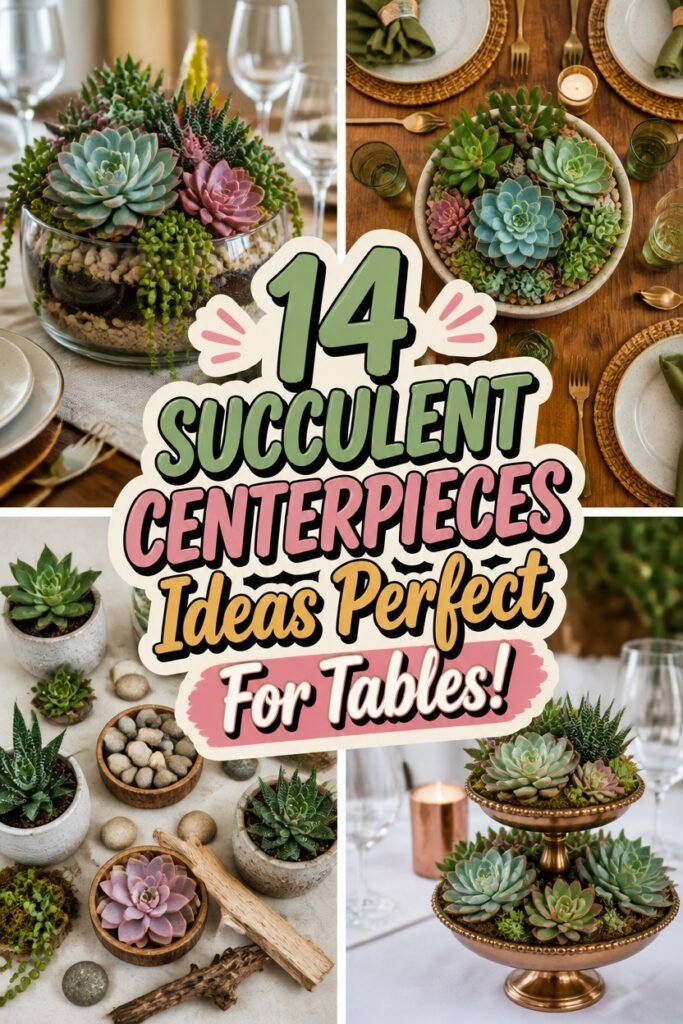
Succulent centerpieces bring quiet charm to any table. These low-maintenance plants pair beautifully with just about any container you have on hand.
You might start with a simple ceramic bowl of echeveria and jade. Or lean into something more modern, like a concrete planter with bold, sculptural textures.
Wooden boxes add warmth. Glass cubes feel fresh and clean. Even vintage teacups can become something special.
The details matter more than you might expect. Plant selection, arrangement heights, and small seasonal touches all shape the final look.
A few thoughtful choices can take your centerpiece from expected to truly your own.
Classic Ceramic Bowl With Mixed Succulents
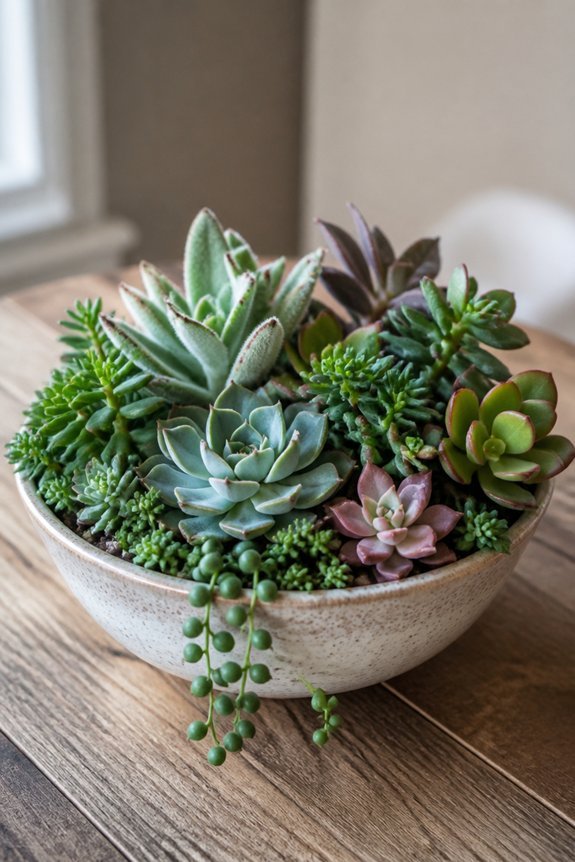
Start with a ceramic bowl that gives your plants room to breathe. Something between 8 and 12 inches across works beautifully. You will want multiple drainage holes, or be ready to add some yourself.
Grab soil labeled specifically for cacti and succulents. Regular potting mix stays too wet. Your plants will rot quickly without fast-draining soil.
Choosing Your Plants
Mix things up with echeveria, jade, and aloe. Each brings something different to the table. Echeveria fans out in tight pink-green rosettes. Jade grows thick, woody stems that look almost sculptural over time. Try tucking in a trailing sedum along the edge for contrast.
Pick plants with varied heights and textures. Soft against spiky. Compact beside cascading. The combinations are endless and completely up to you.
Arranging Your Bowl
Place your tallest plant first. Center or back placement works best. This prevents shadows from falling across smaller neighbors.
Work outward with progressively shorter varieties. Keep the front edges low and open. Everyone gets their fair share of sunlight this way. Plus, you can actually see each plant instead of hiding the little guys in back.
Step back occasionally. Rotate the bowl. Adjust until the balance feels right. There is no perfect formula here.
Also read: 16 SUCCULENT GARDEN DESIGN Ideas That Feel Modern!
Wooden Box Succulent Arrangement With Trailing Varieties
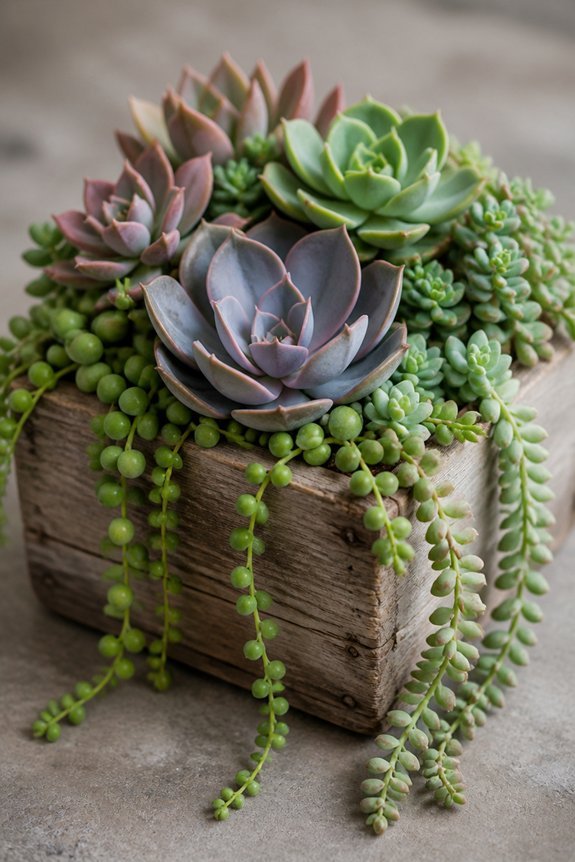
Wooden boxes breathe. They let water escape through tiny gaps. Root rot stays away.
This matters for trailing succulents. String of pearls look stunning spilling over edges. Burro’s tail softens corners beautifully. Even jade plants can cascade when given room.
Pick a box six to eight inches deep. Shallow roots need space to spread. Place trailing varieties along the sides for that soft, flowing look. Add upright plants like aloe or echeveria in the middle. They anchor the arrangement.
Seal the wood once yearly. A quick brush-on coat protects against moisture. No need for fancy products. Basic outdoor sealant works fine.
These boxes fit anywhere. Dining tables, patios, sunny windowsills. Move them around freely. They’re lighter than ceramic too.
Minimalist Glass Cube Centerpiece
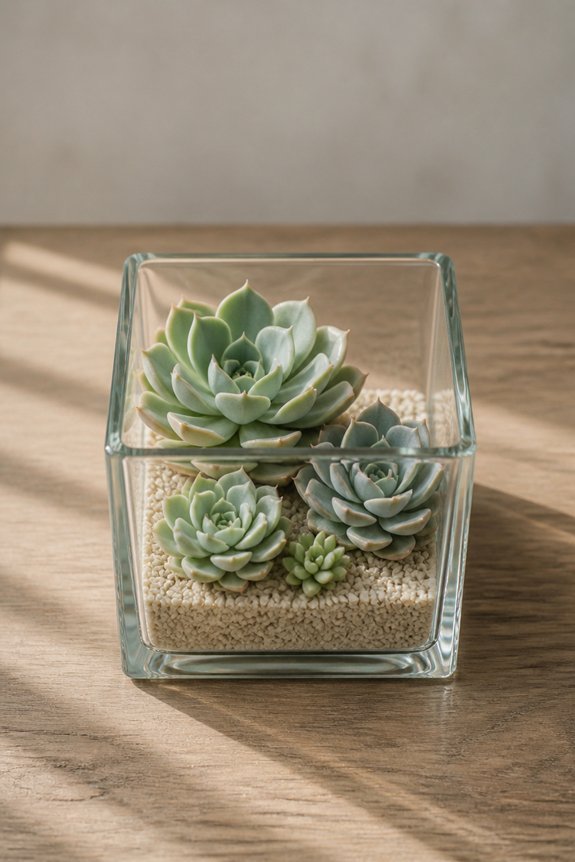
Glass cubes flip the script on traditional planters. You see everything. Roots, soil, the whole plant from every angle.
The clear walls create instant drama against wood furniture. Modern spaces love this look. Dining tables, desks, shelves—glass cubes fit right in.
Pick succulents that handle the spotlight. Echeveria fans out beautifully. Jade plants stand up straight. Sempervivum stays compact and charming.
These plants need little soil depth. That helps in shallow cubes. But watch your drainage holes. No one wants to spot sitting water through transparent walls.
Sizes run 4 to 8 inches. Small cubes cradle single specimens. Larger ones hold curated groupings.
Keep the glass clean. Fingerprints steal the show otherwise. A quick wipe restores that crystal clarity.
The neutral surface plays nice with any color scheme. It never fights your existing decor.
Tiered Succulent Tower: Drama Through Height
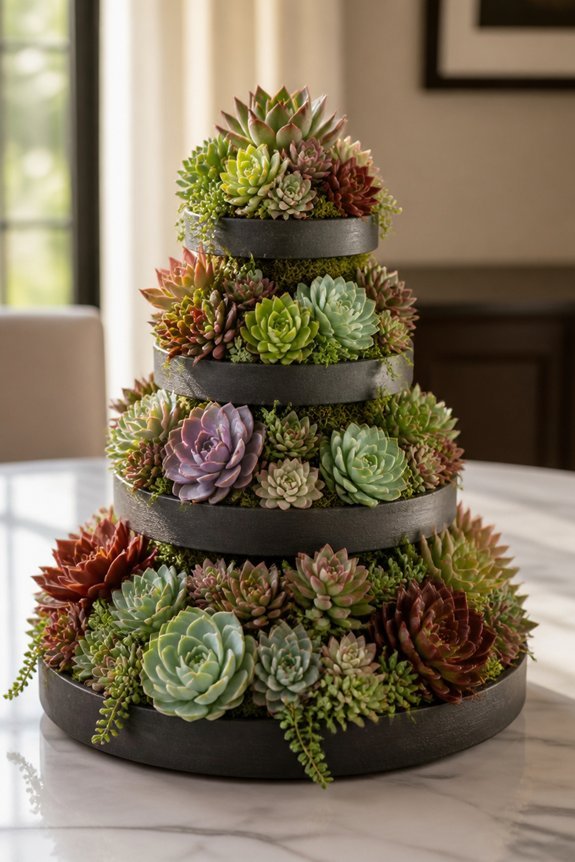
Vertical arrangements solve space constraints while catching the eye in crowded rooms. Tiered towers elevate succulents using stacked containers, shelving units, or custom stands. Height becomes your ally here.
Visual interest builds as the gaze travels upward. Popular setups include pyramid shapes with three to four levels, spirals wrapping a central pole, and asymmetrical stacks mixing container sizes. Each configuration tells its own story.
Echeveria, jade plants, and aloe varieties thrive in these setups. Their compact growth keeps the silhouette clean. Air circulation improves with elevation, cutting down moisture problems. Space your plants thoughtfully. Crowding ruins the drama. The right spacing preserves that striking vertical profile that makes this style a true centerpiece.
Desert Succulent Rock Garden In Miniature
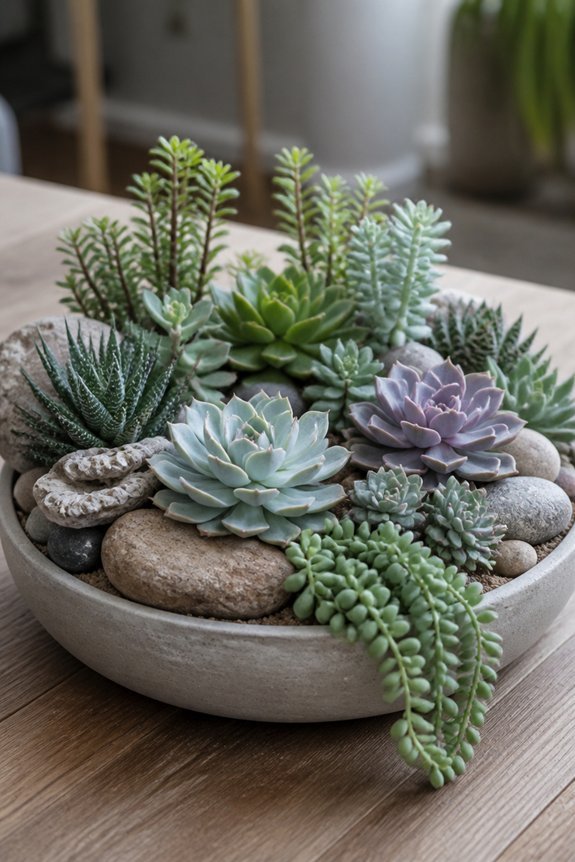
You want a slice of desert life on your windowsill. These tiny gardens pack arid landscapes into compact containers. They become conversation starters that practically care for themselves.
Succulents, rocks, sand, and gravel recreate authentic desert scenes. Echeveria brings rosette shapes. Jade plants add vertical interest. Aloe works for texture variation. Rocks do double duty here. They elevate the visual appeal and improve drainage beneath the soil. Fine gravel or sand fills gaps between elements. This finishing touch makes everything look naturally settled.
Shallow containers suit these plants perfectly. Succulent roots spread wide but stay shallow. Position your garden where it catches bright, indirect light. East-facing windows work beautifully. Water sparingly, about once monthly. Stretch that to every six weeks in winter when growth slows.
Hanging Succulent Wreath Centerpiece
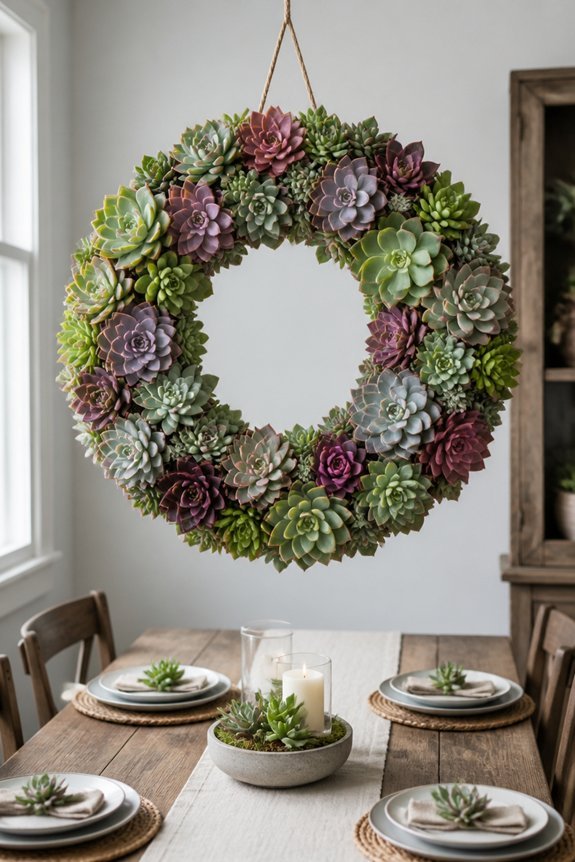
Stationary desert gardens have their place. But hanging succulent wreaths? They take things vertical.
These circular arrangements turn empty walls into living art. Think echeveria rosettes, trailing sedum, and plump aeonium clustered on moss-lined wire frames. Each plant gets breathing room. Air flows freely. Roots stay happy and rot-free.
Mount yours on a fence, pergola, or sunny wall. Bright indirect light works best. Morning sun, afternoon shade? Perfect.
Watering is simple. Mist occasionally. Water sparingly. Gravity helps excess moisture escape, so overwatering is hard to do.
Quick tip: Start with a pre-made wire frame from any garden center. Soak the moss first, then tuck in rooted cuttings. They’ll anchor themselves in weeks.
The result looks curated year-round with barely any effort. Drought-tolerant means forgiving. Neglect won’t kill it. Forget to water for two weeks? Your wreath won’t mind.
Copper Succulent Centerpiece With Monochromatic Greens
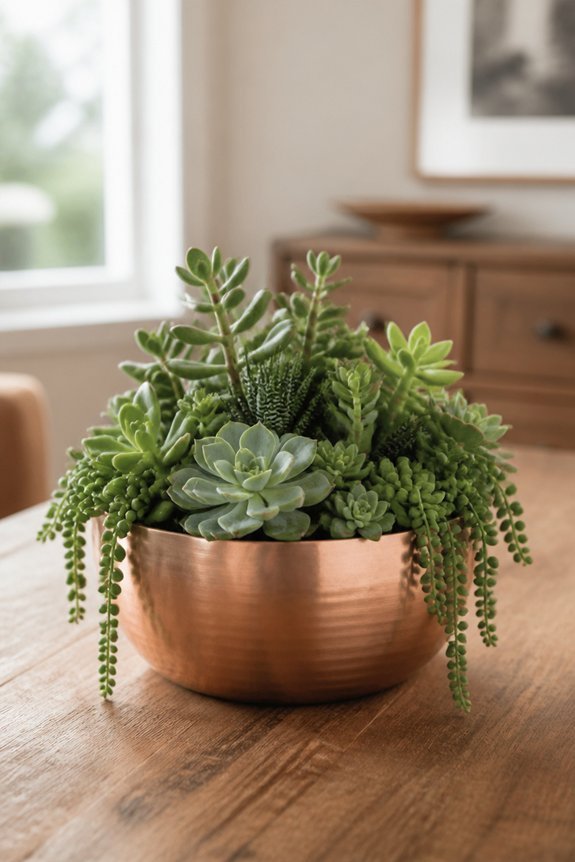
Copper and green make a quiet statement together. The warm metal plays beautifully against cool foliage. You get balance without clutter.
Pick jade plants, echeveria, or aloe. They stay green year-round. No surprises, no fading.
Bowls work. So do tall cylinders. Match the container to your table space and mood.
Cluster plants at different heights for depth. Let trailing types spill over edges. Keep something upright in the middle for structure.
Always check for drainage holes. Copper holds water, and succulents hate wet roots.
This style suits formal dinners, minimalist homes, or any table needing calm elegance.
Beachside Succulent Centerpiece With Driftwood
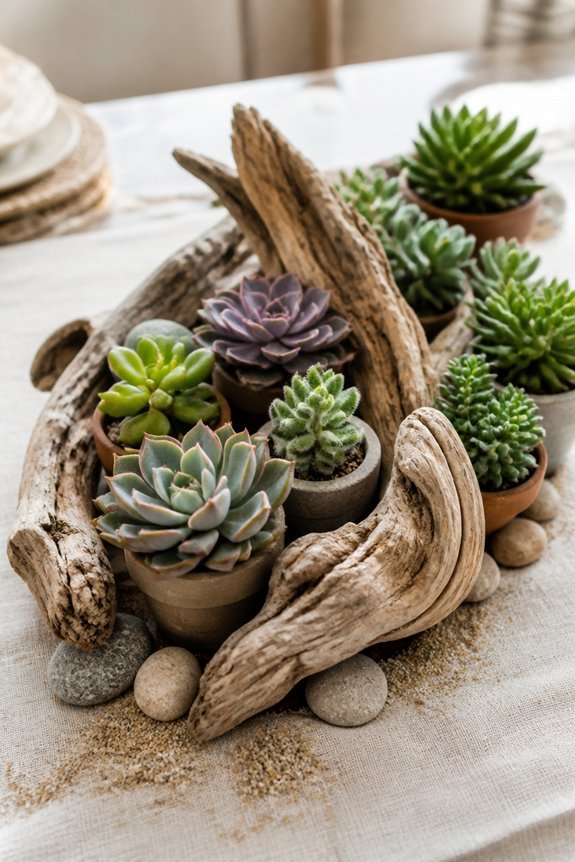
Copper arrangements keep things tight and controlled. Beachside designs do the opposite. They celebrate texture, imperfection, and the random beauty of found materials.
Start with driftwood. Look for pieces with interesting curves, holes, or gnarled sections. These natural pockets hold your plants perfectly. Echeveria, jade, and sempervivum all work well here. The weathered gray of the wood plays beautifully against their plump, colorful leaves.
Fill the empty spaces with sand, tiny pebbles, or broken shell pieces. This isn’t just decorative. It holds the plants steady and keeps the coastal vibe authentic. You barely need soil for this style, which makes shallow driftwood pieces surprisingly practical.
Stick to muted colors: soft greens, warm grays, sandy beiges. These pieces belong outside. Try them on picnic tables, patio surfaces, or protected porches. Just make sure your spot matches what succulents like: good light and not too much humidity.
Water lightly when the soil feels dry. Every few months, rotate or tuck wayward stems back into place. The driftwood itself will keep changing, silvering and smoothing as seasons pass. Let it. That evolving character is part of the charm.
Mirrored Base Succulent Arrangement
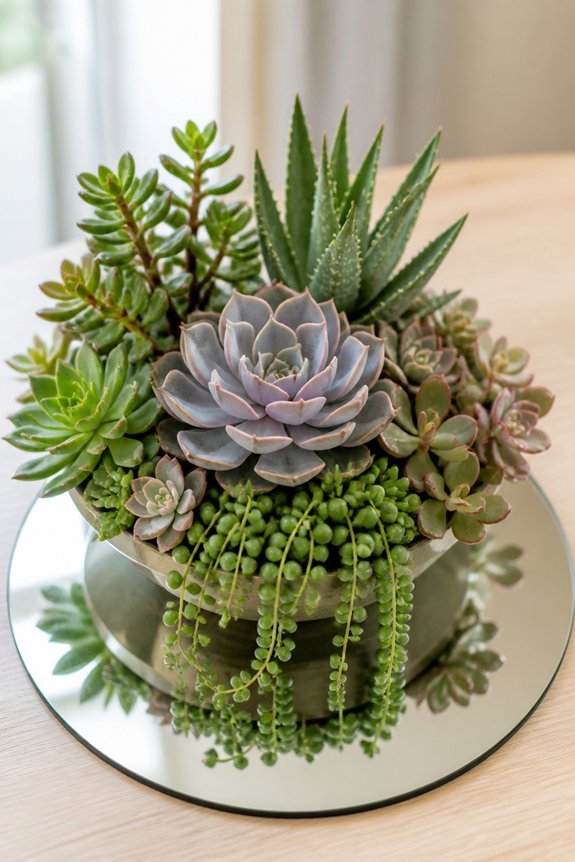
Light changes everything. A mirrored base takes your succulent display from simple to stunning. The reflection doubles what you see. It adds depth. Your arrangement suddenly looks bigger and more alive.
Place shallow containers directly on the mirror. Echeveria, jade plants, and sempervivum sit perfectly this way. The smooth glass against rough leaves creates instant contrast. Try round mirrors for soft spaces. Use rectangular ones where you want clean lines.
This setup works anywhere you need a focal point. Dining tables glow in evening light without extra lamps. Console tables feel more complete. Even office desks benefit from that small touch of green and shine.
Keep your mirror dust-free. A quick wipe every few days preserves that clarity. Your display stays fresh all season long.
Vintage Teacup Succulent Centerpiece
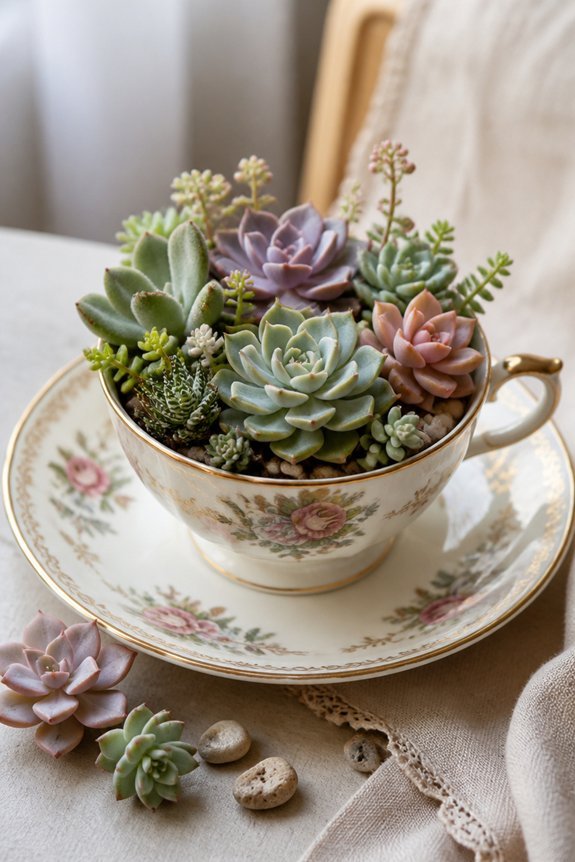
Mirrored bases have their place. But vintage teacups bring something warmer to your table.
Thrift stores and family attics are gold mines for these finds. Echeveria fits perfectly inside. Sedum too. Jade varieties work just fine.
Drilling drainage holes takes a power tool. No drill? Layer small rocks and activated charcoal instead. This simple trick keeps roots happy.
The handle is the secret weapon. Move your arrangement from dinner table to windowsill without disturbing a single leaf.
Stack cups at different heights. Use matching sets for formal occasions. Mix patterns for something more playful and unexpected.
Small tables love this idea. Narrow ledges do too. You repurpose something already beautiful. No wasted space. No complicated setup.
Just charm, utility, and a little green life where you need it most.
Modern Concrete Planter With Bold Textures
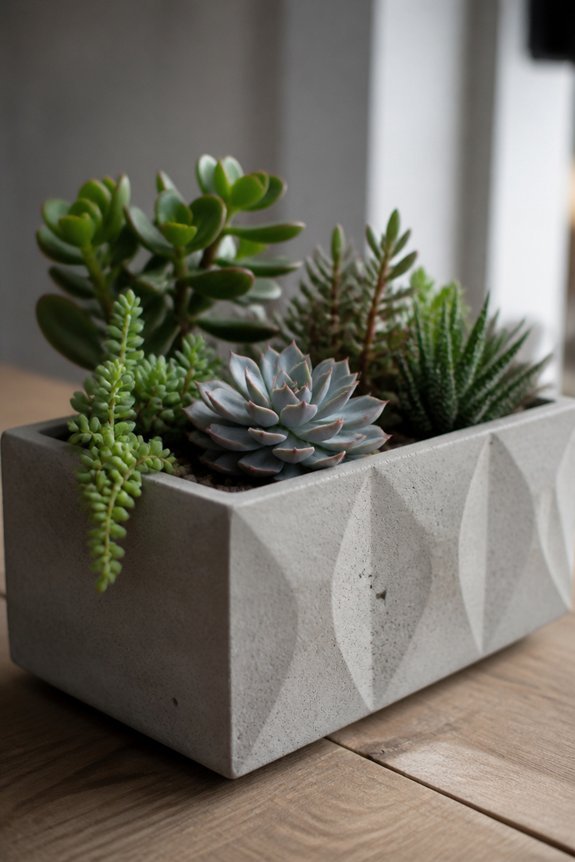
Concrete planters bring modern edge to any space. They pair beautifully with delicate vintage teacups for visual contrast.
Think minimalist. Think industrial. These containers fit right in.
The surfaces tell stories. Rough textures catch light differently throughout the day. Each planter feels handmade because it essentially is.
Succulents love these homes. Echeveria works wonderfully here. So do Jade plants and Aloe. Their shapes echo the planter’s bold geometry.
Try this: pick foliage with saturated colors. Deep greens. Purples. Mint tones. The gray backdrop makes everything pop.
Layer your plants by height. Mix leaf textures for depth. Small rosettes next to spiky varieties create instant visual rhythm.
Place them anywhere. Dining tables. Office desks. Floating shelves. They handle temperature swings and moisture without complaint.
Sizes run the gamut. Tiny pots for single specimens. Long rectangular vessels for dramatic centerpieces. Match the scale to your space.
Seasonal Succulent Centerpiece With Flowering Varieties
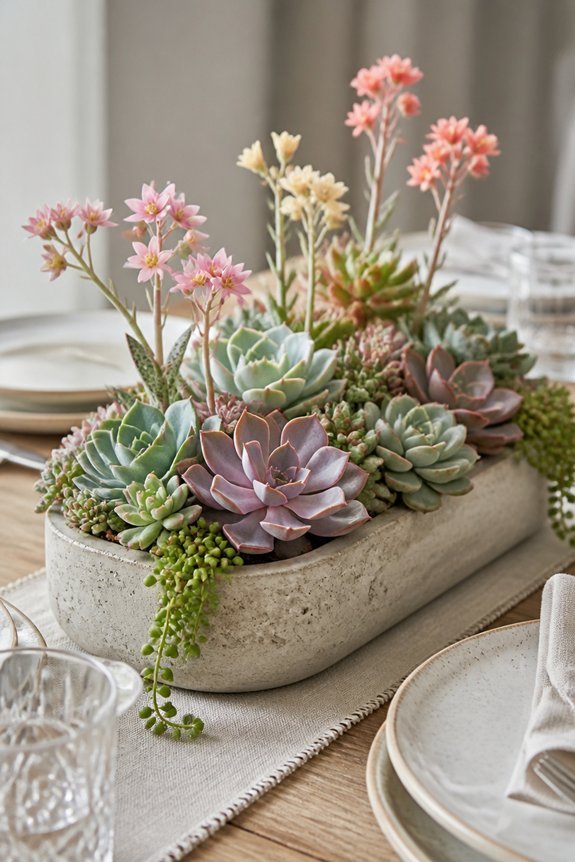
Your table display can change with the seasons. Spring brings Echeveria elegans and its soft pink blooms. Summer lights up with Aloe flowers in sunny yellows and oranges. Sedum varieties add rich burgundy and rust tones come fall. Winter calls for hardy Sempervivum, pushing up tiny pink and red flowers even in cold months.
Mix flowering and non-flowering types for best results. Try Graptopetalum next to blooming Kalanchoe. You get texture plus a color boost. Keep containers simple. Neutral pots let the flowers shine without distraction. Swap out plants as seasons turn. Your centerpiece stays fresh all year long.
Choosing the Right Succulents for Your Design Style
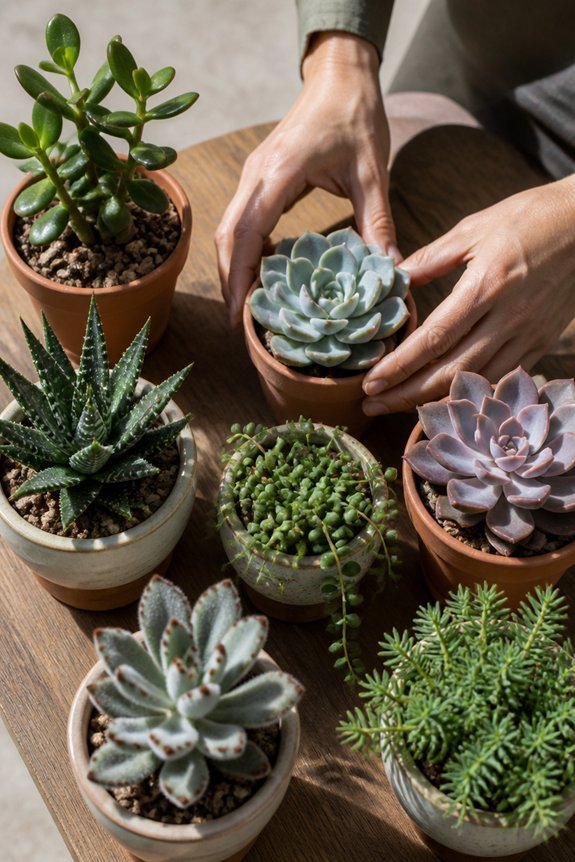
Each succulent brings its own personality to your space. Start by noticing what catches your eye. Clean lines or soft curves? Bold statement or gentle accent?
Modern spaces love structure. Think Aloe with its sharp, reaching arms. Agave forms perfect spirals that feel almost sculptural. These plants hold their shape year-round. No messy growth to clutter your clean aesthetic.
Rustic rooms want something looser. String of Pearls spills over edges like green waterfalls. Donkey Tail drapes softly from shelves. Both create that effortless, gathered-from-the-garden feeling.
Color sets the mood completely. Echeveria blushes in warm pinks and peaches. Perfect for adding warmth to neutral rooms. Jade stays reliably deep green. It anchors traditional spaces without fighting other elements. Want drama? Aeonium goes dark purple, nearly black. Stunning against white walls or light wood.
Your container finishes the story. Concrete pots speak minimalist fluently. Metal adds industrial edge. Terracotta warms everything up instantly. Match the vessel to your vibe, not just your plant.
Size surprises people most. That tiny two-inch Sedum triples in months. Agave stays manageable for years, then suddenly demands space. Check mature height before you buy. A cramped succulent never looks right. Leave room to grow. Your future self will thank you.
Beginner’s Budget-Friendly Propagation Centerpiece
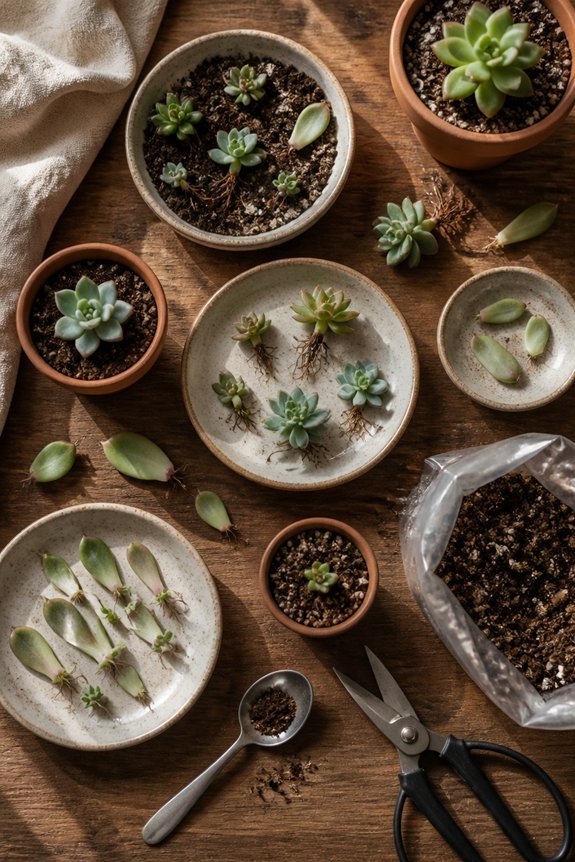
Skip the garden center. Your next centerpiece starts with fallen leaves.
Collect plump, healthy leaves from echeveria, jade, or sedum plants. Ask a friend with succulents. Check clearance racks for dropped leaves. Most folks will share freely.
Set them on dry, gritty soil in something shallow. A recycled pie tin works beautifully. Glass jars and wooden trays do too. No drainage hole? Add extra perlite. Root rot kills propagations fast.
Now comes the interesting part. You actually watch them grow. Roots curl like tiny white threads. Miniature rosettes push upward. This living display becomes your centerpiece during the weeks it takes to establish.
Arrange your rooted babies in a low bowl when ready. Pack them snug. They will fill out together. You spent almost nothing. You learned timing, patience, and how succulents want to grow.
Your table holds a story now. Not just plants.
Frequently Asked Questions
How Often Should I Water Succulent Centerpieces to Keep Them Healthy?
Succulents require infrequent watering, typically every two to three weeks during growing seasons. One should allow soil to dry completely between waterings. During winter months, owners should reduce frequency considerably, watering only once monthly or less.
What Type of Soil Is Best for Planting Succulents in Containers?
Succulent enthusiasts could drown in the ocean of soil options available. They should use well-draining cactus or succulent-specific soil mixed with perlite or coarse sand. This prevents root rot and guarantees ideal growth in container gardens.
How Much Sunlight Do Succulent Centerpieces Need Daily for Optimal Growth?
Succulents require six to eight hours of bright, indirect sunlight daily for ideal growth. They thrive in well-lit locations near windows. Insufficient light causes them to become pale and stretched, while excessive direct sun may scorch their leaves.
Can I Use Regular Potting Soil or Do I Need Special Cactus Soil?
One should use cactus or succulent-specific soil rather than regular potting soil. Standard potting soil retains excessive moisture, which causes root rot in succulents. Specialized soil contains perlite or sand, ensuring proper drainage these plants require.
How Do I Prevent Root Rot in Succulent Arrangements With Drainage Issues?
One prevents root rot in arrangements with drainage issues by using well-draining soil, reducing watering frequency, adding drainage holes to containers, and ensuring air circulation around plants. These measures keep roots dry and healthy.
Conclusion
Succulent centerpieces transform tables through diverse styles, from ceramic bowls to concrete planters. As the saying goes, “bloom where you are planted”—these arrangements bring nature indoors affordably. Whether selecting echeveria, jade, or trailing varieties, gardeners can match designs to personal preferences. Beginner propagation projects offer budget-friendly options, while seasonal additions maintain visual interest. Proper plant selection, suitable containers, and thoughtful arrangement create functional, attractive tabletop displays year-round.