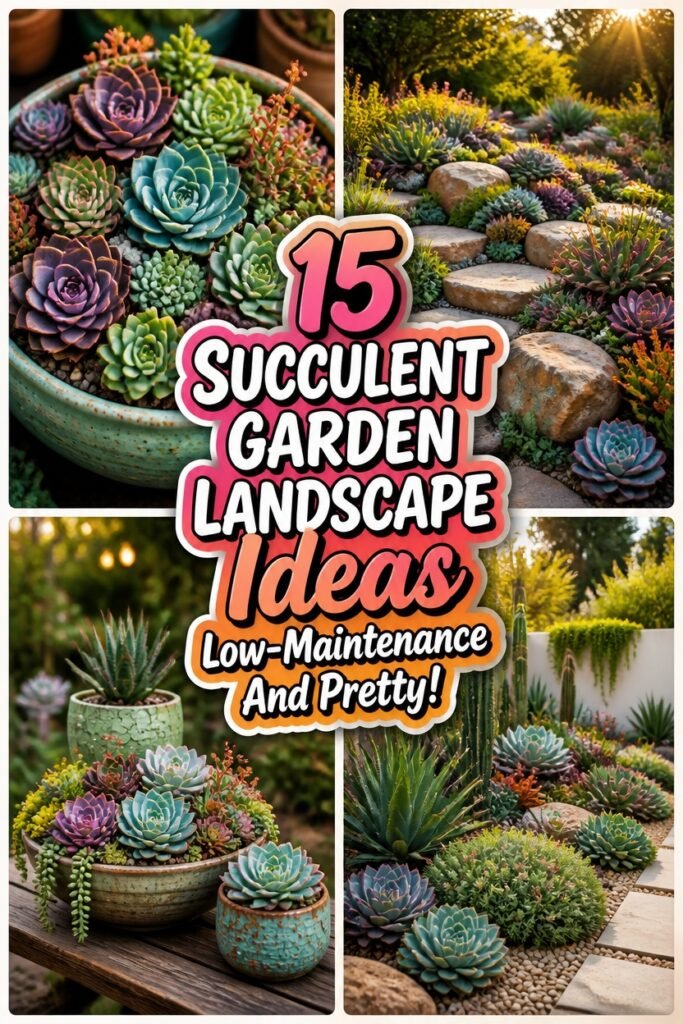
Succulent gardens have a way of making outdoor spaces feel effortlessly put together. They ask so little of you, yet give back so much texture and quiet beauty.
Rock gardens, living walls, and clustered containers each offer their own take on this laid-back approach to landscaping. The key is matching the method to your space and your rhythm of life.
Good drainage sits at the heart of every thriving succulent planting. Raised beds and gritty, fast-draining soil mixes make all the difference between plants that survive and ones that truly flourish.
From sun-bleached desert palettes to seasonal pops of color, there is plenty of room to play.
These ideas touch on the basics: how to build, what to use, and which plants play nicely together.
Rock Gardens: Bold Succulents on Stone
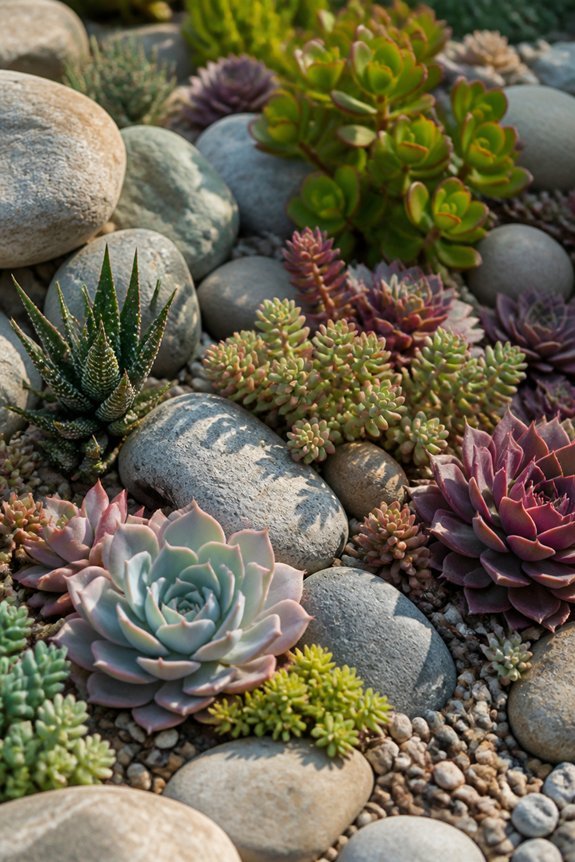
Ready to start your own rock garden? Picture rugged stones hugging plump, colorful succulents that practically take care of themselves.
This style shines in tricky spots. Poor drainage? Limited water? No problem. Sedum spreads like a living carpet between cracks. Sempervivum forms tight rosettes that laugh off frost. Echeveria adds soft, sculptural shapes in blues and pinks.
Build it right
Stack stones in small groups rather than neat rows. Nature scatters rocks randomly, so should you. Tuck plants into crevices where roots can grip. Add coarse gravel or gritty sand to fill gaps. This controls weeds and finishes the look without extra fuss.
Rocks do hidden work too. They warm roots on cool mornings and block harsh afternoon sun. Moisture stays in the soil longer. Your plants stay happier.
New gardens need light watering for the first month or two. After that, rainfall usually suffices. Pull stray weeds when you spot them. That’s honestly about it.
Start with three to five stone sizes mixed together. Blend one trailing variety with two upright shapes for instant depth. Your eye will thank you.
Also read: 16 SUCCULENT GARDEN DESIGN Ideas That Feel Modern!
Container Collections: Mix and Match Arrangements
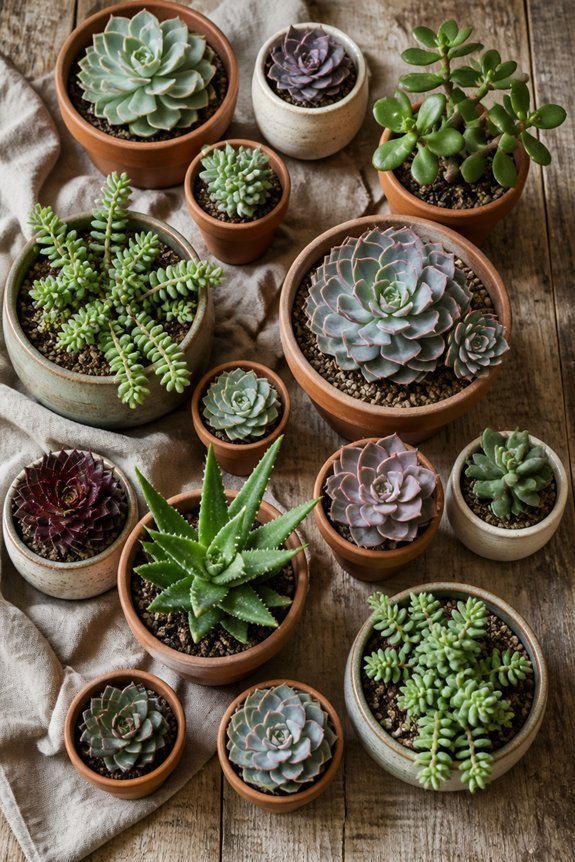
Want flexibility? Container collections let you rearrange whenever you like. Patios, balconies, and entryways come alive with mixed arrangements of different succulents.
Shallow ceramic pots suit echeveria and sempervivum perfectly. These varieties like their roots snug and shallow. Going deeper? Pick trailing types instead. String of pearls and burro’s tail love cascading over edges.
Group small pots together for instant impact. You can tend each plant separately this way. Just remember drainage holes. Skip them and you risk root rot.
Terra cotta dries faster than glazed ceramic. This matters for drought-tolerant species. Mix upright, rosette, and trailing forms in one container. The dimension this creates surprises people every time.
Best part? No permanent commitments. Shift things around with the seasons. Your outdoor space stays fresh without major hassle.
Choosing Rocks and Soil: Materials for Healthy Drainage
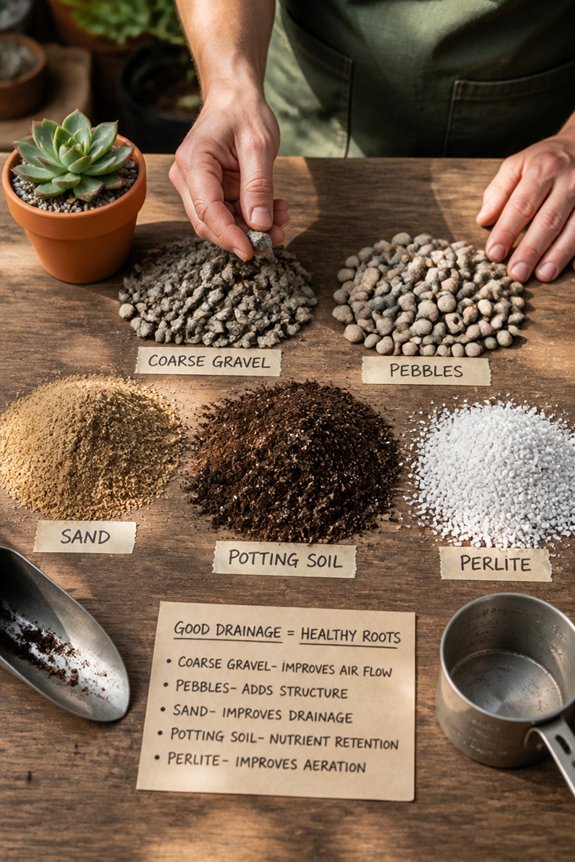
Three things decide if your succulents thrive or struggle. Drainage speed matters. Soil composition matters. Rock selection matters too.
Start with your soil mix. You need coarse ingredients. Perlite works great. Pumice works well too. Sand is another solid option. These stop water from pooling around roots. Regular potting soil holds too much water. That causes root rot fast. Try this blend: one part cactus soil, one part perlite, one part coarse sand. Your plants will thank you.
Now pick your rocks. Gravel goes at the bottom. Pea gravel works. Lava rock works too. These create drainage layers. Water flows away from roots quickly.
Top dressing rocks do double duty. They help water drain around the plant base. They also keep soil from drying out too fast. Pick the right materials from the start. You’ll avoid the soggy soil problems that kill so many succulents.
Vertical Succulent Walls: Maximize Small Spaces
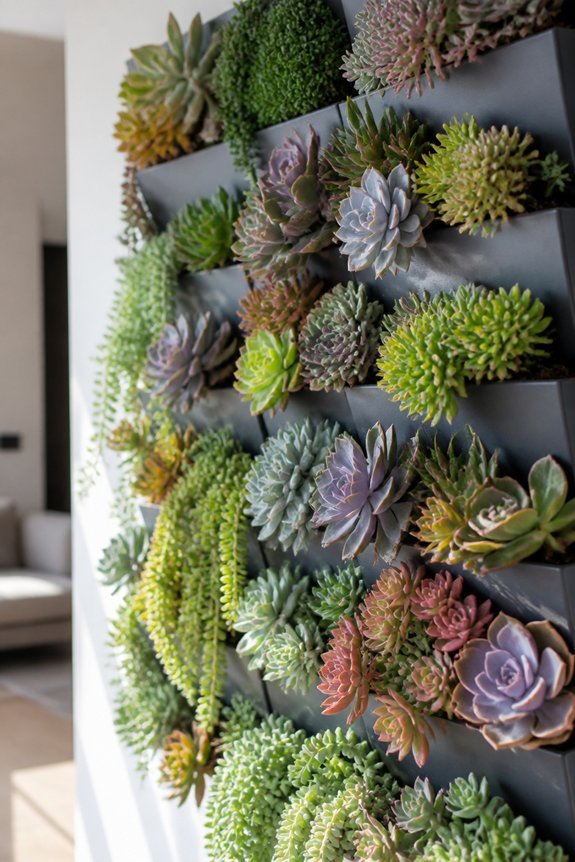
Small gardens need smart solutions. Vertical walls let you grow succulents without surrendering precious floor space.
You have plenty of frame options. Wooden frames suit beginners. Metal grids last longer outdoors. Fabric pockets work well for odd spaces. Sedums, echeveria, and jade plants fit these setups perfectly. Their roots stay shallow. They forgive dry spells too.
Drainage matters more than looks here. Water must escape downward, not pool against your wall. Add protective backings behind any structure. Wooden pallets turned sideways make budget-friendly frames. Layer them with landscape fabric and soil. For busier schedules, living wall kits include slow-drip irrigation. Set timers and forget daily watering.
Light shifts wall by wall. South faces get harsh, direct sun most hours. North stays softer and cooler. Match your plant picks to these conditions. Crassula and haworthia handle lower light. Echeveria demands that bright southern exposure.
Your unused walls become living art. Ground space stays free for herbs, seating, or pathways. That is efficient gardening.
Desert Landscape Design: Embrace the Arid Aesthetic
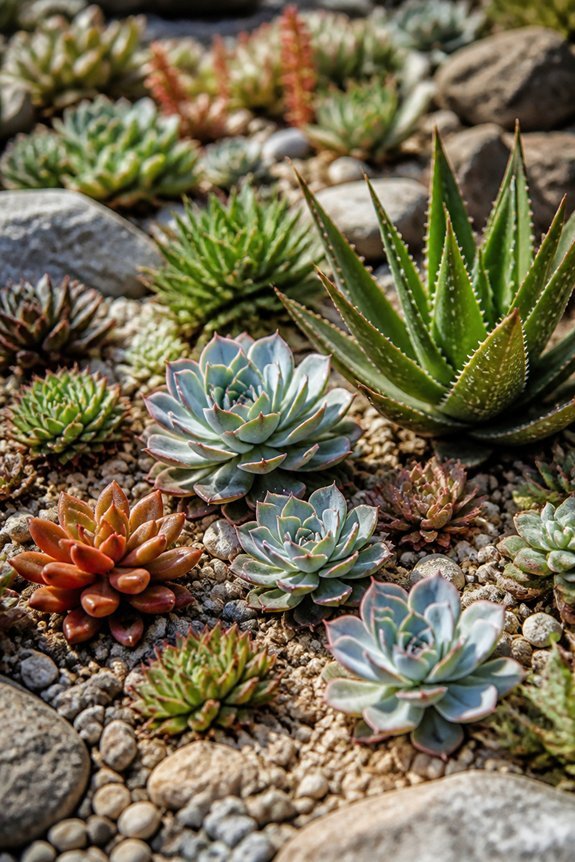
Desert landscaping makes dry spaces beautiful without the hassle of constant watering. You get a garden that actually likes the heat. Native plants, sandy soil, and smart irrigation do the heavy lifting. Your outdoor space stays green and thriving with minimal effort.
Start with striking desert plants. Agave commands attention. Echeveria adds soft color. Aloe handles neglect like a champ. None of them need fertilizer or frequent watering. Spread decorative rocks and gravel between plantings. They lock in soil moisture and make garden edges look crisp. Flagstone paths give you solid footing and visual structure. No mowing required here.
Replace thirsty lawn grass with ground covers like creeping sedum. It spreads low and soft across the soil. Layer your plants by height. Tall specimens in back. Mid-size in the middle. Low growers up front. Everyone gets their share of sunlight.
Build raised beds or gentle slopes for drainage. Water needs somewhere to go during rare heavy rains. This style fits naturally across the Southwest. It also helps any homeowner facing water restrictions or drought conditions.
Pathway Borders: Edge Your Garden With Succulent Lines
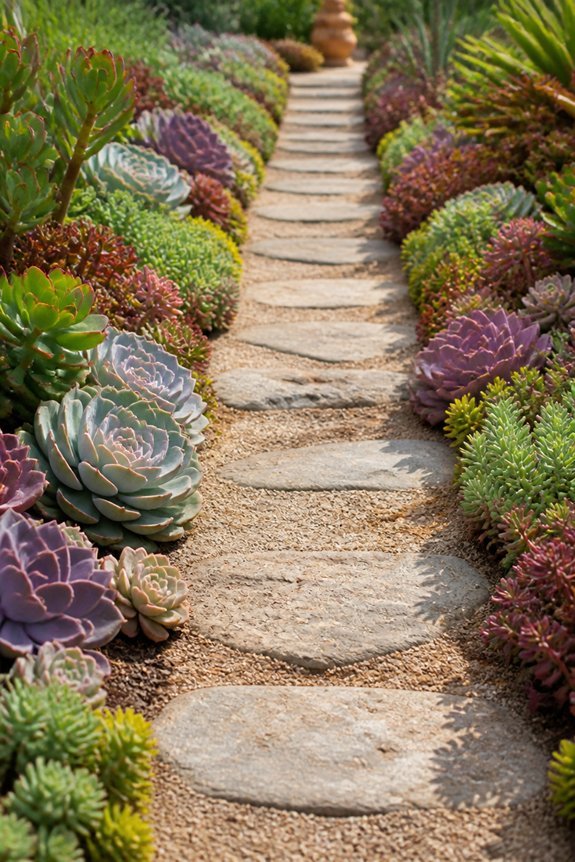
Succulents make perfect pathway borders. They stay low to the ground. They need little care.
Sedum, echeveria, and sempervivum work beautifully for this job. They handle occasional footsteps near the edge. They create soft boundaries between your garden spaces.
These plants save you water. Their shallow roots stay out of trouble. They won’t crack your pavers or mess with irrigation lines underneath.
Sedums spread slowly on their own. They fill in gaps naturally. You won’t be fighting back overgrowth every weekend.
Color choices abound. Jade plants bring rich green tones. Echeveria adds splashes of pink and purple. Mix them together for living ribbons of color along your walks.
For planting, amend your soil for drainage first. Space plants six to twelve inches apart. Check the mature width on your plant tags. Give them room to grow into their full shape.
Raised Beds: Elevated Growing for Better Drainage
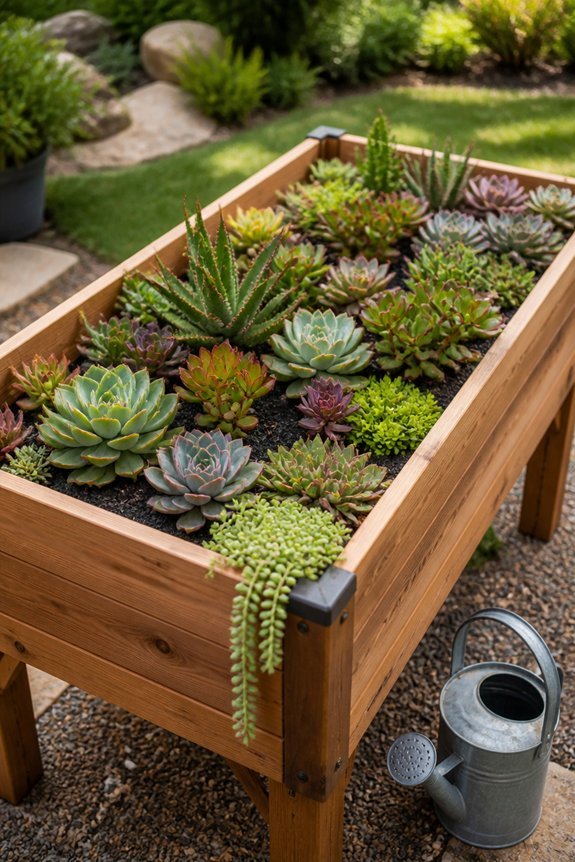
Raised beds solve drainage problems fast. Your succulents stay healthier when water flows through rather than pooling around roots.
Cedar and galvanized metal both last years. Composite works too if you prefer a modern look. Aim for 12 to 18 inches deep. Most succulent roots spread comfortably in that space.
Try a simple soil mix. Blend regular potting soil with perlite and coarse sand. A 2:1:1 ratio drains well without drying out too fast.
You will notice fewer pests crawling up into elevated soil. Your back will thank you during planting and weeding sessions. Tight patios and cramped corners become workable growing spots. Even lousy native soil stops mattering when you build above it.
Leveraging Color and Texture: Pairing Contrasting Varieties
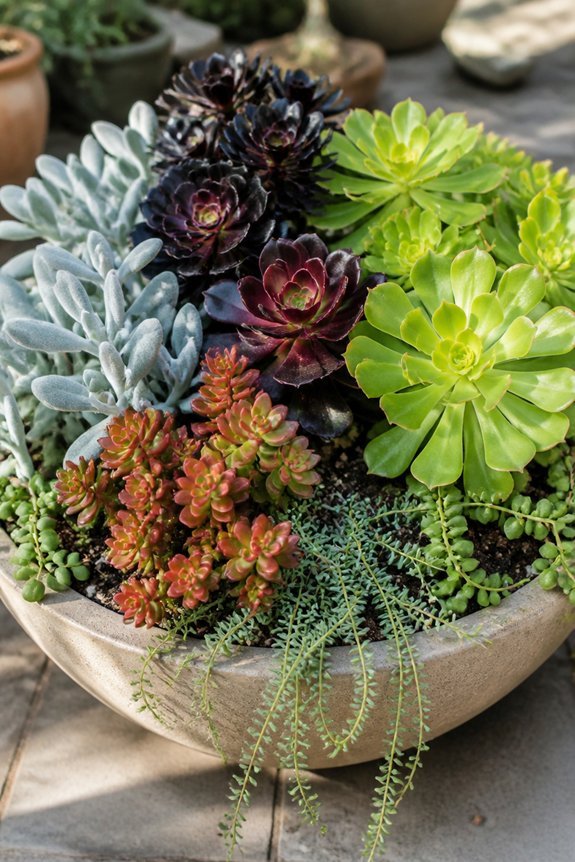
Plant selection brings your raised beds to life. Think of it as painting with living colors.
Start with contrast. Blue-gray Echeveria pops beautifully against deep burgundy Aeonium. The pairing feels intentional, not accidental.
Texture matters just as much. Mix spiky Aloe with soft rosette Sempervivum. Run your fingers across both. Feel the difference?
Height keeps things organized. Tall Crassula goes in back. Low Sedum stays up front. Everyone stays visible. No hiding in shadows.
Repeat your color groups throughout the bed. This ties everything together. Variegated Graptoveria works wonders tucked among solid neighbors. It catches the eye without stealing the show.
Small choices add up. Your raised bed becomes a balanced display that feels both planned and natural.
Groundcover Blankets: Low-Spreading Varieties for Wide Areas
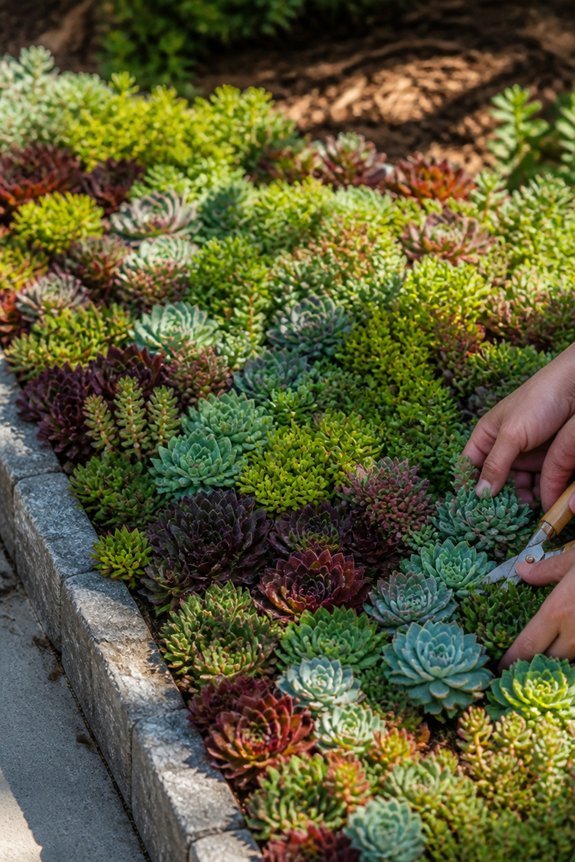
Spreading succulents fill large spaces fast. They stay low to the ground. They need little care.
Sedum works great for this job. Creeping sedum stays under a foot tall. Stonecrop spreads quickly. Dragon’s blood sedum adds deep red tones.
Ice plant, or Delosperma, brings bright flowers. Echeveria and sempervivum work too. Pick ones that handle your winters.
Plant them with room to spread. They don’t mind poor soil. Water them well at first. Then you can mostly leave them alone.
Match your choice to your climate. This saves money and frustration. A quick check of your zone before buying helps a lot.
Creating Focal Points: Architectural Succulents as Anchors
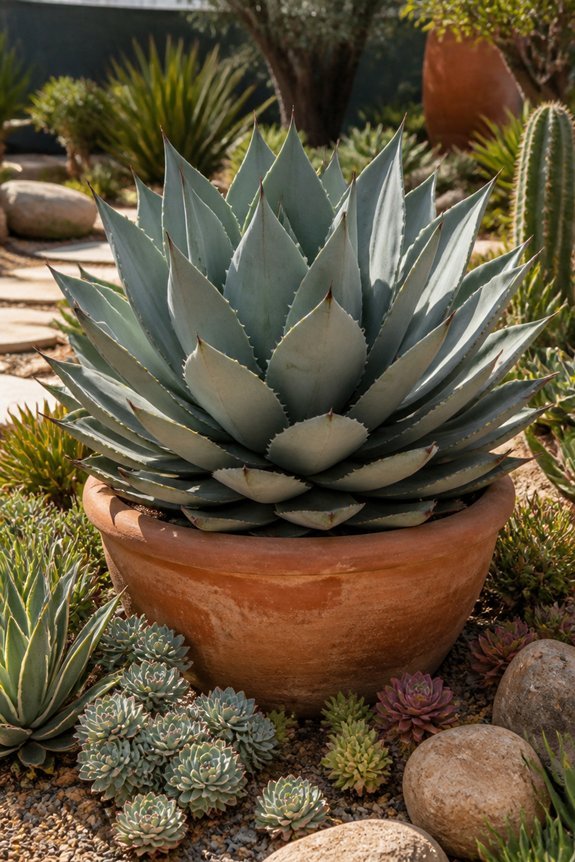
Groundcover succulents fill space. That’s their job. But architectural succulents do something different entirely.
They anchor your garden visually. Agave, aloe, and echeveria stop people in their tracks with their bold shapes and dramatic silhouettes. Try placing one large specimen near your entrance. Or at the center of a bed. Or right beside a pathway where people walk past it daily. Instant focal point.
Position these plants against contrasting backgrounds for maximum effect. A gravel bed works beautifully. So do low-growing plants that sit below their eye-catching forms. Tall varieties like Aeonium arboreum add vertical interest that plays nicely with spreading groundcovers nearby. The maintenance is minimal. The visual impact lasts all season.
Tiered Terraces: Add Height and Drama With Layers
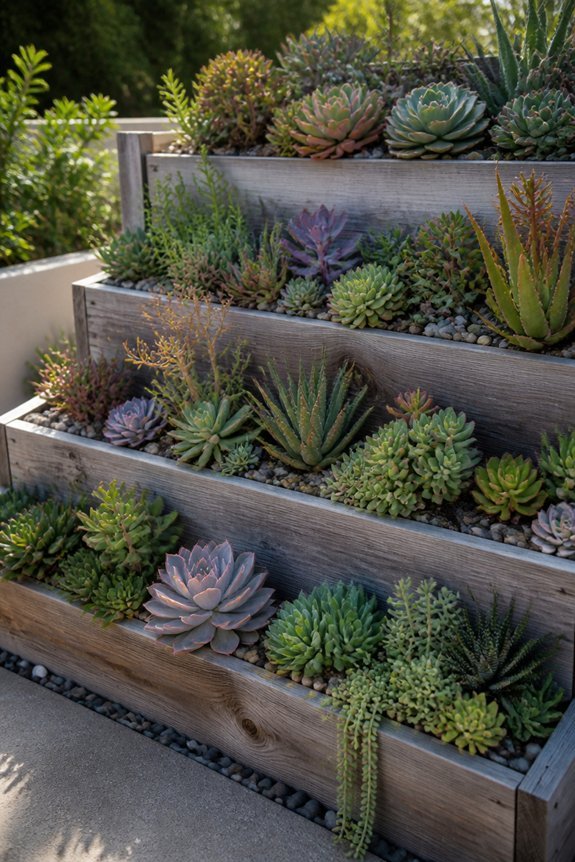
Want your garden to feel bigger than it actually is? Layer it. Stack your space.
Raised beds, stone steps, and planters at different heights create natural drama. Your eye travels up, then out, then down. Plants cascade between levels like slow waterfalls. Suddenly you have depth where there was none before.
Put structural plants up high. Agave makes a bold statement. Echeveria and jade fill nicely too. Save lower levels for trailers. Sedum spills over edges. String of pearls dangles like green jewelry.
Keep some breathing room between heights. Crowded plants stay damp and get sick. Air needs to flow.
Define each level with stone walls or wooden borders. Fill the gaps with gravel or bark. It looks polished. It drains well. It keeps weeds down.
Group thirsty plants together on one tier. Put drought lovers higher up. Watering gets simpler. Maintenance feels less like work.
Small space? This is your answer. Changes in elevation trick the eye. You stop seeing square footage. You start seeing garden.
Pairing Succulents With Drought-Tolerant Companions
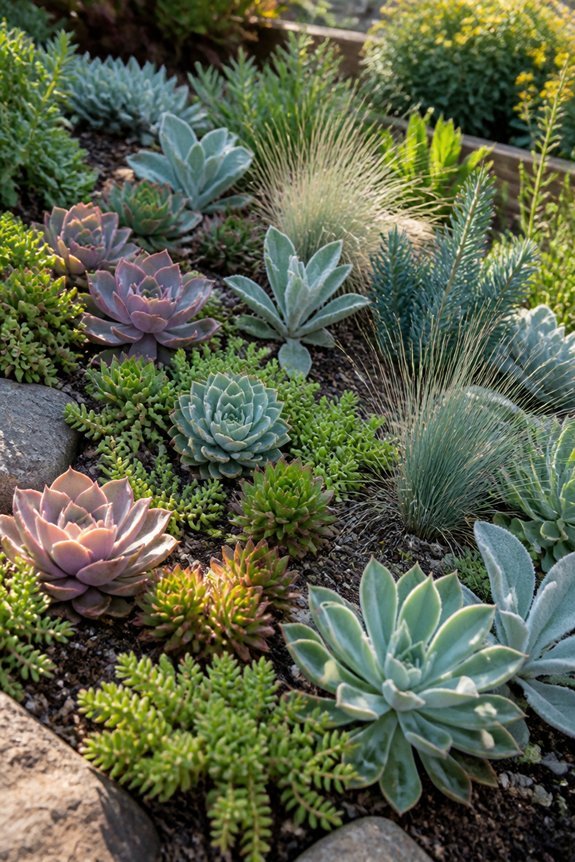
Succulents love company. They grow beautifully alongside other water-wise plants.
Try desert marigolds, Russian sage, or blanket flower. These companions share the same watering needs and soil preferences. Your maintenance routine stays simple.
Ornamental grasses bring movement to the mix. Blue fescue and feather reed grass handle poor soil with ease. They need almost no water once settled in.
Ground covers work wonders too. Creeping thyme and germander nestle around sedums, echeveria, and aloe. They block weeds and lock in soil moisture.
Mix heights and textures for visual appeal. Taller grasses behind low succulents create natural layers. Soft foliage next to spiky shapes keeps the eye moving.
This approach builds self-sustaining gardens. Plants support each other through dry spells. You water less often. Everyone stays happier.
Start with three compatible species. Test what thrives in your spot. Build from there.
Zen Succulent Gardens: Minimal Design With Statement Plants
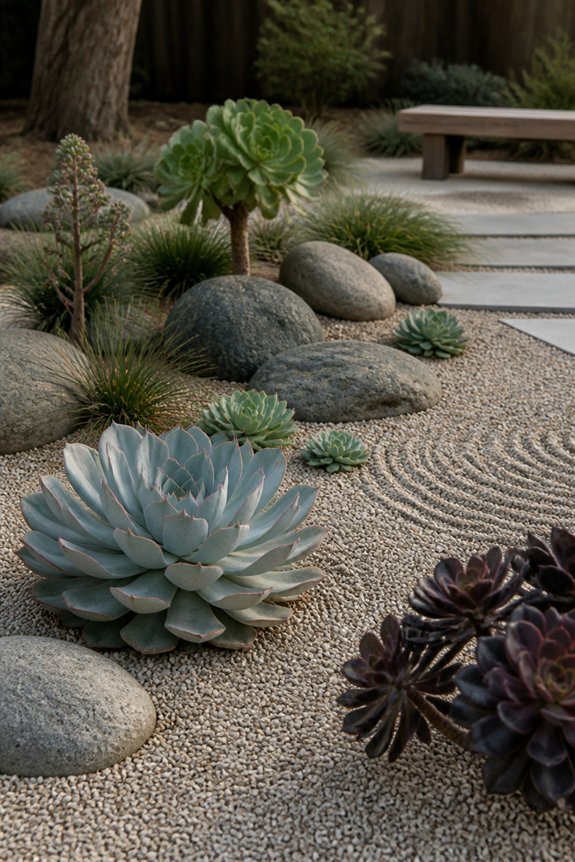
Zen gardens are different. They ask you to do less, not more. Pick one stunning plant. Give it room to breathe. Step back and enjoy the calm.
Start with a showstopper. A big agave or tree aloe works beautifully. Place it where your eye lands naturally. Surround it with gravel or sand, not soil everywhere. Add a few rocks. Aim for balance, not symmetry.
Keep colors quiet. Greens, silvers, and warm stone tones blend restfully. Jade, echeveria, and tall columnar shapes make excellent focal points. Resist the urge to fill every gap. Each plant deserves its moment.
This approach means less watering, less pruning, less worry. The contrast between rough stone and smooth leaves does the work for you.
Seasonal Succulent Colors: Varieties That Shift Year-Round
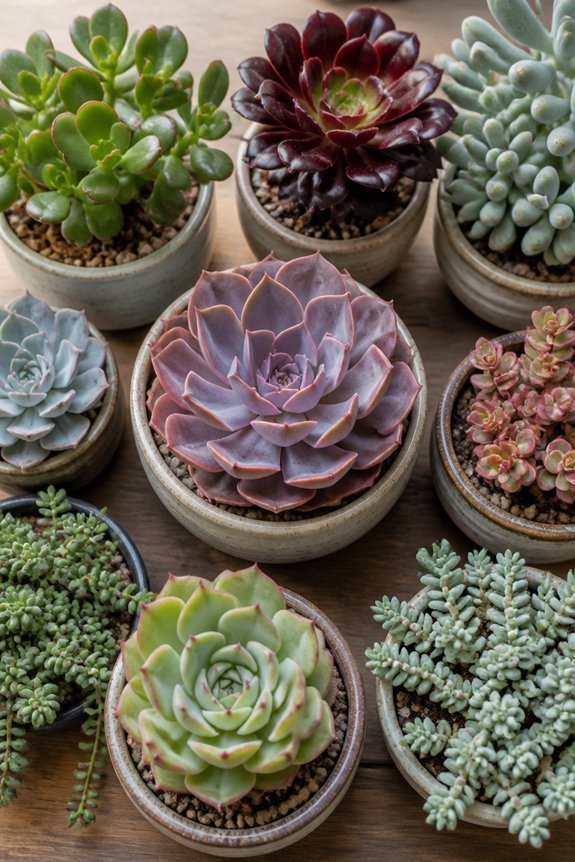
Succulents are nature’s mood rings. They shift colors with the weather. You get a new garden look every few months without lifting a finger.
Cold snaps trigger the best changes. Jade plants blush deep red. Echeverias turn pink or purple. Aloes and Sedums glow orange, yellow, or crimson. Stress brings out their best side.
Spring softens everything to pale green. Summer keeps colors bold and bright. Fall warms up to oranges and burgundies. Winter delivers the most dramatic shades in hardy varieties.
Pick your plants with purpose. Mix early changers with late bloomers. You’ll have constant color without replanting. Low effort, high reward.
Building a Stunning Garden on a Budget
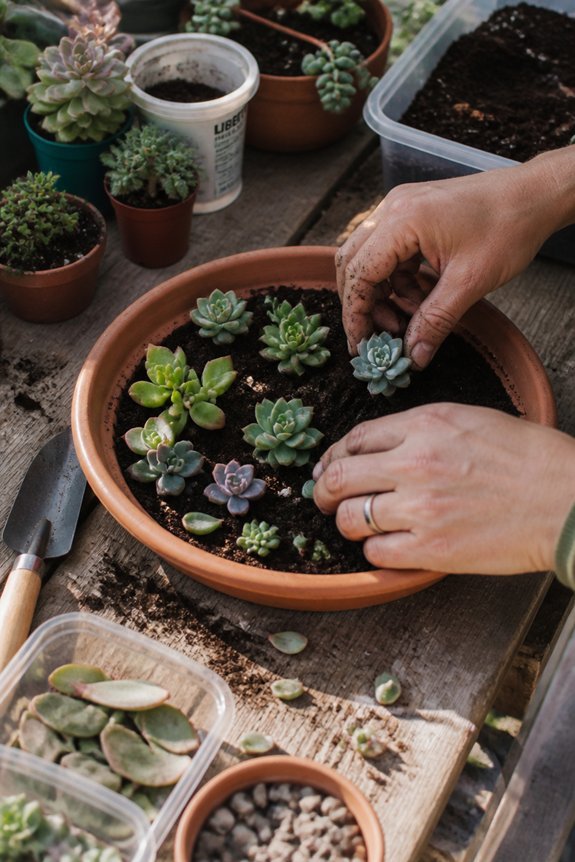
Most gardeners think stunning succulent landscapes cost a fortune. They don’t have to. Smart planning and a little creativity go a long way.
Start with free plant material. Snip cuttings from friends’ gardens or your own existing plants. Those cuttings root easily in sandy soil. Collect seeds from mature specimens too. It takes patience, but your wallet stays full.
Hunt for deals at local nursery sales. Check community plant swaps and online gardening groups. People often give away extras. Repurpose containers you already own. That chipped terracotta pot works perfectly. So does an old wooden crate or ceramic bowl.
Mix your own soil on the cheap. Grab basic potting mix, add coarse sand, and toss in some perlite. Skip the pricey specialty blends. Top dress with gravel or pumice instead of expensive decorative mulches.
Stretch your budget with smart design. Place one showstopper echeveria or jade plant as your focal point. Fill gaps with smaller, cheaper varieties. Group plants by their thirst levels. This saves time and prevents overwatering disasters.
Frequently Asked Questions
How Often Should I Water My Succulents, and Does Frequency Change Seasonally?
Succulents require watering every two to three weeks during growing seasons, reducing frequency to monthly in winter. The exact schedule depends on soil drainage, climate humidity, and rainfall. One should allow soil to dry completely between waterings to prevent root rot.
What Pests Commonly Attack Succulents, and How Do I Prevent Infestations?
One must not let mealybugs, spider mites, and scale insects get the upper hand on succulents. Prevention involves inspecting plants regularly, maintaining proper airflow, avoiding overwatering, and isolating infested specimens immediately to stop spread.
Can Succulents Survive in Shaded Areas, or Do They Require Full Sun?
Succulents generally prefer full sun but can survive in partial shade. Most varieties require at least four to six hours of direct sunlight daily. Insufficient light causes stretching and weakened growth, though some species tolerate shadier conditions better than others.
How Long Do Succulents Typically Live, and When Should I Replace Them?
Most succulents live 3-40 years depending on species and care conditions. Gardeners typically replace them when they become leggy, diseased, or aesthetically unpleasing rather than due to natural death, as healthy specimens often propagate indefinitely.
What’s the Best Time of Year to Plant or Propagate Succulents?
Spring and early summer represent the ideal planting seasons for succulents. During these warmer months, plants establish roots more efficiently. Propagation works best from late spring through summer when growing conditions favor new growth and development.
Conclusion
Creating a succulent garden requires considering rock gardens, containers, vertical walls, and desert designs. Proper soil drainage, strategic plant pairing, and seasonal color selection guarantee long-term success. Budget-friendly approaches work just as well as expensive installations. With millions of design combinations possible, gardeners can build sustainable landscapes that demand virtually no maintenance while delivering consistent visual appeal through varied textures and colors year-round.