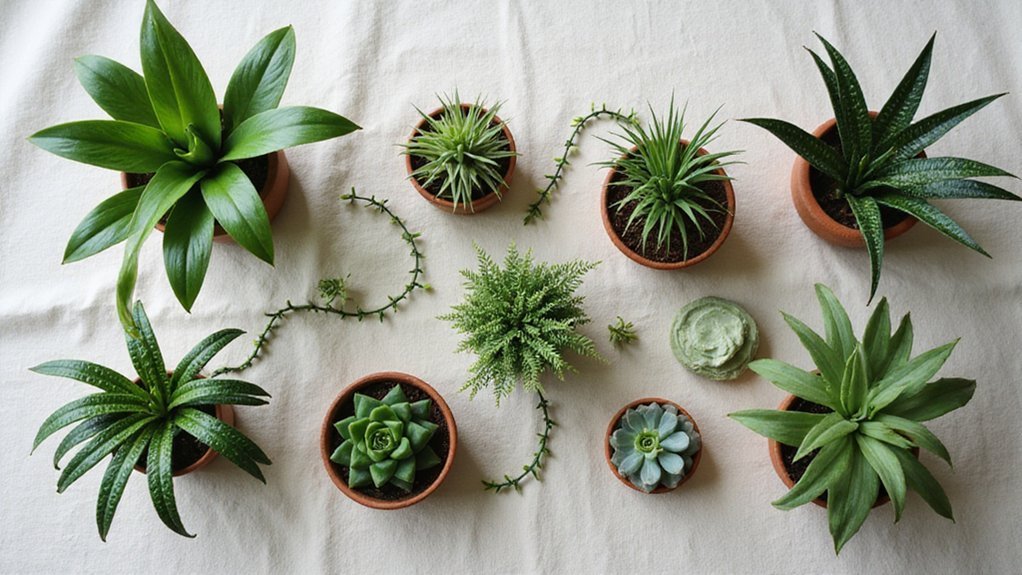
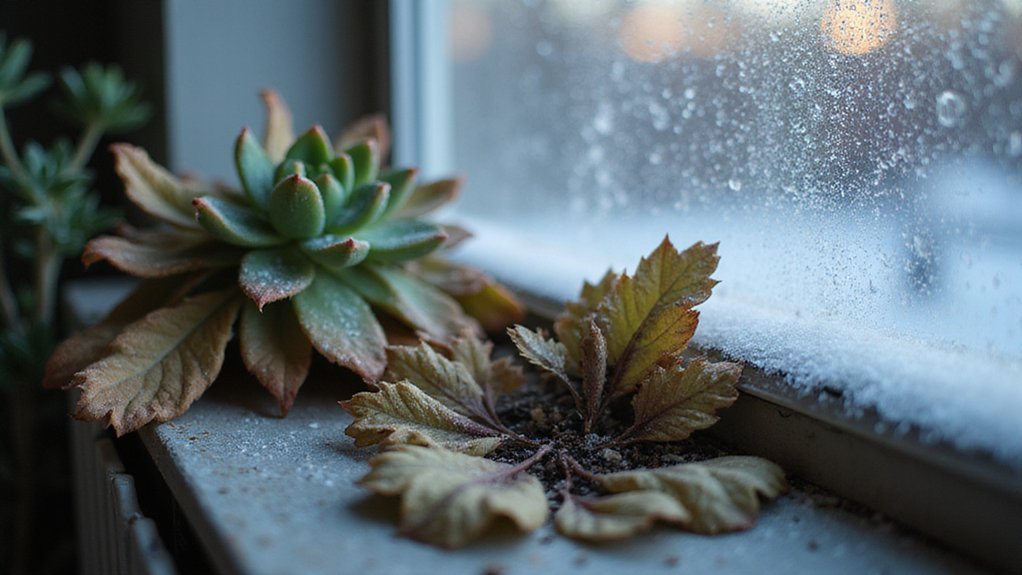
While summer nurtures your houseplants with abundant light and warmth, winter creates a perfect storm of conditions that can kill them in weeks. You’re dealing with dry air from heating systems, reduced natural light, temperature fluctuations, and the temptation to overwater when your plants actually need less. Understanding these five winter challenges will help you keep your plants alive. Here’s what you need to know.
Why Your Houseplants Dry Out in Winter
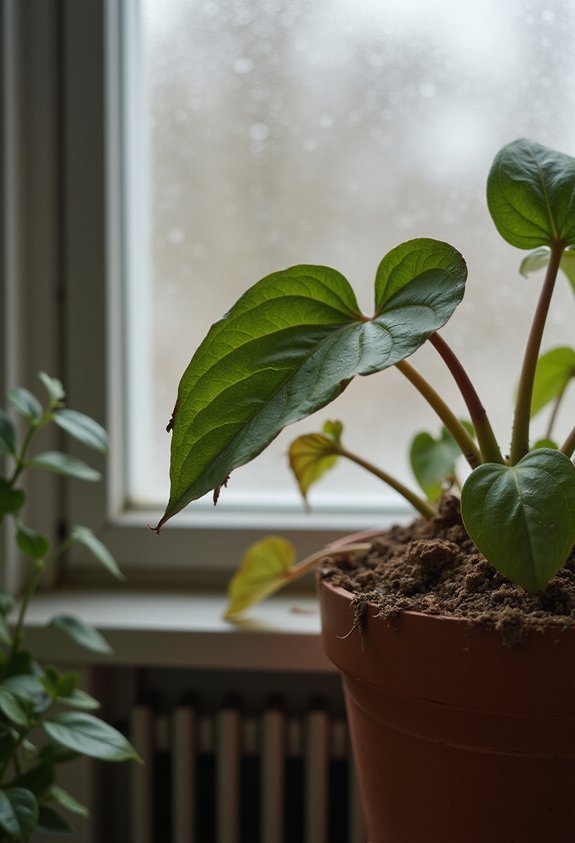
Because winter brings colder temperatures and lower humidity levels indoors, your houseplants are more likely to dry out than they would during other seasons. When you heat your home, the warm air pulls moisture from both the soil and the plant leaves, creating an extremely dry environment. Additionally, your plants receive less natural light during winter months, which slows their growth and reduces their water needs, yet the heating system continues removing moisture from the air around them. You’ll notice that potting soil dries out faster than usual, even if you’re watering on your regular schedule. The combination of reduced light, artificial heating, and lower humidity creates challenging conditions that stress your plants and accelerate water loss from the soil and foliage.
Also read: 5 Signs Your Live Christmas Tree Is Dying
Winter’s Low Light Is Slowing Plant Growth
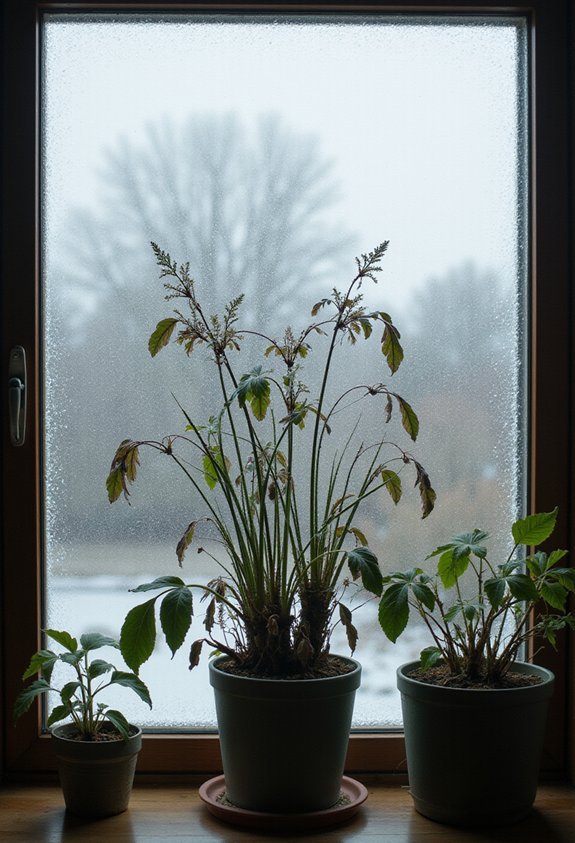
As winter days grow shorter and the sun sits lower in the sky, your houseplants receive considerably less natural light than they do during other seasons, which directly impacts their ability to grow and thrive. During winter, your plants aren’t receiving enough light energy to photosynthesize efficiently, which slows their metabolic processes and stunts their growth substantially. You’ll notice your houseplants growing more slowly or entering a dormant state, appearing less vibrant than usual. To counteract this reduction in natural light, you can move your plants closer to south-facing windows where they’ll receive maximum available sunlight, or you can supplement with grow lights positioned 6-12 inches above your plants. This additional light helps maintain your plants’ energy levels and supports continued healthy development throughout the darker winter months.
Cold Drafts and Temperature Swings Stress Plants
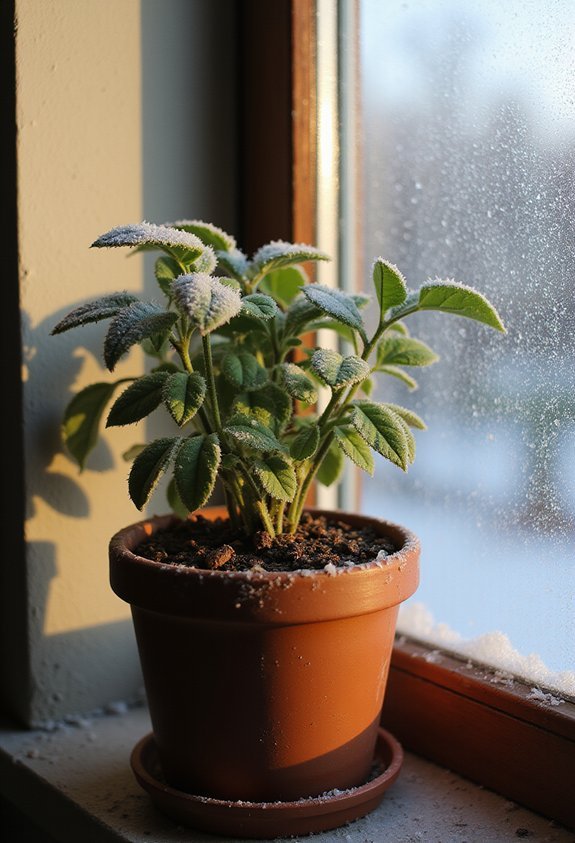
Multiple environmental factors during winter can create stress for your houseplants, and temperature fluctuations rank among the most damaging of these challenges. Cold drafts from windows, doors, and heating vents expose your plants to sudden temperature changes that they can’t tolerate well. When you place plants near these sources, they experience repeated stress cycles that weaken their overall health and reduce their ability to absorb water and nutrients effectively. Additionally, inconsistent temperatures between day and night confuse your plants’ natural rhythms, disrupting their dormancy period. You should relocate sensitive plants away from drafty areas, maintain steady temperatures between 60 and 75 degrees Fahrenheit, and avoid placing plants directly above heating vents that create harsh, dry conditions threatening their survival.
Overwatering Kills Plants When Light Is Low
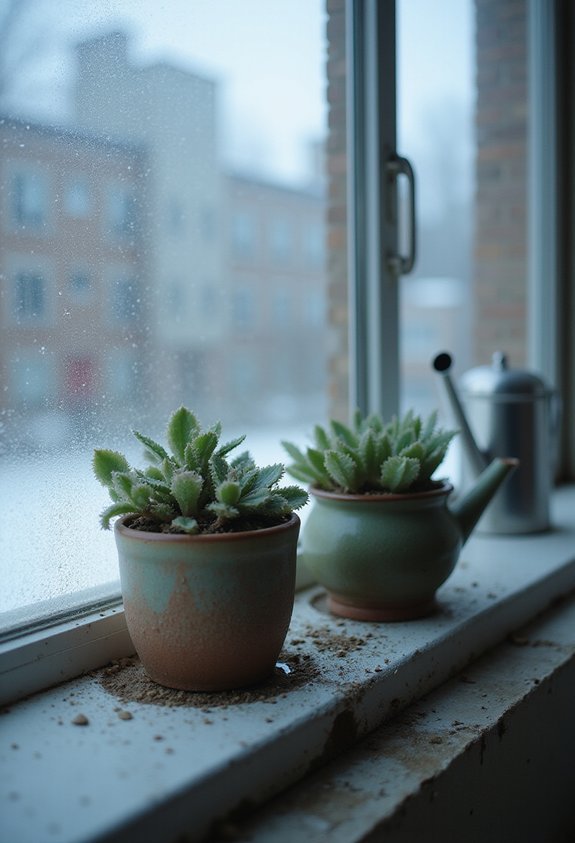
During winter months when natural sunlight decreases substantially, your houseplants’ water needs change dramatically, yet many plant owners continue watering on their regular schedule, which creates serious problems for their indoor gardens. Plants require less water during winter because they’re growing slower and using less energy without sufficient light. When you overwater during these low-light periods, the soil stays wet longer, which promotes root rot and fungal diseases that’ll eventually kill your plants. To prevent this, you should check your soil’s moisture before watering by inserting your finger two inches deep into the soil. If the soil feels damp, skip watering that day. Adjust your watering frequency based on how quickly your soil dries out, not on habit or calendar dates.
How Winter Heating Creates Harsh Conditions
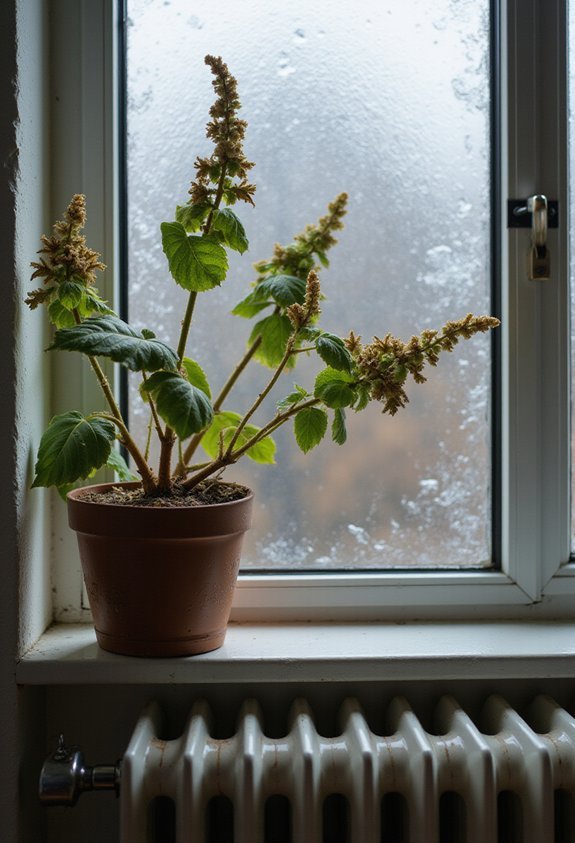
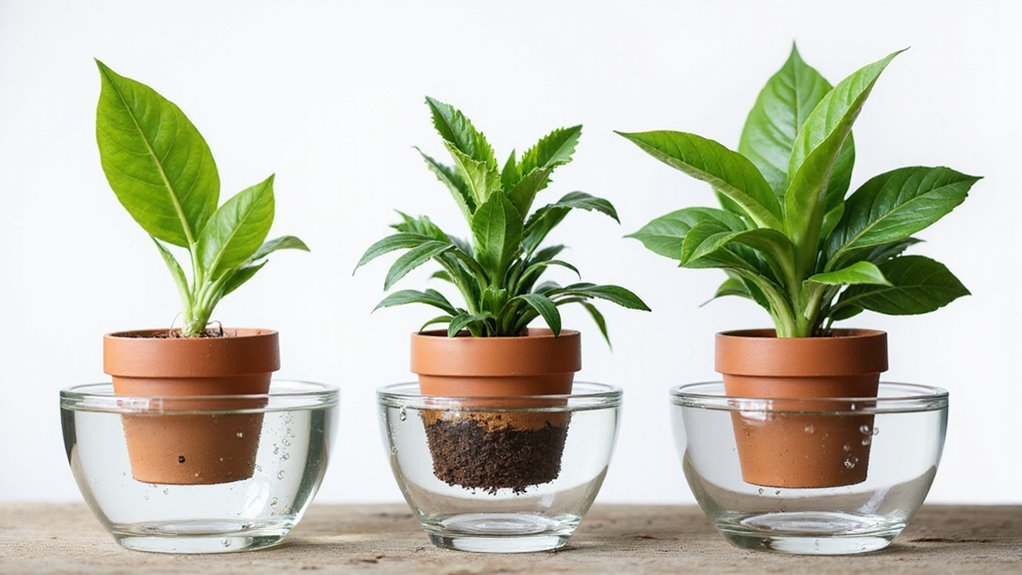
While adjusting your watering habits protects your plants from root rot, you’ll also need to address another serious winter threat that comes from inside your home: the dry, heated air produced by furnaces and heating systems. Indoor heating dramatically lowers humidity levels, creating desert-like conditions that stress your houseplants. This dry air causes leaves to lose moisture rapidly through transpiration, leading to browning leaf edges, wilting, and stunted growth. Most tropical houseplants require humidity levels between 40 and 60 percent, but winter heating often drops humidity below 30 percent. You can counteract this by misting plants regularly, grouping them together to create a microclimate, or placing them on pebble trays filled with water that evaporates around the foliage.
Conclusion
You’re now equipped to protect your houseplants through winter’s harshest months. Studies show that indoor humidity drops to 30% during heating season—lower than many desert environments—directly threatening your plants’ survival. By adjusting your watering schedule, providing supplemental light, maintaining consistent temperatures, and increasing humidity levels, you’ll create conditions that allow your plants to thrive rather than merely survive the cold months ahead.