
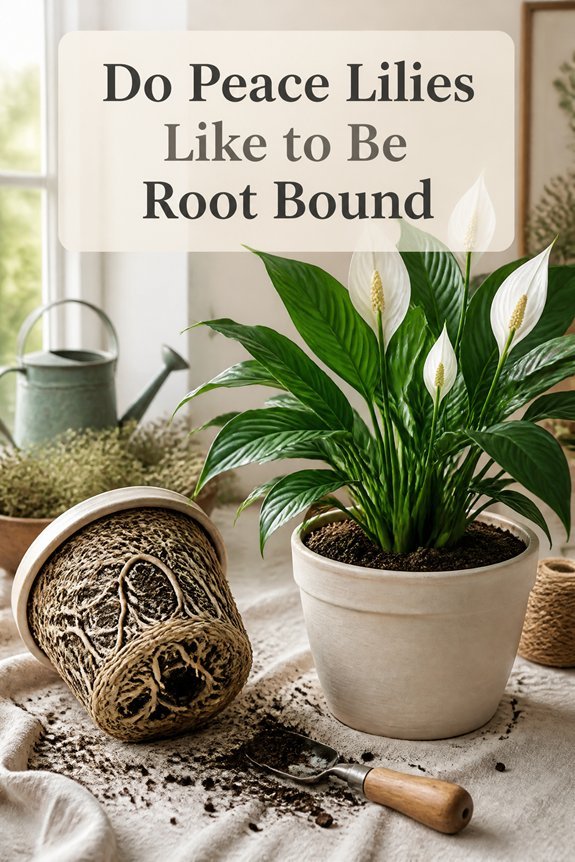
Peace lilies actually prefer having a bit of room to stretch out. When their roots become too crowded, these elegant plants struggle rather than flourish. The tight root ball restricts nutrient uptake and creates a cascade of health problems.
Watch for warning signs that your plant needs attention. Leaves may turn yellow or develop brown tips, and growth slows dramatically. You might notice water running straight through the pot without soaking in, or roots peeking out from drainage holes. These symptoms indicate the root system has overtaken the available space.
Repotting every 12 to 18 months keeps peace lilies thriving. Choose a container only slightly larger than the current one, as too much extra soil can lead to rot.
Fresh, well-draining potting mix gives roots the perfect environment to expand and absorb nutrients efficiently.
Staying attentive to your plant’s needs makes all the difference. With proper spacing and regular care, peace lilies reward you with their signature white blooms and lush green foliage for years to come.
What Does “Root Bound” Mean for Peace Lilies?
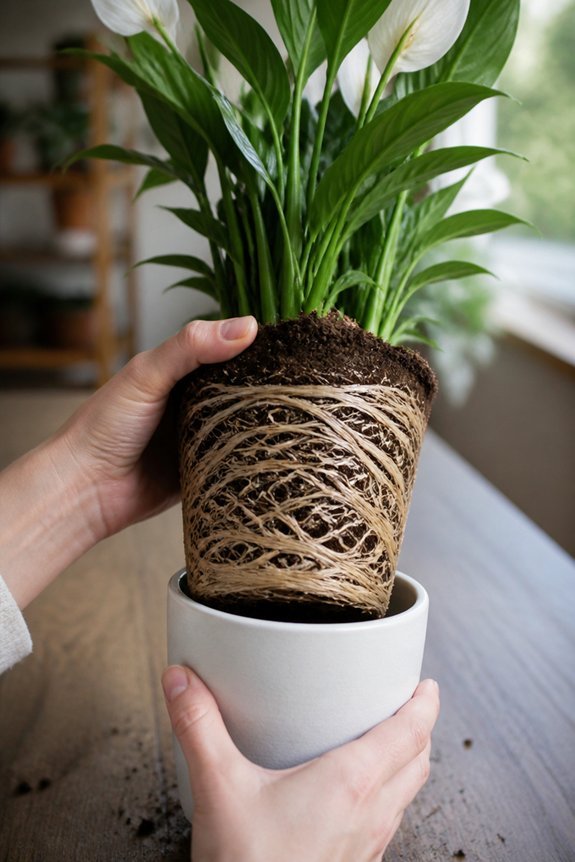
A root-bound peace lily has simply outgrown its home. The roots fill every inch of the pot, leaving barely any room for soil. They start circling the inside, tangled together in a dense mass that can’t spread out.
How can you tell? Watch for roots sneaking out of the drainage holes. Growth slows down even when you’re doing everything right. The plant wilts more often than it should, and the soil dries out almost overnight. This happens because roots have taken over most of the space, so water has nowhere to go.
Your peace lily will need a bigger pot and fresh soil to thrive again.
Also read: Can Philodendron Grow in Water?
Signs Your Peace Lily Needs Repotting
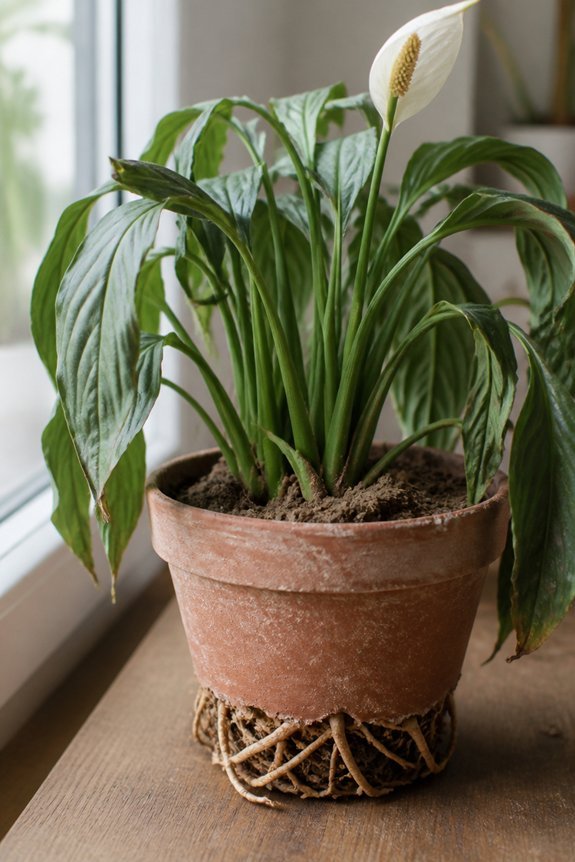
Your peace lily will tell you when it’s time for a new home. Look for roots peeking through drainage holes or circling the soil surface. These are classic signs of a root-bound plant.
Notice water rushing straight through the pot? That’s another clue. Dense roots leave little room for soil to absorb moisture. You might find yourself watering every few days instead of your usual weekly routine.
Other signals include yellowing leaves, slowed growth, or soil pulling away from pot edges. Your plant may also start tipping over from becoming top-heavy.
Peace lilies typically need fresh soil every 12 to 18 months. Spring is your best window for this task. It gives roots time to settle before summer growth kicks into high gear.
What Happens When Peace Lilies Stay Root Bound Too Long
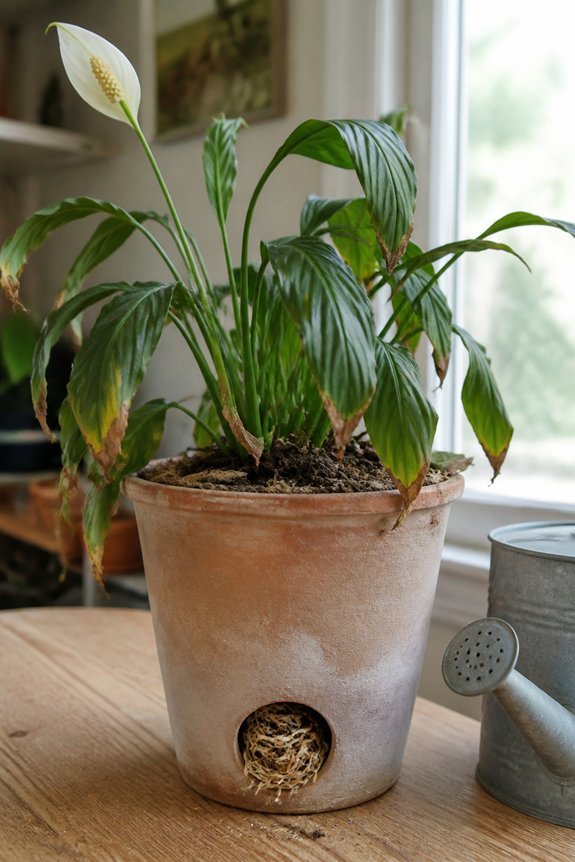
Your peace lily can’t thrive when its roots have nowhere to go. The roots start circling tightly in that compressed soil. Water and nutrients become harder to absorb. You’ll notice stunted growth and yellowing leaves first.
The problems stack up quickly. Trapped moisture invites root rot and infections. Essential minerals stay out of reach. Your plant wilts even after you water it. Blooms fade away as survival takes priority. Recovery gets tough once this stress goes on too long.
When Should You Repot Your Peace Lily?
Timing matters when it comes to repotting. Move too early or too late, and your peace lily may struggle.
Most peace lilies need a new home every 12 to 18 months. Growth rate plays a role here. Some plants sprint ahead while others take their time.
Spring is your window. The plant wakes up and starts pushing new growth. This is when it can handle the move best.
Watch for the telltale signs. Roots peeking above the soil are a clear signal. Water rushing straight through the pot is another. If your plant thirsts more often than usual, the roots may have taken over.
Pick a pot just one to two inches wider. Too much space causes trouble. The roots will rot before they fill it.
Always use well-draining soil. Drainage holes are non-negotiable. Skip the winter repotting. Your plant rests then and cannot bounce back from the stress.
Choosing the Right Pot and Soil for Peace Lilies
Finding the right home for your peace lily makes all the difference. Start with a pot that has drainage holes. Standing water invites root rot and ugly fungal problems.
Terracotta pots let roots breathe. Plastic hangs onto moisture longer. Pick based on how often you water.
Peace lilies like soil that drains well but doesn’t dry out completely. A simple mix of peat moss, perlite, and compost works great. Peat holds moisture. Perlite creates air pockets. Compost feeds your plant naturally.
Size matters here. Choose a pot just slightly bigger than the root ball. One to two inches wider is perfect. Too much empty space means soggy soil and unhappy roots. Your plant wants room to grow, not a swimming pool.
How to Repot Your Peace Lily: Step-by-Step
You’ll need a few things before starting. Grab a new pot, fresh potting mix, some newspaper, and pruning shears. Water your peace lily the day before. This softens the soil and helps the roots slide out smoothly.
Now for the main steps. Carefully tip the pot and support the plant’s base as you ease it out. Check those roots closely. Healthy ones are white and firm. Anything brown and mushy needs trimming. Gently loosen any tight, circling roots with your fingers or a small tool. Set the plant in its new home, keeping the soil at the same depth as before. Fill in around the sides with fresh mix. Give it a good drink right after repotting. Your peace lily will settle in and thank you with fresh growth soon.
How to Stop Root Bound Problems From Returning
Once your peace lily is settled in its new home, staying ahead of root bound issues is easier than you might think. Check on it every three to four months. Peek at the soil surface and drainage holes for any sneaky roots trying to escape.
Pick your next pot wisely. Go just one to two inches bigger than the current one. This keeps soil moisture in check and steers clear of root rot trouble. Time your upgrades with the seasons. Spring and summer bring growth spurts, so that’s your window for giving roots more room.
Keep your watering balanced and your soil airy. Mix in perlite or orchid bark for better drainage. These small habits add up. Your peace lily stays happy, and you stay root bound free.
Frequently Asked Questions
Can Root Bound Peace Lilies Recover After Being Repotted?
Yes, root bound peace lilies typically recover well after repotting. They demonstrate resilience and adapt quickly to larger containers. New roots develop rapidly in fresh soil, restoring vigor and promoting healthy growth within weeks.
Is It Safe to Manually Loosen Roots During the Repotting Process?
Manually loosening roots during repotting is safe and recommended for peace lilies. Gently teasing apart the root ball helps prevent circling roots and encourages outward growth into fresh soil, promoting healthier plant establishment.
How Often Should You Check Peace Lily Roots for Bound Conditions?
One should inspect peace lily roots every 3-4 months during the growing season. Checking involves gently removing the plant to observe root density. Signs of binding include circling roots, slow growth, and frequent wilting despite adequate watering.
What Size Pot Is Ideal for a Mature Peace Lily Plant?
A gardener repotted her mature peace lily into a 12-inch container and observed improved growth. Mature peace lilies thrive in 10 to 12-inch pots, providing adequate drainage and root space without excessive soil retention.
Can Overwatering Mask or Worsen Symptoms of Root Bound Peace Lilies?
Overwatering greatly worsens root bound symptoms in peace lilies. Excess moisture compounds poor drainage caused by congested roots, accelerating root rot and fungal issues. This creates confusion, as wilting appears identical to underwatering, delaying necessary repotting.
Conclusion
Peace lilies, when their roots become somewhat confined, experience reduced vigor and diminished energy. Regular repotting every 12 to 18 months into modestly larger containers prevents this limitation. Selecting well-draining soil, monitoring for drainage hole visibility, and observing increased water demands signal necessary action. Proactive repotting maintains ideal plant performance, supporting continued growth and leaf quality.