
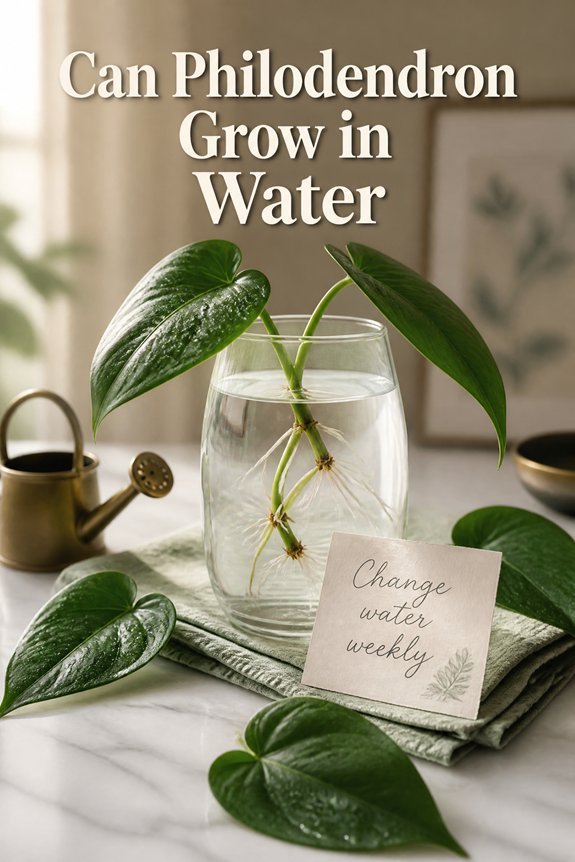
Many plant enthusiasts are surprised to learn that philodendrons can thrive without soil at all. These versatile houseplants adapt remarkably well to water-based growing systems, opening up new possibilities for indoor gardening. The transition from soil to water isn’t difficult, though it does require some adjustment in care routines.
Heartleaf and Brasil varieties are particularly well-suited to hydroponic cultivation. Their roots gradually transform in saturated conditions, developing specialized structures for efficient water and nutrient absorption. This natural adaptation allows them to flourish in clear glass containers, creating an attractive display while making root health monitoring simple.
Maintaining water-grown philodendrons demands attention to a few key details. Distilled or filtered water prevents mineral buildup, while regular changes keep the environment fresh and oxygenated. Proper lighting becomes even more critical without soil’s buffering properties, and supplemental nutrients must be added carefully to support healthy growth.
Success ultimately hinges on matching the right variety to hydroponic conditions and staying vigilant against common problems. Root rot and algae growth pose the biggest threats, but both can be managed through proper container selection and maintenance habits.
With the right approach, water cultivation offers a clean, modern alternative to traditional potting.
Why Philodendrons Adapt Better to Water Than Most Houseplants
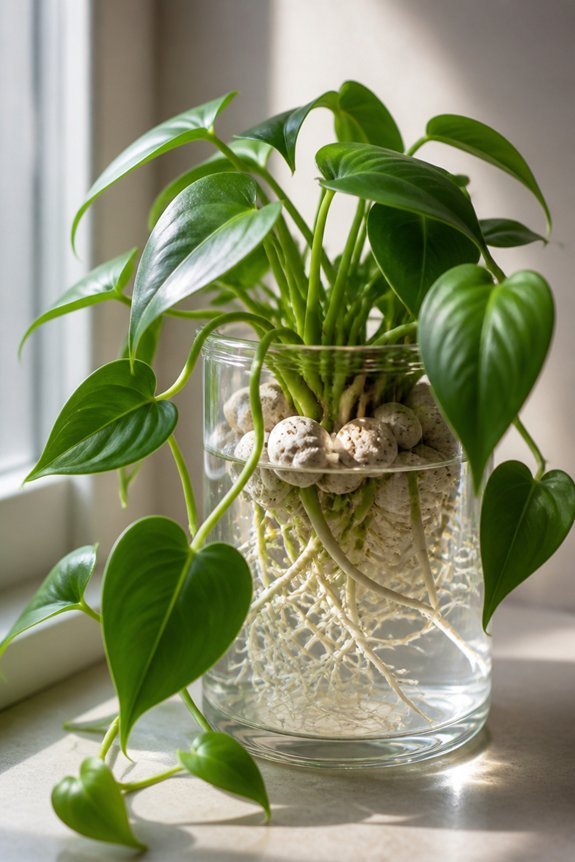
Philodendrons arrive with a built-in head start for water life. Their aerial roots grab moisture from the air, making the switch to hydroponics feel natural and shock-free.
These plants pull oxygen directly from water through specialized roots. Unlike soil-dependent houseplants, they thrive in both saturated and moderately wet conditions. Heartleaf and Brazilian varieties especially love rooting in water, making them perfect for propagation jars.
Also read: Can Philodendron Grow in Water?
Set Up Your Water Growing System
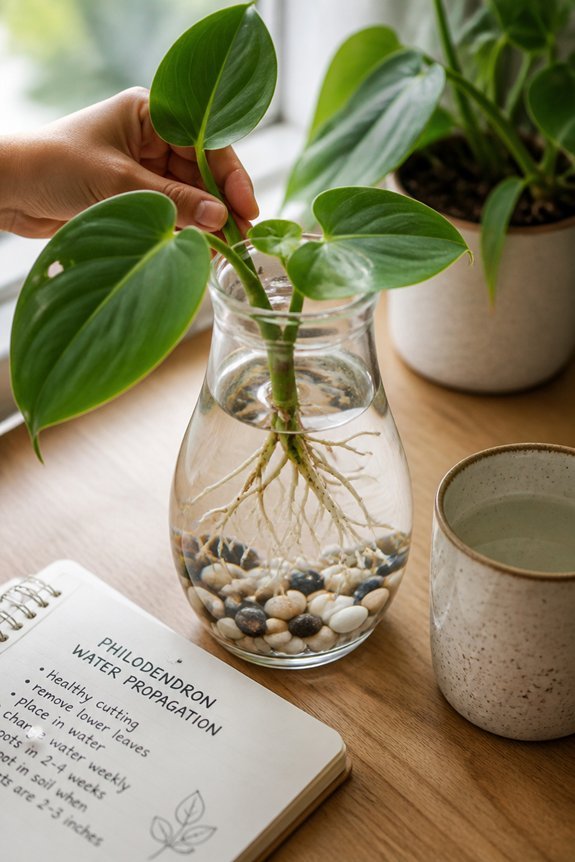
Start with a clear glass container. Mason jars work great. So do vases or any hydroponic vessel you have on hand. You will love watching the roots grow.
Fill it with distilled or filtered water. Tap water leaves mineral deposits over time. Swap out the water every week or two. This keeps oxygen flowing and bacteria away. A drop of liquid fertilizer during changes feeds your plant nicely.
Set your philodendron near indirect light. Direct sun invites algae. Too dark slows growth. Some people add pebbles or moss at the base. This steadies the plant and looks natural too.
Prevent Root Rot, Algae, and Nutrient Issues
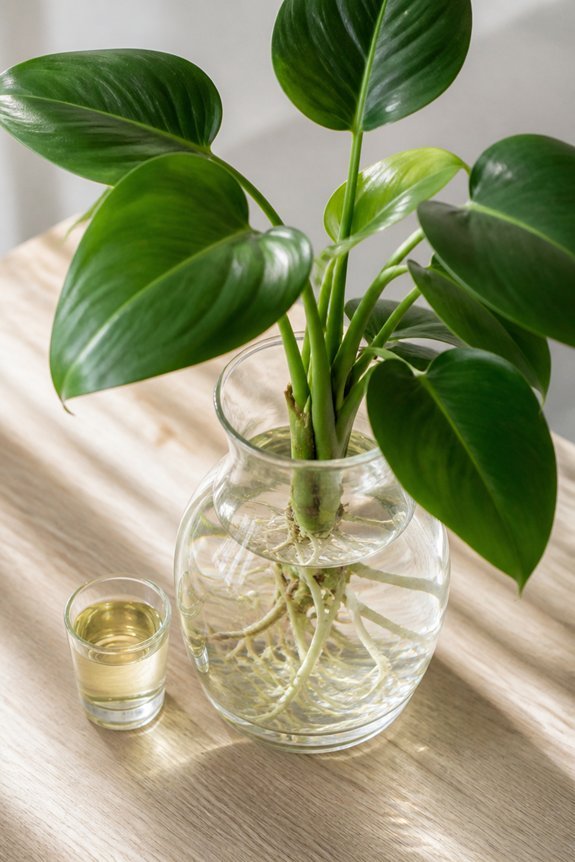
Water growing has its perks, but philodendrons can hit a few snags. Let us walk through the common problems and how to sidestep them.
Root rot sneaks up when water sits still and starved of oxygen. Your roots turn brown and mushy, which nobody wants. Change your water every week to keep things fresh. Drop in an air stone or small pump if you want extra insurance. Moving water means happy roots.
Algae loves a sunny spot and will happily take over. It steals nutrients from your plant and gums up the roots. Keep your container covered or pick an opaque vessel. Problem solved.
Plain water lacks the minerals soil naturally provides. Grab a hydroponic fertilizer made for leafy plants. This gives your philodendron the nitrogen, phosphorus, and potassium it craves. Check that your pH sits between 6.0 and 7.0 so roots can actually absorb those nutrients. Watch your leaves too. Yellowing often signals something is off.
Stay on top of water changes, feeding, and quick debris cleanups. Your water-grown philodendron will thank you with lush, healthy growth.
Choose Philodendron Varieties for Hydroponics
Some philodendron varieties take to hydroponics easily. Others need more experience to thrive.
Heartleaf philodendron is a solid starting point. It adapts quickly to water and grows without fuss. Philodendron Brasil works well too. Its variegated leaves handle hydroponic setups with minimal extra care.
Bigger varieties present more challenges. Split-leaf types need stronger root support and richer nutrients. They are better saved for later once you’ve got the basics down. Trailing varieties generally adjust faster than climbing or upright types.
Match your choice to your situation. Consider your space, light, and how much time you can give. Fast growers like heartleaf show results quickly. Slower types test your patience but often last longer once established.
Nutrients and Water Quality for Healthy Water-Grown Philodendrons
Water-grown philodendrons need two things to flourish: the right nutrients and clean water. Start with a balanced fertilizer that includes nitrogen, phosphorus, and potassium. Your plant will also thank you for micronutrients like iron, magnesium, and manganese. Diluted hydroponic solutions work perfectly here.
Check your water source carefully. Tap water often contains chlorine and chloramines that stress roots over time. Filtered or dechlorinated water makes a real difference. Aim for a pH between 5.5 and 6.5 so roots can absorb nutrients efficiently. Refresh the water every two to three weeks to avoid salt buildup and imbalances. Quick tests here and there help you catch problems early and keep growth steady.
Move Cuttings From Water to Soil Successfully
Moving your water-rooted philodendron to soil is exciting. You’ve watched those roots grow, and now it’s time for the next step.
Wait until the roots reach at least one inch long. Grab a small pot and fill it with well-draining mix—peat and perlite works great. Carefully lift the cutting from its water home. Let it drip dry for a moment.
Plant it at the same depth it sat in water. Press the soil gently but firmly around the base. Give it a good drink afterward.
Keep it in indirect light for a few days. Those roots need time to adjust to their new surroundings. Once it settles in, you can return to your regular care routine.
When Hydroponic Growing Works: and When It Doesn’t
Hydroponic growing suits some philodendrons beautifully. Others? Not so much.
Juvenile plants and trailing varieties take to water-based systems quickly. Heartleaf philodendrons settle right in when conditions stay steady indoors. They love the consistent moisture and predictable nutrients.
Problems crop up with bigger, mature specimens. These need room for extensive root systems that hydroponic setups struggle to accommodate. Climbing types like Philodendron monstera present another hurdle. They need physical support that water alone cannot offer.
Your environment matters too. Temperature swings, shifting light levels, or spotty care routines spell trouble. Hydroponics demands attention. Skip a week and your plant suffers.
Small cuttings in stable spaces truly flourish. They root fast and grow happily. Established plants in unpredictable homes usually prefer soil instead. Soil buffers those little inconsistencies. It forgives forgetful waterers.
Consider your plant’s age, its growth habit, and your own habits. Success follows when these align.
Frequently Asked Questions
How Long Does It Take for Philodendron Cuttings to Develop Roots in Water?
Philodendron cuttings typically develop roots in water within one to three weeks. The timeframe depends on factors such as water temperature, light conditions, and the specific philodendron variety. Warmer temperatures and adequate indirect light accelerate root development.
Can I Use Tap Water Directly, or Should I Treat It First?
Studies show chlorine in tap water can reduce root development by up to 30%. Tap water requires treatment—letting it sit 24 hours allows chlorine to evaporate, or distilled water works best for ideal philodendron propagation.
How Often Should I Change the Water When Growing Philodendrons Hydroponically?
Water should be changed every two to three weeks when growing philodendrons hydroponically. More frequent changes may be necessary in warmer climates or if algae develops. Regular water changes prevent nutrient imbalances and bacterial growth.
What’s the Ideal Water Temperature for Water-Grown Philodendrons?
As the saying goes, “still waters run deep.” Philodendrons thrive in water temperatures between 65-75°F. Cooler conditions slow growth, while excessive heat promotes algae and root rot, making moderate warmth essential for hydroponic success.
Will Water-Grown Philodendrons Ever Need to Be Fertilized Differently Than Soil Plants?
Water-grown philodendrons require more frequent fertilization than soil plants since water lacks nutrients. They need diluted liquid fertilizer every two to four weeks, whereas soil plants require monthly applications due to soil’s nutrient retention capacity.
Conclusion
Philodendrons navigate water cultivation like skilled swimmers in their natural habitat, adapting through aerial roots and moisture absorption. Success requires consistent water changes, indirect lighting, and nutrient balance to prevent algae and root decay. Heartleaf and Brasil varieties demonstrate particular resilience in hydroponic systems. While water growing suits propagation and maintenance, shifting to soil or hybrid methods may better serve long-term plant development and stability.