
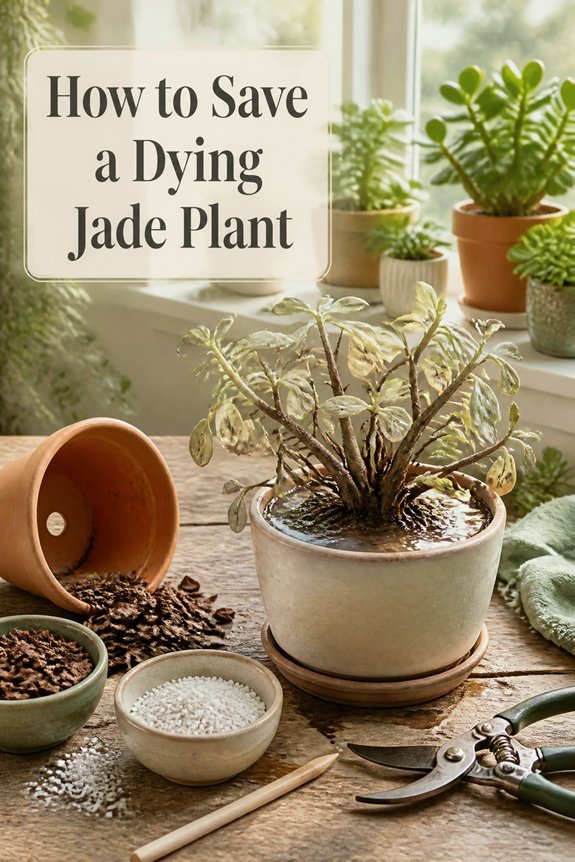
Jade plants often send distress signals before it’s too late, but the culprits behind their decline are surprisingly common. Overwatering consistently tops the list, quietly triggering root rot while the owner remains unaware.
Too little light leaves stems leggy and pale, while sneaky pests and sudden temperature shifts compound the trouble.
Pinpointing the exact issue takes a bit of detective work. Press a finger into the soil to gauge moisture levels, then inspect leaves for discoloration, spots, or sticky residue.
Consider recent weather changes or whether the plant sits near a drafty window or heating vent. These clues typically reveal which stressor is at play.
Thankfully, jade plants respond well to timely intervention. Adjust watering habits, relocate to brighter conditions, or treat infestations as needed.
Some cases require cutting back damaged growth or repotting entirely. Patience matters here—recovery unfolds gradually, but these resilient succulents often bounce back with proper care.
Diagnose the Problem: Identify What’s Killing Your Jade Plant
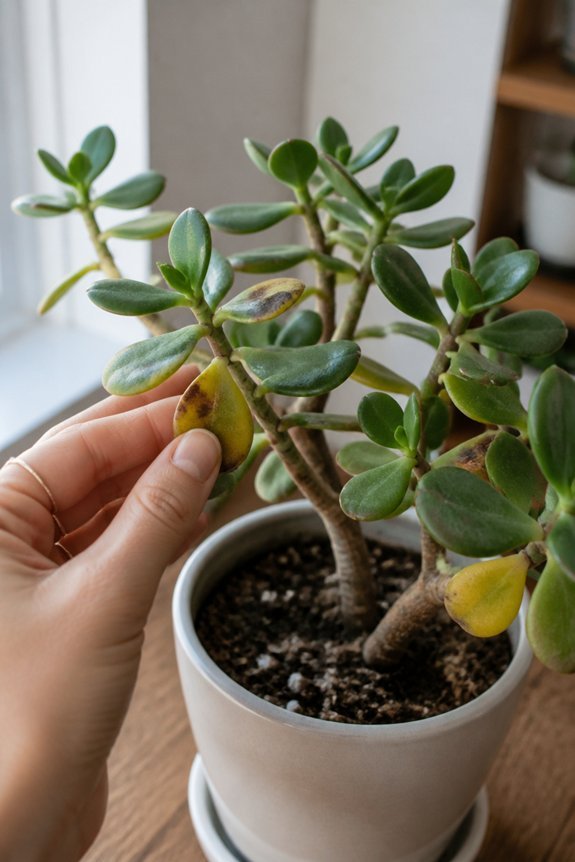
Your jade plant is struggling, and you can’t figure out why. You’ve been watering it regularly and giving it light, but something is still going wrong. Let’s look at the most common culprits.
Overwatering is the big one. Too much water rots the roots, and you’ll spot this by soft, mushy stems and a bad smell from the soil. Check if the pot feels heavy or if the soil stays wet for days. Poor drainage makes this worse. Heavy soil traps water around the roots instead of letting it flow through.
Underwatering shows up differently. The leaves wilt and drop off. They turn dry and brittle. The plant looks thirsty because it is.
Light matters too. Without enough bright light, your jade grows pale and weak. The stems stretch out. Leaves become sparse and small.
Pests love these plants. Spider mites leave fine webbing. Mealybugs look like tiny cotton balls. You might also notice sticky residue on the leaves. Look closely at stems and leaf joints.
Cold damage happens fast. Temperatures below 50 degrees stress the plant. Keep it away from drafts and cold windows in winter.
Fungal diseases leave dark spots or patches of mold. Leaves yellow for no clear reason.
Start by checking the soil moisture. Then look at drainage, light levels, and finally inspect for pests or disease signs. One of these will reveal what’s hurting your plant.
Also read: Are Peperomia Easy to Care for
Fix Overwatering and Drainage Issues
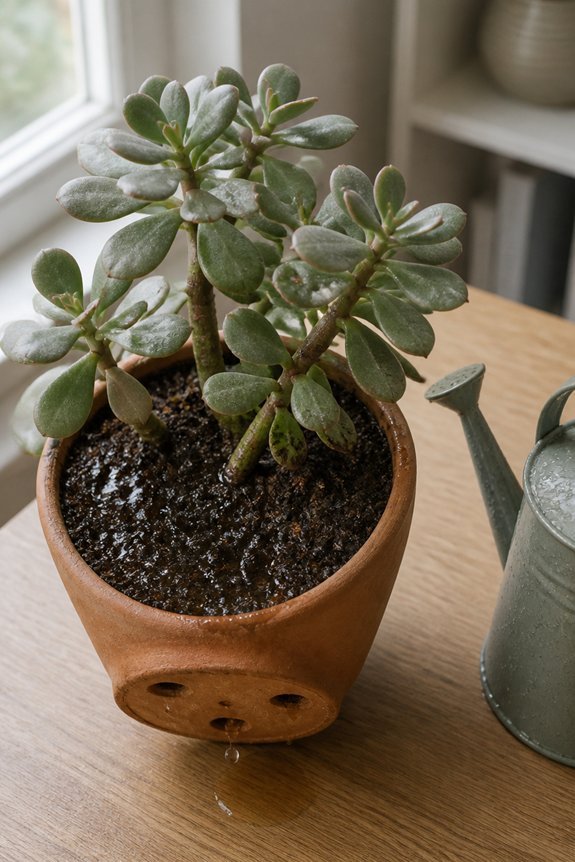
Stop root rot by fixing your soil and drainage first. Jade plants need quick-draining mixes, like cactus or succulent soil. This keeps water from sitting around the roots.
Pick a pot with holes in the bottom. Repot with fresh mix, tossing out any compacted soil that holds moisture. Let the soil dry between drinks. Stick your finger an inch down. Feel dampness? Wait a few more days.
Trim away black or mushy roots when you repot. Those are already damaged. Water less often in winter when growth slows. These simple changes stop decline and give your jade a real shot at recovery.
Eliminate Pest Infestations
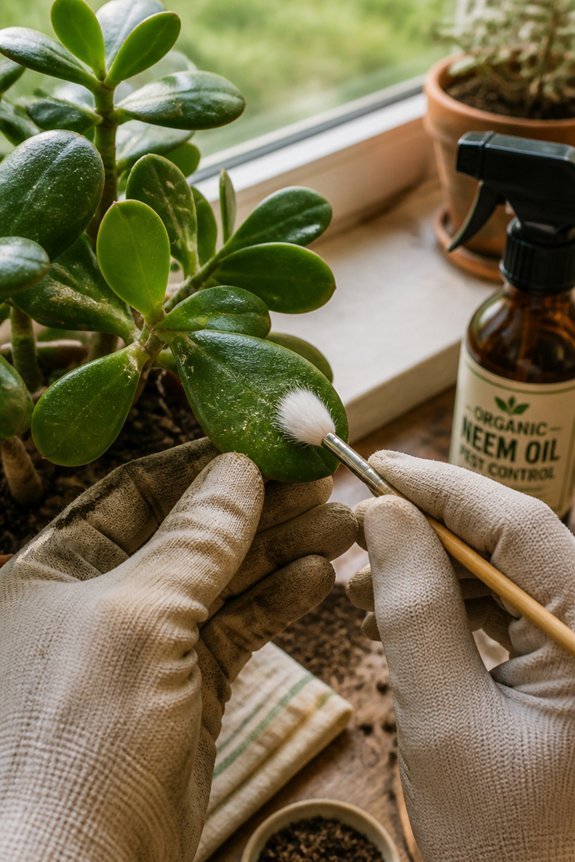
Jade plants can fall victim to mealybugs, spider mites, and scale insects. These tiny pests suck sap from the leaves and slowly weaken your plant. Watch for sticky residue, fine webbing, or small bumps on stems and leaves. Catching them early makes all the difference.
Start by isolating your jade from other houseplants. Spray the affected areas with insecticidal soap or neem oil to smother soft-bodied insects. You’ll likely need to repeat this every 7-10 days for a few weeks. For lighter infestations, simply wipe down leaves and stems with a damp cloth. Keep checking your plant during recovery. Once the pests are gone, stick to good watering habits and proper lighting to help your jade bounce back.
Adjust Light to Revive Growth
Light makes or breaks your jade plant’s comeback. These succulents crave bright, indirect sun for six to eight hours each day. Without enough light, you’ll notice pale leaves and stems that stretch awkwardly toward any available source.
A south or west-facing window works perfectly for placement. Natural light falling short? Fluorescent grow lights placed six to twelve inches above the plant solve that problem nicely. Give your jade a quarter turn every two weeks so all sides get their fair share.
Watch out for harsh afternoon sun streaming through glass. It leaves nasty brown patches on leaves. Morning light treats your plant much more gently. If your jade has been sitting in dim conditions, ease it into brighter spots slowly. Sudden changes shock the system and set back all your hard work.
Prune Damaged Leaves and Stems
Now it’s time to tidy up your plant. Grab your tools and let’s get started.
First, scan for trouble spots. Brown, yellow, or mushy leaves need to go. These signal decay or nutrient issues. Clip them off at the base with clean scissors. Spot a damaged stem? Cut it back to healthy green tissue. Toss everything you remove—don’t compost diseased material.
Next, shape things up. Leggy or sparse stems benefit from a trim. Cut just above a leaf node to encourage fuller, bushier growth below.
Keep your tools clean between snips. A quick wipe with rubbing alcohol stops disease from spreading.
Repot Your Jade Plant for Recovery
Now let’s get your jade settled into its new home. These plants need soil that drains fast. Grab a cactus or succulent mix from your local garden center. It keeps water from sitting around the roots where trouble starts.
Your pot needs drainage holes. No exceptions. Pick one just a bit bigger than what your jade is in now. These plants like cozy spaces. Terracotta is your friend here. It dries out faster than plastic, which helps prevent rot.
Time to make the move. Tip the old pot and ease your plant out. Gently break up any soil that’s packed tight around the roots. Add fresh mix to your new container. Set your jade at the same depth it was growing before. Fill in around it with more soil.
Give it a small drink after repotting. Then step back. Wait a few days before watering again. Your jade needs time to adjust and heal any root damage. Patience now means a thriving plant later.
Optimize Light, Water, and Temperature for Long-Term Health
Jade plants need the right setup to truly flourish. Start with bright, indirect light for six to eight hours each day. This fuels photosynthesis and builds strong stems and leaves. Keep them away from harsh afternoon sun, which can scorch their foliage. Too little light? You’ll notice weak, leggy growth that stretches toward any available brightness.
Watering is where many gardeners slip up. Always let the soil dry out completely before watering again. Then soak it thoroughly until you see drainage from the bottom. Overwatering is the number one killer of jade plants, often causing root rot before you even notice the damage.
Temperature matters more than you might think. Aim for 65 to 75 degrees Fahrenheit during active growing periods. Watch out for cold spells below 50 degrees, which push the plant into dormancy and slash its water and nutrient needs.
Skip the humidifiers. Moderate humidity works perfectly fine. Just shield your jade from cold drafts, blasting heaters, and sudden swings near windows and doorways.
Frequently Asked Questions
How Long Does It Take for a Jade Plant to Recover After Treatment?
Recovery time for a jade plant typically ranges from two to four weeks, depending on the severity of damage and treatment applied. Healthy new growth signals successful recovery, though complete rejuvenation may require several months.
Can I Propagate a Dying Jade Plant to Save Its Genetics?
Yes, propagation can preserve a dying jade plant’s genetics. Healthy leaves or stem cuttings root successfully in well-draining soil. This method allows one to save desirable traits even if the original plant cannot recover.
What Fertilizer Should I Use During the Recovery Process?
During recovery, one should apply a diluted, balanced fertilizer such as a 10-10-10 NPK formula monthly. Half-strength applications work best for stressed plants. Avoid fertilizing until new growth appears, preventing further root damage.
Is It Safe to Move a Jade Plant While It’s Recovering?
Studies show that 60% of houseplant relocations result in setbacks. Moving a recovering jade plant is generally inadvisable, as environmental stress from changing light, temperature, and humidity can impede healing and cause further decline.
When Should I Resume Normal Jade Plant Care After Revival?
One should resume normal jade plant care once new growth appears and the plant stabilizes for two to three weeks. Gradually reintroduce regular watering schedules and fertilization. Monitor the plant closely during this shift period.
Conclusion
A dying jade plant, like a wilting bridge between neglect and recovery, requires systematic intervention. By addressing root causes—overwatering, poor drainage, inadequate light, and pests—owners can restore vigor. Proper soil, appropriate watering schedules, six to eight hours of bright indirect sunlight, and stable temperatures form the foundation for revival. Consistent care transforms the struggling plant into a resilient survivor, anchoring itself firmly in health once more.