
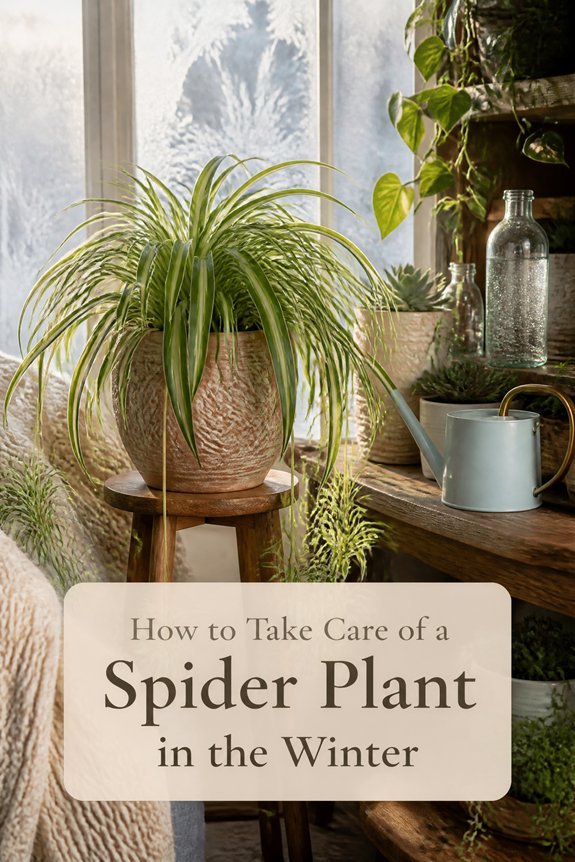
As winter settles in, spider plants enter a slower growth phase that calls for a gentler touch.
Watering should be cut back significantly since the soil stays damp longer in cooler conditions. Let the top inch dry completely before reaching for the watering can.
Light becomes precious during the shorter days. A south-facing window works wonders, though grow lights can fill the gap in darker homes. Moving the plant just a few feet closer to natural light often makes more of a difference than expected.
Keeping temperatures steady matters tremendously. Sudden drafts from windows or heating vents cause real damage, so find a spot away from both extremes.
Anything above 50°F keeps the roots content and the leaves from browning at the tips.
Fertilizer can wait until spring returns. With growth naturally slowed, extra nutrients simply accumulate in the soil and risk burning delicate roots.
Patience now leads to a healthier burst of new growth when warmth returns.
Reduce Watering for Spider Plants in Winter
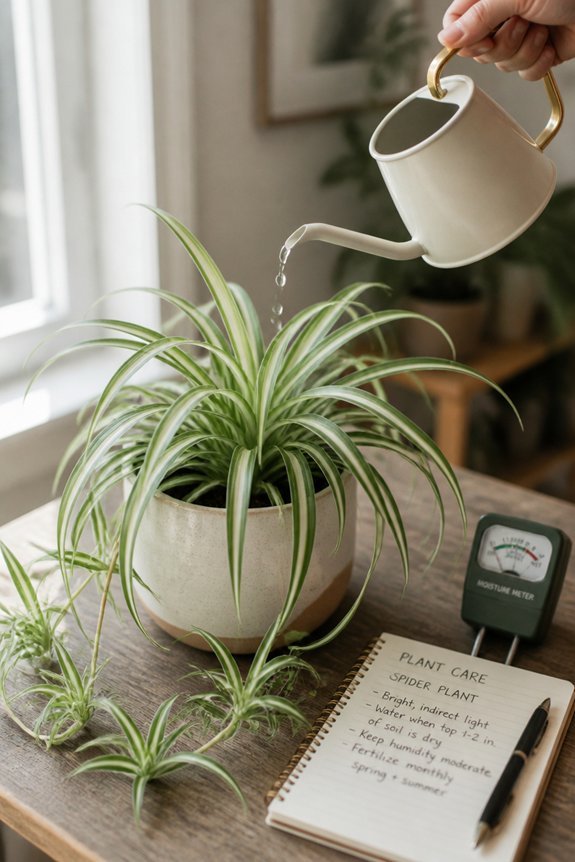
Your spider plant takes it easy in winter. Growth slows down, so it needs less water than those active summer months.
Check the soil before you water. Let it dry out more than usual. This simple step prevents root rot, which hits overwatered plants hard during cold weather.
You might find yourself watering every two or three weeks instead of weekly. Every home is different though. Temperature, humidity, and light all change how fast your soil dries.
Make sure your pot has drainage holes. They stop water from sitting at the roots. Stick your finger in the soil to test moisture. It is the most reliable way to know when your plant is actually thirsty.
Also read: Are Peperomia Easy to Care for
Provide Supplemental Light During Short Winter Days
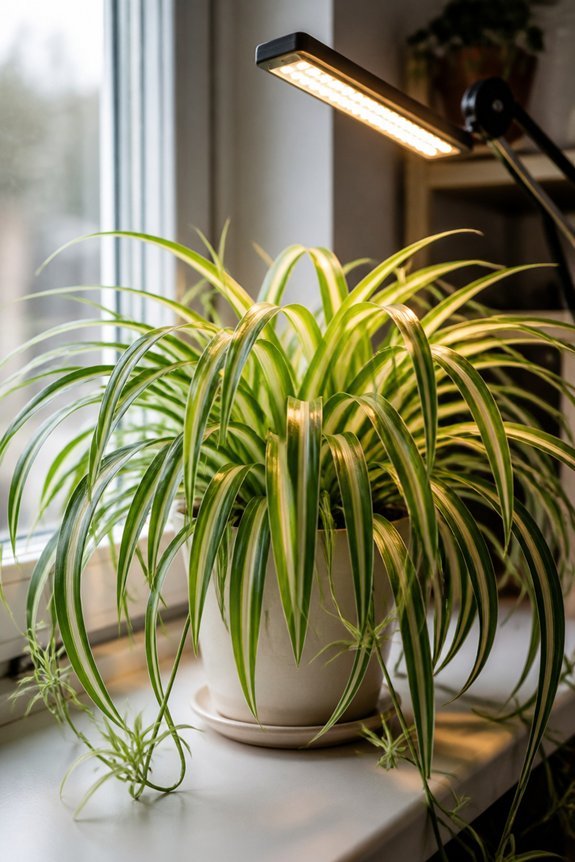
Winter light fades fast. Your spider plant feels that shift. Growth slows down when days get short.
Supplemental light keeps things moving. LED grow lights work great. They sip electricity and give your plant exactly what it needs. Standard fluorescent bulbs do the job too.
Set your lights 6 to 12 inches above the foliage. Run them for 12 to 14 hours each day. This tricks your plant into thinking spring arrived early. Timers make this effortless. No need to remember switches.
Check placement carefully. Lights should sit directly overhead. This spreads brightness evenly across every leaf. Watch your plant’s color through winter. Pale or leggy growth means it’s time to adjust.
Simple setups work best. Healthy plants follow naturally.
Boost Humidity Levels While Your Heater Runs
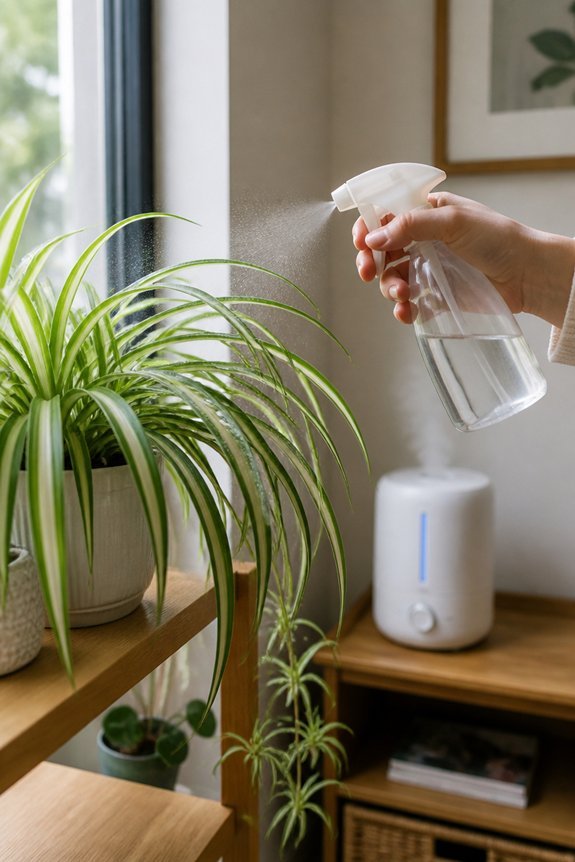
Cold air holds less moisture. Your heater strips what little remains. Spider plants feel this struggle first. Their leaf tips brown and curl. Growth slows to a crawl.
Group your plants together. They naturally share moisture through transpiration. Small humidifiers work wonders in tight spaces. Aim for 40 to 60% humidity if you can measure it. Pebble trays offer a budget fix. Fill a shallow dish with stones and water. Set pots on top. Roots stay dry while evaporation does its work.
Misting helps briefly. Do it a few times per week if it fits your routine. Skip the bathroom fan after hot showers. That steam belongs in your home. Your spider plant will thank you with fresh green growth all winter long.
Protect Spider Plants From Cold Drafts and Temperature Swings
Spider plants hate the cold. Drop below 50°F and you’ll see problems fast. Wild temperature swings are just as bad. These plants crave stability, especially in winter.
Keep them away from chilly windows and drafty doors. Heating vents cause trouble too. All three lead to browning leaves and slowed growth. Your best bet? Move them deeper into your home where temps stay steady.
Skip the spots near radiators, space heaters, or AC units. Day and night temps should stay within 10 degrees of each other.
Basements, attics, and uninsulated porches are risky choices. Instead, try a shelf or table in your main living area. That’s where your heating system keeps things reliably warm around the clock.
Skip Fertilizer Until Spring Growth Resumes
Your spider plant knows when it is time to slow down. Once indoor temperatures settle in your living space, you will notice the growth rate dropping. That is your cue to pause the fertilizer.
Feeding during winter dormancy does more harm than good. Salts accumulate in the soil. Roots struggle to process nutrients they do not need. The plant ends up stressed instead of supported.
Stop fertilizing when temperatures fall below 60 degrees. Wait for new spring growth before you restart. March or April usually brings those fresh shoots. Then switch to a balanced 10-10-10 formula every two weeks through the growing season.
Winter rest is not lazy. It is strategic. Your spider plant stores energy for the burst of growth ahead. Respecting this natural rhythm means healthier plants and fuller foliage when warmth returns.
Spot Spider Plant Pests and Winter Stress Signs Early
Check your spider plant often during winter months. Heating systems dry out indoor air fast. This dry environment invites spider mites and mealybugs to settle in. Look at leaf undersides and stems every week. Watch for fine webbing, sticky spots, or tiny crawling insects.
Yellow leaves, brown tips, and drooping can signal trouble. These issues usually stem from low humidity, cold drafts, or uneven watering. Plants sitting near heat vents or chilly windows suffer most from temperature swings. Spot these warning signs early. Remove damaged leaves right away and separate sick plants from healthy ones. A quick weekly check keeps small problems from becoming big headaches.
Know When Your Spider Plant Is Ready to Grow Again
Your spider plant has its own way of telling you it’s waking up. Watch for new leaves popping up faster than they did all winter. You’ll notice stems stretching out and the whole plant looking more alive.
The soil gives you another clue. It dries out quicker now because your plant is drinking more water. You might spot runners starting to form too. These thin stems will soon carry baby plantlets.
Light and warmth trigger this change. Days get longer and temperatures rise. Your plant notices these shifts and switches gears into growth mode.
Once you see these signs, it’s time to adjust your care. Start fertilizing again and water more often. Your plant is ready to grow, so give it what it needs.
Frequently Asked Questions
Can I Repot My Spider Plant During Winter Months?
Repotting spider plants during winter is not recommended. The plant’s dormant state and reduced growth make it difficult to establish in new soil. Wait until spring when growth resumes for best results.
Should I Move My Spider Plant to a Different Location in Winter?
Yes, spider plants benefit from being moved to a warmer location during winter months. They should be placed away from cold drafts and windows where temperatures drop considerably, preferably in areas maintaining consistent warmth above fifty degrees Fahrenheit.
How Often Should I Check My Spider Plant for Problems?
Like a gardener inspecting crops weekly, one should examine spider plants every seven to ten days during winter. This schedule allows early detection of pest infestations, disease, or nutrient deficiencies when intervention proves most effective.
What Temperature Range Is Safest for Spider Plants in Winter?
Spider plants thrive in winter temperatures between 50-70 degrees Fahrenheit. They tolerate cooler conditions better than most houseplants but should avoid exposure below 50 degrees, which can damage foliage and stunt growth considerably.
Can I Propagate Spider Plant Babies During the Winter Season?
Spider plant babies can be propagated during winter, though growth occurs more slowly due to reduced light and cooler temperatures. Spring remains the ideal propagation season, but winter propagation is feasible with patience and proper care conditions maintained consistently.
Conclusion
Spider plant winter care requires reduced watering every two to three weeks, supplemental LED lighting for twelve to fourteen hours daily, and increased humidity through grouping or misting. Maintaining temperatures above fifty degrees Fahrenheit, skipping fertilizer, and monitoring for pests guarantees plant survival. By coincidence, these same practices prepare spider plants for vigorous spring growth, making winter dormancy an essential phase rather than a dormant period of decline.