
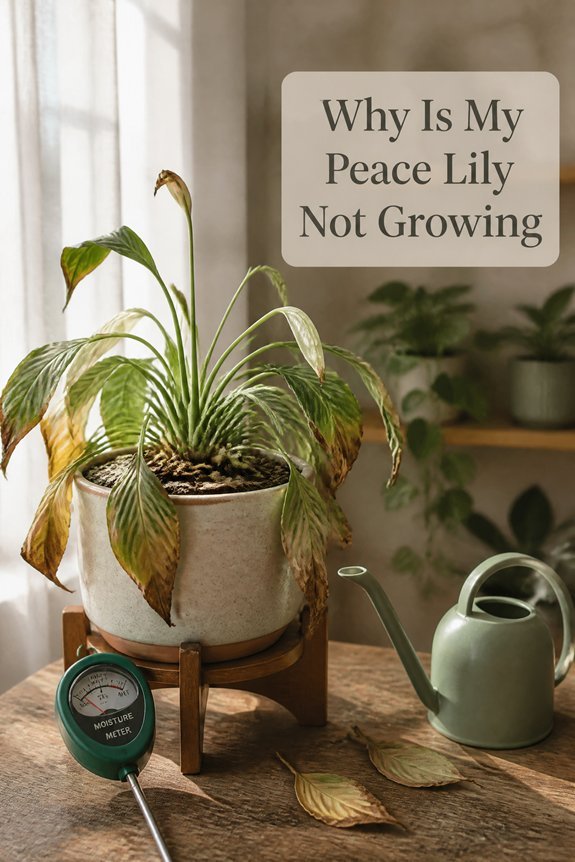
Peace lilies are surprisingly finicky when their fundamentals go wrong. Inconsistent watering sits at the top of the list. Roots rot in soggy soil, yet the plant quickly wilts and stalls if the soil dries out too much. Finding that balance takes attention.
Light, humidity, and soil quality each shape how well a peace lily thrives. These tropical natives prefer bright, indirect light and humid air that mimics their rainforest origins.
Heavy, compacted soil suffocates roots and blocks the oxygen they need to function.
Beyond the basics, hidden problems often creep in. Low nutrient levels leave leaves pale and growth sluggish.
Pests like spider mites or mealybugs drain energy without obvious signs at first. Narrowing down which factor is at work makes all the difference in getting your plant back on track.
Watering Problems: Too Much or Too Little
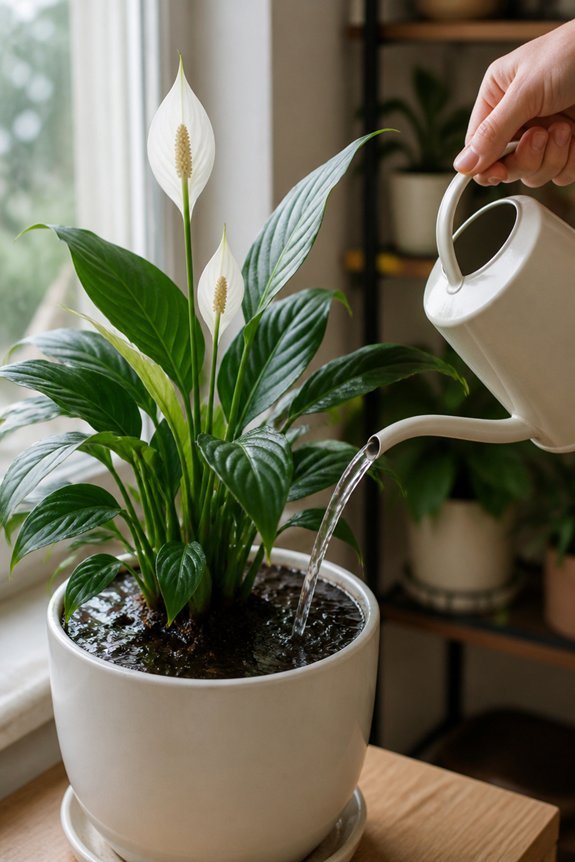
Peace lilies love steady moisture, but they hate soggy feet. Too much water causes root rot. The roots start decaying in wet soil. Plants can’t absorb nutrients. Growth stalls quickly.
Too little water creates its own headaches. Soil turns bone dry. Roots can’t sip what they need. Leaves droop, brown, and crisp at the edges.
Check your soil before grabbing the watering can. Stick your finger in about an inch deep. Dry? Time to water. Wet? Wait a day or two.
Drainage holes are non-negotiable. Excess water needs an escape route. Plants in dim corners dry out slower. Bright spots mean faster evaporation. Tweak your schedule with the seasons. Humidity and pot size matter too. Keep it balanced. Your peace lily will thank you with lush, green leaves.
Also read: How to Care for Philodendron
Your Peace Lily Needs More Light
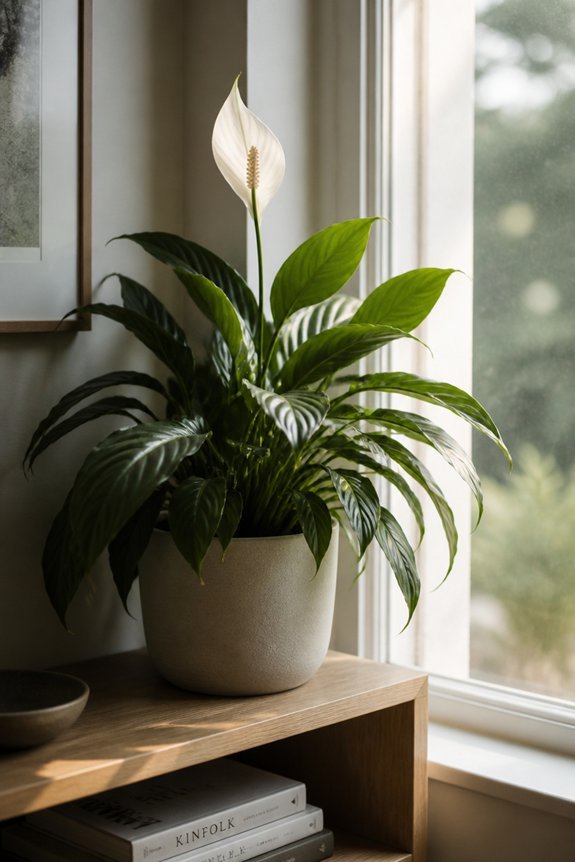
How much light is your peace lily actually getting? Too little light slows growth way down. These plants need bright, indirect light to photosynthesize well. They handle low light better than most houseplants, but they still need enough brightness to truly thrive.
Placement makes a big difference. Try an east-facing or west-facing window for good results. South-facing windows can scorch the leaves. North-facing ones usually don’t provide enough light for steady growth.
Watch for warning signs. Leggy stems, sparse foliage, and tiny new leaves all point to insufficient light. Your plant might stop flowering entirely or give you far fewer blooms than usual.
Moving your peace lily closer to a light source often fixes growth issues. Remember that distance from the window directly affects how much light intensity reaches those leaves.
Poor Soil Quality and Drainage Issues
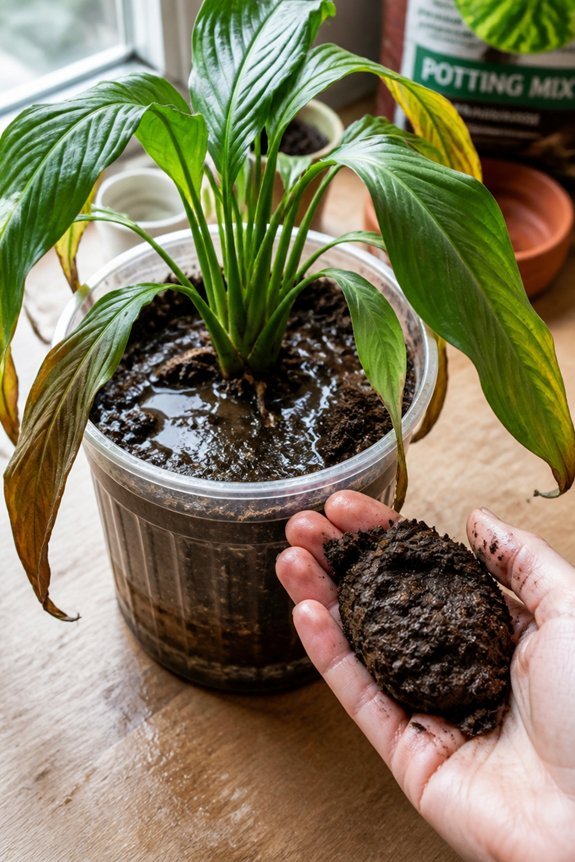
Your peace lily needs the right foundation to thrive. Start with loose, well-draining soil that keeps water moving rather than pooling around the roots.
A simple mix works best. Combine standard potting soil with peat moss and perlite. This blend gives roots room to breathe while holding just enough moisture.
Poor drainage leads to root rot. This condition halts growth and can kill your plant quickly. Watch for warning signs like yellowing leaves or a musty smell from the soil.
Compacted soil creates its own problems. Roots can’t spread properly, and nutrients stay locked away from where they’re needed. Clay-heavy soils are especially tricky since they trap water and invite fungal trouble.
Always choose pots with drainage holes. Excess water needs an escape route. If your soil becomes dense or waterlogged over time, repot with fresh mixture. Your peace lily will bounce back with renewed energy.
Check the soil regularly. Healthy roots mean healthy growth, and a quick inspection now prevents bigger headaches later.
Low Humidity Is Stunting Growth
Peace lilies come from tropical rainforests. They love moist air. It’s what they’re built for.
Your home probably sits at 30-50% humidity. That’s too dry for these plants. They want 50-80% instead.
Dry air stresses them out. Leaves turn brown at the edges. Growth slows way down. The plant spends all its energy just trying not to dry up.
You have options though. Mist the leaves a few times each week. Group your plants together so they share moisture. Run a humidifier nearby. Or set the pot on a pebble tray with water underneath.
These tricks boost humidity without soggy soil. Your peace lily can finally focus on growing rather than just surviving.
Nutrient Deficiencies: What Your Plant Is Missing
Even with better humidity, your peace lily might still struggle. It needs proper nutrients to truly thrive.
Peace lilies require nitrogen, phosphorus, potassium, and micronutrients like iron, magnesium, and manganese. Each deficiency shows up differently. Yellow leaves often signal nitrogen trouble. Weak roots point to phosphorus issues. Brown edges on leaves? That’s usually potassium. Pale leaves with green veins mean your plant needs iron.
Soil runs out of nutrients over time. This happens faster in containers with frequent watering.
A balanced 10-10-10 fertilizer covers multiple gaps at once. Apply it every four to six weeks during growing season for steady, healthy growth. Consider testing your soil first. This reveals exactly what’s missing so you can target the problem instead of guessing.
Pests and Diseases: Hidden Growth Killers
Pests and diseases often sneak up on peace lilies. You might not notice trouble until leaves start yellowing or drooping.
Common pests include spider mites, mealybugs, and scale insects. They feed on plant sap and slowly weaken your peace lily. Check for sticky residue, tiny webbing, or visible bugs on stems and leaf undersides.
Root rot happens when soil stays too wet for too long. Dark, water-soaked spots on leaves point to bacterial leaf spot. Both can stall growth quickly if ignored.
Take a close look at new growth weekly. Catching problems early makes all the difference. Cut back on watering and give your plant some breathing room. Better air circulation keeps fungal issues away.
Spot something suspicious? Move that peace lily away from your other plants right away. Isolation stops pests from hopping to nearby greenery.
How to Repot Your Peace Lily for Better Growth
Your peace lily will tell you when it’s time for a new home. Watch for roots poking through drainage holes or water that rushes straight out instead of soaking in. The soil might dry out almost instantly after watering. These are clear cries for help.
Yellowing leaves and stunted growth often follow when roots get too crowded. The plant simply can’t thrive when it’s packed tight.
—
Pick a pot just one or two inches wider than the current one. Drainage holes are non-negotiable here. Mix your potting soil with peat moss or orchid bark to keep things airy and light.
Gently tip out the plant and loosen any tangled roots with your fingers. Set it at the same depth in fresh soil. Water well afterwards, then get back to your normal routine.
Most peace lilies appreciate this refresh every 12 to 18 months. Spring and summer work best for the job. Your plant will reward you with stronger roots and livelier growth.
Frequently Asked Questions
What Is the Ideal Temperature Range for Peace Lilies to Grow Properly?
Peace lilies thrive in temperatures between 65 and 80 degrees Fahrenheit. They prefer warm, humid environments and struggle in cold conditions below 60 degrees. Consistent warmth promotes healthy growth and flowering.
How Often Should I Fertilize My Peace Lily During Growing Season?
Many believe frequent fertilizing boosts growth, yet overfeeding actually harms peace lilies. During the growing season, fertilize every four to six weeks using diluted liquid fertilizer. This measured approach promotes healthy development without nutrient burn.
Can Peace Lilies Recover From Root Rot, and How?
Peace lilies can recover from root rot if caught early. Remove the plant from soil, trim blackened roots with sterile scissors, repot in fresh, well-draining soil, and reduce watering frequency to prevent recurrence.
Is It Normal for Peace Lilies to Have Brown Leaf Tips?
Brown tips typically trouble peace lilies when problems persist with watering, humidity, or minerals. Yes, this is normal and often stems from inconsistent moisture, low humidity levels, or fluoride and chlorine accumulation in tap water.
When Is the Best Time to Propagate or Divide Peace Lilies?
The ideal time to propagate or divide peace lilies is spring or early summer when the plant is actively growing. This timing maximizes the success rate of new divisions establishing roots and developing into healthy, independent plants.
Conclusion
A peace lily’s stunted growth stems from multiple interconnected factors: watering inconsistency, insufficient light, poor drainage, low humidity, nutrient gaps, and pest infestations. Like a puzzle missing several pieces, addressing one issue alone rarely solves the problem. Owners must systematically evaluate water schedules, light placement, soil composition, humidity levels, fertilization, and pest presence. This thorough approach restores healthy growth patterns.